Tag: Scotland News

Get the latest LGBT+ Scotland news from THEGAYUK. Breaking news, features and interviews from the gay community in Scotland, UK

  • When did it become legal to be gay in the UK?

    When did it become legal to be gay in the UK?

    Laws around homosexuality differ from region to region in the UK meaning that gay people in Scotland and Northern Ireland had to wait a lot longer for equality.

    (C) BIGSTOCK

    Homosexuality was legalised in England and Wales on the 27th July 1967, a decade after the Wolfenden Report recommended that homosexuality should be decriminalised. The Sexual Offences Act was changed to decriminalise homosexuality, up to a point and only if three conditions were met:

    1. that the act was consensual
    2. that both parties were 21 or over
    3. and the act was done in private.

    Up until that point, men who were found to be having sex with other men were often charged with Gross Indecency or Buggery charges.

    Thousands of men were criminalised because of this law. They were often sent to prison.

    In 2017 a pardon was issued, as an apology to those men who served time for their “crime”.

    When the law changed being gay still wasn’t equal to being straight. The age of consent was 21 and all sexual acts had to be done in private. it wasn’t until the new millennium, that laws pertaining to gay and straight sexual acts were equalised.

    Not all gay people in the UK were equal

    But not all of the UK’s men were able to be openly gay. The law wasn’t changed until 1981 for homosexuals in Scotland and 1982 for guys in Northern Ireland.

    As it stands today, it is currently legal to be gay, lesbian, bisexual and transgender across the UK, whether you’re in England, Northern Ireland, Scotland or Wales. Laws surrounding discriminating because of sexuality or gender expression are very strict in the UK and include employment and business services.

    Gay people are permitted to have civil partnerships (since 2004) and get married (2013/14) except in Northern Ireland – the only region in the UK which does not have full equality for LGBT+ people.


  • Edinburgh Fringe says it has “Zero tolerance” on harassment, abuse and bullying

    Edinburgh Fringe says it has “Zero tolerance” on harassment, abuse and bullying

    “No matter who you are or where you come from, you should feel at home at the Fringe”

    luxstorm / Pixabay

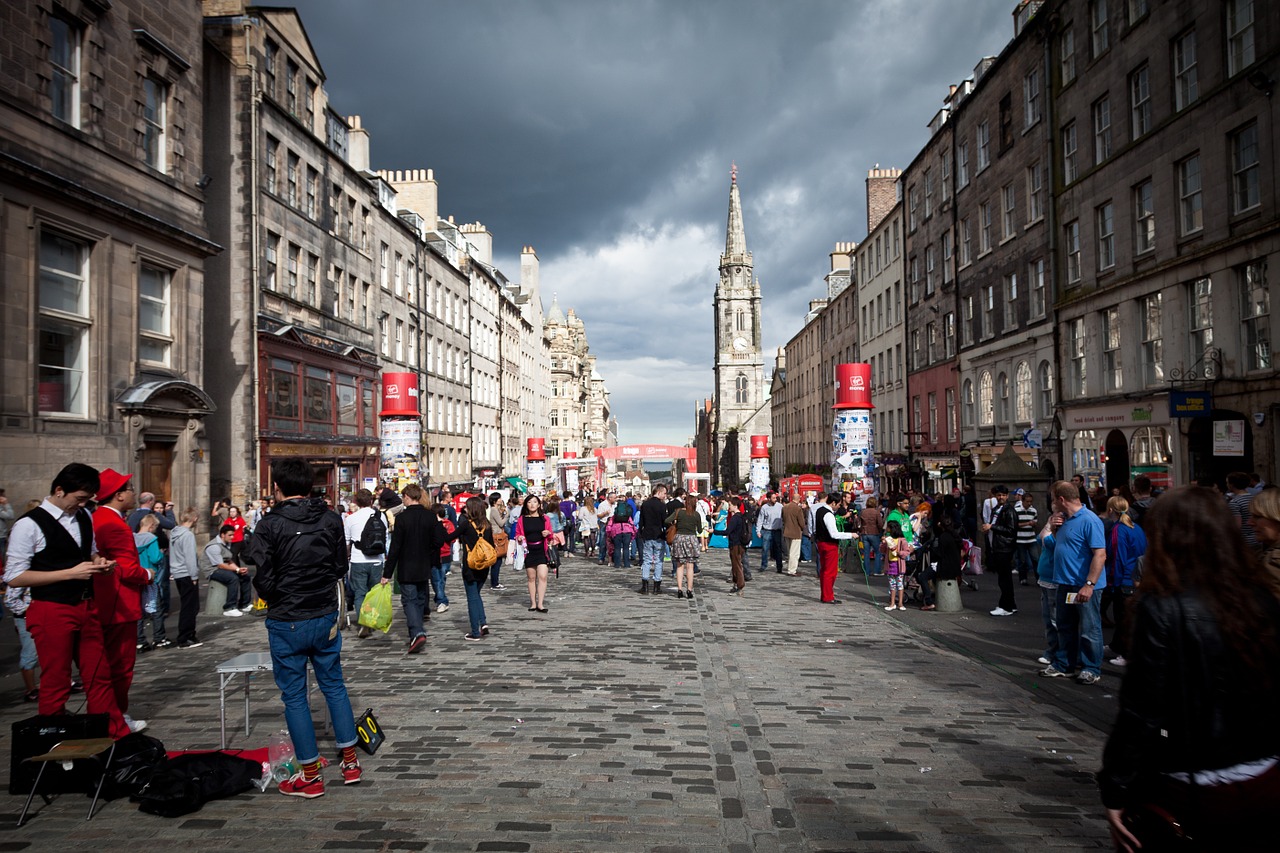
    Following on from the shocking news that a performer has suffered homophobic jeers and insults while trying to publicise his show at this year’s Fringe, the Edinburgh Festival Fringe Society has reaffirmed its stance on bullying behaviour towards performers and audience members.

    Nick Cassenbaum, the star of My Kind of Michael, which is currently playing at the Edinburgh Fringe festival has encountered a barrage of homophobic abuse on the streets of Edinburgh while trying to promote the show, which runs until the 26th August at the Summerhall.

    The show is about Cassenbaum’s childhood hero, Michael Barrymore, who was an incredibly popular TV star until a tragic incident at his home in 2001 left a young man dead and the star came out about his bisexuality. 

    ABOVE: The lifesize cut out which has caused controversy as some passersby resort to homophobia on the streets of Edinburgh.

    Unfortunately, the promotion has been met with “old-fashioned homophobia and trial by tabloid” comments.

    Speaking to THEGAYUK.com a spokesperson for the Edinburgh Festival Fringe Society said, “No matter who you are or where you come from, you should feel at home at the Fringe. The Fringe Society have a zero-tolerance policy on harassment, abuse and bullying and we take the safety and welfare of all of our participants and audience members extremely seriously. We provide advice on all aspects of performing and taking part in the Fringe and would encourage anyone who has been affected by issues such as this to contact us.”


  • THEATRE REVIEW | Titanic, The Musical, Edinburgh Playhouse

    THEATRE REVIEW | Titanic, The Musical, Edinburgh Playhouse

    ★★★☆☆ | Titanic – The Musical – Edinburgh Playhouse

    Titanic - The Musical - National Tour review

    **This review was taken from the Sheffield production**

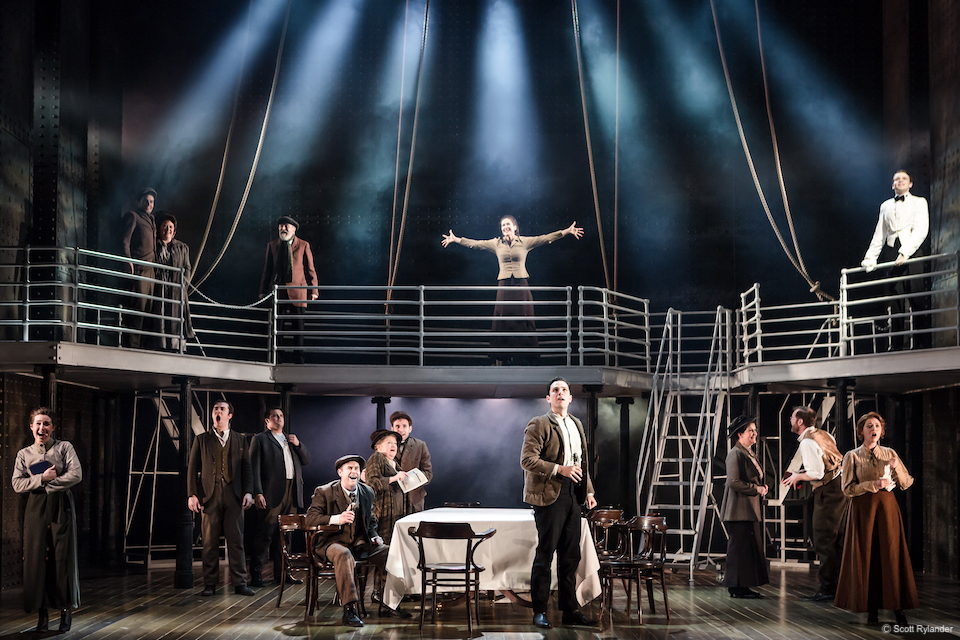
    Despite it being over 100 years since Titanic slipped under the waves, the fascination with the ship and those on board hasn’t faded, as evidenced by the packed house of this revival of Moury Yeston’s musical. The story of the ships maiden voyage and, ultimately, its demise is told through a wealth of characters from all classes of passengers and from the crew on board.

    The set, all sheet metal and rivets, towers above the audience instilling in them the impression of the sheer scale of the ship whilst a simple two-tier stage evoked an image of the decks and worked effectively. But from the off, the cast were on top form, as the magnificent ensemble belted out the opening numbers with such gusto that it reverberated in the chest, like the sounds of the engines of the great ship itself.

    And therein lays the strength of this production. Its cast was outstanding, and whether singing alone, in small groups or as an ensemble, the whole thing was beautifully sung and more akin to an opera than a musical. The three leads Philip Rham, Simon Green and Greg Castiglioni bounced off each other nicely as the Captain, owner and designer of the ship, and Niall Sheeny impressed as the stoker Fred Barrett. Whilst the direction was fairly minimal, the cast switched between their multiple roles seamlessly, spilling out into the aisles on occasions to engage the audience; whilst on a technical level, the lighting and sound design, the costumes and the balance between actors voices and orchestra were all absolutely spot on.

    Sadly, an overly long runtime, a handful of similar-sounding songs and a few too many story threads anchored down the first act to an extent, but the second act picked up the pace as the race to abandon ship took hold.

    What comes out of the production is an underlying theme of love between the characters, from the newlyweds to the eloping couple to the elderly husband and wife, and it is this which packs the emotional punch and brings the human cost of the tragedy sharply into focus.

    Book tickets to see Titanic, The Musical at Edinburgh Playhouse until 16th June 2018

  • THEATRE REVIEW | Titanic, The Musical, King’s Theatre Glasgow

    THEATRE REVIEW | Titanic, The Musical, King’s Theatre Glasgow

    ★★★☆☆ | Titanic – The Musical – King’s Theatre Glasgow

    Titanic - The Musical - National Tour review

    **This review was taken from the Sheffield production**

    Despite it being over 100 years since Titanic slipped under the waves, the fascination with the ship and those on board hasn’t faded, as evidenced by the packed house of this revival of Moury Yeston’s musical. The story of the ships maiden voyage and, ultimately, its demise is told through a wealth of characters from all classes of passengers and from the crew on board.

    The set, all sheet metal and rivets, towers above the audience instilling in them the impression of the sheer scale of the ship whilst a simple two-tier stage evoked an image of the decks and worked effectively. But from the off, the cast were on top form, as the magnificent ensemble belted out the opening numbers with such gusto that it reverberated in the chest, like the sounds of the engines of the great ship itself.

    And therein lays the strength of this production. Its cast was outstanding, and whether singing alone, in small groups or as an ensemble, the whole thing was beautifully sung and more akin to an opera than a musical. The three leads Philip Rham, Simon Green and Greg Castiglioni bounced off each other nicely as the Captain, owner and designer of the ship, and Niall Sheeny impressed as the stoker Fred Barrett. Whilst the direction was fairly minimal, the cast switched between their multiple roles seamlessly, spilling out into the aisles on occasions to engage the audience; whilst on a technical level, the lighting and sound design, the costumes and the balance between actors voices and orchestra were all absolutely spot on.

    Sadly, an overly long runtime, a handful of similar-sounding songs and a few too many story threads anchored down the first act to an extent, but the second act picked up the pace as the race to abandon ship took hold.

    What comes out of the production is an underlying theme of love between the characters, from the newlyweds to the eloping couple to the elderly husband and wife, and it is this which packs the emotional punch and brings the human cost of the tragedy sharply into focus.

    Book tickets to see Titanic, The Musical at King’s Theatre Glasgow until 2nd June 2018

  • Gay Police Association changes its name to Scottish LGBTI Police Association

    The Scottish LGBT+ policing group has changed its name.

    The GPA (Gay Police Association) has changed its name to a more inclusive Scottish LGBTI Police Association. The changes include changing the official Facebook URL and name.

    Along with the name change, the old GPA logo will disappear and will be replaced with a new logo.

    The change has come to mark LGBT History Month. Every February it is LGBT History Month in the UK.

    A statement from the association’s website states,

    “Our Association has a long and proud history spanning 27 years…

    “At our AGM in 2016, members took part in an exercise in order to review how the Association was structured, the Aims and Objectives, what could be improved and examine ways to encourage membership engagement and inclusion.

    “Following the 2016 AGM, a number of recommendations came to light which would form the basis for a “Re-structuring Strategy”. Following 12 months of discussion within the Executive Committee, the Strategy became a proposal which was passed at the 2017 AGM.

    “This is far more than simply a name change and re-branding. A new General Board will replace the former Executive Committee. The Association will now include Transgender and Intersex as well as LGB. The Aims and Objectives have been replaced with a simple Mission Statement backed up with key priorities. There will be a new focus on localism with the creation of Local Coordinators. We will retain important aspects including our independence and remain an association of members.”

    The full change over is due to happen on the 16th February 2018.

  • Boyfriends killed in hotel fire in Scotland

    Two men were killed when a fire ripped through the Cameron House Hotel.

    Couple Simon Midgley, 38 and Richard Dyson, 32 are reported to have died on Monday when a fire broke out in the Cameron House Hotel on Loch Lomond.

    Police have yet to announce the names of the victims, however, the BBC is reporting that relatives of the men have taken to social media to paid recognition to the couple.

    More than 200 guests were evacuated from the luxury hotel, when the fire started in the early hours of Monday morning at around 6:40 AM. All reports suggest that only the couple were fatalities of the fire.

    Last message

    Mr Midgley posted a photo of the pair enjoying a Christmas film in their room at the Cameron House Hotel just hours before the fire, on Instagram and wrote, “Home for the weekend.”

    It is believed that the pair lived in London.

    Simon worked as a freelance journalist for the London Evening Standard as well as running his own PR firm while Richard is believed to be a TV producer.

    “Heartbroken”

    Mr Midgley’s sister posted a photo of her brother and captioned it, “I’m beyond heartbroken.”

    A statement on the website of Cameron House Hotel said, “Due to an ongoing incident please be aware that Cameron House will remain closed to arriving guests for at least the next 48 hours.

    “We would ask all guests and customers to remain patient as we work with the emergency services to establish the extent of the damage and ascertain when we will be able to re-open.”


  • Read First Minister Nicola Sturgeon’s full speech on pardoning men convicted for gay sexual activity

    Here’s the full speech that was given by First Minister, Nicola Sturgeon, setting out Scotland’s apology to gay men convicted of sexual activity which is now legal.

    Presiding officer,

    I am grateful for this opportunity to address the chamber. Today marks an important milestone in achieving true equality for Scotland’s LGBTI community.

    This morning, the Historical Sexual Offences (Pardons and Disregards) (Scotland) Bill was published.

    Scotland has travelled so far in recent years, in relation to LGBTI equality, that it still shocks us to recall that as recently as 1980 – well within my lifetime – consenting sexual activity between men was still classed as a criminal activity in this country. And the age of consent was only lowered to 16 in 2001, two years after this parliament came into being. Before then, hundreds of people in Scotland were liable to be convicted as criminals, simply for loving another adult.

    Presiding Officer, the words inscribed on this Parliament’s Mace set out the values which we seek to uphold and promote – integrity, wisdom, justice and compassion. Yet even within the lifetime of this parliament, this nation’s laws have created suffering and perpetrated injustice.

    The legislation we have published today addresses that injustice. It provides an automatic pardon to men convicted of same-sex sexual activity that would now be legal.

    In addition, the bill establishes a new procedure, so that people can apply to the police for their offence to be disregarded from criminal records. This means it will never appear on a disclosure certificate.

    The legislation therefore has both a symbolic and a practical value. The pardon sends an unequivocal message to anybody convicted of an offence for an activity which is now legal. The law should not have treated them as criminals and they should not now be considered as such. Instead, this parliament recognises that a wrong was done to them.

    And the disregard has an important practical consequence. It allows people to ensure that their past criminal record will no longer have an impact on their day to day life. And that will change people’s lives.

    At present, as the Equality Network and others have highlighted to us, there are some people convicted merely of showing love and affection to their partner, who still have to explain their criminal record every time they move job or apply for a promotion. That is unacceptable and we are determined that it will end.

    So the bill we are publishing today rights a historic wrong.

    However Presiding Officer, I want to go further today and do something that legislation on its own cannot do. A pardon is, of course, the correct legal remedy to apply for the convictions we are talking about today – but the term “pardon” might still, to some people, imply that Parliament sees them as having done something wrong. That is, after all, a common context in which a pardon might be granted.

    However, as all of us know, that is not the case here. For people convicted of same sex sexual activity which is now legal, the wrong has been committed by the state to them, not by the individuals. Those individuals deserve an unqualified apology, as well as a pardon.

    That apology can only come from the government and from Parliament – not from the justice system. After all, the courts, prosecutors and the police were enforcing the law of land at the time.

    The simple fact is that parliamentarians in Scotland over many decades supported or, at the very least, accepted laws which we now recognise to have been completely unjust.

    Those laws criminalised the act of loving another adult; they deterred people from being honest about their identity to family, friends, neighbours and colleagues; and by sending a message from parliament that homosexuality was wrong, they encouraged rather than deterred homophobia and hate.

    So today I, as First Minister, categorically, unequivocally and wholeheartedly, apologise for those laws, and for the hurt and the harm that they caused.

    Nothing this parliament does can erase those injustices. But I hope that this apology, alongside our new legislation, can provide some comfort to those who endured them. And I hope that it provides evidence of this parliament’s determination, in so far as we can, to address the harm that was done.

    The final point I would make is that while today’s legislation marks an important milestone in Scotland’s progress towards LGBTI equality, our journey is not yet complete.

    Considering how recently it is, that the laws I have just discussed were in force, it is remarkable, and indeed inspiring, that Scotland is now considered to be one of the most progressive countries in Europe when it comes to LGBTI equality.

    Indeed, one of the proudest moments of my 18 years as an MSP – and, I know, one of the proudest moments for many MSPs across this chamber – was in February 2014, when people from all parties came together to support equal marriage.

    But as all of us know, until we live in a country – in fact, until we live in a world – where no young person suffers hate or fear or discrimination or prejudice, simply because of their sexual orientation or their gender identity, then we have still got work to do.

    That’s why have promised to improve our gender recognition legislation. We know that we need to ensure that it reflects the experiences and the needs of transgender and intersex people.

    It’s why I attach such importance to the Scottish government’s work with the TIE campaign – ensuring that our young people do not have to fear bullying in school.

    It’s also why we are reviewing hate crime legislation – to ensure that our laws provide the right protections against bigotry and hatred.

    And it’s why I hope that today’s apology – in addition to its specific significance for gay men – sends out a wider signal to the LGBTI community. The Scottish Government and the Scottish Parliament are utterly committed to delivering true equality for LGBTI people in Scotland. Wherever there are societal, cultural, legislative or regulatory barriers to achieving that, we will seek to remove them. We will never again accept laws or behaviours which discriminate against you and hurt you.

    And so although today is a day for looking back and apologising for past wrongs, it is also a day which points to a better future.

    And it is a day when this chamber promotes, and lives up to, our shared values – integrity, wisdom, compassion and justice.
  • Gay Scottish Men Who Had ‘Illegal’ Sex Pardoned


    Due to licensing this article must be read on our website

    Scotland is on the verge of pardoning thousands of gay men once convicted for having sex. Under Scottish law, consensual homosexual acts between men were considered a crime until 1981. A new bill would pardon everyone who was prosecuted under those laws, living and dead. (more…)

  • Anglican Church penalises Scottish arm over gay marriage

    The Anglican Church on Tuesday disciplined its Scottish branch for deciding to allow same-sex couples to get married in its churches. The Scottish Episcopal Church (SEC) voted in June to change its law on marriage, removing the reference to it being between a man and a woman. As a result the first gay wedding in a… (more…)

  • History is made as two men wed in a UK Church

    A gay couple in Scotland has made UK history after getting married in a Church.

    Peter Matthews and Alistair Dinnie have made history after becoming the first same-sex wedding to take place in a church wedding. The marriage was permitted because rules around gay marriages in churches were relaxed earlier this year – but only for churches in Scotland.

    The couple Peter Matthews and Alistair Dinnie were married at St John’s Church, run by the Scottish Episcopal Church (SEC).

    The Scottish Episcopal Church was the first Christian church in the UK to allow same-sex marriage in its churches. The rule change was not mandated however and clergy will not be forced to officiate at those marriages if it goes against their conscience.

    The amendment to canon law on marriage, which removed the stipulation that marriage is only between a man and a woman, was carried by the Synod in Edinburgh.

    Same-sex marriages cannot take place in Church of England churches or at all in Northern Ireland.

  • THEATRE REVIEW | The Curious Incident Of The Dog In The Night-Time, King’s Theatre Glasgow

    ★★★ | The Curious Incident Of The Dog In The Night-Time, King’s Theatre Glasgow

     REVIEW | The Curious Incident Of The Dog In The Night-Time, Kings Theatre Glasgow

    Christopher Boone, a 15-year-old boy, discovers that his neighbour’s dog, Wellington, has been killed by someone (the poor dog having been stabbed with a garden fork), and sets off to find out who the culprit is. But Christopher has Asperger’s syndrome, which makes his perception and functioning very different to other boys his age and as the truth behind Wellington’s death starts to be revealed, it leads Christopher to embark on a remarkable adventure.

    The show is based on the hugely successful book by Mark Haddon and has been a West End and Broadway hit. Utilising a virtually empty stage, the presentation of the show was intriguing, using screens on the back and sides of the stage, almost framing the show in a cube, reflective of Christopher’s constraints in his functioning. Lights flicker like the firing of neurons in his brain, and black and white projections are used to show both his thought process and to set the scene. The show, like the book, is written from Christopher’s point of view and the presentation effectively places the audience members squarely into the centre of his mind and thoughts. The simplicity of the set is reflective of the way in which Christopher perceives the world and worked very well. There were pieces of carefully choreographed movement throughout, and the scene where Christopher arrives in London and is overwhelmed by the overstimulation of his environment is very well done. In this show, less certainly is more, and the monochrome set nicely mirrored Christopher’s rather binary thinking.

    But placing the style and presentation to one side, the most impressive aspect of the show was the central performance of Scott Reid. Reid’s portrayal of Christopher Boone was highly accomplished – mixing the complexities of the characters personality, his physical traits and a childlike innocence which combined to provide a rounded and believable performance

    The show, and in particular, the first act, is very well written, with a script which imports large chunks of text from the book to provide a faithful adaptation of the source material. Despite being bleak at times, the show was filled with gentle humour; and created a world with a myriad of characters that come in and out of Christopher’s life which nestle alongside the well-crafted moments of dramatic tension and emotionally powerful scenes.

    The show has won a slew of awards, including 7 Olivier Awards and 5 Tony Awards, and it is easy to see why. There is a lot of depth to the play, exploring the adult world of interpersonal relationships through a simplistic and innocent perspective.

    The Curious Incident of the Dog in the Night-time is playing at the King’s Theatre Glasgow until the 19th August 2017

    • Review taken from Sheffield production.