Daddyhunt, which boasts around 4 million members, is using its platform and social media channels to focus on suicide awareness and prevention and domestic violence.
Since the creation of the Daddyhunt website over 15 years ago, “Daddyhunt has focused on educating its members about sexual health issues as well as creating a stigma-free environment for those living with HIV/AIDS. While connecting people is a vital part of our mission, we also want to use our platform to educate our members and fans about important issues affecting the gay community”, says Casey Crawford, Daddyhunt’s General Manager.
Through stories and posts on Instagram and Facebook as well as its weekly newsletter to 4+ million global members, Daddyhunt now shares national suicide awareness and domestic violence abuse hotlines for the US and other countries as well as articles related to how to assist friends or family who are dealing with depression and suicidal thoughts.
The app’s social media manager Nebojsa Cirok told THEGAYUK, “Due to the COVID-19 lockdowns and the increase in suicide rates within the LGBTQ+ community and increases in domestic violence, it is important for us to focus on the issue even more and to educate as many people as we can reach about awareness and prevention programs and hotlines,”
“While we recognize that a lot of people view and follow our social media to see Daddies, we felt that it was incredibly important to highlight these issues. The feedback that we have received from our members and followers has been positive”
As a community, we’ve faced some immense challenges. Some, across our world, are still facing untold tragedies and discrimination. Sometimes, however, the worst issues can come from within.
So when Reddit user dprince1988 asked “What gay social problems do you see which aren’t talked about enough”, the AskGayMen community did some soul searching and came up with a list.
Here are some of the issues it raised.
Suicide Rate
The LGBT+ community has one the highest suicide rates of any minority demographic.
The Trevor Project details how suicide is one of the biggest killers of young people, and that Lesbian, Gay and Bi youth are three times more likely to contemplate suicide over their heterosexual counterparts.
One commentator added, “I should submit a picture of my arm. So many cuts that I can’t even differentiate between normal and scar tissue. When meeting new people I have to wear long sleeves or else they freak out”.
Sober spaces
The lack of sober social spaces was also raised. However, there are services such as meetup.com which are helping to facilitate social situations that don’t centre around drinking.
Loneliness and isolation
At the moment, thanks to COVID-19 many people are facing isolation, but for many in the LGBT+ community, loneliness is a real issue outside of lockdown.
Rural Isolation
Outside of large cities and towns can be a real issue for LGBT+ people. Sometimes hook up apps and chat rooms are a vital lifeline for LGBT+ people who don’t have a local scene.
Domestic Violence
In a recent article for THEGAYUK.com legal expert, PAULA RHONE-ADRIEN shared, “…sadly, in such a small minority of just 1.1 million, at least 1 in 4 victims of domestic abuse are lesbian and nearly 1 in 2 victims are gay. The figure rises to nearly 80% if you identify as transexual”.
Bottom shaming
On bottom shaming one user-added, “Bottom shaming is internalized homophobia and societal view of women (the feminine) being less-than.”
Lack of LGBT sex education
As schools don’t tend to offer gay sex education there is a lot of misunderstanding surrounding STIs, the purpose of PrEP and consent.
Ageism
One user added, “Gay men are notorious for being disgusted and belittling older guys… even older guys do it to each-other… there’s an old cliche called the “gay death” which means once you turn 30 you’re ugly, old, and undesirable.”
Ableism
One user added, “Pretty tragic given how much more likely queer populations are to suffer psychological or physical ailments.”
Drugs and Chemsex
PNP and HnH orgies are becoming more and more commonplace and normalised on dating apps.
Racism
User HereForHope wrote, “This 100%. Racial dynamics are never talked about introspectively. Be that homophobia in communities of color to the fact that it’s apparently totally fine to have racist shit like “no blacks no rice” in your dating profile”
Erasing the T
User Atlask wrote, “I don’t know if it fits what you are looking for but that whole lgb movement who focuses mostly on erasing the trans…”
I know so many gay men with eating disorders. They either are or have been out-and-our anorexic/bulimic, exercise bulimic, or take hard drugs to stop themselves from eating.
“Others are on steroids to build up muscle.
“And they’re all still unhappy, even the ones that have great bodies”.
Bi Erasure is a form of erasure directed towards the bisexual community It can take many forms including when society sidelines bisexual stories for gay or lesbian stories.
Bi Erasure is also the ignoring or rewriting of LGBT+ history where bisexual people of note are effectively erased from the LGBT+ movement.
What happens when you’re not a democrat? One user suggested, “Gays assumed to be liberals/democrats. I know a lot of conservative/ republican gays and they always get the “but you’re gay!” attitude and called Uncle Toms. Really I think this is the biggest prejudice against gays now in the US. Gays are capable of free thought, not mindless hive mentality”
Use the comments below to let us know your thoughts.
The boyfriend and family of a young man who died after taking his own life is to host a party in his honour to raise money for the charity, YoungMinds.
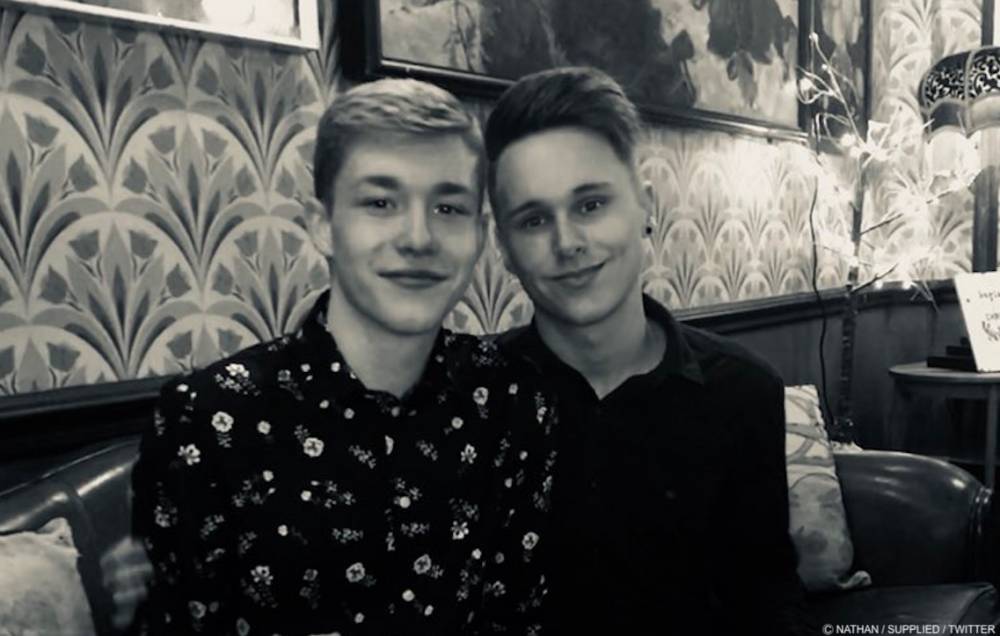
Lee, who died last year with his boyfriend, Nathan.
The family and boyfriend of a young man who died after taking his life last year are hoping to raise much needed funds for the leading mental health charity, YoungMinds by putting on a party to celebrate his life. He died just a month before his 18th birthday.
Lee’s family is fundraising for the charity via a GoFundMe page with the proceeds going directly to help with YoungMinds’ mission.
Writing on the page, Nathan wrote, “We are hosting this party a year on to celebrate his life and regroup as friends and family. I’ll go dressed as a unicorn, as I am sure my boy would want me to (he loved them!)”.
Lee with his Mum and his siblings
Speaking to THEGAYUK, Nathan told us about Lee saying, “He was warm, kind and exceptionally thoughtful. I knew from the moment we met that he would be a huge part of my life”.
The pair met in Liverpool, where on their first date, they “walked along the docks and read all of the padlocks”.
When Nathan went to university, the pair became penpals, Nathan told us, “He was my pen pal too, we would write each other letters, even though he would come and visit me at university”.
Nathan also told us what life has been like following Lee’s passing saying, “My advice is to talk. Make the most of the people you love and care about. Try not to be unkind.
Lee and Nathan together.
“Someone’s mental state doesn’t bleed like a wound, nor can it be fixed with a plaster. It’s so much more complicated. You cannot see it, but so often people are bleeding.
“If you are hurting, remember that your pain is felt by many people. All people have bad days and most people get through them. Please find the strength to realise that everyone is blessed with the ability to listen. Your parents, your friends. Your doctor. Talking might not help at first, but it’s a start. Begin helping others and begin helping yourself”.
If you are in the UK, you can call the Samaritans on 116 123 if you are struggling with mental health issues. You can donate by clicking here.
YOUR SUPPORT MEANS EVERYTHING
Help us deliver unique, usable and reliable journalism that supports the gay, bisexual and curious community of the United Kingdom. Can you help protect LGBT+ media? Publishers like us have come under severe threat by the likes of Google and Facebook. The problem is that advertisers are choosing to put their money with them, rather than with niche publishers like us. Our goal is to eliminate banner ads altogether on site and we can do that if you could pledge us a tiny amount each month.
We’re asking our readers to pledge just £1 per month, more if you’re feeling swanky. You can stop payment at any time.
It’s quick and easy to sign up and you’ll only have to do it once.
We are all aware of reports in the media regarding suicide rates. So much so that sometimes we’d really rather not think about it. Understandably the repetitive nature of some of the stories means we may have become desensitised to what is, in all honesty, a truly tragic event.
You are not alone. There are many organisations you can reach out to.
The contagious nature of suicide is well documented. As seen in our universities, often multiple suicides will follow each other. In France the press refrain from reporting death from suicide on the underground as it’s been proven to trigger spates of similar acts. Recommended reading: Stay
What is less understood, however, is the positive effects of rejecting suicide as an option – positive contagion. With increased understanding the hope is we can have a positive impact.
As a therapist I’m often incensed when someone mentions how selfish the act of suicide is.
Just to be clear… if you can’t imagine how anyone could get to that point, then please consider yourself very fortunate.
Many of us may not have got to the planning stage but can certainty identify with the feeling or sentiment. Try to think of a time when you really felt life was too much and you weren’t sure how you were going to get through the next day. I f you can do that you might have a sniff of how it feels to be in the grip of despair. I say grip because that’s as close a description I can give as to how the people I sit with communicate this phenomenon to me. Have you ever been driven to achieve or wanted something so badly that all you can think about is how achieving or having this thing will make feel better, then you will also have an idea of how it feels to contemplate suicide.
When this feeling drives us to succeed it is seen by society as a positive attribute, when not then it’s seen as a negative. When we have tipped into depression these thoughts can, in fact, almost take on a life of their own – over which some people may have little or no control. A driver is a driver – if we have the ability to push ourselves, this attribute can work for us as it can against us.
At this point I feel it’s only fair to say that some believe suicide is not necessarily a bad thing. Assisted dying would be a case in point. In Ancient Greece the idea of a good death was highly valued.
For the purposes of this article we are going to focus on what we perceive to be the tragic lives cut short when there might have been an intervention that could have helped.
One of the most tragic of forms of death is when a person takes their own life. We could say that not only they have fallen victim to this tragedy, but the knock on effect to their family and friends, who are often victims as well, is extreme
Correctly identifying the causes of suicide within the gay community is difficult as there are a myriad of reasons why one would end their life, and it is hard to pin point the degree to which our sexuality plays a role. But it is probably safe to say that the suicide rate within the UK gay community is increasing.
“Research shows that more than 40 per cent of LGBTQ+ people will experience a significant mental health problem in their lives, compared to around 25 per cent of the whole population, and people from the LGBTQ+ community are more than twice as likely to have attempted suicide. More than four in five (84 per cent) of transgender people have considered suicide and 50 per cent have actually attempted suicide, compared to an average of less than 6 per cent in the wider population.” (https://www.mind.org.uk/news-campaigns/news/celebrities-stephen-fry-and-juno-dawson-support-mind-s-lgbtqplus-mental-health-event) In my opinion this speaks to the lack of understanding we have of the complex nature of this phenomenon. We do know that if are male you are 75% more likely to succeed than if you were a female.
Unhelpful Beliefs Only Add to the Confusion and Pain
In 400 BC Aquinas elevated suicide to a mortal sin. Some religions believe your soul will be damned if you take your own life. Others believe you will be rewarded. Our evolved society now understands the dogma various religions was used to influence its members. However now these methods have become outdated. According to Jung society has a collective unconscious. From literature to television the script we have been fed and possibly internalised would suggest the suicidal act is depraved, wrong or sinful. Feelings many in the gay community can identify with.
Death divorce life and death can all trigger to feelings of depression. Add to that living in a society that still struggles to respect and accept homosexuality and it’s not hard to see how people within the gay community are more prone to feelings of worthlessness, shame and unacceptance thus may make it more likely to experience suicidal thoughts: understanding yourself and what you are feeling is key.
Try to engage with your future self. Remember that the loudest voice in your head might not be the best one to listen to. Speak to a trusted friend or therapist to try and help you understand what those voices are saying.
If your tendency is for extreme highs and lows anyway, add to that a traumatic event or a bereavement and those lows can seem very low indeed. A well-recognised symptom of depression is frightening thoughts. Try to remember that thoughts are just thoughts and feelings are just feelings – neither should be in the driving seat. We often miss assign our thoughts, especially when we are feeling down.
Some past misdemeanour slip shame or guilt can push us to places we wouldn’t have believed possible when we are feeling low. Many within the gay community will be able to identify with this. But you may not be aware the destructive nature these thoughts can have. Don’t suffer in silence – talk to someone – friend, counsellor, Samaritans.
We can often feel trapped in the world. Some people believe that suicide is the ultimate choice. Try to remember there are many ways out of our current situations that we often may not see. When we are low, suicide can seem like a luminous exit sight in the doorway of our lives. If you can recognise any of these symptoms try and seek help.
Recent monies promised by the government are earmarked for emergency care rather than long term prevention policies. Compare the resources dedicated to fighting terrorism which kills a fraction of our society with the amount of time and money spent on suicide prevention and it is not hard to see why we aren’t making any serious impact in fighting the increasing suicide rate. Less than 40 people were killed in 2017 in the UK in terrorist related incidents (https://www.telegraph.co.uk/news/0/many-people-killed-terrorist-attacks-uk) compared with more than 6,213 self-inflicted deaths (https://www.samaritans.org/sites/default/files/suicide_statistics_report_2018.pdf ). According to the UK government website they spent/will spend over £730 million on fighting terrorism in 2017/18. (https://www.gov.uk/government/news/multi-million-pound-boost-for-counter-terrorism-policing)
However, we are slowly starting to see a welcome change in our government’s psyche with the Prime Minister’s appointment of Jackie Doyle-Price, the UK’s first minister for suicide prevention. May has also pledged £1.8 million to help ensure the charity can continue providing its free helpline for the next four years. The Government “has also promised more support in schools, bringing in new mental health support teams and offering help in measuring students’ health, including their mental well-being.” It is imperative that we educate and increase our understanding of the complex social issues that affect those in the gay community. We need to highlight the isolation gay men can feel and offer them a safe caring environment to discuss their feelings.
We all suffer – it’s the human condition. In knowing that, we know we are not alone. Help is out there. Whatever the wrongs and rights in the words of Shakespeare, remember we all have the choice to be or not to be. In the words of Rudyard Kipling’s poem If
If you can force your heart and nerve and sinew To serve your turn long after they are gone, And so hold on when there is nothing in you Except the Will which says to them: ‘Hold on!’
In this article, I am reaching out to tell you are not alone and to ask you to PLEASE find the courage to be.
Psycotherapist Jane Barnfield Jukes is Founder of Online Therapy Service The Practice (www.thepractice.co.uk). To book a free telephone consultation for online therapy please call 0333 0096 321.
Jane is also Founder of Eudeamon natural supplements. Their supplements are natural way to overcome emotional and psychological difficulties and are available from Amazon.co.uk
A young Scottish man took his own life after months and months of homophobic bullying.
Scott McIntosh was 28-years-old when he took his own life according to Scottish news site, Sunday Post. It alleges that Scott was targetted by an acquaintance, Kevin Edgar whom Scott knew from school. Edgar is said to have made a series of homophobic phone calls to Scott, after he came out as gay. Scott was a deep-sea diver from Aberdeen. He was also a father to a four-year-old boy.
On Wednesday, the Glasgow Sheriff Court heard Edgar, 29, admit to a charge of making an obscene phone call that related to Scott’s sexuality, the communication was said to be indecent, obscene or menacing character” and contained “homophobic remarks”.
The anonymous calls and emails started 20 months before Scott finally killed himself.
Edgar was originally charged under the Communications Act 2003 by making threatening phone calls and “electronic communications messages” over a four-month period.
“took his life due to depression and anxiety”
Scott died from suicide in Feb 2018, leaving behind his only son, Riley. In August his father, Doug McIntosh, told the Scottish Sun that his son, “took his own life due to depression and anxiety and that seems to be something a lot of young people go through these days.
“It’s becoming a bit of an epidemic. But it’s a horrific thing for a family to go through”.
Scott’s father is now raising money for Scott’s son, Riley. A JustGiving page has already raised £5,900. Doug McIntosh writes, “I started this campaign “For the Life of Riley” after losing my Son Scott in February 25th 2018 and want to keep positive to help my Grandson Riley in Scott’s memory.”
This week is Suicide prevention week, a chance to be informed of how to prevent a friend or loved one from taking their life. Advice that, sadly, is much needed in the LGBTQ community.
One in four! With most recent tragic victim 9-year-old Colorado boy Jamel Myles fresh on our minds these figures now have a face, and we need to think of ways to stop adding to this count.
Over the last few months more terrifying statistics have been released: According to the Metropolitan Police, the number of homophobic hate crimes being committed in London has doubled over the last five years. But not just there, searching through online reports homophobia is on the rise around the world (in every walk of life) and so is the bullying of queer youth – apparently even by teachers in several cases.
The first thing that needs to be done is more attention to bullying prevention, as this is where it starts. These are dangerous times to be young and “different”. With bullying seemingly legitimised by the internet, media and politics adults feel they have the right to point, judge and hurt; whether through social media or verbally. This behaviour rubs off on young children and teens, leading them to judge others the same way.
“It is horrifying to know that bullying has become even more vicious and unrelenting since the 1990s, especially since the “invention” of online bullying. It is a horrific idea that these days the harassment just continues at home, in what should be the safety of your bedroom”
Bullying has always been around amongst children, of course. I too was a victim; different, mixed raced and shy I was an easy target. It too drove me to try and take my life, my mother saved me, and for that, I’ll always be grateful. This was in the 1990s, and it is horrifying to know that bullying has become even more vicious and unrelenting since then, especially since the “invention” of online bullying. It is a horrific idea that these days the harassment just continues at home, in what should be the safety of your bedroom.
What is needed is more help and support for young LGBTQ teens: an appointed counsellor (preferably LGBTQ themselves) in every school would be a step in the right direction. Children and teenagers talk easier if they feel the person is “like” them or “gets” them. Educating teachers about bullying and other problems LGBTQ teens face is important too.
More bullying prevention and a zero tolerance against bullying and discrimination are also very important. Far too often the bully gets validated in his or her behaviour with alarming future consequences.
Bullying leaves lifelong scars that can be damaging. It can cause a crippling lack of confidence, PTSD, internalised homophobia and lots of other mental health issues. Protecting LGBTQ and other bullied children now is protecting their future. Protecting LGBTQ and other bullied children GIVES them a future!
A letter signed by Stephen Fry, Will Young and Sadiq Khan and 127 others is urging journalists to stop using the phrase “commit suicide”.
The letter which was signed by 130 celebs, authors, politicians and community leaders is calling on journalists to stop using the terms “commit suicide” when writing about suicide.
Along with Stephen Fry, Will Young and Sadiq Khan, Fearne Cotton, Ed Balls and DJ Lauren Laverne have signed the letter urging media outlets to “portray suicide in ways which reflect our modern understanding of this phenomenon.”
The letter was released on 10th September, which is the World Suicide Prevention Day.
(C) BIGSTOCK
The letter calls for alternatives to be used, such as “died by suicide” as “committing suicide” suggests that suicide is “either a sin or a crime, or both.” Suicide has not been a crime in the UK since 1961. The letter also suggests that “committing suicide” also implies, “that to take one’s own life is a selfish, cowardly, criminal or irreligious act, rather than the manifestation of extreme mental distress and unbearable pain.
Each year over 6000 people in the UK die when they take their own lives – and worldwide this number is a shocking 800,000 people per year.
Reaching out to editors the letter states, “The language and images we see and hear in the media naturally shape our understanding and view of the world. This is why journalism will always be so important – we are influenced by the kinds of stories you choose to cover, the language you use in those stories, and the images that are chosen to illustrate them. This places an enormous burden of responsibility on editors, reporters, photographers, sub-editors, producers, presenters and all of the other people engaged in bringing us news, editorial and comment”.
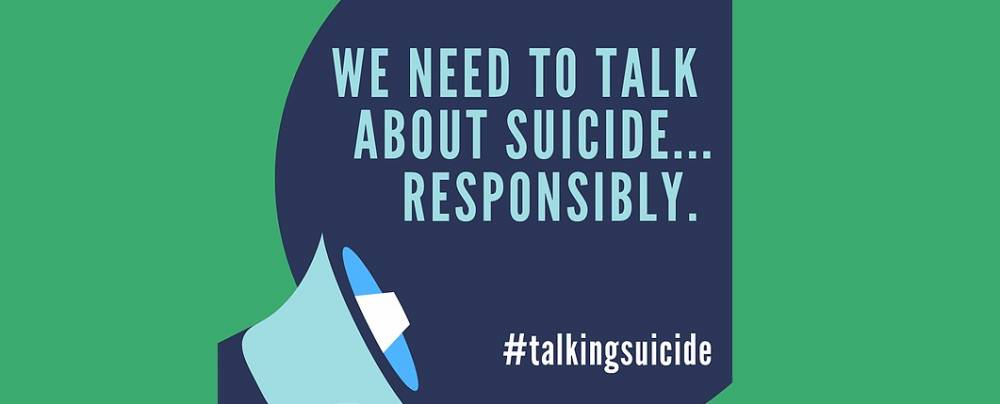
THEGAYUK.com has updated its style guide and adopting the suggestion by TalkingSuicide.co.uk to change the language it uses and will no longer use the term “commit suicide”.
The Samaritans is available 24 a day on telephone number 116 123 if you are having suicidal thoughts, suffering from depression or anxiety or just need to talk.
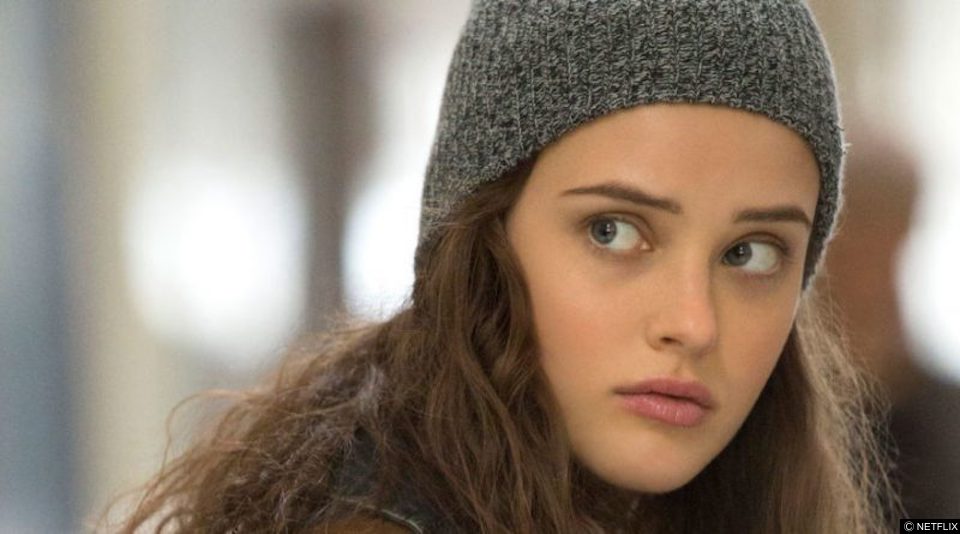
As I write this I have just realised how long it has been since I have written an article or a proper story. How long it has been since I felt really okay and that I might have suffered a PTSD related setback. Why has this happened I wonder: I felt so good a few weeks ago. Then I realise it started with watching a new Netflix series called 13 Reasons Why.
Revolving around a young girl’s suicide the series claims to be a show to get people talking about teen suicide, bullying, sexual assault and a cautionary tale about the signs of suicidal behaviour and how much a person can handle.
I watched it out of curiosity and in my capacity as a psychologist. Immediately after the first episode, I started feeling a bit odd. You see, I suffered from bullying, mental health issues and sexual abuse, so the series hit an immediate trigger. I should have stopped there and then, but for some reason, the series had taken hold of me, even if I could bear no more than one episode a day.
Soon I was triggered to the point of thinking over past events and painful memories for several hours a day. I couldn’t really work or concentrate, I was just thinking about myself, my traumas the lost years, the bullying. I began doubting any accomplishments I had made and mentally started dragging myself down. It was as if Hannah was taking me with her in her fall.
By the end of the series I was relieved it was over, and the documentary with warnings and support did little to alleviate the turmoil I was suffering.
I am not the only one, one journalist said,
“I can’t stop thinking about it and I really don’t want to. Because what I saw was more disturbing than any horror film imaginable.”
It is sad that something starting out as wanting to help teens suffering has got it so wrong and might cause more suffering in the end.
Having undergone the experience I applaud everyone who warns kids against watching it. I am a grown woman reliving trauma because of a story created for teens. This show had me out of kilter for weeks on end. How must it be to watch this when you are still living it? Dangerous, that is all I can say. It is bizarre that this show was created to warn against suicide when at the same time making it seem as the only option. The fact that it was announced that there is a second season.
The show shows extreme victim blaming and suicide as a payback, as finally taking control, not as the end result of months of mental pain. Suicide is not about control, not about revenge: it is someone thinking everyone’s life will be better without them. It is usually done as a spur of the moment decision to end the pain, not a planned out ritual.
Aside from the traumas 13 Reasons Why evoked and the glorifying of suicide and self-harm, the one that galled me the most was the character of Courtney and storyline in the show. As someone who has struggled with their sexuality for a very long time, seeing the lesbian character portrayed the way she was on this show was upsetting by itself. Compared to the male gay characters (one is a sweet good guy, the other has flaws but tries to do right near the end) she has no redeeming features at all. She was not even granted a scene of remorse at the end. Being a lesbian seems to be so bad that she prefers to protect a known rapist rather than face being outed. With such a lack of young lesbian role models on TV and in movies is this really what should be presented? For some reason being a lesbian is seen as problematic for many young women and girls these days and the impact this show has right now can only make this worse. Having Courtney show regret and sharing in her coming out would have lifted at least some of the problematic content displayed in this storyline.
Mental health officials and many celebrities have now warned against the show and I agree with them. It is triggering and can cause many mental problems.
Paris Jackson, who tried to take her own life in 2013, has also spoken out, calling the show ‘extremely triggering’ for young people ‘in a dark place’.
While actress Shannon Purser says: “I would advise against watching 13 Reasons Why if you currently struggle with suicidal thoughts or self-harm/have undergone sexual assault.”
Meanwhile, the National Association of School Psychologists took a clear stance, insisting the show is dangerous for young people.
“We do not recommend that vulnerable youth, especially those who have any degree of suicidal ideation, watch this series,” the board said in a statement.
At the same time, several Canadian schools have sent out warnings about 13 Reasons Why and one is telling students to not talk about it at all while at school.
I, on the whole, agree with this message. If you are open to it, the show can do strange things to your mental well-being. Teenagers are very susceptible and besides the fact that young people are suffering bullying and abuse on an extremely large and dangerous scale these days, there is also the internet. Online teens can both wallow in dark places where suicide, pain, mental health issues and self-harm are seen as glamorous and also experience more bullying. If this series is added to this never ending tsunami of darkness the suicide can all to easily be copied.
What teens need, now more than ever, is soothing storytelling. ’90’s TV shows like Blossom and Full House and Saved By The Bell might often be berated as soft and fluffy but series like those are what got me through the darkness in my childhood. When I was at my lowest these series were like a warm embrace, telling me things would be all right even if something went wrong. (In fact, marathoning both Full and Fuller House are what are getting me out of my depression now.) I know all too well how a young mind can be influenced by dark and tragic tales and had a series like 13 Reasons Why existed when I was young things might not have worked out so well for me. I hope that we will soon see an end to all the dark and “realistic” shows teenagers and young adults are fed these days.
Now more than ever we need “soft and fluffy”, we need to be told that “it will be alright” as our reality is dark enough as it is.
Opinions expressed in this article may not reflect those of THEGAYUK, its management or editorial teams. If you’d like to comment or write a comment, opinion or blog piece, please click here.
If you’re concerned about the mental health of a friend of family member psychotherapist Andrew Smith has ten top signs that you should look out for.
Top 10 Signs Your Friend Might Need Help
1. Social Withdrawal.
This is when someone may become more withdrawn from social activities, and not be as interested in going out and socialising. However, more importantly, they may not be doing anything else as an alternative. Give them an invite to something and mean it. As a therapist, we often use the boundary of a session to gently challenge clients who would wish to withdraw.
As a psychotherapist, the current news around suicide, immigration, and HIV transmission, troubles me greatly.
It is only a matter of months since we heard that Vikki Thompson, despite being known to be at serious risk in custody, was sent to a male prison anyway, resulting in her making the upsetting decision to end her life. The reverberations around the country have been vast – people are now engaging in dialogue about suicide, considering the fate of transgender men and women in the prison estate, alongside considering the wider concerns around the risk of suicide to the LGBTF community. For those of us who are part of this community, the concerns are real, and significant.
But what are, roughly, the facts?
In terms of stats, you are all probably aware that the majority of suicides are male (of the 6,233 reported suicides in the UK during 2013, 4,858 of those were men, and 1,375 were women (Samaritans’ Report, 2015). Males – and usually white males – between the ages of 49 and 65 were particularly at risk, especially professionals such as doctors, social workers, and solicitors. In addition, suicide amongst the LGBT youth is notable, with LGBT teens and young adults having one of the highest rates of suicide attempts in comparison with the rest of the population. The situation is truly disturbing for us, our families, and our friends. For those left behind when someone ends their life, recovery can be arduous at best. Even more sadly, the lack of a therapist who shares the same sexual identity can significantly impact the quality of the therapeutic relationship from developing at all. But what can we do about it?
The statutory services are often less than helpful. Without casting ‘shade’ on my Health colleagues, who work hard under very difficult circumstances, waiting lists remain high, the quick fix agenda is still rampant, and getting a therapy which will actually do what it sets out to do is rarely available, despite promises otherwise. Rather unconventionally, in a country where we expect to be treated for everything for free, my humble suggestion would be for anyone with a need for some emotional support, is to consider paying for the therapy yourself. Here are some things to think about in order to help your decision:
There are often no waiting lists in private practice.
Choice actually means something. If your therapeutic alliance is not working, find someone else. An hour’s therapy costs the equivalent of a meal out, or a pair of jeans. Your happiness is priceless. Therapy can take as long as you need it to, not just six sessions.
Many therapies are available online, i.e. Skype, meaning you don’t even need to go out of your home.
Confidentiality is more meaningful, as there will be no trace on your health record. At all.
The thing is, research supports the idea that therapy can be really helpful. For myself (yes, therapists are required to complete their own therapy) the therapy was life-changing. Therapy can help alleviate difficult feelings to the point where, for example, with depression, the impact can rival anti-depressants, and the effects can be felt for much longer afterwards. Some people report that therapy has been profound, with many people wishing they’d made the decision much earlier. Isn’t it about time you considered trying therapy for yourself?
About Andrew Smith:
Andrew is the clinical director of TherAppUK Ltd, an organisation based in Greater Manchester that provides a range of therapeutic solutions to individuals, families, and groups. He is also a doctoral researcher at the University of Huddersfield, and lives in the Calder Valley with his partner, Nigel, their son, a neurotic Chihuahua called Chicky, and two cats. If you have any urgent concerns about your own or someone else’s emotional health, please call 999 or NHS Direct. If this is a matter that can wait until one of our therapists can call you back, please email Andrew on andrew.smith@therapp.org
Provided Content by Andrew Smith (What does this mean?)
Opinions expressed in this article may not reflect those of THEGAYUK, its management or editorial teams. If you’d like to comment or write a comment, opinion or blog piece, please click here.