Tag: Top List

  • There are just somethings you’re not suppose to talk about, sex is one of them – apparently

    There are just somethings you’re not suppose to talk about, sex is one of them – apparently

    Brits would prefer to talk about their weight, mental health and family dramas than money.

    (C) BIGSTOCK

    A survey of 2,000 adults revealed what is and isn’t acceptable to talk about with their emotions, religion and infertility all considered more socially acceptable to discuss than finances and debt.

    Just 18 per cent consider the delicate topics of miscarriage and infertility to be off-limits compared to one quarter who say the same about personal finances.

    Similarly, one in five don’t think it’s suitable to disclose their salary in social settings and more than half believe the subject of money should be completely off limits at work.

    Other unacceptable conversations include drugs, sex and parenting techniques, with Brits going as far as to say discussing these ‘taboo’ subjects leaves them feeling ‘anxious’ and ‘nervous’.

    The research was commissioned by Lowell, which helps consumers and businesses manage credit better, and wants to highlight how talking helps.

    Clinical and counselling psychologist Tamara Licht Musso said: “Not talking can seem the best short term strategy, but is a negative coping mechanism and at some point it cracks.

    “Avoidance is also a classic way of coping to keep anxiety at bay, but we cannot avoid our thoughts, which is where all emotions emerge, therefore pushing back such thoughts may result in them appearing through symptoms such as difficulties with sleep.

    “Taking the ‘easy’ route might seem to be the answer because the rational path – talking – puts us in a much more vulnerable position.

    “In the short term this may be true, but it puts us in a healthier place in the long term.

    “The fear of being judged is based on distorted thinking patterns such as jumping to conclusions and mind reading.

    “For example, some people will think that by sharing their salary others may misjudge their ability.”

    The research also found more than half fear being judged if they were to open up about personal issues, while another one in two avoid certain topics because they find it ‘embarrassing’.

    “one third fearing it could lead to arguments”

    Others keep quiet as they don’t want to share their personal lives, believe it’s rude to talk about certain things or worry about the consequences of opening up, with more than one third fearing it could lead to arguments.

    One in five are afraid talking about things will break up their relationship and one in 10 even fear losing their job.

    However, due to avoiding discussions about an issue, 31 per cent have experienced loss of sleep and one sixth have even suffered from mental health issues.

    It also emerged that 62 per cent consider opening up to be a ‘big step’ and feel it’s sometimes ‘easier to keep it to yourself’.

    And almost half of those polled via OnePoll wish society made it easier and more acceptable to talk about things.

    Lowell’s Managing Director John Pears added: “Breaking down these taboos and having open, honest conversations helps understanding, and can pave the way to finding answers to problems.

    “Talking to someone is the first step, but it can obviously be difficult and many are worried, aren’t sure who can help or don’t feel they can trust someone.

    “We know that when it comes to money or debt, people can be particularly sensitive or embarrassed about it, and customers tell us that not talking has caused them to worry more and for things to get worse, which really doesn’t have to be the case – there is help out there.”

    Top 20 most socially unacceptable things to talk about according to Brits:
    1. Sex life
    2. Bodily functions
    3. Personal finances
    4. Salary
    5. Debt
    6. Miscarriage
    7. Infertility
    8. Addictions
    9. Religion
    10. Asking someone’s age
    11. Race
    12. Weight
    13. Other people’s lives
    14. Mental health
    15. Drugs
    16. Family dramas
    17. Sexism
    18. Parenting techniques
    19. Politics
    20. Emotional feelings

  • If your sleep is terrible, then try these top ten tips

    If your sleep is terrible, then try these top ten tips

    Sleep is essential to good mental health. You probably already know that when you sleep well you feel and work better.

    (C) BIGSTOCK

    In general, adults need between seven and nine hours of sleep but the exact amount varies from person to person. Different people need different amounts of sleep, and this depends on your age, your lifestyle, your genes and what you’re used to.

    A good night’s sleep won’t rid your life of emotional problems, but it can mean that you’re able to deal with difficult or stressful situations more easily.

    If you’re not getting enough sleep you tend to feel moody and irritable and lack focus. Obviously, this problem is likely to affect your relationships with people, your work and your mental wellbeing if ignored.

    So how can you improve your sleep?

    Here are ten top tips for a better night’s sleep from Mark Winwood, Director of Psychological Services at AXA PPP healthcare.

    Stay active during the day

    CREDIT: Flynt-bigstock

    Getting regular exercise during the day will help you to feel tired at night. Being active increases your metabolism and helps against stress and anxiety, which in turn will improve your sleep. Try to exercise earlier in the day or, if you prefer late night workouts, give yourself time to wind down and relax afterwards.

    Watch what you eat and drink, and don’t smoke

    Don’t have a heavy or spicy meal just before going to bed, as your body needs time to digest the food before sleep. Don’t go to bed hungry: a light snack before bedtime is ideal. Avoid caffeine – it can stay in your system for up to 6 hours and disrupt your sleep. A glass of wine may help you to fall asleep, but alcohol can affect the quality of your sleep, making you more likely to wake up during the night. Nicotine is a stimulant and studies suggest that non-smokers get better sleep than smokers.

    Make your bedroom more sleep-friendly

    Jail Hill Inn
    PR SUPPLIED

    Create a calm sleeping environment by turning your bedroom into a dark, quiet, clean and comfortable haven. A good temperature is between 18C and 24C. You may want to try black-out curtains, eye shades or ear plugs. Paint your room a calming colour. Remove any distractions that may keep you awake (including the family pets!) and keep your bedroom free from computers, TVs and phones. Is your mattress old? Is your pillow lumpy? Spoil yourself and invest in some new bedding.

    Develop a bedtime ritual

    Try to develop a relaxing night-time routine that prepares your body and mind for sleep. It could be taking a hot bath, reading a book, listening to calming music or having a milky drink – but try to stay away from bright lights and heated arguments just before bedtime.

    Relax and unwind

    CREDIT: MUSICAL FIDELITY EB-50

    Whether you need to stretch your muscles with yoga or calming your mind with meditation, there are numerous classes, apps, and books that can show you great methods to do both. Experiment and see what works for you. Some people find using a few drops of aromatherapy oil on the pillow, such as lavender, or a cup of chamomile tea to be soothing before bed time.

    Don’t toss and turn – get out of bed instead

    If you can’t fall asleep after half an hour, get up and do something else instead – try something relaxing like reading or listening to music. Only go back to bed when you feel tired. Similarly, if you find you’re dozing off on the sofa too early in the evening, get up and do a few jobs so that you save your snoozing for bedtime.

    Stop the weekend lie-ins

    Keep a regular sleep schedule. If you go to sleep and get up at the same time every day (even if you’re not feeling tired) it can help you get into a good sleep routine. Resist having naps during the day and don’t sleep in at the weekend.

    Keep a sleep diary

    It can be difficult to work out why you have problems sleeping. Keeping a sleep diary (or using a wearable device that tracks your sleep) can help you monitor when you fall asleep and wake up, how many times you wake up during the night and how rested you feel in the morning. After a week, reflect on your notes and try to work out what helps you sleep and what makes it worse.

    Jot down your troubles

    Life is often stressful and it can take time and some effort to learn what coping methods work for you. Try using a journal to jot down things that are worrying you and keeping you awake. Make a note of them and deal with them when you are refreshed.

    Seek professional help

    If your sleep problems persist, don’t suffer in silence, and don’t be tempted to self-medicate with over-the-counter sleep aids. Cognitive behaviour therapy (CBT) can be very effective at helping people who have problems with insomnia.

    For more information, please visit AXA PPP healthcare’s sleep hub.

  • These are the house rules Brits expect guests to still follow

    These are the house rules Brits expect guests to still follow

    Not taking your shoes off on entry, asking for the WIFI password – and using your mobile phone at the dinner table have emerged as house rules guests break most regularly, it has emerged.

    StockSnap / Pixabay

    Research also revealed polite guests should always use a coaster when setting their drink down and always put the toilet seat down.

    Steering clear of private areas of the house, not swearing in the presence of your host and sitting down at the table without washing your hands also made the list.

    Leaving your host to do the washing up is also considered ‘rude’.

    Richard Sinclair MBE, executive director of connectivity at Virgin Media, said: “Wherever we are, whatever we are doing, we always have the urge to stay online.

    Daria Shevtsova at Pexels

    “When visiting friends and family, research has shown that asking for the WiFi code is one of the first things people do.

    “As is courtesy when visiting someone else’s home, you should be mindful and always respect their rules to avoid any awkward situations.“

    The study also revealed while 71 per cent said there aren’t any particular rules they have which a guest must follow, those that do said it’s just a matter of ‘respect’.

    It also emerged more than a quarter of British homeowners find it ‘impolite’ when guests ask for the WiFi password during a visit.

    And one in 10 adults have gone to the extreme of refusing to hand out their WiFi password, reasoning ‘they’ve come for a visit, not to sit glued to their device’.

    If homeowners are to give out their WiFi password, they believe guests should wait for up to 30 minutes before asking, according to research carried out among 2,000 adults.

    But those who took part in the study who are frequent dinner guests at friends’ and neighbours’ homes feel strongly that they aren’t doing anything particularly wrong.

    One in five said they need to connect to their host’s WiFi because they feel compelled to check their emails.

    In fact the study found the average Brit can go just 36 minutes after arriving at someone’s home before the temptation to check emails and social media overwhelms them.

    One in ten admitted feeling compelled to check social media, according to the Virgin Media research.

    A further 23 per cent said they go online because there’s something on the internet they want to share with their host.

    And a quarter think being connected to the internet at all times has simply become a ‘habit’.

    A third of adults have visitors over at least once a week, with a tenth inviting guests round ‘most days’.

    TOP HOUSE RULES BRITS HAVE TO FOLLOW

    1. Taking your shoes off on entry
    2. No shoes on the sofa
    3. Always flushing the toilet
    4. Not using a cup without a coaster
    5. No looking at devices at the table
    6. No swearing
    7. Keeping the toilet seat down
    8. Washing your hands before dinner
    9. Putting on slippers and socks when you enter the house
    10. Being banned from certain areas of the house
    11. No social media
    12. Only allowed to use a certain bathroom
    13. No eating outside or the kitchen
    14. Not talking about certain topics
    15. Waiting a polite length of time before asking for the WiFi code
    16. Being told where to sit at the dining table
    17. Using certain cups for certain drinks
    18. Helping with the dishes
    19. Sitting in allocated spots in the living room
    20. Putting your plate/cups in the dishwasher
  • 6 simple things you can do to help a friend is struggling with depression

    6 simple things you can do to help a friend is struggling with depression

    It can be hard to know what to do to if a friend or family member is struggling with their mental health. Here are six tips to help you, help them.

    Free-Photos / Pixabay

    Send a text

    Free-Photos / Pixabay

    It might be a small gesture but sending someone a text to let them know you’re thinking of them can really help. Don’t expect a text back, but just reaching out can let somebody know that you’re thinking about them and that you love them.

    Make a care package

    langll / Pixabay

    Depending on your friend’s circumstances, it might be a good idea to deliver a simple care package. Someone who is dealing with bereavement or who has lost their job might forget about the practical things in life, like toothpaste or washing up liquid or even milk. Getting a few things together and dropping them around might be a great way to start a conversation. Be sensitive to your friend, however. Pride can be hurt so don’t go over the top.

    Ask the right questions

    TeroVesalainen / Pixabay

    If you pop over, or just happen to have them on the phone it’s always useful to ask the right question. Chloe Ward is a Technician at Smart TMS, the UK’s leading mental health clinic specialising in Transcranial Magnetic Stimulation, tell us,  “Are you okay?” is a great opener, adding, “Simple but effective. It may be that no one has asked that simple question for a while and if you follow this up with ‘is there anything I can do to help?’, they may feel safe enough to begin the conversation”

    Don’t try and fix them

    This can be really tough because you might feel like you’ve got the answer, but it’s always best to let people work out their own answers that will work with their circumstances. Also, how often do people really take advice? Especially when it isn’t asked for… never. So ask your friend what they think could help them out and explore their ideas with them. It can be tough but try not to judge, just listen.

    Just listen

    Free-Photos / Pixabay

    If your friend starts to talk, let them speak. Don’t interrupt in the first few minutes. If you’re confused about the timeline or the people involved, circle back round to it in your repeat back.

    Speak to a stranger

    Mimzy / Pixabay

    Let your friend know that they can call the Samaritans or Switchboard LGBT+ Helpline. It might seem like an obvious idea, but sometimes we need to hear an idea to act on it.

    Speaking to a stranger or someone on the end of a phone, who isn’t connected to them in any way can be a way in which your friend might feel more comfortable sharing their problems with. Samaritan’s phone number is: 116 123 or Switchboard is: 0330 330 0630.

  • Is there any right way of picking up a straight guy at the gym?

    Is there any right way of picking up a straight guy at the gym?

    The gays often have a fantasy that fit straight guys are so horny all the time that they’d be more than happy to abandon their heterosexuality in exchange for a quick blowjob in the changing rooms between sets.

    But has this actually happened to anyone? Seriously, we’re asking. If anyone has successfully sucked off a straight guy that was genuinely straight while at the gym you’ve got to get in touch and tell us about it, Dear Penthouse Forum-style.

    What does the internet suggest?

    CREDIT: curaphotography-bigstock

    This article began when I “stumbled upon” an old post about how to pick up straight guys at the gym. In it, the author claims to have successfully stalked picked up plenty of straight guys, and if you follow his tried and tested method you could too.

    This method involves the following steps:

    Step #1: Find out the guy’s name – either by eavesdropping or looking at his membership details when he swipes into the gym (not creepy at all).

    Step #2: Search the Internet and Social Media – once you have his name you can easily search the internet for info and images of him. A good ole fashion cyber-stalk.

    Step #3: Get all muscled up and ask for a spot – a perfectly acceptable practice in the gym that is also the start of plenty of pornos. Be sure to “Dress somewhat sexy but keep it tamed down.”

    Step #4: Say thanks and walk away for that day – you don’t want to seem desperate or crazy at all…

    Step #5: Make sure you say hello next time you see him at the gym – this one I have no problem with.

    Step #6: Repeat step 5 several times with a twist – Remember, your goal is a hook up with your fantasy gym guy, not some random hookup off a phone app. So take your time stalking this guy properly. Like a gentleman. Oh, and be sure he notices you checking him out casually. That’s really important. Straight guys love that.

    Step #7: Make your move – This is when you ask him to “hang out” sometime, he’ll know what you mean. But god help you if he’s actually straight and he ends up inviting you to watch football with the boys. That’s creep-karma for ya.

    What you’ll actually get

    There is no reason you can’t be sociable and make friends at the gym. Granted in cities like London, people don’t really respond well to… well, people, but that won’t be true all the time and in all the gyms.

    The best-case scenario is you’ll strike up a sociable conversation with a straight guy that could eventually become a friend, acquaintance, or workout buddy. Which would be great, even better than bathroom blowies in my opinion.

    Don’t be a creep

    Just don’t do it.

    Hook up culture has made it SO easy to pick up guys, whether they’re gay, bi, curious, or some wonderful mixture of all three. So why not just open up Grindr in-between sets.

    If he’s looking for a hookup the chances are he’ll be on there too. If not then you can get on with your workout without further distraction … other than when he walks past, bends over, flexes or flashes his abs in the mirror. You’re allowed to be a little creepy and perv over that, I mean guys have been doing that to girls for decades so it’s only fair.


    This article was first published on our partner site, Gay Fitness UK

  • 10 questions we gay men hate hearing!

    10 questions we gay men hate hearing!

    There are a number of things in life that annoy everyone. Trains running late, an unexpected bill, people that do very little work but get all the rewards, Katie Hopkins, the realisation you’ve missed the McDonalds breakfast timings… those sorts of things.

    But there are some things that annoy us gays specifically and things that, one day everyone will be suitably informed and emotionally aware enough to not ask these utterly stupid questions. I’ve run through the top 10 of these questions and thank to you those that fed back on these on twitter.

    Are you the man or woman?

    I’ve been in a serious long term relationship on 2 occasions in my life. On both occasions at least once each time someone has asked (seriously or not) “so who is the man in the relationship?”. Or, the other variation of “so she is the man and woman?”

    First, and foremost, who said relationships have to be defined by gender stereotypes? When did this become unwritten natural law? And second, would being ‘the woman’ be such a bad thing as indicated by your tone?

    It’s usually the straights that do this and they are simply imprinting onto to us their own understanding on how relationships work. One person is the man (or boss) and the other is the woman (not the boss). Although many relationships I know of straights, the man is very rarely the boss. So the whole concept is just crap. Not offensive to hear, just bloody annoying after a while.

    Top or Bottom?

    Within our own community, this question does grate on me. Usually online but you do get it face to face as well. “Are you top or bottom?”. Now, I’ve written more than one blog post on bottom shaming, Top vs Bottom etc so I freely admit that I may have added to this problem. But in all my posts I encourage sexual freedom. Don’t be defined or confined by it like this loaded question is designed to do.

    Whenever someone asked me I tend to give a sarcastic response. “Are you a top” is usually met with an “ooooh I love this questionnaire things. I filled one in the other day and it said that I was most like a polo shirt. Stylish, functional and only really used by men of a certain age”.

    Instead, why not ask someone what they enjoy doing sexually? Personally, I enjoy anal but for various practical reasons, I can’t take anything anally. I’m not your typical top as I actually care about the pleasure someone gets and am very patient and understanding about accidents. Something which very few ‘tops’ are. Something which needs to change!

    Two tops or two bottoms – how does that work then?

    Linked to the above is the really probing questions many couples face. When someone finds out if you are one thing or another then just have to know “So, you’re both tops/bottoms? How does that work then?”.

    For which my usual, completely over the top response usually is, “Sorry Mavis, with your piles and John’s hip, how does it work for you?”.

    Piss off, in short. Such questions have nothing to do with the outside world and are not someone one straight couple would ask another. While the temptation to be nosey is there, my eyes roll when I hear it as it’s just an excuse for someone to be nosey, intrusive and completely inappropriate.

    Two friends together however over a wine or two, very different. No subjects are taboo in that scenario!

    Have you ever had sex with a woman?

    via GIPHY

    I always laugh at this one. It’s not like cheese tasting where you try a Danish Blue and decide strong cheese isn’t for you. Gays and indeed Bisexuals have a wide range of backgrounds. Some have drunk from the lady cup, others have not. One is not more valid than the other. Yet, once again, this usually comes from the straights. I’ve seen the odd gay man ask it but not usually with any seriousness and usually with context around our histories.

    Don’t you want to try sex with a woman?

    The straights, however, love to ask. Usually followed up with a “would you though, for the right woman?”. For which, once again, the answer is also no. Sexuality isn’t a cheese tasting course. I’m not going to grow a taste for the odd bit of Wensleydale with a nice dark port. P**s off.

    So, that guy you mentioned, have you slept with him?

    via GIPHY

    When we start talking about a friend we know, if they are male, both gays and straights alike, always get the urge to ask if we have slept with the said man.

    The gays usually do it because they are your friend and they are being nosey looking for a juicy bit of gossip on what happened. Which is fine, sort of, but annoying none the less especially as the answer is usually no even though deep down we really wish it was a yes.

    Did you always know you were gay?

    via GIPHY

    Now this one is very context driven as there are occasions where it is a perfectly valid question between friends. But as one of those Ice Breaker questions when’s someone learns of your sexuality, that would be a no-no.

    For me personally, I came out at 19 and I was only really in the ‘closet’ for about 4 years leading up to that point. Until midway through puberty my thoughts were very much about girls, I would even draw erotic art about girls. But after time I found myself drawing more of the male figure and focusing more on their roles in my short (erotic) stories. Around that point, I realised and starting going through the motions.

    Yet those that haven’t been through what we have, don’t assume that. They just assume we have always lived and breathed being gay and therefore always knew. Not so, for many of us, this was something that developed or being realised at a point later in life. That doesn’t make us any less gay, yet the question seems to imply that we aren’t ‘purebred’ because we weren’t ‘gay from birth’.

    Have you watched Drag Race?

    via GIPHY

    I’ll admit, I do watch Drag Race. But even I get annoyed the number of times I am asked by straight friends and people I meet who learn I am gay. Last time I checked there wasn’t a ‘required watching’ list in order to be a gay man in the 21st century (and even if there was, Drag Race would not be on it). So it always makes me laugh how people take the most obvious part of the LGBT/Queer life and suddenly thing gay = must watch drag race.

    Sorry boys n girls, I know plenty of gay men then don’t watch it and I admire / perve on them all the same.

    How can you be gay, you don’t look gay?

    via GIPHY

    Breaking news everyone, a scientist has discovered that gays are born and grow physically different from the rest of the human race. Research has found that a gay man has
    – a higher metabolism, therefore, is often leaner in body shape (and has a larger penis because of it)
    – has developed different vocal cords, therefore, their voice is often softer and of a higher pitch
    – has weaker joints, therefore, things list wrists, elbows and knees bend easier leading to limp wrists, mincing walks and flexible body parts
    – only seems to have the genes for lighter hair and eye colour
    – skin that tans easily
    – lower cognitive abilities resulting in a tendency for dry wit & humour (often referred to as “sass”.

    Have you not heard of this discovery? No? Well, that’s because it’s a load of old rubbish. There is no such thing as a ‘gay look’, other than the typical image given to us by mainstream TV.
    – Camp
    – Blonde
    – Blue or Green eyes
    – Well built
    – softly spoken
    – sassy

    I can see why people have had this impression, therefore, imprint it onto the wider community, but really? I am rarely any of these things (some things I am more of when drunk) but many of the physical things I most certainly am not. Especially the high metabolism part. Yet the last time I checked I was a gay man, capable of loving and pleasing other gay men?

    That one I do find more offensive than annoying, but it is still annoying all the same.

    Do you orgasm every time you have a poo?

    via GIPHY

    This one came into me via Twitter from a follower. Apparently, a straight friend of theirs was curious about anal and asked the question. And for simple minds, I could see why they would come to the conclusion that having a rather large shit was the same as a good-sized cock up your arse.

    I can safely say that they are not related, at all. So don’t ask you narrow-minded gibbon. It’s the same logic as so when you have a swab down your urethra, that’s just like having a piss right? No, it isn’t. ?️‍?

  • This is how you can be a better non-binary ally

    This is how you can be a better non-binary ally

    Six ways we can all become a better ally to our gender non-conforming siblings.

    Not everything is binary… kerplode / Pixabay

    Last year I happened upon this Tweet during Trans Awareness week and it got me thinking…

    Also on twitter, stop assuming people’s pronouns based on their profile pic and your binary stereotypes.

    Read their profile. Check their pronouns. Don’t assume.

    And while you’re there, put your own pronouns in your profile.

    Normalise that shit ✨#TransAwarenessWeek

    — Thal (@thalestral) November 12, 2018

    Let me tell you about my own gender expression before we go on. I don’t think of myself as a “man” because I don’t really fit into what society expects of its men. When I was a child all I wanted to do was be called a girl, wear high heels, my mum’s dresses and sing Petula Clark’s ‘Downtown’ on repeat.

    I was a Grade A queer/trans kid. As an adult I couldn’t admit that to anyone outside my immediate family. I was so shamed by this behaviour – and bullied mercilessly at school when I chose to wear the white, patterned “girls’” socks instead of the regulation grey socks for boys.

    Nowadays, I dress in masculine clothes, I have a boyfriend, I have short hair and people assume that I’m a man and a gay one at that. I enjoy the privileges that, for the most part, that assumed identity affords me. But, it never really feels right when someone refers to me in that way.

    That said, I don’t mind if people use the pronouns him/his or he when they refer to me. Although it does jar me if someone calls me a man. Weird.

    I also don’t mind it if I’m referred to with female pronouns.

    I’m pretty relaxed about the pronouns that are used to describe me.

    But for some, words really matter. So here’s some advice to help us all become better allies to our non-binary, gender non-conforming siblings.

    Open your ears and mind

    via GIPHY

    It seems that we’ve all got our lives set to transmit only. We need more receiving in our lives. So when someone is telling you something about them, listen.

    Leave your assumptions at the door

    via GIPHY

    Someone once wisely told me, “Assumptions are the mother of all fuck-ups” – and they were completely right. How often have you assumed something about a situation only to find that nothing was as you imagined? Pretty often, right?

    Your assumptions are based on your own life experience. It doesn’t take into account other people’s experience. So leave your assumptions at the door and again, open your mind.

    Respect pronouns

    rawpixel / Pixabay

    If a person tells you what their preferred pronoun is, accept it don’t fight it. It’s what they’ve asked you to call them. The decision is effectively out of your hands. It’s the same as when someone tells you their name. You accept it and it becomes part of their identity. Well, pronouns are the same.

    Accept that there are lots of different pronouns

    via GIPHY

    Some non-binary, gender fluid and gender non-conforming folks use a number of different pronouns. Some popular ones are: Zim/Zer and Ze, they/them and theirs or even thon, which was actually added to the dictionary in 1964. They as a singular pronoun has been used for centuries.It’s not particularly new, it’s not trend based, it’s just getting a lot of media attention at the moment.

    Stop normalising gender norms

    via GIPHY

    Blue for boys, Pink for girls… gender stereotyping is all so the 1950s and really doesn’t work for today’s society. No one likes living in a predefined box and we don’t live in a black and white world. There’s a whole rainbow out there.

    Gender norms and stereotypes, when adhered to, just keeps society attached to a patriarchal system that’s almost impossible to climb and doesn’t work for all of us, particularly LGBT+ people. So lets bin it shall we?

    Write your own pronouns

    via GIPHY

    Normalise the conversation surrounding pronouns. Write your preferred pronouns in your social media profiles. As @thalestral says on Twitter, “normalise that shit”.

  • 12 Things Every Gay/Bisexual Man should Know about Prostate Cancer

    12 Things Every Gay/Bisexual Man should Know about Prostate Cancer

    For gay and bisexual men, prostate cancer, in particular, can be even more challenging than for their straight counterparts. “Gay & Bisexual Men Living with Prostate Cancer (from Diagnosis to Recovery)” is a new book that addresses bias against and the unique needs of gay and bisexual men diagnosed with prostate cancer.

    FILE PHOTO (C) BIGSTOCK

    by B. R. Simon Rosser and William West

    Edited by Jane M. Ussher, Janette Perz B.R., and Simon Rosser “Gay & Bisexual Men Living with Prostate Cancer” was written not only for the medical community treating gay and bi men with prostate cancer but also as a supportive resource for gay and bi men diagnosed with prostate cancer. It is the most current and comprehensive book on the subject published to date, incorporating the tremendous new developments in cancer treatment from the past ten years.

    Here, Dr Simon Rosser and Dr Bill West, coauthors of several chapters in “Gay & Bisexual Men Living with Prostate Cancer,” answer 12 questions and offer advice to gay and bi men facing prostate cancer. Simon and Bill are married, out and living with prostate cancer.

    1. How common is prostate cancer in our community? Prostate cancer is the #1 invasive cancer for men and the most common cancer in the gay male community. One in seven gay men will be diagnosed in their lifetimes. Since gay male couples have two prostates, they have twice the risk than heterosexual couples or a one-in-three chance.

    2. What are the symptoms of prostate cancer? Prostate cancer typically develops without symptoms which is why it needs to be detected through a blood test (the Prostate Specific Antigen or PSA test) and by a doctor feeling for any abnormalities during a digital rectal (or finger up the butt) exam. Two common prostate problems should not be confused with prostate cancer. As we age, our prostates typically get larger which can lead to problems urinating. This is called benign prostatic hyperplasia or BPH. Prostatitis refers to when the prostate gets infected or inflamed.

    3. So, what causes prostate cancer? Older men, men with a family history of prostate cancer, and black men are at greater risk of diagnosis and/or worse outcomes. Our research indicates that HIV positive men and bisexual-identified men have worse outcomes than HIV negative men and gay-identified men, respectively. Gay “lifestyle” factors – such as being gay versus straight, lots of sex or no sex, amount and rigour of receptive anal sex, smoking, drug and alcohol use, a history of sexually transmitted diseases and long-distance cycling – have not been associated with greater risk or worse outcomes.

    4. So, why is prostate cancer in gay men an issue? Different prostate cancer treatments have different effects on our sexual functioning. About 20 per cent of patients treated with radiation experience radiated bowel, which makes receptive anal sex painful to impossible. Conversely, almost all men treated with surgery (and many with radiation as well) will have erection difficulties, after treatment, making insertive sex very challenging. Treatment can also affect penis size, ability to ejaculate, the experience of orgasm, pleasure in receptive sex, and urinary problems during sex or at orgasm. This makes it important to discuss gay sex with your specialist as part of choosing which treatment will have the least side effects for you.

    5. If I want to be checked for prostate cancer, what should I know? The typical test for prostate cancer involves both a blood test and a digital rectal exam. Because massage of the prostate may hypothetically affect the blood results, we recommend you refrain from receptive anal sex or other anal stimulation for 48 hours before the blood is drawn and make sure the blood is drawn before the digital exam.

    6. Does being diagnosed mean you have to be treated? No. Many men with low-risk prostate cancer never need treatment. Instead, they go on active surveillance. This simply involves having a blood test every three months to monitor the amount of prostate-specific antigen in their blood. This may also involve additional biopsies to track if the cancer is changing.

    7. Is prostate cancer contagious? No, if your boyfriend, husband or a male sex partner has prostate cancer, you cannot get it from him. Prostate cancer is not sexually transmitted.

    8. What’s it like to be diagnosed with prostate cancer? Fortunately, prostate cancer has an excellent (over 99%) survival rate provided it is treated early. We are a male couple where both of us have been diagnosed. Here’s what to expect. The initial diagnosis can be scary and requires a biopsy which can be uncomfortable. Don’t panic. Most prostate cancer is slow growing so in many cases you can go at your own pace. Gay men are more likely to feel isolated or go through treatment alone, so it’s important to reach out for support. Prepare a list of questions before each consultation and ask them at your next visit. Bring your man (if partnered) or a friend (if single) to the consultation, both for support and to listen to what the specialist says. Deciding if you need treatment and what treatment is best for you are critical milestones, where many patients seek a second (or third) opinion.

    9. How does it affect being gay? Because it’s cancer and because it affects our sexual functioning, many gay prostate cancer patients report feeling less than other gay men. There’s a stigma to having prostate cancer which can affect our sexual self-esteem, sense of attractiveness and potency. And because it affects erections, some men may become more at risk for HIV if their erections are not strong enough for condoms or if they decide to bottom more instead.

    10. What’s gay sex like after treatment? Everyone is different. In our experience, good sex is definitely possible after treatment but it is challenging. It takes time and patience (up to two years post-treatment), commitment to sex as a priority, good communication between partners, lots of sexual rehabilitation exercises, and flexibility. The biggest loss we had to deal with was spontaneity – erections don’t just happen, and we have to plan sex if it is to be successful. We found erectile drugs and vacuum pumps to be a help as well.

    11. What should I think about in choosing a specialist? Know that many urologists and oncologists see themselves as technologists focused on survival. Not all are good at talking to patients or discussing sex. While survival is obviously important, quality of life is as well. Most gay and bisexual men are sexually active and want to remain so after treatment. So, it’s critical to find a specialist you can be open with, and have your questions answered. When making an appointment, ask for a specialist who is comfortable discussing the sexual effects of treatment. And if they seem uncomfortable or unknowledgeable about sex between men, seek a second or third opinion until you find someone you can trust.

    12. If I’m gay, bisexual or a man who has sex with men living with prostate cancer, where can I get help?
    For more information: See our just-published book, J. M. Ussher, J. Perz, B. R. S. Rosser, Gay and Bisexual Men Living with Prostate Cancer: From Diagnosis to Recovery (Harrington Part Press, New York 2018).

    Book webpage: https://harringtonparkpress.com/gay-bisexual-men-living-prostate-cancer/

    For support services: www.Malecare.org is the largest provider of online support worldwide and has groups specifically for gay and bisexual prostate cancer patients.
    To get involved in research: At the University of Minnesota, we are conducting the first, large, NIH-funded study testing online rehabilitation designed by and for gay and bisexual prostate cancer patients living in the US.

    See: www.restorestudy.umn.edu or email: Restorestudy@umn.edu.

    Dr Simon Rosser is a gay men’s health researcher and Dr Bill West a health communication specialist at the University of Minnesota. They specialize in prostate cancer in gay and bisexual men.

    They co-authored several chapters in J. M. Ussher, J. Perz, B. R. S. Rosser, Gay and Bisexual Men Living with Prostate Cancer: From Diagnosis to Recovery (Harrington Park Press, NY, 2018).

    They are married and out as a gay couple living with prostate cancer.

  • 14 things you’re doing to make everyone at work hate you

    14 things you’re doing to make everyone at work hate you

    Those things we do that are totally assholely

    Office politics are real people. We spend so much of our lives working for the boss, so why not try to make life just a little bit easier for everyone…

    1) Passive aggressive emailing when you don’t get the answer you want.

    2) Not putting an “xx” after your name when someone else has in their email.

    3) Using up the last of the milk/teabags/chocolate digestives and not replacing them.

    4) Leaving your washing up in the sink for someone else to clean it up.

    5) CCing a non-responder’s boss on email – why don’t you just call them!

    6) Not going for drinks/birthdays/parties

    via GIPHY

    7) Getting “offended” at every little thing. Life’s short smile once in a while

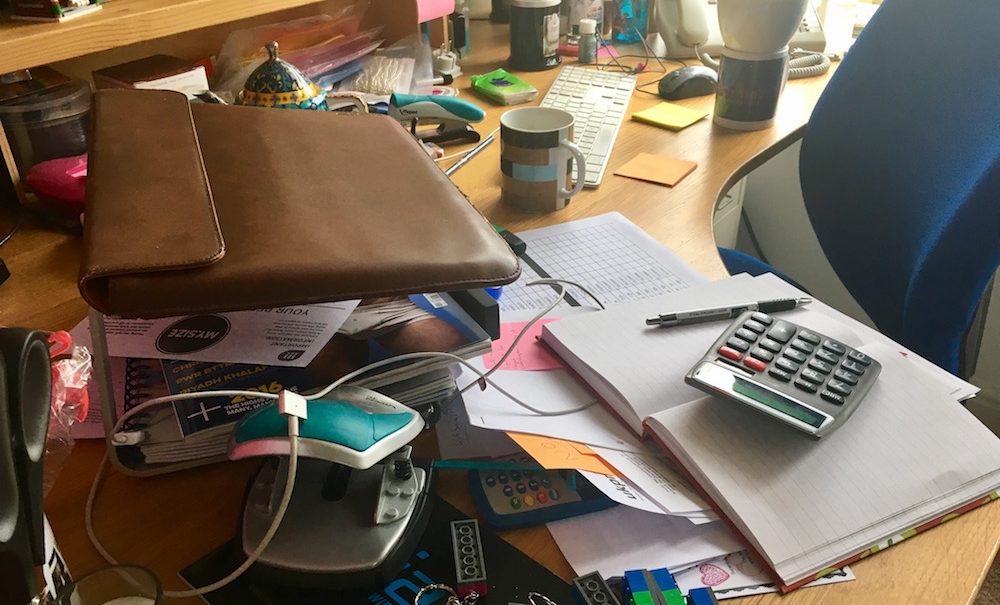
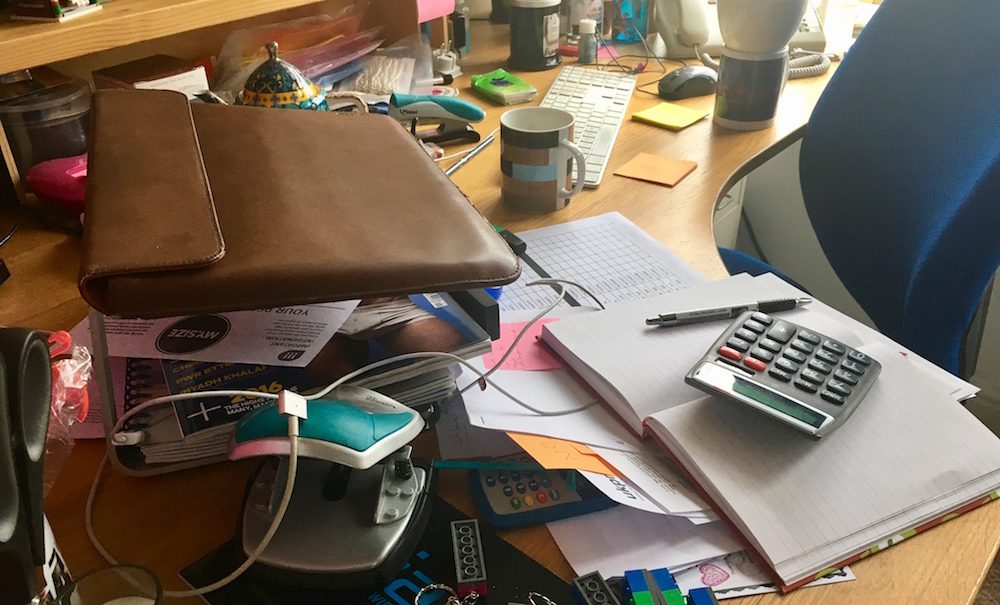
    8) Have the messiest desk ever.

    Messy office desk
    CREDIT: TheGayUK

    9) Eating your smelly food at your desk.

    10. Constant, constant, constant interruptions.

    11. When you’re on a “go slow”

    12. Take personal calls that EVERYONE can hear.

    via GIPHY

    13. Coming into work when you’ve got a stinking cold or flu.


    14. Go hard on the aftershave.

  • 10 ways to reduce your dependence on your phone

    10 ways to reduce your dependence on your phone

    If you’re looking for ideas to reduce your dependence on technology,Sloan Sheridan-Williams is a celebrity life coach, international speaker and author of “Slap Fear” shares her 10 life hacks…

    10 ways to reduce your dependence on your phone
    TheHilaryClark / Pixabay

    It’s likely that you’re reading this piece on your phone, but are you happy with how much time you spend on the device? When technology is starting to rule your life, why not take a step back and take note of Sloan’s top 10 hints at regaining control of your life.

    First step is to put your phone down, Sloan told us, “Spending time online with friends should be a last resort not your first port of call. If you want to shift your focus from unhelpful social media habits to meeting friends in the real world but don’t know where to start, here are my top ten suggestions to get out from behind your handheld device and re-connect with the people that matter.

    reducing time on your phone
    CREDIT: ©-Vadymvdrobot-Depositphotos

    10 tips to reduce technology in your life

    1. Share a lovingly home-cooked meal or go to your favourite restaurant

    2. Get a boost of energising Vitamin D

    3. Share emotional experiences like watching a movie or sporting event.

    4. Having fun on theme park rides will help you bond with the rush of endorphins

    5. Go on a bike ride or a long walk in the park

    6. Visit a comedy club and laugh out loud

    7. Go out and dance like no-one is watching

    8. Pedalo on the Serpentine or on a nearby lake that offers similar

    9. Fly a kite

    10. Go to a Roller Disco and let your hair down.

    Follow Sloan Sheridan-Williams on Twitter

  • 25 non trans actors who have played trans parts in films and TV

    Some of the most memorable trans characters have been played by cis-gender actors… here are 25 of the most famous roles.

    List of cisgendered actors who play trans characters

    Here are just some of the mainstream films and television shows where a trans character wasn’t played by a trans actor. The argument against non-trans actors taking these parts have made headlines once again after a clip of Matt Bomer in his forthcoming film, Anything was released.

    Warning this article may contain spoilers to various films.

    The 1950s – 70s

    Daniel Davis, Glen or Glenda, 1953

    Embed from Getty Images

    Glen or Glenda was released in 1953 starring Ed Wood – who was actually credited as Daniel Davis in this film. It’s a semi-autobiographical film, considered one of the worst films of all time. However, it is considered a plea for tolerance.

    Chris Sarandon, Dog Day Afternoon, 1975

    Embed from Getty Images

    Dog Day Afternoon is based on a real-life story, where a bank robber (Al Pacino) holds up a bank in New York’s Manhattan to pay for his girlfriend’s (Chris Sarandon) gender confirmation surgery. Chris Sarandon’s portrayal of a trans woman was applauded for its consideration of dysphoria.

    Tim Curry, The Rocky Horror Picture Show, 1975

    Embed from Getty Images

    Probably one of the most famous films to feature a “sweet transsexual”. TRHPS has gone on to become a cult hit and recently had a remake filmed and it starred Laverne Cox in Tim Curry’s part of Dr Frank N. Furter.


    The 1980s – 90s

    Michael Caine in Dressed To Kill, 1980

    Embed from Getty Images

    In 1980 Michael Caine played a murderous trans woman in this erotic thriller. For his part in the film, Mr Caine was nominated for a Golden Raspberry Award for Worst Actor.

    Jaye Davidson in The Crying Game, 1982

    Embed from Getty Images

    A drama which explores themes of race, gender, nationality and sexuality with the troubles of early 80s Northern Ireland as a backdrop. The trans character in this film is actually one of its great surprises, which is considered a “shocking twist”. Jaye Davidson was nominated for a Best Supporting Actor for the role.

    John Lithgow, The World According to Garp, 1982

    Embed from Getty Images

    The World According to Garp based on the book of the same name by John Irving which is the story of T.S. Garp. In the book his mother, who runs a home for abused women gives shelter to a former footballer, now a transgender woman, Roberta Muldoon.

    Ted Levine, The Silence Of The Lambs, 1991

    Embed from Getty Images

    Ted Levin played a trans serial killer who skins his female victims. In the story, Ted’s character, Jame Gumb, applied for a sex-reassignment operation but was unsuccessful in gaining in their cause.

    Terrence Stamp in Priscilla Queen of the Desert, 1994

    Embed from Getty Images

    One of the most successful LGBT films of all times was released in 1994 is in the top 40 grossing gay and lesbian films of all times. Terrence Stamp’s Bernadette Bassinger is a carefully studied character, played respectfully.

    Mary Sean Young, Ace Ventura: Pet Detective, 1994

    Possibly one of the most offensive portrayals of a trans person in film – which uses the trans character as a comedy mimic.

    Julie Hesmondhalgh in Coronation Street, 1998

    Embed from Getty Images

    Coronation Street made history in 1998 when they introduced the first trans character to a British soap. It wasn’t until 2015 that EastEnders made further history by having a trans actor play a trans character. Julie Hesmondhalgh has been praised for her portrayal of a trans person and she is a huge advocate for the LGBT community. In 2017 she called on TV companies to employ trans people in trans roles.

    Hillary Swank in Boys Don’t Cry, 1999

    Embed from Getty Images

    One of the most tear-jerking LGBT films of all time. Hillary Swank was truly remarkable in the film which was based on the true story of murdered trans man Brandon Teena. The film was nominated for 57 awards and won 37 of them including, Best Actress (Oscars and BAFTAs) for Swank.


    The 00s to 10s

    John Cameron Mitchell in Hedwig and the Angry Inch, 2001

    Embed from Getty Images

    One of the only musical films featuring a trans character in the central role. John Cameron Mitchell wrote and directed this film. It features in the top 100 LGBT films.

    Felicity Huffman in TransAmerica, 2005

    Embed from Getty Images

    Felicity Huffman was widely praised for her role in TransAmercia as a pre-operative male to female transgender person. This was an unusual casting decision as usually male to female trans parts are played by males rather than females.

    Daniela Sea in the L word, 2006

    Embed from Getty Images

    When Daniela joined The L word in 2006 she had the role of Moira Sweeney, an androgynous computer technician who moves from the Midwest with Jenny (Mia Kirshner). Over the course of the season, Moira comes out as a trans man, adopting the name Max Sweeney.

    Rebecca Romijn in Ugly Betty, 2007-2008

    Embed from Getty Images

    Rebecca Romijn was another female who was cast in an M2F role in the comedy TV series, Ugly Betty. She appeared midway through the first season and left in season 3.


    The 10s to 20s

    Seth MacFarlane, Family Guy, 2010

    Derided by Glaad for the way in which Family Guy deals with transgender issues, Seth MacFarlane voices the character of Quagmire’s parent, Ida who goes through sex-reassignment surgery in the episode, “Quagmire’s Father”.

    Chloe Sevigny in Hit And Miss, 2012

    Embed from Getty Images

    Hit And Miss was a TV series which followed the life of a transgender contract killer. It ran for one series.

    Jared Leto in Dallas Buyers Club, 2013

    Embed from Getty Images

    Jared was awarded an Oscar for his role in Dallas Buyers Club, however, his casting in this film and subsequent acceptance of the Oscar with a full beard was criticised by some in the trans community. Laverne Cox recently said, “as brilliant as Jared Leto is, and all these actors who play trans women, when people who don’t know anything about trans folks and trans women see the very sexy Jared Leto and his beard accepting an Oscar for playing a trans woman, the message that it sends is that trans women are really men”

    Jeff Tambor in Transparent, 2014

    Embed from Getty Images

    Amazon was praised for the production of Transparent starring Jeff Tambor who plays a trans person coming out as trans later in life. The show has won awards and much love from the critics for its sensitive portrayal of a family dealing with and accepting transition.

    Eddie Redmayne in The Danish Girl, 2015

    Embed from Getty Images

    Eddie Redmayne played the part of Lili Elbe, acknowledged as the first trans woman to go through sex reassignment surgery. Despite it being widely praised there was only one Oscar win out of four nominations. The film was banned in a number of countries including Qatar, the UAE, Oman, Kuwait and Malaysia.

    Jonny Beauchamp and Otoja Abit Stonewall, 2015

    Embed from Getty Images

    Embed from Getty Images

    Stonewall was much derided when it was released in 2015. It also stars two actors in trans roles who are not trans. Otoja Abit who played Marsha P Johnson and Jonny Beachamp who played the fictional character, Ray/Ramona.

    Benedict Cumberbatch, Zoolander 2, 2016

    The shiz really hit the fan when it appeared that Benedict Cumberbatch, considered by many as a true LGBT+ ally took on the role of “All” in Zoolander 2. Many in the non-binary community took offence to the portrayal of “All” and over 7000 people called for a boycott against the film.

    Elle Fanning, 3 Generations, 2017

    Embed from Getty Images

    Fanning plays a character who pursues his true identity as a male. Its release date was pulled in 2015 and pushed back until 2017.

    Matt Bomer in Anything 2017

    ©-Jean_Nelson

    The film has already received criticism, even before its release for having a cis male actor play the part of a transgender person.

    The film is about a transgender woman falling in love with a straight man. Mark Ruffalo is an executive producer on the film. Defending the decision to cast a cis-male in the role of Freda, Mark said that he had a “profound experience” working with Matt in The Normal Heart.


    Have we missed something? Is there an error? Please use the comments below to help expand this article.