Tag: Trans

This is where you can find all articles about and for the trans community. Are we missing something? Send an email to newsdesk@thegayuk.com

  • India Willoughby slams Katie Hopkins after suggesting society is experimenting with trans kids

    India Willoughby slams Katie Hopkins after suggesting society is experimenting with trans kids

    India Willoughby, one of the UK’s most visible trans women has slammed Katie Hopkins after suggesting that society is experimenting with trans kids’ minds.

    Katie Hopkins was dealt an online blow from fellow former Celebrity Big Brother star, India Willougby, after the controversial former LBC radio presenter / Sun columnist / Mail Online columnist, TV presenter and Apprentice walk out, suggested that parents are the ones who suffer when their trans offspring decide to have surgery.

    Hopkins’ comment was in reference to a mother who wrote on Twitter, “A plastic surgeon is removing my dghtr’s (daughter’s) healthy breasts tomorrow & he has been pd (paid) at least $8000CAD to do this. How much $$ will he want in a few years when she decides to reclaim her female body?

    Hopkins, wrote back, “It is often mums who suffer when society experiments with kids’ minds

    StickerWoman is a hashtag which has been linked to stickers which have been found in various UK cities which state, “Women Don’t Have Penises”.

    “No One Is Experimenting”

    In a blistering response, Willoughby called Hopkins out on her statement saying, “Bitch. No one is experimenting with kids [sic] minds.

    “You’re the sort who says they should go through puberty regardless of who they insist they are.

    “And when they come out on the other side taller, broader, hairier, and unhappy, you’d be the first to point and laugh.

    “I repeat. Bitch”.

    Hopkins undeterred replied, “I stand with Women do not have penises”.

    “No young kid get sex-change surgery”

    Willoughby shocked by Hopkin’s “ignorance” explained, “Just as much as you knew who you were, so do trans kids. If kids grow out of it without pressure, great – feel relieved for them! No young kid get sex-change surgery”.

    Before turning her ire to the LGBT+ community stating “I’m mad at LGBT as well though – because they’ve watered T down to nothing”.

    Previously, Hopkins caused offence during the previous season of Celebrity Big Brother, in which Willoughby took part, by Tweeting, “I am not transphobic. Live your life how you damn well please. Just don’t ask me to call a castrated man a woman”.

  • Is the Gender Recognition Law ready for change?

    Is the Gender Recognition Law ready for change?

    Two solicitors, Craig Longhurst and Alex Watson from the leading law firm Fieldfisher write about the government’s plans to revisit the relevance of the Gender Recognition Act 2004 and some of the issues facing the transgender community today.

    vjohns1580 / Pixabay

    When it brought the Gender Recognition Act 2004 (GRA) into force on 4 April 2005, the UK became the first country in the world to allow a person to legally alter their gender without having had any surgical treatment.

    However, since coming into force, only 4,910 have been issued the Gender Recognition Certificate – which is required for a trans person’s new legal gender to be recognised. Given these figures and the concerning suicide and self-harm rates amongst the trans community, the issues are now being revisited by Government.

    The Government’s Equality Office is currently consulting on the legal gender recognition process and its effectiveness. The consultation (which commenced on 3 July 2018 and will close on 19 October 2018) is focussing on the possibility of removing an applicant’s need for a medical diagnosis of gender dysphoria before being able to apply for gender recognition.

    In acknowledgement of the complicated and contested nature of some terminology used in discussing matters, the consultation states that:

    “Throughout this consultation we have tried to use terminology that is generally accepted. No offence or omission is intended.”

    That also applies to this article and shall adopt the same definition of ‘Transgender/ Trans’ as adopted in the consultation:

    “Transgender / Trans: Umbrella terms used to describe individuals who have a gender identity that is different to the sex recorded at birth. Non-binary people may or may not consider themselves to be trans. This consultation document primarily uses ‘trans’.”

    The Law

    As it stands, for a person to legally change their gender, the applicant must be over 18 years old and must usually* meet the following “assessment based” requirements of the GRA:

    1. A medical diagnosis of gender dysphoria and a report from a medical professional detailing any medical treatment;
    2. Proof of having lived for at least two years in their acquired gender through, for example, bank statements, payslips and a passport (which can be changed without legally changing gender);
    3. A statutory declaration that they intend to live in the acquired gender until death;
    4. If married, the consent of their spouse;
    5. Payment of a fee of £140 (or proof of low income for reduction/removal of the fee); and
    6. Submission of this documentation to a Gender Recognition Panel, which the applicant does not meet in person.

    * N.B. there is a slightly different process for married/ civil partnered trans people who have socially and medically transitioned for at least 6 years prior to 10 December 2014 and for overseas trans people, which is outside the scope of this note.

    If a person is adjudged by the Gender Recognition Panel to have met the requirements, they will be issued with a Gender Recognition Certificate – which alters their birth certificate and (subject to a number of limitations) changes their birth gender to their newly-recognised gender. That person then assumes the legal rights of that gender, including: age of retirement, pension and marital rights.

    However, if a person is adjudged by the Gender Recognition Panel to have not met the requirements, his/ her birth gender shall continue to be that person’s legal gender and he/ she shall not have the right to appeal the decision, unless on a point of law. It is hard to see how it can be considered fair that an independent panel is able make such fundamental decisions regarding a person’s life without having actually met them and for an applicant to have no recourse if the application is unsuccessful.

    The view from the trans community

    The results of a recent LGBT Government Survey revealed that many trans people want legal recognition but feel that the current process is too bureaucratic, expensive and intrusive. Further, the Government feels that most trans people feel that the “assessment based” requirements detailed above are overly intrusive, humiliating and administratively burdensome and are denying people access to the legal recognition they are entitled to. More specifically arguments have been raised that:

    1. the requirement of the provision of a diagnostic psychiatric report perpetuates the false assumption that being trans is a mental illness – which both the Government and the World Health Organisation recognises is not the case (the latter has declassified ‘Gender Incongruence’ [i.e. dysphoria] as a ‘Mental and Behavioural Disorder’ in its International classification of Diseases);
    2. the trans person has to collect a range of personal documentation, including information about their medical history, finances and identity which they send to people who they do not meet who then make a decision about their gender identity; and
    3. The fee of £140 and associated costs are expensive and there is no right of appeal against the decision unless on a point of law.

    The Consultation

    Given the above, the Government’s consultation is focussing on many aspects of the GRA, including:

    1. The requirement for the trans person to provide two medical reports, one evidencing a diagnosis of gender dysphoria and the other outlining details of any treatment received;
    2. The requirement for the trans person to provide a range of documentation that proves they have lived in their acquired gender for at least two years;
      The requirement for the trans person to submit a statutory declaration of their intention to live in their acquired gender until death;
    3. The requirement for married applicants to obtain the consent of their spouse or end their marriage;
    4. The cost to the trans person of using the GRA process; and
    5. How the Act protects the privacy of individuals who have applied for a GRC.

    Comment

    Whilst we continue to await the results of the consultation, it is positive to see focus being placed revisiting legislation adopted 13 years ago with limited relevance to present day society’s approach to LGBT+ issues and it appears likely that legislative changes will make it easier for trans people to exercise rights to exist in the gender that they identify with.

    The consultation on the Reform of the Gender Recognition Act 2004 is open until 11pm on 19 October 2018 and can be located at https://www.gov.uk/government/consultations/reform-of-the-gender-recognition-act-2004

    Craig Longhurst and Alex Watson are from the leading law firm Fieldfisher

  • Vodafone is doing something amazing for Trans customers

    Vodafone cements its ongoing support for the LGBT+ community by updating a raft of policies to help transgender customers.

    This is how you do business.

    Telcoms giant, Vodafone has announced a series of trans-inclusive initiatives, as part of the company’s commitment to improving the lives of employees and customers.

    The announcement comes ahead of Vodafone’s sponsorship of Brighton Pride this weekend, part of Pride events throughout the country which the company supports.

    New initiatives include:

    • Vodafone’s ‘Name Change’ process has been simplified and there is no need for a customer to visit a store or speak to a customer agent to do this. Instead, it can be by post; it simply requires one form to be completed with proof of the name change. This is intended to remove anxiety which may arise from the need to speak to someone. Full details can be accessed here: Name Change Process
    • A new ‘life events’ section has been added to Vodafone’s customer website to provide easier access to information on the ‘Name Change’ process. Vodafone has also made it easier to search and find relevant information.
    • For Pay Monthly customers, 24 months of bills will now be accessible, which can be used to support applications for a Gender Recognition Certificate.
    • A specialist team has been established to respond to ‘living as me’ requests, available on livingasme@help.vodafone.co.uk
      Customers can also adopt the gender-neutral Mx prefix via our live chat, voice and retail channels.

    Vodafone is a proud supporter of lesbian, bi, gay and trans communities and recognises that there are key moments when colleagues and customers may need additional support.

    Vodafone has also been listening to LGBT+ communities and in particular, the experience trans people have when engaging with large organisations. Independent cross-sector research in April this year indicated that:

    • Trans and non-binary people felt it was a battle dealing with large organisations.
    • They felt they needed to ‘come out’ every time they engaged a customer service team.
    • The name change process caused anxiety, was prone to errors and felt unfair when compared to the experience of other groups.
    • Contact centre agents and in-store advisors were quick to make judgements based on appearance and by sound of voice.
    • Gendered selections were exclusive and did not reflect all identities.
    • New biometric processes could be inflexible and proved a challenge for those transitioning.
    rawpixel / Pixabay

    In July 2018, the UK Government published results from a national LGBT+ survey which saw more than 108,000 LGBT+ people take part and provide insight into LGBT+ life across the UK. In light of the findings, Vodafone launched an LGBT+ Retail Ambassador programme to train and support in-store employees with LGBT+ topics.  This has led to the rainbow symbol being incorporated into name badges and more than 100 retail stores have come out to support local pride events up and down the country.  This complements existing training initiatives such as the Vodafone Way of Care that incorporates LGBT+ scenarios into our frontline training.

    The company has introduced a customer reporting process that now tracks negative experiences LGBT+ customers may have experienced.  This will enable Vodafone to get faster feedback from LGBT+ customers on where change is needed to improve how we support customers.

    These customer initiatives build on work Vodafone is already doing to support colleagues, which this year has included launching a “Friends of LGBT” accreditation programme and a series of initiatives to support young LGBT+ people when they start their first job.  This includes offering all new graduates an LGBT+ buddy and supporting 400 graduates through inclusive leadership training.


  • Gorgeous book aimed at celebrating diversity is released

    Even RuPaul is a fan


    Julian is on his way home with his Nana when he spots some mermaids, or at least he thinks they’re mermaids. Just a mere glimpse of these joyous women and Julian’s imagination transforms him into a dazzling mermaid. At home, he puts on some make-up, styles his hair, and fashions himself a long mermaid tail. But what will Nana think when she sees him?

    Julian is a Mermaid celebrates self-confidence and diversity in a plethora of ways, from gender stereotypes, to family dynamics and body types. Bursting with individuality and acceptance, Jessica Love has created a picture book glowing with so much beauty and wonder, it’ll mesmerise all those who read it.

    Jessica Love is an illustrator and Broadway actress. She has a BA in studio art from the University of California, as well as a graduate degree from Juilliard. Julian Is A Mermaid is her first picture book. Find her online @jesslovedraws.

    Available from Amazon

  • Terrence Higgins Trust slams the Daily Mail for misinformation, myths and stigma around PrEP

    “we’d love to have a cuppa to explain”

    PrEP pills
    (C) marcbruxel Depositphotos

    Ooo the sass coming from the Terrence Higgins Trust’s Twitter feed, the UK’s leading HIV charity, was palpable and we love it. In the tweet, they slam the Mail Online for fuelling misinformation, myths and stigma surrounding the use of PrEP.

    So far the journalist who worked on a story nor the publication itself has replied to have a cuppa with THT.

    In the article, Mail Online columnist Ross Clark, reveals that after a recent visit to his GP for a suspected hernia, she was unable to refer him to have an operation or to a specialist due the fact that he wasn’t in pain and didn’t have any heavy lifting in his job, the GP told him he “wasn’t bad enough to qualify for funding under new NHS guidelines”.

    However, later on in the article, he draws comparisons between what the NHS could pay for and what they couldn’t. PrEP and transgender surgery was, it seems, central to his argument.

    He wrote, “There is the £22 million a year being spent on transgender surgery, at a cost of £20,000 per patient. There is £730 million a year being spent pumping drug addicts full of Methadone — a heroin substitute which is supposed to help wean people off that drug, but which is itself addictive.

    “The NHS has started, too, to prescribe PrEP — a drug which cuts the risk of HIV transmission in gay men who have sex without a condom.

    “It is prescribing the drug —which costs £400 a month for a single patient — in spite of warnings that it will be encouraging risky behaviour, and it could increase other infections such as syphilis and gonorrhea [sic], against which PrEP offers no protection.”

    “Cost-effective”

    Speaking to THEGAYUK.com Liam Beattie, PrEP policy lead at Terrence Higgins Trust, said, “There’s no place in the media for articles filled with misinformation, myths and stigma-fuelling. Ross Clark’s piece on PrEP is highly inaccurate and we would love him to come in to Terrence Higgins Trust to find out more about the realities of PrEP. Because there’s nothing controversial about PrEP – it’s highly effective at preventing HIV, cost effective and will ultimately stop many, many people from becoming HIV positive.

    “Currently PrEP is available in England via a 10,000 place trial but we want to see a national PrEP programme in England to ensure it’s made available to all who need it”’

    There’s been no evidence to suggest that users on PrEP are being any more “risky” than those who currently aren’t on PrEP.

    Losing Advertisers

    Recently the MailOnline lost a number of high-profile advertisers when companies started to pull out of contracts with the publication after a successful awareness campaign by pressure group, Stop Funding Hate. Eventually, the newspaper removed advertising from many of its columnists including Richard Littlejohn.


  • What the UK Government says its going to do for LGBT+ people internationally and in the Commonwealth

    What the UK Government says its going to do for LGBT+ people internationally and in the Commonwealth

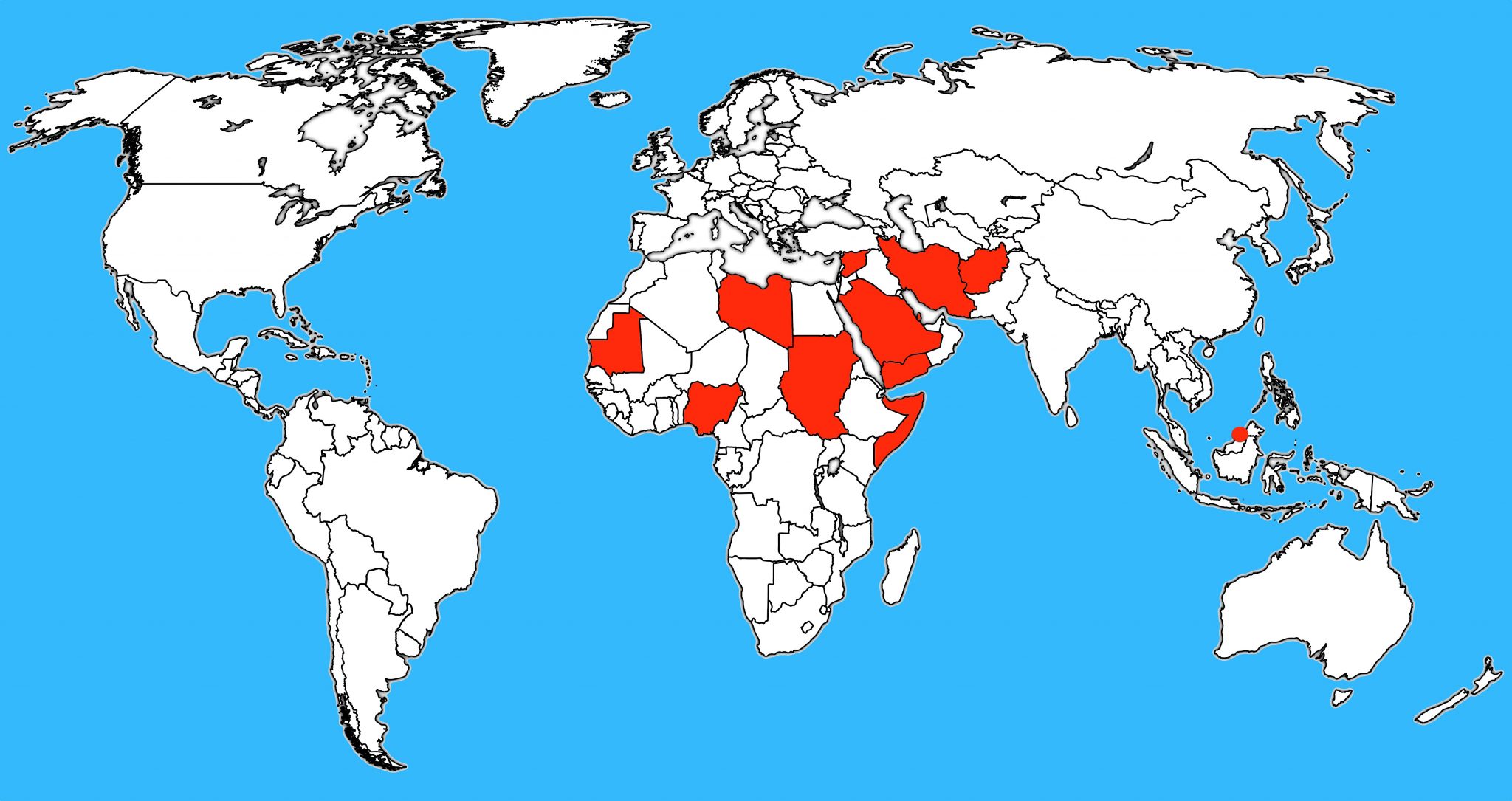
    The UK’s Government has launched an LGBT action plan, in which it wants to deal with issues facing the LGBT+ community, including how it will work with international governments and the Commonwealth on LGBT+ issues.

    Where In The World Is Homosexuality Pubishable By Death
    CREDIT: TheGayUK

    “This Government is committed to making the UK a country that works for everyone. We want to strip away the barriers that hold people back so that everyone can go as far as their hard work and talent can take them”.

    Big words, so what exactly are they promising?

    Penny Mordaunt, the Minister for Women and Equality has outlined 75  points she wants her office to push in order to achieve better rights, equality, safety and visibility for gay, lesbian, bisexual, transgender and intersex people of the UK.

    The LGBT action plan offered the following for LGBT+ people internationally and in the commonwealth.

    We believe LGBT people around the world deserve at least the same rights and respect that we enjoy in the UK and that the UK has a special responsibility to address laws discriminating against LGBT people in the Commonwealth.

    We will support countries that want help to repeal laws discriminating against LGBT people. The Prime Minister has offered support to Commonwealth countries wishing to reform discriminatory legislation. A £5.6 million programme delivered through civil society organisations will advance the legal equality and rights of all Commonwealth citizens, regardless of gender, sex, sexual orientation or gender identity.

    We will deliver an international conference focusing on the issues LGBT people face around the world. The conference will highlight a range of issues with governments, civil society and other key stakeholders on how best to progress LGBT equality.

    We will provide better travel advice for LGBT people. The Foreign and Commonwealth Office will continue to update and regularly review our travel advice for LGBT people. In particular, we will work with partners to ensure that our advice to trans travellers going abroad for medical treatment is as informative and up-to-date as possible. The Foreign and Commonwealth Office will ensure that issues specific to LGBT travellers are addressed in travel advice communications.

    We will promote LGBT rights through multilateral organisations, the private sector and international civil society organisations. The Foreign and Commonwealth Office will continue to work through UK embassies, high commissions and through international organisations, including the United Nations, European institution and the Commonwealth, to protect and promote LGBT rights and to address laws discriminating against LGBT people. The UK will consider putting in a bid to co-chair the Equal Rights Coalition in 2019.

    We will provide funding to promote LGBT equality worldwide. The Foreign and Commonwealth Office Magna Carta Fund for Human Rights and Democracy has committed £1.1 million to support LGBT rights projects worldwide in 2018 and 2019. The Government Equalities Office will provide match funding to the Organisation for Economic Co-operation and Development work on reviewing LGBT inclusiveness. As part of the Department for International Development’s new funding mechanism – UK Aid Connect – and in recognition of the importance of global LGBT inclusion, the Department for International Development will provide up to £12 million over 4 years, from 2018 to 2022, for a consortium of organisations to work together to promote LGBT inclusion.

    Here’s what the government plans are in other key areas:

    Education | Healthcare | Representation | Workplace | International | Safety

  • What the UK Government says its going to do for LGBT+ representation in the UK

    The UK’s Government has launched an LGBT action plan, in which it wants to deal with issues facing the LGBT+ community, including how it will better the representation of LGBT+ people.

    ©-yanlev-Depositphotos

    “This Government is committed to making the UK a country that works for everyone. We want to strip away the barriers that hold people back so that everyone can go as far as their hard work and talent can take them”.

    Big words, so what exactly are they promising?

    Penny Mordaunt, the Minister for Women and Equality has outlined 75  points she wants her office to push in order to achieve better rights, equality, safety and visibility for gay, lesbian, bisexual, transgender and intersex people of the UK.

    The LGBT action plan offered the following for LGBT+ representation.

    We want to build a society that accepts everyone, regardless of their sexual orientation or gender identity.

    We will trial innovative ways of tackling deep-seated prejudices in our communities. The Government Equalities Office will work across the public, private and voluntary sectors to improve the representation of LGBT people in public life, championing role models and giving people the confidence to be themselves in public. The Government Equalities Office will also look at how behavioural insights can be used to help improve people’s attitudes toward LGBT people more quickly.

    We will support the important role of local pride events across the UK. The Government Equalities Office will continue to have a presence at Pride events across the country, allowing us to hear directly from LGBT people. The Civil Service will demonstrate its own commitment to becoming the UK’s most inclusive employer by having a presence at Pride events each year and by supporting departmental staff networks and all staff across gender, ethnicity, faith and belief, age and disability to engage with these events.

    We will work to address harmful gender stereotypes and gender norms. The Government Equalities Office will work with the media and with schools to challenge gender stereotypes, and will also develop the evidence on the cause and impact of gender norms.

    We will continue our work to increase LGBT inclusion in sport and physical activity. Following the publication of the Department for Digital, Culture, Media and Sport’s ‘Sporting Future’ strategy for sport and physical activity, Sport England are providing expert help to sporting organisations to increase the participation of LGBT people in sport and physical activity. Sport England are also working to improve LGBT access to sport and physical activity as spectators, as volunteers and in the workforce. It is working alongside National Governing Bodies of sport and LGBT-focused sports organisations on a number of equality initiatives aimed at LGBT inclusion, and it is also working with a number of partners across the leisure industry, including the Chartered Institute for the Management of Sport and Physical Activity, to develop guidance on trans inclusion for frontline leisure industry staff. Sport England will also monitor the representation of LGBT people in senior leadership alongside other elements of diversity, following the launch of the Code for Sport Governance in October 2016. Following Sport England’s investment in a study by Pride Sports to identify how to better support LGBT inclusion in sport, Sport England will consider the recommendations of the research.

    Here’s what the government plans are in other key areas:

    Education | Healthcare | Representation | Workplace | International | Safety

  • What the UK Government says its going to do for LGBT+ data protection in the UK

    What the UK Government says its going to do for LGBT+ data protection in the UK

    The UK’s Government has launched an LGBT action plan, in which it wants to deal with issues facing the LGBT+ community, including how this government will collect, maintain and protect the data of LGBT people.

    6689062 / Pixabay

    “This Government is committed to making the UK a country that works for everyone. We want to strip away the barriers that hold people back so that everyone can go as far as their hard work and talent can take them”.

    Big words, so what exactly are they promising?

    Penny Mordaunt, the Minister for Women and Equality has outlined 75  points she wants her office to push in order to achieve better rights, equality, safety and visibility for gay, lesbian, bisexual, transgender and intersex people of the UK.

    The LGBT action plan offered the following for LGBT+ data protection and collection.

    We want to ensure that government services monitor these protected characteristics in a consistent, respectful and proportionate way.

    We will enable government services to appropriately monitor sexual orientation and gender identity. The Government Equalities Office, the Office for National Statistics and the Government Statistical Service will work together on a cross-government project to develop monitoring standards for sexual orientation and gender identity across central government. These standards will be freely available to the wider public and private sectors. The Government Equalities Office and Office for National Statistics will provide guidance and support to departments looking to implement monitoring in their services to ensure that it is consistent, proportionate and safe.

    We will ensure the Civil Service is an exemplary employer for collecting data on sexual orientation and gender identity in a sensitive, respectful and proportionate way. Civil Service HR, the Office for National Statistics and the Government Equalities Office will work to develop standardised questions for inclusion in internal departmental systems such as human resources systems for government employees. Civil Service HR will continue to include questions on sexual orientation and gender identity in the annual Civil Service People Survey so that the diverse workplace experiences of civil servants can be better understood.

    We will provide guidance on protecting private data concerning the characteristics and history of transgender people. The Government Equalities Office will work with the Department for Digital, Culture, Media and Sport and other agencies to agree guidance for public and private sector organisations explaining how they can protect these data and ensure the privacy of trans people. The guidance will help organisations to comply with relevant legislation such as the General Data Protection Regulation and the Gender Recognition Act 2004.

    In line with the Government’s approach to open data8, we will explore how best to make as much of the national LGBT survey data available as possible. We realise that the data we have collected is rich and comprehensive. We will not share or publish any data from which individuals can be identified, but the Government Equalities Office will look to publish more aggregate-level, anonymous data which will be of use to researchers, academics, stakeholders, the media, policymakers and the public at large.

    We will undertake further work to improve our understanding of the needs of specific groups within the LGBT population. The Government Equalities Office will look to improve the evidence base relating to the experiences of groups including older people, people in care, people with disabilities and long-term conditions, and black and minority ethnic people.


    Here’s what the government plans are in other key areas:

    Education | Healthcare | Representation | Workplace | International | Safety

  • What the UK Government says its going to do for LGBT+ workplace protections in the UK

    The UK’s Government has launched an LGBT action plan, in which it wants to deal with issues facing the LGBT+ community in the UK, including how people can self-identify, ensuring LGBT people know their employment rights.

    people at work
    CREDIT: ©-monkeybusiness-Depositphotos

    “This Government is committed to making the UK a country that works for everyone. We want to strip away the barriers that hold people back so that everyone can go as far as their hard work and talent can take them”.

    Big words, so what exactly are they promising?

    Penny Mordaunt, the Minister for Women and Equality has outlined 75  points she wants her office to push in order to achieve better rights, equality, safety and visibility for gay, lesbian, bisexual, transgender and intersex people of the UK.

    The LGBT action plan offered the following for LGBT+ policing and safety.

    We also want to ensure that LGBT people are aware of the rights they do have already.

    We will consult on how best to reform the gender recognition process. Last year, the Government Equalities Office announced the intention to consult on the Gender Recognition Act 2004 to see how the legal gender recognition process can be made less bureaucratic and intrusive. The consultation will be published alongside this action plan, and we will use the results of the national LGBT survey and the consultation to bring forward proposals for reforming this public service.

    We will consider ways to make it easier to tell the government if you have changed your gender. The Government Equalities Office will investigate whether the ‘Tell Us Once’ service – which is currently used to notify government departments of bereavements – can be learned from so that transgender people who are transitioning and want to update their name and gender across multiple departments only have to do so once.

    We will improve our understanding of issues facing non-binary people. The Government Equalities Office will launch a Call for Evidence on the issues faced by non-binary people, building on the findings from the national LGBT survey.

    We will also improve our understanding of the issues facing people who are intersex. The Government Equalities Office will launch a separate Call for Evidence to improve the evidence relating to intersex people’s experiences.

    We will ensure that LGBT people can easily access information they need about their rights. The Government Digital Service will review the existing content on GOV.UK aimed at LGBT people, and improve the content to ensure that it fully meets their needs.

    Here’s what the government plans are in other key areas:

    Education | Healthcare | Representation | Workplace | International | Safety

  • What the UK Government says its going to do for LGBT+ safety in the UK

    The UK’s Government has launched an LGBT action plan, in which it wants to deal with issues facing the LGBT+ community in the UK, including tackling conversion therapy, LGBT homelessness and domestic violence.

    “This Government is committed to making the UK a country that works for everyone. We want to strip away the barriers that hold people back so that everyone can go as far as their hard work and talent can take them”.

    Big words, so what exactly are they promising?

    Penny Mordaunt, the Minister for Women and Equality has outlined 75  points she wants her office to push in order to achieve better rights, equality, safety and visibility for gay, lesbian, bisexual, transgender and intersex people of the UK.

    The LGBT action plan offered the following for LGBT+ policing and safety.

    “We want LGBT people to feel comfortable reporting incidents they experience, and we are not prepared to stand idly by as harmful practices such as conversion therapy happen in our country”

    We will bring forward proposals to end the practice of conversion therapy in the UK. These activities are wrong, and we are not willing to let them continue. Led by the Government Equalities Office, we will fully consider all legislative and non-legislative options to prohibit promoting, offering or conducting conversion therapy. Our intent is to protect people who are vulnerable to harm or violence, whether that occurs in a medical, commercial or faith-based context. We are not trying to prevent LGBT people from seeking legitimate medical support or spiritual support from their faith leader in the exploration of their sexual orientation or gender identity.

    We will improve the police response to hate crime and raise awareness of local support agencies for LGBT victims. The Home Office and Ministry of Housing, Communities and Local Government will refresh the 2016 Hate Crime Action Plan later this year. The refreshed Hate Crime Action Plan will include measures to improve the awareness and skills of police officers and staff to respond to the needs of hate crime victims – including LGBT victims. The Home Office and Ministry of Housing, Communities and Local Government will also fund a bespoke training package available to all police call handlers to help ensure victims are correctly identified and supported at this critical first point of contact. The refreshed plan will also set out action to support local agencies, particularly the police, to ensure they are well placed to direct victims of hate crime to appropriate support services. The refreshed plan will aim to support partners to review and assess the coverage and awareness of local services in their areas. This summer, Her Majesty’s Inspectorate of Constabulary and Fire & Rescue Services will publish the findings of its inspection of English and Welsh police forces’ effectiveness at identifying, recording, and responding to reports of hate crime. The Government is also looking at the responses to the National LGBT survey about hate crime legislation and will consider this and other evidence as part of the Hate Crime Action Plan refresh.

    We will improve recording and reporting for victims of hate crime and domestic abuse. The Crown Prosecution Service will work with the LGBT stakeholders and specialist press to raise awareness of successfully prosecuted cases involving LGBT victims to increase confidence in reporting crimes. The Crown Prosecution Service will work with partners to improve the recording and monitoring of equalities data for LGBT victims of domestic abuse, rape and hate crime.

    We will address domestic abuse of LGBT people with multiple and complex needs. The Ministry of Housing, Communities and Local Government has a Violence Against Women and Girls Strategy commitment to improve services for victims of domestic abuse with complex needs, which can include mental ill-health and substance misuse, and is working across government to ensure the needs of LGBT victims are represented. The Ministry of Housing, Communities and Local Government will also announce further significant funding for domestic abuse services across England, including refugees, as early as possible this financial year. In addition, the Ministry of Housing, Communities and Local Government are carrying out a comprehensive review of the funding and commissioning of domestic abuse services across England. The review will be informed by an audit, which will give us a picture of provision across England, including support for LGBT victims of domestic abuse, enabling government to assess what impact services are having and to identify any gaps in provision.

    We have collected evidence on the barriers faced by LGBT victims of domestic abuse when seeking support and we will consider how to address them as part of the Government’s wider work on Domestic Abuse. The Government’s consultation on ‘Transforming the Response to Domestic Abuse’ sought views on what steps can be taken forward through our landmark draft Domestic Abuse Bill and supporting non-legislative package. The consultation sought views on what government can do to better support victims who face multiple barriers to accessing support including, LGBT victims of domestic abuse. The Home Office will work with the Government Equalities Office to ensure the non-legislative package fully considers the needs of LGBT victims.

    We will increase awareness of support services for LGBT victims of sexual assault and abuse. NHS England will work with the police to increase awareness of services provided by Sexual Assault Referral Centres for LGBT victims and survivors who face additional barriers to reporting sexual assault and abuse. In April 2018, NHS England published the ‘Strategic Direction for Sexual Assault and Abuse Services – Lifelong care for Victims and Survivors: 2018-2023’. This strategy outlines how NHS England and agencies will improve the whole care pathway for victims and survivors of sexual assault and abuse over a lifetime. NHS England are also committed to having LGBT representation on the National Patient Participation Group for Sexual Assault Referral Centres.

    We will work to understand the causes of LGBT homelessness and how we can better support LGBT homeless people’s needs. From April 2018, local authorities have started collecting case-level data, through the Homelessness Case Level Information Collection data system, on the sexual orientation and gender identity of homeless people. We will analyse this data in order to better understand the nature and scale of the problem of LGBT homelessness, as well as how well frontline staff support individuals. The Government Equalities Office and the Ministry of Housing, Communities and Local Government will undertake qualitative research into the experiences of LGBT homeless people as well as conducting an audit of existing service provision. Non-statutory guidance for local authorities will be produced, raising awareness of the needs of LGBT homelessness people and ways to better support them. The Ministry of Housing, Communities and Local Government will ensure that LGBT homeless people’s needs are reflected across the Government’s forthcoming rough sleeping strategy.

    We will make sure that victims of crime continue to have access to support services, to help them cope with and, as far as possible, recover from the effects of crime. This year, the Ministry of Justice is providing around £96 million to support victims of crime; around £68 million of this will be allocated to 42 Police and Crime Commissioners to locally .commission or provide support services for victims of crime, including LGBT victims. In previous years, some Police and Crime Commissioners spent some of their grant funding on specific projects for LGBT victims. In 2018 to 2019 LGBT-specific providers will continue to deliver a range of services, including counselling, advocacy and befriending services to LGBT victims of hate crime, sexual violence and domestic violence.

    We will continue our work to ensure that the needs of all LGBT claimants are met in the asylum process, regardless of whether their claim was lodged on this basis. While the national LGBT survey did not ask questions about the asylum process, we remain committed to granting protection to all claimants who are found to be at risk of persecution or serious harm in their country of origin because of their sexual orientation or gender identity. The Home Office guidance for caseworkers on processing asylum claims on the basis of sexual orientation will be reviewed shortly. The Home Office will also publish guidance on asylum claims based on gender identity and expression in the summer. The Home Office published data on asylum claims made on the basis of sexual orientation for the first time in November 2017 and is committed to re-publishing annually. The Home Office will continue to review the training of immigration detention estate and healthcare staff to ensure that the specific needs of LGBT detainees are consistently met.

    We will ensure that the UK is the safest place in the world for all users, including LGBT people, to be online. The Government response to the Internet Safety Strategy, published in May 2018, set out details of our new code of practice with guidance for social media providers. The code will help ensure that clear and transparent reporting processes are in place so that users can report abuse targeting LGBT people. We are also introducing transparency reporting for social media providers. These reports will help us understand the amount of LGBT-related abuse reported and how providers deal with these reports. The Government response also announced that the Department for Digital, Culture, Media and Sport and Home Office would jointly work on a White Paper, to be published later this year. The White Paper will set out our proposals for future legislation that will cover the full range of online harms, including both harmful and illegal content. Potential areas where the Government will legislate include the social media code of practice, transparency reporting and online advertising.

    We will ensure LGBT young people have access to educational online safety interventions that address their needs and are informed by their experiences. The National Crime Agency’s ‘Digital Romance’ report showed that higher proportions of LGBT young people meet partners online. It also found that significantly more lesbian and gay young people had met up with an online contact who was not who they said they were. The National Crime Agency will develop effective and appropriate education interventions to ensure LGBT young people can be full, equal and safe participants in online activity and communities, and benefit from the full potential of digital technologies. This will include identifying areas of intervention to ensure young people develop the knowledge, skills and attitudes to stay safe online. They will work with LGBT young people, professionals and parents to develop the interventions and resources.

    We will ensure that transgender prisoners are treated fairly, decently, lawfully with their rights respected. Her Majesty’s Prison and Probation Service will continue to work with its advisory board to further review its Agency Instruction on the care and management of transgender offenders. Her Majesty’s Prison and Probation Service will commission research and will work collaboratively with partner organisations to better understand the transgender prison population and those serving sentences in the community, which will inform our ongoing work. We will consider the recommendations of the ‘Inside Gender Identity’ report into the health and social care needs of transgender offenders.

    Here’s what the government plans are in other key areas:

    Education | Healthcare | Representation | Workplace | International | Safety

  • What the UK Government says its going to do for LGBT+ education in the UK

    The UK’s Government has launched an LGBT action plan, in which it wants to deal with issues facing the LGBT+ community in the UK, including in the education system.

    CREDIT: © tomwang Depositphotos

    “This Government is committed to making the UK a country that works for everyone. We want to strip away the barriers that hold people back so that everyone can go as far as their hard work and talent can take them”.

    Big words, so what exactly are they promising?

    Penny Mordaunt, the Minister for Women and Equality has outlined 75  points she wants her office to push in order to achieve better rights, equality, safety and visibility for gay, lesbian, bisexual, transgender and intersex people of the UK.

    Education was a big part of the government’s action plan, here’s what Ms Mordaunt said she plans to do:

    “We will take action so that our education system supports every LGBT child or young person”

    We will continue to tackle homophobic, biphobic and transphobic bullying in schools and the wider education system. The Government Equalities Office will complete its anti-homophobic, biphobic and transphobic bullying programme. This £3 million programme will reach more than 1,200 schools in England by March 2019. From March 2019 to March 2020, the Government Equalities Office will provide further funding for interventions in schools, and consider further projects to tackle bullying in further and higher education institutions. The Department for Education will work with the Government Equalities Office to understand how best to support schools to tackle homophobic, biphobic and transphobic bullying and how to continue this programme of work in a sustainable way through the school curriculum and policies in the medium and to long term. The Crown Prosecution Service will review and update their LGBT Hate Crime Schools Pack in partnership with young LGBT people and identity-based bullying professionals to tackle bullying in schools.

    We will update Sex and Relationships Education guidance to support the Government’s reforms to this subject. As we have previously announced, the Department for Education will update the statutory guidance on Relationships Education in primary schools, and Relationships and Sex Education in secondary schools. These updates will ensure that the guidance supports teaching that is age appropriate and relevant to all pupils, whatever their developing sexual orientation or gender identity.

    We will ensure that schools have access to the guidance they need to support LGBT pupils. The Department for Education will publish an update to its guidance for schools about how to apply the Equality Act 2010. In addition, the Government Equalities Office will work with the Equality and Human Rights Commission to publish comprehensive guidance for schools on how to support trans pupils.

    We will support LGBT teachers to be themselves at work and improve the diversity of the teaching profession. The Department for Education is investing £2 million to establish regional hubs to support teachers from underrepresented groups, including those teachers who are LGBT, to progress into leadership. The Department for Education has also already supported the launch of ‘LGBTEd’ – a network for LGBT teachers and allies – and will continue to engage with stakeholders on making the teaching profession more LGBT inclusive.

    We will ensure that support is available for LGBT students who are victims of hate crime and online harassment. The Government has asked the Office for Students to take steps to ensure that higher education providers are places of tolerance for all students. This includes working with higher education providers, for example, by supporting work to ensure that students who have been a victim of homophobic, biphobic and transphobic incidents have the support in place that they need, through access to appropriately trained staff and signposting to local specialist organisations. The Office for Students will investigate and tackle gaps in participation, experience, safeguarding and success for LGBT students in higher education.

    Here’s what the government plans are in other key areas:

    Education | Healthcare | Representation | Workplace | International | Safety