Author: Guest Poster

  • SEX ADVICE: Tips For Great One Night Stands

    One Night Stands can be a whole mix of emotions from pre-bedroom nerves to an overwhelming fear of doing something wrong. Of course they can also be a lot of fun. We asked Sexpert Alix Fox about how to get the most from your one night stands. Having written for many large titles on the various aspects of sex, her nookie knowledge spans the whole sexual spectrum from beginner and vanilla to the most obscure and fascinating kooky kinks.

    CREDIT: © dnf style| Depositphotos

    “I’m a strong advocate of the idea that almost anything goes in the boudoir so long as it’s safe, consensual, and conscientiously considered, so whatever rocks your world is unlikely to shock this girl!” she smiles. “Equally though, I don’t preach that you have to be some kind of crazy wild child in order to have a satisfying love life – not at all. Sex isn’t a competition to see who can be the most bonkers, so I’m a big believer in getting the basics right, and recognising and developing whatever works for you.”

    Since she’s down-to-earth about getting down ‘n’ dirty, THEGAYUK asked Alix to give some top tips on getting the best from one night stands. “Often, the one night stand – or ONS – is simply a one-off night of indulgent fun for both partners,” she says, “but sometimes an ONS can leave both parties feeling like the experience could have been better, both physically and emotionally, and perhaps stop a could-have-been relationship in its tracks if it’s disappointing. There are no hard and fast rules about how to make a hard and fast night go brilliantly, but my tips are designed to avoid a one night stand becoming a stand-up comedy (or worse) and instead make it stand and deliver a damn great time, and maybe even lead to more.”

    Make sure your head’s in the right place (and I’m not talking about saucy positions). Many a lasting love has stemmed from what was originally intended to be a one night stand, and some people like to cut to the chase and find out quickly if they’re likely to be sexually compatible before they begin dating someone on a longer-term basis. However, the majority of ONSs are just that – one-time hook-ups. Ensure that you’re in the right frame of mind to appreciate this. Be honest with yourself about the situation, and realistic in your expectations. If, afterwards, it’ll make you bawl if they don’t call, an ONS could set you up for a fall.

    Clear the doom from your room. If you know you’re likely to be bringing someone back to your place, do at least a 10-minute basic tidy before you head out. Make your bed; whack dirty washing out of sight; make sure there’s bog roll and baby wipes in the bathroom so it’s easy for your ONS to freshen up before you get fresh; and for God’s sake, make sure there’s no poo in your loo. Ew! This may not be your style, but I like scented candles in my boudoir: not only do they make it smell delicious, but they cast light that’s much more flattering and relaxing than having the big bulb on.

    Get Durexcellent! Surely I do not need to tell you the zillion reasons why you need to use protection if a newcomer penis is going to feature in your plans. Carry at least a couple of condoms, and carry them correctly: they can get creased and damaged in your wallet, so slip some into a metal business card holder instead. Keep condoms by your bed, too – I empty mine into a discreet wooden box so that a new lover doesn’t see an opened packet and wonder who (ahem) came before him. Just make sure that if you have a mixture in there, they’re all in date. Top quality condoms mean peace of mind, easier use and better sensation. If you’re sleeping with someone for one night only, don’t risk the experience being downgraded by relying on some dodgy beer-flavoured novelty rubber from a pub vending machine.

    A range of condoms and other bedroom items can be found in our online store here.

    Don’t let ‘one on the rocks’ stop you getting your rocks off. It might be tempting to knock back extra booze to give you Dutch Courage before an ONS, but that ‘one for the road’ could make sex a car crash. Too much booze can make it tougher for gents to maintain an erection, and generally makes it more likely that your ONS will become a fumbling, bumbling, right rum do. Alcohol can make your mouth dry, too; grab a glass of water before you head to bed to keep kisses (and the rest) juicy.

    Check your bellybutton before you try to push buttons! Pre-sauce session, nip to the WC and check your navel isn’t full o’ fluff! If you’ve worn a new top or pants, and especially if you’re a hairy guy, there may be lint in there. It’s not seductive for a new partner to find Carpet World hiding in your tummybutton while they’re kissing their way down your happy trail.

    A kiss is not a contract. And neither is inviting someone into your home or going back to theirs. If you change your mind at any point during an ONS, that is just fine. You don’t owe anybody anything, so don’t feel obliged to go through with something or push yourself beyond your comfort zone ‘because you’ve already got this far’. The objective for both people is to have a good time. If you’re not, stop. And if your play pal says they’d like to slow down – or you just get the vibe that this might be the case even if they don’t pipe up – be cool, respectful and good-natured about it, and make it clear that just savouring some snogging together – or whatever – is A-OK. Being honourable is way more important than any orgasm.

    Turn ‘interruption’ into ‘intimacy’ or ‘intensity’. Some people complain that putting on condoms ‘interrupts the moment’ or ‘spoils the mood’, which can be particularly unwelcome during an ONS, but that doesn’t have to be the case at all. Putting a condom on means that all the attention is focused closely on the penis, and that can be an enticing, exciting thing for you both, rather than a moment of sombre, serious silence. If you’re not the one unrolling the condom, don’t sit staring like a spare part while he prepares his parts: be vocal about how hot his cock looks if you’re into dirty talk, or stroke his neck, nipples, torso or inner thighs. Suspect he needs to concentrate or not feel like he’s being watched, but don’t want to feel like a left-out lemon? Get behind him and kiss his neck or put your arms around him and lay your head on his back. Alternatively, put on a show that will keep him hard and thus make the condom-donning easier by touching yourself in front of him.

    Give a (hopefully genuine) compliment or two. You may never see your ONS again, but by saying something nice about how they look in the nude, or an aspect of their technique, you leave them with a pleasant memory and a confidence boost. Even if, in some ways, the sex turns out a little clumsily – as it can when you’re with a new partner whose body and tastes you’re unfamiliar with – simple praise like “Mmm, your ass is gorgeous!” or “You’re great at that” can help leave an overriding impression that the experience with you was a worthwhile, good one. Which is helpful if you do see them again.

    Make sure you can grab a cab. Install a taxi app on your mobile that uses GPS to find your location and allows you to pay using your pre-loaded credit card details, so that if you go back to someone else’s place, you can always get home safely and easily as and when you want to, without needing to give a cabbie directions or have cash on you.

    Talk with your hands. We all know good communication improves sex. In long-term relationships, you get to gradually explore about what your partner likes, and discuss what works for you both. Yet with a one night stand, you and your playmate may know little or nothing about each other’s preferences. You need to learn fast, but you’re eager for copulation, not conversation – so let your fingers do some of the talking instead. If you’re giving oral sex, try putting a digit in your lover’s mouth, telling them “Show me what you like”, and mimicking their movements and pace as they lick or suck it.

    Follow Alix on Twitter @AlixFox

  • PETER TATCHELL | Is the LGBT community being screwed over by city council?

    Has LGBT Pride lost its way? This is a question more and more people were asking in the run up to Saturday’s Pride London parade.

    What began in 1972 as a protest for LGBT rights has now become an overly commercialised, bureaucratic and rule-bound event; which too often reflects the wishes of the city authorities, not the LGBT community.

    The admirable organisers, Pride in London, are being forced to operate with onerous controls and draconian costs. These have been imposed by the Mayor of London, Westminster Council and the Metropolitan Police, who have dictated conditions that mean a mere 26,500 people will be permitted to march on Saturday This is a fraction of the numbers who’d march if it was a free and open event.

    “LGBT organisations have to apply in three months advance,

    pay a fee and get wristbands for all their participants.

    The parade feels increasingly regimented, commodified and straight-jacketed”

    Nowadays, LGBT organisations have to apply in three months advance, pay a fee and get wristbands for all their participants. The parade feels increasingly regimented, commodified and straight-jacketed.

    The city authorities are also enforcing punitive costs for road closures, pavement barriers, policing and security. They cite safety concerns and the disruptive impact on West End businesses if the parade was allowed to be bigger. Commerce comes first, it seems. Pride must not interfere with making money.

    These excuses are nonsense. There are large political marches in central London, such as last Saturday’s anti-austerity demonstration. They are stung for none of the costs forced on Pride and have no safety problems. Equally, no similar restrictions are placed on the numbers at the Notting Hill Carnival, which is many times larger than Pride.

    The way Westminster Council treats LGBT Pride has a whiff of homophobia. It has a long history of perceived anti-gay bias. Some years ago it banned gay venues from flying the rainbow flag.

    Gay club owners have previously told me the council was unsupportive and seemed intent on degaying and sanitising Soho. Manbar felt victimised by Westminster and was forced out of business in 2015.

    Westminster is, of course, run by the Tories – a party that has done a ‘cash for power’ deal with the homophobic DUP in the north of Ireland. I don’t trust them.

    The dedicated, tireless Pride committee is held over a barrel. They might be permitted to increase the numbers on the parade but only if they stump up loads more cash to the council and police. Westminster council seems to think that the democratic right of the LGBT community to use its streets should come at a price. It even demands compensation for the suspension of parking bays!

    Royal Parks is no better. They won’t allow Pride to use Hyde Park. We are being screwed.

    Compared to 20 years ago, Pride has been dumbed down. For many people, it is now mostly a gigantic street party. Big corporations see it as a PR opportunity to fete LGBT consumers with their flashy floats. The ideals of LGBT equality are barely visible. Last year I counted only ten parade groups with a LGBT human rights message.

    It is sometimes claimed that Pride London is the biggest in the world. Not true. London is one of the smaller Prides in major European cities; being eclipsed in size by Berlin, Paris, Amsterdam and Madrid. Sao Paulo attracts three million people!

    In contrast, Pride London has 26,500 marchers and 80,000 spectators on the parade route. Trafalgar Square, the location of the end-of-parade rally, holds 20,000 people and the Soho streets that host satellite events, around 90,000. Many of these numbers are the same people at different locations. This suggests about 200,000 people in total at Pride; certainly not the one million claimed by the Mayor of London.

    This is smaller than earlier Prides in London. In 1997, over 100,000 people marched in the parade. It took nearly five hours to pass through Parliament Square. Close to 300,000 people attended the post-march festival on Clapham Common.

    Pride is, of course, more than the parade. There are 100-plus events over the Pride fortnight, ranging from concerts to films, sports, exhibitions and talks.

    Pride is staged by an amazing unpaid, all-volunteer team. Some corporate sponsorship is necessary. The parade and festival has to be funded. But are the corporates now too dominant?

    If Pride has gone adrift, we are all partly to blame for not being more involved with the organising committee and not standing up to the city authorities. Perhaps it’s time to revert to the LGBT liberation ethos of the first UK Pride in 1972? I was one of the organisers back then. I’ve marched in every Pride London parade since. This will be my 46th.

    1972 was a carnival march for LGBT human rights. It was political and fun; without all the restrictions, costs and red tape that are strangling Pride today.

    Let’s put liberation back at the heart of Pride; reclaim it as a political march with a party atmosphere. No limits on numbers and no motorised floats. This would dramatically cut costs and bureaucracy, and return Pride to its roots. We can still have a fabulous carnival atmosphere. It worked in 1972. Why not now?

    This is an edited version of an article that was originally published in The Guardian: http://bit.ly/2sPIGjL

    For more information about the Peter Tatchell Foundation and to make a donation: www.PeterTatchellFoundation.org


  • Is it true what they say about black men?

    Is it true what they say about black men?

    You get what you’re not looking for. The best things in life aren’t necessarily free (you get what you pay for, too), but they’re often completely unexpected: love, friendship, the perfect job, a stunning view, a grand epiphany. Oh, the thrill of happy accidents, things you stumble upon when you’re looking for something else, or when you aren’t looking at all.

    I had no idea what I was looking for when I launched my expat adventure around the world. I’d always been driven by wanderlust, so travelling was in my soul. I’d spent years dreaming of being born again, rising from corporate journalism’s golden coffin lined with biweekly paycheck stubs and 401K receipts, and relocating to a land far, far away. I didn’t think I’d ever actually do it, though. Where would I put all of my stuff?

    After fifteen years as a magazine writer and editor in New York City, I was feeling restless and craving change. I loved my job, but I hated my work. As much as I respected the publications for which I had toiled over the years (People, Teen People, Us Weekly, Entertainment Weekly), I felt like a hack. I was doing it for the money, and I wasn’t making enough of it to distract me from the bigger picture.

    I wanted to write about something more meaningful than baby bumps, PDA and who was sleeping in Britney Spears’s bed, but I wasn’t sure how to reinvent myself. The first thing they teach you in journalism school is to “write what you know.” I knew a lot about music, movies, pop culture and celebrities. But I didn’t really know anything at all.

    I needed a new classroom. New York City had been good to me. I made decent money, and I owned a great apartment in an ideal location, on 14th Street, right off Union Square. I was at the center of the universe, surrounded by friends and colleagues. But I felt so alone. In my twenties, I’d had three significant relationships (with Derek, Khleber and Tommy) that each lasted for around one year. My thirties were defined by short romances (with Todd, Kevin, Khleber again, Bryan-with-a-y), none lasting longer than a few months, and one-night stands, each less fulfilling than the one before it.
    “Why don’t you have boyfriend?”

    That question was the bane of my bachelorhood in New York City, frequently asked by concerned friends and curious strangers. Why was I still single? I have four theories.
    1) Living in New York City is not conducive to long-term romance. Anyone who has seen Sex and the City knows that. And being a salty, cynical Miranda (with the occasional Samantha rising) didn’t do my love life any favors.

    2) I was a black man in a white gay world. Therefore, I was largely invisible. I wasn’t what most American gay men, white or black, were looking for, which came as quite a surprise to a black woman who started talking to me one night at the Cock, a raunchy sex dive on Avenue A in the East Village. She couldn’t understand why I was standing on my own, watching men walk right past me to line up to get to Dave, my white, blue-eyed best friend. “Everyone here should be all over you,” she insisted. “The gay men in New York City must either be blind or racist as hell.” By way of commiseration and flattery, she had nailed an undeniable urban truth.

    3) I was too picky. On the day I turned twenty-eight, my mother, Dave and I were on our way to my birthday dinner in Tribeca when the subject turned to my chronically pitiful romantic status. Mom offered her own theory to explain it: “You give up on people too easily.” I didn’t see it her way — not entirely. I just didn’t have the patience to cling to a relationship that clearly wasn’t working in hopes that it one day might. She didn’t raise no fool for love.

    4) I didn’t really know what I was doing.

    My sister once shared an interesting quote with me: “Men need to make love to feel love. Women need to feel love to make love.” What nobody ever told me was that men need to have intercourse to feel like they’re making love. In some ways, I was practically a virgin. I’d lived in New York City for fifteen years and traveled all over Europe and, somehow, I had escaped that dreaded “Top or bottom?” question. I had no idea what I wasn’t missing.

    I could have counted on one hand the number of men with whom I went all the way during my first decade and a half of gay sexual activity, which began at age twenty-two with Ken, also twenty-two, whom I met at a long-defunct East Village gay watering hole called Tunnel Bar, a few weeks into my life as a new New Yorker. He was the first guy I ever let inside of me (with a condom, of course, for I was an obedient child of the safe-sex era) and the last in New York City to request entry via the back door.

    Most of my boyfriends and the men I hooked up with didn’t seem to be any more interested in anal sex than I was. For me, it was too painful as a “bottom,” too boring as a “top.” I certainly wasn’t going to initiate it, and the men I met didn’t either. Maybe the fear of HIV and AIDS and the still somewhat primitive treatments discouraged them from pursuing intercourse with the wild abandon that was to come, but I can’t help but wonder how many of them must have left my bedroom disappointed, determined never to return.

    It wasn’t until I moved to Buenos Aires that I realised how crucial penetration and sex roles were to gay love and romance, for horny Argentines, especially the twenty-something ones who came of age during the era of HIV drug therapies, when being positive was no longer a death sentence, were nothing if not forthcoming and sexually reckless.

    The gay world there was divided into two types: activos y pasivos (“tops and bottoms”), especially for the latter. The “bottoms” seemed to be the majority and, for the most part, they were interested only in what you could give them. The blacker, the bigger (according to that old urban myth, which they embraced with lustful gusto). The bigger, the better! I’d traded one fringe existence for another!

    The feeling of forever being an outsider and the sense of isolation that came with it was what had led me to Buenos Aires in September of 2006. (My aforementioned “stuff” went into a Brooklyn storage space.) After so many years in New York City, I still didn’t know where I fit in there, as a human being, as a journalist, as a gay man, as a black man.

    I’d had a lifelong complicated relationship with people of my own colour. It began when I was four years old and my family moved from the US Virgin Islands, where I was born, to the US mainland, in Kissimmee, Florida, where I would spend my fourteen most formative years. We eventually settled in an all-black neighborhood, and despite the physical similarities I shared with our neighbors, I probably wouldn’t have felt more like an outsider if we’d ended up in the whitest part of town.

    The racism that Kissimmee’s white redneck population directed toward me didn’t compare to the racism and xenophobia I encountered from the black Americans there who resented my family because we were black and foreign. They called us “noisy Jamaicans” because, apparently to them, one Caribbean island fit all. We spoke with strange accents, and we kept to ourselves. Who did we think we were? What did we think we were: better than them?

    When my first-grade classmates asked me where I was from because of the funny way I spoke (counting to “tree” instead of three), I sometimes lied and said the Virginia Islands, hoping they wouldn’t realize that no such thing existed. I was too ashamed to say “the Virgin Islands.” I wanted to fit in, and if the way I talked was going to lead to ostracism by my black classmates (interestingly, I can’t recall a single white kid ever ridiculing me for that), at least I could come from a place that wasn’t so exotic.

    White bullies limited their racism to verbal cut-downs. It never touched me physically. “I smell nigger” coming from rednecks on the playground damaged my eleven-year-old psyche, but the black-on-black racism left physical as well as emotional scars. If they thought their words could never hurt me, the black bullies started picking up sticks and stones.

    The physical bruises healed, but the mental ones never did completely. It wasn’t until I went to the University of Florida in Gainesville that I finally escaped the emotional and physical cruelty. For the first time, the majority of black Americans I met didn’t treat me like the enemy. If my exposure to them helped me to eventually overcome the fear and resentment of black people that had been borne from my experiences in Kissimmee, I never forgot how difficult and confusing it had been to be one of them, a so-called African-American, while not being accepted as one of them.

    I didn’t set out to write a book. I just started writing — long emails to friends in which I shared my travel tales, articles for various magazines and websites, entries in Theme for Great Cities, the travel/entertainment/lifestyle blog that I launched in 2008. It was my blog readers — a combination of old and new friends, family members, former colleagues and people I’d never met — who convinced me to compile my experiences as a stranger in strange lands negotiating love, lust and racism in new cultural settings and in different languages into a book. (The names of most lovers and other strangers have been changed to protect their privacy.)

    I had stories to tell the world. I also had bills to pay. Freelance writing doesn’t guarantee you’ll earn enough money to get around any city, much less around the world. I was fortunate enough to have done relatively well financially.

    When I traded New York City for Buenos Aires, I had two apartments — one in the city I was leaving, one in my destination — to show for my decade and a half of professional effort. I lived mostly off my savings and rental income from the one in New York City for my first three years in Buenos Aires, before selling it in late 2009 and dialing 1-800-GOT-JUNK to arrange for the disposal of most of my mostly forgotten stuff, which was now officially “junk,” in the Brooklyn storage space for a $500 fee. The tidy profit from the apartment sale continues to finance my expatriation.

    Meanwhile, I perfected the art of living on $10 to $15 a day, which was fairly easy in cheap cities where the U.S. dollar was strong, like Buenos Aires and Bangkok, but a considerable challenge in overpriced Melbourne. The money you save by not eating out, not being a slave to the latest fashion and not accumulating new possessions you can put toward other nonessentials, like plane tickets.

    The rest you just improvise. I didn’t intend to spend four and a half years in Buenos Aires. I’d gone there on my three previous holidays and bought a one-bedroom apartment in Palermo on the third one, so it seemed like an excellent time to put it to good use. I arrived for the fourth time expecting to last six months there. Four years later, in 2010, I visited Australia for the first time with tentative plans to make Sydney my new home and fell in love with Melbourne instead. I went to Bangkok for one month only in July of 2012 and ended up spending a total of seventeen months there during the next two years.

    You get what you’re not looking for. I knew that when I set sail from one “New World” to another. I was hoping that somehow, unexpectedly, I’d find it.

    Printed with permission by Jeremy Helligar. Follow Jeremy on Twitter

    Taken from Issue 9. Download or Subscribe now.

    Opinions expressed in this article may not reflect those of THEGAYUK, its management or editorial teams. If you’d like to comment or write a comment, opinion or blog piece, please click here.

  • Legal Breakthrough for PrEP in England

    Historic win for NAT as the High Court overturns NHS England refusal to consider PrEP

    PrEP

    NAT (National AIDS Trust) is delighted by the judgment passed down in the High Court today that NHS England acted unlawfully in withdrawing PrEP, a game-changing drug preventing transmission of HIV, from its decision-making process.

    When, after 18 months of preparation, NHS England suddenly abandoned its work on PrEP, NAT considered it had no option but to challenge this through judicial review.  Today the court heard that NHS England’s interpretation of the law was incorrect.

    PrEP is urgently needed and has been shown to be cost-effective. NAT has always believed that there is no legal impediment to PrEP being commissioned by NHS England and the court agrees.
    Deborah Gold, Chief Executive of NAT, said,

    “This is fantastic news. It is vindication for the many people who were let down when NHS England absolved itself of responsibility for PrEP.  The judgment has confirmed our view – that it is perfectly lawful for NHS England to commission PrEP.  Now NHS England must do just that.

    Over 4,000 people are getting HIV every year in the UK – we desperately need further prevention options to add to condom use.  PrEP works.  It saves money and it will make an enormous difference to the lives of men and women across the country who are at risk of acquiring HIV.  The delay to commissioning PrEP is both unethical and expensive.”

    In his judgement Mr Justice Green wrote,

    ‘No one doubts that preventative medicine makes powerful sense. But one governmental body says it has no power to provide the service and the local authorities say that they have no money.  The Clamant is caught between the two and the potential victims of this disagreement are those who will contract HIV/AIDs but who would not were the preventative policy to be fully implemented.’


    He goes on to conclude that in all the possible scenarios that were explored in the judicial review, NHS England does have the power to commission PrEP.

    It is enormously disappointing that NHS England has decided to appeal this judgment, especially given the wide ranging and well-reasoned arguments it contains. The appeal will further delay clarity in this area, and mean that any potential commissioning of PrEP will not take place for months.

    Following this decision, there will now be a 30-day public consultation on PrEP, which should start almost immediately, and an NHS England committee will consider the case for commissioning it, but final announcements and actual commissioning will be contingent on the outcome of the appeal.

  • Scottish Father to walk 96 miles to tackle homophobia in schools

    Scottish Father to walk 96 miles to tackle homophobia in schools

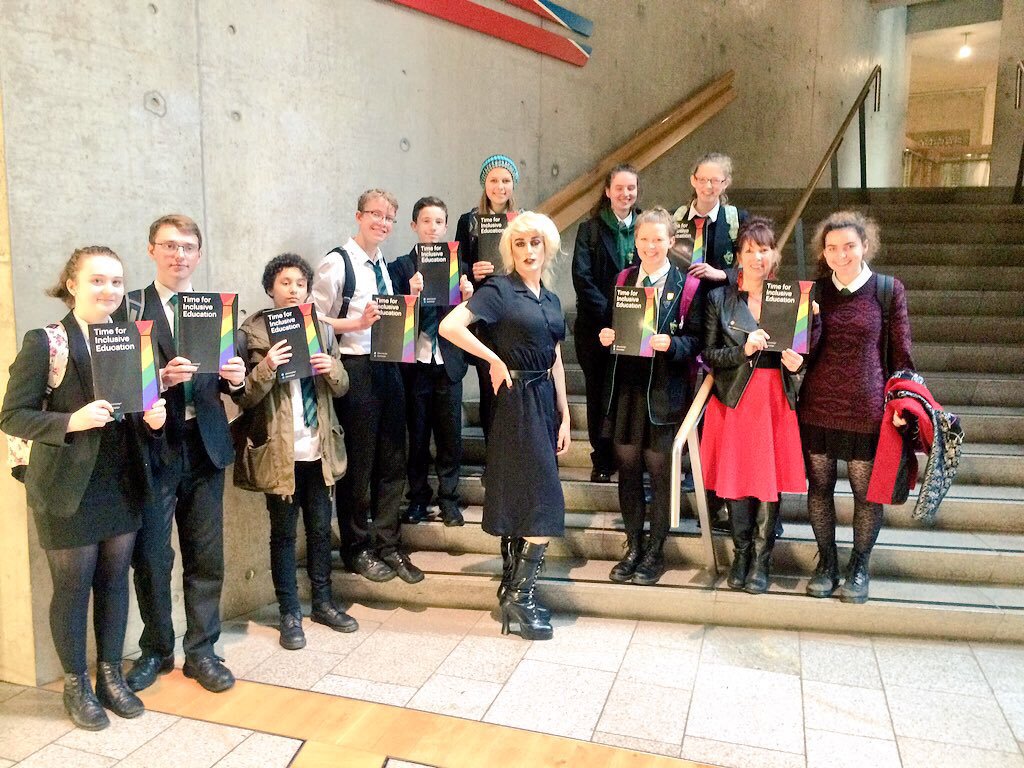
    A Scottish Father has kick-started a fundraiser in support of tackling homophobia in schools, as he tells of his fears for his son’s future within the education system.

    Neil


    Glasgow resident Neil Dallimore, 33, plans to walk 96 miles along the West Highland Way – from Milngavie north of Glasgow to Fort William in the Scottish highlands – and is seeking public donations for his efforts, in order to raise funds for campaign group Time for Inclusive Education (TIE).

    TIE are calling for LGBTI issues to be taught in all Scottish schools in an effort to tackle high rates of mental health, self harm and suicide amongst LGBTI young people.

    Dallimore has an 11 year old son who recently told him that he was gay but asked for it be kept a secret from his school teachers because he feared that he would be “treated differently”.

    He said,

    “To hear your child ask that a part of his identity not be known to elders that are there to educate, protect and support him is a gut punch. His reason was simple enough – another boy had been open about his sexuality last year and afterward the teachers treated him differently in a negative way.

    Too often I hear stories from my kids about how they’ve either been the target of or personally witnessed homophobic bullying and it’s a problem that few teachers have seemed to know how to handle. It’s worrying and upsetting to see your child treated like an outsider by other children based on sexuality and it must change.”

    Despite it being 16 years since Section 28 was repealed in Scotland, there has been little progress towards eradicating homophobia in the playground. Now, Dallimore intends to address this head-on by supporting TIE’s calls for LGBTI inclusion within schools.

    He said,

    “What TIE are doing that gives me hope, is making sure that – if nothing else – when children go to school, no matter who they are, no matter what they hear hateful people say, they will have an enlightened place, a safe place and they will know that they are equal, natural and loved.”

    During this year’s parliamentary election, every major political party had included manifesto commitments endorsing TIE’s calls for teachers from all schools to received specific training on how to challenge homophobia and discuss LGBTI issues in the classroom.

    First Minister Nicola Sturgeon – who has described herself as a “huge supporter” of the group – restated her pledge to work with the campaigners during a parliamentary debate on LGBTI equality last month.


    This article is by Time For Inclusive Education

  • COMMUNITY FOCUS: Tina Haynes – Trans Businesswoman Club Launch

    COMMUNITY FOCUS: Tina Haynes – Trans Businesswoman Club Launch

    “There’s been a tectonic shift in attitudes, but I’d like to help stop even just one more kid going through the mental and physical trauma that I had to”

    Tina
    Tina Haynes


    Transgender businesswoman Tina Haynes tells her personal story and why she is opening a cabaret bar with the support of Muslim drag queen Asifa Lahore, drag king Adam All and transgender singer of The Voice Jordan Gray.

    From a young age Tina knew she was different but was too young to understand why and what it was and despite her parents sending her to a string of psychiatrists, she knew that was never going to be the solution.

    School was a living nightmare as other kids picked up on her differences and bullied, then physically abused her. She was then publicly ‘outed’ there.

    “Going through puberty felt like hell. Looking in the mirror and seeing myself becoming a man was pure misery. I burnt my face with hair remover constantly trying to get rid of it.

    “But back in the 70s there was no help or support for transgender people, it was very much taboo, under the radar,” she said.

    Asifa Lahore Magazine Cover
    CREDIT: Monty McKinnen / THEGAYUK


    So conforming, she left school as soon as she could and went into electrical engineering and surveying – very much a man’s world.

    ‘Normal’ relationships followed, she got married and had a son.

    “I knew I was living a lie and I knew I would have to leave, but I fumbled along burying myself in work, not wanting to go home or take time off. In the end the conclusion was obvious.”

    After the split she then met another woman with whom she fell in love. Because of this she couldn’t hide who she was and the woman couldn’t cope with it and broke her heart.

    “That was when the genie was well and truly out of the bottle,” Tina explained.

    “I couldn’t go back, I had to move forward and deal with who I really was. The stress – mainly mental – also made me seriously ill and depressed so I decided to go through transition.”

    Realising that NHS treatment back then could take many years, she went private and began hormone treatment which affected her emotional issues even more.

    That was when she hit rock bottom.

    Credit: Adam All


    “I’d distanced myself from my friends and was in a vacuous state – both physically and mentally. I ran the bath, had a few drinks and put a plugged in electric fire next to it and got in. The next thing I remember is being dragged out by a close friend’s partner who she had alerted after I didn’t answer her calls,” Tina said.

    The whole process, with all the surgery and electrolysis sessions took four years and left her about £30k out of pocket. So she started managing a contact’s property portfolio and then worked for a large leisure firm near Preston, eventually becoming the director of operations.

    Her mother then suffered from COPD, a pulmonary illness, so she came back home to look after her, working in the pub and club industry and in property development.

    After her mother died, Tina felt she could truly be herself without upsetting her parents who were no longer with her and now she feels happy and healthy in her own skin.

     The Voice - Episode 12 (No. 12) - Picture Shows: THE VOICE - LIVE - QUARTER FINAL Jordan Gray - (C) WALL TO WALL - Photographer: GUY LEVY
    Jordan Gray – (C) WALL TO WALL – Photographer: GUY LEVY – PR Supplied


    She was then approached to help manage a local Pride event and became aware of a little known gay bar in Luton which was up for sale. She has just bought it, securing Muslim drag queen, Asifa Lahore, Drag King Adam and Jordan Gray, a transgender singer from The Voice to perform at the launch in July.

    She will be promoting the venue as a cabaret bar for all, reflecting her journey with the décor being like Alice Thought the Looking Glass where nothing in life is black and white.

    Which it isn’t for most of us.

    She will also be supporting Mermaids, a charity which offers support to children, young people and their families in the face of great adversity and works to raise awareness of gender issues and gender dysphoria.

    The launch party for The California Inn is on the 15th July 2016. See website for details


  • Could homophbia in Scottish schools be a thing of the past?

    Could homophbia in Scottish schools be a thing of the past?

    The campaigning group Time For Inclusive Education has announced a new training scheme today (22 June), as they step up their efforts to end homophobia in Scottish schools.

    Supplied by TIE
    In the week marking sixteen years since the repeal of Section 28 (Clause 2A in Scotland), which banned the discussion of homosexuality in schools, the Time for Inclusive Education (TIE) campaign have outlined their plans to train school staff on LGBTI issues.

    The scheme will pilot with two free to attend training days in Glasgow and Edinburgh in October, and will be centred around how teachers can tackle homophobic attitudes and discuss LGBTI issues with their pupils in primary, secondary and additional support needs education.

    The course has been created by TIE campaigners and teachers, including John Naples-Campbell, Scott Mowat and Danielle Campbell, who have each been recognised and awarded for their work on equalities education in schools.

    The move marks the first time that a training course which is specific to LGBTI issues has been available to educators free of charge and is inclusive of the additional support needs sector.

    TIE emphasised that the decision to organise training has been the result of working with schools, teachers and young people for the past year, and has been created as a response to the “systematic barriers” which prevent teachers from accessing training.

    A TIE spokesperson said,

    “For a year now, we have been campaigning for the Scottish Government to ensure that all schools are inclusive of LGBTI identities, and while we have considerable political support for our cause – we have encountered some worrying trends which must be addressed immediately. Despite being sixteen years since Clause 2a was repealed, we are still seeing it’s impact in schools across the country. Indeed, we have met teachers who still think that the clause is in place, and we cannot wait for political change before taking steps to rectify this.”

    “Also, as a result of cuts to Continuing Professional Development (CPD) budgets, many schools are struggling to cover the costs of training their staff on LGBTI issues. This is why we have ensured that our course will remain free of charge and will be held out of school hours on Saturdays. Our events are a response to the systematic barriers which prevent schools from becoming inclusive of LGBTI young people, and we would encourage all teaching staff – whether probationary, trainee or currently practicing – to attend in October.”

    Attendees at the training course in Glasgow will be welcomed with speeches from human rights lawyer Aamer Anwar, Scottish Greens MSP Patrick Harvie and the Very Reverend Kelvin Holdsworth of the Scottish Episcopal Church.

    The training courses will be held on the 1st October in Glasgow, and 8th October in Edinburgh.

    The announcement comes after party leaders pledged swift action on TIE’s calls for LGBTI inclusive education last week during a Holyrood debate on the Orlando shootings.

    The campaign has received support from figureheads including First Minister Nicola Sturgeon, Scottish Liberal Democrats leader Willie Rennie, Harry Potter actress Emma Thompson and gay rights campaigner Peter Tatchell.


    This aritcle was written by TIE Campaign follow them on Twitter

  • REVIEW | Lindsay Kemp: My Life and Work with David Bowie

    REVIEW | Lindsay Kemp: My Life and Work with David Bowie

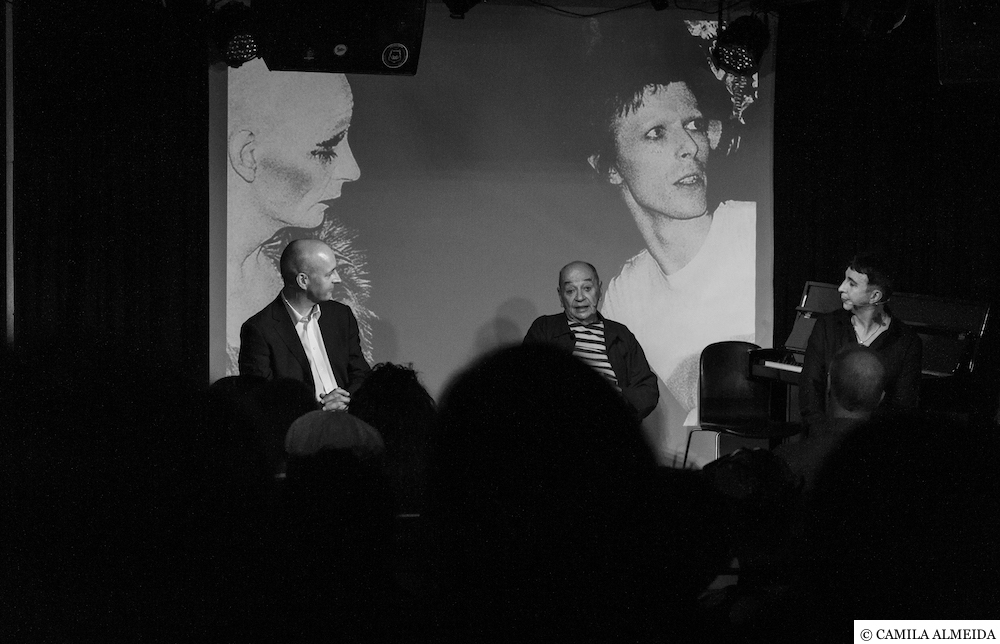
    ★★★★★ | Lindsay Kemp: My Life and Work with David Bowie Interviewed By Marc Almond

    by Miss Shockingly Precise.

    CAMILA ALMEIDA @ THE ACE HOTEL

    British theatre, too often, is like the Catholic Church – full of fawning reverence for one-note deadbeats. Take Laurence Olivier. Sure, the guy’s voice was beautifully modulated, but his delivery, always, was so ridiculously clipped, precise and cold it sounded phoned in from the morgue. Olivier, somehow, always rigorously excluded emotion from his roles, which, if technically brilliant, never prompted tears or tore at listening heartstrings.

    That’s hardly the case with the stunningly emotive Lindsay Kemp, arguably British theatre’s most criminally under-appreciated genius. Taking English reserve by the throat and making gorgeously perverse, tenacious love to its’ dreary expectations, Kemp’s a singular and unlikely Messiah of the marvellous.

    Never heard of him? Of course you have; as David Bowie’s crucial, formative mentor, Lindsay inspired and helped create Bowie’s era-defining, still hugely influential Ziggy Stardust shows. However, that barely addresses Lindsay’s hugely innovative, still non-stop artistry, and fittingly, the Ace Hotel, the epitome of Shoreditch’s nouveau-hipster Renaissance, is celebrating Lindsay’s legacy.

    Outside, the pavements are crammed with adoring disciples eager for Lindsay’s first, London appearance since 2002, a celebration hosted by Marc Almond and Nicholas Peg. It’s completely deserved. For readers unaware of his legacy, Lindsay completely bulldozed theatrical tedium worldwide with a raw, radiant sexuality more relentlessly beautiful than a gay Sistine Chapel.

    The shows – Salome, Flowers, The Big Parade and many more – are landmark theatrical legends, but Lindsay, oddly, is overlooked by today’s crushingly ordinary theatre industry. That’s their loss, and probably, prompted by envy and the inability to market Lindsay’s fabulous, unrestrained genius as a guaranteed cash-cow. Still, tonight, the Ace Hotel is bursting at the seams with stellar talents frantic to lionise Lindsay on his own terms, discussing his own life and Bowie anecdotes.

    Firstly, there’s the enigmatic, irrepressible and outrageously entertaining Ernesto Tomasini, who – in a nod to tonight’s Bowie reminiscences, delivers soaring, falsetto takes of ‘Starman’ and ‘Threepenny Pierrot’. Then, there’s a huge, spontaneous rush of mass goodwill as Lindsay himself holds court, informally urged by a hugely appreciative Marc Almond and Bowie expert Nicholas Peg. If one measure of judging an artist is his influence on others – as Dali, arguably, inaugurated everyday surrealism – then Lindsay’s pivotal influence on Bowie, Marc Almond and countless others speaks volumes.

    Single-handed, coming from the most improbable circumstances – a working-class, pre-World War Two baby from Yorkshire – Lindsay’s maverick, sexual brilliance would, eventually, totally invalidate unimaginative theatre. Yes, Lindsay’s only possible, if less influential, British rival – the fiercely iconoclastic Steven Berkoff – also assaulted British restraint, but only Lindsay relentlessly elevated gay sexuality as a subject of breath-taking wonder.

    So no wonder David Bowie came running to study at Lindsay’s bewitching feet. Inevitably, they became involved, with Bowie co-starring in ‘Pierrot In Turquoise’, an early Kemp production, but Bowie’s ferocious ambition and libido proved too volatile for sustained collaboration. Ziggy Stardust, of course, stands as a permanent, world-changing monument to their later, final teamwork, but the focus, tonight, is on Lindsay’s beautifully idiosyncratic memoirs.

    He’s shocked, visibly, at how London’s changed, and even his hugely typical generosity of spirit can’t mask that regret. “I ventured into Soho, but it’s changed a lot, they’ve ripped out the wickedness. The bohemians are gone and there’s no danger, it’s very dull’. His own recollections, however – effortlessly summoned from a seemingly bottomless well – are gold-standard outré, a train-wreck, incest child of Picasso and Fellini. “I especially miss…  Miss Martinez (an exotic princess who danced in Soho, to the music of Ketelby’s) who always danced with a stuffed peacock on the streets…”

    Never remotely deflected from embracing his inner misfit – even by a vicious matron nicknamed ‘Frostbite’ at school, who scrubbed his face free of amateurish make-up with Vim(!) – Lindsay adored early 60s London. “Back then the city was glorious, liberating, and we definitely thought we would change the world – and we did, for about ten minutes!”

    Unsurprisingly – as a seriously conspicuous, de facto head of London’s rainbow demimonde – Lindsay was swamped with intriguing, if paradoxically low-profile offers. His small, cameo part is delightful in seminal, British horror flick The Wicker Man, but he didn’t warm to co-star Britt Ekland. “She was such a bitch,” he recalls, “I accidentally poured a glass of Guinness over her!” However, things improved with the arrival of a ‘fabulous looking girl’ on set. “She was Britt’s on-screen arse and knockers” Lindsay continues. “Britt was rather flattered…”

    In incomparable, mellifluous form, effortlessly charming at the bat of an eyelash or droop of a brow, Lindsay barely slows for queries from either host. But he pauses, smilingly, as co-host Nicholas Peg announces an exclusive extract from event planner Nendie Pinto-Duschinsky’s upcoming, major documentary on Lindsay and his world.

    Enthralling from the outset, it’s a bold, impressionistic portrait of a 21st Century pierrot – Lindsay himself – surfing the fabulous storm-surge of his own brilliance. Buoyed on an utterly uncharted, artistic tsunami, Lindsay’s drawn – and continues to draw – furiously devoted kindred souls in his wake. And, no matter how brief the contact, the fallout, often, is life-changing. ‘Timid Kate Bush’ for example, ‘became savage onstage’ and he taught Bowie “how to touch and reach and use stillness to communicate”. Difficult, you’d think, when Lindsay, partner Jack Birkett, Angie and David Bowie were all sharing the same bathroom, but brilliant, first impressions sanctify any downsides. As Lindsay so memorably describes his initial encounter with Bowie, ‘The door opened and it was the Arch-angel Gabriel!’

    Now, exit lines don’t get better than that, but the night’s not quite finished yet. With guitarist Neal X, host Marc Almond – himself a consummate lyricist and globally eminent torch singer of the bewitching, beguiling and bizarre – unforgettably serenades Lindsay. There’s a pin-drop hush as Marc, quite exquisitely, renders Jacques Brel’s ‘Port Of Amsterdam’ and Bowie’s ‘Starman’ as ravishing hymns of exultation. And then, ratcheting the feel-good delirium even higher, singer Holly Johnson presents Lindsay with a glorious, floral bouquet.

    Immediately, there’s an ecstatic, standing ovation from the host of gay celebrities present, as those of us lucky enough to attend remember one, unforgettable fact. There is true magic in this often dreary world, and it exists in two, simply enchanting words; Lindsay Kemp. Now and forever, the reigning Queen of gorgeous excess.

  • COMMENT | What Will The Gay Community Look Like In Ten Years?

    In some ways the past decade has been an incredible decade for the LGBT community in the UK.

    The Marriage (Same Sex Couples) Act 2013, making same-sex marriage legal in the UK, was a momentous landmark.

    The American Supreme Court Decision in favour of same-sex marriage has provided a new impetus to the global push for equality. I can live as I choose. I can love as I choose. I can worship as I choose. I have more options than ever before. Yet there is still much to fight for!

    Over the next decade LGBT will continue to become more accepted than ever before. There will be more gay people in public life. Parliament now has more LGBT MPs than ever before. LGBT characters have emerged in all our favourite soaps, raising the temperature from Albert Square to Weatherfield. I predict that the next decade will also see the emergence of more HIV-positive people in public life. There will also be substantial progress on trans issues. Caitlyn Jenner is a beautiful star who has shattered a thousand stereotypes.  Across the country, in every walk of life, we will find more empowered LGBT people.

    I was bullied at school for being gay. During my mid-to-late teens I felt isolated. I came out to only a few of my contemporaries at school. The atmosphere in my school was homophobic and bullying was not addressed by teaching staff.  It is just over one decade ago that I left for university. I was pleased to escape and flourished as an individual once I was free to express my sexuality. Stonewall are doing great work in schools to combat LGBT bullying. Young LGBT people are coming out in their early teens in environments which are supportive of them. Young LGBT people will be able to develop their identities without fear of abuse due to their sexuality.

    HIV continues to impact gay men. Approximately 1 in 20 gay men in the UK is HIV positive and this statistic increases to 1 in 8 in London. There is an ageing demographic for HIV, a trend which will continue as we live longer. 1 in 6 people accessing care for HIV is now 55 or over.

    Pre-Exposure Prophlaysis (PrEP) will hopefully be made available broadly on the NHS. This is very important for the gay community and it should have a dramatic impact on new diagnoses. We can expect to be safer and healthier. I am co-infected with Hep C, which in a decade should no longer be an issue for gay men. New treatments may mean that Hep C is ultimately eliminated in the UK.

    The next ten years will be important for the Church of England on LGBT issues. Over the last century the relationship between the gay community and faith has often been confrontational. LGBT people have, in the past, been discriminated against by the Church. There are wonderful people within the Church of England, such as Jeffrey John, the openly gay Dean of St Albans and my own priest, Giles Goddard, the former head of Inclusive Church. They are role models for faith, comfortable in their Christianity and their sexuality. The Church of England is making some progress on LGBT issues. It was sad that Justin Welby choose to censure the US Episcopal Church, at the recent Anglican Primates Conference, for their stance on same-sex marriage. I hope that by 2026, same-sex marriage will be recognised by the Church of England and we will have seen the appointment of an openly gay bishop.

    In 10 years time LGBT people will be subject to less stigma. Increased visibility, better medical treatment and changes to core institutions will mean that we have a healthier and happier society. We should celebrate the achievements of the last decade and can look forward to a brighter future.


    by Philip Christopher Baldwin | @PhilipCBaldwin


    Opinions expressed in this article may not reflect those of THEGAYUK, its management or editorial teams. If you’d like to comment or write a comment, opinion or blog piece, please click here.

  • Looking Out For These 10 Signs Could Save Your Friend’s Life

    If you’re concerned about the mental health of a friend of family member psychotherapist Andrew Smith has ten top signs that you should look out for.

    Top 10 Signs Your Friend Might Need Help

    1. Social Withdrawal.

    This is when someone may become more withdrawn from social activities, and not be as interested in going out and socialising. However, more importantly, they may not be doing anything else as an alternative. Give them an invite to something and mean it. As a therapist, we often use the boundary of a session to gently challenge clients who would wish to withdraw.

    NEXT: Less Communicaton

    CONTENT PROVIDED BY THERAPP (what does this mean?)


  • THEATRE REVIEW: Grey Gardens, Southwark Playhouse

    Based on the 1975 cult classic documentary film of the same name, Grey Gardens tells the real life rise and fall of Jacqueline Kennedy Onassis’s aunt and cousin, Edith and Edie Bouvier Beale. ★★★ (more…)