Author: Skylar Baker-Jordan

  • 20 #BritishThreatLevels tweets every gay man needs to see

    20 #BritishThreatLevels tweets every gay man needs to see

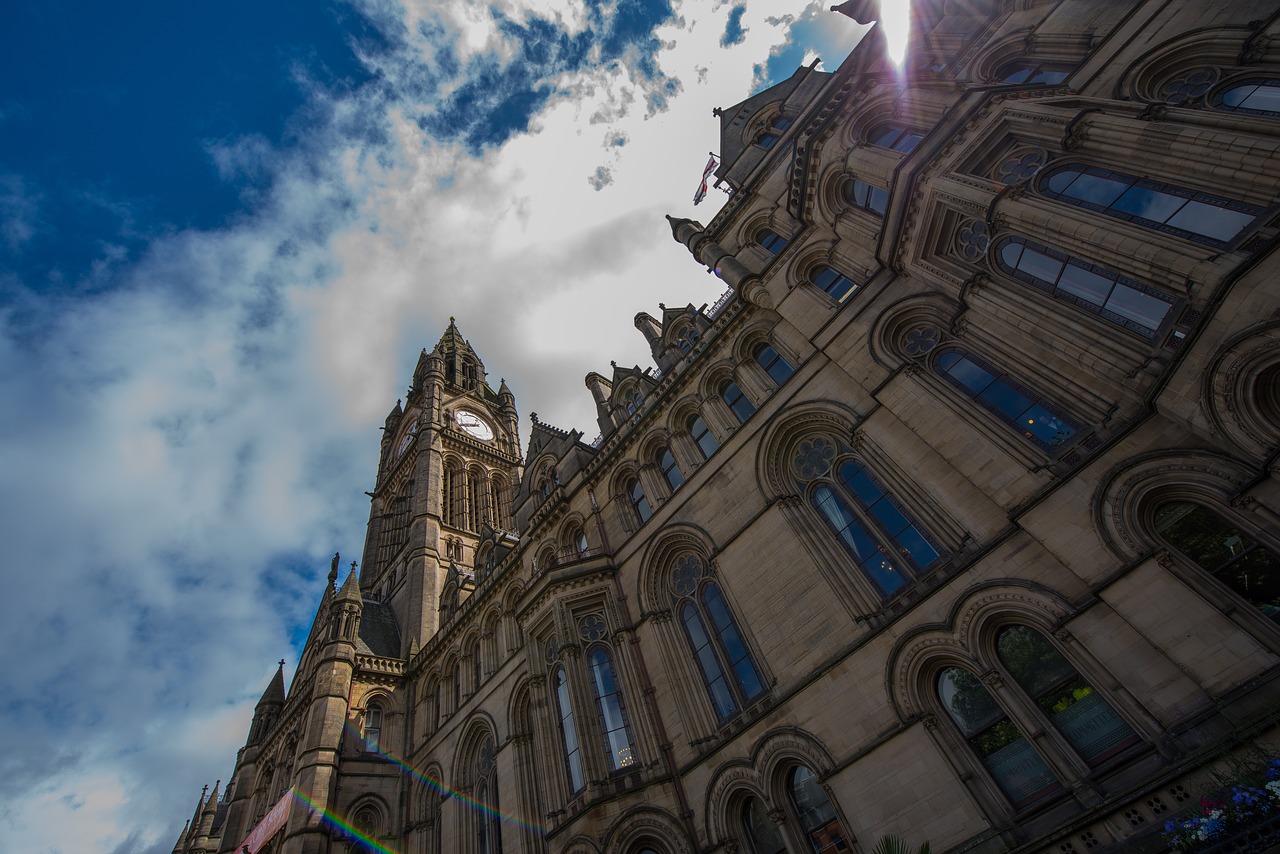
    In the wake of the attack in Manchester, the UK’s threat level has been raised from severe to critical – the first time this has happened since June 2007.

    Nerivill / Pixabay


    But the nation doesn’t seem to be bothered, instead, getting into the spirit of the times by pointing out just what constitutes an actual threat to the British way of life. #BritishThreatLevels has been the top trending topic on UK Twitter for most of Wednesday, and the responses are bloody brill.

    I’m a political nerd, so I immediately went to check out what the politicians and journalists were saying – and I wasn’t disappointed:


    https://twitter.com/RupertMyers/status/867325576964706304


    https://twitter.com/JamesMelville/status/867349299537088513


    But there were a few that any gay man can appreciate:

    https://twitter.com/RichardBabley/status/867349975902162945

    https://twitter.com/GeckoKid_WOW/status/867336593023131654

    https://twitter.com/DanielRidsdale/status/867367982669975552


    And some that are just too true not to mention:

    https://twitter.com/ByrneBook/status/867332542210482176

    https://twitter.com/cjlatimer16/status/867370750155649024

    https://twitter.com/BrummieCanary02/status/867411373650792448


    On a day we all doubtlessly needed a laugh, you lot came through. Well done.


  • THE BIG GAY ELECTION | F**k politics … We are all Mancunians this week

    THE BIG GAY ELECTION | F**k politics … We are all Mancunians this week

    This week in review is coming to you later than last week’s, which was two days late.

    timajo / Pixabay

    Originally I thought this was an ingenious idea. I was going to push each column back a day until we reached Thursday, 8 June – election day. So this one was meant to be sent to my editor on Monday night, for publication on Tuesday.

    And then Manchester happened.

    I can’t put into words how utterly devastated I am – how utterly devastated all of us at THEGAYUK are – about what happened at Manchester Evening News Arena on Monday night. 22 beautiful, young lights were snuffed out far too early by a hateful “loser,” as US President Donald Trump rightly called him. Twenty-two young girls and boys, women and men, lost their lives because some twisted soul bought into an ideology of hate.

    Speaking only for myself, I have wept uncontrollably for those we lost in Manchester – those beautiful, precious children and their equally precious parents who just wanted to see a pop idol sing. I pray to God that anyone and everyone responsible is brought not only to justice, but to His wrath. I hope they burn in Hell.

    In the wake of the horrific attack in Manchester, the parties have halted campaigning until at least the weekend. Some have criticised this decision, but I think it wholly right. At the end of the day, we’re all British (except me; I’m American – but I desperately wish I were British). This is a national tragedy, the likes of which we haven’t seen in twelve years, since the 7/7 attacks in 2005. Politics suddenly seems much less important when our children are being killed by terrorist thugs as end leave what was meant to be one of the happiest nights of their lives.

    As the contributing political editor for THEGAYUK, I had a decision to make: do I write in defiance of the terrorists, or do I follow suit with our political parties and cease political coverage for the next few days? I’ve grappled with this question all day, and I don’t know that I have the right answer. But I arrived at my answer.

    I’m not going to write about politics today.

    Instead, I’m going to talk about the victims who have been publicly identified, talk about their lives, and talk about what it is I think makes Britain so goddamn special.

    I hope you’ll understand.

    Saffie-Rose Roussos was 8. She became separated from her sister and mum – who at the time I’m writing this is still in hospital and unaware her daughter has died – and was killed in the terrorist attack. According to the Telegraph, her headteacher, Chris Upton said “Saffie was simply a beautiful little girl in every aspect of the word. She was loved by everyone.” She was “unassuming, with a creative flair,” he said, and “she was loved by everyone and her warmth and kindness will be remembered fondly.”

    Georgina Callander was 18. Her mother, Leslie, was the first to lay a flower at Tuesday’s vigil in Manchester’s Albert Square. A self-proclaimed “Arianator” (the nickname for those in the Ariana Grande fandom), Georgina was seeing her idol for at least the second time. She was also an avid fan of Once Upon a Time, a television show about fairy tale characters. Several of the cast members, including Rebecca Mader (who played the Wicked Witch of the West) and Emelie de Ravin (who played Belle) tweeted condolences, remembering Georgina. (As a fellow Oncer, Georgina holds a special place in my heart, and I tweeted at series creator Adam Horowitz asking that, as another fan requested, the first episode of series 7 be dedicated in her honour.)

    Kelly Brewster was 32. She had just put the deposit on a house with her partner, intent on building a life with him and his daughter. According to the Daily Mail, she shielded her young niece, Hollie, from the shrapnel coming from the nail bomb. Hollie survived thanks to her aunt’s courage, as did Kelly’s sister – Hollie’s mum. The Daily Mail spoke to the father of Kelly’s partner, Ian, who said he is ‘absolutely distraught.’

    Alison Howe and Leslie Lees were waiting for their daughters to come out of the concert when they were killed. Both were from Royton, Oldham according to the Mirror. “They took a caring beautiful mum and step mother away from us all she was amazing to us x love you loads Alison Howe xx,” her stepson Jordan Howe posted on Facebook – again, according to the Mirror, who also reports that around the same time Leslie’s brother said she was “gone, but never ever forgotten.” These two mums were trying to collect their daughters from a pop concert. That’s it.

    These are the victims, as of 3:33 GMT on 24 May, I know of. More will surely be made known by the time this is published. (ed note: RIP to Martyn Hett)

    Their stories are equally worth telling. All 22 (and, God forbid, counting) souls’ stories are worth telling. It would be my honour to write them all.

    I may never get that chance, but what I have now is a chance to use my platform as a contributing editor of this magazine and a writer for other British outlets to say this: they will not have died in vain. Their stories will be told, and their loss will redouble our efforts to confront the scourge of extremism within our own borders and abroad – that evil ideology, irrespective of religion, that seeks to divide us. The terrorists won a battle; they will not win the war.

    Britain is at its best when it is united. It is what I love most about this country – a country that, no matter who you are or where you’re from can come together over a cup of tea. If that sounds quaint, it is, but it’s also honest – as the assassinated Labour MP Jo Cox said, we have more that unites us than divides us.

    Britain is a beautiful, resilient country that will not be cowed by terrorists. No matter our sexuality, our race, our religion – no matter anything – we will always come together. The Mancunians showed us that last night, offering their houses to strangers and their taxi rides free of charge. They took the stranger in. Why? Because they’re British, and their neighbours were in need. That’s what we do in this country.

    And though I’m American, I know a thing or two about the British spirit. I know how unbreakable it is. Times are scary, and times are tough. We’ve suffered devastating losses. But as long as we stand together, united, we cannot be defeated.

    I’ll get back to politics later this week. I have an interview with Labour MP Peter Kyle that’s not to be missed and my usual witty observations. In the meantime, I ask that you pray for Manchester – or, if you’re of no faith, keep them in your thoughts. After all…

    We are all Mancunians this week.

  • THE BIG GAY ELECTION | Interview: Nate Higgins

    At 20 years old, Nate Higgins is one of the youngest parliamentary candidates in the country. Standing for the Greens in West Lancashire, he may be a first-time candidate, but he is well known as a leading Green Party voice on gay Twitter. Originally from Suffolk, Mr Higgins left home at an early age following the death of his mother and is now a student at Edge Hill University, where he’s studying musical theatre. He spoke last week with THEGAYUK about his life, his candidacy, and why the Green Party is the best party for young voters.

    This interview has been edited for clarity and length.

    THEGAYUK: If I’m not mistaken you’re a university student and at least one of the youngest PPCs in the country. Why are you standing?

    Nathaniel Higgins: The Green Party candidate for one of the London constituencies… is younger than me. So I don’t want to steal his thunder. But I’m standing for a number of reasons. I originally wasn’t going to. In my mind, I didn’t think it would be fair on constituents to have an MP who spends a lot of his time out of the constituency because of the nature of being a student. But after the local party and regional coordinator and a couple of other people spoke to me and thought I would be the best person to represent West Lancashire, and as I worked out my MP, Rosie Cooper’s voting record, I found a lot to disagree with. And I thought I could make a strong case that I would do the job better than her

    I also think it’s really important for young people and LGBT people to have someone in this constituency that they can vote for. I don’t know if you know much about West Lancashire, but aside from the student population, there’s this image that it’s quite conservative, socially at least. Because of that, there isn’t a lot of people around here standing up for LGBT people or the European Union or students’ rights, for examples. As a student, as a gay person, and as a pro-EU person I’m the best person to stand up for those rights. I’m not willing to compromise on my principle positions to be elected, whereas I think the other candidates are.

    TGUK: So many young gay men, in particular, seem apathetic about politics, especially as equality is achieved and mainstream acceptance is accomplished. Why should LGBT people of your generation care about this election and care about politics?

    NH: A lot of LGB people thinks it stops at the B, and I don’t think it does. Also what I think needs to be remembered is that we don’t necessarily have equality. Although it’s quite a popular opinion to say that we do, there are a lot of issues where if you’re gay, if you’re lesbian, if you’re bisexual, you’re on the backburner. For example, if you want to adopt you’re probably going to be looked at with a little bit more suspicion if you’re a gay couple. If you want to give blood, until recently you were assumed to be dirty and taking part in dangerous sexual activity. Rather than simply asking if they do, they’ll assume that you do if you’re gay. And there’s a whole other host of issues that we haven’t necessarily achieved equality yet.

    It’s not just gay people but young people across the board aren’t apathetic towards politics at all. If you ask them about individual issues on a nonpartisan basis, you’ll find quite a lot of enthusiasm for these issues among people my age. But they are apathetic about party politics, and that’s for a whole number of reasons. Primarily it’s because parties don’t feel the need to speak out to them. It’s sort of a catch-22 situation. Young people don’t vote because parties don’t speak out to them, and parties don’t speak out to them because young people don’t vote.

    TGUK: That leads perfectly into my next question. Your party, the Green Party, has pledged to equalise job seekers’ allowance, universal credit, housing benefit between those over 25 and those between 16 and 25. Many would argue this is unnecessary because so many young people have help from their parents. Why are they wrong?

    NH: If you indulge me and allow me to go into a little of my personal history, I was kicked out of my home when I was 18. I was going to college, and I had to pick up a second job in order to afford my rent, and even then I would not have been able to afford my rent without housing benefit. If that had happened now, now that housing benefit is not available for 18-21-year-olds, I would have had to leave college and move to another town where my dad lived and hope that he would be willing to let me live with him. I would not be where I am now if that had happened…

    In a lot of cases just because someone has access to parental support, it doesn’t mean it’s fair to expect them to use it. For example, say that you have a family who is not accepting of LGBT people but is willing to, when asked by the government, is willing to house you if you deny that part of who you are. I don’t think that’s something someone should have to do, and I don’t think they should have to make that case to the government in order to receive the support that they need.

    TGUK: Was that your situation? Were you kicked out for being gay?

    NH: No, not quite. My mum passed away. My mum was married to an Iranian man, and in the Iranian culture, it’s desirable to remarry as soon as possible. My stepdad’s new wife didn’t like me very much.

    TGUK: I’m sorry to hear that. But moving on to the next question, maybe a little less heavy. The Green Party is known to be on the left of British politics. Jeremy Corbyn is also extremely leftwing.  Why should our readers vote for the Greens and not just vote for Labour?

    NH: As much as politicos like to simplify it this way, politics is not a simple left/right scale. It’s far more complicated than that. What I think you need to see about Jeremy Corbyn is that there’s Jeremy Corbyn the personal politician and there’s Jeremy Corbyn the leader of the Labour Party, and the latter is far more disappointing than the former. Though there’s a lot to disagree with Jeremy Corbyn’s voting record over thirty or so years he’d been a Member of Parliament, he is one of the more progressive Members of Parliament. But as Labour leader, he has left a lot to be desired. For example, he claims to want to break open the establishment but then doesn’t support things like electoral reform that will bring that. And the reason why is there’s a lot of disagreement on the backbenches of the Labour Party on electoral reform. Jeremy Corbyn’s position is nearly untenable as it is, so he doesn’t want to implement something like that. But then you see John McDonell who does support electoral reform.

    …the Labour Party just isn’t standing up for you at the moment. You saw it on their capitulation to the Tories on Article 50, and how they gave the Conservatives a blank cheque on the Article 50 vote. And they do that because the Labour Party is terrified, absolutely terrified, of losing a certain number of its voters. It’s because the Labour Party is, at the end of the day, a coalition of very different people and its voter base is a lot of very different people. So a lot of times if you’re supporting the Labour Party you’re supporting a party that is acting in the interests of other people, whereas I think the voter base of the Green Party is much more unified. By nature of being a smaller party that’s much easier. But the Green Party is almost always going to be voting in your interest

    TGUK: Almost always?

    NH: Well I mean, no politician is perfect. There will be some Greens who disagree with the way that Caroline acts in Parliament sometimes. I don’t personally have any issues that I can think of myself, but it’s just no politician is perfect, and I think we should acknowledge that. What I think needs to be understood is in this electoral system it’s not possible for smaller parties to win a position in government as a smaller party. So a lot of the time they let go of their principles for electoral success, and the Green Party is never going to do that.

    What you also need to remember is if you’re voting for the Labour Party in hopes that Jeremy Corby becomes Prime Minister, what happens if he doesn’t? Does he then resign and you get another Blairite? The Labour Party isn’t Jeremy Corbyn. What I think you need to remember is you’re voting for a representative of your constituency, not the Prime Minister. And Party leaders change often and they change unpredictably. So I don’t think you should vote Labour just because you like Jeremy Corbyn. And depending on where you are, a Green MP might be more supportive of Jeremy Corbyn than the Labour representative is.

    TGUK: Can strategic voting and a progressive alliance actually work?

    NH: I just want to stop you right there. There is no such thing as a singular “progressive alliance.” A “progressive alliance” is a principle that has taken many different forms in many different constituencies. No party wants to implement a national alliance with any party. It wouldn’t work, it would be wrong to the activists on the ground, and it would be wrong to the candidates if they’re already selected. Instead what we’re saying is in constituencies where there is a sitting conservative MP or a progressive Labour MP is at risk of losing their seats, let’s have a conversation about what we can do to best make sure that our principles continued to be implemented by this MP. Because there’s no point in putting in all the effort of standing if you’re shooting yourself in the foot by doing so.

    TGUK: Speaking of democracy, the Green Party is against Brexit and has promised a second referendum. But haven’t the British people already decided that?

    NH: The Green Party has not promised a second referendum. No party is promising a second referendum. What we have promised is, if we were in the ability to implement this, we would bring the final deal that is implemented back to the people in a ratification referendum. And that is not a second referendum. I think that’s really important, because when people hear a second referendum, what they hear is a party trying to subvert the will of the people. But this would be a different referendum with a different question, and it would be something along the lines of “is this deal acceptable for this country?” What I think you need to remember is that though a majority of people voted for Brexit, it was such a small majority – around four per cent. …

    Once we actually know what Brexit looks like, once we know what is achievable and what is possible, we should bring that to the people just to make sure before we embark on the biggest change to our constitution since we joined the European Union.

    TGUK: So much of LGBT equality is underpinned by rulings from the European Court of Human Rights (which Brexit doesn’t take us out of) and the European Court of Justice (which it does). How can we enshrine LGBT equality achieved through European mechanisms into British law post-Brexit?

    NH: Okay, so one interesting thing is – so Theresa May, and I think people forget this, and I think Theresa May wants people to forget this, but she backed Remain. But what she said was “let’s stay in the European Union but let’s leave the European Court of Human Rights.” So her being Prime Minister now gives me absolutely no faith that we will remain in the ECHR in the long-term. What we need to make sure is that during the transition period of leaving the EU is that all of these ECHR rulings are transcribed into British law wholesale. I think that’s what should be done. There should be a bill in parliament that says all current EU law will be put on the British statute book, and we can then, later on, decide which policies are desirable to remove.

    But I don’t think that’s a negotiation that should happen during the transition process. What you’ll get is all these different – it will clog up Parliament’s time, and it will be impossible for MPs to properly hold the government to account on the thousands of different laws that they would have to decide on. Like, you can’t do this one by one. Every EU law has to become British law, and those rights for LGBT people need to come with them. Then later on if the government wants to repeal certain rights, they can make that case to Parliament. In the meantime, we need to elect progressive MPs who we know stand by LGBT rights when it comes to voting on them. We cannot allow this battle that we’ve won to be undone.

    TGUK: So that’s the opposite of the Great Repeal Bill?

    NH: I’ve not actually read up on the specifics of the Great Repeal Bill, but in my view, we need to make sure that all EU law becomes British law at the time of leaving so that when it comes to repealing specific laws it can be held to account by MPs.

    TGUK: The Green Party is also, obviously, concerned with the environment and climate change. What environmental concerns does Brexit raise?

    NH: Well, by nature the environment is… a cross-border problem. The EU is one of the best ways to coordinate on that on a European level. The United Kingdom could become a carbon neutral perfect country and the planet would still be in crisis. We cannot solve this problem on our own; that’s what the Paris climate talks were about. Removing that level of cooperation between the United Kingdom and the rest of Europe, which is required in order to have a measurable impact on the environment, was a mistake in my view.

    For example, our fish don’t stop at country borders. They will swim between country borders. So we need to make sure our seas across the whole of Europe are not polluted in order to stop the negative impact that has on sea life, for example.

    TGUK: What’s the most important issue facing the LGBT community in this election?

    NH: I won’t speak for all LGBT people, but for me, my worry is that when we have a Conservative government, that LGBT rights are going to stand still whilst the rest of the world moves forward. There are things like adoption rights – the majority of Conservative MPs voted against that for LGBT people. Same-sex marriage, the majority of Conservative MPs voted against that. And something that was pointed out to me today is that the Conservative government actually banned the Church of England from carrying out same-sex marriages. If that had been any other government, that never would’ve happened. Even if the Church of England decided that it wanted to take out or provide same-sex marriages, they wouldn’t be allowed to because the Conservative Government actually banned it in the process of legalising same-sex marriage. And I think that identifies the Conservative approach to equality altogether…
  • THE BIG GAY ELECTION | Interview: Stephen Doughty

    Stephen Doughty has served as the MP for Cardiff South and Penarth since winning a by-election in 2012. He has since distinguished himself amongst his colleagues, serving first as Shadow Minister for Trade and Industry. Following a reshuffle, he took up a brief as a Shadow Foreign Minister – which he famously resigned from live on the BBC following a disagreement with Jeremy Corbyn over the sacking of Shadow Minister Pat McFadden in January 2016.

    Stephen Doughty openly gay Labour MP

    THEGAYUK Magazine was fortunate enough to talk to Mr Doughty last week. This interview has been edited for length and clarity.

    THEGAYUK: First things first – Labour’s draft manifesto leaked last night, and it proves to be the most leftwing in a generation, promising to nationalise the railways and eliminate tuition fees, for example. Are you excited or apprehensive about selling this on the doorstep?
    Stephen Doughty: Well we have a slightly different situation where I’m standing, in Wales, because Welsh labour already launched our manifesto pledges earlier in the week with Carwyn Jones, the Welsh Labour leader. So we’ve already set out our stall here very clearly. We’ve got five pledges: one on the NHS, one on schools, one on housing, one on the economy, and one on police. Those are very much messages I’ve been going on the doorstep with already, as well as my own local record. So in terms of wider manifestos and leaks, obviously until the actual manifesto is published I prefer not to comment.

    TGUK: Last year you had a constituent tell you that gay people should be killed and sent to hell. As one of the higher-profile openly gay MPs, do you experience a lot of homophobia (whether online or on the doorstep)?
    SD: I’ve had some pretty unpleasant comments from a local blogger, as well as people who support the far-right BNP to post homophobic material. I’ve had comments on the doorstep, and I had a UKIP candidate that sent veiled homophobic letters to constituents in the last election, saying things like that I didn’t stand up for family values and the like, which we know are dog whistles for homophobic views. Unfortunately, all MPs over the last few years have suffered significant amounts of personal abuse, no matter what party they’re from. If you’re a woman, if you’re gay, if you’re black, if your Jewish, you’re likely to have received some additional abuse and so it gets very unpleasant.

    TGUK: You’ve been famously critical of Jeremy Corbyn. How are you addressing this as you campaign? How is this going for you?
    SD: I’ve got no personal disputes with Jeremy. We’ve always got on very well on the personal level and have a number of issues where we have a lot of common ground. But I have been willing to speak my own mind when it comes to a number of issues, particularly where we’ve differed on issues to do with foreign policy and defence.

    You know, it won’t come as any surprise but there have been a wide range of views across the Labour Party on these issues. I also think we’re in a quite different situation, as I said earlier, for those of us standing in places like Wales where, since devolution, we have quite a different set up now.
    We have a Welsh Labour leader in Carwyn Jones who is popular on the doorstep, and we have very distinct policies in Wales. So I make it clear to people that there are many policy areas where I agree with Jeremy, and I think his work where he’s set out on NHS, on housing, on mental health, on a fairer economy, and indeed actually on the railways – I think what he’s setting out is exactly the right policy. But I’ve also made it my clear that I will speak my mind and stand up for the interests of my constituents, and not put my party first but put them first.

    TGUK: Last month, you raised an urgent question on the way gay men in Chechnya are persecuted. The Prime Minister has finally spoken on it. What should the government be doing to promote and protect LGBT rights not just in Russia but around the world, including in Syria?
    SD: I think the government in the last few years has actually downgraded human rights concerns, disappointingly. Over the issues of Chechnya, I was particularly concerned that we haven’t seen a very clear statement from the Prime Minister. We haven’t seen a clear statement from the Foreign Secretary. I think all he’s done is put out a tweet. The reality is that even when we have difficult relationships with countries like Russia, and undoubtedly with Chechnya, we need to be seen to be on the very front foot when it comes to exposing human rights abuses and urging for action to be taken. Britain’s got a proud history of standing up against abuses, and making a difference in the world, but unfortunately, we have a slightly checkered record in recent years when it comes to certain issues. We have to be consistent in standing up for all, for the rights of civilians, the rights of women, and the rights of LGBT people around the world, whether that’s in Syria, whether that’s in Chechnya, whether that’s in Yemen, whether that’s in parts of Africa, and have a consistent approach.

    TGUK: You voted against triggering Article 50, despite the referendum results. Why?
    SD: My constituents voted 60/40 to remain. It was a very clear majority for a remain vote, and indeed in the months afterwards I had a clear majority of constituents with great concerns about the way Theresa May was taking the Brexit negotiations. I’m very clear that I respect the overall result… but we need to ensure we get a fair deal for people in my constituency and people across Wales. There are still far too many unanswered questions about things like funding. You know, we rely a lot on funding for local universities, for infrastructure. Still no word on that from the government on access to the single market for businesses in my local area. The rights of EU citizens who have been here for often decades and on a whole series of other issues.
    At the time, I wasn’t satisfied that the Prime Minister had set out a clear plan or answered those questions. I have pointed out to people that of course if every MP voted the same way as their constituents then you’d still get the same overall result. But we can’t be simply giving a blank cheque to the Prime Minister to go down a very hard Brexit route. We must find the best deal for people. It’s important that there are a number of MPs who stand up and hold her feet to the fire.

    TGUK: You talk about getting the best deal, and so many of the victories in LGBT equality we’ve accomplished have been through European mechanisms. How do we ensure those European laws and rulings protecting LGBT rights are enshrined in UK law post-Brexit?
    I made very clear that we can’t throw the baby out with the bathwater when it comes to whether that’s the rights of minority groups, whether that’s workers rights, whether that’s environmental protections. I am concerned that we are headed down a route of quite an ideological, hard, I call reckless Brexit, rather one that retains the very best of some of the protections that we’ve worked on a Pan-European level to achieve. And that’s why it’s important that there are members of parliament that are willing to speak up and ensure that those rights and freedoms are protected.

    TGUK: You filed an early day motion to ban Donald Trump from speaking to the House of Commons. As you may be able to tell from my accent, I’m American. Whether we like it or not, Trump is the democratically elected president of the United States. How should the government handle relations with him?
    SD: I was very clear that I wasn’t in favour of banning the President from coming to the UK or having relationships with the UK government. Clearly, as one of our longest and oldest allies, we need to have a constructive and positive relationship with the United States. Recognising that it’s not just the president but a whole series of individual state governments and other parts of the administration. However, I was very clear that we choose who we honour, and offering a full state visit with all the pomp and circumstance and carriages down the mall and an address to the joint houses of parliament is something that is earned, and it’s something that’s given by choice.

    …I don’t think we should be offering up that honour to somebody who has a very checkered record on fundamental freedoms, on sexism, on racism, on the treatment of minority groups. And I think it was a mistake for that to be suggested, to be offered, and Parliament spoke very, very clearly, as did the Speaker of the House of Commons

    TGUK: I want to shift focus a little and ask about sex and relationship education. Her Majesty gave royal assent to a bill making it mandatory, but it doesn’t mandate LGBT issues be taught. Will we ever get LGBT-inclusive PSHE?
    SD: Well I hope so. And certainly, I was part of a group of MPs working particularly with my colleague Stella Creasy arguing for the most inclusive and positive sex and relationships education and a number of others

    TGUK: That was a cross-party group, right?
    SD: Yeah that was a cross-party group. A number of sponsored amendments and pushed forward an inclusive agenda. Again, it’s slightly complex. As a Welsh MP, education is devolved. The decisions about our curriculum are made in Wales. But I’ve always been of the belief that you need age appropriate but inclusive sex and relationships education that reflects the realities of life and the realities of the modern world. When you have a situation where there are still far too many young LGBT people who are bullied, excluded, or in worse cases physically or psychologically harassed or harmed, we need to be setting the very best standards.

    TGUK: Wales does have an LGBT curriculum, correct?
    SD: Yes. Again, it’s age appropriate. But we have a pretty inclusive curriculum here. But again the curriculum is constantly under review. And we have a different system here because we don’t have the same diversity of schools. We haven’t gone down the route of grammars and free schools and new religious schools and things like that.

    TGUK: I guess, I’m going to segue off that question. What can England learn from Wales?
    SD: One of the reasons we have our own distinctive pledges and manifesto in Wales is because we have taken a very different approach when it comes to things like healthcare and education and other issues. We haven’t had a doctor’s strike in Wales. We haven’t had a costly reorganisation of the NHS. We spend 6% higher on health and social care per head of population in Wales than in England. We haven’t gone down the route of having grammar schools. We’ve actually been building new schools and new hospitals.

    The Prime Minister is quite keen to come down and rubbish Wales on a regular basis, but the actual difference is now being felt and recognised by the people of Wales. People do now recognise that distinction and what a difference having a Welsh Labour government makes.

    TGUK: You mention the Prime Minister rubbishing Wales, but the Conservative vote is growing. Does that concern you at all?
    SD: Yeah. One of the difficulties you do have in Wales is that we don’t have a strong and distinct national media, as say in example in Scotland. So a lot of people do engage with a lot of English focused newspapers and broadcasts. Obviously, that reads across into what people are raising on the doorstep and talking about. It is concerning to see the Conservatives doing so well in the polls. However last year the pundits had us losing significant numbers of seats in the National Assembly elections. This year they had us losing significant numbers of seats in the local council elections. And we defied the pundits both times.

    TGUK: What’s the most pressing issue facing the LGBT community in this election?
    SD: To pick one issue I think is very difficult because whilst there are distinct issues facing the LGBT community, members of the LGBT community are human beings and voters just like anybody else. They’re going to have the same concerns about healthcare, education, housing, benefits policy, state of the economy. There’s always a bit of a danger in separating us out too distinctly.

    However, I think certainly one of the issues I’ve come across has been that we have legal equality now in the country. I was very proud to vote on the bill that introduced equal marriage, and sort of fought for many of those last blocks in the inequality picture over the last few years, building on the amazing work others have done over the decades. The real challenge now is to make sure those laws are implemented, that attitudes are changed and that we deal with the stigma that a lot of young people face still in many parts of the country. And in relation to places like Chechnya that we stand as a beacon for LGBT rights and equality in the world. We’ve had the largest number of LGBT parliamentarians in the last Parliament. We’ve taken the most decisive steps on legal equality. We need to now be using our good offices and intent to sell that example to the rest of the world.

  • THE BIG GAY ELECTION | Weekly Roundup, A Brexit from Eurovision?

    You’ll have noticed that this week’s column is coming a little later than usual. There’s a reason for that. Whilst those ensconced in the Westminster bubble are feverishly obsessed with Brexit and winning the election, those of us who prefer Soho were busy celebrating “gay Christmas.” Yes, it was Eurovision weekend, and like any good gay, I was busy rooting for my favourite camp act (the poor sods from Spain, whom apparently I alone liked) and cheering on the fabulous Lucie Jones.

    I took my union flag to a skyscraper overlooking Lake Michigan here in Chicago, joining a British ex-pat and Polish immigrant – meaning thankfully, politics was not a topic of conversation. Judging from Twitter, though, I imagine your Eurovision party might not have been so relaxing. It seems everyone was interested to see how Brexit would affect the Eurovision voting. The Prime Minister warned ahead of Saturday’s final that we shouldn’t get our hopes up. In an interview with the BBC’s The One Show, she promised we wouldn’t Brexit from Eurovision (thank God!), but that “…in the current circumstances, I’m not sure how many votes we’ll get.” Whilst we didn’t do well among EU heavyweights France and Germany, Lucie was able to garner 111 votes, finishing better than any British entrant in several years.

    Lucie herself was a bit more confused about the role Brexit played in her showing. She told ITV’s Lorraine earlier today that “Nobody actually talked about Brexit [in Kiev]. It wasn’t a thing. I wasn’t ‘Brexit Girl,’ which was really nice.” This contradicts what she told the Sun following Saturday night’s show. “I did notice lots of Brexit comments,” she said, noting that she voted Remain, which surely made this even more annoying. “I did vote to remain in the EU,” she said, “but hey, not much we can do about it now. Lots of people voted to leave and we’re a democracy and that’s the way of the world. Sh*t happens.”

    It most certainly does, Lucie, and loads of it happened this week other than Eurovision. So let’s put on our Wellies and wade into some of it.

    The biggest news of the week was undoubtedly the leak of Labour’s draft manifesto – the most radical in a generation, since Michael Foot’s famed “longest suicide note in history” way back in 1983 – before I, and I reckon many of you, were even born. The Daily Mail and the Tories jumped on this, accusing Labour of trying to take the country back to the 1970s (whilst at the same time lauding Theresa May’s admission she and husband Philip have “boy jobs and girl jobs” at home – because that’s not antiquated).

    But should we all be busting out bellbottoms and disco balls just yet? Labour contends we shouldn’t, labelling it a “forward thinking” manifesto that will be deeply popular with voters. The polling backs them up on this. As the Independent reported, around half of people support Labour’s proposals to renationalise the railways, Royal Mail, and the energy market. Meanwhile, policies such as higher taxes on higher earners and building more houses have also gone down extremely well with voters.

    People want to know where the money is coming from. Labour promises that its official manifesto will be fully costed. Until then, we can but speculate on how Corbyn plans to find the funds to pay for his proposals. It should also be noted that the leaked draft manifesto contains other policies sure to be popular with the electorate, including raising the minimum wage and keeping Trident – despite Jeremy Corbyn’s own distaste for the country’s nuclear deterrent.

    Labour can take some solace in the fact that these proposals poll so well, but they certainly can’t rest on their laurels. A recent Survation poll shows the Tories hold an 18 point lead over Labour. It seems that much of this is down to how the leaders are perceived. In another piece, the Independent reports that more people disapprove of the Tories than support them, but that voters still seem to approve of Theresa May’s performance as Prime Minister than disapprove.

    This may be why Ms May’s name is splashed on the side of the Tory battlebus, and why the Conservatives are so keen to make this election a choice between her and Mr Corbyn. The Conservatives more than any party are making this an election about personalities, which makes it strange that she is so reticent to show one. She is refusing to take impromptu questions from reporters (something I criticised her for last week in a HuffPost blog last week) and is still refusing to take part in televised debates. Mrs May is playing her cards close to her chest, running one of the most stage-managed campaigns in living memory. It’s understandable why, but there may come a point where voters demand greater access to the woman who wants to lead the UK out of the EU.

    Some other things that have piqued my interest this week and you lot should be watching out for:

    • The Tories have expressed a desire to repeal the ban on fox hunting; considering how unpopular this is with the electorate, it demonstrates Theresa May’s confidence in winning a majority on 8th June
    • Still, Jeremy Corbyn is climbing in the polls – but can he catch up to Ms May in a short time?
    • Corbyn told Buzzfeed he wouldn’t step down as Labour leader should he lose the election, so if that comes to pass, be ready for yet another bloody battle for the soul of the Labour Party
    • The Trade Union and Socialist Coalition – a Labour splinter group who challenged Labour from the left in the past two elections – has decided not to stand this go-round, citing Labour’s left wing manifesto.
    • And because I know you’re all keen to know, former One Directioner Harry Styles has said he’ll vote for whoever is against Brexit – an endorsement the Liberal Democrat leader Tim Farron has surely welcomed. If only sixteen-year-olds (or, you know, I) could vote.

    Keep watching this space as we continue to bring you the biggest and gayest election coverage anywhere on the internet. In the meantime, whilst you’re out on the doorsteps, keep your eyes peeled for someone who can win us Eurovision next year. After this election and the coming Brexit negotiations, we deserve a win.

    Opinions expressed in this article may not reflect those of THEGAYUK, its management or editorial teams. If you’d like to comment or write a comment, opinion or blog piece, please click here.

  • THE BIG GAY ELECTION | Interview: Ben Howlett

    When Theresa May first announced a she would go to the country, I approached my editors with a rather audacious idea – to interview as many of the openly gay MPs as we can ahead of the general election on 8th June. Since then I’ve begun e-mailing MPs from across the political spectrum, with more e-mails going out this week.

    Ben Howlett

    The first response I got was from Ben Howlett, who has served as the Conservative MP from Bath since 2015. Mr Howlett joined the Conservative Party over 10 years ago, working first for Douglas Carswell and then later for Tory MEP Syed Kamall. Since being elected in the Tory landslide two years ago, Mr Howlett has served on the women and equalities select committee and has been an outspoken campaigner for remaining in the European Union and, subsequently, within the European Single Market. He is also a proponent of LGBT equality and was a fierce critic of homophobic bullying within the Conservative Party following the suicide of young Tory activist Elliott Johnson.

    THEGAYUK spoke with Mr Howlett over the phone. This interview has been edited for clarity and brevity.

    TGUK: Your seat is one of the marginals most targeted by the Liberal Democrats. How are you feeling?

    Ben Howlett: I’m just carrying on what I normally do. Knock on doors, attend community events, and I’m actually fine on that basis. Unfortunately the Liberal Democrats, for them anyways, selected someone who isn’t from Bath. I’m a little surprised by their choice of candidate, to be honest.

    TGUK: You once repeated allegations that Tim Farron told gay MPs he would “pray for them,” which he strongly denies. But amidst the uproar over his comments on gay sex, this has become more prescient. Do you think Tim Farron is homophobic?

    BH: Well, it’s really for Tim Farron to say. However, I know anecdotally and from alleged conversations, exactly as I said on the select committee – so I’m not going to refute what I said on that basis. Tim’s obviously got some very interesting views on the LGBT community. I just think it’s an absolute shame that it took him nigh on two and a half years to come out and say that homosexuality isn’t a sin. Now why he couldn’t say that two years ago, I have absolutely no idea.

    TGUK: The majority of Conservative MPs voted against equal marriage, and just last week Andrew Turner stood down, ostensibly at the behest of CCHQ. Why should the LGBT community trust the Conservative Party to advance our interests?

    BH: Well the Conservative Party has gone through a journey ever since I’ve been a member. And there is a broad church of views. I don’t agree universally with things that my colleagues all say. But on the issue of gay marriage in particular… look at what’s happened over the last six years in particular, since I’ve been more formally involved. We’ve seen equal marriage pushed. We’ve seen, for the first time, the government listen in relation to the transgender community by responding incredibly positively towards one of the most discriminated groups in society. And I’ve been working and leading the charge on transgender policy issues ever since I’ve been an MP. So it’s incredibly refreshing to see how the Conservative Party in particular is really fighting for the rights of the LGBT community and also pushing an equal opportunities agenda.

    TGUK: Do you think that the spousal veto will be something that’s addressed in the next Parliament?

    BH: Well the government’s obviously made its case in relation to the spousal veto, saying in relation to our common law agenda they need to review it an see how equal marriage has been working in practice for a certain period of time. I get that. If you ever make a massive change to the common law system in relation to British law, than it’s going to take some years to embed. I personally have campaigned hard for the spousal veto to be removed in the English system…. But it is absolutely, managing everybody’s expectations, a legal nightmare to get this changed. We know how long it took to get equal marriage done. It’s not going to be an overnight change.

    TGUK: This is being called the Brexit election. You supported the Remain campaign. Do you still think we should remain in the EU?

    BH: I haven’t changed my mind. If there was a referendum tomorrow I would campaign to remain. However, it’s not in the cards. We’re now in a very different circumstance. I’m working with my good friend Neil Carmichael, who’s the MP for Stroud, on something called Modern Europe… I think I need to redouble my efforts to make sure we’re campaigning hard for that new modern relationship with the European Union.

    I have to say, there’s a huge amount of work that we need to do to shift the mindset of the public which has been moving towards a Eurosceptic mindset for the past twenty years. In the here and now, we have to deliver strong government to make sure there is a mandate to deliver a zero tariff free trade agreement with the European Union. I know that’s 100% our top priority. That isn’t some sort of hard, soft, left right, whatever type of Brexit you want to call it. This is a sensible Brexit that will keep the European Union together and also make sure the British public secure the best possible deal from the European Union.

    TGUK:  Why should our readers trust this government to deliver a Brexit that’s in their interest?

    BH: You will have seen the work that I’ve been doing with my women and equalities select committee with the impact of Brexit on equalities. The UK is signed up to literally thousands of international obligations when it comes to equalities legislation. Parts of the European Union are very behind on LGBT rights, and even the UK has got its own issues in relation to LGBT rights. Particularly, obviously, in relation to the Northern Irish issue.

    So what we’ve got to do is work with everyone in the world – and I mean everyone in the world – in relation to the UN’s sustainable development goals, particularly goal five as well, in order to enhance the position of equality around the rest of the world, and in the UK, and in the European Union. I think there is as many positives as there are negatives in relation to our relationship with the European Union on equalities legislation, and what I want to make sure is that Britain is an open facing, global nation that’s going to steer the world towards the positives of LGBT rights rather than the negatives. And this could be a very good opportunity for us to deliver that.

    TGUK: So would you lobby the government to enshrine LGBT rights in any Great Repeal Bill or any repeal of the Human Rights Act, which I don’t think is in the cards right now but could be at a later date?

    BH: So in relation to the Brexit negotiations, we made a report on the women’s and equalities committee on a range of different issues towards equalities. And we called on the government to make sure they embed, enshrine, and enhance our equalities legislation during the Brexit discussions, particularly in relation to the Great Repeal Bill. But also all the other types of employment legislation attached to it…

    And don’t get me wrong, I’ve had battles with colleagues in the European Parliament who are not necessarily on our side with LGBT, in particular transgender rights, issues. In some instances we’ve found we’ve been held back in favour of a more supranationalist approach towards equalities education. So potentially no longer will we be held back and we can actually be seen as a true bastion of equalities legislation for the rest of the world as we exit the European Union.

    TGUK: Gay men are being tortured in Chechnya, yet the Prime Minister has been largely silent. You’re a Conservative MP and an out gay man. Why won’t she speak?

    BH: Well as I know for a fact, as I’ve had conversations with her, she’s spoken up on a range of different sessions with leaders around the world on issues of LGBT rights. Chechnya is one example. I know the Foreign Office has been incredibly active in relation to Chechnya. As an MP myself, I helped form the all-party parliamentary group on LGBT international rights.

    We should be doing more to push the case that wherever you are in the world, any persecution of the LGBT community is abhorrent and should be stopped. I think there is a huge opportunity, by the way, for thinking of this more in the long term. Whenever we’re striking trade deals with other nations around the world, and also the European Union, that we also use that as an issue to enhance our views and also to change their views in relation to LGBT. Because we have an amazing opportunity here to deliver change… why can’t we use this as an opportunity rather than a regression?

    TGUK: Should asylum be granted to gay men from Chechnya or should we extend asylum for LGBT people around the world?

    BH: Our all-party parliamentary group has made recommendations on this particular issue, not just Chechnya but around the rest of the world. Britain’s got a huge responsibility to accept asylum seekers wherever they’re coming from if they face persecutions, according to our international obligations and our moral obligations, as well. We should take people in wherever they face persecution, and protect them.

    In relation to Chechnya, I know the Foreign Office is dealing on a case-by-case basis with individuals who have claimed asylum from there, and they’ll be looking at their individual cases. But we have to do more to make sure that, at source, countries aren’t persecuting the LGBT community… Wherever it happens, it shouldn’t, and we need an international movement to stamp it out.

    TGUK: What’s the most pressing issue facing the LGBT community in this election?

    BH: It’s about making sure they have someone in post to negotiate the best possible deal with the European Union. I’m not going to give you the “strong and stable” buzzline which has been going on, but compare and contrast what Jeremy Corbyn is offering in relation to his approach. For two years I’ve seen someone stumble and fall at the dispatch box in the House of Commons on regular occasions. This, versus someone who’s got six years worth of proven leadership in the Home Office then also as Prime Minister, to stare in the eyes the leaders of Hungary, Poland, and also Germany on equalities education. Trust me, I know who I’d rather back as our chief negotiator in our Brexit negotiations on equalities legislation. She’s got a proven track record of delivering leadership when it comes to the LGBT community, and no less than at a time when we were pushing through equal marriage, and she was central to that.

    She’s definitely a friend of the gays, put it that way.

  • THE BIG GAY ELECTION | Weekly Roundup, All Politics is Local

    The general election is a month away from today, but the big news last week was the already-scheduled local elections which took place throughout the country on Thursday.

    The Tories, rather predictably, swept the local councils. Meanwhile, there hasn’t been this much Labour shock and pain since Sonia Fowler unexpectedly gave birth on EastEnders. The party suffered heavy losses throughout the country, while the Liberal Democrats similarly failed to accomplish the surge they were hoping. Likewise, UKIP was virtually wiped out by a Conservative Party which has annexed their pro-Brexit, anti-globalist agenda.

    The full results in England show a Conservative Party in ascendency and virtually every other party losing ground to them, which bodes well for Theresa May as we look towards the next few weeks. That’s still to come, though, and four weeks is an eternity in politics. Meanwhile, let’s look back on the big gay week that was.

    The biggest news undoubtedly comes from two hotly contested and highly anticipated inaugural mayoral races. In the former Labour heartland of the West Midlands, gay Conservative Party candidate Andy Street made history as the first openly gay metro mayor in the country’s history. In the final round, he narrowly defeated former Labour MP Sion Simon with a majority of just over 4,000 votes.

    Still, the historic nature of Mr Street’s victory coupled with the fact that a Tory won in the West Midlands makes this accomplishment even more remarkable. It is also no doubt terrifying for Jeremy Corbyn. He is desperately trying to be the party of tolerance and openness while also holding on to the traditional working class heartlands which aren’t quite as keen on his metropolitan inclusiveness.

    It wasn’t all bad news for Labour, though. Andy Burnham won the Manchester mayoral race. The former Secretary of State for Health and the politician with the most beautiful eyes (or is it just me?) won just over 63% of the vote, making him one of the most important Labour leaders in the country. He stood against Jeremy Corbyn for the party leadership in 2015, when his own questionable history on LGBT equality was made an issue by opponents. Mr Burnham has since said that his support for gay rights has led to rifts in his family, but that he does unequivocally support equality.

    This is especially important as hate crimes have soared in Greater Manchester over the past few years, increasing by a third between November 2014 and October 2015. How Mr Burnham addresses the safety of the LGBT community, particularly in Manchester’s Gay Village, will be of vital interest to the local community and the LGBT activists across the nation.

    The local elections were, as I said, the major story of the week – but they weren’t the only one. Of particular interest is the happenings in Ilford North, a key marginal constituency in North London. The seat is currently held by openly gay Labour MP Wes Streeting, a former NUS president and critic of Jeremy Corbyn. Before 2015 it was represented by Conservative Lee Scott, who is standing to take back the constituency this year. In an effort to help him do this, Ukip have decided not to stand a candidate of their own and instead back Mr Scott. Meanwhile, the Greens announced last week they are also standing down in order to back Mr Streeting.

    Ilford North looks poised to become a – perhaps the – key Brexit battleground in London, if not the whole of England. Mr Streeting supported the Remain campaign but now accepts that Brexit is happening – though he’s hardly supporting the Hard Brexit of Theresa May. Ukip, on the other hand, see in Mr Lee and Mrs May two people who will support their vision of a Britain free from Europe and cracking down on immigration – that is, the Hard Brexit everyone keeps banging on about.

    By standing down, Ukip all but guarantees Mr Lee’s victory. They took over 4,000 votes in 2015 – far more than Mr Streeting’s slim majority of 589. Looking at the results of the local elections, we see that the Conservatives have basically gobbled up Ukip like a late-night kebab.

    It’s worth asking why the Conservative Party – long derided by Ukip as too pro-Europe – is suddenly so appealing to them under Theresa May. The Tories’ Brexit strategy is so similar to Ukip’s own platform that they’re willing to stand down, which should worry anyone who doesn’t want a Brexit harder than Tom Daley’s tushy.

    While we’ll undoubtedly be talking about Ilford North more as the campaign carries on, there were some stories that flew under-the-radar this week but which are of particular interest to the LGBT community. The Tories selected former LGBT+ Conservatives vice chair Emma Warman to contest the relatively safe Green seat of Brighton Pavilion, currently represented by the Greens’ only MP (and co-leader), Caroline Lucas. Elsewhere in Brighton, the Tories are standing a woman who claims to be able to heal the deaf by prayer against openly gay Labour MP Peter Kyle. (No, seriously, they are.) Labour is standing openly trans Sophie Cook against anti-equality Tim Loughton in the Tory safe seat of East Worthing and Shoreham. And SNP MP John Nicholson claims an opponent accused him of hiring his wife to manage his constituency office. Only one problem: Mr Nicholson is openly gay and partnered. “My boyfriend will be so angry when he finds out,” he tweeted.

    So that’s the second big gay week that was of this general election. If you’ve any tips you’d like me to consider for next week, please don’t hesitate to get in touch at skylar.baker-jordan@thegayuk.com. Until then, no matter which colour of the rainbow your rosette is, have a gay ole’ time out on those doorsteps.

  • THE BIG GAY ELECTION | Weekly Roundup, Gay sex abound

    I know this was meant to be the “Brexit election,” but there have been more politicians talking about gay sex over the past two weeks than on Westminster Grindr.

    This election is quickly shaping up to be the gayest election in living memory – the Big Gay Election if you will. My goal over the coming weeks is, to sum up, the electoral week in gay, highlighting stories and candidates pertinent to the LGBT community with insight, clarity, and hopefully a little humour.

    Jumping right in, the major story of the week was, of course, Tim Farron – the inexplicable Leader of the Liberal Democrats – refusing to answer unequivocally that gay sex isn’t a sin. Whilst this may seem odd for someone who was in a failed 1980s version of Steps, Farron is a committed evangelical Christian whose nuanced views on faith and sexuality have widely (though many would argue unfairly) raised eyebrows about his commitment to equality. Appearing on ITV’s Peston on Sunday on 23 April, Farron doubled-down on his whole “we’re all sinners” spiel – which, while from a Christian perspective, is technically true, didn’t really answer the question. 

No worries, though. Sensing the political storm wasn’t about to abate anytime soon – and, I imagine, that he’d never again be able to attend “Kylie: A Celebration” at the Strangers’ Bar – last Tuesday he finally cleared the air. In an interview with the BBC’s Eleanor Garnier, Farron stated unequivocally “I don’t believe gay sex is a sin.” It took him, like, some two weeks to figure out how to string those words into a cohesive sentence, but he got there in the end. It took Prime Minister Theresa May, another committed Christian, decidedly less time. She was asked by Andrew Marr on Sunday whether she thought gay sex is a sin. “No,” she simply responded. Simple and concise, unlike her Brexit plan.

    But hey, you there, the bloke reading from LGBT Tory – wipe that smug smile off your face. It wasn’t exactly a banner week for your party either. Isle of Wight Conservative MP Andrew Turner resigned – according to PinkNews “before he was pushed” – after allegedly telling a group of teenage LGBT activists that he wouldn’t be going to Pride because he thinks homosexuality is “wrong” and “dangerous to society,” apparently missing the irony that as a Tory those are the exact words Momentum would use about him. The teens posted on Facebook, the story went viral, and by the end of the week, Turner was gone. 

I don’t know if he was about to be asked to sashay away, though I imagine he was. Theresa May runs a ship tighter than Sam Callahan’s… abs. But this shines a light on something the Conservative Party would rather you forget – that their backbenchers are, by and large, no allies of ours. Never forget that the majority of Tory backbenchers voted against equal marriage and that the Prime Minister herself, back when she was Home Secretary, wanted to repeal the Human Rights Act. The extreme Eurosceptic wing of the Conservatives would take Britain out of the European Convention on Human Rights, which has underpinned much of the equality victories British gays have won over the past 25 years.

    As for Labour, well, they’ve been largely silent on gay issues this week (unless lambasting Tim Farron for his no-gay-sex scandal). Jeremy Corbyn did read a letter from a gay couple at the last Prime Minister’s Questions of this Parliament on Wednesday, though. Christopher, Corbyn says, wrote that “for the last five years, my husband has had only a one percent increase in his wages. The cost of living has risen each year. We now have at least 15 percent less buying power than then.” 

The thing about Corbyn’s letters from constituents (a hallmark of his at PMQs) is that they’re impossible to corroborate, so I don’t know any specifics about Christopher’s and his Mister’s circumstances. However, it does raise one thing that we should keep in mind: gay and bisexual men are more likely to experience poverty than straight men, and lesbians are at least as likely to experience poverty as women. Economic inequality is linked to LGBT inequality, so as you cast your ballots next month, bear in mind who is going to do the best to raise the community out of poverty. After all, being fabulous ain’t cheap.

    There’s one more issue we should all remember throughout the election cycle, and which deserves no snark: Chechnya. Gay men are being rounded up, tortured, and killed throughout the Russian province. Whoever the next Prime Minister is, we owe it to our Chechen brothers (and indeed, our LGBT siblings throughout the world) to make sure the government is doing everything they can to advocate for and protect the human rights of LGBT people the world over.

    We’ve got five weeks left before the vote, so undoubtedly there’s going to be quite a bit more to roll our eyes, scoff, and groan at. In the meantime, watch this space. THEGAYUK has some great election coverage coming up.
    Until next week – happy campaigning!


    Opinions expressed in this article may not reflect those of THEGAYUK, its management or editorial teams. If you’d like to comment or write a comment, opinion or blog piece, please click here.

  • If you’re straight and sleeping with gay men, here’s five things you need to know

    A self identified straight man goes to Reddit, after hooking up with a gay guy, looking for advice fearing that the relationship might go to the next level.

    Gay Couple
    CREDIT ©-dnf-style-Depositphotos


    As someone who has written about the perils and pitfalls of sleeping with straight men, I sympathise with both the bloke who posted and the bloke he shagged. Most of these men mean no harm, and sexual experimentation is not only natural but healthy. However, I’ve also had my heart broken when the love of my life came out as straight and left me for a woman.

    So what can bicurious men do to mitigate the potential for emotionally hurting their sexual partners? I’ve got five pointers below:


    1. Be up front and honest.

    I don’t know if the guy in question planned on going home with another man or not. Sometimes spontaneous shit happens. But there’s always that awkward cab ride, or the anticipatory walk, or some moment between “we’re just flirtatiously dancing” and “I’m gonna suck a d**” where you can explain your situation. I suggest you do. There was one night a few years back I met a guy at a bar. We hit it off and he invited me back to his place, but before we left, he made it clear that he was 1) straight and 2) only into getting his di** sucked. I was down to go down, so I followed him home. By clearly communicating limits and truths, we were able to have a mutual and consensual good time with no expectations attached.


    2. Realise that we’re not an “experimental game.”

    I don’t care what Katy Perry says. We’re not your sex toys. We are living, breathing people with real lives, real emotions, and real desires. And in the context of no-strings-attached sex, me getting off is just as important (if not more important) to me than you getting off. You don’t get to call all the shots, especially if I’m bottoming. I’m not here to satisfy your every whim or every desire. Remember that bit about communicating limits? Gay and bi men have them, too. Some of us don’t do anal. Some of us only top. Some of us are okay with rough sex (*raises hand*) and some of us are blander than a Starbuck’s Vanilla Bean Frappucino. Bottom line: we don’t exist for your pleasure, we exist for ours. And since you’ve been honest that this probably isn’t going any further, don’t expect us to submit to your every whim. But don’t expect us to do all the work, either; most gay men expect a bit of egalitarianism in the bedroom. We call it versatility.


    3. Understand the rules of the game.

    This is unfashionable to say these days, but the truth is gay world is very different than straight world. Most of us don’t need the song-and-dance that straight people engage in. (And I’ve seen plenty of straight men playing the “I’m-coy-court-me” game, so hush with your misogyny.) If you want to f*** us, tell us. Be tactful, gauge body language and social cues, but tell us. There’s no need to be shy. But also, don’t be offended if we get up after we get off; we’re the people who invented Grindr, which was always meant to be a hookup app. You’re the people who corrupted it into Tindr by trying to give it an air of respectability. We’ve got lives. We’re busy. And we’ve got better things to do bask in afterglow or engage in some painfully awkward conversation before.


    4. Trust us.

    I can’t tell you the number of hetero guys I’ve slept with who have lied to me. From giving me false names to denying they’d slept with other men (like I’d care?) to lying about having girlfriends and even, once, a wife, they may have been straight, but their stories sure as hell weren’t. If you’re going to sleep with me, which is frankly the most intimate and potentially dangerous act you can do with another person, you should at least trust me enough to tell me the truth. I don’t need your mother’s maiden name and your social security (or national insurance) number, but a first name and relationship status—you know, the sh** you advertise on your office desk—would be nice. It lets us know not only a little about you, which I like in a sexual partner, but also prepares us for the rare unforeseen circumstance where we run into you outside the bar or bedroom. This happened to me five years ago this week, when on Spring Break, I met and slept with a man (several times) who failed to mention he had a girlfriend who, as chance may have it, was also staying at our resort. Word got back to her and when I finally ran into them together, it wasn’t pretty.


    5. Don’t make it awkward.

    When I did run into the aforementioned Spring Break paramour and his girlfriend, he proceeded to apologise to me, to her, to me. This made it very clear to her who I was (I guess his fraternity brothers told her), because the next thing you know my girlfriends are preparing to have to jump in front of me. Don’t be that guy. If you see us in public, say hi. You don’t have to engage in a prolonged conversation, but a simple “oh hey” will suffice. If for some reason you’re not comfortable saying hi (maybe you’re with your homophobic parents, or your significant other), let us know in advance that if we see you in public, you’d rather act like strangers. It might be annoying, but at least we’ll be prepared.

    6. Bonus: If you want to do it again, just ask.
 We may be game.

    Gay Couple
    CREDIT ©-dnf-style-Depositphotos

    We might not be. We’re people, not fleshlights.

    Bottom line: treat us like people worthy of dignity and respect. It’s completely okay to fool around with a guy, even if you’re not sure it’s your thing. But remember, that guy is a real person with real feelings. Follow the rules above and your much more likely to ensure a mutually enjoyable experience. 

Best of luck, bicurious lads. It’s a tough, heternormative world out there.

    Play fair. Play safe. But please, don’t play us.

  • COMMENT | Germaine Greer And The Case Of No-Platforming

    Irony is dead, and Germaine Greer killed it.

    Last week, the legendary radical feminist went on Newsnight, the BBC’s flagship current affairs programme, to complain about being no-platformed. She was meant to give a talk about “Women in Power: The Lessons of the 20th Century” at Cardiff University when the student union’s women’s officer, Rachel Melhuish launched a petition to disinvite Greer because she has “demonstrated time and again her misogynistic views towards trans women….” Greer was indignant, indicating she would not speak at the university before reversing course and agreeing to appear as planned. This hasn’t stopped the chattering classes from fiercely debating the merits of no-platforming, with the consensus being that it’s an unacceptable affront to free speech.

    They’re missing the point, the lot of them. No-platforming doesn’t infringe on anyone’s right to free speech.

    Rather, no platforming is an exercise in free speech. As the feminist blogger Stavvers wrote, no-platforming is a “bottom up” movement where “those who organise events can democratically and transparently decide who to invite, and who not to.” We can choose to whom we listen, which she rightly contends is an oft overlooked exercise of free speech.

    Yet critics of no-platforming argue it “censors” controversial opinions—a baseless claim in light of the fact that we’ve spent much of the last week debating Greer’s position on trans people and her right to espouse it wherever and whenever she likes. That’s partly down to the fact that Germaine Greer already has a massive platform. Hell, simply being protested landed Greer right back on the BBC, where she makes regular appearances. So she has plenty of opportunities to speak her mind.

    But just because someone has a platform doesn’t mean we have to listen. Earlier this year comedian Kate Smurthwaite’s gig at Goldsmiths College was pulled because of low ticket sales and a student protest. Smurthwaite’s views on sex workers and Muslim women, in particular, were singled out by those against her appearance. Opponents of no-platforming rallied to her defence, leading the writer and long-time opponent of no-platforming, Ian Dunt, to write that “the potential for offence is trumping the right to free speech.”

    But this completely ignores the fact that the feminist group which organised the protest was itself exercising its rights. It’s not some Orwellian conspiracy that kept Smurthwaite from performing, but rather the free market. People have a right to choose whom they see, support, or engage with. Even if Smurthwaite wasn’t going to reference sex work or hijab in her performance (the same as Greer wasn’t invited to Cardiff to speak on trans issues), her positions were known and unpalatable enough to spark a backlash—one that worked.

    And this is where opponents of no-platforming miss the mark. Freedom of speech does not actually guarantee you a right to a platform, nor does it guarantee you freedom from the consequences of your speech. It doesn’t mean that you can say something incredibly offensive and then expect it to be forgiven or ignored. It, quite simply, guarantees that the government won’t arrest you for expressing a dissenting opinion.

    Several years ago, I wrote a blog defending Pauline Howe, a Norwich grandmother who was visited by the police for writing a letter to her local council about “sodomites” like me and our “perverted sexual practises.” Six years later, I still stand by Howe. But I sure as hell wouldn’t share a platform with her, because I’m not interested in debating my identity or equality with someone who clearly disparages the former and denies the latter.

    Yet even at 23, I could still recognise that Howe had the right to expressing her opinion without the police knocking round. When I blogged about Howe, I was still a student, a fact that may come as a shock to opponents of no-platforming. Many of them have designated universities as ground zero in the battle over free speech. The ever-enlightened Brendan O’Neill (himself a frequent target of no-platforming) penned a scathing indictment of what he termed “Stepford students” but what I would consider people with better things to do than rehash the previous generation’s culture wars. “Where once students might have allowed their eyes and ears to be bombarded by everything from risqué political propaganda to raunchy rock,” O’Neill whinges, in today’s PC-gone-mad world “the ‘no platform’ policy of various student unions is forever being expanded to keep off campus pretty much anyone whose views don’t chime perfectly with the prevailing groupthink”.

    It’s a gross oversimplification, particularly when it comes with no-platforming those who would deny trans identities. When earlier this month both the radical feminist Julie Bindel and, later, the conservative gay writer Milo Yiannopoulos were effectively no-platformed by the University of Manchester’s Student Union(ironically in debate they were to square off in over free speech and feminism), pundits were outraged, with the Telegraph’s Rod Ardehali writing that “it is not up to unions to start creating their own laws and policing which views are acceptable and which are not.”

    Except, that is exactly the role of student unions, who are meant to represent the concerns of the students who elected them. The University of Manchester’s Student Union were concerned about some particularly vicious comments by Bindel and Yiannopoulos and the climate their presence (and likely comments) would create on campus. They valued the emotional wellbeing of their trans students over allowing a debate between a couple of cis people with a record of pretty terrible comments on trans individuals (Milo has referred to trans folks as suffering a “psychiatric disorder,” even though this is medically inaccurate). They also, likely, didn’t wish to be associated with such prejudice.

    This isn’t an affront to free speech, but rather a democratically elected union doing its job and refusing its platform to speakers it feels do not advance intellectually rigorous or particularly relevant arguments. Universities should be a place for debating ideas, not people, and both Bindel and Yiannopoulos have a history of doing the latter. By no-platforming them, the Student Union are not saying they don’t have a right to speak, but rather that they will not co-sign on oppressive and divisive bigotry by offering them a platform.

    Critics contend that Greer, Smurthwaite, Bindel and Yiannopoulos were all invited to speak on issues apart from those for which they were no-platformed, and this is a valid criticism. After all, we are all problematic in our own ways. We are also the sum total of our ideology, though. Writing at the Guardian, Kate Lyons pointed out that for those who advocated no-platforming Greer “it’s not a matter of weighing up the sum of Greer’s work and deciding that on the balance of things she has done more for women than not,” but rather taking a principled stand for transgender people and letting it be known that “as long as she speaks in certain ways about trans issues, she will not be listened to on anything.” Lyons is decidedly sceptical of this approach, but it’s a perfectly valid response to oppressive rhetoric, as well as an excellent tool at highlighting problematic views and drawing attention to just why they’re so damaging and, well, wrong.

    That’s the great triumph of no-platforming. Rather than limiting the debate, it is opening it up, but with marginalised voices centred. Yes, Greer still went on Newsnight, Bindel still wrote for the Guardian, and Yiannopoulos is still contributing at Breitbart. Their platforms are intact. But the national conversation being had about trans identities and even free speech would not be happening had a few plucky students not stood up and exercised their own right to speak their minds by saying that “no, actually, we won’t tolerate your intolerance.” So cheers, kids. I’ll share a platform with you any day.


    Opinions expressed in this article may not reflect those of THEGAYUK, its management or editorial teams. If you’d like to comment or write a comment, opinion or blog piece, please click here.

  • 10 Hottest Men In Country Music

    If you know anything about me, it’s that I’m an American trying to emigrate to Britain. I’m often asked what I’ll miss the most about the USA. It’s a tough call; there are lots of things that are uniquely American that the Brits just don’t get.

    From gravy and biscuits (which really tastes a lot better than it sound) to Donald Trump (who really is as bad as you think), there’s a lot about this country that doesn’t quite translate.Chief amongst those, though, has to be country music. Sure, there are exceptions—every gay in Soho has seen a drag queen mime a Dolly Parton or Shania Twain tune at some point—but by and large, the songs of the south simply don’t have the same cache in the UK. Country music is a uniquely American genre. But while the music itself may not be to your liking, some of the men who sing it may be.

    So, in an effort to introduce my favourite music to my favourite country, I give you the ten hottest men in country music:

    10. Dustin Lynch

    ©-s_bukley-Depositphotos_

    Age: 30

    Hometown: Tullahoma, Tennessee

    Must-hear tracks: “Cowboys and Angels”; “Hell of a Night”

    With those sparkling blue eyes and that million-dollar smile, it’s no wonder Dustin Lynch has melted the hearts of country fans everywhere. His deep voice will make you swoon on tracks like “Cowboys and Angels,” while “Where it’s At” and “Hell of a Night” will get you wound up for a night of tailgating and mudding down home on the farm. (Don’t know what those are? Man, you’re missing out.)

    9. Thomas Rhett

    © Jean_Nelson Depositphotos

    Age: 25

    Hometown: Valdosta, Georgia

    Must-hear tracks: “Beer with Jesus”; “Crash and Burn”Full confession: “Crash and Burn” is my song of summer 2015.

    I jam it through the streets of Chicago as I’m cruising around town. It’s hardly surprising considering Thomas Rhett is the son of a country legend (his full name is Thomas Rhett Atkins, Jr, making him the son of 1990’s country star Rhett Atkins). With those dark eyes and dimples, he’s sure to break a few hearts. But simmer down, fellas; he married his childhood sweetheart in 2012.

    8. Hunter Hayes

    © s_bukley Depositphotos

    Age: 23

    Hometown: Breaux Bridge, Louisiana

    Must-hear tracks: “Invisible”; “Storm Warning”

    Country music’s answer to Ed Sheeran, twinkalicious Hunter Hayes is the next big thing in Nashville. His song “Invisible” will speak to LGBT youths everywhere (it could be the theme song to the “It Gets Better” campaign), while his EP 21 was released on Friday. With that smile, we’ll let the obvious Adele comparisons slide.


    7. Chris Young

    Embed from Getty Images

    Age: 30

    Hometown: Murfreesboro, Tennessee

    Must-hear tracks: “I’m Coming Over”; “Tomorrow”
    Chris Young has come a long way since winning Nashville Star, an American Idol-style singing competition in 2006. Since then, he’s produced five number one singles and four top ten albums on the Billboard Country Charts. His baritone voice perfectly captures the heartbreak of saying goodbye on records like “I’m Coming Over” and “Tomorrow,” both of which are guaranteed to bring a tear to your eye.

    6. Reid Perry

    Embed from Getty Images

    Age: 26
    Hometown: Greeneville, Tennessee

    Must-hear tracks: “If I Die Young”; “Chainsaw”The only artist on the list that is not a soloist, Reid makes up a third of the brothers/sister trio The Band Perry. They took the country world by storm in 2010 with their single “If I Die Young,” a haunting traditional ballad about a life lost before its time. Since then, they’ve gone on to win Academy of Country Music, Country Music Association, and Grammy awards.


    5. Jake Owen

    Embed from Getty Images

    Age: 33 (though he’s got a birthday coming up on the 28th!)
    Hometown: Vero Beach, Florida

    Must-hear tracks: “Alone with You”; “Real Life”I haven’t heard a song this decade that more accurately sums up life in a small southern town than “Real Life,” and I haven’t seen an artist have more fun with summer this side of Kenny Chesney. 2011’s “Barefoot Blue Jean Night” was his third album, but his first major hit, and it solidified him as one of country’s more laid back, exciting artists.


    4. Luke Bryan

    Embed from Getty Images

    Age: 39

    Hometown: Leesburg, Georgia
    Must-hear tracks: “Kick the Dust Up”; “Drink a Beer”

    The reigning ACM and CMA Entertainer of the Year (the two highest honours in country music), Luke Bryan is the undisputed King of Country. From thumping, arena rocking songs like “Kick the Dust Up” and “Kiss Tomorrow Goodbye” to more stripped down songs such as “Roller Coaster” and “Do I,” Bryan has defined this decade of country music and is the epitome of the “bro country” movement sweeping Nashville. His song “Drink a Beer” always manages to make me cry, as it reminds me of loss of one of my best friends from uni. Say what you will about country, but evoking that emotion is the mark of a true artist.

    3. Canaan Smith

    Embed from Getty Images

    Age: 32

    Hometown: Williamsburg, Virginia

    Must-hear tracks: “Stuck”; “Love You Like That”

    Another former reality tv star, Canaan Smith first shot to prominence as a contestant on The Amazing Race. While his first single only peaked at #44 on the Billboard Country Charts, his sophomore effort, “Love You Like That” has already hit #1 on the Country Airplay charts. His eponymous debut album, which dropped in March, has already cracked the top 20.

    2. Easton Corbin

    Embed from Getty Images

    Age: 33
    Hometown: Trenton, Florida

    Must-hear tracks: “I’m a Little More Country than That”; “All Over the Road”
    When Easton Corbin first came to Nashville’s attention in 2009, the overwhelming response was swoon. He’s the quintessential boy next door, with his corn-fed good looks and endearing twang. Since then, he’s claimed 4 number one songs, and while his latest two singles haven’t performed as well as some of his previous hits, he’s not going anywhere anytime soon.

    Sam Hunt

    Embed from Getty Images

    Age: 30
    Hometown: Cedartown, Georgia

    Must-hear tracks: “Cop Car;” “Leave the Night On;” “Take Your Time”

You may notice that Sam Hunt gets three “must-hear tracks” whereas every other artist on this countdown gets two. There’s a reason for that; his debut album, Montevallo, is one of the strongest debut albums by a country artist this decade. Mixing elements of traditional country, Americana, rock, and hip-hop, Hunt has created a truly unique musical experience that is currently taking country radio by storm. His cut of “Cop Car,” a song he wrote, has more heart and more passion than the Keith Urban cover which made it famous. This former collegiate quarterback may never play in the NFL, but he’s definitely got a future in Nashville.

    Disagree with my selections? Have your own opinions about who the hottest men in country music are? Sound off in the comments below.