Category: Answers

  • Has anyone gay ever won the X Factor?

    Has anyone gay ever won the X Factor?

    The X Factor has become a mainstay of British weekend television and has given us fourteen winning acts. But have any of them identified as gay, lesbian, bisexual or transgender?

    First off, there has never been an openly transgender winner of X Factor, there also has never been an openly lesbian or bisexual winner. There has been just one openly gay man to win the biggest talent competition in the UK – and he wasn’t even out when he took part in the competition.

    Joe McElderry is the only gay person to win the show. He won the competition in 2009 – however, he wasn’t openly gay during the competition and denied rumours surrounding his sexuality. He came out after the show in an exclusive interview with The Mirror newspaper – which called his decision to come out as “brave”.

    More worryingly the X Factor has produced more winners who have been revealed to have been homophobic or tweeted anti-gay comments than actual LGBT winners.

    In 2014 James Arthur was eventually dumped by his record label after it emerged that he released a diss track in which he used the term “f**king queer”. In 2018 it was revealed, days before she was to headline Birmingham Pride that Louisa Johnson had repeatedly used the slur “faggot” on Twitter. Birmingham Pride did not cancel her appearance, despite calls from pride goers. The first ever winner of the show, Steve Brookstein once said that he wished the openly gay gossip columnist Dan Wootton had HIV.


    Here’s the complete list of winners of X Factor since 2001

    2004 Steve Brookstein

    2005 Shayne Ward

    2006 Leona Lewis

    2007 Leon Jackson

    2008 Alexandra Burke

    2009 Joe McElderry

    2010 Matt Cardle

    2011 Little Mix

    2012 James Arthur

    2013 Sam Bailey

    2014 Ben Haenow

    2015 Louisa Johnson

    2016 Matt Terry

    2017 Rak Su

  • Does Joe Sugg from Strictly have a boyfriend or a girlfriend?

    Does Joe Sugg from Strictly have a boyfriend or a girlfriend?

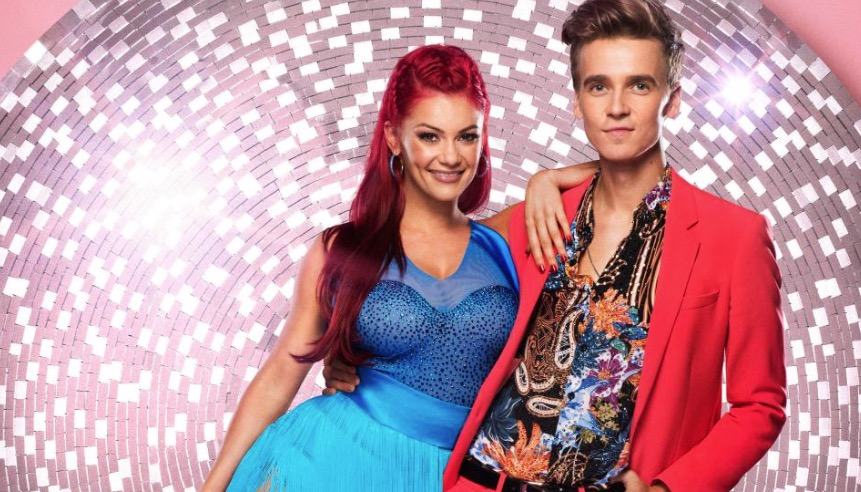
    Strictly star Joe Sugg is getting fans hot under the collar and they’re wondering if he’s dating anyone and if that person is male or female.

    (C) BBCJoe Sugg is best known as a YouTuber, racking up over a billion views but he’s also Zoe Sugg’s younger brother. If you’re scratching your head and wondering who Zoe Sugg is, you might know her by her Vlogging name, Zoella. On YouTube, his channel is better known as ThatcherJoe. His channel currently has 8.2 million subscribers. He started his channel in 2011.

    His channel features pranks, impressions and challenges.

    Joe was the fourth celebrity to be confirmed by the BBC for this year’s show.

    Does Joe Sugg have a boyfriend or a girlfriend?

    The 26-year-old YouTuber is not gay or bisexual or at least has not identified that way publicly.  He is apparently currently single. In the past, Joe has been accused of gay-baiting his fellow vlogger Casper Lee.

    Where is Joe Sugg from?

    Joe hails from Wiltshire in England, although he moved to London and lives with fellow video maker Casper Lee.

    Speaking about joining the show Sugg said, “I’m honestly so chuffed to be involved in the show this year!

    “Not going to lie, I’m very nervous about it, it’s totally out of my comfort zone and I know it will be a huge challenge but that’s what life is all about I guess.”

  • All the transgender shows available to stream on Netflix November 2018

    Looking for transgender films available on Netflix this November? Here are your options.

    Best transgender movies on Netflix

    From Hollywood blockbusters like Dallas Buyers Club to an exploration documentary on one of the Stonewall era’s often sidelined characters, Martha P Johnson Netflix has a wide variety of trans films to take a look at.

    What transgender films does Netflix currently have on offer?

    Adventures Of Priscilla Queen of the Desert (The), Comedy

    Follow the story of transgender Bernadette and her two drag queen friends as they travel across the Australian outback to perform in an Alice Springs’ casion on an old bus. Legendary comedy, iconic LGBT+ film.


    Dallas Buyers Club, Drama

    Matthew McConaughey stars in DALLAS BUYERS CLUB as real-life Texas cowboy Ron Woodroof, whose free-wheeling life was overturned in 1985 when he was diagnosed as HIV-positive and given 30 days to live. These were the early days of the AIDS epidemic, and the U.S. was divided over how to combat the virus. Ron, now shunned and ostracised by many of his old friends, and bereft of government-approved effective medicines, decided to take matters in his own hands, tracking down alternative treatments from all over the world by means both legal and illegal. Bypassing the establishment, the entrepreneurial Woodroof joined forces with an unlikely band of renegades and outcasts – who he once would have shunned – and established a hugely successful “buyers’ club.” Their shared struggle for dignity and acceptance is a uniquely American story of the transformative power of resilience. 

    The Death and Life Of Marsha P Johnson, Biography /Documentary

    This film reexamines the death of a beloved icon of the trans world while celebrating the story of two landmark pioneers of the trans-rights movement, Marsha P. Johnson and Sylvia Rivera.

    Game Face, Documentary

    Game Face shows the quest to the self-realisation of LGBT athletes and the acceptance in society. This documentary tells the parallel story of Fallon Fox, MMAs first transgender pro fighter, and Terrence, a college basketball player in Oklahoma who happens to be gay. The film follows both athletes during their coming out process, and sheds light on the obstacles LGBT sports players deal with throughout their career.

    Growing Up Coy, Documentary

    A feature-length documentary about a young Colorado family who engages in a highly publicized legal battle and landmark civil rights case, as they fight for their 6-year-old transgender daughter’s right to use the girls’ bathroom at her elementary school.

    The film asks a universal question that any parent could face: “How far would you go to fight for your child’s equal rights?

    The Iron Ladies, Biopic

    A volleyball team made of gay and trans players surprise their competitors by winning their way to Thailand’s national championships. Based on a true story.

    Laerte-Se, Documentary

    After living as a man for nearly 60 years, Laerte Coutinho, one of Brazil’s most brilliant cartoonists, introduces herself to the world

    Made in Bangkok, Documentary

    Follow a transgender opera singer as she travels from Mexico to Bangkok to undergo sex reassignment surgery and claim the identity she’s fought for.

    Mala Mala, Documentary

    Nine members of Puerto Rico’s LGBT community share stories of their sexual transformation and insights into the island’s diverse transgender culture.

    Paris Is Burning, Documentary

    This Sundance prize-winning documentary is an intimate portrait of 1980s Harlem drag balls: a world of fierce competition, sustenance, and survival.
     

  • Is Gordon Ramsay gay?

    The ever-present celebrity chef is on our screens constantly, but people are wondering who he is in a relationship with.


    CREDIT: www.davepullig.co.uk/

    So is Gordon Ramsay gay? The short answer is, No. Gordon has never identified as gay and has been married to his wife Tana Ramsay since 1996. Together they have four children, Megan, Holly, Jack and the youngest Matilda, who is a TV presenter in her own right. Gordon and Tana live in London.

    So does it matter if he’s straight or gay? Nope, as far as we should be concerned with is that Gordon is a talented chef and host to numerous, successful TV shows including, The F Word, Kitchen Nightmares and Hell’s Kitchen.


  • What’s the difference between marriage and civil partnerships?

    Are there differences between civil partnerships and marriage? Andrew Smith, Associate Solicitor for Blacks Solicitors’ Family Law team, answers the question.

    Is there difference between Civil Partnerships and marriage?

    What are the legal differences between a civil partnership and a marriage?

    “There are very few ‘legal’ differences between a civil partnership and a same-sex marriage. Civil partners cannot refer to themselves as ‘married’ and it is a different ceremony. On a certificate of civil partnership, both parents are named rather than just the father on a marriage certificate; but there is legally little difference between the two.”

    “The main differences are similar to those between a religious marriage and a civil ceremony undertaken by heterosexual couples; in regard to the formation, the ceremony, the administrative process and the certificates.

    “Somewhat controversially, one of the main differences is that civil partners are unable to cite the specific act of Adultery as the main reason for why the civil partnership has broken down. This is because the definition of adultery is sexual intercourse with someone of the opposite sex outside marriage. Instead, civil partners have to use ‘unfaithfulness’ as one of a number of examples of Unreasonable Behaviour.”

    What about divorce? Can civil partnered couples get divorced?

    What about divorce? Can civil partnered couples get divorced?

    “A married couple will have a ‘divorce’ whilst civil partners will have a ‘dissolution’ if they choose to separate. Therefore the answer is technically yes as although the terminology is different, it does mean the same thing in principle.”

    What about pension rights, are they the same between marriage and civil partnerships?

    “Up until very recently, this had been a grey area for those who retired prior to when the act was introduced.

    “The Walker v Innospec [2017] case which recently made the headlines challenged this and saw the Supreme Court unanimously allow Mr Walker’s appeal for his employer to pay his pension to his spouse in the event of his death, despite his service predating December 2005.

    “This fantastic result will pave the way for all same-sex couples in a similar situation, who are either married or in a civil partnership, to be able to leave their pension to their spouse.”

    If you have a LGBT legal query you would like to discuss with Andrew, please email him on AJSmith@LawBlacks.com or visit the website for more information: www.lawblacks.com

  • How did House Of Cards kill off Frank Underwood?

    How did House Of Cards kill off Frank Underwood?

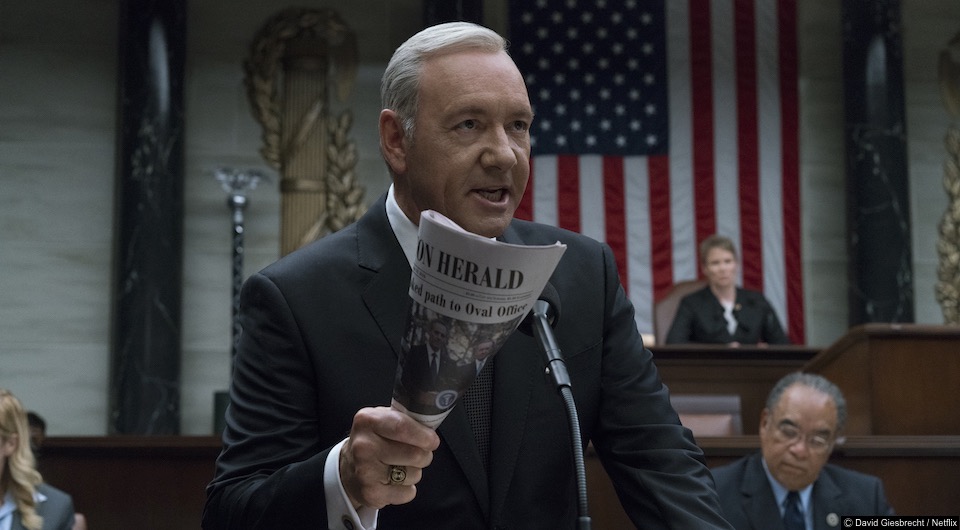
    Arguably one of Kevin Spacey’s most famous roles, Frank Underwood has been effectively killed off on the Netflix hit, House Of Cards, but how did they write him out?

    How did House Of Cards kill off Frank Underwood?
    House Of Cards

    Disgraced actor, Kevin Spacey has left House Of Cards and along his department goes the ultimate anti-hero, Frank Underwood. It’s impossible to think that the show could continue without the conniving, backstabbing, pure genius evil that was President Underwood, but the writers of one Netflix’s most important shows, House Of Cards have come up with a story.

    Now the production team at House Of Cards have remained tight-lipped about the demise of Frank Underwood, so we won’t be able to reveal how they managed to write out the character, but come the 2nd of November all will be revealed.

    However, at the end of Season 5, Frank Underwood suddenly resigns with Claire Underwood being sworn in as the new President, and she is extremely peed with Frank for not running his resignation through her. What’s more, Frank needs to be pardoned by the new President for crimes committed during his premiership, but Claire is not answering her phone.

    The last scene focusing on Claire Underwood who has become the new President, saying rather chillingly, “My turn”.

    So what happens to Frank? Is he killed off, is he written out, what’s the cause of his demise? We’ll have to wait until the 2nd November 2018, when the new series lands on Netflix.


  • Was Margaret Thatcher anti-gay?

    We look at the legacy of gay rights during the time Margaret Thatcher was the British Prime Minister.

    Was Margaret Thatcher anti-gay?

    Margaret Thatcher was in power during 1979 and 1990. It was during this period that gay people suffered the worst healthcare crisis, thanks to AIDS and HIV, the Government’s response was markedly better than that of the US’s.

    However, Ms Thatcher was hesitant on some of the languages surrounding the information campaign which would be communicated to the citizens of the UK. In annotations on official documents distributed by Norman Fowler, the Secretary of State for Social Services, Thatcher asked, “Do we have to have the section on risky sex? I should have thought it could do immense harm if young teenagers were to read it”.

    During Thatcher’s time in power, a new law aimed specifically at those in education was adopted in 1988 called Section 28 in the UK and Section 2A in Scotland. This law prohibited teachers from “intentionally promoting sexuality” or talking about same-sex relationships in any way that would equal them to traditional families.

    Needless to say, this policy undoubtedly added to the confusion and fear surrounding HIV and AIDS amongst the younger generation and possibly put back its decrease for decades.

    After her time as the country’s PM, Thatcher voted negatively on a number of bills affecting the lives of LGBT people in Britain, including adoption rights for same-sex couples, she also voted yes on the Human Fertilisation and Embryology Bill, which requires the need for a father and voted yes on timescale conditions of the repeal of Section 28.

    She was absent for a number of votes including, The repeal of Section 28 and on the Equality Act (Sexual Orientation).

    Did her government pass any anti-gay laws during Margaret Thatcher’s Premiership?

    Yes, in 1988, the Government of the day introduced a piece of legislation called Section 28. This law fundamentally restricted people working for the local education authorities from talking about any sexuality other than heterosexuality to school age children. It was a very similar law to the one that Russia passed in June 2013.

    What did Margaret Thatcher say in her Anti-Gay Speech

    Ms Thatcher barely spoke publicly about homosexuality during her time as PM. In fact, there’s only one speech that she made in which she spoke about homosexuality. It’s widely regarded as her anti-gay speech. This section is just a small portion of a much larger and longer speech, the topics of which reached further than education.

    During a speech to the Conservative Party Conference in 1987, Thatcher spoke directly about homosexuality, saying,

    “To compete successfully in tomorrow’s world—against Japan, Germany and the United States—we need well-educated, well-trained, creative young people. Because if education is backward today, national performance will be backward tomorrow.

    But it’s the plight of individual boys and girls which worries me most. Too often, our children don’t get the education they need—the education they deserve.

    And in the inner cities—where youngsters must have a decent education if they are to have a better future—that opportunity is all too often snatched from them by hard left education authorities and extremist teachers.

    And children who need to be able to count and multiply are learning anti-racist mathematics—whatever that may be.

    Children who need to be able to express themselves in clear English are being taught political slogans.

    Children who need to be taught to respect traditional moral values are being taught that they have an inalienable right to be gay

    All of those children are being cheated of a sound start in life—yes, cheated.”.

    Positive steps

    During the vote to decriminalise homosexuality 51 years ago this year, Ms Thatcher, way before she was Prime Minister, voted to decriminalise it.


  • When did it become legal to be gay in the UK?

    When did it become legal to be gay in the UK?

    Laws around homosexuality differ from region to region in the UK meaning that gay people in Scotland and Northern Ireland had to wait a lot longer for equality.

    (C) BIGSTOCK

    Homosexuality was legalised in England and Wales on the 27th July 1967, a decade after the Wolfenden Report recommended that homosexuality should be decriminalised. The Sexual Offences Act was changed to decriminalise homosexuality, up to a point and only if three conditions were met:

    1. that the act was consensual
    2. that both parties were 21 or over
    3. and the act was done in private.

    Up until that point, men who were found to be having sex with other men were often charged with Gross Indecency or Buggery charges.

    Thousands of men were criminalised because of this law. They were often sent to prison.

    In 2017 a pardon was issued, as an apology to those men who served time for their “crime”.

    When the law changed being gay still wasn’t equal to being straight. The age of consent was 21 and all sexual acts had to be done in private. it wasn’t until the new millennium, that laws pertaining to gay and straight sexual acts were equalised.

    Not all gay people in the UK were equal

    But not all of the UK’s men were able to be openly gay. The law wasn’t changed until 1981 for homosexuals in Scotland and 1982 for guys in Northern Ireland.

    As it stands today, it is currently legal to be gay, lesbian, bisexual and transgender across the UK, whether you’re in England, Northern Ireland, Scotland or Wales. Laws surrounding discriminating because of sexuality or gender expression are very strict in the UK and include employment and business services.

    Gay people are permitted to have civil partnerships (since 2004) and get married (2013/14) except in Northern Ireland – the only region in the UK which does not have full equality for LGBT+ people.


  • Has there ever been any gay presenters of Blue Peter?

    There have been nearly 40 presenters of Blue Peter in its 60 years but have there been any openly gay or LGBT+ presenters of the long-running magazine show.

    Michael Sundin

    In the 1980s Blue Peter hired Michael Sundin who was a gay man. Michael appeared on his first programme in September 1984. However, his time on the show was short-lived when pictures of the presenter appeared in the tabloids of him with a male stripper appeared in print.

    He presented 77 shows, but his contract was not renewed in 1985. Theories as to why he was renewed are various; some feel that he was denied an extension to his contract was due to his sexuality, however, bosses at the show apparently thought he had little rapport with viewers. There were also reports that some parents had an issue with his effeminacy.

    In an interview in 2007 a former editor of the show, Biddy Baxter denied that Sundin had been sacked because of his sexuality, saying “It was his leaving the programme because children didn’t like him – nothing to do with his sexual proclivities”.

    Sadly Michael Sundin would die just a few years later in 1989 from AIDs related complications. He was just 29.

    Mark Curry

    Mark Curry presented Blue Peter between 1986 and 1989. Curry’s co-hosts during his time with the programme were Janet Ellis, Peter Duncan, Caron Keating, Yvette Fielding and John Leslie. In September 2008, Curry formed a civil partnership with his long-term partner, Jeremy Sandle.

    Stuart Miles

    Stuart Miles joined the Blue Peter presenting team in 1994. He was not openly gay when he presented the show. Since leaving the show, he said, in the News Of The World, “I’ve never made any secret of my sexuality. Sexual frustration can be a powerful thing. I should know after five years on Blue Peter, where you’re expected to be like Action Man – smooth all over with no genitals”.

    He joined the Gaydar Radio (now Gaydio) presenting team in 2008.

    To our knowledge, there has never been a transgender presenter of Blue Peter.


  • When is Butterfly on ITV and what is all about?

    When is Butterfly on ITV and what is all about?

    ITV is about to screen a brand new drama, Butterfly which focuses on issues surrounding a transgender child and their family.

    ITV

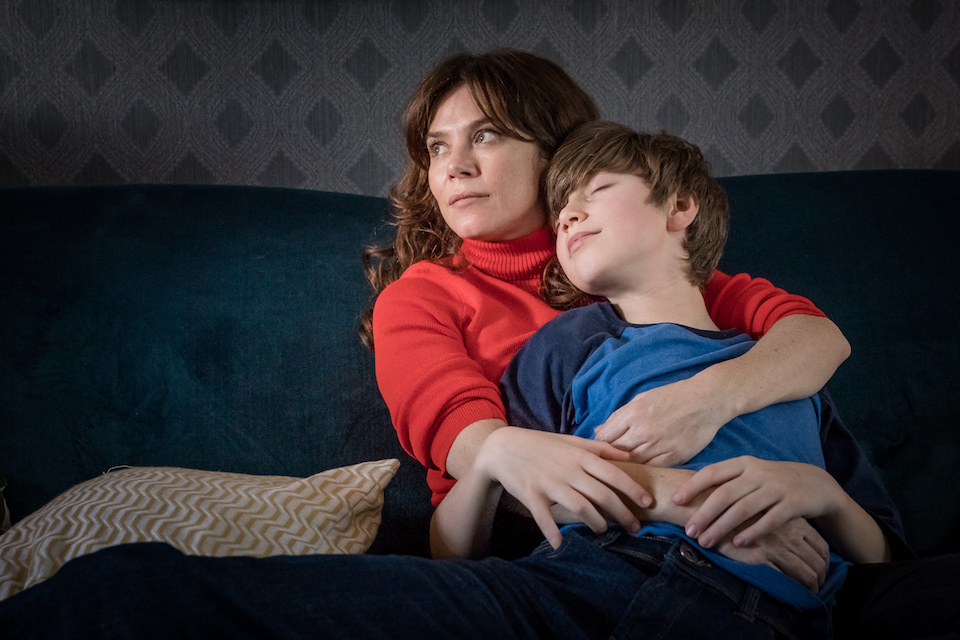
    Butterfly is a heartfelt and sensitive drama about a complex family situation, a child who feels that their gender identity is different from the one chosen at birth.

    When their 11-year-old, Max (Callum Booth-Ford), experiences increasingly distressing feelings around gender, separated parents, Vicky (Anna Friel) and Stephen (Emmett J. Scanlan) attempt to work together. But with both parents divided, will Max find the courage to identify as a girl and express herself as Maxine?

    Will Maxine’s family be able to accept her for who she really is?

    How many episodes of Butterfly are there?

    There are three episodes of Butterfly. The first is showing on ITV 1 on Sunday 14th October 2018. The drama will be aired between 9:00 PM and 10.00 PM.

    The next two episodes are to be shown at the same time and same day of the week for the following two weeks.

    Episode 2 of Butterfly will be shown on the 21st October 2018

    Episode 3 of Butterfly will be shown on the 28th October 2018 (not yet confirmed)

    Who stars in Butterfly on ITV?

    which actors are in Butterfly on ITV

    International Emmy award-winning actress Anna Friel (Marcella, Broken), is joined by Emmett J. Scanlan (Harlan Coben’s Safe, The Fall), Alison Steadman (Orphan Black, Gavin and Stacey), Sean McGinley (Paula, On a Clear Day) and child actor Callum Booth-Ford.


  • What other films has Daniel Doheny been in?

    What other films has Daniel Doheny been in?

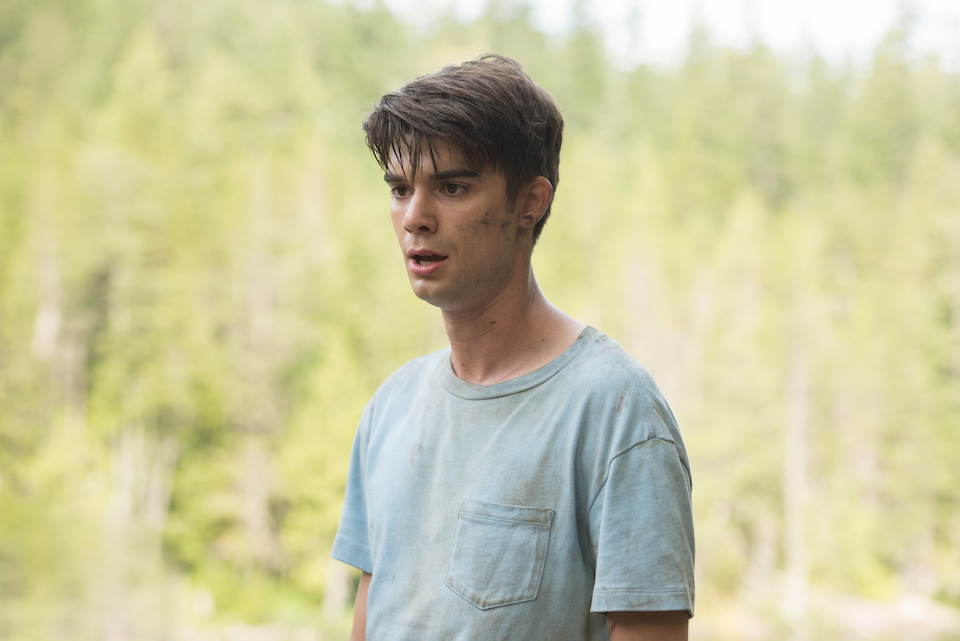
    Daniel Doheny is the star of Netflix’s brand new gay film, The Package, and people want to know if he’s been in any other shows.

    BAD_4794.NEF

    Daniel Doheny, star of the brand new Netflix film, The Package is a relative newbie in showbiz. However, this is the second film that Daniel has appeared in for Netflix. His first was the gay romance, Alex Strangelove.  He’s also appeared in Adventures in Public School, Human Town and False Fiend.

    What is The Package starring Daniel Doheny about?

    Netflix describes The Package as “When five teens go on a spring break camping trip, an unfortunate accident sets off a race against time to save their friend’s most prized possession”. It was directed by Jake Szymanski and released by Netflix in August 2018.

    What part did Daniel Doheny play in Adventures in Public School?

    Daniel played the part of Liam Heap in the Canadian comedy, Adventures in Public School.

    Is Daniel Doheny gay?

    Often when an actor plays a gay part, there’s a certain amount of questioning around that actor’s sexuality. However, Daniel has never spoken openly about his sexuality. Actually very little is known about the actor’s private life. He did, however, speak about his time in high school and dating, revealing, “I had enough on my plate in high school just trying to figure out how to date the people I wanted to date and not being able to. It’s such a mess. It’s a muddy, confusing, emotional time, I wanted to have sex as much as possible but I couldn’t get anybody to do it with me”.

    The article does allude to Daniel identifying as a “straight kid”.

    Is Daniel Doheny gay?
    Daniel in the new Netflix film, Alex Strangelove

    How tall is Daniel Doheny?

    Daniel is 5 foot and 8 inches.

    Does he have social media?

    Daniel has a couple of social media accounts but isn’t particularly active. He is on Instagram at @dohenyd. On Twitter, his account is the same – @Dohenyd.

    Where is Daniel Doheny from?

    The 20-year-old star was born in Vancouver BC in Canada. He was born on the 13th December 1997, which makes him a Sagittarius.

    Does Daniel have a partner?

    There’s nothing to suggest from Daniel’s social media accounts that he is currently dating anyone and the rumour mills surrounding Daniel’s love life have been quiet, so far.