Category: Topics

  • Six totally terrible questions to ask gay people

    Ready those eye rolls…

    Which one of you is the girl????

    “Well, we have a rota. I do Wednesdays, Fridays and Sundays. He does the Mondays, Thursdays and Saturdays. On Tuesdays we both take a day off to chop wood.”

    The answer is as stupid as the question. Do these questions deserve sarcasm or genuine explanation? Is it really offensive to have bizarre remarks or questions thrown at you by straight people?

    1) Some of my best friends are gay:

    Yay! I’d shout it loud too if I had some gay best friends. We’re great to have around. We’re behind lots of the most innovative stuff going off in Britain. We design great clothes, produce great comedy, music, films, fiction and theatre. We’re often stylish and witty. We’re may actually be the new master race! Shouldn’t we let them be proud they’re our friends? Most modern women’s fiction characters have a gay best friend. We’re top of the must have list for 2012.

    2) How old were you when you knew you were gay?

    Well, ten out of ten for having an inquiring mind. I applaud this question. Not easy to answer always and it usually gets a stunned silence when I tell them I was 5. I like to quantify it too by explaining that lots of people don’t realise till they’re much older and there isn’t actually a rule. In fact, there’s not actually a need to define yourself as gay or straight or bisexual, unless you really want to or are backed into a corner by a gunman.

    3) So, which one of you two is the girl?

    Now, this is a complicated one. Who can blame them for asking? Do they mean sex or domesticity? Our sex lives are full of possibilities. Of course, we intrigue. People love to know what goes where. We can be as puzzling as a diagram for a flat pack wardrobe. It’s even more puzzling if we have fetishes or a dislike of penetrative sex or a non-conventional relationship. As for domestic arrangements go: sadly the average straight couple still fulfil lots of stereotypical gender roles. Childcare and household duties are still often predominantly female activities. Sure, people wonder which one of us can use the drill and which one can sew curtains. My partner and I are a real puzzle. I like to clean and he doesn’t. I can’t thread a needle and he can sew beautifully. We can, however, both cook well and are both quite nurturing. We can both happily do traditional men’s roles around the house too but power tools scare me. I watched too much Casualty as a teenager. He’s in charge of the drill.

    4) How did you know you were gay?

    Erm. Well, there are these things called men and I quite fancy them. So much so in fact that I want to have sex with them. That was pretty much a giveaway. The rest is history.

    5) So you gays all like Kylie/Musical Theatre/want to come on my hen party wearing a pink Stetson?

    We don’t all fit the clichés. Lots of us do and that’s fine. That’s how stereotypes develop. It’s fine to love Kylie, fine to want to drink Barcadi Breezers whilst wearing a pink Stetson and fine to be able to hum all the tunes to The Sound of Music. It’s also fine not to. I can hum the tunes. The other two are a big fat NO. We’re not all anally retentive clean freaks and we’re not all cute, camp or foppish. Life might be easier if we could all be compartmentalised and fitted neatly into our assigned boxes but it’s much more interesting that we don’t.

    6) Gays are so bitchy. Really?

    Well if you want that I can have a go. Fasten yourself in and I’ll begin.

    Maybe it’s better that people do ask. We should encourage dumb remarks and seemingly stupid questions. I’m a firm believer in there being no such thing as a stupid question. It’s much more dangerous to not ask and remain ignorant. It’s our opportunity to break down barriers and try to dent those stereotypes. We should be on a mission to inform. If we can be bothered. Otherwise, sarcasm helps.

  • COMMENT | We need to stop saying “I already knew” when someone comes out

    We Should Applaud Those Brave Enough to Come Out, Not Tear Them Down…


    Seeing the trolls was obviously disappointing,but not surprising.

    Discovering that many of the trolls were other gay people was even more disappointing…


    With the news that Olympic athlete Colin Jackson has come out as gay, I logged on to Twitter to see what people were saying about it. Although there were some congratulatory tweets and well wishes, the majority of the comments I saw were putting Jackson down and criticising him for only coming out now, having spent years denying his sexuality.

    Seeing the trolls was obviously disappointing, but not surprising. Discovering that many of the trolls were other gay people was even more disappointing, but again not surprising at all. That’s because we live in a world where trolls regularly tear people down online. These days I’m more surprised when someone is nice.

    It’s not just Colin Jackson who has been in the firing line recently. You only have to look at Aaron Carter’s coming out to see an example of people saying hateful things instead of being more understanding and supportive. The same can be said of Barry Manilow’s coming out earlier this year.

    I think the thing that disappoints me most about all the negativity that gay people write about famous people coming out is when they say that they already knew, or it was hardly a secret, or even that they are coming out for publicity. Maybe, just maybe, it’s actually because they now feel comfortable enough to come out. It’s easy to see how difficult it must be for them, given the reactions of other gay people when these famous folks do pluck up the courage to be open about who they are.

    Much of the issue that people are taking with Colin Jackson coming out is that he has denied being gay in the past. That may be true, but that shouldn’t detract from the fact that he now feels able to be open about who he is. I’m guilty of denying my own sexuality in the past due to fear of being rejected and attacked for being gay. I have no doubt that countless other people have also hidden or denied their sexuality for the same reasons.

    The common theme among the trolls tweeting about Aaron Carter was the opinion that he is probably gay and just saying he is bisexual to soften the blow.

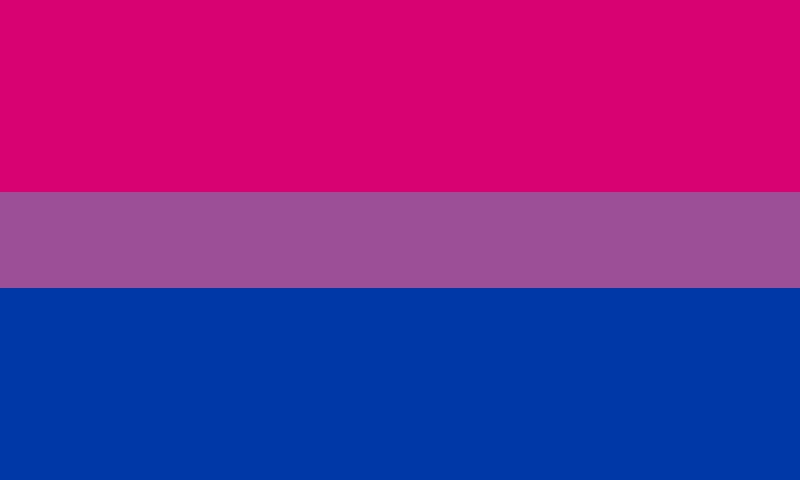
    In Aaron Carter’s case, the stigma around being bisexual is huge. The common theme among the trolls tweeting about Aaron Carter was the opinion that he is probably gay and just saying he is bisexual to soften the blow. Others were saying that he is coming out as bisexual to resurrect his career. It’s this kind of biphobia that keeps bisexual people in the closet. That stigma attached to being bisexual is the reason why there is such a lack of bisexual visibility, although the fantastic Bi Pride UK team are about to change that. As the Stonewall saying goes, some people are bisexual… get over it!

    What’s clear to me is that because someone is famous, they are somehow fair game when it comes to mocking and judging them when they come out. However, we need to be mindful that those famous people are human too. They are just like the rest of us and go through the same struggles as we do. We all have our own journey and so do they.

    What I’d like to do is call for more kindness. I applaud Colin Jackson, Aaron Carter, Barry Manilow and anyone else who feels brave enough to come out and be who they are. I just wish other gay people would be more supportive of that. With LGBT+ people facing so much hatred in many countries around the world, we should all be sticking together. This infighting and putting each other down does a disservice to those who fought and continue to fight, for our rights.


    Opinions expressed in this article may not reflect those of THEGAYUK, its management or editorial teams. If you’d like to comment or write a comment, opinion or blog piece, please click here.

  • People need to get over these bisexual MYTHS already

    People need to get over these bisexual MYTHS already

    We’re not bi now gay later…

    You wouldn’t think that in 2018 myths about bisexuality would still exist… but oh boy do they! We asked readers who identify as bisexual what comments gave them complete attacks of the eye roll and oh boy did the myths come rolling in… So listen up peeps – take note – these are the myths that we need to destroy in 2017!

    Why do gay men take the attitude that bi is just a transitional sexual status … the whole “bi now; gay later” attitude?

    Patrick

    That I want to have sex with everyone. Yikes, and ick NO. We’re not sexual Velociraptors FFS.

    Maggie

    That bisexuals only like cis men and women. I’m a bi and trans man, and that tells me is that the speaker doesn’t view me as an actual man, or sees bisexuals as inherently genital focused, or both.

    Cato

    That we get laid than more people.

    Sam

    The idea that we will eventually “pick a side” and become either straight or gay.

    ANON

    That bisexuals are oversexed and can not have a monogamous relationship.

    Dave

    We’re not a god-damned trend. This is our life, respect that.

    Jenny

    You can still be bi- even if you’re in a hetero or gay relationship

    AJ

    We don’t have to 50/50 either way. It’s cool to be 70 more attracted to the same and 30 & the other way… Still bisexual!

    Paul

  • COMMENT | What about straight victims of homophobia?

    Why is it so often the case that the struggle for equality can feel like one step forward and three back?

    In the UK, equalities minister Justine Greening has announced plans to allow trans people to change their gender more easily, with less intrusive medical assessments, as part of a welcome shake up of equalities legislation. It’ll also be easier for gay men to give blood. This is good news, and updates to the Gender Recognition Act have to be welcomed.

    On the other side of the Atlantic, our American friends have taken a few steps back, after President Trump’s ban on transgender people serving in the military, proving that pointless and nasty political tokenism is alive and well in the west. In-keeping with Trump’s consistency as a president thus far, the legislation is poorly thought-through, with no obvious route to implementation. Hopefully, it will be quickly struck down.We can’t afford to be sanguine about gay rights in the UK, and although most of us agree there is still some way to go, there are areas of disagreement over what to prioritise in moving towards equality. Because of my own experiences, one area I am passionate about is addressing the reality that homophobia affects more than just gay people. Bear with me on this if it’s not something you’ve previously considered. It’s great and right that we can report homophobic abuse to the police and have it taken very seriously (speaking from experience), but the story doesn’t begin and end there. Homophobia isn’t self-contained.

    “…My parents received an ultimatum from one of my siblings:

    boycott the wedding and disown me,

    or have their grandchildren removed from their lives.

    When my husband and I announced our engagement and intention to marry, my parents received an ultimatum from one of my siblings: boycott the wedding and disown me, or have their grandchildren removed from their lives. My parents attended my wedding and are no longer a part of those grandchildren’s lives. Yet my father’s thriving business was taken over by his homophobic child, and their wedding and a deposit for their first home was lovingly paid for out of my parents’ pockets. Prior to my husband and me tying the knot, my parents played a full and active role in that child’s life, and even more so once the grandchildren arrived, who adored their grandparents.

    At first, they tried mediation. Their requests were ignored. They were so desperate to be reunited with their grandchildren that they used their life savings and pursued their last legal option, taking their case to the family courts. There, they found that the organisation Cafcass (Children and Family Court Advisory and Support Service) doesn’t take matters like homophobia into account in assessing what is best for children. As long as children are being looked after at home, then matters like their parents’ homophobic views and actions hold no weight. Similarly, grandparents have few, if any, access rights to their grandchildren. Most cases like this are as a result of acrimonious divorce, and grandparents on one side or the other invariably lose. Ultimately, in this instance, the judge repeatedly commented that she considered it a profoundly sad case and was aware of the gross injustice my parents were fighting, but was powerless even under these circumstances, with homophobic motivations on the other side, to grant my parents direct access, offering indirect access instead.

    Believe it or not, the consolation prize was a better outcome than my parents had been briefed to expect. A different judge may have dismissed it outright.

    Parents get to decide who can and cannot see their children, and bring them up in a homophobic household if they wish.

    One major concern here though: what if a child in such a household is gay? There is a reason suicide rates in gay people is higher than average, and family hostility almost always plays a major part in such tragic cases.

    It is clear to me that my parents are the victims of homophobia which has, in their old age, destroyed their happiness. They have reached the end of the road and now have to accept the outcome. This strikes me as a grievous wrong, and I hope many readers feel the same.

    So what of the indirect victims of homophobia? I would be interested to hear others’ views, especially if anyone has known a remotely comparable situation. Whilst the homophobia my husband and I have suffered from within my family has been hurtful, it has been easy, painless and for the best to simply sever contact with the sources.

    My parents’ suffering goes on. They are the real victims of homophobia here, not me.

    For fear of further reprisals, the author wishes to remain anonymous, but please post your comments below.


    Opinions expressed in this article may not reflect those of THEGAYUK, its management or editorial teams. If you’d like to comment or write a comment, opinion or blog piece, please click here.

  • OPINION | When will the mainstream media ask Theresa May if she thinks gay sex is a sin?

    Yesterday the media was awash with gay sex. In fact, I’ve never heard so much said about gay sex by the UK’s media (well not since Queer As Folk in 1999).


    Tim Farron has had a weekend of it.

    Probably never in the history of the world has one straight-identified man had to think about the sex that goes on between two people of the same sex than Tim Farron after the endless barrage of questioning, from the media, on the sinfulness of gay sex.

    And as though Farron is the authority of sin anyway and his say is final.

    Over the weekend, one interviewer asked him, it seems proudly, 11 times in an interview to clarify whether he actually thought “gay sex” was a sin, the interviewer even brought up Leviticus, shellfish (Tim’s a Vegetarian) and mixed fabrics.

    Listening to the questioning, exactly what do they mean when they say “gay sex”? Do they mean anal? Because actually isn’t the question then: do you think anal sex is sinful – because guess what heterosexuals have anal sex too.

    What does the mainstream media mean when they say “gay sex”? Do they mean anal? Because actually isn’t the question then: do you think anal sex is sinful? Because guess what, heterosexuals have anal sex too.

    Channel 4’s Cathy Newman asked him four times, Preston on Sunday morning (on a Sunday morning of all times) also asked him…

    Don’t we have an answer? He spelt it out loud and proud in Parliment no less. “I do not” he answered with conviction.

    He doesn’t think being gay is a sin. With “gay sex” being part of being gay doesn’t that technically answer it?

    Aren’t there more pressing questions of Farron that should be asked?

    The mainstream media’s fascination with this line of question is mindboggling. I also had no idea that the mainstream media could talk and question, at length, with authority, on this subject.

    When it comes to other matters concerning the LGBT community more often than not, it’s all quiet. For instance, how long did it take for the Chechnya gay detention, torture and killing story to break through? Some parts of the media haven’t even yet reported on it.

    Well, I’ll tell you what I want, the same media now needs to ask the same questions to Theresa May. She’s a committed Christian, just like Farron. She’s also used her Christianity to justify decisions more openly than any other politician has done of late. So shouldn’t we be asking her what she thinks of a bit of bum fun?

    I think that questions about her decisions on LGBT equality prior to 2004 should be probed.

    Whilst Farron’s record on voting on LGBT rights is good, granted not perfect, his party’s stance is exceptional. If you want to read Lord Paddick’s explanation on Farron’s abstention of same-sex marriage 3rd reading click here)

    Ms May’s not so much and as for the Tories, well, history speaks for itself.

    Opinions expressed in this article may not reflect those of THEGAYUK, its management or editorial teams. If you’d like to comment or write a comment, opinion or blog piece, please click here.


  • OPINION | Religion Can Have A Place In Politics

    “Tim Farron is a homophobe”. At least, that’s what has been blowing up Twitter the past few days.

    This is due, more recently, to him again dodging a question about homosexuality from Cathy Newman on Channel 4 News and whether or not Mr Farron believed it was a sin. His response was about as reassuring as your one night stand telling you it’s “probably not chlamydia”. He paused, grimaced and managed simply to say that he wouldn’t make theological pronouncements. Cathy Newman was asking him because, after asking the same question in 2015, he responded: “in Christianity, we’re all sinners”. Bravo. This doubling-down on avoiding the question led to a big debate about the importance of one’s religion when you’re running for office.

    But what’s the precedent on this? Well, Prime Ministers have always discussed their faith. Britain, by tradition, is a Christian country so it was always a political point to be scored. Tony Blair was famously religious and even admitted, during an interview with Michael Parkinson, that he prayed to God over the Iraq War. Yet, Blair is considered a Gay Icon and even won an award from Gay Times. Blair, as Prime Minister, ushered in a raft of LGBT-positive legislation such as civil partnerships, the right to adopt, the equal age of consent, the repeal of section 28, ending the LGBT Armed Forces ban as well as stringent hate crime laws and the Gender Recognition Act. Never once did the public consider his religious beliefs to be in the way of his progressive ideals.

    So let’s look at Tim Farron again. What is different between his awkward response to the gay question to that of Corbyn’s homosexuality-as-a-choice gaffe? Farron did an interview with GQ in 2015 where he asserted his viewpoint, despite his religion “I’m not a religious leader; I’m a political leader. I think that everybody is utterly equal. People should be free to love who they want and marry who they want. But I don’t go making theological pronouncements.”

    These days, we are all so quick to judge but it’s understandable. Heinous crimes have been committed throughout history against LGBT people on the basis of religion. We’ve seen in America the debate about same-sex marriage and how it’s not ‘what God intended’. Homosexuality as a sin is something that seems to be the only thing most religions agree on. Therefore, I feel like LGBT people almost have a Pavlovian reaction to religion – where we hear the word God, we assume hate will follow. But that isn’t fair. We have to accept that, sometimes, our politicians are allowed to change their minds.

    Look at Hillary Clinton who in 2000 commented that “marriage has got historic, religious and moral content that goes back to the beginning of time, and I think a marriage is as a marriage has always been, between a man and a woman.” Sure, she continued by saying that same-sex partnerships should enjoy the same rights but it still wasn’t out-and-out support that we saw from her during her 2008 Democratic nomination campaign and subsequent 2016 Presidential campaign. Tim Farron’s record is admittedly sketchy. He voted in favour of same-sex marriage but in 2007 voted against the Equality Act and in 2013 abstained from a third reading of the same-sex marriage bill. Also in 2007, he gave an interview to the Salvation Army’s War Cry magazine about abortion stating he felt, “abortion is wrong. Society has to climb down from the position that says there is nothing morally objectionable about abortion before a certain time. If abortion is wrong, it is wrong at any time.” However, he then said that, “the standards that define my personal morality as a Christian are not the standards of public morality”.

    This again raises an interesting question of how genuine someone’s belief in something needs to be. Tim Farron might be anti-abortion or even anti-LGBT rights but his party supports choice and supports LGBT equality. Should we trust somebody who only believes in something politically and not personally? Does it matter? Essentially, it all comes down to trust. Tim Farron’s personal beliefs right now have not dictated his political beliefs but, if he were Prime Minister, would that change? He would have to make big decisions where he would likely turn to his religion and to God, as Tony Blair did, for the right answer. Tony Blair always made it clear that he believed in equality. Tim Farron seemingly believes it’s the right thing to believe politically. There’s a difference.

    Well, it’s always going to be tough for LGBT people to believe a religious candidate is a candidate that would represent them. Yet, at the same time, it would be equally discriminatory for us to judge people solely on their religion.

    But what about religious politicians in general? Well, it’s always going to be tough for LGBT people to believe a religious candidate is a candidate that would represent them. Yet, at the same time, it would be equally discriminatory for us to judge people solely on their religion. Religion in the modern day is becoming flexible. The Pope himself has stated that ‘God is not afraid of new things’ and continues to try to modernise the Church’s views on homosexuality and divorce (despite hesitation of the Synod). We cannot put all religious people in a box but at the same time, we’re right to be vigilant. Decades of persecution on religious grounds has taught us to be hesitant when it comes to politics and religion.

    Tim Farron’s gaffe is no worse than Corbyn’s, personally, but the difference is that Corbyn has a strong track record of voting for equal rights. I strongly believe we must judge our politicians on how they vote more than what they say. I understand, it’s not nice to hear a politician to even hint that homosexuality is a sin, especially when you think about the effect it has on younger LGBT people. But the lip service politicians give for votes (where being ambiguous means they can play both sides) is different completely to how they ultimately vote in Parliament. When it comes to politics, actions always speak louder than words and it is vital that everybody research candidates and their voting stances because, ultimately, the biggest God any MP prays to is their electorate.

    If you want to see how your MP has voted on a wide range of issues, check out www.theyworkforyou.com.


    Opinions expressed in this article may not reflect those of THEGAYUK, its management or editorial teams. If you’d like to comment or write a comment, opinion or blog piece, please click here.

  • COMMENT | My Coming Out Reactions

    COMMENT | My Coming Out Reactions

    I’m out to everybody. These days I rarely need to come out and say that I’m gay, but it wasn’t always like that. Over the years I’ve come out to family, friends, work colleagues and even my GP. There have been mixed reactions from people when I’ve told them that I’m gay, but most have been positive. In this article, I’ll share some of the most memorable with you.

    keeping company, social gathering,
    CREDIT: bigstock / Rawpixel.com

    Family
    Coming out to my mum was one of the best things I ever did. I knew she would be supportive, as one of her best friend’s is gay. She acted as a proxy, telling other members of the family and family friends that I was gay so I didn’t have to. Some years later she did tell me that she was worried that I would have a more difficult life as a gay man as ‘people can be so cruel.’

    The funniest reaction from a family member was when my mum told my Granddad. He told her that I ‘just haven’t met the right girl yet.’ This wasn’t homophobic, just a lack of understanding and naivety of the gay world. This naivety is wonderful and one of the many reasons I love him immensely. He used to work on the tills at what has been dubbed The Gay Sainsbury’s in Manchester. He never realised (and still hasn’t!) that all the gay couples are actually together.

    When I came out to my older Brother, a sporty lads lad, he said: ‘You’re still my brother. And I still love you.’ This acceptance from him meant the world to me and it still does.

    Friends
    My friends and I don’t really remember me coming out. That means that it wasn’t really a big deal. It was said, accepted and then we moved on. But there’s always that one friend isn’t there? When I came out to him, he said: ‘Me too.’ We’re still friends today and our same sexuality helped to build the bonds of a lifelong friendship.

    Work Colleagues
    I’ve had many work colleagues over the years, all in different settings and the vast majority coming out has been done by answering the questions: ‘So how was your weekend? What did you get up to?’

    However I did have one Born Again Christian work colleague who said: “I accept that this is how you feel, but it’s not part of god’s plan. It says so in the bible.” This was a face palm moment and I rarely spoke to him after that.

    At one workplace a closeted lesbian work colleague saw the overwhelmingly positive reaction to me as an out gay man and this gave her the courage to talk about her life and her partner openly. Prior to me arriving she had avoided conversations about anything personal, but after seeing how our work colleagues reacted to my talk of gay pride and my relationships she became more open at work and seemed happier for it.

    GP
    I had gone to see my family GP, an older Asian man, about something and decided to disclose my sexuality to him. I think I was at the stage in coming out where you want to tell the world that you’re gay. He said: ‘it’s unnatural.’ And then resumed talking about what I had gone to see him about. This hurt. Said by a supposed non-judgemental professional. Whenever I hear someone say ‘unnatural’ it takes me right back to that consultation room and makes me feel really uncomfortable.

    My coming out reactions have been in the vast majority positive. I have been accepted for who I am. But that’s not always the case. Gay people coming out face the fear of rejection, actual rejection and in some cases abuse or violence. If someone can’t accept you for who you are and recognise that your sexuality is an important part of who you are, you have to ask yourself a serious question: do you really want this person to be a part of your life? I know what my answer would be.


    Opinions expressed in this article may not reflect those of THEGAYUK, its management or editorial teams. If you’d like to comment or write a comment, opinion or blog piece, please click here.

  • COMMENT | Are gay guys the worst fat shamers?

    Fat Shaming and Fursecution

    CREDIT: ©-livrakv-Depositphotos

    If there’s one thing that really gets my knickers in a twist, it’s people not being able to accept each other for who they are.

    Gay people still face so much prejudice and discrimination in the world, but there’s an issue that I view as being even more damaging; gays hating on other gays for not fitting an ‘acceptable’ aesthetic.

    Over the years I have noticed a lot of fat shaming and fursecution within the gay community, as I’m sure many of you have. I have even been a victim of it on more than one occasion. Whether you’re online and see profiles stating that potential guys must be slim and hairless or seeing fat shaming on the scene, I believe it to be an endemic problem.

    Personally, I’m a relatively big guy and particularly hirsute. There was a time I hated the way I looked and wished I could be slim and smooth. Then I came to realise that I wanted to be like that to please others rather than to please myself. When it comes down to it, if I really hated the way I look I’d do something about it. I like my covering of fur and having a bit of meat on my bones. My partner likes it too, so that’s all that matters.

    In the past, I have come up against abuse and discrimination from other gay men, mainly on the scene and on apps such as Grindr. One guy told me that I looked disgusting and that the only way I was going to lose weight was if I became bulimic. Another guy on Grindr told me I was a “fat f**king twat” who had no chance. It bothered me at first, but actually, it says more about them than it does about me.

    In magazines, we are fed images of so-called hot guys and they are nearly always slim, smooth men, with toned bodies. Although I sometimes like seeing those images, I believe that the constant feed of these nearly naked men is damaging to people’s self-esteem and potentially feeds the fat shamers and fursecutors.

    It’s not just in the gay world that this problem exists. If I venture into my local town on a Saturday night there will be lots of people mocking others for being overweight or wearing an outfit that’s perhaps a bit tight and unflattering. It’s the same in the summertime when someone chubby takes their top off or wears skimpy clothing. Personally, I think it’s great if people feel confident enough to remove their top or wear an outfit they like, regardless of how it fits. If the way someone looks offends you, look the other way. Or perhaps address the reason why you are offended.

    Scrolling through my Facebook news feed also shows up incidences of fat shaming and fursecution. Whether it’s a larger lady with little clothing on or a man covered in body hair, it is further perpetuating the thought that being overweight or hairy is unsexy and acceptable to be the subject of ridicule.

    I don’t believe that bullying or the shaming of anyone is ever ok, and it concerns me that so many people focus on what others look like instead of concentrating on the bigger issues there are facing us as a community.

    As for what the solution for eradicating this form of bullying is, I don’t have the answer. Perhaps there needs to be body image classes at school or maybe people just need to take a long, hard look at themselves to realise that fat shaming and fursecution need to stop. Either way, we should be supporting and celebrating each other, not continuing with this internal prejudice and discrimination.


    Opinions expressed in this article may not reflect those of THEGAYUK, its management or editorial teams. If you’d like to comment or write a comment, opinion or blog piece, please click here.

  • OPINION | Trans people: It’s time to come out of the shadows

    Over the past few years, transgender visibility has improved greatly with a number of trans people becoming very public through the media and I was even featured on Match of the Day‘s Premier League football show recently.

    So why do we still need a Transgender Day of Visibility?

    Unfortunately, that visibility has also brought an increase in abuse and bigotry, following my appearances on the BBC the online trolling I received escalated to the point where I received death threats via Twitter.

    The fight for freedom from bigotry isn’t over yet and it won’t be until every trans person can walk down the street, use the toilet of their choosing and express their identity free of fear.

    For so many trans people our overriding aim is to ‘pass’ or to achieve invisibility, to go about our lives as if our transness never existed, we want other people to accept us in our chosen gender without question or judgement.

    But is this actually doing us all a disservice?

    My self-confidence and self-acceptance greatly improved when I let go of the concept of passing. The fear of being ‘read’ and the fear of people discovering that I wasn’t a ‘real’ woman.

    It’s now more important to me to be perceived as a woman, even if logically people see a slight anomaly. It’s important to me to be authentic to myself.

    That doesn’t mean that I don’t want to be the most beautiful, feminine version of me possible and I do love it when people call me Miss, but I’m not scared of people realising that I’m trans, in fact, I’m very open and forthright about it.

    In the same way that gay rights and acceptance improved greatly after they stopped hiding in the shadows and stood up to express their pride is it now time for us to proclaim that we are trans and proud of it.

    Gender dysphoria can be a terrible thing that takes a huge emotional, mental and social toll on people, do those of us that have reached the stage of feeling comfortable with ourselves and our condition owe it to those that are still struggling to show that there is a light at the end of the tunnel?

    Do we owe it to ourselves (and our younger, more scared selves) to stand up and fight for our rights to be recognised as valid members of society?

    Transphobia seems to be the form of social hatred and bullying that is still, if not accepted, ignored by society. Whilst racism and homophobia are abhorred by all but the very narrow-minded few trans people still get the sniggers, tranny jokes and, as happened to me last week, outright abuse.

    We go through hell to finally be our authentic selves and we should be proud of the fact that, even if we haven’t quite won the battle yet, we’re on the road to liberation.

    Why, just at your moment of self-realisation would you come out of one closet only to lock yourself in another, yet again in fear of being outed.

    So perhaps it’s today that we put on our best face, most amazing outfit and strut, proud as hell down our local High Street.

    I’m here, I’m trans and I love who I am, and no one’s petty minded bigotry is going to take that away from me!

    P.s. It’s just been confirmed that there will be an event today at 2pm at New Steine in Brighton including speeches (I’m one of the speakers) and music, all welcome.

    Opinions expressed in this article may not reflect those of THEGAYUK, its management or editorial teams. If you’d like to comment or write a comment, opinion or blog piece, please click here.

  • OPINION | When did gay culture start losing its individualism? When did we all turn into banker w*nkers?

    OPINION | When did gay culture start losing its individualism? When did we all turn into banker w*nkers?

    In his latest book, The Descent of Man, Grayson Perry cleverly charts the misfortunes of masculinity and their repercussions on both the female and, more interestingly, the male sex.

    CREDIT: kunertuscom-bigstock

    Perry himself is not only a Turner Prize winning artist but also a prolific cross-dresser, and he speaks with flair and intelligence as he critiques the prominence of what he calls default man. This tribal identity, which is characterised by a sober dress sense, a steely bravado and an apparent lack of empathy, accounts for only 10% of the population but dominates the spheres of business, politics, sports and the media.

    It’s little surprise, as Perry points out in his book, that majority of those who kill, rape and go to war fit the obtuse criteria and are bred from what he denotes the department of masculinity. Bankers typify default man – they are also renowned for possessing psychopathic tendencies.

    But no longer are these proclivities reserved for straight males, they’re now abundant in the gay community. The most transparent illustration of this is the term ‘straight acting’. This vexatious use of language now adorns the profiles of many, along with their beards, biceps and tangible disdain for all thing considered effeminate. And this isn’t mere conjecture. A recent study found that those who identify as ‘straight acting’ were more likely to agree that feminine guys give the gay community a bad reputation and were also significantly less likely to experience homophobia themselves. It’s not about raising ideological warfare and dictating the gender performance of any individual or subculture. The diversity of men, from twinks to bears, is what makes the gay community such an eclectic collection of personalities and individuals. It is this very cacophony, brimming with colour and verve, that we should be striving to maintain. Instead, we seem to be diluting our eccentricities, losing our individualism and with it what makes us special.

    We need to ask ourselves if this pernicious desire to conform to this ideological stereotype is healthy.

    This issue isn’t the exclusive domain of homosexuals, indeed Perry’s book largely addresses the hetero masses but given that we already know that the gay community experiences increased rates of bullying, substance abuse and mental health issues, these findings are at best regressive and at their worst pervasive and dangerous to the health of gay men. Trying to live up to false ideals never leads to happiness and contentment in the end, even if society seems to applaud and ratify the notion of default man.

    Suicide is the biggest killer of men under 45 in the United Kingdom – something is clearly going wrong.

    To some degree or another we’re all bound by the confines of our biological sex – but what lies ahead in a world of pass privilege is the eradication of gay culture and identity. Is it any coincidence that as our community becomes more hetero-normative equality seems to be finally on the up? The motivations for aspiring to this so called ‘pass privilege’ are not difficult to identify: bullying, stigmatisation and loneliness are all too familiar tropes – but the acceptance of difference, not assimilation into the uniformity of default man is what is needed if we are to move forward in a healthy and progressive manner.


    Opinions expressed in this article may not reflect those of THEGAYUK, it’s management or editorial teams. If you’d like to comment or write a comment, opinion or blog piece, please click here.

  • OPINION | Banning homophobes from stadiums is not the answer

    Apparently, there’s a school of thought that if you hide something under a rock or you stick a head in the sand, the problem goes away.

    Banning homophobes from stadiums isn't going to help

    Except it doesn’t.

    So this week there’s been a lot of talk about banning homophobes from sports’ arenas and stadiums if they shout anti-gay, homophobic, biphobic or transphobic abuse and I’m flabbergasted. Since when did banning anything actually solve any problem?

    And who exactly is the banishment going to help?

    Whilst I agree that something must be done to solve the anti-gay culture that you’ll find on many of the UK’s sports’ grounds. This toxic environment means that gay or bisexual sports stars and athletes find it impossible to come out – why are there so few openly gay or bisexual sportsmen and women?

    But isn’t this part of the problem? There’s a complete dearth of out and proud athletes in sport, particularly men. There’s a handful of noteworthy sports professionals in diving, a sprinkle in rugby and absolutely none in football. Perhaps if we had more out and proud players homophobic fans would be exposed to other types of gay or bisexual men – not just the overtly camp fodder that entertainment formats on TV rely on to provide entertainment. Some could argue that stereotyping feeds into a homophobic mind frame. Gay and bisexual men, still in 2017 aren’t seen by some as “real men” but campy, effeminate and weak and these people need education. We are all types, shapes, sizes, colours and creeds – and all of us are worth protecting.

    Organisations that own the grounds have a responsibility to keep its patrons safe but it does not, I believe, hold the remit to educate or punish people with bigotted opinions. That responsibility lies with the police and society. Homophobes need education. Not the naughty step and time out.

    That’s why I would advocate an anti-discrimination workshop for those who are found guilty of hate speech – whether it’s gay, religious, race or other hate speech. These classes could run just like the speed awareness classes – when you’re caught speeding.

    You’d pay £100 for the class, money which could be ploughed into running the courses. On that course, you’d be given the opportunity to learn about discrimination and it’s damaging effects. You’d learn about equality and other lifestyles. Once you’ve completed the course you’d be allowed back.

    Surely this would be a better option than banning a homophobe indefinitely and letting him fester in his own hatred, as he watches the match in front of his TV. How does this help the LGBT+ community?

    It doesn’t. Instead, he’ll continue to live in his own echo chamber, feeding his own negativity.

    I agree with MP Damian Collins, who chaired the Culture, Media and Sport Committee who found that there should be “a zero-tolerance approach to the use of all homophobic language and behaviours”, but the sanctions that are implemented against those who are homophobic must be thought out as to not exacerbate the problem.

    Opinions expressed in this article may not reflect those of THEGAYUK, it’s management or editorial teams. If you’d like to comment or write a comment, opinion or blog piece, please click here.