Category: Topics

  • OP ED | Smaller Prides Matter Too

    On Saturday 20th August, the fourth Warwickshire Pride festival will take place at the Pump Room Gardens in Leamington Spa.

    For a small town in a rural county, it’s a massive achievement that the festival happens each year. With many LGBT people living in villages and not necessarily having access to other LGBT people or services, Warwickshire Pride is an important event in the calendar as it provides the types of opportunities that are non-existent for much of the year.

    Warwickshire Pride is a colourful celebration of LGBT life and culture, but also aims to channel the spirit of the Pride movement in its original form. There is a lot of campaigning and interesting talks on the day that cover a variety of important topics. There is also an opportunity for Warwickshire’s LGBT community to access services that they may not ordinarily feel able to, with organisations such as Terrence Higgins Trust, Mind, and a plethora of other voluntary sector groups in attendance. If LGBT people need help with housing, substance abuse, mental health issues, sexual health concerns or anything else, they can access support at Warwickshire Pride.

    Unfortunately, in Warwickshire hate crimes against LGBT people are relatively common. In fact, due to a perceived rise in hate crimes against LGBT people in Warwickshire over the past two years, I launched the Leamington Spa Equality Rally in 2015 and lobbied the Police in order to gain more support for the community. Sadly, smaller towns and villages can have quite narrow minded views of the world, and they’re not necessarily the most LGBT friendly places to be. This is another reason why Warwickshire Pride taking place is so important; because it provides a safe and welcoming environment where LGBT people can be themselves.

    Although it’s important that Pride events in smaller, regional, rural locations take place, it is also a huge struggle to continue to put them on. At Warwickshire Pride we have minimal sponsorship, not a great amount of funding, and it’s a seriously hard task every single year to get enough money together to make the event happen. I keep being told that gaining sponsorship is the way forward. Believe me, I’ve tried. Every year I contact a large amount of companies in an attempt to build a relationship with them and obtain some form of sponsorship. Sadly, I rarely receive a response. When I do, it’s to say that they don’t sponsor events.
    This has been the case with one of Britain’s largest supermarkets in each of the past four years. Despite them proudly sponsoring Pride In London this year, I am told by that supermarket that they do not sponsor events. I can only come to the conclusion that they want to tick a box and be seen to support the LGBT community, but when it comes down to showing some support at a grassroots level, they’re not interested.

    Luckily, I have an LGBT friend who works as a community champion at my local branch. He has kindly agreed to supply water for the volunteers at Warwickshire Pride, but that’s as far as it goes.

    It’s not just this one supermarket. Another well-known retailer have also said that they don’t sponsor events, yet I’ve seen them support larger Pride festivals in the past.

    A world-famous locally based underwear specialist also said they don’t sponsor events. One week after telling me that, it was announced that they were sponsoring another local event that’s probably seen as being more family friendly.

    The lies genuinely bother me. Sometimes I’d rather companies were honest and said that they don’t want to support a small event or they don’t want to support an LGBT event. I’d respect them slightly more for that.

    The media can be a nightmare too; even the LGBT press, with THEGAYUK being a fine exception to the rule. Locally, an event like Leamington’s carnival gains huge local press coverage and front page stories whenever they like. Yet, when I contact the press or send press releases, they’re not always covered. When they are, it’s always about mid-way through the paper where many people may not see the article. With the LGBT media, it seems to be about making money out of Prides rather than genuinely supporting them. For example, a very well-known gay magazine got in touch because they wanted to support Warwickshire Pride, but when it came down to the details, they actually wanted hundreds of pounds to send out one post on Facebook that promoted Warwickshire Pride. Similarly, a regional LGBT magazine said that they could sponsor Warwickshire Pride. However, it involved us paying them £500 for the privilege. In the end, I reluctantly agreed to it because I’m aware of the need to promote the festival and the magazine reaches Warwickshire Pride’s primary target audience.

    All of the above has at times made me feel disillusioned with it all.

    If I’m being truly honest, I sometimes wonder why I bother organising Warwickshire Pride when it’s always a struggle and there is such a lack of support compared to that which other Prides receive. But then I remind myself of the thousands of people who attend each year and how important it is to the local LGBT community that they have a Pride event. It’s the only thing that keeps me going.

    The point of this article isn’t about having a moan about how hard it is and saying “poor me” or “poor Warwickshire Pride”. It’s more about highlighting the challenges of putting on a Pride event in a smaller, regional, rural location, and having a bit of a call to arms. I’d like to encourage everyone to support smaller Pride events.

    They’re the ones that make a huge difference to the lives of their local LGBT communities. Without them, there would be nothing for LGBT people in those areas. It’s fantastic that Prides such as London, Brighton, Birmingham and Manchester take place, and it’s great to see them do so well. But please don’t forget about the small, grassroots Prides. They need your support now more than ever.

    Follow Daniel Browne on Twitter

    The opinions expressed in this opinion piece may not reflect those of THEGAYUK, its management, editorial or connected 3rd parties. If you wish to contribute to you can click here to find out more.
  • OP ED: Cameron had us believe that the Tories had changed but in the end… it’s just business as usual

    OP ED: Cameron had us believe that the Tories had changed but in the end… it’s just business as usual

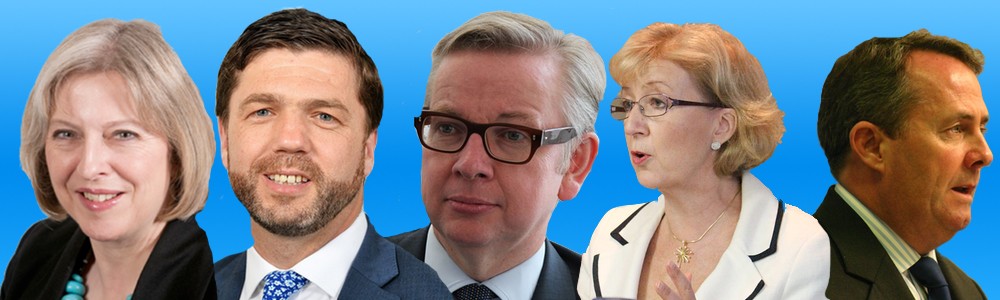
    David Cameron painted a picture at the turn of this decade. The Conservatives were new, brand new and very gay-friendly. But as it stands we have three out of five PM candidates whose voting history on LGBT rights is deplorable (or non-existent) and two who have a fair weather relationship with the gay community.

    Painted as the party that brought in same-sex marriage, David Cameron would have had us believe that the Tories had finally changed.

    But it seems all he had actually created was the almost perfect veneer.

    Modern, forward thinking and accepting, but like all veneers, it’s what’s behind all that shine that really matters and what I’m seeing is rotten.

    With the departure of Cameron, we’re on the edge of having a country run by those who either wouldn’t vote on LGBT issues – so beneath them apparently is our humanity  that they wouldn’t even vote on life changing legislation, or those who, some might say are sheep in a wolf’s clothing, having had a long history of voting consistently against gay rights – and then almost like a light switch, all change, just like that.

    And while voting for equality for the LGBT community is commendable and admirable if it’s just lip service or a ploy to further career prospects – I’d rather not have you on our side. I’d rather deal with one face rather than two, at least you know where you stand.

    It’s becoming patently clear that same-sex marriage, the most historic piece of legislation this decade and one of the cornerstones of Cameron’s progressive Tories, was only won because of the coalition government with the Liberal Democrats.

    It might surprise you to find out that the majority of Conservative MPs voted against marriage equality including two of the current Prime Minister candidates: Stephen Crabb and Liam Fox. Michael Gove voted yes for gay marriage but then was absent for other key elements that would complete that equality.

    In total 136 Conservative MPs voted against the ability for gay and lesbian men and women to be treated equally under the law.

    Andrea Leadsom couldn’t be persuaded either way. She found parts of the new law “unacceptable” and abstained from the vote. In fact, she’s not voted on any LGBT legalisation since her 2010 induction to parliament.

    So here we are, five candidates, all vying for the top spot in Westminster. All of them have dubious voting, three of them clearly aren’t in our corner despite any backtracking they may have done in the past few days – and for this we, as a community, need to be worried.

    If nothing else the vote on the EU has lifted the lid on a Britain that many of us thought we’d left behind in the last century, we’ve had racial and homophobic tensions on the streets – with an increase of hate crime being reported, Brexit it seems, has given some on that side of the argument a feeling that open bigotry is acceptable.

    I’ve written to all five candidates about allaying legitimate fears our readers have put forward about LGBT protections as a new government forms – nearly 24 hours later – nothing.

    Like all veneers, the shine is only skin deep and eventually, it will crack. If we’re not careful it’s wholly possible that our rights, our freedoms could be rolled back.


    The opinions expressed in this comment piece may not reflect those of the management or editorial of THEGAYUK. If you’d like to write a comment or column for THEGAYUK click here.

  • OPINION | Why “They” Matters

    In this game we weathered old showgirls have to sell ourselves to sell seats, giving interviews, waffling away on the radio, and generally generating promotional content (such as this very article) when we have an upcoming performance. There are protocols in place, one mustn’t swear on the BBC, one shouldn’t leave a journalist waiting in Pret for 45 minutes, and one should send one’s press releases out in clear, concise, proper English. Here we get to the cut of the jib…


    I prefer the pronoun “they”, with the understanding that it refers to me as a person who recognises themselves to be neither a man or a woman, but both simultaneously. This is pretty straightforward in practice, EG “Did you see La JJ on TheGayUK? Their article was so enjoyably informative! How do they do it?” As such I am using singular “they” in my press releases, to the chagrin of certain writers who feel it is incorrect English and therefore either decline to write about my new hit show GEIST (which is at the Arcola July 2nd & 3rd btw) or else just use the pronoun they feel best suits me, which is actually quite rude when you think about it.

    Perfectly reasonable people, people who are allied to queer and trans causes, will say, “I’m not opposed to using ‘they’ in principle, it’s just that it’s not grammatically correct.”

    But aren’t we already using it on the daily? Don’t we say things like, “Everybody wants to think that they’re cute”? That’s singular “they” right there babes! Technically we should be saying, “Everybody wants to think that he or she is cute”, but obviously we don’t because it’s such a cumbersome mouthful. Yet even that unwieldy sentence is a recent modification, made by the Feminist impulse to rectify a sexist bias in the English language. Why should every writer, “Pick up his pen and set about his work”? Exactly – it’s bulls*it.

    Victorian grammarians set “he” as the universal English pronoun, though a quick Google will tell you from around 1300, and through the Middle Ages, singular “they” was common. Chaucer uses it as does Shakey themselves, as in The Comedy of Errors, when Antipholus says, “There’s not a man I meet but doth salute me as if I were their well-acquainted friend.” Shakespeare chooses to use “they” instead of “his”, just as Jane Austen does countless times, 200 or so years later. Whilst we’re at it why is nobody up in arms over the loss of formal/informal distinctions in English? Why aren’t we upset that we can no longer choose to speak intimately by employing, “Thou art” (in place of “You are”) without coming off as a Fantasy Fiction dork?

    That’s because language evolves babe, for better or worse, even The Washington Post managed to get their heads around “they” when it was pulled into their style guide last year. People start sentences with “And” and “But” all over the shop with little furore arising, though until recently the very suggestion of it sent editors apoplectic. Likewise, when a writer asks if they can interview me, I don’t reply tartly, “No, but you may conduct an interview with me,” do I? (Well not unless I’ve had a double shot in my skinny latte at least). An insistence on alleged grammatical righteousness is actually a determination to prop up the prejudices built into the English language and shrug it off as out of one’s control. By dismissing singular “they” what you’re actually saying is, “I’d really love to help you feel like you have a place in the world, but sadly this copy of Grammar for Dummies from 1909 just won’t let me, sad face emoji.”

    Third gendered, non-binary, trans, gender fluid and transdrogynous people have tried out several new pronouns over the past few decades. From the lumpy “Zir” which was all the rage a decade ago, to Justin Vivian Bond’s famous “V”, and Theo Addams’ playful “tree”. All of those choices are beautiful and valid, but “they” works best for me. It’s already in the language we use, it expresses the multiplicity which many of us gender outlaws experience, and remarkably it’s 100% gluten free. Try it, you might like it! And share it with your lover – they may get a kick out of it too.

    Catch La JohnJoseph in GEIST at the Arcola Theatre 2nd and 3rd July at 8 pm. For a chance to win a pair of tickets to the show, simply enter your name below. The winner will be announced on the 30th June. Good Luck.

    THIS COMPETITION HAS NOW CLOSED

    Terms of Competition

    1. You have until the 30th June 2016 9:00 AM
    2. Entries made after this time will not be counted.
    3. Winner must be over 18 and reside in the UK.
    4. Offer is not-transferrable and no cash equivalent will be given.
    5. Entry is free of charge.
    6. Winners will be notified by email from TheGayUK by the 30th June 2016 by 2:00 PM.
    7. Winners will have one day to claim their prize. Afterwards, a new winner shall be drawn and previous claims will be forfeit.
    8. All entries will be added to TheGayUK and TheGayShop mailing list which you can unsubscribe from at any time.
    9. The prize is tickets only. Winners must make their own travel arrangements.
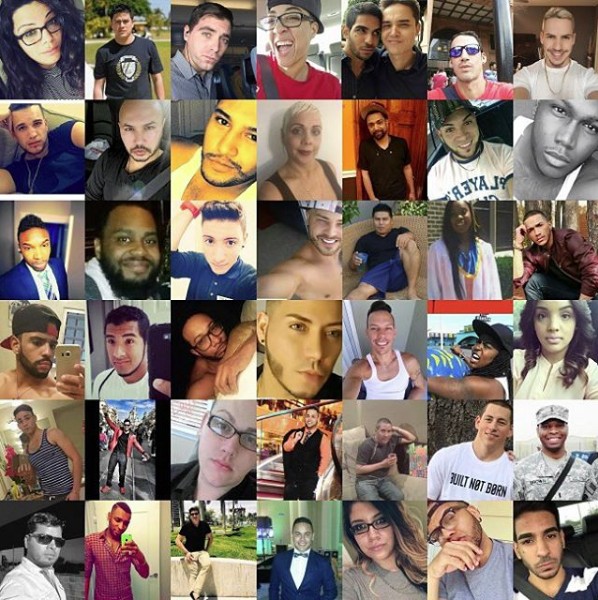
  • Seven Days Later – The Legacy of the Pulse Nightclub Shooting

    Seven Days Later – The Legacy of the Pulse Nightclub Shooting

    Seven days ago my usual Sunday morning routine was in full swing. I was making a cup of tea, picking up my tablet and heading back to bed to eat biscuits, listen to the radio and browse the net. Seven days ago my usual Sunday morning routine was broken rather abruptly by the eight o’clock news as it reported the shooting at the Pulse Nightclub in Orlando, Florida. Seven days ago, my usual Sunday morning routine was interrupted for me to write an article on the breaking story for THEGAYUK.

    Photo Credit - Paul Szabo
    Photo Credit – Paul Szabo

    For the remainder of the day, as the events of the night before unfolded and the scale of the tragedy became apparent; I eagerly listened to the news for developments in a story that we all wish we had never had to hear.

    In the last week, I have felt many emotions about what happened that evening. Those people were groups of friends enjoying themselves in a nightclub, quietly getting on with their lives in a space that was meant to be a safe place for all members of the gay community. There are been times when I’ve been angry. There have been times when I’ve been sad. There are times when I have felt despair and there are times when I wondered exactly what this world is coming to.

    But despite all of these feelings, there is one which has always bubbled to the surface and has always seemed to have overridden all of the others, forcing them to be no more than temporary swells in a turbulent sea of emotion. And, believe it or not, it has been an enduring feeling of hope.

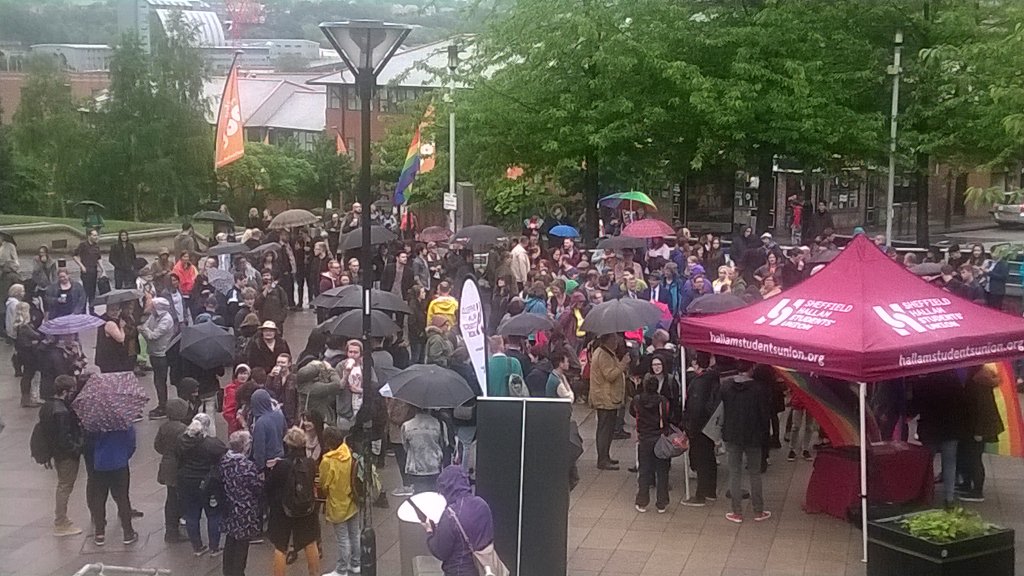
    On Monday evening, I attended a vigil in Sheffield, my home town. Sheffield does not have a particularly large gay scene and I felt it was important to go along not only to pay my respects to the victims of the tragedy but also because I felt that those who had organised the vigil at such short notice, who had publicised it and who were wanting to share their feelings with others should be supported. I wanted to take a stand and publicly say that this was not the type of story I ever wanted to hear about or write about again. As I approached the square where the vigil was to be held I was completely taken aback by the number of people who had attended. There were so many people who had come to express their sadness, their anger and to share in a common experience with others who felt the same.

    And that’s when I started to look at social media. Vigils were taking place not only in my home town but all over the UK. Whilst Compton Street made national headlines and was widespread across the media, there were pockets of people; in great numbers and in few; all over the UK who were coming together as a community to be unified in their grief, anger and support. It didn’t stop there. All over the world, vigils were being held and people were uniting.

    Both Twitter and Facebook were awash with rainbow flags, with the hashtag #loveislove, and with people outpouring not only their grief but also their support of the gay community. World leaders stopped to draw attention to the tragedy. All across the globe, people both gay and straight were coming together to tell the world that this tragedy is not acceptable. They were coming together to tell the world that prejudice will not be tolerated and they were coming together to tell the world that the fight will not cease until equality is achieved.

    And if there is a silver lining to this blackest of clouds, it hit me as I stood in the rain, surrounded by around 200 other people and holding a candle in Hallam Square in Sheffield. Despite the hatred that we so often see, hear about and experience; thankfully incidents like this devastating tragedy are rare. What it has highlighted to me is not the hate for the gay community that people hold; but actually how many people love, welcome and embrace the gay community; how many people support the gay community and, in particular, how the gay community support each other.

    I’m writing this article on Father’s Day. I can’t stop thinking that there are fathers in Orlando who are missing their sons or daughters today. I can’t stop thinking about how, for the husband of murdered MP Jo Cox, Father’s Day is going to have a very different meaning this year. It made me realise even more that all over the world there are fathers and mothers who are missing their sons and daughters because of hate crime and homophobia. But the outpouring of love and support across the globe in the wake of the Pulse nightclub shooting proves two things to those who hate – that love is stronger and that the numbers of people who offer love far outweigh those who offer hate.

    Whilst nothing can bring back those were needlessly murdered 7 days ago, we should celebrate their memory and their lives by remembering that on that very bleak day of the 12th June 2016, the World stood together and said that “love is love”; and that those taken from us left not only many happy memories for their family and friends, but also left the global gay community with a legacy of hope.


    Opinions expressed in this article may not reflect those of THEGAYUK, it’s management or editorial teams. If you’d like to comment or write a comment, opinion or blog piece, please click here.


  • OP ED: LGBT – Legal, Guns, Ban, Them

    OP ED: LGBT – Legal, Guns, Ban, Them

    It has taken me a while to sit down and write this. To sit down and write anything. In fact, it has taken me a while to want to write anything. Mainly because I’m not entirely sure what it is I want to say. And, if I’m honest, I’m still not entirely sure, so bear with.

    My lack of willingness to put down my thoughts is because my thoughts are fighting with each other. I have no idea what thought it is I should listen to. I have no clue as to which emotion I should let take the forefront of my mind-set. Sadness? Anger? Confusion?

    I am, of course, saddened. Horribly so, down to my gut. I am, of course, just as angry and outraged and mad as I am saddened. I am greatly perplexed. Confused as to the actions of this man, yet just as confused as to the lack of action by the American government. And then I am lead to, in some respects, the most frightening reaction of all, I am unsurprised. Unsurprised that this has happened, yet again. Of course it was going to happen again. America has not changed anything to do with gun law so of course a man – a man known to the FBI – can still purchase a gun and spread his hate and end the lives of those so opposite to him. So different to him.

    I am not just talking sexually here. But in open-mindedness. He hated what he didn’t know. He hated them because they were so unlike him. A man kissing another man, to him, was wrong. Morally wrong. Yet, to him, murdering them was not morally wrong, but acceptable. Falling in love with a man if you are a man is outrageous. Killing them because of that fact, is not. To him murder was more honourable than love. Natural love killed by manmade weaponry.

    Maybe he thought he was freeing them? Curing them of their gay lives. Healing them of their gay wounds. But how can someone be freed from freedom? Two definitions of freedom so horribly different. Their freedom, my freedom, so loving, so celebratory, so real. His freedom, so damaging and demented and vile and unethical.

    Then comes the anger. The anger for him. The anger for American gun law. The anger that a Kinder Egg is banned for consumption in the USA because it is threatening to the American people. A choking hazard. A piece of confectionary is deemed more damaging than a gun. Nice one America.

    The statistics of these mass shootings are ludicrous. In 2016 so far, just this year alone, there have been 133 mass shootings in America. That’s 133 in just 164 days! It took the UK just one mass shooting – the 1996 Dunblane massacre – for our own gun law to change. In Australia the gun law was reworked after the horrific Port Arthur massacre of 1996. Yet in America, 133 in just one year and still nothing.

    How many people have to die?

    In light of the most recent mass shooting, the 133rd shooting of 2016. Where the death of 49 (at present) members of the LGBT community occurred, LGBT is pretty apt, pretty ironic for the occasion. LGBT: Legal Guns, Ban Them.

    I am proud to be LGBT. I am proud of how our community stands tall. Stands together. United. I may feel many things at present. I may feel angry and sad and confused. But thanks to the support of this community, I have never for a second felt threatened.

    Follow Mark Goggin on Twitter


    ALSO READ: Nearly one quarter of LGBTS are scared for their safety on the scene after the Orlando shootings

    ALSO READ: Who were the 49 victims of the Orlando shootings

    ALSO READ: How to survive a terrorism attack


    Opinions expressed in this article may not reflect those of THEGAYUK, it’s management or editorial teams. If you’d like to comment or write a comment, opinion or blog piece, please click here.

  • OP ED: Post Orlando, Is this the end of an era or a re-birth of the gay scene?

    The Gay Scene: End of an era or a re-birth?

    Embed from Getty Images

    I submitted this article before the tragic events occurred in Orlando but after the attack I’ve decided to edit it slightly and reissue as this is definitely relevant. In this entry I’m talking about the need for the gay scene when put alongside the ‘straight’ scene. One positive thing that could come out of recent atrocities is that people come to see and appreciate gay venues and ‘the scene’ more.

    Almost all the time now you see various people saying “well if gay people can go to ‘straight’ bars and not get kicked out then why do I need a dedicated gay bar?”. In 2014 the BBC even had an article labelled “Do gay people still need gay bars?” which looked at the history of gay venues and some of the purposes they serve.

    But to these people that don’t see the point and question others for going on “the scene” I say yes it is brilliant that we as a community can walk amongst our fellow communities and mingle without fear of attack or exclusion but I don’t think that’s quite true for everyone and gay bars aren’t just for ‘having a drink’.

    In the UK, gay bars were seen safe haven during a time when being LGBT was illegal or still something that would result in you suffering verbal or physical abuse. So yes they were bars and pubs but they were also places where people could socialise with others, have a drink and feel ‘secure’. When the Admiral Duncan was attacked in 1999 it shook the community and people lost their lives but ultimately that determination to have somewhere safe for the community lead the venue (and others) to continue to this day.

    In the UK today yes we have far less abuse than way back when and indeed being LGBT is no longer illegal (we can even get married) so our world is a bit more brighter. But does that mean that the LGBT community is dead and gay bars (“the scene”) along with it? I was at the vigil for the Orlando victims in Soho and I can safely say our community is very much alive and kicking.

    If you in your life can live and breathe your sexuality with no fear of bullying, abuse, or negativity of any kind then I envy you as that is indeed something to be treasured and proud of. And I can see that for you there probably isn’t much of a ‘need’ in that sense for a specific gay scene. But if you do face abuse of any kind, or bullying, or negativity then surely having somewhere where you can express yourself, meet friends and have a drink isn’t a bad thing?

    For some of you reading this your local bars will vary greatly from other areas. For example, whenever I visit Canal Street in Manchester I am always envious of the consistent and visual sense of community that the bars, their owners and their customers have. Generally, they stick together to support the street and the community in which they serve. But when you come down south, London doesn’t really have that sense of community amongst the bars. So while each venue is different and does engage with its punters they do seem to operate for themselves only coming together in a real crisis. If all gay scenes operated the same way as Manchester I think the question for what purpose do they serve wouldn’t come up as much, if at all.

    So the scene means different things to different people. Historically it has been a shelter and does continue to be for some people. But in today’s ‘more tolerant world’ while there is a need to be a shelter there is also a need for the scene to be a place for the LGBT community to come together, meet, greet and have fun. What is so bad with that?

    Personally for me I have only ever suffered directly very mild homophobia (my bullying at school was for my distinctly Harry Potter like looks) but I have worked with and supporting those who have seen some extreme homophobic bullying, even in this day and age in 2016. For them, places like gay charities, the gay scene and other places where being LGBT is not judged these places are a lifeline and a key part of their life.

    On a more practical note (as a single gay man) we are also forgetting one of the key things that bars and clubs provide – a chance to meet people! Even the straight community go out to bars and clubs ‘on the pull’ to either have some fun or meet a potential date for another day. If there is nothing but mixed venues not exclusive either way your chances of striking lucky with a gay man (or woman) and not hitting on a straight person in error aren’t great. So if you can’t meet people on a night out what’s left? Grindr? Tinder? I’ll stick with my 12 cats thanks!

    So for me, I prefer having a gay venue where I can actually meet and interact with people in real life and actually have a bat in hells chance of hitting on someone and it actually being someone I have a remote chance with. The fun and excitement of eyes meeting across a busy room, initial questions and discussions, and even a drunken (usually) first kiss.

    I also often hear people saying that they don’t go anywhere near the scene as it’s “full of queens and bitchyness”. Well if that is your opinion then you’re focusing on the wrong things. Every bar, pub, local venue has its dramas and its cliques, the scene is no different, so to accuse gay bars of being unique to everywhere else says more about you than it does about the gay scene. If you don’t need the scene then fine and you should be proud of that but don’t attack something you don’t understand or don’t appreciate. Yes, there is that element but to many people it’s their home.

    The gay scene and its venues are part of our communities’ and this country’s legacy and to so many they represent a place of sanctuary so I say long may they continue!

    My heartfelt condolences go out to those we have lost in Orlando. I am proud of how our global community has come together. Never shall we be beaten.

    Love wins!

    Follow Scott Sammons on Twitter

    Opinions expressed in this article may not reflect those of THEGAYUK, its management or editorial teams. If you’d like to comment or write a comment, opinion or blog piece, please click here.

  • OP ED: Orlando reminds us that the battle for acceptance is far from over

    “I realised that this is a battle won by love, laughter, acceptance and knowledge.”

    Dear World, From Rob (a gay man)

    I never really write anything personal on the internet, I’ve always had the opinion that my personal life is mine, and people probably don’t want to know the boring details anyway, so I post things that I think might be entertaining, and I keep in touch with my friends. After all, I don’t want to come across all soppy now do I?.

    But in the wake of the last couple of days, I’ve been itching to write something, to do something with the feelings I’ve had. Something horrible happened across the world, yet it has affected myself and the LGBT+ community as if were on our doorstep.

    Now, I probably know a few of the people reading this personally, but if I didn’t know you, I’d usually introduce myself by my name, where I come from and how old I am. Simple little details. However, I was thinking today, I’ve never even thought about introducing myself as gay. Not because I’m embarrassed, I’m so, so proud to be gay. Not because I think the other person would be offended, because I honestly wouldn’t give a shit. But because, for me, it’s not even an issue that passes through my mind. I’m a gay man, yes, but my sexuality kind of starts and ends with who I love, it doesn’t affect anything else.

    I thought to myself shortly afterwards that the only reason I have this privilege is because there are generations before me who have fought hard to get us here. Was I being selfish by not realising how much privilege I have in this day and age?
    After facing terrible adversity, the LGBT+ community has got itself to this place, where love is slowly conquering hate, and we’re progressing every day.

    But recent events remind you that it’s not over. Whilst I am lucky to enjoy all of the amazing things that come with being gay in 2016 – holding hands in public, being confident that we can go out and get home safe as a couple – there are so many others who are unable to have this, and it can’t be fair for me to have this and not others.

    I felt hesitant to finish this post because I didn’t have an amazing call to action. I don’t know if I have the words or knowledge to spur on a whole community, or to change the minds of the 1% who hate us. But I realised that this is a battle won by love, laughter, acceptance and knowledge. We are having a vigil in Portsmouth outside the Guildhall, at 6pm on Friday, if anyone wants to join us.

    We’re going to get there, and know that I love you all, regardless of your gender, sexuality, race, class or whatever. It’s a cliché but it’s true, and I’m not afraid.

    -Rob
    ‪#‎loveislove‬ ‪#‎orlando‬

    Follow Rob Ulitski on Twitter


    The opinions expressed in this comment piece may not reflect those of the management or editorial of THEGAYUK. If you’d like to write a comment or column for THEGAYUK click here.

  • OP ED: Pride needs to keep hold of its roots

    It’s Saturday 28th May 2016 and I’m at Birmingham Pride. I attend each year and always have a great time. However, I cannot help but have mixed feelings about it too. Something sits very uncomfortably with me, despite the fact that I have a good time.

    Before I continue, I must first congratulate Birmingham Pride for successfully running a festival of such magnitude. It’s not an easy task, but year after year the organisers do an amazing job of it and for that they must be praised.

    As a fellow Pride organiser, the last thing I want to do is criticise another Pride event, as I know how difficult it is to put everything together. However, there is an aspect of Pride that worries me. That is the fact that the spirit of Pride seems to be getting lost along the way.

    When the Pride movement began, Pride was a protest. People marched for their rights and what they believed in. Now that LGBT people have almost full equality in law, I can’t help feeling that the true meaning of Pride is being lost, despite parades and marches still being a part of such events.

    I’m sure we are all aware that the larger Prides are now commercial machines that do not fully represent LGBT people or the spirit of the Pride movement. An example of this can be seen when looking at main stage performance line-ups. I only attended Birmingham Pride on the Saturday, but to my knowledge there was only one LGBT performer on the main stage that day. The rest were heterosexual and cisgender. It lacked the kind of representation that LGBT people deserve at a Pride festival.

    It appears to be increasingly common these days for Pride festivals to book lots of straight acts to appear on their main stages. Having looked at several Pride line-ups, I’ve wondered where the LGBT representation is. Recently, somebody was protesting on Twitter that a certain Pride didn’t have any LGBT acts booked. I don’t know if that’s actually the case or not, but the lack of LGBT performers at LGBT Pride events is a worrying trend.

    At Warwickshire Pride, 90% of this year’s main stage line-up is LGBT. It’s a percentage that we strive to increase or at least maintain each year in order for the festival to truly represent the people it primarily caters for.

    That’s not to say that Warwickshire Pride is leading where others should follow. Far from it, in fact. It’s entirely up to the organisers of each Pride event to book the acts they want, move in the direction that they view as being best, and to respond to the wishes or needs of the community that they represent. At Warwickshire Pride, we pride ourselves on being a little bit different to other Prides and a lot of that comes from the feedback that local LGBT people provide. Yes, we have some fabulous elements such as Angie Brown and Wagner from the X Factor performing last year, but ultimately we try to create something in the spirit of the original Pride movement.

    Perhaps it’s the activist in me. Every part of my being is about furthering the rights of LGBT people, both legally and socially. I believe that Pride is absolutely a protest, but do acknowledge that it’s a celebration too. There is nothing wrong with celebrating. However, I also feel that as a Pride movement we are in danger of losing touch with our roots.

    What I’d like to see is more Prides having actual LGBT performers on their main stages, not just confined to cabaret tents. I’d also like to see more protesting and highlighting of social issues that our communities face. Finally, I’d like to see Prides being more inclusive. There are four letters in the acronym LGBT and it’s important that the B & T are remembered and included. This is something that the smaller, grassroots Pride events do very well, but it’s time that the larger Prides stepped up and truly represented their communities once more.


    Follow Daniel Browne on Twitter


    Opinions expressed in this article may not reflect those of THEGAYUK, its management or editorial teams. If you’d like to comment or write a comment, opinion or blog piece, please click here.

  • COMMENT | Pass The Appropriation On The Left Hand Side…

    Returning from an excellent brunch at a nearby Sushi bar after an all night extravaganza spent dancing to a DJ mashup of Ska and Banghra, I kick off my Zulu ankle rattles, tie back my Dreads and adjust my Bindi to sit perfectly within the glorious symmetry of my Maori facial tattoo. I relax in my Kimono and whilst the Tibetan bowl based sounds of ‘Longplayer’ surround me, I gaze absentmindedly at the exquisite Sini Islamic calligraphy print on my wall and ponder my cultural heritage as: a denizen of planet earth.

    I am not living in a war-torn or disease and famine-ridden country. I can take fairly for granted that I am statistically unlikely, even under the invidious spread of Wahhabi based Islam, to die by violence. I am able, on the whole, to walk down the street holding the: (insert colour here) hand of my: (insert gender here) lover. Chances are slim that I will be killed by a drug cartel, in a pogrom, or by a follower of: (insert sacred patriarch here) due to my limited employment opportunities, or that I worship, suck or support: (insert – ah, you get the picture…)

    Even as I ponder the locational privilege accorded me through no personal merit, rather by some twist of birth, fate or geography, I am also aware that there are yet still globally fewer atrocities and hardships now than at most periods throughout human history. We make the mistake of believing because every genocide and gang rape can be instantly disseminated across the ether, that our planet-wide average experience is appalling and worsening all the time. It is not true.

    It is true that we are yet a primate ruled by primal urges: a territorial monkey mainly concerned with breeding status within the tribe and who has the most bananas, although we wrap it up as speed dating and new cars. Our tentative foray into consciousness is only a few thousand years old. We still think within the analogous confines of Plato’s ‘shadows on the cave wall.‘  The result is that we navigate using emotion rather than logic and in our sophistication use convincing concepts to justify ugly motives.

    I firmly feel the current judgemental hysteria regarding cultural appropriation is itself an ugly expression of disguised racism and to a lesser extent, self-righteous oneupmanship. It is itself both a conceptual form of white privilege and also ‘black’ separatism, respectively disguised as politically correct concern and identity pride. All are expressions of primate politics.

    Racism is not a white versus black thang. It is race versus race – whatever that race may be. Tribe against tribe: one group demanding separation and defining another group as lesser. Our definition of a tribal group is flexible. Its range includes the greater to the lesser: from country, colour, and creed across to sexuality, sports team or street.

    Restricting expression according to appropriateness actually results in oppression. But this consequence and its very nature is harder to define than those we have struggled with in the past during the heady days of simple racism, sexism and homophobia where we could all define what we stood against.

    Now we oppress someone though a choice of clothing, hairstyle or music video location. Coldplay has become the vanguard of white privilege and ‘western hegemony’ perpetuating India’s ‘internal conflict stemming from Hindu nationalism’. And poor Beyonce: a Black woman dressing as an Indian woman, whose shared beauty standard is a White woman. No longer a sista, now an ‘oppressa’.

    We have to truly examine our motives and be aware of the negative endpoint of good intent. Pocahontas is the perfect costume to express horror at Halloween. Banning it doesn’t result in equality and respect. Understanding her history and wearing it as an expression of horror would make it completely appropriate. (By the way, speaking as a Pagan, y’all seem to have appropriated my celebration. Do I digress? I think not)

    To reject the melting pot of cultural osmosis and sanctify an untouchability of cultures other than your ‘own’ is bad for the health and growth of the human race group mind. To do so is postmodernist thinking, which itself is a thought cult of religious guilt in pseudo-rational garb masquerading as a philosophy and politically correct movement. Too much of it results in the popularity of the likes of Farage and Trump, and then we all lose.

    Playing devil’s advocate for the moment, if we are going to deal with cultural appropriation, shall we do it inclusively right across the conceptual board? Perhaps we need a convenient sliding scale of validity with the most victimised having appropriation rights over the lesser sufferers? Let’s get a few things straight here, although this is not an inclusive list…


    • No more Japanese style full body tattoos for anyone except the Japanese.
    • All dark skinned people may not bleach their hair blonde.
    • You may only follow the religion or spiritual system of your postcode. No imports. No exceptions.
    • The kilt shall not be worn by any male except for genetically tested Scotland living Scots. (If you want to counter with the idea that most kilt wearers are white and as such, members of the privileged unoppressed white race, feel free to do so. The Scottish can have a fairly verbose and violent reaction to accusations of a cushy history. However, we may have to refer to the sliding scale of victimhood mentioned earlier to see who can and cannot be trumped)
    • No-one celebrates St Patrick’s day except the Irish in Ireland. The wearing of green in the USA on this date is to be only allowed by those who can prove they have immediate Irish peat soil under their nails. No third generation emigrant, regardless of the motivating potato famine factor may imbibe a Guinness upon that Sacred Day… ‘You are American by culture‘.
    • Finally, (and this is only fair, but may result in the formation of the largest, loudest and most colourful protest group) there will be absolutely NO gender appropriation either. All drag queens are to get their gender appropriate pants back on and their makeup off. And Nichola Adams is to drop the boxing gloves, get back in the kitchen where she belongs and stop appropriating Olympic medals.


    We can honour the beauty and inventiveness of other cultures. Enjoying others than our official own can be done without it being intrinsically patronising.


    ALSO READ: Gay Male Students – Told to “Stop Appropriating Black Women” – it’s policy

    ALSO READ: Mykki Blanco Slams Gay Media For Not Reflecting The Whole LGBT Community.


    We only have one planet, so can we aim a little higher, away from emotion and toward rational thought, toward the creation of meta cultures espousing critical thinking rather than unthinking criticism? The more cosmopolitan the entire world becomes the more equal we all become. Stop apologising, cherish all, and everybody expresses themselves through the infinite varieties of pancultural humanity.

    Let us also be a little clearer when reviewing history: colonial expansion brought good as well as bad, often the countries and tribes that bent under the enforced will of conquerors or Empire did also often oppress their own people or surrounding cultures. To state and accept seemingly contradictory Truths is not a justification of bad behaviour, just a start of progressive thinking and a sign of the evolution of civilisation toward ‘Humanist‘ concepts.

    Did I mention Islamic State? Civilisation comes unequally to us all. React against bombers, not bellydancers.


    The opinions expressed in this comment piece may not reflect those of the management or editorial of THEGAYUK. If you’d like to write a comment or column for THEGAYUK click here.


  • What!? You’re in an open relationship??

    What!? You’re in an open relationship??

    Call me “Mr Old Fashioned”, but am I the only one to be surprised by a number of gay relationships that are classed as in an “open” status? Is this really so common? What percentage of relationships are open? And does that figure correspond to heterosexual relationships? Am I behind the times?

    What Is It Exactly?

    An open relationship is defined as “an interpersonal relationship in which the parties want to be together but agree to a form of a non-monogamous relationship”.

    This concept has been recognised since the 1970s, I’m assuming since the ideology of ‘free love’ became so prevalent. In an ever changing world of increasing acceptance towards LGBT, has the presence of open relationships become more apparent? Are you more likely to be involved in an open gay relationship than a heterosexual one? A recent study indicates that around 3% of adults in the US are currently in an open relationship, and 14% would consider being in one if they had the chance. Whereas a similar study also in the US but purely involving gay couples, concluded that 32% were currently engaged in an open relationship.

    Another surprise to my traditionalist views is the variety of open relationships and their labels.

    The obvious scenario seems to be non-monogamy, a type of interpersonal relationship in which sexual exclusivity is not held as the primary fundamental premise of the relationship. So it may be that the sex is required more so by one partner than the other, thus the accepted need to find it elsewhere needs addressing – by hunting further afield.

    Cuckoldry – is where a person has sex with another individual with the consent of their partner.

    Ménage à trois – is a sexual arrangement involving three people. Add any more people and it can be interpreted as an organised social activity more commonly known as swinging.

    Some have even taken it further… group marriage is where more than two people are all considered to be married to one another.

    How Common Is It Now?

    I expected most people’s opinions to relate to this concept as cynical and unrealistic, but the idea seems to be becoming more apparent and accepted.

    It’s surprisingly easy on dating sites, to find a couple, or a single member of an open relationship, browsing for an additional sexual partner. This makes for some interesting conversation. A profile picture of two guys/girls appears at the forefront of your Tindr feed, shows 2 miles away on Grindr, or leads the row of pictures across the bottom of your POF search function. How can we politely ask if he or she is the better looking one of the two? In the past, I’ve not been afraid to ask. However, a reply I experience more and more is “we’re actually a couple”. Sod’s law dictates that it’s never the more attractive one that I’d be talking to anyway. But the act of appearing on dating sites entrusted with a partner is certainly intriguing…

    So I did some digging. There are plenty of websites and apps now dedicated to finding opportunities to participate in an open relationship or sexual endeavours within or without one.

    Kenblackman.com – is a website for couples practising/considering consensual non-monogamy…

    Openminded.com – “Find like-minded individuals that keep an open mind about monogamous relationships” – another online dating site for open relationships.

    Even celebrities are more commonly honest about their open relationships…

    Demi Moore and Ashton Kutcher – their marriage lasted from 2005-2013 and the relationship was defined as open, as long as they were physically together.

    Megan Fox and Brian Austin Green – according to an interview taken by OK magazine, Megan is the one who is permitted to stray. The fact that they built their relationship with such a free understanding of each other and are still together and happily making babies, shows that something must be working.

    So Can It Actually Work?

    Can these relationships be stronger, due to the exceptional amount of trust involved? Can it actually help the relationship become more intimate, and last longer? Or does it open up trust issues and lower the boundaries to a point that a relationship has no real foundations or uniqueness? There are arguments for both.

    One of the main problems identified in an open relationship is that of jealousy. Any human being wouldn’t be complete without this personality trait. Some may be more prone to experiencing it than others.

    But the success of an open relationship would seem to hinge on the need for a laid back personality in both partners, where the ability to turn off the jealousy triggers would be so important. It seems to be more accepted in long distance relationships or in those that involve large amounts of time away from each other.

    Could an open relationship be used as a positive? Would it encourage the two members of that relationship to work harder at it, and become more open within one another? After all, if the jealousy isn’t there, is it a question of whether that person’s feelings are strong enough for his partner, if he feels no amount of remorse letting him or her have intimate relations with someone else. The risk is always there, that they might take a stronger liking to that third wheel and end their current relationship.

    Some couples may see the opportunity to spice up their sex life by inviting a third person into their bedroom. Is it really possible to overcome the jealousy and other emotional barriers to go through with it and still remain completely committed to your partner? Is there not an underlying doubt that one may become attached to another person and end their current relationship? If that concern isn’t there, then is the relationship right in the first place?

    Consider this route for your own partnership. Can you openly ask your ‘significant other’ about it when you’ve finished reading this article? And how would you do that, without risking damaging the relationship because your partner completely disagrees with your way of thinking? To show your hand might be risky. They could be equally open to the idea (don’t come back to me if you get in trouble).

    Why Not?

    Whichever way you look at it, if a couple can make it work what’s the problem really? Friends will have their own opinions on it, but it comes down to what will work for you. Could your best friends, neighbours, or even a relative be in an open relationship but you’re unaware as they don’t want to publish this openly within their social circle?

    Personally, my mind is opening up to the idea, if not in a relationship of my own, but that of friends, colleagues and so on. Thinking about it, I have respected friends that have been honest and proud enough to tell me they share their partner(s) with others and still hold a very committed loving relationship.

    We could be entering an era in which open relationships will be increasingly accepted in the modern world. We could see a shift as much as the LGBT community is more commonly accepted today than it was fifty years ago.


    This could be the next big step in an ever-accepting social revolution.

    Opinions expressed in this article may not reflect those of THEGAYUK, its management or editorial teams. If you’d like to comment or write a comment, opinion or blog piece, please click here.

  • OPINION: Why the boycott of Zoolander 2 is wrong

    OPINION: Why the boycott of Zoolander 2 is wrong

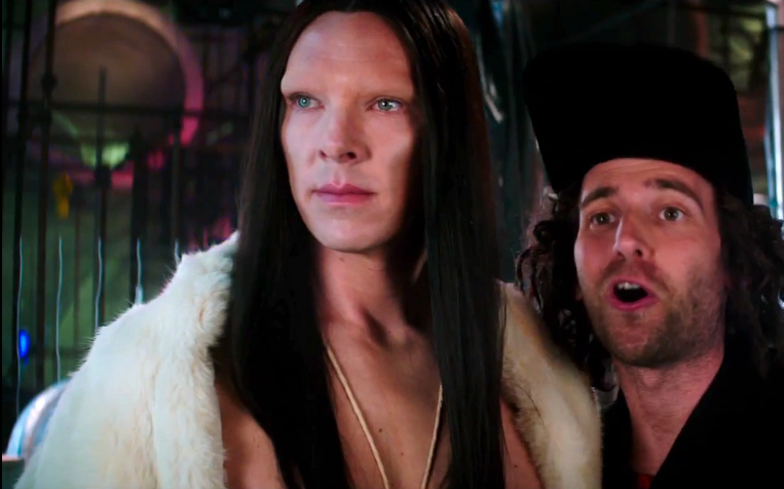
    All it took was a few short seconds and two lines of dialogue from Benedict Cumberbatch in a film trailer for several thousand people to scream “boycott”.

    I have written before about being offended, and I shall stick to my thoughts on that, that taking offence achieves absolutely nothing other than you being offended. But first I’ll look at what exactly has got people up in arms.
    Benedict Cumberbatch plays a character called All in the film, who appears to be a cartoonish over exaggerated example of the proliferation of androgynous models in the fashion industry. From the trailer, it is nearly impossible to tell exactly how the character is going to be played because we see so little of him. But from the small scene we do see, it actually takes the mickey out of male models and their perceived stupidity rather than someone who is androgynous.
    It basically involves Stiller’s stupid character asking if All is a male model, or a female model and All replying “All is All” while Owen Wilson’s character says Stiller’s character is asking if All has a “hotdog or a bun”. So, two characters who are meant to be parodies, and walking jokes themselves, say something crass that only two idiots would say, and that is all.
    They are not words of hate, they are words of ignorance, yes, but they are ignorant characters who say them. We do not know yet how big this storyline is or how it’s written. But even this complete lack of full storyline or character arc hasn’t stopped the activists from screaming out. But judging a film 2 months before its release off of a few seconds of footage of a character that may only appear in a short scene that has little or no relation to the rest of the film is ridiculous. For all we know the character may be completely sympathetic towards people of non-binary gender identity. None of the viewing public know yet, but if the scene is an obviously gross and deliberately offensive example that has no humour behind it then I would certainly change my stance on the issue. But it’s really far too early to tell yet.
    The first Zoolander and its sequel are comedies and comedy is meant to be a mockery of literally everything, nothing should be sacred in comedy. Comediennes like Lisa Lampanelli will mock the stereotypes of black people, Mexicans, Jews, gays, disabled people and literally any kind of person you can think of, which what makes comedy what it is, it’s that no one is or should be safe or above being lampooned with obviously inaccurate examples of how they are. But what makes the reaction to the Zoolander 2 trailer so telling is that trans or non-binary people are not seen as “punching up” when it comes to comedy. By punching up I mean people seem to be OK with relentlessly taking the piss out of Christians, politicians, Royalty, reality TV stars, sports stars, and the wealthy, people with perceived “lucky breaks” They can take it, they are more fortunate than the rest of us so they deserve to be taken down a peg or two so we can all laugh at them.
    How many of the people who signed the petition have seen an episode of Family Guy, American Dad, The Simpsons or South Park and laughed at the jokes that mock celebrities like Paris Hilton, Britney Spears or Tom Cruise to name but a few. I don’t believe for a second thanks to South Park that any of Paris Hilton’s dogs have committed suicide to get away from her, or that she’d steal child to turn into a pet, but I still laughed at the absurdity of it.
    I am not heartless though, and I appreciate the fact that the trans community is still very far from acceptance, and that every day trans men and women go though hell trying to find their place in the world and to not be scared for their lives, and they fear that misrepresentation of their community damages the image that they want to get across.
    Many trans people have vocally said Caitlyn Jenner doesn’t represent them because she has an easy life, and yes that is true, she really doesn’t have a clue how it feels to be an everyday normal trans person because she has it so relatively easy. That’s fine, she doesn’t represent the trans community, but why should a character in a film who so far hasn’t even been marketed as trans somehow be any different.
    That character doesn’t represent the trans community any more than Derek Zoolander represents male models, but it’s OK to take the piss out of male models because they are rich and pretty, they can take it right? This isn’t me going down the route of saying no one should be mocked because it’s unfair, I say everyone should be mocked humorously to make it fair. Either you pick on everyone or no one, never laugh at anything again, or feel free laugh at everything. Obviously, not everyone is going to appreciate every single joke ever told, so what? If you don’t laugh you don’t laugh. I didn’t find Friends funny, yet there’s several million people who will disagree with me and find it the funniest thing to have ever been on TV, and did Chandler Bing’s drag queen father, played by completely cis-woman Kathleen Turner cause the kind of outrage All has caused because an androgynous character is played by a cis-male actor, not that I can remember. No one seemed that bothered by the fact Chandler’s dad was played by a woman rather than an actual drag queen.
    But comedy in TV and Film land isn’t meant to be an accurate version of people, if that were true, all people who wear glasses would be spotty nerds, all ginger people would have no souls, all sci-fi fans would be lonely virgins and the list goes on of these kind of things. Zoolander is very obviously about mocking the fashion industry and presenting funny yet inaccurate versions of the people who inhabit that world.
    However, if you really are offended or bothered by the character of All, then don’t watch the film, but don’t try and foist your views on others and whip a group of people up into a frenzy. The Twitter/Facebook mentality these days means people can feel like they are part of something as it happens, by signing an online petition based off a knee-jerk reaction to something that has in all probability been taken out of context of the whole film. If the trailer was to be taken at face value, Justin Bieber is not only dead, but also some kind of fighting superhero, both of which are plainly untrue.
    I’m not using my views here to try and change the mind of anyone, or to even make them stop and think for a moment, these are just my views and I don’t expect everyone to agree with me, but nor do I want people lambasting me for allegedly being insensitive towards the trans and gender fluid groups out there. Life is meant to be laughed at and people should stop taking things so seriously. Plainly there is a difference between being outright mean and nasty with no humour behind it, but light-hearted mockery isn’t meant to be taken seriously. A vast majority of people will know that the character of All isn’t a true representation of gender fluid or transsexual individuals and will just see the film as a film lambasting all different types of people. Zoolander 2 will probably be a bit of dumb fun…How about you just enjoy it?

    Opinions expressed in this article may not reflect those of THEGAYUK, its management or editorial teams. If you’d like to comment or write a comment, opinion or blog piece, please click here.