Category: Review

  • FILM REVIEW | Boy Erased

    FILM REVIEW | Boy Erased

    ★★★★ | Boy Erased

    In 2004, at the age of 19, American Garrard Conley was sent by his parents to a conversion therapy program to rid him of his homosexual feelings. This true story is now a film called Boy Erased.

    The amazing Lucas Hedges (Lady Bird, Manchester by the Sea) plays Garrard. He is a young man growing up in a small bible belt community in Arkansas. His father Marshall (Russell Crowe) is a respected pastor in the local church while his mother Nancy (Nicole Kidman) believes in everything her husband says. But Garrard is given a choice by his parents when he tells them he is gay: either agree to attend the church-support conversion therapy program where he will have to go to a camp with similar young adults or risk losing his family, a family that he is quite close to. Garrard has no choice but to go through therapy. Garrard is happy being gay – even entering into a relationship with a fellow student at college – but it is his religious upbringing (and a stern father) which helps him make the decision to go to therapy.

    Once he is at the Love in Action gay conversion therapy assessment program, he meets fellow young men like himself (including director and actor Xavier Dolan, and Joe Alwyn – at the time of this writing Taylor Swift’s boyfriend). They all struggle to not come to terms with the way they are, meanwhile all the time guided by the chief therapist Victor Sykes (writer and director of the film Joel Edgerton). But of course, Garrard has urges that he can’t control, while his parents feel that for him to lead a happy life is to lead the life of a straight man.

    The real Garrard Conley, of course, luckily survived his time in the therapy program to write the book which is now this film, and it’s a very good film. Hedges, as always, is fantastic. One never knows what he’s thinking because of his inquisitive facial expressions, and he steals the movie from the two heavyweight actors who are playing his parents. Crowe is excellent as the self-righteous father but Kidman is both warm and tender as the mother who loves her husband but perhaps loves her son a bit more. Boy Erased is at times heartbreaking, but for the most part, it’s triumphant.

    Boy Erased is out now and available to order from Amazon

  • Rose McGowan’s Brave: A Brave Rose between the Thorns

    Rose McGowan’s Brave: A Brave Rose between the Thorns

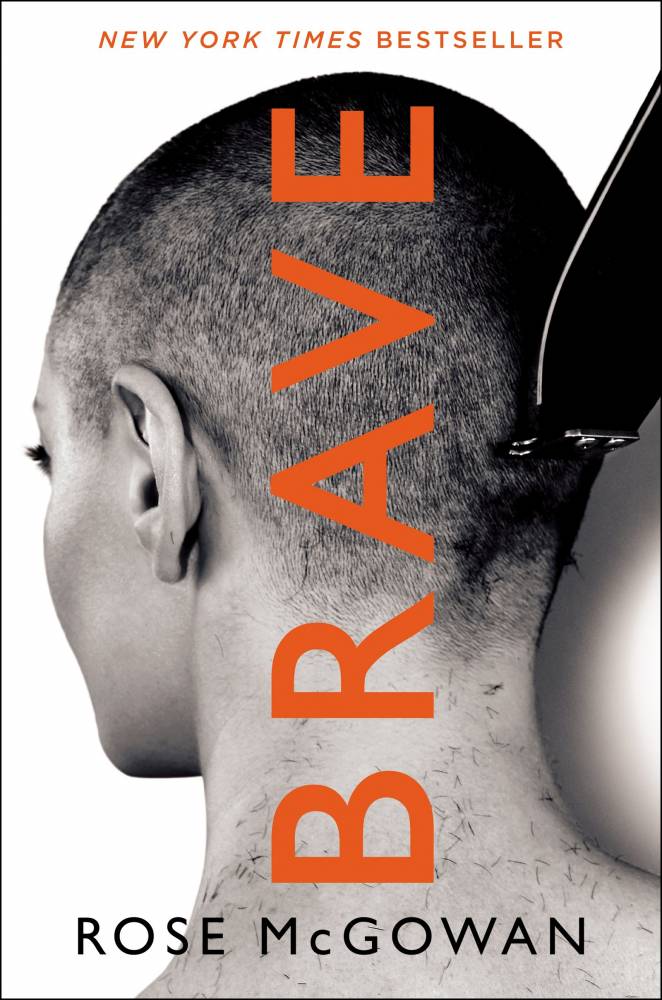
    So…A little while ago I was surprised to be contacted on Twitter by Rose McGowan after responding to one of her tweets. We had a back and forth over Direct Message touching on her experiences and the experiences of others and she recommended reading her book Brave, and this is what the article is mostly going to be about.

    Obviously, I was aware of who Miss McGowan was, having been a huge fan of the TV series Charmed. And with her more recent revelations of her experiences of Hollywood, and her contribution to the #MeToo movement and her own consciousness-raising movement, #RoseArmy, her presence was very much at the forefront of a much bigger story.

    https://www.instagram.com/p/Br0vSvFBrPM/

    Out of respect for her, I will not mention the name of who she has accused, or go into details again about what allegedly happened to her. Those things are detailed in the book, though even she refuses to name him, but for anyone who knows the story and has Google, you’ll know who it is.

    I don’t see a broken or damaged woman. I see a hurt woman, yes. But I also see a strong woman who fights for what she believes is right

    So I went into Brave with not really knowing what to expect. The mainstream media had painted a rather bleak picture of her as this loud troublemaker who couldn’t control herself. Even smaller websites would chime in, with one even branding her a whore in the past. Would this book be a self-serving pity fest? A vague collection of anecdotes from a woman desperately trying to promote herself? Far, far, far from it.

    Brave details pretty much everything about Rose McGowan, from her troubled childhood growing up in a cult, her relationships with her family and partners, her experiences of Hollywood, why she decided to shave her head and through to her current fight to be heard by the very media that is so keen to destroy and discredit her.

    https://www.instagram.com/p/BkaaVqzA90U/

    Reading every chapter of her book, gave me an insight into why she acts the way she does now, why she’s so passionate about calling out unacceptable behaviour towards people, and why she’s so angry.

    I don’t see a broken or damaged woman. I see a hurt woman, yes. But I also see a strong woman who fights for what she believes is right.

    For anyone who has ever been the victim of harassment or assault, this book could potentially be triggering, but to see how far she’s come and how she wants to inspire and challenge your way of thinking is utterly phenomenal. There are times that the book will be hard reading, but I would recommend that if there are some chapters that affect you, then take a break. There’s no rush to read it through in one go. I will say though that it’s a book that will certainly get you thinking.

    To be one of the first women in Hollywood to finally speak out and have her voice heard took a tremendous amount of bravery. She threw herself out there, running the risk of being ridiculed and dismissed. For years the talk of the “casting couch” had always come hand in hand with Hollywood. But for the first time the #MeToo movement pointed out that it was far seedier than anyone would’ve thought. A terrible dynamic of higher-ups allegedly using their power and influence over someone’s career to get away with some truly shocking behaviour.

    Brave details the alleged casual misogyny that exists within the film and TV industry, and that’s just towards one woman.

    I don’t want to go over every aspect of Brave, there’s a LOT in there, nothing is held back, so there will be a fair few surprises about what some aspects of Hollywood are like.

    Rose’s public appearances are usually fraught with controversy, from a shouting match with a transgender activist at a book signing (instigated by the activist), to unsettling questions being asked in interviews, usually looking for a juicy soundbite to take out of context. Brave gives Rose an opportunity to actually get her point across without a time limit. I didn’t want to just be another voice in the sea of pieces about her. Her voice deserves to be heard. So I implore you to read Brave, and to actually listen to this woman, who described herself to me as a freedom fighter.

    Rose continues to be a dividing voice, but she’s acutely aware of that. She takes no pleasure in lifting the veil on systemic abuse in the industry at the risk of her own career.

    https://www.instagram.com/p/BhtmALnlIqo/

    And now this year she brings her book tour and talks to the UK & Ireland for several dates around the country. I’ve already got my ticket, and while Brave is a brutally honest, and almost visceral read, hearing the stories from Rose’s own mouth will add that extra dimension to the book.

    Tickets for the four-date UK & Ireland tour can be purchased online here. Rose McGowan’s book Brave can be bought here.

  • CAR REVIEW | Jaguar XE R-Sport, 2019

    CAR REVIEW | Jaguar XE R-Sport, 2019

    ★★★★| Jaguar XE R-Sport

    Small Cat with BIG claws

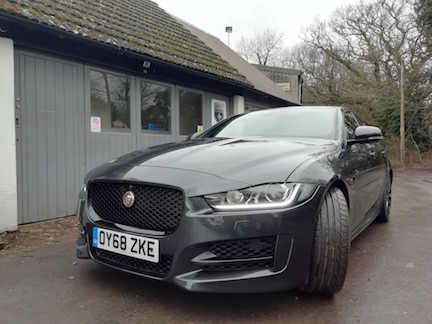
    Jaguar XE R-Sport, 2019 reviewed
    (C) STUART M BIRD

    What Have We Got?

    Here we enter the world of Jaguar with their smallest and cheapest offering. Prices start from £34,315 or £37,065 for the R-Sport model that we have for reviewing this week. On paper and showroom appeal, it all looks good, but does the reasonably low price detract from what is in essence, a premium car? In other words, have corners been cut? 

    Driving

    I am astounded by the XE. The petrol powered 250PS Ingenium is evenly matched to the 8 speed automatic. Throttle response is mildly lagging for a brief moment but that’s only because its throttle is set for snap-happy inputs. Default at low legal speeds around 20-45mph seems to be to drop it into second and sling-shot you down the road. 

    It works but can be a bit tiring. That said, it’s the R-Sport model so it does exactly what it says in the badging.

    The other thing the XE does is handle with a surprising amount of composure. Having a near 50:50 split weight distribution contributes to the sure-footedness of the chassis and its handling characteristics. Double wishbone front and multi-link rear keep everything in check. It’s a wonder why they fit adaptive dampers to it when that setting does have a tendency to ruin the near perfect ride. 

    The only downside is the traction control system thwarts good fun progress. You have to be really stupid to unstick it when switched off, even in the wet. 


    Inside

    (C) STUART M BIRD

    The downside to its size is rear seat accommodation is on the tight side, more so for height. Legroom is reasonably good though.

    Choices for interior ambience allow for colour changes within the dashboard and doors and it all goes to make for a pleasant cabin. 

    Some of the plastic quality lacks tactility but feels hard wearing and sturdy. The important bits that you need to touch do have a nice fit, finish and feel to them.


    Living With It

    (C) STUART M BIRD

    It’s easy to live with. The handling alone makes this an absolute riot to drive should you wish too. 

    All the controls are the usual Jaguar mix from across the ranges with a reassuring clunky feel and if you like a mix of buttons and touch screen controls, this interior is for you.

    One thing is apparent, you notice it at night at night time. There is no boot light! 

    The Verdict

    There is a lot to like about the XE and l fear people walk past it to buy the German equivalents. From where I am sitting today, I pity those people. There is no scrimping in the XE’s refinement and its handling is beautifully poised.

    I’ve come away with a regret, a personal regret for dismissing the smaller Jaguar myself. That’s my own fault and I can highly recommend them. Make me happy and pop it on your shopping list. You will not be disappointed. 

    Love

    Handling

    Agility

    Price

    Loathe

    Below average rear seat accommodation

    Overly sensitive traction control

    No boot light

    The Lowdown

    Car –  Jaguar XE R-Sport 2.0 250PS auto

    Price – £ 46,000 (as tested with options)

    MPG – 39.8 mpg (combined)

    Power – 260ps 

    0-62mph –  6.2 seconds

    Top Speed –  155 mph

    Co2 – 165 (g/km)

  • FILM REVIEW | Can You Ever Forgive Me?

    FILM REVIEW | Can You Ever Forgive Me?

    ★★★★ | Can You Ever Forgive Me?

    Melissa McCarthy and Richard E. Grant both play gay characters in the fantastic Can You Ever Forgive Me?

    Based on the life of book author, and Lesbian, Lee Israel, and fluidly directed by Marielle Heller, Can You Ever Forgive Me? based on the late Israel’s memoir, tells about the misadventures of Israel’s life. She was a Manhattanite who didn’t have much money to rub together, so she starts forging signatures of famous people and then sells them to collectors, raking in big money.

    Questions start arising about her charade, and soon enough she has to pull back, and then enlists her gay best friend Jack (Richard E. Grant – in his best performance ever) to take over her sales duties to pawn more fakes to the collectors. It’s early 1990’s New York City, and one gets the feeling that anything can happen then (‘if you can make it there you can make it anywhere’), and that Israel will rise above it all, but in the end, we know what is coming. But before, director Heller (working from a screenplay by Nicole Holofcener and Jeff Whitty) perfectly sets the mood and vibe of New York, with bookshops almost at every corner (long gone now no thanks to the internet) and quite a few of the scenes in the film were shot in the West Village’s classic gay bar Julius.

    Can We Ever Forgive Israel? Yes, we can definitely forgive Israel for what she’s done because it has brought us this fine movie. McCarthy and Grant have been nominated for Oscars, let’s hope that if anyone of them wins, it will be Grant. He is just superb in his role, debonair, chilled, and like a fine wine, getting better with age.

    Order Can You Ever Forgive Me on DVD

  • CAR REVIEW | Volvo V60, 2019

    CAR REVIEW | Volvo V60, 2019

    ★★★★☆ | Volvo V60

    V is for Versatile

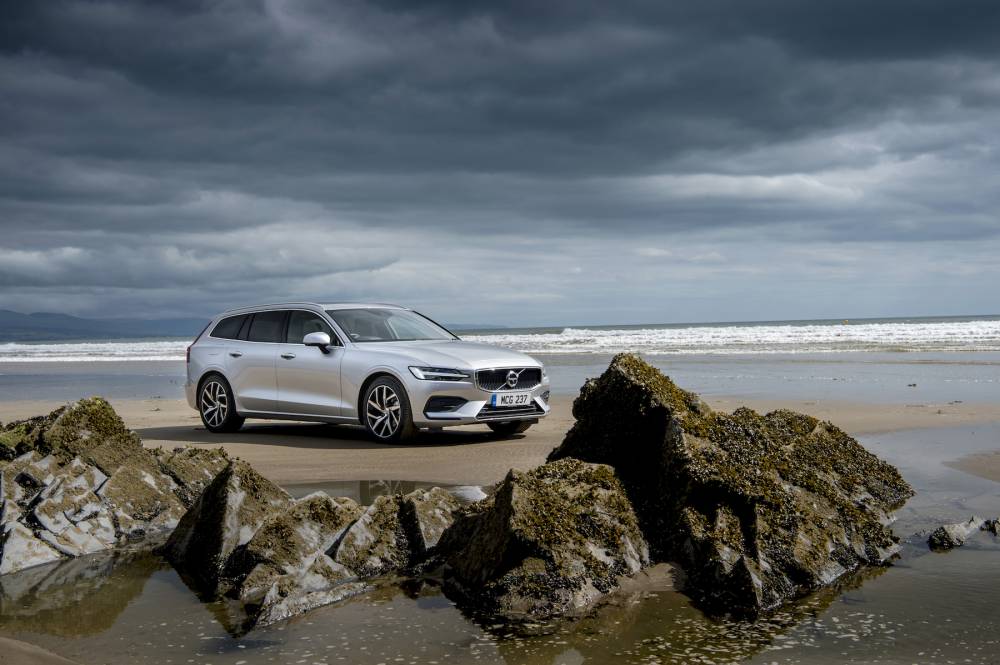
    Volvo life starts with the family. This is reflected in the advert for Volvo’s new V60 estate car. When they say ‘family” they mean ALL the family. Volvo is out there to show their support not just for the changes in the heterosexual family dynamic but also the new evolution in the family within the LGBTQ and culturally diverse communities.

    There is a lot going on at Volvo at the moment and the Swedish company are not resting on their laurels of strong build and sturdy cars. Recently, Volvo has been seen to getting involved in global causes but that’s all for another day, for we at TGUK were invited to the launch of the new V60.

    New Wagon

    It feels strange and yet refreshing to see a new estate car being launched when the market is bulging with SUV’s and crossovers that everyone apparently wants. Volvo themselves are no strangers to the SUV market with 3 models available. 

    Now an estate from Volvo isn’t new and the company have a strong reputation built on practical estate cars, so is the new V60 with its low slung body actually any good? News just in is that for boot space alone the V60 is a class leader with 529 to 1441 litres of space and a flat floor with minimal intrusion. I’ll admit that the height does seem a little low though this is more to do with the cars sleek elegant lines.


    Driving

    We tried 2 models, both identical D4 diesel models with 190hp of available power. What differed with these 2 models was the range spec but more importantly, the gearboxes. 

    While the automatic changed smoothly up and down and almost unobtrusively, its inherent setting was economy and emissions so it would always be in a higher gear, making the engine just a little less responsive to throttle inputs. 

    The manual model was something else. Precise selection of gears and an easy to control clutch pedal, not to light to be feel-less but also not heavy to be an annoyance in traffic made for a much more spirited drivers car. I like my autos, but I’d have to ask myself what sort of driver I would be most of the time.   

    Inside

    And that question gets answered inside. With four different trim levels, they alter so much of the inside. Racy and purposeful is what you get with the R-Design. It’s all silver inlays and black trim. The inscription is designed like a lounge. It’s calming and comfortable. And this is where the different gearboxes alter your mood in the car. 

    All this comes with what can only be described as Volvo’s legendary build quality. 

    Living with it

    I had another chance to try the V60. After the UK launch, there was so much more that I wanted to know. I had it in my head that it was good. Anthony French-Constant and I blasted one around an agility test of both driver and machine and we won. Albeit only beaten by Volvo UK by one second though we suspect favourable timings on the stop watch (possibly) All that excitement aside, was it as good as I remembered?

    Yes is the answer. At a recent range review, it quickly became apparent just how good it was and it needs to be. This size and model or car is quickly becoming extinct and that’s a shame. No SUV can match this for its all-round appeal of driver involvement and comfort.    

    The Lowdown

    Car –  Volvo V60

    Price –  From £31,810 

    MPG – 40.9mpg (petrol) – 64.2mpg (diesel) (combined)

    *Power – 150hp – 250hp

    *0-62mph  6.7 – 9.9 seconds

    *Co2 – 157 – 117 (g/km)

    * Petrol/diesel 

  • FILM REVIEW | Green Book

    FILM REVIEW | Green Book

    ★★★ | Green Book

    film review for Green Book
    (C) Universal

    To be gay in America in the early 1960s was not easy. But to also be black, and discriminated against on every level, was an entirely different thing, no matter how famous you were.

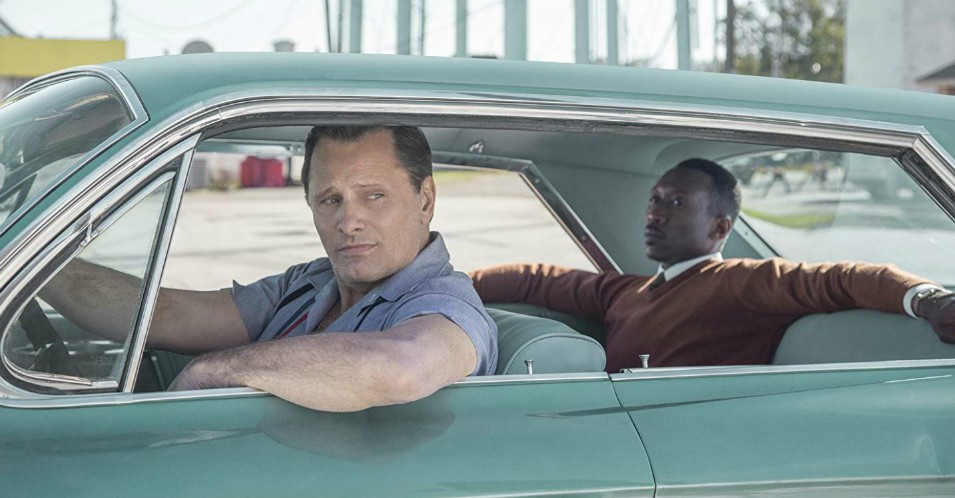
    Jazz pianist Don Shirley (Mahershala Ali) takes a Green Book with him when goes on a music tour of America’s south. It was a guidebook specifically printed for African-American motorists travelling in America’s south with recommendations on places to stay and eat where they won’t get discriminated against. Shirley (Mahershala Ali) hires racist (and bigoted) Italian Frank ‘Tony Lip’ Vallelonga (an excellent Viggo Mortensen) to be his driver on the two-month concert tour. The nightclub where Frank worked had shut down so he was in need of a job, perhaps any job, to support his loving wife and two young sons. So Frank packs away his racist views and becomes a sort of ‘Driving Mr Daisy.’

    Of course, nothing goes smoothly during the tour, especially when Shirley misbehaves with another man at a YMCA, with Frank left to pick up the pieces, and realizing then that this is why Shirley’s marriage to a woman never worked out. And Frank also introduces Shirley to the simple pleasures of life that he is missing, including eating fried chicken with his hand (something evidently that, hard to believe, Shirley never did). And after two hours we can see where this film is literally taking us, and what will happen between these two men during the trip.

    Green Book is a true story, and directed by a subdued Peter Farrelly (There’s Something About Mary, Dumb and Dumber) it’s as slow as molasses on a hot day – but Mortensen lightens up the screen in every scene he is in  – he’s fantastic and is the take away of this film. Ali, while good, seems a bit stiff throughout, and I don’t understand why he is winning all the awards (Richard E. Grant is so much better in Can You Ever Forgive Me.) Nevertheless, Green Book is a good study in race relations in America at that time when JFK was President and Marilyn Monroe was the star of the moment.

  • CAR REVIEW | Volvo XC90 T8, 2019

    CAR REVIEW | Volvo XC90 T8, 2019

    ★★★★★ | Volvo XC90, Volvo’s Grand Tourer

    What Have We Got?

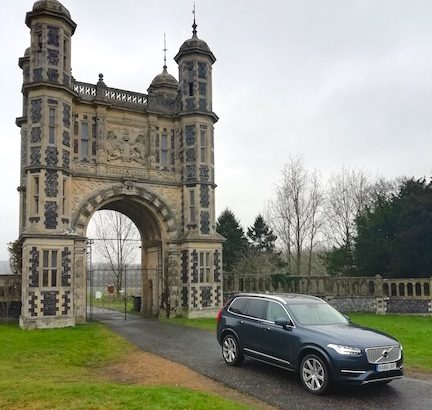
    Here we have Volvo’s very grand-lux, top of the range SUV in hybrid form. A vast car that is pitted against rivals from Audi, Mercedes and Range Rover. No easy task in this company of loyal devotees to try and woo your way. So is the XC90 T8 Inscription any good? 

    Driving

    There really isn’t much to shout about here and tell you that you need to drive it a certain way. It behaves in the normal way a car would be it, petrol or hybrid. 

    Except it doesn’t. You can motor quite well on battery power fed via the 87hp motors fitted to the rear wheels or thunder past people using the 2-litre 303hp petrol engine. And when l say ‘thunder’, I really do mean it. 0-60 is a disrespectful 5.5 seconds! This is a Volvo with green hybrid credentials. Surely this isn’t true. Wrong. It’s very true. 

    And added to that phenomenal blend of speed and power, comes 21” alloys shod with 275/40 section tyres. Fitted with air ride, you would be forgiven for thinking it had more tyre wall. That’s certainly true for all rides except “dynamic”. This is where the vehicle drops by 20mm and stiffens the ride. It’s not unpleasant, but it certainly detracts from the sumptuousness of what the XC90 Inscription Pro is all about. It’s an area that Volvo is yet to master if I am honest.

    One area this does excel in is the automatic gearbox cog selection. It always seemed to be in the right gear and throttle responses were both rapid and direct and that’s what I like. 


    Inside

    Interiors have always been a Volvo selling point and that sumptuousness that I just mentioned is found here turned to the max. The Inscription Pro package gives you blond leather and walnut inlays. Add to this, some of the finest door architecture with simple soft white lighting, it lifts the interior regardless of how bad it might be outside. 

    There is also 7 seats available, but the rear two, though keenly catered for with cubby holes and cup holder, it is a tight squeeze for tall people. And getting in and out is really only for the athletically loose and athletically strong in pushing the middle seat back. 

    Living With It

    I get it, I get what the plug-in hybrid XC90 is all about. I was sceptical about Volvo’s claim of almost 109mpg. In the real world this isn’t really achievable or so I thought. My real work commute is 24 miles. The hybrid battery will carry it for 21 miles. Through the power of maths and the engine that, according to the display, will return 30mpg, I can manage that figure. It works out that a tank of fuel with a recharge and home and work, I won’t see a fuel station for at least 11 weeks. That’s around 5 tanks of petrol over the year. 

    It won’t quite work that way though. I had to take a journey into Kent with a 104-mile round trip. Along with some other menial work, the XC went back with half a tank of fuel. Now if I’m honest, I have never sent back a press car with so much fuel still in it. So now you can see why I buy into this plug-in hybrid system.

    The Verdict

    There is a lot to like about the XC90 Inscription T8 and very little to dislike. My only real gripe was a finickity switch for the sunroof/blind. I couldn’t master its ways. 

    What I could master was the benefits of this twin-engine (as Volvo call it) hybrid. Together with what is now becoming a legendary interior design and a place for well being, I can’t really find much fault and though the asking price for this is up there with its competitors, it is worth EVERY penny.  

    Love

    Economy (for the right people)

    Interior architecture 

    Speed

    Loathe

    Finickity roof blind/sunroof switch

    Rearmost seat access

    No real hybrid charge on the move

    The Lowdown

    Car –  Volvo XC90 T8 Twin Engine AWD Inscription Pro

    Price – £ 79,010 (as tested)

    MPG – 108.6mpg (combined) 30.2mpg (on dashboard display)

    Power – 303hp (petrol engine) 87hp (electric motor)

    0-62mph – 5.8 seconds

    Top Speed – 140 mph

    Co2 – 63 (g/km)

  • THEATRE REVIEW | My Dad’s Gap Year, Park Theatre, London

    THEATRE REVIEW | My Dad’s Gap Year, Park Theatre, London

    ★★★★ | My Dad’s Gap Year

    Review of My Dad's Gap Year
    (C) Pamela Raith

    A father and son take an adventure of a lifetime in My Dad’s Gap Year.

    Now playing at the Park Theatre in Finsbury Park, My Dad’s Gap Year is a hilarious comedy about a father trying to bond with his conservative gay teenage son while going through a mid-life crises. Dave (Adam Lannon), dad of 18-year old William (Alex Britt), feels it’s time for them to sow their wild oats. But uptight William is not so wild, he frowns upon everything his unemployed dad does, which includes lying around the messy house not being productive. Meanwhile, William’s mom and Dave’s ex wife Cath (Michelle Collins), being the sensible one, holds a full-time job while maintaining an arm’s length relationship with Dave. But when Dave, at the very last minute, persuades William to go with him to Thailand for some father and son bonding and fun, them, and Cath, have no idea who sort of adventure, and trouble, Dave and William will get into.

    But once in Thailand, William meets cute architect Matias (Max Percy), while Dave meets beautiful Mae (a lovely Victoria Gigante). While Williams falls head over heals for Matias, Dave does the same for Mae, who works at a bar where all the ‘women there were born boys.’ But Dave’s drinking problem never goes away, while William has his own personal meltdown, leaving Cath to go to Thailand to do damage control.

    My Dad’s Gap Year is a fun show with a great cast. At only 90 minutes, it’s crisply directed (by Rikki Beadle-Blair) with funny dialogue and actors who deliver their lines perfectly. And while the show wraps up a bit too neatly at the end, all the actors are very good throughout. Lannon is very good as the father, Collins gives the show extra spark, but it’s Gigante who is extra special as Mae, a girl who just wants to have a happy life.

    My Dad’s Gap Year plays at the Park Theatre until 23rd Feb 2019. Book Tickets Here

  • CAR REVIEW | The 2019 Skoda Fabia

    CAR REVIEW | The 2019 Skoda Fabia

    ★★★★☆ | 2019 Skoda Fabia

    What Have We Got
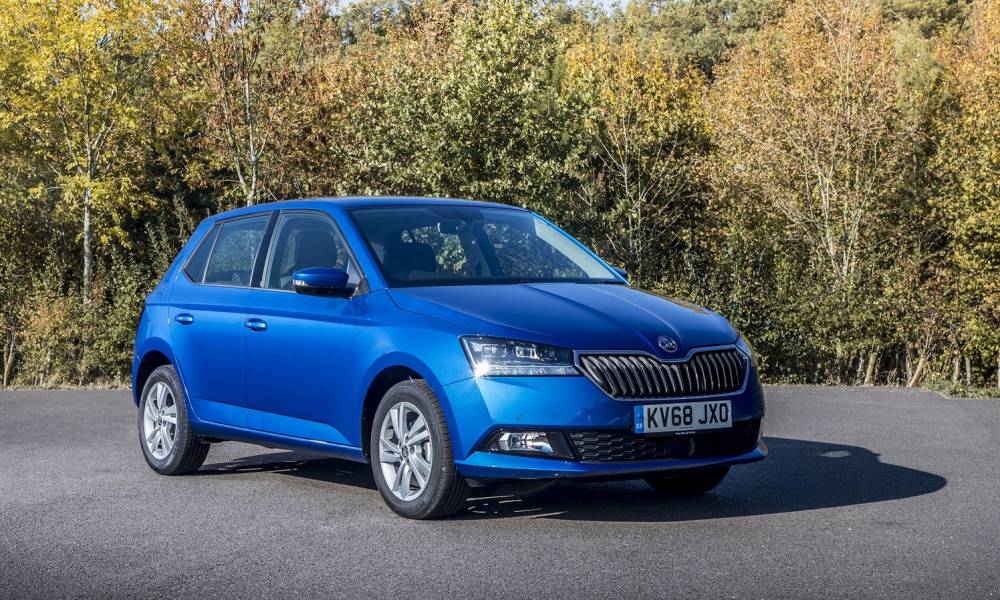
    The Fabia has been a mainstay of the ŠKODA range for nearly 20 years. It’s a very important model for the brand. We were lucky enough to get our mucky hands on a facelifted Fabia recently. The car comes in five trim grades & three engine options with hatch and estate variants. Interestingly, to push them along there is an all petrol, three- cylinder 1.0L engine range with outputs from 75PS to 110PS. No diesel for the new fabia. Our test car was one up from mid range, the SE L 5dr hatch with the 110PS engine, matched with a seven-speed DSG gearbox. No flappy paddles, just push the gear lever forward or backwards or better still, leave it in auto.


    Driving


    The Skoda Fabia looks subtle but classy. Outside it’s handsome but not eye catching. It’s very well built as you would expect and has that odd quality where you feel immediately at home, like it’s been yours for ages, familiar. The engine and gearbox are great. It’s hard to believe it’s only a 1.0L engine, it goes really well with plenty of torque, not laggy like you would expect from a small capacity turbocharged engine. Suspension is compliant but not soft. It rides very well and is way more fun than I expected.

    The gearbox is very good, smooth and better than most and you can change gear by pushing the lever forward or backwards if you prefer but i didn’t feel like i gained anything so left it in auto.


    Inside


    It’s a classy affair in here. If your familiar with any other modern Skoda’s such as Kodiaq or Superb, you’ll feel at home with the Fabia. The dash is straight from its bigger siblings, and very nice. Fabia has plenty of kit too; Multifunction trip computer, Radio Swing Plus touchscreen infotainment unit with SmartLink+ and lots more.

    You also have LED headlights, blind spot detection with Rear traffic alert, LED daytime running lights, rear parking sensors, alloy wheels, Amundsen satellite navigation, Cruise control, tyre pressure monitor and the list goes on. It’s a very well engineered and well appointed car.


    Living with it


    With 20 years of development under its belt, the Fabia was always going to be good. For those of us who mourn the passing of the Fabia vRS, there is no vRS in the new lineup. Saying that, it’s still loads of fun! The engine is surprisingly torquey and very tractable. The gearbox is very slick and the interior is in a different league from its competitors.

    The Fabia is so easy to drive. From the first drive, it felt like we’d been together for ages, very familiar. It’s fun but not unnecessarily sporty, maintaining a nice comfortable ride. There’s plenty of room for 4 or even 5, with plenty of boot space… to boot.


    The Verdict
    Skoda know their market and their customers very well and they build excellent cars. The Fabia isn’t trying to be a hot hatch or hipster, retro styled lifestyle accessory. It’s a well engineered, safe, pretty & fun car that’s packed with equipment. Our choice would be the 110ps with the DSG gearbox. It’s so smooth and drives very well, particularly around town. They offer something for everyone, funky Colour edition, sporty Monte Carlo edition the elegant SE L model plus S and SE.


    Love
    Engine – Torquey, responsive, smooth.
    DSG gearbox – Very smooth
    Styling – Elegant

    Loathe
    Economy – Couldn’t get anywhere near the recommended.
    No Diesel – I’d like a 1.2 diesel
    No vRS – I’d like a firebreathing version

    Lowdown
    Car – Skoda Fabia Hatch SE-L
    Price – £18,155 (ours with options £19,120)
    MPG – 60.1 mpg (combined)
    0-62 – 10.1 seconds
    Power – 110ps and 200nm torque
    Top Speed – 120 mph
    Co2 – 106 (g/km)

  • BOOK & EXHIBITION REVIEW | Modern Couples: Art, Intimacy and the Avant-garde

    BOOK & EXHIBITION REVIEW | Modern Couples: Art, Intimacy and the Avant-garde

    ★★★★★ | Modern Couples: Art, Intimacy and the Avant-Guarde

    WET DREAMS DIVERSITY!

    BOOK & EXHIBITION: Modern Couples: Art, Intimacy & the Avant-Garde (Prestel Publishing, £45) 5 Stars! Eclectic Eroticism! 

    What is love? A closeted wank in a glory hole? Romeo and Juliet’s death pact? Bosie and Wilde’s co-dependency? Or – more unusually – gay star Lou Reed’s liaison with MTF transwoman Rachel? None of these? Oh, get real – me, I say all of them! How dare any single human being, institution or government have the audacity to dictate the shape, form and expression of pure, mutual bliss?

    But – inexplicably – every known form of unorthodox love is under unprecedented assault by a savage tsunami of spiritual and social bigotry masquerading as sacred self-righteousness. In Brazil, Bolsonaro’s freshly reinvigorated cutting-edge fascism, Russia and Chechnya enact vile, anti-gay torture pogroms, while Trump’s shockingly irrational resistance to trans rights and gay marriage threatens sexual freedom itself.

    In every case, there’s a suspiciously defensive denial of human sexual plurality, that latent potential in every individual ever born, whether blinded by self-induced, MAGA myopia or not.

    So, praise indeed to London’s Barbican, currently flipping two highly assertive and aesthetic fingers up to the furious intolerance threatening to drown sexual diversity discourse. The event? Modern Couples; Art, Intimacy and the Avant-Garde, which ran to January 27th, a startlingly innovative exhibition superbly replicated in the accompanying book from Prestel Publishing.

    And Modern Couples couldn’t be more culturally appropriate. With referrals soaring in every gender clinic worldwide, and gender-variant, non-binary and agender platforms mushrooming exponentially, it’s a perfect moment to artistically challenge sexual and biological essentialist stereotypes.

    Quite frankly, there haven’t been such fruitful, virtuoso assaults on patriarchy and chauvinism since Bowie’s Ziggy Stardust rock-messiah intrigued the pan-curious genitals of 1970s teenagers worldwide. And what shockingly exotic pansexual prophets we’re currently gifted with; leading the pack, there’s Lady Gaga, stealing the crown of polymorphous perversity from previous scene-queen Madonna, and Bitch! Dyke! Fag-Hag! Whore!, Penny Arcade’s perpetually relevant rite of interactive, sexual awakening and liberation. The UK’s equally blessed; we have the gloriously unfettered epiphanies of agender diva David Hoyle, the high-fashion media frenzies sparked by Monroe Bergdorf, and – less interestingly but arguably as provocative – the timid, opportunistic, non-binary cliche on autopilot, Travis Alabanza. I mean, come on – a burger thrown, with allegedly transphobic intent, hardly matches Tennessee Williams’ scathing dissections of performative divas as subject matter!

    So let’s applaud the Barbican’s exemplary, multisexual and multicultural values which have led to such a startlingly on-trend celebration of sexual diversity. But, be prepared – the book, as was the exhibition, is exhaustive, not to mention exhausting, so ration yourselves to brief bedtime reading to avoid genital options overload!

    Sadly, it’s impossible to do full -or even partial – justice to such overwhelming subject matter, especially in a brief review, so I’ve chosen to focus on just four of the marvellously atypical couples out of the total fifty-seven. First, there are the life-long, lesbian liaisons of Romaine Brooks, a pivotal member of salon doyenne Natalie Barney’s infamous Parisian, ladies-only soirees, which, intriguingly, included Dolly Wilde, Oscar Wilde’s knock-out drops addicted niece.

    Brookes – quite fittingly – was obsessed with the Marchesa Casati, a fabulously wealthy, freakishly tall socialite who’d dedicated her life to becoming an eccentric, living work of art, and was as elegantly emaciated as a filigree dildo. There’s a rivetingly severe, full-length painting of a nude Casati that exemplifies Brook’s style, painted with such luscious attention to skin textures one can almost relive Brook’s velvet, probing tongue cascading back and forth in Casati’s trembling, point-of orgasm crevice. It’s a lush, but suggestively non-specific art that echoes lesbian desire itself, a haptic, tactile exploration where ego and one-sided selfishness are submerged in an ocean of mutual pleasuring.

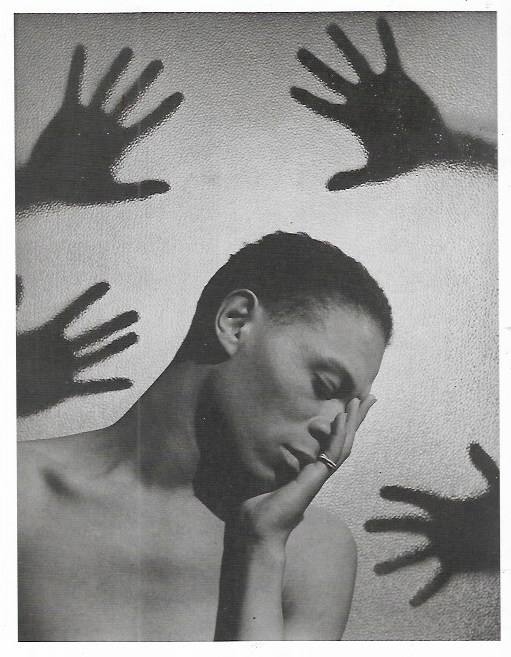
    How very different, then, to gay male lust, almost inevitably sparked and ignited by visual cues, as in the arrestingly modern photo-studies of George Platt Lynne. A huge influence on, and comprehensively anticipating Robert Mapplethorpe by decades, his aggressively sexual chiaroscuros – suggestive erotic shadowing – make his loving studies of Greek-god perfect hunks throb with the immediacy of superb, arthouse porn.

    Frankly, it’s the blatant need in these shots – so furiously kinetic and psychologically pumping – that so shrewdly captures and freezes textbook male lust on the page; it’s as in one’s face as a patiently erect penis dribbling with pre-cum waiting its’ turn at a bath-house orgy. Who, possibly, could resist the charms of Lynne’s angelically louche rentboys, posed to sensuous perfection? Utilising a forensic finesse worthy of fine art, Lynne legitimised and consolidated the notion of transcendent, homosexual love in an aesthetic lineage stretching back to the pre-Wilde concepts of ‘Uranian’ thinking, and the mutually male love poetry of Walt Whitman. Impressed? You should be – Lynne was the killer Caravaggio of lens-fuelled libidos, the master voyeur of vicarious arousal!

    Pleasingly, Modern Couples takes its’ inclusivity very seriously, so what a delight to have the singular story of Gerda Wegener and Lili Elbe – famous from the recent movie The Danish Girl – properly explored. A nascent transsexual – not even self-diagnosed until adulthood – Lili Elbe’s pioneering, gender voyage was initiated by her female lover, Gerda Wegener, encouraging her to dress en femme for portrait modelling. With an unsuspected, psychological femininity now fully untapped, Lili eventually progressed to primitive ovary implantation, the complications from which eventually killed her.

    Still, what’s often dismissed by bigoted critics as crude, surgical manifestation of deluded gender convictions – aka sex reassignment surgery – has since saved tens of thousands from once suicidal despair. And truthfully, Wegener’s portraits of Lili stunningly capture an ineffable androgyny, a jaw-dropping wonderland of the fascinating borderlands – and their gradual, transitional erasure – between strict definitions of male and female. In Wegenger’s canvases, one glimpses a sexuality thrillingly cut loose from genital specifics, an all-encompassing, erotic miasma that can colour an entire world with sensual potentials.

    One further lesbian couple – Claude Cahun and Marcel Moore – both prefigure and make redundant the modern rise of titillating, sexual selfie culture. Who needs a non-stop tidal wave of desperate dicks and flabby breasts and butts? Adopting a far healthier psychological perspective – dignity – Cahun and Moore bewitchingly transformed their mutual, life-long arousal into bravura, photographic icons of their then marginal, and socially dispossessed, sexuality. And early shots of the couple, especially, transpose their fleshy liaison into maverick, outsider tropes; specifically, characters from the Commedia del’arte, the theatrical epitome of misrule and disrupting the prevailing, social status quo.

    Strikingly timeless, the images brand themselves on our watching minds with the cheeky aplomb of a youthful Jean-Paul Gautier, who Cahun, quite uncannily, resembles in one shot. Unsurprisingly, both Cahun and Moore’s picture studies drip with erotic mystique; after all, who but a woman would instinctively know another woman’s gateways to shockingly sexual joy?

    And that same, charged magic is apparent in every example of Modern Couples’ gay, male partners; arguably, only male fingers can infallibly detonate the explosive euphoria of a fondled penis-tip. Forget bigoted dismissals of same-sex love as pathetic, narcissistic examples of arrested development, and proxy masturbation to one’s mirror image; on the contrary, there’s a pitch-perfect resonance of desire, arousal and consummation, one unfettered by pointless guilt or mismatched, biological imperatives that so often jar the intimacy between opposite sexes.

    Quite triumphantly, gay relationships are often stories of hugely soaring passions – hello, Oscar and Bosie. Almost effortlessly, they defy not only social and religious bigotry, but the arid reductionism of reproductive lust, and create ingenious alternatives to the dull limitations of functional, male/female sexual frictions. And surely, don’t the only limits to eroticism lie in the imagination itself – or its’ absence? Ah, dear, dear sexual diversity – it’s the perfect mindset for human happiness!

    Available to purchase now | Information on the Barbican’s Exhibition

    Photos by permission/supplied
  • THEATRE REVIEW | Leave to Remain, Lyric Hammersmith, London

    THEATRE REVIEW | Leave to Remain, Lyric Hammersmith, London

    ★★★★| Leave to Remain

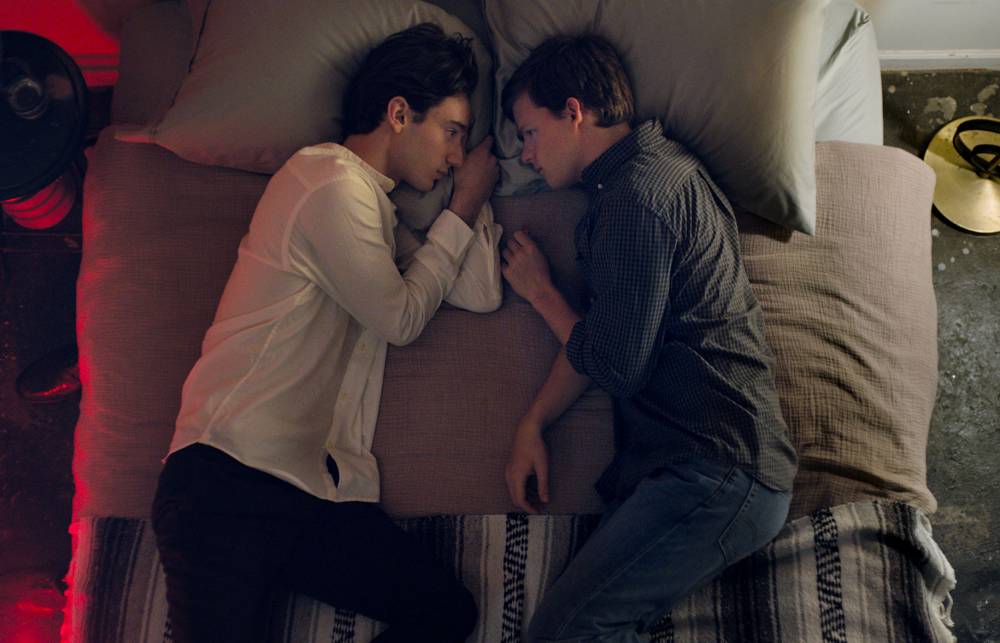
    Tyrone Huntley (Obi) and Billy Cullum (Alex) in Leave To Remain at the Lyric Hammersmith. Photo credit Helen Maybanks.

    Leave to Remain, now playing at the Lyric Hammersmith, is a modern love story set to a rock score and brilliantly tells the trials and tribulations of a multi-racial same-sex couple dealing with their upcoming marriage.

    Alex (Billy Cullum) and Obi (Tyrone Huntley) met just ten months ago but they’re already in love with each other. But American Alex, you see, is 5 years clean from drugs, and the company that sponsors his work permit is moving to Abu Dhabi. Obi, meanwhile, is a successful advertising executive with a nice loft in a trendy part of town. But Alex is not a British citizen, so if his job relocates to another country Alex has to go back to America. So what could be more simple then for Alex and Obi to get married in order for Alex to remain in the country? Well, it’s a lot more complicated then it sounds.

    The complications aren’t with Alex’ past drug history, nor is it with Obi’s secret meetings with a man named James, but the complications lie with their respective families. Alex’s mom Diane (a wonderful Johanne Murdock) is a non-stop talking busy body hands-on mom with a relatively patient husband Brian (Martin Fisher). Meanwhile, Obi’s father Kenneth (Cornell St. John) never quite accepted his son’s homosexuality, throwing him out of the house when he was just 16, much to the dismay of Obi’s mother Grace (a fantastic Rakie Ayola) and understanding sister Chichi (a great Aretha Ayeh). But with days and even hours, before the wedding, complications arise, and it’s touch and go if the wedding will happen at all, even in the light of a startling announcement from Alex’s parents and the continuing disapproval from Obi’s father. It’s all set to a rock score that’s just as modern and good as anything you’ll see in the West End.

    All the songs that are catchy and memorable and are a very good match for the story. Credit for this goes to writer Matt Jones and writer/composer Kele Okereke (Bloc Party) who somehow seamlessly and superbly set this story in present-day London to fantastic music. There’s a brilliant, and well-choreographed scene, where both families get together for the first time and sit around a dining room table set to a song called ‘To Family’ that is both hilarious and memorable. And while not one single cast member really really stands out, it’s the mothers of both young men (Ayola and Murdock) that will most stay with you. A mother’s love for her son will always remain, no matter what. Leave to Remain, directed by Robby Graham, is a truly wonderful piece of theatre. 

    Leave to Remain plays at the Lyric Hammersmith until the 16th Feb 2019, Book tickets here.


    4 /
    5 stars