Tag: Alfa Romeo

All the latest breaking news on the automaker Alfa Romeo. Browse THEGAYUK’s complete collection of news, articles and commentary on Alfa Romeo.

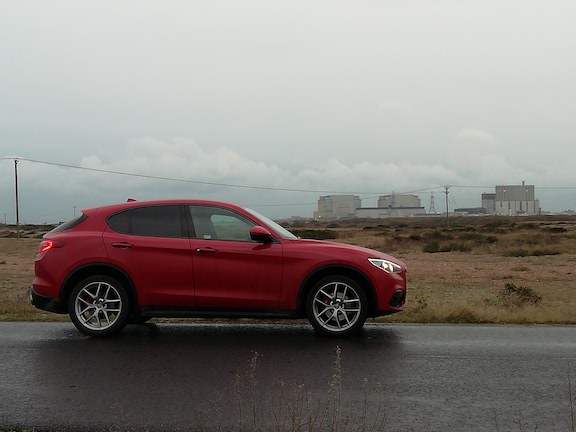
  • CAR REVIEW | Alfa Stelvio Quadrifoglio 2.9 V6 Bi-Turbo Q4 

    CAR REVIEW | Alfa Stelvio Quadrifoglio 2.9 V6 Bi-Turbo Q4 

    Release The Beast

    This review is going to be a little bit different. If you want to know what the Alfa Romeo Stelvio is like, then I can direct you to the Alfa Romeo Stelvio 2.0 Turbo 280hp Q4 we had in late last year.

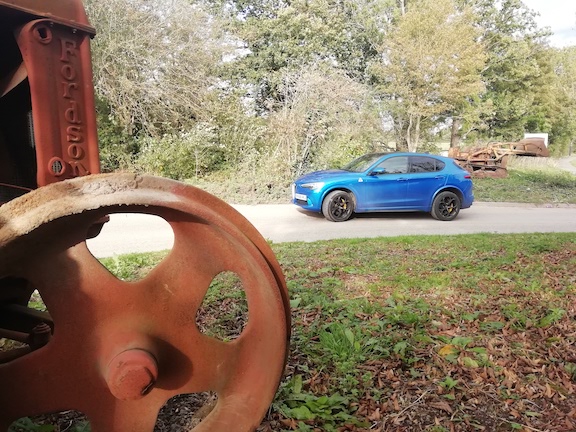
    So what have I got this time? From the outside, you don’t much to go on. It’s as big and as bold as before and you get an alloy wheel on each corner.

    What you notice about these alloys is that they cage the “Monster brake system” with their £595 optional bright yellow brake calipers all round. And you’ll learn to appreciate these bright appliances very quickly on your test drive.

    You also get a 4 leaf clover symbol on the front wings as is the historic tradition of Alfa Romeo and these in their big triangular shape let others know that this isn’t any Stelvio. This is the Quadrifoglio. This IS the beast.

    From the moment you start up, the 2.9 V6 Bi-Turbo exhaust ‘snarles’ at you and the neighbourhood. It lets you know it has been woken. It’s not fully awake because it has things to do first. And that is get warm. And there is a reason why it needs to get warm which is why it won’t let you select ‘RACE’ mode from cold.

    So while we wait for the magic to happen, let’s look around the cockpit. For a starting price of £69,510, it’s a bit of a disappointment. One thing Alfa Romeo just can’t get right at the moment is the interiors. Quality and build are good. The tactility of the touchy bits was nice and the controls fall to hand in a logical fashion. Why others don’t fit start-stop buttons on the steering wheel is a puzzler. It feels right.

    Sadly the infotainment screen is just too small to be of any use. The speed in which it responds to the central dial in the centre console works well, maps however are just too small to be taken quickly at a visual glance.

    Being the Quadrifoglio, there is an abundance of carbon fibre trim. Not to my liking but this is a sports model so I’lll accept it and the £3,250 Sparco carbonshell bucket seats. They are contoured and easily adjustable to suit most shapes.

    So here we are and the engine is still cold. So we set off and for a large car on wide 20” diameter alloys, the ride is surprisingly supple. The car is set in NORMAL mode. The SDC (Synaptic Dynamic Control) suspension set to its softest. Thankfully when DYNAMIC is selected, you can opt for the soft ride though you’ll be hard pressed to notice any difference over the ridges in the road.

    It behaves a bit more monstrous when in dynamic. Throttle responses are sharper,  gears changing further up the rev range. But still the Stelvio is pleasant to drive. Put your foot down, and I’ll grant you, the 600Nm of torque will shove you back a bit in your seat but it’s still nicely balanced and surefooted. 

    This is where is runs its Jekyll and Hyde. It’ll reward you with rapid progress and communicating steering. It will make you feel great while making you feel a little reserved and at the same time sing to you with a vocal exhaust note. Pushed too hard and the front will let go. When it does, you have to take responsibility for your actions because you will be pushing it hard. The level of adhesion is immense with a 50-50 weight distribution front and back and the Ackerman steering geometry set up isn’t for show.

    The wait is over and the engine is hot. Never has “Boiling” been so apt for an engine temperature because now you can select the DNA switch to RACE and then you are screaming like Umberto of Angera was when he slain the human eating serpent that roamed the streets of Milan.

    Suddenly you appreciate those yellow brakes on all 4 corners slowing down the fun as the visuals your brain took in catches up with the sound of the engine. And as you come to a stop, you can hear your screams catch up too. 3.8 seconds to 60 is quick and with the grip from all 4 wheels planting the power down, it does take some getting used to. Or not as is the case with myself. You can still hear my screams in various pockets of road as you drive around my village.

    The Stelvio Quadrifoglio isn’t just about 0-60 times and going fast in a straight line. When set in race mode, it also needs to be able to go around corners. This is where you really learn what the car is all about.

    All driver aids are switched off. There is no traction control, you are suddenly going head-to-head in a RuPaul lip-sync so don’t fuck it up! And here is the thing, you find that you can’t. You discover that all of those driver aids have actually held the Stelvio back. 

    Attack your favourite B road and roundabouts and you can have a lot of fun. The back end, quiet and sedated before, becomes angry and shouty like Mr Hyde. Blip the throttle and drop a cog or 2 in the 8 speed auto gear box and you are rewarded by a rear end that is easy to control as it steps out sideways. Doesn’t always step out enough but you find it rewarding all the same. And all this is set to an even more fruity musical tune from the exhausts. 

    Admittedly, in a wet, it will light up the rear axle with ferociousness and you start to respect the sheer power this Stelvio has to offer because it’s there, all the time, it never goes away. Never goes away that is until you run out of fuel. 

    The quoted 24.6 MPG might as well be 2.46. In race mode, it’s a thirsty beast. You can suddenly find yourself in the red side of the fuel gauge. You know what you’ve done, you failed the lip-sync.

    The Alfa Romeo’s Strelvio is a good car so the big question is, is it worth the £30,000 more for this engine, for this sheer amount of power and for lining the pockets of Opec? There are nine people in my family, I’ve put a kidney from each member up for sale. They don’t need two but what I need is a Stelvio Quadrifolglio. 

    Love

    Vocal exhaust note

    Comfort in all drive modes

    Exhilarating 

    Loathe

    Cheap cabin

    Infotainment screen size

    Fuel economy

    The Lowdown

    Car –  Alfa Stelvio Quadrifoglio 2.9 V6 Bi-Turbo Q4 

    Price – £77,955 (as tested)

    MPG – 24.6 mpg (WLTP combined)

    Power – 510 bhp

    0-62mph –  3.8 seconds

    Top Speed –  176 mph

    Co2 – 222 (g/km)
  • CAR REVIEW | Alfa Romeo Stelvio

    CAR REVIEW | Alfa Romeo Stelvio

    ★★★★☆ | Alfa Romeo Stelvio – Alfa Romeo’s Power House

    What Have We Got?

    Alfa Romeo has buckled to the trend and launched a very sporty SUV into the ever popular SUV market. It’s big and rather good looking but can it wow you and win you over, away from the competition?

    Driving

    The downside for me was the steering lacked some feedback. You could tell when it was ploughing on in an enthusiastically taken corner but this was probably more to do with its sheer size than through the steering wheel.

    That said, the overall driving experience wasn’t a bad one. Quite the opposite. The 2-litre 280hp  petrol engine would hurtle towards 60mph in 5.7 seconds. Now for a car that can manage that and develop its maximum of 400 Nm of torque at just 2250rpm, it seemed to be rather more refined than you’d think. It wasn’t really throwing you back into your seat on hard acceleration and yet it never hesitated in response to throttle inputs from stand-still or when on the move.

    In actual fact, you’d be wise to select the MPH display on the fascia panel at all times. The Stelvio gathers pace quicker than it feels. 


    Inside

    Inside is below par for the class and the money. What was nice to see was that nothing rattled. That might sound premature when a new car is being reviewed but this Stelvio was delivered with almost 24,000 miles on the clock at the time of the test. It is just over a year old. That’s almost the equivalent or 2-3 years of motoring. Alfa Romeo hasn’t been known, in the past, for rattle free insides, well they have now. And this is a press car. They pass from journalist to journalist and they are driven hard. This is a great testament to Alfa Romeo. 

    Living With It

    It’s rapid and great fun to drive and deserves to wear that Alfa Romeo badge. As SUV’s go, the Stelvio cuts it in the market for being different. It might not do things as well as a Mercedes GLC but then again, for the money, the GLC isn’t going to do things that the Stelvio can do. 

    For drivers alike, the Stelvio is a great car to drive. It’s comfortable and despite its size and somewhat lack of steering feel, it does give the impression it is far nimbler that on first acquaintance. 

    The Verdict

    It’s not the best. Then again you’re not going to regret having it parked on your driveway and an Alfa Romeo key in your pocket. There are things I’d like to see changed in line with the market leaders but then again, if it did, it wouldn’t be an Alfa Romeo! 


    Love

    Linear throttle reactions

    Infotainment system

    Auto box changes

    Loathe

    Interior quality

    Fuel consumption

    Steering feedback

    The Lowdown

    Car –  Alfa Romeo Stelvio 2.0 Turbo 280hp Q4 Milano Edizione

    Price – £ 46,865(as tested)

    MPG – 40.4mpg (combined)

    Power – 280hp @ 5250 rpm

    0-62mph –  5.7 seconds

    Top Speed –  143 mph

    Co2 – 161 (g/km)

  • BOOK REVIEW | Alfa Romeo Giulietta 1978 – 1985

    BOOK REVIEW | Alfa Romeo Giulietta 1978 – 1985

    ★★★★★ | Alfa Romeo Giulietta 1978 – 1985

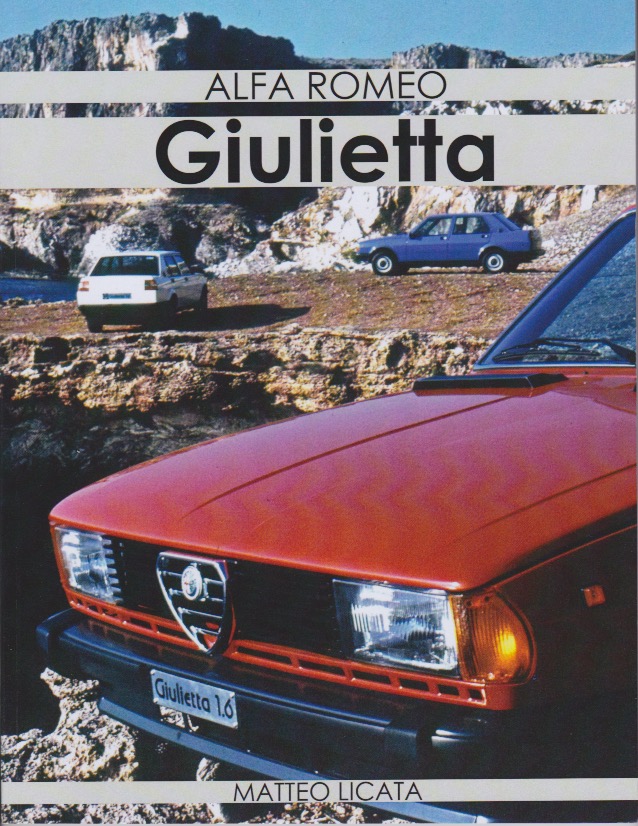
    For any Alfa Romeo fan or ‘Alfisti’ as they call themselves, Matteo Licata’s book on the much ignored Giulietta from 77 – 85 is an absolute must. I like the Giulietta and have looked forward to reading a copy since he broadcasted it to his Twitter followers this year.

    Matteo is a lover of sports cars in general and he has a fondness for automotive lost causes. Full-time lover of good life, blogger and writer on Twitter, he’s an automobile enthusiast firstly. He carved a career in car design, graduating from Turin’s Istituto Europeo di Design in 2006. He’s even contributed to the 2006 Giulietta of 2010. So we are in good hands.

    The Giulietta, in general, has been largely overlooked. It was for Alfa Romeo, a short-lived car and as a result has only ever been mentioned in a paragraph or berated for being a cheaper shorter car based on the Alfetta. One of my first books on cars was on Alfa Romeo and that only had a one-page colour spread with two shots of a Giulietta on it. This has finally been addressed.  

    This is Matteo’s first book and l have to say l am impressed with the level of information this book is packed with. As a general rule of thumb, most books on Alfa Romeo are rich in page numbers. For the 58 pages in Matteo’s book, each page packs a punch with knowledge on the Giulietta. It comes in bite-size snippets of information and it works for me. The book is particularly good at capturing the data that you as an enthusiast want without waffle.

    In the beginning, there was a lovely snapshot of the history of Alfa Romeo. Even after all these years of being an ‘Alfisti’ myself, some of it was new news to me. After this, there are eight chapters covering everything from the launch to evolution and ending with the geeky satisfaction in vital statistics.

    Things l had forgotten about Giulietta (read that as didn’t know) was that there were three series in production. Subtle changes here and there are covered along with the confusing array of engine line-ups across Italy and the rest of Europe. And then there are rare photos throughout the book of the car itself including six very rare and spacial models like the Fiorucci Giulietta “Punk” of ’78. It beggars belief!

    A worthy read and addition to your Alfa Romeo library? YES.

    Follow Matteo on twitter: @Roadster_life or on his blog: https://www.roadster-life.com

    Available from Amazon books for £21.87.

  • The Motoring New Years Honours 2018

    The Motoring New Years Honours 2018

    New years honours 2018

    What a year 2017 has been. Some launches, some vehicles with a difference and now to the top three.

    The Almost Ran

    There are things l like and then there are a few things l really dislike. I’m talking about the Fiat 124 Spider.

    Compared to the Mazda MX-5 that it shares its platform with, it is more expensive. What’s more, the engine needs you to work it to get the best from it. The Mazda (in 1500cc form) was on the boil all the time and the MX-5 is cheaper and with the limited slip differential that Fiat only gave you on the Abarth 124, it made the handling safer and more surefooted.

    What l can’t forgive it though is Fiat using the MX-5 dashboard. Such a silly mistake to make. And lazy too. Even the fitments of a different facia binnacle would have been better than this.

    So how has this made it into the almost ran if I dislike it so much? I’d go out and buy one tomorrow. Unlike the MX-5, it is dressed in a very stylish suit that makes you look back and admire its style. Admittedly the handling is more twitchy and it’s this that makes it more alive and risky. Get some rear end out action going to work and you can wait until lunchtime before your first coffee. It’s the adrenalin rush it gives you.

    And the dashboard? When you’re going fast, you don’t look at it anyway.

    And so to my top 3 of 2017.

    Dacia Duster. £ 14,990

    It’s cheap and cheerful execution actually made this a joy to have for the week. What’s more, it’s an SUV and yet l don’t really like SUVs. Certainly not faux SUVs in 2 wheel drive form anyway. So what is it doing on my New Years Honours list? Its looks are a bit like an estate car and l like estate cars, they ooze practicality. The Duster though is available for not a lot more with a proper 4 wheel drive system. Win win.

    New engines available have also made it reach up to today’s standards of performance and economy. Just as it’s about the be replaced by a new model, it was given a brief new lease of life.

    There is nothing pretentious about the Duster in any way even in the midrange Lauréate trim level. And yet what surprises, is the way it was put together. Admittedly it isn’t even up to Renault’s standards of today and yet that’s OK.

    It’s a Dacia, It’s no-nonsense transport for you and whatever you throw at it. At this price, you will throw everything at it without a care in the world. Not because you won’t actually love it, you will. It will do all that is expected. It’ll be because it feels it can just handle it.

    Ford Mustang Convertible. £43,095

    Again this is another car that exudes a bit of cheapness. It’s not up to European standards. The fit and finish inside aren’t as tactile as in the new Fiesta and yet for about the same as the highest spec Focus RS, give or take £6000, you get a V8 muscle car with a retractable roof that can light up the tarmac without too much of a problem.

    It’s also a car to pose around in. The V8 under the hood rumbles away like a good old Yankee V8 should except this time it’s not as bad for the environment and now fitted with green bits like catalysts and an engine management system keeps tabs on the nasty stuff that comes out of the back. Your grandmother will love it.

    Ford thankfully have addressed the rear end and made it a little more acceptable to European standards. It’s now all multi-linked with wishbones and anti-roll bars of a sort and manages to go around corners albeit with a little naughty fun if you so wish it to.

    It also has those classic Mustang looks. It makes the car unmistakable from any angle or in any light. You can never mistake it for a…There you go. There is nothing that looks like it apart from an older style mustang.

    What is not to like? The Ecoboost engine that’s what. Avoid it. No one wants to hear a muscle car sound like a Fiesta.

    Alfa Romeo Giulia Voloce. £ 39,205

    What a car. A car that pipped my proposed number one from the entire list that we had back in the summer. It did everything right. Then we got the Alfa Romeo. And this isn’t if l am honest the best car overall that we tested this year. It is, however, the best driver’s car, with the best seat in the house. It’s so good, that I had to put £30 of my own money into the fuel tank. I couldn’t stop driving it!

    Every so often some manufacturers allow their engineers to forget the bean counters and go against the tide of normality to make a car that is available for every man (or woman) to be great to drive. It’s a car that puts the driver first. It isn’t cheap, then again it isn’t the most expensive of the drivers’ cars out there. You’ll be needing deeper pockets for something similar from BMW or Audi.

    Stories will unfold about the thing breaking down and it will have its faults. If it didn’t then it wouldn’t be an Alfa Romeo. A car company built with passion over precision of the finer things like a stupid switch working with fluidity. Passion isn’t built into a car, it comes from within. You just can’t manufacture it in a laboratory. It makes you spiritually aware. It has a human touch and quality to it.

    The Giulia is a return to form for Alfa Romeo that hasn’t been seen for over 2 decades. The crime is it shouldn’t have happened in the first place so this return should be celebrated and for this l award it THEGAYUK car of the year 2018.

  • CAR REVIEW | Alfa Romeo Giulia Veloce

    CAR REVIEW | Alfa Romeo Giulia Veloce

    Snap-Happy Alfa Romeo

    Alfa Romeo review
    (C) Alfa Romeo

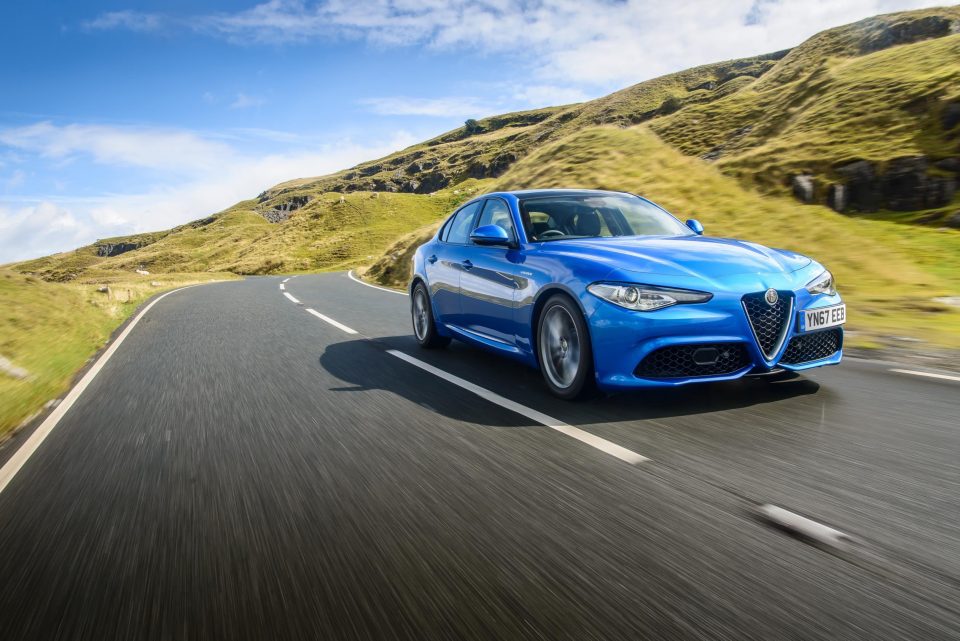
    Alfa Romeo has been missing from the compact executive car market since the axe fell on the 159 in 2011. You’d hope then that over the last six years the Italian manufacturer might have got its new car right. If you have read the hype elsewhere, believe it!

    Thankfully the Giulia isn’t perfect, and there are still some questionable bits here and there. It’s the sort of things you’d not accept from an Audi. If Alfa Romeo had made it perfect, then it wouldn’t be an Alfa Romeo at all. The world would have stopped spinning on its axes and we would all be engulfed by a burning sun.

    Okay so that might be a little dramatic. I for one however do like a bit of drama from my car. In an Alfa Romeo with its rich history of successes and failures you still expect it to be good and bad with a bucket load of enthusiasm. It makes you feel alive when behind the wheel of the new Giulia Veloce.

    I’ll start with the enthusiasm side of the car. It’s a great car to drive. The Veloce model is second to end in a five model line up. Only the ferocious Quadrifoglio (Green Cloverleaf) beats it on all levels of driving dynamics. That said the Veloce, at £22,000 less, is by no means less of a car as a commuter saloon/play thing that will make you happy.

    You will be happy.

    (C) Alfa Romeo

    Before you even get into the Giulia, you’re confronted by a classic design in the making. From the front at least. Its tall grill and side vents add a purposeful look which is then given some Alfa flair with the licence plate mounted to the side. What isn’t so successful is the rear. It’s not like Alfa Romeo don’t have any in-house designs from the past that they can work from. The rear is a bit too BMW for my liking.

    The first thing you notice when you get inside the Giulia is the steering. It’s phenomenally direct. The smallest inputs translate to so much on the tarmac. You’ll notice this within about 200 meters of driving in a car park. It sets up the DNA of the cars sporting character.

    Speaking of DNA (this is the smoothest transition I have come up with yet!) there is the standard DNA switch on the centre console. On the model tested it was the basic switch for Dynamic, Natural and Advance efficiency. You can spec the car for Alfa’s adaptive suspension set up too. As it is, I found it very engaging to use in motion. In basic terminology it alters the parameter workings of the throttle, steering and gearbox responses. In A it is supposed to make it a little more fuel efficient. I’ll put my hand up and say I didn’t notice any difference on the readout because I didn’t try to get green credentials from my week with the Giulia. There simply wasn’t enough time and I was having far too much fun.

    D and N are where you will mostly keep it selected. In D it really does make the throttle responses snap-happy. This will frustrate you in its behaviour while pondering life while stuck in city traffic. Switch the N and normality will ensue. The magic in this switch is that you can select its position when on the move and its responses are pretty much instant. See the opportunity, select it and grasp the enjoyment.

    Another return to form for the Giulia is being rear wheel drive. Perhaps it has something to do with Ferrari technical director Philippe Krief coming to Alfa Romeo’s rescue has made the Giulia a true driver’s car in almost every sense. The driving is where the pleasure is.

    After years of lacklustre attempts at making a fast car with the wheels pulling it forward, Alfa Romeo has put power back to the rear and set the chassis up with a near 50:50 weight transfer balance. Sounds great on paper and on the road it is even better. Where the previous model would scrabble and understeer when pushed, the Giulia will pilot its way around handsomely. Push it and the traction system kicks in sometimes thwarting the fun but not excessively.

    Handling when pushed hard is safe. Having gone pleasure bound for four hours along my favourite road full of all sorts of situations, the A259 from Folkestone to Bognor, and in a mixture of weather, it proved itself to be sure-footed. Push it in the right situation and you could get it into a gentle four-wheeled drift. It doesn’t last long because the grip is phenomenal.

    You would expect a car set for the sportier driver to ride have a harsh ride and sometimes become unpleasant. It’s not the worst I have tried. Not being adaptive means it stays in that sports set up all the time. The only problem with this is it’s too engaging and encourages you to be a tad more naughty whenever you can get away with it.

    With all the goings on in how it rides I almost forgot to talk about the engine. It’s not a lusty Alfa Romeo V6 (that you’ll find in the Quadrifoglio) It’s a 1995cc four-cylinder turbo unit. It makes 280hp and will throw the Giulia down the road from 0-62mph in 5.7 seconds. The way it does it is with little fuss and no turbo lag anywhere within the rev range. The eight-speed automatic gearbox steeps up and down with minimal intrusion. It also has a subdued growl that is more vocal when switched to Dynamic.

    In a time when gearshift paddles are getting smaller, Alfa Romeo has bucked the trend and given you two big cold metal shifters to play with. It all boils down to giving you more places to position your hands on the steering wheel to select the gears. The coldness of their metal construction is quite provocative in a way. Their shaped contours felt pleasant to the touch. It’s just another sensual input that makes it feel like a driver’s car.

    There are a few problems. Remember this is an Alfa Romeo. For a car with aggressive yet civilised credentials in being all things on the road to man and beast it has a slightly fluffy feeling brake pedal. It doesn’t feel as responsive or as sharp as the rest of the car’s snap-happy weighted inputs and temperament. Thankfully they are more than capable of stopping the car quickly on all surfaces. It’s not often you get to try a car on snow-covered tracks. The ABS stops you with minimal fuss.

    The fuel gauge in relation to how much is left never made any sense at all. I lost 140 miles in one 30 mile trip. The battery cover in the boot was poorly fitted and Alfa has decided to redesign the wiper switch with a butterfly design on the stalk. Let’s just say these are the eccentricities of Alfa Romeo and leave it there.

    What I am sad to see missing are the three round gauges pointed towards the driver for oil and water temperature and a clock. With this return to form this good I really would have liked to have seen this little nod to the Alfa Romeo’s I was brought up with.

    There is absolutely no doubting Alfa Romeo’s commitment to return where they should be in the sporty saloon segment. Sadly it is in a market that is packed full of German machines that continued to evolve with each model change getting better and better year after year. Alfa Romeo has a big job ahead of them if they are to entice the saloon driver away from the German marques. For my money I’d take a chance on the Alfa Romeo. The motoring press is not wrong in what has been said about the new cars driving appeal so repeat after me; I own an Alfa Romeo.

    Now doesn’t that make you feel great!

    Loves

    Handling and road manners
    Large gear paddles on the steering wheel
    Engine response

    Loathes

    Some trim fit was poor
    No traction off switch
    Fuel range less than accurate

    Lowdown
    Car – Alfa Romeo Giulia Veloce
    Price – £39,205 (as tested)
    MPG – 46.3 (combined)
    Power – 280 bhp
    0-62mph – 5.7 seconds
    Top Speed – 149mph
    Co2 – 141 (g/km)

  • CAR REVIEW | Alfa Romeo MiTo

    ★★★ | Alfa Romeo MiTo

    I always wanted a MiTo. It’s the cheapest and easiest way into Alfa Romeo ownership. Unlike years ago, it won’t fall apart. I almost bought one but university called and so the idea was put on the back burner. When I had finished uni I bought a camper van with the funds instead of the Mito. Was I right to have done so thus not getting another Alfa Romeo?

    Alfa Romeo Mito Car review

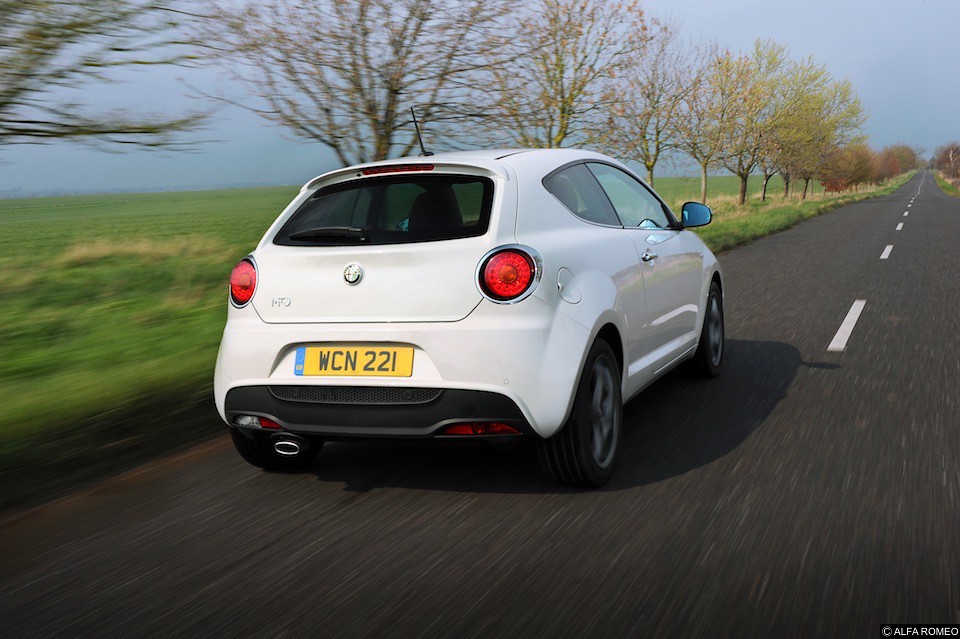
    If you want a small three-door hatchback with extreme exclusivity then take a look at the Alfa Romeo MiTo. The MiTo is now some nine years old and still a rare sight on the road. In the time I had one I saw three others. Sadly on all but one occasion, I was driving other cars so I was unable to share the love with an approving wave or a convoy.

    It’s not a great car by any stretch of the imagination. What it is though is an Alfa Romeo, so you can forgive it quite a bit for its flaws. Actually, you forgive it quite a lot. Design wise it is a bit lost. It is a sort of squashed down Giulietta. The result makes it look a bit like a small jacket potato. All is not lost as the potato design is making a comeback. It’s just that the MiTo missed the boat all those years ago.

    Alfa Romeo has a way in making cars. If you want clunk-click every trip then you don’t buy an Alfa Romeo and you certainly wouldn’t upgrade your Polo for one. That changes if you just want to be a little bit different. And the MiTo will fit the bill.

    Some of it in this revamped third face lift model is a bit old school still. The heads up display is red and almost dot matrix in style. The digital expressions of the MiTo coming towards you and away when you turn the key are quite nice touches to have on an older design. You start to like the MiTo. The inbuilt 5” screen satnav with Bluetooth, DAB and all the other things you expect today comes in at an extra £750.

    That’s a lot for 5” of screen but an essential part of the package. You would be a fool not to add it.

    The driving position is quite comfortable. Elbow room is in abundance and it’s no longer the long arm, short legs of previous Alfa Romeos. What isn’t available is oddments space. There just wasn’t the space available that I had become accustomed too.

    The first shopping trip proved rather eventful. The boot is deep. It just goes down and down and down like Mary Poppin’s carpet bag. Ideally, it needs a second floor. It’s not ideal in the day to day. It does give it almost class leading depth though.

    On the road, the little 1.3 diesel engine gives all it can. It’s not the worst out there. It’s quite a likeable unit and belies the 95bhp power that’s available. 200nm of torque at 1500rpm helps. It’s this torque figure, that when combined with the DNA switch in ‘Dynamic’ makes all the difference. In ‘Normal’ mode it felt out of depth. In ‘All terrain’ mode it was hopeless. DNA, now you understand what it stands for. Quite clever marketing really. Dynamic makes it more alive and responsive. To be honest I attempted very little motoring in N or A. A is mainly for atrocious conditions.

    Handling was quite up to spec for an older design. It’s easy to start liking the MiTo when you start to motor along. It lives up to the badge ever so slightly when you hustle it along. It never leaves you breathless but likewise, it never tried to put you in a ditch. The disc brakes on each corner being up to the job.

    It’s a likeable car while also being a bit less successful in many areas. Above all, it’s an Alfa Romeo. The doors are frameless and there is no way you can disguise the fact that in photos you will look great next to frameless doors with the windows down. Strike a pose, there is quite literally NOTHING like it… MiTo MiTo MiTo.

    Love

    Frameless doors
    Design
    Exclusivity

    Loathe

    Deep boot floor
    Price
    DNA switch to normal mode

    The Lowdown
    Car – Alfa Romeo MiTo 1.3 JTDM-2
    Price – £ 17,200 (as tested)
    MPG – 83.1mpg (combined)
    Power – 95bhp @ 3500
    0-62mph – 12.5 seconds
    Top Speed – 112 mph
    Co2 – 89 (g/km)

  • CLASSIC CAR REVIEW | 1992 Alfa Romeo Spider

    Think Alfa Romeo Spider and you instantly think of a gawky Dustin Hoffman and a sexy siren that is Anne Bancroft. The Spider, like Ms Bancroft aged gracefully with very little input from science or cosmetics. Here we take a look at a 1992 Spider that is some 25 years into the production run.

    Alfa Romeo Spyder 1992 review
    CREDIT: Stu Bird

    Launched in 1966 the Pininfarina Duetto as it was then known was built on a very shortened Giulia chassis. While the Giulia exhibited some fine body architecture in its details, it was upright and square and built around a typical 3 box design saloon. It also spawned the very handsome Bertone penned GT coupe models and then came the pretty open top tourer.

    It won praise from the motoring press. For its time it was sophisticated in its underpinnings and no matter what the engine size was, it liked to be driven hard. From the humble 1300cc to the very latest 2 litres with injection, it had the much enthused about twin cam from Alfa Romeo. All the UK could offer at the time were leaky MGB’s and shoddy build quality.

    The Italians have always been good at getting sports cars just right the first time. And ‘the time’ is the essential downfall for them too. It was perfect. So perfect that Alfa Romeo decided to halt development almost immediately after it was launched and close the book on it.

    There were some changes made over its 26-year production run. The stylised boat tail of the early ones was sheared off and made square for the series 2. Then following US regulations where the Spider was an important big seller for Alfa Romeo, it was endowed with big impact bumpers and a rubber spoiler that was literally stapled on it for the series 3. The final model as seen here was developed again out of regulations and fitted with fuel injection and those building girder bumpers were smoothed out. The rear end was also treated to another new look and in some ways looked more like a modern take on the boat tail.

    The main criticism for the UK lover of Alfa Romeo was that the Spider was available only in left-hand drive. Again another classic “qualunque cosa” or ‘whatever’ from Milan. UK importers did, however, offer right-hand drive conversions on the series 4.

    All this didn’t matter. It was an open-topped Alfa Romeo. There is something very passionate about Alfa Romeo and until you have owned one you never fully get to understand them. While they are not quite so thrown together as they were back in the 60s and 70s, they exude an unrivalled following.

    CIMG2227

    Driving one today is a bit of a culture shock. This year sees the 50th year of the Spider. It’s hard to believe that it really is 50 years since it was exposed to the world. In this series 4 model, we are also granted power steering. Something I am told by owner Nigel that is essential. It certainly feels nicely weighted if a little indirect to gentle inputs. The Spider might have been a sports car five decades ago but like over cooked pasta it has gone a bit soggy on the edges when pushed to the limits.

    The driving position is very Italian. Read any old reviews on anything from Italy and you often would read about the long-armed, short-legged driving position you needed to adopt. It isn’t that bad. Again the passion for an Alfa Romeo by its owners is that they will put up with it just because it’s an Alfa Romeo. And don’t be put off by the gearstick that protrudes high up from the dashboard. It looks unnatural though in practice it works a treat.

    CIMG2226

    Treated as a weekend cruiser for pub excursions or showing off how wonderful your life is then the Spider makes sense. The 2 litre injected engine is eager though sadly because of the injection it loses the roar of the carburettors and the rasp in its exhaust note. It will keep up with modern traffic with a recorded maximum speed of 120mph. Not too shabby even by today’s standards.

    Roof off motoring is what the Spider is all about. With the roof up it really is a bit ugly like someone knocked up the roof in a shed so you’ll always want to lower it as often as possible. Roof lowered and it comes alive. The rush of air around you on a balmy early autumn day brings out the giddy grin in your face that makes you more excited than that day you got offered your first dance on a balcony in Sitges by a handsome man in a linen suit and exotic cologne. It’s refreshing.

    On the drive around town owner, Nigel did tell me off for changing up the gears too early. “Why are you in forth? Put it back into second and enjoy the sound” he said. Perhaps I was being a little mechanically sympathetic to someone else’s car but true to his word I did just that and lazy low down torque was replaced once again by the eagerness of the twin cam on tap and mechanical music.

    Owner Nigel has had the car for around 8 years. In that time it has seen a repaint and the wheels have been replaced by retro looking originals from the earlier Spiders. They look fantastic. Wife Helen was less impressed with the hit the bank balance took for them. Some mechanical dramas have been averted thanks to a fantastic network of support for old Alfa Romeos. He still has work that he wants to do it but at the moment she’s a keeper and Italian car nut Nigel wouldn’t be without it.

    I’d certainly have one. The pretty looks and Alfa Romeo engine are a pleasure to all the senses. Despite its visual faults, I’d have a series 3. I just happen to like a bit of tacked on ugliness and an underdog.

  • CLASSIC CAR | Alfasud 1.3

    All good things come from the ‘South’

    (C) STUART M BIRD

    Bruno Tonioli isn’t the only quick stepping rapid rumba dancer to come from Italy. In 1972 a motoring equivalent named the Alfasud was unleashed to the motoring world.

    I have more than a soft spot for the Alfasud. If I am ever asked what car would be top in my fantasy garage of 5, an Alfasud is there. My second car was an Alfasud Ti. It was a three-month love affair that financially ruined a then 17-year-old Stuart.

    Alfa Romeo needed a small car that would entice young people into the marque of Alfa Romeo. In 1967 a Viennese designer named Rudolf Hruska was entrusted with the task of turning the dream into reality. The premise was to design, develop and instigate the building process of a small car that would then hopefully get those new customers to buy other Alfa Romeos and so on.

    There were three main prototypes presented. The first before Rudolf had joined only made it to the drawing stage. The second called the Tipo 103 was deemed too expensive to produce. This was a front wheel drive with a 900cc 4 cylinder twin cam engine in a three-box four-door saloon style body. The third incarnation was the Alfasud as we know it today.

    (C) STUART M BIRD

    Thankfully for Rudolf Hruska, Alfa Romeo had some unused facilities in a southern region of Italy in Pomigliano d’Arco. This is where the Sud or South in Italian comes into the name. The Alfasud is also the reason why ‘Milano’ was removed from the Alfa Romeo badge because now their cars were not only built in Milan.

    The Alfasud was a major departure for the Milanese company. For a start, it was to be front wheel drive. Secondly, it was to use a totally new engine in design. In some ways, it did have twin cams but that isn’t totally true. The 4 cylinder boxer engine had one cam per two cylinders so was still classed as a single cam. I still like to think of it as a twin cam. Having worked previously for Porsche and Volkswagen it was no surprise that Rudolf would opt for a flat four designed engine. The layout allowed for a low centre of gravity and a low bonnet line. This really becomes evident when you drive one.

    The body design was entrusted to Giorgetto Giugiaro of Ital design. This forward-thinking designer designed some of the most iconic cars ever to grace the roads and some that he would rather forget about. In the presence of this man don’t ever mention the Morris Ital.

    In just five years the Pomigliano d’Arco factory was up and running giving much-needed employment to the southern inhabitants of Italy.

    Sadly it didn’t all go to plan and industrial problems with an inexperienced workforce meant the Alfasud never made it the success it could and should have been. Strikes and poor workmanship were two key areas of failure. But you’d not think about these when you think Alfasud. What comes to mind is rust. And rust they did, even in areas where you wouldn’t expect it to. These rusted within two years of building.

    Now forgetting that the Alfasud dissolved quicker than an Alka-seltzer, the car was a phenomenon.

    (C) STUART M BIRD

    Launched with a little single carburettor 1186cc engine, the 63bhp engine thrived like no other engine for revs. The raspy sound was intoxicating. And this intoxication quickly led to criticisms from the press for MORE power.

    The handling at the time was legendary and for about a decade after launch, it was still the car other manufacturers tried to emulate. Alfa Romeo was quick to silence the critics with spoilers, sports style wheels, quad headlights, a rev counter and 5-speed gearbox which were all added to a two-door body and the Ti was born.

    Then there were more problems. Supply and demand could not be met. This thwarted further development of the two-door shell being available in the lower spec models and the estate version ever making an impact outside of Italy. The much-needed hatchback-style body was delayed and finally arrived in 1981. However, the pretty ‘Sprint’ did make it, adding sporting sex appeal in a coupe style body with a hatchback boot.

    Still, people wanted, even MORE, power. The Alfasud would end its 12-year production run with a 1490cc engine, twin carburettors and 105bhp in the Ti Green Clover Leaf.

    The car used for this review belongs to Stefan. A lifelong fan of the Alfasud having had several over the years and a family who also had a love for the little Alfa Romeo. This is his 1982 series 3 1.3 SC with just 36,000 miles on the clock. Low mileage it might have but that hadn’t stopped the ravages of time taking hold. It has been subjected to a full body restoration prior to purchase. Since Stefan purchased the car he has nursed it through a full engine rebuild and sorting out the mechanical side of things while also removing the drama button from the dashboard. The car has had its problems. He says “Now not only does it look great, but runs just like the Alfasud should, smooth torquey flat four engine with that wonderful music to your ears raspy exhaust note.”

    Stefan entrusted me with the keys. It has been 24 years since I last drove an Alfasud. It all came back to me very quickly. The heater fan switch on the end of the column stalk is a stroke of genius. The narrow footwell not so. The peddles were still as close together as I remembered. The low-slung engine allows for a low bonnet line. Il had forgotten that. It’s quite startling at first.

    On the move, the steering was direct and nicely weighted. The assisted 4 disc brake system as powerful as ever. The inboard front discs allowing to eliminate unsprung weight during forceful braking. The ride and handling compromise still spot on in every way. The little 79bhp 1351cc engine was as fizzy as I remembered it with a rasp and pop from the exhaust that they became known for. It’s also smooth.

    I could enthuse about the Alfasud until you fall asleep and even when you do I can still prattle on about them. So I’ll finish with a thanks to Stefan for letting me have a play and reigniting a long lost love affair.


    With thanks to Gay classic car member Stefan for the loan of his car.

  • CAR REVIEW: Alfa Romeo 4C

    If you’ve stopped staring at the picture and started reading, you might be wondering what the incredibly sexy automobile in front of you could be. ★★★★

    With something as low, lithe and purposeful as this, you might be expecting it to have a prancing horse on the badge and a price tag of over £150,000. What will surprise some of you is that this is, in fact, an Alfa Romeo with a starting price of not much more than £50,000.

    You may associate Alfa with a range of small hatchbacks but their history is full of sports and racing cars. The 4C featured here is the latest from the Italian marque and one that aims to bring excitement back to driving. While it may be a throwback in some respects – there’s not even any power assistance for the steering – it’s a thoroughly modern vehicle. Underneath the achingly beautiful body is a chassis made out of carbon fibre, the stuff they make Formula One cars out of.

    Fold yourself through the door opening and into the heavily winged driver’s seat and you’ll be just a few inches off the floor. The view out of the curved windscreen is dominated by the rising front wings and the plunging nose. Look in the door mirrors and you can see straight into the dramatic scoops that feed the engine and keep the intercooler chilled. As for the rear view mirror, you could just about see flashing blue lights approaching but not much else.
    The cabin itself is sparse with plenty of exposed carbon fibre, a TFT instrument cluster in front of you and not much else. You do get electric windows, air conditioning, a stereo and the option of leather seats but the luxuries stop there. For storage, there’s a compact glovebox with another small compartment in between the seats. Other than that, there’s just a pair of cupholders inside and a boot big enough for a couple of squishy bags. Practical it isn’t.
    Directly between the rear seats is the same 240bhp four cylinder 1750 TBi engine found in the Giulietta QV coupled to a six-speed semi-automatic gearbox with steering wheel mounted paddles. Those hoping for a manual gearbox should look elsewhere. While you might think that engine isn’t exotic or powerful enough given the mini-supercar looks, the reality is quite different. Thanks to the carbon construction, the 4C weighs less than a tonne.
    To put that into perspective, launch control helps the 4C get from 0-62mph in a mind-blowing 4.5 seconds. All you need to do is select ‘Dynamic’ mode on the three-way ‘DNA’ switch (‘Natural’ and ‘All Weather’ modes are also available), plant your left foot on the brake and flatten the throttle with your right foot. The revs rise to around 3,000 at which point you come off the brake. Assuming its dry, the 4C then finds amazing traction and hurls you towards the horizon while making some great noises.
    Not all aspects of driving this Alfa are quite as simple though. The unassisted steering is heavy at parking speeds and although it soon gets lighter, it constantly writhes about in your hands. While there’s no doubt it engages you in driving the car, the inexperienced will be intimated by the way it follows every little tramline and camber in the road. Although you soon learn that a little wandering is natural and grip the wheel less tightly, you can never relax in this car.
    The upshot of this comes in the shape of steering feel that shames almost every modern car I’ve driven. You always know what the front wheels are doing even as the limit of grip approaches while the speed of the rack helps catch any little slides you may encounter. Don’t get me wrong, it isn’t a drift monster but it is very easy to unstick the rear tyres coming out of junctions for instance. In ‘Dynamic’ mode (even with the traction control on) you’ll find yourself having to feed in opposite lock before the computers sort things out. It might sound scary but it becomes good fun very quickly.
    Not that you have to be travelling quickly to have fun. On several occasions on familiar roads it felt like I was hammering along only to look at the speedo and see surprisingly low number. If you did want to make those numbers bigger (on a track of course), then you really need to concentrate and work hard. For many it’ll be too much effort especially when compared to the likes of a Porsche Cayman. For me, it was addictive in a way few cars are. It really is an adrenaline pump virtually all the time.
    Despite this, fuel consumption was astonishingly good. On one thirty mile plus journey, I was able to coax nearly 40mpg out of the 4C without having to try too hard and keeping pace with traffic at all times. Even driven hard, the average refused to drop below 25mpg. Thank the relatively small engine and tiny kerb weight for that. There aren’t many rivals that can match that real world fuel consumption, that’s for sure.
    Does this make the 4C a car you could have as your everyday car though? I would argue not. Although the sensory overload is great when you’re in the mood, a day behind the wheel left a friend and I tired and with headaches. Storage space is limited at best and it isn’t easy to get in and out of. I would also bet that while being the centre of attention wherever you go was great fun during my time with the 4C, it would get old quite quickly.
    Would I have one though? Without any shadow of a doubt; the 4C makes you feel alive like little else on the road.
    Loves
    Looks
    Acceleration
    Economy

    Loathes

    Loud

    Impractical

    Can be a handful

    The Lowdown 

    Car – Alfa Romeo 4C

    Price – £51,500

    Power – 240bhp

    0-62mph – 4.5 seconds

    Top Speed – 160mph

    Co2 – 157g/km

    Reviewed by Alan Taylor Jones / October 2015

  • CAR REVIEW | Alfa Romeo Giulietta QV

    ★★ | Alfa Romeo Giulietta QV

    It seems the default choice for a premium hatchback these days is Teutonic in origin. Whether it has a three-pointed star, four rings or a blue and white roundel, the Germans seem to have the market all wrapped up.

    What if you want some passion with your prestige though? Step forward the Italians with the gorgeous Giulietta.

    A competitor to the Audi A3 and Mercedes A-Class, the Giulietta is a five-door hatchback pretending to be a sporty three-door. The nose is reminiscent of the 8C & 4C sportscars with subtly sculpted flanks leading to an attractive rear end with distinctive tail lights. We’re not looking at any old Giulietta however, this is the top Quadrifoglio Verde (QV for short) model. Meaning ‘cloverleaf’ in Italian, it’s been the symbol of the most athletic Alfas since 1923.

    The Giulietta QV gains a couple of big bore exhaust pipes, sporty side skirts and 18” wheels, in this instance glorious teledial items that hark back to fast Alfas past. These items and cloverleaf badges on the front wings aren’t the only things that mark out the QV though. Under the bonnet is the same 1750 TBi turbocharged four-cylinder engine and six-speed dual clutch TCT gearbox that’s found in the 4C. Like in the mid-engined two-seater it has 237bhp; enough for a 0-62 mph time of six seconds dead.

    Driving the QV up to around seven-tenths pace, all seems good. You wouldn’t ever call it soothing but it strikes a good balance between ride comfort and handling. Yes, you do feel bumps but sharp edges are rounded off nicely and the car feels pretty agile. The gearbox shuffles between ratios smoothly and the steering is nicely weighted if not dripping with feeling.

    You can calm things down further by switching from ‘Natural’ to ‘All Weather’ modes on the three-way ‘DNA’ drive mode selector. This blunts performance but does tend to be the best choice for day to day use, ‘Natural’ seemingly always in a gear lower than you want when you’re being sensible. It also puts the traction and stability modes on high alert should conditions get slippery. It’s the ‘D’ in ‘DNA’ that’s most interesting though; that stands for ‘Dynamic’.

    Not only does it make the engine even more responsive, it reduces the assistance of the power steering to add weight and gets the electronic limited slip diff working as hard as it can to improve traction. There’s even a launch control mode that (in theory) makes that 0-62 time easily achievable. Just put your left foot on the brake, give it full throttle and then step off the brake. The computers will do the rest.
    Assuming you’re on a nice flat piece of tarmac with lots of grip, there’s plenty of flashing from the traction control light in first gear before it hooks up in second and flies making a fantastic noise in the process. Try accessing the performance on rougher roads especially in the wet and things get a little crazy. The differential isn’t a true limited slip diff, instead, it works by braking the front wheels individually seriously limiting progress and causing the nose to wander too.

    Pile into a corner really hard and the QV always seems safe but never really feels like it wants to play. Only braking deep into a corner will get any movement from the tail and you can’t turn off the traction and stability control either. The upshot is that it never feels like it’s going to throw you off the road but then never is it truly exciting – not unless you’re hard on the throttle with the steering wheel writhing in your hands and trying to stop it pulling you into a ditch.

    Still, you can count on Alfa Romeo for a stylish and driver focussed interior, can’t you? Errr no, not in this case. For starters, it’s like a coal bunker inside with an all black dashboard, black seats and a black headlining too. There may be some colourful piping on the disappointingly unsupportive seats but it’s not enough to lift the interior ambience. Some cheap plastics don’t help either. In the centre of the dash is a touchscreen infotainment system which works well enough but is trumped by newer rivals. Overall it feels a couple of generations old which isn’t really acceptable in a car that was facelifted just over a year ago. At least the boot is a decent size and rear legroom adequate.

    As a fan of much of Alfa Romeo’s back catalogue, I really wanted to like the Giulietta. I’ll even go as far as to admit to being prepared to overlook a few foibles and the stiff £28,000 price tag for a bit of Italian flair and excitement. Look past the good looking exterior and fantastic engine and you’re sadly left with a car that was at best mid-pack when it was introduced around five years ago. Fast forward to now and it’s way behind the pack in almost all areas. Alfa may be looking to facelift the Giulietta again but really they need to put it out of its misery and pull the plug.


    LOVES

    Engine
    Looks
    Not the obvious choice

    LOATHES

    Expensive
    Dated interior
    Could be more entertaining to drive

    LOWDOWN

    Car – Alfa Romeo Giulietta Quadrifoglio Verde
    Price – £28,120
    Power – 237bhp
    0-60 – 6.0 seconds
    Top Speed – 151mph
    Co2 – 162g/km

    Reviewed by Alan Taylor Jones /Sept 2015

  • CAR REVIEW | Auto, Erotic?

    While we all like to think we’re not swayed by fancy cars, there’s no doubt the right motor can aid access to the pants of others. Whether it’s through first impressions or a well-placed mattress in the back, here’s my top 10.

    Aston Martin
    With most of this list I’ve had to specify a single model, with Aston Martin pretty much any car they’ve produced will do the job. Helped no doubt by the James Bond effect, they have been consistently voted one of the coolest brands out there while there’s arguably no such thing as an ugly Aston. Even though they are ridiculously expensive new, they somehow manage to not make you look like a cock behind the wheel. This makes it all the more likely you’ll be getting cock if you’re seen driving one.

    VW Camper (T1 or T2)
    If you’re thinking of a campervan, chances are you’ll think of one of Volkswagen’s old school rear-engined models. Although you can buy a new one, it’s the 50’s, 60’s and 70’s models that have the most appeal with their retro looks and easy going nature. If you’re not sold on the styling, there’s always a freezer for your poppers and a fold out bed for whatever happens afterwards. Just remember, if the van’s rockin’ don’t come knockin’.

    Alfa Romeo 4C
    After years in the wilderness, Alfa has produced a car that is quite simply sex on 4 wheels. From the gorgeous ‘tele-dial’ wheels to the sensuous lines of the carbon fibre bodywork, it’s comfortably one of the best looking cars currently available at any price point. That it costs a relatively low £50k shouldn’t matter as numbers will be limited, ensuring not everyone with the funds can get hold of one. Only the most acrobatic amongst you will be able to get up to anything inside, thankfully carbon fibre doesn’t dent.

    Citroen DS
    When it was introduced back in 1955, the DS was a sensation delivering the kind of styling previously seen in science fiction to the common man. Not only did it look space age but there was plenty of tech under the skin too. Those stunning looks will get the attention of your intended conquest while there’s a big rear bench between the rear doors if you keep their interest. Should things get a little too kinky, there’s a big boot to dispose of the body.

    Jeep Wrangler
    It was a toss up (if you’ll pardon the pun) between this and a Land Rover Defender when it came to picking a macho retro 4×4. Ultimately the Wrangler’s relative rarity sealed the deal, not that I was at all swayed by being lent one (see elsewhere in the issue for my review). Not only do they look great but you really can drive pretty much anywhere to find a secluded spot. Heavy duty rubber floor mats mean the clean up operation is pretty easy too.

    Jaguar E-Type
    Frequently described as the most beautiful car ever made, the E-Type is still a stunning shape today. A meaty straight 6 and later a V12 made sure the car went as well as it looked too. While being classy, it also sports one of the most phallic bonnets every created, its rounded tip stretching far into the distance from the cockpit. The coupe is a bit cramped for getting up to much mischief but there’s always the soft top version for alfresco action.

    Tesla Model S
    With a Tesla, you can have your cake and eat it. Not only do you appear to care for the environment thanks to zero emissions when in use, the all-electric Model S is also seriously fast. In other words, you can still have motoring fun without pissing off any environmentally conscious targets and therefore attracting a whole new demographic. Boss of Tesla Elon Musk was apparently an inspiration for Robert Downey Jr’s portrayal of Tony Stark in Iron Man, that coolness does trickle down to both car and driver which can’t hurt either.

    Rolls Royce Phantom
    For some people, there’s nothing more attractive than extravagant displays of wealth and nothing quite says ‘I’ve got more money than some third world countries’ than the big Roller. True, the Bugatti Veyron and a few other hypercars may be pricier but do they have built in champagne coolers? No. Do they have carpets thick enough to dull the noise of even the loudest lay you piledrive into it? No. Nor will they have room in the back to do, well, pretty much anything. Just make sure the chauffeur’s partition is closed before things get too messy, unless you like that kind of thing of course. If you’re seriously fugly, this is probably your best bet.

    Fiat/Bertone X1/9
    The problem with mid-engined supercars is that they do suggest you might be compensating for a shortfall in the trouser department. If you do want a vehicle that’s Italian, has the motor in the middle and is an open 2 seater but doesn’t make people think you’re hung like a hamster, the X1/9 is the car for you. At 3.8 meters long it’s shorter than a Ford Fiesta and powered by a dinky 1.3 or 1.5 litre lump. The shrunken supercar look makes for a cute classic that definitely turns heads.

    Koenigsegg Regera
    If you must have a supercar to attract attention, you might as well make it one of the rarest and most bonkers. Koenigsegg will only build 80 Regeras and each one is a technical tour de force with an 1100 bhp V8 and 3 electric motors. 0-248 mph allegedly takes under 20 seconds, crazy numbers for a road car. If pure speed doesn’t impress then you can open the doors, bonnet and entire rear section of the car via your smartphone. If you like ‘em superficial and easy then this is the car for you.