Audi’s legendary Quattro model is 40 years old this year. Just let that sink in for a bit because I am sure that if you are as old as I am and now on the wrong side of 45, you will remember the various adverts narrated by Geoffrey Palmer and have vivid memories of various Audi models in snow-covered roads doing the impossible.
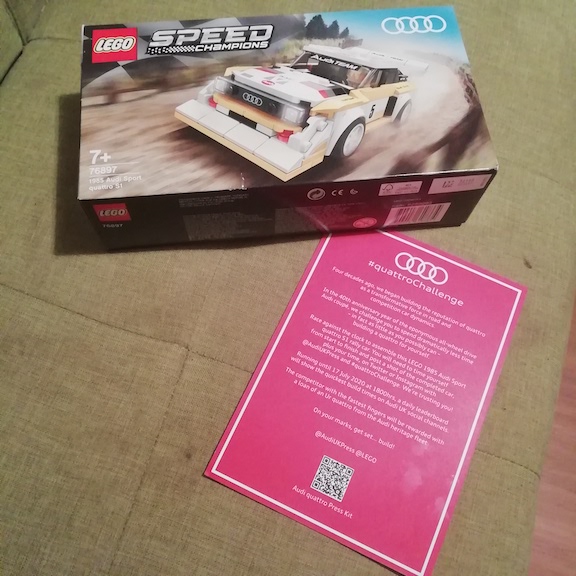
THEGAYUK was invited to take part in the Audi Quattro Lego challenge. An opportunity for motoring journalists to really show how quick their motoring sections fingers were at building the Lego Speedline Quattro kit. The fastest build won the Audi UR from Audi’s heritage fleet for a week. A prize worth winning.
THEGAYUK or more importantly, I, did not do so well. I didn’t even make it into the top 10. I almost made it there with a 36 minutes but then I’d noticed I’d fitted the doors wrongly, hadn’t applied the window decal and more annoyingly I’d failed to make the rear spoiler properly.
The rear spoiler being my Achilles heel and almost resulting in the Audi having a kitchen sink drama with it being thrown across the dining room towards the sink. Building Lego against the clock is stressful and I’ve done CPR!
Once I’d corrected my errors our time failed to make it into the top 10 leader board but that was OK because what I had here was a fine Lego car to play with instead and it is a fine piece of kit from Lego. The most pleasurable piece of this build was none of it was designed specifically for the Audi. It’s all parts available from Lego and found in various Lego kits. Unlike some of their bigger models that use pre-moulded parts for a car like the Fiat 500, this was simply Lego and more enjoyable for it. More so because put together, the Lego Audi Quattro made a for a fine example.
(C) STUART M BIRD
The build starts with the construction of the chassis and builds up quickly from there. Attention to detail is quite fun with the gear lever and handbrake handle items added inside. Outside there are the usual attributes associated with Group B rally cars with bulges and wings.
Lego does a range of cars for almost every motoring enthusiast. Their kits are well worth looking at.
We are told that gardening is good for our wellbeing but more importantly, our mental health. Several community gardens have popped up over the past few years with this in mind and thanks to Gardeners World, it has highlighted the important impact of these and in someways championed them. They have become popular. BBC’s Gardeners World has also been mentioning the importance of gardening on our mental health almost weekly over the 2019 season.
On the 21st June 2019, I was watching Gardeners World with Joe Swift interviewing musician Will Young at his Cornwall home. Will was particularly open and candid about how his garden had helped alleviate his suffering from his anxiety disorder and how gardening grounds him with its sensory pleasures and the patience and nurturing it requires to help nurture himself. He went on to say that gardening and nature are brilliant healers. Will deliberately puts some form of gardening into his daily routine and he was more excited about his dahlia coming back than his first number 1. And quite a feat because dahlias can be fussy flowers demanding care and attention.
Is there is a link to health and wellbeing within the garden? If you’ve never been keen on gardening, find it boring, slow-paced, a bit shit, a thing your grandmother did, then you probably won’t understand the importance or get it. I’ll speak candidly about myself here and say that from a personal point of view, since having a garden I feel much more at ease with myself and the world around me. Now, this could also be because I started gardening when I turned 40 with a house move. Prior to this, I was in a flat, we had grounds but it was just grass. I never really found time to switch off when at home. I was always on the go. So it was quite a shock what happened when I got my own plot of dirt.
Now I’m not sure what happened but there has always been a nagging voice in my head called anxiety. I’ve only suffered from one serious panic attack and I can tell you, it wasn’t pleasant. I was shopping at the time and suddenly out of nowhere, I HAD to get out. I wasn’t in danger and I didn’t feel violated. I just needed to get away from the people. It took me ages to work out why my supermarket club card didn’t work for some time afterwards. I’d dumped the trolley and the scanner and legged it!
That has been my most extreme. I’ve had moments when I’ve had to return home to check the front door or most recently, the cooker. Going to my GP to discuss these symptoms and my keen interest at just going to bed and not waking up again resulted in a relatively long talk, a blood test and the offer of NHS counselling. I’ve been here before and it took over 6 months to get an appointment. That was back in 1992 and the waiting list is now much longer.
One question I was asked was “What stops you from ending it?”
Quite a finite question and to be honest, I’ve got too much to live for. And one of those things is my garden. I enjoy watching things grow. Nurturing a plant to give its fullest in its season, cutting it back and then watching it all start again in spring is quite joyous.
Evidence has shown that just 2 hours a week in the garden or a green space is good for you. Two hours. That’s not a lot of time. I can do more than that in a day on social media. Broken down, it is just 15 minutes a day. Now I can tell you, as a new gardener with a garden the size of 4 cars in length and 3 cars wide, I can spend more than 15 minutes a day in there even when there isn’t much to do.
The joy of gardening comes from experimenting and never being afraid to mix plants up, move them around or be aggressive with them. My loosestrife is an absolute bully and needs to be kept in check otherwise it’ll take over four other plants near it. And pulling out the wayward growth might be extreme and not in-keeping with well being, but in doing so I am looking after the others around it like my banana plant and daisies. 2019 saw the daisies shine with me taking control.
And this goes someway with your mental health. Taking control of a situation, no matter how insignificant it might be at the time, can have massive benefits in its outcome. Likewise, tackling the ongoing battle you have when you grow lilies with lily beetles. I wasn’t going to let them decimate my flowers and so I went to battle. I have since dug up the bulbs and moved them to pots. Again it is that going headstrong into the problem, coming up with a solution and controlling it as best you can.
But never fear to try something in the garden. It doesn’t always work. I’ve lost several plants over the years and two plants needed to be moved three times before I found their spot. Now the hypericum thrives and the bees love its bright yellow flowers. How ironic then that Hypericum (St John’s Worts) is used to support a healthy nervous system and yet here it is growing in my garden and giving me visual pleasure in all that it now does.
On January 2nd 2018, we lost motoring journalist John Slavin to suicide. He was struck by a train. He was just 30 years old. John had succumbed to his own inner demons and mental health issues. Long-standing battles with depression had started in puberty and there were many crisis episodes where John had felt suicidal. Never wanting to burden others, John had developed skills to hide his depression from those around him. I sadly never got to meet John but I remember the day well thanks to Twitter and it has stayed with me. I can’t explain it other than I could feel empathy for him and his family. It also wakes you up a bit too about your own mortality and your own health of mind, body and soul.
John loved sunflowers and following his death, motoring Journalists and friends of John, Simon Harris and Adam Binnie started up a sunflower challenge game called the John Slavin Sunflower challenge with money raised going to the CALM charity. CALM Campaign Against Living Miserably. Offers support and information to people when they need it. They exist to prevent suicide which takes 18 lives everyday and is the single biggest killer of men under 45 in the UK.
Since I started to write this piece we have now been under lock and key by the Coronavirus outbreak. As a keyworker, I have the ability to legitimately leave my home and go to work but for those who don’t, not being able to do those things we took for granted can be harrowing for most but more so if you feel isolated and alone. And that’s when having someone to talk to on the other end of a device or phone is important.
Now here is the fun part. I’m told by John’s mother, Sylvia, that he wasn’t much of a gardener and preferred to grow decaying motorbikes in the soil but he did enjoy growing things especially edible produce. And that’s all that is needed. A little bit of enjoyment from seeing something grow from seeds. Gardening is all about growing and nurturing. And there is a reward at the end. Like nurturing yourself, you can be rewarded with great blooms, misshapen peppers that you won’t find in the shops but taste 50 times better because you grew them yourself. And sunflowers are the perfect way to get quite a lot from not much so why not try.
And the growing doesn’t stop there. For John, he is remembered with growing sunflowers and sunflowers are one of the easiest things to grow. They also grow really tall from one seed so they give you so much. What’s more, sunflower seed sowing starts in April and can be done indoors from a window sill. And despite the lockdown, you can still buy sunflower seeds online so there really is no stopping you.
As for me, I’ve sort of cheated. From last year’s growth I’ve had random sunflowers start popping up around the garden. You’ll be amazed just were the seeds end up but that hasn’t stopped me starting from ground zero again.
So far the John Slavin Sunflower Challenge has raised £3,453. Come and join in the fun and the remembrance of John for 2020 here at Adam’s Just Giving page. Proceeds going to www.thecalmzone.net.
Share the link on your social media and get others on board. It’s easy to do.
With Christmas just gone I look back to the winter of 1981 where my driving career started.
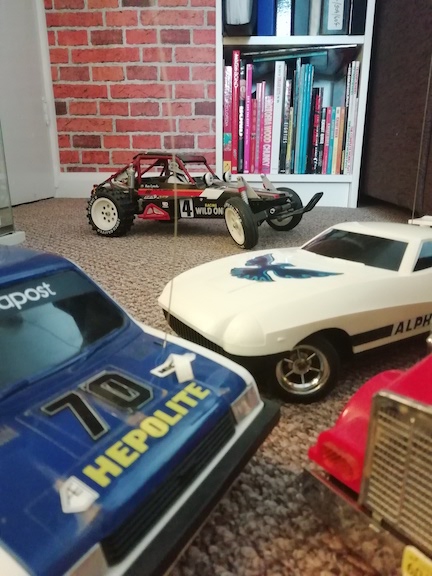
I’ve been rather fortunate with a recent eBay purchase that I hadn’t actually gone looking for and to be honest, I’m not sure what made me look for it or how I found it. The reason for this utter astonishment from me when sober was because the item in question doesn’t really have a memorable name. What I have managed to do is find my first 3 radio controlled cars.
The toy pages of the Gratham autumn/winter catalogue became a mass of dog eared pages. I had eyed up the Corgi racing Golf. Being all of 6, I did still believe in Santa. I was expecting a racing Golf. Alas the Golf never happened. So let me take you for a drive on my first 3.
LaTrax Alpha RCX
I’ve been searching for this ad-hoc for several years but I’ve never really been able to find it because its random name was totally lost on me. How the hell could I remember that mix of exotic sounding words?
For a start there is the design. I could have sworn it was a 1967 Mustang fastback. It does look a bit like that at the rear but now I’m looking and I note it’s more Datsun 240Z at the front. It really was a nothing car. A random selection of designs thrown together. There were 4 Mustangs 2’s on the box. I remember that.
There were other things I remembered too about this. Despite not quite remembering the controller having a steering wheel, I do remember the push buttons for the forward and backward motions.
Looking at the RCX today, it really was a thing of advanced engineering. It had proportional steering and a floating rear axle. It drove quite quickly through the one rear wheel. I remember hearing it crash against the wall the night before Christmas and shouting down to my parents only to be told it wasn’t what I had screamed.
Sadly the RCX was to be short lived. Like several minutes. It broke. What was to come afterwards was MUCH better.
Likto Truck
This was the absolute nuts of a toy to me. It was huge and had blazing yellow lights. The trailer could either be a flat bed with detachable ramp or articulate box. This was 18 wheels of goodness although 16 of those were pretend double wheels but let’s us not split hairs of tyres here. It wasn’t just a truck and trailer though. Based on a Kenworth, this was your all out American big rig. I was part of the convoy. I was right there with Rubber Duck. That was until the gun firing. I wasn’t going to have my big rig damaged.
The Likto truck had the added bonus of being able to dismount the trailer at the touch of a button. It was almost fully interactive. The game was then to reverse up to and hitch the trailer to the truck. You could say it taught eye-hand co-ordination. Not that you’d think it did if you ever see me playing computer games. I’m quite hopeless.
The technology didn’t just stop there. For a toy, it had a complex drive and clutch system with 3 gear ratio set ups. Slow or fast in all directions but it also gave the option of fast forward and slow reverse at the flick of a lever underneath.
Alas all good things must come to an end. I remember being almost inconsolable when it stopped working. I loved that truck.
Corgi Mini Metro
Now here was peak Corgi toys. Back in 1983 Corgi had you covered for all things a young budding motorist required. TV detective cars, big scale, small scale and electric cars that you didn’t even need to push around the living room. That last statement can’t actually be applied to Corgi’s RC toys. They were a bit rubbish.
The Metro lived up to the hype of its British Leyland roots. It wasn’t that great and it was unreliable. Discovering the magic powers of a screw driver, I took mine apart. It was like looking into the void of a glossy wrapped box with a sparkling bow in the corner next to your name. It wasempty apart from the cheapest circuit board you have ever seen.
It took all these batteries to give it 6 volts of magic. It could have done with around half of that. So simple and not very effective, it had cheap magnetic controlled steering. That 6 volt of power did not translate to scintillating speed to chip the lead paint from the newly painted skirting boards around the house. It wasn’t what you could call a carpet racer despite its fetching Datapost livery.
What I do remember was the hate I had for my sister when it came choosing the 70 or 77 numbers. She suggested 70 because I was 7. Shut up Jackie. She know nothing about race cars. We all knew the higher the number, the faster it goes right?
It died a painful death in my hands and I can’t say what I did to it was deliberate. It just died. Its Super Cover warranty had expired along with the car.
Rise of the Big Boys
It wasn’t until Christmas 1985 when I kick started my long affair with the real boys toys. Those from Tamiya with their Wild One. And as for the Golf, I found one and to be honest I wasn’t missing out. It was the same as the Metro, just as naff but clothed in a Volkswagen body. Thankfully nothing was as unreliable as a Corgi VW Golf except for a Metro.
Like you, I’ve just seen the Twitter tweet from the FoMoCo about the new Mustang inspired SUV EV. And if you haven’t, I’ll let that sink in for a moment before I carry on.
So Ford are to market a Mustang SUV for the masses. And as I sit here at home, I can hear the internet explode with people tapping violently into keyboards with the caps-lock on.
But is this such a bad thing? I sat through the presentation of the new Ford Puma SUV and agreed with Ford. I liked what they had done. I don’t for one moment care about the Puma coupe car. It was based on the Fiesta, filled a niche and thankfully was short lived. It also rusted with the same speed as many 80’s Italian cars so thankfully there are very few left.
But Mustang. Using the Mustang name for an SUV. Is that wrong? Is it right? What does Mustang actually stand for?
Well to answer this, we need to go back in time. A time where Ford and its Mustang changed the world. The Mustang was launched in 1965, the Mustang was based on the Ford Falcon mechanicals. A bit like the European Capri based on Cortina origins.
Unlike its European cousin, the Mustang was a new concept in adaptability. It was a car for the boy, the girl, the mum, the dad and the retired. It encompassed all genres and appealed to all people. You see, the Mustang was available as almost any car you wanted it to be in an array of configurations that confused.
You could get the Mustang as a daily hack, a sports car, a luxury car, saloon, coupe or convertible. It was the first mass appeal car to hit the market and because of this adaptability, it appealed to the American buyer and became a staple diet of the motoring landscape.
However that was all set to change. Its ever ability to change chameleon style came to a crashing stop when the short lived (for a reason) second generation arrived in 1974. The writing was almost on the wall already with the 71-73 models becoming bloated with bigger bodies and nothing extra in the go-go department. So the 74-78 models with its emissions controls thwarted the Mustang in its steps. No sooner had the Mustang become synonymous with the word “sporting” it soon became a car known as a horse ready for the glue factory.
Sexual invigoration with the aid of Charlie and his Angels couldn’t inject anything into this Mustang. Jill Monroe might have had a white Cobra 2 Mustang, but she soon left the Angels. No doubt because her car couldn’t cope with carrying her big hair. This left accident prone and always getting shot, Kelly Garrett and her beige Mustang Ghia and we’ll leave it there.
Over the next 20 years, the ‘Stang stayed relatively small in size. It aided its sporting looks and there really isn’t much to say about it until 2005’s Mustang arrived. Designed by Sid Ramnarace, the fifth-generation Mustang’s looks brought back many design elements of the original. This sparked a return to form for the Ford Mustang. It was once again a fast Ford for the masses. It no longer had appeal and availability of its original model but it was fast, available in a coupe or convertible and most importantly, it was affordable.
Suddenly Mustang was the buzz word for the FoMoCo in the USA and any that made their way, in left hand drive, to the UK would turn heads. It looked the part. Fitted the retro scene well that the Chrysler PT Cruiser had failed at and everyone wanted one. Even Knight Rider had one. That’s right, the 2008 reboot had a Ford as the hero and not a Pontiac. And it worked. At least in the pilot episode when KITT changed into a 1965 Mustang. Anyway, KITT was a Mustang, hardcore KR fans melted and after 18 episodes, it was canceled.
2014 and we in the UK finally got a Mustang with right hand drive. It remained a biggish car but it was rather well suited to our roads. It remained cheap for a 5 litre muscle car with the savings evident on the quality of the trim on the inside. But no one who owns one really cares about that. It sounded great, went fast, sounded faster and looked great.
So are Ford wrong to market the Mustang as an SUV? Looking back through its history, you’d think not. It hasn’t exactly been nice to the brand name. The Don Taylor and Tom Wilson book. Mustang Restoration Handbook, summed up the 71-73 cars as styling misadventures. What followed wasn’t really anything to shout about either.
The original concept was a car that was adaptable to fit the many needs of the motorists. But they have done things with the Mustang as a brand over the past 14 year, making it a stand alone product, so I don’t totally agree with what they are doing with the Mustang brand. It makes my teeth itch a bit
The Mustang, the car for the American people, doesn’t need this SUV makeover. Or does it? Well, yes. Yes it does. Not forgetting it’s questionable past, it fits with the concept of the original Mustang.
This will be a Mustang of sorts to suit everyone. Just like its original.
Back in the 1980s, I remember being confused about the Triumph Acclaim. It replaced the Dolomite that I really liked and in the line up was no sporty Sprint. I didn’t understand the Acclaim.
Via the pages of CAR magazine, I soon discovered it was a Honda and I didn’t like Honda taking over our British car industry. To a 6-year-old Stuart, British Leyland was ours. I must also add that I wasn’t aware back then of Red Robbo and the strife and struggle British Leyland were in at the time.
The Japanese stepped in and gave us their Honda Ballade. And what a turn around this car was. Imagine if you like, model makers Tamiya and Airfix making you model kit of the same car. The Airfix would be badly moulded with instructions devoid of any real detail. You couldn’t go wrong with the Tamiya kit. It was meticulous in its moulding and it was difficult to assemble it incorrectly. That was pretty much what Honda brought to BL at Cowley. Beautifully precision made parts.
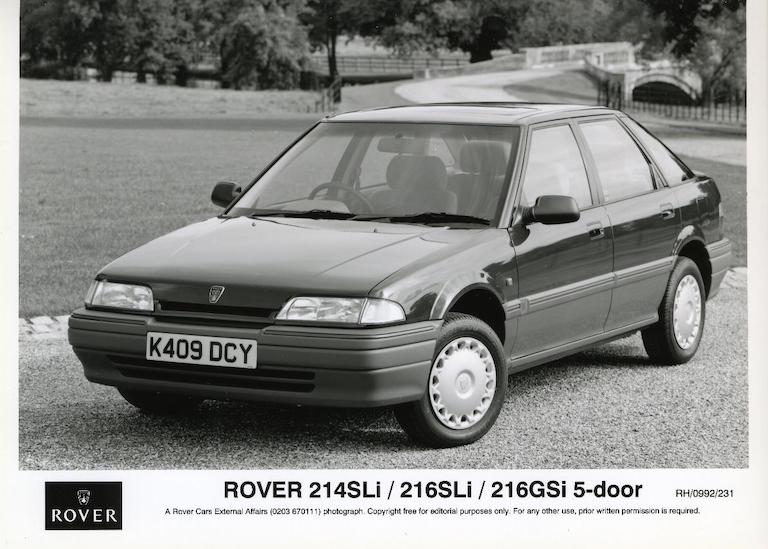
Fast forward to 1989 and we end up with the Rover 200 (R8) and the K series engine in particular and yes dear reader, you know where this is going, so pop on the kettle, get that water HOT.
This then was an actual Rover that people wanted to buy. And that they did in their droves. Half of the sales went to UK buyers and we couldn’t get enough of the redesigned Honda Concerto. We designed a 3 door hatchback, coupe and estate. These were not available on the Concerto. This was our Rover and we, the British were once again proud.
The 3 R’s were all there. Reliability, Ride and Refinements were high on the agenda. The fit was like nothing before from Austin or Rover or whoever they were at the time. To be honest, in the years between the Acclaim and this R8 Rover, it felt like they had gone through more reinventions than Madonna or Madge X or like a Virgin up the duff, preaching about it to song and dance.
Now there was a snag. It just so happens that certain models with a certain engine weren’t as reliable as others in the range. Call it a historic flash back to the past. You see, BL had a tendency to make cars with engines that were known for head troubles.
Those with a Rover 214 or 216 were pretty much at the mercy of one day coming to their car and finding the bores full of water, which to be frank was the better option. The other was to have the car turn into a boiling kettle on the way to Cornwall for the yearly summer holiday. Stuck at the roadside turning into a game of wishing well all those with a K series fitted in their car as they went by.
The Rover 200. A Good car turned Bad by its heart.
The Good, The Bad and The Ugly Nissan Micra K11 1992 – 2002
NISSAN UK
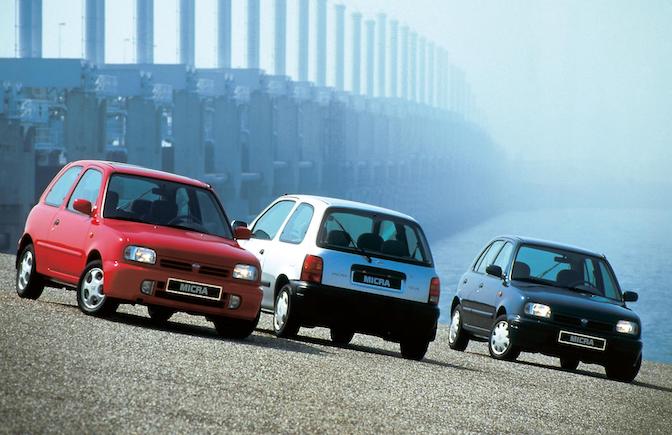
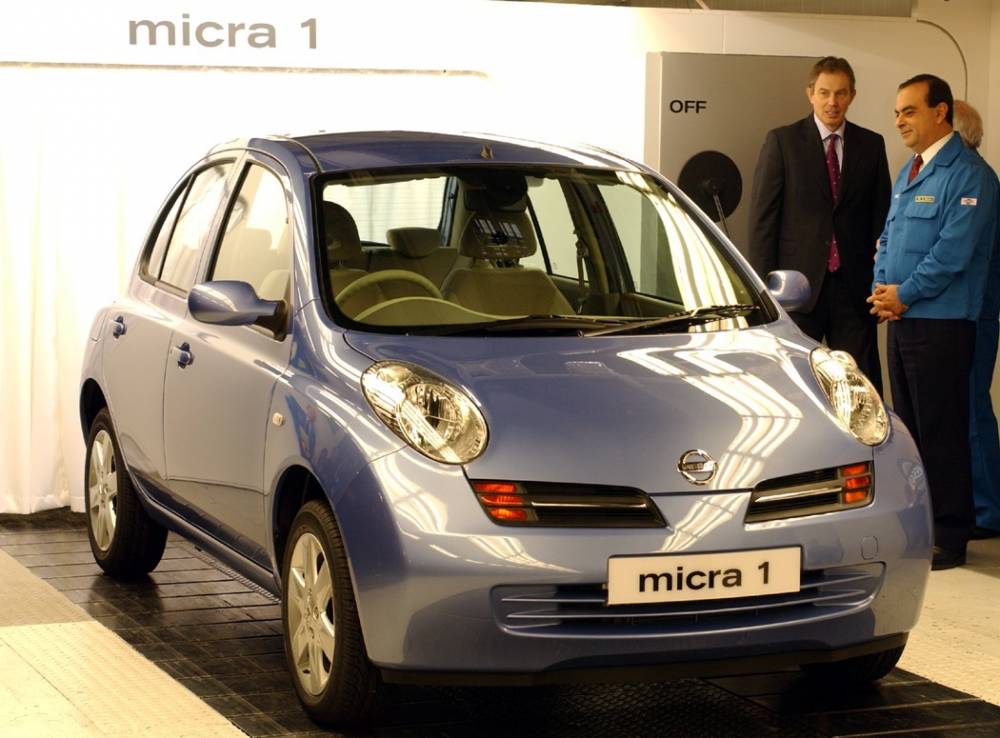
This second-generation Micra, for those in the UK at least, was a bit of a dullard. Thankfully the ’90s saw the rise of the grey import. Japanese spec’d cars with a host of goodies that were devoid from our options list. Thanks for nothing Nissan UK!
What came over was the camp as tits Figaro with an equally gay name. There was also the utilitarian styled Pao but these were based on Micra K10. So nothing really great was to come of the K11.
Or was it? Thankfully we have the Mitsuoka Viewt. A half-arsed attempt at making a Micra look like Morse’s Mk2 Jaguar. It was both awful and eye-catching at the same time. Sort of what BMC did to the Mini in making it the Riley Elf and Wolseley Hornet but less successfully.
The 1.3 engine gave the Micra K11 a bit of a useful shove. The same could not be said for the 1 litre. It was typical in its behaviour of Nissan’s other NA engines of the time. Drive it like it’s a Sunday, don’t rev it. It didn’t make a rats arse of a difference if you did and if you did, it sounded as exciting as sticking your head under the water in a bath and farting.
The K11 Micra with 338 points, won “Car of the Year 1993”, beating its competitor, the Cinquecento by 34 points. Renault’s flop, the Safrane came third.
1993 was a quiet year for the motor industry.
It was a car that was devoid of emotion and that appealed to the new motoring masses made up of learner drivers. Driving schools couldn’t get enough of them and chances are, if you were born in the ’70s, you came of age learning to drive one.
In 1992 a school friend got one and her mother took great delight in telling me that “Sarah has a new Micra-dot” I had an old 1986 Citroen, it cost me nothing so fuck off Jenny! To be honest, I couldn’t have thought of anything worse than having a Micra back then. Even now, I shudder at the thought.
Micra K11 isn’t good, bad or ugly. It’s a nothing car. Now, in 2019, if it goes wrong, you thrown it away. Trouble is, they NEVER went wrong. Buy one and use it as a chicken shed. At least it’ll have a purposeful use.
An irrelevant look at a certain car: Nissan Micra K12 2002 – 2010
PHOTO: NISSAN UK
If someone said “Nissan Micra” to you, you’d visualise a queue of traffic. At the front would be a little Micra either being driven by a learner or old lady. In this third guise, Nissan stuck to its guns and refused to invest in dynamics.
It continued to make the Micra easy to drive. It also made it easy to repair with big plastic bumpers and with those came bodging. Big plastic bumpers covering the majority of the front, made repairs to a smacked in the face Micra easy to disguise. And good job too. Judging by the number of folded in bumpers, parking accidents were quite rife. And why? Because the Micra had grown in size. In doing so, easy to judge extremities of the little hatchback had become lost.
This was a bad period for Nissan and even worse for the Micra. Quality was lost. I mean, the Micra was never a quality product in the touchy-feely kind of way. You’d never shut the door with your eyes shut and think “sounds like a Golf”.
Given time, that absurd notion of that idea would completely evaporate anyway when the central locking unit became vocal. VW’s would have just stopped working. Nissan’s just shouted about it in an audible growl of plastic and electrics.
PHOTO: NISSAN UK
FYI, You could get some Nissan Micra merchandise. Just thought I’d let you know. To be honest, I’m trying to find some more words for this GBU.
In the driving of the Micra, I’m trying to think of a descriptive word to save on word count. Foul is pretty good but then so too is mind-numbingly dull. It was a car that was wasted on good tyres. Forget the standard-fit Continentals, fit remoulds! The vague steering could make even the stickiest racing slicks feel lifeless. Imagine a date with a cast member of Love Island that involved trying to make conversation.
The previous mach of Micra: PHOTO: NISSAN UK
Inside it was just as bad. The light Nissan standard grey plastics made way for European blacks. Even the white heater control buttons couldn’t lift the spirits of the coffin. Sorry, cabin.
I’ve never seen a dead person drive a Micra yet, even though some have looked pretty close. You see, unlike Micra K10 and K11, this new model was avoided by the young.
You’d never look at a Micra and think what a fun funky car it was. Even the CC with its metal folding top couldn’t lift you desire like a Ford StreetKa did. You just wouldn’t look back at it, the K12 is that ugly.
A holiday in Spain. The guaranteed hot summer breezes off the Alboran seas. Where am I? Marbella. And I’ve painted a rather lovely picture of that seaside resort. The car company, Seat, have a history of naming cars after places in Spain. Their new Tarraco was named after Tarragona. It adds sex and style to the car. That memo might have been lost on the Marbella.
Seat rhymes with Fiat and Fiat owned a large percentage in the Spanish motoring subsidiary. Well, it did until sometime in the ’90s when it decided to let it go. Seat needed to soldier on and make good what they could.
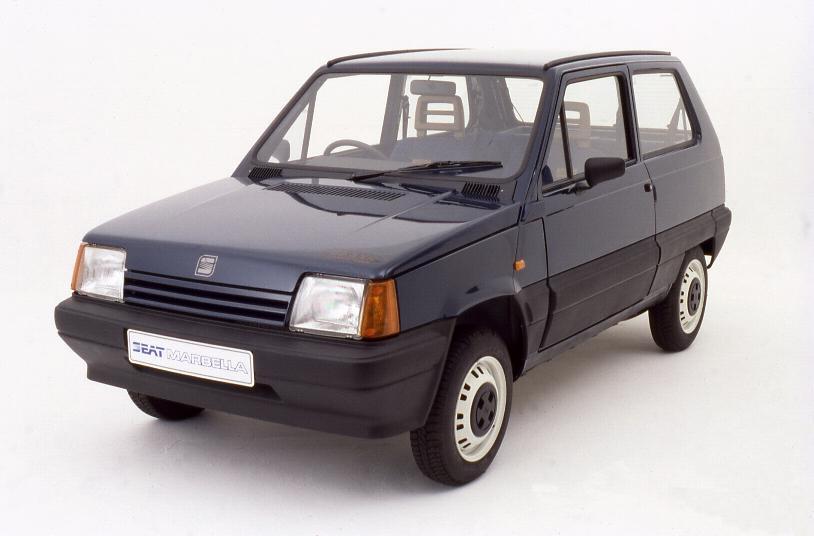
So a quick flick with the pencils and over a lunch of paella and a glug of sangria, the Seat Panda evolved into the Seat Marbella. And that was the little car’s problem. It was a Panda. Ok, that isn’t a problem. The Panda of 1980’s design was right on the target. A sophistication package of space utilisation and genius packaging. One of Giorgetto Giugiaro’s finest to this day.
Problem was, Fiat had the good grace to continue the development of the Panda. It gave it new engines, fancy quality interiors and an Omega rear axle from the Lancia Y10. This, in turn, made the Panda a bit more happier over the bumpy bits.
Seat’s answer was to give their Panda Marbella some plastic cladding along the sides and a sloping front in the hope that you wouldn’t notice the old-style cart springs at the rear. They hung so low that you had to be quite stupid not to see them.
And for Marbella, it didn’t really get any better. It still soldered on with the OHV 903cc petrol engine from Fiat’s back catalogue of 1955. Blistering it was not. With a 0-60 time of 19.3 seconds, the Citroen 2CV6 could give it a run for its money. And the 2CV6 was cheaper too. The “nothing available” list of options you could get on your Marbella made the 2CV6 vulgar in its luxurious appointments.
Surely Seat gave you value for money? Not really. For your 4858, you got a top of the range GLX complete with wheel embellishers and a heated rear screen. For 200 more, you could get the much improved Panda. And Panda also had better resale values too.
While it had a cute cuddliness about it, it was a bad car. It rode bad, drove bad and sounded bad. You see, while Fiat’s marketing board went into over-drive with a new limited edition every month, Seat and their overpriced and out of date box gave you unpretentious motoring that wasn’t as badly built as it could have been.
As long as you have access to another car to use, there is something endearingly beautiful about the Marbella. It was closer to the original concept than Fiat’s MK2 Panda and that’s why the no-frills Marbella was the good choice.
Ford sparked outrage earlier this year when they announced their new SUV for the ever-competitive B segment market. They called it The Puma.
Many took to Twitter to voice their concerns and outrage for the car that had been in production for just 4 years. Judging by their profile pictures, the mass were still adolescents, never going to buy this car or more importantly, had not really known what the original Puma was or what its concept to production was all about.
Ford have, it would seem, stuck closely to that original premise of the original Puma. It was an adaption of the small Fiesta platform. It’s just this time, it happens to be in an SUV shape and style that is fashionable. Back in 1997, the coupe was fashionable.
I’ll grant you, that the SUV is a bit “Christ not another” but this is what you, the motoring public apparently want. Small volume coupes are long in the tooth now and when developed, need cooperation between several groups. Let’s not mention Toyota and BMW. Fiat and Mazda. And yet, several years ago, joint cooperations were acceptable. Citroen and Maseratti for instance.
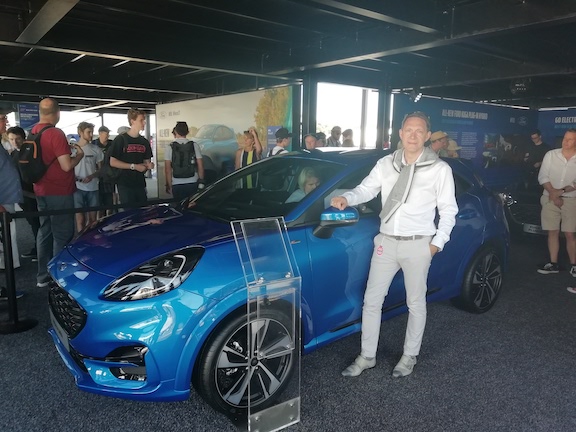
And so, Puma is another SUV. From an exclusive unveiling at this years Goodwood festival of Speed, I can tell you that it is all rather stacking in its favour. I’ll admit, I’m not over keen on the SUV segment, but Ford design chief, Anko Leemants was on hand to show us around the design language he used within his team to get to where Puma is today.
You could sit there, sceptical in mind when designers spout of familiar words to describe a design but Anko put it into perspective quite well. One of the key factors was its look being “optimistic” and it certainly has a young puppy dog expression about its face. It lacks the over used aggressive look that so many have used over the past decade.
In our times of change where we need to step back, consider the future and encourage kindness and love, set to the current backdrop of aggression and fierceness, this new look is greatly appreciated. There aren’t many cars out there at the moment that encourage you to look back and smile.
The rear pillars have a welcomed return to normality of softness instead up angry kick-ups. The front screen pillars are broken at the bottom to promote a sense of float in their design.
The main premise it would appear is that the Puma has been designed to be “The Most Beautiful Car You Can Ever Own” Now I did stand back a bit too that claim. You can’t say the Puma doesn’t have a nice look about it, but the trouble with an SUV is that they are never going to be beautiful. Ignoring if I may, beauty is within the eye of the beholder, in this instance, my eyes, but the new SUV from Ford isn’t sleek and/or beautiful. Purposeful and cute, yes it is and that suits it well for the new crop of B segment players coming along.
Another designer used word of the unveiling was that the Puma should be an Icon. Trouble is, as, with madonna and her latest offering, icons can have a tendency to fall from grace. Let’s hope the Puma doesn’t before its official launch in February 2020. On visual spec, it is rather eye-catching. Even the boot shuts are nicely painted. Let’s see how this all translates next year when it is available for road tests.
Chris Hughes from Peugeot Sport Club UK invited The Gay UK along to their 2019 Peugeot Festival at Prescott Hill in the picturesque village of Gotherington, Cheltenham.
Sunday’s weather, the Saturday was the hottest it had been all year, was thankfully, milder in comparison. .And, all the better for it. As someone who can be both mechanically sympathetic and murderous to precious metals, the last thing you want is to thrash your vehicle up the hill climb in excessive heat. And that Saturday heat would have done the peak power no good. Being so dry, it makes the fuel-air mix less dense. Not the best for the big bangs that were needed.
We meet Chris, albeit very briefly, running through the paddock. Phone going off in one hand and clutching a hangover in the other. Despite this brief encounter, it was finally good to put a person to a twitter follower and I thanked him for the invite.
There was an abundance of Sochaux’s finest here. Considering the clubs core audience, there were some classic gems to be found dotted around the site too.
Worthy of note was the display of 309s and all in rather good condition. You could say they were commonplace today. Remember the 309? No, not many do. It was the remnants of Peugeots take over of Talbot and despite its unusual place in the 05 line up of the ’80s, the oddly numbered 309 (something we haven’t got to yet) was surprisingly able and good. Sadly many have disappeared so this ensemble was a real treat.
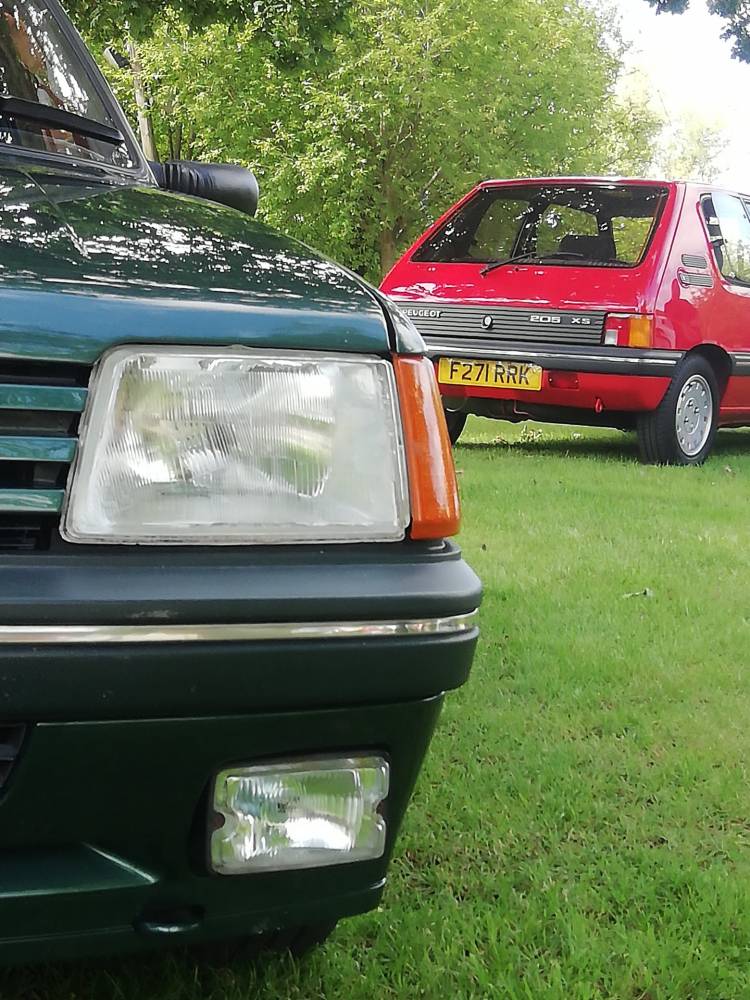
As you would expect, the 205 almost out numbered everything there and while most were GTi’s, there was a handful of the Peugeot savour that the person on the street could afford. Likewise the 106 Rallye was present in a plethora of both MK1’s and MK2’s.
Perhaps being the smallest of the Peugeots, like the kids of the club, they were causing havoc with the marshals as they lined up to tackle the hill climb, all going out in coordinated colours. perhaps lost on the paddock organiser, but nicely done in my eyes.
While a lot of the GTi’s tackled the hill climbs, that didn’t mean the older of the Peugeot’s couldn’t. The 504 Pick Up and 404 rally Safari were seen buoyantly tackling the hill. It must be said that they were not as quick as the GTi’s but grand in the visual pleasure they gave to those who had been around Peugeot’s for a long time.
Dotted around the site were the rare older cars and then some gems. Like the Mad Max pursuit interceptor inspired 406 saloons. Totally over the top but nicely detailed with the odd little Mad Max touch here and there.
Thankfully no explosive devices were located on the vehicles to protect the fuel, just warnings. These almost became my stars of the show but were knocked off the top by a long way, as it happens (sorry chaps, 2 nice chaps too, just don’t ask them if the cars are from ‘Back to the Future’!)
There, under a tree was a blue 1983 305 GR estate. Incredibly rare and in this crossover phase model with the later front and early tailgate. The owner was an enthusiastic chap and more than willing to show the car off and rightly so, it was gorgeous. So I couldn’t resist a jump inside and my word, I’d forgotten how soft and sumptuous the French used to make their seats!
So, worthy for your 2020 calendar? Hell yes. The event centres around action and there is something there for every Peugeot enthusiast and fan. And if you get the chance, do the hill. I have driven my old 504 up the hill, and it is a worthy experience.
Fiat has always been good at making small cars. Big cars, not so much so. Think of a large successful Fiat and you won’t. Think small and you have plenty to choose from.
Fiats smallest offering was the 126. This wasn’t really to British tastes and it eventually died. Actually, it didn’t die. It soldiered on until the turn of the millennium but for us in Blighty, we got the new replacement. And the replacement was a step in the right direction for a bold new Europe hell-bent on the love of the city car.
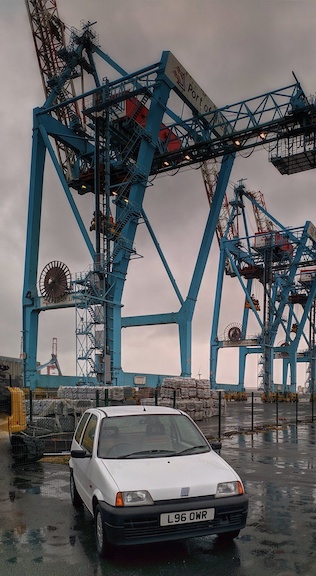
Cinqueceto or Sinkeychento or BLOODY HELL, how stupid is this cars name to spell? Cinq for short, was a great little design. Short of overhangs and large on space, it was the embodiment of using as little steel as possible. Even in places like crumple zones. And essential places around the passenger carry space. What I’m trying to say is don’t crash one.
This lack of steel was good news for those who had been around Fiats for a long time. Until a few years ago back in 1988, Fiat had what can only be described as hydroscopic steel, in as much as the hard metallic surface would retain moisture. Now as we know, water and thin grade steel don’t mix, so using as little as possible was good. And Fiat also used some galvanising during construction too.
Fiat Cink was going to be a Fiat that was going to be around for a long time. Aided by its rather cute looks, it gained a legion of fans. And for the fans that wanted their Sink with a bit of a kick, they were rewarded with the Sinq Sporting. A hotter version fitted with a FIRE engine. Not one that went ‘nee-naw nee-naw’ but one that was a Fully Integrated Robotised Engine. It sounded grand. It was just built by robots. Depressing really when you think the heart of any Italian car is its engine, built by Italians with motoring in their blood. Anyway, Robert the Robot built the engines in the Sporting.
The Sporting was a bit shit. Unlike today’s Abarth models that are quite crazy, Sporting was not deserving of the sporting title. But I’m here to tell you about the more popular and run-of-the-mill Synk 900. A marvel of modern tranquillity this overhead valve engine wasn’t. A throwback to a bygone era it was having its origins date back to 1955. Don’t let the ageing mechanicals and modern body put you off. It’s not uncommon for older bits to be put into younger models. Look at Cher. She’s simply marvellous at 103.
And it was this ageing old cast iron lump with an alloy head in the Senk that made it a hoot to drive. There had been some changes to the 1955 original engine and it now came with injection and distributor-less ignition. Grabbing hold of those 40 horses was made all the more fun with added hydraulic tappets. It really could scream in an unburstable manner.
And this crazy, drive it like a nun being chased by Lucifer on roller skates makes the Cenk all the more fun and a good car too because you just can’t really do anything wrong in it. Just don’t crash though. It’s not so good at that!