One of the most influential UK rock and roll bands, The Who were formed in 1964 in Shepherd’s Bush, London. In 1969 The Who created a unique concept album called Tommy, and it quickly became a cultural fete. In 1975, Ken Russell adapted the album into one of the best and biggest films with an all-star cast starring Tina Turner, Elton John, Eric Clapton, Jack Nicholson, and more.
New Wolsey Theatre and Ramps on the Moon collaborated to bring to life Tommy The Musical to the main stage as a daring musical. The Who’s Tommy musical was a sad, gritty and powerful tale about a boy who is ‘deaf, blind and dumb’ and at the mercy of Uncle Ernie (Garry Robson) who ‘fiddled about’ with him at night; Cousin Kevin (Lukus Alexander) who bullied and taunted Tommy, and a thug of a stepdad Frank (Alim Jayda), relentlessly trying to ‘solve’ Tommy’s disabilities.
Tommy The Musical, directed by Kerry Michael, was extra special for it allowed the opportunity for actors who are D/deaf, disabled and non-disabled to work together to produce an eerie and fantastic production with all-audience accessibility. Through embedded audio description, creative captioning and integrated British Sign Language, everyone could engage and be a part of the musical.
Tommy (William Grint) was phenomenal. William really brought to life the chronicles of Tommy’s life and was sublime in the delivery. What Tommy went through, was hard and gruelling, and William did an amazing job showcasing the outcomes of so much abuse. His two voices (Julian Capolei and Matthew Jacobs-Morgan) were perfect for Tommy’s voice, in particular, Julian’s voice, which was so powerful and pleasing to the ear. Tommy’s mother, Nora (Donna Mullings) was also formidable, really conveying emotion without speaking a lot, and when she did, it was potent and emotionally charged. The best voice in the production was the actor playing Nora’s voice (Shekinah McFarlane).
The outstanding performer of The Who’s Tommy was Acid Queen (Peter Straker). In the film, Acid Queen is played Tina Turner, and for this production, it was a man dressed in drag, which was a very progressive touch to the production. Peter’s voice was stunning and his overall performance was commanding – this was the highlight for me.
This is an excellent idea, and we need to see more theatre productions reflecting stories through actors who are physically affected by the context of the plays.
★★★★ | Kings Cross [Remix], Camden People’s Theatre, London
Take a journey to 1980’s London, specifically the King’s Cross area, through the storytelling of Tom Marshman, in the new show Kings Cross [Remix]. The one-man show, at the Camden People’s Theatre, is a tour de force performance by Marshman, too young to remember the stories he’s telling, yet he tells them so vividly, with such authority and believability that he makes us actually believe he was there.
Through the use of video and audio tape recordings of the people who were actually around during those times, Marshman weaves together these stories in a 60-minute show to great effect. He talks about the long gone disco Bagely’s nightclub, the denizens of King Cross including the hookers and the club kids, a unique story about the late and great Leigh Bowery, and grainy video footage of the once popular gay bar and club The Bell (this footage can also be found on Youtube). But Marshman also transports us to this decade when lots of our fellow friends were dying of AIDS, and one audio clip of a man who is a patient representative at a local clinic remembers the days when gay men were diagnosed with GRID (Gay Related Immune Deficiency) and were in their last days as there no hope for them. Marshman also chillingly brings up the arrival of patient zero – the man who introduced HIV into England. This and more is all told with the songs of Donna Summers’ “Last Dance” and lots of other disco classics as the soundtrack, and footage of Jimmy Somerville in his early days who can now be found from time to time drinking at his local bar Central Station. Marshman’s show celebrates a time when the scene in Kings Cross was more fun but also a bit dangerous and not posh as it is now. I
It’s a great show and Marshman does a very good job in telling these stories.
We have divided the main issues into six sections:
Education: specific classes and lessons in sex and relationship education and a commitment to tackle bullying.
Crime: a specific look into tackling hate crime on the basis of sexual/gender orientation. Better support for domestic violence victims and survivors.
Workplace: a specific look into tackling inequality in the workplace.
Healthcare: a specific look into policies affecting mental, sexual health, PrEP and transgender/intersex issues.
In politics: What laws will be amended and changed to fully equalise the LGBT community.
On the world stage: What will the next government do to show that the UK is a beacon of LGBT rights?
We have also only taken parties that have a national footprint.
CONSERVATIVES
Number of mentions of LGBT: 0
Education: No specific mentions of LGBT+ sex or relationship education
Crime: No specific mention of LGBT+ but pledged: “push forward with our plan for tackling hate crime committed on the basis of religion, disability, sexual orientation or transgender identity”
Workplace: Nothing specific to LGBT+
Healthcare: No specific mention of healthcare reforms for LGBT people – including PrEP.
In politics: Nothing specific to LGBT+
On the world stage: “We will expand our global efforts to combat extremism, terror, and the perpetration of violence against people because of their faith, gender or sexuality”.
LABOUR
Number of mentions of LGBT: 11
Education: Teachers will be given training on how to deal with bullying.
They’ll also ensure that new guidance is issued on relationships and LGBT-inclusive sex education.
Crime: Labour pledges to bring the law on LGBT hate crimes into line with hate crimes based on race and faith, by making them aggravated offences.
Workplace: Nothing specific to LGBT+
Healthcare: Labour has pledged that it will work to “reverse the damage done to mental health services under this Tory government, which is particularly hitting services for LGBT and BAME communities”.
Labour also pledges that frontline healthcare professionals receive ongoing training to understand and meet the needs of LGBT patients and service users.
And PrEP? Well, they pledge that “NHS England completes the trial programme to provide PrEP as quickly as possible, and fully roll out the treatment to high-risk groups to help reduce HIV infection”.
In politics: They pledge to reform the Gender Recognition Act, which will protect trans people by changing the protected characteristic of ‘gender assignment’ to ‘gender identity’. They also pledge to remove outdated language such as “transexual”.
On the world stage: Labour have announced that they will “appoint dedicated global ambassadors for women’s rights, LGBT rights and religious freedom to fight discrimination and promote equality globally”
LIBERAL DEMOCRATS
Number of mentions of LGBT: 5
Education: The Lib Dems have promised to review sex education in schools saying that they will include lessons on sexual consent, LGBT+ relationships and issues surrounding explicit images and content.
Crime: Nothing specific to LGBT+
Workplace: The Lib Dems want companies with more than 250 employees to publish data on their employment of BAMEs LGBTs and pay gaps.
Healthcare: The Liberal Democrats have promised to ensure that “LGBT+ inclusive mental health services receive funding and support”. They also want to make PrEP available on the NHS.
In politics: The Lib Dems pledge to introduce legislation that will allow for all-BAME and all LGBT+ parliamentary shortlists.
On the world stage: The Liberal Democrats pledge a commitment to promoting the “decriminalisation of homosexuality around the world and advancing the cause of LGBT+ rights”.
UKIP
Number of mentions of LGBT: 1
n education: UKIP will end sex education in primary schools. Will look into whether further legislation is required to tackle cyberbullying.
On health: Nothing specific to the LGBT+ community, but promised to increase funding for mental health. Will also hold a review into editorial codes of the media, to promote “healthy body images”.
On politics: UKIP pledge to test the social attitudes of those who are seeking to immigrate to the UK. They wrote,
“…we do not believe in treating women or gay people as second-class citizens, and we hold to a fundamental belief in democracy and free speech. UKIP’s points-based immigration system will, therefore, include one further major principle: we will test the social attitudes of migration applicants to foster community cohesion and protect core British values”.
UKIP also will repeal Labour’s Human Rights legislation and remove the UK from the jurisdiction of the European Court of Human Rights”. They will replace with a new UK Bill of rights.
On crime: Nothing specific to the LGBT+ community.
On the world stage: Nothing specific to the LGBT+ community
THE GREEN PARTY
Number of mentions of LGBT: Have released an entirely separate LGBT+ Manifesto.
They have released an entire LGBT+ manifesto. Which includes the following pledges:
Education: Sexual and relationship education for all students. Require every school to have an anti-bullying programme. Provide teachers with training to provide LGBT+ inclusive education.
Crime: Greens pledge to “Combat all forms of antiLGBTIQA+ prejudice and violence through improved hate crime protections”.
Workplace: Noting specific to LGBT+
Healthcare: Wide-ranging policies affecting the Trans and Intersex community. Including, giving people “personal autonomy in all medical decisions” and “Improve access to medical services and gender identity clinics, particularly for trans and non-binary young people.” They have said they would also, “Protect the welfare state in the face of Government cuts and preserve the vital security net many LGBTIQA+ people rely upon”.
In politics: Has pledged to make same-sex marriage “truly equal” to include pension rights. They will also open civil partnerships to opposite-sex couples. Will “Apologise to and pardon all 50,000–100,000 people convicted of consenting adult same-gender sexual relations under antisodomy laws that have now been repealed.”
On the world stage: The Greens have said, “The Green Party would speak out against those countries that discriminate against, marginalise and kill LGBTIQA+ citizens, and work with countries leading the way in recognising and protecting” the LGBT+ community.
SCOTTISH NATIONAL PARTY
Number of mentions of LGBT: 5
Education: Nothing specific to LGBT+
Crime: Nothing specific to LGBT+
Workplace: Nothing specific to LGBT+
Healthcare: The SNP will support efforts to ensure PrEP becomes available on NHS to any who needs it in the UK.
In politics: The SNP pledge to push the UK Government to extend the Turing Bill pardon to gay men convicted of same-sex activity who are still alive today.
They also pledge to ensure that same-sex couple have equal pension rights and “protected characteristics are expanded to ensure all LGBTI people are fully protected from discrimination and harassment”.
On the world stage: The SNP pledge to reform the detention and asylum system for LGBT+ people escaping countries where homosexuality is still illegal. They also pledge to remove “unfair and invasive demands for ‘proof’ of sexuality or gender identity”.
They also say,
“SNP MPs will support the establishment of a special envoy to promote the rights of LGBTI people throughout the world, as an integral part of UK foreign policy – helping to alleviate the discrimination and persecution faced by LGBTI people in Chechnya and across the world”.
Plaid Cymru
Number of mentions of LGBT: 0
Education: Nothing specific to LGBT+
Crime: Nothing specific to LGBT+
Workplace: Nothing specific to LGBT+
Healthcare: No specific mention of healthcare reforms for LGBT people – including PrEP.
In politics: Has pledged to publish a “human rights charter” to provide human rights regardless of race, gender, sexual orientation.
On the world stage: Nothing specific to LGBT+
Democratic Unionist Party
Number of mentions of LGBT: 0
Education: Nothing specific to LGBT+
Crime: Nothing specific to LGBT+
Workplace: Nothing specific to LGBT+
Healthcare: No specific mention of healthcare reforms for LGBT people – including PrEP.
The Conservatives are the latest party to reveal their manifesto, so we’re delved into the paperwork to find out what the Conservatives have promised and pledged to the LGBT+ community of the United Kingdom.
However not specifically the Conservatives have pledged:
On education
The Conservatives pledge to introduce “comprehensive” sex and relationship education but fails to mention any specifics to LGBT sex or relationships. “We will educate today’s young people in the harms of the internet and how best to combat them, introducing comprehensive Relationships and Sex Education in all primary and secondary schools to ensure that children learn about the risks of the internet, including cyberbullying and online grooming”.
On Crime
On hate crime the Conservatives promise to be tougher on hate crime, they say, “…we will push forward with our plan for tackling hate crime committed on the basis of religion, disability, sexual orientation or transgender identity”.
On the world stage
The Conservatives have pledged, “We will be the world’s foremost champion of free trade. We will expand our global efforts to combat extremism, terror, and the perpetration of violence against people because of their faith, gender or sexuality”.
Stephen Doughty has served as the MP for Cardiff South and Penarth since winning a by-election in 2012. He has since distinguished himself amongst his colleagues, serving first as Shadow Minister for Trade and Industry. Following a reshuffle, he took up a brief as a Shadow Foreign Minister – which he famously resigned from live on the BBC following a disagreement with Jeremy Corbyn over the sacking of Shadow Minister Pat McFadden in January 2016.
THEGAYUK Magazine was fortunate enough to talk to Mr Doughty last week. This interview has been edited for length and clarity.
THEGAYUK: First things first – Labour’s draft manifesto leaked last night, and it proves to be the most leftwing in a generation, promising to nationalise the railways and eliminate tuition fees, for example. Are you excited or apprehensive about selling this on the doorstep?
Stephen Doughty: Well we have a slightly different situation where I’m standing, in Wales, because Welsh labour already launched our manifesto pledges earlier in the week with Carwyn Jones, the Welsh Labour leader. So we’ve already set out our stall here very clearly. We’ve got five pledges: one on the NHS, one on schools, one on housing, one on the economy, and one on police. Those are very much messages I’ve been going on the doorstep with already, as well as my own local record. So in terms of wider manifestos and leaks, obviously until the actual manifesto is published I prefer not to comment.
TGUK: Last year you had a constituent tell you that gay people should be killed and sent to hell. As one of the higher-profile openly gay MPs, do you experience a lot of homophobia (whether online or on the doorstep)?
SD: I’ve had some pretty unpleasant comments from a local blogger, as well as people who support the far-right BNP to post homophobic material. I’ve had comments on the doorstep, and I had a UKIP candidate that sent veiled homophobic letters to constituents in the last election, saying things like that I didn’t stand up for family values and the like, which we know are dog whistles for homophobic views. Unfortunately, all MPs over the last few years have suffered significant amounts of personal abuse, no matter what party they’re from. If you’re a woman, if you’re gay, if you’re black, if your Jewish, you’re likely to have received some additional abuse and so it gets very unpleasant.
TGUK: You’ve been famously critical of Jeremy Corbyn. How are you addressing this as you campaign? How is this going for you?
SD: I’ve got no personal disputes with Jeremy. We’ve always got on very well on the personal level and have a number of issues where we have a lot of common ground. But I have been willing to speak my own mind when it comes to a number of issues, particularly where we’ve differed on issues to do with foreign policy and defence.
You know, it won’t come as any surprise but there have been a wide range of views across the Labour Party on these issues. I also think we’re in a quite different situation, as I said earlier, for those of us standing in places like Wales where, since devolution, we have quite a different set up now.
We have a Welsh Labour leader in Carwyn Jones who is popular on the doorstep, and we have very distinct policies in Wales. So I make it clear to people that there are many policy areas where I agree with Jeremy, and I think his work where he’s set out on NHS, on housing, on mental health, on a fairer economy, and indeed actually on the railways – I think what he’s setting out is exactly the right policy. But I’ve also made it my clear that I will speak my mind and stand up for the interests of my constituents, and not put my party first but put them first.
TGUK: Last month, you raised an urgent question on the way gay men in Chechnya are persecuted. The Prime Minister has finally spoken on it. What should the government be doing to promote and protect LGBT rights not just in Russia but around the world, including in Syria?
SD: I think the government in the last few years has actually downgraded human rights concerns, disappointingly. Over the issues of Chechnya, I was particularly concerned that we haven’t seen a very clear statement from the Prime Minister. We haven’t seen a clear statement from the Foreign Secretary. I think all he’s done is put out a tweet. The reality is that even when we have difficult relationships with countries like Russia, and undoubtedly with Chechnya, we need to be seen to be on the very front foot when it comes to exposing human rights abuses and urging for action to be taken. Britain’s got a proud history of standing up against abuses, and making a difference in the world, but unfortunately, we have a slightly checkered record in recent years when it comes to certain issues. We have to be consistent in standing up for all, for the rights of civilians, the rights of women, and the rights of LGBT people around the world, whether that’s in Syria, whether that’s in Chechnya, whether that’s in Yemen, whether that’s in parts of Africa, and have a consistent approach.
TGUK: You voted against triggering Article 50, despite the referendum results. Why?
SD: My constituents voted 60/40 to remain. It was a very clear majority for a remain vote, and indeed in the months afterwards I had a clear majority of constituents with great concerns about the way Theresa May was taking the Brexit negotiations. I’m very clear that I respect the overall result… but we need to ensure we get a fair deal for people in my constituency and people across Wales. There are still far too many unanswered questions about things like funding. You know, we rely a lot on funding for local universities, for infrastructure. Still no word on that from the government on access to the single market for businesses in my local area. The rights of EU citizens who have been here for often decades and on a whole series of other issues.
At the time, I wasn’t satisfied that the Prime Minister had set out a clear plan or answered those questions. I have pointed out to people that of course if every MP voted the same way as their constituents then you’d still get the same overall result. But we can’t be simply giving a blank cheque to the Prime Minister to go down a very hard Brexit route. We must find the best deal for people. It’s important that there are a number of MPs who stand up and hold her feet to the fire.
TGUK: You talk about getting the best deal, and so many of the victories in LGBT equality we’ve accomplished have been through European mechanisms. How do we ensure those European laws and rulings protecting LGBT rights are enshrined in UK law post-Brexit?
I made very clear that we can’t throw the baby out with the bathwater when it comes to whether that’s the rights of minority groups, whether that’s workers rights, whether that’s environmental protections. I am concerned that we are headed down a route of quite an ideological, hard, I call reckless Brexit, rather one that retains the very best of some of the protections that we’ve worked on a Pan-European level to achieve. And that’s why it’s important that there are members of parliament that are willing to speak up and ensure that those rights and freedoms are protected.
TGUK: You filed an early day motion to ban Donald Trump from speaking to the House of Commons. As you may be able to tell from my accent, I’m American. Whether we like it or not, Trump is the democratically elected president of the United States. How should the government handle relations with him?
SD: I was very clear that I wasn’t in favour of banning the President from coming to the UK or having relationships with the UK government. Clearly, as one of our longest and oldest allies, we need to have a constructive and positive relationship with the United States. Recognising that it’s not just the president but a whole series of individual state governments and other parts of the administration. However, I was very clear that we choose who we honour, and offering a full state visit with all the pomp and circumstance and carriages down the mall and an address to the joint houses of parliament is something that is earned, and it’s something that’s given by choice.
…I don’t think we should be offering up that honour to somebody who has a very checkered record on fundamental freedoms, on sexism, on racism, on the treatment of minority groups. And I think it was a mistake for that to be suggested, to be offered, and Parliament spoke very, very clearly, as did the Speaker of the House of Commons
TGUK: I want to shift focus a little and ask about sex and relationship education. Her Majesty gave royal assent to a bill making it mandatory, but it doesn’t mandate LGBT issues be taught. Will we ever get LGBT-inclusive PSHE?
SD: Well I hope so. And certainly, I was part of a group of MPs working particularly with my colleague Stella Creasy arguing for the most inclusive and positive sex and relationships education and a number of others
TGUK: That was a cross-party group, right?
SD: Yeah that was a cross-party group. A number of sponsored amendments and pushed forward an inclusive agenda. Again, it’s slightly complex. As a Welsh MP, education is devolved. The decisions about our curriculum are made in Wales. But I’ve always been of the belief that you need age appropriate but inclusive sex and relationships education that reflects the realities of life and the realities of the modern world. When you have a situation where there are still far too many young LGBT people who are bullied, excluded, or in worse cases physically or psychologically harassed or harmed, we need to be setting the very best standards.
TGUK: Wales does have an LGBT curriculum, correct?
SD: Yes. Again, it’s age appropriate. But we have a pretty inclusive curriculum here. But again the curriculum is constantly under review. And we have a different system here because we don’t have the same diversity of schools. We haven’t gone down the route of grammars and free schools and new religious schools and things like that.
TGUK: I guess, I’m going to segue off that question. What can England learn from Wales?
SD: One of the reasons we have our own distinctive pledges and manifesto in Wales is because we have taken a very different approach when it comes to things like healthcare and education and other issues. We haven’t had a doctor’s strike in Wales. We haven’t had a costly reorganisation of the NHS. We spend 6% higher on health and social care per head of population in Wales than in England. We haven’t gone down the route of having grammar schools. We’ve actually been building new schools and new hospitals.
The Prime Minister is quite keen to come down and rubbish Wales on a regular basis, but the actual difference is now being felt and recognised by the people of Wales. People do now recognise that distinction and what a difference having a Welsh Labour government makes.
TGUK: You mention the Prime Minister rubbishing Wales, but the Conservative vote is growing. Does that concern you at all?
SD: Yeah. One of the difficulties you do have in Wales is that we don’t have a strong and distinct national media, as say in example in Scotland. So a lot of people do engage with a lot of English focused newspapers and broadcasts. Obviously, that reads across into what people are raising on the doorstep and talking about. It is concerning to see the Conservatives doing so well in the polls. However last year the pundits had us losing significant numbers of seats in the National Assembly elections. This year they had us losing significant numbers of seats in the local council elections. And we defied the pundits both times.
TGUK: What’s the most pressing issue facing the LGBT community in this election?
SD: To pick one issue I think is very difficult because whilst there are distinct issues facing the LGBT community, members of the LGBT community are human beings and voters just like anybody else. They’re going to have the same concerns about healthcare, education, housing, benefits policy, state of the economy. There’s always a bit of a danger in separating us out too distinctly.
However, I think certainly one of the issues I’ve come across has been that we have legal equality now in the country. I was very proud to vote on the bill that introduced equal marriage, and sort of fought for many of those last blocks in the inequality picture over the last few years, building on the amazing work others have done over the decades. The real challenge now is to make sure those laws are implemented, that attitudes are changed and that we deal with the stigma that a lot of young people face still in many parts of the country. And in relation to places like Chechnya that we stand as a beacon for LGBT rights and equality in the world. We’ve had the largest number of LGBT parliamentarians in the last Parliament. We’ve taken the most decisive steps on legal equality. We need to now be using our good offices and intent to sell that example to the rest of the world.
The story of a mother and son held captive in a room was so beautifully and emotionally told in last year’s film Room. There is now a stage adaptation of that Oscar-winning film playing at Theatre Royal Stratford East.
Emma Donoghue, who wrote the book in which the film was based on, also wrote the stage adaptation, and it’s an interesting one. The stage show mimics the plot of the movie, however, more elements are added to it. First off, there’s a narrator who speaks out loud the thoughts of 5-year old Jake (ably played by Harrison Wilding on the night I saw it); it’s Jack’s perspective this show is told from (as in the book); and surprisingly the show is also told via songs – effective at times but a bit inappropriate at other times.
Room, in case you missed the film, is about a woman and her son who are being held hostage by a man simply known as Old Nick (Liam McKenna). The mother, Ma (excellently played by Witney White), has been imprisoned by him for seven years. Ma and Jack are unable to leave the room, locked in by the man who is Jack’s father who takes his liberties with Ma whenever he wants. And Ma has to be ever so grateful when he brings her and Jack the staples and necessities they need to live on. But it’s Jack who has adapted to living in the room – it’s all he knows. He also knows to hide in the wardrobe when Old Nick comes to visit – it’s these time that the show takes, to great effect, a dark and eerie tone. It’s complemented by the set – a room in the middle of the stage – that cleverly swings around when Nick is ‘visiting’ – so we see Jack’s frightened viewpoint from the wardrobe – which is also his bed – it’s expertly thought out. Jack’s thoughts come via the narration by Fela Lufadeju – Big Jack – who is Little Jacks’ voice and his conscience. It’s narration that at times is cute and funny and at times very serious, but it also does get in the way of the very dramatic story unfolding on stage.
Without giving too much away, and as mentioned above, the rest of story plays out in similar parallel with the movie, with the second half taking place in a home (as opposed to a room), where Ma and Jack have to adjust to life outside the room. It’s with the help of Ma’s mother (a good performance by Lucy Tregar) that shifts the second half into another gear, a bit slower and less intense than the first, but dramatic nonetheless.
Room has elements that work and don’t work. Room’s premise is very theatrical, with the whole story being told inside four walls, which this production excellently shows. In the first room there are the items that Jack has named (plant, TV, etc..), then there’s a hospital room, and then on to Grandma’s house, it’s a set superbly designed by Lily Arnold. And there is also excellent use of lighting and visuals on the walls that are characters and images seen through the eyes of a child. The cast does a very good job and it’s a helluva emotional show to be performing seven times a week (three young actors take turns playing the role of Jack). But the use of Big Jack is a device that doesn’t quite work, and some of the songs (music by Kathryn Joseph) in the second half just don’t quite work with the dark theme of the show. Nonetheless, if you loved the movie and read the book, then this is must-see theatre, and only it’s playing until June 3rd.
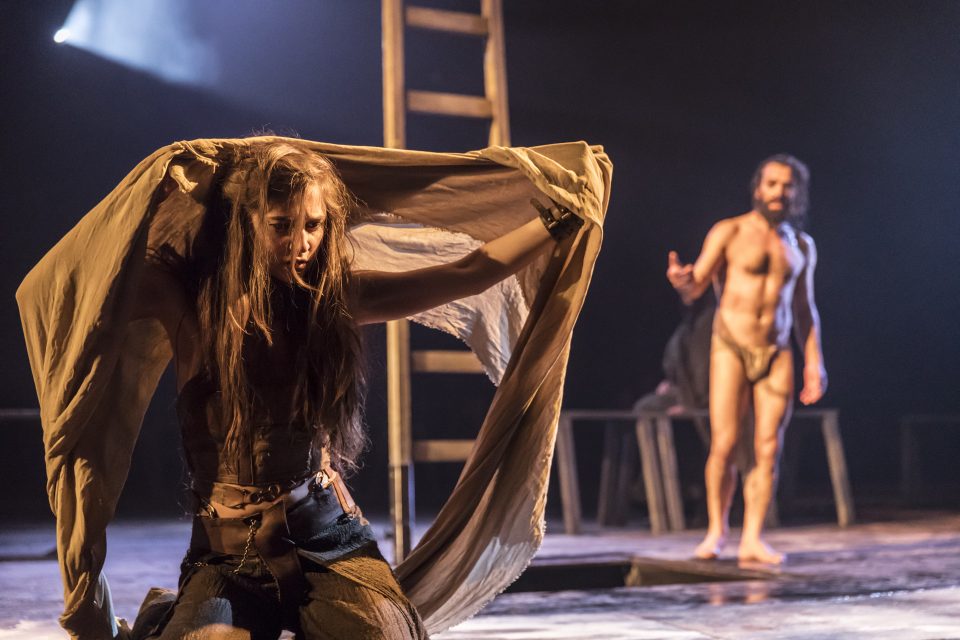
It was always going to be hard to produce a version of Salomé on the stage. It’s a story that’s mythical, biblical, violent, and perhaps a bit confusing. A new version of the show is now playing at The National Theatre, and it’s executed beautifully.
Staged by Director Yael Farber, this version of Salomé, at a short 110 minutes with no interval, will mesmerize you but may also confuse you as the story is told through song and dance and imagery and hebrew, and lots of sand and water. But it’s the story of Salomé who was born the daughter of Herodia who was a princess of the Herodian Dynasty of Judea during the time of the Roman Empire. Salomé, as you may or may not know, is infamous for receiving the head of John the Baptist. Played in this show by Isabella Nefar, Salome is not very respected, stands naked on the stage, has sand thrown all over her, but it’s at the end that she’s redeemed and resurrected, but the road to get there is an intense one.
A character by the name of Nameless (Olwen Fouéré) tells the story of Salomé, as Salomé the character doesn’t speak, and takes place in Roman occupied Judea. She’s yelled at and ridiculed by her stepfather Herod (Paul Chahidi), but finds something, perhaps a kindred spirit, in Iokanaan – John the Baptist (Ramzi Choukair).
But it’s not just the story, it’s the design of the show, by Susan Hilferty, that takes us on a journey, or perhaps better worded – on a ride – a ride that’s both luminous and heavenly, with lighting that adds mystery and darkness. It’s also the haunting vocals and chanting of Israeli folk musician Yasmin Levy and Syrian soprano Lubana Al Quntar that will take your breathe away. Their vocals that accompany the story told on stage is the most memorable part of the show – their voices are out of this world, and listening to them is well worth the price of the ticket.
Salomé will be broadcast by NT Live on Thursday 22 June 2017. For further details visit NTLive.com
Below is a list of connected talks and events for Salomé:
Acts of Violence and Salomé, Monday 12 June, Cottesloe Room, 2-5pm
Mothers/Daughters/Sisters, Wednesday 21 June, Cottesloe Room, 6-7pm
Yaël Farber, Friday 14 July, Olivier Theatre, 6-6.45pm
To buy tickets, please go here:
https://www.nationaltheatre.org.uk
“I condemn this disgusting and unprovoked attack in the strongest terms; this is not the city most of us recognise. It is horrifying that such violent and shocking homophobia has visited our city. Bristol prides itself on being open, tolerant and inclusive and we must do everything we can to ensure it is a safe city where everyone is able to be themselves. There is no place for intolerance.”
“I hope the perpetrators are swiftly brought to justice and urge anyone with any information to contact the Police. There is no excuse for members of our communities living in fear because of their sexuality or gender orientation.”
Molly Scott Cato is the Green Party’s parliamentary candidate for Bristol West.
Police in Bristol are investigating a homophobic crime which left a 19-year-old man in hospital.
CREDIT: GoogleMaps
The victim was in Park Street, near to Tesco on College Green, when the 19-year-old was verbally abused by two men before one of them punched him in the face just before 4am on Sunday (7/5). The teenager was leaving the OMG nightclub in the heart of Bristol.
The police are treating this attack as a hate crime because of the words used by the offenders before the attack was carried out.
The victim was treated at Bristol Royal Infirmary for injuries to his face.
Investigating officer PC Leanne Weeks said,
“This was an extremely unpleasant and unprovoked assault on a man who was targeted because of his sexuality.
“It’s hard to understand how and why someone would do this and we’d urge people to come forward and help us if they can.
“The offender who carried out the assault is white, of slim build, around 20 to 23 years old, with light brown hair in a quiff style which was short at the sides. He was wearing a baby blue long-sleeved shirt and black skinny jeans.
“The man who was with him, who used homophobic language, is white, aged 23 to 25 years old, around 6ft, of muscular build, with dark brown hair also in a quiff style and short at the sides, with a short-cut well-groomed beard. He was wearing a dark long-sleeved shirt and black jeans.
“We’re reviewing CCTV from around the area and will be making further enquiries with venues in the area to try and identify these two men.
“If you were out last Saturday night, or early hours of Sunday morning and recognise the description of these men, or if you saw this incident in the College Green area of Park Street just before 4am on Sunday, please come forward.”
If you can help, please call 101 and give the call handler the reference number 5217101079
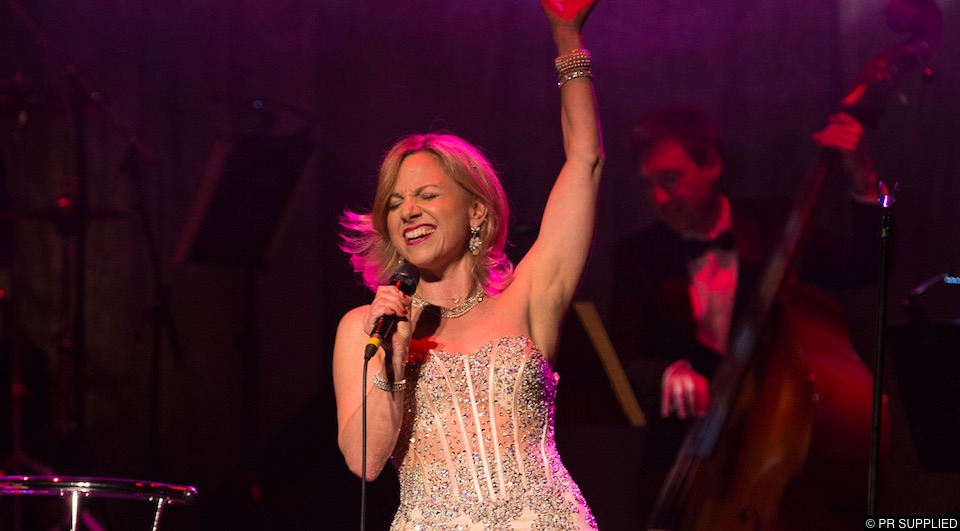
It’s a lot of gay men’s wet dream to see the words “Liza Sings Streisand’. Before you get too excited though, n this instance it is Liza with a Zee singing the back catalogue of Barbra but it’s a thoroughly British Liza, Ms Pulman who’s a member of Fascinating Aida. Don’t let the fact it’s not Minnelli disappoint too much though.
This Liza has got style oozing out of her pores and a belting set of lungs that do justice to Barbra in a lovingly curated cabaret show.
This isn’t ‘Stars in Your Eyes’. She doesn’t come out with crimped hair, a false nose and a Brooklyn accent and to be fair, why would she? We know that Barbra is busy in her underground shopping mall viewing her antique collection so a loving tribute is better than an imitation. Liza Pulman is very English and beautifully poised. Dressed to kill in stylish gowns and backed by a six piece band, she starts out with a few brief reminisces about Streisand, recapping some of her career highs. She’s comes across as warm, knowledgeable but definitely more Home Counties than New York.
The primary attraction though is her musical output. She captures Barbra’s style perfectly and it’s no surprise, given her voice, when Liza talks about her own past and operatic training. She’s clearly a Barbra mega-fan and has studied Streisand’s style and rhythmic anomalies. She’s also taken care in choosing a wide range of songs with a few Broadway numbers, as well a sweep through the decades. There are also some musical re-arrangements done in full Barbra style that actually work really well.
Liza is touring the UK through till November with return visits to The Crazy Coqs at Zedel in Piccadilly in May and June. She’s a treat for jaded eardrums and a great night out for any Streisand fans.
Find out more http://www.lizapulman.com/liza-sings-streisand/
Do you want to eat food and drink wine that is authentic to the Puglia region of Southern Italy? Then Stuzzico is the place for you.
Tucked away in a section of London called Connaught Village, steps away from Marble Arch and the Middle Eastern restaurants of Edgeware Road, Stuzzico, as small as it is, is a stand out.
Luca, one of the proprietors, will great you with a warm Italian smile and will recommend dishes and especially wine that superbly complement each other.
It’s smallish menu will allow you to try various specialities of the Puglia region, but it all depends on what you fancy; fish, meat and/or pasta. My dining companion and I had a taste of it all!
We started out with a glass of prosecco and red wine, pretty standard stuff, but the best was yet to come.
The Octopus starter was well cooked, meaty and cleverly drenched in artichoke sauce – at £13.50 worth every bite. The Malloreddus pasta sausage ragout was uniquely served with shell pasta and was a nice size portion as a starter yet it could’ve used more meat (£14.50). The main courses, however, were stunning. The CONIGLIO, LARDO DI COLONNATA, FAGIOLINI – rabbit – was very tender, a generous portion, and not tough as rabbit usually is. Served with a load of green beans, it was very flavoursome (a bargain at £18.50). The Yellowfin tuna steak (TAGLIATA DI TONNO PINNA GIALLA), was superb. Served as six large slices, it didn’t really taste fishy at all and came with a dollop of the never eaten before black olive sauce and beautifully shredded leak, baby heritage carrots topped with sundried tomato powder, and served warm! The tuna was meaty, fresh, and superb! I highly recommend it. But it was the wine that Luca recommended to go with our main courses that was par excellence!
I had the Re Manfredi (Basilicata) and it was smooth, sweet and tasted a bit like lemon water. White gold in colour, I enquired where I can buy a whole bottle – it was that good. Luca informed us that this wine, and some others on the menu, can’t be bought at any store in London as he gets it direct from Italy. He has personally sourced wine from Southern Italy – it was very very good!
Stuzzico’s deserts offer something for everyone. I recommend the blood orange cheesecake – Cheesecake Arancia Rossa E Cantucci – it’s divine. The Cantucci E Vin Santo – almond biscuits – served with raspberries on top with heavy cream, was heavenly.
There’s a lot more to Stuzzico’s menu – starters include fava beans purée soup, grilled king prawns, tuna tartare, first courses include lobster, and main courses such as monkfish, brill, Tomahawk beef steak, veal and beef fillet with additional sides such as spinach, potatoes, salad, broccoli, and courgettes. And no matter what you order, it’s going to be cooked delicately, with care, and will be very very delicious. This 26 seat restaurant needs to be visited to be tasted, for you need to eat for yourself to see and feel the comforts of Stuzzico’s regional Italian cooking and to meet Luca who’s probably the nicest guy this side of town. Him and co-owner Franco de Todaro are passionate about serving the very best food and wine, and they succeed! Stuzzico is an Italian word which means to tease and to tantalise – and that is exactly what they do!
Tel: 020 7262 9122
https://www.stuzzico.co.uk
Email: stuzzico@stuzzico.co.uk
Address: Connaught Village, 24 Kendal Street, London W2 2AW
Tube: Marble Arch, Edgware Rd, Paddington, Lancaster Gate
Price rating: ££££
Opening Hours:
Mon to Friday:
8am – 4pm & 6:30-10:30pm
Saturday:
8am – 4pm & 6:30-10:30pm
Sunday:
9am – 4pm
Closed on Bank Holidays







 It’s a lot of gay men’s wet dream to see the words “Liza Sings Streisand’. Before you get too excited though, n this instance it is Liza with a Zee singing the back catalogue of Barbra but it’s a thoroughly British Liza, Ms Pulman who’s a member of Fascinating Aida. Don’t let the fact it’s not Minnelli disappoint too much though.

