Category: Answers

  • Was John Major anti-gay when he was Prime Minister?

    Was John Major anti-gay when he was Prime Minister?

    John Major, who served as the Prime Minister of the United Kingdom from 1990 to 1997, had a mixed record when it comes to LGBTQ+ rights. While he did not openly express anti-gay views, he did not actively support gay rights during his time in office.

    Section 28

    During Major’s tenure as Prime Minister, the Section 28 of the of the Local Government Act 1988 remained in power after being introduced by John Major’s predecessor Margaret Thatcher. This provision prohibited local authorities from promoting homosexuality, and had a chilling effect on the ability of schools and other organizations to provide support and resources to LGBTQ+ individuals. Major initially supported the provision, but later indicated that he regretted it.

    In addition, Major’s government maintained a number of discriminatory measures against LGBTQ+ individuals, including a ban on gays and lesbians serving in the armed forces, and a refusal to recognize same-sex relationships for the purposes of immigration.

    Regrets? He has a few…

    Embed from Getty Images

    Overall, while Major did not explicitly express anti-gay views, his record on LGBTQ+ issues during his time as Prime Minister was not supportive of the community. It is worth noting, however, that Major has expressed regret for some of the policies that remained during his time in office, and has since spoken out in support of LGBTQ+ rights.

    During John Major’s tenure as Prime Minister of the United Kingdom from 1990 to 1997, his government decided to keep several laws and policies that discriminated against LGBTQ+ individuals.

    One of the most controversial laws during Major’s time in office was Section 28 of the Local Government Act 1988, which prohibited local authorities from “promoting homosexuality” or teaching “the acceptability of homosexuality as a pretended family relationship.” This provision had a chilling effect on the ability of schools and other organizations to provide support and resources to LGBTQ+ individuals. Section 28 was eventually repealed in 2003.

    Gay Ban In the Military

    In addition, during Major’s time in office, the government continued to ban LGBTQ+ individuals from serving in the armed forces. This ban, known as the “gay ban,” was not lifted until 2000.

    During this time, the UK’s government did vote to reduce the age of consent for gay sex from 21 to 18.

    The age of consent for gay men in the UK was reduced from 21 to 18 on November 30, 1994, under the government of Prime Minister John Major. This change in the law was part of the Criminal Justice and Public Order Act 1994, which also introduced a number of other provisions related to criminal justice and public order.

    Prior to the change in the law, the age of consent for homosexual acts was higher than the age of consent for heterosexual acts, which was set at 16. This discrepancy was widely seen as discriminatory and unjust, and had been the subject of long-standing campaigns by LGBTQ+ rights activists. The reduction of the age of consent for gay men to 18 was seen as a significant victory for LGBTQ+ rights advocates, and paved the way for further changes to the legal status of LGBTQ+ individuals in the UK.

    he age of consent for homosexual acts was further equalized with that for heterosexual acts in England, Wales, and Scotland by the Sexual Offences (Amendment) Act 2000. This act lowered the age of consent for homosexual acts to 16, bringing it in line with the age of consent for heterosexual acts.

    The Sexual Offences (Amendment) Act 2000 was introduced by the Labour government of Prime Minister Tony Blair and received Royal Assent on November 30, 2000. The act also introduced a number of other important reforms related to sexual offenses, including the creation of new offenses to address sexual abuse of children, and the abolition of the offense of gross indecency between men.

    Did the UK ban gay people from working in the military?

    Yes, the UK had a ban on gay and lesbian people serving in the military until the year 2000. This policy, which was known as the “gay ban,” was introduced in 1981 under the Conservative government of Margaret Thatcher and remained in place throughout the subsequent Conservative government of John Major.

    Under this policy, openly gay and lesbian people were not allowed to serve in the armed forces, and those who were discovered to be gay or lesbian while serving could face discharge. This policy was criticized by LGBTQ+ rights advocates, who argued that it discriminated against gay and lesbian individuals and created a culture of fear and secrecy within the military.

    The ban was eventually lifted in 2000 under the Labour government of Tony Blair. This change in policy followed a ruling by the European Court of Human Rights that the ban was a violation of the European Convention on Human Rights. The lifting of the ban was seen as a significant step forward for gay rights rights in the UK, and paved the way for greater acceptance and inclusion of LGBTQ+ individuals in the armed forces.

    John Major’s government refused to recognise Gay Couples

    Embed from Getty Images

    Furthermore, the Major government refused to recognize same-sex relationships for the purposes of immigration. This meant that LGBTQ+ individuals in relationships with foreign nationals were unable to sponsor their partners to join them in the UK.

    Overall, while Major’s government did not introduce a large number of anti-gay laws, the policies and laws that were enacted had a significant impact on the lives of LGBTQ+ individuals, and contributed to a culture of discrimination and prejudice against the community.
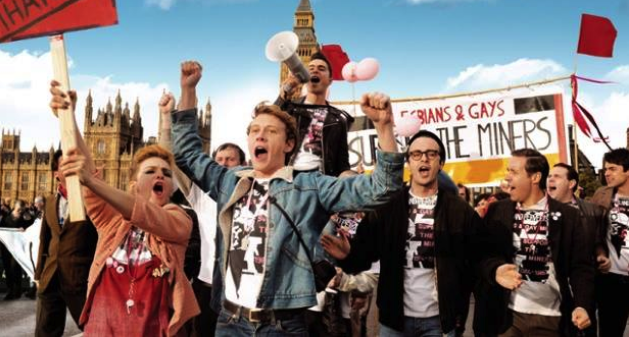
  • What is the LGBT+ Film “Pride” all about?

    What is the LGBT+ Film “Pride” all about?

    What is “Pride” all about?

    The film follows a group of LGBTQ+ activists who come together to support a Welsh mining community during the UK miners’ strike in 1984.

    The group, which calls itself “Lesbians and Gays Support the Miners” (LGSM), initially struggles to find a group of miners who are willing to accept their support. However, they eventually make contact with a small mining village in Wales and begin fundraising to support the miners and their families.

    As the relationship between LGSM and the miners develops, both groups begin to understand and appreciate each other’s struggles. The film explores issues of class, identity, and the power of solidarity, as LGSM and the miners work together to fight for their rights.

    “Pride” was critically acclaimed upon its release, and was praised for its mix of humor and drama, as well as its positive portrayal of LGBTQ+ characters. The film was also seen as a tribute to the real-life activists who inspired it, and to the power of grassroots activism to effect change.

    Did the film “Pride” get good reviews?

    Yes, “Pride” received very positive reviews from critics upon its release in 2014. The film has a 93% approval rating on Rotten Tomatoes, based on 169 reviews, with an average rating of 8.0/10. The site’s critical consensus describes the film as “earnest, well-acted, and overall inspirational,” and notes that it “avoids easy clichés and formula.”

    Many reviewers praised the film’s mix of humor and drama, as well as its strong ensemble cast. The performances of actors such as Bill Nighy, Imelda Staunton, and Andrew Scott were particularly singled out for praise.

    “Pride” was also praised for its positive portrayal of LGBTQ+ characters, and for its exploration of issues of class, identity, and the power of solidarity. Many critics saw the film as a tribute to the real-life activists who inspired it, and as a reminder of the importance of grassroots activism in effecting change.

    Overall, “Pride” was widely regarded as a well-crafted and inspiring film that blended comedy and drama, and celebrated the power of community and activism.

    Is the film “Pride” based on a true story?

    “Pride” is based on a true story. The film depicts the real-life events of the summer of 1984, when a group of lesbian and gay activists formed the group Lesbians and Gays Support the Miners (LGSM) and began raising money to support the striking miners and their families.

    The LGSM group consisted of around 20 activists from London, who decided to support the striking miners after recognizing that both groups were fighting for their rights and for a fairer society. The group raised thousands of pounds for the miners, and their efforts were warmly received by some of the mining communities they supported.

    The film’s portrayal of the LGSM’s involvement in the miners’ strike is largely accurate, although some elements have been fictionalized for dramatic effect. The film’s characters are also composites of several real-life activists, rather than being based on specific individuals.

    Overall, while “Pride” takes some artistic license with the story, it is based on a real and inspiring episode in British history that saw two marginalized groups coming together in solidarity to fight for their rights.

    How much did the film Pride make?

    The film Pride was hugely successful at the box office in 2014.
    The film Pride was hugely successful at the box office in 2014.

    According to Box Office Mojo, the film “Pride” grossed approximately $16.4 million worldwide during its theatrical release in 2014.

    While this may not seem like a huge amount compared to some Hollywood blockbusters, “Pride” was actually a considerable success for an independent British film. It was made on a relatively modest budget of around £3.3 million, and its strong critical reception and positive word-of-mouth helped to generate a loyal fanbase.

    “Pride” was also well-received at various film festivals, winning the Queer Palm award at the Cannes Film Festival and the People’s Choice Award at the Toronto International Film Festival.

    Beyond its box office success, “Pride” has also had a lasting cultural impact. The film has been praised for its positive portrayal of LGBTQ+ characters, and for its celebration of the power of solidarity and grassroots activism. It has also helped to raise awareness of the real-life events that inspired it, and has been credited with helping to cement the legacy of the LGSM group and their efforts to support the striking miners.

  • Was Margaret Thatcher anti-gay?

    Was Margaret Thatcher anti-gay?

    Margaret Thatcher, the former British Prime Minister, had a mixed record on gay rights.

    In the 1980s, she supported Section 28 of the Local Government Act, which prohibited local authorities from promoting homosexuality or presenting it as a “pretended family relationship” in schools. This legislation was widely seen as discriminatory and harmful to the LGBTQ+ community.

    However, towards the end of her time as Prime Minister, Thatcher did begin to shift her views on homosexuality. In 1987, she expressed support for a report by the Church of England that called for the decriminalization of homosexuality. And in 1989, she appointed the openly gay Chris Smith as a minister in her government.

    (C) BIGSTOCK

    It is also worth noting that Thatcher’s government played a significant role in the fight against HIV and AIDS in the 1980s, providing funding for research and treatment, and promoting public awareness campaigns.

    Was the Thatcher Government anti-gay?

    Thatcher’s government’s support for Section 28 of the Local Government Act, which prohibited local authorities from promoting homosexuality in schools, is often seen as having a harmful impact on LGBTQ+ young people.

    Section 28 was introduced in 1988, and it was not repealed until 2003. During that time, many LGBTQ+ children and young people were left without support and resources, as teachers and school administrators were afraid to discuss issues related to sexual orientation and gender identity.

    Overall, while Thatcher’s record on gay rights was certainly not perfect, it is not accurate to say that she was uniformly anti-gay. Like many politicians, her views on these issues evolved over time, and her legacy in this area is complex.

  • BIG GAY GLOSSARY: What does gay mean?

    BIG GAY GLOSSARY: What does gay mean?

    The term “gay” can have different meanings depending on the context. However, most commonly, “gay” refers to someone who is primarily attracted to people of the same sex. It is often used as a term to describe homosexuality or the LGBTQ+ community, specifically those who identify as gay.

    Is Being Gay A Choice?

    Being gay is not a choice, but rather a natural part of a person’s identity. Respecting and accepting people for who they are is important, regardless of their sexual orientation or gender identity.

    It is also important to note that the term “gay” can be used as an adjective to describe things that are related to LGBTQ+ culture or the community as a whole. For example, someone might say “this is a gay-friendly establishment”, to indicate that it is welcoming and supportive of LGBTQ+ people.

    When did the term gay replace the word homosexual?

    rawpixel.com at Pexels: , most commonly, “gay” refers to someone who is primarily attracted to people of the same sex.

    The term “gay” began to gain prominence as a term for homosexuality in the mid-20th century, and it gradually became more common than “homosexual” in the decades that followed. The use of “gay” in this context is believed to have emerged from gay subcultures in urban areas, where it was used as a code word to refer to homosexuality without drawing attention from heterosexuals.

    The term “homosexual” has a more clinical and scientific connotation and was commonly used in medical and legal contexts. However, it also had negative connotations and was often associated with mental illness and deviance.

    The use of “gay” as a more positive and affirming term for homosexuality gained momentum during the gay rights movement of the 1960s and 1970s, and it eventually became the dominant term used to refer to homosexuality in mainstream society. Today, the term “gay” is widely accepted and has largely replaced “homosexual” as the standard term for same-sex attraction and relationships.

    Can only men be gay?

    No, both men and women can be gay. The term “gay” refers to a person who is primarily attracted to people of the same gender, regardless of their own gender. So, a man can be gay if he is attracted primarily to other men, and a woman can be gay if she is attracted primarily to other women.

    It’s worth noting that some people may use other terms to describe their sexual orientation, such as “lesbian” for women who are primarily attracted to other women, or “queer” as an umbrella term for anyone who doesn’t identify as exclusively heterosexual. However, the term queer is incredibly controversial amongst gay men.

    Is Queer an acceptable term to use for gay men?

    In July 2017 we asked over 200 people whether they thought queer as an umbrella term for the LGBT+ community was acceptable; sixty per cent did not. Some commented that the word was “triggering” and “deeply offensive”, particularly to men who identified as gay.

    In 2018 only 13% of men surveyed preferred the term queer men and in 2023, that decreased even further to just 8.1%.

    Ultimately, the language that people use to describe their sexual orientation is personal and can vary from person to person.

    Are gay men different to straight men?

    In terms of core human characteristics, gay men and straight men are not fundamentally different. However, there may be some differences in their behaviors, attitudes, and experiences that can be shaped by social and cultural factors, as well as personal experiences.

    For example, gay men may face unique challenges related to their sexual orientation, such as discrimination, social stigma, and a lack of legal protections in some regions. These experiences can shape their perceptions of the world and their interactions with others.

    On the other hand, gay men may also share some common experiences with other marginalized groups, such as women and people of colour. For example, they may have experienced prejudice and discrimination based on their identity and may have developed resilience and coping mechanisms to navigate these challenges.

    Despite these differences, it’s important to recognize that all people, regardless of their sexual orientation, are diverse and multifaceted individuals with unique personalities, experiences, and perspectives.

  • Here’s how to find every gay movie on Netflix

    Here’s how to find every gay movie on Netflix

    There’s so much on Netflix that it can take an age just find something to watch. But what if you just wanted to watch something a bit gay?

    Trouble is, Netflix can feel like a bit of an iceberg, only a fraction of the available content is easy to find right there on the front page. The rest, the hidden 90 per cent, can feel like a taunting and neverending task of endless searching.

    Strangely enough using Netflix.com can be easier to find the content you’re looking for, rather than Fire TV or the dreaded Apple TV.

    Weirdly depending on what device you’re using, searching Netflix for that next great find can either be simple, potluck or, more often than not, hours of wasted time. We’ve used a number of devices ranging from the simplest (iPad) to the mediocre (Fire TV) to the downright unstable (Apple TV gen 2).

    For the record, using Netflix’s website to find content is always much easier. So you might want to log in there first using your laptop or iPad find something that looks good then go back to your browsing device and use the search to manually type in the title.

    However, there’s a super easy way to find what you’re looking for because everything on Netflix is given a genre code. Makes sense right? You’ll want to link all the Horrors together – and separately away from, say, Kids’ content.

    Luckily Netflix has tagged all of its content quite well. Even better, we’re happy to report that gay content has been divided into sub-genres to help you get the exact kind of content you’re in the mood for.

    Whether you’re looking for a great LGBT documentary, like The Death and Life of Marsha P. Johnson or a gay love movie, like Alex Strangelove Netflix does have you covered.

    Netflix has also added some blockbusters to its mix too, currently, you can find, Bohemian Rhapsody, Brokeback Mountain, Call Me By Your Name and Pride.

    So what are these secret links? Well, all gay films can be found on genre link 5977, while TV shows can be found on link 65263. If you were looking for a foreign language LGBT+ film you’d be able to find the full list of content on link 8243.

    Here are all the links to get you to exactly what you’re looking for

    Netflix Gay Content Genre Codes

    Gay & Lesbian Movies (5977)

    Gay & Lesbian Comedies (7120)

    Gay & Lesbian Dramas (500)

    Romantic Gay & Lesbian Movies (3329)

    Foreign Gay & Lesbian Movies (8243)

    Gay & Lesbian Documentaries (4720)

    Gay & Lesbian TV Shows (65263)

    There you have it… an easy-to-use way to find gay content on Netflix.

  • Do condoms protect you from every sexual infection?

    Do condoms protect you from every sexual infection?

    This week our specialists Jake Jenkins and Jenna Thomas from 56 Dean Street talk about condoms.

    do condoms protect you from every STIs
    Bigstock

    Dear TGUK & 56DS
    Everyone says that If you want a safer sex, you have to use condom. But can it prevent all diseases?
    Best Jimmie

    Dear Jimmie

    Having safer sex means having sex that has less risk of catching or passing on an STI.

    Using a condom is the best way to do this, however, it doesn’t completely prevent you from catching an STI. Lots of things can affect how likely you are to catch an STI such as a condom slipping or breaking during sex and contact during foreplay such as rubbing, masturbating each other, and oral sex.

    A few things that can help are ensuring a condom is used from start to finish during penetration, using latex condom-friendly lubricant (such as water or silicone-based), and regular screening for STIs.

    Do not use Vaseline or oil-based lubricants. Don’t forget one of the best ways to protect yourself is to know your status. Book a sexual health check regularly to make sure you’re always in the know.

    Even if you do everything right accidents can happen so it’s good to know about PEP, this is a course of medication you may be able to take if you have been at high risk of HIV. Or indeed check out your options surrounding PrEP.

  • Is Sam Ryder Gay, Bi, Straight, married?

    Sam Ryder shot to fame and won the hearts of millions when he entered (and almost won) the gayest competition on the planet – Eurovision…

    Warner Music New Zealand, CC BY 3.0 https://creativecommons.org/licenses/by/3.0, via Wikimedia Commons

    So what do we know about the singer Sam Ryder and his love life.

    Is Sam Ryder Gay?

    Obviously in this day and age, Sam’s sexuality shouldn’t and doesn’t really matter, but sometimes a boy just wants to know if his favourite singer bats for the same team – representation matters you know!

    Well, Sam isn’t gay or bi that we know of.

    Apparently he’s got a long term girl, called  Lois Gaskin-Barber. Interestingly the used to own a juice bar cafe together. From 2017 to 2019, they operated the Lone Wolves Organic juice bar in Coggeshall in Essex. Lois now sells her own jewellery on her Instagram page Lone Wolves Creative.

    So how old is Sam Ryder?

    The Eurovision star was born on December 15, 1989, so his current age is 33 Years – and in case you were wondering Sam stands 5ft 10inches tall, which is 1.78m.

    Is Sam signed to a label?

    Yes, thanks to his legion of over 13million fans on TikTok – he caught the attention of mega label Parlophone (the original home to The Beatles) and inked a deal with them in 2021. His debut single, Space Man! reached number two in the UK charts after his performance on Eurovision. He is due to release a full album at the end of 2022, in October, just in time for that all lucrative Christmas market.

    His second single, “Somebody”, scheduled for release on 19 August.

  • What is #DontPayUK all about?

    What is #DontPayUK all about?

    With soaring prices people are taking things into their own hands in order to tackle the cost of living crisis.

    • Campaigners are urging energy customers to stop their direct debits on the 1st October
    • Price hikes could come from the 1st October 2022
    • Campaigners say that if one million customers don’t pay there could be a day of reckoning for the energy sector.

    The #DontPayUK trend is doing the rounds on social media – but what does it mean and is it legal?

    Essentially come the 1st of October the campaign is hoping to get millions of UK energy customers, UK householders and renters to stop paying their energy bills via direct debit. Campaigners are using Twitter, TikTok and Facebook to urge customers to cancel their direct debits with their suppliers.

    During the summer months millions of customers have been paying above and beyond their actual usage. Customers who pay by direct debits have had their bills set by the energy firms and are often unable to change the amounts going out each month.

    Why has #DontPayUK come about?

    What is Don't Pay UK all about? The campaign has been called #DontPayUK
    Photo by Pixabay on Pexels.com. Campaigners are urging millions of energy consumers to cancel their direct debits. The campaign has been called #DontPayUK.

    The average energy costs for UK customers has soared in the last year, rising by almost £700 to almost £2,000 in April. Energy regulator, OfGem sets a price cap – and the next price cap is set to rise in October and then again in January.

    So what is the plan?

    According to the DontPayUK website,

    “It’s simple: we are demanding a reduction of energy bills to an affordable level. Our leverage is that we will gather a million people to pledge not to pay if the government goes ahead with another massive hike on October 1st.

    “Mass non-payment is not a new idea, it happened in the UK in the late 80s and 90s, when more than 17 million people refused to pay the Poll Tax – helping bring down the government and reversing its harshest measures.

    “Even if a fraction of those of us who are paying by direct debit stop our payments, it will be enough to put energy companies in serious trouble, and they know this. We want to bring them to the table and force them to end this crisis.”

    As it stands and at the time of publishing, 14953 people have signed up to the campaign.

    Day of reckoning for energy firms

    The organisers go on to explain,

    “With 1 million people, we can withhold £230 million for 28 days before energy companies can take any action. And then we can withhold another £230 million each month – possibly even more as the weather gets colder through winter and we use more energy. Possibly even more as more people start joining the strike.

    “With 1 million people, we could be withholding more than £1.4 billion by the end of winter.

    “In 2021, almost 30 energy companies collapsed – by withholding hundreds of millions of pounds we could force a true reckoning within an already unstable, insecure market.”

    Can energy firms cut you off?

    If you don’t pay your bill after 28 days, energy firms can take further actions against you. However, the campaign has said that if millions sign up to its movement, “they’ll be forced to first contact thousands, tens of thousands or even more customers about the possibility of disconnecting supply – but only after 28 days have passed. Then they’ll have to give a chance to set up a payment plan before, in most cases, applying to a court for a warrant. It’ll cause paralysis and create a months-long backlog.”

    The idea here is to basically stop paying your bills through direct debits and not to stop paying your bills completely.

  • Is it legal to be gay or LGBT+ in Jamaica?

    Is it legal to be gay or LGBT+ in Jamaica?

    The idilic island nation of Jamaica seems like it might be an awesome place for a restful holiday for LGBT+ people, but the reality is, if you’re gay, your illegal.

    • Same-sex sexual intercourse could lead to imprisonment, fines, beatings and worse.
    • The Country’s Tourism Minister called the Country a “melting pot” and that everyone has a place.

    It’s hard to fathom that in this day and age that simply being who you are can be illegal in a country, particularly in one that considers itself welcoming to all according to its Minister of Tourism for Jamaica Hon. Edmund Bartlett said recently in an interview with Sky News.

    “Jamaica is that melting pot, that has a place for everybody…” that is of course, unless you’re LGBT+.

    Yes, the sex you have with someone of the same sex is legally governed by Jamaica and sex between two same-sex couples could land you with imprisonment, torture, vigilante executions, and vigilante beatings.

    However it should be noted that Barlette has in the past welcomed LGBT+ travellers saying in an interview with ManAboutWorld, “We say that Jamaica is open to all travelers. We have a diversified offering that the extent to which we go to embrace various passion points is equal. We have no laws which prevent people of any orientation to come in and to enjoy the benefits of the destination. The ethics which guide tourism guide everybody, and so it is within that tourism ethic that we will operate with all the visitors that come to our country.”

    In 2006 Time Magazine asked the question on whether Jamaica was the most homophobic place on earth and in 2013 a survey of the island’s LGBT+ population found the majority said they were subject to homophobic violence in public.

    According to Wikipedia, the punishment for LGBT+ activity is 10 years of imprisonment with hard labour. It has been noted that vigilante  executions, torture, and vigilante beatings have also been tolerated according to the Human Right’s organisation Amnesty International.

    nancydowd / Pixabay

    Despite the backlash that LGBT+ people can face in Jamaica, there are a couple of pride events held each year. One is called PRIDEJA and the other is  Montego Bay Pride.

    Attacks on Jamaican LGBT+ People are rife

    According to a new podcast series, Ring The Alarm, host Jasmyne Cannick, one of Los Angeles’ most recognisable Black political strategists and journalists looks into a spate of horrific and alarming attacks on LGBT+ people in Jamaica.

    Speaking about the podcast, Cannick told The Advocate,

    “I have always used my platform to elevate Black stories and issues I felt were being ignored and Ring the Alarm is no different,

    “When I was asked to come to Jamaica to speak to the LGBTQ+ community and share their stories, I immediately said yes.

    “I said yes because American’s have had so much to say about the plight of queer people in places like Iran and Afghanistan but for decades have ignored the murders of lesbian women, gay men, and trans men and women in Jamaica.

    “Well not anymore.”

  • Blocked on Grindr: Can you find out who has blocked you?

    Blocked on Grindr: Can you find out who has blocked you?

    Where is that totally hot guy you were sharing pics and chatting with suddenly gone? Have I been blocked on Grindr?

    Chances are that he probably did… the question is can you know for sure?

    Previously, a glitch in the Grindr system allowed users to find out a list of people who had blocked them using a website called https://blocked.ongrindr.com/.

    However back in 2018, Grindr patched their software to effectively block the block website!

    So, no technically there is no straightforward to find out whether a guy has blocked you or not.

    How can I find out if someone has blocked me on Grindr?

    Have I been blocked on Grindr?
    There’s no simple way to find out if you have been blocked on Grindr. However, there are a couple of ways. You do have the legal right to access all the data Grindr holds on you – you can also do a little bit of sleuthing and detective work.

    However, you can always, create a new profile and see if the guy you’ve suspected of blocking you shows up when you log in with your new account. If he does, then you know he’s blocked your other account. However, it’s probably best not to get back in touch. If someone’s blocked you, reaching out to them would be against their wishes and could potentially be seen as stalking.

    It’s best to just dust yourself off and move on.

    Do I have the right to find out who’s blocked me on Grindr?

    Technically, in the UK – Yes. When someone blocks you that data is stored (and by Grindr) by both users – the blockee and the blocker. If you’re in the UK, you still have certain rights to see the information a company holds about you, which could mean any data that is held on your profile, which is not actually viewable by you through the app’s interface.

    Thanks to the Data Protection Act, if you really wanted to see what information the company holds about you, you can put in a request.

    Getting blocked on Grindr a lot?

    If you’re finding that you’re getting blocked a lot there could be some dating app mistakes that you’re making. Maybe you’re sending waaaayy too many dick pics without asking first. Is your face pic a good, friendly picture or do you look like a serial killer on the prowl? Check this article out to find out about what you can do to become some class A ass on Grindr.

  • Being pansexual – What does it mean to be Pan?

    Being pansexual – What does it mean to be Pan?

    As Samantha Jones said, in Sex And The City, one day we’ll all be pansexual.

    Pansexuality, might not be on your radar as much as homosexuality or bisexuality, but its all-inclusive nature has got people falling in love with the sexual and romantic orientation that is pansexuality – which is, essentially as our sex expert says, hearts, not parts – you fall in love and lust with the heart of someone, not just their biological sex, or what’s between their legs or gender expression.

    Did you know that the word for pansexuality dates all the way back to 1914! The hybrid words pansexual and pansexualism were first attested in 1914, according to sources. It was coined by rivals of the psychologist Sigmund Freud to denote the idea “that the sex instinct plays the primary part in all human activity, mental and physical”.

    What do Pansexuals think?

    So, the best way to get to the heart of the matter is to go straight to the source. We asked readers for their best description of pansexuality means to them, here’s what they told us.

    “As a 21-year-old pansexual male, I found that there was a lot of stigma that went with being pan and many people don’t understand/know what it means.

    “To me, it’s different for different people, I personally think that in my eyes, gender/sexual-orientation does not count towards anything in the way of attraction and in the way of love. I believe that you fall in love with the person and not their genitals or what gender they are attracted to.

    “I have dated various genders, various people with different sexual orientations and yes they have been very different partners and have been very different relationships however the one thing that is, all the same, is the feelings towards that person. The spark that I have felt towards each individual person and that feeling was not towards there genitals, it was towards them as people.

    “My opinion of pansexuality is love.”

    What does pansexual and pansexuality mean?

    Another user, Alex, told us,

    “Love without gender, connection without exclusion, and plenty of fish in the sea”

    and another, Eggy, wrote,

    “sexual attraction regardless of gender”

    Pansexuality is all about ‘Hearts Not Parts’

    Our sexpert columnist Jack Devon told us, “It’s about hearts, not parts. Pansexuality is where you fall in love (or lust) with the being, whether they are gay, bi or straight, whether they are male or female, trans, cis or non-conforming. It’s an ability to see beyond the labels and feel for the person, kinda beautiful when you think about it.”

    “Despite its all-encompassing nature, it is still a relatively unknown sexuality compared with say, gay or straight. Most people when you ask them about sexuality think only in terms of gay, straight, asexual or bisexual, which is quite unfortunate. Since SATC‘s Samatha Jones quote “one day we’ll be pansexual” way back in 1999, I’ve been wondering when Pansexuality might have more of a moment to shine. You have to be super open-minded and dump the labels – and go with your soul.”

    Is there a pan awareness day or week?

    Yes, there is an awareness date for pan people. Pansexuality Day happens every year on the same day, in fact, there are two, one in May and one in December.

    On May the 24th there is the pan and panromantic day of awareness. You can check out other LGBT+ dates of awareness and visibility in 2022 here. There is also a Pansexual Pride day on the 8th of December.

    What are the pan pride flag colours?

    The pan flag was designed sometime in the mid-2010s. The designer is unknown. It is comprised of three coloured horizontal stripes, from top to bottom: Pink, Yellow and Cyan. Want to find pansexual gifts, flags and even face paints, visit our brand partner, THE PRIDE SHOP.