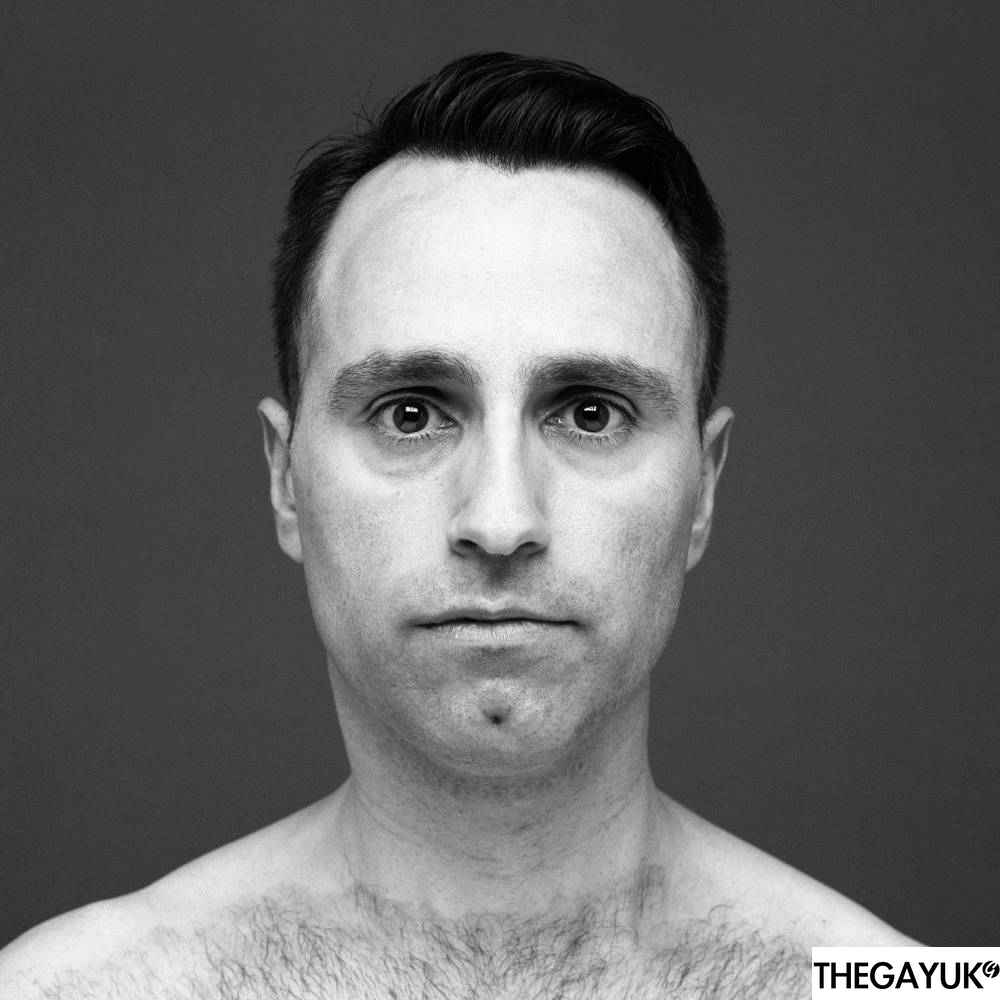
Mainly engaged in narrative and documentary photography, Susan Leurs is a Dutch self-taught photographer. As a child, she was a victim of bullying. When she started working in education, it became clear to her that bullying was still a serious issue, so she decided to do something about it.
In 2016, she began taking photographs of and interviewing victims of bullying.
She called this project “PESTEN” (the Dutch word for bullying). More and more people heard about this project and wanted to participate, including bullies themselves. Her work exposes the serious influence bullying has on the lives of the victims. In her own words, “The people I photograph are either bullied or have bullied someone themselves. My goal is to make people think about what they can do to change this bullying behavior. We are ‘civilized’, but apparently we lack the social skills to accept each other as we are. Think about how you can do something in your environment to prevent bullying!”
Just like Susan, I was a victim of bullying for many years. I noticed from a very young age that there was something different about me. Growing in a small village in Portugal 30 years ago, I never felt like I belonged. While my male friends enjoyed playing with cars, I preferred playing with dolls or trying my mother’s clothes and shoes on. And all that felt perfectly fine, until people started pointing the finger at me. Experimenting with my mother’s clothes and playing with dolls was just a phase, but my range of interests always made me stand out.
This became more obvious when I went to school. For being different, I became an easy target for the other kids. Back then there were no discussions about bullying. I’m not even sure that there was a name for it back then. But the fact is that a group of kids repeatedly and intentionally caused me emotional harm.
I remember feeling alone, isolated, and humiliated. And yet I did not tell a single person what was happening to me. The main reason why I decided not to tell anyone about it was because being bullied made me feel extreme shame and embarrassment. I knew I was being bullied because of something that I was very sensitive about: my sexual orientation. To talk about the bullying would require me to highlight what I believed was my “defect.”
The thought of bringing up my “defect” to an adult felt worse than the bullying itself. Also, I was afraid of retaliation.
I feared that reporting my bullies wouldn’t do any good. Instead, I worried that my bullies would only make my life worse. I naively hoped that, if I kept quiet, the bullying would eventually stop. But, because no action was taken, the problem escalated. Suddenly I was not only being bullied because of my sexual orientation anymore, but also because of a nervous tic that caused my eyes to twitch (“Don’t wink at us – they would say – we’re not faggots like you!”), or even just because I was a good student. At this point, I would be bullied for pretty much anything. This started when I was 6 years old, and it continued until I was 18.
Suicidal thoughts went through my mind countless times. I guess I was just too afraid to attempt against my own life. But let’s not forget about all those who can no longer cope with the pressure and feel like suicide is the only way out.
It wasn’t until I came to terms with my sexuality much later that I took away the power that the bullies had over me. Finally, I accepted me as I am and there was nothing else that they could hold against me. I eventually forgave all my bullies, but I will never forget what they put me through. I cannot forget, because even today I must deal with the long-lasting effects that so many years of bullying had on my self-esteem and on my self-confidence.
If it happened now, I would bring the issue to someone’s attention.
In my opinion, we fear what we don’t understand. I believe that by educating people we can help them understand, accept and hopefully recognize the important value of diversity in our society. And if education is not enough, other actions must be taken. It is important that we don’t ignore the issue, because nothing will ever change if we ignore it.
Mine is one of the many stories that victims of bullying shared with Susan Leurs. So far, more than 100 people have posed for Susan and shared their stories with her. Some are victims. Some are repenting bullies. Together we share our very own experiences and try to create a world in which diversity and inclusion are the rule and bullying no longer exists.
Susan Leurs is still looking for more stories. If you were bullied, or if you bullied someone, or if you would like to host this exposition, feel free to contact Susan Leurs directly: https://www.susanleurs.com/contactme.
Let’s remember what Jung once said: “I am not what happened to me. I am what I chose to become.”
Miguel Martins
(Mister Senior Netherlands 2018 3rd Runner-Up / Winner Public Choice / Winner Best Talent)
There are a number of things in life that annoy everyone. Trains running late, an unexpected bill, people that do very little work but get all the rewards, Katie Hopkins, the realisation you’ve missed the McDonalds breakfast timings… those sorts of things.
But there are some things that annoy us gays specifically and things that, one day everyone will be suitably informed and emotionally aware enough to not ask these utterly stupid questions. I’ve run through the top 10 of these questions and thank to you those that fed back on these on twitter.
Are you the man or woman?
I’ve been in a serious long term relationship on 2 occasions in my life. On both occasions at least once each time someone has asked (seriously or not) “so who is the man in the relationship?”. Or, the other variation of “so she is the man and woman?”
First, and foremost, who said relationships have to be defined by gender stereotypes? When did this become unwritten natural law? And second, would being ‘the woman’ be such a bad thing as indicated by your tone?
It’s usually the straights that do this and they are simply imprinting onto to us their own understanding on how relationships work. One person is the man (or boss) and the other is the woman (not the boss). Although many relationships I know of straights, the man is very rarely the boss. So the whole concept is just crap. Not offensive to hear, just bloody annoying after a while.
Top or Bottom?
Within our own community, this question does grate on me. Usually online but you do get it face to face as well. “Are you top or bottom?”. Now, I’ve written more than one blog post on bottom shaming, Top vs Bottom etc so I freely admit that I may have added to this problem. But in all my posts I encourage sexual freedom. Don’t be defined or confined by it like this loaded question is designed to do.
Whenever someone asked me I tend to give a sarcastic response. “Are you a top” is usually met with an “ooooh I love this questionnaire things. I filled one in the other day and it said that I was most like a polo shirt. Stylish, functional and only really used by men of a certain age”.
Instead, why not ask someone what they enjoy doing sexually? Personally, I enjoy anal but for various practical reasons, I can’t take anything anally. I’m not your typical top as I actually care about the pleasure someone gets and am very patient and understanding about accidents. Something which very few ‘tops’ are. Something which needs to change!
Two tops or two bottoms – how does that work then?
Linked to the above is the really probing questions many couples face. When someone finds out if you are one thing or another then just have to know “So, you’re both tops/bottoms? How does that work then?”.
For which my usual, completely over the top response usually is, “Sorry Mavis, with your piles and John’s hip, how does it work for you?”.
Piss off, in short. Such questions have nothing to do with the outside world and are not someone one straight couple would ask another. While the temptation to be nosey is there, my eyes roll when I hear it as it’s just an excuse for someone to be nosey, intrusive and completely inappropriate.
Two friends together however over a wine or two, very different. No subjects are taboo in that scenario!
I always laugh at this one. It’s not like cheese tasting where you try a Danish Blue and decide strong cheese isn’t for you. Gays and indeed Bisexuals have a wide range of backgrounds. Some have drunk from the lady cup, others have not. One is not more valid than the other. Yet, once again, this usually comes from the straights. I’ve seen the odd gay man ask it but not usually with any seriousness and usually with context around our histories.
Don’t you want to try sex with a woman?
The straights, however, love to ask. Usually followed up with a “would you though, for the right woman?”. For which, once again, the answer is also no. Sexuality isn’t a cheese tasting course. I’m not going to grow a taste for the odd bit of Wensleydale with a nice dark port. P**s off.
So, that guy you mentioned, have you slept with him?
When we start talking about a friend we know, if they are male, both gays and straights alike, always get the urge to ask if we have slept with the said man.
The gays usually do it because they are your friend and they are being nosey looking for a juicy bit of gossip on what happened. Which is fine, sort of, but annoying none the less especially as the answer is usually no even though deep down we really wish it was a yes.
Now this one is very context driven as there are occasions where it is a perfectly valid question between friends. But as one of those Ice Breaker questions when’s someone learns of your sexuality, that would be a no-no.
For me personally, I came out at 19 and I was only really in the ‘closet’ for about 4 years leading up to that point. Until midway through puberty my thoughts were very much about girls, I would even draw erotic art about girls. But after time I found myself drawing more of the male figure and focusing more on their roles in my short (erotic) stories. Around that point, I realised and starting going through the motions.
Yet those that haven’t been through what we have, don’t assume that. They just assume we have always lived and breathed being gay and therefore always knew. Not so, for many of us, this was something that developed or being realised at a point later in life. That doesn’t make us any less gay, yet the question seems to imply that we aren’t ‘purebred’ because we weren’t ‘gay from birth’.
I’ll admit, I do watch Drag Race. But even I get annoyed the number of times I am asked by straight friends and people I meet who learn I am gay. Last time I checked there wasn’t a ‘required watching’ list in order to be a gay man in the 21st century (and even if there was, Drag Race would not be on it). So it always makes me laugh how people take the most obvious part of the LGBT/Queer life and suddenly thing gay = must watch drag race.
Sorry boys n girls, I know plenty of gay men then don’t watch it and I admire / perve on them all the same.
Breaking news everyone, a scientist has discovered that gays are born and grow physically different from the rest of the human race. Research has found that a gay man has – a higher metabolism, therefore, is often leaner in body shape (and has a larger penis because of it) – has developed different vocal cords, therefore, their voice is often softer and of a higher pitch – has weaker joints, therefore, things list wrists, elbows and knees bend easier leading to limp wrists, mincing walks and flexible body parts – only seems to have the genes for lighter hair and eye colour – skin that tans easily – lower cognitive abilities resulting in a tendency for dry wit & humour (often referred to as “sass”.
Have you not heard of this discovery? No? Well, that’s because it’s a load of old rubbish. There is no such thing as a ‘gay look’, other than the typical image given to us by mainstream TV. – Camp – Blonde – Blue or Green eyes – Well built – softly spoken – sassy
I can see why people have had this impression, therefore, imprint it onto the wider community, but really? I am rarely any of these things (some things I am more of when drunk) but many of the physical things I most certainly am not. Especially the high metabolism part. Yet the last time I checked I was a gay man, capable of loving and pleasing other gay men?
That one I do find more offensive than annoying, but it is still annoying all the same.
This one came into me via Twitter from a follower. Apparently, a straight friend of theirs was curious about anal and asked the question. And for simple minds, I could see why they would come to the conclusion that having a rather large shit was the same as a good-sized cock up your arse.
I can safely say that they are not related, at all. So don’t ask you narrow-minded gibbon. It’s the same logic as so when you have a swab down your urethra, that’s just like having a piss right? No, it isn’t. ?️?
For a community that has a history of persecution, horror, and division it will always shock me that even to this day, the gay community remains deeply divided and discriminatory to itself.
In this article, a bit more of a serious one for a change, I want to explore some examples of this discrimination and my thoughts as to why I think this is so.
To start, I will freely admit that I am a white gay man 32 years of age (middle class if that means anything) with an average upbringing. I was not bullied at school for being gay, I was bullied for looking like Harry Potter long before HP was ‘cool’.
My family, until recently, has been fairly stable and while I have been through a lot professionally and personally in my own life since I was 18, most of my views and experiences come through the eyes of others. Having spent a number of years working with social care cases my empathy and ability to see your own pain and map of the world is something I treasure. And something, for this piece at least, gives me some insight that I hope you find relatable.
In this article, I don’t have time to go into the racism, ageism and various other ‘ism’ issues in the community but I will acknowledge them for the moment. I have no doubt all are linked, but racism and ageism isn’t necessarily a sexuality thing as straights have the same issues. We’ll get to them in another article. For the moment, I want to focus purely and simply on gay men hating other gay men for their sexuality.
The dictionary defines homophobia as a;
“dislike or prejudice against homosexual people”. There are many different definitions out there, including one that defines it as “a range of negative attitudes and feelings towards or people that are perceived as being lesbian, gay, bisexual or transgender”.
But let’s start with the simplest one as I prefer simple arguments. A “dislike or prejudice against homosexual people”. For this article, I am going to focus on gay men vs gay men. There are plenty of documented cases of gays vs lesbians, gays vs bisexuals and gays having a bash at transgender. The level of disgusting hate I see on F2M people’s profiles aimed at them from other gays is just an embarrassment on us all.
Now, this is not to say that all gays despise other gays. Far from it. But, there is enough evidence from all our experiences and local communities to say that there is an issue with gays hating and discriminating against other gays for being gay. Or rather, a version of gay that they don’t agree with.
A good example of this is the ‘straight gay’ hating on the ‘camp gay’.
Camp gays are widely seen by a number of other gay men as loud, annoying, embarrassing and a hangover from a day when gays were just seen as loud, camp and annoying. When they look at pride marches all they see is the camp gays and automatically assume all pride are this way and pride, the scene, and gay culture is geared solely for the camp gay. Think back, at least one of your friends that don’t really do the scene or rolls their eyes at a young camp gay guy has these opinions. And the fact that they will actively avoid the scene and prides is evidence of these underlying prejudices and resentment that fuels their preferences today.
Now, many of you will say ‘so what?’.
If someone wants to avoid the gay scene and community that should be their right and freedom right? And yes, you are correct. As someone that believes in free will you would be correct. But it doesn’t just stop there though does it? Take a look on social media, many of them go on little tirades of hate towards the scene and anything gay doing a job even Mary Whitehouse would be proud of. If you want to disconnect from the community and reject your history that is absolutely fine, but this online hate that is aimed at anyone daring to be ‘loud and proud’ is nothing short of homophobia.
If a straight man/woman did it we would accuse them of it, so why is it different because another gay man does it against a gay man?
In straight men at least, often such a phobia comes from their own fears and issues around their sexuality. How many staunch anti-LGBT people do we see be revealed to have secret gay hook-ups or eventually come out as gay when that hate runs out and what you are left with is a realisation. Therefore can the same logic be applied to the gay man that rejects his gay brothers? If things like pride, camp behaviour, ‘loud n proud’ are visual ‘in your face’ reminders of their sexuality and are therefore something to be avoided?
I can’t say that as I believe homosexuality means different things to different people and everyone expresses that differently. But this ‘hate’ comes from something. Otherwise, why would another gay man attack another gay man in such a fashion when they are plenty of straight people out there that would happily do it to us anyway?
I have no answers to this just some insights that it does happen and casual homophobia is everywhere. Maybe if we start to accept it for what it is, and start challenging it when we see it, maybe (just maybe) the gay community has a cat in hell’s chance of being the inclusive community it professes itself to be.
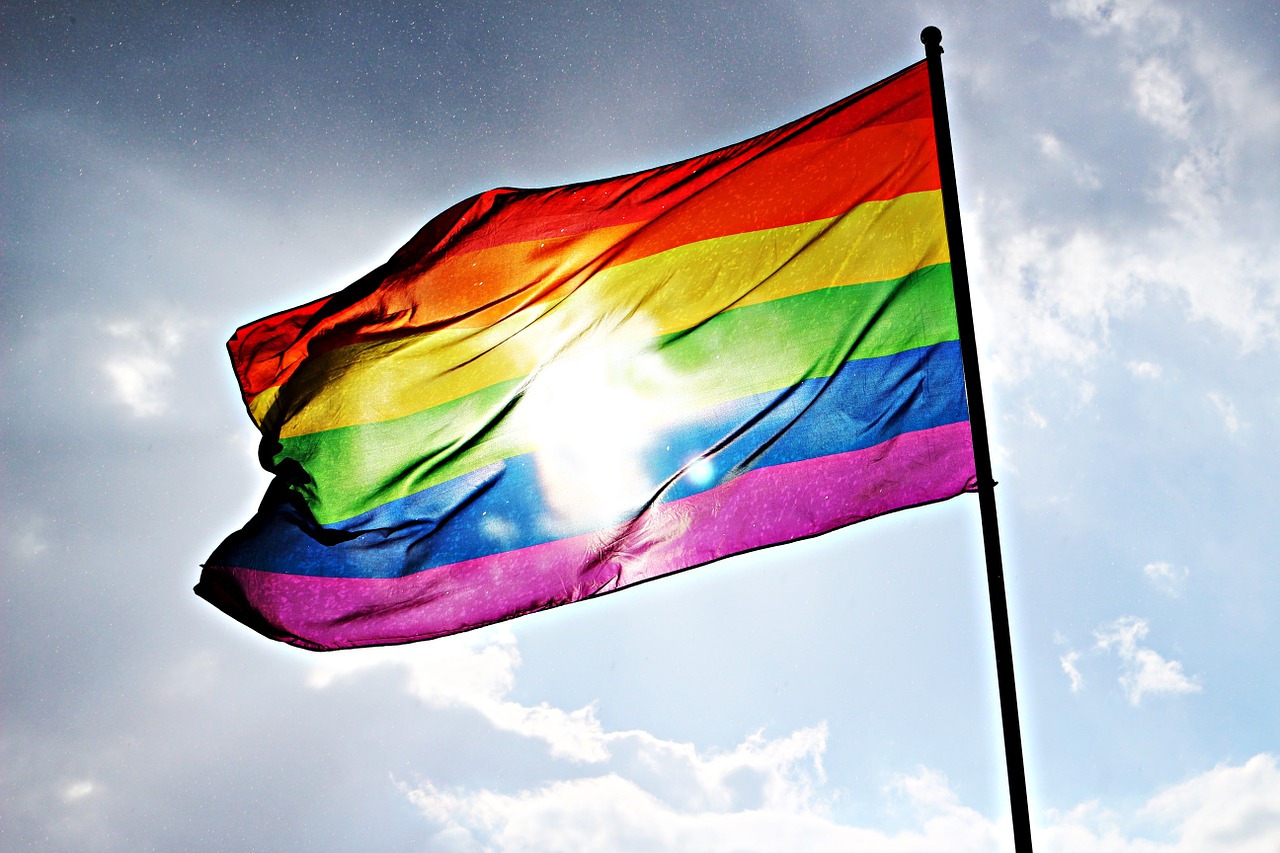
As I drive through the Welsh town of Pontypool I’ve lived in since I was born, with a population of approximately 36,000 people, I’m surprised to see a rainbow flag flying high outside the civic centre in the middle of the town. It’s LGBT history month, but the flag doesn’t just stay up during February. Instead, it has become a permanent feature, flying proudly with the Welsh flag and the European Union flag.
Whilst the future of the flying European flag is uncertain, the rainbow flag is there to stay. In this tiny Welsh town, it is almost historic. I’m a 23-year-old Welsh boy that struggled with coming to terms with my sexuality.
Wales’ track record of LGBT rights is a little bit hazy, but in 2018 The National Assembly for Wales was recognised as the top employer in Wales for LGBT employees. This sort of movement is quite a good sign of how Wales has changed over the years. We have gay clubs that are thriving, venues that host drag queen shows, and the smaller towns are beginning to accept what is normal. Just last year, Newbridge Memorial Hall hosted a drag queen event.
Growing up gay in Wales, I found it incredibly difficult. The town I live in is rather behind the times: we have poverty, we have more empty shops than booming ones, and the people who live here are rather set in their ways. We’re a country run mostly by Labour, yet my area voted leave, and many conversations I hear are in support of a Tory government and a hard Brexit.
As I grew up, the rather cliché saying of ‘knowing I was different’ rang true. I didn’t get along with ‘the lads’. I’d rather stand on the railings singing Girls Aloud – mainly Nicola’s lines; I was always Nicola – than play football. I got taunted for being a ‘girl’.
It hurt, but being young I didn’t really know what that meant. Then, through secondary school, I experienced almost daily taunts of ‘gay boy’, ‘faggot’ and ‘bender’. As puberty kicked in and feelings for guys intensified, so did the bullying, as hormones raged in every teenage boy in school, and the idea of a ‘queer’ being anywhere near them repulsed them. I remember experiencing comments from teachers. PE teachers would always treat me like a stereotypical ‘gay boy’ that would rather be brushing my hair than learning the rules of football. I remember a few of my PE classmates disappearing for a class to go on a drama trip. To snickers from the rest of my class, my teacher said, “so all the poofs have gone off to watch show tunes.”
No one blinked an eye at this comment.
Lisa McNally is a mother from Cwmbran, South Wales. She witnessed her son, Lewis, now twenty years of age, experience homophobic bullying. She agreed to talk to me to discuss her son’s bullying, as she thought it was important that parents who are aware of their children’s sexuality should be there to support them. “I have a son who grew up in Cwmbran and attended the local comprehensive school. He endured daily abuse from his peers and from the teachers. When I attended the school, I was informed by several teachers that Lewis should not tell people he was gay, and that he wouldn’t be bullied.”
When Lisa questioned why such a comment had been made, the teachers told her that her son would not be received well in the community. “I was told to remember that Cwmbran was still a village and ‘forcing the gay agenda’ wasn’t warmly received.”
“I have walked through school with Lewis to chants of ‘faggot’, ‘gay boy’, ‘bummer’, and I have endured this when walking through the town centre with Lewis, too. He ignores them. I found it hard to do so.”
Such was the regularity of her son’s bullying that Lisa visited the school Lewis attended in the hopes of stopping his heavy bullying. “I have walked through school with Lewis to chants of ‘faggot’, ‘gay boy’, ‘bummer’, and I have endured this when walking through the town centre with Lewis, too. He ignores them. I found it hard to do so.”
Lisa notes, however, that when the pair shopped in Cardiff, there were no comments and barely any stares from the people in the city centre. It paints an image that whilst city centres were more forward thinking, small Welsh towns were still very much being left behind. Due to Lewis’ bullying, he dropped out of school and left with no education. Lisa described that her son felt suicidal, and whilst better now, he did suffer with depression. Lewis said that ‘being made to go to school every day’ made him feel vulnerable, and his experience was a ‘living hell’.
Once I was out of school, like Lewis, I began to accept who I was and embrace it. It wasn’t until I started working as an eighteen-year-old that I was confident to admit that feelings for guys were there. I began by admitting to my friends. Yet I was still afraid of declaring that I was gay; the liberation of saying I liked both sexes was a step in the right direction.
Matthew Cleverly, an actor originally from Pontypool but moved to London to study, realised he was bisexual when meeting a group of like-minded individuals. Being in the same year as me in the same school, Matthew and I observed the treatment of those individuals that did ‘come out’. ‘Looking back I remember a few of my friends coming out as LGBTQ+ and although some were accepted by friendship groups and families relatively easily, others were harassed, bullied and rejected.’
Matthew reflects that as he grew up in the Welsh valleys, he suppressed a part of himself. “I didn’t grow up queer in Wales. It was only after I moved out that I realised what was always there. I’d moved to London to go to drama school, and was also, at that point in a four-year relationship with a girl. It wasn’t until I was given the freedom to move away from the judgement of a small-town, Welsh community, and was thrust into a supportive, creative environment, in which I had to constantly self-analyse, that I began to discover and accept the other side of myself.
“I realised that I had taken the path of least resistance my whole life,” Matthew continues. “And although the relationships I had were real and loving, I hadn’t been fully there because I was always concealing a piece of myself – even from myself.”
Matthew believes that part of his reasoning for not acknowledging his bisexuality was because of a lack of LGBT role models. ‘Not having strong queer role models definitely aided in me not coming out for so long. In a place such as small-town Wales, feeling different can be so much more isolating, because you can’t see anything beyond your circumstance. It’s important to remember that although you may feel you’re not in the right place now, you will find your tribe eventually, and they will love you for exactly who you are.’
Finding my own tribe was a key feature in my acceptance. Some of my best friends were also ‘experimenting’ with the same gender, and being able to talk honestly to people after so many years of hiding feelings was like a freedom movement.
At eighteen, I began to go out on the nightclub scene. In the town of Newport, I’d regularly have a group of same-dressed looking boys glaring at me from across the dance floor as I dared sing along to Miley Cyrus. I’d have people double take when they saw me kiss a man. Going out on nights out in my hometown was a whole other story. When waiting at the cash point one night, stood alone and not doing anything remotely attention seeking, a guy across the road shouted at me, “OI, FAGGOT!” Mature and annoyed by this, I turned to leave. But he wasn’t done. He shouted, “Yeah, that’s right. Fuck off before I punch you.”
At the same time, I discovered Cardiff’s gay scene. With new friends, I would go out and play the field. Cardiff was a lot more liberating than that of Pontypool or Newport.
Jennie Scrivin, from Pontypool, found solace in Cardiff’s gay scene when she was discovering that she was a lesbian. “There wasn’t a lot of gay people when I was growing up. Coming out was hard. Would I be accepted? I’d spend every night out on the gay scene, but that was in bigger cities, not my little town. I felt like I finally fitted in.”
At eighteen, Jennie came out and is now in a relationship. Older, and out, Jennie remarks that attitudes are beginning to change. “It’s not a taboo word anymore. I just hope it continues to become more and more accepted.”
I have to stress that growing up during my teenage years, I really did find it difficult to come to terms with who I was. I turned to a blade to keep my emotions at bay, and to cope with who I was I regularly sought solace in online webcam sites, where there were men and teenagers like me that felt the same. As I got older, I accepted who I was. I soon admitted that I was gay, rather than bisexual, and when I told my parents, they really couldn’t care less. I think my dad nodded and then said, “What do you want from the chip shop?”
Small Welsh towns still have a lot to do to promote inclusivity. When working in a pub in the town in 2016, I would regularly hear homophobic slurs. To the people saying them, they were just jokes. But to a gay bartender who had overheard, I had to bite my tongue. To promote inclusivity, Welsh towns could support those who are growing up gay that may feel afraid to tell anyone who they are. When I was younger, there were no support groups. Whilst I suspect many older adults such as teachers realised I was gay before me, I was never questioned on it in a nice way or made to feel like I could talk to someone about how I felt.
Yet every time I drive past the rainbow flag in the centre of my small town, I feel that sense of pride. I remember that there are people there that accept me for who I am and that flying a flag of many colours not only represents the gay people in my town, but the lesbian, bisexual, transgender and the queer community.
A small Welsh town that I call home is opening their arms and embracing change, and that is something we must all support.
The sad passing of Sharon Bottoms Mattes, 48, in January this year shone a spotlight on LGBT+ rights in the 21st century, and how far attitudes and family law have changed abroad and in the UK.
In what was a terrible example of the injustice to same-sex couples and their children is the American 1994 case involving Mattes, who lost custody of her son after the court ruled that she was an unfit mother because she was in a same-sex relationship. The details of this case are as shocking today as they were at the time.
In the UK, societal attitudes towards same-sex parents has changed considerably over the past 25 years. Thank goodness, because this has been both to the benefit of couples, children and the emotional welfare of other family members.
Yet family law is struggling to keep up with what some have deemed to be the ‘modern family’, and unfortunately prejudice and inequality still remains for LGBT+ couples and parents.
Of course, in the last 25 years so much has changed. Civil partnerships were introduced in 2005. This was followed by same-sex marriage in 2014. This granted the same rights as married heterosexuals. This ended the appalling treatment same-sex couples had received. For those in a civil partnership or same- sex marriage who have a child both parents have parental responsibility. Yet there is still inequality that exists.
Since 2005 unmarried couples were given the right to adopt. Equalities legislation passed in 2006 to ensure that there would be no discrimination on the grounds of sexual orientation when going through the adoption process.
When it comes to surrogacy, same-sex couples can apply for a parental order if they have their child via a surrogate and one parent is genetically related to the child. If couples are not in a civil partnership or married they must be living as partners in an enduring family relationship if they wish to apply jointly.
Single parents have been able to apply since 3 January 2019. Yet our surrogacy law are dangerously behind when it comes to the needs of modern families, leaving couples vulnerable to exploitation or worse, losing their child.
It is important that family law keeps up with the needs of families today, and continues to progress so LGBT couples and their families hold equal rights.
Linda Lamb, Solicitor and Director at LSL Family Law
Writer Scott Sammons takes us through the basic don’ts (and he’s got four years of experience apparently) if you’re trying to be sexy on a first date… Buckle up.
CREDIT: mast3r-bigstock
For those of you that follow me on social media (@i_scotty in case you’re interested), you know that I am very much a single pringle currently (partly through my own choice) and have been on a number of dates over the last four years now (four years – wow, how time flies!). This means I’ve picked up a few things about how to not look sexy while on a date, plus a few other hints and tips. Namely, because I seem to have mastered the art of not looking sexy recently.
So fellow singletons (and people that just fancy a laugh) indulge me a little while I take you on some tales of woe on how not to look sexy on a date (followed by another blog post with tips on how to look sexy on a date).
There are some cardinal rules on what to do and not do on a date. For example, spending more than five minutes talking about your ex(s) (or talking about them at all) is as far from sexy as you can humanly get. However, it is an easy trap to fall in to. So our first entry for how to not look sexy on a date is to talk about taboo subjects like your ex/politics/the offside rule (but like I know what that is)/your rather itchy and sore piles.
This wasn’t me I hasten to add, but instead a lovely (albeit eager and inexperienced) young man I once dated. I say ‘dated’, it was one date and this was just one of a number of errors on his part.
Some of them not his fault I might add, with experience we just learn these things.
The evening started well enough, a civilised drink in a small pub near where we both live. The conversation went through the usual small talk before, as you do when conversation flows, you start to get on to the more interesting subjects. However, this young man made a bit of jump from one subject (I can’t remember what so we shall say it was food) to the subject of how his ex used to fret and control what he ate on a daily basis. Now I have nothing but sympathy for the guy as it sounded like a taxing relationship but at the same time, he spent a good hour on the subject despite my best efforts to move the conversation on. I’m not saying it’s never to be discussed, but that’s a conversation for a later date, not date number one. So while you should bring up exes on dates at some point, date one is far from sexy! For all sorts of reasons, the ex-factor is never sexy…
Run to your date because you’re late (and don’t pack an umbrella)
The last time I went speed dating I took a friend with me as he needed cheering up and, as I’ve told him many times, he needed to get out of his own head and just meet people other than those on Grindr. If you’ve not been speeding dating, I highly recommend. A great experience, and even if you find no one you get to meet people and realise you’re not the only one out there thinking that all men must die… sorry, I meant all men are perfectible datable. Silly me!
This particular event was occurring in London in the evening in a bar somewhere outside Kings Cross. I had been working all day, it was raining and I had to use the sauna known as the Central line in order to get across town. As you can imagine, therefore, I turned up to the said event looking a little bit like a drowned harassed rat that, I suspect, also smelt a little bit as it had been a very long day and I had to run because I was late.
I appreciate that some men enjoy the ‘manly musk’, and indeed so do I from time to time, but at a speed dating event, it is not the best place to release the locker room level smell. I was, for want of a better word, a real catch…
To my surprise, I didn’t really get any matches or follow-ups. Not because of my stunning good looks or personality (pfft) but because I looked like someone that had been drowned, whipped, sat on by 100 rugby players after a match and probably smelt like the arse end of a gym bag. Or rather, that’s what I chose to believe otherwise I really am ugly and have an awful personality (don’t laugh, I can hear you from here!).
Talk about politics and tell me the wonders of why you are right and I’m wrong.
This point is a little political, but it isn’t meant to be per se. Politics is just not sexy to most people so it’s always a risky area to venture in to. If you know me you know that I am a firm advocate of debate, however, there is a limit to this and a long lecture on what you are right and I am wrong is not something that I would consider sexy (or decent behaviour) by any man’s standards.
This particular date started off well enough (as they all do). I knew that he did have certain ‘leanings’ but I personally don’t think that in of itself is a turn-off. But as the evening went on the conversation kept coming back to his points of view time and time again. One particular view, that of our Transexual brothers and sisters, was particularly interesting. We started talking about the issues they face and the lack of support from the community and he went into a bit of a party political broadcast on why it was all nonsense. As you can imagine by this point, my goal was no longer to find a soul mate but now more to shut down the close-minded gentleman and finish my drink. (I did write another name for him there but I decided to remove it because I’m not a child – but I am thinking it!!). Everyone has different views on all things, and I certainly don’t believe partners should agree on all things (as that’s just boring – personally I find a good debating partner a massive turn on). But when you start ramming your views down your date’s neck shortly after meeting then there is, to be blunt, something seriously unsexy about you.
Some people may like that, but most of the people I speak to don’t. I’m not entirely sure where I found this one, must have been Grindr as I passed the local conservative club (now that was political…!!).
Eat that really messy food and share it with half your face.
I like sticky messy food as much as the next man, this may also explain why I’ll never be a clothing model. But on the first few dates maybe having the large rack of ribs, or the spaghetti bolognese, lobster or other hands-on messy foods isn’t a good idea. Get to know the other person first, then maybe on date 3 or 4 you can both be messy and have a laugh about it.
This ‘sin’ was very much done by me as I really fancied spaghetti, forgetting completely that my method of eating spaghetti resembled that of a cat trying to eat spaghetti. I tried and I tried to be civilised about it, using the spoon and the fork to wrap or cut up the spaghetti but the harder I tried to not come across a grown adult that can’t handle is spaghetti the more I just dug a hole for myself.
Luckily the guy I was on a date with was fairly humorous about it and I became the butt of a joke or two (adds to the charm of the evening I find) but ultimately I didn’t get a second date and food mishaps can backfire quite spectacularly. Messy food equals a messy date – avoid avoid avoid!
Call me old fashioned, but on a date I want to feel a little bit wooed, charmed and something that resembles a smile on your face as you leave. I don’t want to be left waiting, go hungry because you ate before coming (even though we are meeting for dinner) and spend 20 minutes waiting for you on my own at the table because you’ve gone off to the bar to get drinks and spend 15 minutes flirting with the barman.
Yes, boys and girls, I can safely say that this particular date made even the great Cilla Black turn in her grave as a golden example of how to not look even remotely sexy in the eyes of your date.
We did eventually eat and there was eventually a sense of ‘charm’ in the air but by this point, it was a case of too little, too late. There are a few things in there that wouldn’t make you even remotely sexy in someone’s eyes – being rude, being late and being about as charming as a dinner with Katie Hopkins.
Respect, in my book at least, is one of the sexiest qualities in a man. Debate me, respect me and charm me and I’m yours (and people say I’m picky…).
I’m not going to go into other physical things to do or not to do with regards to looking sexy on a date because everyone finds what is sexy so wildly different. I, personally, think to turn up for a date looking like a fashion disaster hit Popeye the sailor man to be ‘unsexy’. But to others, you could be sex on legs in your badly fitted, camp as tits, slightly over-worn Popeye outfit. Each to their own and who I am to rob someone of that.
But what I will say is that we all have our dates where we come across as miles away from sexy. And that’s fine, we live and we learn, and ultimately we have a laugh. I now have hundreds of stories to share with my Pussy over a glass of wine (or to bore you all with) as a dull date where nothing happens is about as fun as an episode of Antiques Roadshow.
So with that I say keep an eye out for the next article on how to look sexy on a date, some tips from a thirty-something serial dater that has tried and tested many a method to share with you (and yet is still single… not really sure how I ended up with this as an article idea).
YOUR SUPPORT MEANS EVERYTHING
Help us deliver unique, usable and reliable journalism that supports the gay, bisexual and curious community of the United Kingdom. Can you help protect LGBT+ media? Publishers like us have come under severe threat by the likes of Google and Facebook. The problem is that advertisers are choosing to put their money with them, rather than with niche publishers like us. Our goal is to eliminate banner ads altogether on site and we can do that if you could pledge us a tiny amount each month.
We’re asking our readers to pledge just £1 per month, more if you’re feeling swanky. You can stop payment at any time.
It’s quick and easy to sign up and you’ll only have to do it once.
On the surface, the term “White Gay” may not strike a chord of recognition. But it’s an issue that is becoming insidious and problematic within some areas the community.
I’m hoping that after the explanation, people do continue reading because this is an issue that needs to be discussed and understood. So what does “White Gay” actually mean?
It’s the notion that within the community there is a simmering underbelly of racial/societal ignorance. Now I dislike the term white privilege because as soon as that phrase is mentioned, there is an instant backlash against anyone trying to point out, that society IS in general easier for someone who is white, tall and thin. It’s not an individual thing, obviously, there are tall, fit, white people out there who have a hard time. This is a generalised observation of how society views these white people and people of colour.
As a white person myself, I will never truly understand actual racism and I don’t pretend to know what any person of colour goes through on a daily basis. Jane Elliott conducted many experiments around racism, most famously The Blue-eyed/Brown-eyed experiment. She went about separating blue-eyed people away in a different group and treating them with contempt, while openly praising and helping the brown-eyed group. Reactions were mixed, and some people thought her experiments were nasty and pointless and only fueled the idea of racism. But she made very valid points regarding the fact that after the workshop, no matter how bad the white blue eyed people were treated, it would stop, people of colour don’t get that kind of break.
But I digress, how does this reflect on the LGBTQ+ community, surely we are all one harmonious group of rainbow love. Sadly this just isn’t the case. Recently there has been a contentious issue regarding adding a black and brown stripe to the rainbow flag to represent people of colour in the community. On the one side, there are people who feel these stripes should be added because those people the new stripes represent do feel marginalized within an already marginalized group. And on the other side are the people who feel the flag was never about race, the stripes represent different emotions, and feelings of the community and further segregating groups only feeds the fire of alienation.
The issue of the stripes also came into sharp focus in the community when drag queen Peggy Wessex shared a poster designed for her depicting the black and brown stripes being vomited up by a unicorn with the rainbow colours in the background and the tagline “taste THE rainbow.
There was of course defenders of Peggy saying she was a comedian and that banning comic things was just political correctness gone mad.
Is it racism, or is it simply ignorance of race? There is a huge difference between the two.
Now don’t get me wrong, I’m all for nothing is sacred in comedy, but when it comes to taboo subjects, it all depends on how you construct the joke. This was poorly thought out and just wasn’t funny. It was deliberately designed to provoke a reaction. Peggy didn’t design the poster, but she endorsed it by sharing it and making comments such as “how it should be”.
Speaking to a friend of mine about the flag, he voiced worries of being seen as racist if he didn’t have the flag with the black and brown stripes on.
But he made an interesting point, as a white man, the stripes aren’t for him to decide upon, so the flag isn’t for him to wave.
Another point he made was that a lot of the arguments seemed to be between white people, he saw few people of colour voicing an opinion. Is this a symptom of trying to look “woke” and tolerant instead of actually just being nice to people as a normal behaviour? Does an overcompensation actually do more harm than good?
I can see both sides of the argument, the flag never represented race, but people of colour can feel like they aren’t fully a part of the community and want a valid representation of their identity.
Is it racism, or is it simply ignorance of race? There is a huge difference between the two. Ignorance of race is unpleasant, rude and stupid, Racism is dangerous, unlawful and pervasive. And it can start off small, with the idea of preference.
We’ve all heard people say “but it’s just my preference” about who they are attracted to and having a preference is fine no one is telling you to be attracted to someone you’re not, but one has to ask themselves, is it truly a preference, or is it ignorance of race? Outright dismissing or fetishizing someone based solely on race IS racism and it can be incredibly damaging. And some people are disturbingly open about it, putting on their dating profile their “preferences” usually in an incredibly disparaging way.
White Gay term doesn’t just cover race
But the White Gay term doesn’t just cover race, it covers a multitude of things, based on weight, height, amount of hair, gender identity & disability among other things. An easy dismissal of someone based on how they look. Small snide comments such as “You’d look good if you lost a few pounds”.
A look at someone in disgust, whispers and pointing/laughing. These things can really affect a person and while obviously as a society the first thing we see is appearance and an initial attraction is based on looks, that only goes so far. You can find an incredibly hot guy and he’ll turn out to be narcissistic, selfish and shallow. Personality can easily outshine any perceived flaws.
Differences should be acknowledged, and talked about in a positive way. A lot can be learned from other people’s experiences or heritage.
I have sadly heard stories of certain gay clubs (which shall remain nameless) actually refuse entry to someone based on how they look. No wonder there is self-segregation within the community. But self-segregation is just as damaging as outside segregation. Only sticking with your own group highlights the differences instead of everyone coming together and being supportive of each other. Differences should be acknowledged and talked about in a positive way. A lot can be learned from other people’s experiences or heritage.
The point of this piece isn’t to call anyone racist or shallow because not everyone is, it’s to bring light to an issue that is there and does have ramifications towards people.
I’m also very aware that any discussion from my point of view can be instantly shut down with the phrase “You’re a cisgendered white male, you’ll never understand” And no I won’t fully understand or appreciate everyone’s experiences, but that doesn’t mean that I can’t have a meaningful debate and discussion where we can learn from each other without any valid points being dismissed.
I live by two simple mantras, treat everyone how you’d like to be treated yourself, and learn something new every day, no matter how small. The more we learn, even from people we disagree with, the more we grow.
People are so quick to argue or take offence instead of actually talking, and figuring out why a reaction is had. Will this solve the issue? Far from it, but I’m hoping it at least opens up an important discussion.
I recently rediscovered the joy of wanking. I make no bones about it, but for the past 24 years, I’ve been a poppers user. The wonders of that amyl nitrate smell rushing up your nose during those heady days to a Kylie track on the dance floor of the White Swan in East London or during the euphoric moments during anal sex. It was wondrous.
Forgetting the fact it could give you a monstrous headache and when not at their finest (read that as fresh) they smelt like old socks, but the rush was real. It was fun.
Several years ago, the government banned the sale of amyl nitrate and instead we had to make do with Isopropyl nitrate and to be honest, they are rather crap. I’ve tended to need more and more to get the same rush and to be honest, it’s just not doing it for me anymore.
And then the other day, I ran out. It was a Saturday and my local “special interests” shop was closed and I wouldn’t be able to get some until the following week. I had to wank it alone. Cheese n Rice! I was not expecting what happened next.
24 years of being somewhat “off your tits” does make you lose your senses and control the rush. I’ve literally been cumming and going. Not anymore though. Suddenly out of nowhere came this tightening from my inner thighs. I’ll be honest here, it ruddy well hurt! Suddenly I was having an orgasm.
I’ve had orgasms before, and when you get the rocking on, I’ve been known to scream like a fox. I’ve also shouted out Pilots 1975 hit “Magic”.
Most of the time though I’ve not. I’ve felt the rush, gone giddy and then I’m reaching for the tissues.
So there I was, somewhat shocked at this pain from within my thighs. I’d be lying if I said I didn’t try it again later that evening because I did. And again, the rush came, the thighs tightened and the pain was this time quite exciting. I felt like an adolescent again when I first played with the meat stick.
And this continued so I decided to experiment with different techniques because this time I was able to. And there I was, bringing myself to the edge of cumming and I’d stop. I was able to stop. You see with poppers, I always found that once the rush was there, it was over. I wasn’t going to be able to stop it.
And the fun hasn’t stopped there. I’ve angered myself several times by getting there and then stopping. Adjusting speeds and grips. It’s been an a-wank-ening and I’m glad it happened. I’m glad on that Saturday afternoon, I had run out. I didn’t know you could get sweaty palms like this!
So try something different this weekend. Don’t sniff poppers. Go it alone. I can tell you this, you’ll bloody LOVE it! It wasn’t exactly easy at first, I’d taught myself that every good arrival was with the help of that little bottle.
So goodbye poppers, my little wanking partner. It was fun, we had over 2 decades, you fried my brain, lost me some brain cells and you brought me to the edge of heaven in Heaven to Heaven but I’ll pass now. I’m done.
If you’re fed up of dating apps and want to make a more meaningful connection with gay, bi or curious fellas in London then maybe it’s time to go a little old school and join our social network.
Not everything has to be a swipe, like or a tap. In fact, you could be building a more meaningful relationship with someone, over the internet without being on a dating app constantly.
THEGAYUK has launched its own social network for gay, bi, curious and trans people who are looking to building longer-lasting, social media-based relationships – without bans or censorship of LGBT+ pictures.
Within a month we’ve already grown our member to over 3500 people and it’s growing every day.
There are loads of reasons to join a gay, bi and curious social network as opposed to a dating app. Many dating apps require you to have your GPS on – rather than you being able to select a general area. This means you can be a little more private about your exact location if privacy is your number one priority.
Also, not everything has to be a dick picture. Why not create a more meaningful connection with someone based on other interests beside what’s between your legs?
Lastly, you don’t have to settle for a Mr Right Now. Why not build more friendships which can lead to a Mr Right, full-stop.
Tumblr, Facebook and Instagram may all be banning the body, but here we embrace it. As long as it’s not illegal and you’re over the age of 18, then welcome to our site.
I’m 35 years old (how many years is that in gay years?)
Free-Photos / Pixabay
I’m single and I have been for quite some time. Most people my age have settled down. Some met a long time partner, a husband or a wife. Many already have kids.
As I get older, I find it more and more difficult to avoid questions such as: When are you going to get married? How come that you don’t have a partner? Do you never think about having kids? Countless times I used excuses such as: I’m too focused on my career right now. I’m too busy for a relationship.
I want to travel first before I settle down. All those are true, but in all honesty, the main reason why I didn’t settle down is very simple: I just haven’t found the right guy yet. Yes, I do have high standards, and I wouldn’t settle for less.
Why is his not an issue?
While we live in a society that makes us feel as though being single is something to be concerned about, it really isn’t how I perceive it. I was n a couple of serious relationships. Was I happier then? No!
I think it is a common mistake to assume that we need someone to make us happy.
In my opinion, that couldn’t be further from the truth. My happiness doesn’t depend on anyone but me.
I wouldn’t put the key to my own happiness in someone else’s pocket.
Imagine what a responsibility it would be for the other person!
Also, let’s not forget about the many advantages of being single: I can focus on my career, I can travel on a whim, I have more time to pursue my hobbies, I can have the full bed for myself…
Basically, I can do whatever I want whenever I feel like it. And I am so much more relaxed emotionally!
Being single allowed me to get in touch with myself and to (re-)discover the true beauty of the little things that we often take for granted: seeing a beautiful sunset, stargazing, eating my favourite meal, listening to my favourite song, dancing like there is nobody watching, falling asleep while the rain gently beats against my window, swimming naked, making someone smile.
Does this mean that I would like to be single forever? Absolutely not!
It would be great to find someone special to share all these things with. I am definitely open to that possibility.
My point is: That it doesn’t define my happiness. I would so pleased if people would stop asking me why I’m still single.
Instead, ask me if I’m happy.
Miguel Martins – Mister Senior Netherlands 3rd Runner-Up (www.facebook.com/MyOwnFado)
“The worst loneliness is not to be comfortable with yourself”. —Mark Twain
CREDIT: bigstock-soupstock
It’s often said that the modern world is very well connected but a lonely place. We have all these different tools for connecting us more than ever before, but it often feels like we are also further apart and alone than we ever have been before.
Fair warned before I start, I’m going to talk about a programme on BBC Radio 4, so put your impressions of that to one side for a moment (as I get stick all the time for listening to Radio 4 as a 30 something) we have something that you will find really interesting.
A survey of more than 55,000 people run by BBC Radio 4’s All in the Mind programme in collaboration with the Wellcome Trust has now given us some fascinating insights into loneliness.
“16- to 24-year-olds experience loneliness more often and more intensely than other age groups”
The “Loneliness Experiment” as it’s known, led by Developmental Psychologist Professor Pamela Qualter, was the largest survey of its kind and of the many things it revealed one of the most interesting was that 16- to 24-year-olds experience loneliness more often and more intensely than other age groups.
The survey revealed that 40% of 16- to 24-year-olds reported feeling lonely often or very often while 29% of those aged 65 to 74 and 27% of people aged over 75 reported the same.
In an interview given to the British Psychological Society Professor Qualter outlined why she thought young people suffered from loneliness more than others;
“It doesn’t surprise me though that young people are lonely – they’re at a point in life where they’re trying to work out who they are and what their place is, and that’s hard. It’s a time when you’re very vulnerable to loneliness. One of the things I thought was interesting was our younger sample weren’t just higher on the frequency of loneliness, but also much higher on the intensity of loneliness. That, for me, hints at the fact that maybe this is part of a normal transition. Younger people are working out who they are in the world and are also only possibly experiencing this thing called loneliness for the first or second time. They don’t know that this doesn’t last forever and they’re also trying to develop the different skills to overcome it.”
Hopefully, some more studies will come off the back of this, especially around the reasons why in the older generations they reported feeling less lonely. Most of us would perceive the elderly to be lonelier but it would appear not. Is that because they have learnt how to combat it or have simply learnt to live with it, therefore it’s not as intense as it is for the young and new to the sensation?
One of the things that the survey also revealed was that LGBT people also often feel lonelier than others, but only where they feel discriminated against. If, as Professor Qualter suggests, the feeling of loneliness is linked to self-identity and belonging then this makes complete sense. If we feel that we should belong somewhere, but don’t for whatever reason, we can often feel isolated and alone.
Free-Photos / Pixabay
As discrimination is very much alive and well both outside and inside the LGBT community this doesn’t surprise me. One of the other results of the survey showed that people had different ways to combat loneliness, one way is to go out and meet new people (even if it’s just an interaction with the local shop assistant).
This is also the reason why the charity initiative ‘All Together UK’, which won an Attitude Pride Award earlier this year, is vital in trying to combat that sense of loneliness in the LGBT community. It’s not been around that long as is a simple concept. Events, all around the UK, where people can come and meet people they wouldn’t normally have been exposed to, in a relaxed and supportive setting. Whether it’s this, OutdoorLads, your local LGBT charity events or even your local pub quiz night, if it’s a safe space then do consider going along either on your own and make friends or take a friend and see if you can get to know some more.
While we will never be able to eradicate loneliness, and even the survey says that many people appreciated some ‘alone’ time, initiatives like this and many more are vital for ensuring that everyone feels included and that they are not alone.
I do recommend listening to the podcast where they reveal the results and explore some of the themes. Loneliness affects us all at some stage and learning a bit more about what it means to be lonely and some of the different ways of coping with it might help you either now or later in life.