Motoring journalist, Neil Briscoe, on Twitter recently posted up that the best car he’d ever driven was a Mercedes pagoda. It got me thinking. I get to drive lots of new and old cars and those in the middle. But which is my favourite?
This is difficult because my driving career spans 26 years and when I look back I could say the 1979 Mercedes 280SL but I was 18 when I drove one of those and compared to my second Citroën Visa, it was powerful and luxurious. Likewise I was also 18 when I first drove a VW Beetle and that’s enough to put you off motoring despite wanting one.
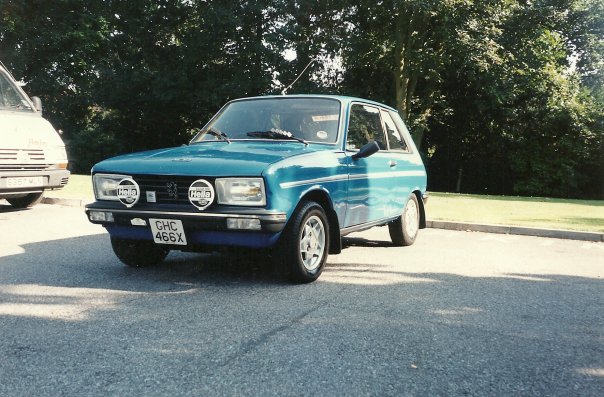
No, it’s taken me some serious thinking, a little bit of drinking and a thumbing through photos and books to come up with my best car I have ever driven. It’s the Peugeot 104 ZS.
I’ve had 2 of them. Both 1980 models, both blue and both ZS models. The first was quite the wreck but the second was much better. It wasn’t the best car in the world though. In refinement and luxury departments, it was overshadowed by the likes of the Ford Fiesta and Renault 5. It was rather crude and basic despite having electric windows and alloy wheels. It had rubber mats in the rear, piss poor ventilation and a tiny boot.
What makes it the best car I’ve ever driven was one fundamental thing: I’d look at it and for unquestionable reasons, I’d dread the drive where I had to go. Yet it always entertained. It’s diminutive size and 1360cc engine with 72bhp was hardly left embarrassing itself in traffic of the day. I also had a comfy luxo barge, Peugeot 504 Ti automatic in the garage at the time too.
On the motorway, it kept up and beyond despite only having a 4-speed gearbox, it was never tiresome or overly noisy. The 12 CD changer in the boot, 6×9 speakers in the rear side panels and 7” in the doors put pay to excess noise by drowning out the cacophony of mechanical screaming to Kylie Minogue and Duran Duran.
It was also one of the last cars I have owned where I’d just jump in it late at night and head for the roads in the dark. I’d be out for hours and hours, yellow Sev Marchal headlights cutting through the worst of the night. I did some stupid things in it and yet I lived to tell the tale. It never once got so out of hand that it ended up facing the other way. Something that could not be said for the Peugeot 205!
The entertaining also stretched to its ability in the snow. Being a home carer at the time, I needed to get out and about in vile weather and that car was amazing in the snow. Small wheelbase with all the weight over the front wheels certainly helped. Its Achilles heel was its wipers. They were slow.
So here we are, 2018 and the 1980 Peugeot 104 ZS has to be the best car I have ever driven though probably not owned. Oh crap, now I’m thinking about that one. Be right back…
This week is Suicide prevention week, a chance to be informed of how to prevent a friend or loved one from taking their life. Advice that, sadly, is much needed in the LGBTQ community.
One in four! With most recent tragic victim 9-year-old Colorado boy Jamel Myles fresh on our minds these figures now have a face, and we need to think of ways to stop adding to this count.
Over the last few months more terrifying statistics have been released: According to the Metropolitan Police, the number of homophobic hate crimes being committed in London has doubled over the last five years. But not just there, searching through online reports homophobia is on the rise around the world (in every walk of life) and so is the bullying of queer youth – apparently even by teachers in several cases.
The first thing that needs to be done is more attention to bullying prevention, as this is where it starts. These are dangerous times to be young and “different”. With bullying seemingly legitimised by the internet, media and politics adults feel they have the right to point, judge and hurt; whether through social media or verbally. This behaviour rubs off on young children and teens, leading them to judge others the same way.
“It is horrifying to know that bullying has become even more vicious and unrelenting since the 1990s, especially since the “invention” of online bullying. It is a horrific idea that these days the harassment just continues at home, in what should be the safety of your bedroom”
Bullying has always been around amongst children, of course. I too was a victim; different, mixed raced and shy I was an easy target. It too drove me to try and take my life, my mother saved me, and for that, I’ll always be grateful. This was in the 1990s, and it is horrifying to know that bullying has become even more vicious and unrelenting since then, especially since the “invention” of online bullying. It is a horrific idea that these days the harassment just continues at home, in what should be the safety of your bedroom.
What is needed is more help and support for young LGBTQ teens: an appointed counsellor (preferably LGBTQ themselves) in every school would be a step in the right direction. Children and teenagers talk easier if they feel the person is “like” them or “gets” them. Educating teachers about bullying and other problems LGBTQ teens face is important too.
More bullying prevention and a zero tolerance against bullying and discrimination are also very important. Far too often the bully gets validated in his or her behaviour with alarming future consequences.
Bullying leaves lifelong scars that can be damaging. It can cause a crippling lack of confidence, PTSD, internalised homophobia and lots of other mental health issues. Protecting LGBTQ and other bullied children now is protecting their future. Protecting LGBTQ and other bullied children GIVES them a future!
Music is a funny thing. It does evoke such memories and for the majority of the time in my life, they are good ones. Even if the outcome hasn’t been as I had wished for, I can still see the goodness in it. Misinterpreting, however, is easily done when it seems to offer an escape or fits a situation even if that wasn’t what the artists intended. One song in particular just does it for me.
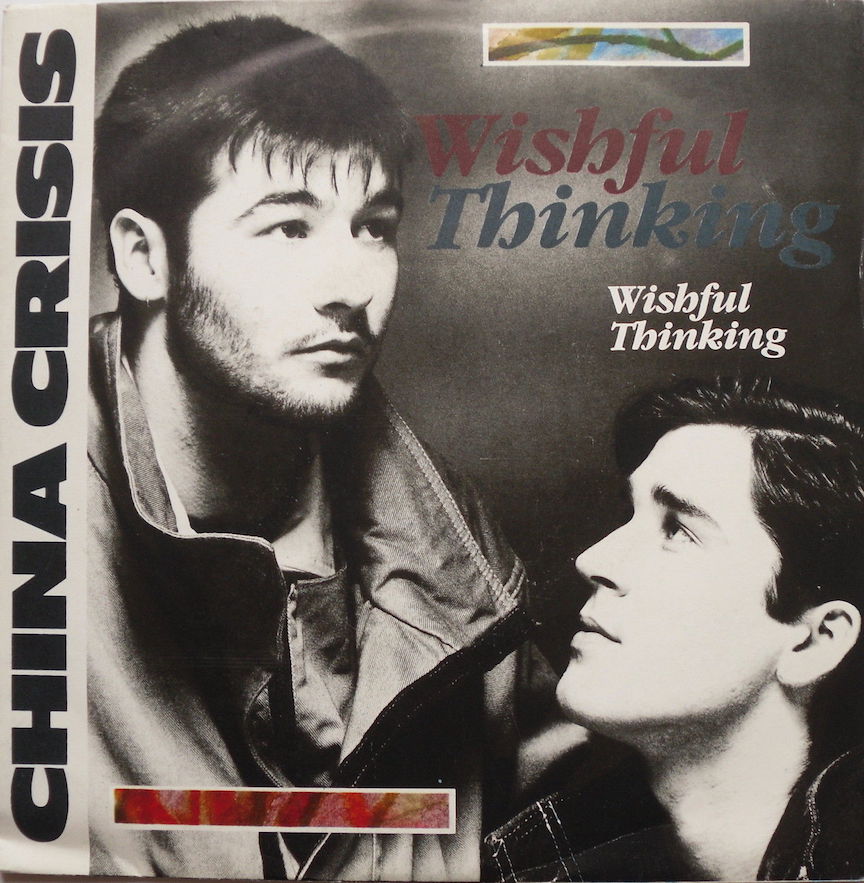
“China Chris” ‘Wishful Thinking’ came on the radio the other day. I loved that song. Even though the song was released in 1984, I loved it even more back in 1994. I’d bought a CD titled Electric Dreams and at the time it was the only album l played. It also went well with a 1980 Citroën GS Club estate l had at the times.
Anyway back to the song in hand by China Crisis. Apparently, it’s not a gay song and yet when you look at the song cover sleeve you can see why I thought it was. Lead singer Eddie Lundon was fit. Bandmate Gary Daly was looking up at him sort of in my eyes wishfully thinking what I was.
Listen to the song and you can quite easily see why, as a confused 19-year-old youth with a longing for the man from Securicor deliveries, that I made it about him.
“It’s time we should talk about is
There’s no secret kept in here
I see the likeness in his smile and the way he stands
Makes it all worthwhile”
Just those last two lines from that chorus did it. I would stand at the window of the awful soft furnishing shop I worked in and look out for him whenever the blue Securicor Ford Transit van would pull up down the high street.
My word, l was in lust with him. I’ll spare his name though don’t think for one second I haven’t looked him up on Facebook. I’m not very good at stalking and I failed miserably. I’ve either not quite got the last name right or he simply isn’t there. Just getting his name was a feat of success that I remember it well. I can’t tell you how I kicked myself with joy when l did. I even kept the piece of paper with his name in and I still have it to this day.
Life was simpler for a 19-year-old Stuart with no mortgage to pay.
I can’t quite admit that l would find fault in fabrics and curtains just so they would be returned and that he’d have to come in to collect but I did. Lust is a silly thing. Makes you do silly things. Didn’t resort to stalking though, as I say I’m not very good at it. I didn’t have time either. To be honest, where do people find time to stalk people?
Back to Mr Securicor, he was just perfect. Or so I thought. One day he came in and told me he was leaving to become a supervisor. He broke my heart. He left me, stranded in the shop I hated and never to be seen again and he wasn’t. I never saw him again. Except for today when that song came on the radio and again after that when l played it on loop for about 15 times not sobbing uncontrollably into the sleeve of my jumper. If I can’t be an excessive stalker, then at least let me stalk with a song and happy thoughts.
Our returns reduced quite dramatically after that and where is he now? Haven’t a clue. It was a silly lustful crush and “Wishful Thinking”… only just.
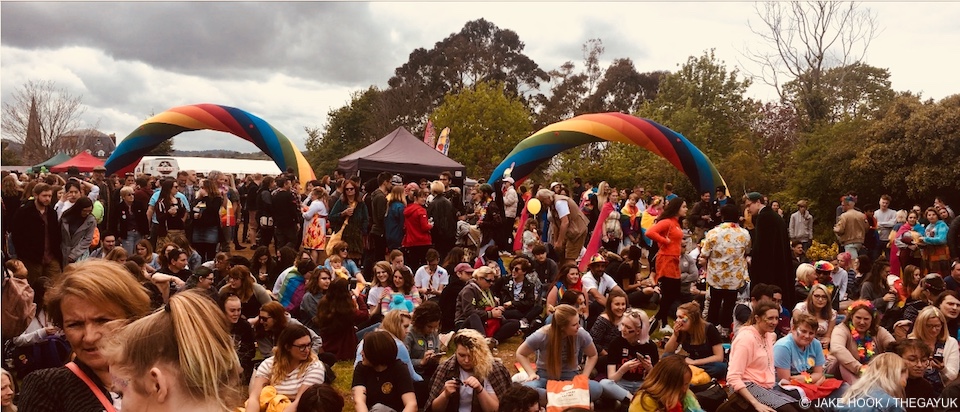
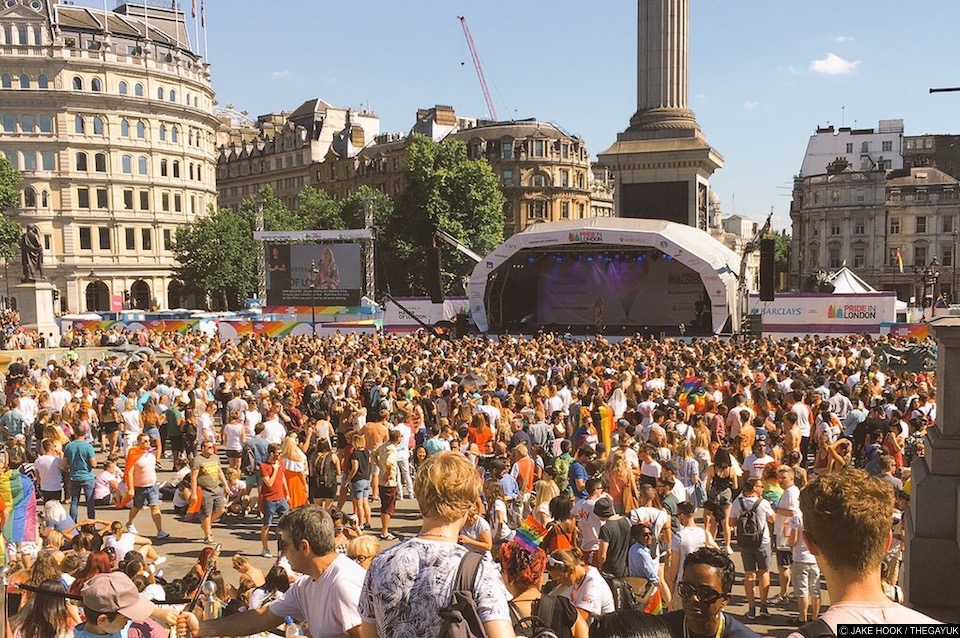
Whenever I see images from Pride events they always seem to focus on the extremes. Do we do ourselves a disservice or allow others to exploit us?
I struggle with the identity of Pride. Is it a celebration of sexuality? Is it a human rights march? Is it an orgy of deviants on the move?
If it is a celebration of sexuality I feel it should be conducted in with restrictions in place to protect children and others who may be easily shocked or offended. The common images I see are those which are at the outer limits of extremes! Sure these are the ones the media publishes because these are the ones of kinks and fems which empower the churches to disown and parents to have a negative impression of any sexuality other than being straight.
To be honest I am not sure I would feel supported and wanting to embrace my new sexuality if I was a teenager thinking about coming out. In my own experience when I was growing up many of the pics I saw were of Leatherman/clones and I couldn’t grow a moustache until my late 20s, whilst the feel of leather made me sweat profusely and was uncomfortable to me. As a fourteen-year-old boy, I wondered how I would ever adapt.
If it is about human rights, then perhaps Pride marches are the wrong place. Not sure about the message it sends to restrictive governments. Seems to be less about sexuality and more about exhibitionism. Is it that we think we can shock countries into changing their policies?
Have a thought for children. I often wonder how Pride gets away with it. From a safeguarding perspective, I am not sure some of the behaviour or the costumes are appropriate.
LGBT+ from my way of thinking has devalued homosexuality and the identity of gay men. I never asked to be part of every other deviancy. I feel its inclusion of other sexual perspectives under one umbrella gives weight to the “Us and them” argument It always seems the choice is, straight or LGBT+. So long after gay men could have achieved equality, that position of inclusion and acceptance has been denied us because of the eternal protester and politically minded within organisations who seek attention.
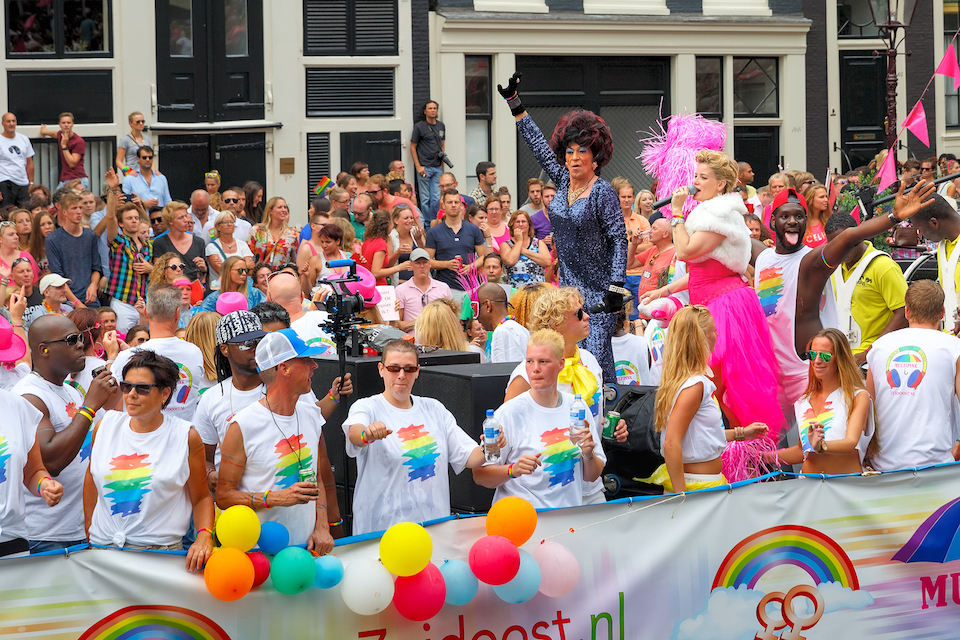
Amsterdam is warming-up for Pride 2018! But is Pride really still necessary?
Participants at the famous Canal Parade of the Amsterdam Gay Pride 2014.
At a very early age, I realised that, unlike my colleagues in school, I felt more attracted to boys than to girls. As a young boy growing up in a small village in Portugal 30 years ago, I had no clue about what to do with those feelings. Homosexuality was not mentioned at home or in school. It wasn’t discussed on TV either. The only few times that I heard about it, it was in a negative, mocking way, which made me feel like something was wrong with me, and that being gay was something that I had to hide.
30 years later, a lot has admittedly changed. In Portugal, for instance, same-sex marriage has been legal since 2010. And The Netherlands, where I live now, was the first country in the world to legalise same-sex marriage in 2001. But is this the case of every single country in the world?
Despite these facts, many straight people insist on asking me: Does it really make sense to still celebrate Pride? Their main argument is that there is no such thing as a Straight Pride. Please let me ask you:
Have straight people ever been attacked or fired for merely being straight? Do straight people have to worry about holding their partner’s hand in public? Do straight people’s vacation plans have to be made by taking into account which country not to travel to for fear of being imprisoned because of their sexuality? Have straight people ever had the unpleasant experience of having to come out to their family and friends?
Are you still wondering why there is no Straight Pride? Or are you just happy that you don’t need one?
This year, Amsterdam Gay Pride (the largest gay pride event in the Netherlands, and one of the largest in the world) will take place from July 28 to August 5, and it will pay particular attention to human rights. The annual boat parade, which sees the canals lined by over half a million spectators, will take place on Saturday, August 4. Boats of, among others, Amnesty International, Greenpeace and the College of Human Rights were proclaimed this year by the organization as “Pearls of the Parade.”
While growing up, I remember feeling like I did not belong.
CREDIT: Ryazan / BIGSTOCK
Somehow, I never seemed to meet the expectations that society had planned for me. And because I was different, I was constantly bullied. This happened from first grade to the end of High School (from 6 to 18 years old). The bullying I experienced was so traumatic at times, I’m still feeling the effects today. But I chose not to be a victim! I learned patience, perseverance, and dedication. Now I really know myself, and I know my voice. It is a voice of pain, but each pain has made me stronger, each betrayal more intelligent, and each experience wiser. I finally realised that being different makes me unique and that is my power!
“I finally realised that being different makes me unique and that is my power!”
It is true that a lot has changed since I was bullied, but I am afraid that it is still not enough. In recent years, a series of bullying-related suicides across the globe have drawn attention to the connection between bullying and suicide. Though many adults still see bullying as part of being a child, it is a serious problem that leads to many negative consequences, including suicide. And this needs to change! My hope is that by raising awareness to this issue one more kid will get help, so he won’t get discriminated or bullied.
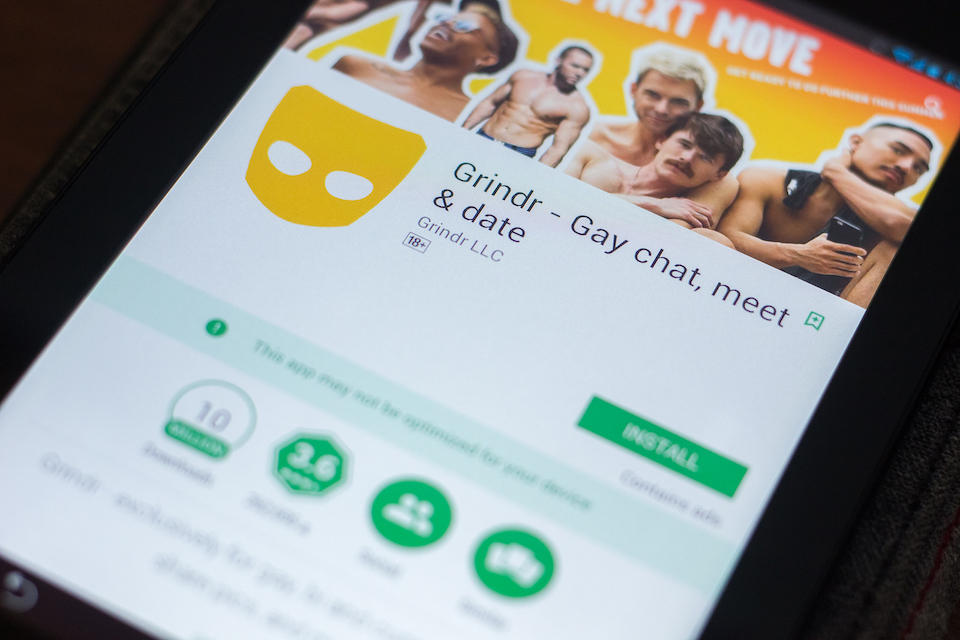
But more than addressing the discrimination from the outside world, I deem it necessary to also raise awareness to the increasing discrimination within the LGBT community. “No Asians, no black people, no femmes, no fatties, no oldies…”: This kind of language can easily be spotted on gay dating apps. Our community has been oppressed by the outside world for so many generations. Why do we insist on doing it to ourselves now?
Are apps doing enough to respond to user discrimination?
I cannot answer that, but I am hoping that by talking about these issues we can raise awareness and hopefully encourage people to be kind to each other. We already have the outside world against us.
In Part two of Simon Sayers-Franklin’s Pride series, he explores the origins of Pride at the Stonewall riots and why we fly our Rainbow Flag!
How Did Pride Begin?
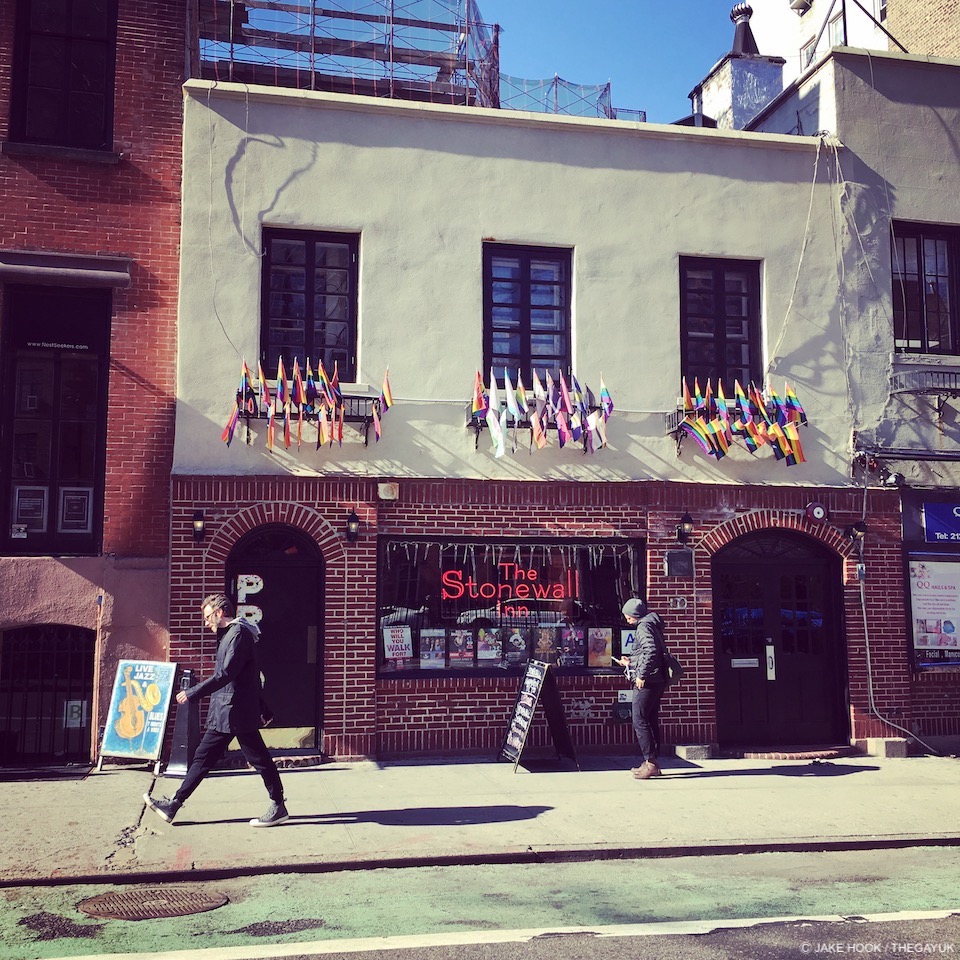
Pride originated on 28th June 1969. Back then police raids on gay bars, like the Stonewall Inn, were common. The authorities would come in, push people around, display violence, intimidate, bully and randomly arrest people. The arrests were frequently made for tiny, inconsequential things such as drag queens wearing more than one or two items of ladies clothing or being caught in compromising positions.
Often the bars, which were largely owned by the Mafia, would bribe the police to tip them off when raids were due to occur. The gay bars would often have two rooms – a bar in the front and a dance floor in the back. Dancefloor lights could be triggered from the bar to send a secret message to the people next door that a raid was about to happen. This allowed them to stop dancing or quickly find an opposite-sex partner if they wished to continue dancing.
It was in the early hours of the morning on June 28th 1969, that an LGBT friendly bar in New York was subject to a raid – something that was all too common in gay bars. This bar, however, was one of those owned by the Mafia and catered to transgender people, drag queens, effeminate men, sex workers and homeless people of many backgrounds. The bar in question was the Stonewall Inn.
This raid, however, was different from the beginning. Firstly, the owners were not tipped off, secondly, it happened very late; around 1:20 am. There had been rumours about a raid that night but it was dismissed as inaccurate information.
The night it all began, two undercover policemen and two undercover policewomen came in and gathered evidence while the rest of the team waited outside. When those who had gained entry called for backup the music died, the house lights came up and those who realised what was happening ran for the doors and windows in the bathrooms but were blocked in by the police.
There were reportedly over 200 people in the Stonewall Inn that night. Little did the police know, that this as not going to go the way they expected.
Usually, the police would line up the people, check ID and then the female officers would escort those wearing female clothing to the toilets, where they would be subject to physical checks and if men were found wearing female clothes they would be arrested. Not this night. This night everybody refused to produce their ID and those in women’s clothing resisted being taken to the bathrooms. This resulted in high tensions, only made worse by the police who became inappropriate while frisking some of the lesbian patrons.
The police had been sent to seize all of the alcohol, which was apparently bootlegged. While this happened, the people inside were made to wait in the line. Those who hadn’t been arrested were allowed to leave but they congregated outside. It wasn’t long for the crowd to grow – a mix of those who had been released and those who had seen the disturbance and joined out of curiosity. Those who were released exited the bar to rounds of applause and they bowed and posed and it was all very theatrical.
By the time the first police wagon arrived, the crowd had multiplied as much as ten times and as the Mafia were escorted out and put in the van people started shouting “Gay Power.” and others started singing. An officer pushed a drag queen who hit him with her purse. People threw debris at the wagon and that was when a woman, thought to be, Stormé DeLarverie, was dragged out in handcuffs. She kept escaping and fought four police officers. When she complained the handcuffs were too tight she was hit over the head with a baton and screamed: “Why don’t you guys do something?”
It was this moment that triggered the riots that would go on to last six days!
Who threw the first brick at the Stonewall Riots
The patrons of the bar had taken enough and were sick of being pushed around. It was reported that the drag queens and trans women of colour were among the first to fight back. It was Marsha P. Johnson, a black, gender non-conforming, sex worker, a founding member of Gay Liberation Front and a popular member of the New York gay and art scenes, who was apparently one of the first to kick off her heels and fight the police. It is, however, unclear what role Johnson played in the events that night. She disputed that she was the one to start the riot by claiming she arrived at 2 am when the place was already on fire – a fire she claimed was started by the police.
These riots were a major moment for LGBT people and Stonewall became an iconic image of rebellion and resistance. It stood for our strength and our refusal to back down.
It was the next year, 1970, that the first Pride march was held in New York on the anniversary of the Stonewall riots. From that moment we have continued to celebrate Pride in the month of June to honour those who kickstarted a revolution. We march to represent our strength and unity. Our community is strong together and Pride shows just that! In modern days it still has political undertones but these days in the western world particularly, our events stand for inclusivity, visibility, having fun and celebrating love and equality rather than fighting for it.
Why Do We Have a Rainbow Flag?
The flag was devised by artist Gilbert Baker after he was challenged by Harvey Milk (another hero and martyr for the LGBT community), to create a “symbol of Pride” to represent the LGBT community. It debuted at the 1978 Gay Freedom Day Parade and has been an icon of our community from that day.
The original rainbow flag as created by Gilbert Baker
There were originally eight colours in the rainbow instead of six:
Hot Pink represented sex/sexuality. It was taken out due to manufacturing issues after Baker approached a company to mass produce the flag. Apparently, the hot pink fabric was too expensive to make.
Turquoise, representing magic and art, was lost when the Pride Parade Committee wanted to fly the flag in two halves along both sides of the street for the 1979 Gay Freedom Day parade. Turquoise was dropped to leave six stripes, therefore, leaving an equal number to split.
Red is life.
Orange is healing.
Yellow is sunlight.
Green is nature.
Indigo is serenity
Violet is spirit.
A modern variation, created in 2017, added black and brown stripes to highlight the People of Colour within the LGBT community. There were a mixed reaction and a lot of controversies because of how the flag never represented “race” and was always meant to represent aspects of life that apply to everybody, regardless of ethnicity. It also caused upset by changing the artist’s original vision.
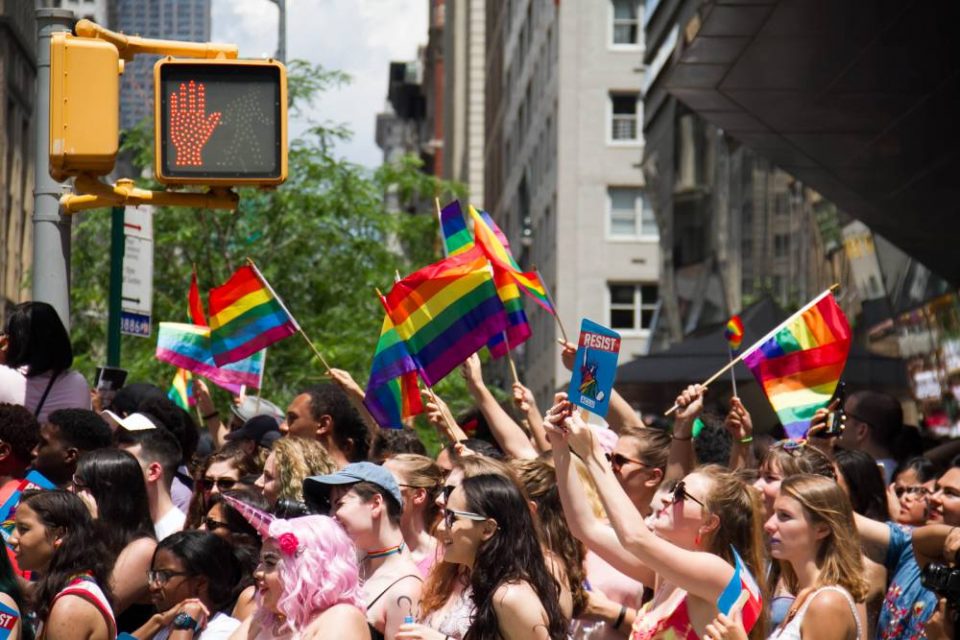
Pride season is finally here! It’s time to dig out the rainbow flags, the glitter and sequins!
In part one of this series on Pride, I’ll be exploring why Pride is so important to us as a community.
In recent years we have made huge progress worldwide in terms of LGBT+ rights. We can get married properly, we are protected in our workplaces and in everyday life. We can adopt or get surrogates to have a baby for us. We are accepted as true, legitimate families and Wales has recently announced that it is going to start teaching about LGBT+ relationships in schools to help children understand about same-sex relationships. We live in a wonderful time and that needs to be celebrated.
We also live in a time where we can be beaten up or murdered for so much as holding the hand of a loved one. We could die or be permanently physically injured or worse for daring to do something as innocent as love. Fair enough, it’s not as dangerous now as it was in the eighties when the AIDS crisis enhanced tensions and hostility towards the LGBT+ community but it’s still bad. It took a lot of work to get us to where we are now and there’s still more to do.
In parts of the Middle East people can be thrown off buildings for simply being suspected of homosexuality. In Russia, gay people are persecuted on a daily basis in the most brutal, horrific ways. In Chechnya, gay people flee for their lives or face being slaughtered by their own families in a “gay purge.” In Uganda, you can be imprisoned for life for being gay, or again, killed. Even Dubai, a glamorous holiday destination, adored by the West is a dangerous place for LGBT+ people. This is just a handful of examples.
Worldwide, LGBT+ people aren’t safe yet they defy their countries laws and hold Pride marches. In the countries mentioned before, and so many more, there are often devastating scenes of cruel attacks. These Pride marches are nothing like ours. Ours are a celebration of what we have and how far we’ve come, theirs are the complete opposite. They are life-threatening political performances where often the events are cancelled last minute for the activists’ safety. On the instances the very brave few go ahead, tragedy often follows close behind.
In 2015, Shira Banki was stabbed to death at a Pride march in Jerusalem by ultra-Orthodox Jewish man, Yishai Schlissel who had committed a similar crime ten years previously and served a decade-long prison sentence. He claimed he was “doing God’s work.” when he murdered Shira three-weeks after being released from prison. Shira was just sixteen years old.
Sadly scenes like this are too common.
This is why we need Pride.
Pride is a symbol of the fight our community have endured and the pain they have suffered to get us to this point. It is an important part of our culture and as we enter Pride season it is vital that we should remember and respect those who afforded us the celebrations we know and love now.
Throughout most of the Western world, Pride is an event where we can go and have fun with friends and family. We can enjoy music and entertainment and march through our respective cities with rainbow flags flying. We march hand in hand with our same-sex boyfriends and girlfriends and husbands and wives. We can freely identify ourselves as we wish and we do it with pride. We do it safely without fear of repercussion and stand in unity alongside people of all backgrounds, races and sexualities: Gay, bi, trans, straight. Pride is for all of us, of all ages and backgrounds to express ourselves honestly and authentically. Even our straight allies are proud to march with us in solidarity and that is a shining example of how far we’ve come. It wasn’t always the case.
In history, it was a criminal offence to be homosexual. If we were caught out for these “crimes” we could be imprisoned or forced to undergo “Conversion Therapy.” War hero, Alan Turing, who created the Enigma machine that helped us win the war was arrested in 1952 for “gross indecency.” He accepted chemical castration as an alternative to going to prison. After all he did for us, and he was treated like a criminal just for being gay. He was essentially tortured with cancer-causing drugs and eventually died a few days before his 42nd birthday from cyanide poisoning. While initial inquests ruled suicide, it has since been decided that his death was from accidental poisoning.
Homosexuality was eventually decriminalised in the UK in 1967 but it wouldn’t be until 2013 that Alan would be posthumously pardoned for his “crimes.”
This is why we celebrate Pride. We celebrate because we can. We do it because of these horrendous laws in the past that prevented LGBT people from being allowed to express themselves. We celebrate our right to exist in a world where we’re making progress and raising awareness of the troubles still faced by other in less fortunate regions across the world.
However, the decision has been met with criticism, including from Newcastle Pride organisers – who last week announced that they had to scale down aspects of their event due to lack of funding.
“It is great that a big company like Primark wants to lend their support to the LGBT community but I do worry about the impact this will have on the community led organisations like ourselves up and down the country,” said Stephen Willis, festival director of Newcastle Pride.
“Stonewall do an amazing job but they are a national organisation with a large presence, whereas local Prides are more often than not organised by volunteers with a lack of sponsorship and funding.
“Many Prides rely on generating income from selling merchandise but if Primark are selling their own range at discount prices, this will direct much needed funds away from actual Prides, which are struggling as it is.”
As part of the partnership, Primark have announced an array of rainbow branded products – including t-shirts featuring the names of cities the range will be sold in.
“Considering Primark is tailoring the range to the cities they are selling them in, their support may have been better allocated by partnering with local organisations so they could help to sustain future Prides,” said Stephen.
“Although the community has come a long way, LGBT people are still suffering from homophobia and hate crime and that is why hosting Pride parades remains important – to reinforce the message of equality and offer people a space they feel safe and accepted.”
This year’s Newcastle Pride takes place 20 – 22 July, under a big top tent at Nuns Moor Park, with a huge musical line-up, including headlining performances from Alexandra Burke and S Club.
As well as the acts on the main stage, on site will be a range of market stalls, a fun fair, the family and youth zone, the Steve Paske health zone, eight food stalls and five bars.
The event is free to attend, but those wanting to support Newcastle Pride can do so by making a donation, buying merchandise or upgrading to Golden Circle or VIP tickets at www.northern-pride.com.
For more information, visit Northern Pride’s website or search northernprideuk on Facebook or Twitter.
Opinions expressed in this article may not reflect those of THEGAYUK, its management or editorial teams. If you’d like to comment or write a comment, opinion or blog piece, please click here.
I noticed it especially when I started using the apps. The apps are great, you can be as specific as you want and really filter down to find what you are looking for. There are also a number of different apps to cater for specific gay communities and labels. They are also a great way of realising how picky you can be when it comes to what you want. A lot of people are open-minded and others are very upfront with their requirements.
After getting past my initial bombardment of unsolicited photos, I started looking through profiles until I found someone I was interested in. He looked great and the start of his profile was funny. But that’s when I saw it. He specifically stated he didn’t want Asians, wanted the guy to be smooth and wanted him to be slim. All of the things I am not in other words. I was hurt in some way from reading this, but quickly shrugged it off and said to myself that the views of one person shouldn’t make me feel bad. I moved on to the next guy, whose profile was blank, and messaged him. He replied that he wasn’t looking for Asians as well. I took this in one of two ways. He was genuinely not looking for Asians, or using it as an excuse to end the conversation early. Again I shrugged it off, I can’t change my ethnicity so why bother myself with people who are being prejudiced against me. I did find a lot of people who were interested and we had some conversation that either led to something or didn’t. Such is the nature of the apps I found.
But it got me thinking, is it prejudice or racism. I mean we all have our types, myself included, but I don’t feel the need to implicitly tell people that I don’t want a specific skin colour. I am open-minded, and my main criterion is someone with kind eyes. It sounds funny, but I am drawn to eyes and how they can convey a lot about people. I understand that these guys who put their requirements are doing so to ward off any unwanted attention, and to help them find what they are looking for faster. But is that really the case? I tested this out and put my requirements based on my current mood, and I found a handful of matches. When I saw these select few it made me realise that I didn’t particularly feel drawn to any of them. I went back to my more open requirements and felt instantly better. But that is just how I am, these people who don’t want fats, femmes or Asians know what they want, and that is their choice. It would be easy for me to judge them, but then again should they not be allowed to seek what they want?
One interaction that really threw me off was when a guy messaged me saying he doesn’t usually go for Asians, but I would be an exception. That is when I genuinely got angry at the comment he made. It implied that I am acceptable even though I am Asian, and that he deems me worthy of his attention. I rightly put him down for that comment and ended the conversation there. He blocked me, which was to be expected, but had he not I would have blocked him and his pointed views out of my life anyway. Other interactions have had people ask me where I was born, as they don’t want people who weren’t born in the UK or don’t speak English without an accent. Again, I have no time for these people. They are trying to cover up their prejudice towards immigrants by making it out that they are just having a normal conversation.
This isn’t to say I haven’t found people from the apps, as I have had a number of dates. What it is saying is that people shouldn’t feel bad if they find prejudice within the apps. They should ask themselves if they would want to be with someone like that, and if they do then that is fine. But you never know what you might find when you venture out of your preferences. I know I have been surprised and learned more about myself when I have ventured out. So for any profile out there that states ‘no Asians,’ I’m sorry but you are missing out. We are amazing.
I have been in love with wrestling ever since I was a kid. Naturally, it was the campy, dramatic side of things that got me interested in Sports Entertainment. The first ever episode I watched involved Stephanie McMahon marrying a wrestler called Test. However, during the ceremony, it is revealed she was secretly drugged by McMahon Family nemesis Triple H who married her in a Las Vegas drive-through. It was pure soap opera and I was hooked.
“Being a gay WWE fan means that you often have to forgive a lot of previous transgressions.”
However, as the kids say, WWE has been quite “problematic” over the years. Being a gay WWE fan means that you often have to forgive a lot of previous transgressions. The Attitude Era was defining for WWE. It was when you had Stone Cold drinking beers, DX tormenting the boss Vince McMahon and there were half-naked ladies for the eye to see. It was rude, obnoxious and outrageous; it was everything we wanted to be. It was also pretty homophobic. WWE has never shied away from a gay joke throughout its time. I remember a scene when my favourite wrestler Triple H went looking for Shawn Michaels in a restaurant. He mistakes a long-haired waiter for Shawn explaining “well, that’s certainly a different look to the chaps I usually see you in there, Sexy Boy (Shawn Michaels’ nickname)”. The waiter then visibly checks Triple H out and, after Triple H apologises and tries to leave, the waiter tells him “I get off at seven”. Triple H retorts “yeah, I bet you do”. For a wrestling fan, it’s good bit, pointing out the homoerotic undertones of the Shawn Michaels/Triple H dynamic. This, though, was 2009. Not the attitude era but the PG era.
WWE’s homophobia hasn’t always been a “subtle” joke. WWE commentator Michael Cole got in trouble for calling his then-colleague a faggot on Twitter. Even favourite John Cena was under fire for gay jokes made towards The Rock in 2011. The most vivid example I remember was watching Raw with my brother in 1997. On it, Jerry Lawler was cutting a promo on Goldust telling him his father hated him because he’d married a gold digger and was now kissing men like a “flaming faggot”. This was not beeped out, this was deemed perfectly acceptable. Now sure, Lawler was playing heel (a wrestling term for ‘bad guy’) and Goldust got the win but it was particularly biting for a 7-year-old to take in.
Men who kiss men are faggots. That was my take-away from that.
One thing I have always felt as a WWE fan, though, is under-representation. WWE has always had relationship storylines. They have actually been some of my favourites. From Triple and Stephanie, Stone Cold and Debra to Zack Ryder and Eve, they are the soap opera stories that have had me interested in WWE for so long. But WWE has never had a gay-centric storyline (for any WWE fans reading this, Billy and Chuck do NOT count). We’ve had “hot lesbian action” but nothing ever gay. And let’s face it: WWE is pretty gay! It’s fit men in underwear grinding on top of each other. Yet WWE has never pulled the trigger.
Then, in recent years, WWE has launched initiatives such as Be A Star which is an anti-bullying programme of events which promote tolerance and inclusion. Many WWE Superstars even got involved in the LGBT charity campaign No H8. This was, for me, pretty remarkable as it was the first time WWE really ever gave a nod to its LGBT fans. And to have two executives like Triple H and Stephanie McMahon do it sent a clear message that WWE was becoming more inclusive. This was then reiterated by support now-released wrestler Darren Young received when he came out. However, it was given a caveat that Young’s on-screen character “is not gay” but that there may be a change in future. This, however, did not happen and sadly Young was released 4 years later (likely due to a lack of creative ideas for Young rather than his coming out).
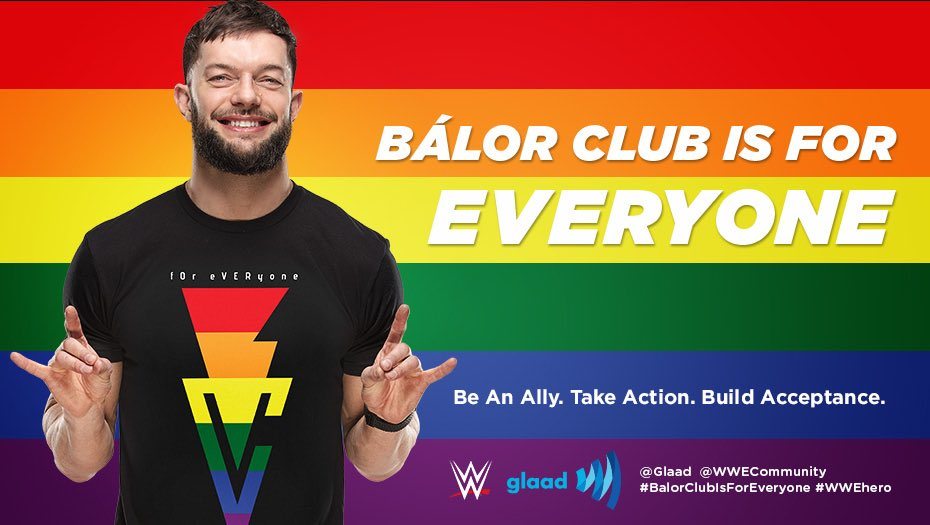
Cut to: Wrestlemania. Prior to the event, WWE Superstar and Twitter Thirst Trap Finn Balór announced that he was releasing a new t-shirt. This shirt would colour his logo with LGBT colours and a percentage of the funds would go to GLAAD, an American LGBT charity. This was the first time WWE would be showing pride colours (no, the Ultimate Warrior’s rainbow tassels don’t count). I marvelled at such an amazing gesture and was thrilled. Then… Wrestlemania. There was a pre-show Women’s Battle Royale match in which up and coming superstar Sonya Deville took part. Her usual outfit is all-black as a symbol of her fierce aggression. However, this time, she had donned white with rainbow colours. Sonya had previously tweeted praise Finn Balór’s t-shirt initiative and also came out as the WWE’s first openly-lesbian Superstar.
Then came Finn’s match. Finn was joined in his entrance by local New Orleans LGBT community members. He was wearing the rainbow shirt, had the rainbow logo on his trunks and a rainbow running down the back of his boots. This was something WWE has never seen before and it was remarkable. Finn is a hugely popular talent and to support LGBT in a brand like WWE has worldwide significance. Let alone, it was his Wrestlemania debut. I am not afraid to say, it got me emotional because I thought about how it would’ve felt for 7-year-old me to have seen Finn entire in rainbow colours rather than hearing the word faggot.
I truly hope this is a turning point to how WWE approached its LGBT fans. We are a valid part of the WWE Universe and to have this representation on their biggest show is a monumental step forward and an overwhelming gesture. I truly hope Finn, Sonya and the WWE know what an important moment that was for LGBT fans. I hope this continues and doesn’t get sidelined into a gimmick. We need an openly LGBT character, LGBT storylines and a commitment from WWE that is will continue to show its Pride.
Opinions expressed in this article may not reflect those of THEGAYUK, its management or editorial teams. If you’d like to comment or write a comment, opinion or blog piece, please click here.