Category: Topics

  • Valley Boys Like Boys – Growing up Gay in the Welsh Valleys

    Valley Boys Like Boys – Growing up Gay in the Welsh Valleys

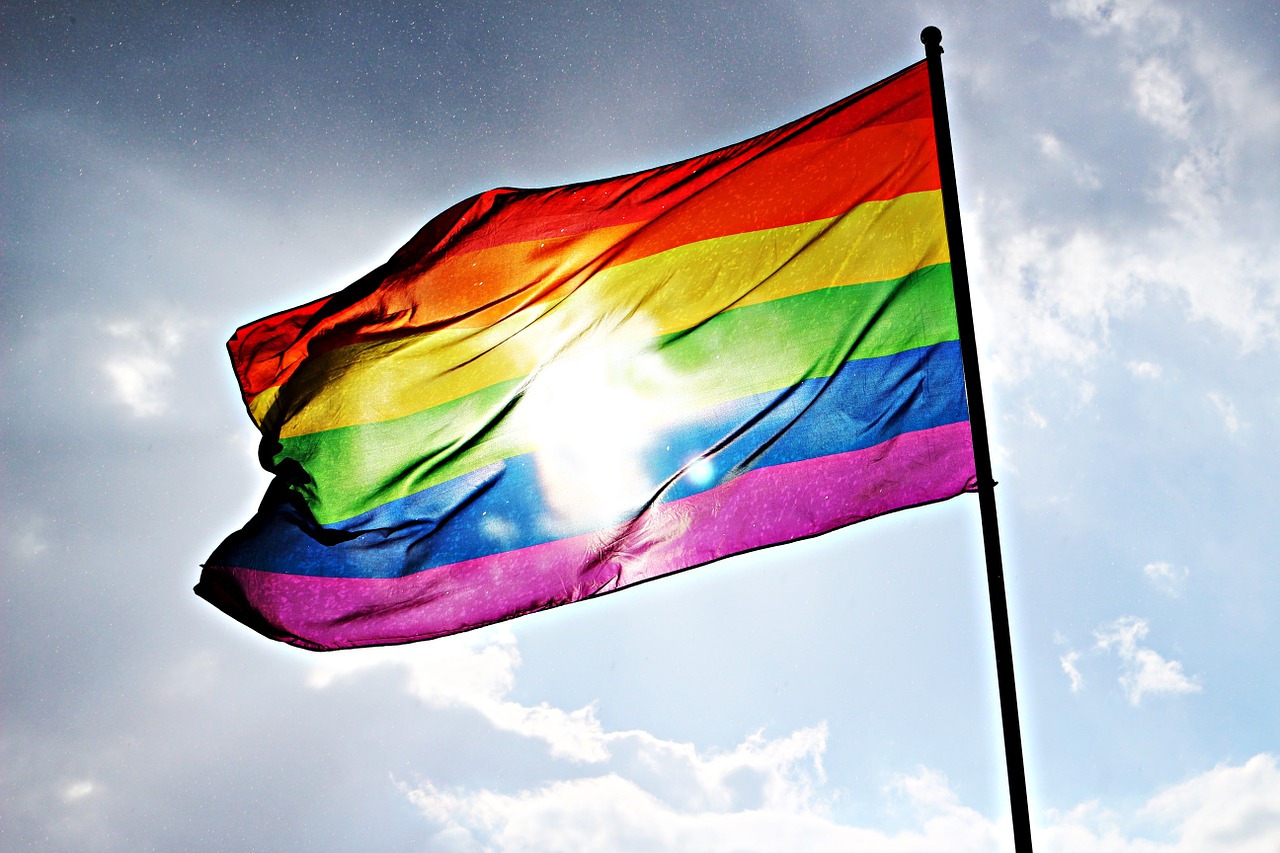
    As I drive through the Welsh town of Pontypool I’ve lived in since I was born, with a population of approximately 36,000 people, I’m surprised to see a rainbow flag flying high outside the civic centre in the middle of the town. It’s LGBT history month, but the flag doesn’t just stay up during February. Instead, it has become a permanent feature, flying proudly with the Welsh flag and the European Union flag.

    Whilst the future of the flying European flag is uncertain, the rainbow flag is there to stay. In this tiny Welsh town, it is almost historic. I’m a 23-year-old Welsh boy that struggled with coming to terms with my sexuality.

    Wales’ track record of LGBT rights is a little bit hazy, but in 2018 The National Assembly for Wales was recognised as the top employer in Wales for LGBT employees. This sort of movement is quite a good sign of how Wales has changed over the years. We have gay clubs that are thriving, venues that host drag queen shows, and the smaller towns are beginning to accept what is normal. Just last year, Newbridge Memorial Hall hosted a drag queen event.

    Growing up gay in Wales, I found it incredibly difficult. The town I live in is rather behind the times: we have poverty, we have more empty shops than booming ones, and the people who live here are rather set in their ways. We’re a country run mostly by Labour, yet my area voted leave, and many conversations I hear are in support of a Tory government and a hard Brexit.

    As I grew up, the rather cliché saying of ‘knowing I was different’ rang true. I didn’t get along with ‘the lads’. I’d rather stand on the railings singing Girls Aloud – mainly Nicola’s lines; I was always Nicola – than play football. I got taunted for being a ‘girl’.

    It hurt, but being young I didn’t really know what that meant. Then, through secondary school, I experienced almost daily taunts of ‘gay boy’, ‘faggot’ and ‘bender’. As puberty kicked in and feelings for guys intensified, so did the bullying, as hormones raged in every teenage boy in school, and the idea of a ‘queer’ being anywhere near them repulsed them. I remember experiencing comments from teachers. PE teachers would always treat me like a stereotypical ‘gay boy’ that would rather be brushing my hair than learning the rules of football. I remember a few of my PE classmates disappearing for a class to go on a drama trip. To snickers from the rest of my class, my teacher said, “so all the poofs have gone off to watch show tunes.”

    No one blinked an eye at this comment.

    Lisa McNally is a mother from Cwmbran, South Wales. She witnessed her son, Lewis, now twenty years of age, experience homophobic bullying. She agreed to talk to me to discuss her son’s bullying, as she thought it was important that parents who are aware of their children’s sexuality should be there to support them. “I have a son who grew up in Cwmbran and attended the local comprehensive school. He endured daily abuse from his peers and from the teachers. When I attended the school, I was informed by several teachers that Lewis should not tell people he was gay, and that he wouldn’t be bullied.”

    When Lisa questioned why such a comment had been made, the teachers told her that her son would not be received well in the community. “I was told to remember that Cwmbran was still a village and ‘forcing the gay agenda’ wasn’t warmly received.”

    “I have walked through school with Lewis to chants of ‘faggot’, ‘gay boy’, ‘bummer’, and I have endured this when walking through the town centre with Lewis, too. He ignores them. I found it hard to do so.”

    Such was the regularity of her son’s bullying that Lisa visited the school Lewis attended in the hopes of stopping his heavy bullying. “I have walked through school with Lewis to chants of ‘faggot’, ‘gay boy’, ‘bummer’, and I have endured this when walking through the town centre with Lewis, too. He ignores them. I found it hard to do so.”

    Lisa notes, however, that when the pair shopped in Cardiff, there were no comments and barely any stares from the people in the city centre. It paints an image that whilst city centres were more forward thinking, small Welsh towns were still very much being left behind. Due to Lewis’ bullying, he dropped out of school and left with no education. Lisa described that her son felt suicidal, and whilst better now, he did suffer with depression. Lewis said that ‘being made to go to school every day’ made him feel vulnerable, and his experience was a ‘living hell’.

    Once I was out of school, like Lewis, I began to accept who I was and embrace it. It wasn’t until I started working as an eighteen-year-old that I was confident to admit that feelings for guys were there. I began by admitting to my friends. Yet I was still afraid of declaring that I was gay; the liberation of saying I liked both sexes was a step in the right direction.

    Matthew Cleverly, an actor originally from Pontypool but moved to London to study, realised he was bisexual when meeting a group of like-minded individuals. Being in the same year as me in the same school, Matthew and I observed the treatment of those individuals that did ‘come out’. ‘Looking back I remember a few of my friends coming out as LGBTQ+ and although some were accepted by friendship groups and families relatively easily, others were harassed, bullied and rejected.’

    Matthew reflects that as he grew up in the Welsh valleys, he suppressed a part of himself. “I didn’t grow up queer in Wales. It was only after I moved out that I realised what was always there. I’d moved to London to go to drama school, and was also, at that point in a four-year relationship with a girl. It wasn’t until I was given the freedom to move away from the judgement of a small-town, Welsh community, and was thrust into a supportive, creative environment, in which I had to constantly self-analyse, that I began to discover and accept the other side of myself.

    “I realised that I had taken the path of least resistance my whole life,” Matthew continues. “And although the relationships I had were real and loving, I hadn’t been fully there because I was always concealing a piece of myself – even from myself.”

    Matthew believes that part of his reasoning for not acknowledging his bisexuality was because of a lack of LGBT role models. ‘Not having strong queer role models definitely aided in me not coming out for so long. In a place such as small-town Wales, feeling different can be so much more isolating, because you can’t see anything beyond your circumstance. It’s important to remember that although you may feel you’re not in the right place now, you will find your tribe eventually, and they will love you for exactly who you are.’

    Finding my own tribe was a key feature in my acceptance. Some of my best friends were also ‘experimenting’ with the same gender, and being able to talk honestly to people after so many years of hiding feelings was like a freedom movement.

    rihaij / Pixabay

    At eighteen, I began to go out on the nightclub scene. In the town of Newport, I’d regularly have a group of same-dressed looking boys glaring at me from across the dance floor as I dared sing along to Miley Cyrus. I’d have people double take when they saw me kiss a man. Going out on nights out in my hometown was a whole other story. When waiting at the cash point one night, stood alone and not doing anything remotely attention seeking, a guy across the road shouted at me, “OI, FAGGOT!” Mature and annoyed by this, I turned to leave. But he wasn’t done. He shouted, “Yeah, that’s right. Fuck off before I punch you.”

    At the same time, I discovered Cardiff’s gay scene. With new friends, I would go out and play the field. Cardiff was a lot more liberating than that of Pontypool or Newport.

    Jennie Scrivin, from Pontypool, found solace in Cardiff’s gay scene when she was discovering that she was a lesbian. “There wasn’t a lot of gay people when I was growing up. Coming out was hard. Would I be accepted? I’d spend every night out on the gay scene, but that was in bigger cities, not my little town. I felt like I finally fitted in.”

    At eighteen, Jennie came out and is now in a relationship. Older, and out, Jennie remarks that attitudes are beginning to change. “It’s not a taboo word anymore. I just hope it continues to become more and more accepted.”

    I have to stress that growing up during my teenage years, I really did find it difficult to come to terms with who I was. I turned to a blade to keep my emotions at bay, and to cope with who I was I regularly sought solace in online webcam sites, where there were men and teenagers like me that felt the same. As I got older, I accepted who I was. I soon admitted that I was gay, rather than bisexual, and when I told my parents, they really couldn’t care less. I think my dad nodded and then said, “What do you want from the chip shop?”

    Small Welsh towns still have a lot to do to promote inclusivity. When working in a pub in the town in 2016, I would regularly hear homophobic slurs. To the people saying them, they were just jokes. But to a gay bartender who had overheard, I had to bite my tongue. To promote inclusivity, Welsh towns could support those who are growing up gay that may feel afraid to tell anyone who they are. When I was younger, there were no support groups. Whilst I suspect many older adults such as teachers realised I was gay before me, I was never questioned on it in a nice way or made to feel like I could talk to someone about how I felt.

    Yet every time I drive past the rainbow flag in the centre of my small town, I feel that sense of pride. I remember that there are people there that accept me for who I am and that flying a flag of many colours not only represents the gay people in my town, but the lesbian, bisexual, transgender and the queer community.

    A small Welsh town that I call home is opening their arms and embracing change, and that is something we must all support.
  • This is how you can be a better non-binary ally

    This is how you can be a better non-binary ally

    Six ways we can all become a better ally to our gender non-conforming siblings.

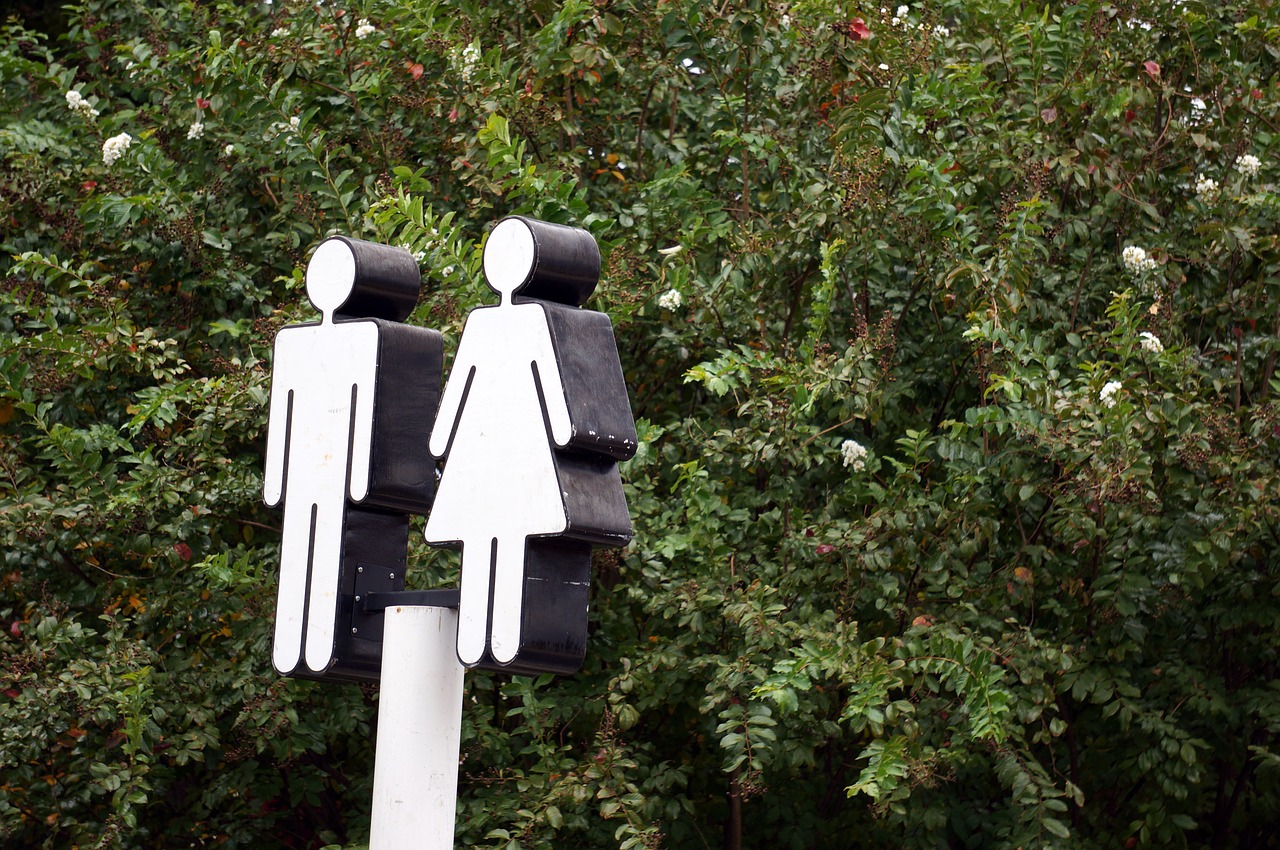
    Not everything is binary… kerplode / Pixabay

    Last year I happened upon this Tweet during Trans Awareness week and it got me thinking…

    Also on twitter, stop assuming people’s pronouns based on their profile pic and your binary stereotypes.

    Read their profile. Check their pronouns. Don’t assume.

    And while you’re there, put your own pronouns in your profile.

    Normalise that shit ✨#TransAwarenessWeek

    — Thal (@thalestral) November 12, 2018

    Let me tell you about my own gender expression before we go on. I don’t think of myself as a “man” because I don’t really fit into what society expects of its men. When I was a child all I wanted to do was be called a girl, wear high heels, my mum’s dresses and sing Petula Clark’s ‘Downtown’ on repeat.

    I was a Grade A queer/trans kid. As an adult I couldn’t admit that to anyone outside my immediate family. I was so shamed by this behaviour – and bullied mercilessly at school when I chose to wear the white, patterned “girls’” socks instead of the regulation grey socks for boys.

    Nowadays, I dress in masculine clothes, I have a boyfriend, I have short hair and people assume that I’m a man and a gay one at that. I enjoy the privileges that, for the most part, that assumed identity affords me. But, it never really feels right when someone refers to me in that way.

    That said, I don’t mind if people use the pronouns him/his or he when they refer to me. Although it does jar me if someone calls me a man. Weird.

    I also don’t mind it if I’m referred to with female pronouns.

    I’m pretty relaxed about the pronouns that are used to describe me.

    But for some, words really matter. So here’s some advice to help us all become better allies to our non-binary, gender non-conforming siblings.

    Open your ears and mind

    via GIPHY

    It seems that we’ve all got our lives set to transmit only. We need more receiving in our lives. So when someone is telling you something about them, listen.

    Leave your assumptions at the door

    via GIPHY

    Someone once wisely told me, “Assumptions are the mother of all fuck-ups” – and they were completely right. How often have you assumed something about a situation only to find that nothing was as you imagined? Pretty often, right?

    Your assumptions are based on your own life experience. It doesn’t take into account other people’s experience. So leave your assumptions at the door and again, open your mind.

    Respect pronouns

    rawpixel / Pixabay

    If a person tells you what their preferred pronoun is, accept it don’t fight it. It’s what they’ve asked you to call them. The decision is effectively out of your hands. It’s the same as when someone tells you their name. You accept it and it becomes part of their identity. Well, pronouns are the same.

    Accept that there are lots of different pronouns

    via GIPHY

    Some non-binary, gender fluid and gender non-conforming folks use a number of different pronouns. Some popular ones are: Zim/Zer and Ze, they/them and theirs or even thon, which was actually added to the dictionary in 1964. They as a singular pronoun has been used for centuries.It’s not particularly new, it’s not trend based, it’s just getting a lot of media attention at the moment.

    Stop normalising gender norms

    via GIPHY

    Blue for boys, Pink for girls… gender stereotyping is all so the 1950s and really doesn’t work for today’s society. No one likes living in a predefined box and we don’t live in a black and white world. There’s a whole rainbow out there.

    Gender norms and stereotypes, when adhered to, just keeps society attached to a patriarchal system that’s almost impossible to climb and doesn’t work for all of us, particularly LGBT+ people. So lets bin it shall we?

    Write your own pronouns

    via GIPHY

    Normalise the conversation surrounding pronouns. Write your preferred pronouns in your social media profiles. As @thalestral says on Twitter, “normalise that shit”.

  • Obituary: Sharon Bottoms Mattes, the woman whose court case changed LGBT+ parenting

    Obituary: Sharon Bottoms Mattes, the woman whose court case changed LGBT+ parenting

    The sad passing of Sharon Bottoms Mattes, 48, in January this year shone a spotlight on LGBT+ rights in the 21st century, and how far attitudes and family law have changed abroad and in the UK.

    jarmoluk / Pixabay

    In what was a terrible example of the injustice to same-sex couples and their children is the American 1994 case involving Mattes, who lost custody of her son after the court ruled that she was an unfit mother because she was in a same-sex relationship. The details of this case are as shocking today as they were at the time.

    In the UK, societal attitudes towards same-sex parents has changed considerably over the past 25 years. Thank goodness, because this has been both to the benefit of couples, children and the emotional welfare of other family members.

    Yet family law is struggling to keep up with what some have deemed to be the ‘modern family’, and unfortunately prejudice and inequality still remains for LGBT+ couples and parents.

    Of course, in the last 25 years so much has changed. Civil partnerships were introduced in 2005. This was followed by same-sex marriage in 2014. This granted the same rights as married heterosexuals. This ended the appalling treatment same-sex couples had received. For those in a civil partnership or same- sex marriage who have a child both parents have parental responsibility. Yet there is still inequality that exists.

    Same-sex married couples, unlike heterosexual spouses are unable to cite adultery as a ground for divorce.

    Since 2005 unmarried couples were given the right to adopt. Equalities legislation passed in 2006 to ensure that there would be no discrimination on the grounds of sexual orientation when going through the adoption process.

    When it comes to surrogacy, same-sex couples can apply for a parental order if they have their child via a surrogate and one parent is genetically related to the child. If couples are not in a civil partnership or married they must be living as partners in an enduring family relationship if they wish to apply jointly.

    Single parents have been able to apply since 3 January 2019. Yet our surrogacy law are dangerously behind when it comes to the needs of modern families, leaving couples vulnerable to exploitation or worse, losing their child.

    It is important that family law keeps up with the needs of families today, and continues to progress so LGBT couples and their families hold equal rights.

    Linda Lamb, Solicitor and Director at LSL Family Law

  • How not to look sexy on a first date

    How not to look sexy on a first date

    Writer Scott Sammons takes us through the basic don’ts (and he’s got four years of experience apparently) if you’re trying to be sexy on a first date… Buckle up.

    Gay couple
    CREDIT: mast3r-bigstock

    For those of you that follow me on social media (@i_scotty in case you’re interested), you know that I am very much a single pringle currently (partly through my own choice) and have been on a number of dates over the last four years now (four years – wow, how time flies!). This means I’ve picked up a few things about how to not look sexy while on a date, plus a few other hints and tips. Namely, because I seem to have mastered the art of not looking sexy recently.

    So fellow singletons (and people that just fancy a laugh) indulge me a little while I take you on some tales of woe on how not to look sexy on a date (followed by another blog post with tips on how to look sexy on a date).

    Do recount details and stories about your ex

    via GIPHY

    There are some cardinal rules on what to do and not do on a date. For example, spending more than five minutes talking about your ex(s) (or talking about them at all) is as far from sexy as you can humanly get. However, it is an easy trap to fall in to. So our first entry for how to not look sexy on a date is to talk about taboo subjects like your ex/politics/the offside rule (but like I know what that is)/your rather itchy and sore piles.

    This wasn’t me I hasten to add, but instead a lovely (albeit eager and inexperienced) young man I once dated. I say ‘dated’, it was one date and this was just one of a number of errors on his part.

    Some of them not his fault I might add, with experience we just learn these things.

    The evening started well enough, a civilised drink in a small pub near where we both live. The conversation went through the usual small talk before, as you do when conversation flows, you start to get on to the more interesting subjects. However, this young man made a bit of jump from one subject (I can’t remember what so we shall say it was food) to the subject of how his ex used to fret and control what he ate on a daily basis. Now I have nothing but sympathy for the guy as it sounded like a taxing relationship but at the same time, he spent a good hour on the subject despite my best efforts to move the conversation on. I’m not saying it’s never to be discussed, but that’s a conversation for a later date, not date number one. So while you should bring up exes on dates at some point, date one is far from sexy! For all sorts of reasons, the ex-factor is never sexy…

    Run to your date because you’re late (and don’t pack an umbrella)

    via GIPHY

    The last time I went speed dating I took a friend with me as he needed cheering up and, as I’ve told him many times, he needed to get out of his own head and just meet people other than those on Grindr. If you’ve not been speeding dating, I highly recommend. A great experience, and even if you find no one you get to meet people and realise you’re not the only one out there thinking that all men must die… sorry, I meant all men are perfectible datable. Silly me!

    This particular event was occurring in London in the evening in a bar somewhere outside Kings Cross. I had been working all day, it was raining and I had to use the sauna known as the Central line in order to get across town. As you can imagine, therefore, I turned up to the said event looking a little bit like a drowned harassed rat that, I suspect, also smelt a little bit as it had been a very long day and I had to run because I was late.

    I appreciate that some men enjoy the ‘manly musk’, and indeed so do I from time to time, but at a speed dating event, it is not the best place to release the locker room level smell. I was, for want of a better word, a real catch…

    To my surprise, I didn’t really get any matches or follow-ups. Not because of my stunning good looks or personality (pfft) but because I looked like someone that had been drowned, whipped, sat on by 100 rugby players after a match and probably smelt like the arse end of a gym bag. Or rather, that’s what I chose to believe otherwise I really am ugly and have an awful personality (don’t laugh, I can hear you from here!).

    Talk about politics and tell me the wonders of why you are right and I’m wrong.

    via GIPHY

    This point is a little political, but it isn’t meant to be per se. Politics is just not sexy to most people so it’s always a risky area to venture in to. If you know me you know that I am a firm advocate of debate, however, there is a limit to this and a long lecture on what you are right and I am wrong is not something that I would consider sexy (or decent behaviour) by any man’s standards.

    This particular date started off well enough (as they all do). I knew that he did have certain ‘leanings’ but I personally don’t think that in of itself is a turn-off. But as the evening went on the conversation kept coming back to his points of view time and time again. One particular view, that of our Transexual brothers and sisters, was particularly interesting. We started talking about the issues they face and the lack of support from the community and he went into a bit of a party political broadcast on why it was all nonsense. As you can imagine by this point, my goal was no longer to find a soul mate but now more to shut down the close-minded gentleman and finish my drink. (I did write another name for him there but I decided to remove it because I’m not a child – but I am thinking it!!). Everyone has different views on all things, and I certainly don’t believe partners should agree on all things (as that’s just boring – personally I find a good debating partner a massive turn on). But when you start ramming your views down your date’s neck shortly after meeting then there is, to be blunt, something seriously unsexy about you.

    Some people may like that, but most of the people I speak to don’t. I’m not entirely sure where I found this one, must have been Grindr as I passed the local conservative club (now that was political…!!).

    Eat that really messy food and share it with half your face.

    via GIPHY

    I like sticky messy food as much as the next man, this may also explain why I’ll never be a clothing model. But on the first few dates maybe having the large rack of ribs, or the spaghetti bolognese, lobster or other hands-on messy foods isn’t a good idea. Get to know the other person first, then maybe on date 3 or 4 you can both be messy and have a laugh about it.

    This ‘sin’ was very much done by me as I really fancied spaghetti, forgetting completely that my method of eating spaghetti resembled that of a cat trying to eat spaghetti. I tried and I tried to be civilised about it, using the spoon and the fork to wrap or cut up the spaghetti but the harder I tried to not come across a grown adult that can’t handle is spaghetti the more I just dug a hole for myself.

    Luckily the guy I was on a date with was fairly humorous about it and I became the butt of a joke or two (adds to the charm of the evening I find) but ultimately I didn’t get a second date and food mishaps can backfire quite spectacularly. Messy food equals a messy date – avoid avoid avoid!

    Flirt with the barman.

    via GIPHY

    Call me old fashioned, but on a date I want to feel a little bit wooed, charmed and something that resembles a smile on your face as you leave. I don’t want to be left waiting, go hungry because you ate before coming (even though we are meeting for dinner) and spend 20 minutes waiting for you on my own at the table because you’ve gone off to the bar to get drinks and spend 15 minutes flirting with the barman.

    Yes, boys and girls, I can safely say that this particular date made even the great Cilla Black turn in her grave as a golden example of how to not look even remotely sexy in the eyes of your date.

    We did eventually eat and there was eventually a sense of ‘charm’ in the air but by this point, it was a case of too little, too late. There are a few things in there that wouldn’t make you even remotely sexy in someone’s eyes – being rude, being late and being about as charming as a dinner with Katie Hopkins.

    Respect, in my book at least, is one of the sexiest qualities in a man. Debate me, respect me and charm me and I’m yours (and people say I’m picky…).

    I’m not going to go into other physical things to do or not to do with regards to looking sexy on a date because everyone finds what is sexy so wildly different. I, personally, think to turn up for a date looking like a fashion disaster hit Popeye the sailor man to be ‘unsexy’. But to others, you could be sex on legs in your badly fitted, camp as tits, slightly over-worn Popeye outfit. Each to their own and who I am to rob someone of that.

    But what I will say is that we all have our dates where we come across as miles away from sexy. And that’s fine, we live and we learn, and ultimately we have a laugh. I now have hundreds of stories to share with my Pussy over a glass of wine (or to bore you all with) as a dull date where nothing happens is about as fun as an episode of Antiques Roadshow.

    So with that I say keep an eye out for the next article on how to look sexy on a date, some tips from a thirty-something serial dater that has tried and tested many a method to share with you (and yet is still single… not really sure how I ended up with this as an article idea).


    YOUR SUPPORT MEANS EVERYTHING

    Help us deliver unique, usable and reliable journalism that supports the gay, bisexual and curious community of the United Kingdom. Can you help protect LGBT+ media? Publishers like us have come under severe threat by the likes of Google and Facebook. The problem is that advertisers are choosing to put their money with them, rather than with niche publishers like us. Our goal is to eliminate banner ads altogether on site and we can do that if you could pledge us a tiny amount each month.

    We’re asking our readers to pledge just £1 per month, more if you’re feeling swanky. You can stop payment at any time.

    It’s quick and easy to sign up and you’ll only have to do it once.

    Click to start the journey and support THEGAYUK!

  • COMMENT | Trump’s Transgender military ban: How reducing minorities limits team success

    The recent decision of the US Supreme Court to continue the Trump administration’s ban on transgender people serving in the military is an unnecessary limitation on organisational effectiveness.

    CREDIT: © StockCube

    What is the goal of the military (at least in democracies)? Overwhelmingly our clients in the defence sector tell us it is operational effectiveness. The question then, aside from any personal prejudice for or against trans people, is, “does their inclusion in the organisation contribute to operational effectiveness?”.

    Much to the chagrin of many detractors, the evidence suggests that it does.

    Take any organisational ecosystem and analyse its productive potential. We know that a lack of diversity can lead to higher risk, lower resilience and lower productivity. Similarly, extremely high levels of diversity, if not led well, can lead to lack of trust, poor morale and team bonding.

    However, the military (in general) is extremely good at leadership. In fact, I would go as far as to say that in my 15 years working with the UK military, it has gone from one of the worst sectors on LGBT+ inclusion to one of the better ones. Look at the Stonewall Workplace Equality Index to see.

    Jerry Patterson, a retired marine, argues that Trans people should be banned because a 2015 survey by the National Coalition of Transgender Equality found that “…40 percent of trans-identified respondents had attempted suicide during their lifetime — nearly nine times the attempted suicide rate in the US population.”

    However, like all of us in general, not all trans people want to serve in the military. Good recruitment policies look at individual talent and contribution, not general prejudices.

    Contrast Jerry’s view with that of the British Royal Air Force. The RAF Museum has celebrated the contributions of three trans service personnel, Roberta Cowell, Caroline Page and Ayla Holdom, three transgender women who are either currently serving or have previously served in the Royal Air Force at different periods of time over the past 100 years.

    Indeed when Trump announced his ban, UK military leaders across the services were unanimous in their condemnation of an unnecessary and politically charged policy of discrimination that would harm the hard-won cohesiveness of the military.

    “When you are a family at sea for 6 months you have to work as a cohesive unit”

    When I first started working with the Royal Navy after the lifting of the LGBT ban in 2000, Naval captains were brutally honest with me. They knew they had always had gay personnel in their midst but they were persecuted – bad for them and the overall team morale. They made a conscious decision to include. When you are a family at sea for 6 months you have to work as a cohesive unit. Including difference makes you stronger, not weaker.

    And at the end of the day, we need to ask ourselves an even more fundamental question: why does the military exist if not to defend the values we hold dear? Inclusion is one of them.

    Stephen Frost is the founder of Frost Included, a consultancy dedicated to helping people understand diversity and inclusion. His new book Building an Inclusive Organisation, published by Kogan Page, is out February 2019. For more information go to www.frostincluded.com or find Stephen on Twitter @FrostIncluded


    YOUR SUPPORT MEANS EVERYTHING

    Help us deliver unique, usable and reliable journalism that supports the gay, bisexual and curious community of the United Kingdom. Can you help protect LGBT+ media? Publishers like us have come under severe threat by the likes of Google and Facebook. The problem is that advertisers are choosing to put their money with them, rather than with niche publishers like us. Our goal is to eliminate banner ads altogether on site and we can do that if you could pledge us a tiny amount each month.

    We’re asking our readers to pledge just £1 per month, more if you’re feeling swanky. You can stop payment at any time.

    It’s quick and easy to sign up and you’ll only have to do it once.

    Click to start the journey and support THEGAYUK!

  • So what IS a “White Gay”

    So what IS a “White Gay”

    On the surface, the term “White Gay” may not strike a chord of recognition. But it’s an issue that is becoming insidious and problematic within some areas the community.

    StockSnap / Pixabay

    I’m hoping that after the explanation, people do continue reading because this is an issue that needs to be discussed and understood. So what does “White Gay” actually mean?

    It’s the notion that within the community there is a simmering underbelly of racial/societal ignorance. Now I dislike the term white privilege because as soon as that phrase is mentioned, there is an instant backlash against anyone trying to point out, that society IS in general easier for someone who is white, tall and thin. It’s not an individual thing, obviously, there are tall, fit, white people out there who have a hard time. This is a generalised observation of how society views these white people and people of colour.

    As a white person myself, I will never truly understand actual racism and I don’t pretend to know what any person of colour goes through on a daily basis. Jane Elliott conducted many experiments around racism, most famously The Blue-eyed/Brown-eyed experiment. She went about separating blue-eyed people away in a different group and treating them with contempt, while openly praising and helping the brown-eyed group. Reactions were mixed, and some people thought her experiments were nasty and pointless and only fueled the idea of racism. But she made very valid points regarding the fact that after the workshop, no matter how bad the white blue eyed people were treated, it would stop, people of colour don’t get that kind of break.

    But I digress, how does this reflect on the LGBTQ+ community, surely we are all one harmonious group of rainbow love. Sadly this just isn’t the case. Recently there has been a contentious issue regarding adding a black and brown stripe to the rainbow flag to represent people of colour in the community. On the one side, there are people who feel these stripes should be added because those people the new stripes represent do feel marginalized within an already marginalized group. And on the other side are the people who feel the flag was never about race, the stripes represent different emotions, and feelings of the community and further segregating groups only feeds the fire of alienation.

    The issue of the stripes also came into sharp focus in the community when drag queen Peggy Wessex shared a poster designed for her depicting the black and brown stripes being vomited up by a unicorn with the rainbow colours in the background and the tagline “taste THE rainbow.

    There was of course defenders of Peggy saying she was a comedian and that banning comic things was just political correctness gone mad.

    Is it racism, or is it simply ignorance of race? There is a huge difference between the two.

    Now don’t get me wrong, I’m all for nothing is sacred in comedy, but when it comes to taboo subjects, it all depends on how you construct the joke. This was poorly thought out and just wasn’t funny. It was deliberately designed to provoke a reaction. Peggy didn’t design the poster, but she endorsed it by sharing it and making comments such as “how it should be”.

    Speaking to a friend of mine about the flag, he voiced worries of being seen as racist if he didn’t have the flag with the black and brown stripes on.

    But he made an interesting point, as a white man, the stripes aren’t for him to decide upon, so the flag isn’t for him to wave.

    Another point he made was that a lot of the arguments seemed to be between white people, he saw few people of colour voicing an opinion. Is this a symptom of trying to look “woke” and tolerant instead of actually just being nice to people as a normal behaviour? Does an overcompensation actually do more harm than good?

    I can see both sides of the argument, the flag never represented race, but people of colour can feel like they aren’t fully a part of the community and want a valid representation of their identity.

    rihaij / Pixabay

    Is it racism, or is it simply ignorance of race? There is a huge difference between the two. Ignorance of race is unpleasant, rude and stupid, Racism is dangerous, unlawful and pervasive. And it can start off small, with the idea of preference.

    We’ve all heard people say “but it’s just my preference” about who they are attracted to and having a preference is fine no one is telling you to be attracted to someone you’re not, but one has to ask themselves, is it truly a preference, or is it ignorance of race? Outright dismissing or fetishizing someone based solely on race IS racism and it can be incredibly damaging. And some people are disturbingly open about it, putting on their dating profile their “preferences” usually in an incredibly disparaging way.

    White Gay term doesn’t just cover race

    But the White Gay term doesn’t just cover race, it covers a multitude of things, based on weight, height, amount of hair, gender identity & disability among other things. An easy dismissal of someone based on how they look. Small snide comments such as “You’d look good if you lost a few pounds”.

    A look at someone in disgust, whispers and pointing/laughing. These things can really affect a person and while obviously as a society the first thing we see is appearance and an initial attraction is based on looks, that only goes so far. You can find an incredibly hot guy and he’ll turn out to be narcissistic, selfish and shallow. Personality can easily outshine any perceived flaws.

    Differences should be acknowledged, and talked about in a positive way. A lot can be learned from other people’s experiences or heritage.

    I have sadly heard stories of certain gay clubs (which shall remain nameless) actually refuse entry to someone based on how they look. No wonder there is self-segregation within the community. But self-segregation is just as damaging as outside segregation. Only sticking with your own group highlights the differences instead of everyone coming together and being supportive of each other. Differences should be acknowledged and talked about in a positive way. A lot can be learned from other people’s experiences or heritage.

    The point of this piece isn’t to call anyone racist or shallow because not everyone is, it’s to bring light to an issue that is there and does have ramifications towards people.

    I’m also very aware that any discussion from my point of view can be instantly shut down with the phrase “You’re a cisgendered white male, you’ll never understand” And no I won’t fully understand or appreciate everyone’s experiences, but that doesn’t mean that I can’t have a meaningful debate and discussion where we can learn from each other without any valid points being dismissed.

    I live by two simple mantras, treat everyone how you’d like to be treated yourself, and learn something new every day, no matter how small. The more we learn, even from people we disagree with, the more we grow.

    People are so quick to argue or take offence instead of actually talking, and figuring out why a reaction is had. Will this solve the issue? Far from it, but I’m hoping it at least opens up an important discussion.

  • COMMENT | Six Stripes Were Enough

    Manchester Pride have this week unveiled the design of their new flag design.

    The 2019 Manchester Pride Festival will use a design with eight stripes, which was flown outside Philadelphia’s City Hall in 2017, instead of Gilbert Baker’s classic flag design, which has become synonymous of the LGBT community across the world

    Mark Fletcher, the chief executive of Manchester Pride, said in a statement to THEGAYUK: “We have seen that the iconic rainbow must adapt to reflect the modern society that we live in.

    “A lot has happened but there is still a long way to go, especially in the recognition of people of colour in the LGBT+ community,” he continued.

    The decision of Manchester Pride to release this as their 2019 design has received a backlash on social media, with many users questioning the inclusion of race in a flag that has for many years represented sexuality, with one user on Twitter commenting ‘When was sexuality about color? Never. You only just made it about color by adding that. Are you going to put white in there too?’

    And they have a point. The six colour flag, created by Gilbert Baker, has developed over a number of years and has represented life, healing, vitality, nature, serenity and spirit, with the missing colour on the Pride flag to represent the lack of equality for the LGBT community.

    The Pride flag has been used for the last forty years, without issue.

    Despite the Chief Executive of Manchester Pride stating we ‘must adapt’ to reflect the society we live in, we need to remember the meaning behind the flag that has represented a community for this length of time; It’s about sexuality, rather than the race of individuals within the community.

    A study last year found that 70 percent of gay people were opposed to the new flag, while most white people and members of the Baby Boomer generation were also against the move.

    In contrast, Millennials, people of colour and trans people were more likely to be in favour of adopting a flag with black and brown stripes.

  • COMMENT | The joy of the good old fashioned… wank

    COMMENT | The joy of the good old fashioned… wank

    Old Dog With A New Dick

    (C) BIGSTOCK

    I recently rediscovered the joy of wanking. I make no bones about it, but for the past 24 years, I’ve been a poppers user. The wonders of that amyl nitrate smell rushing up your nose during those heady days to a Kylie track on the dance floor of the White Swan in East London or during the euphoric moments during anal sex. It was wondrous. 

    Forgetting the fact it could give you a monstrous headache and when not at their finest (read that as fresh) they smelt like old socks, but the rush was real. It was fun.

    Several years ago, the government banned the sale of amyl nitrate and instead we had to make do with Isopropyl nitrate and to be honest, they are rather crap. I’ve tended to need more and more to get the same rush and to be honest, it’s just not doing it for me anymore.

    And then the other day, I ran out. It was a Saturday and my local “special interests” shop was closed and I wouldn’t be able to get some until the following week. I had to wank it alone. Cheese n Rice! I was not expecting what happened next.

    24 years of being somewhat “off your tits” does make you lose your senses and control the rush. I’ve literally been cumming and going. Not anymore though. Suddenly out of nowhere came this tightening from my inner thighs. I’ll be honest here, it ruddy well hurt! Suddenly I was having an orgasm.

    I’ve had orgasms before, and when you get the rocking on, I’ve been known to scream like a fox. I’ve also shouted out Pilots 1975 hit “Magic”.

    Most of the time though I’ve not. I’ve felt the rush, gone giddy and then I’m reaching for the tissues.

    So there I was, somewhat shocked at this pain from within my thighs. I’d be lying if I said I didn’t try it again later that evening because I did. And again, the rush came, the thighs tightened and the pain was this time quite exciting. I felt like an adolescent again when I first played with the meat stick.

    And this continued so I decided to experiment with different techniques because this time I was able to. And there I was, bringing myself to the edge of cumming and I’d stop. I was able to stop. You see with poppers, I always found that once the rush was there, it was over. I wasn’t going to be able to stop it.

    And the fun hasn’t stopped there. I’ve angered myself several times by getting there and then stopping. Adjusting speeds and grips. It’s been an a-wank-ening and I’m glad it happened. I’m glad on that Saturday afternoon, I had run out. I didn’t know you could get sweaty palms like this! 

    So try something different this weekend. Don’t sniff poppers. Go it alone. I can tell you this, you’ll bloody LOVE it! It wasn’t exactly easy at first, I’d taught myself that every good arrival was with the help of that little bottle.

    So goodbye poppers, my little wanking partner. It was fun, we had over 2 decades, you fried my brain, lost me some brain cells and you brought me to the edge of heaven in Heaven to Heaven but I’ll pass now. I’m done.

    https://www.talktofrank.com/drug/poppers

  • Looking for gay chat in London?

    Looking for gay chat in London?

    If you’re fed up of dating apps and want to make a more meaningful connection with gay, bi or curious fellas in London then maybe it’s time to go a little old school and join our social network.

    Not everything has to be a swipe, like or a tap. In fact, you could be building a more meaningful relationship with someone, over the internet without being on a dating app constantly.

    THEGAYUK has launched its own social network for gay, bi, curious and trans people who are looking to building longer-lasting, social media-based relationships – without bans or censorship of LGBT+ pictures.

    Within a month we’ve already grown our member to over 3500 people and it’s growing every day.

    There are loads of reasons to join a gay, bi and curious social network as opposed to a dating app. Many dating apps require you to have your GPS on – rather than you being able to select a general area. This means you can be a little more private about your exact location if privacy is your number one priority.

    Also, not everything has to be a dick picture. Why not create a more meaningful connection with someone based on other interests beside what’s between your legs?

    Lastly, you don’t have to settle for a Mr Right Now. Why not build more friendships which can lead to a Mr Right, full-stop.

    Tumblr, Facebook and Instagram may all be banning the body, but here we embrace it. As long as it’s not illegal and you’re over the age of 18, then welcome to our site.

    Find your local town here.

    Inner London

    Camden
    Royal Borough of Greenwich
    Hackney
    Hammersmith and Fulham
    Islington
    Royal Borough of Kensington and Chelsea
    Lambeth
    Lewisham
    Southwark
    Tower Hamlets
    Wandsworth
    City of Westminster

    Greater London.

    Barking and Dagenham
    Barnet
    Bexley
    Brent
    Bromley
    Croydon
    Ealing
    Enfield
    Haringey
    Harrow
    Havering
    Hillingdon
    Hounslow
    Royal Borough of Kingston upon Thames
    Merton
    Newham
    Redbridge
    Richmond upon Thames
    Sutton
    Waltham Forest

  • On International Mens Day, suicide is the silent killer we should be focused on

    On International Mens Day, suicide is the silent killer we should be focused on

    We are all aware of reports in the media regarding suicide rates. So much so that sometimes we’d really rather not think about it. Understandably the repetitive nature of some of the stories means we may have become desensitised to what is, in all honesty, a truly tragic event.

    You are not alone. There are many organisations you can reach out to.

    The contagious nature of suicide is well documented. As seen in our universities, often multiple suicides will follow each other. In France the press refrain from reporting death from suicide on the underground as it’s been proven to trigger spates of similar acts. Recommended reading: Stay

    What is less understood, however, is the positive effects of rejecting suicide as an option – positive contagion. With increased understanding the hope is we can have a positive impact.

    As a therapist I’m often incensed when someone mentions how selfish the act of suicide is.

    Just to be clear… if you can’t imagine how anyone could get to that point, then please consider yourself very fortunate.

    Many of us may not have got to the planning stage but can certainty identify with the feeling or sentiment. Try to think of a time when you really felt life was too much and you weren’t sure how you were going to get through the next day. I f you can do that you might have a sniff of how it feels to be in the grip of despair. I say grip because that’s as close a description I can give as to how the people I sit with communicate this phenomenon to me. Have you ever been driven to achieve or wanted something so badly that all you can think about is how achieving or having this thing will make feel better, then you will also have an idea of how it feels to contemplate suicide.

    When this feeling drives us to succeed it is seen by society as a positive attribute, when not then it’s seen as a negative. When we have tipped into depression these thoughts can, in fact, almost take on a life of their own – over which some people may have little or no control. A driver is a driver – if we have the ability to push ourselves, this attribute can work for us as it can against us.

    At this point I feel it’s only fair to say that some believe suicide is not necessarily a bad thing. Assisted dying would be a case in point. In Ancient Greece the idea of a good death was highly valued.

    For the purposes of this article we are going to focus on what we perceive to be the tragic lives cut short when there might have been an intervention that could have helped.

    One of the most tragic of forms of death is when a person takes their own life. We could say that not only they have fallen victim to this tragedy, but the knock on effect to their family and friends, who are often victims as well, is extreme

    Correctly identifying the causes of suicide within the gay community is difficult as there are a myriad of reasons why one would end their life, and it is hard to pin point the degree to which our sexuality plays a role. But it is probably safe to say that the suicide rate within the UK gay community is increasing.

    “Research shows that more than 40 per cent of LGBTQ+ people will experience a significant mental health problem in their lives, compared to around 25 per cent of the whole population, and people from the LGBTQ+ community are more than twice as likely to have attempted suicide. More than four in five (84 per cent) of transgender people have considered suicide and 50 per cent have actually attempted suicide, compared to an average of less than 6 per cent in the wider population.” (https://www.mind.org.uk/news-campaigns/news/celebrities-stephen-fry-and-juno-dawson-support-mind-s-lgbtqplus-mental-health-event) In my opinion this speaks to the lack of understanding we have of the complex nature of this phenomenon. We do know that if are male you are 75% more likely to succeed than if you were a female.

    Unhelpful Beliefs Only Add to the Confusion and Pain

    In 400 BC Aquinas elevated suicide to a mortal sin. Some religions believe your soul will be damned if you take your own life. Others believe you will be rewarded. Our evolved society now understands the dogma various religions was used to influence its members. However now these methods have become outdated. According to Jung society has a collective unconscious. From literature to television the script we have been fed and possibly internalised would suggest the suicidal act is depraved, wrong or sinful. Feelings many in the gay community can identify with.

    Death divorce life and death can all trigger to feelings of depression. Add to that living in a society that still struggles to respect and accept homosexuality and it’s not hard to see how people within the gay community are more prone to feelings of worthlessness, shame and unacceptance thus may make it more likely to experience suicidal thoughts: understanding yourself and what you are feeling is key.

    What to Do to Help Yourself or Loved One

    MabelAmber / Pixabay

    Try to engage with your future self. Remember that the loudest voice in your head might not be the best one to listen to. Speak to a trusted friend or therapist to try and help you understand what those voices are saying.

    If your tendency is for extreme highs and lows anyway, add to that a traumatic event or a bereavement and those lows can seem very low indeed. A well-recognised symptom of depression is frightening thoughts. Try to remember that thoughts are just thoughts and feelings are just feelings – neither should be in the driving seat. We often miss assign our thoughts, especially when we are feeling down.

    Some past misdemeanour slip shame or guilt can push us to places we wouldn’t have believed possible when we are feeling low. Many within the gay community will be able to identify with this. But you may not be aware the destructive nature these thoughts can have. Don’t suffer in silence – talk to someone – friend, counsellor, Samaritans.

    We can often feel trapped in the world. Some people believe that suicide is the ultimate choice. Try to remember there are many ways out of our current situations that we often may not see. When we are low, suicide can seem like a luminous exit sight in the doorway of our lives. If you can recognise any of these symptoms try and seek help.

    Prevention is Better Than Cure.

    CREDIT: © curaphotography |Depositphotos

    Recent monies promised by the government are earmarked for emergency care rather than long term prevention policies. Compare the resources dedicated to fighting terrorism which kills a fraction of our society with the amount of time and money spent on suicide prevention and it is not hard to see why we aren’t making any serious impact in fighting the increasing suicide rate. Less than 40 people were killed in 2017 in the UK in terrorist related incidents (https://www.telegraph.co.uk/news/0/many-people-killed-terrorist-attacks-uk) compared with more than 6,213 self-inflicted deaths (https://www.samaritans.org/sites/default/files/suicide_statistics_report_2018.pdf ). According to the UK government website they spent/will spend over £730 million on fighting terrorism in 2017/18. (https://www.gov.uk/government/news/multi-million-pound-boost-for-counter-terrorism-policing)

    However, we are slowly starting to see a welcome change in our government’s psyche with the Prime Minister’s appointment of Jackie Doyle-Price, the UK’s first minister for suicide prevention. May has also pledged £1.8 million to help ensure the charity can continue providing its free helpline for the next four years. The Government “has also promised more support in schools, bringing in new mental health support teams and offering help in measuring students’ health, including their mental well-being.” It is imperative that we educate and increase our understanding of the complex social issues that affect those in the gay community. We need to highlight the isolation gay men can feel and offer them a safe caring environment to discuss their feelings.

    We all suffer – it’s the human condition. In knowing that, we know we are not alone. Help is out there. Whatever the wrongs and rights in the words of Shakespeare, remember we all have the choice to be or not to be. In the words of Rudyard Kipling’s poem If

    If you can force your heart and nerve and sinew
    To serve your turn long after they are gone,
    And so hold on when there is nothing in you
    Except the Will which says to them: ‘Hold on!’

    In this article, I am reaching out to tell you are not alone and to ask you to PLEASE find the courage to be.

    Psycotherapist Jane Barnfield Jukes is Founder of Online Therapy Service The Practice (www.thepractice.co.uk).  To book a free telephone consultation for online therapy please call 0333 0096 321

    Jane is also Founder of Eudeamon natural supplements. Their supplements are natural way to overcome emotional and psychological difficulties and are available from Amazon.co.uk
  • Six ways you can be a better non-binary ally

    Six ways you can be a better non-binary ally

    This morning I was on Twitter and I clicked on the #TransAwarenessWeek hashtag and I came across a very insightful tweet from a user, who gave some great tips.

    Not everything is binary… kerplode / Pixabay

    Let me tell you about my own gender expression before we go on. I don’t think of myself as a “man” because I don’t really fit into what society expects of its men. When I was a child all I wanted to do was be called a girl, wear high heels, my mum’s dresses and sing Petula Clark’s ‘Downtown’ on repeat. I was a Grade A queer/trans kid.

    Nowadays, I dress in masculine clothes, I have a boyfriend, I have short hair and people assume that I’m a man, and a gay one at that. I enjoy the privileges that, for the most part, that assumed identity affords me. But, it never really feels right when someone refers to me in that way.

    That said, I don’t mind if people use the pronouns him/his or he when they refer to me. Although it does jar me if someone calls me a man. Weird.

    I also don’t mind it if I’m referred to with female pronouns.

    I’m pretty relaxed about the pronouns that are used to describe me.

    But for some, words really matter. So here’s some advice to help us all become better allies to our non-binary, gender non-conforming siblings.

    Open your ears and mind

    via GIPHY

    It seems that we’ve all got our lives set to transmit only. We need more receiving in our lives. So when someone is telling you something about them, listen.

    Leave your assumptions at the door

    via GIPHY

    Someone once wisely told me, “Assumptions are the mother of all fuck-ups” – and they were completely right. How often have you assumed something about a situation only to find that nothing was as you imagined? Pretty often, right?

    Your assumptions are based on your own life experience. It doesn’t take into account other people’s experience. So leave your assumptions at the door and again, open your mind.

    Respect pronouns

    rawpixel / Pixabay

    If a person tells you what their preferred pronoun is, accept it don’t fight it. It’s what they’ve asked you to call them. The decision is effectively out of your hands. It’s the same as when someone tells you their name. You accept it and it becomes part of their identity. Well, pronouns are the same.

    Accept that there are lots of different pronouns

    via GIPHY

    Some non-binary, gender fluid and gender non-conforming folks use a number of different pronouns. Some popular ones are: Zim/Zer and Ze, they/them and theirs or even thon, which was actually added to the dictionary in 1964. They as a singular pronoun has been used for centuries.

    It’s not particularly new, it’s not trend based, it’s just getting a lot of media attention at the moment.

    Stop normalising gender norms

    via GIPHY

    Blue for boys, Pink for girls… gender stereotyping is all so 1950s and really doesn’t work for today’s society. No one likes living in a predefined box and we don’t live in a black and white world. There’s a whole rainbow out there.

    Gender norms and stereotypes, when adhered to, just keeps society attached to a patriarchal system that’s almost impossible to climb and doesn’t work for all of us, particularly LGBT+ people. So lets bin it shall we?

    Write your own pronouns

    via GIPHY

    Normalise the conversation surrounding pronouns. Write your preferred pronouns in your social media profiles. As @thalestral says on Twitter, “normalise that shit”.