Category: Motoring

  • COMMENT | City Pollution… maybe we need to start from scratch

    Lego City In Traffic Chaos

    I believe the children are the future so the song goes. And it is true. Let’s face it, the young are the ones that are going more forward than me when I’m cold and dead.

    Lego is a fascinating toy. It’s just that it isn’t simply a toy. It’s a learning aid. So much can be achieved from one humble brick added to another and so on. When I worked in the community as an HIV nurse I used Lego as a teaching aid. The choice of colours made it effective. I also used it for a presentation I did for my testicular cancer presentation. Lego is gender proof, ageless and universal.

    Now I have a problem with Lego. All is not good in my spiralling Lego metropolis-on-floor. There is enough housing for all living there. They have access to a snack shop by the side of the road and the petrol station is open 24 hours. There are even 2 postal vans doing the rounds no doubt delivering drunken purchases from Amazon and eBay.

    I’m catered for every eventuality for I have the 4 emergency services. The fire service might be reduced to one rapid response vehicle and two firefighters but my police force is seven vehicles strong with staffing to match. And with seven vehicles comes maintenance so thankfully there is a little garage on the corner.

    Traveling around the city is fraught. There are no traffic lights causing jams. Truth is I haven’t built any. We live in a “give way” city where road rage isn’t a thing.

    At the time the picture was taken, my medical team were busy saving a Lego life. The use of blue lights helped the two-vehicle team cut through the traffic. Thankfully there was room for a nurse in the ambulance to get there with the doctor following by car.

    Traffic in any situation, fictional and real life, is a nuisance. It slows the path of progression in your day to day life. If public transport was better, we might find ourselves using it more (damn it! I don’t have public transport in my Lego city! Dear Santa…)

    We are a lot like my Lego people. We jump in our cars and drive. Usually travelling on our own. Our five-seat capacity hatchbacks all being occupied by one person.

    Now, this is where l have a problem with Lego city. There was a time when the vehicles never took a person. Come the 1980s we soon didn’t have to use our imaginations as to where that person went when they drove to work. All vehicles since then have only had one seat up front.

    In order to cut traffic in Lego Metropolis-On-Floor, I was thinking of getting my people to car share. If we want to teach the future about cutting traffic, pollution and enabling densely populated areas to work better, car sharing might help. Four people into one car equals three fewer cars on the road. I’m quick at maths as you can see. Even two in one would be better.

    Lego doesn’t actually sell such a vehicle so l decided that if l was going to save my citizens of Lego metropolis-on-floor, I’d have to design a new car and then hopefully roll out stiff penalties to those that won’t change or insist on taking their single occupancy cars around my city.

    Having a look around the internet and you find that people have made cars to accommodate more than one person so I set about making a car for Dave and Gary. To reflect their preferences it had to be a two-seater, quite sporty looking and that’s about all l could think of at 2 am on a Saturday when making my two-seater for the lads from “Red Cottage” of Fold-Out Mews.

    Lego cars are four dots across. Lorries are six. The trouble is two Lego people next to each other occupies about seven if you want an intimate car or eight realistically because then the dots line up with their legs and bums.

    We made, we destroyed, we reinvented and eventually I had the 2 seater roadster for Dave and Gary. It ended up eight dots wide. My thinking was that this reflected actual life because cars themselves have got bigger.

    Dave and Gary were overjoyed with their sports car in blue and took to the city. Unheard road rage ensued because it took up the entire width of the road and everything almost ground to a halt. Thankfully the love soon fell out of the sports car for Dave and Gary when they discovered they couldn’t actually get it into the petrol station to refuel. It was then stripped down and made into a garden attraction and gym.

    Suddenly I was thwarted in my own thinking. We all have ideas about how to tackle congestion but to implement it can sometimes be difficult. It needs thinking. It’s more than taxing people and adding costs. It comes from learning, exploring, trailing and making small changes one step at a time.

    At a time where pollution from the car comes under scrutiny again, let’s start at the beginning, let’s start with Lego and build it up from there.


    Opinions expressed in this article may not reflect those of THEGAYUK, its management or editorial teams. If you’d like to comment or write a comment, opinion or blog piece, please click here.

  • CAR REVIEW | Citroen DS3 Performance

    ★★★ | Citroen DS3 Performance

    I don’t feel cheated by this car. The Citroen DS 3 Performance is all the name suggests. It has it in abundance.

    To the trained eye and fact finding motor buff you might be thinking this is a re-bodied Peugeot 208 GTi Sport. You will in fact be correct in thinking this. However Citroen have tweaked it a little to suit its customers preferences. These included a change in spring rates that make it feel a little softer. If truth be told there is a bit more fluidity in how it rides on the road compared to the manic 208.

    Now here comes the surprise. For me THEGAYUK tested the DS cabrio in 2016. I wasn’t complimentary about it in all areas. One thing I did mention was the ride. It wasn’t as good as the now replaced C3 yet in this hard as nails street racer I can live with it. It fills a void that the normal DS3 missed perhaps because this is a somewhat different car.

    The handling is taught. The traction is amazing. Even on really wet roads it holds on like I have never known anything to do so. One very wet roundabout was tackled with spirit and it held the line I pointed it in. The torsen differential is an amazing bit of kit. Added to the wide 18” alloy wheels and it all adds up to one sticky road slug. It won’t let you down. Just watch out for the curbs. The smart Nemesis lightweight alloys have a protruding lip.

    What helped the feeling of ultimate security in fast cornering was a set of body hugging bucket seats. From the outside they don’t look welcoming at all in their black cloth covering. Sit in and you are very much placed in control. It’s all very easy to get set up comfortably and you’ll need it. The interior is very dark. It did feel like I was stepping into the depths of hell. Not such a bad thing knowing how hellishly fast this DS3 could be.

    Unlike its Peugeot 208 sibling, there were things I didn’t notice. The exhaust boom was gone and the throw of the gear lever didn’t feel as long. The DS Performance felt much more fluid in its behaviour. Even in dense city bumper to bumper traffic it felt quite at home in.

    Out on the open road the engine of a modest 1598 cubic centilitres wrings out a very useful 208bhp at a 6000rpm. 221 Ib.ft of torque is at a lowly 3000rpm giving you almost 4000rpm to play with in ripping up the asphalt in the 0-60mph sprint of 6.5 seconds. The 6 speed gearbox makes rapid climbs through the rising speed easy. Sometimes too easy and the rapid climb is sometimes abruptly halted by the rev limiter thankfully there to prevent you throwing a piston through the bonnet. It happens all too quickly and yet sneakily. It’s not a power pack that makes you abundantly aware of what it’s doing because it’s so smooth.

    Stopping the rapid Avantgarde delight is a beautiful all discs Brembo braking system. Stupid hard application of these plus the wide wheels and torsen differential make it all to easy to get carried away. Even mid cornering when you think you might just have bitten off more than you can handle will see you safely out the other side unless you really are stupid. More likely will be the rear end letting you know first. It’s nice to know it has a few surprises. It does though feel less of a handful with the different spring rates compared to the 208 GTi sport.

    The DS Performance is an easy car to live with. In someways I wanted it to be a little more raw. Despite its bright yellow exterior paint and black wheel arch extensions, it was subdued to those outside of the car. In someways it looked like a normal DS3 with some options added. It’s I suppose my place to say if that is a good thing or not because it is ultimately up to you to decide if you want your rapid hatchback to be discreet without external bells and whistles.

    I can recommend the DS 3 Performance. For my money I’d buy the convertible. A little less rigid I’ll grant you but I can’t think of a faster and affordable way of getting wind in the hair this side of wing walking on a Cessna aircraft. And you can’t do that every time you want to pop to the shops.

    Likes

    Price
    Easy to live with
    Available with a soft top

    Loathes

    Alloy wheel lip exposed to curbing
    The DS3 looks are getting old
    Very dark interior

    The Lowdown
    Car – DS 2 Performance
    Price – £ £23,355 (as tested)
    MPG – 52.3mpg (combined)
    Power – 208 bhp 6000 rpm
    0-62mph – 6.5 seconds
    Top Speed – 143 mph
    Co2 – 125 (g/km)

  • MOTORING | Over 40s no longer need MOT

    Over 40s no longer to get a roadworthy health check.

    Not only is my old VW camper van tax exempt but from April 2018 I won’t even have to have him MOT’d. This is great news, right? Wrong. And I’ll explain why with the hidden twist at the end.

    The Department of Transport has decided that cars over 40 years of age will no longer require a statutory MOT certificate. This is what every car onwards of 3 years old (at present) requires to prove it is road worthy. Without a MOT certificate, your motor insurance is invalidated meaning you are not covered in the event of an accident.

    Cars made before 1960 are exempt. This represents almost 200,000 cars on UK roads. The new changes will add over 290,000 MOT exemptions from having to have MOTs. The DfT has said that older cars are “usually maintained in good order”

    Where they have got this information from I do not know. I work in the motoring trade and we carry out MOT’s. A lot of older cars pass our doors and despite me working there, l am not exempt from a failure or advisory. Indeed my fleet of 4 (2 old Volkswagens and 2 old Fiats) all but the Golf have advisory warnings on their MOT’s. All are kept in pretty good order. Both Fiat’s failed their 2017 MOT’s. Can you see where this is going?

    I work in the motoring trade and we carry out MOTs. A lot of older cars pass our doors and despite me working there, I am not exempt from a failure or advisory. Indeed my fleet of four (two old Volkswagens and two old Fiats) all but the Golf have advisory warnings on their MOT’s. All are kept in pretty good order. Both Fiat’s failed their 2017 MOTs. Can you see where this is going?

    Admittedly only the camper will be exempt but my four want for nothing. I have a bank account set up for any running repairs that they need but this still doesn’t stop them failing. I like to think that I take great care of them. The truth is I don’t. And this stands true for the older cars we get in for MOT.

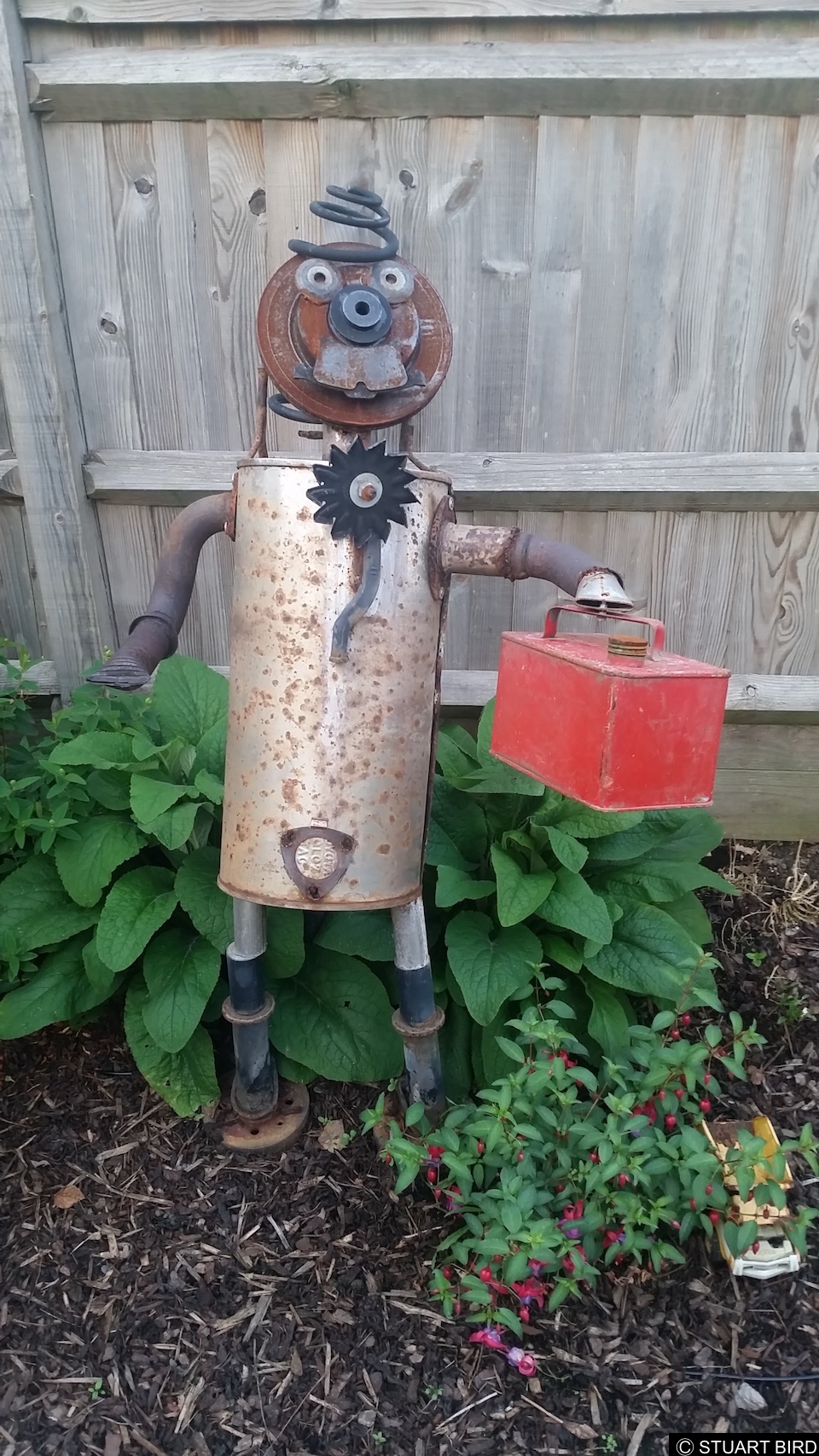
    A classic example was an old VW bus that came in. All shiny paint and recently restored. It failed of inadequate welding repairs to the chassis. I’m sure my friend whose bus came to us last year also failed on inadequate welding repairs. Here lies a problem with older cars. they rust. Now any idiot can pick up a welder and have a go. It’s harder than it looks. I’ve tried and failed. I tried again and made a metal man from scrap for the garden but in no way is my welding to be relied upon for meeting MOT standards.

    And then we have the other problems associated with the older car and its inadequate use. Things seize up. The Fiat has a lazy handbrake on the rear brake calliper. The camper had a rear brake that wasn’t working. Without my MOT I wouldn’t have known this. This remember is coming from someone who looks after their cars.

    This remember is coming from someone who looks after their cars.

    There is just too much to go wrong. And it will put lives at risk. When was the last time you looked at your brake pads? You wait for the warning light to come on, don’t you? Does your car has a warning system? Only my Golf does.

    But surely this will save us money? Well no. OK, I don’t pay for my MOT’s. It’s a perk of my job and saves me £216 a year or £54 a car but I’d rather pay that just for peace of mind. And here comes the catch. The DfT has said “The option for owners to take their vehicles for a voluntary MOT test will remain. They will still, like all vehicle owners, need to ensure that they meet the legal requirement of keeping their vehicle in a roadworthy condition at all time.”

    Over 2000 people were consulted for the change in MOT law. Strangely a larger majority voted against exemption of vehicles over 30 years or older from MOT tests. The DfT agreed with the consultation on this. It cited accident data as well as the strong negative reaction from the public to this suggestion. Accident data. Vehicles 30 years or older involved in accidents caused people in the consultation to be wary.

    The MOT, however, is flawed. It only proves that on that given day of presentation, it was deemed safe for the road. It could all go wrong tomorrow. Without one, however, how will you know? How many of us out there are mechanically sympathetic to the workings of our cars or can detect a fault? Apparently those with older cars are more in tune. Apparently, we tend to look after them more. As a case study l have just failed.

    Visit any car forum and I’ll beg to differ. The questions people ask sometimes make me shudder to the core. Sometimes I want to grab the keys from them and toss them into the drain.

    There is another fear to come from this though and that’s restrictions of use. I was deep in discussion with a friend in the trade and he spoke at length that soon there will be restrictions for use of older cars. I couldn’t disagree. Mark my words, they will come.

  • CAR REVIEW | Citroen DS 5 Blue HDi 180 auto Prestige

    I am in a bit of a pickle. I’ve spent a week with Citroen’s DS flagship brand and its 5. The problem I have is I am not sure if it is trying to be an MPV or a hatchback or somewhere in between.

    CAR REVIEW | Citroen DS 5 Blue HDi 180 auto Prestige

    It took me around 13 miles to feel comfortable in it. The driving position options are vast as you would expect with electronic memory driver seat with massage facility. The steering wheel alters for rake and reach. It’s just where do you position yourself in a car that has a high waistline and low windows? So 13 miles in I found it. Where it felt comfortable.

    I altered that three days later and soon found it best to sit just a little bit higher. If anything it’s the dashboard that makes it awkward at first. It’s huge! So big in fact that there are side windows between the windscreen post and door frame.

    It’s a nice place to be in. The French have a history of reinventing the dashboard of cars. Sadly no one else follows but to hell with it, this is Citroen. In an age were fascias are all becoming as similar as the outside, it is nice to know the DS 5 does it differently.

    For a start, there is a clock with hands just above the start button. Next to it on the infotainment screen is a digital clock. The clock itself is an optical illusion. Tall and narrow in shape and yet it always looks like the arms are going to get stuck around the 3 and 9. It’s a little bit of old in a lot of new.

    Some design bits don’t quite fit at first. The red digital parts conflict with the white printed parts and then there is the digital speedometer read out below the normal speedometer. It gives you many options all at once and not to good effect. You soon forget all this and forgive it because you’re soon too busy hunting for the window switches.

    DS 5 comes with the usual infotainment system that carries a tradition of annoying me with its grey over black on the satnav screen at night. Thankfully this can be changed. What can’t sadly is the pedantic way the finger touch inputs work. The screen is too flat and too far away to be really handy and this is amplified by the fact you need to touch the coloured logo spot on to get the phone system to display a text message that then needs further fingering to get it to read it out. It’s as distracting as using your phone by hand. Something we do not endorse so on a personal note this is a failure.

    The interior door panelling is finely sculptured as you’d expect in DS. Red lights highlight the door handle and cup holder. There is no apparatus on the doors. This works well. It means you keep your right hand on the wheel at all times. Remember I said about hunting for the window switches, they are found on the central tunnel in finely sculptured buttons. It’s all a break from the norm and I am starting to like it.

    If I can be blunt the inside is what Saab should have been doing. The cockpit is a mixture of automobile and aircraft. There is even a roof tunnel between the front glass panels for glasses and switches for the sun blinds. Opened and it makes the cabin feel light and airy. Rear seat passengers will also feel happy in the DS5. They will moan however at the window switches. In keeping them clutter free like the rears, they placed the window switches in the centre between the front seats. Nothing bad except 2 things, they are too far away for easy reach and they work upside-down. Down is up and up is down!

    Outside also has its mix of good and bad. Sadly in black, you can’t see the fine details unless up close. What is now missing is the absence of the Citroen chevrons. DS is now a stand alone product. So it manages to retain some Gallic charms and being outside of the double chevron is probably why it has been allowed to grow to an in between car of hatchback MPV and be so very different from anything the PSA company has to offer.

    The headlights are a nice place to start in terms of design. They are some 21” in total length. At night time the outer edge is illuminated in a brilliant white while inside that keep you focused with their steering ability. The headlights themselves blend seamlessly into the front wings and screen posts with an abundance of chrome. It’s all very showy. The side profile again is an awkward blend of 2 cars fighting for the same place.

    The ride and drive are ok. It suffers from some turbo lag as most diesels do but it isn’t annoying to get going. The Blue HDi 180 turbo diesel engine is quick off the mark though thwarted by traction control. It reminds you that this isn’t a sports car so don’t even try it. As a comfy cruiser, it is best but the ride is somewhat lost on surfaces where there are joins. It doesn’t crash over pot holes but irregularities do cause it to jolt around a tad when normally it is well behaved. It can be hustled but you will need to get used to its ways. When really pushed it will roll like a classic Citroen of the 70s and it will understeer with no attempt at scrubbing off speed when you let go of the throttle. Thankfully the chassis is more than capable and oversteer isn’t ever going to be a thing to worry about. To get the best out of it I found using the auto box as a manual. In auto, it just sometimes got a bit confused. In manual, it worked a treat and if you got too excited and carried away, it would change up regardless. The tactile contours of the gear stick made manual changes a joy. It felt very sensual and its response to inputs was quick.

    There is a lot to recommend about the DS 5 and certainly more-so if you are in the market for something that will stand out from the normal fleet cars found in the company carpark. You’ll win no prizes from management for stepping out against the crowd but to someone like me, you will be a hero. I like different.

    Love

    Subtle stand out from the crowd car
    Cabin design
    Solid feel

    Loathe

    Fiddly infotainment system
    Very black materials used inside
    Awkward switchgear

    The Lowdown
    Car – Citroen DS 5 Blue HDi 180 auto Prestige
    Price – £35,590 (as tested)
    MPG – 62.8mpg (combined)
    Power – 0-62mph – 9.2 seconds
    Top Speed – 137 mph
    Co2 – 117 (g/km)

  • MOTORING | Group B Rallying Child’s Play

    Group B rally cars were fearful monsters of rallying when you had formula 1 power raging through the woods and villages all over the world. A succession of accidents finally killed the Group B section of the sport off with the final blow coming in with the tragic death of Henri Toivonen driving a Lancia Delta S4 on the 2nd May 1986.

    During the heydey of Group B, radio controlled manufacturers were quick to monopolise on the consumers’ lust for Group B machinery and no company did a better (or worse) job than the Tamiya plastic corporation.

    Over the years of 1983 to 1987 and starting with model number 58036 and the launch of the game changer in rallying, Tamiya released the Audi Quattro in July 1983. In total Tamiya released 4 group B rally cars. So pull your aerials up and charge your racing packs as I run you through these four classic gems. I’ve also included links to the Tamiya videos on Youtube.

    Audi Quattro

    This was quite a fitting replica of the car it displayed. Like the original, Tamiya’s Quattro was also heavy. This was the companies third attempt at making an off-road chassis. In making it a true off roader with the ability to withstand true rallying abuse, the delicate electronics were all encased in a water tight tub. Great you might be thinking but the SRB chassis of the Sand Scorcher et al was much better at this and it also had proper go-anywhere suspension.

    Tamiya endowed the Quattro with swing arm front and trailing link rear axle with suspended transaxle. This encased a clutch system that never slipped because you could’t put any more power through it other than the Mabuchi RS 540 motor. Tamiya said it was powerful. We who drove the car back in the 80’s begged to differ. The advert that played on a loop in Beatties toy shops sold us a fat bloody lie! It didn’t have 4 wheel drive and due to its lack of get up and go, it didn’t need it either.

    All this was not damped in anyway by coil springs only all round. For want of a better word, the rears were adjustable depending on road surface. It was a crude make do system of adjusting a collar.

    The box chassis was limited to its surface choices. Most off-road tracks other than mild dust would render the vehicle stuck in the mud. On bumpy ground it was truly horrendous by the way it bounced around like an excited 4 month old puppy. The body coming off its rear clip system was common.

    It wasn’t very good at being an off road rally car. Unlike the Audi, this effort from Tamiya wasn’t going to win any races. In fact I don’t remember anyone in my local park winning with a Quattro!

    Where it did wonders was with the body and the details. Tamiya still are the kings of details. Now forgiving it the elongated front wheel arches and squashed body (it actually looked more like the Sport Quattro S1) it was a delight to detail with a complicated decal set of Audi Quattro colours. It even had the option of fitting the 6 spotlights to the front. The tyres were road going life like Michelin TRX’s that never seemed to wear out. This was also the only Tamiya to be piloted by a woman and to celebrate this Tamiya even made a new mould for the little driver included that was to be Michèle Mouton.

    Opel Ascona


    Hot on the heels of the Quattro was the next release, the Opel Ascona.

    Again this had the awful box chassis with no off road ability but stranger still was the decal livery of the lesser known Akai team Ascona when Rothmans Racing was more dominant on the rally scene. It took me several years many moons ago to even find a picture of the Akai car.

    They chose Walter Röhrl as their driver of choice for this model but with no name mentioned on the side. Walter and Opel took second place in the manufactures trophy being beaten by Audi.

    That may have been a result to Audi but to the model builder Opel had the last laugh. The body for the Ascona was and still is one of the nicest to look at. It is far better proportioned than the Quattro.

    Lancia Rally 037

    This car has been cruelly quoted as Tamiya’s third truck. That’s not fair you say when you handle the lovely styrene injection moulded body. You can even wire up the front and rear lights and for added joy, the 4 spots on the front can also be illuminated.

    You spend ages on the body. It’s a thing of beauty with detail and apart from the rather large wheel arches, it all looks quite smart. Even the tyres are those lovely Michelin TRX types as fitted to the Quattro and Ascona.

    You then mount the body onto the chassis and stand back aghast at the true truck like stance this elegant coupe has. The body sits high on the new space frame chassis. The wheels protrude the width of the vehicle and it all looks a bit comical.

    The chassis really was an upgrade though. Tamiya had done a lot of development in making this a proper off-roader. It spawned the much-loved Frog. The Frog had hop up parts like oil filled rear shock absorbers and a differential as standard. The basic chassis has never been out of production since 1983’s release as the Subaru Brat. Out of the box the Lancia came with coil springs and a solid rear diff which made off roading great but wet corners interesting. Everything was suspended individually and despite its light weight design, this was one indestructible chassis. There was also a belly pan available and other people made upgrade kits for various bits.

    What it did was go fast when you changed the Mabuchi RS 380S motor to the RS 540 or better still one of the hotter motors Tamiya offered. The Lancia was a true weapon compared to the other two now lame ducks fighting for a slow and steady finish. What it also did with speed was to disintegrate that elegant body into a thousand pieces. The chassis might be rally tough, however, the body is quite like a real Lancia with the ability to shed bits here and there. One wrong turn and you’re reaching for the gaffer tape to put it back together.

    Tamiya did re-release the shell mounted to a better TA03RS chassis and while they were at it they also amended their wheel arch faux pas. It wasn’t a patch on the original.

    Toyota Celica Gb B


    Like Group B itself, this was to be Tamiya’s swan song to the rally with this technically advanced if somewhat flawed Toyota Celica. This was a violently fast machine.

    The scale was not like the others. This was 1/12th scale. The others were all 1/10th. This made the Celica a more delicate creature but my word what a chassis. If you liked scaled precision then this was for you. A mid mounted Technigold motor that in itself would look great next to the Queen’s crown jewels. It also had adjustable timing. Drive was transmitted through 3 differentials to the 4 wheel drive layout.

    The suspension was also a work of art. Adjustable rear suspension for 3 handling characteristics and 3 different damper rates and double wishbones and an anti-roll bar at the front. It sounded great. It read fantastically. You assembled the kit with joy. You then discovered the oil filled shocks were the worst in the world and would leak oil, the rear wishbone mounts for the shock absorbers would break and that Technigold motor would strip the cog that fed the rear gearbox. It might have worn a Toyota badge but it lacked every ounce of Toyota reliability.

    On and sort of off road it was a hoot. Very fast and if it stayed in 4WD, it would keep up with most things in a straight line. It’s cornering prowess with off-road or tarmac tyres left a lot to be desired. I did race one for a while at Crystal Palace with no wins to my name but only a handful of retirements. It certainly gave you sweaty palms.

    Oh well, there is always the body. And this was again a delight to make with details galore. This was one of the last where you had to paint all the bits. Soon after they started using stickers for most of the details. The fine art was about to be lost but in the mean time, you didn’t know this so you enjoyed the painstaking HOURS it took to paint not just the shell but also the 2 drivers in the blow moulded cockpit.

    Soon after they started using stickers for most of the details. The fine art was about to be lost but in the mean time, you didn’t know this so you enjoyed the painstaking HOURS it took to paint not just the shell but also the 2 drivers in the blow moulded cockpit.

    The old Tamiya stuff is still the best. With nostalgia so ingrained in us and with a crazy support of radio controlled clubs out there you can’t not get the support or parts you need to buy to maintain and enjoy any one of these group B monsters. For my money I’d have to go for the… all 4 of them. The Quattro and Ascona have beautiful drivetrains that make for a beautiful sound. The Lancia is a gem of detail even if it does look like a truck and the Celica has a chassis made of fine architecture l could just lick.

    Choose your retro car to suit your needs. Choose it to suit your favourite manufacture but more importantly choose it to be enjoyed to the max. After all group B was all about taking it to the max!

  • CAR REVIEW | Peugeot 3008 GT

    ★★★★  | Peugeot 3008 GT

    It’s a bit of a standing joke between a motoring journalist friend of mine and me about how I can wax lyrical about Peugeot products awarding them 5 stars when others don’t. And in truth I do but that makes me more critical because having been brought up with French cars for my first 20 years of motoring I want them to succeed and indeed they can if they only made them better in terms of quality.

    That, I am glad to say is now the case. The 3008 (the first Peugeot to carry over an existing number so don’t confuse it with that one) SUV is what I have been dreaming of from the company in Sochaux-Montbeliard, France.

    I have been excited about visuals shown on the new interior and the design of the cabin. If you are for want of a better word, going to reinvent the wheel, you’d best make sure it’s damn good and the 6 piano buttons that control the 8” infotainment screen work with German fluidity. You then look around the i-cockpit as they call it of this 3008 and you realise that this Peugeot has the potential to challenge VW head on in the quality feel arena for the first time. A car needs to have a tactile feel to remove any deadness about the cabin and certainly from the driver’s seat, the 3008 has it in spades.

    The window switches felt far superior in feel than they looked being not too dissimilar to the generic buttons found across the fleet. The dashboard really is like a massive chunk of contoured rubber and because of this has that tactility that makes it all the more inviting and the solid feel of quality. The design contours flow around the driver with little touches here and there that made it the most inviting Peugeot I have ever been in. The blueish wood grain effect door inserts added to the quality feel of a very upmarket Peugeot.

    And the wax lyrical praise doesn’t stop there. The ambience could then come with changes to the fascia panel in front of the driver and above the small steering wheel. Peugeot says this positioned closer to the road and more in the field of the driver’s vision making it safer for eye glances to be made. It feels very natural.

    The GT model also came with ambience choices within the set up allowing for lights within the dashboard and doors to be dimmed thus allowing you to make a cockpit to suit you. And then I found the massage seats. I could have stayed in it forever. What didn’t work for me was the two choices of amplifying settings available called “boost” and “relax”. While relaxing you could think of as basic settings, boost on the other hand changed throttle response, steering feel and pumps out engine noises through the speakers. To me, it didn’t change it enough for me to really notice other than when flooring it on the M20 and the change in exhaust note from nothing to a nice growl.

    The 3008 GT as tested is the flagship model and apart from the £1300 coupe Franche paintwork you really can’t fault it. Or so I thought. The Franche paint job is a blight on to the otherwise stylized body with an ungainly angled painted block of black colour up the rear door and over the boot. It’s nicely done and the paint edge is smoothed into the rest of the paintwork but your options money would be wisely spent elsewhere. Like the advance grip control unit and Visio 360 degree camera and park assist pack. Added together they come to £710. Two well worth options in my opinion.

    What I really can’t forgive the 3008 GT is its engine. More to the point, the choice of engine units available. There is only one. A diesel. It’s actually a very nice 2-litre diesel engine to use. It makes all its power of 180hp within a useable 3750rpm range and 400Nm of torque at a lowly 2000rpm. That big shove of torque power comes with limited turbo lag enabling rapid acceleration from T junctions a breeze. It runs through a 6-speed automatic gearbox that you couldn’t fault its gear selections though using the paddles and doing it yourself made it quite spirited. If it’s going to wear the GT badge, it best behaves like one even if it is an SUV. It did and l enjoyed the many miles I travelled in it.

    The ride and handling helped this sense of GT spirit. It wasn’t too harsh or too soft and it wasn’t Germanic. After years of wanting Peugeot to return to form and make their own suspension settings instead of copying the market leaders, they have created a suspension system that is compliant for almost every eventuality one could wish for in a drive across Kent. That eventuality was aided by a fantastic sat nav that l have to thank greatly for aiding me in avoiding 3 nasty hold-ups between South London and Folkstone. Tomtom and Peugeot have made a very useable system that doesn’t make you curse at it. It alerts you to any given problem and can navigate you around it.

    I’ve a lot of love for the 3008 and I am not the only one. This Peugeot has won many industry awards in 2017. It’s an easy car to live with and it’s a Peugeot built to last. Press cars are not treated with kid gloves so this one having a tow bar and over 10,000 miles on the clock when l got it still felt solid.

    What I can’t get out of my head is that the GT is only available with that diesel engine. In a time when the UK is uncertain which way to go regarding the derv engine, I am puzzled as to why they only give it this one option on the flagship model. As Peugeot quote in the brochure, the GT ”will leave you wanting for nothing” and it does except I want a petrol engine.

    Likes
    Cockpit
    Driving ability
    Kit as standard on the GT

    Loathes
    Very limited engine options
    Switches below the piano keys look out of place
    Auto close boot resistance very strong

    The Lowdown
    Car Peugeot 3008 GT
    Price £33,695 (as tested)
    MPG 58.9mpg (combined)
    Power 180bhp
    0-62mph 8.9 seconds
    Top speed 131mph
    Co2 124 (g/km)

  • MOTORING HEROES: Chris Goffey

    Mind Your Head mate.

    Motoring legends come in all shapes and sizes. Some look to motorsport for theirs like Nigel Mansell. Some look to designers like Bertone. Both the aforementioned are heroes of mine but one other that stands out was a gentleman who a friend of mine and I would often talk about after Thursday night’s Top Gear. I am talking about Chris Goffey.

    From 1981 to 1997 Lancashire born Chris was in the spot light presenting Top Gear alongside William Wollard and Sue Baker amongst others. He is probably the longest serving member of the original format to present Top Gear with 17 years under his belt and 179 shows to his name. His no nonsense style was always clear and concise. No faffing around. It was a style I liked on Top Gear. It was almost like listening to your father tell you about the car he was about to purchase for the family or a talking brochure. He was informative in giving all the details the geek in you actually wanted to know without honing a car like a lunatic around a track for the show.

    Watch any old Top Gear and his understatement in dress attire comes over in a warm wave of joy as he calmly navigates a car while talking to the camera. No high jinks, no being stupid and more importantly no screaming except maybe from the tyres.

    One of the most memorable things I remember about Chris Goffey was that he was never quite happy with a car even if you thought it was perfect because of the brand loyalty you had for the likes of Fiat for example. He would pick holes in a sometimes trivial thing. Now writing about cars myself I have to back track on my original statement that I made at the age of 14. He was right. I recently drove a Lotus Elan S2 for the classic review for THEGAYUK and I totally agreed with him regarding the obtrusive central arm rest being in the way.

    Chris became known before Top Gear for his part in ITV’s motoring programme, Police 5  before jumping to BBC. Prior to that, he was a motoring journalist and news editor for Autocar Magazine in 1972 for 6 years. Chris will also be known for being the father of Danny Goffey, lead singer of Supergrass. He is also married to ex Labour party councillor Linda Nolan. Not to be confused with the Nolan sisters Linda Nolan.

    Still busy and still teaching in one way or another today, Chris was in the news last year in 2016 where he slammed his local Oxfordshire County Council for axing the mobile library service that he worked on. It served the outer reaches of the community. His writings and education promotions still make him known today. Despite a nasty fall and broken neck from horse riding, he is still a keen horse rider. He has recently been out promoting safer driving around horses with the British Horse Society. One of his quotes taken from Horse and Hound (www.horseandhound.co.uk) is one I whole heartedly agree with. “Your air bag and seatbelt won’t help you a lot and if it (horse) comes through the windscreen it will kill you” so slow down for horses. And The Archers’ fans out there will love to know that he also breeds Alpacas.

    And my one personal admiration for him lives on with my constant search for boot locks that would smack you on the head. He mentioned it in the review he did for Top Gear in 1990 about the then new Fiat Tempra. Having owned one, I can see, well feel, if I am honest, exactly what he means.

    Mind your head! Thanks, Chris.

  • Setting the pace with Jaguar

    Jaguar has been busy of late with two launches over the past month of two cars. The first was of the XF Sportbrake. An important car in the burgeoning luxury estate segment. Now hot on its heels is yet a car probably more important, the smaller SUV brother of the F Pace, the E Pace.

    The launch was a spectacle of celebrities and journalists from all walks of life. Jaguar wants everyone to know about this car. Fact that the E Pace hit the world records even before anyone got to see it, demonstrates the big push to let you know about E Pace. It did a 15.3-meter barrel roll with a 270-degree roll. A feat no other “production” car has achieved. Sadly due to health and safety, we were not able to see this being performed. Instead, we had Pete Tong. I’m not complaining.

    If this car doesn’t entice you away from the Audi Q range, BMW X range and Mercedes confusing GL range then I do not know what Jaguar have to do to do so. This is a car to make the Germans worried. This E Pace is a car that is going to cause a lot of upset in the SUV market. Read on and I’ll tell you why.

    First up it is cheap. I don’t mean that in a detrimental way to Jaguar because the car itself is anything but when you feel the quality. I got speaking to a consultant for Jaguar who told me that prices were to start from around £28,500 for the base S model to £41,450 for the HSE (all before options) while the most popular model will retail for around £33k. For a Jaguar that almost seems like chicken feed money when you look at the small SUV market. This is a more than a premium car, a Jaguar is prestige!

    It’s the enticing that it will do in the showrooms. Design chief for the E Pace, Ian Callum, and his team have done a fantastic job in making this smaller Pace look even better than the F Pace it complements in the range. In doing so they have made a car that will appeal to many markets and importantly, young professionals of every kind. If there is one thing the E pace lacks it’s going to be the smell of the boardroom and a golf club. Not that you can’t get golf clubs in the back, it’s that you can get more in there without trying. Think of a sport, any sport. Think of the gear you need and double it. It’ll fit in the E Pace.

    The kit is impressive too. It has the usual large touch screen and power ports for devices around and the ability for up to 8 devices to stream the internet via its own 4g hotspot. Air, leather etc are pretty much standard with options available for upgrades of the furnishings.

    Air, leather etc are pretty much standard with options available for upgrades of the furnishings.

    Available with 2wd or 4wd. 4wd will be the bigger seller for sure. The computer keeps track of the power to wheels every 10 milliseconds with the ability to transfer it to the wheel that needs it most thus keeping you where you should be.

    2-litre engines options in petrol and diesel range from 147 to 197bhp with 0-60 times ranging from just under 10 seconds to 6 seconds depending on engine and spec. Add to this the usual choice of a practical wheel to rubber size to thin banded rubber and blinging alloys and the options list starts getting bigger.

    This ladies and gentlemen is E for excitement at Jaguar.

  • MOTORING | Happy Birthday Bambino

    A Little Gem Celebrates

    Who would have thought it, the Fiat 500 turned 60. The little city friend of the Italians that kick started Italy’s motoring for many has become a pensioner. OK, a little time lapsing magic has happened in that time of Dr Who proportions in Time And Relative Dimension In Space.

    From 1957 to 1975 you could purchase a new 500. It was replaced by the square Fiat 126 that just never quite did it. Like most second comings it is never as good as the first and thus the 500 was born an icon like the Citroen 2CV and Volkswagen Beetle. Both cars that have never been replaced with a car as affectionately loved the world over.

    Almost four million 500’s were built in those short 18 years and while many rusted away, many have been survived due to an ever increasing number of fans willing to take on the challenge of restoring or keeping on top of the problems you once got with an Italian car.

    The cheeky chap of Turin also sported a roofless version and even an estate called the Giardiniera. The magic of making this an estate was to lay the engine on its side. I often wonder if they had done this to the normal saloon, they could have created a hatchback version too.

    And so 32 years later we get the 500 with a hatchback when it was suddenly brought back to life with a design by Roberto Giolito that didn’t alter that much from his concept to reality.

    Sales of the 500 took off almost instantly and now you can’t see a street that hasn’t got a 500 on it. Admittedly it is miles away from the original. The engine now sits at the front but like the original, you can now get it with 2 cylinders. In keeping with the philosophy of the 500, Abarth has also been responsible for breathing angry fire onto the current 500 too.

    It’s not hard to see the appeal of the current 500. They are cute and retain the fun and essence of 500. It grew in age but not as much as the new Beetle or new Mini. In keeping it on a small platform Fiat was able to make it fall into the cheaper end of the car market where retro is still big bucks. With this in mind the options are now endless and 10 years on, new and inventive models are being created to keep 500 fresh. Look out for some swanky new models coming out soon.

    Like a lot of cars, at some point, you need to have owned an iconic car. We owned one from 2010 to 2015. A 1400cc 100bhp Pop auto. And in those 5 years, nothing went wrong. It really was a gem.

    So happy birthday Fiat 500 you cheeky little devil.

  • VINTAGE CAR REVIEW | Fiat X1/9

    A Champagne Lifestyle for Fiat Money

    VINTAGE CAR REVIEW | Fiat X1/9

    Picture the scene. America sometime in the in the mid 60s. Following many fatal crashes with people being decapitated or thrown out of their cars, the land of the free was talking about banning convertible cars. European companies that imported to the States went into meltdown.

    Open top cars are their money makers.

    The British are doomed.

    The Germans are still selling a lot of drop top Beetles but struggling to sell the expensive 914/4 and 914/6 targa tops.

    The Italians feel unsure.

    Step in Nuccio Bertone and his design house in Grugliasco, Italy. He walks into Fiat with a bold new design. At about the same time a new sports model was being designed in-house at Fiat to complement the soon to be released 128.

    In a backroom at Bertone, a designer named Marcello Gandini has penned a wedge designed 2 seater putting the Fiat 128 engine behind the driver. Nuccio is a persuasive man. His design house is legendary with designing some of the finest cars in the world. Fiat bosses like it. Bertone is to build it. A beautiful marriage is formed and a mid-engined sports car is within easy grasp of the everyday man and woman.

    To be honest the Bertone design isn’t all that new. Mid-engined cars had been around for a number of years for the rich and famous. Lamborghini, Ferrari and Maserati all offered those people the chance to get close to the ultimate road-going racing car layout. Here, however, was Nuccio with an idea to bring a whole new concept to the masses.

    On its launch in 1972, it was praised for its handling, looks and practicality. It also met the US criteria for open top cars. It was all win win win for Fiat. That strict criterion for open topped cars was soon scrapped. Oh well, what was done was done and without it, we might never have had the X1/9.

    The first cars were fitted with the little 1300cc engine. It liked lots of revving and it was a willing engine alas it lacked the ultimate punch that the looks suggested it should have had. The Fiat 128 coupe could outrun the heavier X1/9 by a few seconds and had a faster top speed too.

    This was addressed in 1978 with the fitment of the Fiat Strada 1500cc engine raising power to 85bhp and the killing off of the coupe. It doesn’t sound a great deal when in 1978 the Golf GTi had 110bhp but the magic of the X1/9 was so alive that the lowly performance figures somehow could match the Golf in many areas including top speed. Up against the new generation of hot hatches, the X1/9 had great handling up its sleeve that helped make up for the lower figures. In some ways, the X1/9 suffers from small man syndrome and gives its best shot in making up for shortfalls in outright figures.

    Even today the looks are the talk of the town. It’s sleek. It has vents in the rear. All panels opened up like a Lamborghini Countach. It has pop-up head lights. The driving position was quite neutral and the seats comfortable and supportive even over long distances. The roof was removable. It was pretty.

    Now there lay the problem. It looked pretty. It soon became known as a hairdressers car and quite unfairly so. Those cute looks and lack of power gave you a sense of security until you overstep the mark. The legendary handling is phenomenal if kept within both yours and the cars limits. The X1/9 will bite you and bite you hard if you take your mind off the road.

    Sports cars were never practical. Boots were small and only squishy bags could be accommodated for those going away for the weekend. Not so in the X1/9. The car possessed a neat trick in its design by having 2 boots. Even with the roof stored in the front, it was still more than enough for more than a weekend. And up until 1982 Fiat even gave 2 matching bags with every car sold. Today they are the ultimate X1/9 accessory to have if you can find them.

    It is an involving car to drive. You can exploit its handling and have fun. In the wet, it needs a lot more care and thought put into the moves. All this happens on skinny 165 section tyres and tyre pressures are essential.

    The example in the pictures is mine. Don’t for one moment think that l am biased and I’ll rave about it being perfect. It isn’t the perfect car by a long shot. It’s called ignition key roulette. It’s temperamental. Sometimes it’ll start on the first turn and sometimes it won’t. You just never know.

    The handling is fun. It has bitten me in the arse when it got a little messy. The cost was a new wheel. The steering is low geared and requires a lot of twirling of the wheel. A quick rack is available and at some point, I will fit one.

    Like all ageing Italians, it needs looking after. The biggest killer is rust. Once rust has set in it can set you onto the road to ruin. The shells have 3 bulkheads that are complex with double and triple skinned areas to increase rigidity in an open top car. Thankfully most body panels are available and there is a good Facebook page and members club out there to help.

    Running faults to date include an oil leak from the fuel pump, carburettor air leaks and coolant leak from ageing hoses. All easy fixes thanks to the mechanicals being basic Fiat 128/Strada and far simpler to repair than a Samsung printer. It’s a great little car for that occasion when the wind in the hair is needed but comes with one major flaw. Just be prepared to correct people when they call it a Triumph TR7!

  • CAR REVIEW | VW Golf SE Nav 1.0 TSi

    ★★★★ |  VW Golf SE Nav 1.0 TSi – Tortoise Powered hare

    REVIEW | VW Golf SE Nav 1.0 TSi

    One of the shocks I had this year was with the smallest engined Golf in their popular petrol SE Nav range.

    It lacked the bells and whistles of the R, GTE and Alltrack estate in a lot of ways. The Golf now comes with a more confusing array of options and dashboards and specs but is the SE Nav with its one whole litre worth of power pack going to leave you left out of the Golf club?

    No is the answer. I wanted to try a lowly model and while not the base model, it still lacks the touches. Or so I thought. By comparison, the S is the base model now at £17,625. The SE Nav comes in at a shade under £19,500. Spec wise you’d be a fool to look at the S when the SE Nav gives you parking sensors, cruise controls, Sat Nav with 8” screen and mirror link to your smartphone along with a host of other options.

    For the extra money, you do get more power from your little engine too. A whole 25 more horses and 1g/km of CO2 worse for the environment. That extra money is worth it for the extra oomph from the engine alone.

    It’s a sweet little unit. It will carry you to 122mph and will do the traffic light Grand Prix in 9.9 seconds. Not quick but not slow. An original Mk1 GTi would only do it a bit faster. There was no hint of turbo lag at all or raging surge. This SE Nav felt very linear in its power supply. And all from 3 cylinders too.

    Living with this little engined big car is quite easy too. It has all the attributes of a Golf. You can’t fault the fit and finish. Again VW has moved the goal posts on quality. There was once a state of play where lower models really did feel like the bread and butter of the range. Not so here. It clunked like a Golf should.

    Easy is probably the key to the 1 litre SE Nav. Combined fuel economy of 58.9 mpg is good. How good that will be with 4 up and some luggage is anyone’s guess. The trouble with a little engine is that it needs to be worked hard. If most of the time you will travel by yourself or with one other, I doubt you will notice much of a difference.

    On the move, it shifted. The 6-speed gearbox was easily matched in ratios to the engine. The course set out comprised of a variety of driving situations you’d encounter in a week’s worth of driving. I expected to do a lot of cog swapping but I didn’t. Admittedly 5th and 6th seemed very high and more suited for when the engine is on the A and M roads.  I found 3rd and 4th more than ample in getting me buzzing along.

    Inside there wasn’t much of a cacophony of sounds. Sound deadening being key to the serine driving ambience and quality feel of the cabin. It’s not an exciting cabin to sit in if I’m honest but at £12k less than the higher spec models I have tested you would expect it. It’s Germanic. At the end of the day, it is a Golf and this is what Golf does. And it does it very well.

    I’ve spent a lot of this review talking about the engine and with good reason too. We in the UK seem to sway away from the smaller engined bigger cars and that is a shame. This engine livens up a normal hatchback. The big selling Golf SE Nav 1.4 just can’t better the thrill of the turbo 3 cylinder engine. That said the quandary VW put you in is that the 1.4 starts at just £1300 more. It has more power and will go faster for 4 miles to the gallon less. It’s a tricky one to now call but I’d go with the little engine. From tortoise expectations to hare ability, it’s a total buzz.

    Likes

    Good value
    Sweet little engine
    Ride quality

    Dislikes

    Bit drab inside
    Plain fascia
    Difficult choice choosing 1.0 or 1.4 engines

    The Lowdown
    Car – VW Golf SE Nav 1.0 TSi
    Price – £ 20,065 (as tested)
    MPG – 58.9 mpg (combined)
    Power – 110 bhp
    0-62mph – 9.9 seconds
    Top Speed – 122 mph
    Co2 – 109 (g/km)