A couple of years ago, we took delivery of the then-new Fiat Tipo. A new Fiat with a reused name. No hardship there because the original Tipo was a very good car.
We liked the new Tipo when we last had it back in 2016 and I favoured the car well. Do I feel the same in 2019?
Driving.
Nothing has really changed here. We have the same 120bhp petrol turbo 1.4 engine. It was as good as I remembered it. Smooth and flexible with reasonable performance. Not quite the fire-breather you’d think 120bhp should be but it is good for a claimed 124 miles per hour.
Handling was well balanced and it soaked up the worst of the country lanes around the Cotswolds.
A comfortable driving position was easy to obtain and there were no annoyances. It felt as good as the rest in the segment.
Inside.
It’s not as good this time around. It’s amazing how dated it has started to look with its black plastic everywhere. I’m a little stuck as to where the S-Design sits. The Design moniker is used by a lot of manufacturers these days as something stylish over the other models or sporty. I was not seeing anything outstandingly relevant to this moniker.
Driver’s controls all come to hand easily. The 7” touch screen is simple to use and nicely balanced with easy registered finger controls. It comes with Apple Car Play and Android connectivity as standard.
Living With It
There are few vices to be had with the Tipo. It’s a simple and effective 5 door hatchback.
While inside it has dated a little, the exterior is still as good today as it was when new. The fact there are several newer cars with similar rear ends, shows how relevant and modern its design still is.
Verdict.
Tipo is no longer the bargain it once was. At £19,125 it does seem quite a lot despite it having a list of standard key features. But these features seem almost standard fit on most cars these days.
But here lies the problem. It’s effective and not much else. Effective hatchbacks are good but sometimes a model needs some sex appeal. It’s crying out for some true meaning to the letter S like sumptuous.
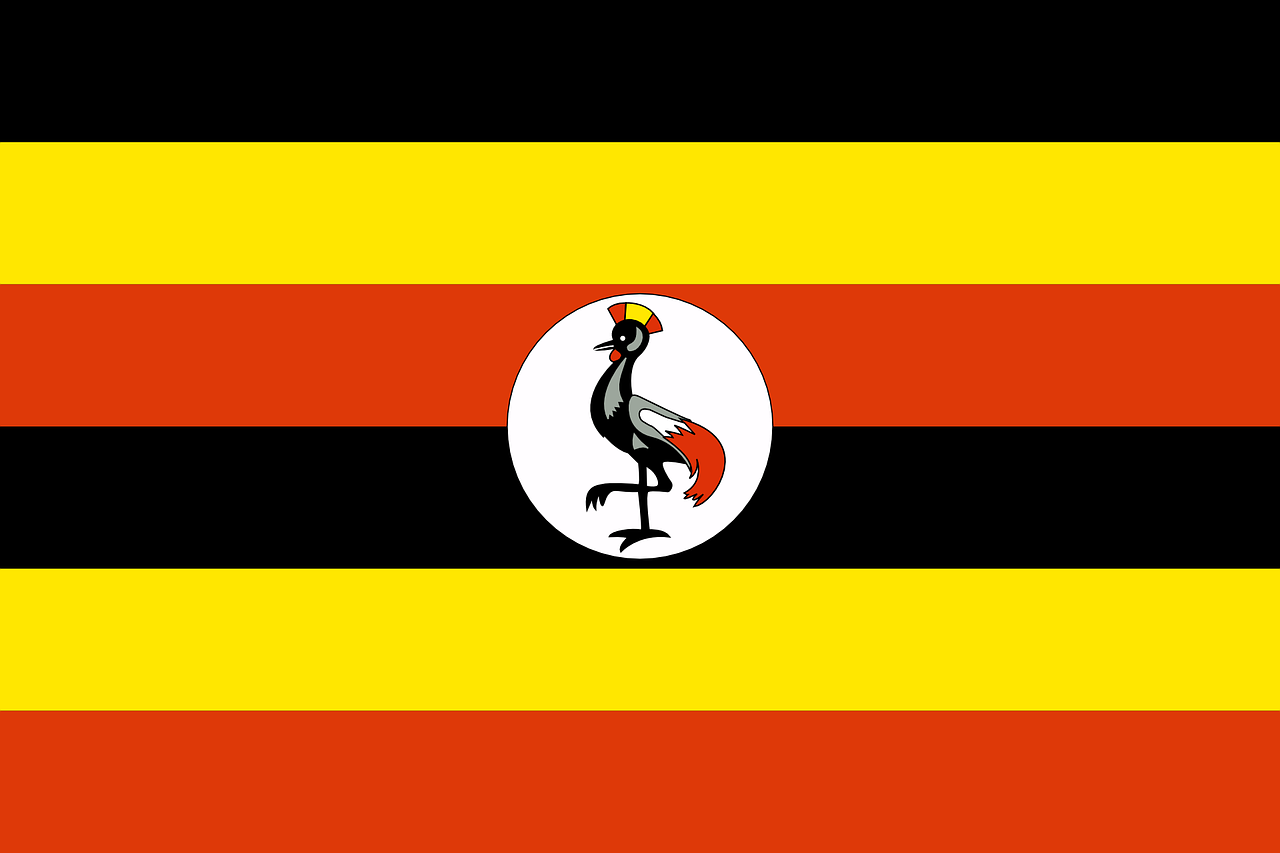
Uganda’s Minister for Ethics and Integrity, Simon Lokodo, indicating that the Ugandan Government intends to introduce the death penalty for same-sex sexual acts in a so-called “kill the gays” bill.
Amnesty International have called the reintroduction “outrageous” and have called the government to reject the legislation.
Joan Nyanyuki, Amnesty International’s East Africa Director, said, “It is outrageous that instead of the Ugandan Government taking urgent steps to decriminalise gay sex, they want gay people executed.
“This is going to fire up more hatred in an already homophobic environment.
“This is an example of how Uganda’s politicians are stoking dangerous intolerance and bias against LGBTI people.
“Uganda’s MPs must resoundingly reject any plan to legalise this kind of bigotry and witch-hunting of anyone who is perceived as being different.”
Spate of recent killings
Last weekend (5 October), Brian Wassa, a gay paralegal, died from head injuries sustained in an attack by unknown assailants the previous day at his home in Kampala.
According to the LGBTI organisation Sexual Minorities Uganda, Wassa is the fourth LGBT+ person killed in the country in the past three months, killings which come in in the wake of a surge in anti-LGBT+ sentiments from political leaders.
Wassa’s death followed the killing of a trans woman from the Gomba district, a gay man in Kayunga district and another in the city of Jinja.
The Government of Uganda has a track record of promoting anti-LGBTI policies, which Amnesty has repeatedly criticised.
Death Penalty
CREDIT: TheGayUK
There are many countries and states where homosexual acts could land you the death penalty. Of these countries, all are located in Central Africa or in the Middle East.
Afghanistan
Men could face execution but are more likely to receive long prison
sentences. No executions are known to have been handed out since the end
of the Taliban rule.
Brunei*
Gay men in Brunei could be stoned or given 10 years in prison if found guilty of homosexual acts.
Iran
In Iran gay men can be lashed up to 74 times for “immature men” and
the death penalty for mature men of sound mind – and where the acts were
consenting. Women can be lashed 50 times and can face the death penalty
after their fourth conviction.
Mauritania
Homosexuality is against the law in Mauritania and could attract the
death penalty however there have been no public executions since 1987.
Qatar
In Qatar, gay men may face execution if they are Muslim otherwise men can face fines and a prison sentence which lasts 7 years.
Saudi Arabia
A second conviction of homosexuality in Saudi Arabia will land a
death penalty. For first offence, men can face fines, castration,
flogging, prison and torture.
Married men can expect to be stoned to death if caught having
same-sex relations. Unmarried men will receive 100 lashes or one-year
imprisonment.
Libya
Gay men could face death in Libya.
Nigeria
Homosexuality is illegal in some states of Nigeria and could attract
the death penalty. These states include: Bauchi, Borno, Gombe, Jigawa,
Kaduna, Kano, Katsina, Kebbi, Niger, Sokoto, Yobe, and Zamfara
Somalia
Homosexuality is illegal in Somalia and could attract a death penalty.
Syria
The actual penalty that gay men should face for homosexual acts is a
prison for up to 3 years, however, due to the rise in ISIS a highly
advertised death awaits those found guilty of engaging in same-sex
sexual acts.
Iraq
Despite homosexuality not being illegal in Iraq, there have been reported executions of gay men in ISIS controlled areas.
* Brunei is a Sovereign state and not a country.
There are some countries where although capital punishment might not
be constitutionally ratified there are cases where gay people have been
killed because of their sexuality.
A gay male friend told me recently that he returns to Pride in his home town of Bristol for the drinking, as there is nothing to protest about anymore. Given the rise of hate crimes over recent years, I pointed out that this is not true even for him, let alone for me. It is not that he did not get it, but it had not occurred to him that for many transgender people Pride might be the only setting – if then – in which they actually feel safe going into a pub.
Or take another example. A lesbian friend earlier this year shared a transphobic joke on social media. This suggested that in parts of the LGBTQ+ community – those parts, perhaps, where the need for so many letters to define us is not entirely accepted – the phenomenon of being transgender and the particular forms of discrimination we face are not yet fully grasped. Yet if we, as we should, reject heteronormative assumptions about sexual orientation, why should my lesbian friend have nonetheless have been so ready to accept them when it comes to gender? The many similarities in transgender experiences to those of gays and lesbians – in terms of exclusion, discrimination and being hidden from history – are effectively denied by jokes which treat us as more or less delusional about our gender identity.
PHOTO: Supplied
Happily, this has proved a rare experience. The vast majority of my gay and lesbian friends have been very supportive both of my transition and of transgender people in general. The high profile of transphobia on the streets and in certain parts of the public sphere has, in my experience, helped to ensure growing sympathy with the issues transgender people can face. All the different nuances of those experiences are, however, not always easy to grasp, even for people who are themselves transgender. I cannot be the only person to have been transplained by an older trans woman for whom her transition experience was seemingly the only authentic one.
Then take the perennial issue of toilets. This, despite the continuing scarcity of gender-neutral ones, has not really been an issue for me as a trans woman. However, I am aware that it can be much more problematic for trans men and for those who identify as genderfluid or non-binary. Awareness of these latter groups, unfortunately, is generally much lower than for us MTF trans people. Nonetheless, they need every bit as much support and are if anything subjected to even more hostility from transphobes, who find their flouting of gendered norms more disturbing than that of the femme-acting trans woman.
Similarly, among the gay community, there is not always ready awareness that the binary, straight/gay, does not necessarily apply to trans people any more than the binary, male/female, does. Some trans people are straight, though they are sometimes misconstrued as gay men and women who are trying unusually hard to conform to heterosexual frameworks. Some, like me, are lesbians (or transbians if you prefer) or in gay male relationships. Some are polyamorous. In terms of sexual orientation, the multifaceted nature of transgendered experience does not always make it easy readily to translate it into a gay or lesbian framework.
In addition, there is not always full awareness of the distinctive challenges we face in terms of adjusting both ourselves and our acquaintances to identities which are social, official (changing your passport can be a nightmare) and bodily as well as sexual. Names and pronouns matter for us as signifiers of transition. Yet even in Stonewall-approved universities trans people are still regularly labelled and abused. This is not least because we challenge stereotypes imposed by heteronormativity. These stereotypes have, in the past, been used to confine and control all of us – gay, lesbian and trans – and our exclusion has been our common experience.
Challenging these stereotypes, both as they apply to sexual orientation and to gender is, in my view, a wholly good thing for all of us.
“Transitive verb with similar connotations to mansplain.
“It can be used to describe the ways in which some well-meaning trans people pontificate about their transition experiences and processes as if they are the only authentic or right ones.”
Can you expand this definition? Use the comments below and your answer could be used to expand or define this glossary entry.
“A transgender woman who is attracted to either transgendered or cis women. It is used to differentiate from cis women who have a lesbian sexual orientation.
“Not all trans women are comfortable with the term, as it can be seen as denying their transition. Some lesbians are also very hostile to the term, despite the attempt to differentiate, particularly those who essentialize gender and therefore deny that gender transitions can even occur”
Can you expand this definition? Use the comments below and your answer could be used to expand or define this glossary entry.
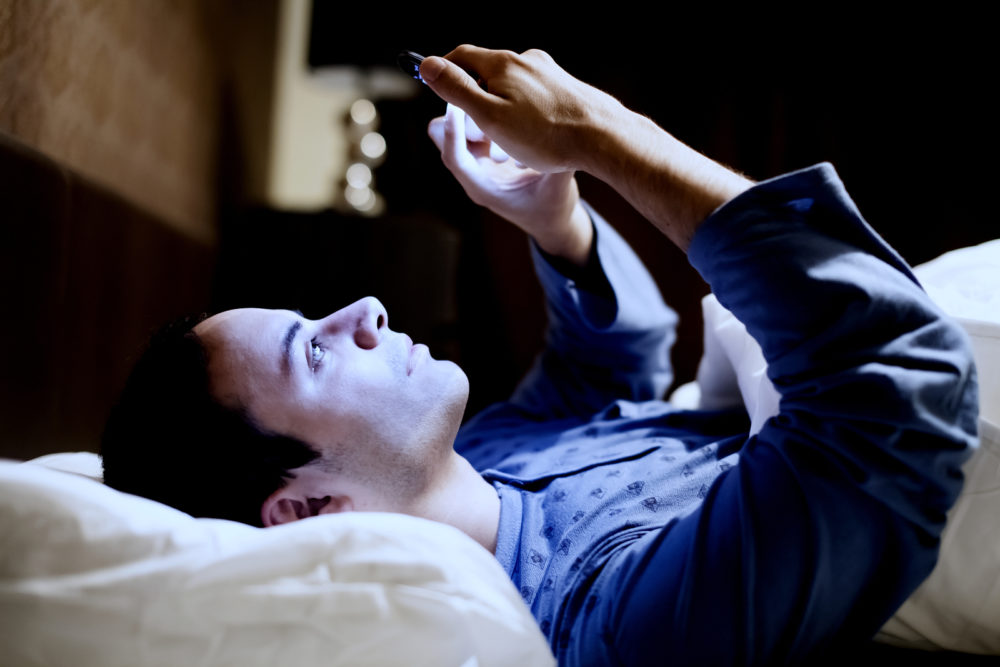
Use of social networking sites and the prevalence of anxiety and depression is on the rise worldwide.
But, is there a connection between social media and mental health concerns? Dr Shazia Bhatti, General Practitioner at the private GP clinic London Doctors Clinic is here to break down the facts.
How can social media impact mental health?
With smartphones in the pockets of almost every person in the UK, our lives are now full of; posts, followers, subscribers, likes/dislikes and comments.
We live in an age where communicating has evolved to far more than just the spoken word. Social media has changed how we talk and share information with one another – ultimately impacting how we live our lives.
The positive side of social media
In many cases, this is a blessing. Social networks are breaking boundaries, allowing us to communicate and get information from different countries and communities instantly! We have immediate access to breaking news and the story can go viral within minutes. As the name suggests, social media can be used to socialise. We can keep up to date with both old and new friends, helping us remain in contact with people we may have otherwise lost touch with. We are able to explore the world via the internet, learn new skills and for some people it has even become a full-time career! Aside from this, social media can also provide people with a sense of place, helping people find different communities of like-minded individuals with similar lives or backgrounds. Here people can learn about their health and mental health and seek advice from those who have gone through similar situations via support groups. This can help people to find suitable support, even if they do not feel comfortable expressing their worries or concerns to friends or relatives.
The negative side of social media
On the other hand, though, research has also found that social media could be detrimental for mental health. Much of the evidence which suggests that social media could be harmful to mental wellbeing is related to cyber-bullying. This could include online ‘trolling’, name-calling, creating a fake profile to intentionally damage another’s reputation or continuously harassing and threats of physical harm. One of the most common forms of online bullying is posting negative comments on someone’s profile, which can be about any aspect of their life, such as social status, appearance, family or job. What makes this type of bullying so harmful is that the bullies can be anonymous, meaning they rarely receive negative repercussions, but the posts can be seen by the whole world.
For someone experiencing cyberbullying, it can lead to a whole host of negative implications for their health, in particular, their mental health. They may be left feeling alone, rejected, ashamed, humiliated and afraid which can result in stress and anger. In their personal and professional life, this might be shown through an increase in days off work, increase in mental health issues, reduced self-esteem, suicidal ideation, and poor physical health which may lead to tobacco, alcohol drug and other substance abuse.
In most cases, social media is a highlights reel for many people’s lives, with posts that are shared often being manipulated in order to look perfect and ‘bad’ days rarely (if ever) shared. While these photoshopped images of people with perfect bodies may be aesthetically pleasing, they can be harmful and promote negative messages. This is because they can affect our body confidence and how we perceive our appearance.
Recent studies have found that there is a link between viewing images of perfect bodies online, on Instagram, Facebook pages and developing personal body dissatisfaction.
The craze of displaying altered manipulated photographic images via Photoshop and Lightroom program creating a false, unachievable and unrealistic digitally edited body image. This can, intentionally or not, send the message that people should not feel good about their looks unless it matches the images that social media culture promotes. This then lends itself to the rise in trolling, bullying, and body shaming those who do not fit in with that unrealistic image.
The pressure from social media to have an unrealistic, ideal and perfect body is may lead to the increase in eating disorders, poor self-esteem, relationship issues, negative self-image, anxiety, depression, Body Dysmorphic disorder, self-harm and suicidal ideation.
It is very important to encourage people to develop Digital Resilience to be able to understand that these perfect body images are often digitally enhanced and only showcasing someone’s best side. It is important to also learn how to be kind to yourself, to find things you like about yourself to create a more positive perception of yourself.
What should you do if you or someone you know is struggling with their mental health?
The negative effects of social media have often been associated with various mental health ailments, such as; anxiety, loneliness, fear of missing out (FOMO), low self-esteem, poor self-image, depression and suicidal ideation.
It is very important to recognise the early signs of social media fatigue or mental health issues and seek help if you are concerned.
Some of the signs that you should look out for include:
Feeling isolated
Being bullied and harassed
Receiving threats or abuse
Security attacks such as hacking, identity theft and viruses
If you feel targeted by hate groups
Constant low mood and feelings of depression
Feelings of anxiety when looking at social media comments
Difficulty in sleeping due to the constant need to check social media
If you have experienced any of the above you should speak to someone that you trust, such as a family member, friends, a helpline or join a support group and ask for help. This will help to give a deeper understanding of how social media can affect your mental wellbeing and health and give advice on how to overcome it.
Fortunately, awareness is now being bought to these issues and it is very encouraging to see brave people, celebrities, parents and family members who had dealt with negative effects of social media sharing their stories. This raises awareness, helps to form support groups and gives hope and guidance to others who may be experiencing these issues.
The positive effect of Social media is that support groups and campaigns are helping the users to ignore and report the abusive messages they receive from online trolls as part of a new campaign to stop the spread of hateful content.
The campaign group ‘Get Safe Online’ and the new charity ‘The Centre for Countering Digital Hate (CCDH)’ has published advice on how to best to deal with abuse. Social media users are encouraged to resist the urge to respond back and instead block the troll’s account immediately. It is also encouraged that messages received if they could be seen as containing criminal content, such serious trolling should also be reported to the police.
Dr Shazia Bhatti, General Practitioner at the private GP clinic, London Doctors Clinic
A leading doctor has revealed what can cause piles and how you can avoid them.
Doctor Diana Gall, from Doctor-4-U, has revealed to THEGAYUK what causes piles and no, anal sex isn’t one of them.
Dr Gall told us, “Piles, also known as haemorrhoids, are a common condition which anyone can get. You are more likely to get them when you are older, but they can occur at any time, regardless of age.
“Piles occur when blood vessels inside or around your anus become swollen, creating lumps which are usually small, round and discoloured. The most common causes of piles are constipation and straining too much when you go to the toilet. They can also be caused by lifting heavy objects or having a persistent cough.
Can anal sex cause piles?
The good doc continues, “Many people think piles can be caused by anal sex, but this is very unlikely. Though anal sex can irritate existing piles, so plenty of lube should be used to avoid as much irritation as possible.
How to avoid getting piles
“While piles can never become 100% avoidable for anyone”, Dr Gall tells us, “you’ll have a much better chance of preventing them if you maintain a diet containing plenty of fibre-rich foods and drink plenty of fluids. You should, however, limit your intake of caffeinated drinks such as tea and coffee. Keeping your bottom clean and dry and using a softer alternative to toilet paper (like moist toilet tissues) can help a lot too if you’re frequently getting piles. Exercising regularly can also help prevent piles, but your diet and hygiene are bigger factors.
What to do if you get piles
If you do end up getting piles, then you’ll want to be able to identify relevant symptoms. The lumps this condition creates may or may not be large enough to come out of your anus. It depends on how severe your condition proves to be. If you can feel lumps or pain around your anus, then this is most likely a clear sign of piles.
Set in an old theatre in the late 1950s, a solicitor, Arthur Kipps, enlists the assistance of a young actor to tell his story. His tale revolves around a terrifying incident when he was younger, when he travelled to Eel Marsh House to settle the estate of a long-standing deceased client. Alone in his client’s mansion, he is plagued by the sound of a pony and trap, an unexplained banging noise and a door which appears to be locked from the inside. What secrets does the estate hold? And who is the woman in black he keeps seeing?
This effective ghost story is beautifully crafted and uses simple techniques to create a very taught atmosphere. The lighting design, in particular, was incredibly well done – who would have thought that a dark stage with just a door highlighted would draw worried mumblings from those around you? The production slowly cranks up the tension, drawing you to the edge of your seat and then throwing you back into it with some effective jump scares.
The narrative of the show remains faithful to the original novel, and the production avoids spoon-feeding you the story, leaving you to create your own horrors in your imagination. The set, staging and props were remarkably effective in their simplicity and created an atmosphere where you held your breath with the central character as he explored the darkness; and the way in which the audience is manipulated via the events unfolding on stage is testament to the quality of writing behind the show and the impressive performances of the two actors, Robert Goodale and Daniel Easton.
The Woman In Black is well-crafted fireside ghost story which proves that there is more to what is unseen than what is seen. This show is a chilling pre-Halloween treat and a perfect way to spend a dark, stormy winter evening.
The Woman In Black is currently at Sheffield Theatres until 12th October 2019 before continuing on its national tour and is also playing in the West End.
Jonathan Larson, the genius behind Rent – perhaps one of the greatest musicals of all time – created a show about his struggle with getting a show produced before Rent – the show is ‘tick tick…BOOM’ – and it is now playing at the Bridge House Theatre in SE20 – Penge.
Larson, who died sadly and unexpectedly of an aortic aneurysm in January, 1996 – a few weeks before Rent‘s world premiere – at the age of 35 – was very talented, and as the Writer, Composer and Lyricist of tick tick…BOOM his extreme talent was just starting to bloom when he died.
But tick, tick…BOOM is actually what turns out to be a celebration of his life – telling the story of Jon (a very good Alex Lodge) getting ready to turn 30 and still waiting tables for a living but soon to workshop a show he has written called Superbia.
He’s besotted with his girlfriend Susan (a good Georgie Ashford) and is not very jealous of his rich gay best friend Michael (James Hume), who seems to have it all but in all actuality does not. So tick, tick…BOOM takes us through the trials and tribulations of Jon’s struggle with the upcoming workshop, and his relationships with his girlfriend and best friend.
Songs in this show, including ‘Therapy’ and the opening number ’30/90′ pre-tell the songwriting style of Larson and what was to come in the masterpiece that was Rent. If you, like me, are a fan of Rent and have never seen tick, tick….BOOM, it’s worth the journey to Penge to see this show (the theatre is conveniently located next to Penge East overground train station).
If you’ve never seen Rent, then this show is also worth a watch as the story is relevant to pretty much all of us as we struggled to become successful in our first jobs. And the cast is all wonderful, and Lodge is just about perfect as Jon, with a glimmer of a sparkle in his eye that tells us the real Jon knew he had a gift.
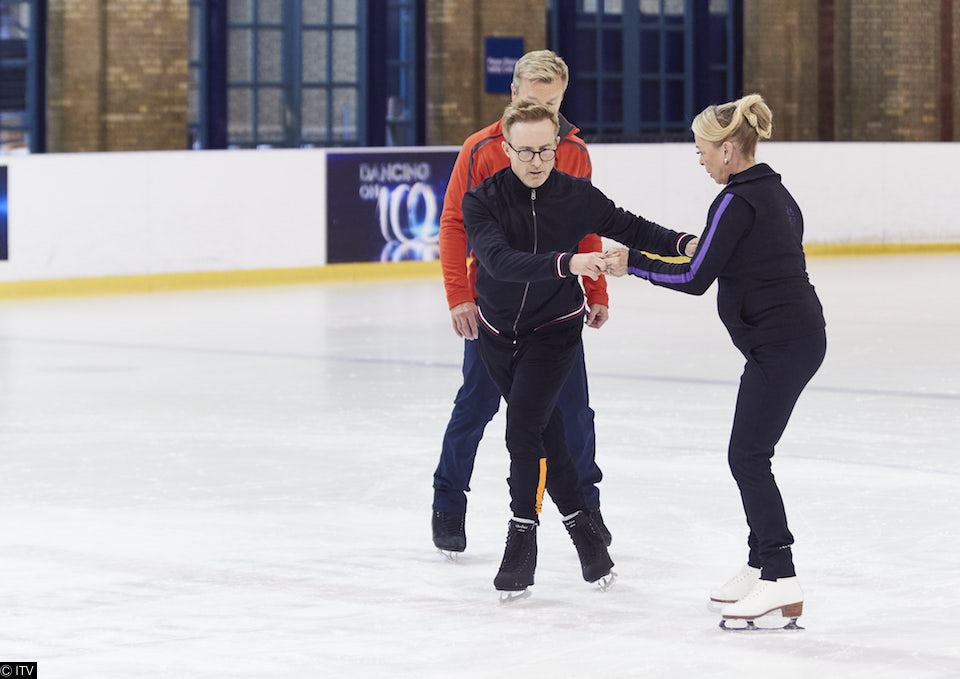
Dr Gemma Commane, lecturer in Media and Communication at Birmingham City University, says it’s important to question what this Dancing On Ice on a same-sex couple introduction change really means and the conversations it will create.
OPINION | Lesbians are often overlooked or are subject to ‘tragic’ storylines and they are given less space to occupy.
“Although it’s timely for Dancing On Ice to have a same-sex couple, it’s important to understand that decisions are political and have economic reasons,” said Dr Commane.
“In this case, examples could be sustainability for the television show, maintenance of the brand and audience expectations.
“We need to carefully think about what privilege means and what privilege looks like. Privilege is complex and it does not simply connect to one aspect of a person’s identity.
“Whilst it is fantastic that changes are happening, we need to ask: what do these ‘changes’ actually mean when certain voices and identities are still rendered invisible?
“Lesbians are often overlooked or are subject to ‘tragic’ storylines and they are given less space to occupy, especially in primetime television. Why aren’t lesbians the default when it comes to ‘ground breaking’ decisions when introducing same-sex coupling in shows like Dancing On Ice?
“What would it mean for ‘Dancing On Ice’ to have a lesbian celebrity skating with a same-sex partner?
“What types of conversations would arise from the media and audiences around this selection? If this had been the case, it would have been interesting to observe how news organisations would respond to an announcement like this and if they would write about the lesbian celebrity in predictable and fetishistic ways.”
It can happen over the most seemingly innocuous thoughts and actions and can be incredibly distressing and sickening if you happen to be at the centre of people’s fury on social media.
Twittersphere can be one mean place if you, in the eyes of some of its users, get things wrong. Being at the centre of a Twitterstorm or a pile on can be a horrible experience lasting over a 24 to 48 hour period.
So here’s what you should do if you ever find yourself in a twitter backlash.
Delete the tweet
Although this might seem like curtailing your speech or what you want to say, removing the “offending” tweet means that it can’t be retweeted or quoted – leading directly to your account.
It’s the quickest way to stop a pile on in its tracks. Yes, some people will have screenshotted the tweet and they will continue to tweet it or may even tweet it at you, but its reach will be far less felt than if you were to leave it on your timeline.
Just turn it off
Turn off Twitter, in fact, delete the app for a few days, so you don’t feel the need to keep on checking what’s going on or what’s been said about you. Ride it out and try not to let your imagination run wild.
A Twitter pile on can last from 24 hours to 48 hours and will then, most likely fade away as people move on. You may get a few tweets after this, but mostly people will have moved on.
Just remember, people’s memories can be short on social media and there’s always someone else to distract and attract a Twitterstorm away from you.
Make a decision on whether to apologise or not
If you come to the conclusion on whether what you’ve tweeted is offensive and Twittersphere has a point, then apologise.
Recently social media star Trisha Paytas found herself in the middle of an epic Twitterstorm after coming out as a “transgender gay man”. The tweet, which actually led people to a YouTube video was immediately met with scorn and derision.
The tweet became quickly ratio’d meaning that the comments outranked the number of Retweets and likes, meaning that in Twitter world you’ve usually done something very very wrong.
Trisha made an apology video within 48 hours and the pile on continued on with that Tweet, receiving over 700 comments and only 49 retweets, which meant that her apology wasn’t widely shared, so only a fraction of those aware of the story actually heard her apology.
Meanwhile, her original “I Am Transgender” tweet continued to grow and was even picked up by the editorial team at Twitters’ moments, boosting the Tweet even further.
If you do make an apology tweet, post or video- make it heartfelt and true and don’t use phrases like “I’m sorry you were offended”. These often PR managed tweets are met with even more backlash because people don’t and won’t believe it – and can even serve to elongate the storm.
If you don’t feel you need to apologise – don’t. There’s nothing worse than someone apologising for something they’re not sorry for.
The tweet saw thousands of people complaining about the article’s content. The magazine’s official Twitter account – which usually sees an interaction rate of 1 to 2 retweets or likes per post and rarely ever any comments, suddenly had over 7,000 retweets and thousands of comments.
Dozens of people took to Cosmopolitan‘s timeline to say they had reported the tweet for hate speech, yet the magazine stood resolute, did not delete, did not apologise – basically it didn’t acknowledge the storm that it had created.
Seek legal advice
If you’ve tweeted something you shouldn’t have, like a high court’s super injuction or something that’s libelous or slanderous you might need to seek legal advice.
You may also want to take legal advice or action if people are tweeting something about you that is factually incorrect, libellous or slanderous, as journalist Jack Monroe did against Katy Hopkins. The fallout from which saw the former TV star, journalist and radio presenter left with a huge legal bill after she lost.