Search results for: “ ”

  • Chelsea Manning to walk free after 7 years in prison

    Chelsea Manning has left prison after 7 years incarceration it has been confirmed to the BBC.

    Trans whistleblower, Chelsea Manning has been freed after spending seven years in prison. Manning was imprisoned for one of the largest leaks of classified documents. She was sentenced to 35 years. Her sentence was commuted by President Obama, as one of his last acts as president.

    A US army spokesperson confirmed that Ms Manning had been freed earlier today.

    Two days ago, Ms Manning tweeted “Two more days until the freedom of civilian life ^_^ Now hunting for private #healthcare like millions of Americans =P”

    She was freed 28 years before the end of her sentence.


  • Twitter users are not happy with Piers Morgan after Non Binary interview

    Piers Morgan attracts the ire of Twitter users after a combative interview with a non-binary couple.

    Pier Morgan is being criticised for the way he handled an interview with a couple who identify as non-binary. The couple, Fox and Owl were being interviewed on Good Morning Britain on ITV. You may remember Fox from Channel 4’s My Transsexual Summer.

    “Fox and Owl” has been trending in the UK after a segment called “The Gender Debate” saw host Piers Morgan ask if he could identify as an elephant and London Zoo.

    The interview was dubbed “inanely cruel”, disrespectful and “ill-formed”

    During the show, after both Fox and Owl explained their identity and how they define themselves, Piers had a problem with understanding and asked,

    “I’m happy to be persuaded if it makes logical sense – but if you can identify as anything, where does it end?

    “Is anything fine? Can I be an elephant? Can I now go to London Zoo and demand to be put in the elephant enclosure?”

    The interview then turned to the subject of non-binary prisons and where, if Fox or Owl were to break the law, they should be incarcerated. Owl told Piers that a women’s prison would be preferable to the men’s. Piers responded that gender was fine “if it’s convenient”.

    Owl also pointed out the discussion surrounding non-binary individuals wasn’t about erasing gender.

    Owl said,

    “It’s not about erasing gender, nobody is saying people can’t be men and women – we’re also saying people can be non-binary”.


  • What has Jeremy Corbyn’s Labour manifesto promised LGBT+ people

    With the release of Labour’s Manifesto for the upcoming General Election, we look to see what Jeremy Corbyn’s Labour government has in store for LGBT people, should they come to power.

    In their new manifesto, the Labour Party has mentioned LGBT 11 times. We see what they have in store for our community, should Labour be elected into Government in June.

    Healthcare

    Labour has pledged that it will work to “reverse the damage done to mental health services under this Tory government, which is particularly hitting services for LGBT and BAME communities”.

    Various charities have gone by the wayside or had massive funding cuts during the latest government. Some of these cuts have affected charities which include much-needed HIV care.

    Labour also pledges that frontline healthcare professionals receive ongoing training to understand and meet the needs of LGBT patients and service users.

    And PrEP? Well, they pledge that “NHS England completes the trial programme to provide PrEP as quickly as possible, and fully roll out the treatment to high-risk groups to help reduce HIV infection”.

    Equality

    Labour has promised to build a society and a world free from”all forms of racism, anti-Semitism and Islamophobia”. They, however, did not specifically mention homophobic, biphobic or transphobic issues within this pledge.

    However, the did have a page to specifically outline how, in the past, the Labour party had been at the forefront of LGBT equality. They abolished Section 28, equalised the age of consent and were key to ensure that the gay marriage law was successful.

    Trans issues

    They pledge to reform the Gender Recognition Act, which will protect trans people by changing the protected characteristic of ‘gender assignment’ to ‘gender identity’. They also pledge to remove outdated language such as “transexual”.

    Crime

    Labour pledges to bring the law on LGBT hate crimes into line with hate crimes based on race and faith, by making them aggravated offences.

    Bullying

    Teachers will be given training on how to deal with bullying. They’ll also ensure that new guidance is issued on relationships and LGBT-inclusive sex education.

    On the world stage

    Labour have announced that they will “appoint dedicated global ambassadors for women’s rights, LGBT rights and religious freedom to fight discrimination and promote equality globally”

  • Fox about to make Rent into a live TV musical

    Fox has unveiled plans to make Rent into its next live musical.

    rent to made into a TV musical by fox

    Producer Marc Platt has announced that Rent, one of the 90’s most enduring LGBT musicals is to get the Live TV experience. The show was written by Jonathan Larson who died in 1996 the morning of the first preview performance of Rent Off Broadway. His estate and the Mr Platt will produce the show together.

    Rent is a modern take on the Puccini opera La Bohème and is a story of young impoverished artists overcoming adversity and gentrification to save their creative space. In Rent, the HIV/AIDS crisis of the 80s and 90s replaces tuberculosis from La Bohème’s eraThe musical has won numerous awards including Tonys, a Pulitzer Prize and a Drama Desk Award.

    The show is planned for broadcast in 2018.

    Marc Platt has also produced Wicked, Into The Woods, and La La Land.


  • THE BIG GAY ELECTION | Weekly Roundup, A Brexit from Eurovision?

    You’ll have noticed that this week’s column is coming a little later than usual. There’s a reason for that. Whilst those ensconced in the Westminster bubble are feverishly obsessed with Brexit and winning the election, those of us who prefer Soho were busy celebrating “gay Christmas.” Yes, it was Eurovision weekend, and like any good gay, I was busy rooting for my favourite camp act (the poor sods from Spain, whom apparently I alone liked) and cheering on the fabulous Lucie Jones.

    I took my union flag to a skyscraper overlooking Lake Michigan here in Chicago, joining a British ex-pat and Polish immigrant – meaning thankfully, politics was not a topic of conversation. Judging from Twitter, though, I imagine your Eurovision party might not have been so relaxing. It seems everyone was interested to see how Brexit would affect the Eurovision voting. The Prime Minister warned ahead of Saturday’s final that we shouldn’t get our hopes up. In an interview with the BBC’s The One Show, she promised we wouldn’t Brexit from Eurovision (thank God!), but that “…in the current circumstances, I’m not sure how many votes we’ll get.” Whilst we didn’t do well among EU heavyweights France and Germany, Lucie was able to garner 111 votes, finishing better than any British entrant in several years.

    Lucie herself was a bit more confused about the role Brexit played in her showing. She told ITV’s Lorraine earlier today that “Nobody actually talked about Brexit [in Kiev]. It wasn’t a thing. I wasn’t ‘Brexit Girl,’ which was really nice.” This contradicts what she told the Sun following Saturday night’s show. “I did notice lots of Brexit comments,” she said, noting that she voted Remain, which surely made this even more annoying. “I did vote to remain in the EU,” she said, “but hey, not much we can do about it now. Lots of people voted to leave and we’re a democracy and that’s the way of the world. Sh*t happens.”

    It most certainly does, Lucie, and loads of it happened this week other than Eurovision. So let’s put on our Wellies and wade into some of it.

    The biggest news of the week was undoubtedly the leak of Labour’s draft manifesto – the most radical in a generation, since Michael Foot’s famed “longest suicide note in history” way back in 1983 – before I, and I reckon many of you, were even born. The Daily Mail and the Tories jumped on this, accusing Labour of trying to take the country back to the 1970s (whilst at the same time lauding Theresa May’s admission she and husband Philip have “boy jobs and girl jobs” at home – because that’s not antiquated).

    But should we all be busting out bellbottoms and disco balls just yet? Labour contends we shouldn’t, labelling it a “forward thinking” manifesto that will be deeply popular with voters. The polling backs them up on this. As the Independent reported, around half of people support Labour’s proposals to renationalise the railways, Royal Mail, and the energy market. Meanwhile, policies such as higher taxes on higher earners and building more houses have also gone down extremely well with voters.

    People want to know where the money is coming from. Labour promises that its official manifesto will be fully costed. Until then, we can but speculate on how Corbyn plans to find the funds to pay for his proposals. It should also be noted that the leaked draft manifesto contains other policies sure to be popular with the electorate, including raising the minimum wage and keeping Trident – despite Jeremy Corbyn’s own distaste for the country’s nuclear deterrent.

    Labour can take some solace in the fact that these proposals poll so well, but they certainly can’t rest on their laurels. A recent Survation poll shows the Tories hold an 18 point lead over Labour. It seems that much of this is down to how the leaders are perceived. In another piece, the Independent reports that more people disapprove of the Tories than support them, but that voters still seem to approve of Theresa May’s performance as Prime Minister than disapprove.

    This may be why Ms May’s name is splashed on the side of the Tory battlebus, and why the Conservatives are so keen to make this election a choice between her and Mr Corbyn. The Conservatives more than any party are making this an election about personalities, which makes it strange that she is so reticent to show one. She is refusing to take impromptu questions from reporters (something I criticised her for last week in a HuffPost blog last week) and is still refusing to take part in televised debates. Mrs May is playing her cards close to her chest, running one of the most stage-managed campaigns in living memory. It’s understandable why, but there may come a point where voters demand greater access to the woman who wants to lead the UK out of the EU.

    Some other things that have piqued my interest this week and you lot should be watching out for:

    • The Tories have expressed a desire to repeal the ban on fox hunting; considering how unpopular this is with the electorate, it demonstrates Theresa May’s confidence in winning a majority on 8th June
    • Still, Jeremy Corbyn is climbing in the polls – but can he catch up to Ms May in a short time?
    • Corbyn told Buzzfeed he wouldn’t step down as Labour leader should he lose the election, so if that comes to pass, be ready for yet another bloody battle for the soul of the Labour Party
    • The Trade Union and Socialist Coalition – a Labour splinter group who challenged Labour from the left in the past two elections – has decided not to stand this go-round, citing Labour’s left wing manifesto.
    • And because I know you’re all keen to know, former One Directioner Harry Styles has said he’ll vote for whoever is against Brexit – an endorsement the Liberal Democrat leader Tim Farron has surely welcomed. If only sixteen-year-olds (or, you know, I) could vote.

    Keep watching this space as we continue to bring you the biggest and gayest election coverage anywhere on the internet. In the meantime, whilst you’re out on the doorsteps, keep your eyes peeled for someone who can win us Eurovision next year. After this election and the coming Brexit negotiations, we deserve a win.

    Opinions expressed in this article may not reflect those of THEGAYUK, its management or editorial teams. If you’d like to comment or write a comment, opinion or blog piece, please click here.

  • BFI marks 50th anniversary of landmark in LGBT rights with major film and TV programme

    The BFI today announces its full programme marking the 50th anniversary of the Sexual Offences Act 1967 from June onwards. This includes a major two month film and TV season GROSS INDECENCY and a one month JOE ORTON season at BFI Southbank, a new online BFI Player collection LGBT BRITAIN ON FILM, a UK-wide touring programme of archive filmkicking off at Pride in London, an international touring programme of classic LGBT shorts from directors including Derek Jarman, Isaac Julien and Terence Davies and a new BFI release of Stephen Frears’ and Hanif Kureishi’s groundbreaking Oscar nominated My Beautiful Laundrette (1985) onBlu-ray for the first time. Though the ’67 Act, which saw the partial decriminalisation of male homosexuality in England and Wales, didn’t put a stop to persecution, it was a step forward in a climate of fear and ignorance. The films and television programmes presented reveal Britain’s pioneering yet problematic relationship with on-screen homosexuality. BFI Southbank will host a major two month film and television season from 1 July – 31 August; GROSS INDECENCY will span two decades from the late 50s, around the time of the Wolfenden Report, to the late 70s. Sheffield Doc/Fest will offer a sneak preview of the season with a Drag Double-bill capturing the UK drag scene of the late 60s, from the northern drag circuit to London’s legendary Royal Vauxhall Tavern. Also taking place at BFI Southbank in August will be a season dedicated to the masterful JOE ORTON, a playwright and author whose work was imbued with themes of sex, death and homoeroticism, and whose life was cut brutally short when he was murdered in 1967. As part of the BFI’s ongoingBritain on Film project, there will be a new online collection of films available to view on BFI Player from 1 June; LGBT BRITAIN ON FILM will comprise more than 50 films, shorts and features, fiction and documentary, looking at LGBT life in the UK. The BFI will also partner with the Independent Cinema Office (ICO) to present a feature length compilation of material drawn from the BFI National Archive in partnership with the Media Archive for Central England (MACE). The curated programme will launch on Tuesday 27 June as part of the Pride in London Festivalbefore touring cinemas and community groups nationally. The BFI will also take part in the PRIDE parade on the Saturday 8 July with a BFI Pride Bus. Hanif Kureishi and Stephen Frears’ groundbreaking Oscar®-nominated drama My Beautiful Laundrette (1985) will be presented on Blu-ray in the UK for the first time, released by the BFI on 21 August. Internationally, the BFI will partner with the British Council to present a touring programme of classic British LGBT features and shorts including films by Derek Jarman, Terrence Davies, Isaac Julien, Bill Douglas, Ron Peck and John Maybury. GROSS INDECENCY – TWO MONTH SEASON AT BFI SOUTHBANK (JULY – AUGUST) British cinema boasts a long history of carefully coded queers, but taboo-busting gathered steam from the late 1950s. The two-month season GROSS INDECENCY: QUEER LIVES BEFORE AND AFTER THE ’67 ACT spans two decades, bracketed by the 1957 Wolfenden Report and the onset of AIDS. A highlight of the season will be a screening of Daisy Asquith’s Queerama (2017), the World Premiere of which will open this year’sSheffield Doc/Fest. Created from historical footage held by the BFI National Archive, Asquith’s film tells the story of gay life in Britain since the end of the First World War, taking us into the relationships, desires, fears and expressions of gay men and women throughout the 20th Century, against a soundtrack that includes John Grant, Goldfrapp and Hercules & Love Affair. Also included in the season will be special previews of BBC documentary The People’s History of LGBT+ (2017) and new drama The Man in the Orange Shirt (BBC, 2017). Part one of the season in July looks at the lead-up to the Act, notable for the cinematic milestoneVictim (Basil Dearden, 1961), which will be re-released by Park Circus on Friday 12 July and screen on extended run during the season. Victimdenounced the poisonous, institutionalised homophobia gay men of all classes faced, and cleverly packaged the politics within an accessible crime-thriller. The film, and Dirk Bogarde’s courageous appearance in it, helped propel public discourse towards the 1967 Act and beyond – changing lives in the process. This period also saw major progress on the small screen. Britain’s earliest surviving gay TV drama South (Play of the Week, Granada Television, 1959), starred Peter Wyngarde as Lt Jan Wicziewsky, who visits a southern plantation as the American Civil War looms; Peter Wyndgarde will take part in a Q&Afollowing a screening of the drama on Monday 3 July. The season will be launched with a screening of On Trial: Oscar Wilde (Granada Television, 1960), the gripping recreation of one of the most infamous trials in British legal and queer history. The screening will be followed by a stimulating discussion with experts who will explore the significance of Wilde as a queer historical icon and discuss the role of TV and film in shaping public moral attitudes towards homosexuality in the UK. Other highlights of part one will be two provocative BBC documentaries broadcast just weeks before the legislation was passed (Consenting Adults 1. The Men and Consenting Adults 2. The Women), British cinema’s first film to hint at a lesbian relationship The World Ten Times Over (Wolf Rilla, 1963) and a story of ‘Romeo and Romeo in the south London suburbs’ The Leather Boys (Sidney J Furie, 1964). Part two in August will focus on television and film made after the Act, showing that it was a double-edged sword in its effect on real lives and on depictions of the LGBT community. Queer London was reimagined to misanthropic, even exploitative effect on foreign soundstages for The Killing of Sister George (Robert Aldrich, 1968) and Staircase (Stanley Donen, 1969); a world away from the tender bisexual love triangle of Sunday Bloody Sunday (John Schlesinger, 1971). We hope to welcome star of Sunday Bloody Sunday Glenda Jackson to take part in a Q&A following a screening of the film in August. TV mined the drag renaissance for anarchic performances and we’ll screen some of the best in a special drag double-bill of the riotous What’s a Girl Like You… (LWT, 1969) and Black Cap Drag (Dick Benner, 1969); the screenings will be followed by an after-party in BFI Southbank hosted by alternative queer East End night-spot The Glory. Audiences will also be able to see television’s first gay kiss between Ian McKellen and James Laurenson in the BBC’s broadcast of the Prospect Theatre Company production of Christopher Marlowe’s Edward II (BBC, 1970), Two Gentlemen Sharing (Ted Kotcheff, 1969) featuring a rare black gay character, and I Want What I Want (John Dexter, 1972), which saw cinema highlight trans issues. In 1975, Quentin Crisp put queerness on our cultural radar and the season will feature a screening of the newly remastered The Naked Civil Servant (Thames TV, 1975) starring the late John Hurt, as well as a screening of documentary World in Action: Quentin Crisp. Completing this survey, as the tragedies and triumphs of the 80s beckoned, will be Britain’s first explicitly gay feature filmNighthawks (Ron Peck, Paul Hallam, 1978). JOE ORTON SEASON (AUGUST) Original, controversial and obscenely witty, these are just some of the descriptions used to reference the work of playwright Joe Orton. Like all great geniuses, Orton was ahead of his time, as the initial failure of the theatre production of Loot attests (the 1970 film version will screen here), but as the austerity of the 50’s gave way to the sexual revolution of the 60’s, his work caught the spirit of the age. Ruthlessly exposing the hypocrisies of the establishment his delight in causing offence is palpable in every play, but always harnessed to a razor sharp wit and purpose. Across the TV plays and films presented in this season it is possible to chart his ever growing mastery of both stage and screen as he sets out his overriding themes of sex, death and homoeroticism from their first incarnations in The Ruffian on the Stair (ITV, 1973) to his perfectly formed last great masterpieceWhat the Butler Saw (BBC, 1985). 50 years since Orton’s bizarre murder that so strangely mirrored the world of his plays, he deserves reassessment as a most singular talent. The season will include an extended run of Stephen Frears’ Prick Up Your Ears (1987), re-released on Friday 4 August by Park Circus and starring Gary Oldman, Alfred Molina and Vanessa Redgrave. Based on the life of Orton and his relationship with Kenneth Halliwell (his lover who ended up killing Orton), the screenplay was written by Alan Bennett and won acclaim on its initial release, including the prize for Best Artistic Contribution at Cannes in 1987. Other titles screening in the season will include Funeral Games (ITV, 1968), Entertaining Mr Sloane (Douglas Hickox, 1970) and an Arenadocumentary Genius Like Us A Portrait of Joe Orton (BBC, 1982). LGBT BRITAIN ON FILM LGBT life is explored in an online collection of over 50 newly digitised archive film and television titles taken from the BFI National Archive and other regional archive partners. LGBT Britain on Filmwill be made accessible to audiences in the UK via the BFI Player, with many titles free to view. These newly digitised titles from 1909 through to the mid-1980s, span film and television drama, documentary, current affairs and amateur footage. The collection includes Miss Norah Blaney (1932), where the pioneering lesbian music hall star performs ‘Masculine Women and Feminine Men’, and David is Homosexual (1978), a new BFI National Archive acquisition. This Super8 educational film made by the Lewisham branch of the Campaign for Homosexual Equality (CHE) follows David and the support he receives in coming out as well as featuring rare footage of the 1976 Gay Pride march in London. ITV’s leading current affairs TV slot, This Week, broadcast two groundbreaking LGBT documentaries; This Week: Homosexuals (1964) and This Week: Lesbians (1965). This wasthe first time that the topic of homosexuality was directly addressed on British television, including interviews with gay men and women about their experience of social ostracism, miserable marriages and homophobia, as well as some tales of contentment. Although presented through a conservative lens, these documentaries marked a broadcast watershed moment in representation, and a major step for visibility. LGBT Britain on Film also includes material from the Yorkshire Film Archive (YFA); We Who Have Friends (1969), looking at contemporary views on homosexuality and gay life in Leeds and London in the wake of the Sexual Offences Act, plus fromMedia Archive for Central England (MACE);What Am I? (1980), a very rare regional television documentary about the life of a trans woman andGay Black Group (1983), exploring the formation of the landmark group in gay black history, featuring interviews with members about their experience, including filmmaker Isaac Julien. All ofthese archive offerings will be available to view on the BFI Player from June alongside contemporary queer hits such as Weekend (Andrew Haigh, 2011) and classic LGBT shorts and features including the work of Derek Jarman, Terence Davies and more. The Independent Cinema Office (ICO) will tour a special feature length compilation of archival material from LGBT Britain on Film to cinemas and community groups nationally, in partnership withMACE, launching with a special screening at Pride in London Festival on Tuesday 27 June. MY BEAUTIFUL LAUNDRETTE Presented on Blu-ray in the UK for the first time,Hanif Kureishi’s and Stephen Frears’ Oscar®-nominated, My Beautiful Laundrette (1985) will be released by BFI as a Dual Format Edition onMonday 21 August. Their first film collaboration, Kureishi and Frears’s cross-cultural gay love story starring Gordon Warnecke and Daniel Day-Lewis was a cultural landmark of Thatcher-era film representing South Asian British experience on screen.
    Sent from my iPhone

  • FILM REVIEW | The Kaos Brief

    FILM REVIEW | The Kaos Brief

    ★★★★ | The Kaos Brief

    the kaos brief review

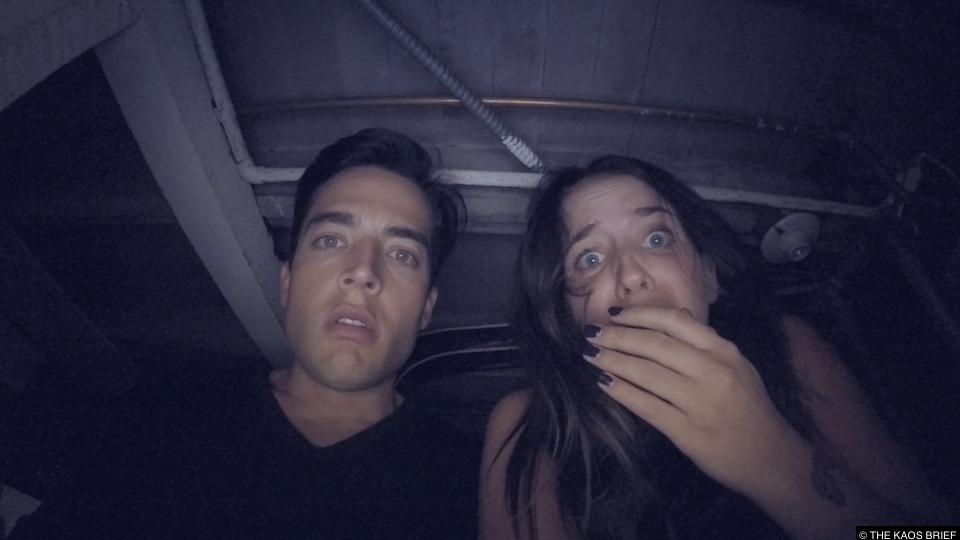
    Meet Skylar (Drew Lipson), his twin sister, Dakota (Charlie Morgan Patton) and their boyfriends Corey (Marco DelVecchio) and Tren (Akanimo Eyo). The foursome decide to go for a romantic camping weekend to find themselves and be at one with nature, in the wilderness. It’s a chance for them to unplug and unwind. Except Skylar, an up and coming Vlogger, has brought what seems like an entire Apple store with him. He has his iPad, iPhone, Macbook and a footage drone. He’s also bringing his YouTuber followers with him, whom he keeps updated with his every move. Despite the seclusion of their surrounding in the middle of the woods, they are not alone.

    After a disturbed night in the middle of nowhere, they are woken by strange lights in the sky and they become the hunted. What they uncover (which they film) was found, by an activist organisation called KAOS, they allege, in the mass data dump by Edward Snowdon and now the Government wants to cover the whole thing up.

    CREDIT: The Kaos Brief

    The Kaos Brief brings a super cool edge to the found-film genre and its millennial cast means that the constant filming and the documenting of their lives feels completely natural and genuine. After all, they are all friends, who are hanging out, recording their lives for the world to see. It’s the horror movie for the Snapchat, Facebook Live, Periscope generation.

    It allows filmmakers to squeeze so much more from their budgets, without it impacting on the overall sheen of the production values. Much of the footage was shot on the actors’ iPhone cameras and the director, J P Mandarino uses CCTV footage to good and unnerving effect.

    Oh yes and the gay bit. What the producers have managed to do, in which so many other films that have gay characters in principle roles have failed, is that The Kaos Brief is not a “gay” film. It’s a film that happens to have a gay character in a lead role – and that’s totally refreshing.

    During a press conference, I asked about the decision to make a lead character gay and whether the producers thought that it could be a barrier to mainstream audiences, Executive Producer Aaron Kuhl said that as the LGBT community became more and more mainstream and audiences had become more and more accepting, the barrier wasn’t that there were gay characters in it, it was possibly that the film wasn’t gay enough!

    That aside, The Kaos Brief is a brilliant example of how to make a mainstream film, with gay characters and where sexuality isn’t the main strand of interest.

  • Did you see the bare bottom on Eurovision

    We may not have won the competition, but we did get to see a cute ass on stage (and not we’re not just talking about Mr Italy)

    via GIPHY

    A guy, who draped himself in an Australian flag guy managed to sneak up on stage during the 2017 Eurovision and bare his ass to around 200 million viewers. Which by our estimation makes him the world’s most famous ass (not Boris Johnson as previously thought – we kid we kid).

    According to the Sun, the man behind the bum flash was Vitalii Sediuk, a Ukrainian prankster.

    It’s not known if the man himself was Australian, but bravo that man.


    Eurovision 2017 was won by Portugal, the UK came 15th with 111 points.

  • THEATRE REVIEW | Salomé, National Theatre, London

    THEATRE REVIEW | Salomé, National Theatre, London

    ★★★★| Salomé, National Theatre, London

    Johan Persson

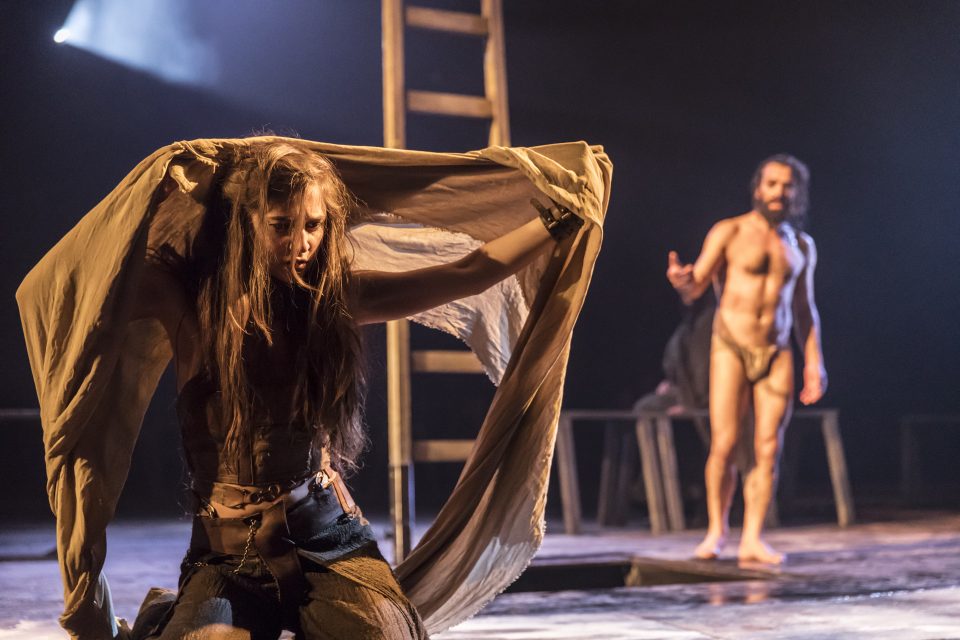
    It was always going to be hard to produce a version of Salomé on the stage. It’s a story that’s mythical, biblical, violent, and perhaps a bit confusing. A new version of the show is now playing at The National Theatre, and it’s executed beautifully.

    Staged by Director Yael Farber, this version of Salomé, at a short 110 minutes with no interval, will mesmerize you but may also confuse you as the story is told through song and dance and imagery and hebrew, and lots of sand and water. But it’s the story of Salomé who was born the daughter of Herodia who was a princess of the Herodian Dynasty of Judea during the time of the Roman Empire. Salomé, as you may or may not know, is infamous for receiving the head of John the Baptist. Played in this show by Isabella Nefar, Salome is not very respected, stands naked on the stage, has sand thrown all over her, but it’s at the end that she’s redeemed and resurrected, but the road to get there is an intense one.

    A character by the name of Nameless (Olwen Fouéré) tells the story of Salomé, as Salomé the character doesn’t speak, and takes place in Roman occupied Judea. She’s yelled at and ridiculed by her stepfather Herod (Paul Chahidi), but finds something, perhaps a kindred spirit, in Iokanaan – John the Baptist (Ramzi Choukair).

    But it’s not just the story, it’s the design of the show, by Susan Hilferty, that takes us on a journey, or perhaps better worded – on a ride – a ride that’s both luminous and heavenly, with lighting that adds mystery and darkness. It’s also the haunting vocals and chanting of Israeli folk musician Yasmin Levy and Syrian soprano Lubana Al Quntar that will take your breathe away. Their vocals that accompany the story told on stage is the most memorable part of the show – their voices are out of this world, and listening to them is well worth the price of the ticket.

    Salomé will be broadcast by NT Live on Thursday 22 June 2017. For further details visit NTLive.com

    Below is a list of connected talks and events for Salomé:
    Acts of Violence and Salomé, Monday 12 June, Cottesloe Room, 2-5pm
    Mothers/Daughters/Sisters, Wednesday 21 June, Cottesloe Room, 6-7pm
    Yaël Farber, Friday 14 July, Olivier Theatre, 6-6.45pm

    To buy tickets, please go here:
    https://www.nationaltheatre.org.uk

  • George Shelley opens up after the tragic death of his sister

    The former boy bander has opened up after the tragic loss of his sister, Harriet.

    George Shelley has paid tribute to his younger sister, Harriet after she died last week following a car accident. The singer said that Harriet, 21 was his best friend and angel in a heart breaking note left on social media.

    “I will never accept that you’re gone,” he wrote.

    “You will always be with me. My best friend, my sister, my angel. Too pure and too beautiful to walk among humans, you now exist somewhere else, and I am honoured to have had the privilege to spend 21 years with you by my side.

    “Don’t get used to it up there without me, I’ll see you soon beautiful girl. I love you Harriet.”

    https://www.instagram.com/p/BUCVwCMD9Fq/

  • COMMENT | 13 Reasons Why, we need more Saved By The Bell for our mental health

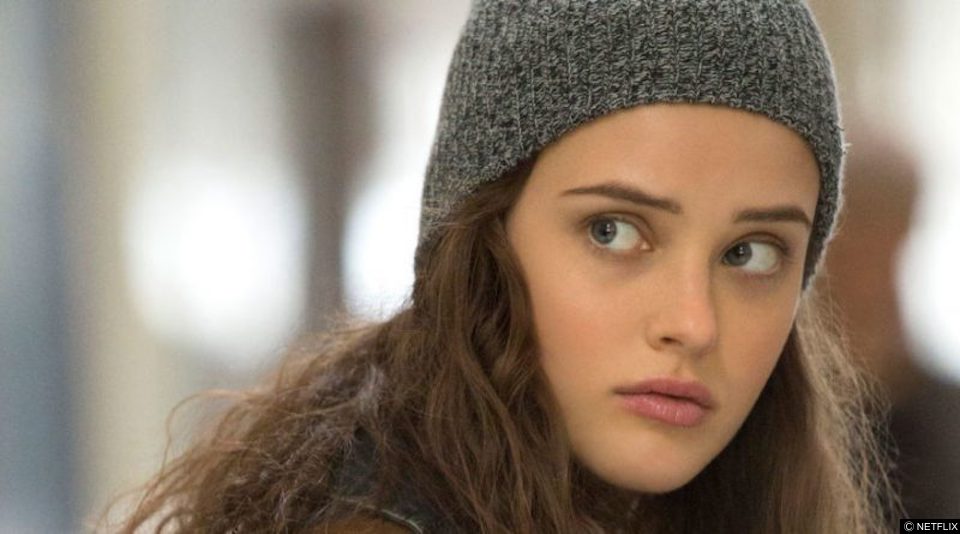
    As I write this I have just realised how long it has been since I have written an article or a proper story. How long it has been since I felt really okay and that I might have suffered a PTSD related setback. Why has this happened I wonder: I felt so good a few weeks ago. Then I realise it started with watching a new Netflix series called 13 Reasons Why.

    Revolving around a young girl’s suicide the series claims to be a show to get people talking about teen suicide, bullying, sexual assault and a  cautionary tale about the signs of suicidal behaviour and how much a person can handle.

    I watched it out of curiosity and in my capacity as a psychologist. Immediately after the first episode, I started feeling a bit odd. You see, I suffered from bullying, mental health issues and sexual abuse, so the series hit an immediate trigger. I should have stopped there and then, but for some reason, the series had taken hold of me, even if I could bear no more than one episode a day.

    Soon I was triggered to the point of thinking over past events and painful memories for several hours a day. I couldn’t really work or concentrate, I was just thinking about myself, my traumas the lost years, the bullying. I began doubting any accomplishments I had made and mentally started dragging myself down. It was as if Hannah was taking me with her in her fall.

    By the end of the series I was relieved it was over, and the documentary with warnings and support did little to alleviate the turmoil I was suffering.

    I am not the only one, one journalist said,

    “I can’t stop thinking about it and I really don’t want to. Because what I saw was more disturbing than any horror film imaginable.”

    It is sad that something starting out as wanting to help teens suffering has got it so wrong and might cause more suffering in the end.

    Having undergone the experience I applaud everyone who warns kids against watching it. I am a grown woman reliving trauma because of a story created for teens. This show had me out of kilter for weeks on end. How must it be to watch this when you are still living it? Dangerous, that is all I can say. It is bizarre that this show was created to warn against suicide when at the same time making it seem as the only option. The fact that it was announced that there is a second season.

    The show shows extreme victim blaming and suicide as a payback, as finally taking control, not as the end result of months of mental pain. Suicide is not about control, not about revenge: it is someone thinking everyone’s life will be better without them. It is usually done as a spur of the moment decision to end the pain, not a planned out ritual.

    Aside from the traumas 13 Reasons Why evoked and the glorifying of suicide and self-harm, the one that galled me the most was the character of Courtney and storyline in the show. As someone who has struggled with their sexuality for a very long time, seeing the lesbian character portrayed the way she was on this show was upsetting by itself. Compared to the male gay characters (one is a sweet good guy, the other has flaws but tries to do right near the end) she has no redeeming features at all. She was not even granted a scene of remorse at the end. Being a lesbian seems to be so bad that she prefers to protect a known rapist rather than face being outed. With such a lack of young lesbian role models on TV and in movies is this really what should be presented? For some reason being a lesbian is seen as problematic for many young women and girls these days and the impact this show has right now can only make this worse. Having Courtney show regret and sharing in her coming out would have lifted at least some of the problematic content displayed in this storyline.

    Mental health officials and many celebrities have now warned against the show and I agree with them. It is triggering and can cause many mental problems.

    Paris Jackson, who tried to take her own life in 2013, has also spoken out, calling the show ‘extremely triggering’ for young people ‘in a dark place’.

    While actress Shannon Purser says: “I would advise against watching 13 Reasons Why if you currently struggle with suicidal thoughts or self-harm/have undergone sexual assault.”

    Meanwhile, the National Association of School Psychologists took a clear stance, insisting the show is dangerous for young people.

    “We do not recommend that vulnerable youth, especially those who have any degree of suicidal ideation, watch this series,” the board said in a statement.

    At the same time, several Canadian schools have sent out warnings about 13 Reasons Why and one is telling students to not talk about it at all while at school.

    I, on the whole, agree with this message. If you are open to it, the show can do strange things to your mental well-being. Teenagers are very susceptible and besides the fact that young people are suffering bullying and abuse on an extremely large and dangerous scale these days, there is also the internet. Online teens can both wallow in dark places where suicide, pain, mental health issues and self-harm are seen as glamorous and also experience more bullying. If this series is added to this never ending tsunami of darkness the suicide can all to easily be copied.

    What teens need, now more than ever, is soothing storytelling. ’90’s TV shows like Blossom and Full House and Saved By The Bell might often be berated as soft and fluffy but series like those are what got me through the darkness in my childhood. When I was at my lowest these series were like a warm embrace, telling me things would be all right even if something went wrong. (In fact, marathoning both Full and Fuller House are what are getting me out of my depression now.) I know all too well how a young mind can be influenced by dark and tragic tales and had a series like 13 Reasons Why existed when I was young things might not have worked out so well for me. I hope that we will soon see an end to all the dark and “realistic” shows teenagers and young adults are fed these days.

    Now more than ever we need “soft and fluffy”, we need to be told that “it will be alright” as our reality is dark enough as it is.


    Opinions expressed in this article may not reflect those of THEGAYUK, its management or editorial teams. If you’d like to comment or write a comment, opinion or blog piece, please click here.