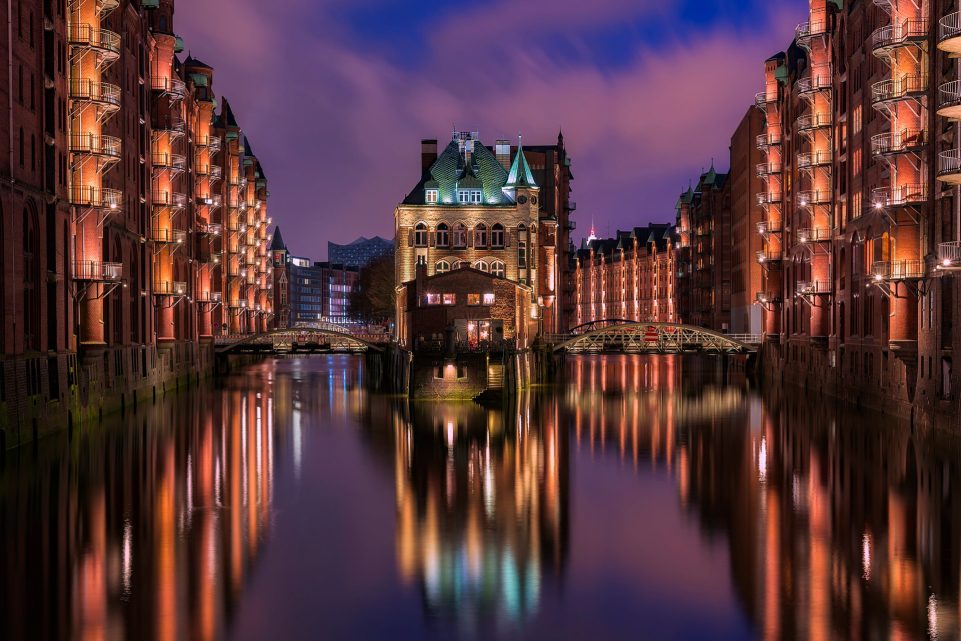
I’m a big fan of exploring new cities, and when you book a trip to Germany there are a few cities that pop to the forefront of your mind. You may fancy the hipster-chic of Berlin, or the traditional beer-fest that is Bavaria, and so cities like Hamburg are often overlooked.
Amidst the melee of middle-class stag dos, I stumbled onto the soggy streets of Hamburg. Striving to slightly distinguish itself from the hipster-haven that is Berlin, Hamburg has a nautical history that is evident in most of its decor. Since 80% of the city was obliterated by bombings during World War II, the millennial-style spaces inhabit less-than-ancient warehouses and dockyards.
The gay scene is different in every city in every country around the world, so don’t expect Hamburg to be just like any other German city. Here are a few things you should not expect to be able to do whilst visiting Hamburg.
1. DON’T go day gay drinking
You can, of course, go day drinking, in fact, we would highly recommend that you do given the city’s excellent selection of beers. However, don’t expect there to be a bustling gay crowd during the day, even on the weekend. The Germans love to go drinking and they love to go partying, but unlike the Brits, they don’t start early. Bars won’t get busy until about 10 pm and the clubs won’t even tend to open until about 2 am. So while a casual day gay drink on Lange Reihe would be nice, it won’t be especially exciting.
Again, of course, you can go to one of Hamburg’s gay saunas at night, but the crowd is better during the day… I’ve been told. My sources say that the best time to hit up a gay sauna in Hamburg is Sunday afternoon when people have recovered enough from the night before. Getting in at 6 am means that it will be a few hours before many of the good gays resurface and head to the sauna to sweat out the sin from the night before.
3. DON’T wear a towel at the sauna
Here our British modesty tends to be our downfall, but when in Rome (Hamburg), do as the Romans (Hamburgers). No one wears a towel in the sauna, whether it’s a gay sauna or the one at your hotel. And while you may not enjoy an eyeful of that old straight guy’s crotch, there’s no reason not to give him a sneaky peak of the goods while you can. You might just make his day.
4. DON’T only stay in gay hotels
While we are proud to support the LGBT-friendly hotels that have become a staple mark of Hamburg’s gay district, you don’t need to limit yourself to the hotels in St. Georg. There are plenty of cool, trendy, friendly, hipster hotels dotted around the city that are never too far away from the gay parties. I stayed at the adorably chic 25Hours Hotel in HafenCity, which wasn’t necessarily the closest location to the gay scene, but was easily one of the coolest hotels I’ve ever stayed in.
Designed with a distinctive maritime theme, it oozed millennial and was a great place to hang out (especially when your bloody Easyjet flight isn’t until 9:45pm and your checkout time was at noon). Free wifi, portable speakers you can take around town with you, and a short ride to St. Georg on the nearby 24-hour Meßberg underground.
Plus they make THE best soy latte that I’ve ever had!
We have divided the main issues into six sections:
Education: specific classes and lessons in sex and relationship education and a commitment to tackle bullying.
Crime: a specific look into tackling hate crime on the basis of sexual/gender orientation. Better support for domestic violence victims and survivors.
Workplace: a specific look into tackling inequality in the workplace.
Healthcare: a specific look into policies affecting mental, sexual health, PrEP and transgender/intersex issues.
In politics: What laws will be amended and changed to fully equalise the LGBT community.
On the world stage: What will the next government do to show that the UK is a beacon of LGBT rights?
We have also only taken parties that have a national footprint.
CONSERVATIVES
Number of mentions of LGBT: 0
Education: No specific mentions of LGBT+ sex or relationship education
Crime: No specific mention of LGBT+ but pledged: “push forward with our plan for tackling hate crime committed on the basis of religion, disability, sexual orientation or transgender identity”
Workplace: Nothing specific to LGBT+
Healthcare: No specific mention of healthcare reforms for LGBT people – including PrEP.
In politics: Nothing specific to LGBT+
On the world stage: “We will expand our global efforts to combat extremism, terror, and the perpetration of violence against people because of their faith, gender or sexuality”.
LABOUR
Number of mentions of LGBT: 11
Education: Teachers will be given training on how to deal with bullying.
They’ll also ensure that new guidance is issued on relationships and LGBT-inclusive sex education.
Crime: Labour pledges to bring the law on LGBT hate crimes into line with hate crimes based on race and faith, by making them aggravated offences.
Workplace: Nothing specific to LGBT+
Healthcare: Labour has pledged that it will work to “reverse the damage done to mental health services under this Tory government, which is particularly hitting services for LGBT and BAME communities”.
Labour also pledges that frontline healthcare professionals receive ongoing training to understand and meet the needs of LGBT patients and service users.
And PrEP? Well, they pledge that “NHS England completes the trial programme to provide PrEP as quickly as possible, and fully roll out the treatment to high-risk groups to help reduce HIV infection”.
In politics: They pledge to reform the Gender Recognition Act, which will protect trans people by changing the protected characteristic of ‘gender assignment’ to ‘gender identity’. They also pledge to remove outdated language such as “transexual”.
On the world stage: Labour have announced that they will “appoint dedicated global ambassadors for women’s rights, LGBT rights and religious freedom to fight discrimination and promote equality globally”
LIBERAL DEMOCRATS
Number of mentions of LGBT: 5
Education: The Lib Dems have promised to review sex education in schools saying that they will include lessons on sexual consent, LGBT+ relationships and issues surrounding explicit images and content.
Crime: Nothing specific to LGBT+
Workplace: The Lib Dems want companies with more than 250 employees to publish data on their employment of BAMEs LGBTs and pay gaps.
Healthcare: The Liberal Democrats have promised to ensure that “LGBT+ inclusive mental health services receive funding and support”. They also want to make PrEP available on the NHS.
In politics: The Lib Dems pledge to introduce legislation that will allow for all-BAME and all LGBT+ parliamentary shortlists.
On the world stage: The Liberal Democrats pledge a commitment to promoting the “decriminalisation of homosexuality around the world and advancing the cause of LGBT+ rights”.
UKIP
Number of mentions of LGBT: 1
n education: UKIP will end sex education in primary schools. Will look into whether further legislation is required to tackle cyberbullying.
On health: Nothing specific to the LGBT+ community, but promised to increase funding for mental health. Will also hold a review into editorial codes of the media, to promote “healthy body images”.
On politics: UKIP pledge to test the social attitudes of those who are seeking to immigrate to the UK. They wrote,
“…we do not believe in treating women or gay people as second-class citizens, and we hold to a fundamental belief in democracy and free speech. UKIP’s points-based immigration system will, therefore, include one further major principle: we will test the social attitudes of migration applicants to foster community cohesion and protect core British values”.
UKIP also will repeal Labour’s Human Rights legislation and remove the UK from the jurisdiction of the European Court of Human Rights”. They will replace with a new UK Bill of rights.
On crime: Nothing specific to the LGBT+ community.
On the world stage: Nothing specific to the LGBT+ community
THE GREEN PARTY
Number of mentions of LGBT: Have released an entirely separate LGBT+ Manifesto.
They have released an entire LGBT+ manifesto. Which includes the following pledges:
Education: Sexual and relationship education for all students. Require every school to have an anti-bullying programme. Provide teachers with training to provide LGBT+ inclusive education.
Crime: Greens pledge to “Combat all forms of antiLGBTIQA+ prejudice and violence through improved hate crime protections”.
Workplace: Noting specific to LGBT+
Healthcare: Wide-ranging policies affecting the Trans and Intersex community. Including, giving people “personal autonomy in all medical decisions” and “Improve access to medical services and gender identity clinics, particularly for trans and non-binary young people.” They have said they would also, “Protect the welfare state in the face of Government cuts and preserve the vital security net many LGBTIQA+ people rely upon”.
In politics: Has pledged to make same-sex marriage “truly equal” to include pension rights. They will also open civil partnerships to opposite-sex couples. Will “Apologise to and pardon all 50,000–100,000 people convicted of consenting adult same-gender sexual relations under antisodomy laws that have now been repealed.”
On the world stage: The Greens have said, “The Green Party would speak out against those countries that discriminate against, marginalise and kill LGBTIQA+ citizens, and work with countries leading the way in recognising and protecting” the LGBT+ community.
SCOTTISH NATIONAL PARTY
Number of mentions of LGBT: 5
Education: Nothing specific to LGBT+
Crime: Nothing specific to LGBT+
Workplace: Nothing specific to LGBT+
Healthcare: The SNP will support efforts to ensure PrEP becomes available on NHS to any who needs it in the UK.
In politics: The SNP pledge to push the UK Government to extend the Turing Bill pardon to gay men convicted of same-sex activity who are still alive today.
They also pledge to ensure that same-sex couple have equal pension rights and “protected characteristics are expanded to ensure all LGBTI people are fully protected from discrimination and harassment”.
On the world stage: The SNP pledge to reform the detention and asylum system for LGBT+ people escaping countries where homosexuality is still illegal. They also pledge to remove “unfair and invasive demands for ‘proof’ of sexuality or gender identity”.
They also say,
“SNP MPs will support the establishment of a special envoy to promote the rights of LGBTI people throughout the world, as an integral part of UK foreign policy – helping to alleviate the discrimination and persecution faced by LGBTI people in Chechnya and across the world”.
Plaid Cymru
Number of mentions of LGBT: 0
Education: Nothing specific to LGBT+
Crime: Nothing specific to LGBT+
Workplace: Nothing specific to LGBT+
Healthcare: No specific mention of healthcare reforms for LGBT people – including PrEP.
In politics: Has pledged to publish a “human rights charter” to provide human rights regardless of race, gender, sexual orientation.
On the world stage: Nothing specific to LGBT+
Democratic Unionist Party
Number of mentions of LGBT: 0
Education: Nothing specific to LGBT+
Crime: Nothing specific to LGBT+
Workplace: Nothing specific to LGBT+
Healthcare: No specific mention of healthcare reforms for LGBT people – including PrEP.
The Conservatives are the latest party to reveal their manifesto, so we’re delved into the paperwork to find out what the Conservatives have promised and pledged to the LGBT+ community of the United Kingdom.
However not specifically the Conservatives have pledged:
On education
The Conservatives pledge to introduce “comprehensive” sex and relationship education but fails to mention any specifics to LGBT sex or relationships. “We will educate today’s young people in the harms of the internet and how best to combat them, introducing comprehensive Relationships and Sex Education in all primary and secondary schools to ensure that children learn about the risks of the internet, including cyberbullying and online grooming”.
On Crime
On hate crime the Conservatives promise to be tougher on hate crime, they say, “…we will push forward with our plan for tackling hate crime committed on the basis of religion, disability, sexual orientation or transgender identity”.
On the world stage
The Conservatives have pledged, “We will be the world’s foremost champion of free trade. We will expand our global efforts to combat extremism, terror, and the perpetration of violence against people because of their faith, gender or sexuality”.
Boys will be boys they say and that saying is still applicable now even as we get older. When we were young we had thrust upon us the football to play with, expected to fix a puncture on our BMX and we were given a toy digger.
There is something about a digger that was always so macho to me. A simple machine that men used to dig things and erm, dig things. Having watched a lot of Dempsy and Makepeace in my childhood (who didn’t have a thing for Michael Brandon?), used by bad people for all sorts of things outside of digging.
A man friend of mine called Dave was doing some excavation work at home in preparation of a garden makeover with a difference. He said I should come round and try this new toy he had hired for THEGAYUK. It was in his words “BRILLIANT”
Not to be put off from getting one’s hands dirty, I donned a hard hat, butch boots and a hi-viz vest. All totally pointless in a private setting with no foreman but I wanted to experience the Kubota K008-3 appropriately attired. If it meant having to don a bow tie, I would have.
The machine looked simple enough. To help with weight-saving there were no doors fitted and the cabin was sparse. In fact, it was more sparse than the recently tested Abarth 695 Bisporto we tested. Thankfully money has been spent on a comfortable seat. Good really considering you could be here for quite some time if you decided to travel the length of a modest garden in suburbia.
Start up was simple. Turn the key and the little diesel engine spluttered into life. It was very quiet as it powered up hydraulics and gave it enough gumption to propel itself forward on rubber caterpillar tracks to a top speed of about walking pace. Once that is you had mastered the controls. there were 6 levers and 2-floor pedals. Quite different from the Britains toy digger I was given at 4!
We were still not quite sure what the pedal on the left did. Possibly throttle. It didn’t give much of a clue. Like a Toyota Hilux, this thing can still work while being broken. The pedal on the right moved the floor shovel and stabiliser up or down.
The two big levers did the magic bits to the digging part. Left lever swung the arm left or right. It also moved the arm furthest away from you up and down.
The big lever on the right moved the arm closest to you up and down while also opening and closing the bucket. have you managed to grasp all that?
If you have then you’re better than me. If I was at the 02 arena on stage to Kylie singing then I’d have looked great. I’d spin left. I’d spin right. I’d move the arm up and out. It was “Traveling Light Years” meets “Spinning Around” I span around and it felt really fast. I’d attempt to dig some soil but all I could manage was no more than the amount you’d get in the bucket you keep under the sink. However with perseverance, trial and many errors, I managed to better than a bucket of mud. I’d managed about three.
Dave made some suggestions on how to get the best out of the Kubota K008-3 but to implement those into someone with undiagnosed dyspraxia was going nowhere. I say dyspraxia but if truth be told, I’m just kack-handed.
So we carried on some more, trying my best not to fall down the trench he had already dug, Safety first for the Kubota driver is a lap belt and a roll cage over the front. With no seat belt alarm going off, I decided to drive by the seat of my pants albeit hard-hatted like the construction worker of the Village People.
Once I had managed to feasibly master the controls I was let loose with the performance of the engine. The middle levers do the forward and back motions. Forward for forward and you get the rest. What you needed to be aware of was that both levers have to go the way you want to go. You won’t snap your neck on the breathtaking 0-walking pace speed but you might when you want to turn left or right. It’s reverse of what you actually want to do. For my kack-handed ability, this wasn’t a problem.
It was fun, it was dirty. It separates the men from the queens. I think I’ll stick to driving pick-ups for my macho kicks and leave this digging lark to the real men. Now, where is my Britains digger?? I’m going to make a hole for a daffodil bulb.
Likes
You can dig up things
Many different attachments available
Quiet operation
Loathes
Poor dashboard instruments
A bit too open to the elements
Not very fast
The Lowdown Car – Kubota K008-3 digger Price – £10,000 approx MPG – Either a lot or not man (combined) Power – Has lots. 0-62mph – Do me a favour, you’d be lucky to get 6mph out of it.
Stephen Doughty has served as the MP for Cardiff South and Penarth since winning a by-election in 2012. He has since distinguished himself amongst his colleagues, serving first as Shadow Minister for Trade and Industry. Following a reshuffle, he took up a brief as a Shadow Foreign Minister – which he famously resigned from live on the BBC following a disagreement with Jeremy Corbyn over the sacking of Shadow Minister Pat McFadden in January 2016.
THEGAYUK Magazine was fortunate enough to talk to Mr Doughty last week. This interview has been edited for length and clarity.
THEGAYUK: First things first – Labour’s draft manifesto leaked last night, and it proves to be the most leftwing in a generation, promising to nationalise the railways and eliminate tuition fees, for example. Are you excited or apprehensive about selling this on the doorstep?
Stephen Doughty: Well we have a slightly different situation where I’m standing, in Wales, because Welsh labour already launched our manifesto pledges earlier in the week with Carwyn Jones, the Welsh Labour leader. So we’ve already set out our stall here very clearly. We’ve got five pledges: one on the NHS, one on schools, one on housing, one on the economy, and one on police. Those are very much messages I’ve been going on the doorstep with already, as well as my own local record. So in terms of wider manifestos and leaks, obviously until the actual manifesto is published I prefer not to comment.
TGUK: Last year you had a constituent tell you that gay people should be killed and sent to hell. As one of the higher-profile openly gay MPs, do you experience a lot of homophobia (whether online or on the doorstep)?
SD: I’ve had some pretty unpleasant comments from a local blogger, as well as people who support the far-right BNP to post homophobic material. I’ve had comments on the doorstep, and I had a UKIP candidate that sent veiled homophobic letters to constituents in the last election, saying things like that I didn’t stand up for family values and the like, which we know are dog whistles for homophobic views. Unfortunately, all MPs over the last few years have suffered significant amounts of personal abuse, no matter what party they’re from. If you’re a woman, if you’re gay, if you’re black, if your Jewish, you’re likely to have received some additional abuse and so it gets very unpleasant.
TGUK: You’ve been famously critical of Jeremy Corbyn. How are you addressing this as you campaign? How is this going for you?
SD: I’ve got no personal disputes with Jeremy. We’ve always got on very well on the personal level and have a number of issues where we have a lot of common ground. But I have been willing to speak my own mind when it comes to a number of issues, particularly where we’ve differed on issues to do with foreign policy and defence.
You know, it won’t come as any surprise but there have been a wide range of views across the Labour Party on these issues. I also think we’re in a quite different situation, as I said earlier, for those of us standing in places like Wales where, since devolution, we have quite a different set up now.
We have a Welsh Labour leader in Carwyn Jones who is popular on the doorstep, and we have very distinct policies in Wales. So I make it clear to people that there are many policy areas where I agree with Jeremy, and I think his work where he’s set out on NHS, on housing, on mental health, on a fairer economy, and indeed actually on the railways – I think what he’s setting out is exactly the right policy. But I’ve also made it my clear that I will speak my mind and stand up for the interests of my constituents, and not put my party first but put them first.
TGUK: Last month, you raised an urgent question on the way gay men in Chechnya are persecuted. The Prime Minister has finally spoken on it. What should the government be doing to promote and protect LGBT rights not just in Russia but around the world, including in Syria?
SD: I think the government in the last few years has actually downgraded human rights concerns, disappointingly. Over the issues of Chechnya, I was particularly concerned that we haven’t seen a very clear statement from the Prime Minister. We haven’t seen a clear statement from the Foreign Secretary. I think all he’s done is put out a tweet. The reality is that even when we have difficult relationships with countries like Russia, and undoubtedly with Chechnya, we need to be seen to be on the very front foot when it comes to exposing human rights abuses and urging for action to be taken. Britain’s got a proud history of standing up against abuses, and making a difference in the world, but unfortunately, we have a slightly checkered record in recent years when it comes to certain issues. We have to be consistent in standing up for all, for the rights of civilians, the rights of women, and the rights of LGBT people around the world, whether that’s in Syria, whether that’s in Chechnya, whether that’s in Yemen, whether that’s in parts of Africa, and have a consistent approach.
TGUK: You voted against triggering Article 50, despite the referendum results. Why?
SD: My constituents voted 60/40 to remain. It was a very clear majority for a remain vote, and indeed in the months afterwards I had a clear majority of constituents with great concerns about the way Theresa May was taking the Brexit negotiations. I’m very clear that I respect the overall result… but we need to ensure we get a fair deal for people in my constituency and people across Wales. There are still far too many unanswered questions about things like funding. You know, we rely a lot on funding for local universities, for infrastructure. Still no word on that from the government on access to the single market for businesses in my local area. The rights of EU citizens who have been here for often decades and on a whole series of other issues.
At the time, I wasn’t satisfied that the Prime Minister had set out a clear plan or answered those questions. I have pointed out to people that of course if every MP voted the same way as their constituents then you’d still get the same overall result. But we can’t be simply giving a blank cheque to the Prime Minister to go down a very hard Brexit route. We must find the best deal for people. It’s important that there are a number of MPs who stand up and hold her feet to the fire.
TGUK: You talk about getting the best deal, and so many of the victories in LGBT equality we’ve accomplished have been through European mechanisms. How do we ensure those European laws and rulings protecting LGBT rights are enshrined in UK law post-Brexit?
I made very clear that we can’t throw the baby out with the bathwater when it comes to whether that’s the rights of minority groups, whether that’s workers rights, whether that’s environmental protections. I am concerned that we are headed down a route of quite an ideological, hard, I call reckless Brexit, rather one that retains the very best of some of the protections that we’ve worked on a Pan-European level to achieve. And that’s why it’s important that there are members of parliament that are willing to speak up and ensure that those rights and freedoms are protected.
TGUK: You filed an early day motion to ban Donald Trump from speaking to the House of Commons. As you may be able to tell from my accent, I’m American. Whether we like it or not, Trump is the democratically elected president of the United States. How should the government handle relations with him?
SD: I was very clear that I wasn’t in favour of banning the President from coming to the UK or having relationships with the UK government. Clearly, as one of our longest and oldest allies, we need to have a constructive and positive relationship with the United States. Recognising that it’s not just the president but a whole series of individual state governments and other parts of the administration. However, I was very clear that we choose who we honour, and offering a full state visit with all the pomp and circumstance and carriages down the mall and an address to the joint houses of parliament is something that is earned, and it’s something that’s given by choice.
…I don’t think we should be offering up that honour to somebody who has a very checkered record on fundamental freedoms, on sexism, on racism, on the treatment of minority groups. And I think it was a mistake for that to be suggested, to be offered, and Parliament spoke very, very clearly, as did the Speaker of the House of Commons
TGUK: I want to shift focus a little and ask about sex and relationship education. Her Majesty gave royal assent to a bill making it mandatory, but it doesn’t mandate LGBT issues be taught. Will we ever get LGBT-inclusive PSHE?
SD: Well I hope so. And certainly, I was part of a group of MPs working particularly with my colleague Stella Creasy arguing for the most inclusive and positive sex and relationships education and a number of others
TGUK: That was a cross-party group, right?
SD: Yeah that was a cross-party group. A number of sponsored amendments and pushed forward an inclusive agenda. Again, it’s slightly complex. As a Welsh MP, education is devolved. The decisions about our curriculum are made in Wales. But I’ve always been of the belief that you need age appropriate but inclusive sex and relationships education that reflects the realities of life and the realities of the modern world. When you have a situation where there are still far too many young LGBT people who are bullied, excluded, or in worse cases physically or psychologically harassed or harmed, we need to be setting the very best standards.
TGUK: Wales does have an LGBT curriculum, correct?
SD: Yes. Again, it’s age appropriate. But we have a pretty inclusive curriculum here. But again the curriculum is constantly under review. And we have a different system here because we don’t have the same diversity of schools. We haven’t gone down the route of grammars and free schools and new religious schools and things like that.
TGUK: I guess, I’m going to segue off that question. What can England learn from Wales?
SD: One of the reasons we have our own distinctive pledges and manifesto in Wales is because we have taken a very different approach when it comes to things like healthcare and education and other issues. We haven’t had a doctor’s strike in Wales. We haven’t had a costly reorganisation of the NHS. We spend 6% higher on health and social care per head of population in Wales than in England. We haven’t gone down the route of having grammar schools. We’ve actually been building new schools and new hospitals.
The Prime Minister is quite keen to come down and rubbish Wales on a regular basis, but the actual difference is now being felt and recognised by the people of Wales. People do now recognise that distinction and what a difference having a Welsh Labour government makes.
TGUK: You mention the Prime Minister rubbishing Wales, but the Conservative vote is growing. Does that concern you at all?
SD: Yeah. One of the difficulties you do have in Wales is that we don’t have a strong and distinct national media, as say in example in Scotland. So a lot of people do engage with a lot of English focused newspapers and broadcasts. Obviously, that reads across into what people are raising on the doorstep and talking about. It is concerning to see the Conservatives doing so well in the polls. However last year the pundits had us losing significant numbers of seats in the National Assembly elections. This year they had us losing significant numbers of seats in the local council elections. And we defied the pundits both times.
TGUK: What’s the most pressing issue facing the LGBT community in this election?
SD: To pick one issue I think is very difficult because whilst there are distinct issues facing the LGBT community, members of the LGBT community are human beings and voters just like anybody else. They’re going to have the same concerns about healthcare, education, housing, benefits policy, state of the economy. There’s always a bit of a danger in separating us out too distinctly.
However, I think certainly one of the issues I’ve come across has been that we have legal equality now in the country. I was very proud to vote on the bill that introduced equal marriage, and sort of fought for many of those last blocks in the inequality picture over the last few years, building on the amazing work others have done over the decades. The real challenge now is to make sure those laws are implemented, that attitudes are changed and that we deal with the stigma that a lot of young people face still in many parts of the country. And in relation to places like Chechnya that we stand as a beacon for LGBT rights and equality in the world. We’ve had the largest number of LGBT parliamentarians in the last Parliament. We’ve taken the most decisive steps on legal equality. We need to now be using our good offices and intent to sell that example to the rest of the world.
A stellar cast is to appear in BBC Four’s Queers. Ben Whishaw, Alan Cumming, Rebecca Front, Russell Tovey, Gemma Whelan, Ian Gelder, Kadiff Kirwan and Fionn Whitehead will star in eight 15 minute monologues.
Curated and directed by Mark Gatiss, Queers sees eight new and established writers respond to the 50th anniversary of The Sexual Offences Act which partially decriminalised homosexual acts between men. The series will be broadcast as part of the BBC’s Gay Britannia season this summer.
Taking in 1957’s Wolfenden Report, the HIV crisis and the 1967 Sexual Offence Act itself, the monologues will explore some of the most poignant, funny, tragic and riotous moments of British gay history and the very personal rites-of-passage of British gay men through the last one hundred years.
In ‘The Man on the Platform’, Ben Whishaw (London Spy, Spectre) returns from the trenches of the First World War, whilst a hundred years later, Alan Cumming (The Good Wife) reflects on gay marriage in ‘Something Borrowed’.
‘More Anger’ finds Russell Tovey (Him & Her, Being Human) playing a gay actor in the 1980s, and Rebecca Front (War and Peace, Humans) contemplates her very particular marriage in ‘Missing Alice’.
Gemma Whelan (Game of Thrones, Decline and Fall), Kadiff Kirwan (Black Mirror, Chewing Gum), Ian Gelder (Snatch, Game of Thrones) and Fionn Whitehead (Dunkirk, HIM) appear respectively in ‘A Perfect Gentleman’, ‘Safest Spot in Town’, ‘I Miss the War’ and ‘A Grand Day Out’, each examining the very different attitudes and social changes in gay men’s lives over the century.
The plays are written by Matthew Baldwin, Jon Bradfield, Michael Dennis, Keith Jarrett, and Gareth McLean, who are writing for television for the first time, alongside established screenwriters Jackie Clune, Brian Fillis and Gatiss himself.
The 8×15 mins series was commissioned by Cassian Harrison and Mark Bell, Head of Commissioning, Arts and is made by BBC Studios. The Executive Producer is Pauline Law.
Queers is being produced in partnership with The Old Vic theatre who will stage all eight of the monologues in July, in the run up to the television transmission. Tickets for the live staging are on sale now, with casting to be announced.
The 70th Annual Cannes Film Festival has started today and will show many films from all over the world, including films that will compete for the prestigious Queer Palm Award.
These films are:
How to Talk to Girls at Parties, by John Cameron Mitchell (Hedwig and the Angry Inch), stars Nicole Kidman (who is in four films at the festival), Elle Fanning and Matt Lucas and is about a couple of British 1970’s teen-aged boys who go to a party to meet girls, only to find that the girls are very different from their expectations.
Coby. A 21-year old Ohio woman changes her gender and becomes a boy in this very intimate movie about Coby’s journey to manhood.
They – Mass Ornament Films
They is a coming of age drama where ‘J’ has been diagnosed with Gender Identity Disorder and decides to go by the name ‘They’ and then proceeds to take hormone blockers to suspend their puberty. Directed by Iranian Anahita Ghazvini Zadeh.
Marlina the Murderer in Four Acts. A woman is robbed in her home by a gang but accidentally she kills the leader. She is then haunted by him which in turn completely changes her life. Directed by Indonesian Mouly Surya.
Nothingwood is a documentary about Salim Shaheen, the most popular and prolific actor-producer of Afghanistan, who makes relentless Z series films in a country at war for more than thirty years. Directed by Sonia Kronlund, who says that Shaheen like a sort of Ed Wood, but on a much grander scale.
120 beats per Minutes – Les Films de Pierre
120 beats per Minutes (120 Battlements Par Minute) is a French drama which depicts a group of HIV/AIDS activists associated with the Paris chapter of ACT UP.
Golden Years premise revolves around newlyweds Paul and Louise as World War I breaks out. Paul, a soldier, maims himself and deserts his post. So Louise dresses him up as a woman called Suzanne, and they hand out in the debauched Paris of the Golden Twenties and he earns quite a reputation for himself. Directed by prestigious French film director André Téchiné.
Other films to be shown at the festival include:
-Sofia Coppola’s American Civil War thriller The Beguiled, a remake of Clint Eastwood’s 1971 film, with high wattage stars Colin Farrell, Nicole Kidman, and Kirsten Dunst.
–Okja and The Meyerowitz Stories are two films produced by Netflix. Okja stars Jake Gyllenhaal and Tilda Swinton about a girl who risks everything to prevent a powerful multi-national company from kidnapping her best friend – a massive animal, while The Meyerowitz Stories stars Adam Sandler, Ben Stiller, Emma Thompson and Dustin Hoffman about siblings dealing with an ageing father.
Amazon is also in the game with:
Wonderstruck – Amazon Studios
–Wonderstruck, starring Julianne Moore and Michelle Williams and tells the story of two deaf children living parallel lives in the 1920s and 1970s, and
–You Were Never Really Here starring Joaquin Phoenix as a war veteran who tries to save a sex-trafficking victim.
–Good Time. Robert Pattinson plays a bank robber who struggles to evade the police.
–Happy End. Isabelle Huppert, fresh from her award-winning performance in Elle, is in this family drama that is set against the backdrop of the European refugee crisis.
–The Killing of a Sacred Deer. Kidman and Farrell (again) star in this tale of a boy attempting to bring a talented surgeon into his family, with disastrous consequences.
–L’Amant Double (The Double Lover). Popular French Director Francois Ozon’s thriller about a young woman who falls in love with her therapist before realising he’s not who she thinks he is.
–A Gentle Closure. A Ukrainian film that tells the bleak tale of a woman trying to learn the truth about a prison in remote Russia.
The year’s film festival includes 49 films from 20 countries, including nine feature debuts. Kidman will also be seen in a screening of Jane Campion’s television series “Top of the Lake.” The Cinéfondation is the short film section of the festival, to be be presided over by Romanian Director Cristian Mungiu. And Italian actress Monica Bellucci will host the open and closing ceremonies.
Members of this year’s main jury include gay filmmaker Pedro Almodovar who will be joined by American actress Jessica Chastain, among others. One of the prizes to be given out is the Caméra d’or, awarded for best first feature film (which was won by British Director Steve McQueen in 2008 for Hunger). And the town of Cannes will be taken over by the attendees of this film festival which is a must to attend for anyone in the film industry, and even if you are not, it’s just great to soak up and take in the glitz and the glamour, and it will make you feel like you are really part of something special.
For many, love is a fantastical thing that erupts sweaty palms, butterflies in the stomach and more than a few uncomfortable boners. But
Falling in love can be magical. Falling out of love can suck.
Here are 10 telltale signs to look out for:
Cute Habits Turn Into Annoying Pet Peeves
All those sweet enamoured things they used to do, like holding open doors for you or putting their arm around your waist when you walk, slowly but surely become mind-numbingly infuriating. The little things that used to make you swoon now make you groan. More so, you find yourself actually looking out for these little ticks that fuel your anger and frustration rather than turning a blind eye.
You Seek Out Conflict
Picking fights used to be this grand, scary event that you’d mentally prep yourself up for beforehand. Now? Not so much. Bickering and arguing are practically the bread and butter of your relationship. The slightest of inconvenient occurrences can feel like the heaviest of set-backs. Did he forget to tell you he was seeing his friend tonight? Of course, he did, he’s so inconsiderate. Sound familiar?
Other Couples Highlight Your Insecurities
Double dates or group hangs just remind you of what’s missing in your relationship. You can feel the palpable envy in the air when a couple who can’t keep their hands off each other begin sucking face in front of you. It’s a gut-wrenching feeling to realise the infamous spark is gone and it feels better to stick your head in the sand than have your nose rubbed in it. Chances are if you’re jealous of another couple, it’s because they have something you don’t.
A Future With Them Is Unrealistic
Planning stuff together a week in advance makes you iffy. Thinking about a long-term future plan with a picket fence and kids makes you nauseous. It’s just not realistic to daydream about backpacking together or lounging on a matching set of towels together and still have it be fun. Or even tolerable. If that much time away, with only the two of you, makes you shiver then what’s the point in being with someone?
Saying Empty “I Love Yous”
Once more, with feeling. Three words that tingled your spine the first time you dared to whisper them into his ear. Your friends made such a big deal out of it. Truthfully, when you mumble them into the phone now it’s more out of habit or courtesy than love. They ring hollow, devoid of the fiery passion they once held. If they say it back in the same monotonous tone, odds are they’ve probably fallen out of love too.
A Relationship Just Isn’t What You Need Right Now
Perhaps other priorities have risen, be it a new career opportunity or needing to take care of a sick relative, and the sad yet honest answer is simply what’s written on the tin. A relationship isn’t your priority or necessarily even what you need. We all know how we love to think we know what’s best for ourselves. But it can be a bitter pill to swallow and admit. Maybe you rushed into things. Maybe you didn’t consider what you wanted out of the relationship. Maybe you don’t need to be in a relationship right now and that’s okay if you communicate it to your partner and not let it fester up and snowball.
You Care About Them… As A Friend
Attraction is important in a relationship. It’s not everything but it does play a pivotal role. If that attraction were to burn out, what’s supposed to be left is mutual respect and trust… right? So where do the distinct lines of friendship and relationship end? Attraction is a pretty good indicator. If you’re lucky enough to have a partner that ends up feeling like both a friend and a lover, congrats, but if it leans towards platonic (and let’s be honest, you know when it does) rather than romantic then that’s pretty self-explanatory.
The Thought Of Breaking-Up Isn’t Heart-Breaking
A long time ago, losing your significant other would absolutely crush you. Three to four months of mourning, minimum. Ice cream and tears galore. What springs to mind when you think about it nowadays is… meh. Not only do you find yourself caring less and less if you’re with them or not, seeing them doesn’t make your heart pitter-patter anymore. It wouldn’t shatter if he left for good, either, and if that’s the gospel truth well then that’s a pretty darn good sign.
He Doesn’t Satisfy You Anymore
There are plenty of things to do to spice up your sex life. Whole books are written on the topic. But if your relationship is suffering its very own mid-life crisis, it’s very likely that what used to be there isn’t anymore. Perhaps that’s where the jealousy of other couple stems from; sex is no longer pleasurable or as exciting or fun as it used to be. Tearing each other’s clothes off used to be common practice. If you’ve scheduled out a mandatory coitus sesh every Sunday night, and the thought of snacking afterwards is the only driving force to your climax, then it’s a pretty clear indication that the love part of your love-making is existentially dead.
You’ve Fallen For Someone Else
The ultimate sign that you’ve fallen out of love: being in love with someone else. Of course, this last sign only applies to monogamous couples. To have someone’s undivided devotion is wondrous. What can end up stinging the most, however, is finding out the hard way that’s not the case. People don’t like hearing it but there’s no easy way around telling someone you’re in love with someone else. Coming to terms with it yourself is a good starting point.
If any of these ten signs ring true, maybe you have a few things to consider. If not, cherish your love (or your singlehood!) and let’s all agree that love is simultaneously the biggest mystery and wonder of the world.
Piers has hit back at the UK’s largest LGBT charity, Stonewall after a spokesperson condemned his interview of a non-binary couple as “deeply damaging and offensive”.
This morning, Piers interviewed non-binary couple Fox and Owl, who were using the opportunity to explain gender identities to Piers Morgan on ITV’s Good Morning Britain. However, the interview was slammed by many watching the programme for Piers’ approach to the subject.
Stonewall was asked to comment on the interview.
Speaking to PinkNews a spokesperson for Stonewall, said that Mr Morgan was ““deeply damaging and offensive”.
The charity added,
“No-one has the right to deny another person’s gender identity, and to mock them for trying to live an authentic life is a form of bullying and completely unacceptable.”
It didn’t take long for Mr Morgan to take a swipe at the charity. He criticised Stonewall, calling them bigoted and “Piers-phobic” after they accused him of bullying on screen.
During the show, after both Fox and Owl explained their identity and how they define themselves, Piers had a problem with understanding and asked,
“I’m happy to be persuaded if it makes logical sense – but if you can identify as anything, where does it end?
“Is anything fine? Can I be an elephant? Can I now go to London Zoo and demand to be put in the elephant enclosure?”
The interview then turned to the subject of non-binary prisons and where, if Fox or Owl were to break the law, they should be incarcerated. Owl told Piers that a women’s prison would be preferable to the men’s. Piers responded that gender was fine “if it’s convenient”.
Commenting on the online discussion surrounding the appearance of Fox and Owl on ITV, Stonewall CEO Ruth Hunt tweeted,
The story of a mother and son held captive in a room was so beautifully and emotionally told in last year’s film Room. There is now a stage adaptation of that Oscar-winning film playing at Theatre Royal Stratford East.
Emma Donoghue, who wrote the book in which the film was based on, also wrote the stage adaptation, and it’s an interesting one. The stage show mimics the plot of the movie, however, more elements are added to it. First off, there’s a narrator who speaks out loud the thoughts of 5-year old Jake (ably played by Harrison Wilding on the night I saw it); it’s Jack’s perspective this show is told from (as in the book); and surprisingly the show is also told via songs – effective at times but a bit inappropriate at other times.
Room, in case you missed the film, is about a woman and her son who are being held hostage by a man simply known as Old Nick (Liam McKenna). The mother, Ma (excellently played by Witney White), has been imprisoned by him for seven years. Ma and Jack are unable to leave the room, locked in by the man who is Jack’s father who takes his liberties with Ma whenever he wants. And Ma has to be ever so grateful when he brings her and Jack the staples and necessities they need to live on. But it’s Jack who has adapted to living in the room – it’s all he knows. He also knows to hide in the wardrobe when Old Nick comes to visit – it’s these time that the show takes, to great effect, a dark and eerie tone. It’s complemented by the set – a room in the middle of the stage – that cleverly swings around when Nick is ‘visiting’ – so we see Jack’s frightened viewpoint from the wardrobe – which is also his bed – it’s expertly thought out. Jack’s thoughts come via the narration by Fela Lufadeju – Big Jack – who is Little Jacks’ voice and his conscience. It’s narration that at times is cute and funny and at times very serious, but it also does get in the way of the very dramatic story unfolding on stage.
Without giving too much away, and as mentioned above, the rest of story plays out in similar parallel with the movie, with the second half taking place in a home (as opposed to a room), where Ma and Jack have to adjust to life outside the room. It’s with the help of Ma’s mother (a good performance by Lucy Tregar) that shifts the second half into another gear, a bit slower and less intense than the first, but dramatic nonetheless.
Room has elements that work and don’t work. Room’s premise is very theatrical, with the whole story being told inside four walls, which this production excellently shows. In the first room there are the items that Jack has named (plant, TV, etc..), then there’s a hospital room, and then on to Grandma’s house, it’s a set superbly designed by Lily Arnold. And there is also excellent use of lighting and visuals on the walls that are characters and images seen through the eyes of a child. The cast does a very good job and it’s a helluva emotional show to be performing seven times a week (three young actors take turns playing the role of Jack). But the use of Big Jack is a device that doesn’t quite work, and some of the songs (music by Kathryn Joseph) in the second half just don’t quite work with the dark theme of the show. Nonetheless, if you loved the movie and read the book, then this is must-see theatre, and only it’s playing until June 3rd.
The Liberal Democrats are the latest political party to unveil their manifesto ahead of June’s snap General Election. We find out what pledges have been made to the UK’s LGBT community.
The Liberal Democrats manifesto mentions “LGBT” just five times unlike Labour’s which mentioned it 11 times. So what are the promises and pledges should the Lib Dems become our next Government.
Healthcare
The Liberal Democrats have promised to ensure that “LGBT+ inclusive mental health services receive funding and support”. They also want to make PrEP available on the NHS.
Education
The Lib Dems have promised to review sex education in schools saying that they will include lessons on sexual consent, LGBT+ relationships and issues surrounding explicit images and content.
Workplace
The Lib Dems want companies with more than 250 employees to publish data on their employment of BAMEs LGBTs and pay gaps.
Politics
The Lib Dems pledge to introduce legislation that will allow for all-BAME and all LGBT+ parliamentary shortlists.
On the world stage
The Liberal Democrats pledge a commitment to promoting the “decriminalisation of homosexuality around the world and advancing the cause of LGBT+ rights”.