Tag: Two Star Play Review

The latest Two Star Play Review from THEGAYUK.

  • THEATRE REVIEW | Persona

    THEATRE REVIEW | Persona

    INSISTENCE IS FUTILE!

    -By-

    Fraulein Sasha Selavie

    Rating: 2 out of 5.

    As Star Trek’s Borg Queen, Alice Krige was instantly, shockingly unearthly, an stunning visual heart-attack, as unlikely as an 8-foot drag queen twerking on crack! An arguable career highlight, the role propelled Krige into the media stratosphere, paving the way for an acclaimed, deeply nuanced run in Spooks.

    Profundity Murdered By Pedestrian Pedants! 

    Effortlessly cutting the actorial mustard, her every, hugely conflicted moment a master-class in killer drama, Krige proved an absolute dramatic revelation on screen.

    So – pardon our French – WTF happened to Krige’s live acting chops? In the beautifully refurbished Riverside Studios opening production, Persona, an adaptation of Ingmar Bergmans’ masterly and forensic dissection of identity, she’s an inaudible as a de-miked Madonna futilely gyrating on stage.

    How come? Was she somehow under the assumption that film-craft projection – where the slightest whisper is captured by multiple, ultra-sensitive boom mics – would be adequate for a packed space with severely raked seats, with all those packed bodies relentlessly soak up the sound?

    Poor, poor Alice – how badly mistaken can an actress be? And – to be fair – she’s hardly helped by those steep raked bench seats. Ever cursed the sea of bobbing heads blocking your sight-line at a badly-planned venue? Welcome to a Grade-A theatrical nightmare!

    And – unbelievably – the production choices descend from poor to atrocious.

    Bergman’s movie, briefly, is intensely focused on the deepening, psychic symbiosis between Sister Alma, a female nurse, and the inexplicably mute, traumatised actress –Elisabet – she’s caring for in a remote, isolated clinic.

    Never easy viewing and exceptionally demanding cinema, Bergman’s script is dense, tortuous, gnomic and elliptical, hardly the stuff of unintentional comedy. So it doesn’t help when – as a result of an inexplicable creative choice – director Paul Schoolman doubles up as an utterly superfluous, onstage narrator to what’s best staged as an intense two-hander. What on earth does adding a dreary, flatly inexpressive voice-over detailing Bergman’s creative process and thoughts on filming Persona add to a show where the principles – Krige and Nobuhle Mngcwengi’s mute actress Elizabet -are crouching invisible and inaudible on a visually obstructed stage?

    Which opens another, hugely contentious issue – colour-blind casting, which, normally, should be comprehensively embraced across the board. Here, however, Bergman’s crucial point is that the nurse and actress, initially almost physically identical, fuse even more deeply into an almost symbiotic psyche. So it’s especially jarring – and dramatically incoherent – to have an ice-pale Krige paired with Nobuhle Mngcwengi, a visually contrasting woman of colour, justly acclaimed as a singer/songwriter, but with a puzzlingly insubstantial acting CV.

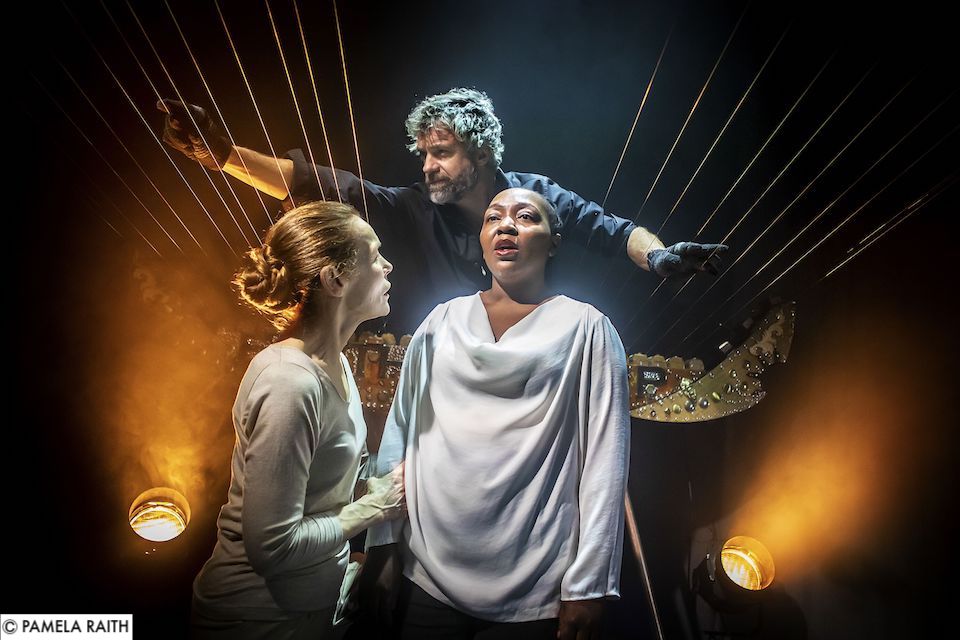
    So, are there any redeeming aspects of this production? Mercifully, yes. Stepping into Riverside’s pristine, aesthetically barren main studio – less artistically inspired than Trump’s bright orange, mad clown make-up – my oestrogen-choked genitals suddenly leapt with faux-orgasmic joy. And the source of my bliss? William Close’s lusciously imposing Earth Harp, all taut, shining copper cables studded with lights and sensors, invitingly strung high above us from the stage to the studio’s rear wall.

    The effect? Gorgeously intimidating, like willingly entering a dominatrix’s hi-tech torture chamber, or feeling like human mice at the imminent mercy of a gigantic cheese-wire.

    Ever heard of Laurie Anderson? She’s an avant-garde electronica musician, who pioneered tactile instruments, surfaces sensitive to sensor gloves that instantly release sounds. Hugely bolstered by digital reverb, the resulting music is a physically exhilarating, deep bass throb in our helplessly receptive flesh.

    It’s an über-kinky, utterly cutting-edge cyber-fetishism, an ideal prop for an S&M, transhumanist orgy.

    And Earth Harp player William Close – all close-cropped, spiky silver hair and killer beard – plays his heart out like a swashbuckling, psychic pirate, unpredictably hi-jacking our sympathies as the score’s sonorous, body-shaking chords demand. If this production’s insistence on low-key whispering and restricted visibility is a misguided attempt at projecting emotional intimacy, William Close’s bravura swagger makes his startling soundscapes anything but futile!

    Persona adapted from the Ingmar Bergman movie at the Riverside Studios to February 23rd. 0208-237-1000

  • Theatre Review | Rough Crossing – National Tour

    ★★☆☆☆ | Rough Crossing

    As a theatre company board a cruise ship to cross the Atlantic to New York for the premier of their new piece, it’s not just the waters that become choppy. Following the overhearing of an ill-timed romantic interlude between his two leads, Hungarian playwright Turai tries to keep his upcoming production on track, by re-writing parts of his script to cover up for their indiscretion. But with only four and a half days to rewrite and rehearse the play, it is all hands on deck to keep things afloat.

    Turai is played with an air of camp sophistication by John Partridge (EastEnders) and bounces nicely off Matthew Cottle (Spooks) as his downtrodden writing partner; whilst rising star Charlie Stemp outshines them both with a confident portrayal of the cabin boy, Dvornichek.

    Despite an impressive and lavish art deco set, sadly, the play holds little else in terms of appeal. The script is neither witty nor amusing, eliciting only the briefest isolated pockets of laughter (primarily from the same audience member); whilst the direction is lacklustre at best and inexplicably tacks on a wholly misplaced musical number at the end of each act. The whole thing doesn’t really know quite where to put itself – it is not quite sophisticated comedy, not quite farce, not quite “Carry On” and not quite musical comedy. Sadly, unlike the fictional ship, the whole story seems to go absolutely nowhere.

    Tom Stoppard’s play is a wordy affair with a rapidly delivered script which is awash with very gentile and outdated comedy and a smattering of physical slapstick thrown in; and fans of Stoppard’s work will no doubt relish the opportunity of seeing one of his lesser revived pieces performed in a professional, touring production.

    Despite a few issues with diction at times, the production is competently presented, but ultimately the show itself never really sets sail and ends up casting the audience member’s interest adrift.

    Rough Crossing is currently at the Sheffield Lyceum until 27th April 2019 before continuing on its national tour.

  • Theatre Review | The Messiah – National Tour and West End

    ★★☆☆☆ | The Messiah

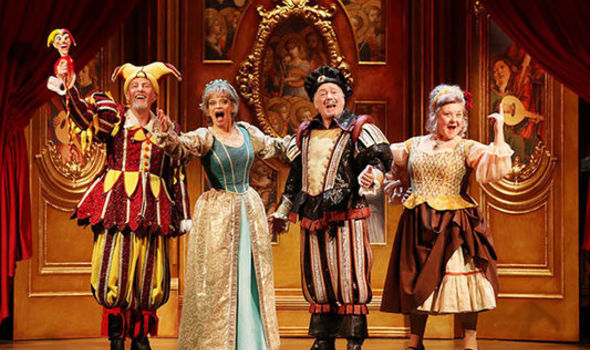
    The Messiah unfolds as a travelling theatre troupe of two actors and an opera singer arrive by camel to masterfully enact the Nativity, albeit through personal breakdowns, misguided scenes and direct address to the audience in this comedic three-hander.

    Hugh Dennis (TV’s Outnumbered and Mock The Week) effectively plays Maurice Rose, the kind of guy you wouldn’t want to sit next to on a long train journey, and who is the relatively straight man to John Marquez’s innocently naive fall guy, Ronald Bream. The humour is subtle, if repetitive at times, centring mainly on the deadpan delivery of the multiple characters and the mispronunciation of words and phrases, with a few trips and blunders thrown in as the characters struggle to get through the play.

    The quality of the production overall is more than functional, with a versatile set, a decent lighting design and two fine central performances from the male leads.

    But where the show itself stumbles is in its portrayal of a deliberately bad performance by the amateur company, which is so convincing, it actually just feels like watching a badly acted play. Furthermore, an underused Lesley Garrett looked slightly uncomfortable and out of her depth at times as the demanding diva; although to be fair to her, she did so with her tongue planted firmly in her cheek.

    Sadly short on laughs, the handful of jokes stretch thinly over the show’s running time and even some forced audience participation can’t conjure up enough Christmas sparkle to elevate the show to a “must see”.

    The Messiah is currently on Tour at Sheffield Theatres, before heading to Chichester, Cheltenham and Richmond; and arriving at The Other Palace in the West End on 3rd December for Christmas.

  • THEATRE REVIEW | Jubilee, Lyric Theatre Hammersmith

    ★★☆☆☆ | Jubilee

    Ever seen Jubilee? The visionary, anarchic mash-up of gay sex, brutal anarchy and transcendent mysticism? If not, load up the fresh, newly-released blu-ray and gorge on Jarman’s genius now – the new theatre adaptation’s completely superfluous!

    Why? How could a show awash with copious, writhing nudity and irreverence possibly bore audiences stiff? Well, because of two words – total misinterpretation. Sure, back in the viciously closeted, mid-70s, Jubilee seemed fantastically liberationist, but now – in this version at least – reads as fatuous self-
    indulgence.

    Partly, that’s due to the ironic paradox of intolerance lurking at the heart of current identity politics. Rather than properly embrace the utopian dream of guilt-free self-expression – which the movie Jubilee pointed towards – this treatment merely showcases bullying exhibitionism – moral, spiritual and sexual- at any cost.

    Perhaps that’s not surprising – it is, after all, a poisonously accurate portrait of current society. Briefly – for those unfamiliar with the movie¬ Queen Elizabeth the First, played with appropriate fire, spunk and glory by Toyah Wilcox – is mystically translated into a future punk-rock, nihilistic dystopia by her court magician, Doctor John Dee, to witness the spiritual wreckage to come. And truthfully, the staging concept is simply marvellous in evoking the blurred boundaries between hard-edged naturalism and soaring, psychedelic fantasy that any worthwhile treatment of Jubilee demands.

    From moment one, Toyah’s in character, hands clasped pondering at a candle-lit desk, while all around her, performers shamble and sidle amongst the audience, creating a dislocating sense of timeless impermanence, the sense that this particularly potent fiction will persist before, after and during our attendance.

    But, there’s one huge problem – non-existent dramatic tension. Sure, Jubilee’s neo-punks prowl randomly during the interval, desperately hoping to own the space with the nuclear panache of street thugs, but quite laughably, they come across as less threatening than the fluffiest pack of neutered kittens! Frankly, this tired notion of provocative engagement with the audience -wrongly perceived as daringly new and radical- limps all the way back to the dark ages of the 1970s, when the Living Theatre troupe desperately tried to wank, molest and similarly bore uninterested audiences!

    And tragically, the evocation of laissez-faire decadence – so crucially important to Jarman’s aesthetic – is lazily rendered here as nothing more than indiscriminate coitus and casually –torched petrol-bombs in prams. Ah, couldn’t we have even a touch of imaginative and highly exclusive excess, a mere three hundred years after De Sade, such as mixed-donor, frozen spunk lollies gleefully scoffed by one and all?

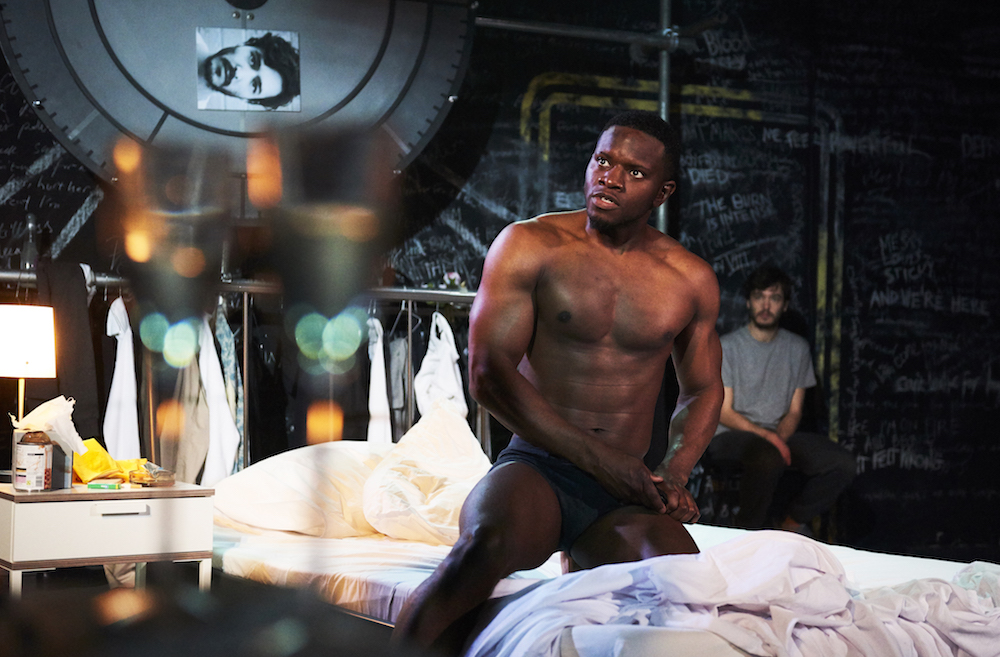
    Okay, admittedly, Jubilee does boast a stunning range of high-voltage movement and shouty charisma, particularly with Sophie Stone’s Bod, but too often, a fine actorial balance collapses, and we feel as if we’re eavesdropping on some shock-jocks soiree. And arguably, the casual, often unwise nudity does make a possible argument for instant, erotic euthanasia, the new, theatrical crime of flaunting uncharismatic genitals!

    Still, there’s the fizzy counterbalance of Toyah Wilcox’s Elizabeth oozing genderqueer warmth and traction, alone, lyrical voice soaring from this interminable pit of soiled, post-modern divinity and lost opportunity.

    Lost opportunity? Of course- rather than giving current trans discourse sharp, incisive wings, Jubilee merely muddles variant gender expression. That’s hardly the fault of the shockingly vivid and explosive Travis Alabanza, who- playing alternative historian Amyl Nitrate- is obviously on gender-variant hyper-drive, but rather, the entitled assumptions behind the scripting. Why should any individual’s desire – right or wrong – automatically trump any other moral imperative or sense of compassion?

    And again, since when did ‘trans’ become such an elastic, unnuanced label that it simply denotes any bloke mincing onstage in bad drag? The self-evident absurdity of that line of thinking necessarily means accepting Les Dawson and other cismale comedians as ‘trans’, and doesn’t that completely devalue the struggles – political, medical and surgical – of trans figures who’ve either partially or fully transitioned?

    Still, despite its incoherent and often contradictory artistry, Jubilee – like all the best theatre –is thrillingly provocative if short on answers, and – like our current Queen Lizzie herself – snatches at elusive shreds of majestic glamour. Ultimately, Jubilee is ambition re-imagined as art, the bedrock of all theatrical brilliance!

  • THEATRE REVIEW | Harold and Maude, Charing Cross Theatre

    ★★☆☆☆ | Harold and Maude

    If you’ve never seen the 1971 cult classic film ‘Harold and Maude’ then you’ve missed out. Poignant, darkly humorous and with a lilting soundtrack by Cat Stevens, it’s a thing of beauty. Sadly, the same can’t be said about this relentlessly trying-too-hard-to-be quirky revival of the later stage play.

    Harold is 18, disaffected and troubled by chronic ennui. He spends his days attending funerals and annoying his overbearing society matron mother by faking his own suicide. Maude is 80 and is a free spirit who is enchanted by life and has a penchant for petty larceny, providing it has a sound moral basis. The two meet (at a funeral, naturally) and an oddball romantic comedy develops. Sheila Hancock has huge shoes to fill (the sublime Ruth Gordon played Maude in the film) but does this admirably. Bill Milner manages to convey the blank-faced and nihilistic Harold with aplomb. Whilst the set does look like it should be hosting something on CBeebies, it serves a purpose. The problem isn’t in the play or the cast but in the production.

    If this production was a person it’d be posting inspirational quotations on Instagram and spending every waking moment trying to convince you just how unique, witty and quirky it is. In other words, you’ve have blocked it on social media within a minute of knowing it. Distractingly, the cast all stay on stage throughout the piece, doing ‘comical’ things with musical instruments (yes, there’s a ukulele and someone plays the spoons, of course). There’s an abundance of little touches, like a man making seal noises, for example, and it’s nauseatingly twee and feels like a bit of an irritating mess. Rather than add to the production it just ends up a being a bit annoying.

    Whilst the play does have merits with strong acting, some jaunty music and the odd funny moment, on the whole, you’d probably be much better off watching the film instead.

    Runs at the Charing Cross Theatre until 31.03.18

  • THEATRE REVIEW | Quartet – National Tour

    THEATRE REVIEW | Quartet – National Tour

    ★★☆☆☆  | Quartet – National Tour

    Cecily, Wilfred and Reggie are three ageing opera singers, happily spending their twilight years in a retirement home for ageing artists, but their days reminiscing on their time in the spotlight are abruptly interrupted by the sudden and unexpected arrival of Jean, a former collaborator, a fading star and the ex-wife of Reggie. With an opportunity to reform the quartet for one final performance at the home’s annual gala, will old rivalries, old feelings and old friendships stand in the way of their last performance?

    Paul Nicholas’ stands out from the cast with a confident and rather polished performance as the somewhat frisky Wilfred, a character simultaneously brimming with bravado and with insecurities; whilst Sue Holderness plays the somewhat crestfallen soprano, Jean, with an air of believability. Jeff Rawle’s passive to aggressive character transformations are well handled, and Wendi Peters gives a sly wink and a knowing nod to the audience with her portrayal of the slightly eccentric Cecily which stays on the right side of caricature.

    Production wise, the play is set in the confines of a music room at the retirement home; with the wooden panelled walls encasing the sturdy and detailed box-set; which was accompanied by a lighting and sound design which were befitting and perfectly functional. The narrative is based around whether the four singers will perform together, but delve a little deeper and you will find themes of both holding on to, and letting go of, the past; and about moving on from past mistakes.

    This is a very gentile and steady play, with little more to offer its audience than some competent performances and a wordy, and at times, wandering script. Given the setting and the characters, there is little in the way of visual stimulation or on stage movement to engage the audience, and therefore the writing is left to carry the piece; which it does with varying degrees of success. A few moments of comedy were set against some rather dry passages in the script, and the melancholy themes of growing old and facing your own mortality were intermingled with some quick-witted put-downs and comedic one-liners; alongside some subtle and not so subtle humour.

    Quartet is a bittersweet play which is not for everyone. It’s slowly paced and rather sedate, and may well reward the patient audience member, but requires a sharp focus on the script rather than a reliance on the visuals.

    Quartet is currently on national tour

  • THEATRE REVIEW | Strangers on a Train, Sheffield Lyceum

    Strangers on a Train | ★★☆☆☆

    During a chance encounter on a whiskey-soaked train journey, two strangers, Guy Haines, a respected architect and Charles Bruno, a drunken playboy, jokingly plot to commit a murder to assist the other in moving on in their lives. Bruno proposes that Haines kill Bruno’s overbearing father, whilst Bruno himself will kill Haines’ adulterous wife. But what starts out as a drunken joke becomes something more sinister, as Bruno keeps up his end of the bargain and expects Haines to do the same.

    Based on the novel by Particia Highsmith, the narrative of the piece starts promisingly enough, with sufficient threads of the story put forward to generate interest, but the early promise simply isn’t sustained, as the play draws itself out into something over long and turgid, leading to an incredibly dry second act which never even begins to gather momentum.

    Feeding into the dryness of the piece are the performances from the cast which were truly terrible across the board. Jack Ashton is suitably dashing and fares best of the bunch with a rather flat portrayal of Haines, but never comes close to depicting a man whose life is in turmoil as a result of the relentless harassment by Bruno, the murder of his wife or his harboured dark secrets. Chris Harper is just plain irritating rather than menacing, with a pantomime-villain portrayal of Bruno, being more akin to an annoying drunken work colleague at the office party than a scheming manipulator and calculating killer; and Helen Anderson’s over the top histrionics as Elsie Bruno were sharply juxtaposed with the stiff, wooden delivery of Hannah Toiton as Haines’ new wife.

    Anthony Banks’ direction is sadly lacking, and manages to produce a play with no drama, no tension, no menace and no pace. The set, comprising of a series of sliding panels, projections and micro-sets looked lavish and generally worked well, which was the saving grace of the production; but sadly a flashy set design is not enough to prevent this thrill-less thriller from coming off the rails.

    Strangers On A Train is currently at Sheffield Lyceum before continuing on its national tour until 31 March 2018; calling in at Glasgow, Birmingham, Manchester, Woking, Richmond, Cambridge, York, Aylesbury and Cardiff.

  • THEATRE REVIEW | Le Grand Mort, Trafalgar Studios

    ★★  | Le Grand Mort

    THEATRE REVIEW | Le Grand Mort, Trafalgar Studios

    Acclaimed musical theatre writer Stephen Clark, who died last year, penned this two-hander play as a vehicle for uber camp legend Julian Clary. The play concerns ageing architect Michael (Julian Clary) who is cooking dinner for a younger man (James Nelson-Joyce) who’s he’s picked up in the pub. As he slices, boils and fries the food in a functional on-stage kitchen he shares his thoughts on sex and death. Naturally. Once Tim arrives it’s not clear whether it’s sex or death that’s on the menu and who is in charge of the situation.

    Let’s get some important things out of the way first. Yes, Julian Clary can cook. To be fair, it’s a simple recipe, though. Shirley Valentine had to fry chips and egg. He just chucks a few things in a pan and rustles up a pasta sauce. Can he act, though? Partially. He manages to deliver the tight monologue that forms the first part of the ninety-minute play but once the action heats up he flounders a little. His character’s uptight and rigid persona suits his physical presence and makes the job an easier one.

    The main issue here is the play itself. It just doesn’t quite work and although mildly engaging it misses the mark more than it hits it. It’s a fairly relentless onslaught of thoughts about the death of celebrities. What should be sinister feels absurd and what should be absurd feels humdrum. What feels like a calculated move to shock comes across as tedious. It’s also, bafflingly, partly in rhyme and there’s a bizarrely intrusive soundtrack to the piece.

    On the plus side, the kitchen is stylish and attractive as is the young actor James Nelson-Joyce. Spoiler alert: expect full nudity. Julian Clary is an interesting spectacle and the faults of the piece aside it’s good to see him tackle something that’s different from his usual milieu.


    Le Grand Mort plays at Trafalgar Studios until 28th October 2017

  • THEATRE REVIEW | Twilight Song, Park Theatre, London

    ★★ | Twilight Song

    THEATRE REVIEW | Twilight Song, Park Theatre, London

    You know a show doesn’t make much sense, when, after seeing it, you and your friends don’t agree on what you’ve all just seen. To say Twilight Song is a bit confusing is putting it mildly.

    Now playing at the Park Theatre in Finsbury Park, is the late British playwright Kevin Elyot’s final play. Elyot, who wrote the award winning and very successful play My Night with Reg: (which was turned into a film in 1997), died in 2014, finishing Twilight Song right before he passed away. But the play itself is not a very good testament as a cap on his career – it’s a show muddled with characters and storylines that go back and forth in time that unfortunately raises more questions than answers in a play that’s a very very short 75 minutes.

    Most of Elyot’s plays have direct gay themes or gay undertones (My Night with Reg was very similar to the groundbreaking 1969 film Boys in the Band), and Twilight Song is no exception. In a nutshell, it’s a play about a middle aged man Basil (Paul Higgins) who lives in a North London terraced house (with an unfinished balcony) with his mother Isabella (Bryony Hannah) in the present day. Flash back to 1967 and Isabella is pregnant. But in both the present and the past (to and including a scene set in 1961), the family has secrets, secrets that they keep to themselves, and even secrets that they do not want to admit to themselves. Basil (Paul Higgins) pays an estate agent (Adam Garcia) money, not for a real estate transaction, but for sex, which happens too suddenly and out of the blue and out of character. Then Isabella unrealistically falls into the arms of the gardener (Garcia again). Meanwhile her uncle Harry (Philip Bretherton) pines for Charles (Hugh Ross), but Charles is broke because he is being swindled by a hustler (Garcia again). Twilight Song takes us all too rapidly through this family’s 50-year history too quickly. Throw in some cock talk, the unknown origin of blood on the sofa, and a very very short running time, and it doesn’t leave us much time to get to know the characters and their motivations. Director Anthony Banks gets excellent use of his actors who all give fine performances, and a set design that’s true to its time (though an annoyingly loud refrigerator in their kitchen really serves no purpose and destroys the play’s tension), but it’s the storyline that doesn’t add up, and it’s shame because it is Elyot’s last work, and it’s being poorly received.

    Another one of Elyot’s plays, Coming Clean, will have a revival at the King’s Head Theatre later this year, so perhaps hold out for that one if you can.


    Twilight Song plays at the Park Theatre until 12th August 2017 

  • THEATRE REVIEW | Dr Frankenstein – National Tour

    THEATRE REVIEW | Dr Frankenstein – National Tour

    ★★ | Dr Frankenstein – National Tour

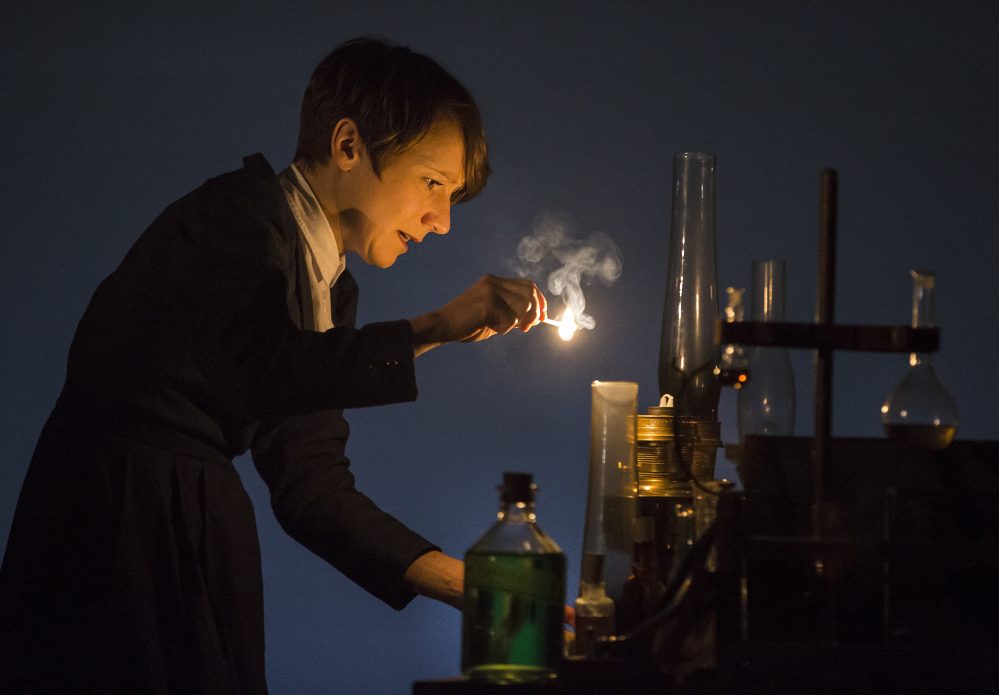
    In a reimagining of the classic tale, Dr Victoria Frankenstein shuns her family as she relentlessly pursues her quest for knowledge and in her exploration of the part of existence where life and death meet. In her experiments with bringing the dead back to life, she creates a creature, which overpowers her and escapes. Haunted by her creation and by her guilt, her life begins to unravel as the creature returns a little too close to home.

    Photo Credit: Pamela Raith

    Mary Shelley’s definitive work is one which is firmly cemented in popular culture and one which is not easy to present with an original slant, which Northern Stage have tried to do. There were numerous themes of conflict portrayed within the production, with Victoria shunning religion in favour of science; her pursuit of knowledge at the cost of her compassion and the sacrifice of others for the preservation of one’s own interests. As the story arc progressed, there was something bittersweet in the way in which it takes a monster to make Victoria more human; despite how she treats her family and the way in which her self-driven ambition is ultimately self-destructive.

    Utilising a quasi-steampunk style set and, at times, some effective lighting; there was a relatively competent performance from Polly Frame as Dr Victoria Frankenstein; and whilst Ed Gaughan’s portrayal of the Creature was physically engaging, the way in which the creature spoke made many of his lines indiscernible. However, the closing scene was one which did carry some emotional weight and did bring the characters journey to a definitive and tender end.

    But sadly, the production overall was one which was never really hit its stride. The re-imagining of Dr Frankenstein as a female had such potential; but the struggles of Victoria to carve a path into the male-dominated medical profession or the challenges faced by her in breaking with the conventional female role was never really advanced, which, in the end, resulted in adding nothing of significance to the story. The timeline of the narrative was often unclear, with no clear demarcation between shifts in scenes or timeframes; and an intrusive sound design dominated the first act. But the biggest issue was that the production just lacked atmosphere and dramatic tension. A heavy reliance on the relationships between the Frankenstein family members meant for a limited narrative progression and the all too brief appearance of the creature throughout meant that the production felt more like a family drama than a gothic horror.

    Whilst there are some interesting themes on offer and despite a handful of redeeming features, this feels like a missed opportunity, and it is a genuine shame that the production never really achieves its potential, in what could have been a wholly refreshing and original take on a classic tale.

    Dr Frankenstein plays at the Sheffield Crucible Theatre (www.sheffieldtheatres.co.uk) until 15th March 2017  before continuing on its national tour. Visit www.northernstage.co.uk/whats-on/dr-frankenstein-tour for further details.


  • THEATRE REVIEW | La Ronde

    THEATRE REVIEW | La Ronde

    ★★ | La Ronde

    La Ronde review
    CREDIT: Ray_Burmiston

    Arthur Schnitzler’s turn of the century play ‘La Ronde’ is a frequently performed and adapted classic, partly because it’s an intriguing concept and also often because it’s usually staged with just two actors and a minimal set, making it easy to put on.

    Taking the idea of a roundel, where people are linked through their sexual encounters, the original play looks at power, class and politics from the standpoint of sexual encounters. For example, in the original: a prostitute has sex with a soldier, the soldier has sex with a parlour maid and the parlourmaid has sex with a young gentleman and so on till we complete the circle back with the prostitute. It’s a bit like six degrees of separation (or six degrees of Kevin Bacon if you prefer). David Hare adapted the play into ‘The Blue Room’, which became notorious for featuring a naked Nicole Kidman. The gay version, ‘F*cking Men” was a witty and timely adaptation with cleverly drawn characters and a frisson of raunchiness. Sadly this version flounders and is an anti-aphrodisiac.

    Writer/director Max Gill has come up with a novel take on the concept. His version features four actors and Wheel of Fortune type spinning wheel featuring their faces. Each scene is preceded by a spin of the wheel which results in a choice of which actor joins the remaining actor from the previous pair, meaning that there are (apparently) over 3,000 possible actor combinations in the play. Also, this makes the play gender neutral. The couples could be two women, two men or a man and a woman. The pronouns and language in the script allow for this. It’s a lively concept and one served well by Frankie Bradshaw’s arresting set and Jack Weir and Nathan Klein’s atmospheric sound and lighting. The gimmick works but sadly it’s not at all well served by the script.

    The tone of the play is light comedy and despite some glimpses of promise and the odd flash of insight, on the whole, the script feels dated and pedestrian with few laughs and little depth. The characters mostly feel stereotyped and the acting is turned up to full stagey volume. I found myself looking forward to each scene ending and the wheel to spin again. I love a gimmick and am all for innovation and originality but there needs to be a more sturdy and polished script to make this work.

    La Ronde plays at the Bunker Theatre until 11th March 2017