Author: Guest Poster

  • If your sleep is terrible, then try these top ten tips

    If your sleep is terrible, then try these top ten tips

    Sleep is essential to good mental health. You probably already know that when you sleep well you feel and work better.

    (C) BIGSTOCK

    In general, adults need between seven and nine hours of sleep but the exact amount varies from person to person. Different people need different amounts of sleep, and this depends on your age, your lifestyle, your genes and what you’re used to.

    A good night’s sleep won’t rid your life of emotional problems, but it can mean that you’re able to deal with difficult or stressful situations more easily.

    If you’re not getting enough sleep you tend to feel moody and irritable and lack focus. Obviously, this problem is likely to affect your relationships with people, your work and your mental wellbeing if ignored.

    So how can you improve your sleep?

    Here are ten top tips for a better night’s sleep from Mark Winwood, Director of Psychological Services at AXA PPP healthcare.

    Stay active during the day

    CREDIT: Flynt-bigstock

    Getting regular exercise during the day will help you to feel tired at night. Being active increases your metabolism and helps against stress and anxiety, which in turn will improve your sleep. Try to exercise earlier in the day or, if you prefer late night workouts, give yourself time to wind down and relax afterwards.

    Watch what you eat and drink, and don’t smoke

    Don’t have a heavy or spicy meal just before going to bed, as your body needs time to digest the food before sleep. Don’t go to bed hungry: a light snack before bedtime is ideal. Avoid caffeine – it can stay in your system for up to 6 hours and disrupt your sleep. A glass of wine may help you to fall asleep, but alcohol can affect the quality of your sleep, making you more likely to wake up during the night. Nicotine is a stimulant and studies suggest that non-smokers get better sleep than smokers.

    Make your bedroom more sleep-friendly

    Jail Hill Inn
    PR SUPPLIED

    Create a calm sleeping environment by turning your bedroom into a dark, quiet, clean and comfortable haven. A good temperature is between 18C and 24C. You may want to try black-out curtains, eye shades or ear plugs. Paint your room a calming colour. Remove any distractions that may keep you awake (including the family pets!) and keep your bedroom free from computers, TVs and phones. Is your mattress old? Is your pillow lumpy? Spoil yourself and invest in some new bedding.

    Develop a bedtime ritual

    Try to develop a relaxing night-time routine that prepares your body and mind for sleep. It could be taking a hot bath, reading a book, listening to calming music or having a milky drink – but try to stay away from bright lights and heated arguments just before bedtime.

    Relax and unwind

    CREDIT: MUSICAL FIDELITY EB-50

    Whether you need to stretch your muscles with yoga or calming your mind with meditation, there are numerous classes, apps, and books that can show you great methods to do both. Experiment and see what works for you. Some people find using a few drops of aromatherapy oil on the pillow, such as lavender, or a cup of chamomile tea to be soothing before bed time.

    Don’t toss and turn – get out of bed instead

    If you can’t fall asleep after half an hour, get up and do something else instead – try something relaxing like reading or listening to music. Only go back to bed when you feel tired. Similarly, if you find you’re dozing off on the sofa too early in the evening, get up and do a few jobs so that you save your snoozing for bedtime.

    Stop the weekend lie-ins

    Keep a regular sleep schedule. If you go to sleep and get up at the same time every day (even if you’re not feeling tired) it can help you get into a good sleep routine. Resist having naps during the day and don’t sleep in at the weekend.

    Keep a sleep diary

    It can be difficult to work out why you have problems sleeping. Keeping a sleep diary (or using a wearable device that tracks your sleep) can help you monitor when you fall asleep and wake up, how many times you wake up during the night and how rested you feel in the morning. After a week, reflect on your notes and try to work out what helps you sleep and what makes it worse.

    Jot down your troubles

    Life is often stressful and it can take time and some effort to learn what coping methods work for you. Try using a journal to jot down things that are worrying you and keeping you awake. Make a note of them and deal with them when you are refreshed.

    Seek professional help

    If your sleep problems persist, don’t suffer in silence, and don’t be tempted to self-medicate with over-the-counter sleep aids. Cognitive behaviour therapy (CBT) can be very effective at helping people who have problems with insomnia.

    For more information, please visit AXA PPP healthcare’s sleep hub.

  • Teachers ‘scarred’ by legacy of 1988’s Section 28

    Teachers ‘scarred’ by legacy of 1988’s Section 28

    Legislation repealed in 2003 continues to affect the professional life of LGBT+ teachers

    Wokandapix / Pixabay

    LGBT+ teachers who taught in schools during the late 1980s and 1990s remain scarred by the effects of Section 28 of the Local Government Act in England – a piece of legislation introduced in 1988 banning the “promotion” of homosexuality in schools – according to new research published in the journal Sex Education.

    The legislation was introduced partly as a reaction to a 1986 children’s book called Jenny Lives with Eric and Martin, which depicted the life of a child with two gay fathers. Controversy about the availability of the book in some schools in London led to the passing of Section 28.

    It was repealed in 2003, but during the time of its enforcement, many LGBT+ teachers felt it prohibited them from being open about their own sexual identity in the workplace.

    Researchers found that 88% of post-2003 teachers were public about their sexuality to all school colleagues, compared to 20% of those from the Section 28 era.

    Research by Anglia Ruskin University compared the current attitudes of teachers who taught during this era, and those who entered the profession after its repeal. Researchers found that 88% of post-2003 teachers were public about their sexuality to all school colleagues, compared to 20% of those from the Section 28 era. While 45% of post-2003 teachers were “out” to their pupils, the same was true of only a fifth of Section 28 teachers.

    The study, compiled using questionnaires, also revealed just 20% of Section 28 teachers lived in their school’s catchment area compared to 43% of post-2003 colleagues. Comments by respondents spoke of guarding their privacy aggressively, and fiercely separating out home and workplace identities, with privacy closely associated with safety among LGBT+ individuals.

    The Conservative government under Prime Minister Margaret Thatcher were responsible for enacting Section 28. (C) BIGSTOCK

    There were also notable differences between the two groups in how they socialised with their school communities. 60% of Section 28 teachers never took their partner to school social events. However, only 12% of post-2003 teachers never took their partner along.

    A total of 48% of Section 28 teachers had suffered from anxiety and depression linked to their sexuality and role as a teacher, while the figure for post-2003 teachers was 24%.


    Dr Catherine Lee of Anglia Ruskin University, author of the study, said, “There has been significant progress in England in protecting LGBT+ teachers in the workplace since the repeal of Section 28. However, it is clear that a lot of teachers remain scarred by their experiences during this period.

    “While this legislation was not the only difficult aspect of being an LGBT+ individual in the 1980s and 1990s, it has helped leave a legacy of caution, self-censorship and complex identity management that harmfully lingers some 15 years after the repeal.

    “School leaders must reflect on the inclusiveness of their own institutions, and decide whether equality policies are actually lived on a day-to-day basis. LGBT+ teachers and pupils should be able to participate fully and without fear in their school communities.”

  • COMMENT | Parents, protests and the LGBT Programme, Inside Parkfield Primary School

    COMMENT | Parents, protests and the LGBT Programme, Inside Parkfield Primary School

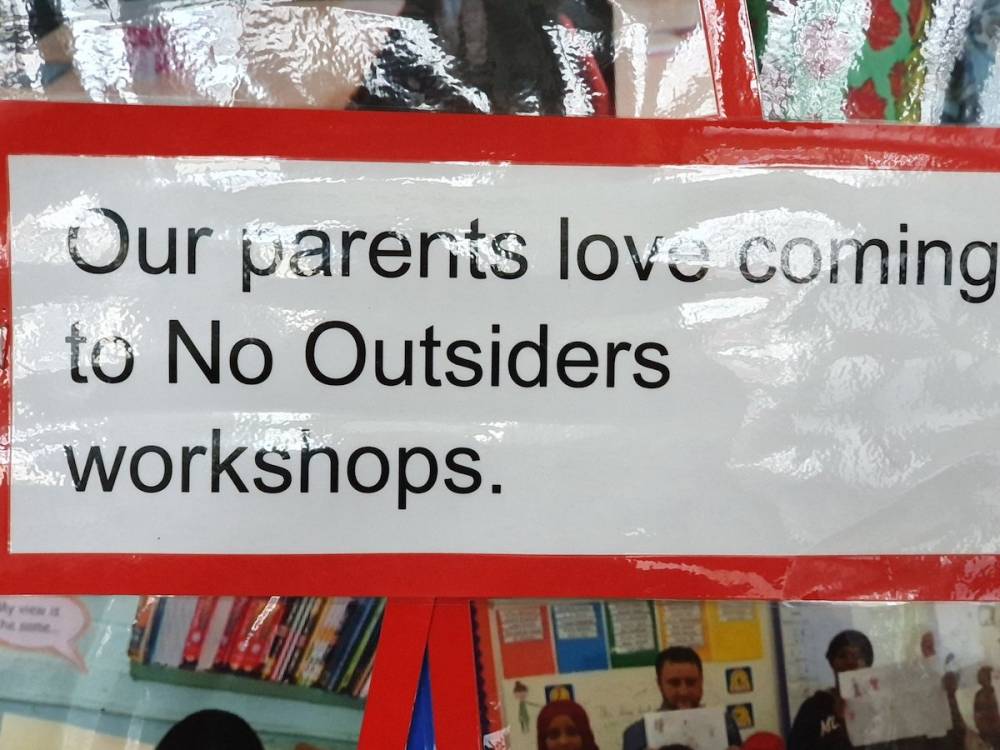
    It almost seems defunct now the No Outsiders programme has been pulled from the school but here’s how my informal meeting went with Andy Moffat, Deputy Headteacher at the centre of the storm in which parents protested about having their children being taught “gay lessons”.

    On the approach to Parkfield, I noted the sign announcing the school name. What will it bring? I thought.

    There were no signs of Protestors at the gates or media pressing through. It was a quiet, subdued afternoon. I supposed all the school children had gone home. I walked through the gates and through the entrance.

    What struck me most was the colour, the warm welcoming signs and the creativity of images plastered on the wall.

    This was a school which was proud of its heritage, innovations and unique ways to celebrate diversity.

    All the messages/images on the walls were created by children welcoming diversity and difference, embracing all the strands of the Equality Act 2010.

    Andy welcomed me, smiling, with a warm handshake. I could see he was holding it together. We walked through the corridors and upstairs. I was looking for signs of this “gay agenda”.

    All I could see was a celebration of diversity, questions, facts, images, statements, pinned on the walls.

    It was incredibly inspiring. It was the type of school I would’ve liked to have attended when I was a child.

    Andy introduced me to the Headteacher, who was complimentary about my appearance on The Big Questions.

    I made several enquiries about the parents/protestors. Where was Fatima Shah now? And who is the man with the megaphone?

    Fatima has kept a low profile since this furore broke out. The man spewing homophobic rhetoric isn’t even a parent and has no connection to the school at all.

    Andy showed me the assembly hall. Again, the boards were covered with positive words and images about diversity and differences.

    We talked for about an hour. I can’t share all that we spoke about, but it provided me with good insight about the No Outsiders programme, how he had created it with very good intentions, and how the school had supported him with his ethos.

    “No Outsiders has run for four years without complaints until now”

    The programme has been running in the school for four years without any complaints until now. Parents HAD been consulted and they were all on board with the idea and attended workshops.

    Andy showed me the books in question. They are remarkable little books for kids, covering various aspects of family, race, religion, difference. In one book, it mentions there are families with 2 mummies or 2 daddies. That’s all. On one page. In a book. For little children. To highlight reality. And representation.

    In another book, once again, it mentions in one line, LGBT. That is all.

    I realised then, how passionate, committed and almost at breaking point Andy Moffat is. He’s really striving to make positive changes. As a white, middle-class teacher, he could’ve easily gone to ANY school in the UK. But no. He chose an inner-city school, knowing it was in a predominately Muslim location. His plan of action – to break the taboo or barriers and slowly encourage children and parents to learn and accept difference in relation to British values and law. As a gay man, why shouldn’t he introduce LGBTQ issues, discuss discrimination and LGBT- phobia? It exists and is part of life. Andy is working hard in his inner-city school to reduce or eliminate it.

    However, those who are protesting have taken the step to not only try and damage his career, the education the children receive, the reputation of the school, they also damage what it means to be Muslim.

    I heard about the vile death threats, the rumours, the intimidation, saw the images and videos…

    The ironic thing is, the protestors are saying Andy is indoctrinating the children. But in talking so negatively about the lessons, taking the kids out of school, sharing negative petitions, and spouting homophobic comments, is placing them in that very same position. Are they not brainwashing, conditioning and indoctrinating the children?

    It also reminds me of two things:

    1. The controversy and furore surrounding The Satanic Verses 30 years ago. Many who protested hadn’t even read the book.
    2. The interpretation of the Story of Lot and how it is declared by many who state it’s a sin to be homosexual when they haven’t even read it.

    “Protesters are misrepresenting the wider Muslim community”

    As Muslims protesting, I would say they need to take a step back, re-evaluate what they are doing, how they are misrepresenting the wider Muslim community and understand in not adhering to educational policies, standards, ethics and ethos, they are alienating themselves even more.

    Why perpetuate the negative stereotypes in the media especially?

    The protestors also need to stop braying like a lynch mob for the removal of the “gay lessons” and resignation of Andy and look to their own actions.

    I’m sure this isn’t the way of Allah or the majority of Muslims.

    I’m sure Allah said, seek knowledge before making a decision which might have a detrimental effect on oneself and others.

    I’m sure Allah said, defend your faith but with good reason and irrational decisions are made out of fear.

    I’m sure good Muslims take time out to reflect, review and reason before they judge others?

    I’m sure Allah is watching and on the Day of Judgement ask the Protestors: What did YOU do to bring unity to the community?

    As I’m part of the LGBT+ community and a person of faith, I really believe we need to be standing up together. We may have fought for our rights, but we really need to embrace our brothers and sisters who are similar to me.

    We really need to strive for more action and positive changes to educate and include.

    I thought the battle scars were healing, but this protest at Parkfield has opened old wounds.

    Please don’t allow it to become another Section 28.


  • Obituary: Sharon Bottoms Mattes, the woman whose court case changed LGBT+ parenting

    Obituary: Sharon Bottoms Mattes, the woman whose court case changed LGBT+ parenting

    The sad passing of Sharon Bottoms Mattes, 48, in January this year shone a spotlight on LGBT+ rights in the 21st century, and how far attitudes and family law have changed abroad and in the UK.

    jarmoluk / Pixabay

    In what was a terrible example of the injustice to same-sex couples and their children is the American 1994 case involving Mattes, who lost custody of her son after the court ruled that she was an unfit mother because she was in a same-sex relationship. The details of this case are as shocking today as they were at the time.

    In the UK, societal attitudes towards same-sex parents has changed considerably over the past 25 years. Thank goodness, because this has been both to the benefit of couples, children and the emotional welfare of other family members.

    Yet family law is struggling to keep up with what some have deemed to be the ‘modern family’, and unfortunately prejudice and inequality still remains for LGBT+ couples and parents.

    Of course, in the last 25 years so much has changed. Civil partnerships were introduced in 2005. This was followed by same-sex marriage in 2014. This granted the same rights as married heterosexuals. This ended the appalling treatment same-sex couples had received. For those in a civil partnership or same- sex marriage who have a child both parents have parental responsibility. Yet there is still inequality that exists.

    Same-sex married couples, unlike heterosexual spouses are unable to cite adultery as a ground for divorce.

    Since 2005 unmarried couples were given the right to adopt. Equalities legislation passed in 2006 to ensure that there would be no discrimination on the grounds of sexual orientation when going through the adoption process.

    When it comes to surrogacy, same-sex couples can apply for a parental order if they have their child via a surrogate and one parent is genetically related to the child. If couples are not in a civil partnership or married they must be living as partners in an enduring family relationship if they wish to apply jointly.

    Single parents have been able to apply since 3 January 2019. Yet our surrogacy law are dangerously behind when it comes to the needs of modern families, leaving couples vulnerable to exploitation or worse, losing their child.

    It is important that family law keeps up with the needs of families today, and continues to progress so LGBT couples and their families hold equal rights.

    Linda Lamb, Solicitor and Director at LSL Family Law

  • People are more likely to do all these things first in front of partner before they share their Netflix account

    People are more likely to do all these things first in front of partner before they share their Netflix account

    Sex, passing gas – even going on holiday are more likely to happen before a partner decides to share their Netflix account!

    (C) BIGSTOCK

    New research shows it takes months and months before you reach the “the comfort zone” with a new partner.

    A new study of 2,000 coupled up people found that the biggest signs you’ve entered the comfort zone are allowing your significant other to take care of you when you’re sick, not wearing make-up and not shaving your legs or face.

    According to the research, it takes an average of seven months for couples to have their first talk about marriage/kids and about six months to introduce a significant other to their parents.

    Milestones such as crying in front of your partner, as well as feeling comfortable enough to snore while sleeping next to your partner, also proved to be big tells that your relationship has reached that next level.

    The study, conducted by OnePoll on behalf of Mattress Firm, also revealed it takes nearly five months before they’re comfortable showering at the other’s place, nearly six months to get to the point where sitting in silence isn’t awkward and nearly seven months to feel comfortable using the bathroom with the door open.

    Sex, passing gas, sharing a bed all come before Netflix!

    Sharing shows like House Of Cards will have to wait until at least 7 months according to research! (C) NETFLIX

    Surprisingly, the research also found that it takes eight months to share a Netflix account, which is, amusingly, three months longer than it takes the average couple to shower at their significant other’s house.

    The results revealed that four in five people say they prefer to sleep in bed with their partner and it takes nearly five months before couples are comfortable doing so.

    According to the results, conversation in the bedroom may be a lost art though as only 39 percent of couples say they engage in pillow talk after sex.

    And despite annoying habits like snoring and fidgeting, more than half of the couples surveyed report their sleep quality actually improves when sleeping with their partner.

    “If you snore, gravity is not your friend, but a slight elevation to your neck and head alleviates some of gravity’s pull and allows for a more open airway,” said Dr. Sujay Kansagra, pediatric neurologist and Mattress Firm sleep health consultant.

    Still, most people are happier once the relationship hits the comfort zone as 65 percent of couples sleep in the same bed every night and 70 percent of respondents say they don’t miss sleeping alone.

    “While it’s no surprise that more couples sleep better when in bed with their partner, a restful night’s sleep can be a challenge – especially if your partner snores like a freight train, like mine. With an adjustable base, I’m able to elevate his head and quiet his snoring, which has improved sleep quality for us both,” said Michelle Stokely, National Retail Merchandising Manager, Mattress Firm.

    Top 10 things couples are most comfortable doing in front of each other

    1. Letting their partner see them/take care of them when they’re ill (73 percent/1,468)
    2. Not wearing make-up (63 percent/1,266)
    3. Crying (63 percent/1,252)
    4. Snoring in their sleep (60 percent/1,208)
    5. Showering at their place (59 percent/1,186)
    6. Leaving the door open while using the bathroom (56 percent/1,117)
    7. Not shaving (55 percent/1,103)
    8. Being naked around the house (55 percent/1,092)
    9. Sleeping in a hair wrap or bonnet (40 percent/804)
    10. Wearing a retainer to bed (34 percent/680)


    How long into a relationship it takes on average to first experience things (shortest to longest)

    1. Sex (4 months and 17 days)
    2. Sleep in same bed (4 months and 21 days)
    3. Shower at the other’s place (4 months and 29 days)
    4. Cry in front of partner (5 months and 24 days)
    5. Sit in silence without it being awkward (5 months and 27 days)
    6. Talk about your/her period (6 months and 13 days)
    7. Be naked around the house (6 months and 18 days)
    8. Share a deep secret (6 months and 19 days)
    9. Let your partner take care/see you when you’re sick (6 months and 21 days)
    10. Use the bathroom with the door open (6 months and 24 days)
    11. Pass gas in front of partner (6 months and 25 days)
    12. Talk about marriage/kids (7 months and 1 day)
    13. Go on vacation together (7 months and 7 days)
    14. Share a password (7 months and 17 days)
    15. Share a Netflix/Hulu account (7 months and 24 days)

    YOUR SUPPORT MEANS EVERYTHING

    Help us deliver unique, usable and reliable journalism that supports the gay, bisexual and curious community of the United Kingdom. Can you help protect LGBT+ media? Publishers like us have come under severe threat by the likes of Google and Facebook. The problem is that advertisers are choosing to put their money with them, rather than with niche publishers like us. Our goal is to eliminate banner ads altogether on site and we can do that if you could pledge us a tiny amount each month.

    We’re asking our readers to pledge just £1 per month, more if you’re feeling swanky. You can stop payment at any time.

    It’s quick and easy to sign up and you’ll only have to do it once.

    Click to start the journey and support THEGAYUK!

  • Here’s why it’s great having a small penis

    Here’s why it’s great having a small penis

    Small is beautiful – that is the new motto

    If you watch a lot of porn you’ll be forgiven for thinking that man is equipped with just two sizes of dick. Big and bigger. But actually the majority of penis owners aren’t that well endowed. The average size of most men in the UK, full mast, is 5.5 inches according to Mandatory.com. So take heart, even if yours doesn’t reach 5 inches there are reasons why, whatever you have, is pretty damn good.

    1) Firstly having a smaller dick means that hiding an unwanted erection is much easier

    close-up of man wearing black fetish leather pants
    CREDIT: wernerimages / bigstock

    So if you happen to be in an awkward situation and you pop a boner you can quite happily enjoy the knowledge that your rager will be much easier to hide than a monster cock. Simply slide that peen up towards your belly and no one will ever know! Brilliant.

    2) You won’t damage the person you’re having intercourse with…

    You’re less likely to damage your bottom. Smaller dicks are less likely to create anal fissures and less likely to cause small tears and will probably need a lot less warming up, although don’t read that as a “just go for it” you’ll still need to do a bit of foreplay and you’ll always need lube.

    3) Not just anal, but actually oral will be easier.

    BIGSTOCK

    Apparently. After hearing that this guy actually ruptured his throat while giving a blowie to a 10 incher and ended up in A&E maybe it’s time to realise less is more.

    4) Hit the spot

    (C) BIGSTOCK

    You’ll actually be able to rub all the right bits with your hammer action! The male G-spot will be tickled pink with a smaller than average appendage. The G-spot is only a couple inches inside a man, so any more than that I really a waste – or for show offs!

    5) Anal sex will be less painful

    Again we refer to point three. If you want tips on how to find bottoming easier check out our top tips. Plus you won’t be going all the way up to the internal sphincter, which can be an unpleasant feeling for some bottoms.

    6) You won’t be used because of your penis size

    CREDIT: Depositphotos

    Yep, there’s such thing as people who who fetishize big dicks and don’t neccessarily respect the person attached to the big penis. There’s an actual forum called Big Dick Problems – yes guys who have penises that are too large they have their own forum. It has over 50 million members (no pun intended).

    7) Less Germs

    jarmoluk / Pixabay

    Yes, if you ever sit down to pee, or even when you’re pooping if you have a smaller penis, or a grower not a shower, your penis won’t touch the inside of the dirty toilet bowl. Yup!

    Whatever your size is, don’t worry about it. We all come in all different shapes and sizes. It’s about who the dick’s attached to not the nob itself.


    YOUR SUPPORT MEANS EVERYTHING

    Help us deliver unique, usable and reliable journalism that supports the gay, bisexual and curious community of the United Kingdom. Can you help protect LGBT+ media? Publishers like us have come under severe threat by the likes of Google and Facebook. The problem is that advertisers are choosing to put their money with them, rather than with niche publishers like us. Our goal is to eliminate banner ads altogether on site and we can do that if you could pledge us a tiny amount each month.

    We’re asking our readers to pledge just £1 per month, more if you’re feeling swanky. You can stop payment at any time.

    It’s quick and easy to sign up and you’ll only have to do it once.

    Click to start the journey and support THEGAYUK!

  • Did you survive the week? Apparently more people die this week than at any other time in the year

    Did you survive the week? Apparently more people die this week than at any other time in the year

    More people will die this week than at any other time of the year – with one death every 44 seconds, it has emerged.

    aitoff / Pixabay

    Figures from the ONS show the second week in January sees an average of 13,670 deaths – 1,953 every day or 81 per hour – mainly due to cold weather and an increase in bugs and illnesses.

    The rest of the year sees an average of 9,756 deaths every week.

    And that means scores of families will have to find cash for funerals.

    A separate study by SunLife revealed the average basic funeral now costs £4,271, meaning around £58 million could be spent on funerals for loved ones who pass away this week.

    In fact, the total cost of funerals in the UK during January could hit more than £229 million.

    SunLife marketing director Ian Atkinson said: “This week will see more deaths than any other week in the year, and for those families dealing with bereavement, searching through quotes is probably the last thing on their minds.

    “You need to choose a funeral director fairly quickly so they can take away the body, and most people have not thought about which one they would use.

    “But with the average funeral now costing £4,271, it is crazy to think we are just paying the bill without thinking about whether the funeral services they are using are right, for them.”

    SunLife figures mirror the ONS stats with an average of 9,031 death claims on policies in January – compared to 7,314 each month for the rest of the year.

    But research carried out by SunLife found 37 per cent have made no provision for their own funeral, instead leaving loved ones to pick up the bill.

    And even of those who did plan for their send off financially, they didn’t leave enough to cover the total bill.

    It also emerged that rather than shopping around, most will also just pay the first funeral director they speak to without getting any other quotes.

    Just one in five will get more than one price before booking a funeral.

    • SunLife has launched its Funeral Planning Mapper, an independent online tool which maps funeral services locations across the UK.
  • These are the most Instagram worthy destinations in the world

    These are the most Instagram worthy destinations in the world

    Route 66 has been named as the most Instagram-worthy road trip in the world, according to Brits.

    The world famous Route 66 has been voted as the UK’s favourite destination for Instagram worthy pictures. marioschmidtphoto / Pixabay

    The study, which polled 2,000 adults, found the top three routes are all located in the US – specifically through the Grand Canyon National Park and along the Pacific Highway Coast.

    The drive through the Grand Canyon parks, typically following the South Rim to the North Rim and famed for its exquisite views of the stunning natural wonder was second.

    ‘PCH’, also known as Route 101, came third.

    The route takes you on a coastal, cliff-hugging drive from San Francisco to San Diego, passing by San Jose, Big Sur and Monterey.

    Fifty-six per cent of those took part named the USA as the road trip capital of the world.

    Commissioned by Hertz, the research also identified key ingredients for a successful road trip – including wide-open roads, driving past famous attractions and spotting wildlife along the way.

    Discovering views and taking in the scenery were highlighted as the main reasons for adults going on a road trip.

    Temerity Vinson, senior director of international marketing, Hertz said: “The survey results clearly show how much adventurers love the USA for a road trip.

    “The influence of social media has had a huge impact on destinations of choice, bringing increased awareness of less well-known areas, as well as ensuring that gems such as the Route 66 are still as popular as ever.

    “Hertz is always dedicated to finding new ways to help our customers plan their dream trip.

    While views and scenery were important for older travellers, millennials are more focused on having a ‘new experience’.

    More than two-thirds of millennials admitted the places they see on Instagram affect their choice of location, compared to just 13 percent of adults over 38s.

    iankelsall1 / Pixabay

    In fact, 30 per cent said they are unlikely to visit somewhere if they’ve never seen photos of it on Instagram.

    Hashtags and location tags have become a new way to research the next travel destination and four in 10 millennials use the platform to discover new points of interest and places to visit.

    The survey, conducted via OnePoll in December 2018, also found an average of 12 photos a day are taken on a holiday or a trip.

    Fifty-seven percent of respondents said they were most likely to take a photo of a landscape or cityscape while on a trip.

    Double the number of millennials compared to the over 38s are likely to take a photo of their food.

    Iceland’s ring road made it on to the list. The road takes in the entire country. Free-Photos / Pixabay

    It seems that photographs make memories, with 36 per cent of millennials saying that they would struggle to remember their trip if they didn’t post a photo of it, compared to 19 per cent of over 38s.

    Furthermore, one in 10 admitted to visiting somewhere purely because they want to share it on Instagram.

    When it comes to planning, Brits take an average of six months to arrange an adventure of a lifetime.

    Twenty per cent of respondents would like to combine creating their own route with a structured drive.

    The Great Ocean road down under takes in some of the world’s most amazing views, but you’ll have to travel hours to pass them. Jonny_Joka / Pixabay

    Following the research, Hertz has launched three new routes to its USA Road Trip Planner: Canyons of Arizona and Nevada, California Surfing and Totally Texas, providing inspiration for routes to experience iconic and off-the-beaten track scenic drives and pit-stops.

    Vinson added: ”Our USA Road Trip Planner can help our customers experience a different culture, discover new cuisines or visit famous landmarks.”

    A free online resource, the Hertz Road Trip Planner also features the legendary Route 66, along with 30 other bespoke routes across the USA.

    For road trip inspiration, travellers are welcome to check out the Hertz Road Trip Planner and the new @HertzRoadTrip Instagram channel. Hertz is also inviting road trippers to share their road trip experiences by tagging @HertzUK (Facebook & Twitter).

    1. Route 66 – U.S
    2. Grand Canyon – U.S
    3. Pacific Coast Highway –U.S
    4. West Coast Perth to Broome – Australia
    5. South Island Circuit – New Zealand
    6. Great Ocean Road – Australia
    7. Cowboy Trail – Canada
    8. The Argyll Coastal Route – Scotland
    9. Ring Road – Iceland
    10. Snowdonia – Wales
  • COMMENT | The joy of the good old fashioned… wank

    COMMENT | The joy of the good old fashioned… wank

    Old Dog With A New Dick

    (C) BIGSTOCK

    I recently rediscovered the joy of wanking. I make no bones about it, but for the past 24 years, I’ve been a poppers user. The wonders of that amyl nitrate smell rushing up your nose during those heady days to a Kylie track on the dance floor of the White Swan in East London or during the euphoric moments during anal sex. It was wondrous. 

    Forgetting the fact it could give you a monstrous headache and when not at their finest (read that as fresh) they smelt like old socks, but the rush was real. It was fun.

    Several years ago, the government banned the sale of amyl nitrate and instead we had to make do with Isopropyl nitrate and to be honest, they are rather crap. I’ve tended to need more and more to get the same rush and to be honest, it’s just not doing it for me anymore.

    And then the other day, I ran out. It was a Saturday and my local “special interests” shop was closed and I wouldn’t be able to get some until the following week. I had to wank it alone. Cheese n Rice! I was not expecting what happened next.

    24 years of being somewhat “off your tits” does make you lose your senses and control the rush. I’ve literally been cumming and going. Not anymore though. Suddenly out of nowhere came this tightening from my inner thighs. I’ll be honest here, it ruddy well hurt! Suddenly I was having an orgasm.

    I’ve had orgasms before, and when you get the rocking on, I’ve been known to scream like a fox. I’ve also shouted out Pilots 1975 hit “Magic”.

    Most of the time though I’ve not. I’ve felt the rush, gone giddy and then I’m reaching for the tissues.

    So there I was, somewhat shocked at this pain from within my thighs. I’d be lying if I said I didn’t try it again later that evening because I did. And again, the rush came, the thighs tightened and the pain was this time quite exciting. I felt like an adolescent again when I first played with the meat stick.

    And this continued so I decided to experiment with different techniques because this time I was able to. And there I was, bringing myself to the edge of cumming and I’d stop. I was able to stop. You see with poppers, I always found that once the rush was there, it was over. I wasn’t going to be able to stop it.

    And the fun hasn’t stopped there. I’ve angered myself several times by getting there and then stopping. Adjusting speeds and grips. It’s been an a-wank-ening and I’m glad it happened. I’m glad on that Saturday afternoon, I had run out. I didn’t know you could get sweaty palms like this! 

    So try something different this weekend. Don’t sniff poppers. Go it alone. I can tell you this, you’ll bloody LOVE it! It wasn’t exactly easy at first, I’d taught myself that every good arrival was with the help of that little bottle.

    So goodbye poppers, my little wanking partner. It was fun, we had over 2 decades, you fried my brain, lost me some brain cells and you brought me to the edge of heaven in Heaven to Heaven but I’ll pass now. I’m done.

    https://www.talktofrank.com/drug/poppers

  • This is how long you have to make a GREAT first impression

    This is how long you have to make a GREAT first impression

    First date? New business meeting? You only have 27 seconds to make a good first impression, according to new research.

    Gay couple
    CREDIT: mast3r-bigstock

    A study among 2,000 Americans examining the art of first impressions found that seven in ten of us (69 percent) form a first impression of somebody before they even speak.

    The research investigated the key contributors and timings to a positive first impression and found that smiling, being polite, smelling nice, being a good listener, and making eye contact number among the leading factors.

    The new survey by Dollar Shave Club was conducted to mark the launch of their cologne collection, Blueprint.

    Results confirmed the importance of smelling good when seeking to form a positive first impression- as 85 percent of respondents said their first impression of somebody will be more positive if they smell good.

    And that goes double when you’re on a date. Things move a bit quicker in the dating world, as six in ten (60 percent) admit they take even less time than normal to form a first impression in a dating context.

    You better impress early, too, as the average person knows within 15 minutes into a date whether they want a second date or not, with half (50 percent) saying it takes even less time than that.

    Quite a bit of prep goes into a first date, it turns out, and it may actually involve Google. If you’ve got a first date lined up, you better hope your online presence is squeaky clean, as two in three Americans say it’s a good idea to search your date online before meeting up.

    Getting ready for a date was also found to take the average person 29 minutes, with one of the most crucial predate steps revealed to be picking out a scent. According to the study, over two in three questioned (68 percent) put a lot of thought into how they smell before a date.

    “We know that a scent speaks volumes, and cologne is the last thing you apply before walking out the door. That’s why we created Blueprint, a range of six amazing colognes that are perfect for every occasion. Our award-winning fragrance team has created a thoughtful selection of colognes you won’t find anywhere else. Whatever your plans, we have a Blueprint,” said Nick Virginio, Senior Brand Development Manager.

    All that preparation can make a real difference to a person’s confidence with nearly every respondent (89 percent) saying they feel more confident when they look and smell good.

    And confidence can go a long way when it comes to dating, as 83 percent of us say they’re more likely to form a good first impression of somebody they perceive as confident.

    But smelling bad, acting arrogantly and dressing poorly were found to be the top reasons people will form a bad first impression of somebody.

    And if you fail to impress early on a date, then it probably won’t last for long. If a date is going poorly the average American will call it quits after just 16 minutes.

    Four in ten of those surveyed (40 percent) admit to having a friend call and fake an emergency to get them out of a miserable date, while 39 percent say they’ve told a date they have to work early in order to cut ties with a bad match.

    TOP 10 CONTRIBUTORS TO FORMING GOOD FIRST IMPRESSION

    1. Smile (53%)
    2. Polite (53%)
    3. Well spoken (49%)
    4. Eye contact (49%)
    5. Good listener (48%)
    6. Smells nice (46%)
    7. Holds conversation well (46%)
    8. Body language (44%
    9. Tone of voice (44%)
    10. Well dressed (42%)

    TOP 3 CONTRIBUTORS TO FORMING A BAD FIRST IMPRESSION

    1. Smells bad (66%)
    2. Arrogant (62%)
    3. Dresses poorly (49%)

    FIRST DATE TIMELINE

    29 minutes to get ready
    27 seconds until first impression is made
    15 minutes until you know if you want a second date
    16 minutes is the earliest the average person has left a bad date
    17 minutes until you know if you want a kiss at the end
    20 minutes until you know if you want to go home with your date

    TOP 5 BAD DATE TURN OFFS

    1. Bad manners (64%)
    2. Poor hygiene (59%)
    3. On the phone too much (53%)
    4. Talking about an ex (53%)
    5. Bragging (52%)

    10 OF THE FUNNIEST LIES AMERICANS HAVE COME UP WITH TO LEAVE A BAD DATE

    ● “My dog sitter has to be home at a certain time.”
    ● “I have a boyfriend.”
    ● “I have poison oak all over the lower half of my body and have to go put ointment on.”
    ● “I have to help someone whose car broke down.”
    ● “I once told my date that I have a dog that is sick. I didn’t own a dog at that time.”
    ● “Left a candle lit at home.”
    ● “My neighbour’s pet needs me.”
    ● “Said I was about to throw up cause of something I ate before.”
    ● “That my sister was going into labour! I don’t even have a sister!”
    ● “Saw an ex in the restaurant.”
  • This is how millennials really want to celebrate Christmas

    This is how millennials really want to celebrate Christmas

    One in 10 millennials secretly hope there is no room at the in-laws, a study found and six percent still believe in Santa Claus!

    Researchers who polled 2,000 UK adults aged 21 to 38, found the last thing they want to do is spend the night at their other half’s parents.

    Having worked long hours all year, those polled revealed they’re ‘desperate’ for some peace and quiet over the festive period – and being on duty at the in-laws holds little appeal.

    In fact, those polled revealed they can only tolerate their company for three hours before they start to struggle.

    Instead, the research commissioned by Hotels.com, found a fifth will look to spend Christmas Day with their mates, while 15 per cent are intending to go away on holiday.

    Adam Jay, president of Hotels.com brand, said: “We all love getting together with friends and family at Christmas, and everyone celebrates it differently.”

    The research also found eight in 10 are planning to have get-togethers with friends at some point over the festive period.

    Three in 10 of those will cook a Christmas dinner with their mates and a quarter intend to go to a Christmas market with them too.

    Similarly, 20 per cent are doing a Secret Santa and eight per cent are going to have a mini break with their friends.

    The research also explored what millennials will do on the day itself.

    Which films do they love the most?

    More than half will sit in front of the TV and watch movies.

    And the chances are at least one of the flicks they enjoy will Home Alone, Elf or Home Alone 2: Lost in New York – these were voted the top three Christmas movies among those polled.

    More than a third will spend time on social media, 35 per cent will play board games or card games and a fifth will take selfies.

    Eighteen per cent intend to send a Christmas message to their social media friends and followers, 17 per cent will have an afternoon nap and 14 per cent will do a spot of online shopping in the sales.

    And whilst they aren’t keen to hit the prosecco, they are a dab hand in the kitchen with 19 per cent of millennials planning to host when it comes to the cooking.

    Almost half revealed they are planning to stray from tradition and have an ‘alternative’ festive meal – with a vegan dinner and pizza among the dishes likely to be served up.

    And the break from what many consider the norm doesn’t end there – a fifth are planning to avoid alcohol completely on Christmas Day.

    Death of the onesie

    Three in 10 will wear a Christmas jumper on the day, 22 per cent will wear pyjamas and only four per cent will opt for a onesie this year.

    The research also revealed a quarter of women polled will accessorise with a festive manicure

    While 12 per cent of men will go for a glitter beard and the same proportion will have a bauble beard.

    And seven per cent of everyone surveyed will be wearing festive pants.

    Despite all the excitement over Christmas and the rise of new traditions, those polled are sketchy over its origins – just 16 per cent know the complete nativity story.

    Four in 10 don’t know Jesus features – and it’s a similar story for Mary and Joseph (37 per cent) and Angel Gabriel (49 per cent).

    Don’t Stop Believing

    Six per cent even believe Santa Claus makes an appearance.

    Those polled also revealed their thoughts on how the nativity story might differ if it were to happen now.

    One in 10 think a unicorn would replace the donkey, 15 per cent think the three kings would be the three queens and 10 per cent believe Angel Gabriel would appear to Mary via Instagram.

    Carried out through OnePoll, the study also found gifts from the three kings – or three queens – would be a little different too.

    They’d include an iPhone (22 per cent), a Netflix subscription (18 per cent) and rose gold jewellery (16 per cent).

    Other gifts might include Bitcoin (12 per cent), a selfie stick (10 per cent), beard oil (8 per cent), Uber vouchers (seven per cent) and avocado on toast (seven per cent).

    Adam Jay added: “Whatever the occasion – friendsmas, quality time with the family or in-laws – there’s always room at the inn at Hotels.com and you can get a reward night when you stay ten nights with Hotels.com Rewards.”

    *Hotels.com is offering 10 per cent off bookings for Christmas Day with the code ‘RoomAtTheInn’.

    For more information click here [https://uk.hotels.com/]