Author: Newsdesk

  • Here are 10 signs you may have become… the Elder Gay

    Here are 10 signs you may have become… the Elder Gay

    There comes a moment in every gay man’s life when you realise you’re no longer “the young one” in the group chat. It sneaks up on you. One minute you’re drinking vodka energy drinks in a sticky club smoking area at 2 am, and the next you’re talking passionately about air fryers and lumbar support.

    Here are 10 signs you may have become… the Elder Gay.

    1. You say things like “the music’s too loud” unironically
    Not because you’re boring. Because you’d quite like to have a conversation without feeling like you’re being medically examined by bass frequencies.

    2. You remember gay apps before they were owned by giant corporations
    You speak of old versions of apps like a war veteran recalling ancient battles. “Back in my day, Grindr crashed every 15 minutes and nobody had torso lighting.”

    and them there’s, “We also had Gaydar,” The young gays, look confused and turn back to their Snapchat.

    3. You’ve started giving younger LGBTQ+ people life advice
    You never intended to become wise. Yet somehow you’re telling a 22-year-old that texting their ex at 1 am is “probably not aligned with their long-term wellbeing.”

    4. Recovery time is now a strategic operation
    A spontaneous night out now requires:

    • hydration
    • electrolytes
    • emotional preparation
    • and at least one clear calendar day afterwards.

    5. You’ve become weirdly obsessed with comfortable footwear
    Fashion still matters. But arch support matters more.

    6. You miss gay spaces that technically still exist
    You’ll say things like, “It’s not the same vibe anymore,” despite fully acknowledging that the vibe may actually just be… your knees.

    7. You own at least one unnecessarily expensive kitchen item
    At some point, many Elder Gays evolve into domestic cryptids who suddenly care deeply about olive oil, coffee beans, or cast iron cookware.

    8. Pride is no longer a 14-hour endurance challenge
    You now approach Pride with military precision:

    • arrive early
    • avoid the toilets near the main stage
    • identify seating
    • leave before the crowd turns feral.

    9. You’ve started valuing peace over drama
    Nothing ages a gay person faster than three emotionally catastrophic friendship groups and one situationship that should’ve ended in February.

    10. You’ve realised getting older is actually a privilege
    Underneath the jokes, many LGBTQ+ people never imagined themselves growing older at all. So there’s something quietly beautiful about becoming the person younger queer people look at and think: “Oh. Maybe I’ll survive this too.”

    Honestly? Elder Gay status might just mean you made it.
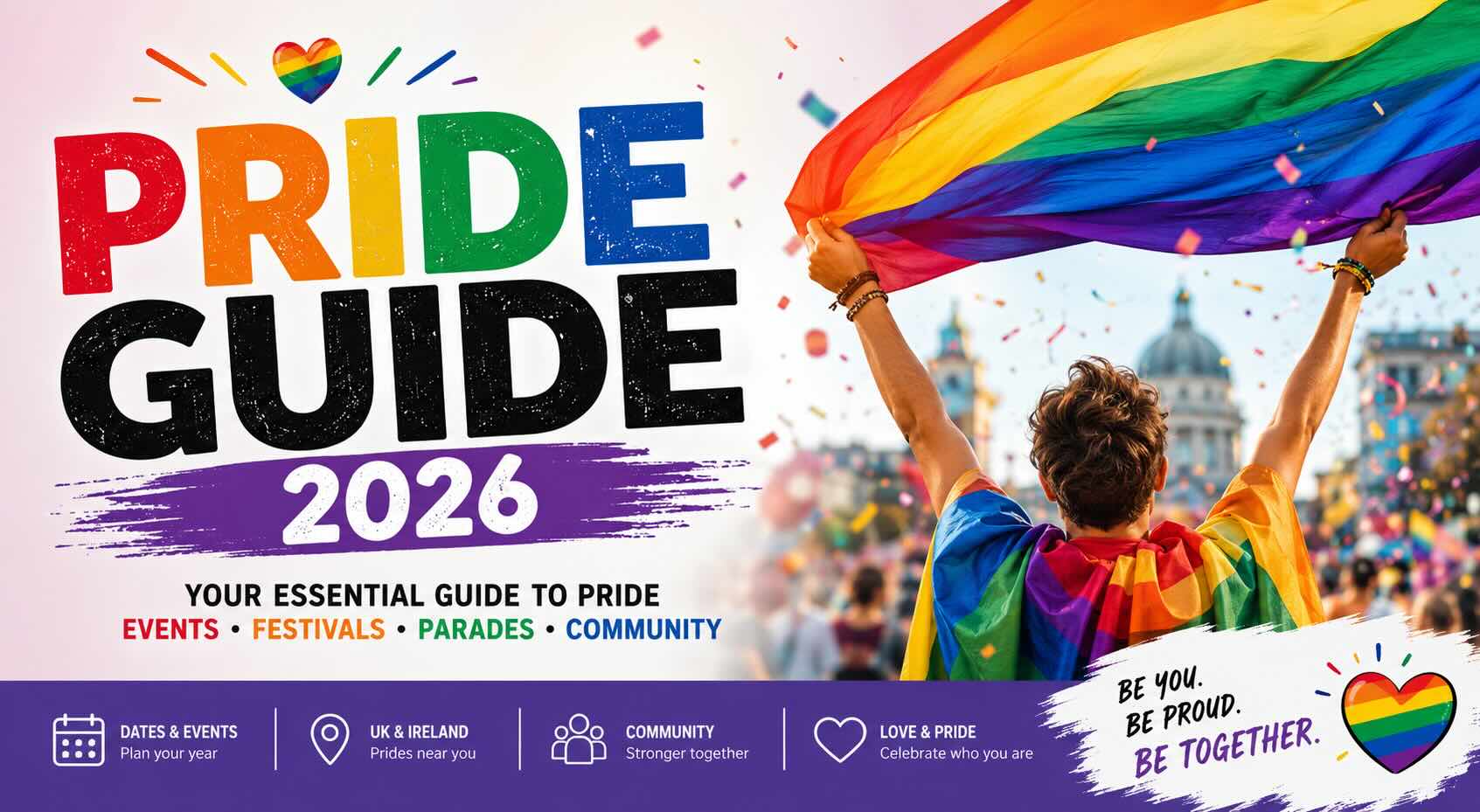
  • The UK’s most up-to-date 2026 Pride Calendar launched

    The UK’s most up-to-date 2026 Pride Calendar launched

    The UK’s most reliable and up-to-date Pride Guide has once again been released by The Pride Shop.

    The calendar showcases over 200 of the UK’s Pride Events.

    The Pride Shop, the UK’s officially trademarked Pride Shop, has been publishing the official Pride Shop Pride Calendar list since 2020. This year, the team has taken special care to update and correct links to Pride events, which many of the other calendars that you can find online do not.

    Currently, there are over 200 Pride events that are listed, which is an increase of over 20 events last year – there are new editions such as Bowes Park Pride in North London.

    The calendar covers Pride events which take place in all four nations of the UK, as well as events that are taking place in Ireland (EIRE). In the UK, Pride events run from February until October. It includes events such as Silver Pride, Bi Pride and Trans Pride taking place across the country.

    You can find out events by month by clicking on our easy links below.

    Check out our Pride survival guides as well as our catalogue of Pride articles.

  • Bestselling “Queen Of Bonkbuster” Author Rebecca Chance dies, 59

    Best-selling Bonkbuster author, Rebecca Chance, has passed away at the age of 59, according to statements on Instagram. Chance was interviewed for THEGAYUK numerous times during her writing career and was a staunch gay-rights ally. She was crowned “Queen of the bonkbuster, by then TGUK editor and chief Jake Hook.

    Her books include thrillers, bonkbusters, chick lit, mysteries, Tart Noir, romantic comedies, and young adult. Between 1996 and 2011, Henderson published 17 books under her own name. She began writing as Rebecca Chance in 2009.

    Author Matt Cain wrote on Instagram, “RIP Lauren Milne Henderson AKA Rebecca Chance. We met in 2014 when we were both published by the same editor at Pan Macmillan and quickly became party and publicity partners. She was outrageous, sparky and filthy – and could also be shockingly and delightfully bitchy. But we also lived around the corner from each other so some of my favourite moments were our walks on Hampstead Heath, when she showed her gentler, more vulnerable side.”

    Wit, Style and gorgeous shoes

    Rebecca Chance, the bestselling novelist and journalist whose glamorous, high-octane fiction captivated readers around the world, died on 11 March 2026 at the age of 59. Known off the page as Lauren Henderson, she leaves behind a rich literary legacy defined by wit, style, and a keen eye for the complexities of modern womanhood.

    Born on 30 September 1966 in Hampstead, London, Henderson was educated at North London Collegiate School and later studied English Literature at Cambridge University. She began her career as a journalist, writing for publications including The ObserverThe Guardian, and Cosmopolitan, where her sharp voice and cultural insight quickly distinguished her. 

    Henderson first made her mark as a novelist under her own name, publishing 17 books between 1996 and 2011 across genres including crime, romantic comedy, and young adult fiction. She was also a pioneering force in the “Tart Noir” movement—a subgenre blending crime fiction with feminist sensibility—and is widely regarded as its “godmother.” 

    In 2009, she reinvented herself under the pen name Rebecca Chance, launching a series of glamorous thrillers often described as “bonkbusters.” Titles such as DivasBad Sisters, and Killer Heels became international bestsellers, with several appearing on The Sunday Times bestseller list. Her novels, translated into more than 20 languages, transported readers into worlds of wealth, ambition, and intrigue, often exploring the darker undercurrents beneath polished surfaces. 

    Her life beyond writing was as cosmopolitan as her fiction. Henderson spent time living in Tuscany and later in New York, experiences that informed both her journalism and her novels. Her 2005 non-fiction work, Jane Austen’s Guide to Dating, reflected her ability to blend literary insight with contemporary culture.

    Throughout her career, she remained a vibrant presence in literary circles, contributing essays, editing anthologies, and appearing at festivals across the UK, US, and Australia. She was admired not only for her storytelling but also for her advocacy of women’s voices in crime fiction.

    Rebecca Chance’s work endures as a celebration of bold, flawed, and fascinating women navigating power, desire, and identity. She is remembered as a trailblazer who brought glamour and grit together in equal measure, leaving an indelible mark on popular fiction.

    The cause of her death has not been established.

  • How not to be a douche on Grindr

    How not to be a douche on Grindr

    Do… Use your best pic

    TheHilaryClark / Pixabay

    Dig deep into your Facebook tagged photos and find a nice when in the sun with a cocktail and a decent backdrop. If you’re stuck for choice, perhaps do what every other Grindr user does and take a selfie in the mirror of your local gym changing room. That way, at least everyone knows you keep fit.

    Don’t…immediately send a dick pic

    Striking up a conversation via a picture of your penis is like Victoria Beckham singing – sin against nature. Sending a blurry photo of your willy is not going to make anyone think “Let’s go Prezzo”. If you, for whatever reason, have an urgent need to send one, do it after at least a day of conversation and, as with your profile picture, make sure it is the best it could be. I’m talking about the right angle and the right filter – no one wants a photo with dodgy lighting.

    Do…be grammatically correct.

    “Hello, how are you?” sounds far better than “hey, u alrite?” so make sure to use your best grammar when trying to secure a date or even a bit of fun. No one is going to be enticed to have sex with you when you chat like a 14-year-old on MSN.

    Don’t…slate gays in your bio.

    “I like my men to be men”; “straight acting guys only; “if I can’t see your eyebrows then I don’t want to see you”. When devising your bio, try not to come across as a wanker. Some gay men decide to be their own enemy and it doesn’t exactly scream, “date me”.

    Do…talk about safer sex.

    Let’s be honest – most gay dating apps amount to anonymous sex with someone you’ve never met before and don’t really know much about except for the size of their penis so, let’s be clear, condoms, PrEP and regular testing if you’re sexually active are absolutely essential…

    This article was first published in August 2015 and has been updated.

  • 5 ways men can keep their skin looking youthful

    5 ways men can keep their skin looking youthful

    Youthful skin is characterized by its smooth texture, even tone, firmness, and radiant glow. It’s often free from common signs of ageing like wrinkles, fine lines, and age spots. Achieving and maintaining youthful skin involves a combination of proper skin care, healthy lifestyle choices, and protection from environmental damage. By understanding and implementing effective habits, you can preserve your skin’s vitality and keep it looking fresh and vibrant well into your later years.

    1. Stay Hydrated

    Drinking plenty of water keeps your skin hydrated and helps maintain its elasticity. Aim for at least 8 glasses a day. Also, incorporate foods with high water content like cucumbers, oranges, and watermelon into your diet.

    2. Use Sunscreen Daily

    Sun exposure is one of the biggest contributors to premature ageing. Use a broad-spectrum sunscreen with at least SPF 30 every day, even when it’s cloudy. This helps protect your skin from harmful UV rays that cause wrinkles and age spots.

    3. Follow a Consistent Skincare Routine

    Develop a simple skincare routine that includes cleansing, exfoliating, and moisturizing. Use a gentle cleanser to remove dirt and oil, exfoliate a couple of times a week to get rid of dead skin cells, and apply a moisturizer to keep your skin hydrated.

    4. Get Enough Sleep

    Sleep is crucial for skin regeneration. Aim for 7-9 hours of sleep per night. Quality sleep helps reduce dark circles and puffiness around the eyes and gives your skin time to repair and renew.

    5. Eat a Balanced Diet

    A diet rich in antioxidants, vitamins, and healthy fats supports skin health. Foods like berries, nuts, fish, and leafy greens can help keep your skin looking fresh and vibrant. Avoid excessive sugar and processed foods, which can lead to breakouts and dull skin.

    Taking care of your skin doesn’t have to be complicated. Stick to these tips, and you’ll keep that youthful glow for years to come!

  • Where did the Lesbian Labrys flag come from?

    Where did the Lesbian Labrys flag come from?

    The lesbian community has had its fair share of pride flags, from the now outdated Lipstick Lesbian to the Community Lesbian flag which was released in 2019.

    The lesbian labrys is one of the longest-serving flags and has an interesting history dating back to 1999.

    The history of the Labrys flag to represent lesbians dates back to 1999, when a gay designer, who worked for the Palm Springs Gay and Lesbian Times called Sean Campbell created what is known as a the Labrys flag.

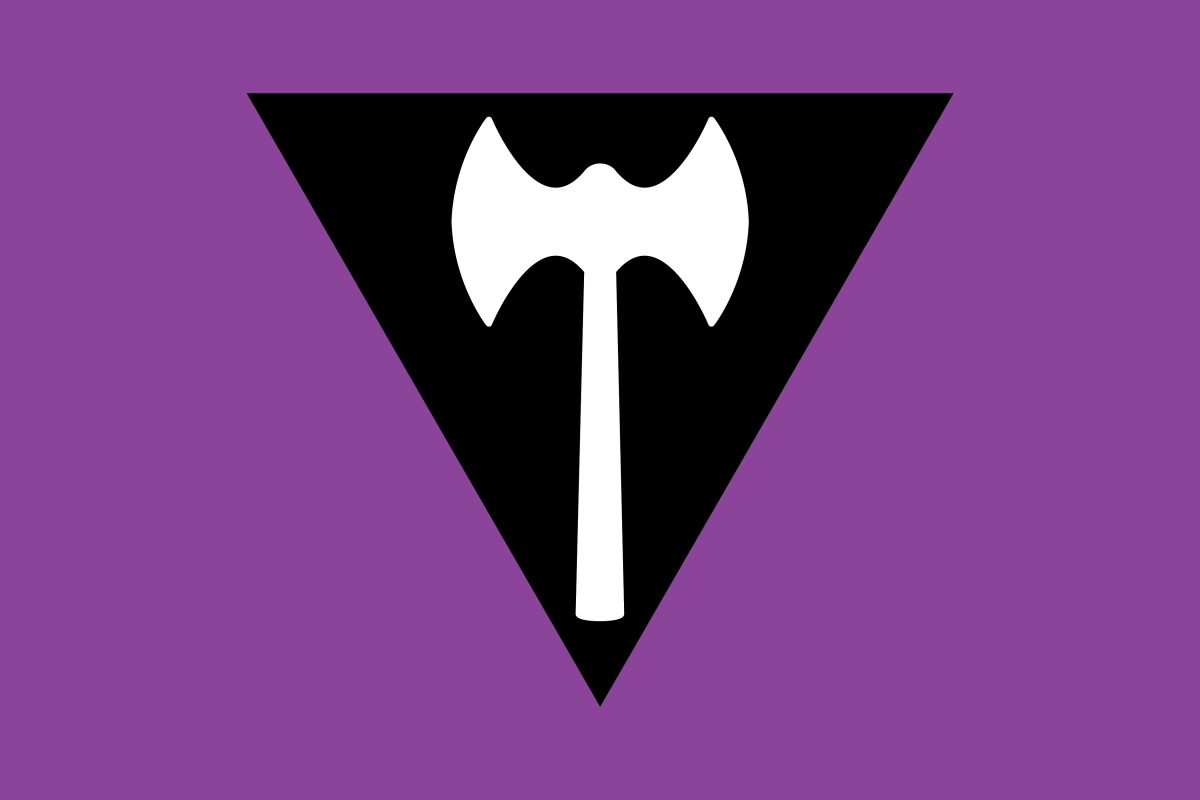
    The lesbian labrys flag, a symbol specifically representing the lesbian community, was created in 1999 by graphic designer Sean Campbell. The flag features a labrys, an ancient double-headed axe, set against a background of black and violet.

    Here’s a breakdown of its components and symbolism:

    • Labrys: The labrys is an ancient symbol associated with Greek and Roman mythology, often linked to the Amazons, who were mythologized as a race of warrior women. The labrys was adopted as a symbol of strength and empowerment within the lesbian community.
    • Black Triangle: The black triangle was originally used in Nazi concentration camps to identify “asocial” and “work-shy” individuals, which included lesbians. It has since been reclaimed by the lesbian community as a symbol of resilience and resistance.
    • Violet Background: The color violet has historical associations with the lesbian and feminist movements. For instance, the lavender menace was a term used by Betty Friedan in 1969 to describe the threat she felt lesbianism posed to the feminist movement, which was later reclaimed by lesbian feminists as a badge of honor.

    The Labrys flag is a dark purple flag, with a black triangle in the centre, on top of which is a battle axe. Although it’s not considered the main lesbian flag, it rose in popularity with some lesbians and feminists due to the popular empowerment publication, Labrys Magazine.

    Colours and Meanings

    Association with Sappho (the poet).

    From the inverted black triangle

    The labrys symbol represents strength and self-sufficiency

    Colour codes

    #993399

    #000000

    #FFFFFF

  • How important is the gay vote in this general election?

    How important is the gay vote in this general election?

    The gay vote is a significant and increasingly influential factor in general elections for several reasons:

    Demographic Size: The LGBTQ+ community represents a considerable portion of the electorate. There has long been a widely-held belief that around 10 per cent of the population is gay, lesbian or bisexual or who identify as non-heterosexual. This is probably the most accurate of all the figures – as more and more people feel comfortable to come out about their sexuality.

    The most up-to-date statistics show that six per cent of people identify as homosexual while seven per cent of people identify as bisexual. This equates to 13 per cent of the population identifying as either gay, lesbian or bisexual. EuroClinix surveyed 2,000 people around the UK to find out more about the sex lives of Brits.

    Political Engagement: Historically, LGBTQ+ voters tend to be highly politically engaged. This community often has higher voter turnout rates compared to the general population. Their participation can be pivotal, especially in closely contested races.

    Key Issues: LGBTQ+ voters are often mobilized by specific issues such as anti-discrimination laws, marriage equality, healthcare access (including transgender healthcare), and protection against hate crimes.

    Candidates and parties that address these issues effectively can garner significant support from LGBTQ+ voters.

    Local Elections: In local elections or tightly contested districts, the LGBTQ+ vote can be particularly influential. Even a relatively small but motivated group of voters can sway the outcome in such scenarios.

    Alliances and Coalitions: LGBTQ+ voters often align with other marginalized groups, creating broader coalitions that amplify their electoral impact. This intersectionality can drive turnout and influence policy platforms.

    Advocacy and Influence: LGBTQ+ organizations and advocacy groups are active in political campaigns, lobbying, and voter education efforts. Their influence extends beyond just voter numbers, shaping public discourse and policy priorities.

      So, don’t underestimate the power of the pink vote! We are important in general elections due to our size, our engagement levels, and the critical issues that motivate our community. Candidates and political parties that recognize and address the needs and concerns of LGBTQ+ voters can gain a crucial advantage in elections.

    1. Ashford Pride to take place this weekend: June 2024

      Ashford Pride to take place this weekend: June 2024

      It’s Pride Ashford in Kent this weekend (22nd June 2024) and here’s what you need to know before the weekend.

      A whole list of activities is happening this weekend in Ashford and it’s super easy to get involved. Of course, as with Prides across the country, there will be entertainment and a parade. Expect high glam from drag queens and plenty of fantastic LGBTQ+ visibility and representation.

      On the day here’s what you can expect:

      10:00 Crafting events at Made In Ashford – Fabulous Fan making and Costume Making Sessions

      11:00 Entertainment and performances at the Bandstand

      3:00 Parade Time!

      4:00-23:00 After party at The Coachworks – book a free ticket 

      On Sunday 23rd June, we’ll keep the fun going with Pride Picnic in the Park at Victoria Park

      Where does the Ashford Pride Parade start?

      The Pride In Ashford parade starts at the Bandstand in the middle of the High Street at 3pm. Be sure to get there early and enjoy the whole day!

      Those joining in the parade are to follow the marshals’ instructions, gathering down Bank Street before the parade begins.

      What to wear at a Pride Parade?

      Attending a pride parade is a joyous and colorful occasion, and your outfit should reflect the celebration of love, diversity, and inclusivity. Here are some ideas on what to wear:

      1. Rainbow Colors:

      • T-Shirts and Tank Tops: Opt for a rainbow-colored shirt or one with a pride-themed slogan.
      • Accessories: Rainbow flags, bracelets, necklaces, and hats can add a festive touch.

      2. Comfortable Footwear:

      • Sneakers or Comfortable Sandals: You’ll likely be walking and standing a lot, so wear shoes that are comfortable.

      3. Weather-Appropriate Clothing:

      • Sunny Weather: Sunglasses, sunscreen, and a hat can help protect you from the sun.
      • Rainy Weather: Bring a colourful raincoat or poncho and an umbrella.

      4. Express Yourself:

      • Costumes and Fun Outfits: Many attendees dress in vibrant costumes, glitter, and face paint. Feel free to get creative!
      • Personal Statements: If you belong to a specific community (e.g., LGBTQ+ allies, specific identities), you might wear colours or symbols that represent your community.

      5. Comfort and Practicality:

      • Bags: A small backpack or bumbag is practical for carrying essentials like water, snacks, and your phone.
      • Hydration: Consider bringing a reusable water bottle to stay hydrated.

      6. Pride Merch:

      • Pins and Badges: Add some pride pins or badges to your outfit to show support.
      • Temporary Tattoos: These can be a fun addition and are easy to apply and remove.

      7. Cultural Sensitivity:

      • Respectful Attire: Ensure your outfit respects the diverse cultures and identities represented at the event.

      Remember, the most important thing is to wear something that makes you feel comfortable and happy. Pride parades are about celebrating who you are and supporting others in the community, so wear whatever makes you feel proud and joyous!

    2. What does it mean to be non-binary?

      What does it mean to be non-binary?

      So, what does Non-Binary mean?

      what does it mean to be non-binary?
      Photo by Reyna Montgomery on Pexels.com

      So, you’ve probably heard the term “non-binary” before, right? It’s a way people describe their gender identity when they don’t feel like they fit neatly into the categories of “man” or “woman.” Basically, it’s like saying, “Hey, I’m not just one or the other.”

      Now, being non-binary can look different for everyone. Some folks might feel a mix of masculine and feminine, some might lean more towards one side, or some might feel like they’re outside of those labels altogether.

      It’s important to note that while non-binary is its own thing, it’s also an umbrella term. That means it covers a bunch of other gender identities too.

      And here’s a little nugget of knowledge: not all non-binary people see themselves as transgender. It’s like how all squares are rectangles, but not all rectangles are squares—kind of like that.

      Since everyone’s experience with being non-binary can be different, it’s always cool to ask someone what it means to them. It’s all about understanding and respecting each other’s identities, you know?

      So where did the term Non-Binary come from?

      Got it, let’s unpack that!

      Okay, so the term “non-binary” makes a lot of sense when you break it down. You’ve got “non-” meaning “not” or “lack of,” and then “binary,” which means “consisting of two.” Put them together, and you’ve got “not consisting of two.” Pretty straightforward, right? It’s like saying, “Hey, I’m not fitting into just two categories.”

      Now, there’s this cool alternative name, “enby,” which comes from how you say the abbreviation “NB.” See, “NB” stands for “non-binary,” and when you say it out loud, it sounds like “enby.” Neat, huh?

      Oh, but here’s a heads-up: it’s good practice to abbreviate “non-binary” as “NBi” instead of just “NB.” Why? Well, sometimes “NB” is used to mean “non-Black” when talking about non-Black people of colour. So, to avoid any confusion, adding that “i” can make a big difference.

      Is there a non-binary day or week or month?

      Did you know there’s a special day just for celebrating non-binary folks? It’s called International Non-Binary People’s Day, and it’s been happening every July 14th since 2012.

      Now, why July 14th? Well, it’s right smack dab in between International Women’s Day on March 8th and International Men’s Day on November 19th. So, it’s like a way of saying, “Hey, there’s more to gender than just ‘man’ and ‘woman’.”

      But wait, there’s more! The whole week surrounding July 14th is known as Non-Binary Awareness Week. During this time, it’s all about shining a spotlight on non-binary people and their communities, celebrating who they are, and spreading awareness. It’s like a big party, but also a chance for everyone to learn how to be better allies to non-binary folks. Cool, right?

      What’s the non-binary flag like?

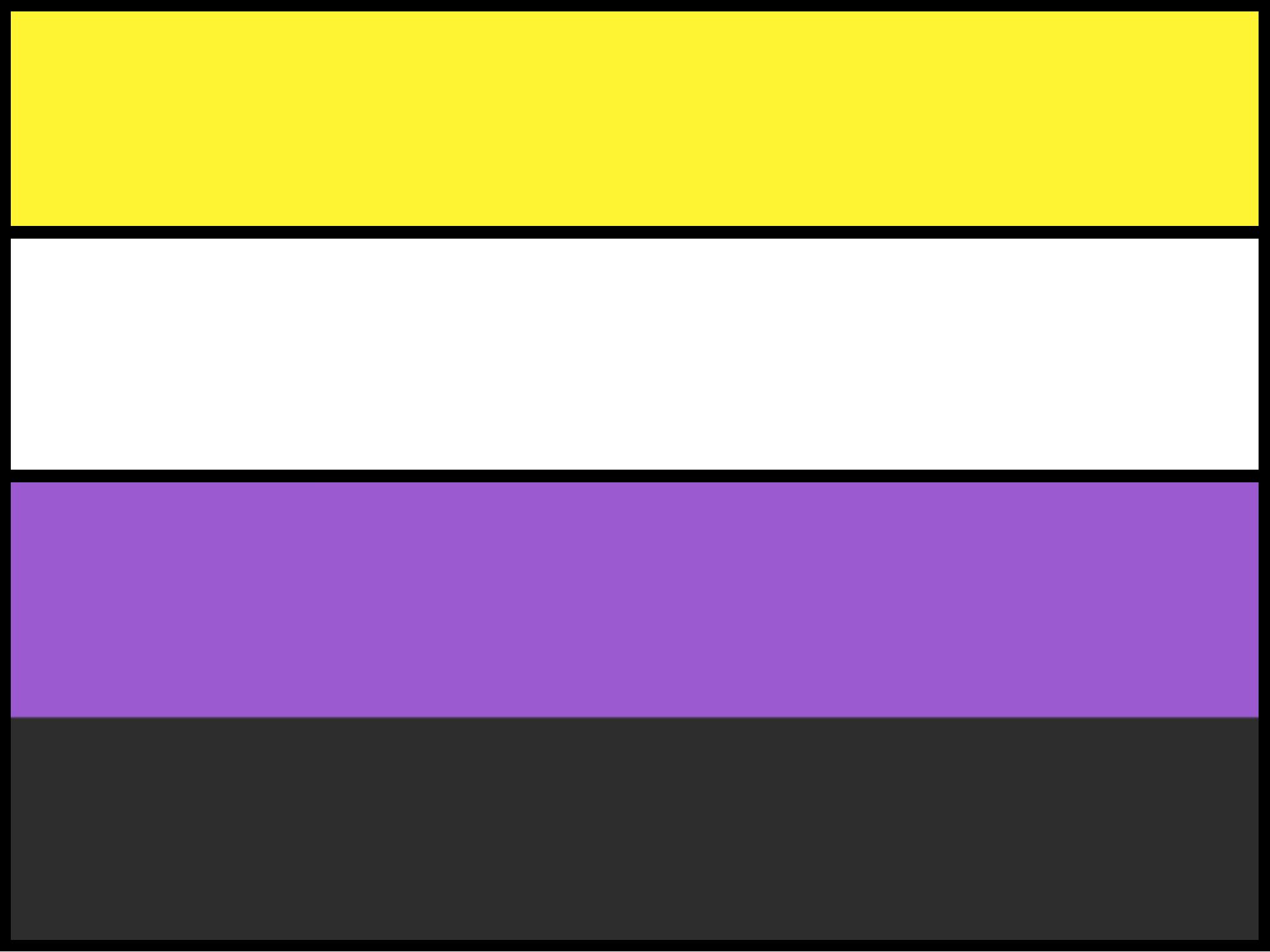
      The non binary flag has four colours to it.

      Check out the non-binary flag—it’s pretty cool! It’s got four horizontal stripes, each with its own meaning.

      First up, there’s yellow at the top. That’s for folks whose gender exists completely outside of the traditional “man” or “woman” binary. It’s like saying, “Hey, I’m breaking free from those labels!”

      Next, we’ve got purple. This represents people who kinda relate to the binary but also feel like their gender is somewhere in between “man” and “woman,” or maybe even a mix of both. It’s all about that beautiful spectrum!

      Then there’s white. That’s for folks who are multigender, meaning they identify with many or even all genders. It’s like embracing the diversity of who they are.

      And last but not least, there’s black. This is for people who are agender, meaning they don’t identify with any gender at all. It’s like saying, “Gender? Nah, not for me.”

      Pretty neat, right? It’s like a rainbow of identities all coming together on one flag.

      Find out how to be a great Non-Binary ally here.

    3. Seems as though British penises are just average

      Seems as though British penises are just average

      According to studies, it has been found that the size of British penises falls within the average range.

      A comprehensive analysis conducted by Mandatory.com collected data on erect penis sizes from 80 countries worldwide and created a chart displaying the results.

      The United Kingdom’s placement on the chart reveals that its average size is precisely in the middle. It doesn’t reach the larger sizes represented by the green column, nor does it fall into the smaller sizes represented by the yellow column. Instead, it lands in the orange column, indicating an average size.

      Which country’s men have the biggest penises?

      Which country has the biggest penises?

      Comparatively, the country with the longest average erect penises is reported to be the Democratic Republic of the Congo, measuring approximately 7.1 inches. On the other end of the spectrum, North Korea has the smallest average size, with around 3.8 inches.

      Taking the average of all countries, the global average erect penis size is approximately 5.5 inches.

      Which country does the UK’s men surpass in terms of Penis Size?

      Guys in the United Kingdom matches this average, surpassing countries such as the United States (5.1 inches) and China (4.3 inches), but sharing the same average size as New Zealand, Ukraine, and Canada.

      How do you measure you penis?

      Mandatory.com suggests that the correct way to measure penis length is from the tip of the penis to the very bottom of the pubic bone. Interestingly, only a small percentage (approximately 3%) of men worldwide have a penis measuring over 8 inches in length. For a detailed demonstration of the correct measuring technique, you can refer to a video by David Wavey that provides precise instructions.

    4. When is the first pride of the year in the UK?

      When is the first pride of the year in the UK?

      You won’t have to wait long in order to start celebrating pride in the UK. The first Pride that takes place in the UK is the yearly Student Pride and it takes place annually in February.

      Student Pride is a yearly Pride event that takes place in February to mark LGBTQ+ History Month, which also takes place in February. In the UK, unlike the US and other places in the world, LGBTQ+ History Month takes place in February, and the rest of the world celebrates it in October.

      According to The Pride Shop’s official pride list for the UK, Student Pride is set to take place in London from the 23rd to the 25th of February.

      The official lineup for Student Pride includes Joe Lycett, Tia Kofi and Russell T Davis.

      (C) Love Productions / BBC Photographer: Mark Bourdillon

      Joe Lycett is set to appear at Student Pride 2024, along with Queer as Folk creator Russell T Davies.

      Student Pride is a pioneering event shaping the agenda on LGBTQ+ issues. It was established in 2005 and has consistently led discussions on LGBTQ+ topics, from addressing racism and mental health within the community to advocating for inclusive sex education.

      The next Pride after that will be in March and will be Inverurie Pride in Scotland. Inverurie Pride is due to take place on the 30th of March 2024.