For most of us finding out that you’ve got an STI (sexually transmitted infection) can be an embarrassing moment. For some, the awkwardness comes from the prodding and probing of sexual health nurses and doctors but for many, it’s because there’s a stigma attached to contracting an infection, which is silly right?
The majority of us have sex at some point during our lives and with sex comes risk and responsibility and there are literally hundreds of thousands of infections caught and dealt with every year by our healthcare professionals and that’s just here in the UK.
The vast majority of STIs are curable with medication or at least manageable, and with many of us contracting at least one STI in our lifetimes we have to ask why there’s such a stigma?
“Dirty Vs Clean”
Getting the right medication and quickly if you’ve got an STI is really important. Photo by Anna Shvets on Pexels.com
One doctor in March this year said that people should stop using the words “dirty” and “clean” when it comes to talking about sexual health saying that STIs were “not a matter of personal hygiene” as there was “no way of telling who has an STI by just looking at them”. Doctor Sutton added that the words “dirty” and “clean” had a stigma attached to them.
“If we’ve slept together, by all means, get in touch about it”
Part of the embarrassment, for some, finding out that they’ve got an STI is the track and trace element, whereby they’re encouraged to tell their sexual partners that they’ve tested positive for something.
After contracting an STI it’s best to contact everyone you’ve had sex within recent months, this is so they can go and get tested themselves and get treatment if necessary. As many of the infections can actually be asymptomatic, many people won’t know they’ve got anything wrong with them so telling them to get tested empowers them to stop the disease from spreading any further.
“I’ve had a positive STI result”
Porn star John Thomas has managed to break the stigma by tweeting his sexual health diagnosis on Twitter saying, “I’ve had a positive STI result (if we’ve slept together, by all means, get in touch about it).”
He even managed to make a joke about the situation by adding that when he was asked about how many people he had had sex with, he could only answer “a lot”. Well, he is a porn star after all!
His Tweet was met with dozens of positive messages from fans and fellow porn stars congratulating him for breaking down the stigma to getting tested and revealing the results.
John also added, “If you’re sexually active, getting tested is a part of life. Talking about it helps break down people’s feelings of shame around it that we’ve been conditioned to feel.”
Fellow porn star, Luca D’amore said, “Thank you for taking the stigma away from getting tested!”
A fan added, “I have HUGE respect for you sharing this. Thank you for this post!”
Another said, “Yes -more disclosure! Thank you. Normalize sexual health and responsibility!”
Star DADDYBLACKXXX said that using Twitter to inform John’s sexual partners that they may need to get in touch with him was an “honest way to go about it informing people Quick and easy … more people should do this” adding that he would do it like that in future.
It is recommended that sexually active people, who have a number of different sexual partners should go for an STI test at their local Sexual Health clinic every 3 to 6 months, or order a FREE at-home HIV test kit from Saving Lives. if you use the promo code: GAYUK20.
It’s heatwave central and let’s face it we’re not coping very well.
They’ll talk about it always, the summer of 2018 – well that is until the next freak weatherwave happens… Anyone looking forward to this winter’s Snowmageddon?
Are you having trouble sleeping during the heatwave? Well, Max Wiseberg of HayMax has come up with these five tips to help you drift off to a restful sleep regardless of the heat outside and the pollen count.
Max comments, “Staying cool is the key to a good night’s sleep and if you’re a hay fever sufferer like me, avoiding the pollen too.
And freeze
Try putting your pillowcase in the fridge so that it’s cool! Some people swear by chilling all of their sheets, but that sounds extreme…
Get wet
Shower before bed. A cool shower will help to cool you down from a day in the sun. And it will help to remove pollen from your hair and body.
Jug it
Keep a jug of cool water next to the bed.
Breezy does it
Opening a window at the front and back of the house can provide a cooling breeze. Be sure not to do this until late evening though, because early evening brings high pollen counts as the atmosphere begins to cool and pollen settles back down to the ground.
The nose have it…
Apply an organic, drug-free allergen barrier balm, such as HayMax, to the nostrils and around the bones of the eyes before you go to bed, to block pollen before it enters the body. HayMax has been proven to trap over one-third of pollen grains before they enter the body.”
We spoke to the team at The STI Clinic to get the facts on how hepatitis is contracted, treated and cured.
Hepatitis A is very rare in the UK – but hepatitis B and C are much more common. All strains of hepatitis are diseases that affect the liver – but they are very different viruses which means they all need to be treated differently.
Wavebreak-Media-Ltd-bigstock
Both Hep B and C can remain outside the body for over 4 days, which makes them more contagious than a disease like HIV.
Hepatitis A is a liver infection that’s spread by a virus in faeces (poo). It’s rare in the UK but if you are likely to travel to countries where the disease is common you can get the hepatitis A vaccine to protect yourself against it.
Hepatitis A is spread mainly through contaminated food or poor handwashing, but also passes on easily through sex, including oral-anal sex (“rimming“) and giving oral sex after anal sex. Gay and bisexual men with multiple partners are particularly at risk.
Symptoms of hepatitis A can appear up to eight weeks after sex and include tiredness and nausea.
Hepatitis A is not usually life-threatening, and most people make a full recovery within a couple of months.
(C) BIGSTOCK
You can avoid getting hepatitis A by:
washing hands after sex (ideally buttocks, groin and penis too)
changing condoms between anal and oral sex
using a barrier (such as a condom cut into a square) for rimming
using latex or non-latex gloves for fingering or fisting
not sharing sex toys
asking about the hepatitis A vaccine at a sexual health or GUM (genitourinary medicine) clinic
If you think you might have hepatitis A, or have any questions, visit a sexual health clinic or GP.
Hepatitis B
http://gty.im/123537749
Hepatitis B inflames the liver and makes it unable to function properly. It’s a virus that is passed through blood, semen and vaginal fluids, so can be passed on through sexual contact (including oral sex) or through coming into contact with infected blood. Gay and bisexual men are at risk of hepatitis B, but they can be protected by the hepatitis B vaccination, which is available from sexual health clinics, genitourinary medicine (GUM) clinics or from GPs.
Hepatitis B is easier to pass on than something like HIV because it can live outside the human body for about a week.
Symptoms
In the early stages of the virus, many people only experience mild flu-like symptoms or none at all. However, people who do experience symptoms in the acute phase might experience some of the following:
Nausea
Vomiting
Fever
Jaundice
Dark urine
Light Coloured stools
Testing and treatments
Hepatitis B can be detected from around 2 months after infection and can be picked up on a finger prick test.
If you test positive, antivirals are usually used to impact virus progression. A face-to-face follow up with a health professional is recommended to decide if further treatment is required.
Health consequences
Most people will make a full recovery after a Hepatitis B infection. Around 90% of people will completely clear the virus, having no lasting problems – a process that usually takes 3-6 months. Once the person has cleared the infection, they will be immune to future Hepatitis B infections.
Around 10% of people will have the virus long-term, known as having chronic hepatitis B. Some patients in this category will remain well but will still be infectious (carriers).
Unfortunately, it’s impossible to predict how Hepatitis B will progress in a person, so anyone who tests positive for the virus should have their recovery monitored with regular check-ups.
Hepatitis C is a blood-borne virus that also affects the liver. It causes inflammation that prevents the liver from functioning properly, but it is a different virus to Hepatitis B. There are six different types of Hepatitis C that all require a different treatment approach.
Hepatitis C is most commonly contracted through injecting drug users sharing needles. There is also a small risk of infection through sexual activity.
Around 7% of HIV infected men who have sex with men have had a Hepatitis C co-infection diagnosed. There is a small risk of contracting Hepatitis C through sharing notes if you are an inhaling user of drugs such as cocaine, and there is a small risk of sharing utensils that may contain traces of blood such as razors or toothbrushes, as the virus can survive for around four days outside the body.
Most people will have no symptoms, or symptoms so mild that they are not detected. However this doesn’t mean that they are not infectious – they can still pass on the virus.
Symptoms that could be present in the chronic phase include:
Nausea
Lack of appetite
Fatigue
Muscle and joint aches
Concentration and memory impairment
Around 20% of people with Hepatitis C will clear the infection within six months, but 80% will go on to develop chronic Hepatitis C. About 30% of people with chronic Hepatitis C can develop cirrhosis of the liver over a long period of time, and a small number of infected people will develop liver cancer.
The Test
Hepatitis C can also be detected from a finger prick test, where Hepatitis C antibodies are detected. Further tests are then required to determine if the virus is still active, and which particular genome type it is.
Hep C can be detected from as early as 9 days post-exposure and can take up to 180 days for the antibodies to appear, so you might need to be retested a few times. In most cases, they can be detected between 45 and 65 days.
Treatment
There have been significant developments with Hepatitis C treatments, but the type of treatment depends on the strain of Hepatitis C you have. If you are tested positive you will be referred to a specialist to discuss possible treatments.
A poll of 2,000 UK adults who play an instrument found a huge 89 per cent think playing music keeps them mentally balanced.
More than a quarter report a ‘sense of clarity’ when practising their instrument of choice, while 56 per cent feel a deep sense of relaxation.
And 36 per cent even said playing music gives them a sense of purpose in life – while they’re playing.
The research was commissioned by Spotify to mark the music-themed episode of its wellness-focused Where is My Mind? podcast, whose host Niall Breslin said, “The great thing about music is that it has a way of connecting us so simply and yet in a very powerful way.
“We wanted to explore why music is so powerful. What is it about music that makes it such an incredible therapist for us when we need it the most?”
The podcast episode will feature the ‘Lockdown Ukulele Rockdown’ – a special track created with more than 400 amateur ukulele players, who were gifted instruments to play while shielding.
Band member Emma Cooke said: “Learning the ukulele was such a challenge, but not thinking about the news or being attached to social media was hugely satisfying and gave me a sense of purpose.
“I will definitely continue playing and would encourage anyone who finds themselves in isolation and facing challenges with their mental health to do the same.”
The research also found those who play an instrument will typically spend an average of two hours and 50 minutes practising or jamming each week.
But while more than a third believe they’ve ‘mastered’ their instrument of choice, 47 per cent admitted they are yet to reach that level of expertise.
And 16 per cent of those polled via OnePoll believe it’s not possible to fully master an instrument, and there will always be something new to learn.
Three quarters use playing music specifically as a way to de-stress, while 74 per cent said that just picking up their instrument – with no intention to even play it – can make them feel better.
More than half (54 per cent) will have a playing session to decompress after a hard day at work, while a fifth have used music to help after a breakup.
Other times music lovers turn to their instrument when they’re feeling stressed include worrying about money (34 per cent) or dreading an upcoming event (30 per cent).
On average, instrument playing adults can go just under a week without playing something before they think their mental health starts to deteriorate.
A separate study of 2,000 UK adults also found 88 per cent listen to music regularly to help manage their moods, while 40 per cent would share music with a friend or family member to help with their mental health or lift their mood.
More than a third also spend time listening to podcasts when they want a boost to their mental health – with 15 per cent even saying true crime is their genre of choice to feel better.
Niall Breslin added: “The Where is My Mind? podcast explores different coping skills for the ever-changing, always-on, challenging world we’re now living in.
“We operate in a culture that rewards only doing, pushing harder, working more, training more, and being more.
“There’s no room for simply being. We are all chasing some moment of enlightenment, that thing that will finally make sense of the world, that will finally make us happy when so often, happiness is right under our noses.
“This series, I wanted people to come on a journey with me, as we look at how we can slow the hell down and literally rewire our brain with the power of what’s right in front of us.
“Music existed for me when words failed. More importantly, Music has always been my therapist when no one else knew how, and I believe this is also the case for so many people; whether it’s playing or listening to music.
“And it’s a really rewarding thing to do, to learn a musical instrument.”
And here’s how to protect your face from damage caused by wearing PPE for long periods.
Reddened skin, sores, breakouts and even bruising have all been reported on social media, so we’ve spoken to GP and aesthetic doctor for skin-tech brand FOREO Dr. Raj Arora for her top tips and advice on keep your skin healthy.
Apply a protective barrier cream such as ‘Cavilon Barrier Film’, an alcohol-free, hypoallergenic topical cream. It can act as a protective layer between the skin and the PPE mask. This will help to reduce irritation and sores from continual applied pressure.
Maintain a simple and consistent skin routine. Cleanse with a calming/soothing cleanser. For a deeper yet gentler cleanse, the LUNA 3 by FOREO removes 99.5% of dirt, oil and sweat and has massage modes which help alleviate sore skin.
Omit aggressive skincare ingredients such as retinol or exfoliating acids as these can leave the skin sensitive and more prone to chafing/breakdown when continued pressure is applied.
Add a protective paraffin-based ointment to your skincare routine such as Epaderm or Vaseline to help protect irritated/sore areas of the skin.
Hydration is also key. The skin’s barrier is the outermost layer of the skin (stratum corneum) and it shields skin from bacteria and irritants. It also seals in moisture and hydration. To ensure the barrier is healthy, it is important to drink plenty of fluid throughout the day (at least 2 litres). Additionally, FOREO’s UFO 2 and Farm to Face masking collection can help calm and hydrate your skin. This will allow our skin barrier to remain well hydrated, moisturised and resilient.
Aftercare is important too! For those with sensitive skin, ensure you are following a skin routine. After removing the mask, gently wash the face with a calming cleanser such as Sensicalm from Alumier. Moisturise using a ceramide based moisturiser. Follow up with any barrier creams/ointments to any particularly sensitive or sore areas.
Don’t forget the vitamins. To help treat any nasty bruising from the masks ensure that you have a diet rich in Vitamin C as this is essential for collagen production. Collagen encourages the renewal of cells and therefore helps repair wounds on the skin.
In areas that are particularly sore – you could use a sterile thin piece of gauze or hydrocolloid dressing as an additional barrier. Such as ‘Duoderm extra thin’ or a soft silicone tape. This may be particularly helpful in the sensitive areas like the bridge of the nose. It is, of course, important to ensure that the seal is maintained between skin and mask.
Stay make up free as much as possible
(C) james-jonathan-pUMvLj8TCbA-unsplash
Dr Arora warns that heavy make-up underneath the mask can mix with sweat/moisture and contribute to clogging pores.
“Due to the humidity under the mask there will be excess sebum production and multiplying skin bacteria which can result in acne. I would recommend staying make-up free if possible. But if you feel the need to wear foundation/concealer then my recommendations for make-up would be to use a mineralised foundation/powder such as Bare Minerals Blemish Rescue powder. Mineralised make-up is oil-free and provides a gentle approach to the skin.
“To help prevent breakouts after using PPE ensure that you use a new clean mask where possible and if you must re-use your mask then ensure you are wiping it clean after use with an alcohol-based spray. Leave it to dry before wearing it. After removing your mask ensure you cleanse your face thoroughly and use a gentle toner to remove any extra residue. I would also recommend using a ceramide based cream moisturiser to help prevent irritation and soothe acne-prone or sensitive skin. You could also use a blue light device in areas that are prone to breakouts to help reduce the acne-causing bacteria on the skin. Espada by FOREO is an easy to use the home device. Prescribed spot treatments such as benzyl peroxide or salicylic acid can be applied to isolated spots once the mask has been removed.”
This is the prime time of naps. A shorter nap of between 10 and 20 minutes is just long enough to get your alert levels high. Naps this long mean that you stay in the NREM (non-rapid eye movement) stage of sleep. According to the Cleveland Clinic, “During NREM sleep, the body repairs and regenerates tissues, builds bone and muscle, and appears to strengthen the immune system.”
30 Minutes
This is the worst length of time for napping as it causes “sleep inertia“. Research shows that 30 minutes of napping can leave you with hangover-like feelings.
60 Minutes
Sixty minutes is known as the best nap length for fact remembering. Apparently, 60 minutes is the best napping time for getting slow-wave sleep which is brilliant for memory consolidation. Perfect if you have an interview or exam to swat up for.
90 Minutes and more
This would be considered a full cycle nap. You’ll be hitting NREM and REM sleep. This raises your creative juices and apparently your decision making abilities.
So don’t forget if you’re taking a nap to set an alarm…
It’s important that you look after yourself, even your sexual health during the Coronavirus lockdown.
Although it may seem that many health services might be running at a reduced capacity or you’re unable to physically attend NHS services, but this sexual health doctor wants you to know that you can still get sexual health advice and, if necessary, access medications and testing if you need them.
The NHS is still open
Photo by Pranidchakan Boonrom on Pexels
Doctor Naomi Sutton took to Twitter to remind followers that the NHS sexual services are still available and that you should phone your usual sexual health clinic and access the current phone consulting services being offered.
She wrote,
“The #NHS is still open! Please seek medical advice if you need it.
“Sexual health services are operating phone consultations, posting contraception, screening tests and medication when needed and seeing patients face to face where necessary”
You can also order sexual health testing online. The charity, Saving Lives are posting out HIV kits.
At Home Testing is available
It is recommended that sexually active people, who have a number of different sexual partners should go for an STI test at their local Sexual Health clinic every 3 to 6 months, or order a FREE at-home HIV test kit from Saving Lives if you use the promo code: GAYUK20.
We are told that gardening is good for our wellbeing but more importantly, our mental health. Several community gardens have popped up over the past few years with this in mind and thanks to Gardeners World, it has highlighted the important impact of these and in someways championed them. They have become popular. BBC’s Gardeners World has also been mentioning the importance of gardening on our mental health almost weekly over the 2019 season.
On the 21st June 2019, I was watching Gardeners World with Joe Swift interviewing musician Will Young at his Cornwall home. Will was particularly open and candid about how his garden had helped alleviate his suffering from his anxiety disorder and how gardening grounds him with its sensory pleasures and the patience and nurturing it requires to help nurture himself. He went on to say that gardening and nature are brilliant healers. Will deliberately puts some form of gardening into his daily routine and he was more excited about his dahlia coming back than his first number 1. And quite a feat because dahlias can be fussy flowers demanding care and attention.
Is there is a link to health and wellbeing within the garden? If you’ve never been keen on gardening, find it boring, slow-paced, a bit shit, a thing your grandmother did, then you probably won’t understand the importance or get it. I’ll speak candidly about myself here and say that from a personal point of view, since having a garden I feel much more at ease with myself and the world around me. Now, this could also be because I started gardening when I turned 40 with a house move. Prior to this, I was in a flat, we had grounds but it was just grass. I never really found time to switch off when at home. I was always on the go. So it was quite a shock what happened when I got my own plot of dirt.
Now I’m not sure what happened but there has always been a nagging voice in my head called anxiety. I’ve only suffered from one serious panic attack and I can tell you, it wasn’t pleasant. I was shopping at the time and suddenly out of nowhere, I HAD to get out. I wasn’t in danger and I didn’t feel violated. I just needed to get away from the people. It took me ages to work out why my supermarket club card didn’t work for some time afterwards. I’d dumped the trolley and the scanner and legged it!
That has been my most extreme. I’ve had moments when I’ve had to return home to check the front door or most recently, the cooker. Going to my GP to discuss these symptoms and my keen interest at just going to bed and not waking up again resulted in a relatively long talk, a blood test and the offer of NHS counselling. I’ve been here before and it took over 6 months to get an appointment. That was back in 1992 and the waiting list is now much longer.
One question I was asked was “What stops you from ending it?”
Quite a finite question and to be honest, I’ve got too much to live for. And one of those things is my garden. I enjoy watching things grow. Nurturing a plant to give its fullest in its season, cutting it back and then watching it all start again in spring is quite joyous.
Evidence has shown that just 2 hours a week in the garden or a green space is good for you. Two hours. That’s not a lot of time. I can do more than that in a day on social media. Broken down, it is just 15 minutes a day. Now I can tell you, as a new gardener with a garden the size of 4 cars in length and 3 cars wide, I can spend more than 15 minutes a day in there even when there isn’t much to do.
The joy of gardening comes from experimenting and never being afraid to mix plants up, move them around or be aggressive with them. My loosestrife is an absolute bully and needs to be kept in check otherwise it’ll take over four other plants near it. And pulling out the wayward growth might be extreme and not in-keeping with well being, but in doing so I am looking after the others around it like my banana plant and daisies. 2019 saw the daisies shine with me taking control.
And this goes someway with your mental health. Taking control of a situation, no matter how insignificant it might be at the time, can have massive benefits in its outcome. Likewise, tackling the ongoing battle you have when you grow lilies with lily beetles. I wasn’t going to let them decimate my flowers and so I went to battle. I have since dug up the bulbs and moved them to pots. Again it is that going headstrong into the problem, coming up with a solution and controlling it as best you can.
But never fear to try something in the garden. It doesn’t always work. I’ve lost several plants over the years and two plants needed to be moved three times before I found their spot. Now the hypericum thrives and the bees love its bright yellow flowers. How ironic then that Hypericum (St John’s Worts) is used to support a healthy nervous system and yet here it is growing in my garden and giving me visual pleasure in all that it now does.
On January 2nd 2018, we lost motoring journalist John Slavin to suicide. He was struck by a train. He was just 30 years old. John had succumbed to his own inner demons and mental health issues. Long-standing battles with depression had started in puberty and there were many crisis episodes where John had felt suicidal. Never wanting to burden others, John had developed skills to hide his depression from those around him. I sadly never got to meet John but I remember the day well thanks to Twitter and it has stayed with me. I can’t explain it other than I could feel empathy for him and his family. It also wakes you up a bit too about your own mortality and your own health of mind, body and soul.
John loved sunflowers and following his death, motoring Journalists and friends of John, Simon Harris and Adam Binnie started up a sunflower challenge game called the John Slavin Sunflower challenge with money raised going to the CALM charity. CALM Campaign Against Living Miserably. Offers support and information to people when they need it. They exist to prevent suicide which takes 18 lives everyday and is the single biggest killer of men under 45 in the UK.
Since I started to write this piece we have now been under lock and key by the Coronavirus outbreak. As a keyworker, I have the ability to legitimately leave my home and go to work but for those who don’t, not being able to do those things we took for granted can be harrowing for most but more so if you feel isolated and alone. And that’s when having someone to talk to on the other end of a device or phone is important.
Now here is the fun part. I’m told by John’s mother, Sylvia, that he wasn’t much of a gardener and preferred to grow decaying motorbikes in the soil but he did enjoy growing things especially edible produce. And that’s all that is needed. A little bit of enjoyment from seeing something grow from seeds. Gardening is all about growing and nurturing. And there is a reward at the end. Like nurturing yourself, you can be rewarded with great blooms, misshapen peppers that you won’t find in the shops but taste 50 times better because you grew them yourself. And sunflowers are the perfect way to get quite a lot from not much so why not try.
And the growing doesn’t stop there. For John, he is remembered with growing sunflowers and sunflowers are one of the easiest things to grow. They also grow really tall from one seed so they give you so much. What’s more, sunflower seed sowing starts in April and can be done indoors from a window sill. And despite the lockdown, you can still buy sunflower seeds online so there really is no stopping you.
As for me, I’ve sort of cheated. From last year’s growth I’ve had random sunflowers start popping up around the garden. You’ll be amazed just were the seeds end up but that hasn’t stopped me starting from ground zero again.
So far the John Slavin Sunflower Challenge has raised £3,453. Come and join in the fun and the remembrance of John for 2020 here at Adam’s Just Giving page. Proceeds going to www.thecalmzone.net.
Share the link on your social media and get others on board. It’s easy to do.
LGBT and in a violent relationship? Your step by step guide to seeking help from the Family Courts
I hope you have managed to read it in peace. I hope your friend, work colleague or family member has bookmarked it and saved it for you. I hope the person causing you pain sees this article and seeks out help for themselves. This article could save both of your lives.
Am I a victim?
This isn’t a silly question. Everyone reacts differently under pressure, everyone has failings. Everyone has lost their temper at some stage in their lives, and in doing so has reacted in a way they never thought they would. Some may even have behaved terribly for a few days or weeks or even months. However, you know this is not what I am talking about.
A victim of domestic abuse suffers harm at the hands of a family member or partner. The harm is physical, mental, financial or sexual. The abuser targets you, hounds you. You find yourself giving over personal details that you wouldn’t ordinarily, change your behaviour in an attempt to soften theirs and you lie to others about you’re suffering because your abuser has blamed you for their hideous behaviour.
So what next?
Do not feel alone, sadly, in such a small minority of just 1.1 million, at least 1 in 4 victims of domestic abuse are lesbian and nearly 1 in 2 victims are gay. The figure rises to nearly 80% if you identify as transexual.
If you reach out there are people there who can and will help, so ditch the embarrassment. There is nothing you can say to the charities listed below or perhaps your lawyer, that hasn’t been said, sadly, a million times before (over a million calls to the police are made every year citing domestic abuse).
Charities will not only signpost you to other charities or support groups, but can also help identify legal routes available and continue to support you through the process.
Ⓒ Yogendra Singh / PEXELS
If you do go down the legal route you will be offered protection and even protection for your home, whether you own it or not. This could be via the criminal courts or the police who have the power to offer immediate protection for up to a month, securing you and your home under a Police Protection Notice (or Order if there are children in the household). However, this could lead to criminal proceedings which would be public.
Family Courts can offer you protection by making a Non Molestation Order (an injunction) and/or an Occupation Order (forbidding the abuser from returning to the home you shared) for a minimum of 6 months. Such an application can be made urgently, even over the phone during lockdown, and most importantly, it is private.
The statistics tell us that it takes on average 2 1/2 years for a victim of abuse to seek help. By reading this article you are taking the first step, take the next by making contact with one of the organisations below.
You know that story of Aladdin? The one where he rubs his lamp and gets his wishes? Well, imagine your partner’s body is that lamp. A little bit of rubbing in the right places will have him granting your every desire.
Massage is a feel-good indulgence, and it has real health benefits. It’ll improve circulation by encouraging the flow of blood to your body’s tissues and get rid of metabolites such as lactic acids. By stimulating the lymph nodes, you can improve the immune system, but best of all it stimulates the endorphins. You know, the body’s natural feel-good chemical.
So get your hands busy on your man – don’t go straight for the genie (new penis euphemism) try and rub around elsewhere and you’ll have him granting at least three wishes.
[totalpoll id=”116090″]
Preparation.
Ask your gentleman to lie stomach down on the bed. Naked. Now, this is the tricky bit, because you’ll probably want to get right down to business, but hold out – it will be worth it.
Put some pillows under his stomach to support the lower back. You – the masseur, should wear some loose-fitting cotton, full-length joggers or pyjamas. If you don’t, the massage will feel quite prickly once you start using oils.
Have the lights turned low, maybe some candles? Massage candles are incredible to use. After the fragrant candle is lit, its wax melts into a pleasantly warm massage oil. Just pour a little oil onto your partner for a pampering, indulging and nourishing massage.
Place a pillow under his head so he can rest his head on one side comfortably.
Feet.
(C) BIGSTOCK
Gently rotate each foot in circular motions three times clockwise and anticlockwise. Cup your hands around the ankles and rub downwards towards the toes. Work your thumbs into the sole of each foot and the arch of the foot. Feet carry a lot of tension, especially if your man spends a lot of time on his feet. Gently pull each toe to help release any tension in the toes. Sometimes you may hear them click as they release, this is fine and normal. Listen to his reaction. You soon learn what he loves and what he’s less keen on.
Legs.
Working upwards, warm some essential oil into the palm of your hands and work your palm upwards towards the heart. Use moderate strength. When you reach the calf area use your thumbs to massage into each of the calves. The calves are huge and strong muscles and may need extra attention. Keep the massage movement long and sweeping. The blood should really start pumping as you near the…
Buttocks.
As tempted as you might be to stop off here and end the massage tour of his body, don’t! It will be all worth the while when you’re done. The butt is the biggest muscle in the body; you can apply much greater pressure here to help release any tension that he may have. If your man is feeling a little self-conscious, then always massage from the outside edge of the buttock to the middle – if you work the other way round you will open the cheeks of the buttocks and expose him, which may make him feel uncomfortable.
Back.
CREDIT: Wavebreakmedia-Depositphotos
Running your fingers up your partner’s back should have him squirming in pleasure. The back is a massive erogenous zone for many men – so he’ll enjoy a variety of different techniques here. Tracing his spine with your two thumbs run the entire length of the backbone, stretching out the top of the neck when you get there. The lower and middle back may be carrying a lot of stress, especially if he works in an office all day and sits for extended periods. Using some more oils and gauging your partner’s reactions start are the base of his back and work the muscly area either side of his spine. The shoulders maybe tense so begin gently with your thumbs, progressively increasing the pressure to rub out those crunchy muscles.
Work your thumbs in circular motions; gently apply pressure and kneading the muscles. Be careful not to place both hands on the neck as this will feel like you’re about to strangle him.
Neck.
It’s a susceptible area, so again be gentle. Gently stroke and work your thumbs and fingers into the sides of the neck. Work your way into the back of the head, and lightly knead the scalp.
With long sweeping motions run your hands doing his neck to his coccyx (tailbone just above his asshole.) Do this a few times. This should really get him purring. Run your fingers down his crack to his scrotum – he’ll most naturally open his legs wider for you to gain access. Run your fingers around the area to really get his passion lit.
Passion
Then let the passion commence. You can use the oils to have a slippery time together rubbing your bodies against each other – but it is best to rub away oils from the anus if you are going to penetrate. Essential and other massage oils will damage condoms and weaken condoms.
Always use a water-based lube with condoms. Never use essential oils as a lubricant for sex. You don’t want to end up in A&E.
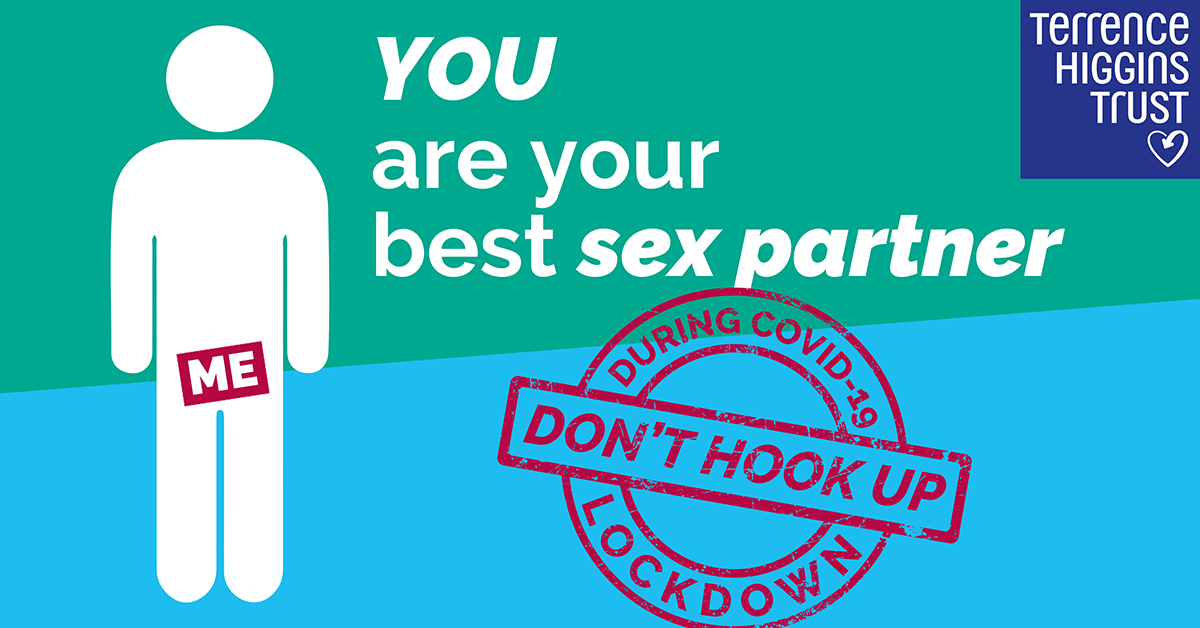
The medical director at the UK’s leading HIV charity, Terrence Higgins Trust has said people need to stop hooking up during the COVID-19 lockdown.
Doctor Michael Brady, the medical director at THT has warned that people need to stop meeting for sex and look for other ways to “find sexual pleasure in other ways”.
“I’ve never been an advocate of promoting abstinence, but this message is not about protecting your sexual health: it’s about protecting your general health and those around you from a virus that can be deadly. This is extraordinary and unprecedented advice for us to be giving out, but these are extraordinary and unprecedented times.”
Lockdown and Hooking Up
(C) BIGSTOCK
Earlier this week, Prime Minister Boris Johnson outlined new, stricter rules about leaving our homes during the Covid-19 outbreak. These were:
Only go outside for food, health reasons or work (where this absolutely cannot be done from home)
Stay 2 metres (6ft) away from other people
Wash your hands as soon as you get home
With the country under stricter rules surrounding lockdown, Dr Brady says we shouldn’t be having sex with anyone outside our current households.
He added,
“This advice means that, unless you have sex with someone within your household, it’s important to find sexual pleasure in other ways. Despite the situation with COVID-19, we need to remember that sex is an important part of life, but right now we have to find other ways to achieve sexual pleasure and satisfaction.
He continued,
“It’s only natural that we look to sex for pleasure, to relieve stress and anxiety or simply to pass the time – whether that’s with a regular partner or using hook-up apps. But our ‘new normal’ is that we have to find ways to do this while sticking to the advice to stay at home. This isn’t just to protect ourselves against the coronavirus but also to protect the most vulnerable in our society.
“You are your safest sexual partner”
Dr Brady finished up by adding that during this time, that instead of seeking sexual contact with other people, take we take matters in our own hands.
He said,
“I never thought I’d say this but the reality is that, for the time being, you are your safest sexual partner. It’s time to stay at home, stop close contact with people outside our household and to be creative about how we manage our sex lives”.