Not everyone can work from home and for those who are on the frontline of the current public health crisis; you have my thanks and my respect. But for those who have to work from home, whether they are social distancing, self-isolating here are a few things which can help to make it a little easier. Here are THEGAYUK’s top 5 tips for getting through the working week.
Give Your Day Structure.
It’s great to roll out of bed at one minute to nine and pick up the computer to log on and start work, but don’t be tempted to fall into that trap, otherwise, work-life and home life will simply merge into one. Get some structure in your day. Get up at your usual time, undertake your usual morning routine, have a shower and, most importantly, get dressed. As tempting as it is to slouch on your sofa all day in your PJ’s or underpants if you get dressed, it adds structure to your day and helps you to differentiate between your work life and home life.
During this time, isolation can be just as scary as any other part of the Covid-19 outbreak particularly if you’re LGBT+.
We asked leading HIV Awareness advocate Philip Baldwin what you can do to keep your spirits up.
“I have noticed a lot of people on social media complaining that they feel isolated.
“These are strange times. Many LGBTQ people felt isolated even before Covid-19. Unfortunately most of the charities I would usually recommend have reduced services, such as peer support, because of Covid-19.
I know that a number of them are still operating helplines and if you are struggling then I encourage you to reach out to someone. I recommend looking at the Terrence Higgins Trust website and also that of the LGBT Foundation. Personally, I am working from home, catching up on Netflix, Amazon Prime and BBC iPlayer.
“I recommend phoning friends and/or speaking to them via Skype or FaceTime. Interactions do not have to take place face-to-face and we are lucky to benefit from modern technology.”
THEGAYUK.com has also created a page full of helpful resources, articles and helplines. Click here to visit.
Does social distancing also mean hookups? What about hooking up and having sex during the current situation, particularly if you’re living with HIV?
Firstly we asked Doctor Earim Chaudry, the Medical Director at Manual, who told us that Covid-19 isn’t sexually transmitted, but the virus can still be transmitted by direct contact between two people, particularly through droplets from coughs and sneezes – it goes without saying, if you’re swapping saliva you’re at risk if the other person is positive for Covid-19.
We also asked, leading HIV awareness activist, Philip Baldwin who told THEGAYUK.com, that there is no evidence to suggest that “HIV positive people are more vulnerable to Covid-19” or that people living with HIV would be more severely affected.
However, he added, “HIV positive people, LGBTQ people and the population, in general, should aim to follow the Government’s guidance on social distancing and self-isolation.”
He continued,
“As we are not even supposed to be sitting or standing next to each other in restaurants or bars, I think it is a struggle to interpret the guidance as not prohibiting hooking up! However, the Government has currently only issued guidance. I suggest you follow it, for your own safety and that of others, but (at the moment) no laws have been passed to enforce it.
“It is therefore not illegal to hook up with people. This could change. It could be the case that, as in other parts of the world, legislation will be passed enforcing curfews in the UK.
“I urge you not to switch on your dating apps and start hooking up”
Philip went on to say, “It has to be noted that human beings are social creatures. We were not made to be stuck indoors for days, let alone months. Especially alone.
“Sometimes we all crave intimacy or escapism, particularly in times of fear. However, I urge you not to switch on your dating apps and start hooking up. Society as a whole, including the LGBTQ community, needs to observe the emergency health measures.”
If you’re living with HIV and you are concerned about the ability to get HIV medications during the current Covid-19 outbreak we’ve got some reassuring news for you. Click here to find out more
We’ve all seen the pictures of empty shelves at supermarkets from people buying more than they need – but why are people bulk buying?
The reason we are panic buying due to the imminent threat of COVID-19 is that the brain’s survival mode overrides any rational decision making, says Dr Ali Fenwick, an expert in human behaviour at Nyenrode Business University.
According to Dr Fenwick there are four major reasons why we bulk buy:
1) Survival mode
When we are put in an uncertain or threatening situation, our more primitive part of the brain takes over. We fall back on survival mode, suppressing or distorting rational decision-making, which in the case of grocery shopping leads to bulk buying.
We are buying to ‘survive’. Although the government promises there will be no disruption to the food supply, we don’t know this for sure as most of us have not been in a similar situation before. So, we rather buy more food than we normally would.
2) The Scarcity Effect
(C)THEGAYUK
When products become scarce, people perceive them as more valuable. We are more willing to go out and buy, and even pay more, for scare products. Scarcity drives buying behaviours, even for products we might not actually want. Which explains why we buy more food than we need to have or why so many people are currently on the run for toilet paper.
3) Herd Behaviour
Although you might not bulk buy yourself, the fact other people around you are, creates an immediate urge for you to do the same. In uncertain situations, we tend to follow what other people do or say, especially people similar like us. So, if your friend, family member, or colleague is bulk buying you feel you should do the same.
4) Sense of control
The global pandemic is a cause for a lot of uncertainty in the world and has resulted in many countries closing their borders and imposing self-isolation. These external constraints create an internal need to exert personal control as a way to feel safe. Being able to buy things provides us with a sense of control over our surroundings, which also leads to us buying more than we need to have.
According to Dr Fenwick, “In summary, bulk buying is caused by various psychological and environmental cues which throw rational-thinking out of the window. When in survival mode, we let mainly our emotions drive decisions and are more susceptible to social influences. So, we will rush out and buy more because we believe others are doing the same”.
Health officials have outlined guidance for self-isolating if you have symptoms of Covid-19.
The symptoms of Covid-19 include a new continuous cough and/ or a high temperature.
The guidance states that if you live alone and you have those symptoms you should stay at home for 7 days from when the symptoms started.
If you live with other people but they are well, they should stay at home for 14 days. The 14-day period starts from the day when the first person in the house became ill.
Making sure that people self-isolate for 14 days will “greatly reduce the overall amount of infection the household could pass on to others in the community” according to the Government issued guidance.
THEGAYUK has put together a page full of useful articles, helplines and other resources for the wellbeing of our community. Check it out here.
According to Doctor Hilary on this morning’s, Good Morning Britain, Dr Hilary warned against buying into a scam, which sees fake kits being sold for £20 which allege to test for Covid-19, however, the doctor slammed these sellers as “scum” saying,
“There are a lot of scams going around. There is a lot of scum perpetrating scams selling £20 kits which are totally inaccurate and potentially very dangerous because they’re giving people false reassurance…”
'This disgusts me.'
'Why can some people buy private testing when frontline health staff can’t get tested?’
The UK had scaled back its testing for Covid-19 with the Chief Medical officer, Professor Chris Whitty saying, on the 12th March that it was “no longer necessary for us to identify every case”.
However, it seems as though the Government is asking the NHS to ramp up testing amid concerns over the lack of capacity for testing within the community and for NHS frontline staff.
The NHS is expected to test around 25,000 patients who are already in hospital for the Coronavirus.
As of 18th March, over 56,000 people had been tested within the UK of which 2626 were confirmed to be positive for Covid-19.
As thousands of us are facing lockdowns and self isolations anxiety levels for some are rising.
As countries around the globe fully or partially closed down public services, shops and schools due to Coronavirus, there are growing concerns for OCD, depression and anxiety sufferers that the British government will soon implement more dramatic measures to contain the spread of coronavirus in the UK.
Gerard Barnes, CEO of mental health treatment specialists, Smart TMS, gives his insight on the mental health implications of the circumstances surrounding coronavirus, shares tips on how to safeguard one’s mental health, and highlights the importance on supporting friends, family and loved ones as the situation develops:
“It is certainly important to take the necessary precautions to protect one’s physical health given the circumstances surrounding the spread of COVID-19, but there is now a real threat of a serious mental health crisis alongside the potential physical effects, particularly to those already suffering with chronic anxiety, depression or OCD.
[totalpoll id=”112677″]
Here’s what you can do if you’re anxiety or depression is starting to spike.
Check in on your loved ones
While you may not be able to pay a visit to your friends and family if widespread quarantine and self-isolation measures are introduced, staying in touch with your loved ones through social media, video calling or messaging is more valuable than ever. Not being in close proximity to people can have a negative impact on your mood and energy levels, and it is therefore imperative that you maintain regular contact with loved ones to improve your mood and make it easier to deal with these stressful and lonely times.
Stay Active
When self-isolating, it is important to make sure that you stay active. Whilst it is impossible to go to a gym and inadvisable to exercise in a public space, we would highly recommend engaging in moderate exercise at home, ideally for 30 minutes a day. Exercise is one of the best ways to fight symptoms of mental health problems, and people who are less physically active are more at risk of anxiety and depression.
Eat well and stay hydrated
Make sure to think about your diet carefully – this is vital to both your physical and mental health. If your regular routine changes or you are less active than usual, your blood sugar levels are certain to affect your mood and energy levels, so be sure to eat healthily and drink enough water to ensure your body is in its best condition.
Its surface harbours millions and millions of bacteria and don’t be surprised if some of them are poo-related. Afterall millions of us use our phones whilst we’re on the potty and let’s face it, the way we’re being encouraged to wash our hands for at least 20 seconds it feels as though perhaps some of us never got the memo back in nursery.
So we need to take some extra care with cleaning our mobiles.
Luckily it’s pretty darn easy and really clean and if you use the right equipment you won’t damage your phone.
The cheapest and easiest way is with disinfectant wipes – which are readily available – and really cheap, particularly if you get them some Lidl or Aldi!
Even Apple has issued a statement to say that cleaning your iPhone with disinfectant wipes was okay. The company said,
“Using a 70 percent isopropyl alcohol wipe or Clorox Disinfecting Wipes, you may gently wipe the exterior surfaces of your iPhone. Don’t use bleach. Avoid getting moisture in any openings, and don’t submerge your iPhone in any cleaning agents.”
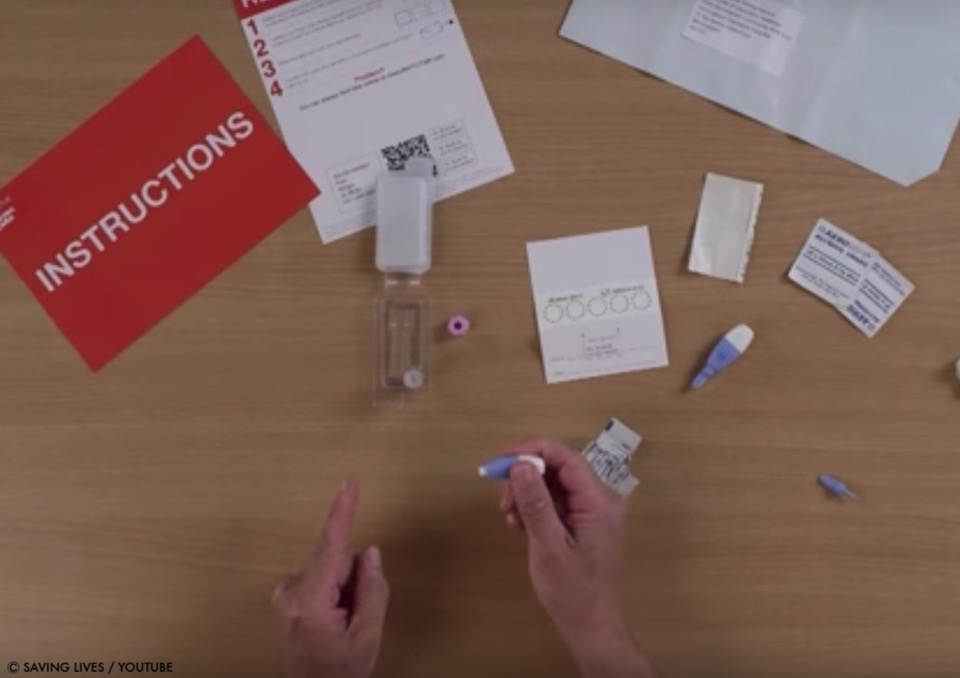
Did you know you can test yourself for HIV in the comfort of your own home?
Thanks to at-home testing you no longer have to book an appointment at your local sexual health clinic to test for a variety of sexually transmitted infections, including HIV. However we’d always suggest you book an appointment with a clinic – as it really isn’t that awful an experience – read our full review of visiting a sexual health clinic here.
However, you’re unable to get to a clinic there are charities and health organisations that can send out an HIV test to your home for you to self-test.
The British HIV Association (BHIVA) has issued a statement saying that people living with HIV are at no greater risk regarding coronavirus.
However, the BHIVA has recommended that people living with HIV should follow the updates from Public Health England, Health Protection Scotland, Public Health Wales, the Department of Health Northern Ireland and the Health Service Executive Ireland.
It also suggests that people with HIV received an “influenza and pneumococcal vaccination in line with BHIVA vaccine guidelines.”
According to a statement, those who are at risk from Coronavirus are older age people and those with “co-morbidities including renal disease and diabetes”.
Matthew Hodson, The Executive Director of Nam AIDSMAP took to twitter to say, “At this point, there’s no evidence to suggest that people with #HIV are more likely to acquire #Coronavirus – or are more likely to have serious illness or death if they do acquire the virus. People with HIV should take the same precautions as everyone.”
At this point, there's no evidence to suggest that people with #HIV are more likely to acquire #Coronavirus – or are more likely to have serious illness or death if they do acquire the virus. People with HIV should take the same precautions as everyone.https://t.co/pCq8sQpV5ypic.twitter.com/c8l0iZ6Tb9
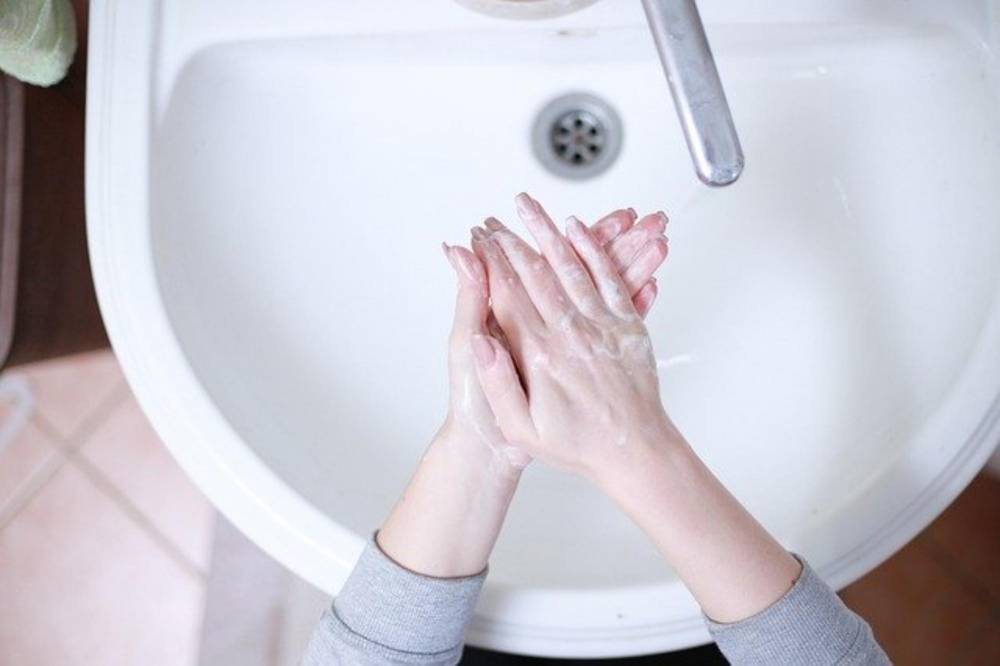
Advice from health professionals at this time suggest practising good hand sanitisation such as washing your hands regularly and using anti-bacterial soaps or gels, particularly if you’re preparing food and after using the toilet.
You should also be covering your nose and mouth when coughing or sneezing with tissues and then discarding those tissues after use.
If you read my previous piece on Witch Influencers and New Wellness Trends, then you know my thoughts on how essential it is to take time out for yourself and switch off from the social media age, in which we live.
In this week’s feature, I’m aiming to build on this notion of self-preservation and reflection. So I sat down with Matt Boyles from Fitter Confident You, to discuss the importance and benefits of meditation. If you’ve ever been curious about whether meditation is or isn’t for you? Then read on and I’m pretty sure we can convince you to give it a go. We promise you won’t regret it!
What is meditation?
Meditation is one of those things, that although I kind of understood the basic concept of what it was. I never really understood it. Essentially every time someone mentioned meditation to me, I just imagined myself cross-legged with my eyes closed humming. So I wasn’t really inspired to do it. Mainly because I thought it was a waste of time.
What Matt from Fitter Confident You explained to me though, is that meditation essentially is just the act of obtaining a moment of peace in your head. There’s no right or wrong way to do it and people achieve this moment of peace, in a way unique to them.
Being in 2019, he stressed that our lives are getting more and more hectic with every passing year and by taking 5 to 10 minutes a day to meditate, everything just seemed to be on a more even keel. This sense of stability would aid a sense of calm and wellbeing.
He started meditating about 18 months ago and he hasn’t looked back. Opting to stay away from apps like Headspace, he started noticing an overall sense of calm after the first week.
What are the benefits?
Apart from the sense of calm and wellbeing in ourselves, meditation does seem to lead to a whole range of other physical and emotional benefits. Physically it helps to maintain testosterone levels, by keeping our cortisol (stress hormone) level at bay and aids us in achieving a more regular sleeping pattern.
Apart from the physical manifestations/benefits of meditation, there is a whole range of emotional benefits to consider. As we said it helps regulate our cortisol levels and what this does is reduce the amount of stress and anxiety, that we experience on a day to day basis. It helps you concentrate and as such achieve what you want to, day by day, gaining perspective on situations where you would just normally react. All of which results in you being kinder not only to those around you but also yourself. Not beating yourself up over a deadline, that really could wait till tomorrow or worry about that email you sent rashly. You gain a sense of clarity in these situations and this results in an overall calmness in yourself.
Meditation techniques
As we said before, there really isn’t a right or wrong way to meditate. It is just the experience of achieving a moment of peace within your day and it’s entirely up to you how you do this. Matt did outline a few of the methods he uses though and so we’ll run through these now.
Breathing exercises
One of the ways in which Matt meditates, it by doing breathing exercises. This is basically the act of focusing on your breath and how the intake and exhaling of oxygen make your body feel.
A good way of doing this is counting the inhalation and exhalation of your breath. Roughly counting 5 seconds on the inhalation and 7 seconds on the exhalation. Focusing just on how your body feels and moves with the pressure of each breathe. Noticing any tension or aches/pains but not focusing on them, just letting them be and letting your body relax.
Eyes open, eyes closed it really doesn’t matter here. Tailor these exercises to yourself, in how you find it easiest to focus. If you’re a visual person, then close your eyes to aid the focus but by no means is it a requirement. These exercises are all about just noticing how your body feels and are an excellent starting point for meditation.
Guided meditation
Another technique Matt incorporates into his daily life is guided meditation. Essentially this form of meditation, involves a soothing voice guiding you through various breathing and thought exercises. Kind of like a gym class for meditation.
So again similar to the breathing exercises we discussed before, there is a heavy focus on how your body is feeling but most guided meditation also employs some kind of thought exercise. A common example is letting your mind wander. To let it do what it wants and move your body how it wants but then to bring your focus back to your breathing. This type of exercise helps emphasise the importance of focus and being able to let go of outside thoughts. To just bring our attention back to our bodies and what they are telling us.
How long should I be meditating?
Similarly to the technique, there is no right or wrong answer here. It’s all about finding the right balance for yourself, in order to gain this moment of peace and clarity. As a starting point, Matt would recommend spending 5 to 10 minutes in the morning each day. Just taking some time out and seeing what works best for you. I recommend setting a timer too, as during my first couple sessions I did start to nod off. It definitely relaxed me for sure!
Final thoughts
So what to take away from this? The general message is just to try and make time in your day for yourself. To just step back from the world and focus on your body, how it’s feeling and just gain some clarity for the coming day. Remember there’s no right or wrong way to do this but it’s important that we do.
If you’d be interested in seeing more of Matt and the amazing work he does with Fitter Confident You, then make sure to check out his socials linked below. We’ve also done a short audio clip to give you a little introduction into a guided meditation. Let us know how you find it and it would be great to hear, what works for you in finding that moment of peace in your day. Matt assures me, that my previous method of eating cake is probably not the best way of doing this.