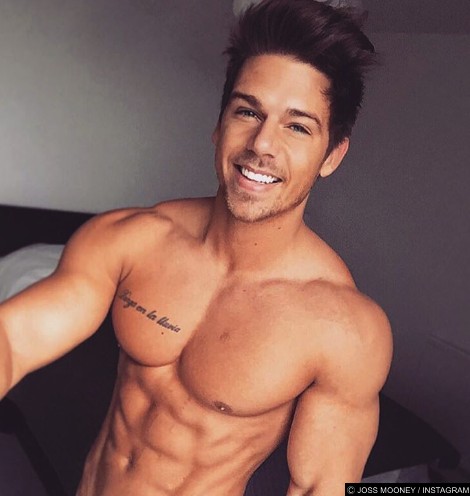
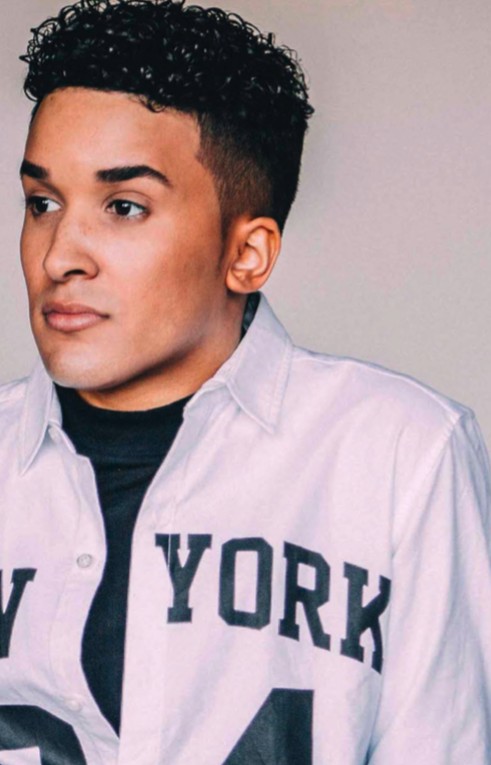
Ex On The Beach star Joss Mooney hit back at Instagram after they deleted an image… But which one was just too X Rated for the social media giant?
CREDIT: Instagram / Joss Mooney
So Ex On The Beach star Joss Mooney spends a lot of time almost naked, but one particular picture of his got deleted permanently after social media bosses considered it too X RATED for the site.
The shot, which is of Joss is one of him in his undies, but it seems as though the picture was too much for at least one fan, who reported the issue to Instagram – with the picture social media giant immediately banning the picture.
Despite issues with this one photo Joss has hundreds of pictures on his social media, including a butt shot, which hasn’t been removed, which he plans to have published in his forthcoming 2017 calendar.
This article does contain spoilers for All Stars season 2.
With RuPaul’s Drag Race All Stars 2 having just broadcast its latest episode, with a dramatic twist, a hoo-hah has erupted between the shows makers and one of its star turns. In this case, it’s Phi Phi O’Hara aka Jaremi Carey.
Phi Phi was the villain of season 4, her attitude was terrible, and some of the stuff she said was borderline offensive. She came across as spoiled, narcissistic and bratty. So it was with trepidation that I went into All Stars 2 knowing both her and series 5 villain Roxxxy Andrews would be appearing.
From the get go, Phi Phi was determined to redeem herself and distance herself from the behaviour that put her amongst the elite of the most hated queens to ever grace the show. Tyra Sanchez (Season 2 winner) and Roxxxy Andrews also hold that dubious title, but Roxxxy is far more insidious than the other two and her vile bullying of Jinkx Monsoon leaves me unable to watch Season 5 because of how uncomfortable it makes me.
I must admit I did have some preconceived ideas about Phi Phi and didn’t think that I would feel any different about her this time round. However I was pleasantly surprised, she seemed to have upped her game, her drag style had changed from a pageant queen, to a more refined style, and her cosplay costume was fantastic. But there was the lingering niggle, that the show seemed to exploit.
The way it was shown and talked about was that Phi Phi was deliberately trying to play mind games with some of the other contestants, by saying Roxxxy’s idea to play Sophia Vegara in The Snatch Game could be problematic because her Spanish accent wasn’t as thick as Vegara’s. She actually advised Andrews to work on the accent a little more, and make it thicker, and therefore funnier. A couple of episodes later, and allegedly she was back to her old tricks, this time talking about the fact that Ginger Minj’s dress was a big dress to be dancing around in. Again I didn’t really see it as playing mind games, more just stating a fact and giving Ginger a heads up to ensure she took it into account while dancing. But the other queens, who may or may not have had the same ideas about Phi Phi, seemed to take these statements from Phi Phi as some kind of way of sabotaging the contestants and messing with their heads, and these soundbites were helpfully inserted throughout the episodes.
Another bone of contention was that from the start the queens had agreed that with the new twist of themselves having to do the elimination instead of RuPaul, they would base it purely on judges critique of that particular challenge and runway presentation only, and not previous wins, or losses. Phi Phi was very vocal about sticking with that idea, and when Alyssa Edwards decided to break the chain, and voted to send Ginger home, despite Ginger getting overall better judges comments, Phi Phi wasn’t happy about it, and voiced so.
The episode broadcast where Alyssa was sent home, during the after elimination talk, Phi Phi decided to let it be known that Alyssa had been trying to influence both her and Alaska to send either of the other two in the bottom three home because she hadn’t been in the bottom as much herself, yet she had received the worst critique for both her challenge and runway look. In this case both Alaska and Phi Phi had chosen to eliminate Alyssa, but the way it was presented made it look like Phi Phi had chosen Alyssa out of spite for not having stuck with the agreed upon way of elimination previously. Looking back at what was said, it’s more that Phi Phi was saying Alyssa, did the worst, yet she was trying to save herself by throwing the others under the bus, so she was voted off for simply getting the worst judges comments. In the latest episode broadcast, Phi Phi and Alyssa hashed it out, and while there was obviously still a lot of tension there, they mutually agreed to bury the hatchet.
Since the episodes have aired, Phi Phi has been getting a huge amount of hate online. People have been insulting her and sending death wishes to her. If Phi Phi had been the total and utter bitch she had been previously, I would’ve been among the first to call her out on it because I detested her first time round, but I haven’t seen her do anything that calls for such vitriol. Yes she can be feisty, and a little bitchy, but all of them are to one degree or another and some more than others. It has obviously affected her quite badly, and as of the time of writing, she is not attending the re-union show because she feels the show has misrepresented her quite badly.
I also can’t totally agree with her blaming editing because she has actually said the stuff she says, but I believe it has been taken far worse than it was intended, and the reactions to it by the other contestants could well have been based on their own ideas of who Phi Phi O’Hara is.
To me Phi Phi has made a concerted effort to break away from the idea that people have of her, and this time round I really don’t have a problem with her at all. I even started following her on Twitter. But one gets the feeling that Drag Race Phi Phi, live performing Phi Phi and Jaremi Carey are totally different people. Reading through Twitter, a lot of her fans who have met her have said she’s actually friendly, and very interactive with them and will spend a lot of time at meet & greets taking photos and talking. But distancing from Phi Phi, Jaremi the man has obviously been incredibly affected by this, and feels very hurt by the way the show has represented him and how the viewers have received him. He has since said that aside from the already booked shows remaining for the year, he will not be performing as Phi Phi again for a while, and wants to concentrate on being Jaremi, and releasing music.
I don’t think that the show has intentionally set out to hurt Phi Phi, and I don’t pretend to know the process that goes into making it, and Phi Phi has revealed a lot went on off camera that nearly made her quit the show, but she was eliminated this week by both returning queens Alyssa and Tatianna. However I think some of the viewers have read into everything Phi Phi says with far more of their own biases than the show intended to put across, and the viewers who hate her, will always find a way to hate her. I believe for Phi Phi, blaming the shows editing process is easier than delving deeper into the reasoning behind why people have reacted the way they have. My own personal opinion is that she did herself no favours with how she was on Season 4, and that has left a bad mark on the viewers, and some will never get it out of their heads that Phi Phi is a terrible person, and see everything she does as false. I for one have been able to separate how she was on Season 4 and how she is now. I think there is far more to Phi Phi O’Hara than the general viewers have seen.
Phi Phi did come across as awful in the past, but for me, she hasn’t actually done anything that has annoyed or angered me this time round, and I think people need to stop looking at every single thing Phi Phi says or does as something negative.
The opinions expressed in this article may not reflect those of THEGAYUK’s editorial or management. If you’d like to join the conversation or write an opinion piece, please click here.
Film director Ira Sachs has told THEGAYUK that homophobia is alive and kicking in Hollywood.
CREDIT: Jeong Park
Speaking before the general release of his new film Little Men (out today) award winning director and writer Ira Sachs told THEGAYUK.com that homophobia, and perhaps more worryingly internalised homophobia is alive and well in the film industry and that gay men were “the worst in Hollywood”.
When asked about the film industry’s record on diversity and whether the industry suffered from internalised homophobia, he answered,
“It certainly is”.
He continued,
“Gay men are some of the worst in Hollywood.
“Well, for understandable reasons, people live by fear and they make choices based on fear.
Ira Sach’s latest film, Little Men is a coming-of-age film following the story of two teenage boys whose relationship is put under pressure after their parents fall out over business terms.
He went on to explain why he thought that internalised homophobia existed in the film industry, suggesting that economic fears and job stability could be to be blame.
When the choice is about your job and your fear of what happens if you don’t succeed, if you take a risk that’s actually personal, so there’s a lot of reasons people choose to be safe.
With the release of his new film, Little Men, Ira Sachs sits down with THEGAYUK’s Editor in Chief Jake Hook to talk about why ‘coming-of-age’ films don’t need to be about sex and why economic woes could be making Hollywood’s homosexuals homophobic.
CREDIT: Jeong Park
I’m led up some steep stairs to an attic room where the critically acclaimed director Ira Sachs is waiting for me. I’m the last scheduled interview of the day in a press junket for his new release, Little Men. When I find out I’m the last one in, my heart sinks a little, that means every conceivable question has already been asked. In my experience interviews held at the end of a “press day” can yield very little with the subject of the interview being a little jaded from the barrage of questions from nosey journos. However I find Sachs in good spirits. He’s polite and there’s a sparkle in his eye.
We sit. Our ten minutes together begins. I ask if I can record the interview – he says “of course, and thank you for asking…”
JAKE: So often, coming of age films, especially coming of age films concentrate on a sexual awakening of the characters and Little Men is not that, but there is still an intimacy between two guys. Was that a conscious decision from the beginning with you? To kind of create a coming of age film but also to stay clear from sexuality?
IRA: It was certainly something we consciously discussed as we were writing, shooting and editing the film and I would say two things. One, speaks to my own experience as a gay man. In which, my friendships were not the sight of my erotic or romantic attachments so it was kind of what I knew. Secondly, with these two boys and particularly with Theo Taplitz who played Jake, he’s not there. There’s a youth and there’s an innocence to him, particularly around sexuality which I didn’t feel comfortable imposing on. Not because it would be negative but because it would be artificial. It did not feel true to the characters that we had created together. If I’d cast a different kid who was maybe at a different point, but it’s interesting when you start casting kids, you realise sexuality is almost like an age. It’s not as easily described as a number, but people are at certain points.
JAKE: There is a point in life where you kind of go, “I’m finding myself attracted to guys” and I was just interested whether you had made up in your mind whether either of the characters were gay or bi?
IRA: Well definitely I think Tony is a heterosexual kid, we see his attraction to a young girl and we see his disappointment when things don’t go (his) way. And Jake, at the end of the film, without giving too much away, you sense that he has a new community. That community is certainly open to queer identity. I think, for example, one of those extras, as far as I can tell seems like a gay kid and you sense that’s going to be acceptable. Some people think at the end of the film he’s trans. I think the film leaves an openness to his future. What I really hope, my first film was about a gay closeted teenager and the suffering he experienced and caused. Whatever these kids future is, I hope it’s not as tortuous as my own at that age.
JAKE: Keep The Lights On was about the millennial age group, Love Is Strange was about older men – Little Men is about teens… Which has been your favorite generation set to talk about?
IRA: Each film, if I don’t find it passionately interesting, I can’t make it so I’m incredibly engaged with the work that I choose to do. I haven’t had a favorite … Different films have different pleasures. It was a real pleasure to work with these kids and kids aren’t as demanding as adults!
JAKE: You’re one of the most visible out directors. How hard is it in circulation, how hard is it to be out and a director?
IRA: For me, it is not hard experientially in terms of my life and the community and the world and I think I’ve actually been given a certain amount of affirmation by just taking that position and making the work that I do. I think what is challenging is sustaining a career telling the stories that are meaningful to me. I say that from a position of having done that successfully and it’s still very hard. It’s about content and the content’s and ability to move past the economics of the culture. That is the challenge.
JAKE: The film industry it gets a lot of criticism for lack of diversity and homophobia, maybe the industry is internally homophobic?
IRA: It certainly is. Gay men are some of the worst in Hollywood.
JAKE : Oh really?
IRA: Well, for understandable reasons, people live by fear and they make choices based on fear. Look at this film, it’s all about what economics do to individuals and the choices they make. When the choice is about your job and your fear of what happens if you don’t succeed, if you take a risk that’s actually personal, so there’s a lot of reasons people choose to be safe.
JAKE: Are we still in that place where a Hollywood leading man wouldn’t be able to come out as gay? Is that still a fear?
IRA: Of course, people are engaged in the narratives of actors’ lives. I’m making a film about Montgomery Clift, who is a gay actor who lived in New York who was a Hollywood leading man and four time Academy Award nominee and didn’t like Rock Hudson, have a beard and married a women, but struggled with the imbalance of his private life and his public persona and died at 46.
JAKE: There’s a lot of people in the past who have talked about the fact that maybe gay men shouldn’t play straight parts or the other way around. What do you think?
IRA: In that way I agree with, isn’t it Olivier who says, “That’s why they call it acting?” Natalie Portman isn’t Jackie Onassis either. I think transformation within the context of fictional storytelling is part of the job.
JAKE: Do you genuinely enjoy watching the film as a punter?
IRA: What’s a punter?
JAKE: A fan… Someone who pays money to go and watch something…
IRA: Oh yeah, I very much do and I think I go to films in general that are like films that I make. I think I go to films that are going to move me. Now, I have 4-year-old kids so I’m going to some different ones. We just saw Wizard of OZ for the first time with our kids and that was an amazing experience. My husband, he’s a painter, he goes to many more movies than I do he’ll go every week to see the newest horror film and I love that there are still people like that. Have to get their popcorn and be in the cinema and watch a movie every week.
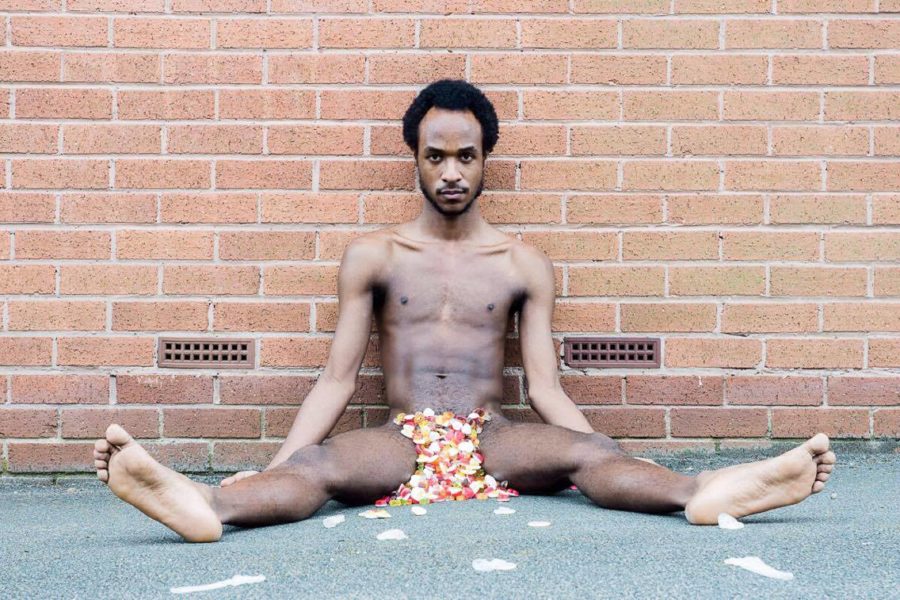
Confrontation of prejudice is not always easy, but is essential in breaking down barriers. At 22 years old, Jamal Gerald, a black, gay, performance artist is embarking on his first UK tour with the provocatively named show “FADoubleGOT”.
Picture Credit – Mark West
Using his one man show to tell his own personal story of the highs, lows and in-betweens of growing up as a black gay man, Jamal draws on his experiences to confront the use of prejudicial language and anecdotally tells tales of sex parties, hook-up’s, relationships and Grindr dates; mixed in with candid accounts of surviving periods of self-loathing, experiences of racism and homophobia and of his internalised conflict between his religion and his sexuality. Following opening his tour at Doncaster CAST Theatre, Jamal spoke exclusively to TheGayUK about the themes of the show, why provocative theatre remains relevant and how Freddie Mercury changed his life.
TGUK – You have chosen quite a provocative title for the piece
JG – Yes, and it was very deliberate for a number of reasons. It stems from a friend of mine who I met at a festival who texted the word to me during an argument. I was astounded that someone would not only use that word towards someone who was a friend to them, but that they had typed it; they had spelt it out letter by letter – F-A-double G-O-T – and just how hurtful a word it was. But then it’s also about seizing ownership of the word for the LGBT community; about taking possession and disempowering the word by taking it back. Queer was used as an insult historically, but in recent years it has been taken back by the LGBT community and turned into a positive label. I wanted a title to reflect one of the aims of the show, which is about confronting and challenging the audience to look at issues of prejudice, racism and homophobia.
TGUK – Why do you think pieces of theatre like this are still important?
JG – Things have changed a lot, but there is still a way to go before prejudice is eradicated. Theatre is an art which has the power to do many things, and it is not just about being entertained. Of course, I want audiences to be entertained when they come to the show, but also I want them to be challenged; to look into themselves and to look at their own experiences, regardless of where their experiences lie. For the LGBT community, I hope that they will see glimpses of themselves reflected in my experiences. For straight audiences, I would hope that they either see some of the experiences that members of the LGBT community have to go through, which they themselves may not have experienced first-hand; or for them to see the impact of prejudice upon the victim. I also want younger people who may be struggling with their sexuality to come to the show and see that they are not alone; that their feelings are not unique; that they are not isolated. There are a lot of us out there, and despite the confidence that some people exude, for the vast majority of gay men and women, there has been that fear, that self-loathing and ultimately that transition into acceptance of their sexuality.
TGUK – You owe a lot to Freddie Mercury, don’t you?
JG – Freddie was the catalyst for my self-acceptance; the flamboyance and confidence he exudes made me realise that I could be the person who I wanted to be. I think most people have “a Freddie” – whether it is a person in the public eye, a friend, a family member or even an experience or moment where everything seems to suddenly fall into place.
TGUK – You have a real mix of influences in your life, your mother is from the Caribbean, you were born in Boston, Massachusetts, and you moved to Leeds when you were 11. How did you find your voice with such a varied influence of cultures?
JG – My mother is a very traditional Caribbean woman; religious, larger than life, joyous and uplifting. My experiences in America helped to shape a lot of my perceptions about myself and those around me and being brought up in Leeds, I do have a lot of “Northern mentality”. I am, in many ways, still finding my voice, and I think that every day brings something new to shape you as a person and as an artist. I am fortunate to have so many different influences from my family, friends and those around me.
TGUK – How did you reconcile your religious upbringing with your sexuality?
JG – Religion told me I was a sinner, an abomination. I was told by people in my school that I was going to go to hell. I used to pray to God to pray the gay away. But as I grew older, I was able to balance myself and my religion. I believe in the concept of a god, but I am of the view that I can believe in God; but because my race is so important to me I find it hard to believe in the bible, primarily because of the history of colonialism and the use of the bible in that process. When I look at the link between colonialism and the Bible, it is not something that I want to embrace or accept. My black heritage and my identity as a black man is something that is more important to me than my sexuality is; and the way in which the bible was used during that period of time was wholly unacceptable. For me, it remains a symbol of repression in many ways. It was used to repress the black community many years ago and, in my experiences as a younger person, it was used to repress my sexuality – but despite that, it doesn’t prevent me from embracing the idea of a higher power.
TGUK – One of the themes of your show is about your experiences as a black gay man. How has your ethnicity and your sexuality shaped your experiences of life?
JG – I have received so much acceptance and positivity about both of those things that it is hard to express some of my experiences without sounding like a cynic. The positive experiences do outweigh the negative ones, but during the show, I talk about my experience at a sex party, where a guy I was with only wanted to sleep with me because I was black and made a mood spoiling comment (when we were in the moment) about my ethnicity; and I do a section in the show about my experiences on Grindr, where the fact that I was black was often the predominant issue. It’s the usual stereotypes and prejudices; I’d get messages saying “Is it true what they say about black men?” or “I’ve always wanted to be with a black guy”; it made me realise that they didn’t necessarily want to be with me as a person, but that being black was just fulfilling a fetish for these men. It brought home to me the way in which black men can be perceived at times by others, almost as a commodity rather than a person. Racial fetishism is a subject which is not often talked about and it is another wall I want to break down with the show.
TGUK – Have you experienced more racism or more homophobia?
JG – It’s difficult to say; there have been times in my life when things have gone through phases. When I was at school, it was more about homophobia, as I went to a school in Leeds which was quite diverse, so ethnicity was not a particular problem. But as I went into higher education; it became less about my sexuality and more about my race. I have experienced both at the same time – when I was at school, someone wrote “Go home to Jamaica, Batty Boi” on our dustbin . That hurt – a lot. Given that my family is from Montserrat, it was an attack on my heritage and on my sexuality. I am naturally quite a flamboyant person, but I can hide my sexuality; I can’t hide the colour of my skin, so I would guess that would perhaps identify my ethnicity as the most obvious target. That said, I still identify myself as a black man first and a gay man second. When you look at the news about what is happening in America at the moment, with the rising racial tensions both politically and on the streets; and you look at the terrible tragic events in Orlando only a few months ago, both racism and homophobia are very much alive and predominant in society.
TGUK – When you are on stage performing this piece, you lay yourself bare, both metaphorically and literally. How does it feel to relive highs and lows of your life night after night on stage?
JG – It can be emotionally draining and it can be cathartic. Despite its simplistic presentation, it is quite a deep piece. I talk about things which are really difficult for me; such as my internalised homophobia as a younger man; the moment I came out, my experience in the church and about relationships which have hurt me in one way or another; but that is counteracted by the fact that I also talk about the positivity I have experienced. It’s not just about reliving the hard times; it is also about constantly remembering and reinforcing the positive steps on the journey which have led me to where I am today. By performing the majority of the piece in just a pair of short, black, tight trunks, it shows that I am hiding nothing, that I am open and honest. There is nothing to hide behind on the stage, not even clothes, and it is about reflecting that I am quite literally exposing my life, my thoughts, my experiences to the audience.
TGUK – You use a lot of symbolism to tell your story
JG – There is a section where I eat a raw onion in the show. On a simplistic interpretation, it may look like the usual analogy of an onion having layers and about how that is reflective of me as a person, which may look almost cliché. But it is deeper than that; the symbolism behind it is that, as anyone who sees the show will tell, I hate onion and consuming it is symbolic of ingesting something that I hated, of my repressed sexuality as a youngster and of my internalised hatred of who I was as a result of my cultural experiences growing up. The piece has a lot of aspects which have multiple meanings and it is for the audience to draw out their own conclusions about what the piece is saying. My show is, in some ways, a gift to the audience. They can take it and use it how they want. They can accept the gift and enjoy it, they can appreciate it, pass it on, re-gift it or put it in the cupboard – but it is something I offer to them with a genuine intention; what they then do with that is up to them.
TGUK – You end the show painting yourself in the colours of the rainbow flag. Why chose that piece of symbolism to round off the show?
JG – I wrote a poem some years ago where I used the line “ripping rainbows apart” and I wanted to bring that line to life. But also because the rainbow flag is a symbol reflecting both sexuality and colour, which is what this piece is about. It felt a natural way to bring the piece full circle. Ending the show embraced in the colours of the rainbow flag feels comfortable and is about how, despite their differences, the LGBT community do embrace each other. The flag gives us protection and a sense of togetherness. How else could I end the show except for showing the unity and the positivity of the LGBT community as a whole?
FADoubleGOT is currently on tour, calling at The Hive in Shrewsbury (30.09.16); Hackney Showroom in London (04.10.16), as part of the And What? Queer Arts Festival; Live Art Bistro in Leeds (14.10.16); Camden People’s Theatre in London (18.10.16 and 19.10.16) and Theatre Deli in Sheffield (17.11.16). You can follow Jamal on Twitter at @JamiBoii and on Tumblr at http://jamalgerald.tumblr.com/ . Many thanks to Doncaster CAST Theatre (www.castindoncaster.com) for facilitating this article.
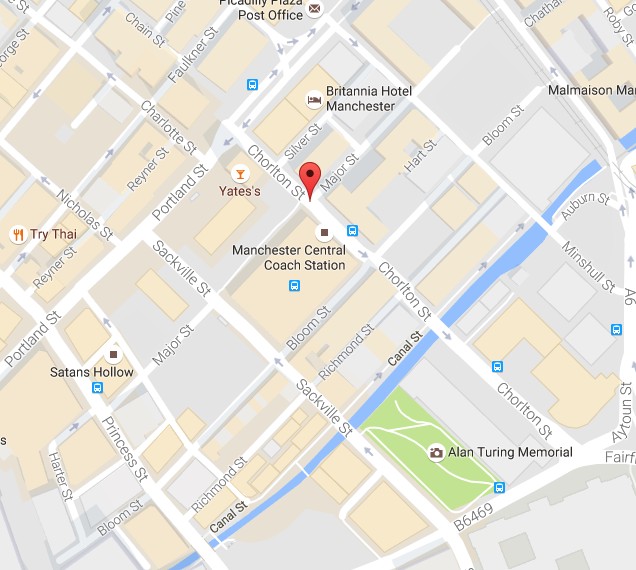
An 18-year-old woman was held down and raped by a man and two men in Manchester’s gay village on Wednesday (21st September) morning. The attack happened at 2:50AM in Major Street.
The victim was thrown to the ground and held down as one of the women robbed her – the victim was then raped by the man before the three assailants fled the scene.
CREDIT: Google Maps 2016Manche
Detective Inspector Dave Moores said,
“This was a horrendous attack on a young woman which has, understandably, left her extremely distressed.
“I would urge anybody who recognises the description of these three and thinks they may have seen them in the city centre area between 2am and 3am to please contact police immediately.”
The first woman, who helped held the victim down, is described as:
Approximately 18 years old
mixed race
scrawny build
had her hair tied in a ponytail
spoke with a local scent The second woman, who committed the robbery, is described as:
In her early 20’s
mixed race
had her hair in a messy ponytail
spoke with a local accent The man is described as:
In his early 20s
white
slim build
clean shaven face
wearing sports clothing
Anyone with information should contact police on 0161 856 1911 Crimestoppers anonymously on 0800 555 111.
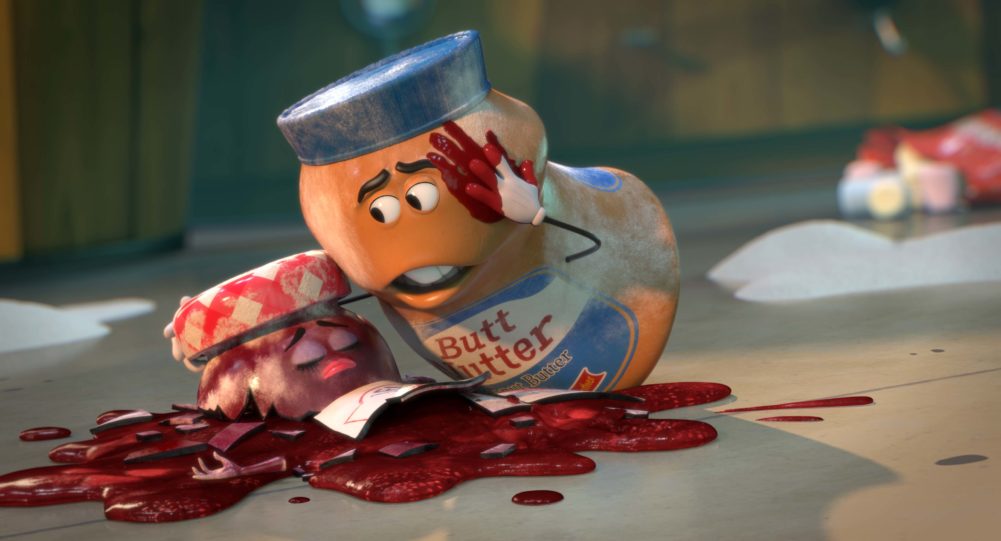
SAUSAGE PARTY – Very adult full length animation movie about life inside a supermarket for the foodstuffs; Think South Park with a lot more sex jokes and liberal use of the c word… and it is making a fortune.
Nutshell – A sausage and his mates start to question that there future may not be all there beliefs and food gods tell them when they are eventually purchased and taken out of the supermarket. On top the desire of the lead character sausage to get inside a female soft bun is all encompassing. Think an 18 cert version of Family Guy or The Simpsons and it is one of the funniest films you will ever see.
Running Time – 89 minutes; Certificate – 15.
Tagline – ‘She’s Got Buns, Son” and “Check Out His Package”.
The Gay UK Factor – Loads of dick jokes, f***ing jokes, used condoms and a load of swearing – you get a f*ck, motherf*cker and a ‘see you next Tuesday’ in the opening minute and it doesn’t let up. There is a Jewish guy and a Muslim guy who obviously hate each other until they start gay ass banging using hummus for lube that would be heard from both sides of the Israeli West Bank. This is 100% boys only humour and the last 10 minutes is a scream with the biggest sex orgy ever put on screen.
Cast – (Voices) Seth Rogen, Kristen Wiig, Jonah Hill, James Franco, Salma Heyek, Paul Rudd, Michael Cera, Bill Hader, Edward Norton – now that is an awful lot of funny folk.
Key Player – This is Seth Rogen’s baby and he is involved in all parts of it. If you like his type of humour or indeed any of the adult animated TV shows currently filling the airwaves then this treatise on atheism, religion and unbridled lust is for you.
Budget – $19 Million, Already made 5 times its budget back and only released in one territory – a bona fide blockbusting hit. Hot Dog this is starting to look like the most profitable movie of the Year – who knew adults would flock to such a gross out cartoon.
Best Bit – 0.75 mins; You will cheer when the foodstuffs finally turn on the shoppers, which leads to the bad guy’s ass being seriously douched on the way to that massive ginormous orgy.
Worst Bit – 0.04 mins; There is an opening big number which is trying to be South Park and is not catchy or funny and with no other songs in the movie just seems out of place.
Little Secret – This is the first CGI film in history to get an R Rating (The next rating is X which excludes it from many cinema chains)….Guess what, it has become the highest grossing R Rated animation in history beating the South Park Movie and it cost absolute peanuts. An average Pixar film like say Finding Nemo or Toy Story costs 100 million to make this came in at less than one fifth and is really busting blocks worldwide.
Movie Mistake – All the characters are apparently aware of the concept of humans eating, and that they are foodstuffs themselves, yet act horrified when they discover that they are to be eaten later on… big plot hole.
Further Viewing – Cross them off, Family Guy, American Dad, The Simpsons Movie, South Park: Bigger Longer & Uncut, Meet The Feebles (Except the AIDS stuff), Team America: World Police, Watership Down and even Beavis & Butthead if you must.
Any Good – Humour is the ultimate marmite. This really has split the reviewers and fans right down the middle. Hopefully, you like us will laugh until your sides hurt or will be wandering what all the fuss is about. Time to suck the sausage, test your gay reflex and see.
Jahméne Douglas was undoubtedly one of the breakout stars from the ninth season of X FACTOR, which would crown James Arthur as the winner.
CREDIT: PR Supplied
After reaching number 1 with his first album Jahméne is back with the second. We caught up with the man to find out a few of his favourite things.
Watch: Raymond Weil.
Fragrance: Calvin Klein CK One.
Clothing Brand(s) : Uptown: Zara Man and Reiss. One of my favourite Jackets is from Viktor and Rolf. Downtown: Adidas and Duffer (I love JD.) Mytown: At home… Anything that’s clean and comfy.
Favorite Drink: Other than water… KA Black Grape.
Favorite Restaurant: Jerk City (Caribbean Flavours) or Köz.
Favorite place to go on a first date: If I was to take a girl on a date I think somewhere like The Lounge in Whiteleys is a good place to break the ice. Cinema and Food!
Favorite Travel Destination: My favourite place is in good company.
Favorite Book: Other than the Bible… My mother’s new book “You Can’t Run.”
Three Top Songs On My Playlist: Sipprell ‘Curious’ , Laura Mvula “You Work For Me” and Erykah Badu “Hotline Bling”
Favorite Gadget: My Sonos System. (Anything that plays music well tbh.)
Quote to live by: I always say… Shine your light because you never know who you’re inspiring to do the same.
Finish this sentence:Someone once told me… without commitment you won’t start and without consistency you won’t finish.
Remember Lloyd Daniels from the 6th series of X Factor, well he took to Instagram to share something.
The singer, who came fifth in his series of X Factor has taken to Instagram calling on help from his fans. It seems as though he just can’t get the motivation for the gym – and we’re right there with him.
In a video post labeled: “I need help” he outlines his struggle of getting the will power together to go to the gym asking his fans for suggestions.
Some of his fan’s suggestions included: Martial arts, body-weight exercises and swimming.
The Welsh singer says he’s had a gym membership for six months has failed to get the motivation to go even once.
A couple of weeks ago Lloyd uploaded a semi naked picture of himself and captioned it “New Journey” and also revealed that he is now vegan – in an effort to gain a healthier lifestyle, tone up and lose some weight.
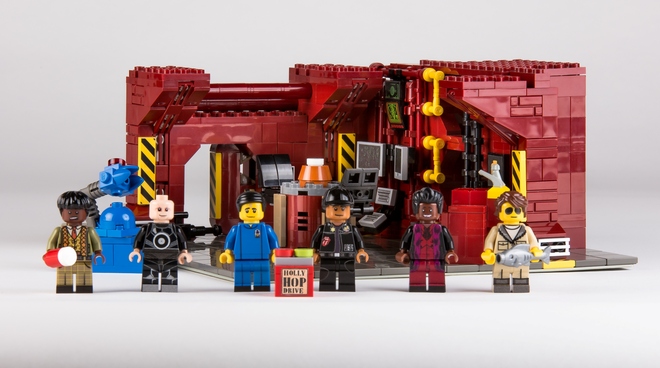
A mega fan has floated the idea of having a Lego version of Red Dwarf
With the rather spine tingling news that Red Dwarf is returning to our screens tonight a fan has revealed his plan to get Lego to sell an official Red Dwarf ship – complete with the ship’s famous characters Dave Lister, Arnold J Rimme, The Cat, Kryten and Holly – the ship’s computer.
The design which was created by user Bob Turner features Lister and Rimmer’s iconic bunk beds (includes the posters inside), a sliding airlock door and not forgetting one of the ship’s mischievous Skutters. The design has already recieved the support of 865 people as well as re-tweets from most of show’s cast – Craig Charles (Lister), Danny John-Jules (CAT), Doug Naylor (creator), Norman Lovett (Holly) and Clare Grogan (Kochanski).
Check out the design here and lend your support to get Red Dwarf in Lego form! Talk about Red Dwarf on our forum
A gay Muslim man took to the Question and Answer site Quora to ask advice on what he should do after he was told to find an Imam to perform Ruqyaa (a form of spiritual healing) and to marry a woman… One user even suggested that he start fasting…
“I have been suggested to find an Imam that performs Ruqyaa and to marry a woman. Some people tell me I am going to hell already(I am still virgin), others tell me it is about the act. That I have to suppress my urge, I am afraid to become sexually repressed or having mental issues. I feel so confused.”
Well, users had their fair share of thoughts from the helpful to those ideas that were less than useful. We’re not quite sure how fasting or will help. We’ve shared a few of their thoughts.
Don’t ever seek counselling or therapy.
Don’t marry a woman without telling her you are gay.
Get a visa to another more accepting country.
Ask for forgiveness from Allah for all sin.
Mix with Muslims who are clean, pious, characterful & practice good deeds.
Don’t bother about western and sex free cultures who will induce you to be on this path. This is their way, not a way a Muslim should lead to.
I would recommend you get professional help, in the real world, from a reliable and a valid dependable person, a religious man who knows Islam very well.
Stop following your sex drive. I recommend you start fasting (as it will reduce his sex drive)
Be gay or be a Muslim. There isn’t much of a middle ground unless it comes from a fake Imam.
Continue to be both gay and a Muslim. Seek out other queer Muslims.
Maybe you should think of leaving Islam.
Do you think any of this advice is helpful? What would you suggest?