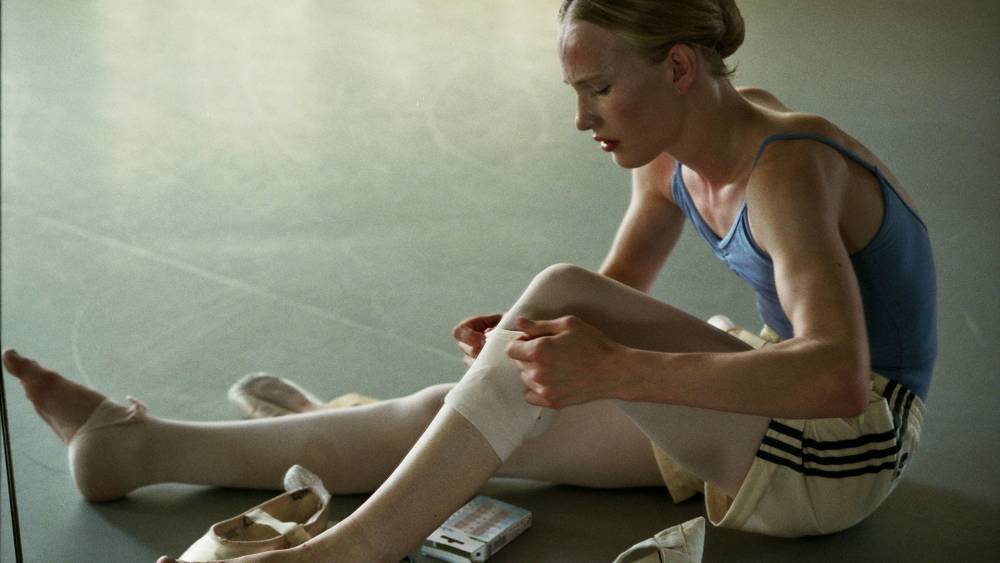
Girl is the story of a 15-year old trans child who feels like she was born in the wrong body.
In an amazing turn by newcomer Victor Polster who plays the lead Lara, Girl takes us on a journey of a young child, assigned male at birth desperately wanting to rush hormone treatment to become a girl. But Lara also has a yearning to be a ballerina, and the pressures of being born in the wrong body to be able to fulfil her dream is the challenge that Lara may or not make it through.
She lives in a apartment with her taxi-driving father and much younger brother and suffers with the usuals pressures of school, including not being able to disrobe in the locker room. But first-time director Lukas Dhont draws us into Lara’s life by focusing the entire movie on her – we see and feel her emotions, the anxiety, fear, and at times happiness about the huge change that is going to take place in her life. And Polster is just simply amazing as Lara.
Girl has won lots of awards, including the Un Certain Regard prize at Cannes last year, along with an award for Best Performance for Polster. Girl also won Best Feature Film at the London Film Festival.
Girl is not a perfect movie. There are lots of scenes of Lara while she is in ballet practice, and we are shown Lara’s bloodied toes from the rigorous training way too many times, and the ending comes as a bit of a shock and is quite controversial. But see Girl for the story (written by Dhont and Angelo Tijssens) and the amazing performance by Polster.
Let me tell you about my own gender expression before we go on. I don’t think of myself as a “man” because I don’t really fit into what society expects of its men. When I was a child all I wanted to do was be called a girl, wear high heels, my mum’s dresses and sing Petula Clark’s ‘Downtown’ on repeat.
I was a Grade A queer/trans kid. As an adult I couldn’t admit that to anyone outside my immediate family. I was so shamed by this behaviour – and bullied mercilessly at school when I chose to wear the white, patterned “girls’” socks instead of the regulation grey socks for boys.
Nowadays, I dress in masculine clothes, I have a boyfriend, I have short hair and people assume that I’m a man and a gay one at that. I enjoy the privileges that, for the most part, that assumed identity affords me. But, it never really feels right when someone refers to me in that way.
That said, I don’t mind if people use the pronouns him/his or he when they refer to me. Although it does jar me if someone calls me a man. Weird.
I also don’t mind it if I’m referred to with female pronouns.
I’m pretty relaxed about the pronouns that are used to describe me.
But for some, words really matter. So here’s some advice to help us all become better allies to our non-binary, gender non-conforming siblings.
It seems that we’ve all got our lives set to transmit only. We need more receiving in our lives. So when someone is telling you something about them, listen.
Someone once wisely told me, “Assumptions are the mother of all fuck-ups” – and they were completely right. How often have you assumed something about a situation only to find that nothing was as you imagined? Pretty often, right?
Your assumptions are based on your own life experience. It doesn’t take into account other people’s experience. So leave your assumptions at the door and again, open your mind.
If a person tells you what their preferred pronoun is, accept it don’t fight it. It’s what they’ve asked you to call them. The decision is effectively out of your hands. It’s the same as when someone tells you their name. You accept it and it becomes part of their identity. Well, pronouns are the same.
Some non-binary, gender fluid and gender non-conforming folks use a number of different pronouns. Some popular ones are: Zim/Zer and Ze, they/them and theirs or even thon, which was actually added to the dictionary in 1964. They as a singular pronoun has been used for centuries.It’s not particularly new, it’s not trend based, it’s just getting a lot of media attention at the moment.
Blue for boys, Pink for girls… gender stereotyping is all so the 1950s and really doesn’t work for today’s society. No one likes living in a predefined box and we don’t live in a black and white world. There’s a whole rainbow out there.
Gender norms and stereotypes, when adhered to, just keeps society attached to a patriarchal system that’s almost impossible to climb and doesn’t work for all of us, particularly LGBT+ people. So lets bin it shall we?
Normalise the conversation surrounding pronouns. Write your preferred pronouns in your social media profiles. As @thalestral says on Twitter, “normalise that shit”.
Also on twitter, stop assuming people’s pronouns based on their profile pic and your binary stereotypes.
Read their profile. Check their pronouns. Don’t assume.
And while you’re there, put your own pronouns in your profile.
When a person refers to someone by a previous, given or birth name, it is called deadnaming. Deadnaming can be done with malice or by accident.
It mostly affects transgender people who have changed their name during their transition.
For instance, if a trans woman’s birth or given name was Martin, but she changed it to Sarah during her transition, calling her Martin or referring to her as Martin would be deadnaming her.
However, deadnaming could happen to people who have divorced and have changed their surnames (for instance Cheryl being called Cheryl Cole) or even people who have decided to change their legal name for their own reasons. Being referred to a previous name can be traumatic regardless of the reasons it was changed.
It is often seen as painful as it can trigger memories of a life from which the person feels totally disconnected now.
Some transgender people, however, are comfortable talking about their previous name and some wish it to remain in history, but you should accept the name you are given by any transgender person, just as you would is the person you are interacting with is cisgender or cisnormative.
Can you ask trans people what their previous identity or name was?
You really shouldn’t ask people what their birth name was, unless that information is offered willing to you.
It is very similar to misgendering but focuses more on someone’s name rather than gender pronouns.
Can you expand this definition? Use the comments below and your answer could be used to expand or define this glossary entry.
Some of the most memorable trans characters have been played by cis-gender actors… here are 25 of the most famous roles.
Here are just some of the mainstream films and television shows where a trans character wasn’t played by a trans actor. The argument against non-trans actors taking these parts have made headlines once again after a clip of Matt Bomer in his forthcoming film, Anything was released.
Warning this article may contain spoilers to various films.
Glen or Glenda was released in 1953 starring Ed Wood – who was actually credited as Daniel Davis in this film. It’s a semi-autobiographical film, considered one of the worst films of all time. However, it is considered a plea for tolerance.
Dog Day Afternoon is based on a real-life story, where a bank robber (Al Pacino) holds up a bank in New York’s Manhattan to pay for his girlfriend’s (Chris Sarandon) gender confirmation surgery. Chris Sarandon’s portrayal of a trans woman was applauded for its consideration of dysphoria.
Probably one of the most famous films to feature a “sweet transsexual”. TRHPS has gone on to become a cult hit and recently had a remake filmed and it starred Laverne Cox in Tim Curry’s part of Dr Frank N. Furter.
In 1980 Michael Caine played a murderous trans woman in this erotic thriller. For his part in the film, Mr Caine was nominated for a Golden Raspberry Award for Worst Actor.
A drama which explores themes of race, gender, nationality and sexuality with the troubles of early 80s Northern Ireland as a backdrop. The trans character in this film is actually one of its great surprises, which is considered a “shocking twist”. Jaye Davidson was nominated for a Best Supporting Actor for the role.
The World According to Garp based on the book of the same name by John Irving which is the story of T.S. Garp. In the book his mother, who runs a home for abused women gives shelter to a former footballer, now a transgender woman, Roberta Muldoon.
Ted Levin played a trans serial killer who skins his female victims. In the story, Ted’s character, Jame Gumb, applied for a sex-reassignment operation but was unsuccessful in gaining in their cause.
Terrence Stamp in Priscilla Queen of the Desert, 1994
One of the most successful LGBT films of all times was released in 1994 is in the top 40 grossing gay and lesbian films of all times. Terrence Stamp’s Bernadette Bassinger is a carefully studied character, played respectfully.
Mary Sean Young, Ace Ventura: Pet Detective, 1994
Possibly one of the most offensive portrayals of a trans person in film – which uses the trans character as a comedy mimic.
Coronation Street made history in 1998 when they introduced the first trans character to a British soap. It wasn’t until 2015 that EastEnders made further history by having a trans actor play a trans character. Julie Hesmondhalgh has been praised for her portrayal of a trans person and she is a huge advocate for the LGBT community. In 2017 she called on TV companies to employ trans people in trans roles.
One of the most tear-jerking LGBT films of all time. Hillary Swank was truly remarkable in the film which was based on the true story of murdered trans man Brandon Teena. The film was nominated for 57 awards and won 37 of them including, Best Actress (Oscars and BAFTAs) for Swank.
The 00s to 10s
John Cameron Mitchell in Hedwig and the Angry Inch, 2001
One of the only musical films featuring a trans character in the central role. John Cameron Mitchell wrote and directed this film. It features in the top 100 LGBT films.
Felicity Huffman was widely praised for her role in TransAmercia as a pre-operative male to female transgender person. This was an unusual casting decision as usually male to female trans parts are played by males rather than females.
When Daniela joined The L word in 2006 she had the role of Moira Sweeney, an androgynous computer technician who moves from the Midwest with Jenny (Mia Kirshner). Over the course of the season, Moira comes out as a trans man, adopting the name Max Sweeney.
Rebecca Romijn was another female who was cast in an M2F role in the comedy TV series, Ugly Betty. She appeared midway through the first season and left in season 3.
The 10s to 20s
Seth MacFarlane, Family Guy, 2010
Derided by Glaad for the way in which Family Guy deals with transgender issues, Seth MacFarlane voices the character of Quagmire’s parent, Ida who goes through sex-reassignment surgery in the episode, “Quagmire’s Father”.
Jared was awarded an Oscar for his role in Dallas Buyers Club, however, his casting in this film and subsequent acceptance of the Oscar with a full beard was criticised by some in the trans community. Laverne Cox recently said, “as brilliant as Jared Leto is, and all these actors who play trans women, when people who don’t know anything about trans folks and trans women see the very sexy Jared Leto and his beard accepting an Oscar for playing a trans woman, the message that it sends is that trans women are really men”
Amazon was praised for the production of Transparent starring Jeff Tambor who plays a trans person coming out as trans later in life. The show has won awards and much love from the critics for its sensitive portrayal of a family dealing with and accepting transition.
Eddie Redmayne played the part of Lili Elbe, acknowledged as the first trans woman to go through sex reassignment surgery. Despite it being widely praised there was only one Oscar win out of four nominations. The film was banned in a number of countries including Qatar, the UAE, Oman, Kuwait and Malaysia.
Stonewall was much derided when it was released in 2015. It also stars two actors in trans roles who are not trans. Otoja Abit who played Marsha P Johnson and Jonny Beachamp who played the fictional character, Ray/Ramona.
The recent decision of the US Supreme Court to continue the Trump administration’s ban on transgender people serving in the military is an unnecessary limitation on organisational effectiveness.
What is the goal of the military (at least in democracies)? Overwhelmingly our clients in the defence sector tell us it is operational effectiveness. The question then, aside from any personal prejudice for or against trans people, is, “does their inclusion in the organisation contribute to operational effectiveness?”.
Much to the chagrin of many detractors, the evidence suggests that it does.
Take any organisational ecosystem and analyse its productive potential. We know that a lack of diversity can lead to higher risk, lower resilience and lower productivity. Similarly, extremely high levels of diversity, if not led well, can lead to lack of trust, poor morale and team bonding.
However, the military (in general) is extremely good at leadership. In fact, I would go as far as to say that in my 15 years working with the UK military, it has gone from one of the worst sectors on LGBT+ inclusion to one of the better ones. Look at the Stonewall Workplace Equality Index to see.
Jerry Patterson, a retired marine, argues that Trans people should be banned because a 2015 survey by the National Coalition of Transgender Equality found that “…40 percent of trans-identified respondents had attempted suicide during their lifetime — nearly nine times the attempted suicide rate in the US population.”
However, like all of us in general, not all trans people want to serve in the military. Good recruitment policies look at individual talent and contribution, not general prejudices.
Contrast Jerry’s view with that of the British Royal Air Force. The RAF Museum has celebrated the contributions of three trans service personnel, Roberta Cowell, Caroline Page and Ayla Holdom, three transgender women who are either currently serving or have previously served in the Royal Air Force at different periods of time over the past 100 years.
Indeed when Trump announced his ban, UK military leaders across the services were unanimous in their condemnation of an unnecessary and politically charged policy of discrimination that would harm the hard-won cohesiveness of the military.
“When you are a family at sea for 6 months you have to work as a cohesive unit”
When I first started working with the Royal Navy after the lifting of the LGBT ban in 2000, Naval captains were brutally honest with me. They knew they had always had gay personnel in their midst but they were persecuted – bad for them and the overall team morale. They made a conscious decision to include. When you are a family at sea for 6 months you have to work as a cohesive unit. Including difference makes you stronger, not weaker.
And at the end of the day, we need to ask ourselves an even more fundamental question: why does the military exist if not to defend the values we hold dear? Inclusion is one of them.
Stephen Frost is the founder of Frost Included, a consultancy dedicated to helping people understand diversity and inclusion. His new book Building an Inclusive Organisation, published by Kogan Page, is out February 2019. For more information go to www.frostincluded.com or find Stephen on Twitter @FrostIncluded
YOUR SUPPORT MEANS EVERYTHING
Help us deliver unique, usable and reliable journalism that supports the gay, bisexual and curious community of the United Kingdom. Can you help protect LGBT+ media? Publishers like us have come under severe threat by the likes of Google and Facebook. The problem is that advertisers are choosing to put their money with them, rather than with niche publishers like us. Our goal is to eliminate banner ads altogether on site and we can do that if you could pledge us a tiny amount each month.
We’re asking our readers to pledge just £1 per month, more if you’re feeling swanky. You can stop payment at any time.
It’s quick and easy to sign up and you’ll only have to do it once.
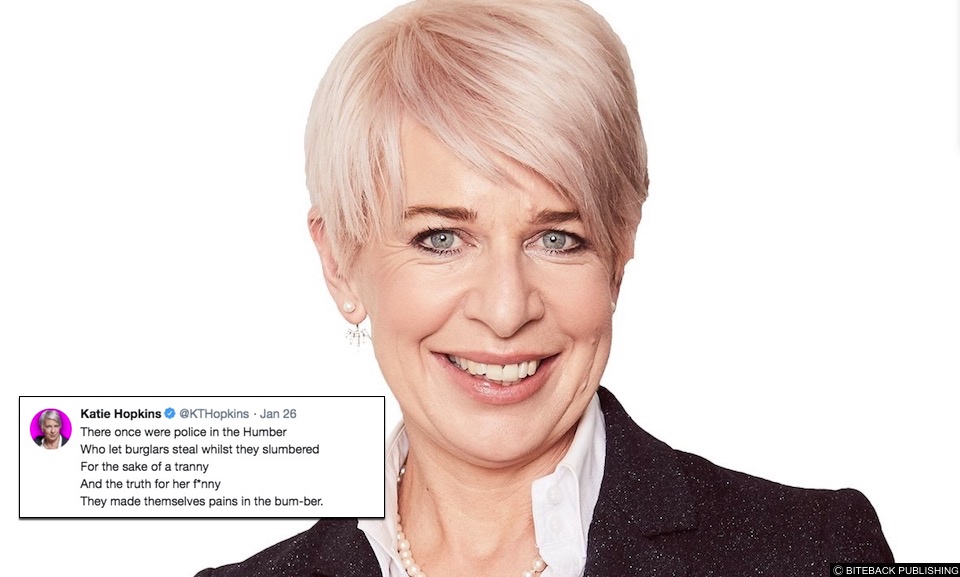
Yes even for Katie Hopkins and her rabid anti–transtweeting has stooped to a new low after she published a limerick which included a transphobic slur aimed at Humberside police, after the force revealed that they would always investigate reports of potential hate crime, which includes transphobia. (more…)
The digital first 2021 Census will help shape public services to meet the needs of the LGBT+ community in the years to come, as plans set out in a government white paper today show.
The Office for National Statistics (ONS) has recommended a new voluntary question on sexual orientation for those aged 16 and over. In addition to the usual question on being male or female for all ages, there will also be a voluntary question on gender identity in England and Wales for those aged over 16.
It was always the intention of ONS that these questions would be voluntary.
The data gathered from these questions will make it easier to monitor inequalities under the anti-discrimination duties of the Equality Act 2010 and to directly plan public services and support for these groups.
“Stand Up and Be Counted”
National Statistician, John Pullinger, said: “The Census is for everyone; it gives us all the opportunity to stand up and be counted in democratic debate and policy decisions.
“We have designed it with people at its heart and we consulted widely to ensure it meets the needs of society. Unlike previous Censuses, it will be digital first which will make it easier to complete electronically, with help available for those who need it.”
The date for the digital-first census has been confirmed as 21 March 2021, subject to parliamentary approval.
Information gathered by ONS will ensure vital public services can be targeted into communities and groups where they are needed, in 2021 and beyond.
ONS is transforming the way it collects, processes and shares data and the next census is part of a wider drive towards making more use of data already held and moving surveys online.
In line with previous censuses, ONS will hold a census rehearsal in October 2019 and is currently reviewing which local authority areas will be included.
For more information, see the white paper which has been laid today in Parliament.
How many LGBT people are there in the UK?
(C) BIGSTOCK
The number of people who identify as lesbian, gay and bisexual is a hotly debated subject, with no clear answer, but here will look at all the available stats.
There has long been a widely-held belief that around 10 per cent of the population is gay, lesbian or bisexual or who identify as non-heterosexual. This is probably the most accurate of all the figures – as more and more people feel comfortable to come out about their sexuality.
The ONS (Office of National Statistics) says that in a survey of people in the United Kingdom it found that 1.5 per cent of people identified as LGB. This result was arrived at by extrapolation of data collected. However, these statistics were disputed for not being accurate or showing the full picture.
By their estimations, this would mean that there are only 990,300 LGB people in the UK.
“I refuse to change my views on Trans Inclusivity”
(C) BBC Julie Bindel (left) Linda Riley (Right)
Publisher of Diva Magazine, Linda Riley is taking a break from social media after receiving online abuse following on from her determination to include and represent trans women.
Taking to Twitter today (5th December) Riley, who is the publisher of Diva Magazine said she was “taking a break” from the platform because of the abuse levelled at her. She reaffirmed her position saying that her magazine was the largest in Europe for “lesbian visibility, lesbian inclusivity” before adding that Diva stood with the trans community.
The announcement comes after a heated exchange following an appearance on BBC’s Women’s Hour where Riley when head to head with gender critical feministJulie Bindel to stand up for transgender people and their rights, which left the Diva boss subjected to a vile backlash online.
Accused of only representing one view
On Twitter one user, Kate Harris, questioned the publisher on why her publication haven’t engaged some women on issues that matter to them, such as the number of children being referred to gender clinics, chest binders, the self-identification of trans women, changes to the Gender Recognition Act and equality in the sports arena.
Harris then challenged Riley, saying, “…you as (a) publisher can do so much to advance understanding but only if you are prepared to print different views”.
Riley replied, “I refuse to change my views on Trans Inclusivity within DIVA magazine and I was very clear on this when I met you. To spell it out clearly DIVA will not print or publish any views which we deem to incite hate against the Trans Community.”
A trans woman has offered £2000 to the manufacturer who can design and market the perfect pair of tuckable knickers, specifically for transgender women.
A trans woman known only as “Bee” contacted a fashion manufacturer marketplace in a bid to find a designer and manufacturer that can create the ultimate ‘tucking’ underwear.
Tucking is the process by which a penis is “tucked” to the underside of someone’s groin usually with gaffer tape. It gives the appearance of a flat front, particularly when wearing dresses or skirts. The process can be quite painful and can also cause issues when it comes to toilet time.
Most famously, Courtney Act revealed her tuck during her time on Celebrity Big Brother. The problem is that the traditional tuck is quite unsightly and usually requires transwomen or drag queens to wear multiple layers of tight underwear to conceal their penises.
The request was sent to online manufacturing marketplace Sewport last week, asking if the site knew of any manufacturers or designers willing and able to help create feminine ‘tucking’ lingerie for transgender women. Unfortunately, Sewport has been unable to find an existing manufacturer and designer on the site, so with Bee’s permission has released her request to the public.
Tucking Troubles
Bee’s email details her struggle with current ‘tucking’ methods and how she’s concerned about the medical implications of them. She also says she’s tried the ‘gaff’ method, which is makeshift underwear, but finds it doesn’t provide enough security. Neither method makes her feel like a woman either, and that’s her main motivation for creating something ‘functional and feminine’.
Initially Bee was only interested in creating something for personal use, however now she is hopeful that if her prototype is a success, she can launch a range of feminine and bespoke lingerie for all transgender women.
There isn’t any medical research that indicates ‘tucking’ is harmful, however transgender women often say it can be uncomfortable and medical experts have said that regular tucking can lead to urinary tract infections, skin infections and in severe cases infertility when the testes are pushed up into the inguinal canals.
Sewport connects small to medium sized fashion brands with manufacturers, enabling them to create designs and garments from clothes to handbags, in an easy and cost-effective way. Boris started the company after realising there was a gap in the market for a ‘one-stop-shop’ manufacturing marketplace for new and established brands.
Boris Hodakel, Sewport founder, said, “I am really proud that Sewport is fast becoming the place to go if you have a fashion solution to a very real problem, and although Bee doesn’t have the solution yet, she is trying to work with people who might, and willing to put her savings into making it happen. It’s very admirable and I hope we can help her find a suitable designer and manufacturer, because I can see the value a garment like this would add to transgender women’s lives.
“I implore any designer or manufacturer who has experience in the lingerie market to get in touch. It doesn’t matter if you don’t know how the garment would look or functionally work, Bee is open to any sort of discussion, and I’m sure from her personal and your professional experience, something great will happen.”
There is a school in the south-east of England, where over 70 children aged between 11 and 16 feel comfortable enough to question their gender identity and identify more closely to how they feel.
According to The Sunday Times, the Dorothy Stringer secondary school in Brighton has at least 40 transgender children who don’t identify with the gender they were assigned at birth and a further 36 students who say that they are genderfluid – people who define their gender as fluid, flexible or changeable.
The number of transgender students who were open to their families was much lower, however. Students were much more comfortable to share their gender expression with their classmates and faculty.
The headteacher, Richard Bradford told the newspaper, “The number of ”openly trans children” who had approached us with their families to say that they are transgender [was] much lower”.
The now iconic blue, pink and white flag that the transgender community uses for identity.
The disclosure from the Dorothy Stringer school came through the school’s “equality information report”. It is believed that the school has the highest number of trans identifying children in the country.
What does genderfluid mean?
Genderfluid is an identity which describes someone who doesn’t have a fixed gender expression, like “man” or “woman”. They are likely to feel that their gender expression is flexible and changeable from day to day, or even several times a day, due to its fluidity. Genderfluidity has close links to the non-binary identity where a person doesn’t see their gender as either masculine or feminine.
Why is Brighton so LGBT+ friendly?
Brighton has long been the home of a large LGBT+ community outside of London and is often referred to as the ‘gay capital of the UK’. The city holds the UK’s biggest pride event and has a large number of LGBT+ venues.
A transgender woman, who narrowly missed out on becoming Britain’s first transgender MP has released her first book.
Having spent a lifetime hating herself and struggling with post-traumatic stress, her gender identity, self-harm and suicide, RAF veteran and former motorbike racer, newspaper editor, Premier League football and rock photographer, Sophie Cook was at breaking point when she transitioned in 2015.
She became the first transgender woman to work in football’s Premier League as club photographer for AFC Bournemouth following her transition, and was Europe’s first trans TV newscaster with Brighton’s Latest TV where she also presented her own chat show and now has a show on RadioReverb.
Sophie has also been flying the flag for diversity and inclusion as well as forcing the discussion about mental health awareness as an in-demand public speaker, delivering keynote talks and LGBT workshops across the UK for high profile organisations such as the TUC, Kick It Out and Stonewall.
In April 2017 she was selected by the Labour Party to contest the East Worthing and Shoreham seat in the General Election, where against all the odds, she increased the Labour vote by 114% and narrowly missed out on becoming the UK’s first transgender MP.
“Everything that I’ve done since my transition has been about trying to raise awareness and help others, whether it’s mental health, hate crime, trans inclusion or breaking down the walls of prejudice. Politics felt like the ultimate way in which I could try to make a difference.”
Sophie’s autobiography Not Today: How I chose life has just been published and the book charts her personal journey from despair to redemption and acts as a self-help book for anyone struggling with their mental health or identity. From her childhood and her first suicide attempt at the age of 12, through post-traumatic stress after saving a colleagues life following an explosion whilst in the RAF. Sophie explores and examines her self-harming and depression, ultimately finding redemption, awareness and self-love.
Suicide, self-harm and coping
Writing in the book Sophie describes some of her darkest moments, “I know that one day I’ll kill myself, because I don’t know how to stop feeling this way but it won’t be today. In the meantime I’m going to do the best I can to enjoy every single day and then on the day that I die, in many, many years time, I’ll look back and realise that I didn’t get around to doing it.
But adds that she’s found a coping mechanism, “With this simple revelation, I found a way to live. It may not have slain my demons completely but it significantly reduced their power to hurt me.”
“Over the past three years I’ve spoken to thousands of people about my journey and how I overcame my demons and this, in turn, has helped them with their mental health and now it’s time to tell my full story for the first time.”
Poignant and heart-rending, yet at the same time inspiring and uplifting, Not Today traces a journey from private torment to personal triumph. Told with honesty and candour – and written with warmth and intimacy, outlining the huge emotional and social toll of gender dysphoria and chronicling a voyage towards truth, validation and authenticity. Sophie’s compelling story portrays the fragility and fortitude of human emotions, demonstrating how – by conquering fear and summoning strength – a person is capable of making the progression from loathing themselves to loving themselves.
But Not Today isn’t just a memoir.
“There’s all of the stories and ideas that are floating around in my head and I really needed to share them. It’s part autobiography, part self-help book, part political manifesto, and part personal philosophy. It’s everything that makes me me, and everything that I understand about how my journey led me here.
“Not everyone has the opportunity to change the world with a single act but we can all make incremental changes, by being nicer to people, by helping them, by standing up to hate or by respecting those that we meet.
“If we want to change the world we first need to look within ourselves and find the strength, compassion and love that fuels the human spirit. By loving ourselves we can learn to love others, by being kind to others we can learn to be kind to ourselves, unfortunately so many of us fall down on loving ourselves.”