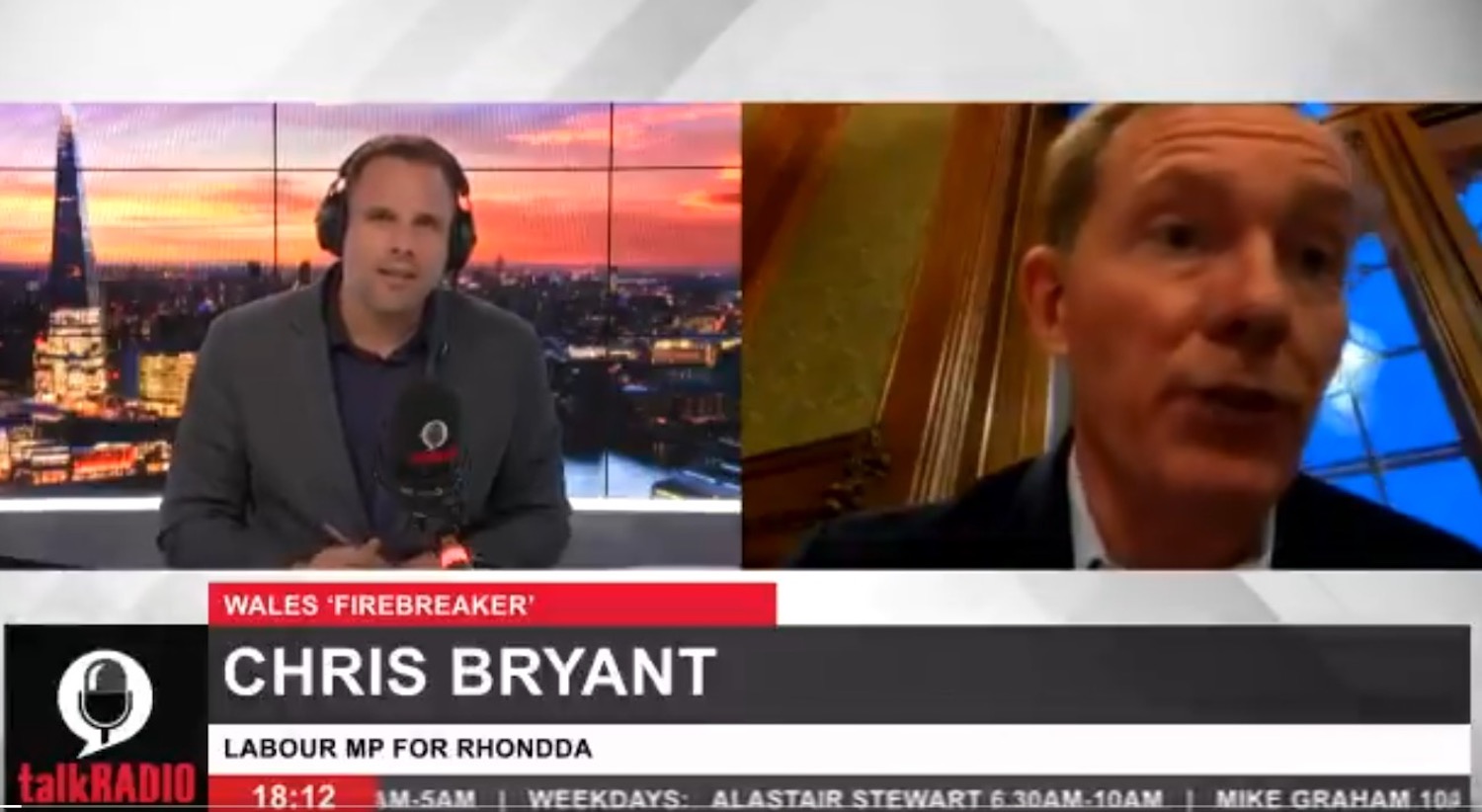
During Dan Wootton‘s drive time live Talk Radio show, Labour MP, Chris Bryant called Wootton a “nutcase” and “dangerous” after Wootton said he believed in herd immunity as a way to control COVID-19.
The fiery exchange happened during Wootton’s evening show when Bryant was invited on to speak about the Welsh government’s decision to put Wales into a total lockdown for two weeks, but it soon descended into name-calling from the Labour MP for Rhondda, who branded the journalist a “nutcase”, and labelled his way of presenting radio as “tedious”. He also said that Wootton was dangerous and questioned his intelligence.
“Well you don’t seem very bright”
When Wootton asked what the Welsh government was hoping to achieve by a nationwide lockdown, Bryant retorted, “Well you don’t seem very bright” before outlining that hospitals in Wales were “rammed full”, when pushed Bryant admitted that his local ICU (Intensive Care Unit) was 75 per cent full, which according to Bryant, is double what it was in 2019.
He stated that the aim of the lockdown was to ensure that “the NHS isn’t overwhelmed”.
Herd Immunity
[totalpoll id=”124376″]
However the real fireworks happened when Wootton asked about the idea of Herd Immunity, saying “You do understand that science has forever used herd immunity to deal with these corona viruses”
To which Bryant responded, “So you subscribe to herd immunity do you?”
Wootton answered, “yeah and protecting the vulnerable…”
Bryant then asked how you’d protect the vulnerable before stating, “you’re a nutcase, you’re a complete and utter nutcase and you’re dangerous as well”.
Wootton then banished Bryant from his show.
Watch the drama unfold here:
Dan Wootton and Labour MP Chris Bryant have a disagreement over the effectiveness of coronavirus lockdowns.
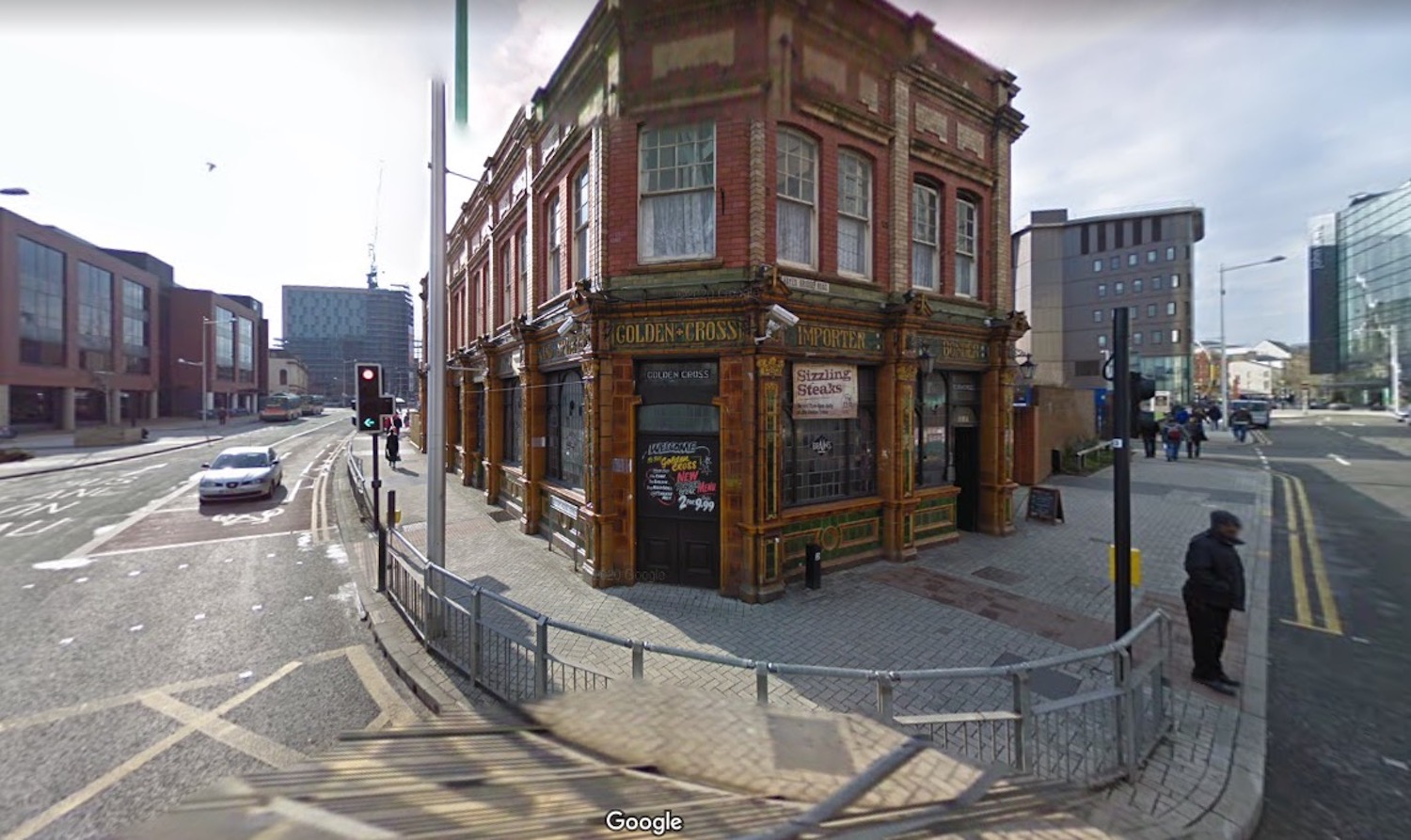
An LGBT+ bar in Wales has said that a two-week lockdown enforced by the Welsh government “isn’t that bad” and has said that it made it through the first one and it will make through the next.
From the 23rd of October Wales will place all its citizens in a strict lockdown for 17 days in order to reduce the rising cases of coronavirus in the nation.
The bar’s owners added that they would do their best to keep all its clientele updated and revealed that they have planned a whole two weeks of Facebook Live shows, including a Halloween Special on the 31st October.
With reported cases of COVID-19 rising across the country, the devolved governments of the UK are permitted to enact whatever policy they see fit to bring the number of Covid-19 cases down.
Back in March, the whole of the UK was placed in lockdown, about the only time that the UK, Scottish, Northern Irish and Welsh government have had a coherent approach to dealing with the pandemic.
We surveyed readers of THEGAYUK on whether they’d support a second “circuit breaker” lockdown. 58 per cent of readers said that they would support another lockdown, 30 per cent said they didn’t why the remaining 12 per cent said they were unsure.
In a year where the UK had no physical prides, due to the ongoing Coronavirus pandemic, hate crime against LGBT+ has soared new statistics from the Home Office have shown. Homophobic crime was singled out as have the biggest growth in reported incidents.
Crime against people motivated by their sexuality or percieved sexual orientation, has increased by 19 per cent according to the Home Office, more than any other demographic recorded by the hate crime statistics. This means that there were nearly 16,000 reported incidents, up from 13,314 in the previous year. Homophobic crimes recorded have more than doubled since 2015, however some of this down to better recording of crimes by the police.
Hate crimes against transgender people rose by 16 per cent, to 2,500 reported incidents from 2,183 the previous year.
Overall police in England and Wales recorded a rise of eight per cent for all hate crimes, the majority of which still remains on the basis of race (76,070 offences). Hate crime on the basis of religion was the only hate crime to have fallen to 7,203 incidents.
Nearly a quarter (23%) of reported hate crime against gay people included stalking and harassment, whilst this rose to 32% for transgender people.
The rise in homophobic crime reflects statistics released from Scotland earlier in the year which showed that homophobic crime had also skyrocketed in the nation. In July we reported that, in the period between 2019 and 2020, there were 1486 total homophobic hate crime charges brought. In 2018 to 2019 there were 1194 – an increase of 292 charges for the current year, which is equal to a 24 per cent rise. Last year the rise was five per cent. Meaning that crimes against gay, lesbian and bi people has ballooned in Scotland.
What is a hate crime?
According to the Government website, “Hate crime is defined as ‘any criminal offence which is perceived, by the victim or any other person, to be motivated by hostility or prejudice towards someone based on a personal characteristic.’ There are five centrally monitored strands of hate crime: race or ethnicity, sexual orientation, religion or beliefs, transgender identity and disability.
Has the UK become toxic towards LGBT+ people?
Equal rights campaigner John Leech, who is no stranger to the LGBT+ community, warned that the country is in desperate need of change and laid the blame firmly at the Prime Minister’s door for creating a toxic political and social atmosphere.
John Leech, who led the decade-long campaign to pardon Alan Turing who was criminally convicted for homosexuality, said:
“These figures show a horrifying backwards trend and point to a systemic targeting of the LGBTQ+ community.
“It is embarrassing that in 2020 in this country, the gay community has increasingly become the intentional victims of hate crime.
“But is it really that surprising when Boris Johnson’s Government doesn’t just tolerate, but actively promotes a toxic political and social atmosphere?
“The extreme and divisive language from our own Prime Minister is destroying the soul of this country.
“Politics needs to change; education needs to change—this country needs to change. We must be an open-minded and inclusive society that doesn’t just tolerate the differences in people, but actively celebrates them.
“We must teach our children to grow up to embrace everyone around them regardless of their background, and that must start with politicians taking a lead.
“Liberal Democrats have a long and proud history of standing up for the LGBTQ+ community, and the fight for equality can never end. We will always fight for a far kinder, more understanding and welcoming United Kingdom.”
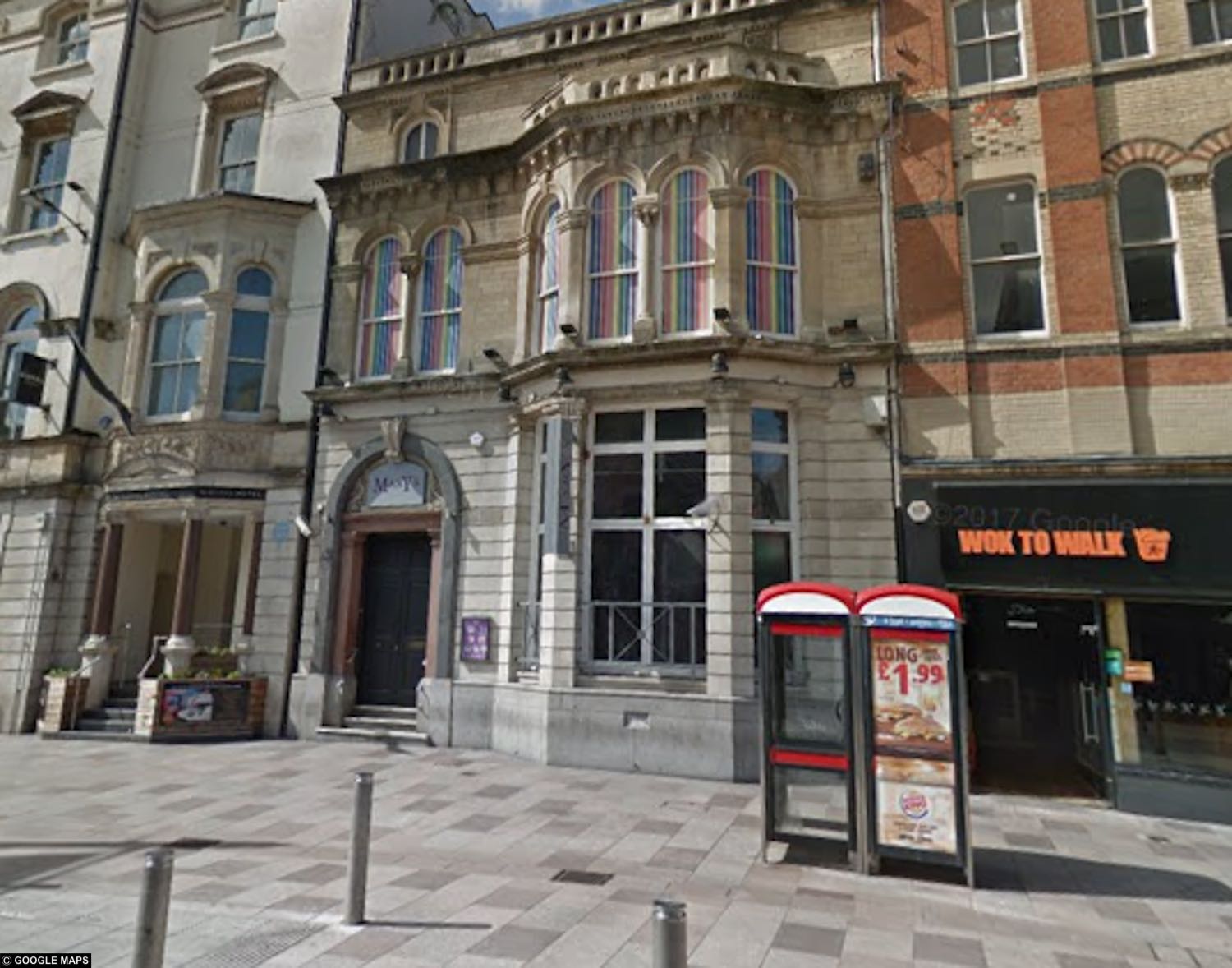
With a “heavy heart” Mary’s in Cardiff have announced that they are unable to keep the doors open after the latest restrictions for hospitality venues were announced earlier this week.
Many bars and restaurants have reopened in the last month, many spending hundreds if not thousands of pounds becoming compliant to Government guidelines on being “COVID-secure”.
A 10 PM curfew, along with other restrictions on the number of patrons bars can serve has left many venues struggling to make money.
In a statement on social media the Cardiff bar, which is a popular venue with drag acts and cabaret performers said that due to the 10 PM closure times announced, that the bar would have to remain closed during the enforced period.
“Not financially viable”
They said, “It is with a heavy heart that we have to inform all our customers that due to the 10 pm closure notification that was imposed on us, that Mary’s will be closed during this period of time as it’s not financially viable for us to try and trade, maintain turnover and monitor costs with a 10 pm closure.”
The bar had reopened once the rest of the hospitality industry was permitted to do so, and the management said that the team had worked hard to make the venue COVID-secure and work within the restrictions, “with panache”.
They added, “It has been hard to operate Mary’s without the rest of our team, our DJ’s, Entertainment but we have done so and we have conformed fantastically to the new ways of operating
“I like to think that even without our entertainment we still ensured you all enjoyed your visit to Mary’s”
Fans are supporting the bar
Fans of the bar were quick to let bar management that the community was behind the venue and fully supportive.
One user added, “Sad to hear but once you’re reopened, we will be back. The whole community is behind you!” Another said, “I’m really saddened to read this and hope that you’ll be back soon. So many members of our community are behind you with their full support.”
Like most of us in life, we all either want to be some sort of writer or have that the urge to release our inner novel to the words and become the next George R.R Martin.
I was, I must admit, about to suggest, JK Rowling, as my example author, however, as a member of the fabulous LGBTQ community I struggle to accept her idiotic and ridiculous views and notions on the trans community, even though I was and at somewhat, still am a big fan of the Harry Potter series.
I am not trans myself, however, I fully believe and support my trans brothers and sisters.
We are who we are, we can be whoever we want to be and we should not need to justify ourselves to those narrow-minded individuals in this world. However, this is easier said and done. But I digress from my initial post.
I’ve been writing on and off for a few years. I find it’s a great form of self-therapy for me.
Writing gives me a platform to express myself and to release that internal monologue from inside my mind.
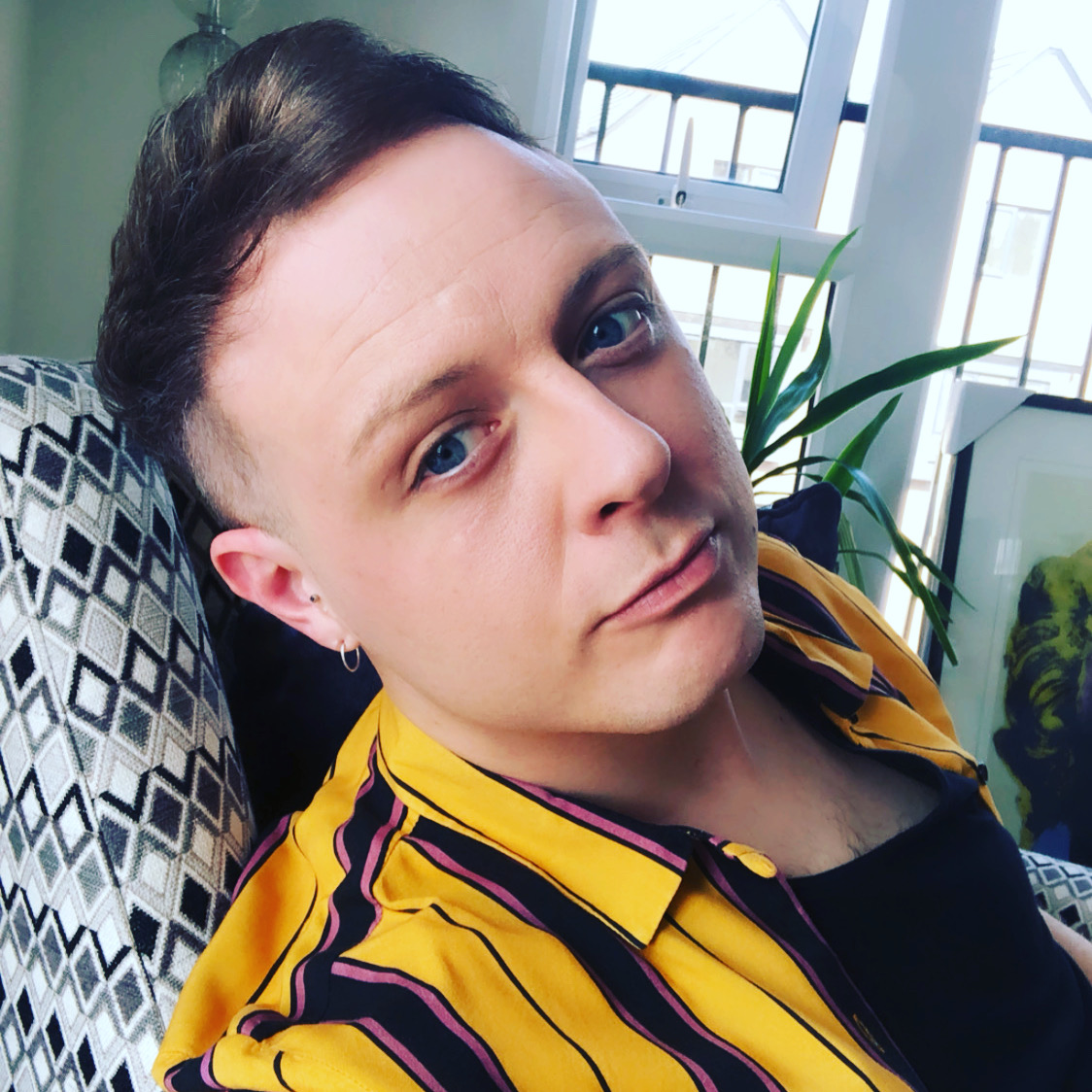
Since lockdown, I’ve created my blog called, Justaled.com, with the main aim to publish my life and life experiences to the world.
The blog is designed to be open and honest about the situations that I have personally faced as a single, gay man living in a small village in Wales.
At this stage, you’re probably wondering, this isn’t very exciting, this is a very standard issue for any gay man in Wales and we have all probably shared the same experiences throughout our lives, but then again, have we?
The blog started initially as a private journal but having been a performer and working in the Arts, it soon began to slowly transform into a draft idea for a potential one-man play, but still, it was missing something.
The more I wrote; the realisation became more and more clearer to me.
I am constantly writing, but nobody is reading my work! and the reason nobody is reading my work is quite simple, my writing doesn’t go anywhere, apart from the inner depths of my hard drive.
That’s when I thought, during the lockdown, why not publish my story online, in a platform that I can control, and that’s when Justaled.com was born.
Writing gives me a voice and a platform to express myself.
For those who know me personally, will say that, I am very open, honest and quite frankly a loud mouth sociality, But, when it comes to things such as life experiences, mental health status and matters of the heart I can and have the tendency to bottle these things up.
I truly have the tendency, like most men, unfortunately, bottle up and keep my issues and feelings to myself until my issues and feelings bottleneck.
And like a well shook bottle of champagne, my issues and feelings eventually, and of course dramatically, uncontrollably erupt.
I’m 33, and I have already experienced two nervous breakdowns in my life, one of which I’ve recently blogged about and the other due to bullying in the workplace, another post I’m considering writing.
I will add at this stage that bullying in any capacity is WRONG and should not be tolerated or ignored, especially in the workplace.
I idolised the film, The Devil Wears Prada, until one day I worked for a woman who embodied the character, Maranda Priestley.
I want you to imagine Maranda Priestly, assuming you’ve watched the film, but now imagine her 10 times worse, a walking and talking force of negativity, designed to crush and belittle anyone that stood in her way.
To this day I cannot watch the Devil Wears Prada, and I have promised myself I will NEVER be put in that situation ever again!
With life and age, I’m constantly learning from my mistakes hence the writing, or to be more precise the blogging of my past and current life events. I truly find it’s a great platform to vent.
To be quite frank, blogging is a great form of therapy! Plus, it’s cheaper than going to the Shrink!
Not only is writing a great way to express our emotions and feelings via words but it’s also a great way to be creative and let our mind and imaginations run wild.
A great friend of mine once told me to start writing, but write about what you truly know the best, and fortunately for me, what I know best is in fact, me!
I know me, I truly understand me. I think a lot more of us, from time to time need to take the time to focus on ourselves.
It’s not selfish, it’s not vain but we truly need some ‘me time’. Time to properly reflect on what we need. If someone says its selfish and vain then pfff ignore them, unfriend them or whatever, you seriously don’t need them or their negativity in your life.
So… to recap from my standard form of ranting, this guest blog post, from yours truly sums up the following:
Get writing, be more open and honest about yourself and your issues, there is nothing to be ashamed about.
Blogging is a great form of self-evaluating if not a great form of venting. Speaking directly to the gentlemen reading this post, gents its OK not to be OK, just let it out, talk about your issues and feeling, and if you can’t talk, then write them down.
Nobody needs to see your internal monologue, because quite frankly that’s what a blog is, but then again sharing can equally be rewarding.
As they say, sharing is caring and your words could be the answers to the questions of another seeking guidance.
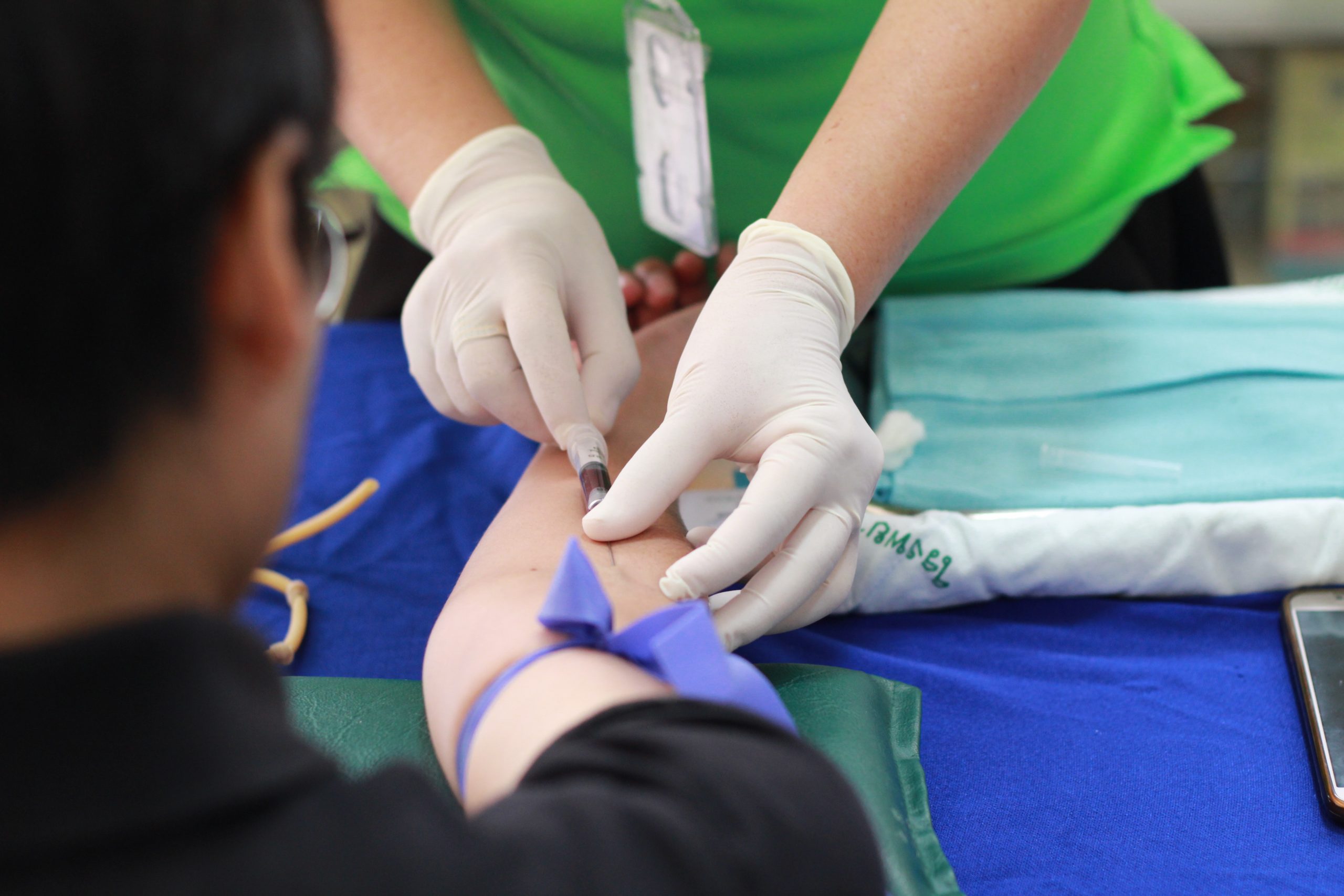
A campaign in Wales, which is aiming to give gay, bi and MSM (men who have sex with men) the right to donate blood in line with everyone else, is calling for reform.
The current law in Wales states that any man who has sexual relations with another man (gay, bisexual, MSM) must abstain from such sexual activity for a period of three months prior to donating blood.
This waiting time does not apply to heterosexual blood donors, regardless of how many sexual partners they’ve had.
Campaign Coordinator at Blood Equality Wales, Alexander Bryant-Evans had this to say,
“This could be respected as a justification, if it applied to everyone. Afterall, bloodborne pathogens such as HIV can and do infect people of all sexualities, gender and race.
“Yet on grounds of sexuality, only gay and bisexual men are subjected to this law of forced abstinence before donating blood.”
Blood Equality Wales believes this to be unfair, unjust and blatantly discriminatory. Their campaign is looking to challenge and change the law here in Wales around gay and bisexual (MSM) blood donation.
A fairer more modern approach is called for
Campaign Coordinator Arron Bevan-John says,
“Blood Equality Wales advocates the use of a fairer, more modern approach. Instead of a sweeping, generalised law targeting all gay and biseuxal men, we would like to see a more individualised approach implemented by the Welsh Government on the issue of blood donation.”
This approach would take the individual and their actions into account, as opposed to an automatic imposition of a deferral period purely because of the individual’s sexuality.
Ending abstinence for those who do not engage in high-risk sexual activity
Blood Equality Wales believes that this approach would allow more gay and bisexual men, who do not engage in high-risk sexual activity, to be able to freely donate blood without having to undergo a period of abstinence first.
A gay couple in Newport have told of their harrowing experience when a homophobe threw a glass bottle at them
A young gay couple has spoken about how they were harassed when walking to their car from the railway station after a night out in Newport, Wales.
Bleddyn Harris and David Barraclough both in their twenties were harassed by a man who hurled homophobic abuse at them on the pavement outside Newport Railway Station at about 10.30pm on the 31st August. The couple were returning from a night out. Bleddyn explained how he had given his partner his coat to keep him warm and was reaching into the coat pocket to retrieve his car keys.
The man then apparently threw a glass bottle at the pair. Luckily the bottle missed them. The assailant then escaped the scene in a car, which had at least two other occupants.
Speaking to Wales Online, Bleddyn Harris recalls, “We were walking back from Le Pub to my car because it was late and we were doing the usual couple things – linking arms,
“I could see this guy from afar and he was already kicking off. In my 26 years as a gay man, I know the look. He was shouting and yelling.
“We had stopped because I wanted to get my keys out of my boyfriends pocket.
“Before I knew it he’s telling us we need to f*** off and this bottle came smashing at my boyfriend’s feet.
The man is described as in his 30s and strangely was wearing a hat covered in fairy lights.
Harries took to Twitter to speak about his ordeal saying, “Last night, my boyfriend and I were walking back to my car (linking arms) from a gig when a guy threw a glass bottle at us and told us – in not so many nice words – that we need to go elsewhere. Homophobia at its best. This is why we still need pride”.
Speaking to THEGAYUK.com Bleddyn was keen to stress that this type of occurrence was all too common, saying that there was an “undercurrent of phobia towards non-binary, trans individuals and people who are bi”.
He said despite the incident he was not going to hide who he is, saying “I will continue to be as fabulous…it will embolden me”, but was worried that it might leave his boyfriend “second-guessing” whether to hold his hand in public in future.
Do LGBT+ people fear holding their partner’s hands in public?
In 2019 we asked readers of THEGAYUK.com whether they’d be comfortable in holding their partner’s hand in public. 85 per cent of people said that they would feel uncomfortable holding their partner’s hand in public. Only 15 per cent of those who answered said they would feel comfortable.
Percentage of LGBT+ couples who feel comfortable holding hands in public
2016 50%
2018 41%
2019 15%
Worryingly the LGBT+ community is getting warier of showing public displays of affection on the streets of the UK. In 2018 when we conducted the same survey, only 41% said they wouldn’t feel they could hold hands with their partner and in 2016 that figure was 23%.
Rhondda Pride has faced a huge backlash after it said that people wearing bondage and kink attire were not welcome at its event.
A pride in Wales has outraged many in the LGBT+ community after it said it was excluding political parties, religious organisations, charities and anyone wearing bondage or “sexualised costumes” effectively erasing a number of communities from its event.
Leathermen Cymru had asked to be involved with the event but were told that “certain groups who are not family-friendly” were not permitted to attend. It said that Leathermen and its sexual connotations did not “sit well in an event of this nature”.
It also said that the police had made stipulations on the pride, THEGAYUK.com has reached out to South-Wales Police for clarification.
“Safe Space for under 18s and their parents”
In a now-deleted statement, the pride warned that “no bondage or sexualised costumes” were allowed as they were “trying to make this a safe space for under 18 LGBTQ+ individuals and families and a place for parents of young LGBTQ+ people who want to understand and support their children”.
It continued, “Over 18s LGBTQ+ are going to have a fun, inclusive event without politics, religion and over-sexualisation of the community.
“Our acts on stage will be suitable for all ages”.
“We are celebrating our rights in an open way. Pride is about celebration and acceptance”.
The Tweet and both the organisation’s Twitter and Facebook account have since been removed.
Calls for resignations
Many in the community felt that Rhondda Pride’s policy went against the spirit of pride and some were calling for a change in policy or for those in charge to stand down.
Nick wrote, “This nonsense contributes to the homophobia still aimed at GBQ ppl (men esp), suggesting that our sexual practices are depraved & that we are a sexual threat to children. It is the antithesis of gay liberation. I hope that the organising committee will review this or stand down”
Buster added, “Pride is about acceptance, and you are having none of it. You should hang your heads, as you promote division in the community & exclude others so you can appeal to straight people. Call yourself Mardi Gras if you want, but don’t act like you have any Pride in our great community.
The UK Pride Organisers Network said that it did not support the erasure of any part of the LGBT+ community. It went on to blast the event for “picking and choosing” who is and isn’t allowed to be at the event”.
We don’t support erasure of any part of our community. Rhonnda Pride you are NOT a Pride, you are a family fun day that is picking and choosing who is and isn’t allowed to be at your event. There is NO Pride in Exclusion! We are 1! #WeStandWithEveryone Together we are UKPON!
— UK Pride Organisers Network (UKPON) (@UKPrideNetwork) July 29, 2019
“We don’t support erasure of any part of our community. Rhonnda Pride you are NOT a Pride, you are a family fun day that is picking and choosing who is and isn’t allowed to be at your event. There is NO Pride in Exclusion! We are 1! #WeStandWithEveryone Together we are UKPON!
Pride responds: This is very upsetting to all of us.
The organisers of the pride have claimed that there has been a lot of “hatred” stirred up against them and it was “very upsetting to all of us”
Writing on their Facebook page they wrote, in a now-deleted message, “Hello everyone. We wanted to put on a small valleys Pride which was child friendly. Unfortunately asking members of the community not to wear BDSM clothing and bring their boyfriends on dog leads has caused a backlash. We have at NO POINT asked anyone not to wear leather we asked for family friendly costumes.
“The aggressive nature of the hatred being stirred up by the Leathermen and their allies is now being made personal against our organisers. We have therefore suspended our social media temporarily.
“The Leathermen are apparently writing to various equality groups to get our small valleys Pride shut down before it’s even started.
“A family friendly event with no politics, bondage, overt sex or sexualised costumes is not what parts of the community want. I have been even emailed that Pride cannot be family friendly. This is very upsetting to all of us. If you want this Pride to happen then please stand up for us against this hatred.”
We may have to pull our event due to the actions of the BDSM community. This is a tragedy.
In a statement to THEGAYUK.com a spokesperson for the event said,
“We should start by saying that we are a small valleys Pride with a capacity for 500 maximum people plus a market. We only asked for no charity or political stalls due to the fact that we don’t have enough room to hold them. This was not exclusion this was practical. As for the Leathermen we have never banned leather, that is ridiculous. What we have requested is due to the family friendly nature of the event and the fact our headline act is 13 years old no BDSM wear or sexual costumes be worn. I don’t see any issues with wanting to be family friendly however we may have to pull our event due to the actions of the BDSM community. This is a tragedy for the LGBTQ + children, adolescents, teenagers, young adults and families who wanted to support an event of this nature.”
Gay marriage or same-sex marriage has been legal in part of the UK since 2013 when the law was changed to allow partners of the same sex to marry. England and Wales were the first nations of the UK to permit same-sex marriage when the law changed in July 2013. Royal Assent was given by the Queen on the 17th July 2013 for English and Welsh same-sex marriages. The first same-sex marriage in England took place on the 13 March 2014.
In Scotland, the legislation took a little longer and gay marriage was given Royal Assent on 12th March with the first weddings taking place on 16th December 2014.
Is gay marriage legal in all parts of the UK now?
In Northern Ireland, same-sex marriage didn’t become law until only recently after a long contentious battle.
The DUP held back LGBT+ rights in Northern Ireland vote against gay marriage every time it became before the courts to become law. In total, they voted against it five times. Eventually, it was made law in 2020.
Northern Ireland made gay marriage legal in January 2020 after a long and drawn-out legal clash between activists, human rights lawyers and the DUP. There were numerous attempts, in fact, there were five attempts to make gay marriage legal in NI since 2012.
The subject of same-sex marriage was voted on five times by the Northern Ireland Assembly. Each time it was blocked by the DUP.
As I drive through the Welsh town of Pontypool I’ve lived in since I was born, with a population of approximately 36,000 people, I’m surprised to see a rainbow flag flying high outside the civic centre in the middle of the town. It’s LGBT history month, but the flag doesn’t just stay up during February. Instead, it has become a permanent feature, flying proudly with the Welsh flag and the European Union flag.
Whilst the future of the flying European flag is uncertain, the rainbow flag is there to stay. In this tiny Welsh town, it is almost historic. I’m a 23-year-old Welsh boy that struggled with coming to terms with my sexuality.
Wales’ track record of LGBT rights is a little bit hazy, but in 2018 The National Assembly for Wales was recognised as the top employer in Wales for LGBT employees. This sort of movement is quite a good sign of how Wales has changed over the years. We have gay clubs that are thriving, venues that host drag queen shows, and the smaller towns are beginning to accept what is normal. Just last year, Newbridge Memorial Hall hosted a drag queen event.
Growing up gay in Wales, I found it incredibly difficult. The town I live in is rather behind the times: we have poverty, we have more empty shops than booming ones, and the people who live here are rather set in their ways. We’re a country run mostly by Labour, yet my area voted leave, and many conversations I hear are in support of a Tory government and a hard Brexit.
As I grew up, the rather cliché saying of ‘knowing I was different’ rang true. I didn’t get along with ‘the lads’. I’d rather stand on the railings singing Girls Aloud – mainly Nicola’s lines; I was always Nicola – than play football. I got taunted for being a ‘girl’.
It hurt, but being young I didn’t really know what that meant. Then, through secondary school, I experienced almost daily taunts of ‘gay boy’, ‘faggot’ and ‘bender’. As puberty kicked in and feelings for guys intensified, so did the bullying, as hormones raged in every teenage boy in school, and the idea of a ‘queer’ being anywhere near them repulsed them. I remember experiencing comments from teachers. PE teachers would always treat me like a stereotypical ‘gay boy’ that would rather be brushing my hair than learning the rules of football. I remember a few of my PE classmates disappearing for a class to go on a drama trip. To snickers from the rest of my class, my teacher said, “so all the poofs have gone off to watch show tunes.”
No one blinked an eye at this comment.
Lisa McNally is a mother from Cwmbran, South Wales. She witnessed her son, Lewis, now twenty years of age, experience homophobic bullying. She agreed to talk to me to discuss her son’s bullying, as she thought it was important that parents who are aware of their children’s sexuality should be there to support them. “I have a son who grew up in Cwmbran and attended the local comprehensive school. He endured daily abuse from his peers and from the teachers. When I attended the school, I was informed by several teachers that Lewis should not tell people he was gay, and that he wouldn’t be bullied.”
When Lisa questioned why such a comment had been made, the teachers told her that her son would not be received well in the community. “I was told to remember that Cwmbran was still a village and ‘forcing the gay agenda’ wasn’t warmly received.”
“I have walked through school with Lewis to chants of ‘faggot’, ‘gay boy’, ‘bummer’, and I have endured this when walking through the town centre with Lewis, too. He ignores them. I found it hard to do so.”
Such was the regularity of her son’s bullying that Lisa visited the school Lewis attended in the hopes of stopping his heavy bullying. “I have walked through school with Lewis to chants of ‘faggot’, ‘gay boy’, ‘bummer’, and I have endured this when walking through the town centre with Lewis, too. He ignores them. I found it hard to do so.”
Lisa notes, however, that when the pair shopped in Cardiff, there were no comments and barely any stares from the people in the city centre. It paints an image that whilst city centres were more forward thinking, small Welsh towns were still very much being left behind. Due to Lewis’ bullying, he dropped out of school and left with no education. Lisa described that her son felt suicidal, and whilst better now, he did suffer with depression. Lewis said that ‘being made to go to school every day’ made him feel vulnerable, and his experience was a ‘living hell’.
Once I was out of school, like Lewis, I began to accept who I was and embrace it. It wasn’t until I started working as an eighteen-year-old that I was confident to admit that feelings for guys were there. I began by admitting to my friends. Yet I was still afraid of declaring that I was gay; the liberation of saying I liked both sexes was a step in the right direction.
Matthew Cleverly, an actor originally from Pontypool but moved to London to study, realised he was bisexual when meeting a group of like-minded individuals. Being in the same year as me in the same school, Matthew and I observed the treatment of those individuals that did ‘come out’. ‘Looking back I remember a few of my friends coming out as LGBTQ+ and although some were accepted by friendship groups and families relatively easily, others were harassed, bullied and rejected.’
Matthew reflects that as he grew up in the Welsh valleys, he suppressed a part of himself. “I didn’t grow up queer in Wales. It was only after I moved out that I realised what was always there. I’d moved to London to go to drama school, and was also, at that point in a four-year relationship with a girl. It wasn’t until I was given the freedom to move away from the judgement of a small-town, Welsh community, and was thrust into a supportive, creative environment, in which I had to constantly self-analyse, that I began to discover and accept the other side of myself.
“I realised that I had taken the path of least resistance my whole life,” Matthew continues. “And although the relationships I had were real and loving, I hadn’t been fully there because I was always concealing a piece of myself – even from myself.”
Matthew believes that part of his reasoning for not acknowledging his bisexuality was because of a lack of LGBT role models. ‘Not having strong queer role models definitely aided in me not coming out for so long. In a place such as small-town Wales, feeling different can be so much more isolating, because you can’t see anything beyond your circumstance. It’s important to remember that although you may feel you’re not in the right place now, you will find your tribe eventually, and they will love you for exactly who you are.’
Finding my own tribe was a key feature in my acceptance. Some of my best friends were also ‘experimenting’ with the same gender, and being able to talk honestly to people after so many years of hiding feelings was like a freedom movement.
At eighteen, I began to go out on the nightclub scene. In the town of Newport, I’d regularly have a group of same-dressed looking boys glaring at me from across the dance floor as I dared sing along to Miley Cyrus. I’d have people double take when they saw me kiss a man. Going out on nights out in my hometown was a whole other story. When waiting at the cash point one night, stood alone and not doing anything remotely attention seeking, a guy across the road shouted at me, “OI, FAGGOT!” Mature and annoyed by this, I turned to leave. But he wasn’t done. He shouted, “Yeah, that’s right. Fuck off before I punch you.”
At the same time, I discovered Cardiff’s gay scene. With new friends, I would go out and play the field. Cardiff was a lot more liberating than that of Pontypool or Newport.
Jennie Scrivin, from Pontypool, found solace in Cardiff’s gay scene when she was discovering that she was a lesbian. “There wasn’t a lot of gay people when I was growing up. Coming out was hard. Would I be accepted? I’d spend every night out on the gay scene, but that was in bigger cities, not my little town. I felt like I finally fitted in.”
At eighteen, Jennie came out and is now in a relationship. Older, and out, Jennie remarks that attitudes are beginning to change. “It’s not a taboo word anymore. I just hope it continues to become more and more accepted.”
I have to stress that growing up during my teenage years, I really did find it difficult to come to terms with who I was. I turned to a blade to keep my emotions at bay, and to cope with who I was I regularly sought solace in online webcam sites, where there were men and teenagers like me that felt the same. As I got older, I accepted who I was. I soon admitted that I was gay, rather than bisexual, and when I told my parents, they really couldn’t care less. I think my dad nodded and then said, “What do you want from the chip shop?”
Small Welsh towns still have a lot to do to promote inclusivity. When working in a pub in the town in 2016, I would regularly hear homophobic slurs. To the people saying them, they were just jokes. But to a gay bartender who had overheard, I had to bite my tongue. To promote inclusivity, Welsh towns could support those who are growing up gay that may feel afraid to tell anyone who they are. When I was younger, there were no support groups. Whilst I suspect many older adults such as teachers realised I was gay before me, I was never questioned on it in a nice way or made to feel like I could talk to someone about how I felt.
Yet every time I drive past the rainbow flag in the centre of my small town, I feel that sense of pride. I remember that there are people there that accept me for who I am and that flying a flag of many colours not only represents the gay people in my town, but the lesbian, bisexual, transgender and the queer community.
A small Welsh town that I call home is opening their arms and embracing change, and that is something we must all support.
Asia O’Hara, Detox, Eureka O’hara, Kameron Michaels, Kim Chi, Monét X Change, Naomi Smalls, Sharon Needles Violet Chachki and Michelle Visage are all coming to Cardiff in 2019 here’s where you can get tickets.
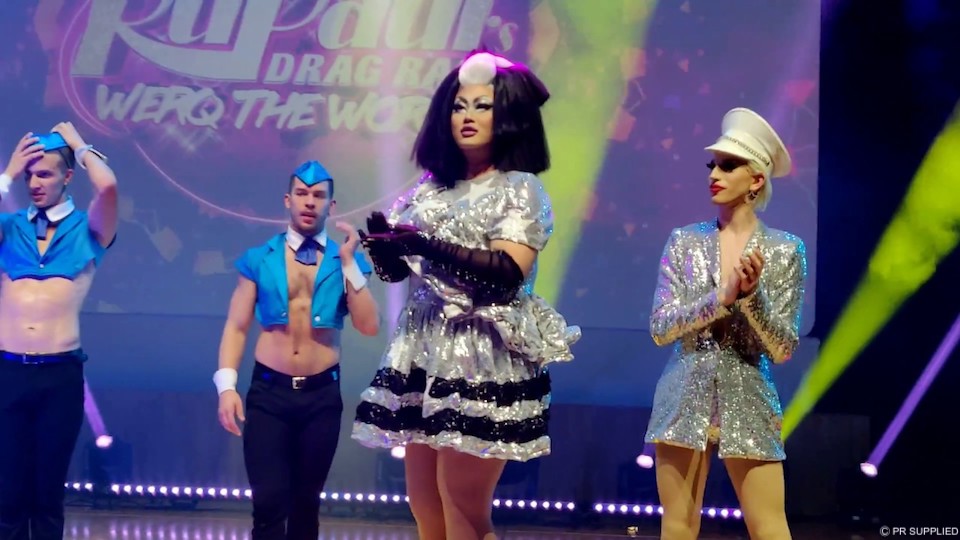
RuPaul’s Drag Race ‘Werq The World Tour’ is coming to Cardiff in 2019 with its biggest UK show ever. The tour which showcases some of the best stars from the hit TV series will play Cardiff’s Wales Millennium Centre on the 19th May 2019.
Produced by Voss Events, Drag Race producers World of Wonder and VH1, the all-new production follows a team of intergalactic queens including Aquaria, Asia O’Hara, Detox, Eureka O’Hara, Kameron Michaels, Kim Chi, Monét X Change, Naomi Smalls, Sharon Needles and Violet Chachki on their mission to the sun to save our solar system from a dark entity intent on harnessing its power.
Mission leader Michelle Visage guides the audience through the universe for a dynamic display of the wonders held by each planet and its regal sovereign.
Tickets go on sale December 19 (pre-sale begins December 17), just in time for the holidays.
“This is the biggest, most elaborate production we have ever created,” says an exuberant Brandon Voss, the show’s producer.
“The music, sets, fashion, choreography and lighting are all a cosmic feast for the senses. Audiences will be in awe as their favourite queens come together on some incredible numbers.”
“Werq the World is the official Drag Race tour for a reason,” continues Visage. “The show has always been a theatrical production of the highest calibre but in 2019, we’re stepping it up into the stratosphere. This show is going to leave fans gagging and I’m not afraid to say that my performance, in particular, will give you life.”
Voss Events is a leading production company that consistently delivers superior entertainment programming. Past events have featured stars such as Lady Gaga and Cher.
The queens will be coming to Belfast, Birmingham, Manchester, London, Bristol, Glasgow and Sunderland.
The WERQ THE WORLD TOUR will travel major cities in Europe, Asia, Australia, North and Latin America in 2019. To book tickets for all the dates click here