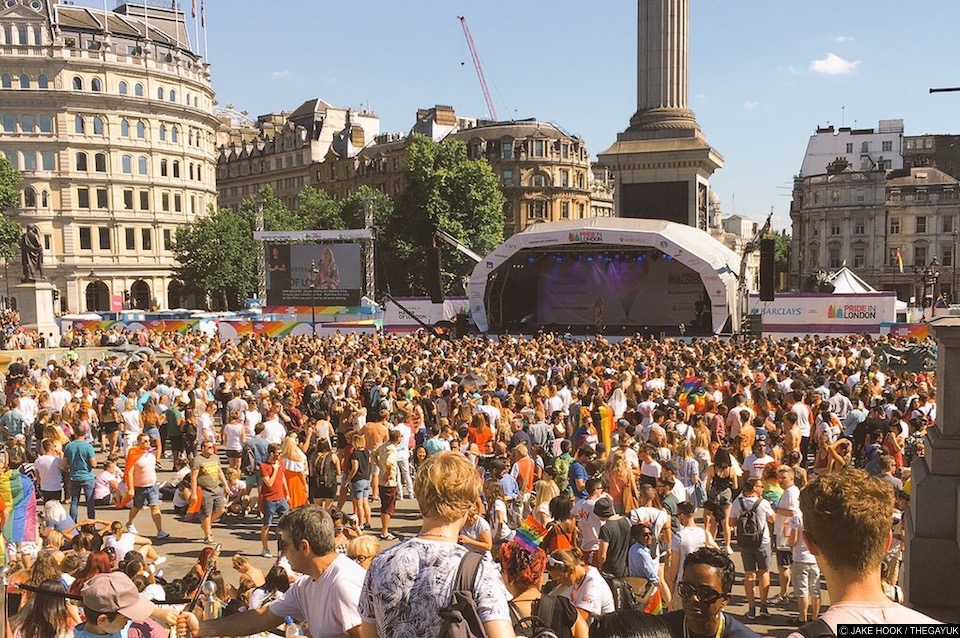
Amsterdam is warming-up for Pride 2018! But is Pride really still necessary?
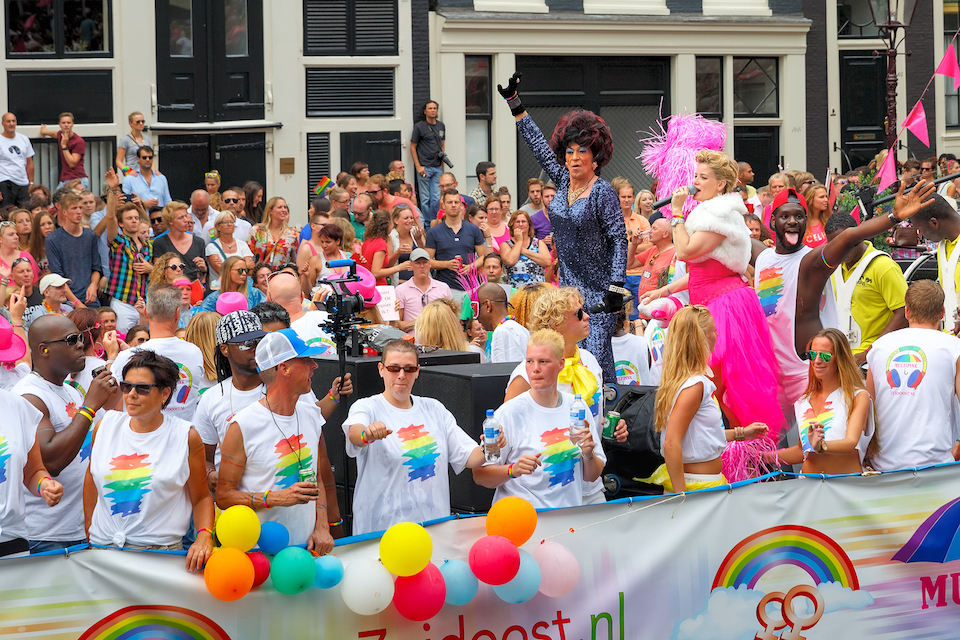
Participants at the famous Canal Parade of the Amsterdam Gay Pride 2014.
At a very early age, I realised that, unlike my colleagues in school, I felt more attracted to boys than to girls. As a young boy growing up in a small village in Portugal 30 years ago, I had no clue about what to do with those feelings. Homosexuality was not mentioned at home or in school. It wasn’t discussed on TV either. The only few times that I heard about it, it was in a negative, mocking way, which made me feel like something was wrong with me, and that being gay was something that I had to hide.
30 years later, a lot has admittedly changed. In Portugal, for instance, same-sex marriage has been legal since 2010. And The Netherlands, where I live now, was the first country in the world to legalise same-sex marriage in 2001. But is this the case of every single country in the world?
Despite these facts, many straight people insist on asking me: Does it really make sense to still celebrate Pride? Their main argument is that there is no such thing as a Straight Pride. Please let me ask you:
Have straight people ever been attacked or fired for merely being straight? Do straight people have to worry about holding their partner’s hand in public? Do straight people’s vacation plans have to be made by taking into account which country not to travel to for fear of being imprisoned because of their sexuality? Have straight people ever had the unpleasant experience of having to come out to their family and friends?
Are you still wondering why there is no Straight Pride? Or are you just happy that you don’t need one?
This year, Amsterdam Gay Pride (the largest gay pride event in the Netherlands, and one of the largest in the world) will take place from July 28 to August 5, and it will pay particular attention to human rights. The annual boat parade, which sees the canals lined by over half a million spectators, will take place on Saturday, August 4. Boats of, among others, Amnesty International, Greenpeace and the College of Human Rights were proclaimed this year by the organization as “Pearls of the Parade.”
While growing up, I remember feeling like I did not belong.
CREDIT: Ryazan / BIGSTOCK
Somehow, I never seemed to meet the expectations that society had planned for me. And because I was different, I was constantly bullied. This happened from first grade to the end of High School (from 6 to 18 years old). The bullying I experienced was so traumatic at times, I’m still feeling the effects today. But I chose not to be a victim! I learned patience, perseverance, and dedication. Now I really know myself, and I know my voice. It is a voice of pain, but each pain has made me stronger, each betrayal more intelligent, and each experience wiser. I finally realised that being different makes me unique and that is my power!
“I finally realised that being different makes me unique and that is my power!”
It is true that a lot has changed since I was bullied, but I am afraid that it is still not enough. In recent years, a series of bullying-related suicides across the globe have drawn attention to the connection between bullying and suicide. Though many adults still see bullying as part of being a child, it is a serious problem that leads to many negative consequences, including suicide. And this needs to change! My hope is that by raising awareness to this issue one more kid will get help, so he won’t get discriminated or bullied.
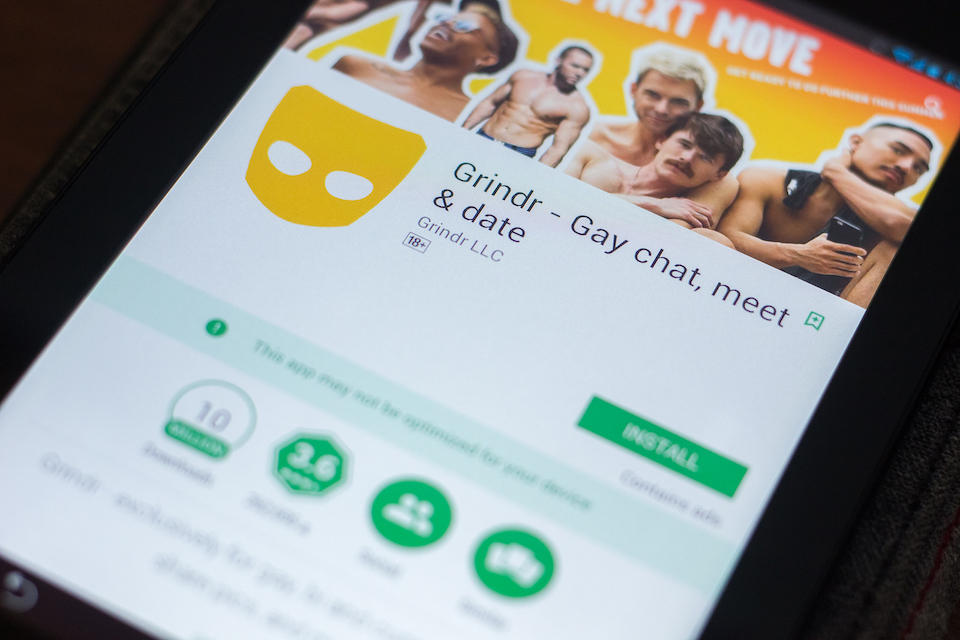
But more than addressing the discrimination from the outside world, I deem it necessary to also raise awareness to the increasing discrimination within the LGBT community. “No Asians, no black people, no femmes, no fatties, no oldies…”: This kind of language can easily be spotted on gay dating apps. Our community has been oppressed by the outside world for so many generations. Why do we insist on doing it to ourselves now?
Are apps doing enough to respond to user discrimination?
I cannot answer that, but I am hoping that by talking about these issues we can raise awareness and hopefully encourage people to be kind to each other. We already have the outside world against us.
“After his first question, ‘Which is your favourite train model?’ (I kid you not), we sat in silence. I don’t think he was impressed with my answer. I told him my favourite train was Thomas. Before the bell rang to signal the end of the three minutes, he had already got up and left the date”
I don’t know why I didn’t think of it years ago. I’ve tried Grindr, Plenty of Fish and various other dating apps. I’ve attempted blind dates, set up by well-meaning friends. I’ve even turned my hand, or should that be legs, to bike rides in the country. All to no avail.
So I saw an advert for speed dating in Leicester Square and decided I had nothing to lose. Other than a clock load of three minutes.
I came to the conclusion that even I couldn’t go wrong with speed dating. Only three minutes with each man. Surely even I couldn’t show myself up in that time frame.
This will come as no surprise to my friends, family or avid followers of this column, but I had a Savvy B to calm my nerves and give me a drop of Dutch courage. A rather large drop of Dutch courage. I say a glass, it was actually a bottle.
The bell rang and it was time for my first three-minute date. I was at a table with a rather handsome man, who at a guess, I would place in his early forties. He had such beautiful eyes, I felt myself start to swoon. I believed I was about to meet my perfect man.
Well, let me tell you this, whoever coined the phrase, looks can be deceiving deserves a medal. He opened his mouth to tell me his name was Derek. He had a voice which only the word monotone could be used to describe. Trainspotter springs to mind.
After his first question, “Which is your favourite train model?” (I kid you not), we sat in silence. I don’t think he was impressed with my answer. I told him my favourite train was Thomas. I mean, I was only joking but he had obviously had a sense of humour bypass. Before the bell rang to signal the end of the three minutes, he had already got up and left the date. RUDE. Things can only get better. I hoped.
I’d never been so grateful to hear a bell in my life. Well, apart from dinner time back in primary school. I was a fat kid, what can I say? I got up and moved to my next victim. Whoops, I mean man.
I found myself sat opposite another handsome man. But I told myself not to judge a book by its cover after my first failure. Wait until you hear him speak, I heard a voice in my head tell me. And when he did, I fell in love. He was very posh, well-spoken and far from monotone.
He asked me a question about my occupation and as my gob opened, I saw an eyebrow raise on his boat race. Our voices and accents couldn’t be any more opposite. He clearly came from Barnes and me from Staines.
“It’s like being on a date with a character from EastEnders!” I kid you not, those were the exact words that left his mouth. I would have raised my eyebrows too, but after botox, I struggle to perform this action.
He was clearly put off by the way I spoke so instead of raising my eyebrows, I raised my arse from the seat and finished the date prematurely. Third time lucky I hoped as the bell rang again.
I clutched onto my glass of Savvy B and decided it WOULD be third time lucky. I may be the unluckiest gay in the dating world but I would never lose my optimism. PMA. Positive mental attitude. I’m going to have it etched on my gravestone.
I sat down at the next table, well I say sat. I’d had a few glasses of New Zealand plonk by this point, so the word stumble is a more appropriate description of how I travelled to my seat. I soon sobered up as I clapped eyes on my next potential beau. DING FUCKING DONG.
It was a refreshing joy to finally meet a VERY handsome man who seemed reasonably normal. And we seemed to hit it off like a house on fire. We laughed together and he even asked me out for a drink after the speed dating had finished. Maybe the undateable gay’s curse is finally lifting. WATCH THIS SPACE…
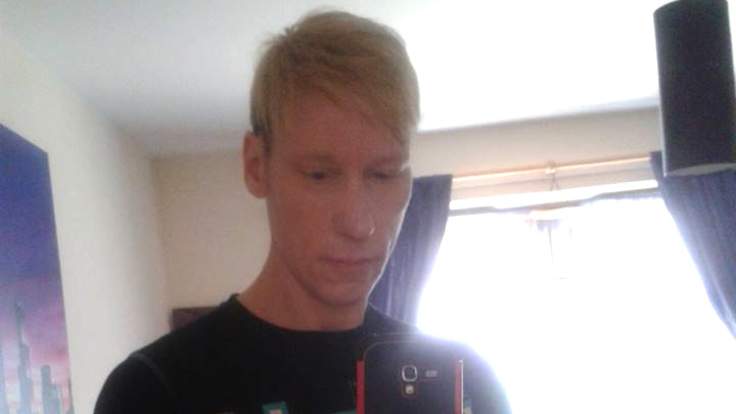
Port was named ‘The Grindr Killer’ by the tabloid press because he accessed many of his victims through the Grindr dating app. Much of the media coverage of the story and the subsequent popular interest in the case focused upon this new way that killers and sexual predators could access their victims. Indeed, I have researched the use of social media by killers for several years now, exploring how homicide perpetrators use Facebook[i] and exploring the meaning of homicide confessions posted on social networking sites[ii]. However, focusing upon these elements can sometimes distract us from some of the bigger and more pressing issues – issues that are not new and are intricately woven into our social fabric. Exploring contemporary attitudes to gender and sexuality and confronting the stubborn persistence of homophobia in our culture are all crucial to understanding what enabled Port to cause as much harm as he did.
Having met his victims on Grindr or dating sites, Port drugged and sexually assaulted them. He used a substance called GHB (gamma-hydroxybutyrate) or the similar GBL (gamma-butrateactone). Port’s callous disregard for the lives of his victims is shocking. He did not care whether they lived or died.
After killing 23-year-old fashion student Anthony Walgate on 17th June 2014, Port left his body on the path outside his flat, putting a small bottle of GHB in Anthony’s pocket. He lied to the police and said Anthony had taken the GHB himself and he’d moved his body outside because he was scared they would think he had killed him. Port received a short prison sentence for perverting the course of justice.
Just over two months later, Gabriel Kovari – who worked in a London shop – was murdered by Port. Kovari was Port’s flatmate of only two days. On 25th August, Port administered a fatal dose of GHB and assaulted Gabriel. Port told friends that Gabriel had just walked out one day and he didn’t know where he had gone. On 28th August, Gabriel’s body was found propped up against a wall of the churchyard in the ruins of Barking Abbey, close to Port’s home. Gabriel had a bottle of GHB in his pocket. His phone was missing. A dog walker discovered his body.
A few weeks later, 23-year-old chef Daniel Whitworth was Port’s next victim. Port and Daniel had agreed to meet on 18thSeptember. Having killed Daniel, the following day, Port deleted his account on the dating site and carried his body to the grounds of Barking Abbey, leaving him close to where Gabriel had been left. Daniel was found by the same dog walker who discovered Gabriel. Again, a bottle of GHB was found in Daniel’s pocket and his phone was nowhere to be seen. With Daniel’s body was a note that stated he had taken his own life because he felt guilty for killing Gabriel Kovari. Port was trying to blame an earlier murder on his latest victim.
CREDIT: met police
At the time, local media reported that police were not looking for suspects in the deaths of Gabriel and Daniel, describing their deaths as unusual and confusing but not suspicious. Nor were they linking Anthony’s death to them.
Just under a year later, 25-year-old forklift truck driver Jack Taylor would become Port’s fourth and final murder victim. Port killed Jack after meeting him on 13th September 2015. The following day, Port deleted his account and took Jack’s body over to the same churchyard where he had left Gabriel and Daniel. In Jack’s pocket, Port left a bottle of GHB, a tourniquet and some medical wipes.
“What went wrong here was that the net which should have caught him was full of holes. He was able to slither out and kill again, time after time”
It was not until October that the Metropolitan Police’s homicide and major crime command took over the case and arrested Port in relation to all four deaths. The Met also referred the case to the Independent Police Complaints Commission (now the Independent Office for Police Conduct) because of what they termed ‘potential vulnerabilities’ in how police responded to the four deaths. This investigation is still ongoing.
How did Port get away with murder for as long as he did? I would argue that this had very little to do with his ability to avoid getting caught – indeed he came onto the criminal justice system’s radar very soon after killing Anthony Walgate. What went wrong here was that the net which should have caught him was full of holes. He was able to slither out and kill again, time after time.
The police response
Port could have been stopped earlier in his killing cycle and unfortunately, this has a ring of the familiar about it. Dennis Nilsen, convicted of killing six men between 1978 and 1983 but suspected of killing at least twelve, also came within the police’s grasp. Douglas Stewart walked away with his life after an encounter with Nilsen in 1980. Nilsen had tried to strangle Douglas, who went to the police, showing them the red marks on his neck. Nilsen knew exactly what to say when challenged by officers, denying Douglas’s claims and saying the two had had a ‘lover’s tiff’. At the mention of homosexuality, the police lost interest. Nilsen would go on to murder several other young men. A similar but fatal incident occurred in the USA when one of serial killer Jeffrey Dahmer’s victims escaped – only to be returned to Dahmer’s apartment. By the police. The following is a transcript excerpt from Milwaukee Police Communications[iii]:
Police Officer: Intoxicated Asian naked male. (Laughter) Was returned to his sober boyfriend. (More laughter)
Dispatcher: 10-4 64 and 65.
Police Officer: 10-4. It will be a minute. My partner is going to get deloused at the station. (Laughter).
Port is one of several serial killers to have targeted gay men. Dennis Nilsen. Peter Moore. Colin Ireland. Jeffrey Dahmer. The man charged with the murders of several men in Toronto’s Gay Village[iv].
“These killers all benefited from the fact that their victims belonged to a stigmatised social group”.
These killers all benefited from the fact that their victims belonged to a stigmatised social group. This stigma permeated – and continues to flow through – a range of social institutions not limited to the criminal justice system. These victims belonged to a social group who didn’t matter as much as others. There was less sympathy for them. They were less worthy, less deserving of a thorough and rigorous investigation. The gay men targeted by serial killers are often additionally vulnerable because they have left home, are in need of a roof over their heads and have lost contact with their families and friends. Many of Dennis Nilsen’s victims fitted this profile and several remain unidentified to this day. They were once someone’s son, someone’s friend. Port’s victims were different, they had not runaway, they had jobs, families and friends. People noticed their absence and reported them missing. The gay rights activist Peter Tatchell has drawn attention to the importance of social class as well as sexuality in this case.
If four young middle-class men had been murdered in Chelsea, police would have probably made a public appeal much sooner and mounted a far more comprehensive investigation. In contrast, the murder of low-income gay men in working-class Barking was treated very differently. Whether conscious or unconscious, police officers stand accused of class and sexuality bias[v].
Criminologists have a concept for this – it’s called hierarchies of victimization[vi] – where people are not treated equally when they become the victims of crime based on assumptions made about them because of their socio-demographic characteristics like gender, sexuality, social class, age and ethnicity.
Unfortunately, in the cases noted above, the criminal justice system provides us with several examples of homophobia at its worst. It’s a sad fact that over 50 years after homosexuality was decriminalised in England and Wales that we are still seeing gay men let down by the very institutions that should be there to protect us all. They are still not receiving the justice they deserve. And that is just not good enough.
[i] Yardley, E. and Wilson, D. (2015). Making Sense of ‘Facebook Murder’? Social Networking Sites and Contemporary Homicide. The Howard Journal of Criminal Justice, 54(2), 109-134.
[ii] Yardley, E. (2017). Social Media Homicide Confessions: Stories of killers and their victims. Bristol: Policy Press.
[iii] Milwaukee Police Communications transcript, 2.00AM., May 27, 1991. Cited in Egger, S. A. (1998). The Killers Among Us: An examination of serial murder and its investigation. Upper Saddle River, NJ: Prentice Hall, pp 256-7.
[iv] Bruce McArthur has been charged with many of these homicides.
[v] https://www.theguardian.com/commentisfree/2016/nov/24/stephen-port-murder-inquiry-homophobia
[vi] Greer C (2007) News media, victims and crime. In: Davies P, Francis P and Greer C (eds) Victims, Crime and Society. London: Sage, pp. 20-49.
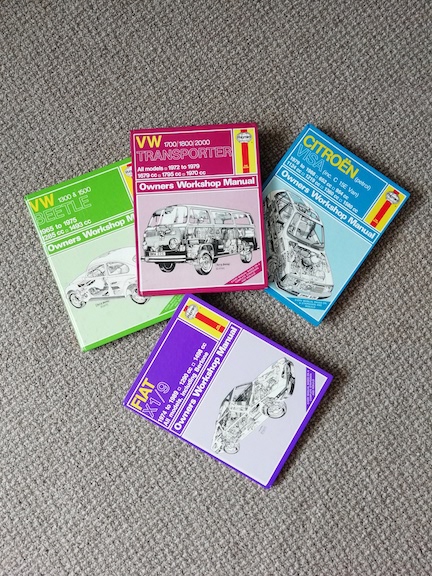
Someone l follow on Twitter recently mentioned about looking at the car pictures in the Haynes manual and it got me thinking.A lot of my misspent youth was spent wasting hours and hours of it reading through the Haynes manual when l should have been studying or doing homework. You see, I started to buy Haynes early in life. I was about 13. My first was a for the 65-75 VW Beetle 1300 and 1500.
30 years later and I still have it.
Apart from Terry Davey’s art illustrations on the front, it was always the actual picture inside that l would while away the hours dreaming about. And my addiction for the Haynes didn’t just stop at a few. It didn’t even stop at the cars I owned. Remember I was 13 when I started to buy them. Correction, collect them. I had all sorts. My addiction was fed with a super injection of Haynes workshop manuals that my father’s friend was throwing out.
So 30 years later and I hate to admit that I did cut some of them out of my collection but only due to space. Out of the 26 left, how many of the cars have I owned? 9 which now I look at it I don’t think was so bad.
OK, it was bad, that’s a third and spread over 3 decades. But what about the ones with the pictures I lusted after. Well, I sat down, pondered, regaled in the joy as I thumbed through a few and put together my top 3.
3) The Citroën Visa 79-88 652cc – 1580cc
This is a bit of a cheat because at the time the family had a Visa. It would become my first car. That didn’t, however, stop me from lusting after the picture of the Visa GTi in the supplement section.
It sat there on a wet floor in an industrial estate. It wasn’t even registered. There was no need for Haynes to cover the licence plate. This was fresh!
The crazy headiness of what a Visa with a 1600cc injection engine would feel like over my fathers 954cc 10E almost feels me to this day with an actual squeal and bust blood vessel. Forget all this though as the GTi had 4 headlights!
Now in my day, a fast sporty car had extra lights. Those quad lights gave the humble French hatchback as an aggression that belied its humble beginnings.
2) Fiat X1/9 74-89 1290cc – 1498cc
Top off, wind in the hair, mid-engined handling and pop-up headlights all contained in a little package that your hairdresser drove. Actually, ours drove a Golf convertible, same difference really just different car.
I did manage to get to touch the inner working of an X1/9 at a young age of 15 when I used a friend’s for an art project. I have to admit it now that I was obsessed with the pop-up headlights. THEY POPPED UP! So I had pictures of it with lights up and lights down. I’d watch them with amazement.
The picture was of a ‘Series Speciale’ complete with ladder graphics but no alloy wheels that we got in the UK. This was also left-hand drive thought this didn’t worry me one jot.
The roof was off. The sun was streaming onto the fabrics and it looked the nuts. I would lay on my bed thinking about storming up the lanes near our home and taking sweeping corners that I was only then able to do so on my mountain bike.
I’ve owned this car and the reality is quite different. Mine tried to kill me on a corner once.
1) Volkswagen Transporter 72-79 1700/1800/2000
This is a special one. Haynes did 2 for the Transporter and I picked this one by mistake. It had this funny engine that I had not seen on a VW. The pictures were a young boy’s wet dream of fantasy rolled into 2 pages.
The cutaway illustration was a mass of details and based on the Microbus deluxe. That extra trim still makes me giddy though I have never been able to work out why there is a bumper bracket when there isn’t one?
Cut to the picture inside and it wasn’t the camper that I wanted but the 7 seat microbus with US side markers. I said to myself there and then that I would have a bus from the US.
Now what made this picture all the more dreamlike was the lady in saddles who sat by the open sliding door. The dogtooth tartan print of her slacks did it. I wanted those slacks.
Many years one and I have been that sad to track down an original press picture of that, VW 2863-73 and the sales pamphlet that it came from that year. Sadly I haven’t been able to find the slacks but I did recently buy bedding from Dunelm that matched. And that’s good enough for me.
Ownership has been every bit as joyful as the picture even though mine is a camper model because I like to have somewhere to sleep. What it never told me was the abysmal 18 miles to the gallon you got. How did the hippies run these things?
I’ve managed to own two of these dream cars of mine, all three if you include the Visa as a collective of the range. It has taken some time and the odd distraction along the way but don’t ever let your focus be blurred.
Dreams are achievable, just be realistic and don’t aim for the Lamborghini Countach. Haynes never did a manual for that one any.
In Part two of Simon Sayers-Franklin’s Pride series, he explores the origins of Pride at the Stonewall riots and why we fly our Rainbow Flag!
How Did Pride Begin?
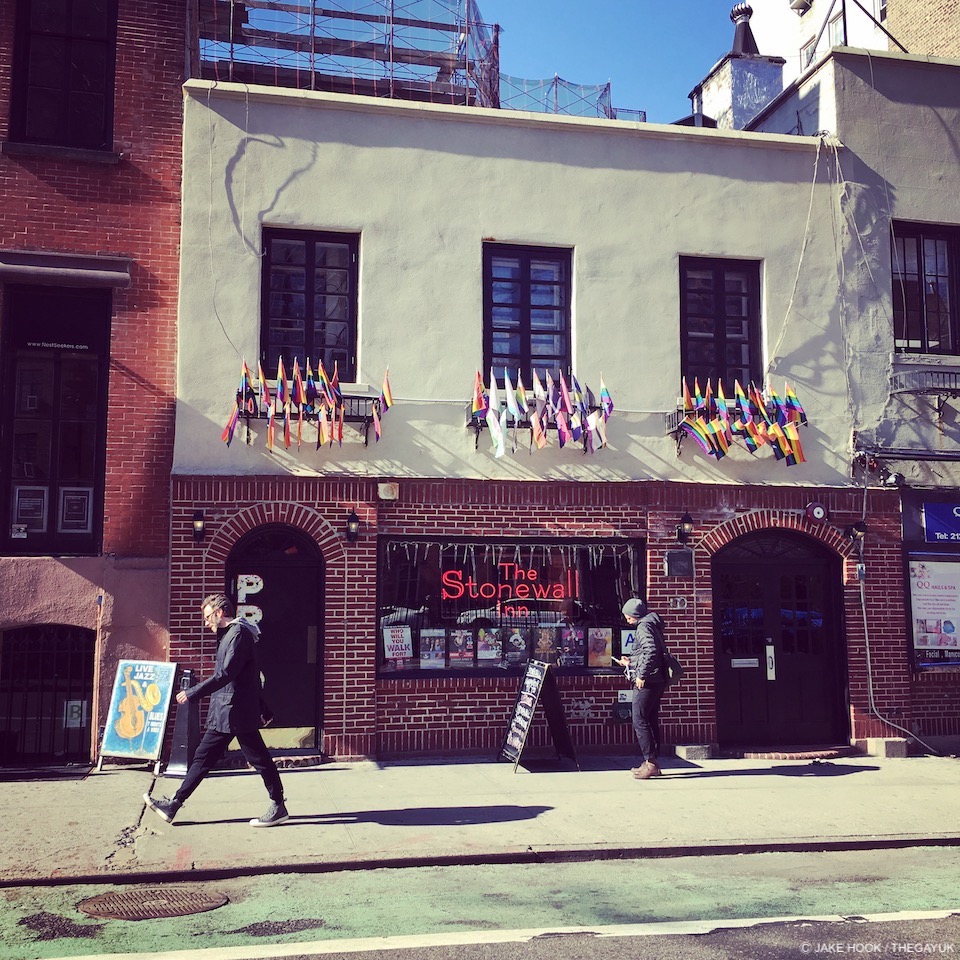
Pride originated on 28th June 1969. Back then police raids on gay bars, like the Stonewall Inn, were common. The authorities would come in, push people around, display violence, intimidate, bully and randomly arrest people. The arrests were frequently made for tiny, inconsequential things such as drag queens wearing more than one or two items of ladies clothing or being caught in compromising positions.
Often the bars, which were largely owned by the Mafia, would bribe the police to tip them off when raids were due to occur. The gay bars would often have two rooms – a bar in the front and a dance floor in the back. Dancefloor lights could be triggered from the bar to send a secret message to the people next door that a raid was about to happen. This allowed them to stop dancing or quickly find an opposite-sex partner if they wished to continue dancing.
It was in the early hours of the morning on June 28th 1969, that an LGBT friendly bar in New York was subject to a raid – something that was all too common in gay bars. This bar, however, was one of those owned by the Mafia and catered to transgender people, drag queens, effeminate men, sex workers and homeless people of many backgrounds. The bar in question was the Stonewall Inn.
This raid, however, was different from the beginning. Firstly, the owners were not tipped off, secondly, it happened very late; around 1:20 am. There had been rumours about a raid that night but it was dismissed as inaccurate information.
The night it all began, two undercover policemen and two undercover policewomen came in and gathered evidence while the rest of the team waited outside. When those who had gained entry called for backup the music died, the house lights came up and those who realised what was happening ran for the doors and windows in the bathrooms but were blocked in by the police.
There were reportedly over 200 people in the Stonewall Inn that night. Little did the police know, that this as not going to go the way they expected.
Usually, the police would line up the people, check ID and then the female officers would escort those wearing female clothing to the toilets, where they would be subject to physical checks and if men were found wearing female clothes they would be arrested. Not this night. This night everybody refused to produce their ID and those in women’s clothing resisted being taken to the bathrooms. This resulted in high tensions, only made worse by the police who became inappropriate while frisking some of the lesbian patrons.
The police had been sent to seize all of the alcohol, which was apparently bootlegged. While this happened, the people inside were made to wait in the line. Those who hadn’t been arrested were allowed to leave but they congregated outside. It wasn’t long for the crowd to grow – a mix of those who had been released and those who had seen the disturbance and joined out of curiosity. Those who were released exited the bar to rounds of applause and they bowed and posed and it was all very theatrical.
By the time the first police wagon arrived, the crowd had multiplied as much as ten times and as the Mafia were escorted out and put in the van people started shouting “Gay Power.” and others started singing. An officer pushed a drag queen who hit him with her purse. People threw debris at the wagon and that was when a woman, thought to be, Stormé DeLarverie, was dragged out in handcuffs. She kept escaping and fought four police officers. When she complained the handcuffs were too tight she was hit over the head with a baton and screamed: “Why don’t you guys do something?”
It was this moment that triggered the riots that would go on to last six days!
Who threw the first brick at the Stonewall Riots
The patrons of the bar had taken enough and were sick of being pushed around. It was reported that the drag queens and trans women of colour were among the first to fight back. It was Marsha P. Johnson, a black, gender non-conforming, sex worker, a founding member of Gay Liberation Front and a popular member of the New York gay and art scenes, who was apparently one of the first to kick off her heels and fight the police. It is, however, unclear what role Johnson played in the events that night. She disputed that she was the one to start the riot by claiming she arrived at 2 am when the place was already on fire – a fire she claimed was started by the police.
These riots were a major moment for LGBT people and Stonewall became an iconic image of rebellion and resistance. It stood for our strength and our refusal to back down.
It was the next year, 1970, that the first Pride march was held in New York on the anniversary of the Stonewall riots. From that moment we have continued to celebrate Pride in the month of June to honour those who kickstarted a revolution. We march to represent our strength and unity. Our community is strong together and Pride shows just that! In modern days it still has political undertones but these days in the western world particularly, our events stand for inclusivity, visibility, having fun and celebrating love and equality rather than fighting for it.
Why Do We Have a Rainbow Flag?
The flag was devised by artist Gilbert Baker after he was challenged by Harvey Milk (another hero and martyr for the LGBT community), to create a “symbol of Pride” to represent the LGBT community. It debuted at the 1978 Gay Freedom Day Parade and has been an icon of our community from that day.
The original rainbow flag as created by Gilbert Baker
There were originally eight colours in the rainbow instead of six:
Hot Pink represented sex/sexuality. It was taken out due to manufacturing issues after Baker approached a company to mass produce the flag. Apparently, the hot pink fabric was too expensive to make.
Turquoise, representing magic and art, was lost when the Pride Parade Committee wanted to fly the flag in two halves along both sides of the street for the 1979 Gay Freedom Day parade. Turquoise was dropped to leave six stripes, therefore, leaving an equal number to split.
Red is life.
Orange is healing.
Yellow is sunlight.
Green is nature.
Indigo is serenity
Violet is spirit.
A modern variation, created in 2017, added black and brown stripes to highlight the People of Colour within the LGBT community. There were a mixed reaction and a lot of controversies because of how the flag never represented “race” and was always meant to represent aspects of life that apply to everybody, regardless of ethnicity. It also caused upset by changing the artist’s original vision.
Newspaper The Sun has reported that a premier league footballer has ‘paid to keep his male lover quiet’.
There is almost always talk of a footballer being gay. In 2018, we still don’t have a premier league footballer that is out and proud. Of course, there are some footballers that have announced their sexuality, but it comes after retirement when they’re no longer at the top of their game.
And that’s a problem.
According to The Sun, the premier league star who has not been named, offered to pay his fashion worker lover to keep quiet. The sum offered is rumoured to be £10,000. The Sun goes on to say that the footballer in question has a child with a female partner, and is bisexual. The male lover in question is said to be a 21-year-old fashion worker, who has also remained anonymous.
Instead, the 21-year-old chose to speak anonymously to raise awareness of the continued homophobia and taboo surrounding male football players. He has said: ‘It isn’t the players that are the problem — although he is guarded with who knows. It is because of the backlash from the fans that he is terrified of it coming out.’
The football player has reportedly told close friends, some of who are footballers themselves, and has been greeted with support, but he is terrified of the fans, of the heckle calls being shouted from the stadium.
In 2018, should we not be more focused on the ability of a footballer’s talent to score goals, to win for their team, than their sexuality?
Unfortunately, whilst that is what we should be focussing on, it seems fans have another agenda. In a 2013 dossier, Brighton fans reported hearing these chants: ‘You’re from a town full of gays and we hope you all die of AIDS.’
It doesn’t make ‘juicy gossip’ to hear of a male footballer coming out as gay. I’ll admit, it is interesting, and it’s natural to want to know who that man is. But the pressure he must be under tells us that forcing him out is wrong. Instead, the attitude towards gay men on the pitch needs to change.
It isn’t as though that isn’t happening. In 2013, the first LGBTQ fans group for a major football group – in this case, Arsenal – was set up. Since then, there are more than 30 LGBTQ groups offering support to both fans and in the closet football players.
Meanwhile, Welsh Rugby player Gareth Thomas, who came out as gay after retiring from the sport, said that if a footballer were to come out today, they would be ‘walking into the unknown’.
Whilst the FA are maintaining they are encouraging their players to ‘be themselves and support their teammates to do likewise’, we are still lacking any prominent out and proud football players that are still at the top of their game.
The problem, of course, is not with the footballer player themselves. They are surrounded by men who are telling them to conform, to play the game and are idolised by men all across the world. In some countries where these footballers play, it is illegal to be gay, with some countries allowing a death penalty. Whilst not all of the football audience are homophobic, trolling chants about gay men can appear to be incredibly daunting. Surveys have shown that three-quarters of football fans don’t care if a player is gay or bisexual.
What is also the problem is no one wants to be first. Peter Tatchell, a gay rights campaigner, said: ‘To allay the anxieties of individual players, the Professional Footballers Association should organise a simultaneous coming out by several stars. That way, no single player would have to deal with the media and public reaction. There would be safety in numbers.’
With rumours in the past linking Ashley Cole to another player, a rumour he distanced himself from publicly and assuming the player in recent reports is someone entirely different, there would, of course, be enough players to come out together. The problem with this happening is internal struggles.
We live in a society where an open, gay football player would be what we need. An influential man with a following of both straight and gay football players would really do wonders. LGBTQ groups would feel included, and awareness could be raised to the industry of football as a whole, and the problems that need to be dealt with and overcome.
It’s easy to say that a footballer should lead the way in coming out, but it’s easy to forget the internal struggle of coming out.
Pride season is finally here! It’s time to dig out the rainbow flags, the glitter and sequins!
In part one of this series on Pride, I’ll be exploring why Pride is so important to us as a community.
In recent years we have made huge progress worldwide in terms of LGBT+ rights. We can get married properly, we are protected in our workplaces and in everyday life. We can adopt or get surrogates to have a baby for us. We are accepted as true, legitimate families and Wales has recently announced that it is going to start teaching about LGBT+ relationships in schools to help children understand about same-sex relationships. We live in a wonderful time and that needs to be celebrated.
We also live in a time where we can be beaten up or murdered for so much as holding the hand of a loved one. We could die or be permanently physically injured or worse for daring to do something as innocent as love. Fair enough, it’s not as dangerous now as it was in the eighties when the AIDS crisis enhanced tensions and hostility towards the LGBT+ community but it’s still bad. It took a lot of work to get us to where we are now and there’s still more to do.
In parts of the Middle East people can be thrown off buildings for simply being suspected of homosexuality. In Russia, gay people are persecuted on a daily basis in the most brutal, horrific ways. In Chechnya, gay people flee for their lives or face being slaughtered by their own families in a “gay purge.” In Uganda, you can be imprisoned for life for being gay, or again, killed. Even Dubai, a glamorous holiday destination, adored by the West is a dangerous place for LGBT+ people. This is just a handful of examples.
Worldwide, LGBT+ people aren’t safe yet they defy their countries laws and hold Pride marches. In the countries mentioned before, and so many more, there are often devastating scenes of cruel attacks. These Pride marches are nothing like ours. Ours are a celebration of what we have and how far we’ve come, theirs are the complete opposite. They are life-threatening political performances where often the events are cancelled last minute for the activists’ safety. On the instances the very brave few go ahead, tragedy often follows close behind.
In 2015, Shira Banki was stabbed to death at a Pride march in Jerusalem by ultra-Orthodox Jewish man, Yishai Schlissel who had committed a similar crime ten years previously and served a decade-long prison sentence. He claimed he was “doing God’s work.” when he murdered Shira three-weeks after being released from prison. Shira was just sixteen years old.
Sadly scenes like this are too common.
This is why we need Pride.
Pride is a symbol of the fight our community have endured and the pain they have suffered to get us to this point. It is an important part of our culture and as we enter Pride season it is vital that we should remember and respect those who afforded us the celebrations we know and love now.
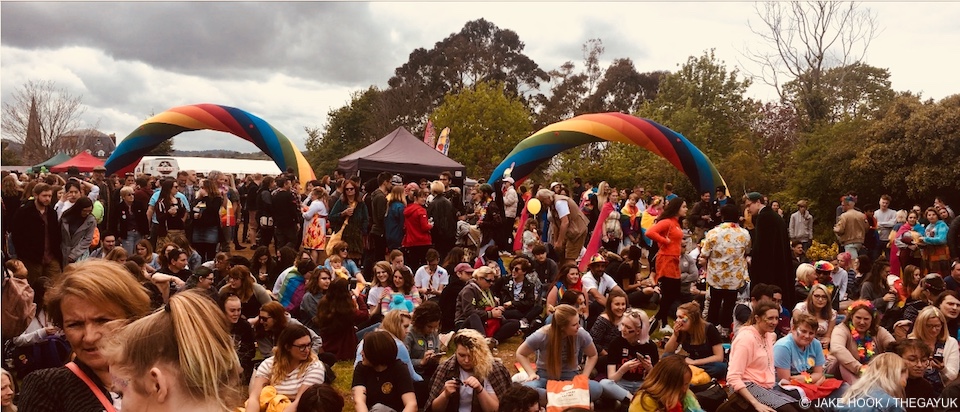
Throughout most of the Western world, Pride is an event where we can go and have fun with friends and family. We can enjoy music and entertainment and march through our respective cities with rainbow flags flying. We march hand in hand with our same-sex boyfriends and girlfriends and husbands and wives. We can freely identify ourselves as we wish and we do it with pride. We do it safely without fear of repercussion and stand in unity alongside people of all backgrounds, races and sexualities: Gay, bi, trans, straight. Pride is for all of us, of all ages and backgrounds to express ourselves honestly and authentically. Even our straight allies are proud to march with us in solidarity and that is a shining example of how far we’ve come. It wasn’t always the case.
In history, it was a criminal offence to be homosexual. If we were caught out for these “crimes” we could be imprisoned or forced to undergo “Conversion Therapy.” War hero, Alan Turing, who created the Enigma machine that helped us win the war was arrested in 1952 for “gross indecency.” He accepted chemical castration as an alternative to going to prison. After all he did for us, and he was treated like a criminal just for being gay. He was essentially tortured with cancer-causing drugs and eventually died a few days before his 42nd birthday from cyanide poisoning. While initial inquests ruled suicide, it has since been decided that his death was from accidental poisoning.
Homosexuality was eventually decriminalised in the UK in 1967 but it wouldn’t be until 2013 that Alan would be posthumously pardoned for his “crimes.”
This is why we celebrate Pride. We celebrate because we can. We do it because of these horrendous laws in the past that prevented LGBT people from being allowed to express themselves. We celebrate our right to exist in a world where we’re making progress and raising awareness of the troubles still faced by other in less fortunate regions across the world.
However, the decision has been met with criticism, including from Newcastle Pride organisers – who last week announced that they had to scale down aspects of their event due to lack of funding.
“It is great that a big company like Primark wants to lend their support to the LGBT community but I do worry about the impact this will have on the community led organisations like ourselves up and down the country,” said Stephen Willis, festival director of Newcastle Pride.
“Stonewall do an amazing job but they are a national organisation with a large presence, whereas local Prides are more often than not organised by volunteers with a lack of sponsorship and funding.
“Many Prides rely on generating income from selling merchandise but if Primark are selling their own range at discount prices, this will direct much needed funds away from actual Prides, which are struggling as it is.”
As part of the partnership, Primark have announced an array of rainbow branded products – including t-shirts featuring the names of cities the range will be sold in.
“Considering Primark is tailoring the range to the cities they are selling them in, their support may have been better allocated by partnering with local organisations so they could help to sustain future Prides,” said Stephen.
“Although the community has come a long way, LGBT people are still suffering from homophobia and hate crime and that is why hosting Pride parades remains important – to reinforce the message of equality and offer people a space they feel safe and accepted.”
This year’s Newcastle Pride takes place 20 – 22 July, under a big top tent at Nuns Moor Park, with a huge musical line-up, including headlining performances from Alexandra Burke and S Club.
As well as the acts on the main stage, on site will be a range of market stalls, a fun fair, the family and youth zone, the Steve Paske health zone, eight food stalls and five bars.
The event is free to attend, but those wanting to support Newcastle Pride can do so by making a donation, buying merchandise or upgrading to Golden Circle or VIP tickets at www.northern-pride.com.
For more information, visit Northern Pride’s website or search northernprideuk on Facebook or Twitter.
Opinions expressed in this article may not reflect those of THEGAYUK, its management or editorial teams. If you’d like to comment or write a comment, opinion or blog piece, please click here.
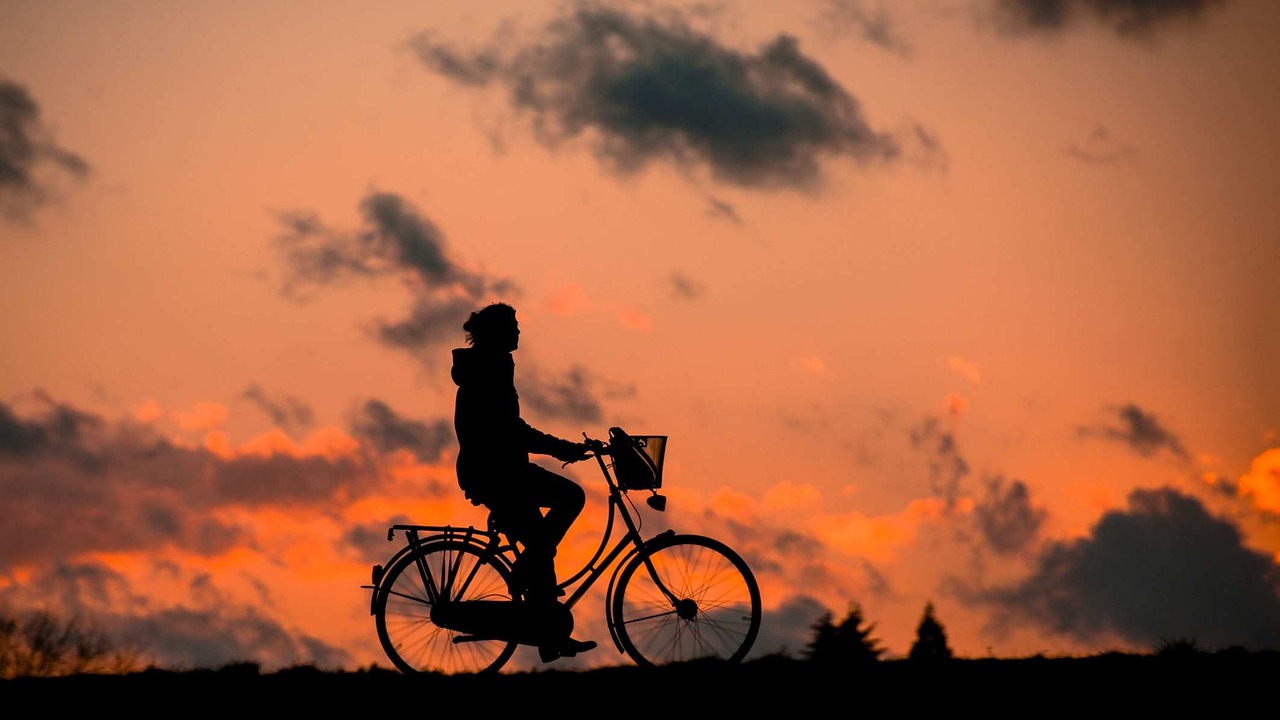
Now I know dear readers that you will automatically assume that I am talking about sex. But I’m actually talking about the innocent act of riding a bike. And before any smart arses ask what bike riding has got to do with a dating column, let me fill you in. Pun intended.
I’d been loosely seeing a lovely man from Chichester, the odd date here and there, the occasional stroll along the harbour, the rare fornication or three. Now you may have noticed that I’m referring to him in the past tense. Just for why will become clear by the end of this column.
Just before Easter, this said man invited me on a mini break to West Wittering in West Sussex. To quote Bridget Jones, “a mini break, it must be true love!” I was so excited, I’d never been whisked away on a mini-break before. I was getting butterflies inside, certain that this was the man for me.
And for those of you who know West Wittering and the surrounding areas, will know what a beautiful part of our country it is. My absolute favourite place in the whole wide world!
I made the suggestion that we go for a bike ride on our first day. I could think of nothing more exciting or romantic than riding along together, through country lanes and down sand dunes, with the wind rushing through our hair, staring into each other’s eyes over the handlebars.
Now the only issue I had was my car. For those close to me will know that my car is the size of a smart car, so there was no way my bike was fitting in that. But my dear Father came up with the solution. I could borrow his fold-up bike. I said yes, but that was before I’d clapped eyes on it. What a god awful contraption. It has to be seen to be believed.
Day one and the sun was shining down on us in West Sussex. To quote a dear friend, the sun always shines on the righteous.
After Chichester man had contained his fit of the giggles at the sight of my Father’s fold-up bike, we set off for our ride like a scene from Gone with the Wind.
As the wind tickled my ever balding scalp, I turned to look back at my riding companion. And joy filled my heart along with the ripe sea air filling my lungs. God, I sound like I’m writing a sickening romantic novel this month.
We’d ridden about two miles when we arrived in Bracklesham Bay and I noticed a lady walking along with a pram. Chichester man had now overtaken me and was a few hundred yards ahead. He seemed to be much faster than me as you could hardly gather much speed on my Father’s archaic fold up contraption.
In the silence of the country lanes, I suddenly heard a loud snapping sound which echoed down the street. Even the lady with the pram heard it and we shared eye contact as the confusion on our face was mutual. As I fell backwards from the bike, it soon became clear that the snap was the saddle. And the next thing I knew, I was on my back in the gutter, legs akimbo with a saddle on top of me and a bike slumped in the kerb.
I let out an almighty shriek as I went down like a sack of shit. The shriek could be heard on the Isle of Wight. And people gathered around me and all I could see were faces staring down at me. After the circle of faces realised nothing more than my pride was hurt, they dispersed and carried on about their business. I stood up, bike in one hand, saddle in the other.
Chichester man was nowhere to be seen. Had he not seen what had happened to me? Had he not realised I was no longer riding along behind him? Or had he felt too embarrassed to acknowledge he was with the saddle snapping gay boy? I would just like to take this opportunity to point out that the bike’s weight limit is 15 stone and I am only 12 stone, 11 pounds.
Realising my mini-break companion had done a Houdini on me, I decided to walk back and find the nearest pub. I needed a pint. As I strolled into the pub with the saddle in my hand, a man looked at me most peculiarly.
“That’s a funny looking bike!” he dared to remark. To which I snapped back,
“Don’t even talk to me about this fucking bike!” Poor man. I bet he wished he’d never commented.
The moral of the story. Never ride a fold up bike. And never assume a mini-break means true love.
Having lived and grown up in Wales my whole life, sexual education during secondary school was a massive let down, not only for me and my LGBT peers past and present, but also the straight community…
When teaching pubescent teenagers about sexual intercourse in secondary school PSHE classes, the teacher was always greeted with snickering laughs, comments from the lads and jokes cracked by some lame guy.
As Wales prepares to give sex education in Wales school an LGBT inclusive over-haul, I was reminded of my own experience of sexual education.
Wales have announced plans to have a major overhaul of their sexual education in schools, planning to change their current curriculum. By doing this, Wales will be ‘leading the way’ in sexual education, something that is extremely important.
The changes would mean the subject would be renamed to ‘relationships and sexual education’, and were announced by Wales’ education secretary, Kirsty Williams. Williams has said that the days of traditional sex education were ‘long gone’.
30 years ago, section 28 was introduced, which banned the ‘promotion of homosexuality in schools’. Now, 30 years later, Wales is moving forward to include an LGBT inclusive subject in sexual education. The teaching will focus on issues such as consent, domestic abuse and diversity.
The new education curriculum will come into force in 2022, and will be taught to children from five to sixteen years of age. The subject will now be embedded in the curriculum, instead of being taught as a separate subject.
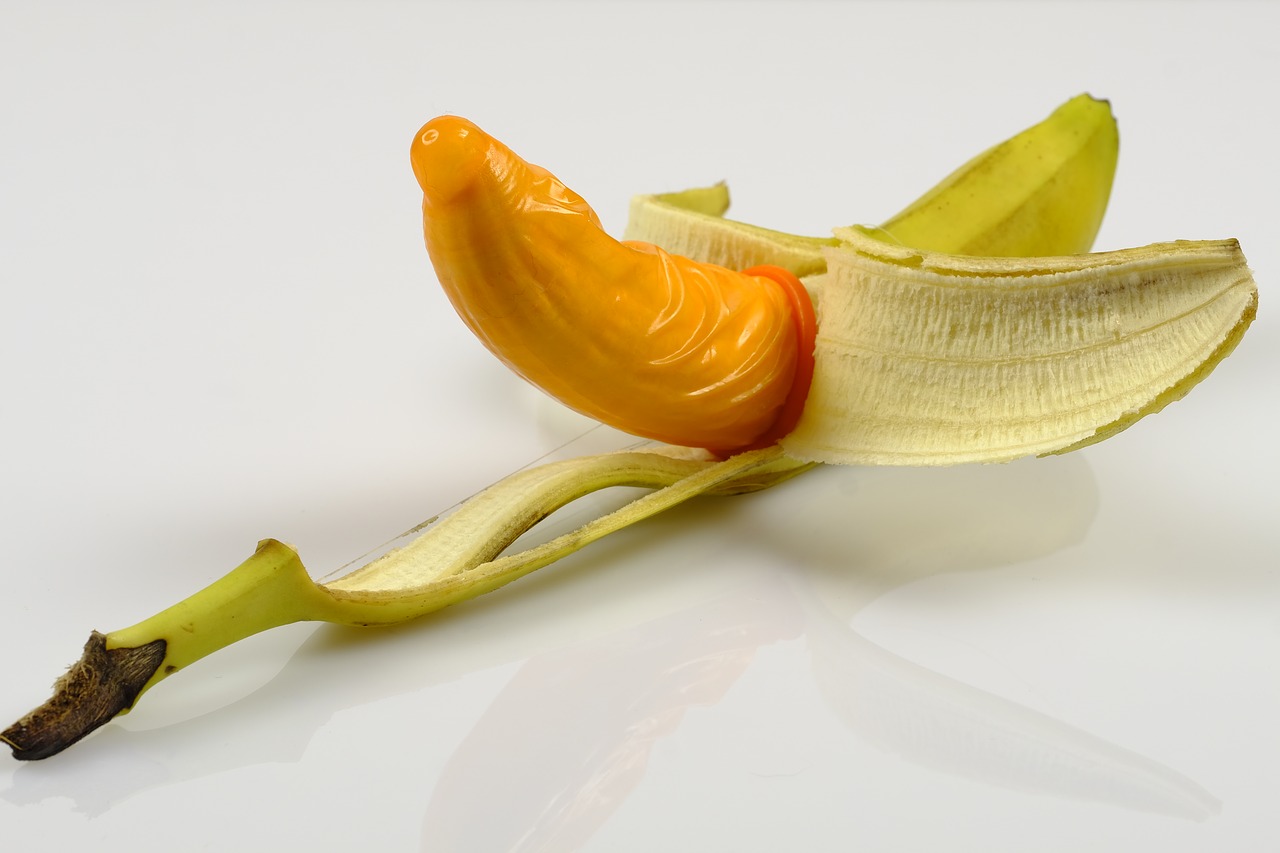
Bru-nO / Pixabay Is learning how to put a condom on a banana all that helpful?
Kirsty Williams said, ‘The world has moved on and our curriculum must move with it. Sex should never be taught in isolation for the simple reason that it is about so much more than just sex; it’s also about relationships, rights and respect and that must go hand in hand with a much broader understanding of sexuality. Anything less does a disservice to our learners and teachers.’
Stonewall Cymru, and LGBT charity were pleased with the announcement. Their director, Andrew White, has been campaigning for this change for a while. White said: ‘It’s great news, particularly as this week is the anniversary of the introduction of section 28 and our research shows that a majority of LGBT young people here in Wales have heard nothing about LGBT issues in the classroom.
‘The legacy of section 28 unfortunately still lives on and this change will go some way to readdressing the balance.’
He then went on to say that these discussions should be in the classroom, as talking about it online could spread false information. ‘If we don’t, those conversations will happen on the web with sometimes unreliable sources.’
As a Welsh gay male, it’s important to see this change happen. It’s even better to see that my country, who have sometimes been a bit behind on LGBT rights, particularly in places such as the valleys, are the leading country to be putting this forward.
When I was in education, my sexual education consisted mainly of STD’s and how to avoid them, and I was always taught about wearing a condom before having intercourse with a woman. We were taught how to put a condom on a banana, and we also saw how condoms are packaged. We learned briefly about the female reproductive system, and how the egg is fertilised, but one thing we never touched on was LGBT sexual relationships.
As I discovered my sexuality, online porn websites were my education. Whilst I didn’t take scenes literally, understanding that whomever you have sex with must consent, it has been noted that people who watch porn may get lines blurred between what is acceptable in a real-life sexual relationship. Having consent taught in education systems is extremely important, for both heterosexual and homosexual people. Personally, I think what also needs to be taught is that sexuality is now being seen as fluid, as well as being young and confused. I didn’t truly accept who I was until I was 18/19.
Sexual education must also discuss alcohol and sex. Many encounters are under the influence of alcohol, and some are above board and others are sadly not. This must be covered, as ignoring the problem doesn’t achieve anything.
When I was young and watching pornography, I discovered how men have sex. I was able to tell how a condom went on by watching a porn star put one on. Whilst my body image confidence went down, I still took something away from porn other than a fun time. I learned how sex happens, and how it can work, albeit if it was edited together and the stars had no chemistry.
But learning from porn, whilst useful to me personally, is not how we should be learning as LGBT people. Even now, the transmission and treatment of HIV is rather hazy to me, and as a teenager finding sexual partners, I worried myself sick about contracting what I thought at the time to be a deadly disease. Being taught in school that HIV, whilst being deadly without treatment, is now easily treatable with correct medication, and also being taught easily preventable with the right methods, would have saved me a lot of time growing up. It would also be nice to see HIV being discussed openly as a disease that affects everyone, regardless of their sexuality. I still feel like many people see it as ‘a gay man’s disease’.
So whilst my sexual education taught me that pizza men would result in a sexual experience, I’m happy to see that Wales will now teach a new generation that sex doesn’t work like that.
Opinions expressed in this article may not reflect those of THEGAYUK, its management or editorial teams. If you’d like to comment or write a comment, opinion or blog piece, please click here.