Search results for: “ ”

  • ANSWERS | What Does MTF Mean?

    MTF is an acronym often used in the trans community to describe someone’s transition from male to female.

    What does MtF mean?

    The acronym MTF sometimes stylised as MtF, within the transgender community means Male to Female.

    A MtF person is someone who was born with male physiology and characteristics and was brought up as male. When they start their transition to live as their desired gender identity, in this case – female, the process could be described as MtF – but this not always the case.

    FTM or FtM is the reverse of this – Female to Male.

    ALSO READ: What does the I in LGBTQI stand for

    ALSO READ: What does the P in LGBTQIP stand for

    Can you better describe this? Use the comment section below to expand the discussion.

  • Justin Bieber Shows Us What’s Filling His Underwear

    Justin Bieber Shows Us What’s Filling His Underwear

    Calvin Klein’s underwear model Justin Bieber has refreshed our memories about the contents of his underwear.

    In his latest risqué selfie singer turned CK model Justin Bieber is seen clutching his manhood whilst standing in his grey/blue Calvin Klein underwear.

    CREDIT: Justin Bieber / Instagam

    Although we do have to say that the original pictures of JB in his CKs was, shall we say, a lot more impressive in the package area.

    CREDIT: Calvin Klein / Tyrone Lebon

    CREDIT: Calvin Klein / Tyrone Lebon

    CREDIT: Calvin Klein

    ABOVE: In adverts for the Calvin Klein launch campaign, Justin Bieber flaunted his biceps, pecs and a large package. (CREDIT: Calvin Klein)

    ALSO READ: Watch what Buzzfeed did to make these men achieve the Justin Bieber  “perfect 10” body

    Earlier this month the Biebs told fan that he was no longer going to allow fans to take pictures with him – and that he didn’t owe anyone a picture – so we guess this is just his way of giving back to his fans.

    GET THE LOOK:

  • INTERVIEW | Neil Bartlett

    Alone in a silent room, a man waits for a knock on his door. As the minutes tick by, he remembers a life filled with daring and laughter, with parties and heartbreak – a life spent searching for the courage to be himself.

    Inspired by the true story of the strange life and lonely death of Mr. Ernest Boulton – one half of the infamous Victorian cross-dressing duo Fanny and Stella – Stella is an intimate meditation on the fine art of keeping one’s nerve as the lights go out. Performed amidst the newly restored splendours of one of London’s oldest surviving music-hall interiors, it is a theatrical love-letter to a truly remarkable person.

    Neil Bartlett has been one of Britain’s most individual writers and theatre-makers for over thirty years. His early work included the now-legendary Sarrasine and A Vision of Love Revealed in Sleep; from 1994 to 2005 he was Artistic Director of the Lyric Hammersmith. Since leaving the Lyric he has made controversial new work for the National, the Manchester International Festival, the Edinburgh Festival – and the Royal Vauxhall Tavern. Stella is his first original theatre piece in London for over three years.

    I first became aware of Stella (Ernest Boulton) when I read Neil McKenna’s 2013 book Fanny and Stella. The story is both titillating, hilariously funny and devastatingly sad and I was instantly fascinated to learn more. I was excited to hear that Neil Bartlett has written a play based on the life of Stella and that this is being shown as part of the London International Theatre Festival in the beautiful setting of Hoxton hall in London’s East End.

    CHRIS BRIDGES: For those who don’t know anything about Ernest Boulton can you tell us a little more about him?
    NEIL BARTLETT: The real Stella was called Ernest Boulton, and he was born in Tottenham in 1848. His parents tried to get him to settle down to a career as a bank clerk, but by the age of twenty he was living a very different kind of life than the one they had planned for him. When he wasn’t trolling the West End in tight trousers and full slap , he was working as a drag performer under the name of Stella. On stage he was billed as a female impersonator, but offstage he could also pass as a woman. His lover – an aristocrat Tory MP, no less, one Lord Arthur Pelham-Clinton – rented Stella a flat just off the Strand, and there the two of them slept in a double bed and told the servants that they were  man and wife. As if that wasn’t enough of an outrage, Stella also went out on the town without Arthur, trolling the pavements of the Strand for trade while dressed as a far less respectable kind of lady.

    In the spring of 1870, this glamorous lifestyle all went disastrously wrong; Stella was arrested in full drag after having been spotted using the ladies’ toilet in a West End theatre. Remarkably, she got off. The charge was conspiracy to commit a felony – i.e, sodomy – and though there was ample evidence that Stella was an outrage, there was no evidence of actual buggery on the night in question. What is even more remarkable is what happened next. Instead of hanging her head in shame, Stella immediately went back out on tour with her drag act; less than a year later, indeed, she had changed her name, dyed her hair blonde and was playing in New York, just off Broadway. So much for the idea that all Victorian homosexuals were unhappy victims! The work in New York dried up as she lost her looks, and Stella eventually came back to Britain to tour in the lower rungs of the provincial variety circuit, sticking it out until shortly before her death in London in 1904.

    Ernest had some hideous experiences and his story is a sad indictment on how the Victorians treated gay and transgender men. Would you describe ‘Stella’ as a tragedy?
    When I first discovered Stella’s story – which was way back in the dark ages of the 1980s, when I was researching my first book, Who Was That Man? about queer life in Victorian London – it was the young Stella who I identified with – the young fearless queen, sticking two fingers up at the world with her frocks and shamelessness. I was, after all, a young queen myself, and knew quite a bit about the pleasures and perils of trolling the West End in drag. Now I’m the same age that Stella was when she died, it is her courage as an older queen that intrigues me most. What kind of nerve did it take to play all those games with gender and identity in a century where no vocabulary existed to describe what you dreamt of being?

    What kind of nerve did it take to tour for all of those years, way past the time when her looks had started to go? Most of all, what kind of nerve did it take to make her final journey – we know that Stella died in the National Hospital, on Queen Square in Holborn, so having lived all her life in frocks, her final identity must have been that of an anonymous patient in a man’s jacket and trousers.

    I think Stella has a lot to teach us about courage, about keeping your nerve – so I suppose by bringing her back to life in this show I’m trying to give her a chance to pass on some of the lessons her life taught her. The show is dark, and funny – and uplifting.

    Picture shows: Richard Cant

    You’ve previously written about life for gay men in 1890 and compared this with your own life in 1980 in your novel Who Was That Man? Do you think there are parallels between the time of Ernest’s trial in 1871 and life in 2016?
    Now is a great time to be telling Stella’s story. Sometimes she was a drag queen, sometimes a flaming fairy, sometimes she was a passing “lady”, sometimes she looked and behaved exactly like a pre-surgery, pre-hormones cross-dressed MTF (Male to Female) sex-worker. She challenges all ideas that “identity” is a destination; she was on a journey until the day she died. I think that’s an idea we’re very open to right now, now that trans and non-binary people are doing all this amazing work to open our eyes and hearts and minds. Stella really asks to think about what matters more; who you are, or how you are. For me, Stella’s true “identity” was her courage.

    How did you approach researching and writing the play?
    I read everything that has survived – all of the letters and bits and pieces that were preserved in the trial transcripts – and I also spent a lot of time in the British Library tracking down the scripts of the plays that Stella acted in when she was on tour (there are some lines from some of them tucked away in my script)– and I looked at all the photos of her that have survived. That girl did like a photographer’s studio! Just as importantly, I talked to the friends of mine who – like Stella – live and/or work in bodies and gender identities different to the one they were assigned at birth. Fabulous people – Justin V Bond , Scottee, Rebecca Root, Jo Clifford….and some of the things they told have found their way into my Stella’s mouth.

    Picture shows: Oscar Batterham

    One of the things I loved reading about was Fanny and Stella’s language. The Victorian phrases slang terms were colourful in the extreme. Do we get hear much of this in the play?
    There are fragments of Stella’s original voice in the play – but it’s not a history lesson. I’m really trying to put the audience in the same room as her and just let her talk… though I must say, she does have a sharp turn of phrase at times, like every queen I’ve ever known.

    Hoxton hall is a stunning place. Quite a coup to show the play in such a pertinent place. Can you tell us more about the venue?
    Hoxton Hall one of London’s best kept secrets – a jewel, hidden away half way up Hoxton High Street. Stella is a very intimate show, all about being in the same room as this extraordinary creature, and so it felt right to find somewhere small and secret – also, of course, Hoxton Hall is very much the kind of place that Stella would have played – it’s an actual Victorian musical hall, complete with cast iron balconies and red velvet curtains.

    For this piece I wanted to go back to the way of making queer theatre that I used when I first started back in the 1980s, with shows like A Vision Of Love or Sarrasine – find somewhere fabulous and then lure the audience there after dark with the promise of a touch of naked flesh, a bit of cheap costume jewellery and a truly haunting story from our queer past. Since the 19080s my career has taken me to big theatres, the National and the RSC and all that, but I think I’m happiest  in the dark with an audience of queers and a truly magical space.

    Finally, if Ernest were alive today what do you think he’d be doing?
    Misbehaving at the Shadow Lounge wearing a fabulous outfit that somebody else had paid for.

    Stella plays at Hoxton Hall from 1 – 18 June 2016, 2.30pm and 7.30pm

    Post show events:
    Panel discussion post-show on the 7th of June with Neil Bartlett, Jonny Woo, Jo Clifford and more
    Dialogue Theatre Club on the 9th of June hosted by Maddy Costa and Jake Orr

    Follow Chris Bridges on Twitter

  • Dale Winton Comes Out For Donald Trump

    Dale Winton Comes Out For Donald Trump

    Dale Winton has fallen for Donald Trump, explaining that he feels “compassion” for the Republican Presidential candidate.

    Embed from Getty Images

    Donald Trump, it seems has an unlikely fan in the form of the openly gay TV presenter Dale Winton. Mr Winton gushed about the Republican presidential candidate in an opinion piece for the Conservative Woman, explaining that he felt “compassion” for Mr. Trump and that he had the stalwart TV presenter’s attention even before he had uttered a word.

    The Mirror reports that the former Supermarket Sweep presenter admitted that he is a “closet fan” of American politics and said that the article was his “coming out article”.

    The 61-year-old presenter also hinted that he empathised with the multi-billionnaire businessman over the criticism of his tan. Mr Winton said,

    “As one who has spent his entire professional life being ridiculed for my ‘fluorescent tanned complexion’, I felt compassion for the man before he even uttered a single word.”

    Embed from Getty Images

    Dale Winton also said that he thought that Mr Trump was “truly authentic” and “fearless” and praised his battle against political correctness.

    Speaking about his admiration for Trump he said,

    “For sure he’s unruly, coarse and extreme, but he’s got a rare quality for someone in politics. He is truly authentic. Is it because he cares and he’s supported by a wonderful family including two ex-wives?”

    Winton, who came out as gay in 2002 in his autobiography also heaped praise on the anti-gay republican commentator Pat Buchanan, who said in 1983 that gay people, “declared war upon nature, and now nature is extracting an awful retribution.”

    He also cited Charles Krauthammer who said that same-sex marriage was “a huge loss for democracy”, as one of the commentators who kept his sanity in the last four years of Obama’s presidency.

    He justified his affection for Trump saying,

    “Maybe it’s because I’m a quiz show host and I’m watching the ultimate game show? The contestants from both parties are fighting to the bitter end in the hope of winning four to eight years in the White House?”

  • ADVICE | Will They Stick Things Down My Pee Hole?

    This week a reader is considering going to his first sexual health check up and is concerned they’ll put something down his urethra.

    Will They Stick Things Down My Pee Hole?

    Dear Team

    I’m thinking about going for a check up but I’m worried about things being stuck down my dick, I’ve heard that sometimes you use like an umbrella type device to check for infections… Is that right?

    John


    Dear John,
    Thanks for your question. The good news is that you won’t find the umbrella swab in a sexual health clinic…
    If you have no symptoms it’s just a urine test (throat and rectal swabs also for gay men). If you have symptoms we may need to take a tiny swab for the urethra.

    This isn’t painful just uncomfortable. But if you’ve got no symptoms then we just need a sample of pee.
    The staff are super friendly too so if there is anything you don’t want or are worried about just say.

    Jake + Jenna from 56 Dean Street


    OTHER QUESTIONS: HIV | WILLY WONDERS | HOLES | DOING IT | STIs | LUMPS & BUMPS | BACK TO SEX CLINIC HOME PAGE


    Got a problem you’d like advice on?

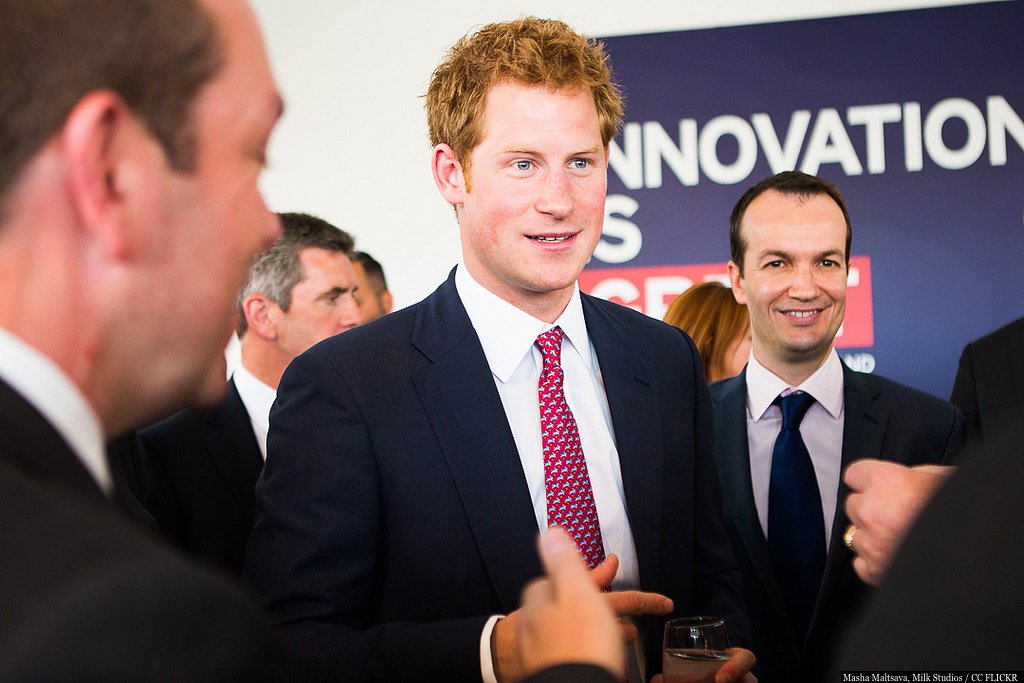
  • Prince Harry Tops The List Of Celebs Brits Want To Get Away With

    Prince Harry Tops The List Of Celebs Brits Want To Get Away With

    Prince Harry & David Beckham top the men most people would like to spend a long weekend away with, according to new research.

    CREDIT: H&M
    The prince topped the poll of famous people Brits would most like to join them for a short break.

    In second place is Friends favourite, Jennifer Aniston, followed by footballing megastar, David Beckham.

    Commissioned by Best Western Great Britain hotels, 2,000 UK adults were surveyed to see who they would like to spend a quick getaway with.

    Andrew Denton, Director of Communications at Best Western Great Britain hotels, which commissioned the study, said,

    “The British public have spoken and crowned Prince Harry their King.

    “He was a popular break date choice in the poll but you don’t need to be royalty to enjoy a perfect break.”

    Aussie pop queen Kylie Minogue also featured in top 10, along with soap star, Michelle Keegan.

    Some of the notable entries in the women’s list included veteran heart-throb Johnny Depp, X-Men star Hugh Jackman and singing sensation Adele.

    While Luther actor Idris Elba and The Night Manager‘s Tom Hiddleston appeared too.

    The findings follow a survey of 2,000 people which identified the signs you need are in need of break.

    It found that if you repeatedly hit snooze on the alarm, forget a loved one’s birthday, or put milk in the cupboard and cereal in the fridge then the chances are you need a break.

    Swearing more often, entering a room but forgetting why, and finding grey hairs also featured.

    Having a messy house but not wanting want to tidy it, getting into a mild rage when queuing in the supermarket or eating more and more comfort food are also signs a break is needed.

    While no longer having the energy to make small talk at work and over reacting when your work computer crashes are more reasons for some time away.

    On average, people will put up with five different signs a break is needed before they will actually commit to going somewhere nice.

    Other signs a rest might be a good idea include shouting at the telly more often and secretly wanting to dislike photos on Facebook when friends share their holiday snaps.

    Realising you’ve consumed your weekly quota of wine when it’s only Wednesday also featured, along with accidentally leaving the house with your slippers still on.

    Andrew Denton, Director of Communications at Best Western Great Britain hotels, said:


    “The results show it’s time the great British public stopped struggling and gave themselves a proper break.

    “We all know how easy it is to put up with everyday stresses, but it doesn’t need to be like that. Britain deserves a break and Best Western is here to help.”

    To be in with a chance of winning some great breaks visit: https://www.facebook.com/BestWesternGB/

    TOP 10 UK CELEBRITY BREAK DATES

    1. Prince Harry
    2. Jennifer Aniston
    3. David Beckham
    4. Hugh Jackman
    5. Adele
    6. Idris Elba
    7. Johnny Depp
    8. Emma Watson
    9. Kylie Minogue
    10. Scarlett Johansson
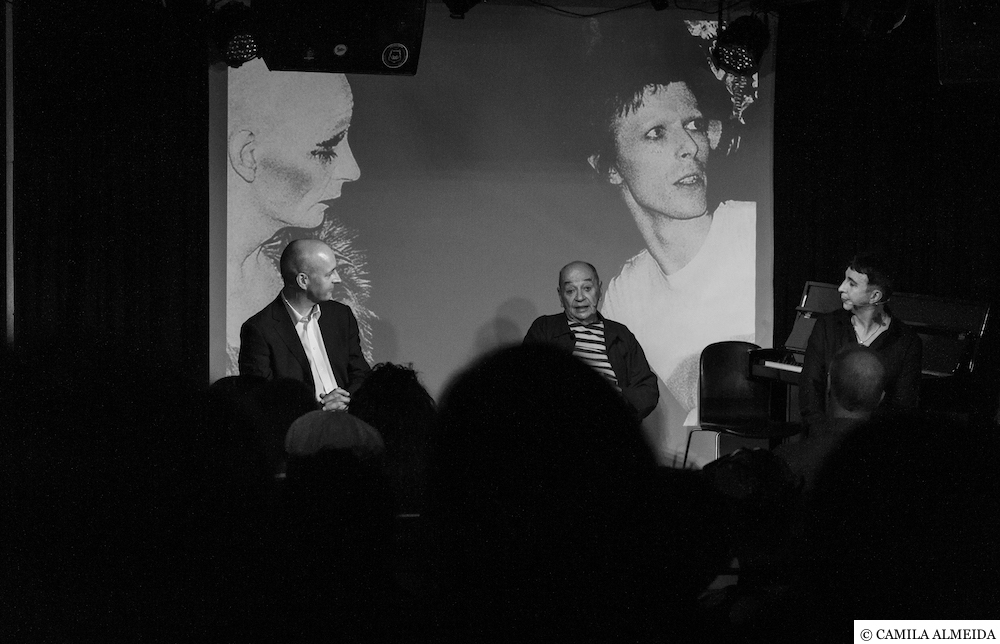
  • REVIEW | Lindsay Kemp: My Life and Work with David Bowie

    REVIEW | Lindsay Kemp: My Life and Work with David Bowie

    ★★★★★ | Lindsay Kemp: My Life and Work with David Bowie Interviewed By Marc Almond

    by Miss Shockingly Precise.

    CAMILA ALMEIDA @ THE ACE HOTEL

    British theatre, too often, is like the Catholic Church – full of fawning reverence for one-note deadbeats. Take Laurence Olivier. Sure, the guy’s voice was beautifully modulated, but his delivery, always, was so ridiculously clipped, precise and cold it sounded phoned in from the morgue. Olivier, somehow, always rigorously excluded emotion from his roles, which, if technically brilliant, never prompted tears or tore at listening heartstrings.

    That’s hardly the case with the stunningly emotive Lindsay Kemp, arguably British theatre’s most criminally under-appreciated genius. Taking English reserve by the throat and making gorgeously perverse, tenacious love to its’ dreary expectations, Kemp’s a singular and unlikely Messiah of the marvellous.

    Never heard of him? Of course you have; as David Bowie’s crucial, formative mentor, Lindsay inspired and helped create Bowie’s era-defining, still hugely influential Ziggy Stardust shows. However, that barely addresses Lindsay’s hugely innovative, still non-stop artistry, and fittingly, the Ace Hotel, the epitome of Shoreditch’s nouveau-hipster Renaissance, is celebrating Lindsay’s legacy.

    Outside, the pavements are crammed with adoring disciples eager for Lindsay’s first, London appearance since 2002, a celebration hosted by Marc Almond and Nicholas Peg. It’s completely deserved. For readers unaware of his legacy, Lindsay completely bulldozed theatrical tedium worldwide with a raw, radiant sexuality more relentlessly beautiful than a gay Sistine Chapel.

    The shows – Salome, Flowers, The Big Parade and many more – are landmark theatrical legends, but Lindsay, oddly, is overlooked by today’s crushingly ordinary theatre industry. That’s their loss, and probably, prompted by envy and the inability to market Lindsay’s fabulous, unrestrained genius as a guaranteed cash-cow. Still, tonight, the Ace Hotel is bursting at the seams with stellar talents frantic to lionise Lindsay on his own terms, discussing his own life and Bowie anecdotes.

    Firstly, there’s the enigmatic, irrepressible and outrageously entertaining Ernesto Tomasini, who – in a nod to tonight’s Bowie reminiscences, delivers soaring, falsetto takes of ‘Starman’ and ‘Threepenny Pierrot’. Then, there’s a huge, spontaneous rush of mass goodwill as Lindsay himself holds court, informally urged by a hugely appreciative Marc Almond and Bowie expert Nicholas Peg. If one measure of judging an artist is his influence on others – as Dali, arguably, inaugurated everyday surrealism – then Lindsay’s pivotal influence on Bowie, Marc Almond and countless others speaks volumes.

    Single-handed, coming from the most improbable circumstances – a working-class, pre-World War Two baby from Yorkshire – Lindsay’s maverick, sexual brilliance would, eventually, totally invalidate unimaginative theatre. Yes, Lindsay’s only possible, if less influential, British rival – the fiercely iconoclastic Steven Berkoff – also assaulted British restraint, but only Lindsay relentlessly elevated gay sexuality as a subject of breath-taking wonder.

    So no wonder David Bowie came running to study at Lindsay’s bewitching feet. Inevitably, they became involved, with Bowie co-starring in ‘Pierrot In Turquoise’, an early Kemp production, but Bowie’s ferocious ambition and libido proved too volatile for sustained collaboration. Ziggy Stardust, of course, stands as a permanent, world-changing monument to their later, final teamwork, but the focus, tonight, is on Lindsay’s beautifully idiosyncratic memoirs.

    He’s shocked, visibly, at how London’s changed, and even his hugely typical generosity of spirit can’t mask that regret. “I ventured into Soho, but it’s changed a lot, they’ve ripped out the wickedness. The bohemians are gone and there’s no danger, it’s very dull’. His own recollections, however – effortlessly summoned from a seemingly bottomless well – are gold-standard outré, a train-wreck, incest child of Picasso and Fellini. “I especially miss…  Miss Martinez (an exotic princess who danced in Soho, to the music of Ketelby’s) who always danced with a stuffed peacock on the streets…”

    Never remotely deflected from embracing his inner misfit – even by a vicious matron nicknamed ‘Frostbite’ at school, who scrubbed his face free of amateurish make-up with Vim(!) – Lindsay adored early 60s London. “Back then the city was glorious, liberating, and we definitely thought we would change the world – and we did, for about ten minutes!”

    Unsurprisingly – as a seriously conspicuous, de facto head of London’s rainbow demimonde – Lindsay was swamped with intriguing, if paradoxically low-profile offers. His small, cameo part is delightful in seminal, British horror flick The Wicker Man, but he didn’t warm to co-star Britt Ekland. “She was such a bitch,” he recalls, “I accidentally poured a glass of Guinness over her!” However, things improved with the arrival of a ‘fabulous looking girl’ on set. “She was Britt’s on-screen arse and knockers” Lindsay continues. “Britt was rather flattered…”

    In incomparable, mellifluous form, effortlessly charming at the bat of an eyelash or droop of a brow, Lindsay barely slows for queries from either host. But he pauses, smilingly, as co-host Nicholas Peg announces an exclusive extract from event planner Nendie Pinto-Duschinsky’s upcoming, major documentary on Lindsay and his world.

    Enthralling from the outset, it’s a bold, impressionistic portrait of a 21st Century pierrot – Lindsay himself – surfing the fabulous storm-surge of his own brilliance. Buoyed on an utterly uncharted, artistic tsunami, Lindsay’s drawn – and continues to draw – furiously devoted kindred souls in his wake. And, no matter how brief the contact, the fallout, often, is life-changing. ‘Timid Kate Bush’ for example, ‘became savage onstage’ and he taught Bowie “how to touch and reach and use stillness to communicate”. Difficult, you’d think, when Lindsay, partner Jack Birkett, Angie and David Bowie were all sharing the same bathroom, but brilliant, first impressions sanctify any downsides. As Lindsay so memorably describes his initial encounter with Bowie, ‘The door opened and it was the Arch-angel Gabriel!’

    Now, exit lines don’t get better than that, but the night’s not quite finished yet. With guitarist Neal X, host Marc Almond – himself a consummate lyricist and globally eminent torch singer of the bewitching, beguiling and bizarre – unforgettably serenades Lindsay. There’s a pin-drop hush as Marc, quite exquisitely, renders Jacques Brel’s ‘Port Of Amsterdam’ and Bowie’s ‘Starman’ as ravishing hymns of exultation. And then, ratcheting the feel-good delirium even higher, singer Holly Johnson presents Lindsay with a glorious, floral bouquet.

    Immediately, there’s an ecstatic, standing ovation from the host of gay celebrities present, as those of us lucky enough to attend remember one, unforgettable fact. There is true magic in this often dreary world, and it exists in two, simply enchanting words; Lindsay Kemp. Now and forever, the reigning Queen of gorgeous excess.

  • 40 Gay And Bisexual Men Will Be Offered HPV Vaccine In England And Wales

    Up to 40,000 gay and bisexual men attending genitourinary medicine (GUM) clinics will be offered the HPV vaccine as part of a new pilot programme, the Public Health Minister Jane Ellison has announced yesterday.

    The new pilot scheme – to start in June 2016 – will enable the vaccine to be offered to up to 40,000 men via GUM and HIV clinics and the results will inform decisions about a potential national roll out of the programme in the future.

    The Government’s independent vaccine experts – the Joint Committee on Vaccination and Immunisation – advised that the three dose vaccine should be offered through GUM and HIV clinics to gay and bisexual men who are at high risk of contracting the virus provided that the service can be delivered at a cost effective price.

    What Is HPV?

    HPV is the name for a group of viruses that affect the skin and moist membranes lining the body such as the cervix, anus, mouth and throat.  HPV infections are highly contagious when transmitted sexually.

    Some strains of the HPV virus can cause genital warts, and cancers of the anus, penis, mouth and throat. In some cases, it can also cause head and neck cancer.

    The HPV vaccine, which has been given to more than three million teenage girls since 2008 to prevent cervical cancer, will be offered to eligible men already attending participating sexual health clinics in England. The pilot is the first step in offering protection to gay and bisexual men.

    Gay and Bisexual to Benefit from the Trial

    Public Health England is finalising which areas will take part in the pilot scheme. GUM and HIV clinics in locations known to have large gay and bisexual male populations will be among the first to take part in the scheme.

    Public Health Minister, Jane Ellison, said,

    “We want to make sure that those most at risk are protected from potentially deadly cancers and genital warts and piloting this new programme is a step in the right direction.”

    “This pilot builds on the success of the current vaccination programme”

    Details about which sexual health clinics will offer the vaccine are being finalised, with some participating clinics aiming to start offering the vaccine to men from June this year.


    Minister for Women and Equalities, Nicky Morgan, said:

    “This Government is determined to ensure we address the specific health needs of LGBT people. Giving more people deemed at highest risk access to the vaccine will have a real impact on preventing the spread of HPV. The results of the vaccine roll out among girls has been extremely positive and so I’m delighted that we will now see a pilot roll out of the vaccine to gay and bisexual men.”

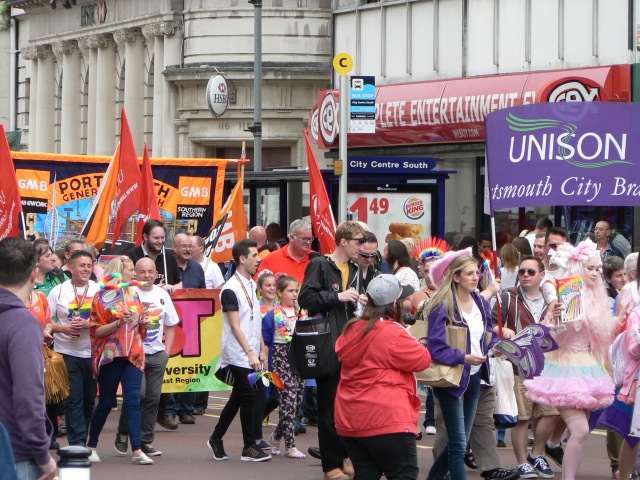
  • What Time Does Birmingham Pride Start

    What Time Does Birmingham Pride Start

    Thousands of people are expected to take part in this year’s Birmingham Pride. Here’s all the latest information to help you make the most of your day.

    What Time Does Birmingham Pride Start

    The parade for Birmingham Pride starts at 12.00pm (noon) on Saturday 28th May and will be setting off from Victoria Square. It is expected that from start to finish the walking time of the parade is 45 minutes. However the parade itself will take much longer than that because of the number of people involved with this year’s festivities.

    What’s the Birmingham Pride Parade Route.

    After setting off from Victoria Square the parade will then venture down New Street and left onto High street. It will then turn right at Carrs Lane and right again on to Smallbrook Queensway. The parade will then turn left onto Hurst Street until it reaches the Pride festival site.

    Motorists should expect road closures and longer waiting times than usual in the city centre  and it is best to avoid the areas around Hurst Street and Victoria Square.

    The Festival

    The Pride festival kicks off from 12:45PM until 12:00AM and then from 1PM till midnight on Sunday. Entry to the festival is by wristband only. After 8pm only attendees over the age of 18 will be permitted to enter the festival area. Under 18s already within the site are permitted to stay, but if they leave they will not be allowed reentry.

    You can still watch the parade if you don’t have a wristband.

    To buy a wristband click here.

    Tickets cost £40.00 for a weekend pass or £25.00 for Saturday or £25.00for Sunday.

    Concessions are priced at £20.00

    Who’s Performing At Birmingham Pride?

    Fleur East, Katy B, Lawson, Liberty X and Lucy Spraggan are just some of the names confirmed to perform on the Saturday. Sunday’s performers are confirmed to include Andy Bell, DJ Fresh, Lisa Stansfield, MNEK, Blonde, Vengaboys, Karen Harding and Stooshe

    Where to stay?

    TheGayUK recommends both the Hotel Du Vin and La Tour Hotel.

  • Five Things You Need To Do To Turn Snooze Sex Into Amazing Sex

    Forget the steak and chips and a night out with the Mr… Go straight to the bedroom…

    Sex expert Susan Quilliam gives her top advice for couples who want to spice up their bedroom habits.


    Anticipation:

    CREDIT: © Lopolo Depositphotos

    Wake each other with erotic whispers, by tongue-kissing goodbye as you set off for work, and send sexy emails and texts all day. When you get together in the evening, firstly talk in detail about exactly what you’re going to do to each other.

    Loving Touch:

    CREDIT: ©-dnf-style-Depositphotos

    CREDIT: ©-dnf-style-Depositphotos

    Sensual stroking doesn’t just arouse you but releases hormones that make skin and nerves more sensitive. Plus, it brings you emotionally closer, which in itself makes the experience more powerful. Use Durex Embrace pleasure gels separately or together, to create a magic massage experience that makes you want to go on and on…

    Take It In Turns:

    It can be amazing to concentrate on one’s own sensations without needing to return the favour.  So let the ‘giver’ fondle, kiss, lick while the ‘receiver’ just lies back and enjoys.

    For added impact, try blindfolding the receiver so they can’t see what’s going to happen next.


    ALSO READ: 17 Confessions From First Time Gay Sex

    ALSO READ: What is a white glove bottom?

    Exchange Control:

    Set the timer for 15 minutes and during that time let your partner dictate all the moves, positions, speed, pace and rhythm. Then set the timer again and you take charge, saying precisely what you’re going to do. Add extra erotic charge by specifying that neither of you can orgasm until the ‘controller’ of that time period gives permission.

    Hold back:

    CREDIT: kirza-bigstock

    Introducing pauses in to the love act means passion builds physiologically higher, emotions zoom upwards – and the climax is stronger. Don’t rush on to the end, instead create hesitations of a few heartbeats between touches, kisses and thrusts. And only allow yourselves to tip over the edge when you’re both begging for release.


    This article was taken from Issue 2 of THEGAYUK. Subscribe now to never miss another article.

    Have you got a sex question? Worried about something in the bedroom? Submit your questions to us.