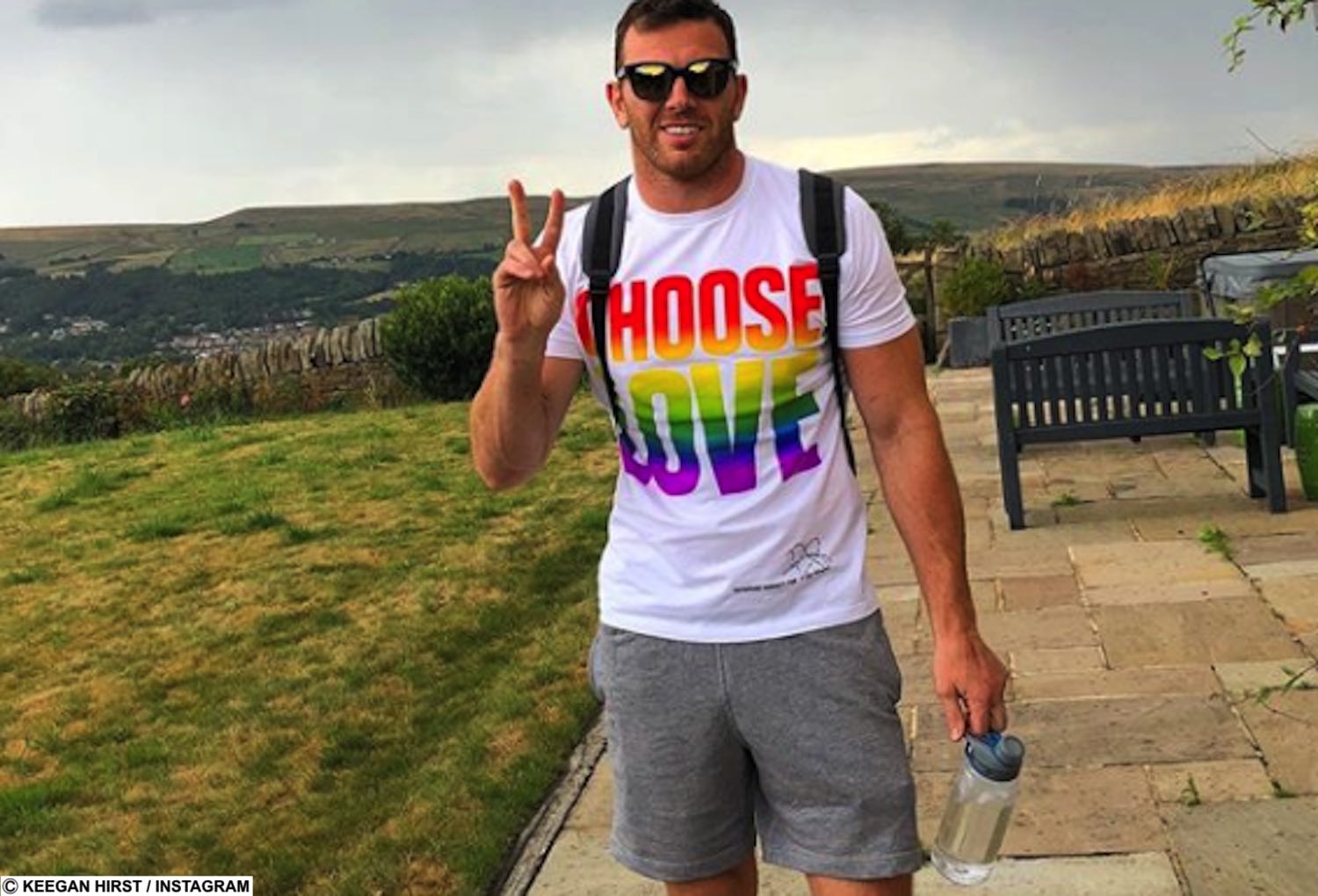
Keegan Hirst has written about what it’s like to get, have and maintain abs and it sounds freaking exhausting.
In a lengthy Instagram post, Keegan Hirst, who now runs his own online coaching website has laid bare that having and getting abs is a difficult task and opened up the conversation about why and if they are actually important to have.
In the post, Keegan wrote that people have put “abs on a pedestal” and that abs equal status, “especially if you’re gay” he added that they are seen as “attractive, desirable and sexy”, but he warns, “what people don’t tell you about is how hungry they feel trying to get ‘beach ready’.”
[totalpoll id=”120823″]
Anxiety surround abs
He also revealed that there was anxiety in keeping hold of the abs and how toxic they can become to your mental health, especially if someone has “attached their self worth to their image”.
He then explained that keeping in shape came with “trade-offs” and that it was up to you on what you were willing to compromise on in order to real the goal of visible abs.
He then laid out 3 steps on how to get a set of abs, including the tip that no amount of sit-ups or crunches would get you abs.
He also explained that you just can’t cut any corners to get them. So throw away the electric ab toners and “skinny coffee”. He suggests, “You just need to be in a sustainable, calorie deficit until you get there. ”
Third, he says that keeping that all elusive 6 pack is a mindset, saying, “Abs may be made in the kitchen, but they’re maintained with your mindset.”
Most importantly, he added that we shouldn’t attach our happiness to gaining a set.
We spoke to the team at The STI Clinic to get the facts on how hepatitis is contracted, treated and cured.
Hepatitis A is very rare in the UK – but hepatitis B and C are much more common. All strains of hepatitis are diseases that affect the liver – but they are very different viruses which means they all need to be treated differently.
Wavebreak-Media-Ltd-bigstock
Both Hep B and C can remain outside the body for over 4 days, which makes them more contagious than a disease like HIV.
Hepatitis A is a liver infection that’s spread by a virus in faeces (poo). It’s rare in the UK but if you are likely to travel to countries where the disease is common you can get the hepatitis A vaccine to protect yourself against it.
Hepatitis A is spread mainly through contaminated food or poor handwashing, but also passes on easily through sex, including oral-anal sex (“rimming“) and giving oral sex after anal sex. Gay and bisexual men with multiple partners are particularly at risk.
Symptoms of hepatitis A can appear up to eight weeks after sex and include tiredness and nausea.
Hepatitis A is not usually life-threatening, and most people make a full recovery within a couple of months.
(C) BIGSTOCK
You can avoid getting hepatitis A by:
washing hands after sex (ideally buttocks, groin and penis too)
changing condoms between anal and oral sex
using a barrier (such as a condom cut into a square) for rimming
using latex or non-latex gloves for fingering or fisting
not sharing sex toys
asking about the hepatitis A vaccine at a sexual health or GUM (genitourinary medicine) clinic
If you think you might have hepatitis A, or have any questions, visit a sexual health clinic or GP.
Hepatitis B
http://gty.im/123537749
Hepatitis B inflames the liver and makes it unable to function properly. It’s a virus that is passed through blood, semen and vaginal fluids, so can be passed on through sexual contact (including oral sex) or through coming into contact with infected blood. Gay and bisexual men are at risk of hepatitis B, but they can be protected by the hepatitis B vaccination, which is available from sexual health clinics, genitourinary medicine (GUM) clinics or from GPs.
Hepatitis B is easier to pass on than something like HIV because it can live outside the human body for about a week.
Symptoms
In the early stages of the virus, many people only experience mild flu-like symptoms or none at all. However, people who do experience symptoms in the acute phase might experience some of the following:
Nausea
Vomiting
Fever
Jaundice
Dark urine
Light Coloured stools
Testing and treatments
Hepatitis B can be detected from around 2 months after infection and can be picked up on a finger prick test.
If you test positive, antivirals are usually used to impact virus progression. A face-to-face follow up with a health professional is recommended to decide if further treatment is required.
Health consequences
Most people will make a full recovery after a Hepatitis B infection. Around 90% of people will completely clear the virus, having no lasting problems – a process that usually takes 3-6 months. Once the person has cleared the infection, they will be immune to future Hepatitis B infections.
Around 10% of people will have the virus long-term, known as having chronic hepatitis B. Some patients in this category will remain well but will still be infectious (carriers).
Unfortunately, it’s impossible to predict how Hepatitis B will progress in a person, so anyone who tests positive for the virus should have their recovery monitored with regular check-ups.
Hepatitis C is a blood-borne virus that also affects the liver. It causes inflammation that prevents the liver from functioning properly, but it is a different virus to Hepatitis B. There are six different types of Hepatitis C that all require a different treatment approach.
Hepatitis C is most commonly contracted through injecting drug users sharing needles. There is also a small risk of infection through sexual activity.
Around 7% of HIV infected men who have sex with men have had a Hepatitis C co-infection diagnosed. There is a small risk of contracting Hepatitis C through sharing notes if you are an inhaling user of drugs such as cocaine, and there is a small risk of sharing utensils that may contain traces of blood such as razors or toothbrushes, as the virus can survive for around four days outside the body.
Most people will have no symptoms, or symptoms so mild that they are not detected. However this doesn’t mean that they are not infectious – they can still pass on the virus.
Symptoms that could be present in the chronic phase include:
Nausea
Lack of appetite
Fatigue
Muscle and joint aches
Concentration and memory impairment
Around 20% of people with Hepatitis C will clear the infection within six months, but 80% will go on to develop chronic Hepatitis C. About 30% of people with chronic Hepatitis C can develop cirrhosis of the liver over a long period of time, and a small number of infected people will develop liver cancer.
The Test
Hepatitis C can also be detected from a finger prick test, where Hepatitis C antibodies are detected. Further tests are then required to determine if the virus is still active, and which particular genome type it is.
Hep C can be detected from as early as 9 days post-exposure and can take up to 180 days for the antibodies to appear, so you might need to be retested a few times. In most cases, they can be detected between 45 and 65 days.
Treatment
There have been significant developments with Hepatitis C treatments, but the type of treatment depends on the strain of Hepatitis C you have. If you are tested positive you will be referred to a specialist to discuss possible treatments.
You won’t need to steal and end up behind bars to get a message from Lea, but it’d be criminal not to get a message from this Orange Is The New Black star.
Gus Kenworthy
£124.50
CREDIT: Gus Kenworthy / Instagram
We only hope he doesn’t do the message while on the slopes!
Maybe he’ll sing “Bye Bye Bye” at the end of his message!
Caitlyn Jenner
£2075
If you want GOLD you’re going to have pay GOLD. Ms Jenner is by far the most expensive LGBT voice on Cameo. We’re wondering what family secrets she might spill for a couple of K.
Bright Lights, Big City: Columnist Al Jenning confronts his past, with a trip to London
We all have that one place that we love to visit, but it always stirs up some unwelcome memories. Whether it be a bar where we saw the bloke, we fancied necking somebody else, or whether it is the place where something traumatic happened to us. These places can be anything. I mean we all have these cruxes. For me, mine is the city of London. I have a weird relationship with London. It’s the place that I began to discover myself, but it was also the place where I started to have problems with my mental health which drove me to a nervous breakdown.
I was eighteen when I moved to London from a small town in East Yorkshire. I enrolled on a three-year Musical Theatre course at a university, and I thought I had made it already. I was so happy to get out of the town that I felt stifled and trapped in for so long and finally I could finally live my life. I had so many dreams for the future. I thought I would move to London, sail my way through a course I thought I was going to love, meet incredible life-long friends and finally meet that Mr Right that I had been longing to meet – naïve right? I guess at eighteen years old we are all slightly naïve. We have dreams and expectations that are completely unrealistic, and we have nobody there to give us a reality to check.
The first few weeks were hard. I couldn’t imagine how homesick I would be, to the point where I used to cry myself to sleep at night because I just wanted to cuddle my dog and spend time with my family. I made an effort for the first few months not to visit home, and try to cut everything off and start fresh, and it was hard. When my parents came down to visit me for the first time after being there for three months, I was so excited. I settled in eventually and my first year was really enjoyable. I made some great friends, and I met a guy who I liked, and it felt like it might go somewhere. Alas, it wasn’t to be. He passed away from a short illness in early 2012.
Coming back in the second year was even worse. When I moved back, it was as if something had changed, and I wanted to be anywhere else but there. I wasn’t enjoying the course as much as it was and I guess, I kind of put myself on the outs. I didn’t want to socialise. I wanted to be alone all the time. I wanted to put in as little effort as possible. Turn up, do what I needed to do then get out and go back to my flat. I couldn’t work out what was wrong with me. I kept missing lectures and classes, and I just didn’t want to do anything. My sleeping patterns were all over the place, and it felt that like I was missing out on so much of my friend’s lives and I wanted to be a part of it.
During this time, I lost the guy I guess I fell in love with. The pain was unimaginable, and I felt that I had nobody to talk to. I didn’t tell my family, because they hadn’t met him, and they didn’t know that was seeing somebody. I had put myself on the outs with my course mates and I don’t think that any of them knew what was going on. It got to a point where I needed to speak to someone professional and I booked an appointment with a doctor to talk to them about it. I got to the appointment and I bottled it. I felt like I was a failure. That day I went back to my apartment and opened a bottle of vodka and had a good old drink. Thinking that I might find the answer to my problems at the bottom of the bottle. I didn’t. I just found myself spewing up violently for hours and my flatmate trying to help me into the bathroom. If that wasn’t a cry for help, then I don’t know what was. I knew at that point that I had hit rock bottom and that I needed to escape.
I looked for every possible way out. I knew I didn’t want to go back to East Yorkshire, and I would be damned I was going to go back with my tail between my legs as a failure. I applied for so many jobs in London but couldn’t find anything. I failed the second year of my course, and I guess that was it. I was going back to the north. I wanted to have one more mad night out though. Me and few people I knew went for one more night out in Soho and ended up dancing in HEAVEN till 5 am. I went back to my flat and saw an email from TUI advertising positions as Event Hosts in the Mediterranean. Somehow, I got the job and I flew to Spain a few weeks later.
I’ve had a distant relationship with London since. I’ve only visited for day trips or some event or show. It feels weird now.
It feels like every time I go back, I open a door to my past, and suddenly I’m this carefree eighteen-year-old again. I have a nickname given to me by a very close friend; Sally. That’s because I have this strange relationship from the character of Sally from the Sondheim musical, Follies. She is one of the central characters in the show, which is about a reunion of showgirls, where an unrequited love story takes place. Throughout the show, Sally becomes more helpless and fragile from confronting her past and Ben, the man she once loved but ended up marrying her best friend. It’s a strange connotation to make you might think but I can relate to it. When I’m in London it’s as if movies from my past play through my mind and I can remember all those thoughts, the feelings that I went through, now 10 years go. I see it all. The good. The bad. The ugly.
I made a decision last year to try and put a few of those ghosts to bed. I booked a few nights in a hotel just down the road from where I used to live, and I went to look at some of the places that I used to frequent as that naïve kid I once was. It was a really weird experience, and I didn’t like it, but ten years I felt strong enough to put myself through it. I saw a couple of people from university in the Broadway that I knew from uni, but I kept my distance. I wasn’t quite sure whether I was ready to have a conversation with them. I wanted to remain invisible.
It was a good thing for me to do, but I now have to make a conscious effort to focus on making new memories, so I’m doing just that. I’ve been writing this column whilst hurtling down the East Coast mainline. I’m on my way to London to visit a friend who is celebrating his ninetieth birthday this weekend and whilst I’m there I’m determined to make new positive memories. I’m going to do things I’ve never done before like take a river cruise up the Thames.
With just a few minutes to arrival, the anxiety is growing. I’m scared that as soon as I get off this train I’m going be that person I was all those years ago, or I’m going to see him around every corner. I have to remind myself that I’m not that person anymore and I’m stronger, wised and a hell of a lot more resilient. I’m always going to have that person in a box somewhere in my head, and I’ve come to accept that. I’m not going to be ruled by him, but it would be nice to see a little bit of him again.
By the time the Stonewall riots took the modern LGBT+ fight for equality into the public arena, the fight for gay rights, in the UK, had actually become over a decade before, when a report into homosexuality recommended that it be criminalised. It took over ten years for that report to be acted upon.
Laws around homosexuality differ from region to region in the UK meaning that gay people in Scotland and Northern Ireland had to wait a lot longer for equality.
Homosexuality became legal in Scotland in 1980 and in Northern in 1982.
Homosexuality was legalised in England and Wales on the 27th July 1967, a decade after the Wolfenden Report recommended that homosexuality should be decriminalised. The Sexual Offences Act was changed to decriminalise homosexuality, up to a point and only if three conditions were met:
that the act was consensual
that both parties were 21 or over
and the act was done in private.
Up until that point, men who were found to be having sex with other men were often charged with Gross Indecency or Buggery charges.
Thousands of men were criminalised because of this law. They were often sent to prison.
When the law changed being gay still wasn’t equal to being straight. The age of consent was 21 and all sexual acts had to be done in private. it wasn’t until the new millennium, that laws pertaining to gay and straight sexual acts were equalised.
As it stands today, it is currently legal to be gay, lesbian, bisexual and transgender across the UK, whether you’re in England, Northern Ireland, Scotland or Wales. Laws surrounding discriminating because of sexuality or gender expression are very strict in the UK and include employment and business services.
An engaging but ultimately flawed twink flick that reinforces the idea that you can only be openly gay in the big city, rather than remaining in the provincial community in which you grew up.
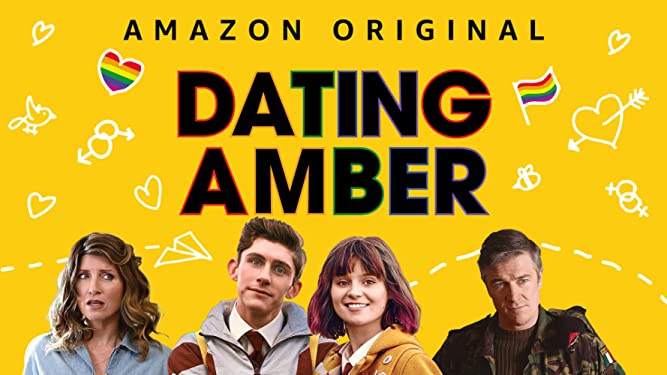
Dating Amber – Amazon Prime’s latest LGBT+ offering to coincide with Pride season. And it’s a cute film, if you’re into soft and gentle twinks being goofy and finding themselves in a sea of prejudice and misunderstanding.
Irish actor Fionn O’Shea is undoubtedly the star here. We’ve seen him before in Handsome Devil (2016), where he played a similarly confused twink alongside the beautiful Nicholas Galitzine. The only difference is that Eddie in Dating Amber is a more rounded and complicated individual than Ned Roche in Handsome Devil, who spends most of the film crushing over his rugby twunk dorm mate, Connor.
In all fairness though, Dating Amber is about two closeted teenagers, not just one. Lola Petticrew gives a strong performance as Amber—a frustrated but determined closeted lesbian who runs a side business renting out one of her mother’s caravans for schoolmates to have romantic liaisons.
Side by side, Amber and Eddie struggle with their sexuality in a hostile school environment and if it weren’t for the fact that both actors are so engaging, this plot premise would make a predictable film into a very predictable and frankly dull-as-ditchwater one.
But somehow O’Shea and Petticrew manage to pull through as their characters start dating one another as a ruse to throw off the incessant crowing from their homophobic classmates.
Trips to Dublin, late-night drug-fuelled escapades, and lies lies lies follow as these two try to convince everyone else, including themselves, that they’re straight.
Eventually, of course, the truth comes out, and Eddie ultimately finds his way. To London, in fact, where the promise of a fulfilling life for this ‘baby gay’ beams into Eddie’s sunny face.
A predictable outcome
What I wanted, though, was a less predictable and ultimately less deceiving ending. We’ve seen it before. A provincial gay boy who is closeted because of his misunderstanding community and family can only find freedom by escaping to the big metropolis.
The consequence of this is that as viewers, and as gay people, in particular, we internalise the assumption that rural, provincial communities are no place for ‘an out gay man’, as Little Britain’s Daffyd Thomas (Only gay in the village) used to tell us repeatedly.
Now, I grew up in a provincial rural village, admittedly in the 2000s, a decade later than this film is set. But, while there weren’t nuns on every street corner signing themselves each time they saw the local bum boy walk into the Co-op, it wasn’t easy. Rural communities tend to be built around heterosexual families and their needs, and there is intense pressure to follow suit. And I felt it.
I went off to university, to the great metropoli of Exeter, Leeds, and Leicester, but have I been any more fulfilled? There are opportunities that big cities present to LGBTQ people which are undeniably advantageous and, ideally, it doesn’t have to be either / or.
Yet Dating Amber makes it precisely into an either/or decision. Either you stay here and this place will kill you, as Amber explains to Eddie, or you go out there, to the big city, and find yourself and be happy.
The result is that rural communities are drained of the kind of social diversity that makes for more tolerant neighbourhoods, and being gay itself becomes synonymous with a kind of metropolitan and urban lifestyle that those of us who are more rural at heart find hard to bear.
What we need, then, are LGBTQ films, like God’s Country, that wrestle hard with the realities of being ‘the only gay in the village’, and where communities themselves go through a process of slow adaptation so that they become welcoming places for all sorts of people.
A poll of 2,000 UK adults who play an instrument found a huge 89 per cent think playing music keeps them mentally balanced.
More than a quarter report a ‘sense of clarity’ when practising their instrument of choice, while 56 per cent feel a deep sense of relaxation.
And 36 per cent even said playing music gives them a sense of purpose in life – while they’re playing.
The research was commissioned by Spotify to mark the music-themed episode of its wellness-focused Where is My Mind? podcast, whose host Niall Breslin said, “The great thing about music is that it has a way of connecting us so simply and yet in a very powerful way.
“We wanted to explore why music is so powerful. What is it about music that makes it such an incredible therapist for us when we need it the most?”
The podcast episode will feature the ‘Lockdown Ukulele Rockdown’ – a special track created with more than 400 amateur ukulele players, who were gifted instruments to play while shielding.
Band member Emma Cooke said: “Learning the ukulele was such a challenge, but not thinking about the news or being attached to social media was hugely satisfying and gave me a sense of purpose.
“I will definitely continue playing and would encourage anyone who finds themselves in isolation and facing challenges with their mental health to do the same.”
The research also found those who play an instrument will typically spend an average of two hours and 50 minutes practising or jamming each week.
But while more than a third believe they’ve ‘mastered’ their instrument of choice, 47 per cent admitted they are yet to reach that level of expertise.
And 16 per cent of those polled via OnePoll believe it’s not possible to fully master an instrument, and there will always be something new to learn.
Three quarters use playing music specifically as a way to de-stress, while 74 per cent said that just picking up their instrument – with no intention to even play it – can make them feel better.
More than half (54 per cent) will have a playing session to decompress after a hard day at work, while a fifth have used music to help after a breakup.
Other times music lovers turn to their instrument when they’re feeling stressed include worrying about money (34 per cent) or dreading an upcoming event (30 per cent).
On average, instrument playing adults can go just under a week without playing something before they think their mental health starts to deteriorate.
A separate study of 2,000 UK adults also found 88 per cent listen to music regularly to help manage their moods, while 40 per cent would share music with a friend or family member to help with their mental health or lift their mood.
More than a third also spend time listening to podcasts when they want a boost to their mental health – with 15 per cent even saying true crime is their genre of choice to feel better.
Niall Breslin added: “The Where is My Mind? podcast explores different coping skills for the ever-changing, always-on, challenging world we’re now living in.
“We operate in a culture that rewards only doing, pushing harder, working more, training more, and being more.
“There’s no room for simply being. We are all chasing some moment of enlightenment, that thing that will finally make sense of the world, that will finally make us happy when so often, happiness is right under our noses.
“This series, I wanted people to come on a journey with me, as we look at how we can slow the hell down and literally rewire our brain with the power of what’s right in front of us.
“Music existed for me when words failed. More importantly, Music has always been my therapist when no one else knew how, and I believe this is also the case for so many people; whether it’s playing or listening to music.
“And it’s a really rewarding thing to do, to learn a musical instrument.”
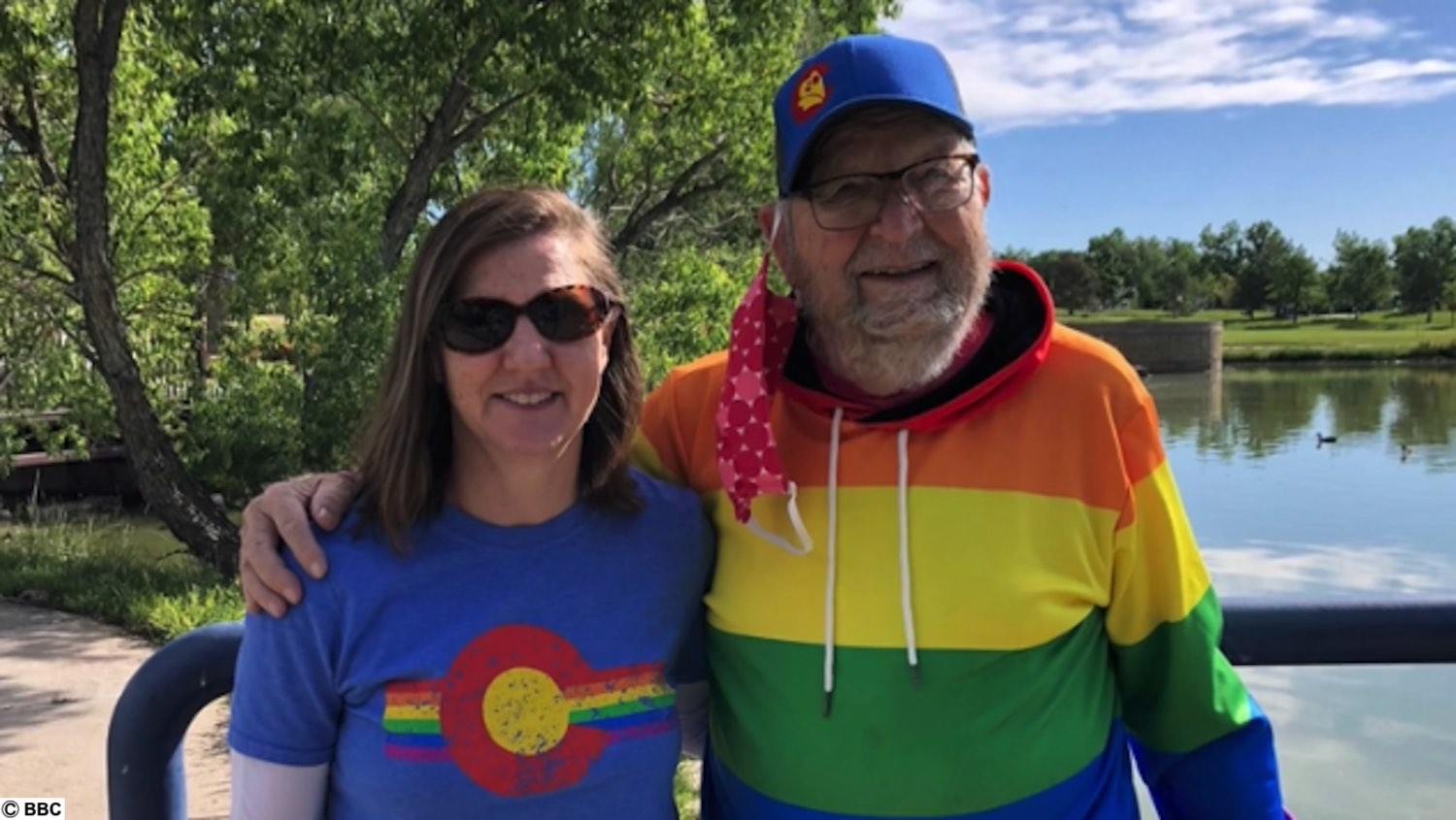
In a totally heart-warming story, a man in his 90s is able to finally come out after using the lockdown to come to terms with his true identity.
90-year-old Kenneth Felts comes out as gay proving it’s never too late to live your true self.
Kenneth who lives in Colorado used his time in lockdown to write his memoirs, which brought back lots of memories. He said he never planned to come out at all, making his sexuality a secret and taking it too the grave.
His daughter, Rebecca says that she’s so happy he can be himself now.
The Sex Files, THE UNDATEABLE GAY reviews his past encounters and the issues of having a high sex drive.
Not only has Coronavirus put us into a situation where we have been separated from our friends and families, but it has also given us singletons an extra problem.
When the hell can we have sex again? I’m not saying I’m a slut but I’ve got needs. I’m craving a one night stand.
It is almost five months since this enforced dry was spell was pushed upon us. I’m so horny, I’ve even started to perve on our postman. Who is a balding, rather old gentleman with a beer belly.
I’ve even noticed my straight housemate’s husband has started walking around with a padlock attached to his trousers. Okay, so I made that bit up. But you get the idea.
I even had to stop masturbating for a few days as I was becoming far too addicted to the act. And noticed I was getting rather sore. Too much friction, I fear.
But it’s got me reminiscing about some of my one night stands and sexual encounters from days gone by…
1500
I remember George. Now he was a handsome sort. And he wasn’t just a one night stand actually. Oh no. We had sex on numerous occasions over the course of a few months. I suppose you would call him a fuck buddy.
Any ex-boyfriend of mine who might be reading will tell you – I have an incredibly high sex drive. Give me ten minutes to have a wee and a suck on my vape and I can go again. No problem.
Except this did turn out to be a problem for George. Who couldn’t keep up with me. And one night (after we’d made love FOUR times), he got up from the bed, slight limp and informed me he wouldn’t be able to see me again. And so I was dumped by my FB for having a high sex drive.
Ahhh. And then there was AJ. A very beautiful Australian bloke. He was such a tentative, seductive and attentive shag. As we were between the sheets, I felt like we were performing a sex scene from 80’s super soap, DYNASTY.
And I couldn’t help but declare my satisfaction. Mid-way through love making, I stopped, grabbed his face and declared:
“You’re such a passionate lover!” A la Joan Collins style.
And when I say Joan Collins. I mean it. I imitated her accent, seductive purr and glamorous pout to a tee. I was so proud. He was less impressed with my impersonation. He quickly finished and made his excuses to leave, never to be heard of again.
And then there was Jimmy. Now, he wasn’t just sex. Oh no, no. We’d met on Gaydar. All my older gays will remember this site. It was big long before Grindr came along.
Jimmy made it perfectly clear that he wanted more than just sex. He wanted us to get to know each other. I remember he worked at Tesco. So one night, when he finished his shift, I went to pick him up in my car. I thought we could go for a romantic drive.
It was a cold winter’s night, deep into December. I’d love to say it was snowing to make the story sound more romantic, but I’d be lying.
We pulled over to admire the Christmas lights on Oxford Street and I could see Jimmy was shivvering.
“I’ll give you a blow job to warm you up!” I blurted out. I was joking of course but Jimmy was more prudish than I’d given him credit for. And clearly lacked a sense of humour.
“How rude!” He retorted. And quickly made his excuses so that I would drop him home.
And I will NEVER forget Liam. I met him in a pub and we just clicked. I did notice that he kept going to the toilet during our date. I just assumed he had a weak bladder. And he seemed to sniff a lot. I just assumed he might be getting a cold.
Before I knew it, he’d taken me back to his place. No sooner had the front door shut behind us, Liam lifted me up, kissing me passionately and carried me into the bedroom. He lifted his leg to slam the bedroom door behind us. And then threw me onto the bed. Very macho. I felt like Tanya Turner in Footballers Wives.
I already felt aroused so I pulled his trousers down and was presented with a VERY flaccid penis. How could he not have an erection? He could read my thoughts.
“Sorry. I’ve been taking coke all night.” Well, that killed the moment.
Donald Trump‘s administration allegedly sent out a memo, detailing how officials might spot a transgender person, in order to identify them if they were to try and gain access to Government-funded homelessness shelters. Specifically, the memo was looking to demonstrate how a federal employee might be able to determine if a person, standing in front of them, trying to gain access to a woman’s homelessness shelter, was a transgender woman or not.
In a highly controversial move, the memo included information which might help an employee determine a person’s biological sex rather than gender identity. It outlined features such as height, facial hair and whether the person in question had an Adam’s apple and characteristics which “when considered together, are indicative of a person’s biological sex”, according to Snopes.com.
According to the site, the memo was released in July 2020 and listed physical characteristics, “in order to identify incoming transgender people at federally funded homeless shelters”.
The memo was a 29-page documentary, titled, “Making Admission or Placement Determinations Based on Sex in Facilities Under Community Planning and Development Housing Programs.”
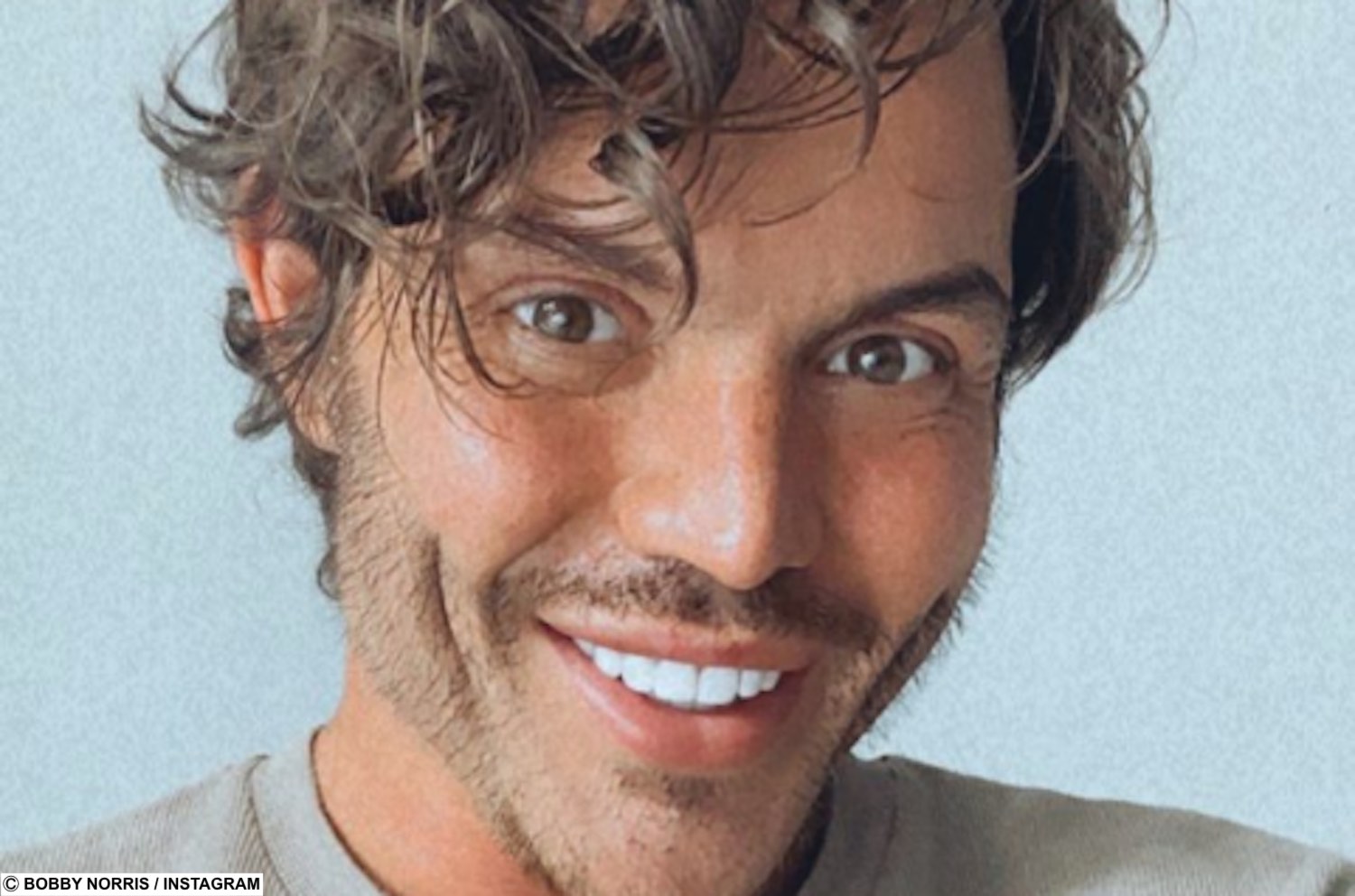
Bobby Norris hasn’t been to the hairdressers since lockdown began and fans are going wild for his natural curl.
The reality star, turned LGBT+ activist, Bobby Norris has revealed that he’s not been to get his haircut since lockdown began, back in late March and his locks are looking incredible, so much so, fans are begging him not to go back to his old style.
Publishing a picture of his do, Bobby showed off a longer than usual style, complete with natural curls. He captioned the picture, “Has anyone else still not been to the hairdressers since lockdown?!” Fans, of course, went wild for the reveal.
One eager fan wrote, “I love this look! So handsome” while another commented, “I actually think this look suits you so well”.
One fan actually pleaded with the TV star not to cut his hair as it was “blooming gorgeous”.
Of course, Bobby has been making headlines of late with his crusade of ridding the Internet of homophobic hate, calling upon Boris Johnson and the Tory government to make online trolling illegal in the UK.