Tag: Issue 2

  • History of marriage in the UK

    History of marriage in the UK

    In this article, we look at the history of marriage in the UK. Our history starts at 410AD, as before this time there were no written records of the history of marriage. Before written records, history was passed down orally from the older generation to the younger one, unfortunately, over time this oral history has been lost.

    the history of marriage in the UK
    CREDIT: ©-welcomia-Depositphotos

    410AD – The Anglo-Saxons and Other Tribal Groups
    For many people, marriage is strongly associated with religion, but this wasn’t always the case. Straight marriages at this time were about peace and prosperity rather than religion. Marriages encouraged good diplomatic relations and the development of trade between two (or more) tribal groups.

    It was the fathers who decided who their daughters married and the wishes of the couple were seen as irrelevant.

    12th Century – Consent
    In 1140 Decretum Grantiani wrote a canon textbook where he introduced the concept of verbal consent to straight marriage and the requirement for a couple to consummate their union to validate their marriage.

    In the 12th century, the Roman Catholic Church made verbal consent and consummation necessary for the church to view the straight marriage as legitimate. Some Roman Catholic writers at the time also describe marriage as a spiritual experience tied to God’s presence. While this is not surprising, prior to this very little mention of marriage as a spiritual experience.

    1549 – The Vows
    The tradition of vows came from Thomas Cranmer’s Book of Common Prayer. Although the book was updated, later on, many of Thomas Cranmer’s words are still used in religious ceremonies today.

    These vows laid the foundation for how the Roman Catholic & Protestant churches viewed straight marriage at the time as a partnership.

    Thomas Cranmer must have reflected the views of the mainstream population about marriage at the time; otherwise, it would have been unlikely that the church institutions would have accepted and taken on these views.

    Roman Catholic Priests at this time were still delivering marriage ceremonies (as all other religious services) in Latin.

    However, the Protestant’s began delivering their services in the English language. This is significant as English was the common language and this change made marriage ceremonies (as well as all other religious services) accessible to all.

    Today, Protestantism is one the most popular religions practised in the UK. Many historians believe that changing the ceremonies to English played a huge part in making Protestantism a dominant religion.

    1563 – Sacramental Marriage
    The Roman Catholic Church officially declared that straight marriage was one of the seven sacraments in this year; meaning that it was something undertaken in the presence of god. The other sacraments are: Baptism, Confirmation, Holy Communion, Confession, Ordination and Last Rites.

    The Protestant Church didn’t see straight marriage as a sacrament at this time.

    1753 – State Involvement
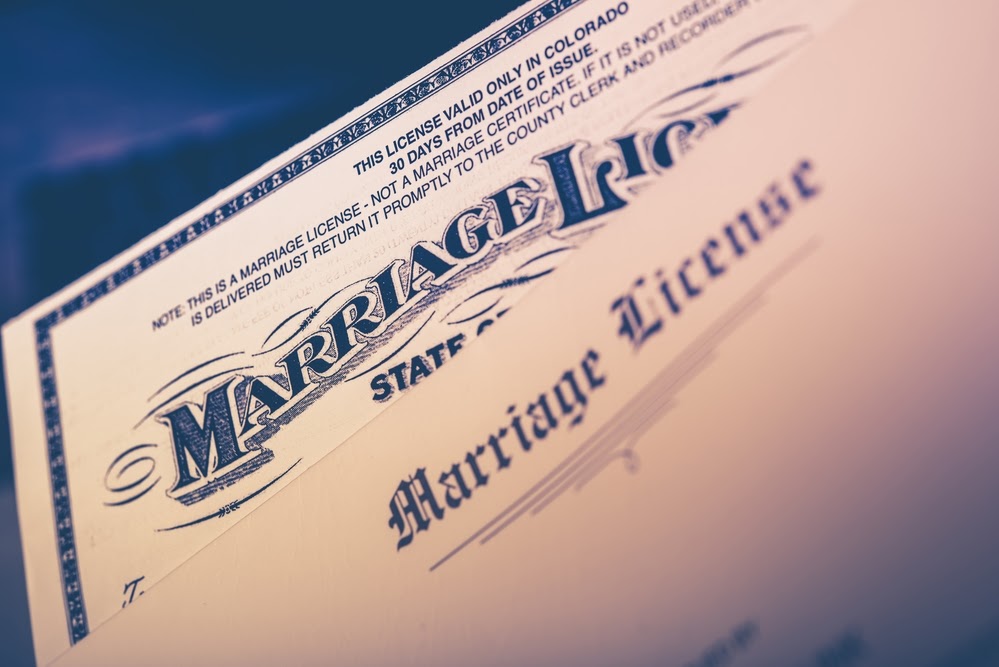
    The Clandestine Marriage Act (1753) set out what the state expected in order for a straight marriage to be seen as legal. It required the couple to get married in a church by a minister and issue a formal marriage announcement or to obtain a marriage license.

    1836 – Civil Marriages
    In 1836 it became legal for straight couples to get civil marriages, which were generally held in Register Offices. This was to accommodate both the religious and nonreligious.

    For the religious, it meant that they could get married in a neutral place if for some reason they couldn’t get married in their church. For the nonreligious, it gave them a place void of religion. Prior to this, nonreligious straight couples had to go through a ceremony in a church and undertake practices & traditions that they didn’t believe in.

    In 1837 the civil registration of straight marriages started.

    1837 – It’s All About Straight Love
    Between 1837-1901 it was the Victorian Era. It is said by contemporary historians that the Victorian Era is when marriage became about love, but still only the love between a man and a woman. Gay people weren’t treated well in the Victorian Era in the UK, with laws against sexual acts.

    Oscar Wilde – widely regarded as one of the most talented writers of all time; was accused of sodomy by the father of his male lover. He lost the trial and was sent to prison. It was rumoured that he could have escaped to France, but he didn’t. Once he’d served his sentence, he moved to France.

    1858 – Divorce
    Between the 17th – 19th Centuries there were 300 cases of people wanting to end their marriages. The only way to do this was for an Act of Parliament for each marriage, as there was no accommodation for divorce in marriage law. So in 1858 the government of the time finally made divorce a legal process.

    The legal process that meant those who wanted or needed a divorce could have one. But it also signified a shift in the focus of marriage from being a lifetime commitment – for better or worse, to a commitment that could be changed if life’s circumstances changed.

    19th Century – Birth Control
    By the 19th Century, both the Roman Catholic and Protestant Church’s had promoted procreation as the main reason for straight marriage. But as more children survived childhood, families got bigger and there was a need to use some form of contraception.

    In the 1930s the Protestant Church accepted contraception, viewing it as necessary and not a sin or something God would be unhappy with. But the Roman Catholic Church has remained against any form of contraception, as they continue to see the procreation of children as a fundamental aspect of straight marriage.

    2005 – Civil Partnerships
    In 2005 the first gay civil partnerships took place, a year after The Civil Partnership Act came into law.

    It allowed gay people to have legally recognised relationships, which granted them the same rights, protections and benefits of a married straight couple. This included legal rights, such as being one another’s Next of Kin; rights related to their partner’s children and the benefits including those of taxation reductions.

    In terms of the actual act, the gay couple could have a civil partnership ceremony that could consist of anything they wanted (within the law). This could be vows, the exchange of rings, their choice in music, etc.

    The Civil Partnership Act included a legal process for those gay people who may want to end their civil partnership. It is called ‘dissolution’ and works on similar legal principles to divorce.

    This was the first time that the state in the UK legally recognised gay relationships. In the first five, there were 42,778 gay civil partnerships.

    Peter Tatchell (Gay Rights Activist), as well as others, criticised The Civil Partnership Act, saying that it wasn’t complete equality as it excluded straight people from being able to be civil partners.

    2013 – Gay Marriage

    Last year The Marriage (Same Sex Couples) Act has been passed in England and Wales. The first gay marriages are expected in March 2014.

    Stonewall said of The Marriage (Same Sex Couples) Act:

    ‘This is an historic moment for lesbian, gay and bisexual people, their families and their friends. This Act will mean that, for the first time, children growing up to be gay in England and Wales will have full equality in law. We can now proudly claim to be a beacon to the world for gay equality.’

    In ancient history, marriage had nothing to do with religion but helped tribes to live and thrive together. Then Christian institutions (both Roman Catholic & Protestant Churches) influenced the definition and meaning of marriage. In the last century, the state has got involved for marriage, allowing marriage to be more flexible and much more inclusive.

    Marriage as a concept has evolved to meet the needs and desires of society. Currently, there is some debate as to what role the churches and state play within marriage. It is likely that over the next century the Churches will continue to reside over the spiritual aspect of marriage, whereas the state will continue to be involved with the legal and administrative side of marriage.

    Antony Simpson, Writer of this article would like to acknowledge the following sources that supported putting together this article based on fact:

    BBC – Ten key moments in the history of marriage
    http://www.bbc.co.uk/news/magazine-17351133

    Office for National Statistics – Civil Partnerships Five Years On
    http://www.ons.gov.uk/ons/rel/…rd/…/ard-pt145-civil-partnerships.pdf‎

    Office for National Statistics – Video Summary: What does the Census tell us about religion in 2011?
    http://www.ons.gov.uk/ons/rel/census/2011-census/detailed-characteristics-for-local-authorities-in-england-and-wales/video-summary-religion.html

    Peter Tatchell – A setback for equality
    http://www.petertatchell.net/lgbt_rights/partnerships/Straight-civil-partnerships-defeated.htm

    Stonewall – Equal Marriage to become law – Thank You!
    https://www.stonewall.org.uk/what_we_do/parliamentary/5714.asp

    Stonewall – Get Hitched! A Guide to Civil Partnership

    Click to access get_hitched_a_guide_to_civil_partnership_english_3.pdf

  • Running man | 8 top tip if you’re planning to start running again

    Running man | 8 top tip if you’re planning to start running again

    If you are looking to get back into running after a break here is advice from Lewis Manning, Senior Sports Physiotherapist at BMI The London Independent Hospital

    running tips and jogging rules
    CREDIT: Maridav-bigstock

    Gradual training

    The most important thing you need to remember when getting back into running after a break, especially if you’re recovering from an injury, is to increase your training gradually. All other interventions are secondary to this and if you get this wrong, you are much more likely to get injured. This is because both your cardiovascular and musculoskeletal systems take time to adapt to the new load that is being put on them.

    Slow increases

    The general rule when running is that you should only increase your training load by 10% a week (unless your longest run is less than 4 miles, then you can increase things a bit more quickly).

    Have a good pair of running shoes that suit you.

    Everyone is different and it doesn’t have to be the most expensive pair that are the best.

    Be careful about starting to run if you are significantly overweight.

    It may be helpful to begin with low-impact exercise such as walking or cross training to begin with.

    Warming up

    Warm up by running a bit slower for the first 5-10 minutes is important on the higher intensity (especially interval) runs. However, general static stretching before running has been shown to not reduce the chances of injury. It may be important to stretch specific muscles that are tight on you, but this should be done throughout the week, not just before a run.

    Running on softer surfaces

    Surfaces such as grass or a treadmill are a great way to get back into training as they put less force through your body. However, if you are competing in an event that requires road running, you will need to do some training on the road too.

    Eat correctly

    (again, this is another topic in itself) and drink when you need to. Don’t be obsessed by drinking, whether it be water or sports drinks, however. Your body will tell you when you need to drink and drinking too much can cause as many problems as not drinking enough.

    Listen to your body.

    Your body will generally ache a bit when returning to running. However, if niggles become persistent and are worsening, you should nip this in the bud early by getting advice from a physiotherapist.


    This article was taken from Issue 2. Subscribe now

  • 50 Gay Things To Do Before You Die

    50 Gay Things To Do Before You Die

    We’re told aren’t we about having a bucket list – those things we need to do before we die, well the team here at TheGayUK have come up with 50 Gay Things You Need To Do Before You Die.

    1) Sydney Mardi Gras:

    Embed from Getty Images

    your life isn’t complete without visiting Sydney Australia during Mardi Gras, Hot men, Dykes on Bikes, and thousands and thousands of people celebrating everything LGBT in one of the world’s biggest prides.


    2) Attend a demonstration:

    Embed from Getty Images

    Fighting for a cause can really help you get stuff into perspective. Have you been apathetic recently? Grab a placard and start chanting for equality.


    3) March in a gay pride:

    Nothing says “I’m Out” than marching solidarity with thousands of revellers at a gay pride.


    4) Visit Castro Street:

    Embed from Getty Images

    Some say it’s the birthplace of the new gay rights movement. Every street is etched with history.


    5) Read ‘And The Band Played On’:

    It’s a book often hailed as the book all gay men should read – one of the most complete works documenting the AIDS epidemic. BUY HERE


    6) Have a threesome:

    ©-photography33-Depositphotos
    ©-photography33-Depositphotos

    Just because…


    7) Pose in risqué selfies:

    You don’t have to upload them to the Internet, but it’s your body and you’ll never be as young as you are right now.


    8) Go to a sauna:

    CREDIT: © Artmim Depositphotos
    CREDIT: © Artmim Depositphotos

    Just to see what there is to see…


    9) Watch ‘How To Survive A Plague’:

    An incredibly powerful documentary movie, documenting the struggle the gay community went through to bring an end to AIDS.

    WATCH ON AMAZON


    10) Watch ‘Bridegroom’:

    We’re nearly there, but equality still evades much of the world. Watch Bridegroom to see why marriage equality is so important to gay couples.

    WATCH ON Amazon


    NEXT PAGE

  • INTERVIEW: Cleo Rocos

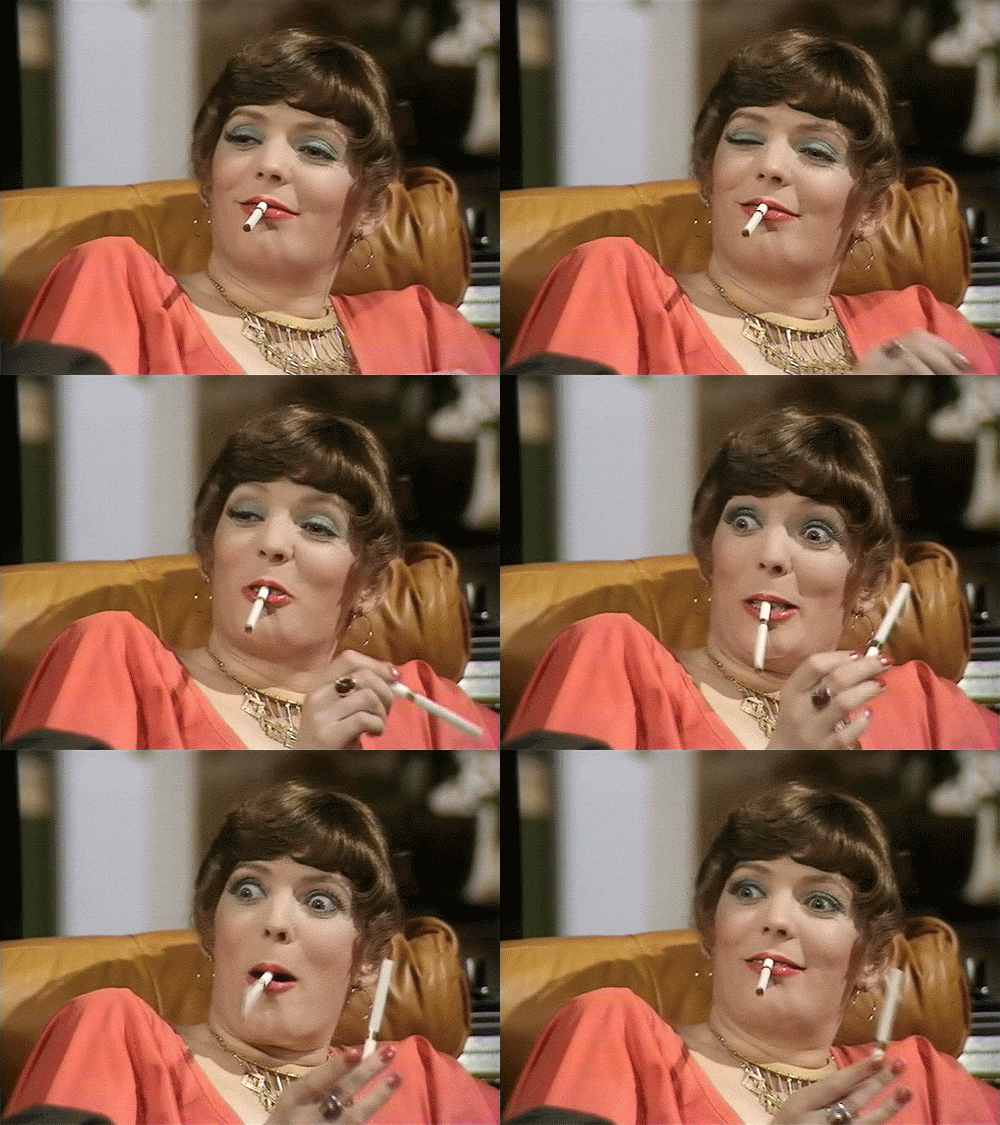
    From television celebrity to tequila entrepreneur, we talk to one of the nicest people in show business, Cleo Rocos about everything from partying with Princess Diana to the power of positive drinking.

    Cleo Rocos will never blend into a crowd. Whether it’s her fiery red hair, wild style or infectious laugh, she definitely knows how to work a room. Her speech is peppered with words like “fab” and there is little doubt she knows how to have a good time. She clearly loves socialising and has spent years rubbing shoulders with some of the biggest and brightest stars in both Britain and the United States, usually armed with one of her famous margaritas.

    Rocos’ break into show business sounds like the stuff of Hollywood legends: a chance meeting with BBC director, Alan Bell while still in drama school led to her being cast in a small role on a BBC comedy series. “I was late for a ballet class and I was running, clutching my ballet shoes, and I didn’t see him”, Rocos remembers that Bell spotted her and took a shine to the then fourteen-year-old, who looked more like a woman of twenty.

    Bell invited her to the BBC for lunch where she was introduced to the head of the BBC’s live entertainment, Jim Moir who asked her to audition for the part of a jingle girl on a new programme, The Kenny Everett Show.

    Upon meeting Everett, she says it was love at first sight. “Kenny and I got on so well that they asked me if I would like to do the series and be Kenny’s co-star”, she explains, “and it was fab. We just laughed from edge to edge.” You can hear the affection she had for Everett in her voice when she talks about him.

    They called each other “fellow Martians” because they felt different from others yet fit perfectly together. But Everett was gay and passed away from AIDS related complications in 1995.

    “I tell people that I fell in love with a man, I didn’t fall in love with a gay man. It didn’t matter to me in the way people would think it would because we got along on every single other level.”

    The couple were engaged and planned to marry but Everett called it off. “I think he felt that he didn’t want to go through something that he might feel a failure in, even though it wasn’t going to be that way with me. But I loved him and he’s the only man I’ve ever loved.”

    The Kenny Everett Show ran for eight years and was hugely popular in the UK. During the eighties, the pair took the London nightlife and social scene by storm. She has partied with everyone from Elizabeth Taylor to Joan Collins.

    She describes Collins as “divine” and says Elizabeth Taylor was just as glamorous as you’d want her to be. Taylor famously suffered from back pains as a result of a horse riding accident while filming National Velvet as a child, so she would often hold court in her Los Angeles home and host dinner parties at her house that were attended by Rocos and a slew of closeted male celebrities including British actor Edward Duke who first introduced Cleo to the Hollywood legend.

    “You imagine meeting [Taylor] would be terrifying but it’s the complete opposite. She was probably the most generous, loveliest person. She had the most cackly, Wizard of Oz witch laugh but she was so much fun.”

    Back in London, Rocos and Kenny Everett would often have lunch with Princess Diana, where they would trade showbiz gossip for palace gossip. Rocos says, “Diana always wanted to know who [on television] was really gay.” The princess loved The Kenny Everett Show and Rocos’ recounts a hilarious story about sneaking the Princess into the Royal Vauxhall Tavern along with Everett and Freddie Mercury.

    The day started at the Bombay Brasserie where Princess Diana suggested they order peach bellinis. She had no security with her and Rocos says, “there was never any security with her as Diana was very good at sneaking out of Kensington Palace.”

    Following their wet lunch, the party moved to Everett’s penthouse in Lexham Gardens where the champagne fuelled fun continued. The Princess kicked off her shoes and they started dancing around Kenny’s flat to the Gypsy Kings using
    feather dusters that looked like “dehydrated Vegas feathers”.

    Everett rang his neighbour, Freddie Mercury who came over so they could watch an episode of the Golden Girls. “We turned the sound down and all started doing the different characters voices.”

    The group then planned to move onto the bar and Diana was keen to join them however, they first had to help to disguise her identity. The group hatched a plan to put Princess Diana in boy drag, dressing her in a military jacket, tucking her hair up in a hat and giving her a pair of aviator sunglasses to wear.

    “Diana said she’d stay just as long as it takes to order a glass of wine and go,” but when they arrived the place was packed. They went in nudging each other like school kids. Luckily, nobody recognised Diana and most people thought she was just a “beautiful male model.”

    She stayed in disguise all night and they took her home in a taxi back to Kensington Palace. The press never caught wind that Diana had been at a gay bar and Rocos now calls this her “peach bellini day”.

    She maintains that the day would have never happened had it not been for the peach bellinis and she is a strong believer that drinking can be used to bring people together. In fact, she has recently published a book called The Power of Positive Drinking.

    She is passionate about drinking the right kind of cocktails and in 2012 she launched her own brand of tequila, Aqua Riva made from 100% agave. Drinking 100% agave tequila “is the only way to party”, explains Rocos, “because you do feel so much more wonderful the next morning than if you’re drinking wine or spirits.”

    Tequila, long associated with hideous hangovers, body shots and all-inclusive holidays in Puerta Vallarta has mostly been approached with fear by British drinkers, however Rocos is adamant that drinking the right kind of Tequila means no hangover, just a good time.So how did she go from television star to Tequila campaigner and entrepreneur?
    Following a period of feeling disenchanted with the type of television work she was being offered such as Celebrity Big Brother, which she says had “the most horrible, unflattering overhead lighting”, she was looking for something she could do that would capture the theatrics of her pre-reality television days.

    She began hosting Tequila Society dinner parties as an excuse to get interesting people together to “enjoy tequila cocktails all made with fresh ingredients so nobody felt ropy the next morning.” She loves the drama of a good party and believes that socialising and drinking go hand in hand.

    Soon afterwards she became President of the Tequila Society and went to Mexico to learn as much about her favourite drink as possible. It was then that she discovered what was missing on the market: “a really wonderful, divine tequila that was spectacular in flavour and quality but well priced. So I spent ten months in Mexico personally creating the profile and the flavours with a master blender to create Aqua Riva.”

    It is clear that Rocos is very knowledgeable about tequila and it’s refreshing to talk to a celebrity about a product that they have actually helped create. In a world where celebs will attach their name to just about anything for a pay cheque, Rocos is a breath of fresh air.

    Rocos is so committed to her tequila that she spends most of her time these days giving demonstrations, teaching people how to make good, clean cocktails.

    “I’m passionate about my product and there is nothing better than being on the shop floor, with people showing them how it all works,” she says. Her enthusiasm is contagious and it’s evident why she is the perfect ambassador for tequila.

    In Cleo’s world, it’s all about drinking and drinking well. “You don’t have to feel terrible the next day. Drinking is a great thing if you do it well.”
    Truer words have never been spoken. Cheers, Cleo!
    Visit Cleo Rocos Online

    cleorocos.com/tequila.html


  • INTERVIEW: My Transexual Summer: Lewis Hancox

    Lewis Hancox, a 24-year-old Digital Film and Video student tells Matt Peake about what it was like to appear in Channel 4’s ‘My Transsexual Summer’, his plans for the future and about the love of his life, Sophie.

    Can you explain the process of how Channel 4 initially approached you?

    I made video blogs on YouTube ever since I first started my transition to see how I changed. Twenty Twenty, the production company, found me on YouTube and emailed saying ‘we found your videos and we think you’d be good for this programme. Can we give you a call?’ They came round to film an audition tape then rung me up saying we’d like you to be part of the show.
    During the show you lived in a house with all the other Trans people? How was it meeting everyone?

    Yes, it was a big massive house in Bedford and we stayed there every other weekend during the summer. That was really fun. I’d never met anyone else transgender before and I was really excited to meet other people in my position and really nervous because I knew cameras were going to be on us. Straight away me and Drew just clicked because I think she’s my age and she’s a northerner and we just had loads in common. That would have never happened if it wasn’t for the show.
    I find it interesting that the representation of trans people in the show was so varied from people only weeks into their transition and others who were years into theirs.

    Yes, we were all at different stages in our transition. At the time I hadn’t had my chest surgery. The show helped me raise the money as St. Helen’s wouldn’t fund the chest surgery saying it wasn’t part of the gender reassignment process, which is ridiculous. Within the time that the show was filmed people really transformed.
    Obviously having the support for the chest surgery funding. What was the general reaction from the public?

    I was a bit worried and almost dropped out of the show at the last minute because I didn’t want to reveal to everyone that I was transgender. I felt it was something to be ashamed of and I was embarrassed by it but I literally didn’t get a single negative reaction.
    The most unlikely people in St. Helen’s, like the chavs, were shouting at me saying ‘oh, it’s that guy off the telly! Well done!’. In terms of transitioning, some people don’t even want to be classed as male or female and would rather be called ‘genderqueer’. Personally, I just see that being transgender for me is a medical thing. I feel like I’m just a guy that happens to be born a bit differently. It doesn’t not make me feel ashamed or embarrassed because I don’t mind telling people I was born a bit different. It’s a condition that I have or had. I have to put it behind me and I’m just me.
    You said you’re still in contact with Drew and Fox but have you met the others since the show?

    After the show came out we did a UK club tour. We got to be in the VIP sections and basically live the high life for a year. So that was amazing. I now live down south and am moving to Brighton in April with my girlfriend. Sarah lives in Brighton so I’ll probably see her a lot more.

    You met your girlfriend after the tour didn’t you?

    Yes, basically it worked out quite well. Sophie saw the show and messaged me on Facebook saying ‘Congratulations on getting the money for your surgery!’ or something along those lines. I messaged her back and checked out her pictures because I thought she was hot. I never actually thought that I would meet someone online but we just got on straightaway. We live in Buckinghamshire now. Everything just flowed really “I feel like I’m just a guy that happens to be born a bit differently. It doesn’t not make me feel ashamed or embarrassed because I don’t mind telling people I was born a bit different” naturally.
    What are you up to at the moment?

    I’m studying Digital Film and Video. It’s the one time when I’m actually doing well at Uni because I’ve dropped out of other Uni’s in the past. I’ve also been doing loads of work on the side with Fox so I’m building up a really big portfolio.
    How was it coming out to your parents?

    I told my mum first and she completely understood because when I was a kid I used to say that I was a boy all the time so I don’t think it was really a shock for her. She was still concerned but only because she thought that I would have a hard life. We both didn’t know anything about it so we did research and watched shows about it. We were both learning together.
    My dad was the one who was a little bit weird about things. When I told him, it was like the news had just been sprung on him. I think he felt that I should have discussed it with him, rather than saying ‘I am going to transition’. Maybe he felt that he wanted to be a part of that decision. I think the real issue was that we didn’t see each other enough. On ‘My Transsexual Summer’, they wanted me and my dad to talk and we became closer, with him beginning to accept it. He’s completely cool with it now. He wanted me and Drew to get married at one point. I actually came out as liking girls before coming out as Trans so I suppose that I’ve sort of had two coming outs.
    So what is your ultimate ambition?

    I really want to write a comedy drama based on my life about being Trans with me as the person going through college having to experience that but making light of it and turning it into comedy.

    How do you feel about the representation of transsexuals in the media?

    I think that slowly it’s getting better but what I’d like to see is more Trans people in the media, but not about them being Trans. For example, if I’m a filmmaker, I want to be known as the filmmaker who happens to be trans. I think that would help people recognise that we’re all normal, and that we’ve all got ambitions, hopes and dreams. There is still prejudice and it needs to be tackled directly. Also there are not many Trans men in the media. I know that there are a lot of people that don’t think Trans guys exist, like my girlfriend thought, before she watched ‘My Transsexual Summer’, that a Transgendered person was a man changing into a woman, she didn’t realise that it could be the other way round.
    How do you feel about the gay media’s representation of transsexuals?

    I think in the media that there is too much focus on surgery and things like that and it’s good to educate people but it’s not good if someone were to ask someone if they’ve had surgery or not, to just be nosey. It’s not like people who aren’t Trans are going around ask others what their bits are like. Why should that matter?
    How do you feel about the representation of the Trans community within the supposedly ‘LGBT’ organisations?

    There is the debate that the T shouldn’t be with the LGBT because LGB refers to sexuality and transgender isn’t sexuality. I’ve never been involved or been to an LGBT group for support because I’ve never needed it. I tell a lie, in fact I’ve been to an LGBT group once when I was at Salford Uni and everyone just assumed I was a gay guy when I was there. I think there’s still work to be done with people realising that LGBT isn’t just about being gay. I’ve never felt the need to be part of that though as I don’t see myself as any different. I’m a straight guy and I don’t feel the need to go to LGBT groups.

    Could you explain more about the surgery that you’ve had?

    Well before the surgery, you have to have had your name changed and have been living a whole year as the new gender. It sounds weird to say as I’ve been living my whole life as this gender, except for that time in high school, as a guy. I then got on the hormones for a few years before I had the chest surgery because I had to raise the money myself. I applied for the lower surgery and everything was straight forward and within a few weeks they said did I want to come in for my first stage. There are two different types of surgery. There’s the phalloplasty, which was featured in the show with the guy who had the skin graft from his arm, but I’ve gone with a different type of surgery called the metoidioplasty.

    This interview is from our Feb 2014 Issue – available from iTunes and Android.

  • INTERVIEW: Mr Gay World 2014, Stuart Hatton

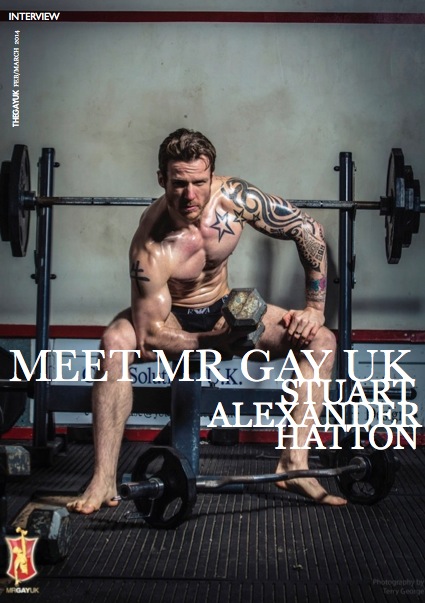
    INTERVIEW: Mr Gay World 2014, Stuart Hatton

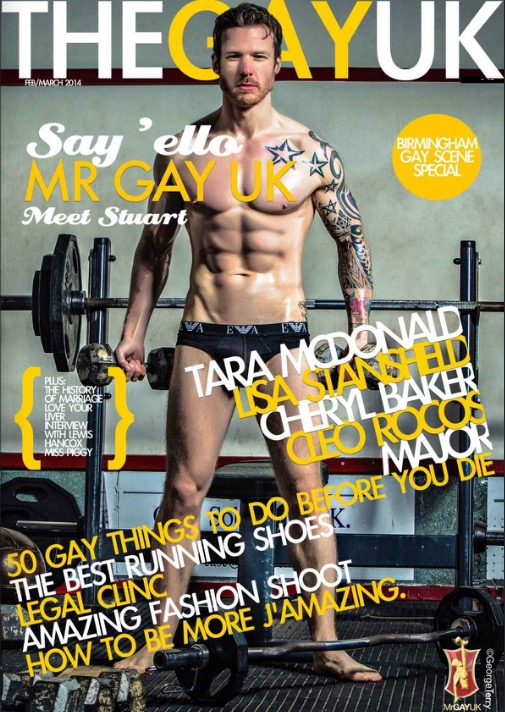
    If you think beauty pageants are just for girls staring vacantly into the middle distance, where every answer is “world peace”, over-the-top tiaras and feeding starving pandas, you’ve not clapped your eyes on this year’s Mr Gay UK. Step up Hunky Stuart Alexander Hatton, the smouldering, 28-year- old, Star-Trek loving dance teacher who is the UK’s Mr Gay – and now The Mr Gay World 2014…

    (more…)

  • INTERVIEW | Lisa Stansfield

    INTERVIEW | Lisa Stansfield

    This is the first time I’ve had to interview someone I feel like I grew up with, that I shared some of my most intimate moments with, that made me laugh and cry, made me shake my tushie round the living room – and still wanted to meet up and have a pint with.

    I should point out that when I say sharing the most intimate moments with, we weren’t actually in the same room, town or probably country… but you get my drift, I do mean as a soundtrack.

    The lovely Lisa Stansfield is back. After a brief recording sojourn, she’s here with one hell of an album and is working that whole media circus in her inimitable way. “Seven” (this is her 7th album) is chock full of tracks you feel you know but don’t – her style is here in full force, those vocals, that initial breath before she launches into a track that’ll tear your soul out and stomp all over it, and then make you dance like no-ones watching with the next track.

    I got the chance to chat with Lisa (I still can’t believe it!) and ask the Rochdale chanteuse what she’s been up to and what makes her tick.

    First up, I asked about the influences on this album…

    LS: Same as they always have been really, they are the reasons I got into music, Motown, R&B, Northern Soul.

    So, on this album, any favourite tracks?

    LS: When you make an album, it’s all very personal emotionally. An example is the track Conversation which makes no sense and everyone asks me what it’s about and I can’t tell them – but it makes them cry with its raw emotion.

    It’s been a long time since the last studio album, why the gap and what’s been happening?

    LS: I don’t see it as a gap. I’ve continued working, biding my time. Why bother making music if you have to compromise? These days it feels like if you’re not in the spotlight 24/7 then people forget you. I prefer to make work that’s timeless, doesn’t date, rather than something that’s trendy.

    So how does it feel to be more Radio 2 than Radio 1 these days?

    LS: Things shift and audiences change or grow older. Radio 1 isn’t the same as when I was younger, it seems less mainstream – that’s more Radio 2 these days.

    How do you feel about the current state of the music industry?

    LS: There are 2 sides, manufactured versus integrity. It’s always been like that though. You can feel empowered by taking your time, owning your work, putting your stamp on it rather than being told what to do and with some Svengali in the background.

    Lisa’s personal sense of style has always been a talking point – remember the kiss curl and bakers boy caps back in the day? For Jools Hollands Hootenanny, she showed how to grow up and look classy and still relevant (lisa-stansfield.com/lisa-on-jools-hollands-hootenanny)

    I asked her what input she had on this?

    LS: I’m in control of what I wear, I have to be comfortable with it and not wear something that’s simply given to me. I work with a fabulous stylist called Johnnie Blue Eyes. He understands what I like and I’ll ring him and say “I’m thinking of wearing this with that and those” and he’ll come back with “yeah, but add that too” and it works.

    It’s part of being who I am.

    With it being 25 years since the release of All Around The World, I asked if she still listens to her back catalogue?

    LS: No! Do I f**k! Once you’ve done an album and done the promotion and tour, you tend to move on to create the next. It’s funny but Ian and I (husband and co-writer/producer Ian Devaney) did a Greatest Hits a few years ago, and we had to listen to the back catalogue to choose the material, and when we were done, we looked at each other and said god, we’re good! You forget some of the material you’ve created and hearing it together was unusual.

    Some may be surprised by Lisa’s acting career – having appeared in several films and TV series already, she is set to star in the upcoming title: Northern Soul (imdb.com/title/tt1837613/?ref_=nm_flmg_act_1), an uplifting look at the world of all-nighters, flares and American soul music via a town up North. She stars alongside Steve Coogan, Ricky Tomlinson and John Thomson.

    LS: Love acting, it’s looking at a character, getting inside them, finding their identity. I’m very excited about this film.

    I asked if she had plans to do more?

    LS: I’d love to, and might once my schedule calms down.

    As the clock was ticking, I asked Lisa why she thought she was so popular with a gay audience? Was it her torch song prowess? Her ability to convey emotions so strong in her music? With typical Northern bluntness:

    LS: Honestly, I don’t know but I think it’s because I don’t take shit from people and I stick up for my friends.

    You have to love this woman, she tells it like it is!Feeling daring, I asked if she had an inner Diva she hid from the public? Was she the kind that demanded only yellow M&M’s in her dressing room?

    LS: I think everyone has an inner Diva but to be truthful I’m an inanimate object first thing in the morning, I’m just human! I tend to live with whatever’s given on tour, no major demands – except for monkey balls!

    Forgive me here dear reader, I had to ask….

    LS: It’s a Chinese herbal medicine for your throat. I had a sore throat one morning and couldn’t see me going on that night, and was given one of these and it worked. Now I take them with me on tour. It’s this tiny herb that you put in water and it swells up to the size of, well, a monkey’s ball but it soothes your throat!


    And on that note, I’ll leave you to purchase a copy of the wonderful new album, “Seven”.


    Me? I’ll be off down the pub with the lovely Lisa to bitch and gossip the night away… ∎


  • INTERVIEW | Cheryl Baker

    We catch up with the gorgeously camp and ever youthful Cheryl Baker. Famous for ‘that’ skirt moment, winning Eurovision, Christmas Top of The Pops and co-hosting Record Breakers. Cheryl we bow down to thee….

    What is your favourite moment from your career?
    Winning Eurovision, without question, as that was always my ambition as a child. Eurovision is like the Olympic Gold of pop music, so to win that was amazing. Personally, though, my favourite moment was singing Mary’s Boy Child on stage with my sister when I was a teenager as that was when I decided I wanted to be on stage.

    Comparing Eurovision to the Olympics – no wonder you’re such a legend.

    What has been your campest moment?
    Again, winning Eurovision! And, when we did Christmas Top of the Pops, I was dressed as a Pixie for The Land of Make Believe. When we sang “run for the sun”, I was hoisted up in the air. It was pure pantomime and fabulous.

    Flying pixies on Christmas TOTP – 10 out of 10!

    What’s the most outrageous thing a fan has ever said / sent to you?
    Oh, that’s easy! I get hay-fever really badly and, one time, this girl asked me for my tissue. I said “No! It’s full of snot!” She just said “But it’s your snot!” Yuk!

    Erm.. VILE! Oh. My. God.

    Have you ever used your fame to get into a VIP area (don’t you know who I am)?
    No! I can’t stand that. I hate it so much. A really good friend, who I love dearly, bought me tickets for My Fair Lady at the National. She said to me we should go to the after-party, I said “No, I haven’t been invited.” but she just said “They’ll let you in; you’re Cheryl Baker!” I remember when I was in Co-Co in 1977, I was in a restaurant called The White Elephant on the River – everyone went there, it was the place to be. Davy Jones from the Monkees came in, and he was my idol, as that was my era. They said “I’m terribly sorry, Mr Jones, but there are no tables.” and he actually said “Don’t you know who I am?” and my heart just sank. He was my idol.

    We love a diva, but we love an unassuming one even more.

    What was the most breathtaking record you saw broken on Record Breakers?
    Roy Castle did the longest wing-walk. They wanted me to do it too. I tried for about 10 minutes but it was hell. Roy was terrified of heights but that’s how he dealt with his fears – by facing them. We both did the longest rope slide, from the top of Blackpool Tower, although that record was beaten shortly after by the Marines. We were both terrified. I raise my hat to Roy – so many of the records were about him facing his phobias.

    Why do you think the gays love Eurovision so much?
    I don’t know but I’m so glad they do! They love everything I love – musical theatre, pop music, Eurovision. I’m like a gay man. If I was a man, I would definitely be gay.

    Never change. Ever.

    What does it mean to you to be a gay icon?
    It means I have a real loyal following that say lovely things. They call me Dame Cheryl, which I love, even though it sounds a bit old! Gays are very happy to wear their heart on their sleeve. If they like something that other people say is camp or twee, they don’t care. Gay men and women are not afraid to come out and say they like something, and just be themselves.

    Dame Cheryl; we salute you. Gay Icon, Eurovision legend and Bethnal Green’s campest export. ∎

    Cheryl Baker currently appears as Mrs Cunningham in the UK tour of ‘Happy Days the Musical’. Tour dates and tickets from happydaysthemusical.com

  • INTERVIEW | Mat and Jon from Proud 2 Be

    INTERVIEW | Mat and Jon from Proud 2 Be

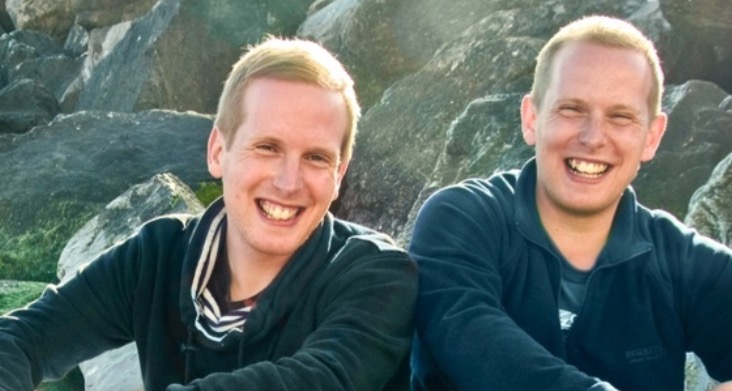
    On a sunny afternoon in January, we caught up with identical twins Mat and Jon Price to find out why they posted an online video saying they were Proud2Be gay and set up the Proud2Be project to spread the positive message that whatever your sexuality and wherever you live, you should be proud of who you are within your community. The project has attracted support from such celebrities as Sir Ian McKellen and Stephen Fry, who posted his own Proud2Be video.

    Proud 2 Be
    CREDIT: Proud 2 Be

    Thank you for joining us guys. Firstly can I just say you’re the first identical twins I’ve ever interviewed.
    Jon: Yeah. And the last hopefully. (evil laughter). So tell us a little interesting fact about
    yourselves.
    Mat: Oh, well, I’m the oldest brother by a whole 2 minutes. I’ve been backpacking around New Zealand and Australia working on organic farms and I play the guitar.
    Jon: I play the keyboard and have travelled around South-East Asia. Oh and we’ve both travelled to San Francisco where we visited Harvey Milk’s old camera shop for a cocktail party! It was this trip that inspired the Proud2Be project.

    Where were you raised?
    Jon: Well we were raised In the West Midlands in a little village called Knowle, quite rural, surrounded by plenty of countryside. We spent the majority of our twenties living separate lives in different cities. It was only in the past 3 years that we really came together.

    So how did you end up in South Devon?
    Mat: It was quite a random move. We’d got back from our trip to San Francisco and we were thinking of going travelling again, but Proud2be was just starting to form and we wanted to commit to that for a while. It was completely random but we decided to go on a weekend away. Megabus were doing a deal so we came to Torquay and thought ‘well we don’t really want to live here’, so we got on a bus to Totnes and as soon as we got off the bus we thought right this is where we wanted to be. It was out the blue and people thought we were crazy just moving to somewhere we didn’t know, or have any friends, but actually it was moving back to a very similar set up.

    Did it take long to settle into the small village life?
    Jon: For the first 6 months we were without a car and so we really faced quite a lot of isolation and realised that exists not just for us but for lots of LGBT people in rural areas where they can’t access their community, they feel invisible, so that really inspired us to create opportunities for people to meet each other and to not be invisible anymore and feel that they’re valuable members of society.

    Most brothers couldn’t live together but you both seem very happy. Have you always had a close bond?
    Jon: We were very close growing up because we were very different to a lot of the other boys in our school. I think we were different to everyone and faced the same kind of rejection, so that brought us together a lot.

    Did you both know each other was gay or did one of you come out to the other first?
    Jon: I always knew Mat was gay and we both knew individually that we were gay from a really young age.
    Mat: It’s hard when your younger, especially not being educated about anything other than what society considered, at that time, as normal. So we’re scrabbling around trying to find out why we’re different. In terms of being out, neither one of us came out until we were eighteen.
    Jon: While I was living away I came back home and Mat had said to me, ‘Oh I went out to the Nightingale’ which is a big gay club in Birmingham, (Find your way there with TheGayUK free bar finder App). We hadn’t come out to each other at this point but that was kinda Mat’s way of coming out to me. He was like, ‘have you been to the Nightingale too?’ I would have been shocked if Mat had said, ‘I have a girlfriend’.

    It must have been a relief coming out?
    Jon: We were very much aware that once we’d said it out loud to each other that we would have to talk about telling our Mum and Dad. We were really afraid of telling our dad because we had grown up with lots of LGBT phobic messages from him and that side of the family…
    Mat: Maybe this wasn’t true but our perception of it was that his part of our family would prefer us to be drug dealers. So we grew up with really blatant negative messages about being gay. Even the subtle messages, where homophobia in the family isn’t challenged or when there’s nothing in the children’s books about gay people or same-sex couples or trans people. All of those messages together, I think, would be very difficult for any child or young person to grow up and not internalise. Without really knowing it, we grew up into young adults that hated ourselves for being gay. It was a natural part of who we were yet it was something to apologise for, something to be ashamed of. Obviously Proud2Be, the name, is our campaign, our statement to say actually we’re not ashamed anymore and we were for a long time.

    Why is the Proud2Be project so important to you both?
    Jon: We love what we do with Proud2Be because we’re really able to empower other individuals, but actually Proud2Be first and foremost was for us and we used it to not feel invisible anymore. When we first started the project in 2011 our video was the only one up there for a good while and it was really confronting to make. A lot of people go through a real process of deciding to make the video and talking honestly from the heart, coming to a real place of pride for who they are. A lot of people never say that they’re proud to be gay or proud to be LGBT. It’s almost I’m gay but I’m normal or I’m gay but I’m straight acting or…
    Mat: I’m sorry but I’m gay.
    Jon: There isn’t much opportunity to say it’s actually something I’m really proud of or is something to celebrate.
    Mat: We’re not saying it’s easy to make a Proud2Be video and we really see the value in it as a journey for people. It’s a really bold statement to say ‘I’m proud to be gay’ even though you may have been told otherwise.

    What are your hopes for the Proud2Be project?
    Jon: First and foremost we aim to help build confidence and self-worth in a proactive, positive way. The project as a whole is about moving forward but also about recognising what’s going on for people in their lives, what messages they’re receiving. It’s about cutting through all the superficial stuff and getting people to think about things like shame and the damaging messages they’ve received, then moving forward building strong LGBTQI communities in rural areas and all around the world by breaking down those ideas that we have to be separate or we cant be a strong community.
    Mat: Or that lesbians can’t talk to gay men because they won’t get on or trust each other, or that trans people aren’t actually part of our community. That’s really essential for us, to have a strong community because that’s where, personally, we’ve received support and affirmation. If you’re dealing with a homophobic boss or a transphobic parent you have access to a community or family that accepts you for who you are and are there for you and can listen to you.

    Was it a shock to have celebrities like Stephen Fry become part of the project?
    Jon: It was, but it’s funny because relatively early on in the project Mat had a radio interview and was asked, ‘who would you like on the campaign’ and Mat was like, ‘oh we’d really like Stephen Fry, we really respect him, he’s really honest’ and the interviewer was like, ‘yeah good luck with that’.
    Mat: Anything like that is like reversed psychology and I was like right sod this I’m going to show you. It’s one of my traits. I later sent him the Stephen Fry proud to be video. We don’t want to be just a celebrity campaign though because we feel everyone can make a Proud2Be video but in terms of getting endorsements from high profile people to get the message out there and to have Stephen Fry endorse the campaign by making his own video, it was a really defining moment for us.

    How can people get involved or seek help from the Proud2Be project?
    Jon: We welcome Proud2Be videos and photos from people and we’re always happy to hear from people over email. We talk a lot with people over the internet. A lot of our face to face work is located in Devon, but we are looking to roll out more services to other parts of the country.
    Mat: Our vision is to empower all LGBTQI people, not just LGBTQI people in South Devon. We really want to be adding things to the website like a forum so people in different parts of the country or abroad can feel part of the Proud2Be message.

    The lads have also been working hard in their local community and launched the first ever Proud2Be Totnes Pride in 2013. If you’d like to attend this year’s pride and meet the guys then Proud2Be Totnes Pride will be on the 6th September 2014. Peter Tatchell shall also be there showing his support. Check out other UK pride dates and information at: www.PrideGuideUK.com ∎

  • LOOK AT ME | Major Major

    LOOK AT ME | Major Major

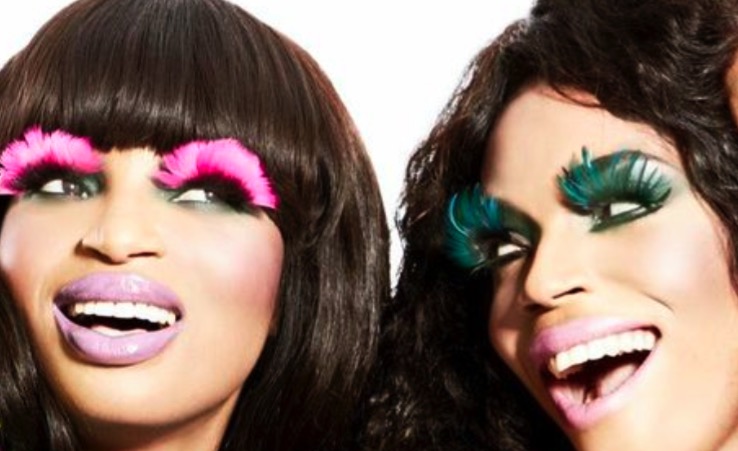
    Major Major
    CREDIT: PR Supplied, Major Major

    So tell us what is Major –
    A) Tom Daley’s Tan,
    B) Joey Essex’s Teeth
    C) Ann Widdecombe’s Hair.

    Elsa: a) Tom Daley’s Tan! Bless him, he seems like a sweet boy. It must have been a tough decision for him to come out through the media, I really wish him all the best.

    Irene: b) Joey Essex’s Teeth (the teeth of the whole cast of TOWIE are Major, ha ha ha! Seems like they all had it done at the same place. They probably had a great discount as a group – lol). I’ve lived in Essex so the bigger the better. Life as CHAV as ever INIT?

    8/10 Well done, gurls, Tom Daley’s tan is Major as well as accepting the Chav within scores you high points. There is no prize…

    Finish this powerful gay message…
    I’m spinning around/ Move outta my way/ I know you’re…

    Elsa & Irene: I know you’re feeling me cause you like it like this…
    Elsa: Love Kylie, she is a great Icon
    Irene: Anything for Kylie, I take my hat off to her… so so inspiring and stunning… she is forever young.

    7/10 Yes she is “forever young” We pause and think to wonder why…


    Kylie’s next move should be?
    Elsa: I have always wished that Kylie and Dannii record an album together.
    I’m sure it would work – it’d be completely unexpected, and it’d be a hit. When 2 sisters are put together on something, nothing can’t stop them:) Come on it’s all about sister, MAJOR!

    Irene: That’s right sis… so Major… Kylie’s next move could be a duet with Major perhaps? Why not, Kylie please call us! I think she is fantastic. I love the way she constantly reinvents herself. Just divine. (This is supposed to be a secret but we are working at the moment with the legendary Pete Hammond creating hits and recreating some that you guys are already familiar with.)

    11/10 Amazing concept and extra point for the shameless Sister plug (these two are sisters – don’t you know…)

    Have you heard of Poppers? Ever tried them?

    Elsa: Sure I know poppers. Never tried but I’ve heard of their incredible ability to relax certain muscles 😉 ha ha

    Irene: No … but I will find out!

    8/10 Loving the knowledge and the readiness to try new things – We’re going to go far…


    What 3 things do you have to take everywhere with you?

    Elsa: Lipstick, my Ray Ban Wayfarer sunglasses and my phone to listen to music.
    Irene: A) My handbag – inseparable – it’s ready to travel and always got everything I need to refresh myself. The French call it “un baise en ville”… Still don’t know why… 😉
    B) My car keys (I like to feel independent and not to worry about transport if no taxis around).
    C) My sunglasses. It’s all about mystery again. (One should always protect their eyes. I can’t remember the last time I went out without them.)

    4/10 Bags, Keys and Lippy- are all expected – we were thinking Adopted children, Your macrobiotic nutritionist and your yogi/life guru… but we loved the surprise flinging of French, so have four points…


    What are people surprised to learn about you?
    Elsa: Expect the unexpected lol…
    Irene: That with this figure, I don’t exercise… “You are what you eat”, in a way right? I stick with that and I never buy a dress that is a bigger size than what I want to be.

    3/10 Pluuuurlease, we hate/are jealous of anyone with a “I can eat anything figure…”


    Your greatest guilty pleasure?
    Elsa: Music; I wouldn’t live without music. It really has a great effect on me. Music is a form of self expression and of course has a great positive effect on wellbeing.

    Irene: Red lipstick
    6/10 Keep it ruby red baby…


    Complete this sentence… (best line gets 10 points)  I need to finish this glass of champers otherwise….
    Elsa: I need to finish this glass of champers otherwise it’s a SIN.
    Irene: …There will be no refill.

    11/10 Irene you and I are going to be the best of friends, I can tell. It’s uncanny the way we think alike.


    The secret to Majors’ hearts is….
    Elsa: It wouldn’t be a secret anymore if I tell you 😉 I like to be surprising.

    Irene: Yes Major sisters are full of mysteries. Guys it’s for you to find out!

    7/10 Cue Aretha Song…


    What’s next ladies?
    Irene: The only way is UP! For Major, we are children of the world. Two sisters having FUN. With Big hair don’t care. We have Big Dreams and Big Ambitions but most importantly Big Hearts. We cannot wait to see Major growing from a humble start into an Empire.

    Elsa: We love to entertain and we are proud to connect with the world through our music. Our journey so far has been such a blessing. Being role models means so much to us. We can only be grateful. Thank you!

    7/10 Stirring Very Stirring.

    Go witness greatness visit their website www.majormajor.com

    This article was taken from Issue 2. Subscribe here

  • March 2014

    March 2014

    Issue 2

    Inside Issue 2

    Mr Gay UK says ‘ello, Cleo Rocos, Tara McDonald, Lisa Stansfield, Cheryl Baker and much more… PLUS: 50 things to do before you die, the BEST running shoes, news, reviews, lifestyle and advice. TheGayUK’s second outing. Relive the ride today. Enjoy.