The tweet grew a large audience and quickly went viral with many people commenting about how true to life the Tweet felt, with at least one exclaiming “Oh my goodness – how accurate this observation is” while another admitted, “I feel like I fit excellently into many of these categories”
Although it did leave one or two questioning about what happens to gay who hit 40/50/60.
Of many people started to add their own thought about what subclasses should be added to the list including, travel gays and theatre gays and one asked, “Wait what about the farmers market / bake sourdough bread and give it to all your friends / raise chickens and sheep outside city limits gay”.
The tweet has over 20,000 likes, nearly 3,000 retweets and over 500 comments.
If you spend any length of time on Grindr, you’ll probably have experienced the ghosting of Grindr.
It can be entirely frustrating especially if you’ve arranged a meet after spending hours on a conversation – and then nothing, nada, zilch. You’ve been blocked. Welcome to the world of ghosting.
These guys on Reddit spill the beans after one poster wrote about how much it “sucked” when someone he had been conversing with blocked him with no reason.
He wrote, “Boy does it suck when you vibe with someone on Grindr, and then a couple of hours later you looked back at the chat only to realize you were blocked. What similar story have you experienced
[totalpoll id=”126854″]
The responses came thick and fast – as you might expect.
One user revealed, “Met this boy and we really vibed. Had a great time together and spoke about meeting soon again. A couple of days later he blocks me on everything (had him on WhatsApp, snap etc). He just totally ghosted me. It really sucked because I liked him a lot.
“Couple months later I get this message from him how he is sorry and that he just didn’t know how to handle something like this. He wasn’t out yet and he didn’t know how to handle the feeling of liking someone genuinely”.
Another victim of ghosting shared, “I matched with a guy on Tinder a while back. It was quite a nice surprise because it had reached that point where I had swiped all the available people and the app was stagnating.
He messaged me first (which is rare) so I thought there was genuine interest. We really hit it off and we were having a rather nice, meaningful conversation. Lo and behold, two hours later he unmatched me.
I feel like people are just playing games on these apps. You have to take everything they say with a grain of salt. It’s better for me now just being off the dating apps altogether.
Another explained how you might be better off being blocked, “Boys are scared. Trolls are asshats. Just be thankful u didn’t have to waste any more time on them. Probs a catfish anyhow.”
“I had just been swiping for fun and was about to delete it and then I came across his profile. I was intrigued but didn’t think we would click but ultimately just said “wth” and swiped right and we matched and started chatting (which surprised me cos hardly anyone really chatted back even though you’ve matched). We chatted for a week and then decided to meet up. On my way to meet up I was so nervous that I almost flaked but so glad I didn’t.
“He’s the best guy ever! I love him to pieces. we clicked instantly and now I can’t wait to marry him”.
Explanation?
As a way of explaining why this might be happening, one commentor suggested that it could be a touch of narcissism, he wrote,
“I am ashamed to say I have done this in the past and I really do regret my actions, I am just one of those people who don’t know how to properly decline someone.
“the feeling that they are not the unwanted piece of crap they believe they are) I don’t know.
“In the past I have been on there, vibed with guys and realised I have bitten off way more than I can chew and told them I wasn’t interested in the first place maybe a little bit too late (you know, I was the type to say just making conversation in the bio, but if the right guy comes along type), and then blanked them when they repeatedly message me. I have never made promises. But I know some people will have done so and chicken out realising that it wasn’t really what they wanted and without telling the other person.
“Is it good? Hell no. But when you feel like you have let someone down the last thing you want to do is to confront the issue, at least for me it is anyway, and at the end of the day, both sides lose. But because it’s on the internet, with strangers, the moral burden really doesn’t sink in as much, which sucks because they don’t know who they could have upset.
“Either way I’m sorry you had to go through something like this, either you encountered a narcissist or just someone with cold feet. I wish you luck on your hunt though”.
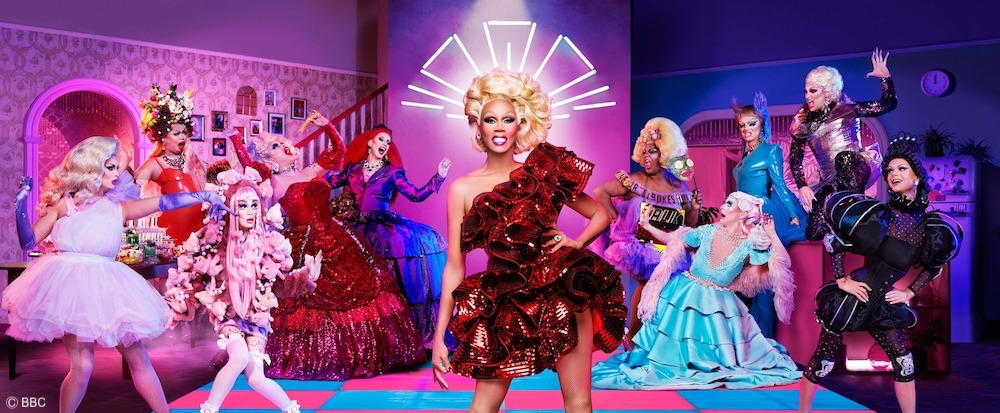
A comment by the BBC press centre revealed, “The first series of RuPaul’s Drag Race UK has been a huge success for BBC Three with nearly 10 million requests on iPlayer and two-thirds of the audience 16-34.
“It is the most popular BBC Three entertainment programme since the channel moved online in 2016, has won critical acclaim, generated massive conversation online, become event television on BBC iPlayer and delivered a top ten single for The Frock Destroyers.
Green Lit for a second season
(C) BBC / World of Wonder – Photographer: Guy Levy
Having brought RuPaul’s Drag Race UK to British screens for the first time to critical acclaim, BBC Three has opened applications to find another set of sickening queens to compete in the Olympics of drag.
Silence! RuPaul has made her decision, The Vivienne, 29, from Liverpool, has taken the title of the UK’s first RuPaul’s Drag Race Superstar.
Having been crowned she said: “I’m made up, I’ve just won the first-ever season of Drag Race UK this is nuts. That crown is going to look gorgeous, I can see me there washing the dishes in it.”
(C) BBC – Photographer: Leigh Keily
All three of the final queens (Divina De Campo, Baga Chipz and The Vivienne) went into the final with three RuPeter badges each, so it was a level playing field.
At the beginning of the episode, The Vivienne said: “If you think I’ve gone through all these challenges to go home without a crown you can piss right off.”
(C) BBC / World of Wonder – Photographer: Guy Levy
U.S. Embassy photographer [Public domain], via Wikimedia Commons
THEGAYUK conducted a flash poll of its Facebook audience to find that over a third of people, who follow THEGAYUK on that platform, said they’d vote for Boris Johnson on the back of his debate alongside Jeremy Corbyn.
Although Jeremy Corbyn was the overall preferred candidate for LGBT+ readers of THEGAYUK, over a third said that they’d vote for Conservative leader, Boris Johnson in the next general election.
Over 430 people took part in the flash poll, which offered readers just two options. Johnson Vs Corbyn.
When given a choice between just the two leaders and asked to base their decision solely on the candidate’s performance on the ITV leaders’ debate earlier this week, 66 per cent of people voted for Labour leader, Jeremy Corbyn, while 34 per cent would trump for Boris Johnson.
Around 88 per cent of THEGAYUK‘s Facebook followers identify as male, with 40 per cent of those being in the 25-34-year-old bracket. The majority of its audience lives in the nation’s capital, London, with Manchester as the next most popular city.
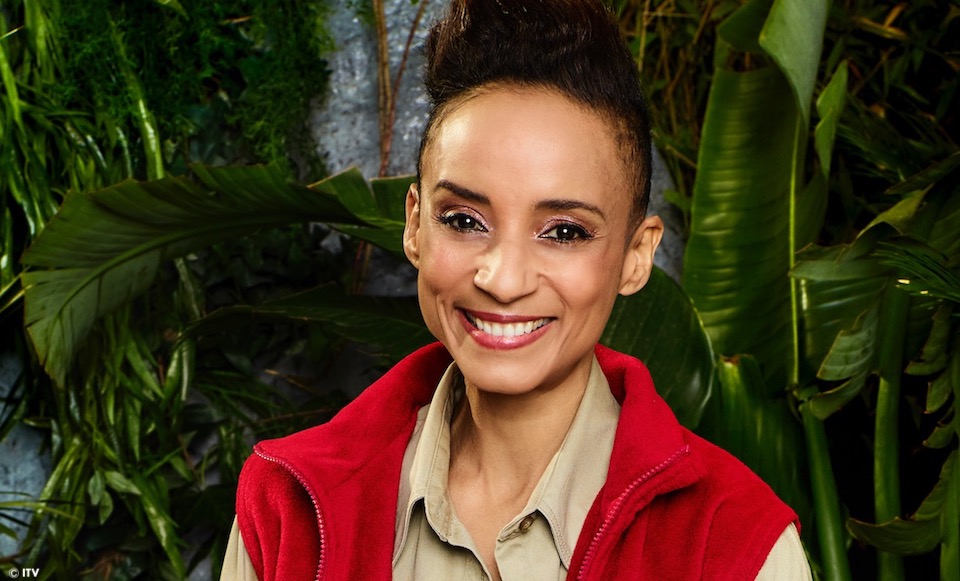
She’s making a name for herself in this year’s I’m A Celebrity Get Me Out of Here, but who is the BBC DJ dating and is she lesbian, bisexual or straight?
Adele Roberts, is the Jane McDonald loving BBC Radio DJ which fans of I’m A Celebrity Get Me Out of Here can’t get enough of, but what do we know about her personal life?
Adele came out in 2002, when she took part in the now-defunct reality TV show, Big Brother. She actually entered the house and came out to the nation even before she told her family about sexuality.
There are reports of Adele identifying as bisexual – according to reports she came out to her housemates as bisexual, but she has also referred to her own sexuality as being “gay” in other interviews.
According to PinkNews, Adele said, “I see myself as coming out in two stages. I think I came out to myself when I was about 14; and it freaked me out, I was a bit like, ‘Ahhh I don’t know if I want to be gay?’ – then after around a week I was like, ‘Yeah I want to be gay that’s fine.’”
Adele is now dating girlfriend, actor and vlogger Kate Holderness, who has enjoyed her own star-studded TV career since 1997.
How long have Kate and Adele been together?
This has never been revealed, however, when Adele took part in Big Brother in 2002, when she was 23-years-old, she did reveal that she had a girlfriend outside of the house.
This could have been Kate, but it’s never been confirmed.
The University of Liverpool has seemingly done away with the labels gay, lesbian and bisexual and replaced it with “sexual minorities” while still referring to straight people as heterosexuals.
In a press release, which was trying to convey that young people born between 1995 and 2015 who identify as a “sexual minority” i.e gay, lesbian, bisexual and pansexual are more likely to experience mental health problems.
“sexual” minorities makes us look as though we are just sexual beings”
Throughout the press release, the University, which worked alongside University College London, repeatedly called LGB people “sexual minorities” however when it came to writing about their heterosexual counterparts, it used the word heterosexuality.
THEGAYUK conducted a flash poll to see what it’s readers thought of the term “sexual minority”
The clear indication from our flash poll was that the majority of those who identify as LGB did not think that the term was right. Over 80 per cent of those who took part said they disagreed with the term and were happy to keep identities labelled as Lesbian, Gay and Bisexual.
One commenter wrote, “‘sexual’ minorities makes us look as though we are just sexual beings, a different sexuality to heterosexuality is a part of who we are not just the sex we may or may not have”
Another added, “totally agree! Sex is one aspect of a human being! I am married to a man, that is not a sexual thing! I am lucky that also part of the luck I have had”
“Attraction not Identity”
According to researchers, it’s about attraction, not identity, a spokesperson for the research said,
“We use sexual minority as an umbrella term to incorporate those who are lesbian, gay, bisexual. We use this term as we only had data about sexual attraction (from the secondary data source used i.e. the millennium cohort study) and not identity which would be more closely reflected by ‘LGB’.
“Our sample were not asked about their identity but only their attraction i.e. have you been attracted to a boy/girl. Furthermore, due to the fact they are likely still navigating their identity at this age i.e. 14 years old (savin-williams, 2011) we did not want to ascribe labels that may change in future and as such sexual minority was a more age appropriate term.”
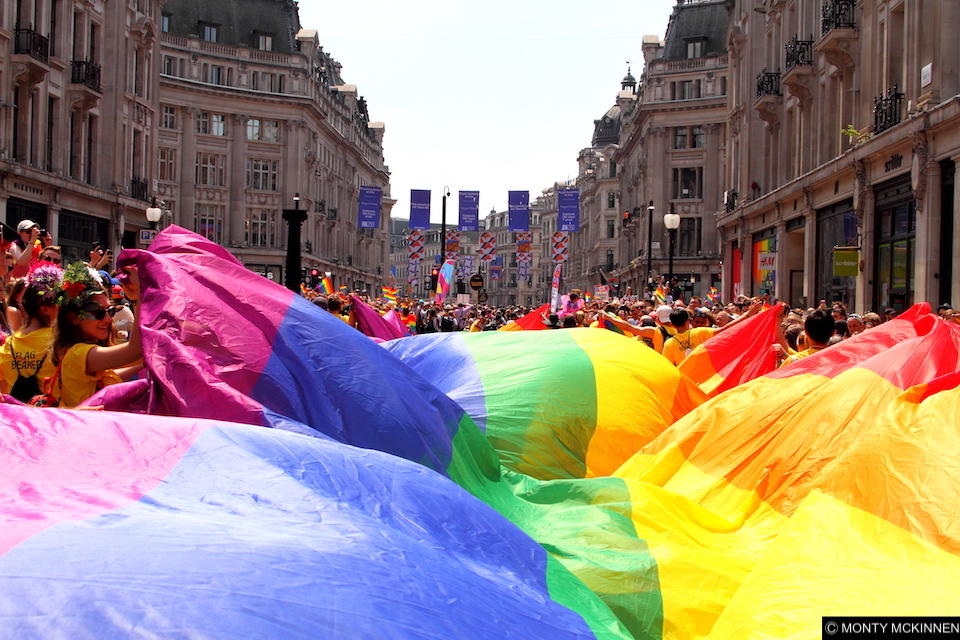
Peter Tatchell, one of the UK’s most famous LGBT+ rights advocates has said that pride, needs a “major rethink” and for it to “get back to what pride was originally about”.
The stalwart rights campaigner then put forth a four-point plan, which included returning the parade back to a political march, getting rid of corporate branding and banning motorised floats.
The plan, he suggested should be trialled for one year.
In a statement, Tatchell wrote
“As a Patron of Pride and one of the organisers of the UK’s first Pride in 1972,
“I have attended every parade since then – 47 in all.
“I believe a major rethink is needed. We need to get back to what Pride was originally about. “
Four ways to take pride back
Peter Tatchell Foundation
The Pride parade should become a march for LGBT+ rights
As a political march, this would mean no charges being imposed by Westminster Council, the Metropolitan Police and the Greater London Authority, saving around £60,000 in fees to Westminster Council alone.
Pride should be open to all
There should be no restriction on the number of people who can march and no requirement to get a wristband.
Oppressive institutions should be excluded from Pride sponsorship & the parade
This includes weapons manufacturers, tobacco and fossil fuel companies and the Home Office until it stops incarcerating, banning employment and deporting LGBT+ refugees. Individuals from these institutions should still be welcome in the parade but without any corporate branding.
Ban motorised floats, except for disability vehicles
Having vehicles in the parade allows Westminster Council to slap onerous charges on Pride and contributes to the carbon emissions that fuel climate destruction.
Tatchell added, “I am proposing that these ideas be trialled for one-year in 2020. If they work, Pride can keep them permanently. If not, Pride can ditch them and try something new”.
Pride In London is one of the biggest prides in the country, which regularly sees over a million people watch and take part in the huge parade.
“The Pride parade can and should remain true to its founding ideals”
CREDIT: (C) Joffe Walters
Tatchell reiterated what Pride was all about saying,
“The founding principles of the LGBT+ Pride parade in 1972 were: LGBT+ visibility, the celebration of LGBT+ life and culture and the demand for LGBT+ liberation, including the abolition of discriminatory laws and reform of anti-LGBT+ institutions. It was open to all who supported these core principles.
“The Pride parade can and should remain true to its founding ideals.
“Pride must be by and for the LGBT+ community – not city authorities or corporate funders. Their support is welcome but it must not dictate”.
Pride operates on the terms of Westminster Council, the police and Sadiq Khan
Highlighting some of the constraints that Pride In London faces, Tatchell revealed,
“The Mayor of London, Westminster council and the Metropolitan Police now hold the whip-hand. The Pride parade operates on their terms – not ours.
“We must reject any cap on numbers in the parade. It goes against the ethos of Pride which was, until recent years, open to all. In 1997, there were over 100,000 people in the parade and 300,000 at the post-parade festival on Clapham Common. Numbers are not everything but they should not be artificially restricted.
What is Peter’s vision for Pride?
“Revert to a political carnival parade for LGBT rights, like the first one in 1972. If it is a political march there would be no fees payable to the police, council etc.
“Political marches are not charged. The anti-austerity and anti-Brexit marches were not subject to any of the draconian costs and restrictions on numbers that have been imposed on Pride.
“Pride can be political and still have a colourful, joyous carnival atmosphere, as in 1972 and 1997.
“To cut parade costs, motorised floats should be axed and replaced by other options, such as hand-pulled non-motorised floats – mounted on flatbeds on wheels – as some groups had in 1997.
“These were smaller in size than the gigantic bus and truck floats of recent years but still fabulous and more diverse and imaginative eg the OutRage! giant papier-mache head of Tony Blair in Pride 1998. The Thames Festival parade is awesome but has no motorised floats. I remember a huge dragon held aloft by dozens of parade participants using tall poles. It was very effective and dramatic; proving that motorised floats are not the only way to have a spectacular carnival parade.
“My congratulations and thanks to the Pride organisers, the Community Advisory Board and all the volunteers who make Pride in London possible. Pride’s online consultation seeking LGBT+ input regarding the future of the parade was commendable. I salute you,” said Peter Tatchell.
Have you received a message from a really cute guy – only to be asked to sign to a verification service?
Be warned – it could well be a scam.
Some guys on Grindr are being asked to visit a website called IPHSID.com in order to verify their identity. The site claims to be the only “website that links public state, territorial, and tribal sex offender registries from one national search site” however, there’s no evidence to back this up – what’s more if you want to join the register you have to pay – $1 for a month or $39 for a lifetime membership.
How does it happen
Well, out of nowhere a guy – with a super hot picture slides into your DMs – and says something like “Hey dude, how are you? Into kissing, cuddling, rimming, 69 – 8 inches open for anything, what are you looking for?” which is followed up by a topless picture and a dick pic.
After you reply – a seemingly standard reply is sent, “nice, that’s great, I’m down to hook ups. I can do travel or host. BTW do you have IPHSID – I will meet you if you already had it”
And then he sends another hot pic.
Then an explanation about IPHSID “Let me explain it to you. It is an IPHS identifying and preventing harassment system to protect, lesbian gay bi-discreet trans in meetup. This is the safe way to check you’re LGBT sex-offender. There’s nothing wrong if we talk about our safeiness [sic] right?
And then a picture of the same dude with a badly busied and cut face, to show that he’s been a victim of an attack.
“I’m not saying you’re one of a [sic] bad guy I just want you (to) get a IPHSID so we can know that we are both safe to meet up – can I sent [sic] you a link if it’s okay?”
The guy then sends a picture of his “profile” and tells you that the $1 will be donated automatically to an “LGBT harassment victim”
But just taking a look around the site you’ll notice that there’s no evidence or links to any of the partnerships they say they work with.
It even uses a Gmail account for contact – not a branded one. Sounds kinda phishy right?
If you need any other reasons not to 100% trust this, its links to social media have nothing to do with the site – the Twitter one goes to an account that hasn’t been used since 2017, the Facebook link goes to Facebook’s own LGBT+ page, the Insta goes to news-brand LGBTQNation and the YouTube links to a SoulPancake video.
Dodgy? We’d say so.
THEGAYUK.com reached out to IPHSID for comment and guess what – the email bounced right back.
There are over a hundred clinics in England that are currently offering PrEP on the IMPACT trial.
Obtaining PrEP in Scotland and Wales is different and people wanting to take PrEP should speak to their GP or local sexual health clinic. To find out about accessing PrEP in Northern Ireland click here.
A few of them are currently fully subscribed or no longer taking on new applicants, however, you should ask about being on the waiting list if your nearest clinic is not able to give you a place.
Check the map below to find your local clinic offering PrEP
What is the IMPACT trial?
Unlike in Scotland and Wales, PrEP in England is not freely available and you must apply to part of the IMPACT trial.
Over three years the trial will aim to recruit around 26,000 people as a way to reduce the risk of HIV infection amongst those who are at the highest risk of coming into contact with HIV – one of these groups is gay and bisexual men, as well as trans individuals.
The trial is to try and ascertain how many people will need PrEP in the future and how long they’ll need it for.
A study of 2,000 UK adults found the nation is labouring over tasks which may clear up dust and dirt visible on the surface, but viruses are being left untouched.
More than a quarter will clean their homes with the ambition to make sure everything appears clean and tidy, with 27 per cent working to remove all evidence of dust and dirt.
However, expert insight highlights how this could lead to virus-ridden homes as germs can remain on hard and soft surfaces for up to 48 hours – even after a daily dusting.
Figures show adults in the UK catch between two and five colds a year on average, while children suffer up to eight bouts.
In fact, minor illnesses such as coughs and colds were the most common reason for sickness absence in the UK in 2016, accounting for approximately 34 million workdays lost.
Despite this, the research commissioned by Dettol, found just 17 per cent say their main objective when cleaning is to rid their house of cold and flu viruses.
Instead, three in 10 confessed to only cleaning when they can see visible dirt.
Dr Lisa Ackerley, the Hygiene Doctor, said: “The research has gleaned some interesting insights into the cleaning habits of the nation, and how the actions they are taking could mean they are at risk of becoming unwell this winter.
“Although it’s reassuring to see millions of Brits are in the habit of keeping their homes spick and span, it’s the way they are doing it which might mean they aren’t actually as effective at reducing risks of illness as they think because the home may look clean, but it is not hygienic or disinfected at all.
“Studies have shown that flu viruses can survive on common household sites for extended periods of time, from up to 48 hours on wooden surfaces, eight hours on cloths, and 24-48 hours on non-porous surfaces.
“People may be surprised to learn that it is in fact hands and hand contact surfaces that can play a very important role in the journey of the germ, and that good hand hygiene together with regular disinfection of commonly touched surfaces can help to reduce transmission of colds and flu.
“Studies have also found household objects such as door handles, light switches, pens, tap and toilet handles, and television remote controls can become contaminated with viruses which are transmitted by dirty hands.
“In addition, when people come home from travelling on public transport, or being with crowds, for example when shopping, then it is important to wash hands immediately upon coming into the home to prevent the transfer of viruses onto surfaces.”
We are spending time cleaning, just not the right type!
The study also found the average adult will clean for an hour a week, but one in six spend less than 20 minutes a week on household chores.
Of this time spent cleaning, 22 minutes are dedicated to vacuuming or sweeping but just 14 minutes a week is used for wiping down kitchen surfaces with an antibacterial cloth.
When it comes to the spread of viruses, only half believe this happens in the home.
This compares to 73 per cent who would put it down to sneezing, and nearly two thirds who think it’s from touching contaminated surfaces in public.
Just 13 per cent of Brits polled, via OnePoll, believe their home is the place where they or their family are most likely to interact with germs and viruses, compared to 38 per cent who would expect it to be at school.
And six in 10 think you’re most likely to come in contact with cold and flu viruses on public transport.
Almost a fifth also don’t believe that catching colds and flu in the colder months can be prevented.
It also emerged around two fifths reckon the toilet is home to the most cold and flu viruses, compared to 33 per cent who anticipate kitchen surfaces to be the most contaminated.
As a result, more than half will regularly use an anti-bacterial cleaning spray on their toilet seat, with just two in five doing the same when cleaning the kitchen table.
Even fewer – one in four – will use an anti-bacterial spray on the door handles between rooms.
Through the Clean It, Kill It, Stop It campaign launching this week, Dettol aims to educate the British public on how colds and flu are spread via touch where viruses may have been deposited.
CLEAN IT: Cold and flu viruses can survive on hard and soft surfaces in the home, from worktops and cupboards, to sofas and curtains, but you can help prevent their spread with your daily cleaning routine.
Pat Cattini, president of the Infection Prevention Society, added: “Influenza and the common cold can be incredibly debilitating, however it appears that aside from getting a vaccination, the UK public need to be more aware of additional measures that can help prevent catching these illnesses each season.
“We need to ensure that people understand surfaces and commonly touched items, like door handles and phones, can be contaminated with flu and cold viruses particularly in the colder months when transmission is more likely.
“When coupled with actions like regular hand washing and annual flu vaccinations, the simple addition of daily cleaning can help prevent the spread of colds and flu.
“The work Dettol is doing to educate the UK public on this through the Clean It, Kill It, Stop It campaign will go a long way to increase proactive prevention nationwide.
“By ensuring we hygienically clean surfaces and commonly touched items in our homes and workplaces to reduce exposure to cold and flu viruses, we can all work together to help stop cold and flu before they spread this winter season.”