Search results for: “ ”

  • Petition urging Theresa May not to form DUP coalition reaches 110,000

    A petition of no confidence in a coalised Government between the Conservatives and the Democratic Unionist Party (DUP) has reached 110,000 in under 24 hours.

    Mrs May’s plans to form a Government with the help of the DUP is facing mounting pressure after a petition of no confidence was signed by 110,000 people in under 24 hours. Another petition has reached 380,000 petitioners.

    However, the DUP is a deeply unpopular party with certain segments of society due to their stances on LGBT+ equality, women’s rights and the environment.

    The Prime Minister was unable to secure a majority Government after the results of her snap election revealed a shortfall and overall lost in seats, winning only 318 seats. Propped by DUP’s 10 seats, Mrs May will have a majority of just two seats. The Conservatives did have a majority of five before the election.

    The petition is hosted on the change.org platform and it remains to be seen whether the cause will be debated in Parliament as per the rules, that any petition that surpasses 100,000 signatures will be considered for debate in Parliament. However, the official UK Government petitioning site is not accepting any new petitions as they are waiting for a new petitions committee.

    WHO ARE THE DUP?

    The DUP have earned themselves a reputation for being homophobic after voting against same-sex marriage four times.

    Theresa May looks to have negotiated with the DUP, who have 10 seats, in order to take their total number of seats up to 328, a majority of just two seats. However, the coalition will not be welcome news for many in the LGBT+ community has the DUP has run on a platform of conservativism which includes anti-LGBT equality and anti-abortion.

    During their campaigning and the release of their manifesto, the DUP failed to mention any pledges for the LGBT community.

    The party’s founder Ian Paisley spearheaded the Save Ulster from Sodomy in the 1970s, which was opposed to the decriminalisation of homosexuality in Northern Ireland, in fact, Northern Ireland was the last country within the UK to decriminalise homosexuality, which it did so in 1982. Paisley’s son, Ian Paisley Jr said that he was “repulsed” by homosexuality.


  • FILM REVIEW | Berlin Syndrome

    ★★★★ | Berlin Syndrome

    A young Australian woman visiting Berlin meets who she thinks is a perfect man but then he turns out to be too good to be true.

    In the new movie Berlin Syndrome, Is it a game or is it a nightmare? When Clare (Teresa Palmer) meets Andi (Max Riernelt) by chance on a Berlin street, she can’t resist his charms and good looks. She was planning on going to Dresden the next day but instead, she changes her plans to go out on a date with him. The date turns into a one-night stand, at Andi’s flat, in an isolated building in the middle of nowhere that’s typically Berlin. The next day, as Andi goes to his teaching job, Clare wakes up and realises she can’t get out of his flat as the front door and the windows are locked. She’s not too concerned about it because she assumes that Andi just forgot to leave her the key. He comes home from work and they spend the night in Andi’s flat having a romantic dinner, and Clare can’t resist spending another night there. When Andi does leave the key for her the next morning, Clare attempts to open the front door are futile – it’s actually locked from the outside. It’s at this point that Clare starts to panic. She breaks one of the living room windows only to discover it’s double glazed and can’t break the second window. And it’s only a matter of time until Andi comes home from work that their relationship takes a turn from a romantic one to a one fraught with panic, danger and suspense for Clare as she does not know what’s going to happen next. Minutes turn into hours which turn into days and Clare is fraught with more terror as she does not know what Andi has in store for her.

    Berlin Syndrome is almost two hours long, but it’s a film that will make your heart beat a bit faster, and will keep you holding your breath – it’s that suspenseful. Director Cate Shortland has given us a woman’s survival story, that, while the finale is a bit predictable and silly, starts out pure and innocent but then turns into a nightmare. It’ll make you have second thoughts the next time a guy invites you back to his place.

    Berlin Syndrome is now playing.

  • INTERVIEW | Pravesh Kumar – Placing British Asian Drag in the Centre of the Stage.

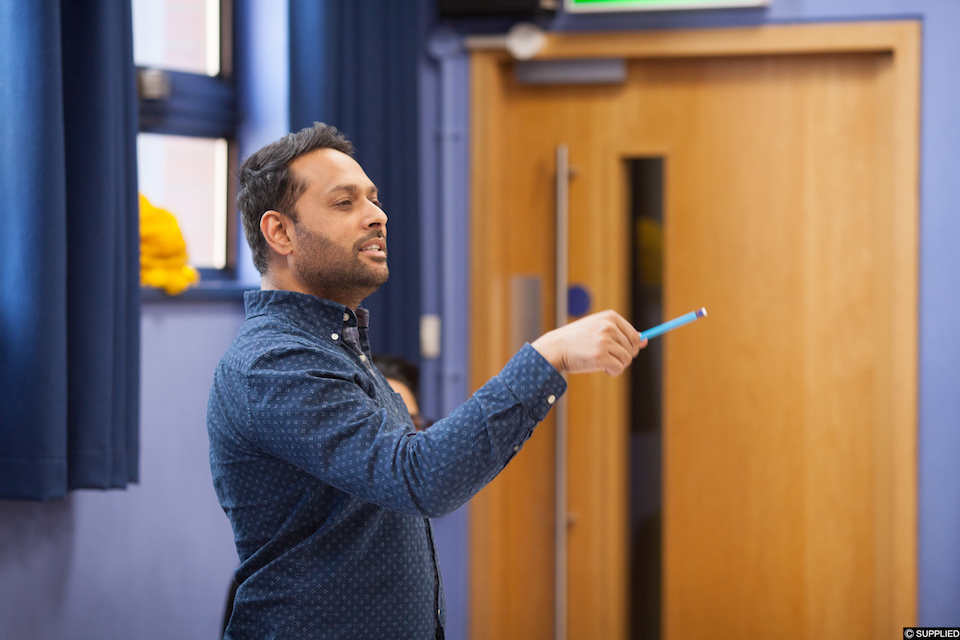
    Kinky Boots, Priscilla Queen of the Desert and La Cage Aux Folles. There are plenty of shows out there which involve men dressing as women, but there is only one show out there that looks at the subject from a British Asian perspective; “Miss Meena and the Masala Queens”. Looking at the challenges loves, lives and families of British Asian drag queens, director Pravesh Kumar boldly takes a subject which is seldom spoken about amongst the Asian community and places it squarely in the centre of the stage. Pravesh spoke to TGUK about family, heart and sparkle, Bollywood and becoming “fishy”.

    TGUK – Miss Meena and the Masala Queens is certainly unique; can you tell us about the show?

    PK – Without giving too much of the story away, it is about Miss Meena, a once famous and fabulous drag queen, who has lost his sparkle and glitter and who is running a washed up and out of date club. The club is about to close until a new arrival brings back a glimmer of hope, but the arrival of another stranger leads to Miss Meena questioning everything that he ever stood for. It is a joyous show about celebrating diversity and individualism. It is a British Asian story with real heart and sparkle, and most importantly, it is a story which has never been told before.

    TGUK – Was it a difficult show to get off the ground?

    PK – It has been in my head for a while but I wanted to wait until we were really ready to tell it. The LGBT British Asian story is one which is very rarely told, and so it took a long time to get the backers to put their weight behind it. Shows such as these are often seen as niche or too risky, so it did take a while to get the production up and running. A lot of these types of productions end up in small studio theatres, but we are proud to say that we have placed this production on the main stages of theatres.

    TGUK – How authentic are the stories you are telling?

    Originally, the idea for the show came from the fact that I have really wanted to tell this story for a long time. As a gay man, I have been on the gay scene for many years, so from my point of view, it was a really important story for me to tell. Harvey Virdi (the writer) and I were really excited about both the concept and the project. It was a very even collaboration between the two of us, and we spent a year interviewing drag artists, and we very quickly realised what the story would be about. In short, it all comes back to family and the meaning of family. A lot of the artists that we spoke to were people who had been disowned by their families because of their sexuality, so from very early on, we knew that that family would have to be one of the central themes.

    TGUK – How reflective of the British Asian community is the story?

    PK – What is really interesting is that different communities are at different parts of their “gay evolution”; the British Gay Asian community is still at the very early stages. There are other people within the community who are like me, and who are out to their family and friends, but we found that most of the gay men we spoke to were not out to their families. Even though this is a story which is difficult to tell, what really came through in our research was that there are a lot of younger and middle-aged people in the British Asian gay community who were not in touch with their families because of their sexuality. The show does talk about what are often seen as very taboo subjects, and about the experiences of some of the British Asian gay community, but the tone is light enough to get the British Asian communities and the gay communities to engage. There are families coming to the show saying “I would never normally come and see this type of show, but thank you for telling this story”. It is important to be having the conversation about the issues raised in the play and we wanted to make sure that we did not shy away from the truth, and not cover it up. We were really keen to produce a show which played to more than just the converted, we wanted to produce a show which would play to an audience who wouldn’t normally come and see things like this. There is a large gay contingent in our audiences but also a very big Asian family audience coming to see it, so it is really opening up the issue of homosexuality and cross-dressing in the Asian community

    TGUK – How did you involve the Gay community in your preparation for the piece?

    PK – We initially did some work with a well-known British Asian drag queen, who really helped us to get into the Gay community and that led to this being a story which really does come from the heart of the community.  Whenever we do new writing, we try to make sure it is organic and truthful. We have to speak to the people whose story we are telling.  We were trying to find the real truth of the people who were kind enough to talk to us, not just to engage with them on a superficial level.

    TGUK – There are a number of plays doing the rounds at the moment about drag or cross dressing, what makes Miss Meena different?

    PK – It is a play about the human story behind the glam, and it is about people who just happen to be drag queens. It is an untold story of a community which is never really seen on theatre stages. Some of it is Bollywood drag, and that is really unique in itself, but it is more than that, it is also telling a story about something which is part of someone’s personality. The drag is not just cabaret; it is how the characters express themselves as individuals. Whilst the show is entertaining, the sequins and saris are not there just for entertainment or novelty value, it is an intrinsic part of the characters being portrayed.

    TGUK – The show has a number of show stopping Bollywood moments, what do you think is the enduring appeal of Bollywood?

    PK – Bollywood is larger than life, an over the top kind of effervescent musical format that most British Asians are in love with. It’s a really lovely way of expression – just about every drag queen that we saw were inspired by Bollywood Queens. Bollywood is just so colourful, glamorous and sparkly.

    TGUK – Were you tempted to use live singing rather than lip-synching in the show?

    PK – we wanted to stick with the lip syncing, as all of the British Asian drag queens lip-synch – that’s the reality. Whilst the cast of the show can all sing, we wanted to be true to the story we were telling. The musical numbers really are a hugely entertaining and were great fun to put together.

    TGUK – Is there a difference between the British Asian drag queen performances compared to the western drag queen performances?

    PK – I think that there is. Western drag queens often camp up their performances, but with the British Asian scene, the guys are female impersonators, so I think that there is a big difference between British drag and British Asian drag. British Asian drag queens present themselves as essentially female impersonators; they present themselves as being very beautiful, very decadent and inspired by Bollywood, they are not going for the “man in female clothes” look, the parody of people in the public eye or the comedic element of drag, they are trying to look as “fishy” as possible, which is the British Asian drag term for looking as feminine as they possibly can.

    TGUK – Can you sum up the play in three words?

    PK  – I would have to say heartfelt, funny and sparkly.

    Miss Meena and the Masala Queens is playing at West Yorkshire Playhouse, Leeds from the 13th to the 17th June 2017. For details and tickets, visit www.wyp.org.uk .

  • A petition has already formed over a Conservative and DUP coalition

    A petition stating no confidence has already gone live over a coalition between the Conservatives and the DUP.

    A petition of no confidence has emerged over a coalition of the Conservatives and the DUP.

    The Conservatives have failed to achieve an overall majority in the General Election, securing 318 seats. A party needs 326 seats in order to have a majority.

    Theresa May looks to have negotiated with the DUP, who have 10 seats, in order to take their total number of seats up to 329, a majority of just three seats. However, the coalition will not be welcome news for many in the LGBT+ community has the DUP has run on a platform of conservativism which includes anti-LGBT equality and anti-abortion.

    The DUP have earned themselves a reputation for being homophobic after voting against same-sex marriage four times.

    Lorraine Carter who created the petition writes,

    “The UK electorates have spoken. The Conservative majority has been lost. The PM stated through all her campaging for strong and stable, not for a Coalition of Chaos. Once again another U turn. This petition shows no confidence in this coalition make up.”

  • Theresa May to make a deal with one of most homophobic political parties in the UK

    Theresa May looks set to make a deal with the Democratic Unionist Party (DUP) who have consistently voted against LGBT+ equality.

    ARLENE FOSTER: the DUP leader.

    The DUP have earned themselves a reputation for being homophobic after voting against same-sex marriage four times.

    The Conservatives have failed to achieve an overall majority in the General Election, securing 38 seats. A party needs 326 seats in order to have a majority in the UK.

    Theresa May looks to have negotiated with the DUP, who have 10 seats, in order to take their total number of seats up to 328, a majority of just three seats. However, the coalition will not be welcome news for many in the LGBT+ community has the DUP has run on a platform of conservativism which includes anti-LGBT equality and anti-abortion.

    During their campaigning and the release of their manifesto, the DUP failed to mention any pledges for the LGBT community.

    The party’s founder Ian Paisley spearheaded the Save Ulster from Sodomy in the 1970s, which was opposed to the decriminalisation of homosexuality in Northern Ireland, in fact, Northern Ireland was the last country within the UK to decriminalise homosexuality, which it did so in 1982. Paisley’s son, Ian Paisley Jr said that he was “repulsed” by homosexuality.

    Many historic senior DUP figures have attracted criticism for a variety of homophobic remarks. In 2015 Health Minister Jim Wells claimed children brought up in same-sex relationships were more likely to be abused or neglected; he was forced to resign shortly thereafter and the police investigated his remarks.

    In 2008 the wife of then-First Minister Peter Robinson, Iris Robinson, recommended conversion therapy and called homosexuality “disgusting, loathsome, nauseating, wicked, and vile.” 


  • What The 2017 General Election Result Could Mean For The LGBT Community

    What. A. Night.

    Defying all expectations, Jeremy Corbyn increased the number of Labour seats in the House of Commons as Prime Minister Theresa May lost her majority, leading to a hung parliament and casting doubt on Mrs May’s future as the Conservative Party leader. Right now she looks like she’s hanging on by the skin of her teeth, looking to do a deal with Northern Ireland’s Democratic Unionist Party.

    This is bad news for the LGBT community. The DUP is promising to “make its influence felt” in Westminster. We should all be concerned.

    Back in 2015, I wrote about what a disaster a Tory-DUP coalition would mean for us. The DUP is deeply homophobic; they’ve blocked same-sex marriage in Northern Ireland at least four times and laid down as a “red line” marriage equality as a condition for forming a stable government at Stormont with Sinn Fien, the nationalist and pro-gay marriage party.

    That the DUP is so anti-gay that they’re willing to send Northern Ireland into political turmoil over the issue of marriage should concern everyone. Theresa May looks to form a government propped up by their 10 MPs, and this could mean a hard stop to any progress the LGBT community has made.

    The majority of Tory MPs voted against equalising marriage in England and Wales. When the Conservatives passed mandatory personal and sexual health education earlier this year, they omitted education about LGBT people and issues, despite the fact that Education Secretary Justine Greening is an out lesbian. The Tories themselves don’t have the best record of LGBT equality.

    So put them with the DUP, we can expect a real halt to any progress we’ve made over the past 20 years. Whilst education and marriage are devolved issues in Northern Ireland, the party is so deeply homophobic that it’s easy to imagine the Tories not bringing up equality votes for as long as the DUP is the linchpin in their government. Why risk losing your tenuous majority over an “identity politics” issue? Beyond that, though, the Tories are unlikely to push the DUP to enhance and equalise the rights of the LGBT community in Northern Ireland – the last legally homophobic holdout in the British Isles.

    This becomes even riskier considering Theresa May’s commitment (that wasn’t in the manifesto, by the way) to scrap human rights laws – notably the Human Rights Act – which protect LGBT rights. This is ostensibly to combat terrorism at home, but has implications for LGBT equality (for example, in the armed services). Whether the Tories would let the DUP dictate which LGBT rights protections are enshrined in UK law as we transfer EU law to our domestic books is an unknowable. But considering how much of a red line it is at Stormont (after all, they’re willing to jeopardise Northern Ireland peace to keep gay people from marrying), it’s deeply concerning.

    The Tories don’t have a good record on LGBT equality, no matter how you cut it. Yes, David Cameron introduced equal marriage, but it only passed because of Labour and Liberal Democrat votes. The Conservative Party has improved, but it’s not at the level of “ally” yet. That they’re considering going into coalition with the DUP jeopardises LGBT rights in Northern Ireland and, indeed, England and Wales as EU laws which protect us are written into British law.

    The news of the night isn’t all bad, though. Whilst some gay MPs – such as Tory Ben Howlett, who I interviewed last month – lost their seats, we look set to have at least 30 LGBT MPs in the next parliament. Gay candidates such as Wes Streeting and Peter Kyle increased their majorities, whilst Mhairi Black and Justine Greening clung on with reduced majorities – is welcome news for the community. I don’t have an exact count on how many LGBT candidates were elected, but I hope to do so by this evening.

    In the meantime, the LGBT community – like the rest of the country – waits with bated breath to find out what is going to happen to the country we love. No one knows the answer. If Theresa May does hang on, though, it is incumbent upon her to put the LGBT community’s welfare beyond her own desire for power and to make sure any deal, including with the DUP, does not sacrifice the progress we have made – or the victories we are yet to win.

  • Gay Dads show off their cute baby bump on This Morning

    Good news for couple Trystan Reese and Biff Chaplow as they celebrate being pregnant.

    Speaking on This Morning, Trystan Reese showed off his cute baby bump even though he’s 35 weeks pregnant along with his partner Biff. The couple from Portland USA,  spoke about how they were expecting their first biological child.

    The pair were able to conceive naturally because Trystan is a trans man.

    Speaking about the process, Trystan said,

    “I wanted to keep growing our family, and adopting more kids was not something we could do.

    “We could afford another child, but that [adoption] process was very emotionally difficult for our family, and we thought, actually, we already have everything we need to grow our family on our own!

    “I had to stop taking testosterone – I talked to a medical team and made sure that was advisable. We know this seems unique to your viewers, but in our community we actually know a few transgender men who have the ability to carry a child, and who have done so successfully.

    “For us it’s not that groundbreaking. The doctors said, absolutely this is something you can do, there’s no reason you couldn’t have a happy, healthy pregnancy.”

    Philip Schofield asked Trystan’s partner, Biff if as a gay man, Trystan’s anatomy was “a barrier” he had to “assign in his head”

    Biff replied,

    “I think the truth is, for all of us in relationships, when we meet somebody that we are attracted to, we are not attracted to every single part of them, necessarily.

    “It’s totally possible for me to, say, enjoy hairy chests but be with somebody who does not have a hairy chest.

    “That’s how I saw it. It wasn’t a negative thing… there was so much else about him that I loved and was attracted to.”


    Congrats guys!


  • Gay couples can now get married in Scottish churches

    The first major Christian church, the Scottish Episcopal Church, has voted to allow gay marriage in its venues.

    The Scottish Episcopal Church has become the first Christian church in the UK to allow same-sex marriage in its Churches, Clergy will not, however, be forced to officiate at those marriages if it goes against their conscience.

    The move means that gay Christians from any Anglican Church will be able to marry in the Scottish Episcopal Church.

    The amendment to canon law on marriage, which removed the stipulation that marriage is only between a man and a woman, was carried by the Synod in Edinburgh.

    Seventy-four percent of the General Synod voted for the motion.

    Clergy who wish to officiate at same-sex marriages will have to “opt-in” under the rule change.

    The Episcopal Church’s Bishop of Edinburgh, The Right Reverend Dr John Armes, said,

    “I am very pleased for the couples who can now have their relationships recognised by the church and blessed by God.

    “I’m also pleased for what this means about our church and the way we have been able to do this. But obviously any change like this creates pain and hurt in some as well, so as a bishop of the church I feel for them.”


  • Apparently BB’s Arthur has a huge D*CK

    It’s all the girls can talk about after Arthur took a very long shower, completely naked in front of them

    Arthur gets naked in Big Brother

    Arthur has given the girls of the Big Brother house a show after taking a very long shower in the house’s very exposed shower unit. Between them, Ellie, Rebecca and Kayleigh could help but discuss Arthur’s schlong and remarked that they wouldn’t be having a sausage sandwich after the show.

    Take a look at the picture below and the vid from the scene!

    Arthur gets naked in Big Brother

  • Fans of BB are not happy about homophobic tweets found in housemates timeline

    Big Brother is facing a backlash after a contestant who tweeted homophobic slurs appears on the show.

    Homophobic tweets sent by Tom Barber have come back to haunt him after it was revealed that he used the homophobic slur “faggot” and used “gay” and “lesbian” as pejorative descriptions in tweets sent to friends.

    Fans spotted the tweets after Tom was voted by the public to enter the house this week.

    Some fans of the show have called for a boycott of the show.


    https://twitter.com/Zhbn/status/872534167262830592?ref_src=twsrc%5Etfw&ref_url=http%3A%2F%2Fwww.huffingtonpost.co.uk%2Fentry%2Fbig-brother-housemate-tom-homophobic_uk_59390110e4b0b13f2c67031c

    Here are the Tweets sent from Tom Barber’s account.


    This is not the first time Big Brother has faced criticism over past homophobic actions by housemates. Last year contestant Andrew Tate was removed after it appeared that he had used racist and homophobic language on social media.

    THEGAYUK reached out to Channel 5 for comment. So far they have refused to respond to requests for comment.


  • Mother of Martyn Hett has been trolled since his death

    The mother of a man who was killed in the Manchester Bombing has spoken about she has been trolled since the death of her son.

    Speaking to LBC the mother of Martyn Hett, Figen Murray, has spoken about how she and Martyn’s stepfather, Stuart Murray, have been trolled by online cyber bullies since the death of her son. Ms Murray told LBC’s James O’Brien that they had received messages via social media questioning whether she was actually grieving the loss of her son because she didn’t appear to be more angry in public. She said that despite that she was seen smiling in public, her “heart is bleeding” over the death of her son.

    Last week she appeared at a memorial for Martyn and told the crowds that her son was an  “iconic diva”. She also thanked everyone for their messages of love and support since his death. She also called the family’s liaison officers “absolute angels”.

    She said that she was never going to go down the route of hate or anger for whoever was responsible and the goodness that she’s seen since his death had “by far outweighed the darkness”.