Tag: UK

  • Popular gay bar says it might have to “call it a day” due to England’s Tier system

    Popular gay bar says it might have to “call it a day” due to England’s Tier system

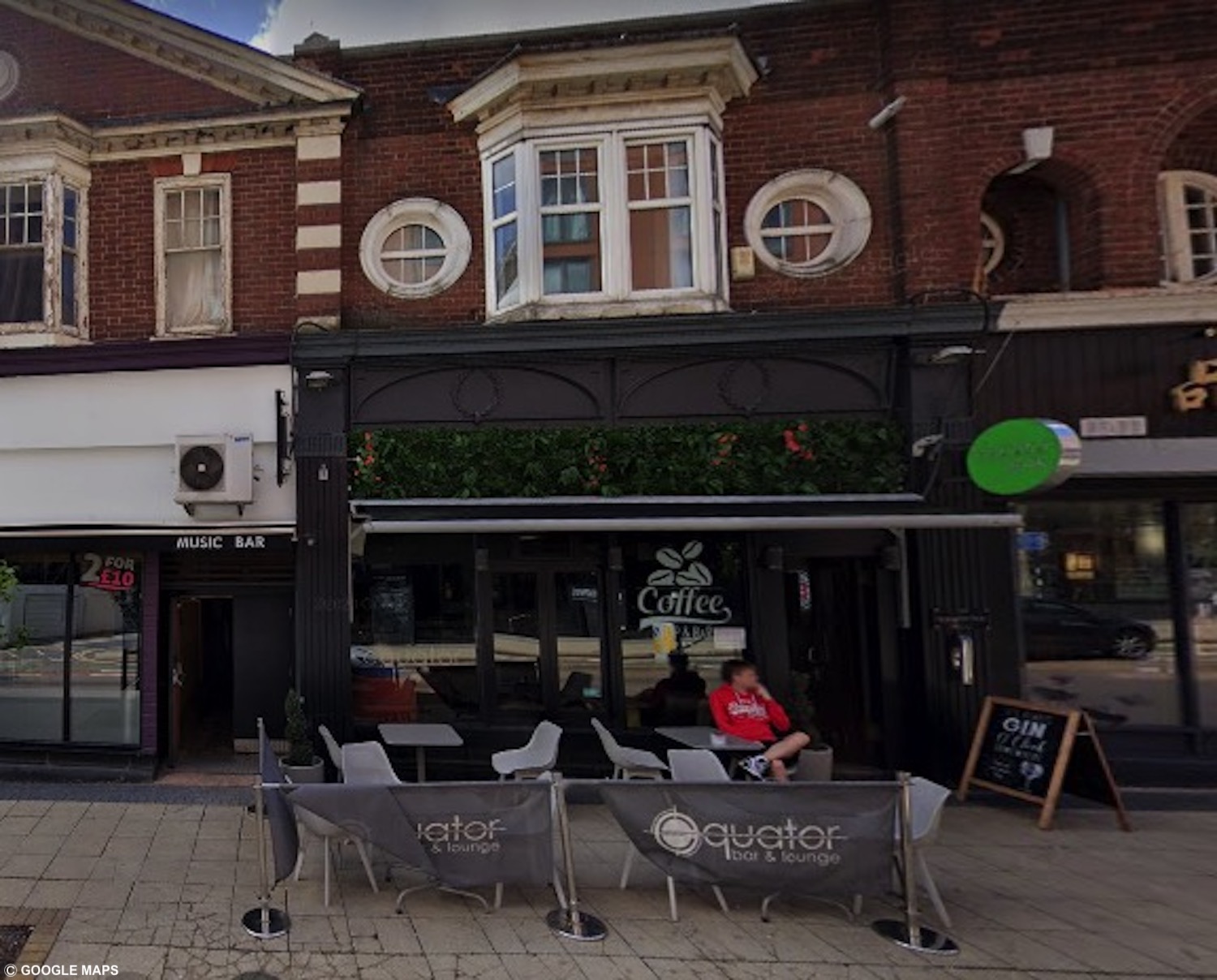
    With England’s latest lockdown ending in just over a week many bars, and in particular many LGBT+ venues are really feeling the pinch. One gay bar in Birmingham has said it might be time to”call it a day”.

    One of the issues facing many bars, but in particular gay bars, is that many aren’t equipped to serve food – which is one of the requirements for pubs to be able to open in at least two Tiers of the Government’s system. Bars which solely sell drink are unable to open in Tier 2 and Tier 3. Only bars which sell “substantial” food can open in Tier 2 and can only operate as takeouts in Tier 3.

    With most of the country expected to be entered into Tier 2 or 3 when Boris Johnson announces the Tier system in the next few days, the Equator bar in Birmingham announced that it might have to close forever, adding “Equator bar is not a restaurant so will not be allowed to open in Tier 2” and added, “Maybe time to call it a day”.

    If the Equator Bar, which has been operating for over 15 years, does close it will be the second bar in Birmingham to have fallen victim to the economic woes faced by the hospitality industry due to the Government’s handling of the current Coronavirus pandemic.

    Numerous fans took to the bar’s Facebook page to share their sorrow that the bar may be forced to close.

    Speaking to THEGAYUK.com the owner said, “It’s devastating that customers cannot come to their local community bar. We haven’t had a single case that I know of…

    “I’ve been here 18 years and not sure how much longer we can stay closed with no help from the gov”.

    Give Equator Bar a follow on their Facebook page to keep up to date with them.

    Not the first victim of the devastating Tier system

    The Tier system used in England has brought economic hardship for many businesses, but in particular for social-based businesses like pubs and bars.

    Nightclubs have not been able to open since March.

    In Tier 2, which most of England is expected to enter come the 2nd of December does not allow for household mixing, meaning that friends and family from different households are unable to meet in public, including in pubs and restaurants. In Tier 3 all bars and restaurants must close and are only permitted to operate as a food takeaway.

    Bars and pubs across England have spent huge sums of money on becoming “COVID-secure” and have restricted their capacities in order to aid with social distancing, adding extra pressure on their bottom lines.

    Writing about the latest announcement from Boris Johnson, the Royal Vauxhall Tavern in London tweeted, “We are all stuck in the worst possible purgatory with the worst possible ruler”

    2020 has seen numerous gay bar closures. Earlier in the year, Birmingham’s Eden Bar was forced to close due to devastating restraints placed on the pub industry. Also in the West Midlands, Midland Zone magazine also fell victim to the economic downturn.

    gay Bar Broadway to close forever due to Covid

    Nottingham’s only LGBT+ club, Propaganda closed in May and in Brighton, two venues have already shuttered. This month The Broadway closed and earlier in the year Legends fell into administration, before being reopened by new owners.

    Birmingham has one of the largest gay scenes outside of London and is home to a number of LGBT+ venues.
  • What is the difference between the r/AskGayMen and /r/askgaybros/ Reddit groups?

    What is the difference between the r/AskGayMen and /r/askgaybros/ Reddit groups?

    Users have been taking an opportunity to discuss and joke about the difference between the r/AskGayMen and /r/askgaybros/ Reddit.

    Although both subreddits have very similar names, they are both very different in style, brand and well the number of people who are subscribed to them.

    /r/askgaybros/ is the bigger of the two forums and clocks in at around 256,000 members, with around 1,200 of them online at any point while r/AskGayMen boasts around 54,000 users with just over 100 online at any time.

    Both forums allow gay men to ask each other questions, like My hole is too tight or Would you ever be happy with a guy who has a small penis? but the way in which the forum’s users answer is very different.

    The joking started with one user, saying that on AskGayBros he could, … call you a fucking cunt and won’t be banned”

    Another added that, “The tolerance for excessive sarcasm and the amount of FILTH permitted” on AskGayBros was highly noted.

    Another added about the strictness of r/AskGayMen saying, “I got banned for being transphobic because as a crossdresser I don’t consider myself a female but a male still”

    One posted that /r/askgaybros/ was “unmoderated and full of trolls”

    One commented on the number of users, by adding “The posts there (askgaymen) seem just as stupid as here. But here you get slapped down in thirty seconds, there it might take twelve hours.”

    Perhaps most insightful was, “I’m assuming its the culture that it’s appealing to. AskGayBros is catering to a very niche culture of gay men while it sounds like AskGayMen is a more generic sub”

    [totalpoll id=”126640″]

    So there you have it, it’s about style as the questions seem to be generally the same, the way in which they answered might be slightly different.

  • Gay Dating | What does “sliding into DMs” mean?

    Gay Dating | What does “sliding into DMs” mean?

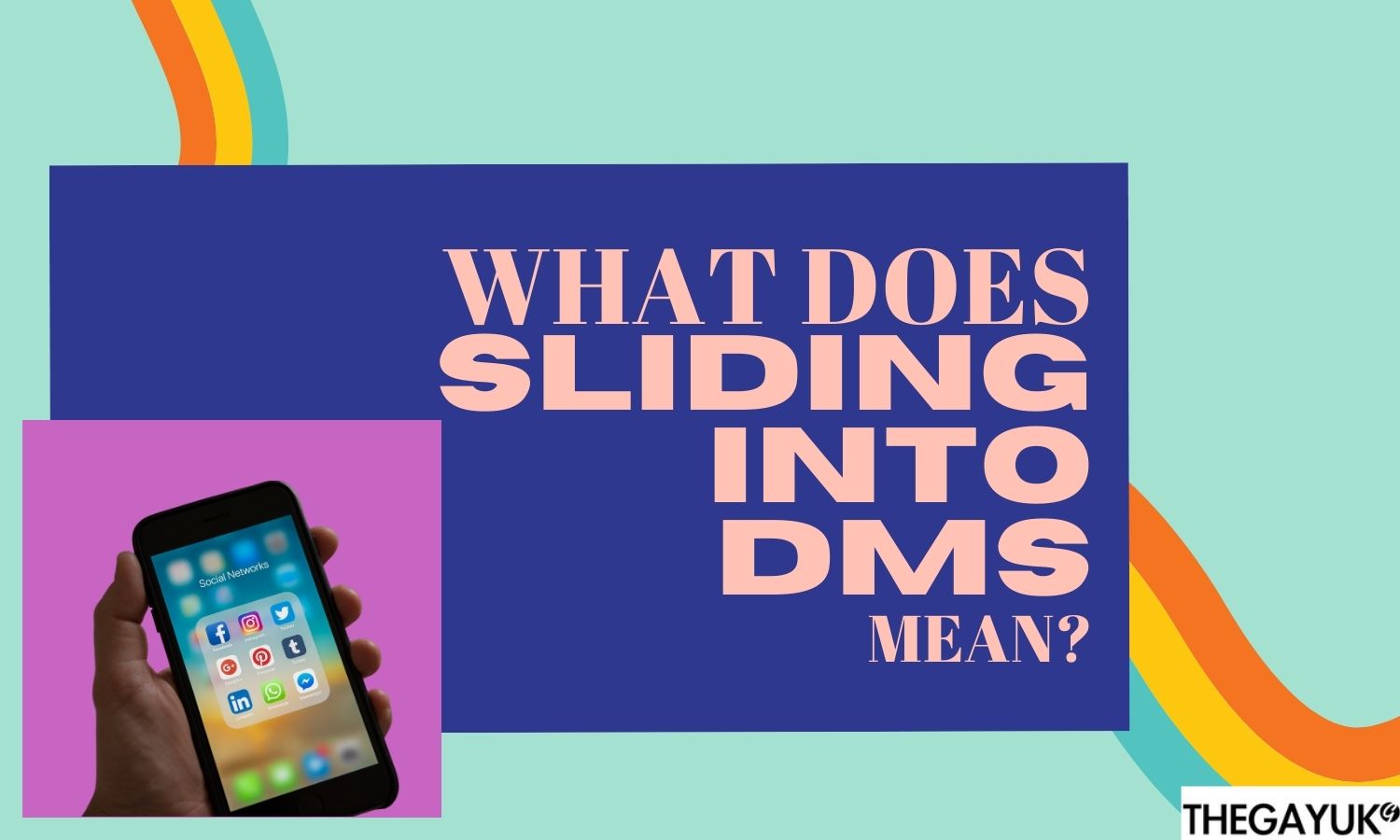
    What does it mean if someone is “sliding into DMs” and is it a welcome thing?

    Maybe it’s a phrase you’ve seen creeping up from time to time and you’re wondering what it means, well simply put, it’s when a guy (or gal – or neither, gender doesn’t have to be binary) sends you a direct message that’s the DM part. It’s usually via social media rather than a WhatsApp or Text message, or even on a dating app.

    Sending messages via Twitter, Instagram, Snap or via dating app messaging can let people you don’t know personally send private messages to you, without having to know your digits.

    The key to sliding into anyone’s DMs is that it’s unexpected and hopefully wanted. Sliding into someone’s DMs when its not wanted is super stalkery and should be avoided at all costs.

    Or sliding into someone’s DMS after you’ve ghosted them along time ago is really uncool, in fact it makes you a Zombie.

    So why is “sliding into DMs” a thing?

    Well, for one thing, it’s an opportunity for someone to get in contact with a person they like the look of without having to meet them in person or have their private info.

    sliding into DMs shows a level of confidence
    rawpixel / Pixabay

    The “sliding” part also denotes a certain kind of confidence, which for many people is a real turn on.

    But you only really have a limited time for your DM to make its mark, so if you’re planning on sliding into DMs don’t waste it by simply writing “hey” be creative.

    Sexpert Jack Devon told us, “Sliding into anyone’s DMs is always a risk… it may be unwanted but it also may be entirely welcomed. The trick is to read the situation, which again can be super tricky in an online scenario. However, if your DM is answered, plot out the journey of the conversation, if the goal is to eventually meet with the person, make sure you’re both compatible up front by asking lots of thoughtful questions – without appearing to be a stalker. If you do meet up make sure you check out these safety tips“.

    Check out more gay dating terms.

  • 5 things you need to know about fuckboys

    5 things you need to know about fuckboys

    Okay. Show of hands. Who’s had the experience of dating a fuckboy? We all know them! It’s that guy. You know; you know, the one who doesn’t respect you but relies on you all the time. He’s distant. He doesn’t care about your time. He won’t commit. He’s self-absorbed, does stupid things and fucks with other’s emotions. I feel like the majority of the guys I’ve been with or had any form of chemistry with have been fuckboys and it’s had a bit of a negative impact on my dating life, or actually, lack off. I’ve been used so many times by fuckboys that it’s become the norm for me to keep going back to them.

    How do you spot a fuckboy?

    It would be easy if they walked around with a sign above their head saying “Avoid like COVID. I’m gonna text you once in three months, then you’re gonna come over and give me the best head ever”.

    Alas, life isn’t all black and white.

    It was a while before I experienced a true fuckboy. I don’t have any contact with him now, only maybe when I’m a little bit tipsy and I might slide into his DM’s. I’ve met a few since then and developed a keen eye to spot them. So, here are my tips for spotting the fuckboys.

    They will do or say anything to have sex

    fuckboys are all about the sex
    (C) BIGSTOCK

    This is the first big red flag. There’s no romance involved. A true fuckboy will literally do or say anything to get you into bed. These include flattery, gaslighting and grovelling. Nothing is too low for them to try. The worst thing though is that they will do all this whilst actually do the bare minimum whilst doing it. They want to do it all on their terms. They will decide it, they will just sit there and let you crack on. Don’t forget; they don’t call them jobs for nothing.

    They’ll hang out with a lot of men

    Now, this might seem trivial; but they’ll always have a number of guys on the go at the same times. If they’re not committing; it’s probably because they’re playing the field and shagging a couple of blokes at the same time. They like to have options. They want to know that there are people around them that they could have sex with if they wanted it; and well, we all know gay men. They’re randy little blighters and probably be boning a different guy every night.

    They’ll always be a little fragile

    If you tell them you can’t hang out tonight – you’ve just caused world war three. They’ll barrage you with texts about how flakey you are, or you’ll get a torrent of abuse and probably turn it round and accuse you of being a fuckboy. You can’t hold them accountable either; they don’t like that one little bit. Fuckboys are unable to accept any form of responsibilty for their poor behaviour.

    You can’t change a fuckboy

    Don't waste time on trying to change a fuckboy. It won't work!
    CREDIT: © oneinchpunch Depositphotos

    Don’t even start. They won’t change because they do not want to. They will do what they want to do because their world revolves completely around them. They do not care about anyone else but themselves. THEY ARE USERS.

    Fuckboys aren’t nasty, horrible, people

    They just don’t know how to have serious, mature relationships. You should pity them; and get rid of them. It might be hard at the start, but it’s gonna be better for you in the long run. You’re gonna be a stronger person for it. If you recognise some of this behaviour then congratulations; you’ve admitted it. Now you can start some make some changes in your life. Most fuckboys would never acknowledge it, so the fact you actually have, means you have the possibility to change.

    The sad thing is that; fuckboys are out there, and you need to be aware. Also remember, that there are decent guys out who aren’t like that all; and that’s something that we all should covet.

    We are worth more. Remind yourself that.

  • 82% of men feel they can’t cry in public because of toxic masculinity

    82% of men feel they can’t cry in public because of toxic masculinity

    A survey has shown that a majority of men want to be able to cry more without the fear of being judged, because of, yep, toxic masculinity.

    But crying isn’t the only activity men want to do more of. According to a recent YouGov poll currently, one in twenty men now wear makeup, but the number of those who would actually want to wear it is far higher.

    A new survey of around 1,200 men conducted by Direct2Florist shows that if it wasn’t for the fear of being judged a whopping 65% would wear makeup.

    [totalpoll id=”126354″]

    And judgement from others wasn’t just stopping guys from applying some foundation. Shockingly 73% would be more physically affectionate with friends, 70% would like to admit they loved bubble baths and weirdly 55% said they’d read more novels by female authors if they didn’t feel so judged.

    toxic masculinity is holding back men from doing so many things

    This week, Harry Styles sparks debate by appearing on the cover of Vogue in a dress. 

    Whilst trends are changing, it’s clear there’s a push-and-pull between toxic masculinity and changing gender roles. 

    Toxic masculinity and its prevalence in society is holding back men from doing so much, including, loving musicals, loving bubble baths and worryingly crying in front of other people.

    Simon Stirling, MD of Direct2Florist, said, “Harry Styles wearing a dress on the cover of Vogue has sparked debate about masculinity and gender norms in 2020. Whilst most have seen the look as a positive, some have reacted uncomfortably towards the look. We’ve recently noticed consumer trends suggesting a rise in men buying flowers for themselves and this, along with conversation off the back of the Vogue cover, lead to the debate around what men are comfortable with these days. Our survey has revealed there’s still a long way to go for most.”

    “Whilst some of these, like liking rom coms and having bubble baths are a little bit silly, some, like not being comfortable crying or being affectionate with friends, do suggest the challenges some are still dealing with when it comes to toxic masculinity. This year especially mental health is more important than ever, and with International Men’s Day this week it’s important any men struggling make a point of opening up to friends and family.”

  • Tories fail to renew bullying projects aimed at ending homophobic bullying which makes classrooms toxic for LGBT+ students

    Tories fail to renew bullying projects aimed at ending homophobic bullying which makes classrooms toxic for LGBT+ students

    Funding aimed at reducing homophobic bullying of LGBT+ students in England has been apparently pulled by the Government, as new research shows that just 27% of students think that their school is a safe space for classmates to be themselves.

    A report by the BBC has discovered that funding for programmes targetting homophobic and transphobic bullying in English schools has ended, with no signs of renewal by the Conservative government.

    The funding which added up to around £4 million, was specifically set aside to help with anti-LGBT+ bullying, but according to the government, the funding was always due to end in March 2020. The programme began back in 2014, under one of the most progressive Conservative governments when it came to LGBT+ rights, under the leadership of David Cameron.

    According to the BBC, funding was “quietly” pulled in March, while the world’s attention was focused on the Coronavirus pandemic and schools began to close across the UK.

    The funding has not been reinstated.

    The Government Equalities Office said to the BBC “The anti-bullying grant fund, which provided 2,250 schools across the country with materials and training, was always due to end in March 2020.”

    Majority of students do not believe that it’s safe to come out as LGBT+

    Bullying of LGBT+ students is rife in the UK.
    Wokandapix / Pixabay

    New research by the Diversity Role Models (DRM), which received funding between January 2019 and March 2020 found that just 27% of students reported that they thought their school would be a safe environment for classmates to come out as gay, lesbian, bi or transgender.

    DRM undertook a survey of nearly 12,000 students, parents and governors of secondary and primary schools.

    It found that homophobic, biphobic and transphobic language was reported as common by 42% of year five and six primary school students and by 54% of secondary school students.

    Seventy-one per cent of teachers say that they have witnessed homophobic bullying and was it was found to be much more common than bullying related to other characteristics such as religion.

    Education works

    The survey also showed that the levels of homophobic, biphobic and transphobic bullying decreased when schools educated their pupils about LGBT+ identities and relationships, however as it stands only 20 per cent of secondary school students report learning about LGBT+ identities.

    Chief executive of Diversity Role Models, Adam McCann comments, “These findings show how dangerous any further delays to LGBT+ inclusive RSE will be for students. Our report shows a clear correlation between learning about LGBT+ identities and lower levels of homophobic, biphobic and transphobic language and bullying.” 

    “Staff, parents and carers and governors underestimate the level of discrimination in schools compared to students. It is no exaggeration to talk about the safety of these students. Action must be taken immediately to create safer, more inclusive learning environments. Bullying has an undisputed negative impact on attendance, attainment, life chances and mental health.”

    THEGAYUK understands that as it stands there has been no renewal of any of the projects.

  • BBC Radio 1 commits to not playing Fairytale of New York with THE homophobic slur

    BBC Radio 1 commits to not playing Fairytale of New York with THE homophobic slur

    The BBC has announced that it will play an edited version of the Christmas classic, The Fairytale Of New York.

    Without fail the song, which was first released in 1987 has caused an uproar every year in recent memory when it is played, in full, on radios in the UK, come to December-time.

    The song has long offended many people in the gay community and finally, the BBC has said it will play an edit of the song which does not contain the slur “Faggot” on its youth-orientated radio station, Radio 1.

    It will, however, continue to play the original version complete with the problematic lyric on its other mainstream radio station, Radio 2. DJs on 6 Music, will be able to choose from both versions.

    Fairytale Of New York will have its homophobic lyric removed by BBC Radio 1

    On Radio 1 DJs will instead play an edited version, with a different lyric sung by one of the song’s singers, Kirsty MacColl, the corporation said. The addition lyric was sung by MacColl on Top Of The Pops in 1992, eight years before her death at the age of 41.

    A BBC spokesman said, “We know the song is considered a Christmas classic and we will continue to play it this year, with our radio stations choosing the version of the song most relevant for their audience.”

    This isn’t the first time that Radio 1 has used an edited version of the song. In 2007, the station censored the offending word, but soon reinstated it after a public backlash. So it will be interesting to see if a similar backlash happens in 2020.

    What’s the problem with “Fairytale of New York”?

    The problem with “Fairytale of New York” is the line, “You scumbag, you maggot, you cheap lousy faggot.”

    Some in the LGBT+ community find the word offensives, while others don’t.

    The one key element is that songs that contain other offensives slurs often use edited versions, which either bleep out a slur or have another word dubbed in. Up until now, the original version of Fairytale Of New York did not have an edit to play.

    Last year, there were hundreds of complaints after Gavin and Stacey characters Nessa and Bryn sung the unedited version in a Christmas special broadcast on the BBC.

    In 2018 the song was crowned the nation’s favourite Christmas song.

  • Is the Salvation Army anti-gay or homophobic?

    Is the Salvation Army anti-gay or homophobic?

    One of the most famous religious charities does have a homophobic past, but is the Salvation Army still anti-gay?

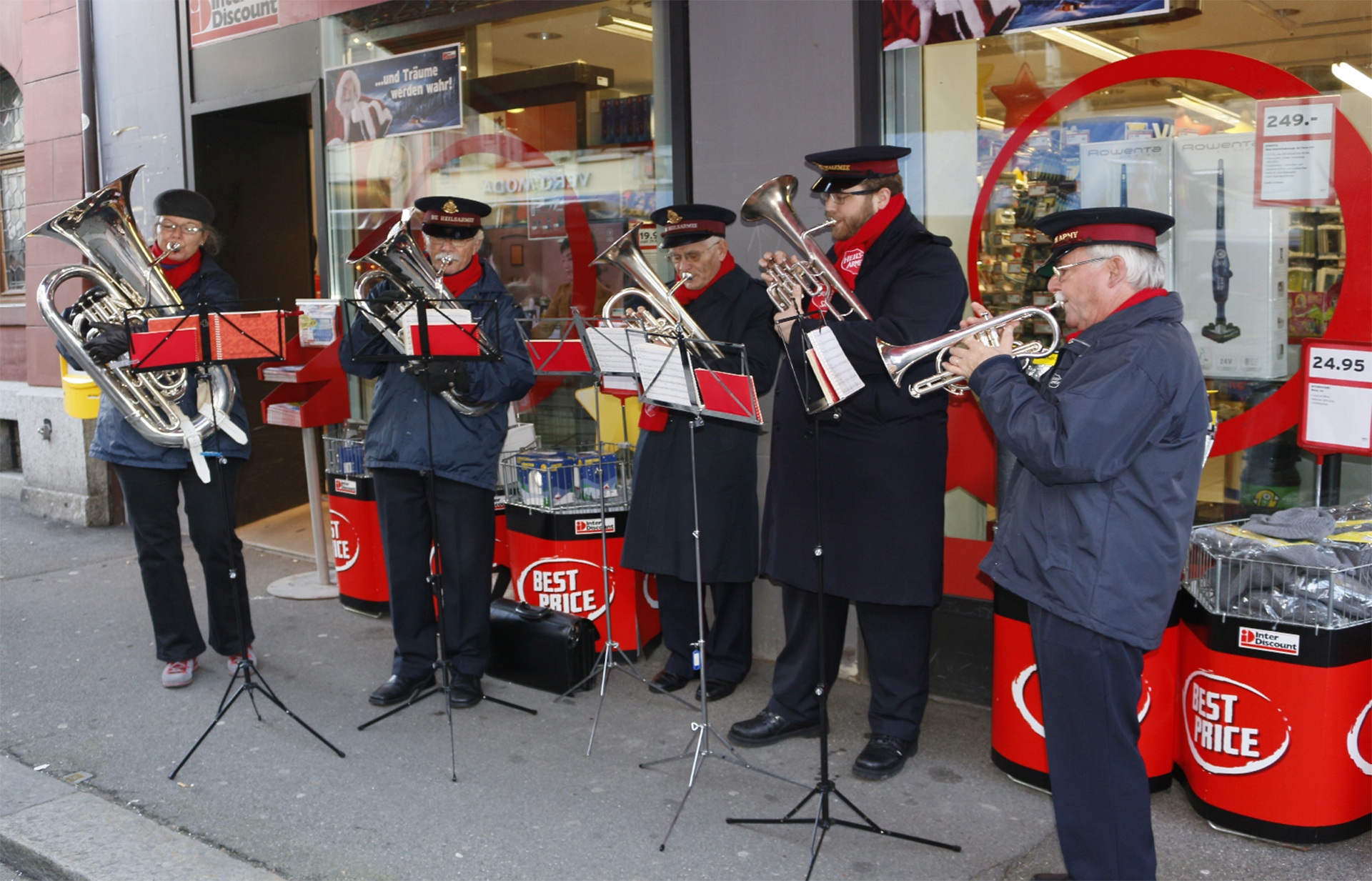
    As Christmastime nears, it won’t be unusual to see a charity collection for the Salvation Army. Usually, the collection bucket will be accompanied by a Santa, replete with Red costume and a thick, but fake white beard. However, before you offload your change into the bucket, you should be fully aware of the charity’s past policies and what it’s doing about them now.

    First and foremost, it must be understood that the Salvation Army is a religious charity, with its roots firmly embedded in Christianity. Many if not all of its policies, past and present, will have been formed from the Christian belief system.

    In 2019 the Charity said that it wanted to a atone for its anti-gay past and said that it now “better understands” the LGBT+ community.

    Did the Salvation Army support the homophobic and anti-gay Section 28 and Section 2A?

    The Salvation Army’s history is dogged with anti-gay and homophobic stories, including its support of the much-loathed and criticised Section 28 in the UK. In February 2000 it actively opposed the repealing of the homophobic bill. It wrote a letter to the then Scottish First Minister, Donald Dewar to say that it thought that repealing Section 2A (Scotland’s version of Section 28) could “potentially be harming both children and the family unit”.

    It added, “feel the floodgates could be opened, ultimately causing great hurt to both parents, teachers and our children. We are also very aware of the increasing pressures on young people to experiment with heterosexual sex at a younger age, without the additional pressure of self-questioning regarding homosexual sex”.

    Is the Salvation Army homophobic, anti-gay or anti-LGBT
    Image by David Mark from Pixabay 

    More recently, in 2012 when the Australian Salvation Army chief suggested that gay people should be put to death and in 2014 when it was alleged that the US arm of the charity refused to help shelter a homeless transgender woman.

    The charity was also known to forbid gay people from serving as officers unless they remained celibate. In 2016 the UK’s Army chief said that he defended this policy. Even Paul O’Grady was forbidden to wear the Army’s uniform and told, “you could volunteer for us, you could come to our church services. If you want to become a soldier in the Salvation Army, you have to commit to what we believe.”

    In 2017 the Amry was embroiled in a legal dispute against the NYC Commission on Human Rights because rehabs in New York had refused to serve transgender people.

    So what’s changed and is the Salvation Army still homophobic?

    Last year, the charity’s communications director David Jolley said that these were all “isolated incidents” blaming the size of the organisation the number of people involved for incidents that “do not represent our values and service to all people who are in need”

    Jolley added, “If anyone needs help, they can find it through our doors”.

    He then added that the organisation had “evolved” saying, As we’ve better understood the needs of the LGBTQ+ community, we’ve evolved our approach.”

    “As we build and remodel emergency shelters and transitional housing across the country, we consider ways to help LGBTQ+ individuals feel safe and cared for,

    “We also have specific programs and resources across the country, such as a dorm in Las Vegas that is exclusive for transgender individuals, a detoxification facility in San Francisco that caters to those infected with HIV/AIDS, and our work in Baltimore to meet the needs of transgender individuals who are trafficked.”

    How many LGBT+ people does the Salvation Army help?

    According to a statement provided by the Salvation Army, they reckon that 40 per cent of the people they provide services to, identify as gay or transgender.

    In a statement to news channel CBS11, Commissioner David Hudson, National Commander of The Salvation Army said,

    “Regardless of race, ethnicity, sexual orientation or gender identity, we’re committed to serving anyone in need.

    “Every day, we provide services such as shelter for the transgender community and resources for homeless youth – 40 per cent of whom identify as gay or transgender.”

    However, that statistic was later discovered to be referring to the overall homeless population rather than the actual number of LGBT+ people helped by the charity.

    The charity has not made it clear how many LGBT+ people it helps across all its branches and locations.

    It opened a space for homeless LGBT+ people

    In Canada, in 2018, the Salvation Army actually opened a new space for homeless LGBT people. The space was in Winnipeg and had 15 rooms and was trialled for one year.

    “We welcome and serve people regardless of sexual orientation”

    In the UK, the charity’s own website includes a statement on its LGBT+ policies, it says, “In the United Kingdom, The Salvation Army is made up of thousands of people who worship, work, volunteer, donate and serve together every week. This includes many people who are LGBT+. We welcome and serve people regardless of sexual orientation or gender identity, race, religion and ethnicity.

    “Our employment practices are non-discriminatory and we seek to create welcoming, nurturing work environments.

    “The Salvation Army finds no scriptural support for demeaning or mistreating anyone for any reason. People who come to The Salvation Army for help will receive assistance based solely on their need and our capacity to serve.”

  • How to measure your penis! You may have been measuring your penis size wrong all this time

    Just how do you measure your penis size?

    Penis size is one of those subjects that can come up often, particularly if you’re on a dating app like Grindr. But where do you measure from? Depending on where you measure from can leave you with inches worth of difference. The top, the side, underneath? These are all valid places to get a measurement, but which is the standard way?

    Well, the very question of penis size and how to measure it came up on set of a gay porn shoot recently.

    So, according to one porn star you need to use the Bone Press Method. Ever heard of it? Nope nor us. But gay porn star Mitch Matthews believes it’s the only way to get an accurate measurement.

    Mitch Matthews gives advice on how to measure your penis and penis size

    Porn blog, WeLoveGayPorn (NSFW) reports, that in his latest scene for GuysInSweatpants.com the Mitch was keen to help his co-star Dante Colle get an accurate measure of his peen – and to do this you need to measure from the top, but “press into the skin, rather than letting it (the ruler) rest on the top (of the penis). He joked, “apparently it’s the standard way!”

    [totalpoll id=”126197″]

    So there you have it. Have you tried the BPM?

    Ever wondered how long the average penis is?

    How big is the average penis and how to measure your penis

    According to research conducted in 2015, the average penis size worldwide is around 5.5 inches (13.9 cms) when fully erect and according to the research, the UK’s men are exactly in that spot – so the average erect penis size for men in the UK is 5.5 inches.

    The average girth according to research by the British Journal of Urology International is 4.3 inches (10.92 cms).

    Those figures were come to (no pun intended) by studying the cocks of around 17,000 men.

  • Nearly 40% of older LGBT people feel that COVID has made them more lonely

    Nearly 40% of older LGBT people feel that COVID has made them more lonely

    The COVID pandemic has had a deep impact on older members of the LGBT+ community a new report has found with nearly 40 per cent saying that they feel more lonely than usual.

    The report, by the charity, Opening Doors London revealed that the UK’s lockdowns due to the ongoing Coronavirus pandemic, have had a severe impact on older gay, lesbian, bi and transgender people as they are less likely than their heterosexual peers to have the support of children or other family members. 

    According to the charity, during the first six weeks of lockdown back in March, staff and volunteers of Opening Doors London made over 1,000 phone calls to members and reconfigured essential services to address their needs. Normally the charity organises activity groups and other social interactions, all of which had to come to an abrupt halt when the Government mandated a national lockdown in March.

    During their phone calls, Opening Doors found that half of the respondents reported that the lockdown had caused a “negative impact on their psychological wellbeing”.

    Nearly a quarter (23%) said that their physical health had worsened, while 27% said they felt they never have someone to talk to.

    Sadly, nearly 40 per cent (37%) said that they felt more lonely than usual as lockdown meant that people were able to socialise in the normal ways.

    One gay man in his 60s told the charity, “I feel more depressed than usual and I have thoughts of suicide coming into my mind” while another added, “I have found myself becoming tearful for no reason at all”

    “Covid-19 and lockdown has disproportionately increased psychological distress and other vulnerabilities among many older LGBT+ people,” said Prof Ben Thomas. “Many have been forgotten or overlooked. It’s time statutory services and local communities stepped up to meet their needs, and provide care and support, connection and interaction.”  

  • TODAY IN GAY | Section 28 in England and Wales was repealed, 2003

    TODAY IN GAY | Section 28 in England and Wales was repealed, 2003

    Section 28 was introduced by the Conservative government in 1988 and its aim was to forbid authority figures in education, such as teachers, normalising or even talking about the existence of homosexuality.

    Teachers who taught in schools during the late 1980s and 1990s were unable to teach or speak on issues of homosexuality because of the Local Government Act in England – a piece of legislation introduced by the Conservative government under Prime Minister Margaret Thatcher, in 1988 banning the “promotion” of homosexuality in schools.

    It made dealing with homophobic bullying near impossible and sex education for gay, lesbian and bisexual teens was non-existent.

    Critics of the Bill say that it created an environment of fear and exclusion during a time when the AIDS epidemic was raging through the gay community. During the time of its enforcement, many LGBT+ teachers felt it prohibited them being open about their own sexual identity in the workplace, while many school-aged LGBT+ pupils were unable to access information to help them learn about being LGBT

    Religious support

    Section 28 was supported by a number of religious groups including, Salvation Army, the Christian Institute, the African and Caribbean Evangelical Alliance, Christian Action Research and Education, the Muslim Council of Britain, and groups within the Catholic Church and the Church of England.

    It became law in England, Scotland and Wales on the 24th May 1988 under Margaret Thatcher‘s Tory government.

    When was Section 28 repealed?

    Under the leadership of Prime Minister Tony Blair, the Labour government repealed the law in 2003.

    In Scotland, similar legalisation was introduced called Section 2A.

    The Scottish government was able to repeal this bill in 2000 and was, in fact, one of the first pieces of legislation enacted by the new Scottish Parliament.