Section 28 was a controversial provision of the Local Government Act 1988 in England, Wales, and Scotland, which stated that a local authority “shall not intentionally promote homosexuality or publish material with the intention of promoting homosexuality” or “promote the teaching in any maintained school of the acceptability of homosexuality as a pretended family relationship.”
Table of Contents
When was section 28 enacted?
This provision, which was introduced during the conservative government of Margaret Thatcher and remained in force during the government of John Major, was widely criticized by LGBTQ+ rights activists, educators, and progressive politicians. They argued that the provision contributed to a culture of discrimination and prejudice against LGBTQ+ individuals, and had a chilling effect on the ability of schools and other organizations to provide support and resources to lesbian, gay and bisexual individuals.
Section 28 was eventually repealed in Scotland in 2000, and in the rest of the UK in 2003. Its repeal was seen as a significant victory for gay rights advocates, and paved the way for greater acceptance and legal recognition of the LGBTQ+ community in the UK.
In Scotland, the provision known as “Section 28” was officially called Section 2A of the Local Government Act 1986, which was passed by the UK government under the leadership of Prime Minister Margaret Thatcher.
Section 2A was identical to Section 28, which was introduced in England, Wales, and Northern Ireland by the Local Government Act 1988, during the same period of time. The provisions prohibited local authorities from “promoting homosexuality” or teaching “the acceptability of homosexuality as a pretended family relationship.”
The section 2A provision was ended in Scotland before the rest of the UK, as it was repealed in 2000, two years before it was repealed in the rest of the country. The repeal of Section 28 in Scotland was seen as a significant victory for LGBTQ+ rights advocates, and paved the way for greater acceptance and legal recognition of the LGBTQ+ community in Scotland.
When was section 28 scrapped?
Section 28, a controversial provision of the Local Government Act 1988 in the United Kingdom that prohibited the promotion of homosexuality in schools and local authorities, was repealed on 18th November 2003. The repeal of Section 28 was a significant moment in the history of LGBTQ+ rights in the UK, and was widely celebrated by LGBTQ+ rights advocates and progressive politicians.
The repeal of Section 28 followed years of campaigning by LGBTQ+ rights activists, who argued that the provision contributed to a culture of discrimination and prejudice against LGBTQ+ individuals, and had a chilling effect on the ability of schools and other organizations to provide support and resources to LGBTQ+ individuals.
The repeal of Section 28 was seen as a significant step forward for LGBTQ+ rights in the UK, and paved the way for greater acceptance and legal recognition of the LGBTQ+ community. However, it is important to note that despite the repeal of Section 28, LGBTQ+ individuals in the UK still face discrimination and prejudice in many areas of life, and there is still work to be done to ensure full equality for all members of the community.
John Major, who served as the Prime Minister of the United Kingdom from 1990 to 1997, had a mixed record when it comes to LGBTQ+ rights. While he did not openly express anti-gay views, he did not actively support gay rights during his time in office.
Table of Contents
Section 28
During Major’s tenure as Prime Minister, the Section 28 of the of the Local Government Act 1988 remained in power after being introduced by John Major’s predecessor Margaret Thatcher. This provision prohibited local authorities from promoting homosexuality, and had a chilling effect on the ability of schools and other organizations to provide support and resources to LGBTQ+ individuals. Major initially supported the provision, but later indicated that he regretted it.
In addition, Major’s government maintained a number of discriminatory measures against LGBTQ+ individuals, including a ban on gays and lesbians serving in the armed forces, and a refusal to recognize same-sex relationships for the purposes of immigration.
Overall, while Major did not explicitly express anti-gay views, his record on LGBTQ+ issues during his time as Prime Minister was not supportive of the community. It is worth noting, however, that Major has expressed regret for some of the policies that remained during his time in office, and has since spoken out in support of LGBTQ+ rights.
During John Major’s tenure as Prime Minister of the United Kingdom from 1990 to 1997, his government decided to keep several laws and policies that discriminated against LGBTQ+ individuals.
One of the most controversial laws during Major’s time in office was Section 28 of the Local Government Act 1988, which prohibited local authorities from “promoting homosexuality” or teaching “the acceptability of homosexuality as a pretended family relationship.” This provision had a chilling effect on the ability of schools and other organizations to provide support and resources to LGBTQ+ individuals. Section 28 was eventually repealed in 2003.
Gay Ban In the Military
In addition, during Major’s time in office, the government continued to ban LGBTQ+ individuals from serving in the armed forces. This ban, known as the “gay ban,” was not lifted until 2000.
Reducing the age of consent
During this time, the UK’s government did vote to reduce the age of consent for gay sex from 21 to 18.
The age of consent for gay men in the UK was reduced from 21 to 18 on November 30, 1994, under the government of Prime Minister John Major. This change in the law was part of the Criminal Justice and Public Order Act 1994, which also introduced a number of other provisions related to criminal justice and public order.
Prior to the change in the law, the age of consent for homosexual acts was higher than the age of consent for heterosexual acts, which was set at 16. This discrepancy was widely seen as discriminatory and unjust, and had been the subject of long-standing campaigns by LGBTQ+ rights activists. The reduction of the age of consent for gay men to 18 was seen as a significant victory for LGBTQ+ rights advocates, and paved the way for further changes to the legal status of LGBTQ+ individuals in the UK.
he age of consent for homosexual acts was further equalized with that for heterosexual acts in England, Wales, and Scotland by the Sexual Offences (Amendment) Act 2000. This act lowered the age of consent for homosexual acts to 16, bringing it in line with the age of consent for heterosexual acts.
The Sexual Offences (Amendment) Act 2000 was introduced by the Labour government of Prime Minister Tony Blair and received Royal Assent on November 30, 2000. The act also introduced a number of other important reforms related to sexual offenses, including the creation of new offenses to address sexual abuse of children, and the abolition of the offense of gross indecency between men.
Did the UK ban gay people from working in the military?
Yes, the UK had a ban on gay and lesbian people serving in the military until the year 2000. This policy, which was known as the “gay ban,” was introduced in 1981 under the Conservative government of Margaret Thatcher and remained in place throughout the subsequent Conservative government of John Major.
Under this policy, openly gay and lesbian people were not allowed to serve in the armed forces, and those who were discovered to be gay or lesbian while serving could face discharge. This policy was criticized by LGBTQ+ rights advocates, who argued that it discriminated against gay and lesbian individuals and created a culture of fear and secrecy within the military.
The ban was eventually lifted in 2000 under the Labour government of Tony Blair. This change in policy followed a ruling by the European Court of Human Rights that the ban was a violation of the European Convention on Human Rights. The lifting of the ban was seen as a significant step forward for gay rights rights in the UK, and paved the way for greater acceptance and inclusion of LGBTQ+ individuals in the armed forces.
John Major’s government refused to recognise Gay Couples
Furthermore, the Major government refused to recognize same-sex relationships for the purposes of immigration. This meant that LGBTQ+ individuals in relationships with foreign nationals were unable to sponsor their partners to join them in the UK.
Overall, while Major’s government did not introduce a large number of anti-gay laws, the policies and laws that were enacted had a significant impact on the lives of LGBTQ+ individuals, and contributed to a culture of discrimination and prejudice against the community.
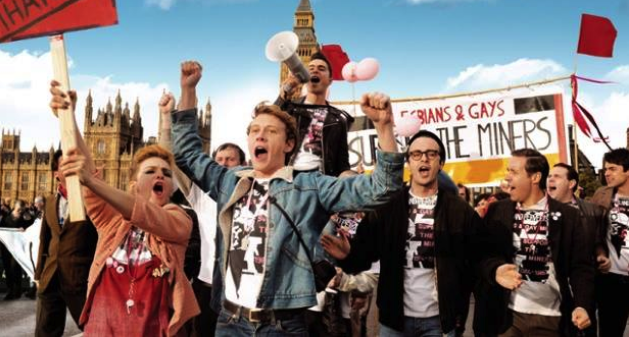
The film follows a group of LGBTQ+ activists who come together to support a Welsh mining community during the UK miners’ strike in 1984.
The group, which calls itself “Lesbians and Gays Support the Miners” (LGSM), initially struggles to find a group of miners who are willing to accept their support. However, they eventually make contact with a small mining village in Wales and begin fundraising to support the miners and their families.
As the relationship between LGSM and the miners develops, both groups begin to understand and appreciate each other’s struggles. The film explores issues of class, identity, and the power of solidarity, as LGSM and the miners work together to fight for their rights.
“Pride” was critically acclaimed upon its release, and was praised for its mix of humor and drama, as well as its positive portrayal of LGBTQ+ characters. The film was also seen as a tribute to the real-life activists who inspired it, and to the power of grassroots activism to effect change.
Did the film “Pride” get good reviews?
Yes, “Pride” received very positive reviews from critics upon its release in 2014. The film has a 93% approval rating on Rotten Tomatoes, based on 169 reviews, with an average rating of 8.0/10. The site’s critical consensus describes the film as “earnest, well-acted, and overall inspirational,” and notes that it “avoids easy clichés and formula.”
Many reviewers praised the film’s mix of humor and drama, as well as its strong ensemble cast. The performances of actors such as Bill Nighy, Imelda Staunton, and Andrew Scott were particularly singled out for praise.
“Pride” was also praised for its positive portrayal of LGBTQ+ characters, and for its exploration of issues of class, identity, and the power of solidarity. Many critics saw the film as a tribute to the real-life activists who inspired it, and as a reminder of the importance of grassroots activism in effecting change.
Overall, “Pride” was widely regarded as a well-crafted and inspiring film that blended comedy and drama, and celebrated the power of community and activism.
Is the film “Pride” based on a true story?
“Pride” is based on a true story. The film depicts the real-life events of the summer of 1984, when a group of lesbian and gay activists formed the group Lesbians and Gays Support the Miners (LGSM) and began raising money to support the striking miners and their families.
The LGSM group consisted of around 20 activists from London, who decided to support the striking miners after recognizing that both groups were fighting for their rights and for a fairer society. The group raised thousands of pounds for the miners, and their efforts were warmly received by some of the mining communities they supported.
The film’s portrayal of the LGSM’s involvement in the miners’ strike is largely accurate, although some elements have been fictionalized for dramatic effect. The film’s characters are also composites of several real-life activists, rather than being based on specific individuals.
Overall, while “Pride” takes some artistic license with the story, it is based on a real and inspiring episode in British history that saw two marginalized groups coming together in solidarity to fight for their rights.
How much did the film Pride make?
The film Pride was hugely successful at the box office in 2014.
According to Box Office Mojo, the film “Pride” grossed approximately $16.4 million worldwide during its theatrical release in 2014.
While this may not seem like a huge amount compared to some Hollywood blockbusters, “Pride” was actually a considerable success for an independent British film. It was made on a relatively modest budget of around £3.3 million, and its strong critical reception and positive word-of-mouth helped to generate a loyal fanbase.
“Pride” was also well-received at various film festivals, winning the Queer Palm award at the Cannes Film Festival and the People’s Choice Award at the Toronto International Film Festival.
Beyond its box office success, “Pride” has also had a lasting cultural impact. The film has been praised for its positive portrayal of LGBTQ+ characters, and for its celebration of the power of solidarity and grassroots activism. It has also helped to raise awareness of the real-life events that inspired it, and has been credited with helping to cement the legacy of the LGSM group and their efforts to support the striking miners.
Margaret Thatcher, the former British Prime Minister, had a mixed record on gay rights.
In the 1980s, she supported Section 28 of the Local Government Act, which prohibited local authorities from promoting homosexuality or presenting it as a “pretended family relationship” in schools. This legislation was widely seen as discriminatory and harmful to the LGBTQ+ community.
However, towards the end of her time as Prime Minister, Thatcher did begin to shift her views on homosexuality. In 1987, she expressed support for a report by the Church of England that called for the decriminalization of homosexuality. And in 1989, she appointed the openly gay Chris Smith as a minister in her government.
(C) BIGSTOCK
It is also worth noting that Thatcher’s government played a significant role in the fight against HIV and AIDS in the 1980s, providing funding for research and treatment, and promoting public awareness campaigns.
Was the Thatcher Government anti-gay?
Thatcher’s government’s support for Section 28 of the Local Government Act, which prohibited local authorities from promoting homosexuality in schools, is often seen as having a harmful impact on LGBTQ+ young people.
Section 28 was introduced in 1988, and it was not repealed until 2003. During that time, many LGBTQ+ children and young people were left without support and resources, as teachers and school administrators were afraid to discuss issues related to sexual orientation and gender identity.
Overall, while Thatcher’s record on gay rights was certainly not perfect, it is not accurate to say that she was uniformly anti-gay. Like many politicians, her views on these issues evolved over time, and her legacy in this area is complex.
The term “gay” can have different meanings depending on the context. However, most commonly, “gay” refers to someone who is primarily attracted to people of the same sex. It is often used as a term to describe homosexuality or the LGBTQ+ community, specifically those who identify as gay.
Table of Contents
Is Being Gay A Choice?
Being gay is not a choice, but rather a natural part of a person’s identity. Respecting and accepting people for who they are is important, regardless of their sexual orientation or gender identity.
It is also important to note that the term “gay” can be used as an adjective to describe things that are related to LGBTQ+ culture or the community as a whole. For example, someone might say “this is a gay-friendly establishment”, to indicate that it is welcoming and supportive of LGBTQ+ people.
When did the term gay replace the word homosexual?
rawpixel.com at Pexels: , most commonly, “gay” refers to someone who is primarily attracted to people of the same sex.
The term “gay” began to gain prominence as a term for homosexuality in the mid-20th century, and it gradually became more common than “homosexual” in the decades that followed. The use of “gay” in this context is believed to have emerged from gay subcultures in urban areas, where it was used as a code word to refer to homosexuality without drawing attention from heterosexuals.
The term “homosexual” has a more clinical and scientific connotation and was commonly used in medical and legal contexts. However, it also had negative connotations and was often associated with mental illness and deviance.
The use of “gay” as a more positive and affirming term for homosexuality gained momentum during the gay rights movement of the 1960s and 1970s, and it eventually became the dominant term used to refer to homosexuality in mainstream society. Today, the term “gay” is widely accepted and has largely replaced “homosexual” as the standard term for same-sex attraction and relationships.
Can only men be gay?
No, both men and women can be gay. The term “gay” refers to a person who is primarily attracted to people of the same gender, regardless of their own gender. So, a man can be gay if he is attracted primarily to other men, and a woman can be gay if she is attracted primarily to other women.
It’s worth noting that some people may use other terms to describe their sexual orientation, such as “lesbian” for women who are primarily attracted to other women, or “queer” as an umbrella term for anyone who doesn’t identify as exclusively heterosexual. However, the term queer is incredibly controversial amongst gay men.
In 2018 only 13% of men surveyed preferred the term queer men and in 2023, that decreased even further to just 8.1%.
Ultimately, the language that people use to describe their sexual orientation is personal and can vary from person to person.
Are gay men different to straight men?
In terms of core human characteristics, gay men and straight men are not fundamentally different. However, there may be some differences in their behaviors, attitudes, and experiences that can be shaped by social and cultural factors, as well as personal experiences.
For example, gay men may face unique challenges related to their sexual orientation, such as discrimination, social stigma, and a lack of legal protections in some regions. These experiences can shape their perceptions of the world and their interactions with others.
On the other hand, gay men may also share some common experiences with other marginalized groups, such as women and people of colour. For example, they may have experienced prejudice and discrimination based on their identity and may have developed resilience and coping mechanisms to navigate these challenges.
Despite these differences, it’s important to recognize that all people, regardless of their sexual orientation, are diverse and multifaceted individuals with unique personalities, experiences, and perspectives.
Have you ever wondered if there is such a thing as a penis too big for a gay man? It’s a question that has long been debated in the gay community, with some claiming that there is no such thing as a “big penis” and others believing that there are limits to how large a penis can be before it becomes uncomfortable. In this blog post, we will discuss the topic of a “big penis” and whether or not there is such a thing as a penis too big for a gay man. We will explore the opinions of both sides and provide insights on the topic.
Table of Contents
The answer may surprise you
When it comes to the size of a penis, not all gay men agree on what is too big. In fact, some gay men even joke about how large penises can be a blessing in disguise. The extra girth and length of a large penis can make it easier for a man to reach new heights of pleasure with his partner. However, it’s important to remember that penis size doesn’t necessarily equate to sexual pleasure, so having an overly large penis may not be the most beneficial thing for a gay man’s sex life.
The pros and cons of a large penis
Are there pros and cons of having a big penis?
When it comes to sex between gay men, the size of a man’s penis can be a source of pleasure and angst. For those who enjoy bottoming, a larger penis can feel better for anal stimulation and prostate play. On the other hand, a larger penis may be more likely to cause an anal fissure or other discomfort. Obviously, there’s the visual aspect, especially when you’re on your knees and a giant phallus is waving in your face, but let’s not forget that big things can become a choking hazard or even can cause significant damage to your throat as one man learned in 2018.
The pros of a large penis include increased stimulation for bottoms during sex. A larger penis can fill up a person more and make it easier to find and stimulate the prostate. This can result in more intense orgasms and longer-lasting pleasure.
On the other hand, there are some drawbacks associated with larger penises. The size may make it more difficult to penetrate, which can cause pain and discomfort. The tightness can also put too much pressure on the anus and a bad session or overdoing it could result in an anal fissure.
In some cases, it may also cause one partner to feel uncomfortable or insecure due to the size difference.
Men with large johnsons can also find themselves viewed solely as sexual objects – and risk becoming fetishised or objectified. Pretty insulting when your cock is just one (proportionally speaking) small part of you.
Ultimately, it’s important to communicate with your partner about size preferences. Experimenting with different positions and using plenty of lube can help to make sex more enjoyable for both partners regardless of size. Finding the right balance between comfort and pleasure is key for having enjoyable sex regardless of penis size.
Tips for dealing with a large penis
If you have a large penis, there are some techniques and tools you can use to make sex more comfortable for both you and your partner. Here are some of our tips:
Use Lube – Lubricant is essential for anal sex and other kinds of penetrative sex. It helps reduce friction and makes it much easier to penetrate without causing pain or discomfort.
Try Different Positions – Some positions are better for people with large penises than others. The missionary position is usually a good choice as the receiver can control the depth of penetration. Other popular positions that work well with a larger penis include doggy style, spooning, and side-by-side.
Use a Dildo or Butt Plug – If you’re not quite ready to penetrate your partner with your own penis, you can use a dildo or butt plug as an alternative. These sex toys come in a variety of sizes and can help you get used to the feeling of something larger.
Take it Slow – Rushing into anal sex or any kind of penetration can be painful or uncomfortable. Take your time and start with some foreplay or other kinds of pleasure before trying to penetrate your partner.
Use Poppers – Poppers are a type of drug that relaxes muscles and increases blood flow, making anal sex more pleasurable for both partners. Just make sure to use them safely and according to the instructions on the bottle. Dealing with a large penis doesn’t have to be intimidating or uncomfortable. With the right knowledge and preparation, you can make sure both you and your partner enjoy the experience.
The psychology behind why some men prefer large cocks
When it comes to gay men and big penises, there is more than meets the eye. For some, a larger penis can represent an increased sense of power and dominance, while the size may symbolize acceptance and belonging for others. But what does this mean when it comes to sex?
Our Sexpert Patrick Devon told us, “For many gay men, the thought of having their anus stretched open by a large penis can be both thrilling and intimidating. This sensation of “gaping” their anus is sometimes is something a lot of bottoms strive for, because it’s seen as a challenge… One they want to excel in!
“While it can be uncomfortable and even painful at times, some gay men find that being dominated and having their ass “wrecked” by a larger penis can be incredibly pleasurable. In some cases, the size of the penis can even become a point of pride among partners, with some people referring to this phenomenon as “size queens.
“And then there’s cock worship. That feeling of taking in something bigger than ourselves… it can be quite a religious moment for many men when they kneel at the church of cock. Sometimes men want to be dominated, made to feel that they are only there to please. It kind of makes sense when you think about it. In society, (now I know this is a generalisation) men are conditioned to be strong, in control and in charge, but what if when you get home you just want to feel a little more subordinate, a little more controlled? Well taking the big penis orally or anally, is definitely one way of giving in to something bigger than you”.
Devon finishes by saying, “Ultimately, it’s important to remember that everyone is different, and not all gay men are necessarily attracted to big penises. Everyone has their own preferences, but understanding why some people might have an affinity for large penises can help us to understand our own desires better.”
Links in this article may take you to a shopping channel that is owned by our parent company. Other shops and brands are available.
Pegging is a sexual trend that has been gaining traction in recent years. It involves one partner wearing a strap-on dildo and penetrating a man anally. The man receiving the pleasure is known as the “peggee,” while the other partner is known as the “pegger.” While pegging can seem intimidating at first, it has become increasingly popular for couples who are looking to spice up their sex life and explore new sexual experiences. So if you’re curious about getting pegged or being the pegger and want to know more, read on to learn why it’s becoming so popular.
What is pegging?
Pegging is a type of anal play where one partner wears a strap-on and penetrates the other partner’s anus with it. This is usually done by a woman penetrating a man, but it can also be done with any gender combination. Pegging allows people to explore different sexual activities and can be incredibly pleasurable for both partners. It can also provide deeper psychological satisfaction, as it can be seen as a power exchange, where the receiving partner relinquishes control to the penetrating partner. The most common way to do pegging is with a butt plug or dildo attached to a harness that is strapped around the penetrating partner’s waist or hips. The harness helps to ensure that the strap-on stays securely in place, allowing for maximum pleasure and precision during the activity. Pegging can be an incredibly erotic experience for both partners, as it can provide intense pleasure for the receiver and a feeling of dominance for the giver.
The history of pegging
The art of the peg is a sexual practice that has become more popular in recent years. It involves a woman (or a man) using a strap-on dildo to penetrate their partner anally. The practice is thought to have originated in the gay community, where anal sex has been a part of sexual expression for centuries.
The term “pegging” was coined in 2001 by sex columnist Dan Savage, who described it as “a kinky way of switching roles during sex and flipping traditional gender roles.” Since then, pegging has gained in popularity, both within the LGBTQ community and among heterosexual couples.
In order to perform pegging, you will need a strap-on dildo, lube and a comfortable place to do it. It is important to go slow when trying out pegging, as the butt is not used to being penetrated and may require more time to adjust. Additionally, using lube can help reduce friction and make it more enjoyable for both partners. Some people may find that using a butt plug before pegging can help prepare the area and make it easier to penetrate.
Pegging is becoming more mainstream and accepted as an enjoyable part of a healthy sex life. This trend reflects an increasing awareness that there are many different ways to experience pleasure and that everyone should be free to explore their sexuality without judgment.
Why do men like pegging?
Why do some men love pegging?
This practice is a form of anal play that has become increasingly popular in the past few years. Pegging involves using a strap-on dildo to penetrate the anus of a man. This practice is not exclusive to gay men and can be enjoyed by heterosexual men too and nope, that doesn’t make them gay!
The appeal of pegging can be attributed to the intense stimulation it provides. The prostate, or ‘male g-spot’, located just a few inches inside the anus, is highly sensitive and can provide a unique sensation when stimulated. Many men find that pegging can lead to powerful and enjoyable orgasms. Additionally, pegging can provide a feeling of surrendering power which many find liberating.
For men who enjoy anal sex, pegging provides another way to enjoy bum fun. Pegging does not require a partner to perform oral sex or manual stimulation, so it can be an ideal way for men who are uncomfortable with those activities to enjoy anal pleasure. It can also be a great way to experience anal penetration without needing to use lubricant or wear a condom.
In conclusion, there are many reasons why men like pegging. From the intense stimulation of the prostate, to the feeling of power and liberation it can provide, pegging has become a popular choice for men looking to spice up their sex lives. Whether you’re into anal play or just looking to try something new, pegging may be just the thing you’ve been looking for.
How to peg your man
Inserting a dildo or butt plug can be an incredibly pleasurable experience for both partners. There’s a lot going on during this activity, not just the physical actions, but the mental and emotional stuff that’s going on as well. Power play, dominance, submission.
But before you get started, there are a few things you should know about how to peg your man.
Our sexpert Patrick Devon tell us, “First, make sure you’ve got the right equipment. In addition to the strap-on dildo, you might need poppers to help relax the anal muscles and lube to reduce friction. You may also want to have a butt plug on hand as well.
“Second, set the mood. This can involve anything from lighting candles to playing your favorite tunes. Whatever it is that helps your partner feel comfortable and relaxed is what you should go with.
“Third, start slow. As with any type of sexual activity, it’s important to ease into it and let your partner take control of the pace. Start with manual stimulation and oral sex before introducing the strap-on dildo. Use plenty of lube and take your time.
“Finally, don’t forget about communication. Being pegged can be an intense experience and it’s important to make sure your partner is always comfortable and having a good time. Make sure to talk openly about what feels good, what doesn’t, and what you want to try next.”
By following these simple steps, you and your partner can enjoy a fun, fulfilling ‘up the butt’ experience. With patience and a little creativity, it can be one of the most pleasurable activities you do together.
Are there benefits of being pegged?
As it involves stimulating the prostate, we’re gonna say yes!
The prostate is a walnut-sized gland located about three inches inside the rectum, and can be incredibly pleasurable when stimulated. For men, pegging can result in intense orgasms, a sensation of fullness, and improved ejaculatory control. Additionally, some studies suggest that frequent prostate massage can help to reduce the risk of prostate cancer.
Pegging can also improve communication between partners. As it requires a degree of trust and communication, partners will likely learn more about each other’s likes and dislikes during the experience. This can lead to a stronger connection between both partners and a more satisfying sex life overall.
Finally, this whole peg thing can be incredibly fun and exciting for those who are open to experimenting with different forms of sexual pleasure. Couples who engage in it may find themselves feeling more connected, satisfied, and open to trying other things in the bedroom.
One Twitter user has called upon all bottoms to stop shaving their asses; well, as you might imagine people have thoughts. The viral Tweet, has now been viewed nearly 500k times and has over 200 comments from those who agree with the sentiment and those who are appalled by the idea of not shaving their bums.
The Tweet reads, in all caps, “BOTTOMS PLEASE STOP SHAVING YOUR ASS”.
One user noted that he waxed because it made him feel more confident, suggesting that having a tidy hole made bottoming easier and made them feel much more confident, while another added that he wasn’t shaving for no man.
Another user wanted bottoms to shave because he was afraid that “berries” might be lurking we suspect he’s talking about what we like to call “chumber nuts.” Yep, that’s when a person gets poop or toilet paper stuck in the hairs around their butthole.
Do tops actually like a hairy hole?
One man shared that he had never met anyone who liked his hairy butt and that he always gets asked to shave.
But one person, perhaps the voice of reason within this whole (pardon the pun) said, “Bottoms should do whatever they want to and not listen to tops.”
However, one Top, did suggest a compromise saying, “I like smooth. I like hairy. But if I can’t even see the skin of your crack because of the hair that’s too hairy for me. Trim it for me please? It’s also easy to keep yourself clean, doesn’t clog up my shower drain, and I don’t have to flush pubes out of my teeth.”
Of course, we had to get to the bottom (this time the pun was intentional) of this trixy question. Do tops want hairy or non-hairy butts. We obviously went full scientistic on this and conducted a Twitter survey.
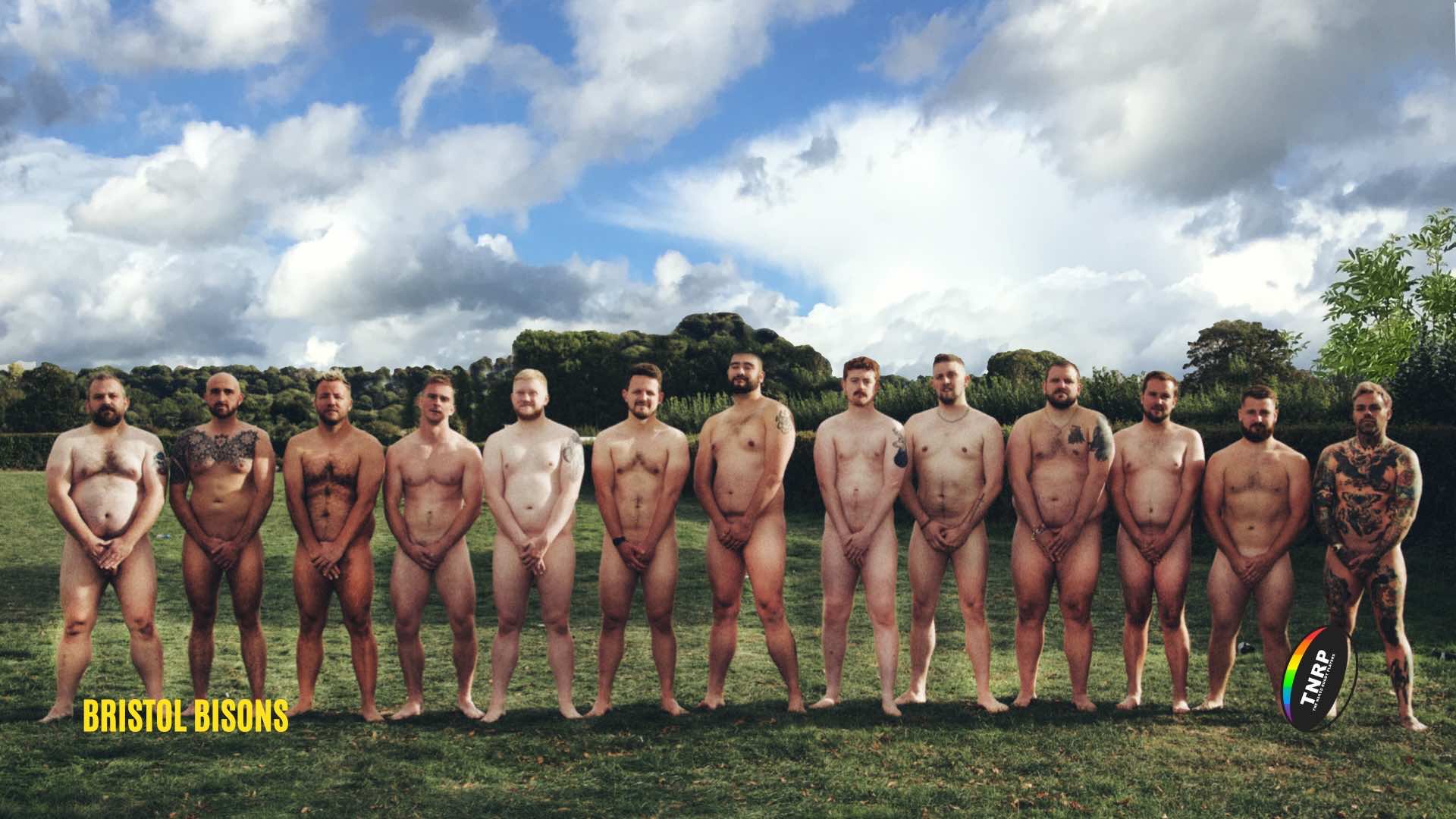
The world-famous Naked Rugby Players are back hoping to raise even more money for cancer awareness and inclusive rugby.
The Naked Rugby Players’ calendar one of the Top 5 Charity calendars in the UK is returning again for 2023 with nearly 50 naked guys. Now in its 5th year, the Naked Rugby Players’ calendar returns with 13 brand-new daring and cheeky photographs as well as a set of festive Christmas cards.
Five inclusive rugby clubs from around the UK stripped off earlier this year to raise awareness for both Inclusive Rugby and the importance for guys to check their tackle for lumps and bumps, in partnership with the Balls To Cancer charity. So far, the calendar has helped raise over £15,000 for good causes – and this year they want to smash their previous targets!
From Glasgow to Northampton, Newcastle to Bristol to Nottingham 45 rugged players bravely stripped off in a bid to spread awareness on male cancer and the importance of Inclusive Rugby.
Speaking about the 2023 calendar, Creative Director Jake Hook said, “It’s always a pleasure to get out in the open with rugby teams across the UK and this year we’ve managed to shoot the calendar in a variety of daring and exciting locations. I love how the players, always start a little shy, but within minutes of taking off their clothes, like magic, all their inhibitions have disappeared – sometimes it’s hard to get them to even put their clothes back on!
“As always we’re privileged to team up with the incredible Balls To Cancer charity, who provide much-needed awareness, support and resources for people living with cancer and their families.”
Fans of the calendar include Royalty, Prince Harry who greatly “appreciated” getting his copy and RuPaul’s Drag Race’s Baga Chipz who said, the calendar made her feel “Much Betta”.
200,000 men are diagnosed with cancer every year. 80,000 of those will die from their cancer. One in two men will suffer cancer in the UK during their lifetimes. Cancers which are detected early, such as testicular cancer, are beatable – but only if the message gets through that men should check their equipment regularly, which is why the Calendar features a cheeky monthly reminder.
As with all Naked Rugby Players’ calendars, a proportion of money raised through the sale of the calendar is donated to Balls To Cancer Charity and to the Inclusive Rugby clubs involved.
As the nights draw in a brand new Cuffing Season is upon us, but what exactly is “Cuffing Season”
(C) BIGSTOCK
Cold days – Check, Dark Afternoons – Check, Rainy Weather – Check, Mariah Carey has come out of her annual retirement – Check. It can only mean one thing. The big C word is upon us. Nope not Christmas but Cuffing Season.
Cuffing season; refers to the winter months, when people who are usually happily single start to seek a committed relationship.
With the days getting shorter and the nights longer, the temperature dropping and the trees becoming bare, it’s the perfect time for cozy nights in with your loved one, building a relationship. It is the optimal time of year for past partners to creep up on you, too.
One of the problems about Cuffing Season is that it might bring some of your exes out of the woodwork! If an ex-partner is single, they might try to come back to you to spend these cozy nights in with you – which might be nice in the short term but could be highly toxic if you’ve not managed to sort out the reasons you split in the first place!
Clinical psychologist Seth Meyers explains that “our energy levels are lower during the colder weather and we are moodier’” so we have less motivation to organise interesting dates.
“This, coupled with poor winter weather, means we have fewer places to go and things to do. This makes us seek out an easier option, such as a past partner.”
Every year Transgender Awareness Week takes place on or around the second week of November, which also happens to be Transgender Awareness Month. The dates are the 13th to the 19th of November.
Trans Awareness Week takes place annually in November. It starts in the second week of November, this year it starts on the 13th / 14th depending on whether you’re in the US or UK. The week tries to help raise the visibility of transgender people within society and highlight some of the issues and discrimination that transgender people face.
The week ends with the Transgender Day Of Remembrance. A solemn day of memorial for all the transgender people who have lost their lives to violence. The Transgender Day Of Remembrance takes place on the 20th of November.
Transgender Awareness Week is an opportunity for Transgender people, their allies, and activists to share their stories and experiences with a wider audience.
When did the first Transgender Awareness Week take place?
The very first Transgender Awareness Week took place in
It’s actually unknown when the first Transgender Awareness Week took place however we do know that the first Transgender Day of Remembrance took place in 1999, and was founded by a small group, including Gwendolyn Ann Smith, to memorialize the murder of a transgender woman Rita Hester in Allston, Massachusetts.
The Transgender Day Of Visibility, which was founded in the US by transgender activist Rachel Crandall of Michigan in 2009 took place in 2009.
How many people are transgender in the UK?
There are approximately 200,000-500,000trans people in the UK
According to the UK Government
There is very little data about how many people are transgender or non-binary or gender non-conforming in the UK. According to the government, “No robust data on the UK trans population exists. We tentatively estimate that there are approximately 200,000-500,000trans people in the UK.”
Since it was possible to legally change your gender in the UK in 2004 over 4,910 trans people have been issued a Gender Recognition Certificate.
12% of trans respondents to the National LGBT survey who had started or completed their transition had successfully obtained one, and 7% of those who knew about them but did not have or had not applied for one said they would not be interested in obtaining one.