There’s a mound in Hampstead Heath where dead bodies of gay men are being found. It’s a tumulus (a mound), and the story behind the tumulus is disturbingly and jarringly portrayed and performed in a show of the same name at The Soho Theatre.
It’s a life of drugs, sex, parties, and unfortunately murder in this production where gay men PnP (Party and Play – code words for drugs with sex). But in particular one gay man, Anthony, who works at the British Museum as a curator (a fantastic Ciaran Owens), through phone apps (we know which ones), finds himself in this world of chemicals and sex.
In this world he encounters men around his age (Ian Hallard) and much younger men (Harry Lister Smith), who are also like him – living a life where there are no bounds and no boundaries. But gay men are winding up dead in Hampstead Heath, and Anthony might have just stumbled on the idea that there is a serial killer of gay men out there. All this happens in an explosive one hour of theatre that will awaken your senses and your mind.
Tumulus is a show that is taut, tight, but never loses it’s edge, thanks to sharp writing by Christopher Adams and direction by Matt Steinberg. It’s got a great cast, especially Owens as the lead character.
He takes us on this journey with him, in our face and right up our arses.
Tumulus plays at the Soho Theatre until 4th May 2019
As a theatre company board a cruise ship to cross the Atlantic to New York for the premier of their new piece, it’s not just the waters that become choppy. Following the overhearing of an ill-timed romantic interlude between his two leads, Hungarian playwright Turai tries to keep his upcoming production on track, by re-writing parts of his script to cover up for their indiscretion. But with only four and a half days to rewrite and rehearse the play, it is all hands on deck to keep things afloat.
Turai is played with an air of camp sophistication by John Partridge (EastEnders) and bounces nicely off Matthew Cottle (Spooks) as his downtrodden writing partner; whilst rising star Charlie Stemp outshines them both with a confident portrayal of the cabin boy, Dvornichek.
Despite an impressive and lavish art deco set, sadly, the play holds little else in terms of appeal. The script is neither witty nor amusing, eliciting only the briefest isolated pockets of laughter (primarily from the same audience member); whilst the direction is lacklustre at best and inexplicably tacks on a wholly misplaced musical number at the end of each act. The whole thing doesn’t really know quite where to put itself – it is not quite sophisticated comedy, not quite farce, not quite “Carry On” and not quite musical comedy. Sadly, unlike the fictional ship, the whole story seems to go absolutely nowhere.
Tom Stoppard’s play is a wordy affair with a rapidly delivered script which is awash with very gentile and outdated comedy and a smattering of physical slapstick thrown in; and fans of Stoppard’s work will no doubt relish the opportunity of seeing one of his lesser revived pieces performed in a professional, touring production.
Despite a few issues with diction at times, the production is competently presented, but ultimately the show itself never really sets sail and ends up casting the audience member’s interest adrift.
Lord Sugar has been accused of “casual homophobia” after ‘gay elephant’ jibe.
After Piers Morgan asked his Twitter following whether elephants could be gay, but Alan Sugar couldn’t help but respond. His response missed the mark, however, and was met with condemnation from some followers.
Piers Morgan tweeted, “Genuine question: are there gay elephants?” to which the Apprentice star responded in front of his 5.3 million followers, “Good question they have good memory, That is why they followed you when you went on Safari in South Africa”
RT Genuine question: are there gay elephants? @piersmorgan Good question they have good memory, That is why they followed you when you went on Safari in South Africa https://t.co/O1DC9SDALO
While some were offended by the remark, calling the tweet an example of ‘casual homophobia’ others commented on the laziness of the joke, with one writing, “by all means attempt a gay joke, we wont be offended as long as its witty or clever. This offends me simply because its [sic] beyond dull”.
by all means attempt a gay joke, we wont be offended as long as its witty or clever. This offends me simply because its beyond dull
This isn’t the first time Sugar has been accused of homophobia, last year he was slammed after saying that he had had enough “puffs” in his boardroom. Twitter users were quick to call out the Tweet as homophobic and bigoted living the billionaire businessman having to explain that the tweet was “a bloody joke” and that puffs was not a homophobic slur.
The world of male grooming can be a daunting place. With a myriad of product types and treatments available, it’s hard to know what products you need to be using and what treatments are right for you.
This is why at THEGAYUK, we have sent our beauty expert Thomas Swallow to try them out and decode the enigma of male grooming.
Carry on reading below, to hear about Tom’s experience trying out Eyebrow/Eyelash Tint and Eyebrow Threading. Missed the first two instalments of this series? Click here to find out about Tom’s previous adventures, where he tried intimate waxing and a dermalux facial.
So this week you lucky folks get three for the price of one. Yes as the intro would suggest I tried out not one, not two but three male grooming treatments. All focused on taming the two bushy caterpillars on my face that I call my eyebrows and as we didn’t want my lashes getting jealous, we threw them into the mix too. I just wanted to take this chance to thank the team at Blink Brow Bar in Fenwick’s, London for helping with this feature. As you’ll find out as you read on, I couldn’t have been in better hands for this. I did indeed feel very pampered.
So let’s get started with the first two treatments that I had done this week. Eyelash and Eyebrow Tinting is the process of chemically dying your brows and lashes to achieve a darker/more defined colour. Basically just imagine the more professional version of shoving Just for Men on your eyebrows, when you had a bit left over from your beard. Please don’t put that stuff near your eyes though, I beg you! Being a blind panda ain’t a cute look.
The Treatment:
Tinting your eyebrows and eyelashes is one of those things, that I personally found super relaxing and satisfying. Essentially you get to just lay back and close your eyes for 10-15 mins and when you open them again, you have not only great looking brows and lashes but a more defined face. Brows really do shape your face gents, so make sure to never overlook them.
So the treatment will essentially start two days prior to your first appointment. This is when you will do a patch test for the tint, to make sure you aren’t allergic. Following this on the day of your appointment, your treatment will start by your clinician asking you about your desired shade results. Whether you want a more subtle or more dramatic look, they can tailor the results to suit you. This stage is great, as it really does personalise the treatment to yourself and guarantees you get what you want from the treatment.
Following this, your clinician will mix up your tint and then ask you to lay back so they can apply it to your eyebrows. They do the eyebrows first, as they usually, they take a lot less time to tint than your eyelashes. After the tint has been on a few minutes, they will remove the tint with a moist cotton pad and ask you your opinion on the colour. If you’re happy great, if not they will re-apply the tint to achieve the colour result you want.
After your eyebrows are the desired colour, your clinician will then move their attention to your eyelashes. Honestly, this sounds a lot scarier than it actually is. Essentially your clinician will line underneath your eyes and your eyelid with a barrier cream (usually petroleum jelly) and then place halved cotton pads under your eyes, to avoid any excess colour running onto your skin. They will then ask you to keep your eyes closed and they will begin to apply the tint. This is a weird sensation I must admit and sometimes there can be a slight tingling sensation but the important thing here is to keep those eye closed. I promise the sensation if any will die down quickly. Your only job now for the next 10 mins or so is to relax and you may even have a little nap if you’re like me. It has been a tiring few weeks, don’t judge.
My clinician was also super lovely and gave me a shoulder and arm massage while the tint was developing. This was definitely a super sweet thing for her to do and definitely made the whole experience more memorable.
After the tint has developed for roughly 10 mins, your clinician will begin to remove the tint from your eyelashes. Again it’s super important you don’t open your eyes till your clinician tells you to. It may be tempting but trust me it will sting if you do. They will start the removal process by using damp cotton pads similarly to the eyebrow tint but then due to the sensitive nature of the eye, they will then go on to use water directly on the area to remove any residual tint. Following this process, they will give you two more damp cotton pads for you to use yourself. This is so that you can be sure that all the tint has been removed from the eye. You can now open your eyes and see your newly defined lashes. If you have blue eyes like myself, by the way, I couldn’t recommend this more. It really does make your eyes pop and look so much more intense, in a good way.
After-Care:
As always we like to advise you on any necessary after-care for the treatments I try out and to be honest for this treatment, it’s very minimal. Essentially just avoid washing your face till the morning after to increase the longevity of the tint. Simple, right?
Moving on to my third and final treatment I tried this week, I tried the treatment made legend by my female friends. Yes, I indeed tried Eyebrow Threading. Now if you don’t know what eyebrow threading is, it’s essentially the process of using a piece of tightly wound thread to remove hair from the skin. If you’re like me and have female friends that have told you about threading you’d also know it has a reputation for being very painful.
After trying it myself this, I’ve got to say I don’t really understand how it’s painful. It’s a little uncomfortable but it isn’t painful. You essentially feel a light pull and then nothing. Of course like waxing the amount of pain is definitely down to a lot of factors but if you have a good clinician, I don’t see why you should be in pain.
The Treatment:
Anyway now we’ve dispelled that myth and threading clinicians across the country are thanking me for an increase in clientele. Let’s talk about what actually happens when you get your eyebrows threaded. Similarly to the tinting process, your clinician will first do a consultation on how you want to shape your brows. Being myself and liking the natural look, I opted to just get them tidied up but keeping to my natural brow shape. You will then lay back and your clinician will tighten the thread and start the threading process. I was asked to hold my eye area taught with my fingers for the first half of the process for each eye. This was to reduce any pain and make the removal process that much smoother.
The whole process for each eye took only a couple of minutes and as I said previously, really wasn’t that painful. Following the initial removal, my clinician they asked my opinion on the results and then suggested some further alterations to my brows they could do. This was a great step to include as you could tailor your results to your tastes and the added suggestion was most welcome. Essentially she just asked if she could cut a small section at the front of my brow to make it more even, which of course I said yes to.
Following this final snip, my brows were then perfectly shaped and the clinician added some soothing aloe gel to the area, to reduce any irritation caused by the hair removal.
After-Care:
Similarly to the threading, after-care for threading is very simple. Just don’t wash the area till the morning after and avoid any irritants such as perfumes. Again super simple, right?
Pricing:
As with all the features in this series, we can’t give you a definitive price for the treatment. As it really does depend on your clinician and where in the country you live but we can give you the pricing for Blink Brow Bar, to give you a bit of a guideline.
Eyelash & Eyebrow Tinting: £30.00
Eyebrow Threading: £21.00
Final Thoughts:
So it’s safe to say I was pretty impressed with the immediate results these treatments offered. As I said previously my eyes looked more striking, my brows looked more defined and my face as a whole just looked more chiselled. Personally, I think that going forward this will be an essential step in my grooming regime and I’ll definitely be going to the team at Blink Brow Bar in Fenwick’s, London to keep it up.
I really couldn’t have asked for a better team to do this feature with. They really did tailor the treatment to my specific needs as a client and the results spoke for themselves. I would definitely recommend giving these three brow/lash essentials a go ASAP and if you’re near a Blink Brow Bar branch hit them up. You can thank me later.
Want to see previews of what’s coming up or just what Tom gets up to in his day to day life? Drop him a follow on his Instagram below, where you can make suggestions for any grooming treatments you’d like to see him try in the near future.
For my 18th birthday, in 1986, I was given what most would consider some unusual coming-of-age presents: a wooden hatstand, a crystal whisky decanter, a book on the occult…
My extended family are an odd bunch at the best of times, but of all the gifts I unwrapped that day, the most bizarre – the only one I still possess – was the one my aunt gave me: A Dictionary of Mental Health by Richard B Fisher. What that says about me, I don’t know, but they say people give gifts they want themselves, so…
It is admittedly a fascinating book: a guide through the twin mind fields of psychiatry and psychology – a mostly balanced study for its time – and one of the most useful dictionaries I’ve ever owned. Not that I’m neurotic or a hypochondriac, but over the years A Dictionary of Mental Health has saved me countless hours on psychiatrists’ couches. Thanks to that oft-thumbed paperback, I know I’m neither neurotic nor hypochondriac, I don’t have dipsomania and I can’t claim to be suffering from Tourette’s syndrome. I am, however, according to the dictates of this dictionary, a sexual deviant.
Ah, well. It’s a dirty job, but someone’s got to do it.
Published in 1980, at a time when the right-wing tabloid press casually associated homosexuals with paedophiles, when casual racism was mainstream comedy, when mental well-being meant “pull your bloody socks up”, A Dictionary of Mental Health helpfully lists the main areas of sexual deviancy (or paraphilia as it is also called) as:
Bestiality (no argument)
Exhibitionism (only when I’m drunk)
Fetishism (I don’tknow, does the smell of wild garlic count?)
Frigidity and impotence (only when I’m drunk)
Homosexuality (even in my sleep)
Masturbation (even in my sleep)
Paedophilia (again, no argument)
Sadomasochism (not even in my sleep)
Trans-sexuality and transvestism (whatever floats your boat)
Perhaps voyeurism, necrophilia and – oh, I don’t know – frottage weren’t nominated that year, but there it is, in a golden envelope: I am a pervert of many colours. It feels unnerving that in my formative years, when I was coming to terms with and exploring my sexuality, the psychiatric world could pigeonhole me alongside paedophilia and bestiality (which A Dictionary of Mental Health laughingly describes as “said to occur frequently among boys in farming communities”). It’s a Freudian slap in the face – and there’s a dirty old man with a lot to answer for. Just because you fancied your mum, Sigmund, doesn’t mean we all do. Besides, I grew up in a farming community and I can assure you…
To define sexual deviancy it is, of course, necessary to provide a definition of sexual normalcy, and again A Dictionary… comes through with a description so ridiculous it is neither accurate nor helpful: “sexual activity which sub-serves reproduction”. This accounts for the inclusion of masturbation on the list, which makes perverts of us all, but excludes the possibility of, say, a transvestite satisfactorily impregnating their wife or partner. And since when was failing to get it up a form of deviancy? We all have our off days.
To classify sexual deviancy as any form of sexual activity not intended to produce a baby is to miss a fundamental point: sex is – or at least should be – something to be enjoyed, and not merely a biological duty. Moreover, to define sexual deviancy in purely clinical terms fails to take account of both perceived cultural differences and changes in public opinion. Public perceptions have often resulted in changes in attitude long before psychiatry and/or psychology and the law have woken up in bed together with no idea of how they got there. Besides which, “sexual deviancy” is a pejorative term often used interchangeably with “perversion” – and to deviate from something is not to pervert it, anymore than to travel into town on the bus is to abuse the train.
In fairness to Mr Fisher and his dictionary, he does point out that many textbooks on psychiatry rightly regard any such association as unjustified, and goes on to say “to describe any [italics mine] sexual practices as perverse… is a mischievous holdover from the intensely moralistic psychology enshrined by Freud and his followers.” Perhaps I should be a little more forgiving in my treatment of A Dictionary of Mental Health. After all, times have indeed changed and 1980 was a long time ago – wasn’t it?
In 2012, the psychiatric world finally caught up with the assumed zeitgeist when a study by clinical psychologist James Cantor, “Is Homosexuality a Paraphilia? The Evidence For and Against”, conveniently discovered that while homosexuality shared certain features with other paraphilias, they appeared to differ on “sex ratio, fraternal birth order, handedness, IQ and cognitive profile, and neuro-anatomy.” Or, to put it country simple, I’m more likely to:
Get more sex (excellent)
Be the first born (I am)
Be left-handed (I am)
Be more intelligent (I’ve got a masters, fuck you)
Have a different brain structure to your run-of the mill deviant (well, I did take a lot of acid in the 90s)
As a result of his findings, Cantor suggested treating homosexuality as distinct from other sexual deviancy categories (which I guess is a roundabout way of saying “sorry, we fucked up again”), but regarded his own conclusions as “quite tentative” given the current limited understanding of paraphilias.
Ah, well. Psychiatry is a dirty job, but someone’s got to do it.
These days sexual deviancy is classified by the American Psychiatric Association as “the experience of sexual arousal to atypical objects, situations or individuals.” Hmm. Well, maybe. This broader definition conveniently sidesteps the lack of consensus as to the difference between unusual sexual desires and what we might call deviancy, but again fails to address what that difference is. We’ve come a long way, true, but it seems we’re only halfway there.
So there it is: almost fifty years after homosexuality was decriminalised in the UK, I am – in one psychiatric category, at least – officially off the deviancy list. I can only live in hope for some sort of apology to follow.
As for the rest of you freaks, you’ll just have to wait your turn.
Honda’s Jazz has been a major seller for Honda globally. They are everywhere and here in its third generation, it gets better. Honda thankfully kept with the boxy estate car looks for the Jazz. It sets it out a little different in the small hatch crowd and yet it isn’t too off-the-wall different to alienate.
However, this new 1.5 i-VTEC Sport might just alienate the clientele of the Jazz. Does this sport-less badged Jazz ‘Sport’ have what it takes to wear the badge it is missing?
Driving
The best thing about the Sport is its gravelly voiced normally aspirated engine. The new 1.5 i-VTEC is a hoot and likes revs. This engine has 2 behaviours spread over 3 bands of power. Up to 3000rpm, it potters around. Responds to inputs. All good. 3000-4000rpm and it feels a little punchier. Still not enough to startle you. 4000-7000 redline and it screams along.
0-60 sprint feels quicker than its claimed 8.7 seconds and 3rd gear is good for over 70mph.
It’s no Jazz Type-R though. Its handling is way too safe. That said, you can exploit it quite nicely, and it will entertain once it has gone past its limits. Its limits are due to the compliant ride. It’s a good mix of firm and soft. It never crashes over ruts but is too soft and susceptible to a bit of a twitch at the rear to be an all-out GTi.
Inside
Heater controls in this model are simple twisting dials. Very simple and very easy to use. It all falls to hand well and the controls are weighted for ease of use. There is a downside and that’s cheap plastic. The door cards flex when the windows reach to the top.
You can’t deny that Honda are geniuses with space utilisation. The magic seat in the rear is versatile you wonder why it hasn’t been adopted by others? Flip the squabs and you get a deep narrow void to carry a small upright piano for a Mrs Mills sing-a-long. Fold it all flat and it’s a spacious 1314 litre carrying estate. There is more space in here than most larger SUV’s.
Living With It
The key to the Jazz’s success is easy to live with. Its mini estate car looks and versatility is endless. Its size is perfect.
The power from the 1.5 engine is startling. Considering its 7000rpm redline and its maximum torque at 4600rpm, the engine pulls itself along with little fuss from much lower down the rev range. It’s also a Honda Jazz so no one will try and burn you off at the traffic light grand prix. With its stealth looks, you can burn them off instead!
The Verdict
The Jazz Sport goes some way to shake off the image it has gained as transport for an elderly audience though I can’t help thinking that a few more sporting visuals would tip it into a different demographic.
The A-Team’s Hannibal Smith was “on the jazz” when the going got good and I’m inclined to think you will too when behind the wheel of this Jazz Sport.
Sleep is essential to good mental health. You probably already know that when you sleep well you feel and work better.
(C) BIGSTOCK
In general, adults need between seven and nine hours of sleep but the exact amount varies from person to person. Different people need different amounts of sleep, and this depends on your age, your lifestyle, your genes and what you’re used to.
A good night’s sleep won’t rid your life of emotional problems, but it can mean that you’re able to deal with difficult or stressful situations more easily.
If you’re not getting enough sleep you tend to feel moody and irritable and lack focus. Obviously, this problem is likely to affect your relationships with people, your work and your mental wellbeing if ignored.
Getting regular exercise during the day will help you to feel tired at night. Being active increases your metabolism and helps against stress and anxiety, which in turn will improve your sleep. Try to exercise earlier in the day or, if you prefer late night workouts, give yourself time to wind down and relax afterwards.
Watch what you eat and drink, and don’t smoke
Don’t have a heavy or spicy meal just before going to bed, as your body needs time to digest the food before sleep. Don’t go to bed hungry: a light snack before bedtime is ideal. Avoid caffeine – it can stay in your system for up to 6 hours and disrupt your sleep. A glass of wine may help you to fall asleep, but alcohol can affect the quality of your sleep, making you more likely to wake up during the night. Nicotine is a stimulant and studies suggest that non-smokers get better sleep than smokers.
Make your bedroom more sleep-friendly
PR SUPPLIED
Create a calm sleeping environment by turning your bedroom into a dark, quiet, clean and comfortable haven. A good temperature is between 18C and 24C. You may want to try black-out curtains, eye shades or ear plugs. Paint your room a calming colour. Remove any distractions that may keep you awake (including the family pets!) and keep your bedroom free from computers, TVs and phones. Is your mattress old? Is your pillow lumpy? Spoil yourself and invest in some new bedding.
Develop a bedtime ritual
Try to develop a relaxing night-time routine that prepares your body and mind for sleep. It could be taking a hot bath, reading a book, listening to calming music or having a milky drink – but try to stay away from bright lights and heated arguments just before bedtime.
Relax and unwind
CREDIT: MUSICAL FIDELITY EB-50
Whether you need to stretch your muscles with yoga or calming your mind with meditation, there are numerous classes, apps, and books that can show you great methods to do both. Experiment and see what works for you. Some people find using a few drops of aromatherapy oil on the pillow, such as lavender, or a cup of chamomile tea to be soothing before bed time.
Don’t toss and turn – get out of bed instead
If you can’t fall asleep after half an hour, get up and do something else instead – try something relaxing like reading or listening to music. Only go back to bed when you feel tired. Similarly, if you find you’re dozing off on the sofa too early in the evening, get up and do a few jobs so that you save your snoozing for bedtime.
Stop the weekend lie-ins
Keep a regular sleep schedule. If you go to sleep and get up at the same time every day (even if you’re not feeling tired) it can help you get into a good sleep routine. Resist having naps during the day and don’t sleep in at the weekend.
Keep a sleep diary
It can be difficult to work out why you have problems sleeping. Keeping a sleep diary (or using a wearable device that tracks your sleep) can help you monitor when you fall asleep and wake up, how many times you wake up during the night and how rested you feel in the morning. After a week, reflect on your notes and try to work out what helps you sleep and what makes it worse.
Jot down your troubles
Life is often stressful and it can take time and some effort to learn what coping methods work for you. Try using a journal to jot down things that are worrying you and keeping you awake. Make a note of them and deal with them when you are refreshed.
Seek professional help
If your sleep problems persist, don’t suffer in silence, and don’t be tempted to self-medicate with over-the-counter sleep aids. Cognitive behaviour therapy (CBT) can be very effective at helping people who have problems with insomnia.
For more information, please visit AXA PPP healthcare’s sleep hub.
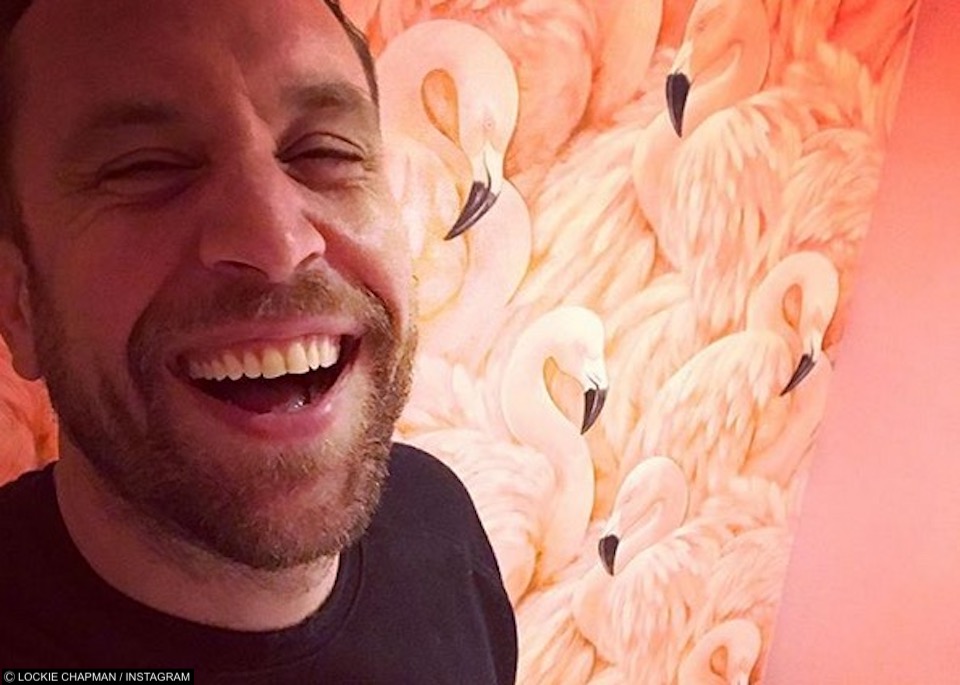
Aussie hunk, Lockie Chapman is leaving the million-selling vocal group, The Overtones, after “difficult decision”.
Lockie Chapman, who is known for his deep bass voice in the vocal group, The Overtones, is set to leave the group after “careful consideration” saying that it was time for him to move on.
The group broke onto the music scene in 2009 and Lockie was one of the founding members of the group.
Speaking to THEGAYUK.com about his decision to leave Lockie said, “It has been a very difficult decision and has taken much careful consideration, but the time has come for me to move on. I hope you will understand. I was one of five boys given a chance at a lucky break, and my goodness, how we ran with that ball! My finest memories have been made and they are countless. I have so much love for the Overtones, for Darren, Mike, Mark and our dearest friend Timmy Matley and the memories we have made and shared together”
Lockie said of the news. “I know the boys will carry on delighting audiences everywhere as The Overtones always have and long may they reign. My heart is beating with pride for them. I have so much love and thanks for our devoted and loyal fans – the love and respect you have given us means you will always be in my heart. Always, always. You have truly been the making of my first decade in the UK and I must now journey on into the adventures and excitements of my next decade. We shall see. We will meet again at a microphone, a stage or a screen near you soon”
Lockie took to Instagram to inform the band’s fans, with a simple handwritten note,
Talking about the future Darren Everest, Mike Crawshaw and Mark Franks added ,“We are excited about our next chapter too and, to our fans, rest assured that The Overtones will continue to make you smile, sing and dance in the aisles for many years to come. We have some big news coming soon so stay tuned because there are exciting times ahead”
Tickets for the concert on Saturday May 4th 2019 at Shanklin Theatre, Isle Of Wight are available from shanklintheatre.com
With their innate charm and adherence to vintage-modernist style, and a devotion to the timeless appeal of male vocal harmonies, The Overtones are a bridge between pre-rock’n’roll classicism and lively 21st Century entertainment. They’ve sold over a million albums, made countless TV appearances and filled venues to capacity on tour after tour, all the while building a relationship with their fans that has real depth and devotion.
In 2018 the group released their sixth album ‘The Overtones’. The first to be released as a quartet following the death of Timmy Matley, the record was a celebration of life, the friendship between the band mates, and the power of the voice. The accompanying 24 date sold-out tour took that sense of celebration and party on the road with the group and their band living up to the promise of “a night to remember”. That’s the tradition they come from and they’re certainly not about to stop now.
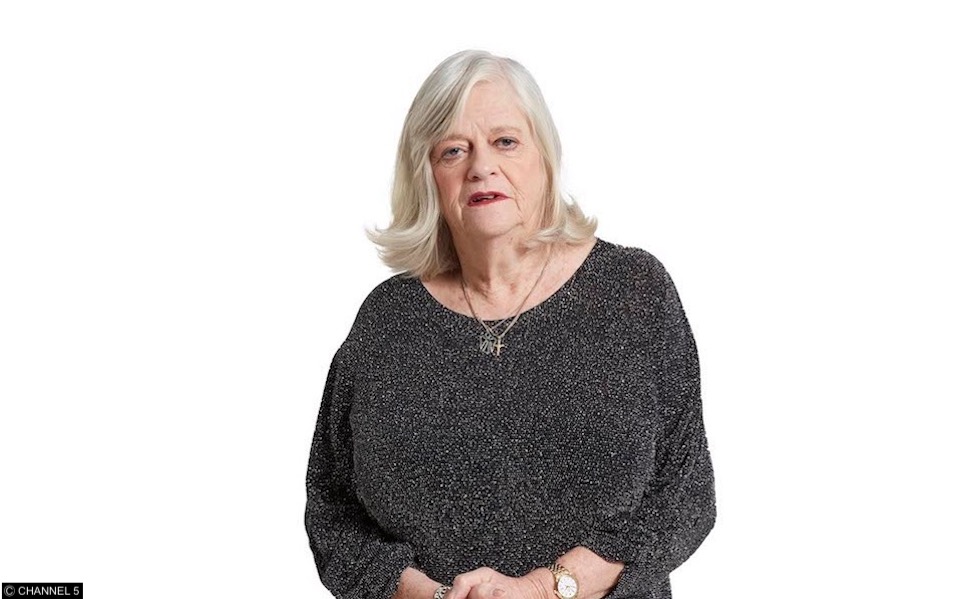
Ann Widdecombe, one of the UK’s most anti-equality politicians, has joined the Brexit Party.
One of the UK’s most conservative politicians, Ann Widdecombe has joined the brand new Brexit Party, which is headed up by former UKIP leader Nigel Farage. The party was formed ahead of the forthcoming European elections, in which the UK will vote in.
During her time in office as the MP for Maidstone and The Weald, Ann Widdecombe voted against every piece of pro-LGBT+ or equalising legislation for the gay community in the UK.
In 2003 she voted to maintain Section 28 in schools and in 1998 she voted against the law to equalise the age of consent. Between 1998 and 2009 she was involved in 17 votes pertaining to LGBT+ rights – 13 of which she voted against and the other four she was absent from, according to theyworkforyou.com
Ann Widdecombe’s career as an MP was ended in 2010.
She also voted against the Equality Bill which promotes equality and various human rights.
Nigel Farage described Widdecombe’s entry into the Brexit Party, as “great news”. He took to social media to say, “I welcome Ann Widdecombe as our lead candidate in the South West, the Brexit Party is a stronger alliance as a result. This is great news”.
I welcome Ann Widdecombe as our lead candidate in the South West, the Brexit Party is a stronger alliance as a result. This is great news.
Bobby Norris created a petition imploring politicians to make online homophobia a criminal offence, and it’s reached a whopping milestone.
From Lime Productions
TOWIE star Bobby Norris is celebrating after a petition he created, asking the UK’s government to make online homophobia a specific offence reached over 100,000 signatures.
Taking to social media, Bobby wrote, “WOW!! Thank you so much to everyone who has signed and shared my petition. I can’t wait to get into Parliament now and get this debated”.
As it stands the petition currently has over 114,000 signatures.
In his original petition, Bobby wrote, that he was “devastated” by homophobic abused levelled at the LGBT+ community and wanted it to be debated in parliament.
The Home Office responded at 10,000 signatures, saying “The Government recognises the harm that homophobic online messages can cause. We are working cross-Government to challenge inequality and make the UK’s online environment a safer place for everyone.”
“The internet provides a wealth of opportunities for people globally. It is a platform for everyone to share experiences and creativity, and it encourages rich discussion. It has allowed people to create communities and interact in ways that were not previously possible. The Government recognises, however, that some people exploit these opportunities to spread harmful messages which would not be tolerated offline. Protecting people online is a top priority for Government.
“In some cases, these behaviours may already constitute criminal offences, and the law does not differentiate between criminal offences committed on social media or elsewhere. We have robust legislation to deal with internet trolls, cyber-stalking and harassment, and perpetrators of grossly offensive, obscene or menacing behaviour, which may be relevant to some cases of LGBT abuse.
“Hate crime legislation may already apply in online homophobic offences. Hate crimes include crimes demonstrating hostility on the grounds of an individual’s actual or perceived race, religion, sexual orientation, disability or transgender identity, as well as stirring up hatred on the grounds of race, religion or sexual orientation.
“The Government is taking significant steps to tackle hateful activity online:
• We are funding a National Online Hate Crime Hub which uses specially trained police officers and staff to investigate reports.
• We supported the European Commission Code of Conduct for Countering Illegal Hate Speech which has been signed by key companies including Facebook, YouTube, Microsoft, Twitter and Instagram. A key aim is to ensure that requests to remove content are reviewed in less than 24 hours, and content is removed if necessary.
• We commissioned the Law Commission review of offensive online communications. The Law Commission has just begun a specific review of hate crime legislation.
• More widely, a joint Department for Digital, Culture, Media & Sport (DCMS)-Home Office White Paper will be published this year, setting out a range of legislative and non-legislative measures detailing how we will tackle online harms and set clear responsibilities for tech companies to keep UK citizens safe.
The Government recognises that homophobic abuse can have potentially devastating impacts on victims and we are working to challenge inequality beyond a law enforcement approach alone. This broader approach also recognises that we need to ensure we strike the right balance between protecting citizens and protecting their rights to free expression. Everyone has the right to freedom of expression under Article 10 of the European Convention on Human Rights, however this is not an excuse to spread hatred. Article 10 is a qualified right, which means it is not absolute and it can be restricted for certain purposes.
This approach includes a variety of actions. In July 2018, the Government Equalities Office (GEO) launched the National LGBT Survey to understand LGBT people’s experiences of accessing services. Over 108,000 people completed the survey. In response to the findings, GEO also launched an LGBT Action Plan setting out 75 commitments to improve outcomes for LGBT people. The Action Plan includes a £4.5 million fund to address inequality and support the delivery of commitments cross-sector.
The LGBT Action Plan includes the following commitments to ensure LGBT people feel safe online beyond the actions listed above:
• The Home Office is supporting the police to improve how they respond to hate crime and raise awareness of local support agencies for LGBT victims. The 2018 refresh of the Hate Crime Action Plan is supporting police training that is tailored to the needs of victims, such as those of homophobic, biphobic and transphobic hate crimes.
• The National Crime Agency (NCA) will ensure LGBT people can access educational online safety interventions that are informed by their experiences. The NCA will develop effective and appropriate education interventions to ensure LGBT people can be full, equal and safe participants in online activity.
With the UK Tory government pressing ahead with its porn ban, we asked Alastair Graham, Chair of the Age Verification Providers Association and CEO of AgeChecked on what we should know before the ban comes into place in July.
New rules mean that you will have to prove you are over the age of 18 – and be on a database, in order to view porn from mid-July. Users will need to, from 15th July 2019, prove that they are over the age of 18 with official documents such as a driver’s license, passport or an age verification card. One of the systems in place is called the AgeID system another is called AVSecure. Alastair Graham, Chair of the Age Verification Providers Association and CEO of AgeChecked answers some questions on what you’ll need to do come mid-July.
How will the porn ban work?
Whenever a UK IP address attempts to access a website with age-restricted content, the user will have to verify they are over 18. They will not be able to view explicit content until they have proven their age.
The onus of implementing such checks will fall on individual pornographic websites. Given that the government has not created its own verification system for websites to use, website operators will need to choose from a number of different age-checking software services on the market.
There are variations between suppliers with regards to how each company will verify customers. AgeChecked, for example, works by allowing customers to confirm their age securely via an anonymous username and password. In order to get the username and password, users must first age verify themselves. They can choose from a range of methods, utilising a mobile app, credit card or driving licence.
Each time the user logs on to the website in question, they will not have to re-verify themselves in order to access it. Instead, they simply sign in as normal and they will be granted instant access. This way, compliant age checks can be carried out without disrupting the user’s journey.
Three key myths
“My data will be hacked or leaked”
Perhaps unsurprisingly, the incoming legislation has triggered privacy fears. Will porn companies be able to link people’s identities to their porn preferences? This is a very valid concern.
The only way sure-fire way to avoid highly sensitive data leaking is to make sure that such data is not created in the first place. In this respect, it’s vital that all age verification systems are third-party providers (and not in any way affiliated with the porn sites themselves.)
AgeChecked never stores personal information on its users and credentials are completely anonymised. When a user tries to access an age-restricted website or service, the website will only receive a simple ‘pass’ or ‘fail’ alert – nothing more.
“It’s just a censorship tool”
The whole point of the new age verification regulations is simply to prevent children from stumbling across pornographic content; these measures will not have any control over what content adults can and cannot view.
“People can bypass the system”
Online age verification works by implementing barriers that make it as difficult as possible for young children to stumble upon inappropriate or damaging adult content.
Of course, there will always be a minority that tries to undermine these barriers, which is unfortunate but unavoidable. That’s why it’s so important that age-gating software does not work in silo; but rather plays a role in an overall solution. Underage access to adult content is a problem that needs support from both parents and government to be properly tackled going forward.
Looking ahead
Overall, while it is easy to become fixated on the pros and cons of the upcoming porn ban, what people need to remind themselves of is the core purpose of this legislation – to protect and prevent vulnerable youngsters from needlessly stumbling across this graphic, damaging content.
AgeChecked is just one of the companies which will be able to verify users’ ages.