Search results for: “ ”

  • How to deal with an erection during a massage

    Apparently, it happens all the time… No need to freak out

    CREDIT: Wavebreakmedia-Depositphotos

    Involuntary erections during professional massages happen all the time apparently – according to Spencer from HM Massage on YouTube, before adding some tips on how to “handle it”.

    Firstly, Stop Freaking Out.

    It happens. Both the massage therapist and the client need to calm down. An erection is a natural body function and the more attention you give it, the longer it will take for the boner to go away.

    It could also be a nervous reaction, especially if guys have never had a professional massage before. Spencer adds, “the more you think about it, the longer it’s going to stay, as opposed to letting your mind go and not thinking about it, and naturally it’s going to fade away”.

    Don’t make a big deal about it

    For therapists, Spencer suggests, “if your client pitches a tent on the massage table, don’t stare at it, don’t make a huge deal about it – even if it is a huge dealing…” Therapists should focus solely on the massage and distract themselves from it, “you don’t have to be focused on it”.

    (C) BIGSTOCK / Depositphotos

    Parasympathetic Nervous System stimulation.

    Apparently 99 percent of the time an erection happens because your parasympathetic nervous system is being stimulated. That means the rubbing of your skin, the touching of your body in a relaxed state and when senses are heightened could cause a raging bone. Spencer adds “while massage is not sexually intimate, massage can be a very intimate experience between therapist and client”.

    Don’t act on it.

    Whatever you do, don’t try and get your masseur to touch your dick – and or interact with it in any way. Remember it’s their workplace and they are there to do a job – massage your body – not your penis. “If you take things to a physical level, that’s not okay, the therapist has every right to end that session right there and kick you out,” Spencer warns.

    To therapists, Spencer recommends you give a first warning and if the client continues to act inappropriately to end the massage and leave the room.

    The good news is the more clients have massages the more they get used to the feelings and the likelihood of getting a hard-on becomes less and less.

    So if you pitch a tent while have a body massage. Relax, take your mind off it and don’t act on it.

  • What’s the best haemorrhoid treatment?

    If you’ve found yourself with haemorrhoids more commonly known as piles here’s the best way to treat them.

    What's the best haemorrhoid treatment?

    Suffering from piles when you’re a bottom or even a power bottom could spell disaster for your sex life. But even if you don’t have anal sex, then piles can be a real pain in the arse (pun unfortunately intended). The fact is that piles or haemorrhoids are a fact of life for many people.

    Piles are caused by swollen veins in the anus. They can be caused by straining when going to the toilet (number two), mainly during constipation or sitting on the loo for too long.

    Many people don’t even know they have them – because they can occur inside your rectum – where you can’t see them.

    When they come out your bottom, that’s when they can become a bit of a problem.

    What's the best haemorrhoid treatment?

    Does anal sex cause piles?

    But before we go on, let’s clear one thing up, they aren’t caused by having anal sex.

    Jose Perez de la Cruz, a Public Health Practitioner at the Terrence Higgins Trust told us, “anal sex has the potential to inflame pre-existing haemorrhoids (piles), though research shows that it does not cause them in the first place. So long as the piles are not actively bleeding or painful at the time of intercourse then it is probably safe to have sex”.

    What’s the best way to cure haemorrhoids?

    If you’ve got piles, here are some tips on how to get rid of them.

    Sex

    Firstly, you should probably take a break from receptive anal sex if you’ve got piles. Firstly, depending on how bad your haemorrhoids are, they may burst and cause bloody sheets and lost of blood and could be quite painful. Secondly, if you’re not using condoms and you are not on PrEP, you might be opening yourself up to blood-borne infections and viruses.

    Creams

    The NHS suggests that piles can often clear up by themselves, but there are several treatments that help with discomfort and itching. There are creams and suppositories, which are manually inserted into your arse – which can relieve swelling.

    Jose continues, “I would recommend using Preparation H (under a fiver) or Germoloids (over a fiver) to help control pain and inflammation and to reduce swelling. During sex, it is also important that you use a good water-based lubricant, particularly during acts of multiple people or high-frequency sexual activity as this will reduce the chance of any inflammation being caused.”

    Jose also suggests if the piles don’t clear up after a while that you book an appointment with your doctor to talk options.

    Diet

    Your diet can play a bit role in helping you clear your piles, particularly if you have constipation. The NHS suggests you should increase fibre in your diet. You should also increase the amount of water you’re consuming and avoid caffeine. If you are constipated your GP may prescribe laxatives to help you poop.

    There are also more intrusive medical ways to rid yourself of haemorrhoids and you can read about them on the NHS website.

    The advice listed above is not intended to replace or take the place of that of your own doctor, GP or medical professional who knows your full medical history. If in any doubt make an appointment with your doctor as soon as possible.


    OTHER QUESTIONS: HIV | WILLY WONDERS | HOLES | DOING IT | STIs | LUMPS & BUMPS | BACK TO SEX CLINIC HOME PAGE


    Got a problem you’d like advice on? Click here to ask your question

  • What’s the difference between marriage and civil partnerships?

    Are there differences between civil partnerships and marriage? Andrew Smith, Associate Solicitor for Blacks Solicitors’ Family Law team, answers the question.

    Is there difference between Civil Partnerships and marriage?

    What are the legal differences between a civil partnership and a marriage?

    “There are very few ‘legal’ differences between a civil partnership and a same-sex marriage. Civil partners cannot refer to themselves as ‘married’ and it is a different ceremony. On a certificate of civil partnership, both parents are named rather than just the father on a marriage certificate; but there is legally little difference between the two.”

    “The main differences are similar to those between a religious marriage and a civil ceremony undertaken by heterosexual couples; in regard to the formation, the ceremony, the administrative process and the certificates.

    “Somewhat controversially, one of the main differences is that civil partners are unable to cite the specific act of Adultery as the main reason for why the civil partnership has broken down. This is because the definition of adultery is sexual intercourse with someone of the opposite sex outside marriage. Instead, civil partners have to use ‘unfaithfulness’ as one of a number of examples of Unreasonable Behaviour.”

    What about divorce? Can civil partnered couples get divorced?

    What about divorce? Can civil partnered couples get divorced?

    “A married couple will have a ‘divorce’ whilst civil partners will have a ‘dissolution’ if they choose to separate. Therefore the answer is technically yes as although the terminology is different, it does mean the same thing in principle.”

    What about pension rights, are they the same between marriage and civil partnerships?

    “Up until very recently, this had been a grey area for those who retired prior to when the act was introduced.

    “The Walker v Innospec [2017] case which recently made the headlines challenged this and saw the Supreme Court unanimously allow Mr Walker’s appeal for his employer to pay his pension to his spouse in the event of his death, despite his service predating December 2005.

    “This fantastic result will pave the way for all same-sex couples in a similar situation, who are either married or in a civil partnership, to be able to leave their pension to their spouse.”

    If you have a LGBT legal query you would like to discuss with Andrew, please email him on AJSmith@LawBlacks.com or visit the website for more information: www.lawblacks.com

  • Theatre Review | Northern Ballet’s The Three Musketeers

    Theatre Review | Northern Ballet’s The Three Musketeers

    ★★★☆☆ | Northern Ballet’s The Three Musketeers

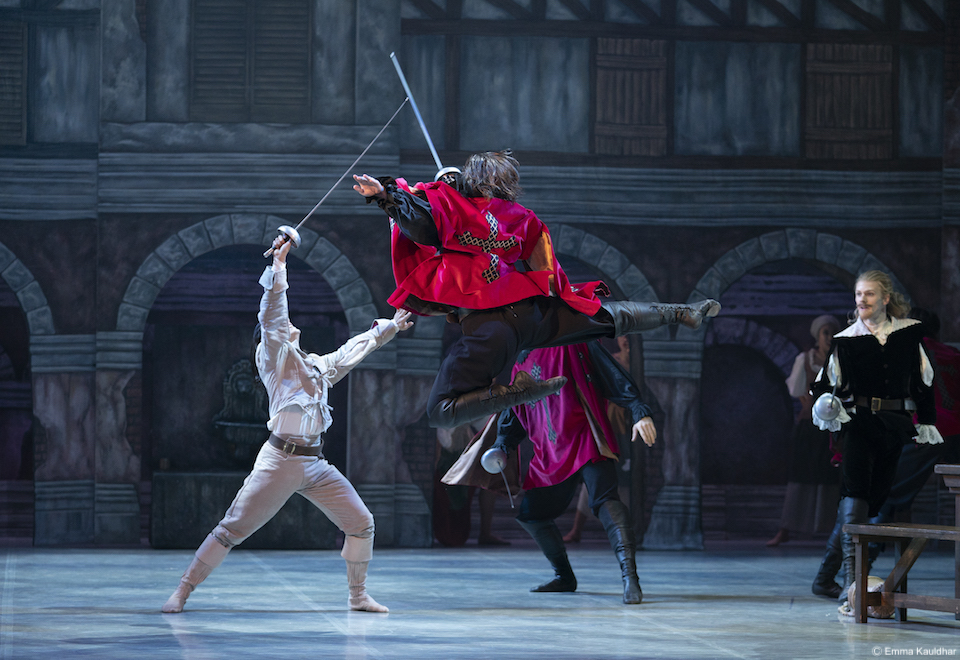
    In the latest production from Northern Ballet, The Three Musketeers leap from page to stage with a ballet based on the famous novel, which is packed full of drama, action and swordplay, whereby the theft of the Queen’s necklace leads young d’Artagnan on a quest to save Her Majesty’s reputation, fall in love and join the famous trio.

    The fact that the piece is choreographed by David Nixon comes as no surprise, given that his very distinct and personal style is eminently evident throughout the ballet and his attention to detail in everything from the pas de deux to the ensemble pieces is clear. There is a jaunty and pleasant score performed by the Northern Ballet Sinfonia; but what adds to this production is the set, which is large, varied and effective, providing a grandiose backdrop to the proceedings and simply, but effectively, differentiating between the locations.

    Kevin Poeung is well cast in his role as the young musketeer, and he continues to hone his craft beautifully. Mlindi Kukashe steals every scene he is in with a devilishly underplayed Cardinal Richelieu and Sean Bates delightfully ramps up the camp as King Louis; whilst the remainder of the cast provide such a fast-paced ballet during the ensemble pieces that it is often difficult to know where to look for fear of missing something.

    The narrative is relatively clear, if perhaps a little light, but manages to hit the key elements of the novel; there are plenty of swordfights and heroics to keep the ballet moving along nicely and there is some technically excellent dancing on display. What is, however, noticeably absent is the titular Three Musketeers, whose contribution to the narrative and attendance on stage is surprisingly limited; but overall the production makes for a rather undemanding, pleasant and entertaining ballet.

    The Three Musketeers is currently at Sheffield Lyceum until the 27.10.18 before heading to Canterbury Marlowe Theatre. Northern Ballet’s programme continues into the New Year, details of which can be found on their website.

  • THEATRE REVIEW | Andrew Logan’s Alternative Miss World 2018, Shakespeare’s Globe

    THEATRE REVIEW | Andrew Logan’s Alternative Miss World 2018, Shakespeare’s Globe

    Andrew Logan’s Alternative Miss World 2018, Shakespeare’s Globe

    CREDIT: Holly Revell

    FREAKANGEL FURIOSAS!

    Do first impressions count? Oh yes, darlings, more so now -in the wake of Trump’s horrifying assault on anything remotely extranormal – than ever before! So how sweet, edifying and redemptive that there’s the gorgeously queer, counter-cultural energy of Andrew Logan’s simply awesome Alternative Miss World still in existence, a glittering beacon of extravagant diversity personified!

    Never heard of Mister/Missus Logan? No? If so, that’s simply shameful, on a shockingly uninformed par with an NYC queen in his 30s I met last year who’d never. heard. of. Quentin. Crisp! Understand, I’m not mocking the genuinely unenlightened or unaware, but Christ, in this current tsunami of unprecedented prejudice, queer history is a vital foundation of effective resistance!

    So – without further ado – let’s spotlight the gloriously ambisexual (in appearance, at least) Andrew Logan, a globally acclaimed queer sculptor in fragmented, rainbow-rayed glass, who’s organised. conceived and manifested his Alternative Miss World – a celebration of every possible form of imaginative deviance – since 1972.

    Now, many of you readers, of course, were not even born until decades after that pivotal date, but – to quickly illustrate the psycho-sexual climate then, on your behalf – it was the peak of glam-rock, with the omnisexual Bowie’s Ziggy Stardust album definitively shredding the social rule-book for lumbering, brain-dead cock-rock.

    Being an ancient tranny-granny, of course, I remember it well, enhanced by the shared memories of my equally non-binary creative and performing partner, Camilla. Seizing the furious, spitting lightning of Bowie’s gender-blending zeitgeist – which would later manifest more lumpenly the following year with the Rock Horror Show – Logan tore apart the Freudian gates of self-repression, and let panting, polymorphous perversity rule!

    You think the gay, non-binary and trans scenes are wild now? Well, sweethearts, we’ll gloss over the nude waiters, heaped platters of coke and dwarves employed for recreational excess at a certain Queen launch party, and just simply reiterate – quite mildly – that the 1970s was an era of stratospheric debauchery that even dear, damaged Caligula may have smirked at!

    Still, back to La Logan, and his peripatetic, occasional and irregular spurts of eroticised pageantry. If never a strictly fixed signpost on the gay, social calendar – indeed, one that often went missing inexplicably and unpredictably years at a time – Logan’s actual, physical cavalcades, when they occurred, were a wake-up call for every struggling, self-actualised sexual revolutionary on the entire planet! Frankly, through the years, Camilla and I have been greeted and treated to lusciously mind-bending pageants of any possible iteration of the LGBTQI alphabet, and tonight – at Shakespeare’s Globe, the jarringly staid bastion of theatrical respectability – is no exception.

    So let’s set the scene. Placing our cushions – mature butts do require some comforts, dear readers – on the Globe’s unyielding wooden benches, we gazed down at the raised stage in a vast courtyard wholly open to the chilling, October air, the only protection for performers from England’s unpredictable elements a jutting, over-stage roof supported by huge columns awash with glowing, ultraviolet, psychedelic hieroglyphs.

    And why not? Logan’s theme this year – quite appropriately, in a shockingly divisive political climate – was Psychedelic Peace. As a clarion call and rallying point for sympathetic spirits and resistance, it’s way overdue; who needs the frothing inanities of Brexit-crazed xenophobes and Trump’s ecstatic elevation and fawning worship of decrepit misogynists?

    Not us, but mercifully, tonight, overwhelmingly, was dedicated to the complimentary, healing spirits of boundless compassion and tolerance. Fittingly, the Peace Envoy – spearheaded by indefatigable cabaret veteran, Eve Ferret – streamed onstage in all their stalwart, sexually non-judgemental glory. Their names, of course, are instantly recognisable to anyone with even a barely tangible acquaintance with cutting-edge, queer culture; the fiercely sensual Bishi, the living work of art in progress Daniel Lismore, activists Olga Lamas, Roy Inc and Stuart Hopps. More unexpectedly – for audience members of our vintage, at least – were the impeccably queer credentials of the rangily charismatic Jenny Runacre, the iconic, Elizabeth the First in Derek Jarman’s Jubilee, and the predatory bisexual Miss Brunner in the cult, cyber-noir thriller The Final Programme, and here hugely owning her maverick, outsider glory in a clinging, sapphire dress and wickedly insouciant shades.

    And right here at Shakespeare’s Globe – and maybe nowhere else on the planet at those precise moments – a startlingly tangible wave of queer solidarity echoed the mass meditation evoked on stage by Angelika Grohamn. The point – made inescapably clear – was saying and offering a huge, plump, collective ‘yes’ to all those previously forbidden and downtrodden lifestyles, desires and yearnings, here given fabulously unrestrained wings as a scorching, definitive take on the Rocky Horror’s once courageous, but still irritatingly mimsy credo, ‘Don’t dream it; BE it!’.

    And did the contestants embody and live up to Richard O’ Brien’s timid, hardly full-bodied call to excess? Oh bleeding, gorgeously masochistic Jesus on the cross, yes! Okay, perhaps, the increasing cold, bodily discomfort and sustained, mental shell-shock of non-stop, successive peaks of ravishing outrage made objective reportage and appreciation almost impossible – curse those frequent, swollen-prostate bathroom breaks! – but many life-changing moments simply scalded themselves in our minds!

    CREDIT: Camilla K

    Some astounding specifics? The jaw-dropping, eventual winner Miss Ufo, AKA Russian performance artist Andrey Bartenev, initially onstage in a black and white, skintight diamond-patterned suit and mask, a controlled chaos of extraneous, back-looped octopus arms, like some astounding, unprecedented giant squid designed on a drug-demented bender by Salvador Dali and the vertigo-inducing surrealist M.C. Escher.

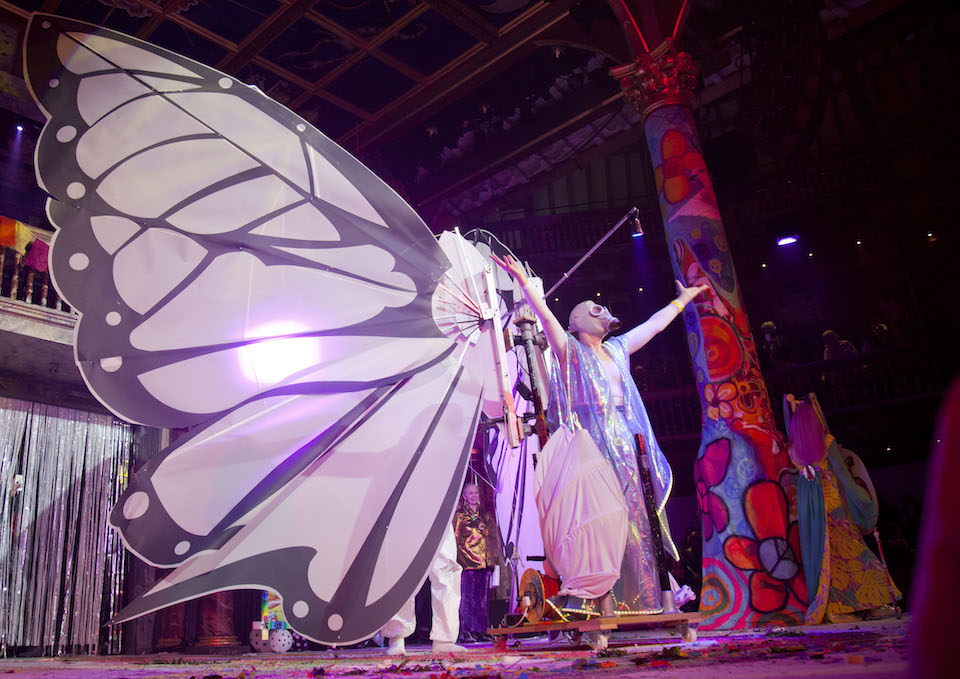
    And who – in their right or wrong minds – could fail to be conceptually pole-axed by the simply belief-confounding Miss Lysergic Acid? Entering propelled on a discrete, wheeled camera dolly, her glittering, metallic robe incandescently piped by electric-lit borders, Miss Lysergic Maximus – our preferred name for this psychedelic prodigy – unfurled vast, ethereal, violet butterfly wings while lip-synching to the transcendent yearning of Puccini’s masterly aria, ‘Nessun Dorma’.

    Unmatchable? As sheer, perfect marriage of performance art, radical, libertarian gesture and music, yes, but while nothing fully eclipsed Miss Lysergic’s transcendent aesthetics, other subversive strategies – notably, those employed by Miss Psychic Timebomb – proved equally memorable.

    Ever wanted to relish live, human sacrifice? To share – even if only vicariously – the mass homicidal, proxy orgasm craved by ancient, Roman circus punters?  Tough. Miss Psychic Timebomb – plainly dressed by contrast to others in a white gown, Venetian mask and attached to a huge, rigid disc of white chiffon – didn’t quite die for the audience, but courageously, plunged like a passive, living offering into the crowd, to be buoyed – in an astounding exhibition of trust – by his/her white-quiffed accomplices, wreathed in unexpected clouds of smoke detonated by his/her other compatriots.

    ‘Ever get the feeling you’ve been cheated?’ Johnny Rotten – the decaying, Botticelli angel of disadvantaged rage – once memorably sneered, but not here, darlings! This, indisputably, was Anarchy in the UK indeed, an overdue, furiously chaotic, punk-rock fuck-you to the staggering, staged boredom epitomised byStrictly, the X-Factor and West End theatre en masse!

    That blanket unpredictability – the heady, off-kilter thrill typifying the Stingray, kid’s TV show tag – ‘Anything can happen in the next half-hour!’ – injected the entire night with a spontaneous, pseudo-Ecstasy rush from moment one. And- unbelievably – there was more to come, the writhing, au naturel and wholly naked exuberance of the Neo Naturist dance troupe, all body paint and extravagant, decorated genitals, radiating an unapologetic miasma of human sweat and sexual musk.

    Tasteless? Only to people metaphorically sealed, bound and taped in every orifice, to minds screamingly allergic to and repelled by every aspect of the blatantly sexual human animal, and to the bigoted hatred of unevolved fanatics who, inexplicably, idolise invisible, unprovable sky-guys floating on clouds rather than unconditional human love and compassion.

    Originating in the early 1980s as an earthy riposte to Thatcher’s dehumanising ethos of ruthless, pan-social greed, the Neo Naturists – free-form dancing to Hawkwind’s joyously delirious Silver Machine  – writhed like living art in nothing but marine green and rain-forest emerald body paint, a luscious and necessarily lubricious reminder, that – beneath our often cynical and socially enforced masks – our bodies change, age and orgasm at the dictates of nature, time and sexualities beyond our control.

    Truly, one couldn’t pray for a finer, wet-dream rebuttal of the anal retentive idiocy currently killing free expression worldwide. And, representing a marvellously eclectic spectrum of taste, awareness and sensitivity, the judges tonight – including Pop Art wunderkid Duggie Fields, radical punk couturier Zandra Rhodes, ceramicist sculptor and toxic masculinity critic par excellence Grayson Perry and neo-noir singer-songwriter Jarvis Cocker, not forgetting Zoe Wanamaker, the daughter of Sam, who conceived reconstructing Shakespeare’s Globe – are only predictable in their utter eccentricity in proclaiming the night’s winner.

    Their choice? In the immortal words of Duncan McCleod’s iconic movie hero Highlander, ‘There can be only one!’, and – unsurprisingly – it’s Russian zeitgeist grandmaster Andrey Bartenev, irresistibly resplendent in a linked cloud of doll-face printed helium balloons, gathered in front of his body into a shockingly gigantic – and shockingly elegant – erect, black and white, diamond patterned penis and pendulous balls, making ravishingly demonstrative love to the entire audience!

    How, pray tell, can anything top clouds of conceptual semen sprayed indiscriminately in public? While one should never underestimate the infinite, potential shock-troop outrages brewing in the minds of future contestants, Bartenev’s imaginary fire-hose of sassy, perfectly-formed, mass sexual charity drenched us all in lingering, consensual joy. Frankly, we can’t wait for more, and the inevitable, future crowning of Andrew Logan as Queen Deviance personified!

    With grateful thanks to Goodman Anna and Abstrakt PR.  Words: Sasha Selavie & Camilla Bryant

  • How did House Of Cards kill off Frank Underwood?

    How did House Of Cards kill off Frank Underwood?

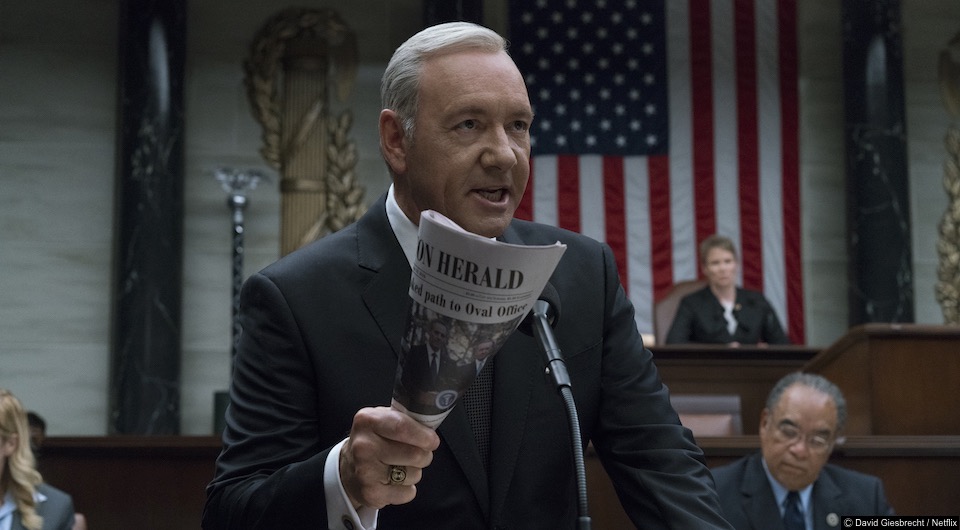
    Arguably one of Kevin Spacey’s most famous roles, Frank Underwood has been effectively killed off on the Netflix hit, House Of Cards, but how did they write him out?

    How did House Of Cards kill off Frank Underwood?
    House Of Cards

    Disgraced actor, Kevin Spacey has left House Of Cards and along his department goes the ultimate anti-hero, Frank Underwood. It’s impossible to think that the show could continue without the conniving, backstabbing, pure genius evil that was President Underwood, but the writers of one Netflix’s most important shows, House Of Cards have come up with a story.

    Now the production team at House Of Cards have remained tight-lipped about the demise of Frank Underwood, so we won’t be able to reveal how they managed to write out the character, but come the 2nd of November all will be revealed.

    However, at the end of Season 5, Frank Underwood suddenly resigns with Claire Underwood being sworn in as the new President, and she is extremely peed with Frank for not running his resignation through her. What’s more, Frank needs to be pardoned by the new President for crimes committed during his premiership, but Claire is not answering her phone.

    The last scene focusing on Claire Underwood who has become the new President, saying rather chillingly, “My turn”.

    So what happens to Frank? Is he killed off, is he written out, what’s the cause of his demise? We’ll have to wait until the 2nd November 2018, when the new series lands on Netflix.


  • MOTORING REVIEW | Volkswagen T-Roc Design 1.5

    MOTORING REVIEW | Volkswagen T-Roc Design 1.5

    ★★★★☆ | Volkswagen T-Roc Design

    My Second Coming With The T-Roc

    What Have We Got?

    Volkswagen’s T-Roc was launched last year and TGUK were there to test some of the first in the country. This time we are giving the Design 1.5 TSi DSG automatic for a week and I reflect if it was fair of me to give it 3 stars.

    Driving

    I complained about the front wheels ‘tramping’ when pulling away from a junction and even with the DSG gearbox, it still does. The 1.5 EVO engine is a joy to have and responds quickly to all inputs from the throttle with no noticeable lag. Even the DSG box responds quickly. 

    And this all helps to make the T-Roc a really nice place to be. The suspension comes with the usual set-ups of Eco to Sport while the ‘Individual’ setting allows you to select the best of the pre-sets to suit your requirements and this is always welcomed by me. 

    The trick up T-Roc’s sleeve is the ability to select sport or manual in the gearbox very quickly. You are not left high and dry when you need to get a move on!

    You do have to be careful though with the throttle pedal. From standstill in traffic, it can propel the T-Roc forward quickly and at neck breaking force. Once you get used to it, it’s not really a problem. It’s just not what you expect from a car that doesn’t wear a GTi badge.

    Inside

    It is as you would expect from Volkswagen and that is well screwed together and functional. The choices of trim on this ‘Design’ model are zesty with a nice touch of body colour on the dashboard and in the seat trims. 

    I have only one real criticism here and it seems to be my usual moan about VW. The rear door cards are dull. On this model, the front doors are treated to colour coded inserts with neon illuminations. The rear passengers are again subjected to nothing but darkness. 

    Living With It

    From almost all angles, it is a good looking vehicle. It’s also very easy to live with. The boot is generous with a split level load floor though heavy items will cause an issue thanks to the high load sill because it is an SUV.

    It’s also not really suitable as a 5 seater. The centre seat occupant has to contend with a big transmission tunnel and a raised seat cushion resulting in reduced headroom.

    The Verdict

    I was wrong. It’s more than a 3-star car. It’s not perfect and there are a few things VW could do to make it even better. If it was my money that was paying for it, I’d pay it. The T-Roc proved to be comfortable, relaxing and fast enough when I needed it to be. 

    I still find it difficult to accept that VW predicts the 1 litre to be the better seller. The 1.5 does it all so much better. It also comes with a host of goodies that you’d expect at this price and for that, I actually can’t complain. Much.


    Love

    Good looks

    Relaxed ride

    Driver conveniences 

    Loathe

    Front wheel tramping

    Lack of illuminations for the rear passengers

    Hard seat cushions

    The Lowdown

    Car –  Volkswagen T-Roc Design 1.5 TSI DSG 

    Price – £29,690 (as tested)

    MPG – 33.5 (combined)

    Power – 150hp

    0-62mph – 8.4 seconds

    Top Speed –  127 mph

    Co2 – 119 (g/km)

    All photos (C) Stuart Bird

  • Tim Cook: being gay ‘is God’s greatest gift to me’

    Tim Cook: being gay ‘is God’s greatest gift to me’

    Apple CEO has revealed that he believes that being gay is a gift from God.

    (C) CNN

    In an exclusive interview with CNN’s Christiane Amanpour, Apple CEO Tim Cook discussed why he chose to come out as gay as well as the Trump Presidency’s policies on taxes, trade with China and immigration.

    During the interview, Cook says he came out publicly as gay after receiving letters from kids who “going through being bullied, being pushed out of their homes, very close to suicide”.

    Cook goes on to say, coming out as gay has been “God’s greatest gift” to him as it has given him empathy towards those not in the majority.

    He added, “My strong view is that everyone should be treated with respect… I became public because I started to receive letters from kids who read online that I was gay and they were going through being bullied, being pushed out of their homes, very close to suicide, things that really just pulled my heart and I started thinking I’m a private person and I’ve kept me to my small circle and I started thinking that is a selfish thing to do. I need to be bigger than that, I need to do something for them and show them that you can be gay and still go on and do some good jobs in life… to me, it’s God’s greatest gift because in doing so, I learnt what it was like to be a minority which gives you a feeling of empathy for other people who are not in the majority and you begin to look at life a bit differently.”

    Read the full article over at CNN

  • The top 15 scariest horror movie characters revealed

    The top 15 scariest horror movie characters revealed

    Hannibal Lecter, Pennywise the clown and Halloween‘s Michael Myers have emerged among a list of cinematic figures who terrified us when they first graced the silver screen.

    Republica / Pixabay

    A study into the most frightening films and figures ever revealed the star of The Silence of the Lambs, Hannibal Lecter, is the villain who sends the most chills down our spines.

    A Nightmare on Elm Street nasty Freddy Krueger took second place in the scare stakes, followed by Pennywise the clown, the shape-shifting star of the film It.

    Michael Myers, the masked serial killer from the Halloween series, appeared in sixth position, ahead of horror staple Count Dracula and Stephen King’s iconic madman Jack Torrance from The Shining.

    Nic Ravery, screen content analyst, said: “Horror has been part of movie history since the beginning of cinema, and these movies have fascinated generations of cinema-goers from the start because of their power to unlock primal fears within us.

    “These films continue to be as enjoyable and memorable today – even more so when every spine-tingling moment is in 4K.

    “For those feeling extra brave, Vue is bringing the original John Carpenter’s Halloween back to the big screen to celebrate its 40th Anniversary on the 31st October while the new Halloween is now screening nationwide”.

    According to Brits, the top factor which makes a great horror movie villain is the idea they could be anywhere at any time – even right behind you at the cinema.

    Forty per cent of Brits have watched a movie so frightening they have never been able to work up the nerve to view it ever again.

    One in four of those surveyed have only been able to stomach a single viewing of The Exorcist, and one in seven allowed themselves one watch of The Texas Chainsaw Massacre before locking the film away forever.

    OpenClipart-Vectors / Pixabay

    Thirty per cent of viewers would describe themselves as ‘jumpers’ when the tension begins to ramp up in a horror film, ready to leap up at any time.

    And one in seven believe they are impossible to scare, no matter what a chiller throws at them. One in four feel reassured when they watch a scary film at the cinema because there are lots of people around them to keep them safe from any nastiness reaching out from the screen.

    And almost half enjoy seeing the rest of the cinema react to the thrills and chills. *

    Book tickets to see Halloween at your local Vue now and tickets to the special 40th Anniversary screening of Halloween on 31st October at www.myvue.com.

    TOP 15 SCARIEST HORROR MOVIE CHARACTERS
    1. Hannibal Lecter (The Silence of the Lambs)
    2. Freddy Krueger (A Nightmare on Elm Street)
    3. Pennywise the Clown (It)
    4. Leatherface (The Texas Chainsaw Massacre)
    5. Jigsaw (Saw)
    6. Michael Myers (Halloween)
    7. Count Dracula
    8. Jack Torrance (The Shining)
    9. Samara (The Ring)
    10. The Xenomorph (Alien)
    11. The Thing (The Thing)
    12. Jason Vorhees (Friday the 13th)
    13. Frankenstein’s Monster
    14. Pinhead (Hellraiser)
    15. Ghostface (Scream)


    Words: by Grant Bailey

  • THEATRE REVIEW | The Inheritance, Noël Coward Theatre, London

    ★★★★☆ | The Inheritance

    (C) MARK BRENNER

    Following a sold out and critically acclaimed run at the Young Vic theatre earlier this year, The Inheritance is back in a bigger venue with it’s still very long running time but with a cast who act their trousers off – literally.

    The Inheritance, to sum up its 6 hour and 45 minutes two-parter running time, is the story of a group of young gay men living in present-day New York City – a generation after the peak of the AIDS plague.

    These young men don’t really know what the previous generation before them went through; the suffering, the denials, the losses oh boy the losses. Seeing grown men withering away to nothing – one day at the gym and the next month dead, or disappeared and never to be seen again. Men, who were in their prime, who should’ve been living life to the fullest, all dying rapidly. The survivors buried and mourned, but mourning was a short-term process as it was time again to take care of someone else who was dying, and the cycle repeated itself. Yes, this was the reality of living as a gay man in New York City in the 1980s and early 1990s. The Inheritance overlays the gay generation of today with the gay generation of that time and weaves its story via a main central character.

    An amazing Kyle Soller (where did they find him?) is Eric Glass, happily living with his boyfriend of seven years Toby (Andrew Burnap) in a rent-controlled apartment on Manhattan’s Upper West Side. Also living in the same building is the older, and wiser Walter (Paul Hilton), who lives upstairs with his very rich but never home long-term partner Henry Wilcox (John Benjamin Hickey). Toby is a playwright who is in the middle of writing a play. One day he accidentally picks up the wrong bag at a bookstore and heads home, but is followed by the young and attractive Adam (Samuel H. Levine), the bag’s owner. After they exchange bags, Adam tells Toby that he is an actor – coincidentally. While Toby’s new script gets more and more attention (as does his new-found friendship with Adam), Eric is enjoying the time that he spends with Walter. Eric learns a lot from him, but also, and most important, is that Walter fondly, and longingly, reminisces about his house in upstate New York, a home that is very special to him and which turns out to be very special to others, which we learn more about at the very end of the first half.

    Fast forward and it is Adam who gets to play the lead role, and becomes a star, in Toby’s new play, while Eric and Toby’s relationship becomes fragile and doesn’t last; and surprisingly, after Walters passing, Eric follows his heart and marries Henry after very brief courtship that did not include sex. But Henry’s two sons strongly don’t want Eric to get any of Walter’s possessions, including the house which Walter actually bequeathed to Eric.

    The Inheritance author Matthew Lopez takes E.M. Forster’s gay novel Howard’s End and somehow blends it into this tale of gay men, a tale that, well, most gay men can relate to, whether young or old. Lopez uses a character by the name of Morgan (Hilton) – substituting him for Forster, to help with the narrative of the play. Was this really necessary? Personally, I don’t think so. The characters, all of whom when not on the raised center stage platform hang around on the edge, don’t really need this unnecessary plot device to help the story along. I wanted them just to get on with it. At times Morgan walks into the story to help it along, but I don’t think this works.

    The story of The Inheritance is strong enough (the meaning of The Inheritance is the passing of HIV from one man to another), and without the narrative 30 minutes could’ve been shaved 30 off. It’s an extremely powerful story, more powerful to some of us who actually lived in big cities in the 1980s and early 1990s and whom were affected, effected and infected by HIV and AIDS. But I actually dreaded (and looked forward to at the same time) spending a whole day at the theatre – it’s quite a long show to get through, and I could tell the friend I had invited to join me in this perhaps once in a lifetime experience didn’t want to stay for the last third of the second part (yes, there are three parts in part 1 and part 2). But the third part in part 3 pays dividends – the legend that is Vanessa Redgrave comes out in a powerful scene to help wrap up the story in an emotional, and very strong, performance.

    And this is what The Inheritance gives us – direction with ease and conviction by Stephen Daldry, very strong performances, an emotional and unforgettable experience, and a perhaps an all too real story. And would I recommend it? Yes, I would – both parts.

    The Inheritance is playing at the NOËL COWARD THEATRE until  January 19, 2019. Book Now.

  • Protesters at the Bohemian Rhapsody over cuts in the NHS

    Protesters at the Bohemian Rhapsody over cuts in the NHS

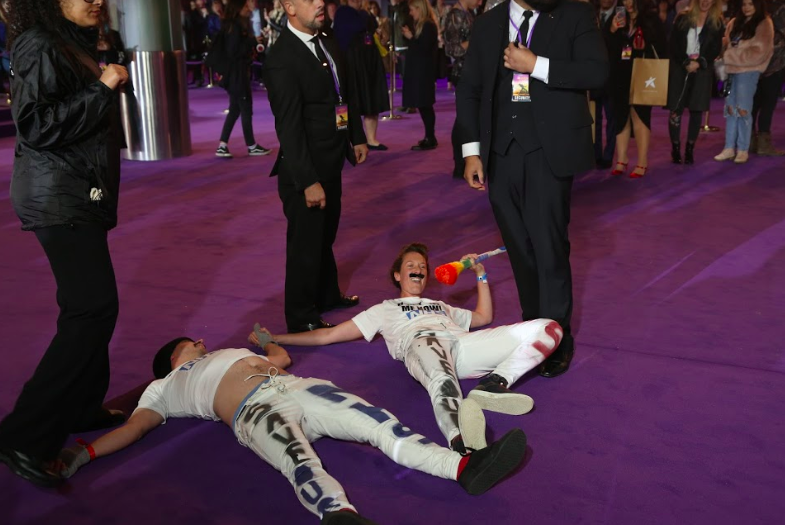
    Protesters from ACT UP and the NHS Anti-Swindle Team have protested at the Bohemian Rhapsody premier today

    (C) Levi Hinds

    Protesters from two pressure groups have disrupted the Bohemian Rhapsody launch calling for HIV treatment that is “comprehensive and easily accessible treatment for all people, in all countries”.

    The film, which features Rami Malek as Freddie Mercury has also attracted criticism for its “pacification and sanitisation” of the singer’s life. Freddie Mercury died in 1991 from complications from AIDS just days after he announced that he was living with the disease.

    The film and particularly the trailer has received a great deal of attention for its meagre perception of the huge contribution that sexuality, the AIDS crisis and the stigma associated had on Freddie Mercury’s life.

    Speaking about the decision to protest, Hywel ap Dafydd said, “Queen was the soundtrack of my childhood. Freddie died when I was twelve, it was the first time I heard of AIDS and HIV.

    “I’ve been living with HIV for the past eight years thanks to medication that came too late to safe Freddie and the millions of people who died because of AIDS.

    “There’s a drug called PrEP which stops people from catching HIV but the NHS rations it so not everyone who needs it can get it. “It’s disgraceful that the NHS denies people this opportunity that neither I nor Freddie had.”

    Jeremy Goldstein from ACT UP LONDON said, “Freddie ‘Killer Queen’ Mercury was a migrant who died from AIDS and today HIV+ migrants are some of the most oppressed in the HIV / AIDS community. We are here today to highlight the ongoing crisis. Farrokh Bulsara was professionally known as Freddie Mercury was born in Zanzibar in 1946. The son of Parsis, he spent most of his childhood at boarding school in India. At seventeen he and his family became refugees fleeing from the Zanzibar revolution. After an epic career with Queen Freddie sadly died in 1991 his home in Kensington the day after he publicly announced he was living with HIV. We demand that all HIV+ migrants are treated with upmost dignity, that HIV services stop being closed down and an end to all illegal detention of HIV+ migrants.”

    (C) Levi Hinds

    “Greedy pharmaceutical”

    Han Smith from ACT UP LONDON said, “Much has changed since then but our sexual health is still under pressure. Due to price gouging by greedy pharmaceutical companies, our NHS rations access to new medication for Hep C and HIV while yet another sexual health service bites the dust. We want access to HIV and Hep C drugs for all. We want stigma education for all. We want sexual health clinics for all. We want it all and we want it now.”

    Kenza Simon from  ACT UP LONDON added, “I am eighteen and I am involved in Act Up London because it is very important for me to fight for our rights. As an LGBT woman who was born in a century where AIDS medicine is more accessible for people, I feel lucky but I realise that we still have a lot to do even in 2018. Our aims changed, AIDS not. This is the reason why I want to be dedicated to this struggle. Activism change the world, let’s do this.”

    Four decades on and we’re still fighting

    dan glass, ACT UP reminded us, “In the fourth decade of this crisis, ACT UP LONDON fight to ensure comprehensive and easily accessible treatment for all people, in all countries.  This includes not only medications but also mental and social health services as well as housing and economic equality. Here in the UK, we are united with the coalition of activists fighting to keep our National Health Service free, publicly run, and fully funded. In a time of continuing stigma, silence, and isolation, we combat discrimination against and promote the visibility and leadership of those living with HIV and AIDS – including this hugely important biography of our icon Freddie Mercury.”