Search results for: “ ”

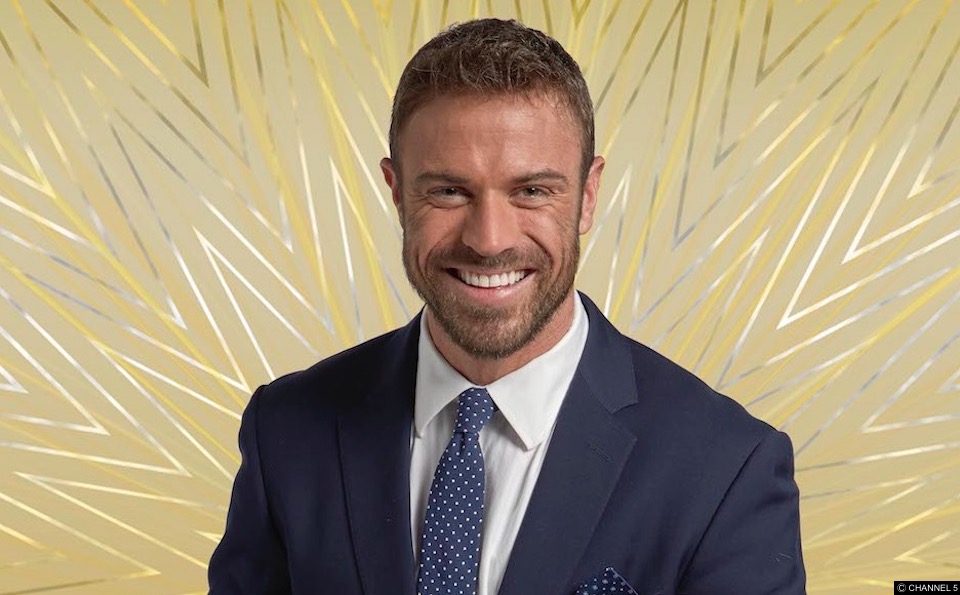
  • CBB star Chad Johnson gets his lob on!

    Chad Johnson put on a bit of a show for the camera the other night after housemate Sarah Harding rubbed him up the right way!

    Chad Johnson’s Johnson was getting a partial airing as he got intimate with Girls Aloud singer Sarah Harding.

    The pair were canoodling, after the rest of their housemates were in ZZZ land – and the loved up pair started groping above the sheets before Chad, 30, thought better and covered them both up – but not before he got a good ole peen massage from Sarah!


  • What time is easyJet: Inside The Cockpit on ITV tonight?

    A brand new series for ITV finishes tonight, easyJet: Inside The Cockpit airs on ITV at 9:00 PM, Mon 21 Aug

    What time is easyJet: Inside The Cockpit on ITV?

    The last of two episodes of easyJet: Inside the Cockpit airs Mon 21 Aug at 9.00 PM.
    easyJet: Inside the Cockpit
    Last year British people took more flights than ever before, and with air travel increasing there’s now a worldwide shortage of pilots.
    This year easyJet, the UK’s biggest airline, launched its largest ever pilot recruitment drive including a focus on encouraging more women to apply for this career in which females currently make up only three per cent of pilots worldwide.
    This two-part primetime series opens the door into the cockpit to follow rookie pilots as they take their first steps from the flight school classroom into the flight simulator, and on to flying large jets with hundreds of passengers on board.
    This week, freshly-qualified 20-year-old Ryan Clyde lands for the first time in the dark in Paris with passengers on board – with the added complication that one of them has never flown before, and is extremely nervous.
    Meanwhile, cadet Sophie Trunan learns how to deal with G-forces, and the firm’s training captains jet off to France to showcase their skills to seven fledgling pilots.
    Becoming a pilot involves dedication and determination and the trainees come from every walk of life. But does the reality live up to the dream of flying high?
    easyJet: Inside the Cockpit airs  21 Aug 2017, at 9:00 PM on ITV
  • TRAVEL | 25 Hours in Berlin

    When the 25 Hours Hotel opened in the City West of Berlin, it added a note of culture, nature and cosmopolitan all under the roof of what used to be a 1950’s grotty industrial office building.

    I could probably count on one hand the number of fun hotels that I’ve stayed at and this is definitely one of them. The hotel is neighbours with the iconic Berlin Zoo and so the theme of being in a jungle is carefully distinct especially with a personal hammock in your room to crafty spaces to lounge, dine and drink. Since the cocktail scene in Berlin has taken off and caught up in the growing desire for craft drinks and an obsession with rooftop bars, this hotel plays host to the popular Monkey Bar and Neni Restaurant – both positioned on the 10th floor with 360-degree panoramic views of bustling Berlin.

    Along with my guest, we are often suspicious of hotel restaurants and long lines of people waiting to gain entry into any bar however whilst dining at Neni with one of South Australia’s renowned food bloggers our doubts rapidly melted away into the leafy surroundings and heavenly balagan style dishes. After dinner which was showered with dramatic views and superb service we cut across the corridor and entered the Monkey Bar where we immediately noticed why the line to get into this celebrated bar was impressive – even on a random Tuesday night.

    When you eventually pull yourself away from the hotel you can adventurously explore Berlin with one of the hotel’s bikes or even one of their Minis (yep this is one of the impressive perks for guests). Make your way to the former East and weave through the updated streets until you arrive at the Hackesche Höfe.

    Once you have worked up an appetite the simply named Hackesche Hof Restaurant & Café is one of the areas favoured dining spots where a feast of people watching and exceptional food and drink are served. This restaurant has some impressive photos of the area which makes a dining experience here quite classical. Also nestled in this courtyard area is The Chämaleon Theater a unique theatre stylishly set in an art nouveau ballroom where cabaret style seating allows guests to eat and drink during performances. Hosting the latest contemporary circus creations such as the charismatic Scotch & Soda, described as a whiskey-fuelled circus party accompanied by live music.  The Chämaleon Theater continues to break all language barriers by welcoming the arrival of the forthcoming show Parade where acrobatics meet multimedia.

    British Airways conveniently has a direct route from London City airport to Berlin Tegel, however, be warned with all the monkey business in Berlin you will need more than 25 hours in this whimsical city.


  • Six Ways to Stamp Out Homophobia in the Workplace

    Looking at the stats, it’s clear that homophobia in the workplace is still a problem – and one that many of us will have encountered.

    One in five LGBT+ people have experienced bullying from colleagues or customers in the past five years, one in five wouldn’t feel confident reporting homophobic bullying in the workplace, and in the UK, 2.4 million people of working age said that they had witnessed verbal homophobic bullying at work. Adding to that,  a massive 26 percent of LGBT+ people are not open to their colleagues about their sexual orientation – so in this age where we have rights that are verging on equal, something’s clearly amiss. In fact, The Human Rights Campaign – a US lobby group, found that a huge 62 percent of millennial LGBT+ graduates went back into the closet when starting their first job – something I was guilty of, and something that can get the careers of LGBT+ people off to an uncomfortable and unpleasant start.

    That in mind, we’ve put together a list of 6 Ways to tackle homophobia in the workplace. Given that most of us are spending 40+ plus hours a week there, it’s more important than ever that the workplace is somewhere LGBT+ people can feel free to be themselves and to contribute openly and equally to the working world.

    1. Know Your Rights

    Homophobic discrimination and harassment is illegal – and has been since 2003. There’s no doubt that a lot of people don’t see their comments as discriminatory or harassing, but if you encounter homophobic abuse, tell someone – speak to your manager or, if they’re the problem, speak to the HR team or someone you trust higher up in the company. Awareness is important – and if they know it’s a problem then chances are training can be put in place to make sure that this doesn’t happen again, either to you or your future colleagues. If you’ve left a job due to discrimination or harassment, then speak to your local Citizen’s Advice – they can offer advice on what to do next, and whilst legal action may be the last thing on your mind, they can advise if they think it something worth pursuing.

    2. Be Open

    By being open I don’t mean arriving for your first day at work riding a rainbow unicycle and singing “I Am What I Am”, but more being yourself in the workplace and taking part in conversations with your colleagues in a way that you’re relaxed with. There’s always going to be questions about your home life when you’re new to a job – and it’s only going to be easier for you if you’re open from the off. That fear of coming out is often far worse than the result – and given that it’s likely you’ll already have done it once, expressing that to your colleagues in a manner of fact way should hopefully be a walk in the park

    3. Deal with Banter

    A macho work culture can be fun at times – but it can also be damaging for those who don’t fit into that stereotype. Much like at school, offensive phrases are often flung around with little malicious intent behind them, but they’re still symbolic of a culture that needs to change. Be straight with people – if you don’t like a comment or phrase, have a direct word with them. Most people will respect that, and if they don’t, your manager or HR partner should be able to advise further, and potentially play a role in re-educating your colleague. Cultures like this can only be changed by raising awareness – so it’s important to say something if you’re not altogether happy.

    4. Explaining the benefits

    Being comfortable and secure in the workplace isn’t just something that will make you feel better – it’s been proven that being able to be yourself in the workplace can hugely increase productivity. It could be worth mentioning this if you feel like you’re feeling homophobia in the workplace, as companies will want the best possible work from their employees, and stamping out homophobia will go a long way to ensure that. Adding to that, companies with diverse workforces can attract a wider range of customers, as well as improving ideas and drive by being full of contrasting and complementary backgrounds, experiences and situations. Making the workplace more colourful can only be a good thing – bosses should be selling and celebrating the diversity of their employees.

    5. Don’t be Alone

    The community can be a big part of gay life – and the workplace is no different. It can all depend on the size of your company, but there’s a strong chance that someone else there will be LGBT+. Like straight media often assumes, being gay doesn’t mean that you’re immediately going to be best friends or lovers, but having shared experiences in the workplace can help. If there’s enough of you, you can look at starting up an LGBT+ network. I’ve attempted to do this in the past and found that there’s a lot of help available out there – including many straight allies who were immensely encouraging. Even if your LGBT+ network just goes for a monthly drink in the pub together, it can be a huge source of support for those inside the group, as well as providing vital visibility for those on the outside.

    6. Change the Culture

    Sounds like a big ask – but encouraging training and education in the workplace can make a huge difference. Corporate Social Responsibility is becoming a huge thing for many companies – and ensuring that LGBT+ visibility and training is part of this channel is vital. Speak to HR and see if there is a “CSR” manager or advocate in the company who you can chat to about training – these things not only benefit companies hugely but also, it’s worth pointing out, can serve as excellent PR. If there’s no CSR person or no training plan available, why not write some yourself? The stats are easily found out there, and organisations like Stonewall (linked at the top) provide fascinating and relevant information on LGBT+ people in the workplace. It’s something I’ve done it in the past – and it was an eye-opener not just for my colleagues, but for me as well – so it’s worth putting the time and effort in – not only can it help stamp out homophobia, but showing a sense or proactivity can in the workplace can only ever be a positive thing.

    The most important thing to remember is that if you’re experiencing homophobia in the workplace you’re not alone and that you have every right to feel happy and secure in every area of your life. If you feel like change isn’t happening, then don’t stay in a job that makes you unhappy – but make sure your bosses know exactly why you’re going. Visibility is vital – these problems only make themselves known when we’re open and honest about them, and use them to drive change forwards in order to make the workplace open, accessible and safe for all.

  • LGBT+ films to be shown in Delhi at Miranda House

    India’s first traveling campus LGBT+ film festival ‘ KASHISH Forward’ and Sridhar Rangayan’s ‘Purple Skies’ will screen at Miranda House in Delhi University, to raise awareness about LGBT+ issues

    After travelling to 13 cities with 16 screenings, KASHISH Forward now travels to New Delhi to screen at Miranda House, University of Delhi on August 25th from 11.30am to 4.00pm. The event which is open to all will screen 7 LGBT+ films focused on youth and their issues like gender identity, coming out and family acceptance.

    The event will also screen Sridhar Rangayan’s acclaimed documentary film on LBT (lesbians, bisexuals and transmen) ‘Purple Skies’, produced by PSBT India and Solaris Pictures. This was the first lesbian themed film to receive a U certificate from the censor board and also was telecast on Doordarshan.

    “Lesbians and bisexual women face double discrimination – as same-sex loving persons and as women – and have a tougher time negotiating for their rights in Indian society. There has to be a move to make LBT community more visible and their concerns heard loud”, said Sridhar Rangayan, director of the film and festival director of KASHISH,

    “It is important to start dialogue at college level with young minds”, he added.

    The event, organised by the Women’s Development Cell of Miranda House and KASHISH Arts Foundation, the parent body of KASHISH MIQFF in association with Queer India Support and Movies That Matter (Netherlands).

    “We at Miranda House believe in creating inclusive, safe and brave space where diversity is accepted and equitable access between all individuals is normative”, said Aishwarya Unnikrishnan, President of Women’s Development Cell, Miranda House whose motto is “Together We Rise”, aiming to forge solidarity with different movements happening across the globe to anchor beyond the binaries.

    Queer India Support is a new initiative that essentially aims to be the first line of support for LGBT+ individuals and their allies and a platform that surpasses geographical constraints with the digital medium.

    “We are happy to bridge the gap between such compelling film screenings and the campuses. Hope this contributes to the sensitization of the students and becomes a step in building a more inclusive society”, said Harsh Aggarwal, Founder of Queer India Support, which aims to be the first line of support for queer individuals and their allies.

    The films to be screened at the event are Keep Your Head Up from Ireland, Amar: Deaf Is An Identity and Scarlines from Canada, No Matter Who  from France,  To Mum (Love Me) from Singapore, and All About Love and My Child Is Gay, I Am Happy from India

  • Read Khakan Qureshi’s amazing Warwickshire Pride speech

    Khakan Qureshi was one of Warwickshire Pride’s key speakers… Read his epic speech about being gay, Muslim and dealing with division.

    Being LGBT isn’t about one-upmanship“my oppression is worse than yours”

    No. Being LGBT and holding the flag is about being able to connect with others, understand each other’s struggles regardless of colour, creed or class and not say I’m  as Good As You but say I’m the SAME as you meaning:

    We Are All Human.

    I might look like a politician, but you can be assured I’m not! 

    I was invited to speak at this event as there was a lack of diversity and the organisers wanted persons from minority ethnic backgrounds. They couldn’t get Rupaul so here I am !”

    In the UK, we commemorate 50 years since the partial decriminalisation of homosexuality. Long gone are the days when many LGBT were in the closet, discreetly knocking on doors, and entering clubs and bars which were underground and only known to the LGBT community. 50 years of challenging the status quo has brought changes and in recent years we have civil partnerships, the right to adopt and foster and equal marriage.

    We talk about diversity and representation but there is also division and derision.

    On the peripheral looking in, the sense of being different can lead to isolation and in my case, it provided me with a different world view.

    In the mainstream, I was too Asian.

    Within the South Asian community, not Asian enough. 

    I didn’t present to the world a confident young man. 

    I was shy, quiet, an introvert. I didn’t fit in with the gender stereotypes like my brothers and peers, who displayed outward signs of being very much heterosexual men – confident, ambitious, competitive, sporty. 

    Whilst I felt more comfortable at home with my mother and sisters, watching TV, helping them cook and clean, offering them style tips on dress and makeup.

    The more apparent forms of homophobia, although I didn’t recognise it as such at the time, and discrimination came from my brothers who would mock and ridicule, my voice, my mannerisms and my close relationships with the females in the household.

    Later, as I shied away from them, I created my own make-believe world in which they didn’t exist. 

    Unfortunately for me, the bullying didn’t just stop with them. It would sometimes rear its ugly head at school. But again, I was protected by female companions and teachers who realised I was different in the sense I was very creative and could express myself very well in the written word. I daren’t speak up too often, especially after having years of torment from my brothers, brothers in law and peers, about how I spoke or sounded which made feel too embarrassed about my voice. 

    When I spoke up at school, it led to all forms of humiliation and name calling. It identified me as “queer, sissy, gay, batty boy” in amongst other name calling such as “Paki, brown boy, coconut “ and variations on how to pronounce my name –

    Being Muslim and gay, you don’t just deal with coming to terms with it. There’s the cultural oppression and religious guilt to contend with.

    But I was fortunate.

    When I came out, aged 22 to my mum 26 years ago, she said whatever makes you happy makes me happy. 

    And my happiness stems from being in an interracial relationship of 26 years. 

    But in recent years, with the rise of homophobia, bi-phobia, transphobia and Islamophobia, it makes me wonder how far we, as an LGBT community, have really come?

    As a South Asian Muslim gay man, I thought I was part of the LGBT community and found more labels – “curry queen, otters, chapatti queen, bears, rice queen, twinks, daddies” etc. 

    We don’t want our lives and identity defined by labels. 

    I don’t want to be boxed in because of the colour of my skin, my religiosity, my age, my relationships, my sexual orientation. I want to be allowed to be me, burst out of that box and say to the world I am what I am. 

    Religion appears to oppress the LGBT community.

    Being LGBT isn’t about one-upmanship “my oppression is worse than yours” or “Muslims persecute gays, therefore, being white LGBT gives you higher privileges”. 

    No. Being LGBT and holding the flag is about being able to connect with others, understand each other’s struggles regardless of colour, creed or class and not say I’m  as Good As You but say I’m  the SAME as you meaning We Are All Human. 

    Being LGBT, being human means reaching out and overcoming obstacles and difficulties, offering support and understanding, demonstrating compassion and delivering words which say I am with you all the way. 

    We are continually looking outside when we really need to look on the inside and face reality.  

    We are LGBT and your truth is not the same as mine. 

    What I do know is that we need to navigate our own lives in the here and now, be mindful of our circumstances and safety, and not look to what others say or all the yesterdays. 

    Martin Luther King said, “Let us not seek to satisfy our thirst for freedom by drinking from the cup of bitterness and hatred” 

    Acknowledge the past as we can’t change history, try and live for today as we don’t know what tomorrow will bring. 

    Whilst we are trying to be citizens of the world, let’s try and educate and inform others about the A-Z of identities to make future generations more understanding and accepting.
  • CAR REVIEW | Citroen DS 5 Blue HDi 180 auto Prestige

    I am in a bit of a pickle. I’ve spent a week with Citroen’s DS flagship brand and its 5. The problem I have is I am not sure if it is trying to be an MPV or a hatchback or somewhere in between.

    CAR REVIEW | Citroen DS 5 Blue HDi 180 auto Prestige

    It took me around 13 miles to feel comfortable in it. The driving position options are vast as you would expect with electronic memory driver seat with massage facility. The steering wheel alters for rake and reach. It’s just where do you position yourself in a car that has a high waistline and low windows? So 13 miles in I found it. Where it felt comfortable.

    I altered that three days later and soon found it best to sit just a little bit higher. If anything it’s the dashboard that makes it awkward at first. It’s huge! So big in fact that there are side windows between the windscreen post and door frame.

    It’s a nice place to be in. The French have a history of reinventing the dashboard of cars. Sadly no one else follows but to hell with it, this is Citroen. In an age were fascias are all becoming as similar as the outside, it is nice to know the DS 5 does it differently.

    For a start, there is a clock with hands just above the start button. Next to it on the infotainment screen is a digital clock. The clock itself is an optical illusion. Tall and narrow in shape and yet it always looks like the arms are going to get stuck around the 3 and 9. It’s a little bit of old in a lot of new.

    Some design bits don’t quite fit at first. The red digital parts conflict with the white printed parts and then there is the digital speedometer read out below the normal speedometer. It gives you many options all at once and not to good effect. You soon forget all this and forgive it because you’re soon too busy hunting for the window switches.

    DS 5 comes with the usual infotainment system that carries a tradition of annoying me with its grey over black on the satnav screen at night. Thankfully this can be changed. What can’t sadly is the pedantic way the finger touch inputs work. The screen is too flat and too far away to be really handy and this is amplified by the fact you need to touch the coloured logo spot on to get the phone system to display a text message that then needs further fingering to get it to read it out. It’s as distracting as using your phone by hand. Something we do not endorse so on a personal note this is a failure.

    The interior door panelling is finely sculptured as you’d expect in DS. Red lights highlight the door handle and cup holder. There is no apparatus on the doors. This works well. It means you keep your right hand on the wheel at all times. Remember I said about hunting for the window switches, they are found on the central tunnel in finely sculptured buttons. It’s all a break from the norm and I am starting to like it.

    If I can be blunt the inside is what Saab should have been doing. The cockpit is a mixture of automobile and aircraft. There is even a roof tunnel between the front glass panels for glasses and switches for the sun blinds. Opened and it makes the cabin feel light and airy. Rear seat passengers will also feel happy in the DS5. They will moan however at the window switches. In keeping them clutter free like the rears, they placed the window switches in the centre between the front seats. Nothing bad except 2 things, they are too far away for easy reach and they work upside-down. Down is up and up is down!

    Outside also has its mix of good and bad. Sadly in black, you can’t see the fine details unless up close. What is now missing is the absence of the Citroen chevrons. DS is now a stand alone product. So it manages to retain some Gallic charms and being outside of the double chevron is probably why it has been allowed to grow to an in between car of hatchback MPV and be so very different from anything the PSA company has to offer.

    The headlights are a nice place to start in terms of design. They are some 21” in total length. At night time the outer edge is illuminated in a brilliant white while inside that keep you focused with their steering ability. The headlights themselves blend seamlessly into the front wings and screen posts with an abundance of chrome. It’s all very showy. The side profile again is an awkward blend of 2 cars fighting for the same place.

    The ride and drive are ok. It suffers from some turbo lag as most diesels do but it isn’t annoying to get going. The Blue HDi 180 turbo diesel engine is quick off the mark though thwarted by traction control. It reminds you that this isn’t a sports car so don’t even try it. As a comfy cruiser, it is best but the ride is somewhat lost on surfaces where there are joins. It doesn’t crash over pot holes but irregularities do cause it to jolt around a tad when normally it is well behaved. It can be hustled but you will need to get used to its ways. When really pushed it will roll like a classic Citroen of the 70s and it will understeer with no attempt at scrubbing off speed when you let go of the throttle. Thankfully the chassis is more than capable and oversteer isn’t ever going to be a thing to worry about. To get the best out of it I found using the auto box as a manual. In auto, it just sometimes got a bit confused. In manual, it worked a treat and if you got too excited and carried away, it would change up regardless. The tactile contours of the gear stick made manual changes a joy. It felt very sensual and its response to inputs was quick.

    There is a lot to recommend about the DS 5 and certainly more-so if you are in the market for something that will stand out from the normal fleet cars found in the company carpark. You’ll win no prizes from management for stepping out against the crowd but to someone like me, you will be a hero. I like different.

    Love

    Subtle stand out from the crowd car
    Cabin design
    Solid feel

    Loathe

    Fiddly infotainment system
    Very black materials used inside
    Awkward switchgear

    The Lowdown
    Car – Citroen DS 5 Blue HDi 180 auto Prestige
    Price – £35,590 (as tested)
    MPG – 62.8mpg (combined)
    Power – 0-62mph – 9.2 seconds
    Top Speed – 137 mph
    Co2 – 117 (g/km)

  • Journalist Liz MacKean dies aged 52

    The award winning journalist who unveiled the sheer hate towards gay people in Russia and Africa has died at the age of 52.

    Liz MacKean was a veteran journalist who worked for both Channel 4 and BBC. She worked hard to expose the injustices faced by people, including LGBT people suffering absolute hate in Russia and Africa.

    It is reported that she died of a stroke.

    Her shocking Dispatches documentaries Hunted on Channel 4 was a stark view into how hate mobs hunted gay men with dating apps and hook up websites to lure them to beatings and humiliating angry encounters.

    In Gay and Afraid, MacKean’s documentary focused on LGBT persecution in Africa.

    In 2014 she was crowned Journalist of the Year in 2014 and then Journalist of the Decade in 2015 by Stonewall.

    Before working at Channel 4 she worked at the BBC for 20 years, starting at BBC Hereford and Worcester.

    She leaves behind her wife and two children.


  • Who is Jaymi Hensley and what is he famous for?

    He started his career in one of the most successful boy bands to make it out of the X Factor (other than One Direction) but now he’s making it on his own terms.

    Who is Jaymi Hensley and what is he famous for?

    Jaymi Hensley started his career in the X Factor boy band Union J who went on release a number of successful albums. But now he’s trying his hand in reality TV – namely Celebrity MasterChef.

    Is Jaymi Hensley gay?

    Yes, Jaymi does identify as gay and has often spoken out about homophobia. He made tackling online trolling and homophobic a key issue in 2013 saying,

    ‘If someone calls me a derogatory name on Twitter, I challenge it.

    “If I let people call me a ‘fag’, how am I helping fans feel empowered?

    “When I was younger, I used to be called ‘poof’ and ‘fag’ and it made me feel awful – it’s not nice to have abusive words used against you.”

    What else is Jaymi Hensley known for?

    When his bandmate, George Shelley came out, he was one of the first to reach and support the singer. He is also a talented actor – and will be taking the part of Alladin this year in Panto. He is also a frequent contributor to Celebrity Big Brother’s Bit On The Side.

    Is Jaymi married or have a boyfriend?

    Yes, Jaymi has a partner, hair stylist Olly Marmon. They got together in 2009 and they got engaged in 2014.


  • Pride in London slams accuracy of advisory board’s inclusion report

    Pride in London have hit back at the accuracy of the report by the group it created to advise on decisions of inclusion, governance and operational issues.

    A recent report by the Pride In London Community Advisory Board (CAB) has been slammed by officials at Pride In London for not being accurate and disrespectful to the many volunteers who help make the event happen.

    In the report, the CAB suggested that future prides in the capital need to focus on the bisexual, BAME and other marginalised groups amongst other suggestions.

    A spokesperson for PIL said,

    “We deliberately gather feedback from many sources, including our volunteers and the wider community through open meetings, surveys and online reporting.
    “We do not believe the CAB report reflects the majority view nor takes in to account these other sources of data, it is also inaccurate in many places which is disrespectful to the many volunteers that work hard to deliver the event. Their report was not shared with us in advance and therefore we were not able to correct these inaccuracies.
    “We will be looking at each of the points they raise and we have invited them to meet with us.
    “Unfortunately the CAB has suffered from some long standing vacancies (such as a women’s rep), which has adversely affected its ability to provide us with consistently strong and balanced guidance.

    Who are the CAB?

    The Community Advisory Board was established by Pride in London’s owners, London LGBT Community Pride CIC to give it advice on how to improve engagement and to act as a sounding board on difficult or contentious issues.
    The spokesperson for Pride continued,
    “Since the collapse of London’s Pride event in 2012; under community ownership, Pride in London has become one of the world’s largest and most successful Pride events.
    “It remains volunteer-led and free to attend and enjoys strong support from agencies, partners and sponsors. Diversity and inclusion is at the core of all we do, from deciding on acts to perform, to volunteer recruitment but we are not complacent and are always looking at ways to do more.
    “We believe we now have a strong foundation to continue to make progress in improving on diversity and inclusion amongst other issues.
    “Already this year, we were able to represent our community in new ways through our Pride in London Live series reaching millions through social platforms, our largest and most diverse Pride Festival and Parade, and our first ever national TV adverts reaching millions of UK homes.
    “We are also proud to have achieved Silver Accreditation from Attitude is Everything which recognises the standards of accessibility of the main event.
    “We’re looking forward to announcing our vision and plan for the next 5 years of Pride in London.  The LGBTQ+, community will remain at the heart of everything we do and we constantly strive to do better at representing and supporting it.”


  • Who are the Pride In London CAB?

    The Community Advisory Board (CAB) is an organisation established by Pride In London

    The Community Advisory Board was established by Pride in London’s owners, London LGBT Community Pride CIC to give it advice on how to improve engagement and to act as a sounding board on difficult or contentious issues.

    Who is in charge of the CAB?

    The CAB has 19 official positions – of which 12 are filled. There are seven vacant positions including a Women’s Rep and Straight Ally Rep which are new to the board.

    Chair: Adrian Hyyrylainen-Trett
    Deputy Chair and Bisexual People’s Rep: Edward Lord OBE (BiUK)
    Secretariat: Mark Delacour (LGBT Consortium)
    Arts and Literature: Simon Tarrant (Winter Pride UK)
    Black and Minority Ethnic People’s Rep: Ozzy Amir (Queen Mary Students’ Union)
    Campaigning and Political Groups: Open for nominations
    Disabled People’s Rep: Open for nominations
    Faith and Belief Groups: Richard Unwin (Galha LGBT Humanists)
    Health Rep: Open for nominations
    Local Groups Rep: David Robson (Wandsworth LGBT Forum)
    Older People’s Rep: Peter Scott-Presland (Opening Doors London)
    Performers Rep: Dr J (The Queer Embassy)
    Professional Groups: Open for nominations
    Sports Rep: Fabian Valencia (Out for Sport)
    Straight Ally Rep: New position and open for nominations
    Trans* People’s Rep: Megan Faulkner (Trans Network London)
    Young People’s Rep: Lukasz Koniezcka (Mosaic LGBT Youth Centre)
    Women’s Rep: New position and open for nominations
    Open Place Rep: Open for nominations

    What does the CAB consult and advise on?

    Diversity and inclusion at Pride
    Engaging different groups (e.g. trans*, BME) as volunteers, participants and audiences
    Future themes and the purpose of Pride
    Event plans
    Parade design and management
    Festival events and acts
    Diversity and inclusion training
    Financial governance