Woodland area walk off the paths.
Public toilets
•Manscaping- body grooming wax clipper or shave any body area
•Body Scrubs – various scents- can be full / half body
•Massage – body rub combination of lomi lomi , Swedish, Nuru ,Tantra elements gor my on unique style
Currently based in Kemp Town Brighton can travel or host depending
I am Richie , late 30s fit GL openly bi discreet hairy toned London born lad.
What’s app preferred NO CALLS please
07576573984
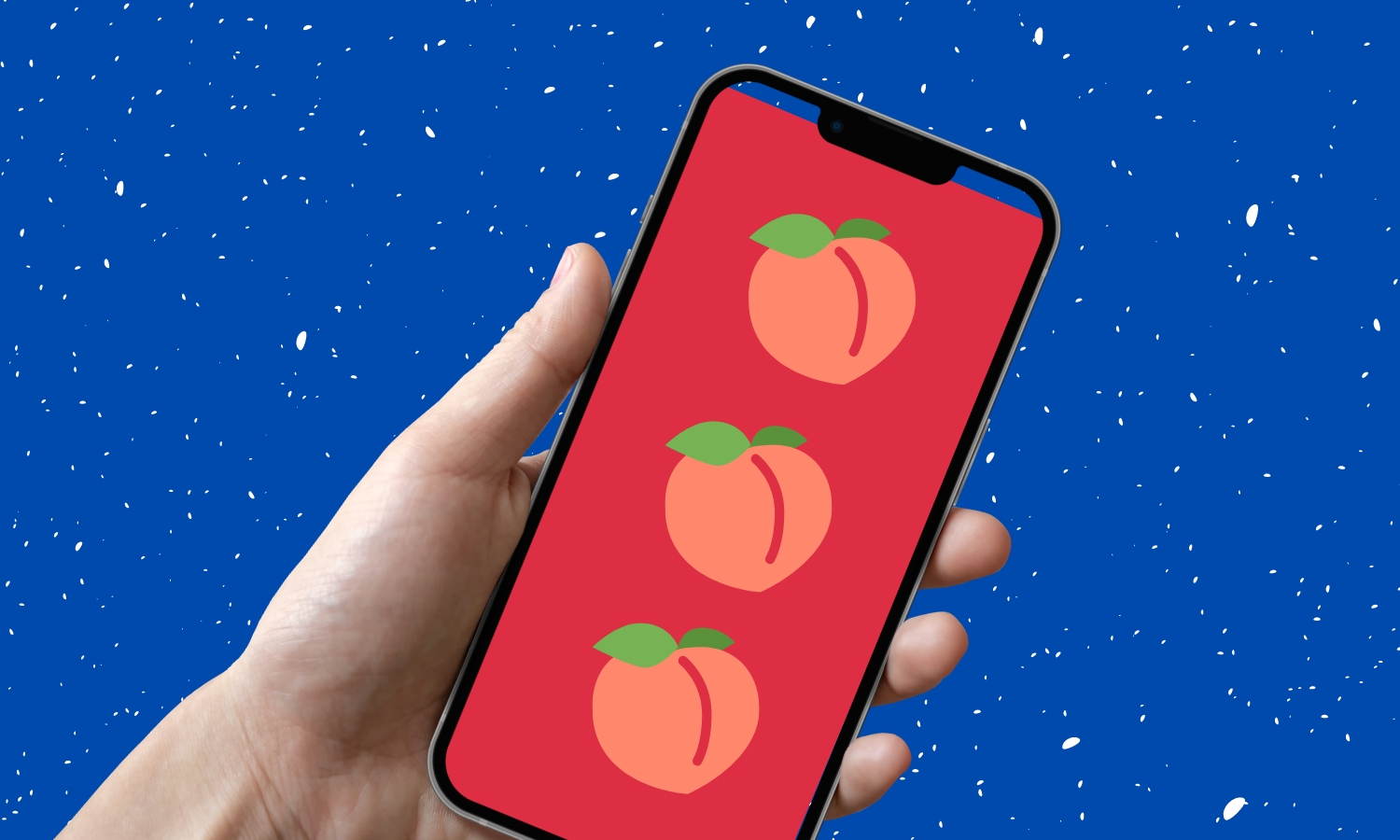
Listen up, sweetie – emojis are no longer just cute little icons to spruce up your messages. They’re a powerhouse of expression that can make or break any conversation.
Need to add some sugar to a potentially awkward message? Choose your emojis wisely – not all are created equal, you know. And if you want to keep things interesting, toss in the most random emoji you can find and watch as your group chat loses their minds. But let’s be real, we all know what the real MVP of emojis is: the horny ones. Whether you’re trying to turn up the heat in your sexting game or simply wanna make your man know that you’re ready and waiting, a well-placed horny emoji can work wonders. Just remember, with great emoji power comes great emoji responsibility.
Not all horny emojis are created equal. Some are so blatantly, unapologetically horny that even your grandpa would know what you’re up to. But don’t underestimate the power of the sneaky emojis – the ones that carry a subtle, sexy undertone. It’s actually pretty impressive how we’ve managed to turn innocent little images into filthy symbols of our depravity. I mean, who could have predicted that a peach and an eggplant would one day become the most sexually charged emojis on our keyboards? Definitely not us, that’s for sure. It just goes to show that when it comes to our collective gutter-mindedness, the possibilities are endless.
Let’s be real, the peach 🍑 and eggplant 🍆 have been hogging the horny emoji spotlight for way too long. It’s time to give some credit to the sneaky little numbers hiding in your emoji keyboard, just waiting for their chance to shine. Sure, they may not scream “I’m horny!”, but that’s the beauty of them – they provide a subtle, understated hint of sexiness that can take your conversation to the next level. Trust me, when used correctly, these innocent little pics can pack a powerful punch of suggestiveness. So don’t overlook them – give these low-key sexual emojis a chance to show what they’re made of.
Oh, the shower emoji – innocent enough on its own, but connect the dots and things get steamy real quick. When you add the gold star, your shower time can mean only one thing. But here’s the thing: this emoji should only be used with caution. Save it for partners who know the deal, or when you’re feeling bold enough to give a detailed description of your shower shenanigans. Trust me, you don’t want to accidentally send this one to your boss or your grandma. Unless they’re into that kind of thing, in which case, go ahead and live your best life.
If you’re in a sub/dom relationship and you’re texting your dominant partner, there’s one emoji that speaks volumes without even needing an explanation. I’m talking about the collar emoji, folks. You know what it means, your partner knows what it means, and everyone else can just mind their own business. It’s a simple yet powerful symbol of submission, and when used in the right context, it can be seriously hot. So go ahead and embrace your inner submissive – just make sure you’re sending this emoji to the right person.
Let’s be real, the bone emoji is just as (if not more) obvious than the infamous eggplant. It’s the perfect choice when referring to their boner, peen, or how hard they are or might be. It’s also great for alluding to the next time you’re getting it on, reminiscing about the last time you got down and dirty, or expressing just how badly you want to jump their bones. I mean, it’s right there in the name – the bone emoji practically screams “I’m horny!”. Also great if you’re into pup play!
Now, you’d think the fist would be the perfect emoji for fisting, but apparently, it’s the pinched fingers.
Let’s talk tools, shall we? When it comes to horny emojis, the screw and hammer are two classic options that speak for themselves. The screw emoji may not be the sexiest-looking symbol out there, but it’s a great alternative to the more explicit words like “fuck” and “bang”. Send it to your FWB out of the blue and they’ll definitely get the message. As for the hammer emoji, it’s another tool that can be used to tell your partner exactly what you want – namely, for them to come “pound” you. There’s really no ambiguity here, folks. So whether you’re into screwing or hammering (or both), these emojis are here to help you get your point across.
It’s not just sweat, it’s not just spray, it’s the 💦 emoji – a true master of horny subtlety. Is it a little bit of sweat after a hot and steamy session? Is it a naughty reference to cum? Or is it just a playful way to hint at your naughty intentions without being too explicit? The beauty of this emoji is that it can mean all of the above, and more. It’s a little droplet of mystery that leaves your recipient wondering just how wet things are going to get.
Yep… but you kinda knew this already didn’t you?
So if rimming is your thing and you wanna show that you want it, you put the peach on the left (you) and the tongue on the right. If you want to do the rimming then you put the tongue on the right and each on the left 😛🍑. Simple hey!?
Is it a cock or is it a hand? Either way, we’re happy. On one hand, it means we’re getting some peen to the face, on the other, it means we’re happy to obey you, master.

Ahem, attention all folks: there’s a certain je ne sais quoi about the occupational patterns of gay and lesbian workers. It turns out they’re overrepresented in fields like psychology, law, social work, and university teaching. And hey, those stereotypes about gay flight attendants and lesbian truck drivers? There’s some truth to ’em.
Now, where does this kind of occupational segregation come from, you ask? Well, social scientists have been pondering this question for nearly a century, but it’s not just some academic puzzle. This matters, people! It can lead to inequality and limit the talent pool for employers. Yikes!
So, there are two hypotheses to explain this phenomenon, which Helena Vieira writing for the LSE has come up with. The first is about task independence – basically, the ability to do your own thing without depending on coworkers. This makes it easier for gay and lesbian workers to hide their sexual orientation and avoid the negative consequences of coming out. Therefore, Helena predicts that they’re more likely to work in jobs with higher task independence (think massage therapists and fire safety inspectors) than in ones with lower task independence (like construction workers and firefighters).
The second hypothesis is all about social perceptiveness – the ability to read people’s reactions accurately. Since gay and lesbian individuals are often discriminated against from a young age, they’ve honed this skill as a survival tactic. Therefore, Helena expects that they’re more likely to work in jobs that require high levels of social perceptiveness (like psychologists and teachers) rather than in ones where it’s not as necessary (like laboratory scientists and actuarial analysts).
To sum it up, the prediction is that gay and lesbian workers gravitate towards jobs that offer a high degree of task independence or require a high level of social perceptiveness (or both). It might seem like these two things are at odds, but in reality, they often go hand in hand. Task independence means less dependence on coworkers and supervisors, while social perceptiveness often comes in handy when dealing with customers, patients, or students.
The London School of Economics analyzed data from two sources – the American Community Survey and the U.S. National Longitudinal Study of Adolescent Health – and found that the LSE’s predictions held true. Check out Tables 1 and 2 for the nitty gritty details.
So, what does all of this mean for the future? Well, as society becomes more accepting of same-sex relationships, the need for gay and lesbian workers to hide their sexuality may decrease over time. This could mean they lose their keen social perceptiveness skills and become less distinct in the labour market. But for now, we expect these occupational patterns to stick around for a while. They’re slow to change, reflecting earlier education and career choices, and the gay- and lesbian-friendly reputation of certain jobs tends to persist.

| Table 1. Occupations with the Highest Joint Proportion of Gay and Lesbian Workers |
|---|
| 1. Psychologists (S, T) 2. Training and development specialists and managers (S) 3. Social and community service managers (S, T) 4. Technical writers (T) 5. Occupational therapists (S, T) 6. Massage therapists (S, T) 7. Urban and regional planners (S, T) 8. Producers and directors (S, T) 9. Postsecondary teachers (S, T) 10. Probation officers and correctional treatment specialists (S, T) 11. Morticians, undertakers, and funeral directors (S) 12. Physical therapists and exercise physiologists (S, T) 13. Computer and information systems managers (S, T) 14. Lawyers, and judges, magistrates, and other judicial workers (S, T) 15. Web developers (T) |
| S = Occupation requires above-average social perceptiveness T = Above-average task independence is associated with the occupation |
| Female- and Male-Majority Occupations with Highest Proportion of Gay or Lesbian Workers | ||
|---|---|---|
| Highest proportion of lesbians among female workers | Highest proportion of gay men among male workers | |
| Female-majority occupations | 1. Psychologists (S, T) 2. Probation officers/correctional treatment specialist (S, T) 3. Training and development specialists and managers (S) 4. Sociologists (S, T) 5. Social and community service managers (S, T) | 1. Flight attendants (S) 2. Hairdressers, hairstylists, and cosmetologists (S, T) 3. Nurse practitioners (S, T) 4. Transportation attendants, except flight attendants (S) 5. Travel agents (S, T) |
| Male-majority occupations | 1. Bus and truck mechanics and diesel engine specialists 2. Elevator installers/repairers (T) 3. Heating, A/C, and refrigeration mechanics/installers (T) 4. Home appliance repairers (T) 5. Security and fire alarm systems installers (T) | 1. Actors (S, T) 2. News analysts, reporters, and correspondents (S, T) 3. Artists and related workers (S, T) 4. Agents/managers of artists, performers, athletes (S, T) 5. Producers and directors (S, T) |
| S = Occupation requires above-average social perceptiveness T = Above-average task independence is associated with the occupation |
The study predicts that the observed occupational patterns are likely to remain in place for the foreseeable future. This is because occupational patterns are slow to change and continue to reflect earlier educational and career choices, as well as the enduring gay- or lesbian-friendly reputation of certain occupations that continue to attract gay and lesbian workers.
Brian Paddick is left “devastated” by the untimely death of his husband, Petter Belsvik.
British politician Brian Paddick has shared the sad news that his husband, Petter Belsvik, has passed away “peacefully alone” at their home in Oslo, Norway. Brian, who is a former contestant on I’m A Celebrity… Get Me Out Of Here! and a member of the Liberal Democrats, announced the news on social media, telling his 14,300 followers that Petter’s cause of death is not yet clear.
In his tribute, Brian described Petter as his “beautiful, loving husband,” and expressed his devastation at the sudden loss. He added that he and Petter were devoted to each other, and that it will take some time to understand what happened.
Brian’s followers and colleagues quickly offered condolences, with Charlene White from Loose Women and I’m A Celebrity… Get Me Out Of Here! sending their love to him and his family. The news has been met with sadness from many who knew Brian and Petter, and they will undoubtedly be missed by those close to them.
The news of Petter Belsvik’s passing has prompted an outpouring of love and support for Brian Paddick from various public figures. Labour MP Jess Phillips, Sky News’ Kay Burley, and Claire Fox are just some of the many people who have expressed their condolences to Brian and his family.
Not much is known about Petter’s life, but he met Brian in a bar while they were both on holiday in Ibiza. The couple got married in Norway in 2009, just over a week after same-sex marriage was legalised in the country. Their wedding was one of the first high-profile same-sex weddings in Norway.
Reflecting on how they met, Brian once said that he was “minding his own business” when he met Petter, and they spent just 24 hours together before parting ways.
Despite this, they clearly formed a strong bond and were devoted to each other until Petter’s sudden passing.
In addition to their chance meeting in Ibiza, Brian once revealed that a “divine intervention” brought him and Petter together again. When Madonna was playing at Wembley Arena, Petter happened to be in town to see her live. Brian, who lived nearby, offered Petter a place to stay to save on hotel costs. Brian described this as a “gamble,” but it clearly paid off as they went on to build a life together and create many happy memories before Petter’s untimely death.
When Brian and Petter first met, they were leading very different lives. Brian was working long hours as the Deputy Assistant Commissioner of the Metropolitan Police at New Scotland Yard, while Petter was working as an engineer in Oslo. Despite the challenges of a long-distance relationship, they were clearly devoted to each other and managed to make it work.
While they went on to build a life together and get married, Brian and Petter often kept their relationship out of the media spotlight. They preferred to focus on their love for each other and enjoy their time together away from the glare of public attention.
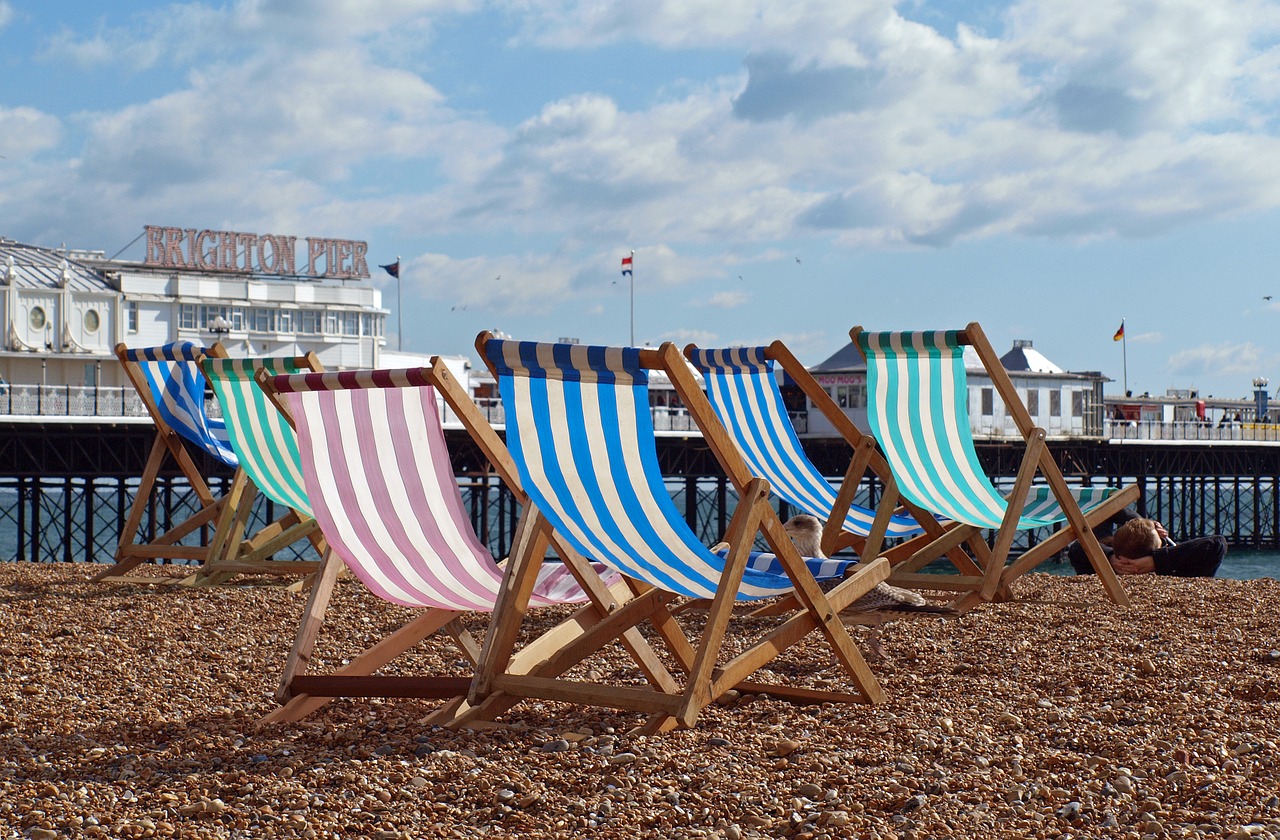
According to the census, individuals residing in the Essex district were found to be six times less inclined towards identifying as gay as compared to those residing in the East Sussex city.
Brighton and Hove, long considered the unofficial gay capital of England, can now proudly wear the official crown. According to the 2021 census, one in 10 people aged over 16 in the city identified themselves as lesbian, gay, bisexual or “other sexual orientation”.
Around 10% of Brighton’s overall population identifies as gay, lesbian or bisexual.
This figure matches the estimates made decades ago based on the research of Alfred Kinsey, a US professor from the 1940s who argued that homosexuality was far more prevalent than official sources acknowledged.
Culture is likely to play a significant role in the differing levels of LGB+ identification between Rochford and Brighton. Unlike Rochford, Brighton has a long-standing history of pioneering gay rights, from its gay bars and clubs to its annual Pride festival. The city recently bid farewell to George Montague, a 98-year-old gay rights campaigner who had been fighting for decades. Brighton and Hove City Council has a range of initiatives to support the LGBT+ community, including an LGBT workers’ forum, “my pronouns” campaign, and an LGBT helpline.
According to gay rights campaigner Peter Tatchell, Brighton’s vibrant LGBT+ community, extensive support organizations, and liberal public attitudes make it an attractive place for LGBT+ individuals to live. People feel safe and comfortable in Brighton, and they feel more able to be out and visible. However, Tatchell acknowledges that despite the generally gay-friendly atmosphere, there is still a problem with gay-bashing attacks. He said, ““Brighton has a huge amount of LGBT+ venues and community support organisations that makes it a very very attractive place for LGBT+ people to live,
“Public attitudes are more liberal than other parts of Britain so people feel safe and comfortable. They also feel more able to be out and visible. But this also makes them targets. Despite the generally more gay-friendly atmosphere, there is still a problem with gay-bashing attacks.”
Paul Kemp, managing director of Brighton and Hove Pride, said that the city has always been a safe space for LGBTQ+ individuals who seek a community of like-minded spirits. Many LGBTQ+ individuals come to Brighton to study at the university and decide to stay due to its supportive and inclusive environment.
Brighton Pride 2023 is set to feature the Black Eyed Peas and Steps as headliners for the festival, with performances scheduled for August 5 and 6.
Fans are eagerly anticipating the festival, one of the UK’s largest pride events, which will also feature performances by Zara Larsson, Jax Jones, and Melanie C.
In the past, the event has featured other gay icons like Britney Spears, Kylie Minogue, Grace Jones, and Dua Lipa. The parade, which will take place on August 5, will have the theme “Love, Protest and Unity” and the additional challenge, “Dare to be different.”
Tickets are available on the official website, with prices starting at £28.50 per day for Saturday or Sunday, and £48.50 for the entire weekend.
The festival has also introduced a low-income ticket scheme to be mindful of the cost of living crisis.
Brighton Pride 2023 will take place from 4 August to 7 August. The parade through the city will take place on Saturday 5 August at 11am, with a route travelling from the seafront through the city centre up to Preston Park, where the festival takes place.
You can get tickets for Brighton Pride 2023 on the official Brighton Pride website. Ticket prices start at £28.50 per day for Saturday or Sunday, and £48.50 for the whole weekend. The website also offers a low-income ticket scheme for those who need it.

There is ongoing debate and discussion within the entertainment industry and LGBTQ+ community about whether only gay actors should play gay characters. While some people argue that only actors who identify as LGBTQ+ should be cast in LGBTQ+ roles, others believe that an actor’s sexual orientation should not be a determining factor in casting decisions.
Ultimately, the decision about who to cast in a particular role is up to the director and producers of a project. However, it’s important to consider the impact that casting decisions can have on representation and visibility for LGBTQ+ people in the entertainment industry. If LGBTQ+ actors are consistently passed over for LGBTQ+ roles, it can perpetuate the idea that LGBTQ+ people are not capable of playing a wide range of characters or that their experiences are not valuable.
There are many straight actors who have played LGBTQ+ characters in films, television shows, and theatre productions. Here are some examples:
It is worth noting that the casting of straight actors to play gay characters has been a topic of debate in recent years, with some arguing that it is important to provide more opportunities for LGBTQ actors to tell their own stories.
Have your say…
Ultimately, the goal should be to create more opportunities for LGBTQ+ actors to play a diverse range of characters, including LGBTQ+ characters, while also ensuring that LGBTQ+ representation is portrayed in a respectful and accurate way.
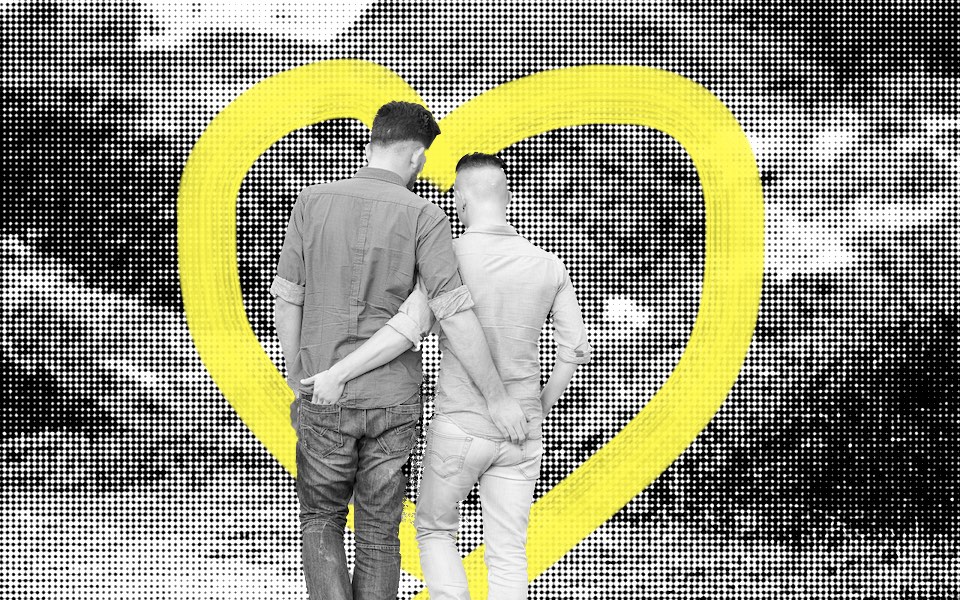
Gay married men are called husbands.
Just like heterosexual married men are called husbands, men who are in gay marriage are also referred to by this term.
The word “husband” has its roots in Old Norse and Old English. In Old Norse, the word “húsbóndi” meant “master of a house,” and in Old English, “husbonda” referred to the head of a household or the manager of a farm. The term later evolved to specifically refer to a married man, and in modern English, “husband” is commonly used to describe a man who is married or in a committed long-term relationship.
No, a gay man in marriage is not typically called a wife. The term “wife” is traditionally used to refer to a married woman, and while language is always evolving, it’s not common for a man to be called a “wife” in a marriage, regardless of his sexual orientation. Instead, the term “husband” is commonly used to refer to a married man, regardless of his sexual orientation.
However as an inside joke between gay couples, one may be referred to as a wife, or with more feminine language and one may be more commonly referred to in masculine terms. It’s always best to ask how couples may define their identity if in doubt, rather than say the wrong thing and cause offence.
It’s important to use inclusive language that recognizes and respects the diversity of relationships and families.
Gonna get spicy tonight in the bedroom, then you might want to leave out some of these foods if you’re bottoming because they’re bound to make you feel uncomfortable.
However, some foods may cause gastrointestinal discomfort, gas, or bloating, which could make bottoming uncomfortable. Here are some foods that some people might want to avoid or limit if they plan to bottom:

It’s important to note that everyone’s body is different, and what works for one person might not work for another. If you’re planning to bottom, it’s a good idea to listen to your body and avoid any foods that you know cause discomfort or digestive issues.
Additionally, practising good hygiene (like douching, give our handy how-to-douche a read here) and using plenty of lube can also help make bottoming more comfortable. Need a douche? Check out the range at our partner site THEGAYSHOP
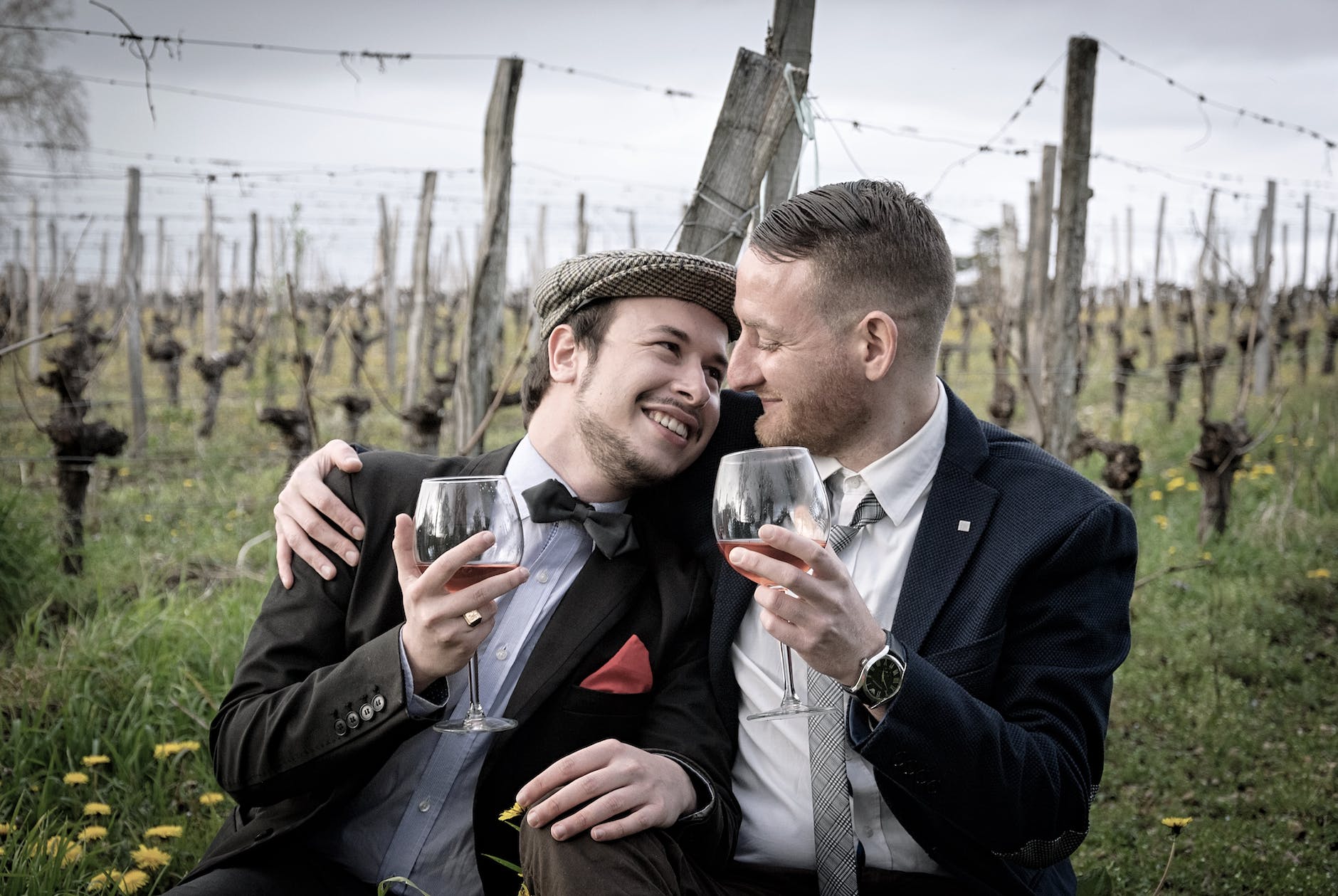
Although we’ve always used the term “gay marriage” in our reporting, there is another way of terming when two men or two women get married. However, we think that it could actually add to gay and lesbian erasure.
Another name for gay marriage is same-sex marriage, which refers to the legal union of two individuals of the same sex, typically recognized by the state or government as a civil marriage. However, it can lead to the erasure of several communities.
Firstly because the term same-sex marriage refers to biological sex, which could erase the fact there are some people who consider themselves gay or lesbian, but who might not be biologically male or female but actually may be transgender and be living as a trans man or a trans woman who have not opted for gender reassignment surgeries.
Secondly, the term Same-Sex Marriage also added to gay erasure, simply due to the fact that it leaves gay men and lesbian women out of the title.
Gay erasure is a term used to describe the denial or minimization of the existence or significance of same-sex attraction, relationships, and identities. It can manifest in various ways, such as ignoring or erasing LGBTQ+ representation and history in media, education, and politics, promoting heteronormative standards as the only acceptable ones, or excluding or discriminating against LGBTQ+ individuals and communities. The term is often used in social justice and human rights advocacy to highlight the harm caused by denying or erasing LGBTQ+ experiences and identities.
However there’s also an issue that if the term gay marriage is used then it could lead to bi-erasure, if the two people who are getting hitched also happen to identify as bisexual, but both happen to be same-sex.
Bi erasure is a term used to describe the denial or dismissal of bisexuality as a legitimate sexual orientation. It refers to the erasure, invisibility, and invalidation of bisexual identities, experiences, and relationships, often perpetuated by individuals, institutions, and society at large. Bi erasure can take many forms, including but not limited to assuming that bisexual individuals are confused, promiscuous, or greedy, enforcing binary and heteronormative standards of attraction and behaviour, erasing or ignoring bisexual representation and history in media, education, and politics, or excluding and discriminating against bisexual individuals and communities.
Bi erasure can have significant negative impacts on bisexual people’s mental health, self-esteem, and social acceptance, as well as on the broader fight for LGBTQ+ rights and acceptance.