Gabon has joined dozens of other African countries in making same-sex sexual relationships illegal.
Gay sex is now reportedly illegal in the African, predominately Christian country of Gabon. Being found guilty could see you landed with a six-month jail sentence and a fine of 5 million CFA francs (£6,400) reports The Independent.
According to the report the ban was introduced in July 2019. The minister of justice has apparently declined to comment on the ban.
Gabon joins 32 other countries on the continent which criminalises sex between men.
Silence from World Leaders
The news has had relatively little pick up in the international press and world leaders have remained largely silent in condemning Gabon’s government on criminalising gay people.
According to a report, a bar in Kampala, Uganda known to be LGBT+ friendly was raided by police, resulting in the arrest of 125 people.
The OutRight Action Internation campaign group a gay-friendly bar in the Ugandan town of Kampala was raided by police on Saturday night. According to their report around 125 were arrested and charged with drug possession which OutRight says is an indication of “an intentional and growing persecution” of gay people in the country.
The bar in question is an LGBT+ friendly bar and has been used by local activists for community events for over seven years. It was the only bar raided on the evening in question, indicating a clear targeting of gay, lesbian, bi and transgender people. According to Kuchu Times, the people arrested are due to appear in court within the next couple of days.
Kasha Jacquelin, a Ugandan LGBT activist, told OutRight:
“The past has shown that it is difficult to prosecute anyone for being LGBT. Using trumped-up drug charges is a new and frightening tactic; one which is really hard to tackle and will make our battle even tougher.”
At least four people have been killed in suspected hate-motivated attacks. Arrests of LGBT+ people have also increased. Prior to the raid carried out on November 10th, 16 people were arrested and charged with “trafficking in persons” and “carnal knowledge against the order of nature” at the end of October.
Increasing hate and stigma
Jessica Stern, Executive Director of OutRight Action International, commented:
“The resurfacing of the anti-homosexuality bill in a country which already prescribes life imprisonment for same-sex relations could only have had one intention – to increase hate and stigma against LGBTIQ people, putting them at heightened risk of arbitrary detention and attack. That is exactly what is happening. The growing intensity of arrests, the clear targeting of an LGBTIQ friendly bar, makes it painfully clear that a witch hunt is being mounted against LGBTIQ Ugandans.”
Is sex between men illegal in Uganda?
Sex between males has been criminalised in Uganda since British colonial times. At the turn of the century, the law was extended to include sex between females.
Articles on “unnatural offences” and “indecent practices” have been retained in the Penal Code since independence. “Carnal knowledge against the order of nature” between males carries a maximum sentence of life in prison.
The so-called “Anti-Homosexuality Act,” prescribing a death penalty for gay sex, was first passed by the parliament of Uganda in 2013 and signed into law by President Museveni in early 2014. It was invalidated by the Constitutional Court of Uganda on procedural grounds the same year.
According to local activists, the Minister of Ethics and Integrity of Uganda, Simon Lokodo, has indicated an intention to reintroduce the bill.
Uganda’s Minister for Ethics and Integrity, Simon Lokodo, indicating that the Ugandan Government intends to introduce the death penalty for same-sex sexual acts in a so-called “kill the gays” bill.
Amnesty International have called the reintroduction “outrageous” and have called the government to reject the legislation.
Joan Nyanyuki, Amnesty International’s East Africa Director, said, “It is outrageous that instead of the Ugandan Government taking urgent steps to decriminalise gay sex, they want gay people executed.
“This is going to fire up more hatred in an already homophobic environment.
“This is an example of how Uganda’s politicians are stoking dangerous intolerance and bias against LGBTI people.
“Uganda’s MPs must resoundingly reject any plan to legalise this kind of bigotry and witch-hunting of anyone who is perceived as being different.”
Spate of recent killings
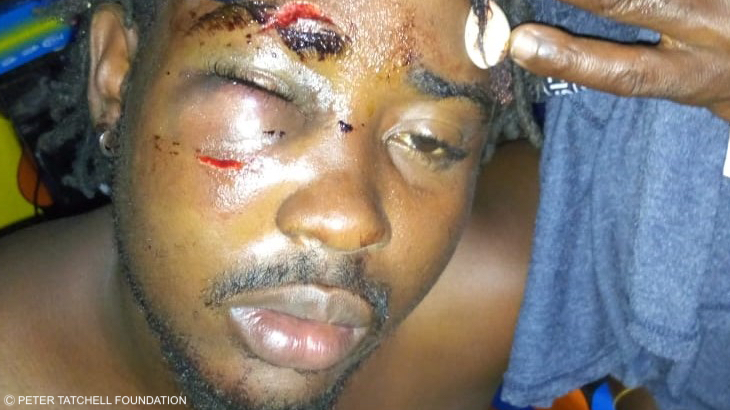
Last weekend (5 October), Brian Wassa, a gay paralegal, died from head injuries sustained in an attack by unknown assailants the previous day at his home in Kampala.
According to the LGBTI organisation Sexual Minorities Uganda, Wassa is the fourth LGBT+ person killed in the country in the past three months, killings which come in in the wake of a surge in anti-LGBT+ sentiments from political leaders.
Wassa’s death followed the killing of a trans woman from the Gomba district, a gay man in Kayunga district and another in the city of Jinja.
The Government of Uganda has a track record of promoting anti-LGBTI policies, which Amnesty has repeatedly criticised.
Death Penalty
CREDIT: TheGayUK
There are many countries and states where homosexual acts could land you the death penalty. Of these countries, all are located in Central Africa or in the Middle East.
Afghanistan
Men could face execution but are more likely to receive long prison
sentences. No executions are known to have been handed out since the end
of the Taliban rule.
Brunei*
Gay men in Brunei could be stoned or given 10 years in prison if found guilty of homosexual acts.
Iran
In Iran gay men can be lashed up to 74 times for “immature men” and
the death penalty for mature men of sound mind – and where the acts were
consenting. Women can be lashed 50 times and can face the death penalty
after their fourth conviction.
Mauritania
Homosexuality is against the law in Mauritania and could attract the
death penalty however there have been no public executions since 1987.
Qatar
In Qatar, gay men may face execution if they are Muslim otherwise men can face fines and a prison sentence which lasts 7 years.
Saudi Arabia
A second conviction of homosexuality in Saudi Arabia will land a
death penalty. For first offence, men can face fines, castration,
flogging, prison and torture.
Married men can expect to be stoned to death if caught having
same-sex relations. Unmarried men will receive 100 lashes or one-year
imprisonment.
Libya
Gay men could face death in Libya.
Nigeria
Homosexuality is illegal in some states of Nigeria and could attract
the death penalty. These states include: Bauchi, Borno, Gombe, Jigawa,
Kaduna, Kano, Katsina, Kebbi, Niger, Sokoto, Yobe, and Zamfara
Somalia
Homosexuality is illegal in Somalia and could attract a death penalty.
Syria
The actual penalty that gay men should face for homosexual acts is a
prison for up to 3 years, however, due to the rise in ISIS a highly
advertised death awaits those found guilty of engaging in same-sex
sexual acts.
Iraq
Despite homosexuality not being illegal in Iraq, there have been reported executions of gay men in ISIS controlled areas.
* Brunei is a Sovereign state and not a country.
There are some countries where although capital punishment might not
be constitutionally ratified there are cases where gay people have been
killed because of their sexuality.
Today’s High Court decision in Botswana to strike down antiquated laws criminalising consensual same-sex sexual conduct is a huge win for the human rights of LGBT people in the southern African country and beyond, says the Human Dignity Trust (HDT).
In a broad and forward-thinking reading of the Botswana Constitution, the three-judge bench unanimously ruled that the criminalising laws were discriminatory against LGBT people and breached their rights to privacy, dignity and liberty.
“We heartily congratulate the Botswanan and southern African LGBT human rights defenders and lawyers who have worked tirelessly on this pivotal case. LGBT people in Botswana have had their constitutional rights confirmed today and can now be more hopeful of a future free from discrimination, harassment and violence,” said Téa Braun, Director of HDT.
“This judgment, which comes less than three weeks after a deeply regressive decision on the same issue from the Kenya High Court, is legally sound, ground-breaking and courageous, and is a ray of hope for all those LGBT Africans looking to their legal systems for justice and fair treatment,” she added.
Sections 164, 165 and 167 of Botswana’s British colonial-era Penal Code outlawed ‘carnal knowledge of any person against the order of nature,’ attempts to commit carnal knowledge and acts of ‘gross indecency’ respectively. Those convicted under these laws faced jail sentences of up to seven years. Section 167 was updated in 1998 to apply to same-sex acts between women as well as men.
A court case from 2003, in which it was argued that these sections of the Penal Code were unconstitutional, was dismissed by the Court of Appeal, so today’s victory is especially welcome as it aligns Botswana’s criminal domestic laws with both the country’s 1966 Constitution and international human rights law, says HDT.
Botswana has shown increasing tolerance towards LGBT people in recent years.
The victory at the High Court today was notable given the generally hostile climate towards the human rights of LGBT people across Africa. Of the continent’s 53 countries, 32 continue to criminalise homosexuality.
“The safety and security of all refugees is of utmost priority to us. “
Following on from the allegations from The Peter Tatchell Foundation that LGBT+ asylum seekers are being neglected and victimised in Kenya’s refugee camps, the UNHCR responds.
Yesterday we reported that according to Peter Tatchell, the UN High Commission For Refugees boss Filippo Grandi had failed to respond to concerns raised by the Peter Tatchell Foundation (PTF) over the alleged failure to protect LGBT+ people in Kenya, who have fled homophobic persecution from neighbouring countries like Uganda.
The UNHCR has responded by telling THEGAYUK, that “The safety and security of all refugees is of utmost priority to us” and that ‘all LGBTI refugees registered and known to UNHCR in Kakuma are promptly relocated to safer places”.
Speaking THEGAYUK Peter Tatchell said, “Since 2017, I have received persistent reports of neglect, indifference and abuse by UNHCR staff and those they employ, including the failure of the UNHCR to protect LGBT+ refugees from abuse and violence by other refugees and the Kenyan police,
“The UNHCR in Kenya has a duty of care towards all refugees, including LGBT+ ones. For at least two years, it has failed that duty of care – and sadly it continues to fail now”.
The Peter Tatchell Foundation has proposed a five-point plan to the UNHCR to end the threats, violence and exclusion, including removing UNHCR staff and contractors who have behaved in a homophobic way.
“All LGBTI refugees registered and known to UNHCR in Kakuma are promptly relocated to safer places”
Speaking to THEGAYUK, a spokesperson for the UNHCR said, “The safety and security of all refugees is of utmost priority to us.
“UNHCR is responding to Mr. Tatchell’s letter to address his stated concerns. Our Assistant High Commissioner for Refugees, Volker Turk, recently wrote to LGBTI activists engaged in this issue and reaffirmed our steadfast commitment to finding a solution to this situation.
“All LGBTI refugees registered and known to UNHCR in Kakuma are promptly relocated to safer places, where we provide them with shelter, food, water, medical care, legal and psychological counselling and other assistance. We ensure they receive official documentation that legalizes their residence in urban areas, an important measure in light of Kenya’s encampment policy. Assessments are conducted on immediate needs and to identify the best long-term solution.
“UNHCR is actively advocating with resettlement countries to increase the number of places available for LGBTI refugees. However, the number of resettlement places needed worldwide far outstrips the number of places available. For 2019, just 70,000 places are available for more than 1.4 million refugees UNHCR has identified as in need of resettlement. Our Nairobi office has been working to secure resettlement for as many LGBTI refugees in Kenya as possible. In the last part of 2018, we submitted more than 100 LGBTI cases for resettlement from Nairobi and have submitted approximately 150 further cases for consideration so far this year.
“UNHCR has a zero-tolerance policy towards any acts of misconduct by our staff or partners”
“UNHCR has a zero-tolerance policy towards any acts of misconduct by our staff or partners, including homophobic abuse. Any allegation we receive is passed on to our Independent Inspector General for investigation. All UNHCR staff and partners are required to sign our Code of Conduct, under which any acts of homophobic abuse leads to disciplinary measures, including dismissal.
The Peter Tatchell Foundation has written to the UNHCR chief Filippo Grandi, who as failed to respond to accusations of “neglect, collusion, and inaction” over the victimisation of LGBT+ asylum seekers in Kenya’s refugee camps.
According to Peter Tatchell, the UN High Commission For Refugees boss Filippo Grandi has failed to respond to concerns raised by the Peter Tatchell Foundation (PTF) over the alleged failure to protect LGBT+ people in Kenya, who have fled homophobic persecution from neighbouring countries like Uganda.
Speaking THEGAYUK Peter Tatchell said, “Since 2017, I have received persistent reports of neglect, indifference and abuse by UNHCR staff and those they employ, including the failure of the UNHCR to protect LGBT+ refugees from abuse and violence by other refugees and the Kenyan police,
“The UNHCR in Kenya has a duty of care towards all refugees, including LGBT+ ones. For at least two years, it has failed that duty of care – and sadly it continues to fail now”.
The Peter Tatchell Foundation has proposed a five-point plan to the UNHCR to end the threats, violence and exclusion, including removing UNHCR staff and contractors who have behaved in a homophobic way.
The letter sent by the PTF was sent to the UNHCR three times since Mid-January. The organisation has yet to response.
The letter from PTF reads,
Dear Filippo Grandi and UNHCR colleagues
Abuse of LGBT+ refugees in Kenya
I am a human rights defender of 52-years standing and Director of the London-based human rights ngo, the Peter Tatchell Foundation: http://www.petertatchellfoundation.org
I work with the UK and other governments on human rights issues.
I echo the concerns expressed by Richard de Luchi and LGBT+ refugees about the failure of the UNHCR to protect Ugandan and other LGBT+ refugees in the Kakuma and Nairobi refugee camps from homophobic abuse, threats and violence by fellow refugees, the Kenyan police and allegedly from some UNHCR staff and their external contracted employees, such as security staff.
The UNHCR in Kenya has a duty of care towards all refugees, including LGBT+ ones. For at least two years it has failed that duty of care – and sadly it continues to fail now.
Since 2017, I have received persistent reports of neglect, indifference and abuse by UNHCR staff and those they employ – and their failure to protect victimised LGBT+ refugees from abuse and violence by others. Allegations of prejudice and neglect persist against UNHCR staff.
This is in clear violation of the UNHCR’s mission statement and brings shame to an esteemed UN organisation.
You have the power to help put right these terrible wrongs. I urge you and the UNHCR to:
1. Halt the placement of LGBT+ refugees in the Kakuma camp. It is unsafe.
2. Transfer all LGBT+ refugees from Kakuma to Nairobi to a secure location, separate from other refugees who may threaten them (not all have been transferred thus far).
3. Speedily facilitate the resettlement of LGBT+ refugees to safe countries where they can live their lives without fear, threats, discrimination and violence.
4. Remove UNHCR staff and employed contractors who have behaved in a homophobic way towards LGBT+ refugees from any contact with these refugees and/ or dismiss them from UNHCR work.
5. Give UNHCR staff training in LGBT+ awareness and the unacceptability of homophobia, biphobia and transphobia – and make such prejudice a disciplinary offence.
I would be grateful to receive your assurances on these five points and be updated
on progress on their implementation.
Thank you very much.
Yours sincerely,
Peter Tatchell
Speaking to THEGAYUK, a spokesperson for the UNHCR said, “The safety and security of all refugees is of utmost priority to us.
“UNHCR is responding to Mr. Tatchell’s letter to address his stated concerns. Our Assistant High Commissioner for Refugees, Volker Turk, recently wrote to LGBTI activists engaged in this issue and reaffirmed our steadfast commitment to finding a solution to this situation.
“All LGBTI refugees registered and known to UNHCR in Kakuma are promptly relocated to safer places, where we provide them with shelter, food, water, medical care, legal and psychological counselling and other assistance. We ensure they receive official documentation that legalizes their residence in urban areas, an important measure in light of Kenya’s encampment policy. Assessments are conducted on immediate needs and to identify the best long-term solution.
“UNHCR is actively advocating with resettlement countries to increase the number of places available for LGBTI refugees. However, the number of resettlement places needed worldwide far outstrips the number of places available. For 2019, just 70,000 places are available for more than 1.4 million refugees UNHCR has identified as in need of resettlement. Our Nairobi office has been working to secure resettlement for as many LGBTI refugees in Kenya as possible. In the last part of 2018, we submitted more than 100 LGBTI cases for resettlement from Nairobi and have submitted approximately 150 further cases for consideration so far this year.
“UNHCR has a zero-tolerance policy towards any acts of misconduct by our staff or partners”
“UNHCR has a zero-tolerance policy towards any acts of misconduct by our staff or partners, including homophobic abuse. Any allegation we receive is passed on to our Independent Inspector General for investigation. All UNHCR staff and partners are required to sign our Code of Conduct, under which any acts of homophobic abuse leads to disciplinary measures, including dismissal.
This article has been updated since it was first published to reflect the comment by UNHCR
Justice Mwita said the volume of documents, the inability of the three judges to meet and the demands of other cases were behind the delay in their ruling on the lawfulness of Sections 162, 163 and 165 of the Kenyan Penal Code.
The judgment, which had been scheduled for 9am this morning (22 February, 2019) was much anticipated, as indicated by the packed courtroom of Kenyan LGBT activists and community members, lawyers, international and national media.
Tweeting from court today, the National Gay and Lesbian Human Rights Commission (NGLHRC), which has been supporting the case, said, “To say we are disappointed would be an understatement.”
The Human Dignity Trust’s Director, Téa Braun, who was also in the Nairobi court this morning, said, “This is tremendously disappointing, particularly for the committed and tenacious activists and lawyers in Kenya who have been working towards this moment for several years. Nonetheless, we must put our trust in the Kenyan justice system. This is a pivotal case, and ultimately the most important thing is a sound and reasoned judgment that will free LGBT Kenyans from discrimination and persecution.”
Sections 162, 163 and 165 of the Penal Code, which were introduced into Kenyan lawbooks by British colonisers over 100 years ago, made it a crime punishable by up to 14 years in prison to ‘have carnal knowledge against the order of nature,’ and for consenting adult men to engage in ‘gross indecency’ with each other which brought a 5-year prison sentence.
These laws – still on the books across two thirds of the Commonwealth thanks to British colonisation and the failure of decades of independent governments to repeal them – are widely used to stigmatise, harass, discriminate against, arrest and detain LGBT people, and in many countries they have led to violence, including sexual violence, against the LGBT community.
The case was filed in 2016 and argued by Senior Counsel Paul Muite and Advocate Sande Ligunya in February 2018. It was heard alongside a similar petition brought forward subsequently by the Gay and Lesbian Coalition of Kenya and Nyanza Rift Valley and Western Kenya LGBT coalition.
Uganda’s President Yoweri Museveni has said “outsiders” are trying to corrupt his people by convincing them to have oral sex. During a public speech on Sunday, Museveni said that oral sex is “wrong” because mouths are “meant for eating.” (more…)
A court in Kenya has ruled that the controversial use of forced anal examinations on men suspect to be gay is unlawful, in a historic decision for the East African nation. The Court of Appeal in Mombasa ruled in favor of the National gay and Lesbian Human Rights Commission that the practice violates human rights. (more…)
The African country of Tanzania has withdrawn its threat of creating a list of gay people and sharing it publically.
Tanzania
The list, which was threatened last week, would have outed people who are accused of selling sex online. Deputy health minister Hamisi Kigwangalla was to call a press conference on Monday to distribute the list, however, the press call was cancelled. Taking to Twitter he wrote that they were not going to name names due to a “technical reason” and said they would deal with “the issue” differently.
He wrote,
“For strategic reasons and to avoid destroying evidence we will deal with this issue differently and will keep you informed at every step.”
Homosexuality is illegal in Tanzania as it is in 38 of the 54 countries in Africa. Those found guilty, in the Commonwealth country, could be handed life imprisonment. However, no arrests have been known to have been made in recent years.
Homosexual acts attract the death penalty in three African, Sudan, Somalia and Mauritania, where the legal system is based on Sharia law.
Homosexuality is illegal in the African country with offenders facing up to 30 years in prison and this new policy is aimed at people who promote same-sex sexual activity online. Tanzania’s deputy health minister Hamisi Kigwangalla said the country had boundaries when it came to sexuality and told critics of the proposed plans to “respect our culture” and called homosexuality “unnatural”.
That's evolution from science/innovation. Do we innovate our biology? Homosexuality is unnatural and there is nothing innovative about it! https://t.co/nan1F4grbb
As a country, unfortunately, we do not pride ourselves being 'homophilic'. We see things from different angles. Respect each other's views https://t.co/1Hh1cVvW3u