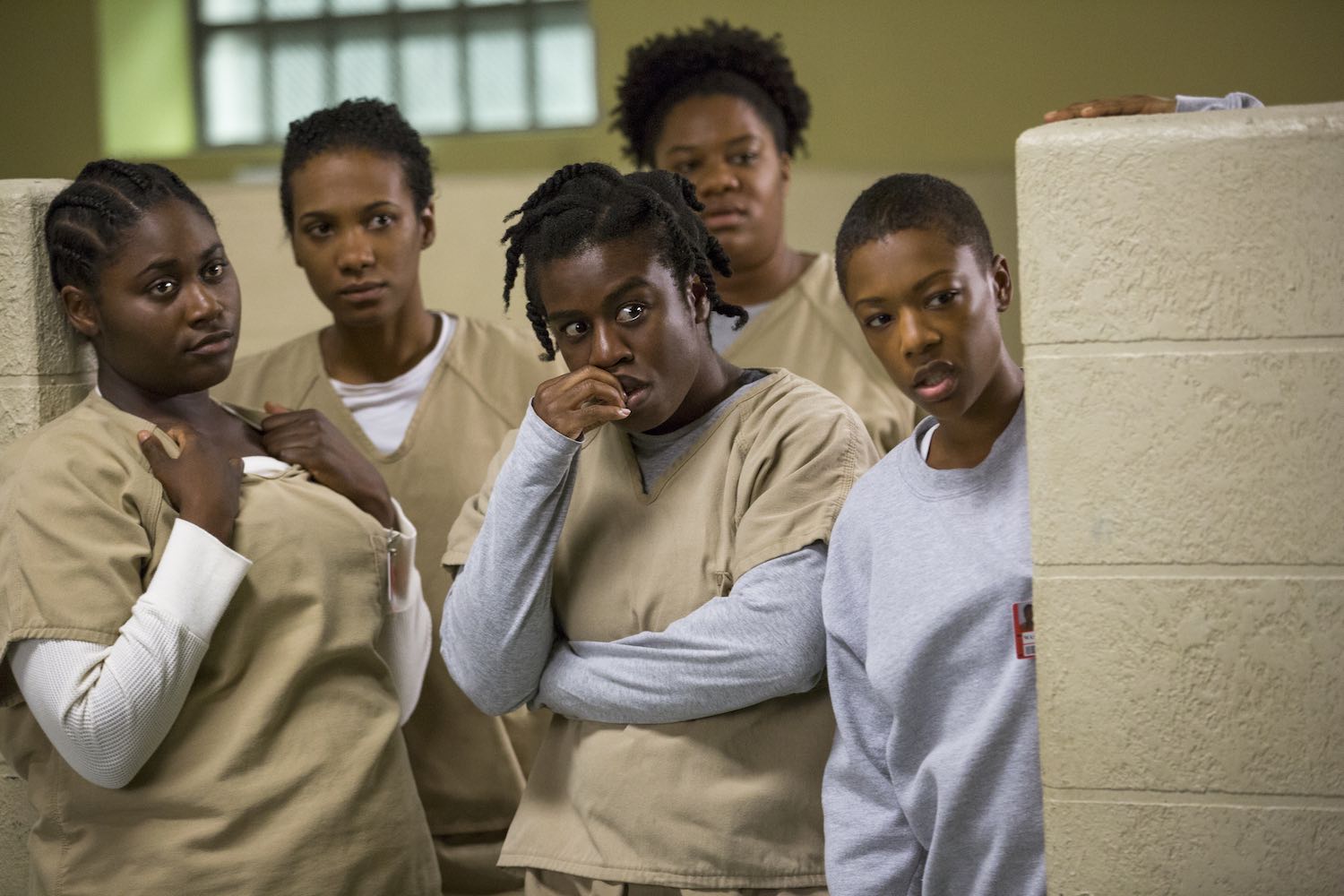
According to research, the death of OITNB‘s Pousey Washington tops the poll of saddest death on the streaming platform, Netflix, according to fans.
The title of saddest Netflix death goes to Poussey Washington from Orange Is the New Black, her intelligent and outspoken nature certainly made her a fan favourite. Poussey’s death led to shed tears among viewers when she was suffocated by CO Bayley at the end of season four, with 54% of fans rating this as one of the saddest.
In second place is Hannah Baker from Thirteen Reasons Why. Hannah’s suicide is central to the storyline and fans connected with her through narration, making her death one of the saddest; 42% of Netflix fans agree.
40% of fans voted Nairobi’s death as the saddest, placing her in third overall. After learning to counterfeit money at age 13, she was recruited to participate in the Royal Mint of Spain heist which eventually led to her death in Money Heist.
The Five Most Surprising Netflix Original Show Deaths
Once again, Poussey’s death takes the top spot. Not only is her death the saddest, but it’s also the most surprising, as 38% of Netflix fans didn’t expect it.
The title of the second most surprising death goes to Barbara Holland who featured in Stranger Things. Commonly known as Barb, her character certainly tugged on fans’ heartstrings as she mysteriously vanished and it was later revealed she was killed by the Demogorgon, surprising 32% of fans.
The third most surprising Netflix show death is Zoe Barnes from House of Cards, with 30% surprised by the plot of her death. Zoe appeared in seasons one, two, and four before she was pushed in front of an oncoming train by Frank, frustrating viewers of the show.
OnBuy.com surveyed 3,180 fans around the world in October 2020 to vote on the three Netflix TV show deaths they found the saddest and the three Netflix deaths they found the most surprising. They then ranked the characters in order of saddest and most surprising deaths to obtain the final result.
Since 2015 there has been a 165% rise in the number of sexual orientation discrimination cases brought against employers, according to new data from compliance training specialist DeltaNet International and the Ministry of Justice.
The study analysed over 120,000 discrimination cases that went to employment tribunals and included cases of sexual orientation, disability, race, age, gender and pregnancy-related complaints.
Almost 500 cases in the last year
Sexual orientation claims have increased 165% since 2015/16 to almost 500 cases in 2019/20.
The statistics show that discrimination has increased across 7 categories, with only discrimination on the basis of age declining in number of cases since 2015. The following points show the percentage increase in cases:
Sexual orientation (+165%)
Disability discrimination (+133%)
Religion or belief discrimination (+131%)
Race discrimination (+95%)
Pregnancy discrimination (+87%)
Sex discrimination (+15%)
Age discrimination (-81%)
There has been a steady increase in the number of cases which involve discrimination on the basis of sexuality since 2015.
Jayne Harrison is Head of Employment Law at Richard Nelson LLP. Speaking of the study, she said,
“It has become far more accessible for employees to lodge sexual orientation discrimination cases. Tribunal fees were abolished on 26 July 2017 and since then tribunals have seen an increase year on year with claims being lodged as now an unhappy employee can use the tribunal system without it costing them anything.
“Previously the fees were around £1200 for an unfair dismissal case but much less (£390) for a wages claim/unlawful deduction. This seemed to act as a bar to potential litigants and one of the main reasons why the fees were abolished when they were challenged by the unions.”
“As the data reveals, the best method of avoiding employment tribunals is to treat staff with fairness, dignity, and respect – and to follow clearly laid-out procedures.
“As employers, it’s important we offer training to those we trust in managerial positions on the basic requirements of employment law. Managers should know how to handle sexual orientation discrimination grievances respectfully and transparently and should be regularly updated about the businesses’ statutory and contractual requirements.
“Without this knowledge, it’s hard for staff members to remain fair and consistent, and this is when many organisations may find themselves in hot water.”
Over the number of cases involving discrimination on the basis of sexuality remains low compared to race, sex, or disability.
Other LGBT+ Discrimination Cases
A gender-fluid employee at Jaguar Land Rover (JLR) was awarded £180,000 in compensation earlier this month after employment tribunal case against JLR on the basis of sexual orientation discrimination.
In a statement, JLR apologised to the employee, Mx Taylor and said they will continue to work on improvement in this area. Mx Taylor had worked for the company for over 20 years and presented as male before identifying as gender-fluid in 2017.
A transgender employee of Amazon is currently in the process of claiming against his employer after claiming he was denied promotion after announcing he was pregnant.
Under the non-discrimination law passed in 2010, a UK employer cannot discriminate against an employee on the basis of a number of protected characteristics including sexual orientation and gender reassignment.
Back in 2006- Podcasting was a brand new venture. It promised hours and hours of free content. You no longer had to stick to the radio schedules and everybody suddenly had the chance to become an internet radio presenter.
Dan Savage started the Savage Lovecast in 2006 and it has become one of the most successful independent podcasts in the world. It all started from his column Savage Love at The Stranger.
Dan and his team have answered thousands of calls about love, life but mostly sex. Nothing is too taboo. No topic is off the table.
Listeners phone in from all over the world to relay their problems and Dan with his encyclopaedic knowledge endeavours to answer them in the most honest way. It makes for addictive, guilty listening.
Well worth the listen.
The show now comes in two formats the micro – which is 40 minutes long and comes with a few adverts, the second is the MAGNUM, ad-free and twice as long – more calls and more guests. You can get the micro version iTunes completely free.
There’s a common speculation gay people are more creative. This is foremost rooted in the observation that gay people are over-represented in creative pursuits. But is this speculation true? And if it is, why are gay people more creative? Let us discuss.
The idea of over-representation is an interesting one. It emerged anecdotally but has attracted scholarship in recent years.
In 2016, London School of Economics published their analysis of datasets from the 2008-2010 American Community Survey and the 2008-2009 U.S. National Longitudinal Study of Adolescent Health to comment on this. They found that gay people are “drawn to a different set of occupations”. Among those with the highest proportion of gay workers are creative ones: producers and directors, urban and regional planners, and web developers.
Their analysis suggests that gay people tend to be attracted to occupations with higher levels of social perceptiveness. This is based on the idea that knowing how to read social cues might be an important skill for gay people to acquire as they are more likely to have experienced the threat of discrimination from a young age.
Now for a quick lesson in creativity. Creativity is an inherently social process. The idea that it is a solitary process has fallen out of favour. We now appreciate that creativity emerges from dialogue, interaction, and practise with others. Though Kafka worked in solitude, his work was the product of his relationship with his father. His creative output is therefore the product of a social process.
It is thus unsurprising that the experience of gay people and its impact on social processes may affect their creativity too. At present, there is little hard evidence though. There are only a couple of major studies on sexual orientation and creativity.
The first, by Christine Charyton, a professor of psychology at The Ohio State University, published in 2007, reviewed the historical, empirical, and present literature existed on the relationship between sexual orientation and creativity. The study concluded that there is little evidence to support that speculation that gay people are more creative.
The second, carried out by Sultan Idris Education University, published in 2013, assumed that gay men share more typically female personality traits to disentangle the speculation. The idea behind this being that females are more creative than males. However, its findings mirrored the study by Charyton. It concluded that there is no ‘gay advantage’ to being creative.
It is acknowledged that more research is needed to draw definitive conclusions though. Current research is limited and its scope narrow. Indeed, the latter study measured only self-perceived creativity. The idea of being well-qualified to be creative by being skilled in reading social cues is one possible avenue for future research.
The truth is we don’t really know whether gay people are more creative. The speculation that they are is compelling though. I am left thinking that we need to continue to approach the question from new directions. Are gay people more inclined to creativity because of the escapism it provides? Or is queer culture fundamentally creative in its quest to break the mould?
If you’ve ever wondered what’s “normal” when it comes to penis size then looked at your own and thought, “is mine normal?” we have some answers for you.
Did you know there’s a different average penis size for most countries around the world and the difference between the biggest penis and the smallest penis is just a couple of inches? However, the average dick size worldwide still comes right bang slap in the middle of those two numbers.
According to research conducted in 2015, the average penis size worldwide is around 5.5 inches (13.9 cms) when fully erect and according to the research, the UK’s men are exactly in that spot – so the average erect penis size for men in the UK is 5.5 inches. Feeling more normal now?
Those figures were come to (no pun intended) by studying the cocks of around 17,000 men.
Most guys might be mistaken for thinking that the average penis length and girth is much longer, as our main source of evidence for cock size is usually porn. In fact, if you’re heterosexual, the only time you’d really see another man’s erection is during porn. Most porn stars are packing a member that’s usually bigger than average and don’t forget the camera does add size to most objects.
Where in the world do the men have the largest penises?
The longest average erect penises are apparently in the African country of the Democratic Republic of the Congo who’s men are packing an average of 7.1 inches (18.03 cms) and the smallest apparently are in North Korea with 3.8 inches (9.65 cms)
The UK came in at exactly 5.5 inches (13.9 cms) for the average schlong, while the USA came in at 5.2 inches (13.2 cms), according to the research.
Although having a larger penis might seem like a preferable asset to have it doesn’t actually mean that it is. According to recent research guys who have smaller penises actually earn more than their larger schlonged counterparts.
Today’s black LGBT+ icon is music artist Josiah Wise. He is expressively gay in his music and references male lovers, which isn’t really done in R&B. #BHM#BlackHistoryMonthpic.twitter.com/yVrdvfwnIR
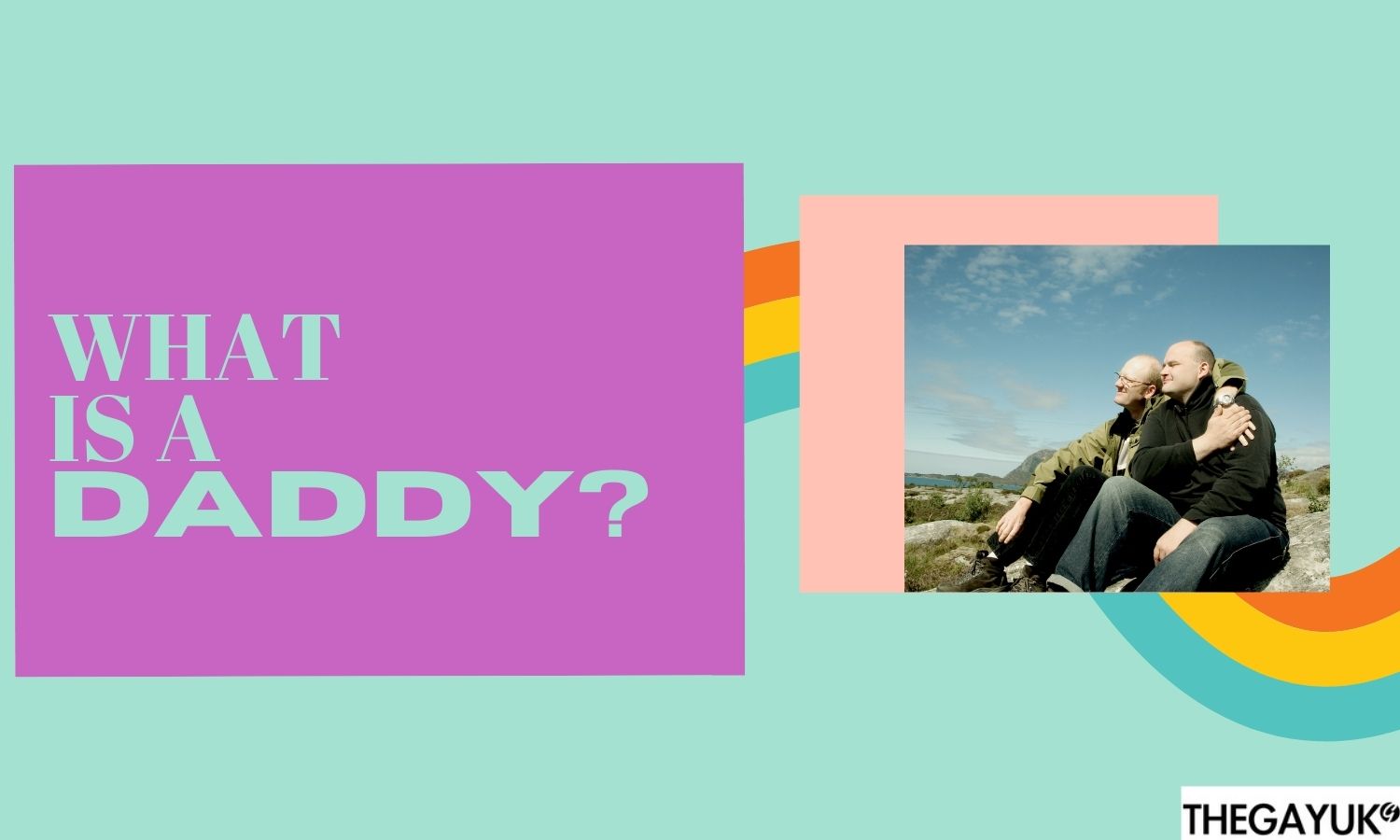
If you ever see someone described as a “daddy” on a dating or hook up profile, it has absolutely nothing to do with being a biological father!
A daddy is a term often ascribed to guys over a certain age, although that age varies from person to person, depending on some pretty poorly defined characteristics. It could be greying hair or a receding hairline, or it could be to do with wrinkles! It could be to do with an attitude that exudes from a photo.
It seems pretty arbitrary. But basically it’s a guy in his late 30s to early 40s and older.
Typically Daddies are thought to be older, wiser, well-versed and adaptable guys, who take on a more paternal role within relationships, sexual or otherwise. It is often used as a term of endearment or objectification, but also sometimes refers to a power dynamic between a younger guy and an older guy – a dynamic that might actually hold no truth in real life.
A daddy might be thought to be a dom or a top, but the actual man being referred to as a daddy, might, in fact, be a sub, a bottom or not into power play at all.
[totalpoll id=”124501″]
However, Daddy isn’t a word that can be or should be applied to anyone or everyone over a particular age. Many guys feel uncomfortable with being labelled in such a way, as much as some guys under 25 take issue being referred to as a “twink” or “chicken”.
As with all terms used to describe someone, it’s best to listen to what people want to be referred to as.
Dead or Alive singer Pete Burns died on the 23rd October 2016. He was just 57 when he suffered from a “massive cardiac arrest”.
Known as much for his aesthetic as his 1985 hit “You Spin Me Round”, Pete Burns had become a reality star stalwart with appearances ranging from Celebrity Big Brother to Celebrity Wife Swap.
The star had been married to a woman in 1980, but later divorced in 2006. He married his husband Michael Simpson.
On the morning of 24th October, his management took to Twitter to announce that the singer had suffered a heart attack, the statement from his management said that his family were devastated by the death.
Another LGBT+ bar has said it is to close after trading in 2020 became unsustainable due to the ongoing coronavirus pandemic and the restrictions imposed by the government to try and curb the rising infections.
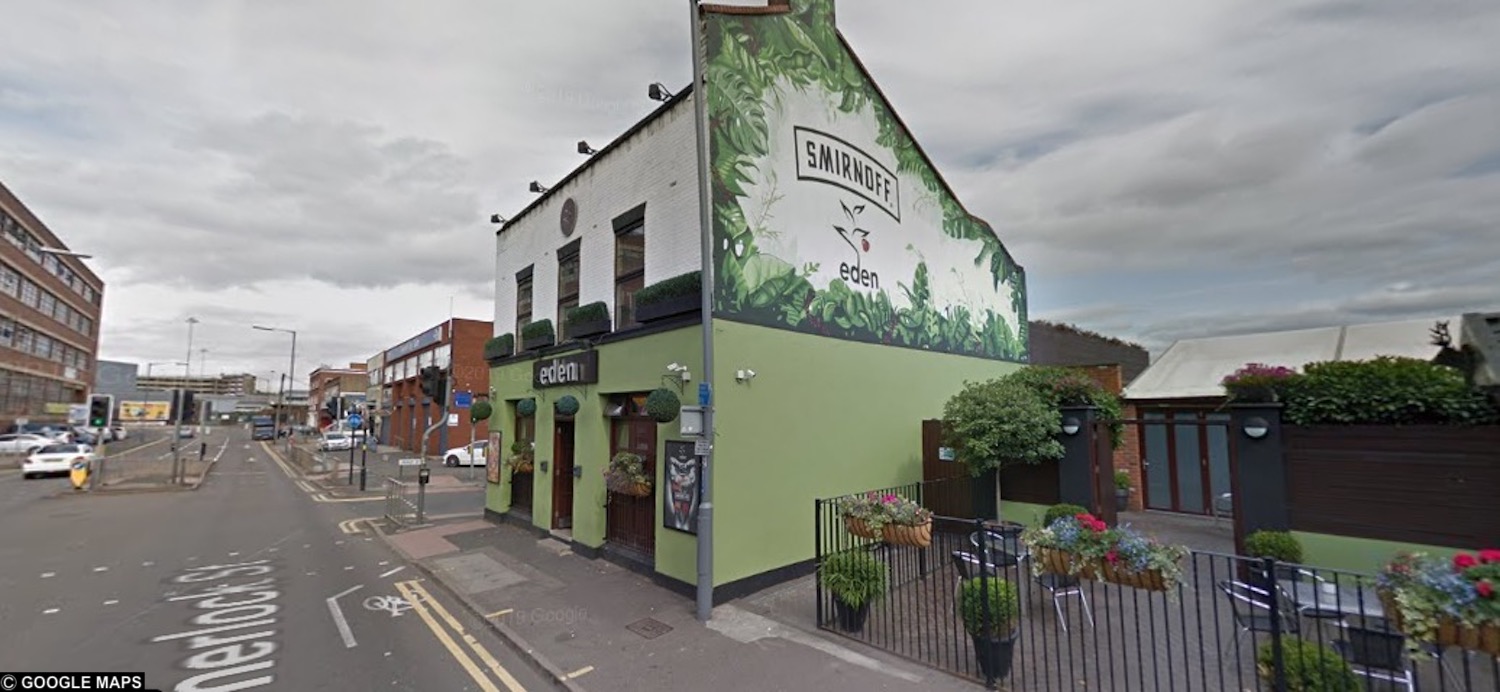
Eden Bar in the heart of Birmingham‘s gay village wrote an emotional goodbye post on social media saying that it was closing with its last day of trading on the 24th October.
The owners outlined how the government’s response to the pandemic had stretched many businesses, like theirs, beyond their limits, saying,
“Like many small businesses, 2020 has stretched Eden beyond belief. A reduced capacity to 25% then further reduced to 10% under Region Tier 2, heavy staff costs due to the ongoing changing government guidelines, the recent 10 pm curfew and an imminent Region Tier 3 lockdown, has meant we have decided to bite the bullet, making this drastic commercial decision.”
Closures across the Midlands due to COVID
Eden had hoped that 2020 would be its most successful year to date and had plenty of events planned, which all had to be cancelled. It had also opened a new venue called Sherlocks in Blackpool, which they have had to “inject finance into… in order to stay afloat, despite adapting to the “new normal”
The statement, however, did state that the owners would be looking for new premises. They continued,
“Our focus now is to look to the future with positive eyes, and wait for the pandemic to calm, albeit months. It has always been our long term plan to find alternative premises, therefore, once the pandemic calms, we will be taking active measures, looking for other premises in Birmingham, which we feel would be suitable for a ‘New Eden’
“What is important, is that Eden’s closure is not clouded by COVID but instead, is celebrated for its fantastic atmosphere and countless acts and events, which have graced Eden over the last 13 years”.
Read the full statement here:
After careful consideration, it is with great sadness that we have to announce, Eden will be closing its doors for business, on Saturday 24th October 2020, at 10 pm. Like many small businesses, 2020 has stretched Eden beyond belief. A reduced capacity to 25% then further reduced to 10% under Region Tier 2, heavy staff costs due to the ongoing changing government guidelines, the recent 10 pm curfew and an imminent Region Tier 3 lockdown, has meant we have decided to bite the bullet, making this drastic commercial decision.
Understandably, the fear of COVID is apparent, despite huge efforts to ensure a safe environment, making current conditions none financially viable. 2020 was set to be our best year, with many new events booked, the planned closure of Lower Hurst Street for “The Eden Pride Street Party” and the opening of Sherlock’s Blackpool. Instead of this anticipated bumper year, each week we have had to inject finance into the business in order to stay afloat, despite adapting to the “new normal”, being at full capacity and having to refuse entry. We have all worked so hard to try and make it work, but it is now apparent, we can no longer sustain this form of attack, without jeopardising Eden’s long term future.
Even today’s government announcement is just too little too late. Sadly, now we have to remove emotion and let common-sense prevail. We can only give so much until there’s nothing left to give. Our focus now is to look to the future with positive eyes, and wait for the pandemic to calm, albeit months. It has always been our long term plan to find alternative premises, therefore, once the pandemic calms, we will be taking active measures, looking for other premises in Birmingham, which we feel would be suitable for a “New Eden”.
It is not the bricks and mortar which makes Eden so special. Its a collection of people including our customers, fantastic staff, DJs, entertainment and those who work behind the scenes which share our vision. It is this vision which we believe can be transferred to another venue, once the pandemic calms.
We see this as an opportunity to take stock of the business and come back stronger and fighting fit. In short, Sherlock’s will still go ahead next year, hopefully, once government guidelines are relaxed. For Eden, as stated, our plan is to look for alternative premises in Birmingham and re-establish, once we are in a position to.
Putting the breaks on now will give us the opportunity to do this, protecting the Eden brand and future business, instead of trading at below breakeven using additional finance as a crutch, putting our long term future at risk. What is important, is that Eden’s closure is not clouded by COVID but instead, is celebrated for its fantastic atmosphere and countless acts and events, which have graced Eden over the last 13 years.
Too many to mention individually, but we’re sure you all have your favourites, along with fond memories. We would like to thank all our staff, DJs, entertainment, community groups and customers, in particular those whom have continued to support Eden post lockdown, when we needed you most.
We look forward to welcoming you all back once we are in a position to, along with the opening of Sherlock’s Blackpool next year. So please watch this space for our next chapter. Tickets for our final night will go on sale tonight at 7.30 pm. To open the night we have the fantastic Fanny Burns. There is however only one person who can close this current era, and that’s the fabulous La voix.