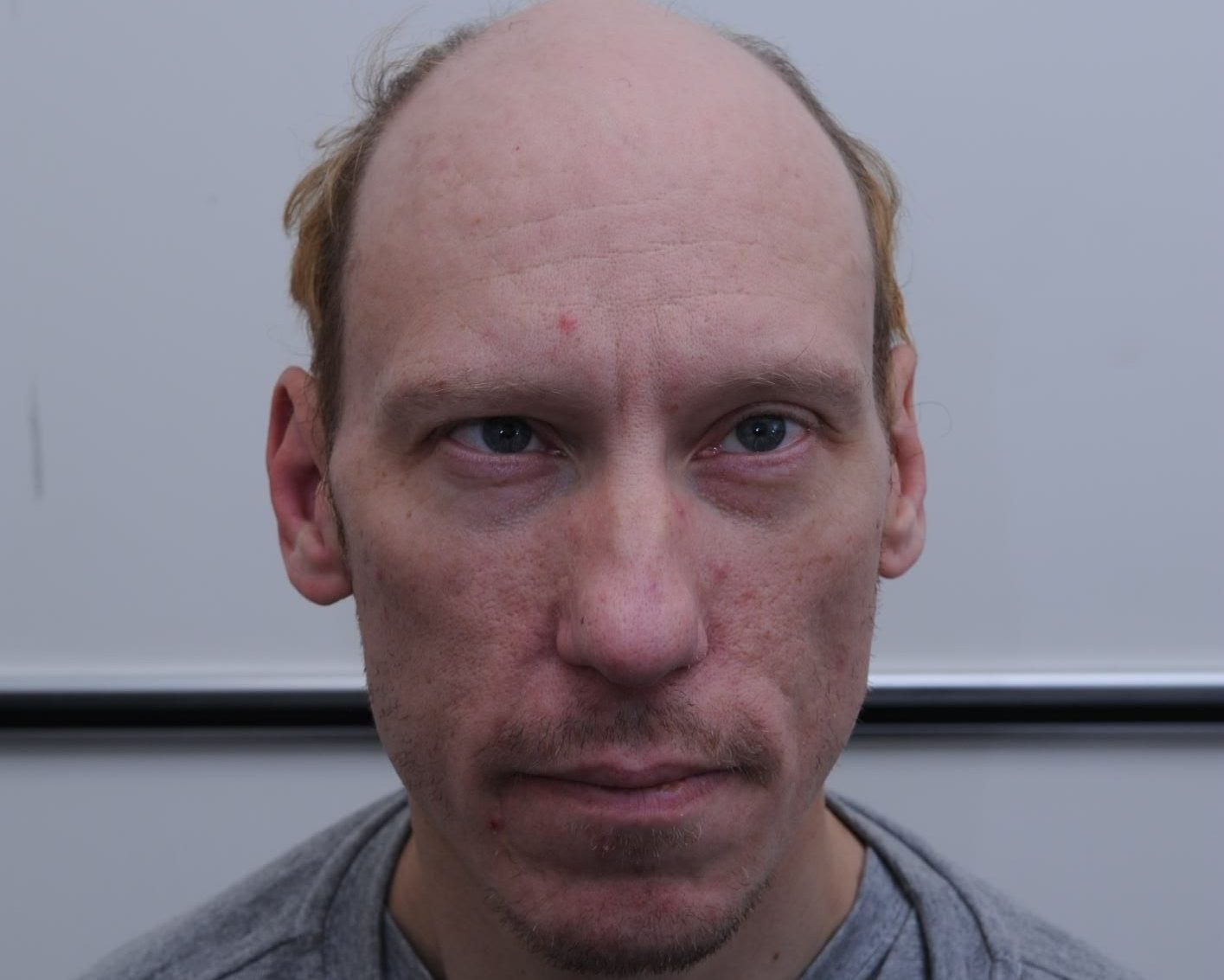
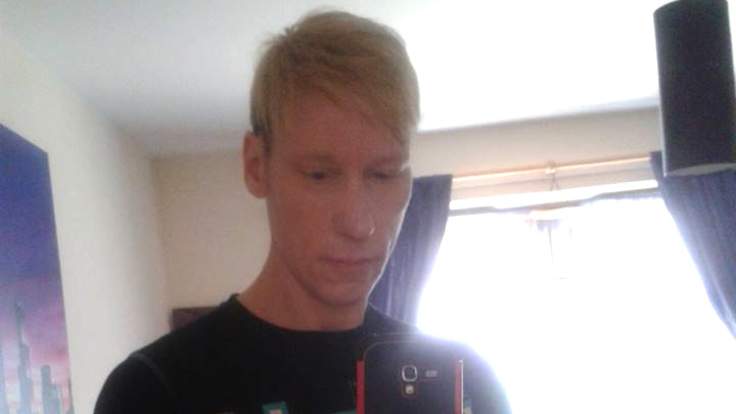
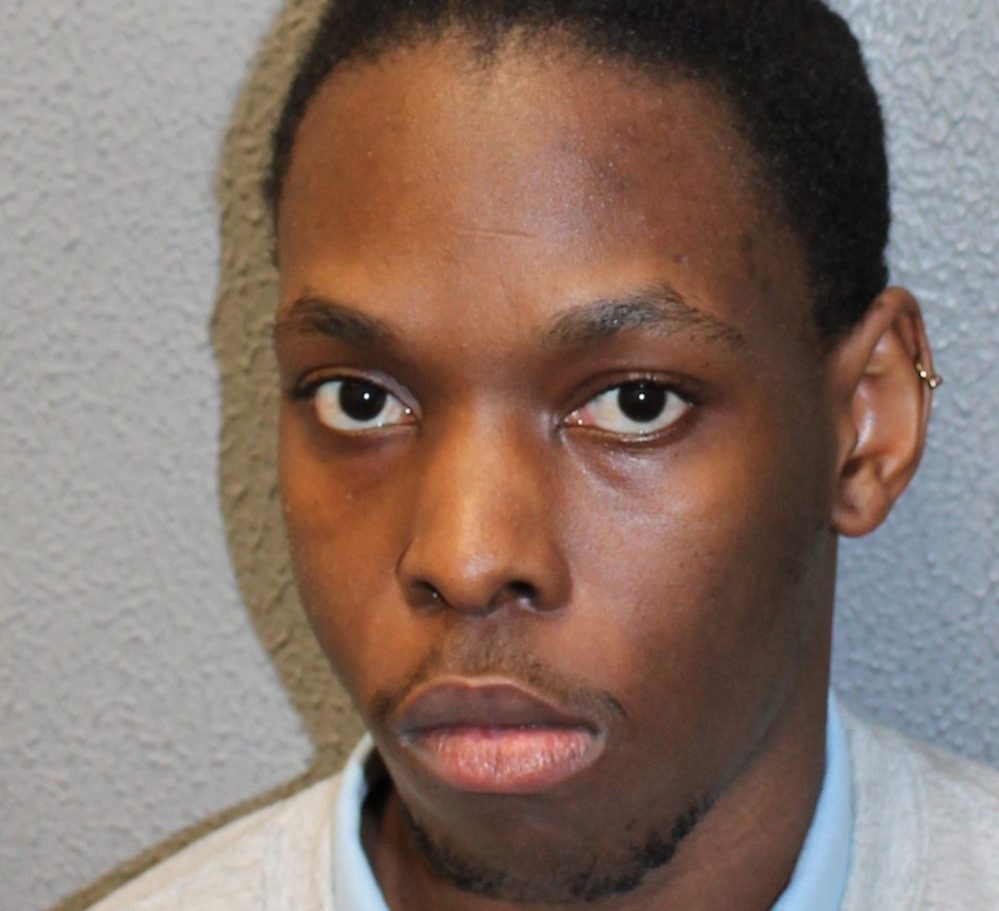
From the DailyMail.co.uk, “Stephen Port’s drug dealer was today found guilty of murdering a man almost 30 years his senior he met on Grindr in a case with chilling similarities to the serial killer’s own crimes”
The Independent Office for Police Conduct has confirmed that none of the 17 police officers who were being investigated, working the Stephen Port serial killings will be disciplined.
CREDIT: met police
The IOPC has confirmed that none of the 17 officers it investigated over the Stephen Port murder investigation will be disciplined.
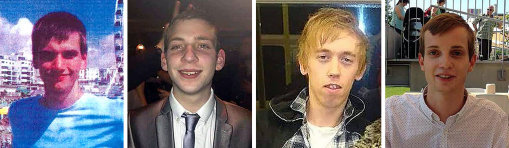
In March 2017 the IOPC announced it had launched an investigation of 17 officers into the service’s response to the deaths of 4 men, Anthony Walgate, Gabriel Kovari, Daniel Whitworth, and Jack Taylor murdered by Stephen Port.
Port was convicted at the Old Bailey in London in 2019 where the judge said that Port had carried out the murders to “satisfy his lust” for sex with men who were rendered unconscious.
According to the Barking And Dagenham Post, an IOPC spokesman said, “While we agreed none of the officers involved in these investigations may have breached professional standards justifying disciplinary proceedings, we will be making a number of recommendations to the Metropolitan Police to address some of the systemic failings our investigation identified.
“We have advised the families of Port’s victims and the officers involved that the performance of nine officers fell below the standard required. They will now be required to improve their performance.”
None of the families of the victims have commented on the announcement.
According to reports, Stephen Port had been having sex with Britain’s most notorious convicted paedophile.
Stephen Port and Richard Huckle, who has been dubbed Britain’s “worst paedophile” allegedly had a sexual relationship while they were both in prison together according to the Mirror Online.
According to the report, Port and Huckle struck up a relationship while both at MHP Belmarsh in London. The pair shared the prison with 90 other inmates and apparently, there are only three guards to keep tabs on all the prisoners.
The two have now been separated, but their relationship was an “open secret” according to the paper.
The relationship allegedly happened while Port was waiting to be sentenced for the raping and murdering of four men.
In 2016 Port was imprisoned for life for the murders of Anthony Patrick Walgate, 23, Gabriel Kovari, 22, Daniel Whitworth, 21 and Jack Taylor, 25. Their bodies were dumped in or near a graveyard in Barking. The graveyard was 500 meters away from his flat in east London.
The 44-year-old was also found guilty of 10 offences of administering a substance with intent, four rapes and four sexual assaults.
“Open secret”
A source at HMP Belmarsh told Mirror Online, “It’s an open secret the two of them had sex, everyone knows about it.
“They were both in the max area of the prison but when the cells door are open those in that area can mix.
“You have 90 inmates being overseen by three guards, they can’t see everything going on in every cell.
“It happened when they were both here before Port was sentenced, their paths crossed.
The BBC has announced that filming for a documentary drama about the infamous Grindr murders is about to start production, but when does it air in the UK?
CREDIT: met police
The BBC announced that a documentary drama about the infamous Grindr Killer, Stephen Port is due to start filming in Spring 2019. The series has been given the working title, The Barking Murders. The programme will be made by ITV Studios for the broadcaster.
There will be three, hour-long programmes which will be broadcast on the BBC and will be directed by David Blair and produced by Serena Cullen with Jeff Pope executive producing.
The show will star Stephen Merchant and Sheridan Smith.
The programme will be available in the US where it is being co-produced by BritBox.
When will The Barking Murders be available to watch?
So the BBC haven’t confirmed the broadcast date yet, but we expect the filming and editing process to take a number of months, so we’d expect to see a broadcast or stream date of late 2019 or early 2020.
Where will I be able to watch The Barking Murders?
In the UK the shows will be broadcast on the BBC’s flagship channel, BBC One, but will most likely be available to stream on the BBC’s iPlayer. In the US the show will be able on BritBox.
Apparently, the BBC is planning a TV show about the brutal murders by convicted serial killer Stephen Port.
Filming for a documentary drama, called The Barking Murders surrounding the killer Stephen Port, who brutally raped and murdered four men between June 2014 and September 2015 is due to begin in the spring. Dubbed in the press as the Grindr Killer, Port used dating apps and websites to lure his victims. In 2016 the 41-year-old was also found guilty of 10 offences of administering a substance with intent, four rapes and four sexual assaults.
According to the BBC, the award-winning team behind The Moorside and Appropriate Adult, the new factual drama will go beneath the headlines to shed new light on this story by telling it from the point of view of the families of Stephen Port’s victims, focusing on their fight to uncover the truth about what had happened to their lost sons and brothers in the face of a now widely-criticised police investigation.
Port was found guilty of the murders of Anthony Patrick Walgate, 23, Gabriel Kovari, 22, Daniel Whitworth, 21 and Jack Taylor, 25. Their bodies were dumped in or near a graveyard in Barking. The graveyard was 500 meters away from his flat in east London.
The new film has Stephen Merchant in the role of Port.
“This story can’t be ignored”
On joining the cast, Stephen Merchant said, “This is a story that can’t be ignored – how four young lives were lost and their families’ brave attempt to uncover what happened. This factual drama will shed light on their story, so it’s a privilege to be a part of telling it with the brilliant combination of Jeff Pope, Neil McKay and the BBC.”
He’ll be joined by Sheridan Smith who added, “‘I love playing real-life characters – especially an inspirational woman like Sarah Sak (the mother of Anthony Walgate) – but with it comes responsibility. Along with the other families, Sarah went through so much heartache and it would have been easy for her to just accept what she was being told by the police, but something inside made her keep fighting for her son.”
Port was named ‘The Grindr Killer’ by the tabloid press because he accessed many of his victims through the Grindr dating app. Much of the media coverage of the story and the subsequent popular interest in the case focused upon this new way that killers and sexual predators could access their victims. Indeed, I have researched the use of social media by killers for several years now, exploring how homicide perpetrators use Facebook[i] and exploring the meaning of homicide confessions posted on social networking sites[ii]. However, focusing upon these elements can sometimes distract us from some of the bigger and more pressing issues – issues that are not new and are intricately woven into our social fabric. Exploring contemporary attitudes to gender and sexuality and confronting the stubborn persistence of homophobia in our culture are all crucial to understanding what enabled Port to cause as much harm as he did.
Having met his victims on Grindr or dating sites, Port drugged and sexually assaulted them. He used a substance called GHB (gamma-hydroxybutyrate) or the similar GBL (gamma-butrateactone). Port’s callous disregard for the lives of his victims is shocking. He did not care whether they lived or died.
After killing 23-year-old fashion student Anthony Walgate on 17th June 2014, Port left his body on the path outside his flat, putting a small bottle of GHB in Anthony’s pocket. He lied to the police and said Anthony had taken the GHB himself and he’d moved his body outside because he was scared they would think he had killed him. Port received a short prison sentence for perverting the course of justice.
Just over two months later, Gabriel Kovari – who worked in a London shop – was murdered by Port. Kovari was Port’s flatmate of only two days. On 25th August, Port administered a fatal dose of GHB and assaulted Gabriel. Port told friends that Gabriel had just walked out one day and he didn’t know where he had gone. On 28th August, Gabriel’s body was found propped up against a wall of the churchyard in the ruins of Barking Abbey, close to Port’s home. Gabriel had a bottle of GHB in his pocket. His phone was missing. A dog walker discovered his body.
A few weeks later, 23-year-old chef Daniel Whitworth was Port’s next victim. Port and Daniel had agreed to meet on 18thSeptember. Having killed Daniel, the following day, Port deleted his account on the dating site and carried his body to the grounds of Barking Abbey, leaving him close to where Gabriel had been left. Daniel was found by the same dog walker who discovered Gabriel. Again, a bottle of GHB was found in Daniel’s pocket and his phone was nowhere to be seen. With Daniel’s body was a note that stated he had taken his own life because he felt guilty for killing Gabriel Kovari. Port was trying to blame an earlier murder on his latest victim.
CREDIT: met police
At the time, local media reported that police were not looking for suspects in the deaths of Gabriel and Daniel, describing their deaths as unusual and confusing but not suspicious. Nor were they linking Anthony’s death to them.
Just under a year later, 25-year-old forklift truck driver Jack Taylor would become Port’s fourth and final murder victim. Port killed Jack after meeting him on 13th September 2015. The following day, Port deleted his account and took Jack’s body over to the same churchyard where he had left Gabriel and Daniel. In Jack’s pocket, Port left a bottle of GHB, a tourniquet and some medical wipes.
“What went wrong here was that the net which should have caught him was full of holes. He was able to slither out and kill again, time after time”
It was not until October that the Metropolitan Police’s homicide and major crime command took over the case and arrested Port in relation to all four deaths. The Met also referred the case to the Independent Police Complaints Commission (now the Independent Office for Police Conduct) because of what they termed ‘potential vulnerabilities’ in how police responded to the four deaths. This investigation is still ongoing.
How did Port get away with murder for as long as he did? I would argue that this had very little to do with his ability to avoid getting caught – indeed he came onto the criminal justice system’s radar very soon after killing Anthony Walgate. What went wrong here was that the net which should have caught him was full of holes. He was able to slither out and kill again, time after time.
The police response
Port could have been stopped earlier in his killing cycle and unfortunately, this has a ring of the familiar about it. Dennis Nilsen, convicted of killing six men between 1978 and 1983 but suspected of killing at least twelve, also came within the police’s grasp. Douglas Stewart walked away with his life after an encounter with Nilsen in 1980. Nilsen had tried to strangle Douglas, who went to the police, showing them the red marks on his neck. Nilsen knew exactly what to say when challenged by officers, denying Douglas’s claims and saying the two had had a ‘lover’s tiff’. At the mention of homosexuality, the police lost interest. Nilsen would go on to murder several other young men. A similar but fatal incident occurred in the USA when one of serial killer Jeffrey Dahmer’s victims escaped – only to be returned to Dahmer’s apartment. By the police. The following is a transcript excerpt from Milwaukee Police Communications[iii]:
Police Officer: Intoxicated Asian naked male. (Laughter) Was returned to his sober boyfriend. (More laughter)
Dispatcher: 10-4 64 and 65.
Police Officer: 10-4. It will be a minute. My partner is going to get deloused at the station. (Laughter).
Port is one of several serial killers to have targeted gay men. Dennis Nilsen. Peter Moore. Colin Ireland. Jeffrey Dahmer. The man charged with the murders of several men in Toronto’s Gay Village[iv].
“These killers all benefited from the fact that their victims belonged to a stigmatised social group”.
These killers all benefited from the fact that their victims belonged to a stigmatised social group. This stigma permeated – and continues to flow through – a range of social institutions not limited to the criminal justice system. These victims belonged to a social group who didn’t matter as much as others. There was less sympathy for them. They were less worthy, less deserving of a thorough and rigorous investigation. The gay men targeted by serial killers are often additionally vulnerable because they have left home, are in need of a roof over their heads and have lost contact with their families and friends. Many of Dennis Nilsen’s victims fitted this profile and several remain unidentified to this day. They were once someone’s son, someone’s friend. Port’s victims were different, they had not runaway, they had jobs, families and friends. People noticed their absence and reported them missing. The gay rights activist Peter Tatchell has drawn attention to the importance of social class as well as sexuality in this case.
If four young middle-class men had been murdered in Chelsea, police would have probably made a public appeal much sooner and mounted a far more comprehensive investigation. In contrast, the murder of low-income gay men in working-class Barking was treated very differently. Whether conscious or unconscious, police officers stand accused of class and sexuality bias[v].
Criminologists have a concept for this – it’s called hierarchies of victimization[vi] – where people are not treated equally when they become the victims of crime based on assumptions made about them because of their socio-demographic characteristics like gender, sexuality, social class, age and ethnicity.
Unfortunately, in the cases noted above, the criminal justice system provides us with several examples of homophobia at its worst. It’s a sad fact that over 50 years after homosexuality was decriminalised in England and Wales that we are still seeing gay men let down by the very institutions that should be there to protect us all. They are still not receiving the justice they deserve. And that is just not good enough.
[i] Yardley, E. and Wilson, D. (2015). Making Sense of ‘Facebook Murder’? Social Networking Sites and Contemporary Homicide. The Howard Journal of Criminal Justice, 54(2), 109-134.
[ii] Yardley, E. (2017). Social Media Homicide Confessions: Stories of killers and their victims. Bristol: Policy Press.
[iii] Milwaukee Police Communications transcript, 2.00AM., May 27, 1991. Cited in Egger, S. A. (1998). The Killers Among Us: An examination of serial murder and its investigation. Upper Saddle River, NJ: Prentice Hall, pp 256-7.
[iv] Bruce McArthur has been charged with many of these homicides.
[v] https://www.theguardian.com/commentisfree/2016/nov/24/stephen-port-murder-inquiry-homophobia
[vi] Greer C (2007) News media, victims and crime. In: Davies P, Francis P and Greer C (eds) Victims, Crime and Society. London: Sage, pp. 20-49.
A man has admitted in court that he supplied drugs to convicted killer, Stephen Port who murdered four young men in London between 2015 and 2016.
CREDIT: Met Police
Gerald Matovu, 23, of Great Guildford Street, Southwark SE1 pleaded guilty at Southwark Crown Court on Tuesday, 28 March to supplying class B drug mephedrone (commonly known as Meow Meow), and class C drug GHB to Port between 1 July and 31 August 2015.
He also admitted offering to supply GHB to Port between the same dates. He will be sentenced on Wednesday, 26 April.
The offences came to light during the investigation into Port’s extensive crimes.
Stephen Port, 42, a chef, of Cooke Street, Barking, was sentenced to a whole life term in November 2016 for the murder of four young gay men and drugging and sexually assaulting another seven victims.
Port bought the drugs from Matovu for use during consensual sex with his partner. Phone records and downloads from electronic devices belonging to Port clearly showed contact with Matovu and Port had described Matovu as his drug dealer to his partner.
In messages, Matovu told Port he had “loads of G” and asked how much he wanted.
Matovu was arrested on 15 June 2016 and charged on 27 October 2016.
The IPCC is to undertake interviews with 17 Met Police officers as part of their investigation into the service’s response to the deaths of Anthony Walgate, Gabriel Kovari, Daniel Whitworth, and Jack Taylor – the victims of Stephen Port’s serial killings.
Seventeen of the Metropolitan Police Service’s officers are due to be interviewed as part of the IPCC’s investigation into the service’s response to the deaths of 4 men murdered by Stephen Port.
CREDIT: met police
The IPCC is to undertake interviews with 17 Met Police officers as part of their investigation into the service’s response to the deaths of Anthony Walgate, Gabriel Kovari, Daniel Whitworth, and Jack Taylor – the victims of Stephen Port’s serial killings.
Since the IPCC’s investigation, start over 200 statements and 700 individual documents have been collected as part of the inquiry.
“Over the coming weeks our investigators will be undertaking interviews with the 17 officers who have been served with notices as part of the investigation. These interviews are an important milestone in the investigation as we continue to build the picture of the police response to the deaths. Misconduct notices are not judgemental in any way.
“We are grateful for the information provided to us by the family and friends of Anthony, Daniel, Gabriel, and Jack, as well as members the LGBT community and the wider public, and MPS officers. In an investigation of this magnitude, centred upon the tragic murders of four dearly missed young men, every piece of information counts and we continue to wish to hear from anyone who can assist this important work.
“My thoughts remain with everyone affected by Port’s horrific crimes, and they can be assured that we are committed to providing them with thorough conclusions as soon as we are able.”
Following the interview process, which will take a number of weeks, investigators will be in a position to complete the analysis of the evidence at hand and begin preparing the IPCC’s final report.
2016 has been a year that will go down in history as one of the most seismic of all time. From the election of Donald Trump to the UK voting to leave the EU, from the Pulse nightclub massacre to the continued persecution of gay men by ISIS.
There have been many stories that have and will continue to impact the gay community for decades to come. Here’s are just some of the top stories from the past 12 months.
January
David Bowie dies. The year starts with the unexpected death of David Bowie. 2016 would go down as one of the most shocking years for celebrity deaths.
Milo Yiannopoulos is unverified by Twitter. The controversial right-wing commentator is unverified by Twitter. He would later be kicked off the platform altogether in a move many praised but other criticised Twitter for kerbing freedom of speech.
ISIS executes 15-year-old boy. He was murdered for an alleged affair with an ISIS officer. The officer was spared the death sentence.
British LGBT Awards gets a bashing on Twitter. The motives behind the awards were questioned by some after a number of “strange” choices for nominees were revealed including YouTuber Zoella, and Zayn for being allies.
Four families have been left devastated by the actions taken by serial murderer Stephen Port, who used drugs to “stupefy his victims” without their knowledge to rape or sexually assault them. He then murdered them and disposed of their bodies near and around his home in Barking, East-London.
Anthony Walgate was Stephen Port’s first victim. He was 23 at the time of his murder.
Anthony was pronounced dead at the scene. His top was pulled up, consistent with his body having been dragged along the ground. A holdall next to him contained a bottle with traces of drugs.
In a victim impact statement released by Anthony’s family, they spoke of their devastation.
“Not only has this devastated our family it has broken it as well and I don’t know if it will ever be fixed. Tom has lost his only child, Paul has lost his only sibling and I have lost my youngest child, who was my baby.
“Anthony was a clever, funny, talented young man. All he ever wanted from being young was to be a famous fashion designer and with his passion and determination I’m sure he would have made it.”
Gabriel Kovari
Gabriel Kovari was 22 at the time of his murder. Port met Gabriel Kovari, who had come to London from Slovakia to begin a new life, on a dating website in August 2014 and let him move into his flat. On the morning of 28 August, a dog-walker came across Gabriel’s body propped against a wall in Abbey Green, Barking, about 500 metres from Port’s flat. Gabriel’s clothing was also pulled up as if he had been dragged.
Gabriel’s brother wrote that he couldn’t describe the loss and that his brother’s murder would change his family’s life forever. In his victim impact statement he wrote,
“The impact of the loss of my brother Gabriel can hardly be described in words. He was my only brother. His death was so unnecessary and he had so much to experience in his life. He was so young. I was the one who had to tell our mom, my brother had died. There is no pain greater than losing a child.
“What happened changed our lives forever, we are no longer the same family we once were. He was a great guy discovering himself, when he became a victim of this atrocity.”
Daniel Whitworth
Daniel Whitworth was the youngest of Port’s victims at just 21-year-old. Daniel, a chef from Gravesend, was found dead on 20 September 2014. Port suggested to Gabriel’s partner that maybe Daniel had killed Gabriel and then himself. Daniel was also found slumped against a wall in Abbey Green, by the same dog-walker who had found Gabriel. The top half of Daniel’s clothing had again ridden up and there was a small bottle containing liquid and traces of drugs in his pocket.
Daniel’s family describe a man who had a “zest for life”
Amanda Pearson, speaking on behalf of the Whitworth family said,
“I, alongside his father and partner, witnessed his lifeless body 17 days after his death in the morgue…the one and only farewell from us and a vision that will remain with me for all time, not just the image of young life lost, but of the love of my life pressed against the glass that divided him from his son. A chapel of rest was not available to us on the return of his body in November 2014 due to decomposition and his Grandma was bereft at having had no chance to say her goodbyes at all’
Jack Taylor
Jack Taylor was 25 at the time of his death. He was the last of Port’s victims and his body was found in September 2015. Jack is believed to have died soon after he met Port as four-and-a-half hours later Port blocked Jack’s account on Grindr. On 14 September Jack’s body was found by a refuse collector in Abbey Green, slumped against a wall with his shirt pulled up. A bottle containing liquid and traces of drugs plus a syringe and a bag of drugs were found on him.
His family described how their lives have been destroyed since the death of Jack,
“Our worlds turned upside down and our lives were destroyed when we were told about Jack’s death.
“We were originally told that Jack had died of a drug overdose and we all knew instantly that he had not done this to himself. We had to investigate this ourselves as we were not going to accept that Jack had done this to himself.
“The black hole that has now been left in our family can never and will never be filled. We have to face this for the rest of our lives.”
Stephen Port has been handed a whole-life term prison sentence for the murders of four men he found on gay dating apps.
CREDIT: met police
The former chef, Stephen Port was handed a whole-life prison term by the judge Mr Justice Openshaw, who remarked Port should die in prison for the four murders of men he found on gay dating apps and websites.
The 41-year-old was also found guilty of 10 offences of administering a substance with intent, four rapes and four sexual assaults.
Port was convicted at the Old Bailey in London where the judge said that Port had carried out the murders to “satisfy his lust” for sex with men who were rendered unconscious.
Port was found guilty of the murders of Anthony Patrick Walgate, 23, Gabriel Kovari, 22, Daniel Whitworth, 21 and Jack Taylor, 25. Their bodies were dumped in or near a graveyard in Barking. The graveyard was 500 meters away from his flat in east London.
This is a breaking news story more details will be added. Refresh for more content.
The Independent Police Complaints Commission, who are currently investigating the Metropolitan Police for their response to the deaths of four men in London are looking for witnesses who may have had contact with Stephen Port to come forward.